
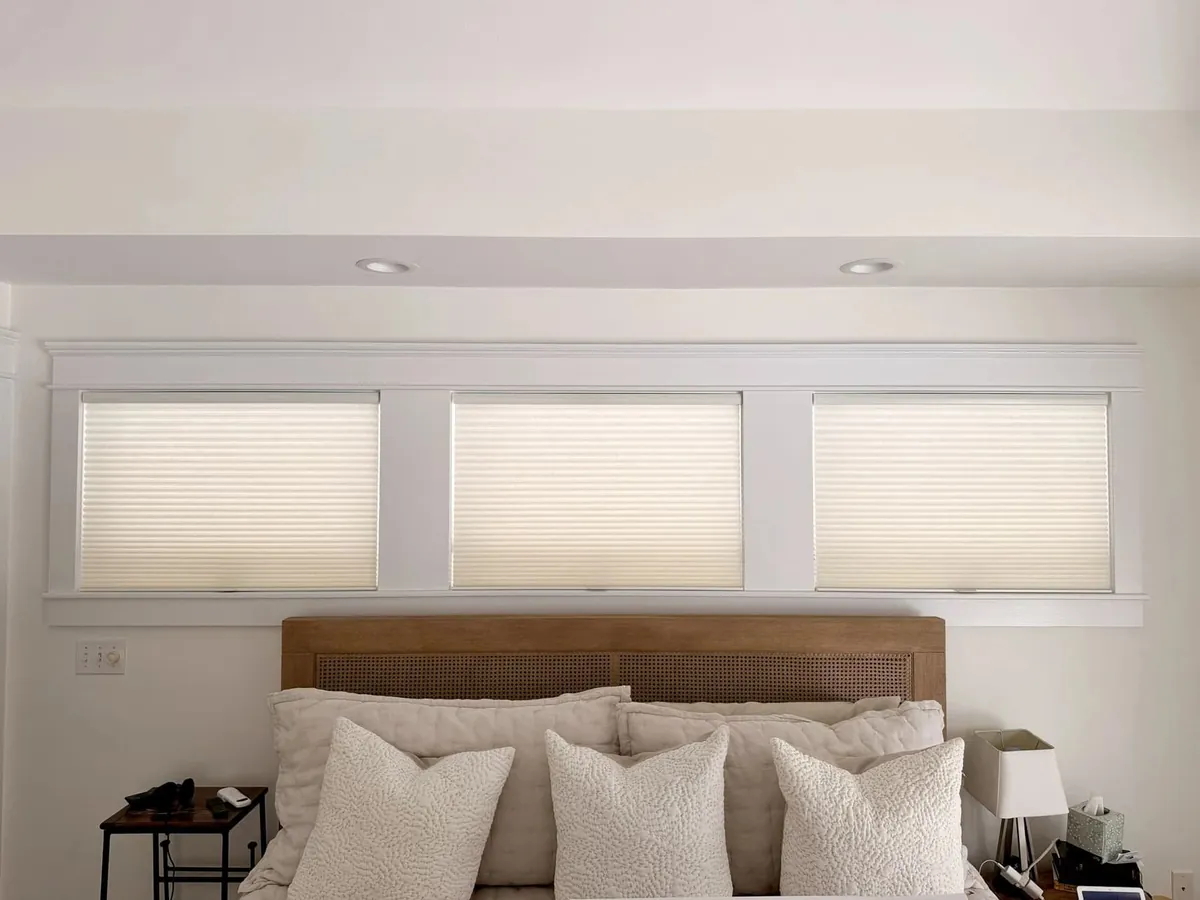
Small lots, short gaps and light that has to be shared
Holbrook’s neighborhoods are made up largely of post-war capes and ranches on small lots, most of them built around the middle of the last century. The openings are standard sizes throughout, and the setbacks between houses are very short. Walk down most streets and you will see side windows that face each other across little more than a strip of grass or a driveway.
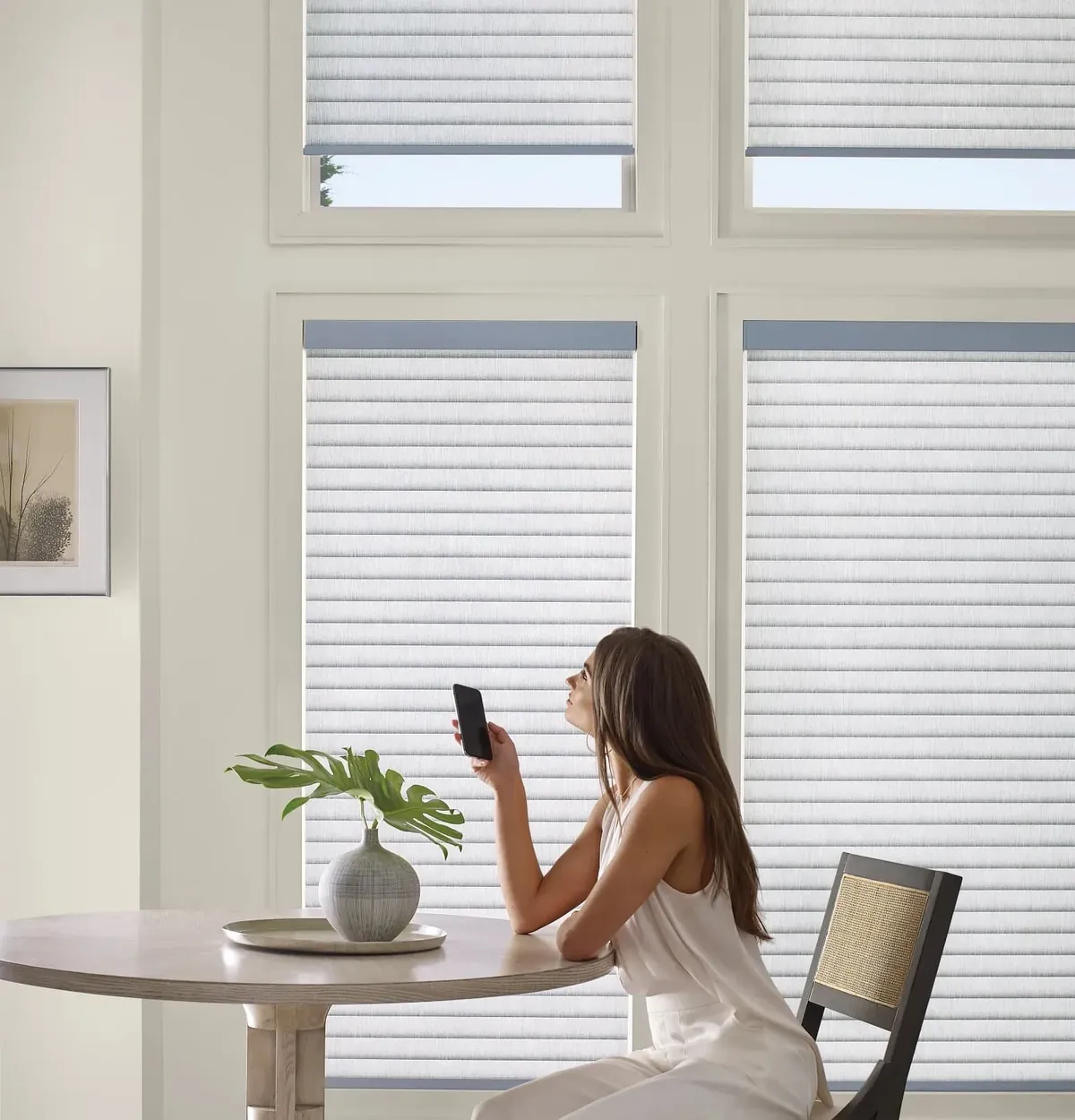
In houses like these, daylight is precious and privacy is constant work. Close the side shades and the room goes dim. Open them and you are looking into the kitchen next door. Motorized blinds in Holbrook, MA, take the effort out of that balancing act. Each shade is made to fit its standard opening, with the PowerView motor hidden in the headrail, and it moves from a handheld remote, from the app on your phone, or on a timetable you set. Adjusting the light many times a day stops being a chore.
Nothing about the window changes. The shade fits the frame you already have.
Shades that keep a close-set house bright
PowerView fits much of the Hunter Douglas range. In Holbrook we usually steer toward styles that let light in while managing the view.
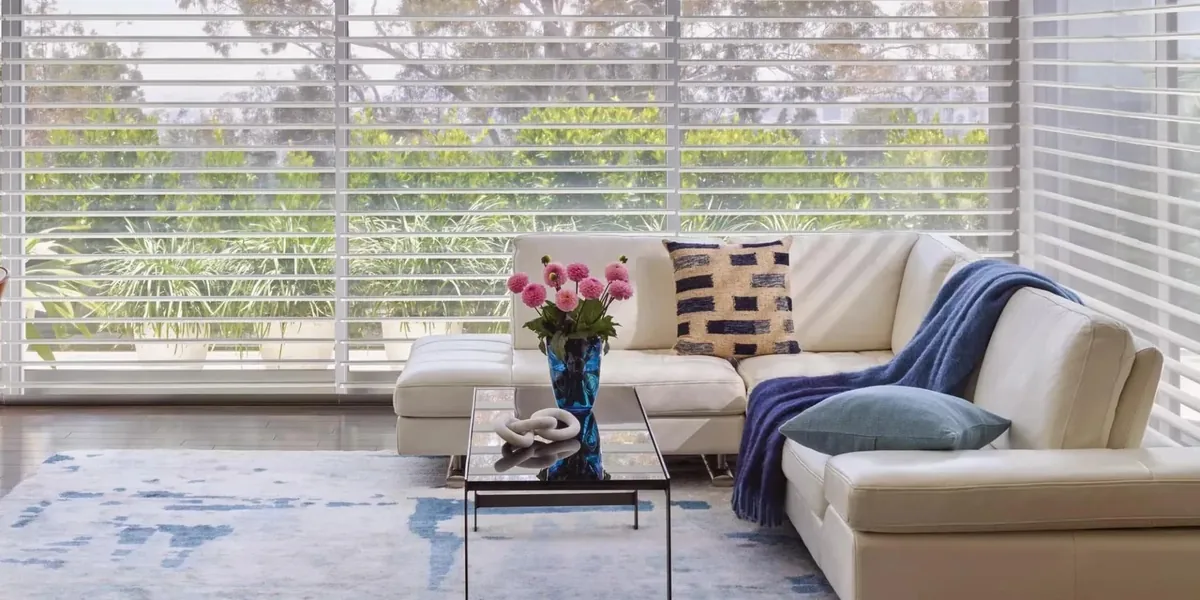
Sheer shades
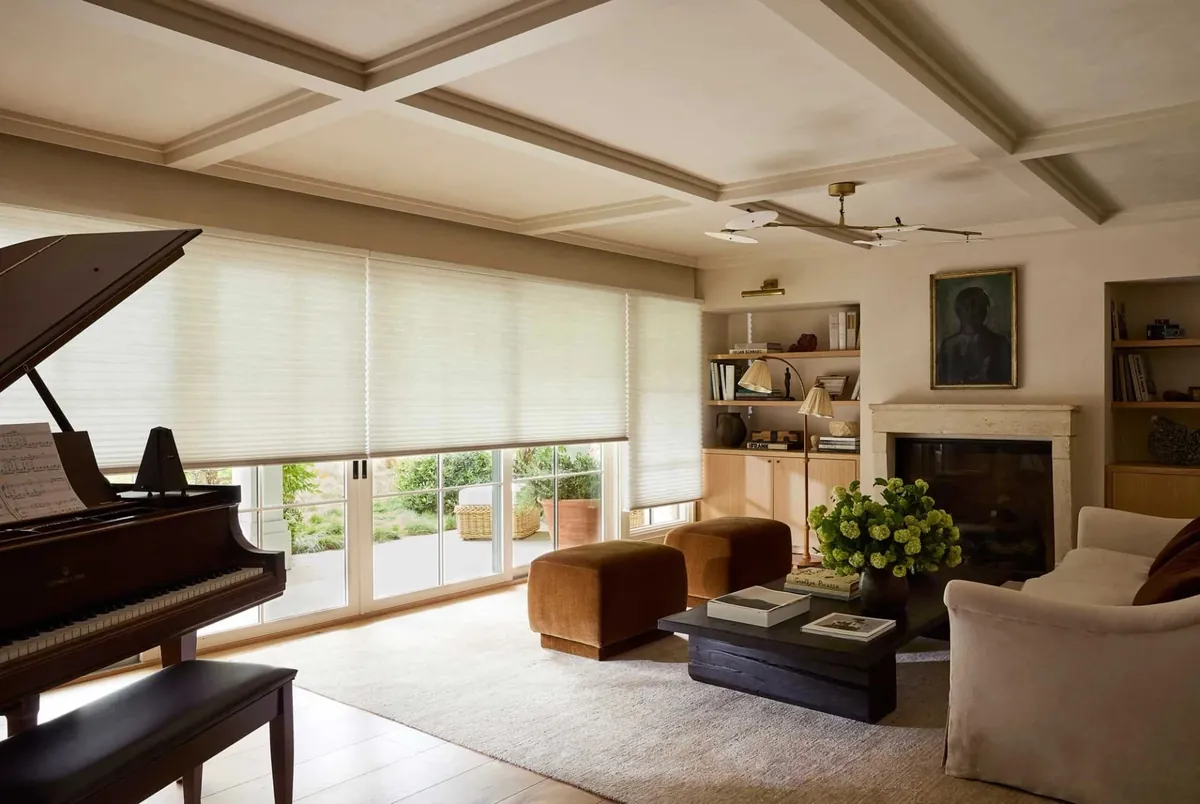
Fabric vanes floating between sheer layers. Tilt them and the room stays bright while the view in from next door softens.
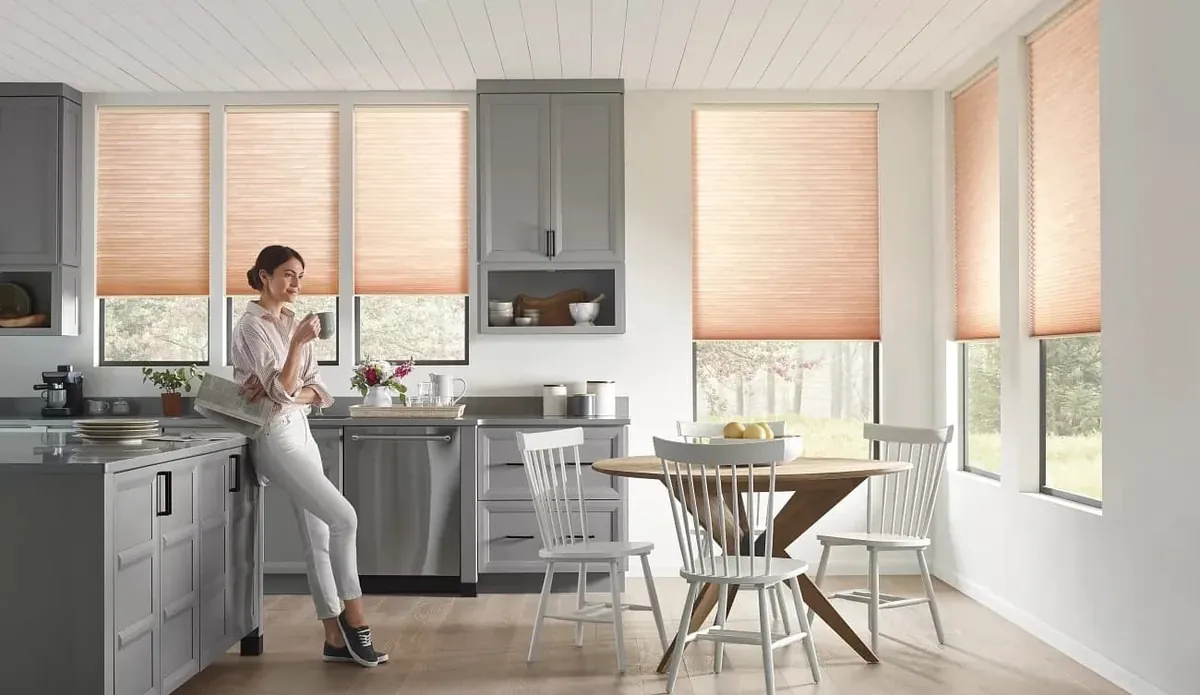
Cellular shades
Light-filtering honeycomb fabric that glows with daylight but hides what is behind it, a good fit for kitchens and baths.
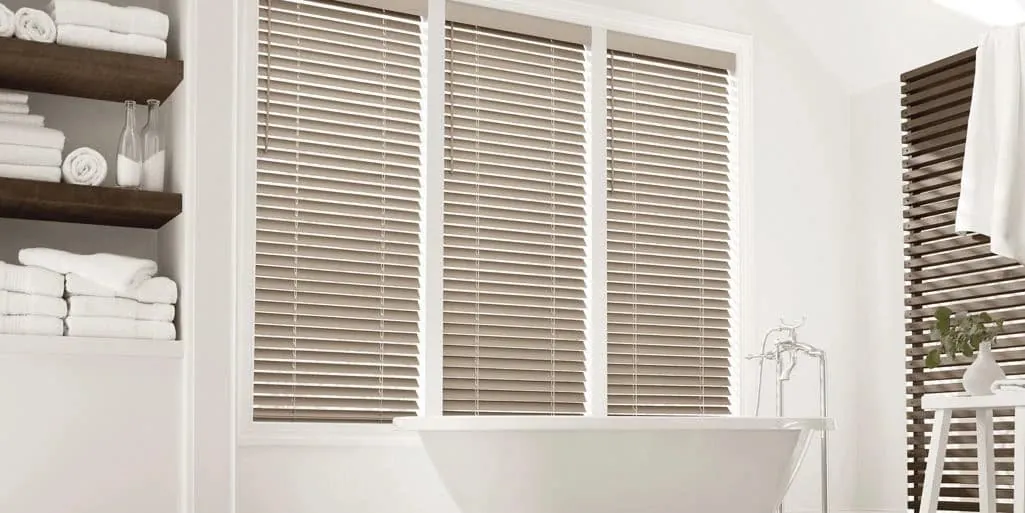
Custom blinds
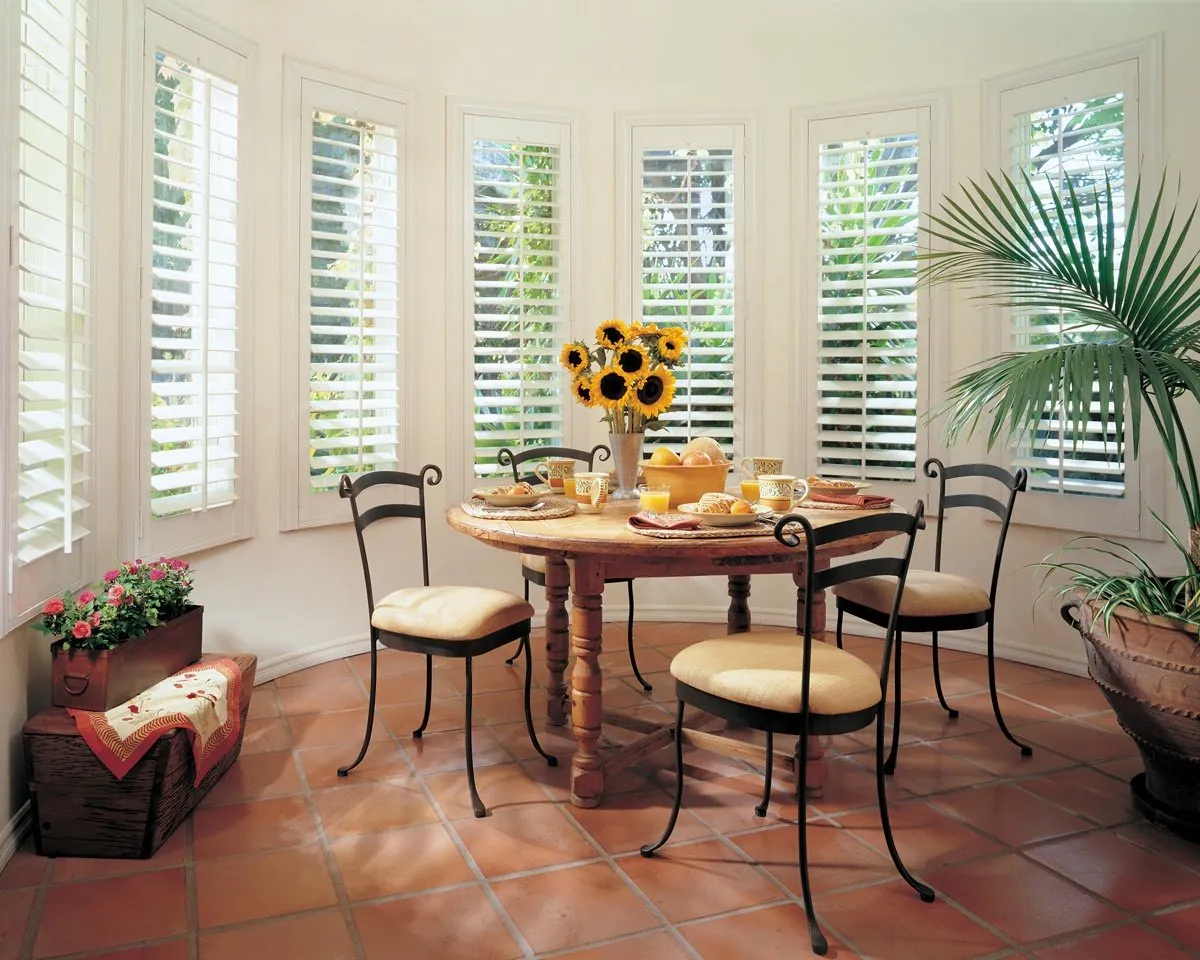
Slats that can be angled to close one line of sight while catching light from another, adjusted from the remote.
When the house next door is only a few steps away
With setbacks as short as Holbrook’s, the side windows of one house can sit almost directly opposite the side windows of the next. That shapes how every room on the side of the house gets used. The dining area, the bedroom, the bathroom and often the kitchen all have a window that looks straight across the gap.
Most people deal with it by closing those shades and leaving them closed. The trouble is that the side windows are frequently the main source of light in those rooms, so the house ends up dimmer than it needs to be all day long.
Motorized blinds in Holbrook give you a better option. Because changing a shade takes a single press, you can afford to adjust it as often as the situation changes: open when the neighbor’s side is dark, angled when their kitchen is busy, fully closed once the lamps come on. Blinds can be tilted so the slats block the view across while still reflecting light upward into the room. Sheer shades blur the view through their fabric vanes while letting the room fill with soft light. Light-filtering honeycomb fabric glows with daylight but shows nothing of what is behind it.
A Holbrook day, window by window
It helps to picture how a motorized house runs from morning to night.
Early morning
Bedroom shades on a timetable stay closed until the hour you set, then open on their own, so daylight does some of the work of waking the house. The kitchen window over the sink rises as the coffee starts. In a cape, the dormer bedrooms upstairs can follow their own timetable if they wake at a different hour.
Midday
With the house quiet, the shades on the sunniest side can lower for the brightest hours so the rooms are comfortable when people come home. The side windows facing next door can sit partway down, sent there from the app, so some daylight still comes in while most of the view is covered.
Late afternoon
When the sun comes low across the living room and washes out the television, a press of the remote lowers a shade partway or tilts a blind just enough. If it happens at the same time every day, a timetable can take it on.
Evening
As the lamps go on, the side windows and the front window close at the time you chose. On a lot this small, that is the moment privacy matters most, and the timetable means nobody has to walk round the house to make it happen.
The point is not that you will never touch a shade again. It is that the routine runs itself, and the remote is there for everything else.
What you actually hold, tap or set
Behind that day sit three simple tools, all talking to the same shades.
First, a handset. The PowerView remote fits in a palm, has buttons for raising, lowering and stopping, and can command one shade, one room or every window on the ground floor. It works without a phone, so visitors and older relatives can use it too. Many households keep it in a bracket next to the light switch.
Second, your phone. Inside the PowerView app, each shade is filed under its room. Choose one or a handful and send them to the exact height you want, which is handy for the side window you like to keep half covered.
Third, the timetable, a weekly plan of when particular shades open and close. Once saved it repeats on its own, and the handset can step in whenever plans change.
Our guide to how motorized shades are controlled has the full explanation, and window covering automation covers timetables across the house.
Single-floor ranches
Holbrook ranches line their rooms up on one level: a living room facing the street, then the kitchen, then a hallway of bedrooms and a bath. Their openings are standard and the frames square, so a shade usually tucks right inside the casing with its headrail level with the trim.
The broad window at the front is the one people notice from the road, and it is frequently split into two shades. Paired in the app, they travel together and finish at one height, so the front of the house looks orderly. Along the hall, each bedroom can be given a different timetable. If the ranch has a finished lower level, its little windows near the ceiling, perched above a couch or a workbench, can join in as well.
With every room at ground level and the next house so close, a ranch is where an evening timetable pays off most. Every window on the side of the house shuts together at the hour you choose.
Capes with bedrooms under the eaves
A Holbrook cape fits a lot of house onto a small footprint. Its main floor is tight, so the sofa, the dining table and the kitchen counter all crowd up to the windows. Its second floor is tucked under the eaves, where bedroom windows sit in dormers that push out from the roof.
Getting to a dormer window by hand usually means kneeling on a bed or reaching over a chest of drawers, with the slope of the ceiling in the way. Put a motor in the headrail and that window answers a button by the pillow or a weekday timetable. Room-darkening fabric up there keeps the early summer light at bay until you want it.
Downstairs, the front window over the sofa and the window above the sink are where the most stretching happens, which makes them strong candidates for motorized blinds in Holbrook from day one.
How the power is handled
A motor has to be powered, and the approach can change from window to window. We decide it together at the consultation, looking at each opening, its wall and the room around it. With Holbrook’s standard frames, that tends to be one of the quicker decisions of the visit.
A van of samples on your street
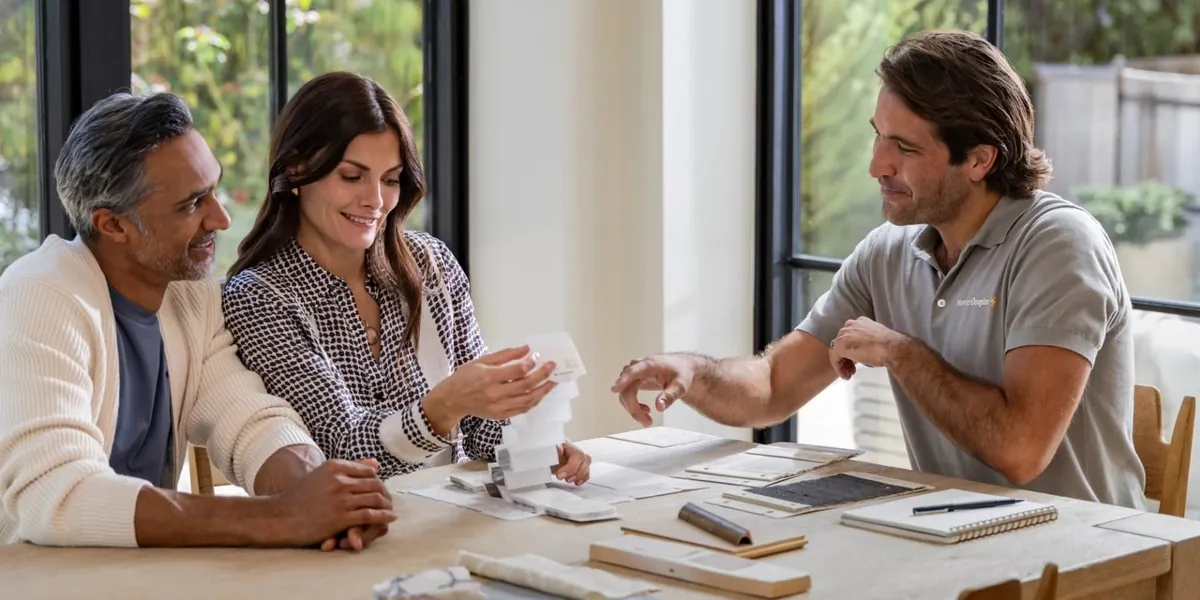
Holbrook is in the shop-at-home territory we cover from Canton, so your consultation happens in your own house. Our van brings the Hunter Douglas samples, and you try them at the glass where they will hang. The Canton shop-at-home page describes the service.
On a lot this tight, that is the only fair test. What you want to know is how much daylight a fabric lets through, and how much of the neighbor’s siding and windows it hides, at the time of day when it matters. Holding a sheer or a honeycomb to the side window answers both questions on the spot. It also shows how the color sits against your walls, which can be very different from how it looked on a card.
Alongside the fabrics, we plan how your motorized shades should behave: which ones pair up, which rooms get a timetable, how many handsets you need. Interior design consultations can be arranged if you would like a second opinion on color and pattern. Then each window is measured and a free estimate is written up for you to think over.
If you would also like to stop by a showroom, Franklin is the closest one to Holbrook. Details are on the Franklin showroom page.

On the day the shades go up
- A Hunter Douglas certified installer brings your shades, each one built to the sizes taken at the consultation.
- Headrails go up inside the frames where there is depth for them, and each is checked for level.
- Upper and lower stopping points are programmed shade by shade.
- The shades are linked to your handset and the app, and paired into the groups you agreed.
- Starter timetables go in, for example the evening close on the side of the house.
- You and the installer try every shade together until the handset and app feel familiar.
There is more about the day itself on what happens on installation day.
The dining corner by the side window
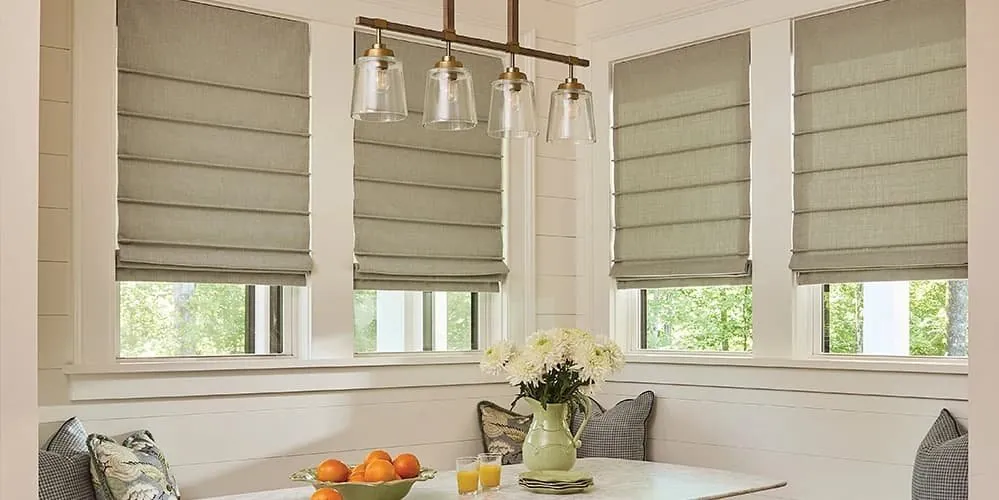
In many Holbrook capes and ranches, the dining table sits in a corner of the kitchen or living room, pushed up against a side window to save floor space. It is a pleasant spot for breakfast, but the window beside it usually looks straight at the neighbor’s house, and at dinnertime, with the lights on, anyone outside can see the whole table.
That window is awkward to reach, too. Chairs and the table itself are in the way, so adjusting the shade means leaning across plates or pulling the table out. As a result it often stays at one height for weeks, usually closed.
On a motor, the dining window can do what the meal needs. In the morning it opens for light. At supper it closes with a press of the handset, or on a timetable set to the household’s usual dinner hour. Tilting blinds work especially well here, because the slats can be angled to block the line of sight from next door while still letting light in over the table during the day.
The spare room nobody visits
Most Holbrook houses have one room that gets used in bursts: a guest room, a sewing room, a small den at the back. Its shades are forgotten for days at a time, left wide open to the afternoon sun or shut tight so the room feels unused from the street. Folded into the house timetable, that room opens and closes with the others, keeps the side of the house consistent, and is ready whenever someone does come to stay.
Bathrooms and the window over the tub
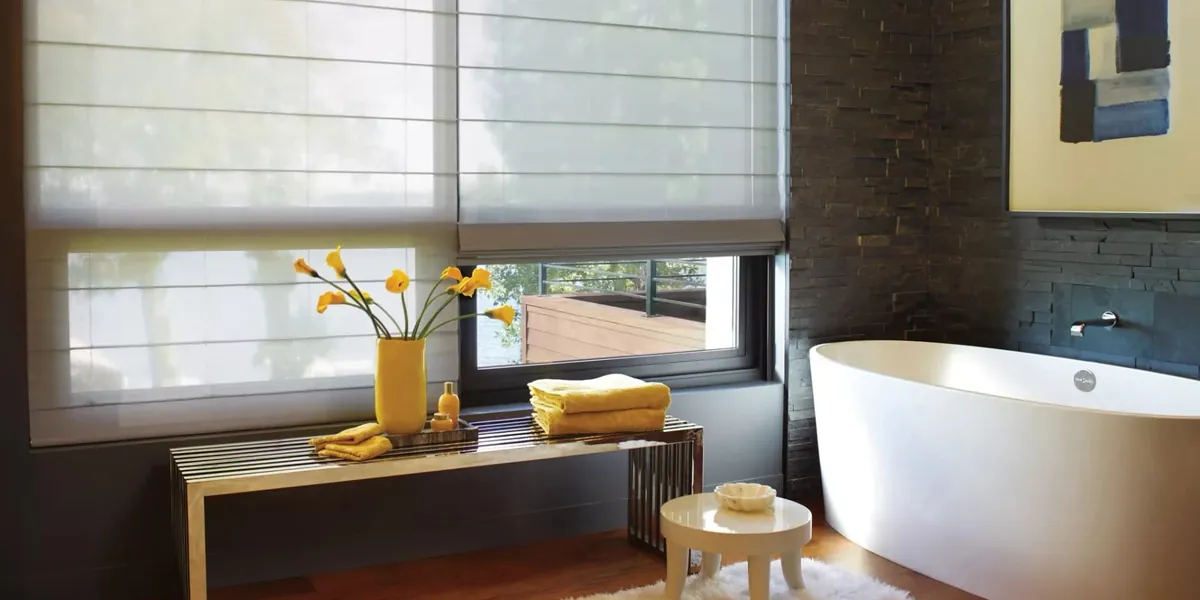
In a post-war Holbrook house, the bathroom window usually sits over the tub or beside the vanity, frequently looking across a very short gap at the house next door. It needs covering most of the day, and reaching it means leaning over the tub, so it tends to stay shut and the bathroom stays dim.
A light-filtering honeycomb or a faux wood blind on a motor changes that. The honeycomb glows with daylight while showing nothing from outside. The blind can be tilted from the handset to bounce light up toward the ceiling while shutting off the view across. No one has to lean over the tub again.
Mornings for the whole household
Holbrook houses are compact, and in a busy household the mornings overlap: someone up early for a shift, children up for school, someone else working from home later in the day. A single blanket timetable rarely suits everyone, which is why each room can have its own.
The kitchen can open first, at the hour the earliest riser comes down. Children’s rooms can lift at school time on weekdays and stay dark on weekends. A room used as a home office can lower its shade partway through the brightest hours to keep glare off a screen. Each bedroom can also keep its own handset, so anyone can override their own room without touching the rest of the house.
This is where motorized blinds in Holbrook feel less like a gadget and more like part of the house. Nobody discusses the shades any more; they simply do what each room needs.
Begin with the dimmest room
You do not need to motorize the whole house at once. A sensible first round in Holbrook is three or four openings: a side window facing next door, the kitchen over the sink, the front living room and perhaps the bathroom. New PowerView shades slot into the same system later, sharing the same handset, app and timetables.
That makes motorized blinds in Holbrook an easy thing to try: a small start that changes the house every single day, with plenty of room to add on.
Backed by a Hunter Douglas Gallery dealer
Blinds & Designs is a Hunter Douglas Gallery dealer, so a Holbrook cape or ranch can pick from every style in the PowerView family, from sheers and honeycomb to rollers, romans and blinds, and still run them all from one handset and app. A glowing honeycomb in the bath and tilting blinds on the side windows can sit side by side in the same system. Our motorized blinds and shades page has the range.
Fitting is carried out by Hunter Douglas certified installers, who run every motor before they leave. Estimates are free of charge, interior design consultations can be booked, and blind and shade repairs are part of the service. Everything we do in town is on our Holbrook page.
Questions from Holbrook
Our side windows face the neighbor’s. Will privacy mean a darker room?
Not necessarily. Tilting blinds, sheer shades and light-filtering honeycomb all pass daylight while hiding the view, and because the motor makes adjusting effortless, you can open them up whenever the moment allows.
Can a side window sit half covered?
Yes. The PowerView app sends a shade to an exact height, so a side window can rest partway down, letting light in while covering most of the view.
What if our routine changes?
Timetables are edited in the app whenever you like, and the handset overrides any of them on the spot.
Can we try one or two rooms first?
Of course. Plenty of households start that way, and later PowerView shades join the same system.
Do we have to go to a store to see samples?
No. Our shop-at-home van brings them to your house. If you would also like to see a showroom, Franklin is the closest.
Bring daylight back to the side of the house
Think of the room that feels dimmest because the house next door is so close, maybe the kitchen, the bathroom or a back bedroom, and make it the first. Send a consultation request and we will bring samples to your door, measure and leave you a free estimate.
Rather talk first? The call button reaches us, and our in-home consultations page explains the visit.