
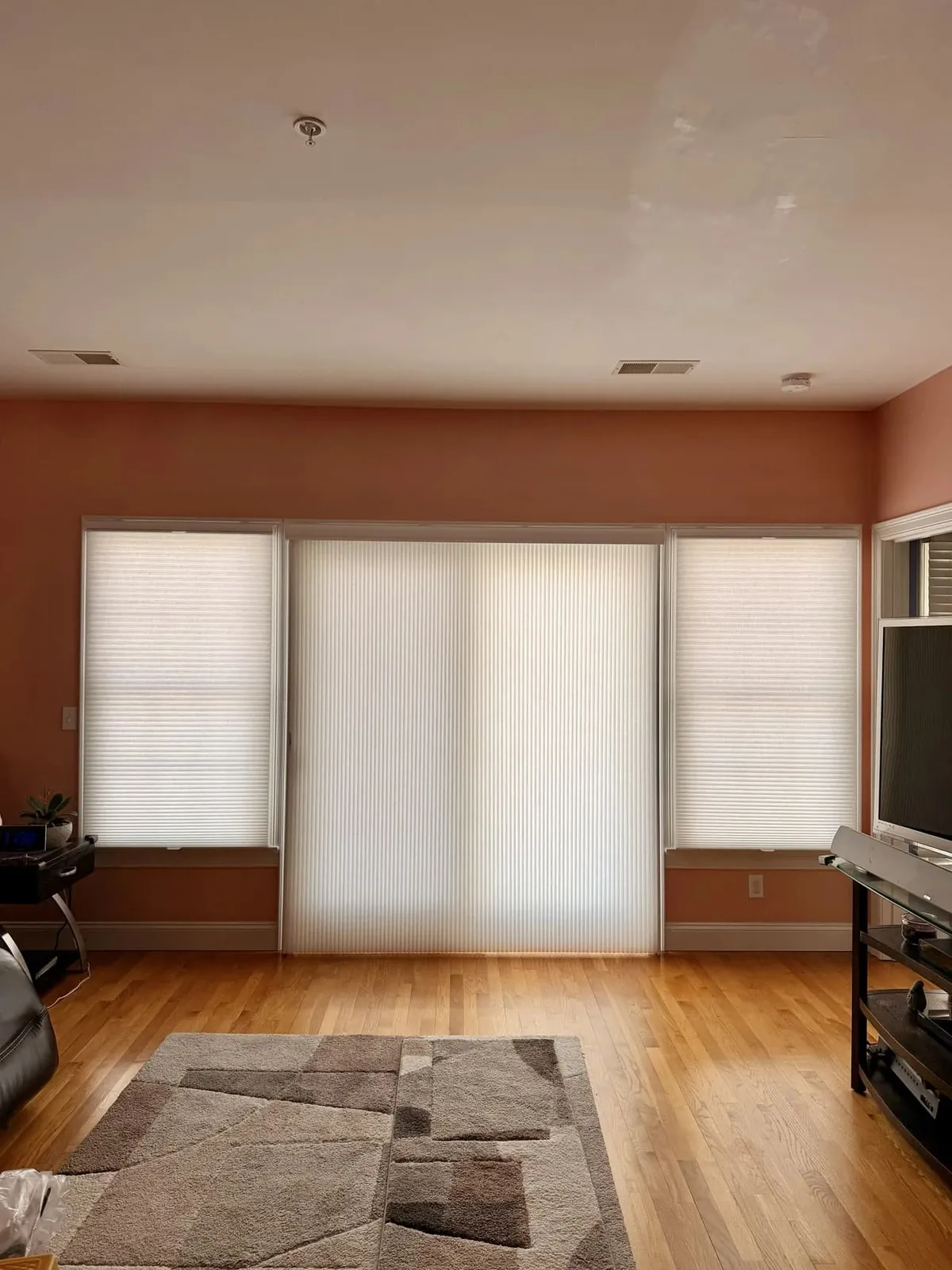
Two kinds of window under one roofline
Abington is really two housing patterns. Out from the center, most streets are lined with post-war capes and ranches on modest lots, with standard modern openings that are square, easy to measure and well within reach. Closer to the town center, Victorians bring a different window altogether: tall, older sash with high tops and frames that have settled over the years.
Motorized blinds in Abington, MA, suit both, for different reasons. On the capes and ranches, a PowerView motor is about routine: shades that open and close on a schedule, move together in groups and answer a remote by the couch. In the Victorians, it is about reach: a tall window with a top rail you no longer need a step stool to get to.
Either way, the shade is made for the window you already have. Nothing about the frame or the trim has to change.
Styles that pair well with a PowerView motor
Most of the conversation at your windows comes down to how much light and privacy each room wants. These three come up often in Abington, and each has its own page for the town.
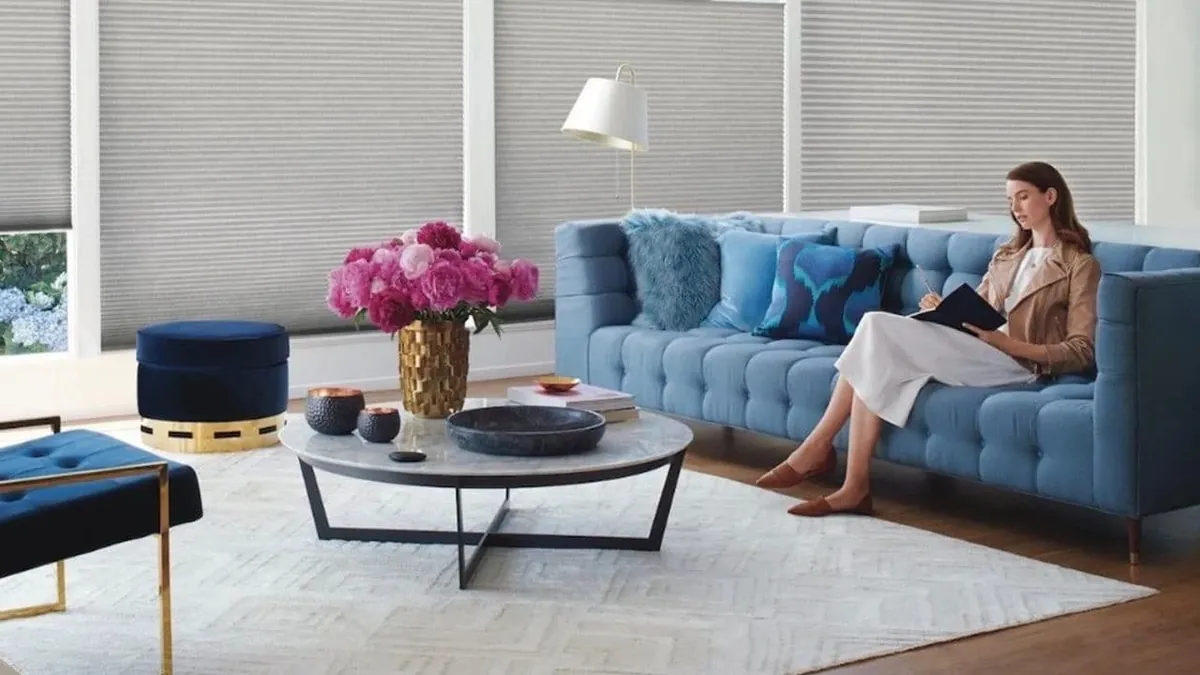
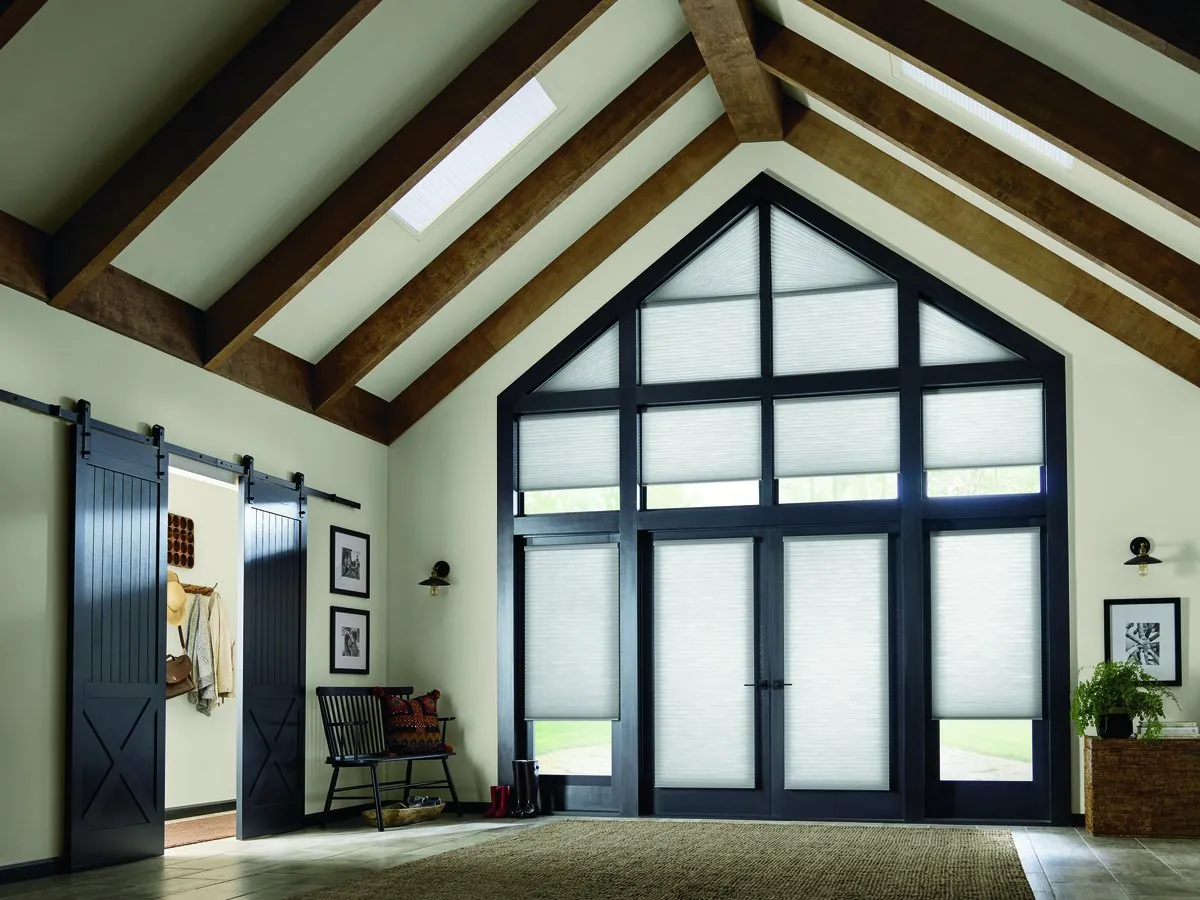
Cellular shades
Honeycomb fabric in light-filtering or room-darkening weights. A favorite for cape bedrooms tucked under the roof.
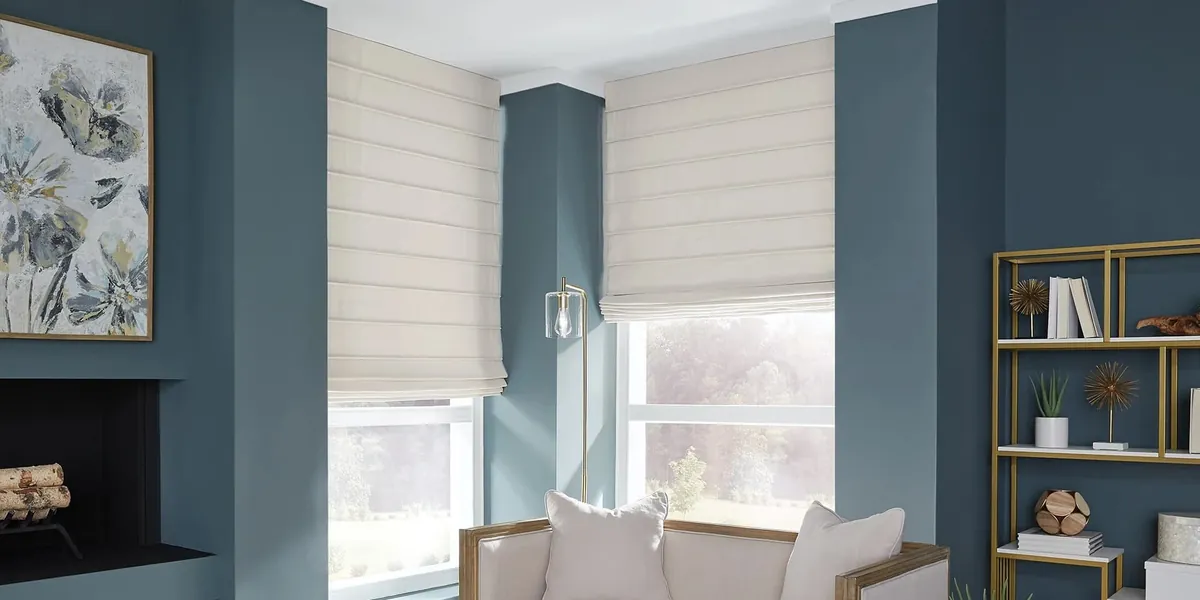
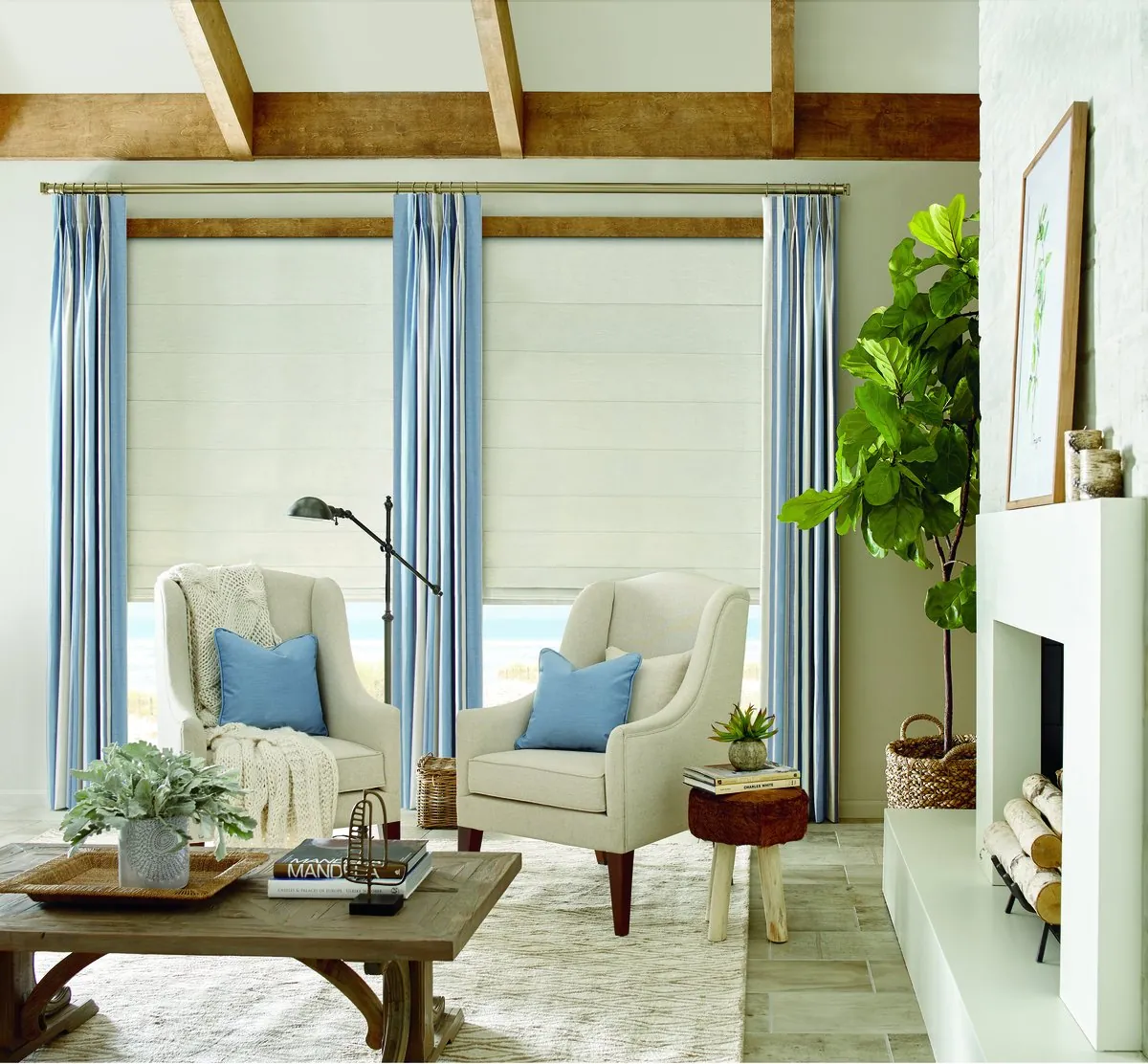
Roman shades
Soft folds of fabric that stack neatly at the top. They suit the parlor and dining rooms of the older houses near the center.
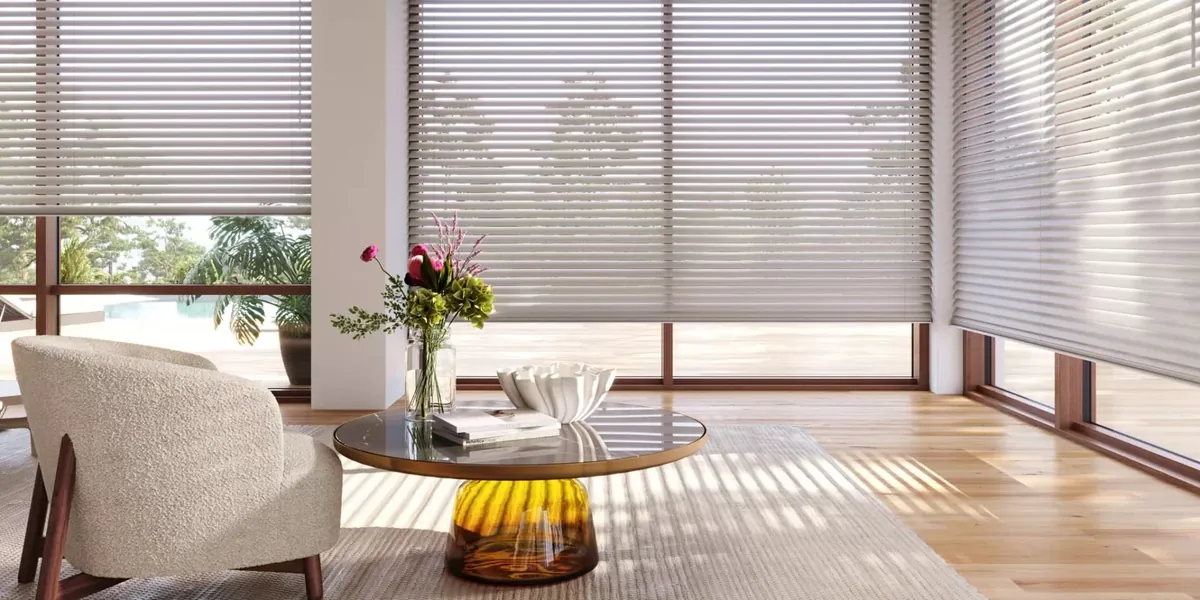
Custom blinds
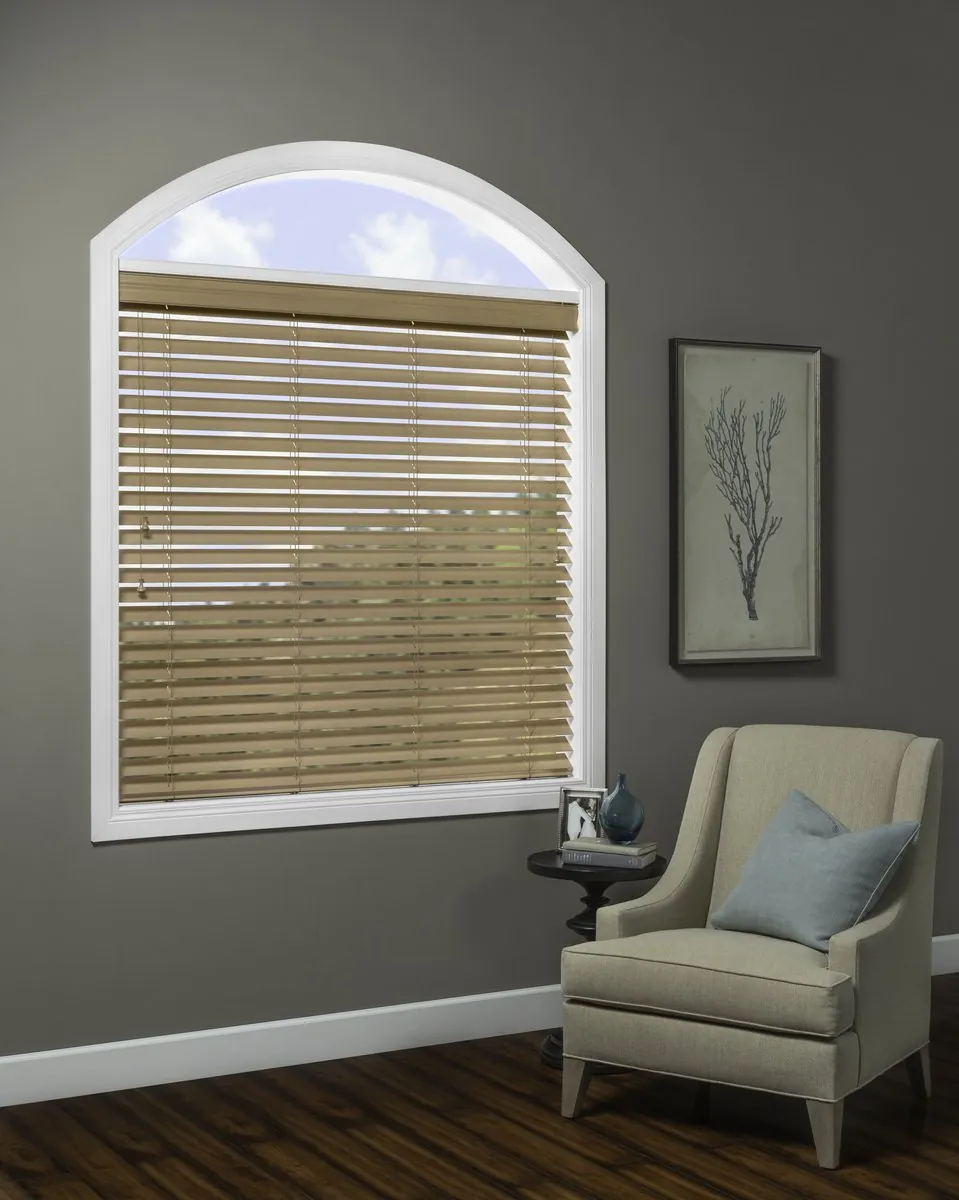
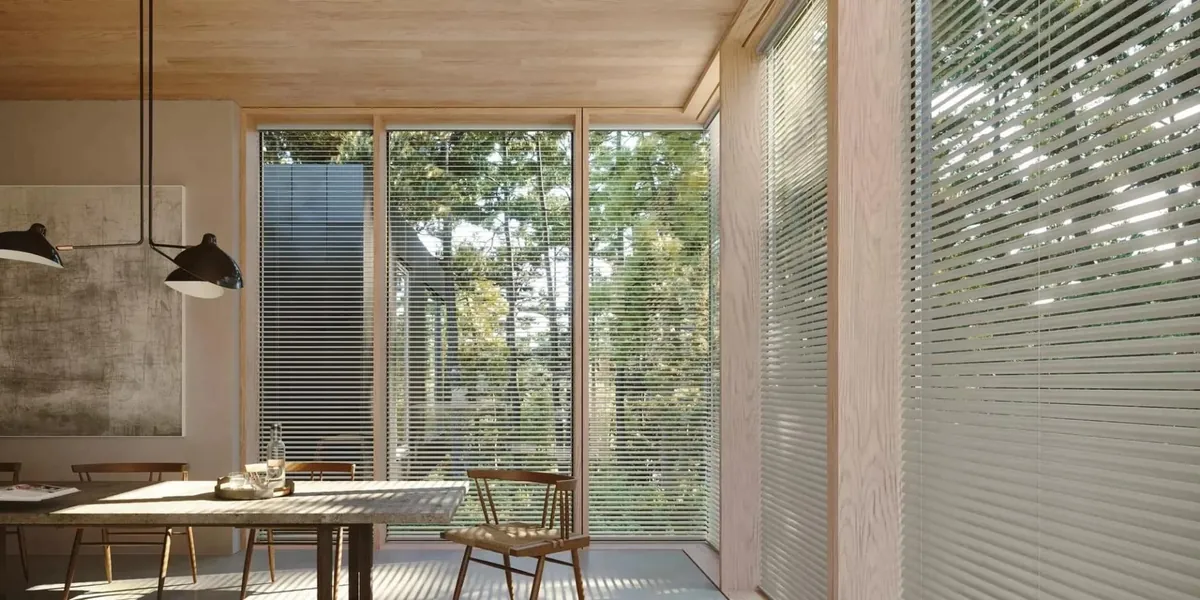
Wood, faux wood or metal slats that tilt from the remote, so you can catch light and keep a view out without being seen.
The cape: a lot of house on a modest lot
A typical Abington cape packs its living space into a compact footprint. Downstairs, the living room, kitchen and a bedroom or den sit close together, and furniture ends up pressed against the windows because there is nowhere else for it to go. Upstairs, bedrooms are tucked under the slope of the roof, with windows set into dormers.
Both floors have their awkward windows. Downstairs, it is the one behind the sofa or above the kitchen sink, where you lean over cushions or a counter to reach a cord. Upstairs, it is the dormer: set back in its own little alcove, often behind a bed or a dresser, with the ceiling sloping down overhead.
A motor changes how those windows get used. Instead of leaving the dormer shade down all summer because it is a nuisance to raise, you lift it from a remote on the nightstand, or let a morning schedule do it for you. Instead of stretching over the sink, you tap the app while the coffee brews.
The ranch: one floor, one routine
Abington’s post-war ranches lay every room out along a single level, with the living room at the front, the kitchen behind it and a run of bedrooms down a hallway. The openings are standard, the frames are usually square and true, and shades tend to fit neatly inside the casing.
What makes motorized blinds in Abington worth it on a ranch is how easy it becomes to run the whole house as one. Every window is on the ground floor, which means every window matters for privacy after dark. A single evening schedule can close the front room, the side windows and the bedrooms at once, at an hour you choose, and open them again in the morning. The picture window at the front, often fitted as two or three shades, can be grouped so the panels always stop at the same line.
If you work from a spare bedroom, that room can follow its own plan, lowering partway through the brightest hours to keep glare off a screen.
Victorians near the center: the reach problem
Walk toward the center of town and the houses grow taller and older. Victorian sash windows run tall and narrow, with upper sashes that end well above head height and ceilings higher still. A hand-operated shade on one of these windows has a long way to go, and the cord or wand that works it either pools on the floor or gets tied up out of reach.
The usual outcome is a shade set halfway and left there for months. A motor ends that. A full drop on a tall window costs exactly the same effort as a small one: a single press. In a parlor with three or four tall windows, they can be grouped to move together, which looks far more settled from inside and from the street.
Older frames also vary more than modern ones. Each opening is measured on its own at the consultation, so every shade is made for its particular window.
Remote, app or schedule: who uses what
PowerView gives a household three ways to move its shades, and in most Abington homes each person settles on a favorite.
The remote
A small handheld with raise, lower and stop buttons. It can control one shade, a room or a whole floor, and it works without a phone. Grandparents, visiting family and children usually pick this one. It can live in a wall bracket next to a light switch.
The app
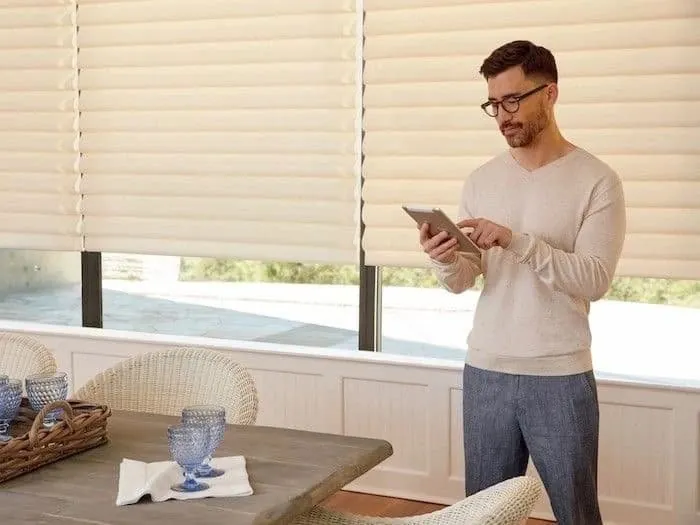
On a phone or tablet, every shade shows up by room. You can drag one to an exact height or save a position as a favorite, such as the halfway point on the window behind the sofa. People who like to fine-tune tend to live in the app.
Schedules
A weekly timetable that moves chosen shades at the times you set, then repeats on its own. Most households set a morning opening and an evening close, and let the remote handle everything in between.
For a fuller walk-through, see how motorized shades are controlled and our page on window covering automation.
Rooms that benefit most
Not every window needs a motor. In Abington houses, a few rooms tend to make the biggest difference.
- The front living room. The window people see from the street and the one most often worked by hand. Grouping its shades keeps the front of the house tidy.
- Upstairs cape bedrooms. Dormer windows are hard to reach, and a room-darkening honeycomb on a schedule keeps early light out until you choose.
- The kitchen window over the sink. The classic stretch over a counter, gone with a button.
- The Victorian parlor. Tall sash where the top of the shade was out of reach before.
- A home office. Shades that drop partway through the brightest part of the day, then rise again.
Living with close neighbors on a modest lot
Modest lots mean the house next door is near. In a cape or ranch, a side window often faces the neighbor’s side window across a driveway or a narrow strip of lawn. That is the window that tends to stay shut all day, which is a shame, because it is frequently the main source of light for a kitchen, a bath or a bedroom.
A motorized shade lets you treat that window differently through the day. Light-filtering honeycomb glows with daylight but hides what is behind it. A blind can be tilted from the remote to block the line of sight across while still sending light up toward the ceiling. And because adjusting it takes one press, it is easy to open fully when the other house is quiet and close it again when it is not.
Saved positions make the routine quick
One of the most useful parts of the PowerView app is the saved position. Instead of guessing how far down a shade should go, you set it once and give it a name.
In an Abington ranch, a household might keep three: “morning”, with the front shades open and the side windows at a light-filtering height; “afternoon”, with the sunny side lowered partway; and “evening”, with everything closed. Each one moves several shades at once, and each can be tied to a schedule or simply tapped when needed. The remote can trigger the same positions for anyone who does not use the app.
Mixing styles in one system
Abington houses rarely want the same shade in every room. A cape might suit room-darkening honeycomb in the dormer bedrooms, a roman shade in the living room and a faux wood blind over the kitchen sink. A Victorian near the center might want soft folds in the parlor and something plainer in the back hall.
That is no obstacle to motorization. Different Hunter Douglas styles can sit on the same PowerView system, answer the same remote and follow the same schedules. You choose each room’s shade for the room, not for the motor, and the controls stay simple however varied the windows are.
Evenings near the town center
The Victorians around the center sit closer to the sidewalk than the outlying capes, and their tall front windows put a lit room on display once the lamps come on. By hand, closing a row of tall shades means a walk around the parlor and dining room, reaching up to each one in turn.
With a motor, the front of the house closes in one move. A schedule can do it at the same hour every night, or a single button on the remote by the door can bring every street-facing shade down together. Because the shades are grouped, they stop at the same line, which looks far more orderly from outside than a row of tall windows each left at a different height.
Bathrooms in a post-war house
In Abington’s capes and ranches, the bathroom window usually sits over the tub or beside the vanity, and on a modest lot it often faces the house next door. It needs covering most of the time, and reaching it means leaning across the tub or the sink.
Light-filtering honeycomb on a motor lets daylight in while hiding the room from outside, and it can be raised or lowered from the hallway without anyone stepping into the tub. A faux wood blind does the same job with tilting slats. Either way, the bathroom stops being the dim room in the house.
Bedrooms that need a later morning
Families with young children, shift workers and anyone who sleeps past sunrise all ask for the same thing: a bedroom that stays dark until the hour they choose. In a cape, the dormer bedrooms upstairs take the early light first; in a ranch, the bedrooms along the hallway often face east or toward the street.
Room-darkening honeycomb on a schedule handles it. The shade stays closed until the time you set, then opens on its own, weekdays one way and weekends another. Each bedroom can follow its own timetable, and a remote by the bed overrides it on the mornings when plans change. It is one of the most common reasons households ask about motorized blinds in Abington, MA, in the first place.
A neat fit in a standard opening
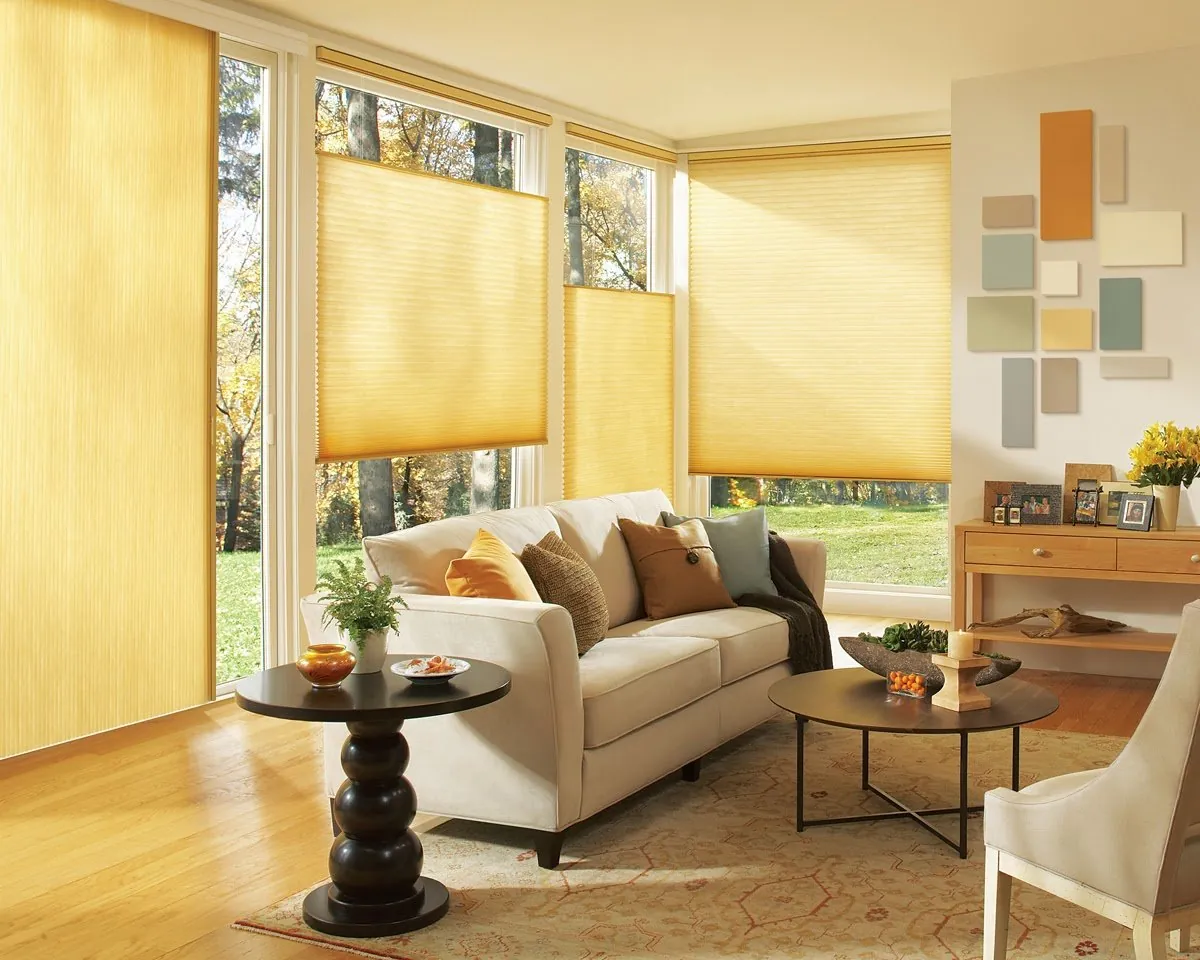
Away from the center, Abington’s modern openings are a gift for motorization. The frames are square and the depths consistent, so a shade usually sits inside the casing with its headrail tucked out of sight and level with the trim. From the street, the windows look clean and uniform, and from inside, the motor disappears.
When a room has two or three windows of the same size, their shades can be grouped and set to one height, so the whole wall moves together. That consistency is part of what makes motorized blinds in Abington look so settled on a cape or ranch: every window lines up, every time.
Starting small
Motorizing every window at once is never required. A sensible first round in Abington might be the living room front, the dormer bedroom and the kitchen window over the sink. Later shades join the same system, the same remote and the same app. That is how a lot of households grow into motorized blinds in Abington: one awkward window first, then the rest once they see how they use it.
Samples brought to your Abington windows
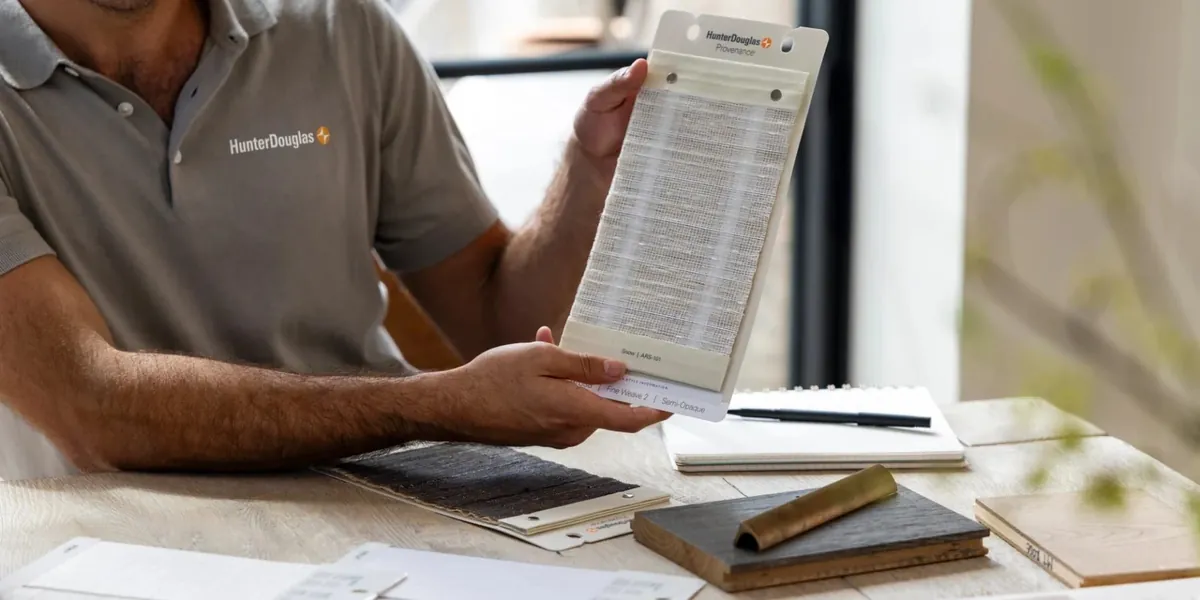
Abington is part of the shop-at-home territory we serve from Canton, so we come to you. Our van carries the Hunter Douglas samples, and you try them against your own glass, walls and trim. The Canton shop-at-home page explains how the service works.
That is the only real way to choose a motorized shade for a cape bedroom or a Victorian parlor. You see how much light the fabric passes at the time of day that matters, and how it sits against your colors. While we are there, we plan which shades group together, which rooms get a schedule, how many remotes you need and how each motor will be powered. Then every window is measured and you get a free estimate to think over.
If you would like to see a showroom as well, the nearest to Abington is Franklin. Find it on the Franklin showroom page.
What an in-home visit looks like
- We arrive with the van and a selection of Hunter Douglas samples chosen for the rooms you mentioned.
- You hold fabrics and slats up to the windows that matter most, in the light you actually live with.
- We talk through control: remote, app, schedules, and which shades should move together.
- Each window is measured, including the older frames near the center that need extra care.
- You receive a free estimate and take as long as you like to decide.
More on the visit is on what happens at an in-home consultation.
The Gallery dealer behind the shade
Blinds & Designs is a Hunter Douglas Gallery dealer. For an Abington house that mixes a modern ranch layout with older windows, or a cape with dormers upstairs and a picture window down, that means honeycomb, roman shades and blinds can all come from one place and all run on one PowerView system.
Certified Hunter Douglas installers fit every shade and run each motor before leaving. We also offer interior design consultations if you want help pulling color and fabric together across several rooms, and repairs on blinds and shades you already own. See the whole range on motorized blinds and shades and everything we do locally on our Abington page.
Questions from Abington
Our cape has dormer windows upstairs. Can they be motorized?
Yes. Dormers are among the most common windows we motorize in capes, because they are hard to reach by hand. A remote by the bed or a morning schedule takes care of them.
Are the tall windows in older Victorians a problem?
No. Tall sash is a good reason to motorize, since the motor does the reaching. Each older frame is measured separately so the shade fits its own opening.
Can several shades on one window move together?
Yes. The shades on a picture window or a bay can be grouped in the app so they always stop at the same height.
Do we have to use an app?
No. The handheld remote does everything on its own. The app and schedules are optional extras.
Is there a showroom near Abington?
The closest is Franklin. Most Abington customers choose at home, though, because our van brings the samples to the house.
Pick the window that bothers you most
The dormer you never open, the parlor sash you cannot reach, the sink window behind the faucet: start there. Request a consultation and we will bring samples to your Abington house, measure and leave you a free estimate.
Questions before booking? Use the call button, or read about our in-home consultations.