
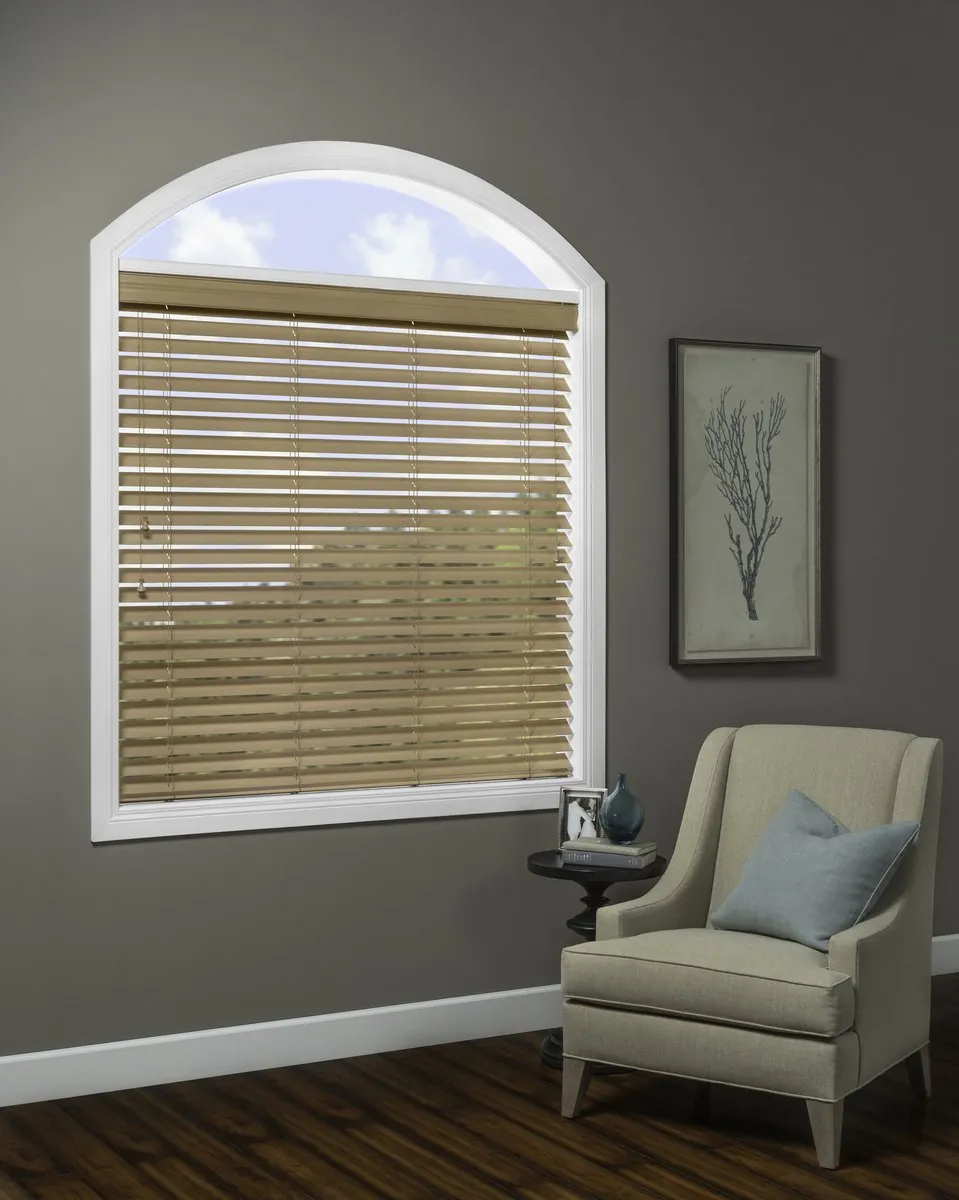
Short sightlines and small original windows
Whitman’s houses stand close together. Two-families and post-war capes share small lots, and around the center the Victorians are packed in along the older streets. Look out of a side window in many of these houses and the nearest thing you see is the neighbor’s clapboard, often near enough to see straight into their kitchen. Short sightlines like that make privacy the everyday reason people look into custom blinds in Whitman, MA.
The windows in the older stock add their own twist. Many of the original openings are small, set in thick frames, with sash that have been painted and repainted over the years. A small window still needs light and still needs privacy, and the covering on it has to fit a tight space without swallowing what little glass there is.
A blind handles that well. Its slats tilt to block a close view while sending daylight up toward the ceiling, and made to the exact size of a small frame, it sits neatly inside the casing. We plan each house at its own windows, with Hunter Douglas samples in hand, because a small opening is exactly where an off-the-shelf size goes wrong.
Custom blinds in Whitman, MA: the four families
Every blind below is made to the measurements we take on site. Most houses in town end up with two or three of these, chosen to suit each room.
Wood Blinds
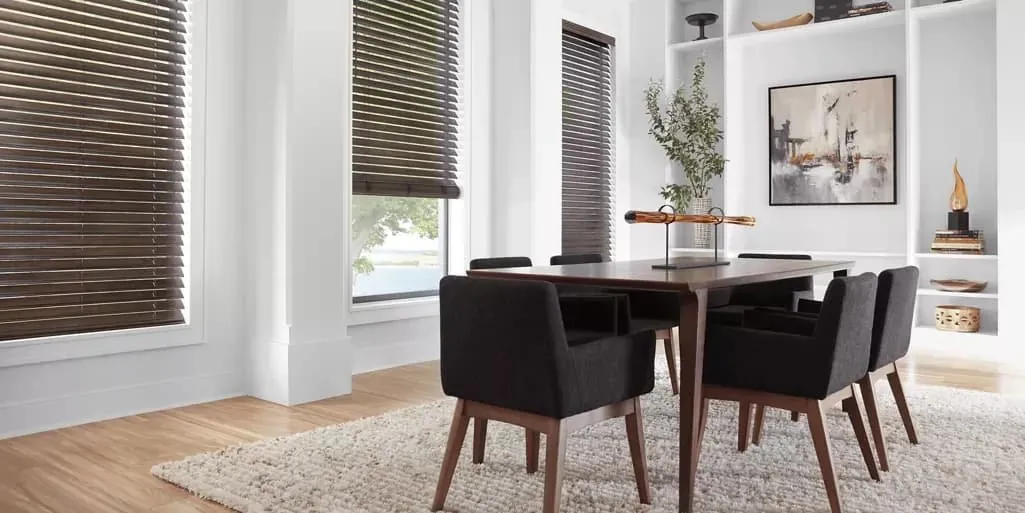
Wood slats for a Victorian dining room or a front room with good trim, where the window deserves something warm.
EverWood Alternative Wood Blinds
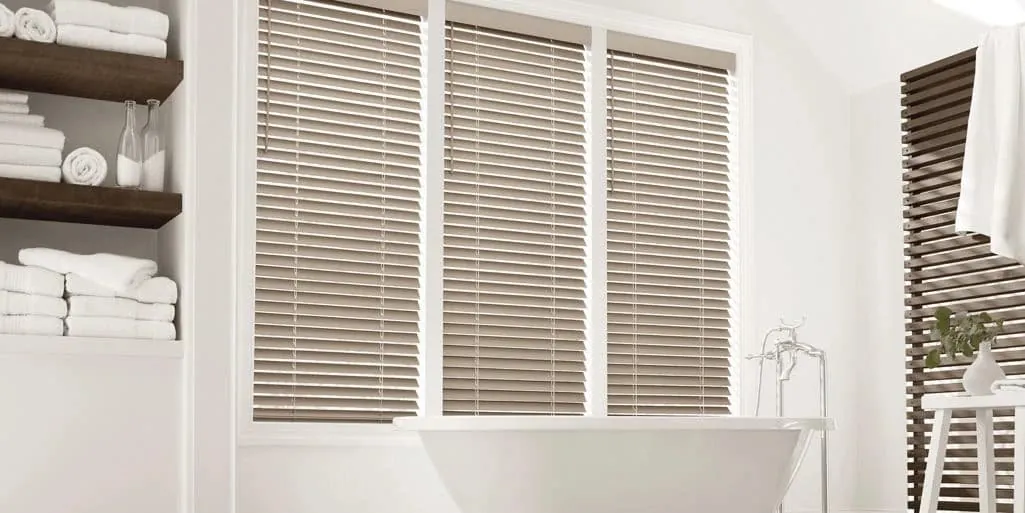
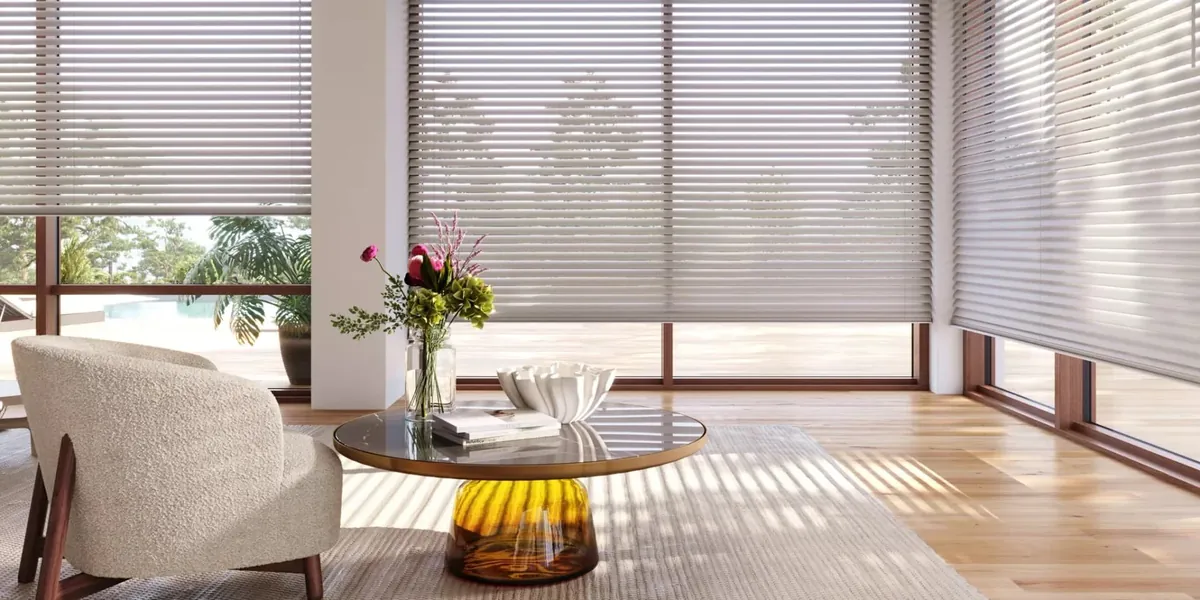
The wood look in a faux wood slat, a regular choice for baths, kitchens and the matched windows of a two-family.
Metal Blinds
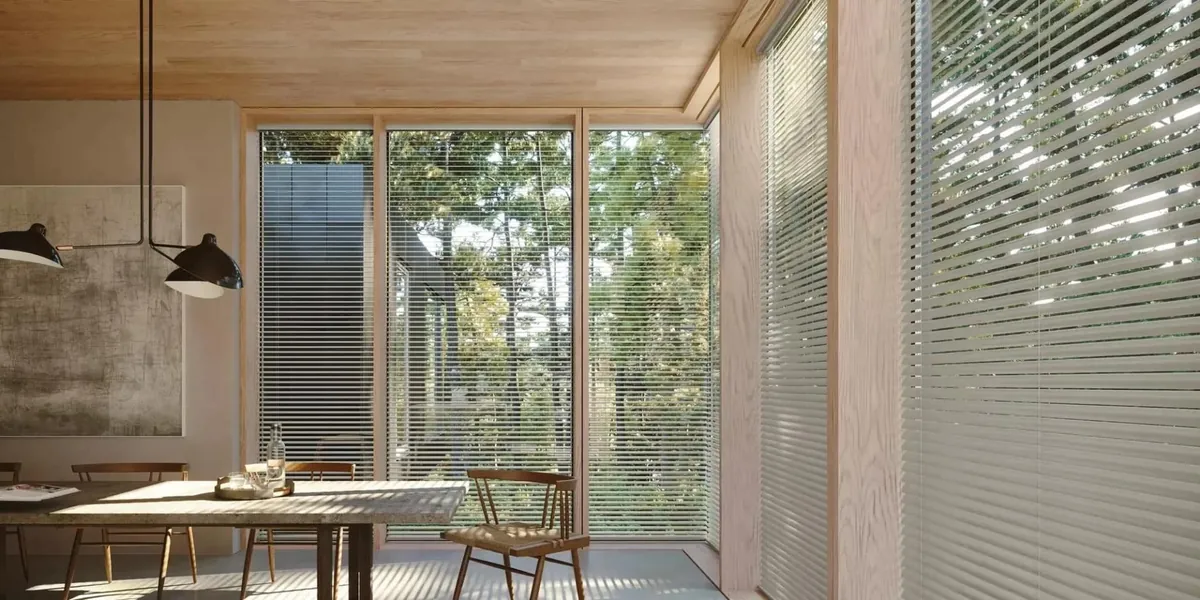
Thin aluminum slats and a low-profile headrail for the shallowest frames and the smallest openings in the older houses.
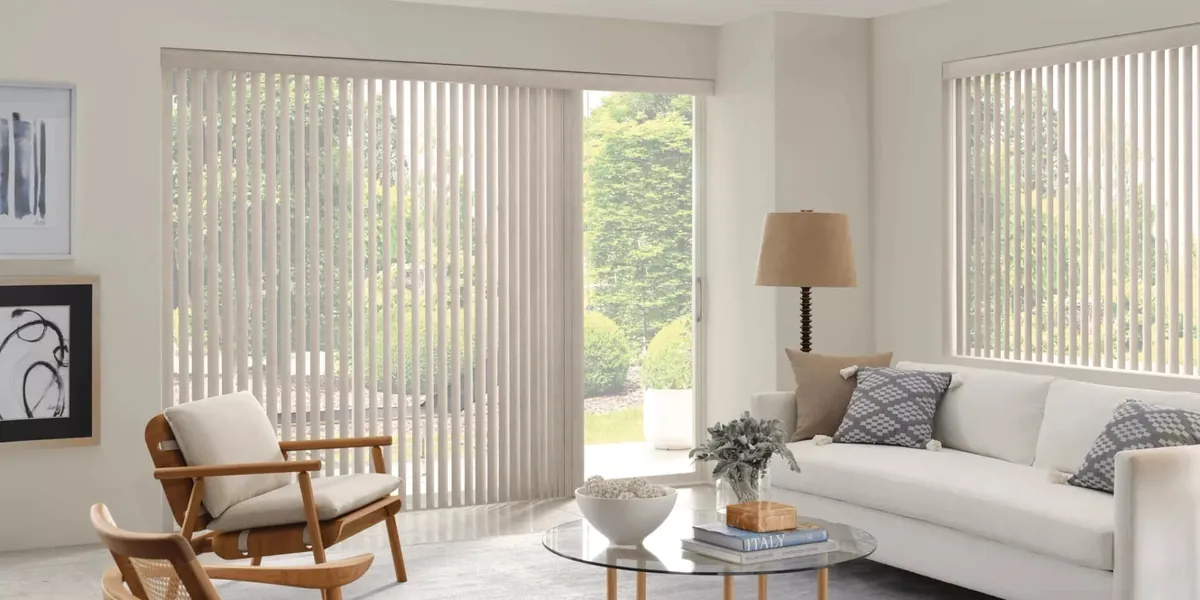
Vertical Blinds
Vanes that draw to one side for the slider a cape may have added out to a back deck.
Fitting a blind into a small, old frame
A small window is less forgiving than a big one. On a wide opening, a little extra space at each side of the blind hardly shows. On a narrow frame in an older Whitman house, the same gap is a noticeable share of the glass, and it lets in a bright stripe of light and a slice of view exactly where you wanted neither.
So the first job is measuring precisely, at more than one point, because old frames are rarely perfectly square. The second is checking depth. An inside mount needs room for the headrail and for the slats to tilt without striking the sash lock or the window crank, and repainted casings and storm windows can steal that room. Where there is enough depth, an inside mount keeps the original trim fully on show. Where there is not, mounting on the face of the casing is the clean alternative.
Slat size matters here too. A narrow slat suits a small opening, because it gives more slats across the glass and a finer, lighter look. A wide slat on a small window can look heavy, with only a handful of slats doing the work. We hold both up so you can judge by eye rather than by a catalog picture.
Making a small window look bigger
There is a simple trick for the smallest openings. Mount the blind a little above the frame and a little wider than the casing, and when the blind is fully raised, its stacked slats sit above the glass rather than across the top of it. The whole pane is clear in daytime, and the window reads larger from inside because the blind frames it rather than crowding it.
Color helps as well. A pale slat close to the wall color makes the blind recede, so a small window does not end up with a dark band across its head. In a room with only one or two small windows, that difference is easy to see.
The trade is that a face mount covers part of the trim. On a house where the casing is plain and painted, that is rarely a loss. On a Victorian with detailed woodwork, an inside mount usually wins. We look at each window and talk it through with you.
The window that faces another window
On a small lot in town, side windows often line up almost exactly with the neighbor’s. Kitchens look into kitchens, bathrooms sit across a narrow strip of lawn from bathrooms, and upstairs bedrooms face each other across the driveway. This is where the slat really earns its keep.
Tilted with the room-side edge raised, the slats present a closed face to anyone looking across and down, while light still bounces off them onto your ceiling. You keep a bright room and lose the view in. Turned the other way, the slats let you look out and down at the yard while making it harder to see in from a window at the same height. And closed fully, a blind gives complete privacy at night when the lights are on inside.
For a bathroom on a close side, many people keep the blind closed all the time and rely on the tilt alone for a little daylight. In a kitchen, a half-tilt through the day usually strikes the balance.
Porches and front windows near the sidewalk
The two-families and Victorians near the center often sit only a few steps from the sidewalk, with a front porch between the door and the street. The first-floor front windows are at eye level for anyone walking by, and the porch roof shades them for much of the day.
That shade means the front rooms can be dim, so closing a blind fully is often too much. A tilt that blocks the line of sight from the sidewalk while catching the light that does arrive is the usual setting. A lighter slat color helps reflect more of that light into the room. On the upper floor, above the porch roof, the front windows get more sun and usually need a different setting through the day.
What the visit looks like
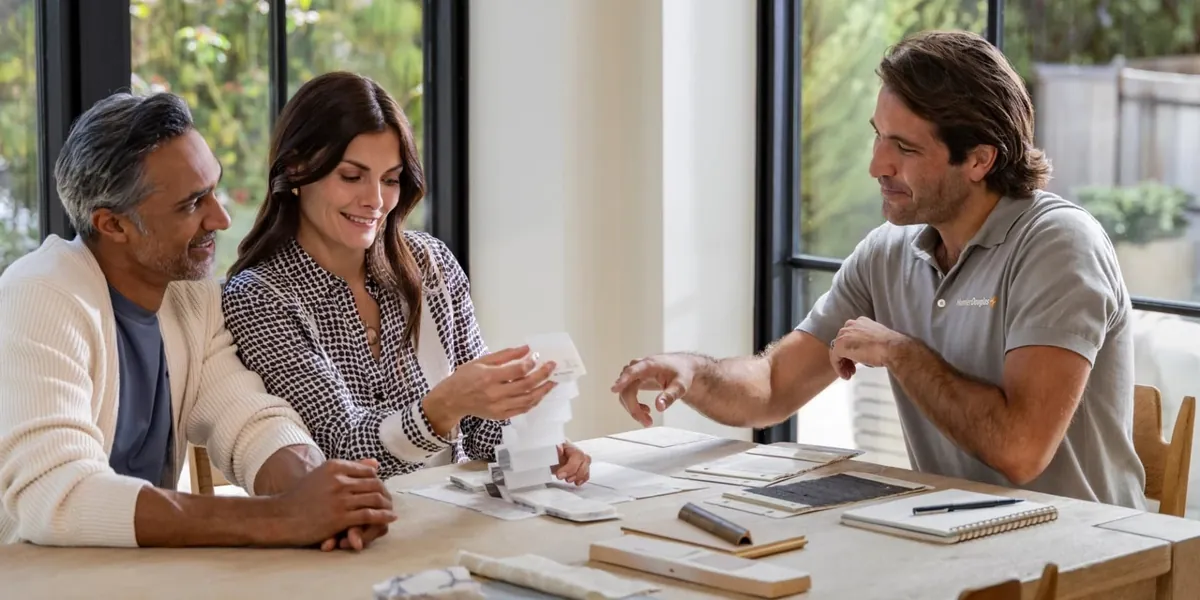
Whitman is covered by our shop-at-home service from Canton. That suits a town of small windows well, because a sample means most when you see it against your own frame.
- Book through Request a Consultation, or use the call button if you would like to talk first.
- We come to the house with a van of Hunter Douglas samples.
- We look at each window with you, noting frame depth, sash locks and which way it faces.
- You try slat colors and widths against the glass and the trim.
- We decide mounts and controls together, including any window worth motorizing.
- We measure each opening and leave a free estimate to think over.
For help with paint, fabric and furniture as well, ask about our interior design consultations.
The post-war capes
The capes in town are compact, with a living room and kitchen downstairs, bedrooms either side of the hall or up under the roof, and windows of regular sizes. They are easier to dress than the old houses, but small lots mean the same privacy questions apply on the sides of the house.
Kitchens in these houses often have a window over the sink that looks out to the side yard and the neighbor’s driveway. Faux wood suits that window, carrying the look of wood without being real wood. The living room usually faces the street with one larger window, which sets the color for the front of the house. Bedrooms want a darker slat for sleep and an outside mount where the frame is shallow.
If a cape has a slider to a deck at the back, a vertical blind is the usual answer. It draws aside to clear the door and its vanes turn to filter the light. For custom blinds in Whitman, MA, on a cape, the order is often straightforward, because so many windows share sizes.
Letting the blinds keep their own hours
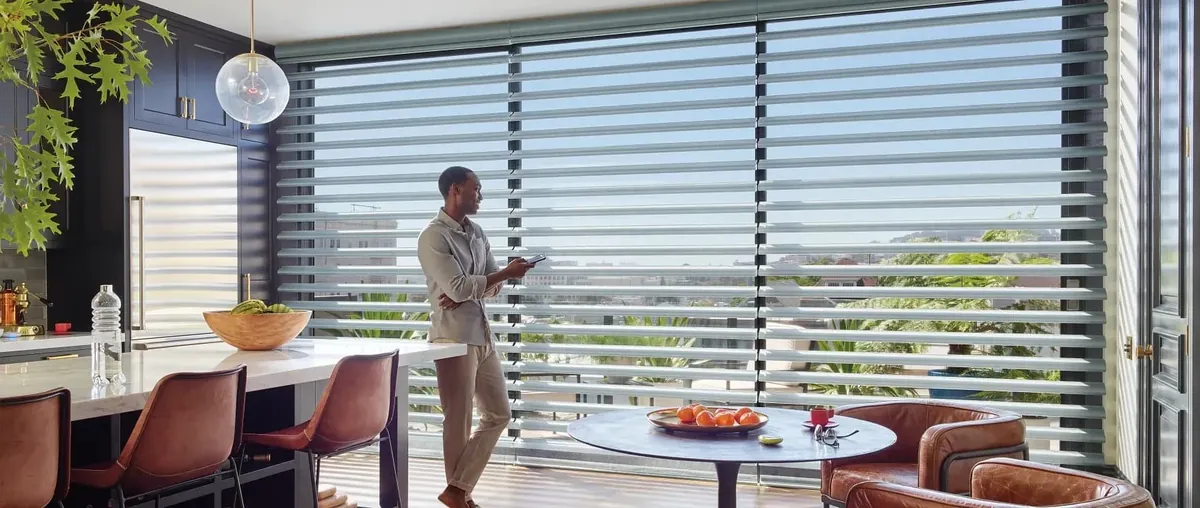
On a street of close-set houses, the moment the lights come on inside is when privacy matters most, and it is also the moment people tend to forget the blinds. Motorized control with Hunter Douglas PowerView handles that for you. A blind can be raised, lowered and tilted from a remote or a phone app, and a schedule can close the street and side windows at dusk every day.
The same schedule can open them again in the morning, tilted to let light in without opening the view. That is useful in a bedroom that faces a neighbor, or in a house left empty during the working day. We plan how each motor is powered at the visit, and you can motorize a few windows rather than all of them. Our guide on how motorized shades are controlled explains the options.
The Victorians near the center
Closer to the center, Whitman’s Victorians have taller sash than the capes, higher ceilings and more decorative trim, though many of their side and back windows are still small. In the front rooms, wood blinds are the natural partner for original woodwork, with a slat color picked either to match the painted casing or to pick up the floor.
A tall front sash has the opposite problem from the small ones: the stacked slats at the head of a raised blind can cover a strip of the upper glass. A narrower slat stacks shorter, and mounting the blind above the frame lifts the stack clear. On a Victorian, the side and back windows often follow the same color as the front so the house looks consistent from every angle, even though their sizes vary widely.
Bay windows turn up on some of these houses as well, usually on the front or side of the parlor. Each sash in the bay takes its own blind, and the set needs one headrail height and one slat color so the bay reads as a single shape from outside. The narrow side sash of a bay are often the smallest windows in the room, so the same care over fit applies there as on the little original openings elsewhere in the house. We measure every face of the bay separately and plan the widths so the small gaps where the blinds meet at the angles look even.
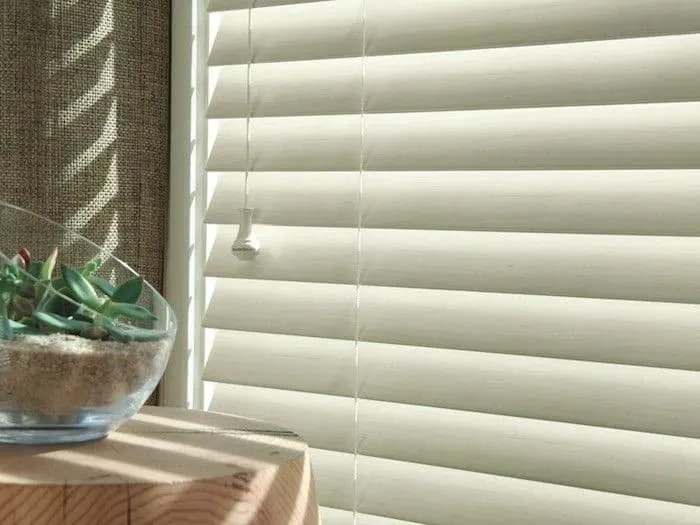
Bedrooms under a streetlight
On close-set streets, a bedroom at the front of the house often sits level with a streetlight, and one at the side may catch a neighbor’s porch light or the glow of their kitchen late into the evening. Daylight is only half of what a bedroom blind has to deal with.
A deeper slat color closes darker than a pale one, and the slats in a closed blind overlap, so most of that glow stops at the glass. The bright line that can show around the edges of an inside-mounted blind is the remaining issue. In a small, old frame it can be reduced by measuring tightly, or by mounting on the face of the casing so the blind overlaps the opening on every side. When people ask about custom blinds in Whitman, MA, for a bedroom, this is usually the conversation we have at the window.
Keeping the blinds you already have working
Not every window needs something new. Many houses in town already have good blinds on some windows that have simply stopped tilting properly or lost a slat, and we repair blinds and shades as well as selling them. If some of your windows are fine and others need replacing, we can match new blinds as closely as possible to the color of the ones you keep, so the street side still looks like one set. Point them out during the visit and we will look at both at the same time.
Light through the day on a tight lot
Close neighbors change how sunlight reaches a house. A window that faces south may get direct sun only in the hours when it clears the roof next door. A window facing east may see the morning sun bounce off the neighbor’s siding rather than arrive straight. The light in many Whitman rooms is reflected and patchy, and it shifts as the day goes on.
A blind copes with that better than most coverings, because you can change the tilt through the day rather than choosing simply up or down. Morning: slats angled to throw light up and keep the side view closed. Midday: opened a little more in a room that gets little direct sun. Evening: closed for privacy once the lamps go on. With motorized control, those changes can happen on their own.
A quick guide to the four materials
- Wood: the warmest look, for front rooms and any room where the trim and floors are wood.
- Faux wood: the wood look in a faux wood slat, for kitchens, baths and whole-house matching.
- Metal: the slimmest profile, for shallow frames, door glass and very small openings.
- Vertical: for sliders and the widest runs of glass.
Wood and faux wood come in matching colors, so the street sees one set of blinds whatever the material inside. If you are not sure whether a room wants a blind or a shade, our guide on shades or blinds sets out the difference.
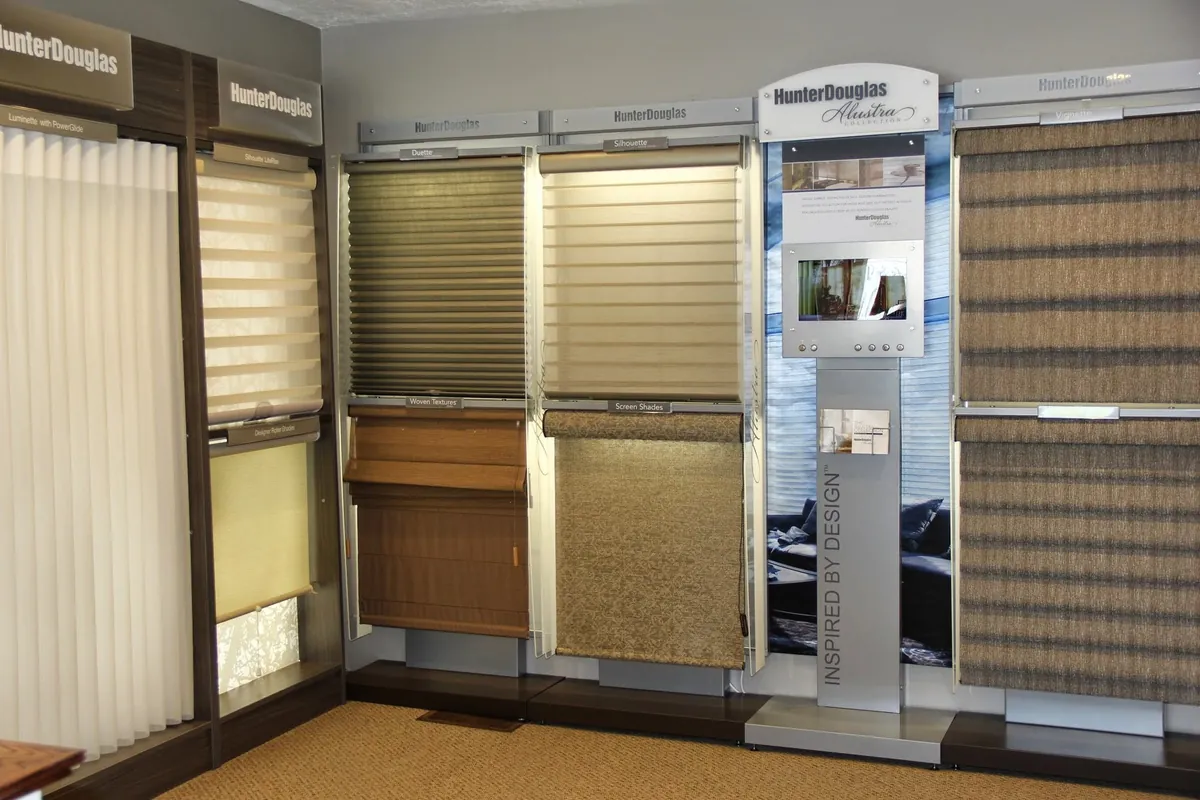
A Gallery dealer, with certified installers
Blinds & Designs is a Hunter Douglas Gallery dealer, and every blind we sell is put up by installers certified by Hunter Douglas. On a small, old frame, where a fraction of an inch decides whether a blind tilts freely, that matters.
We also offer free estimates, interior design consultations, motorized control and automation, and repairs to blinds and shades you already own. The whole range is on our custom blinds page. Every service we offer in town is on our Whitman page, including cellular shades in Whitman and roller shades in Whitman.
Questions from Whitman
My windows are small and the frames are shallow. Can a blind still fit inside?
Often, yes. We check the depth of each frame for the headrail and for the slats to tilt past the sash lock. Where there is not enough room, a blind mounted on the face of the casing works well.
How do I keep privacy from the house next door without losing light?
Tilt the slats so the room-side edge points up. The neighbor sees a closed face while light bounces off the slats onto your ceiling.
Can a blind make a small window look larger?
Mounting it slightly above and wider than the frame lets the raised slats stack above the glass, so the whole pane stays clear in daytime. A pale slat color helps too.
Do the blinds on a two-family need to match?
They do not have to, but one color on the street side keeps the building looking tidy. Inside, each floor can choose freely.
What does the estimate cost?
Nothing. The estimate is free after we measure.
Ready when you are
Small windows and close neighbors are easier to solve with the samples in your hand than on a screen. Request a consultation and we will bring the full range of custom blinds in Whitman, MA, to your house, measure every opening and leave a free estimate. If you would like to see Hunter Douglas products in person as well, our nearest showroom is in Franklin, and the call button reaches us for anything quick.