
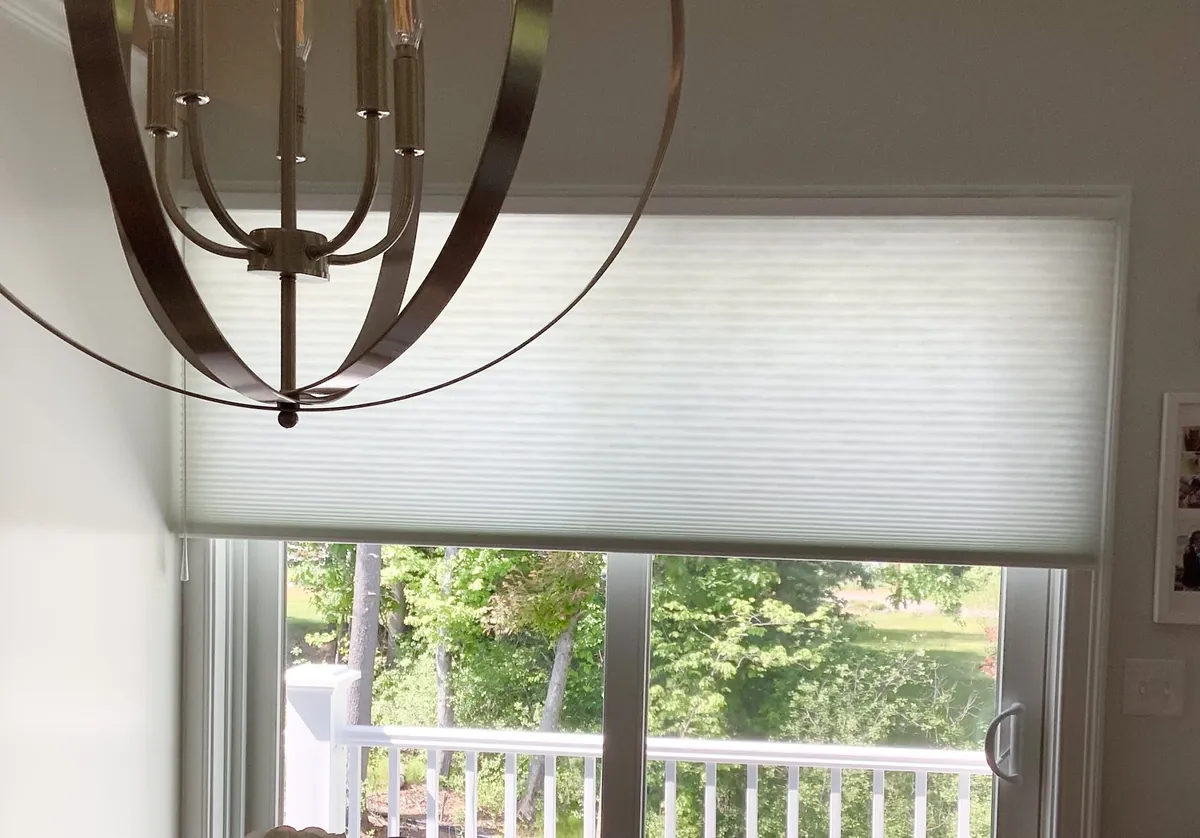
Small windows, near neighbors, every inch of light
Whitman’s streets are tightly packed. Two-families and post-war capes sit on small lots, and around the center the older Victorians stand close together as well. From almost any room, a glance out of a side window lands on neighboring clapboard only a short distance away.
The older houses add a second constraint: small original openings. Those windows were never generous, so the daylight they admit is precious, and a shade kept shut all day for privacy can leave a room surprisingly gloomy. Motorized blinds in Whitman, MA, help with that balance. A PowerView motor lets you open, close and fine-tune each shade by remote, by phone or by a weekly timetable, so the room gets light when the moment allows and privacy when it does not.
Each shade is built to suit your window exactly as it stands. Nothing about the frame has to change.
Shade styles that make the most of a small window
When the opening is small, the shade has to earn its place. These three often suit Whitman houses, and each one links to its own Whitman page.
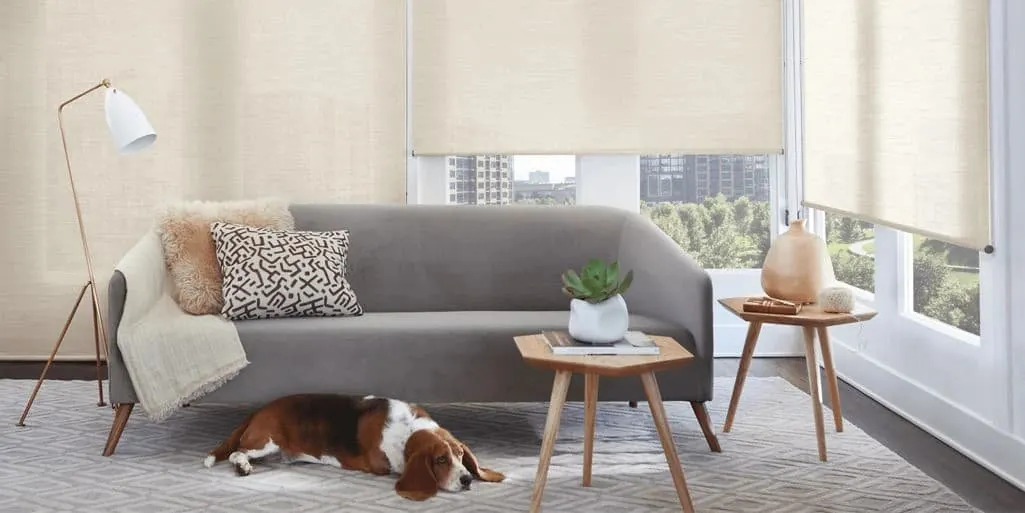
Roller shades
One flat panel that rolls up tight. Light-filtering and screen fabrics blur neighboring walls while keeping the room bright.
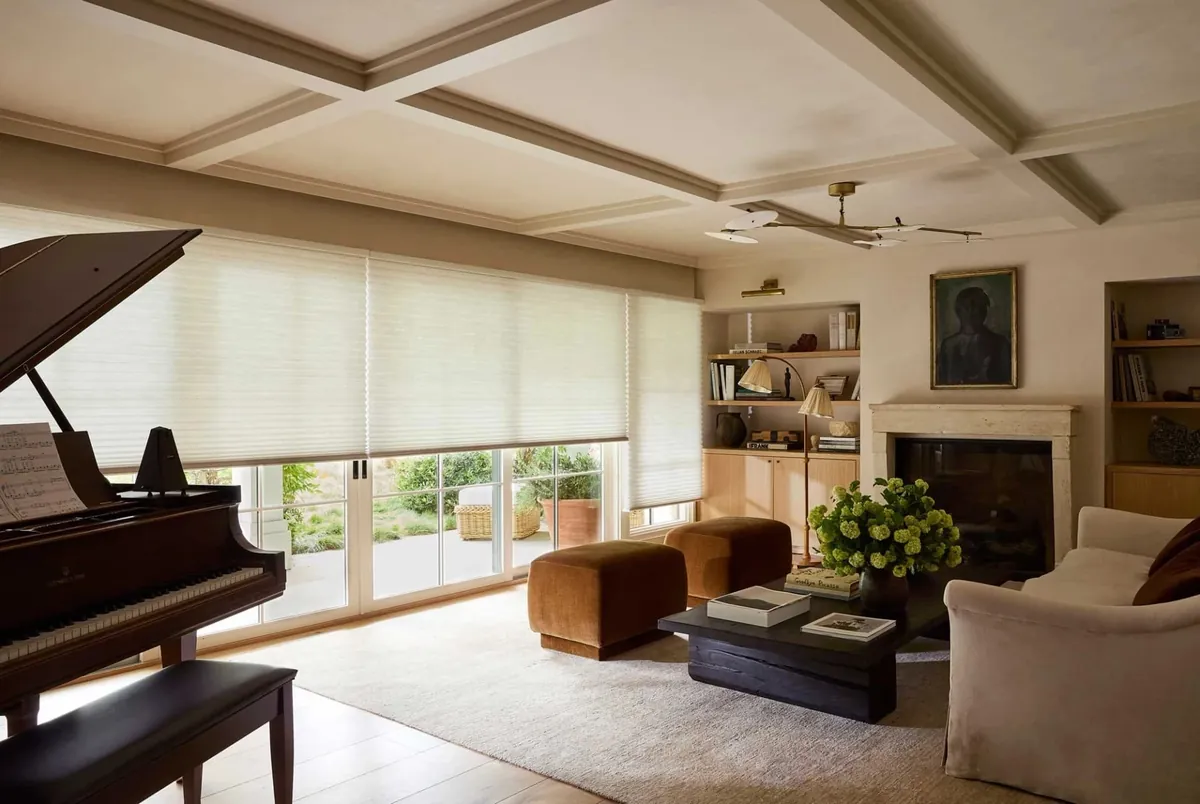
Cellular shades
Honeycomb cells in light-filtering weights for living spaces and room-darkening weights for bedrooms.
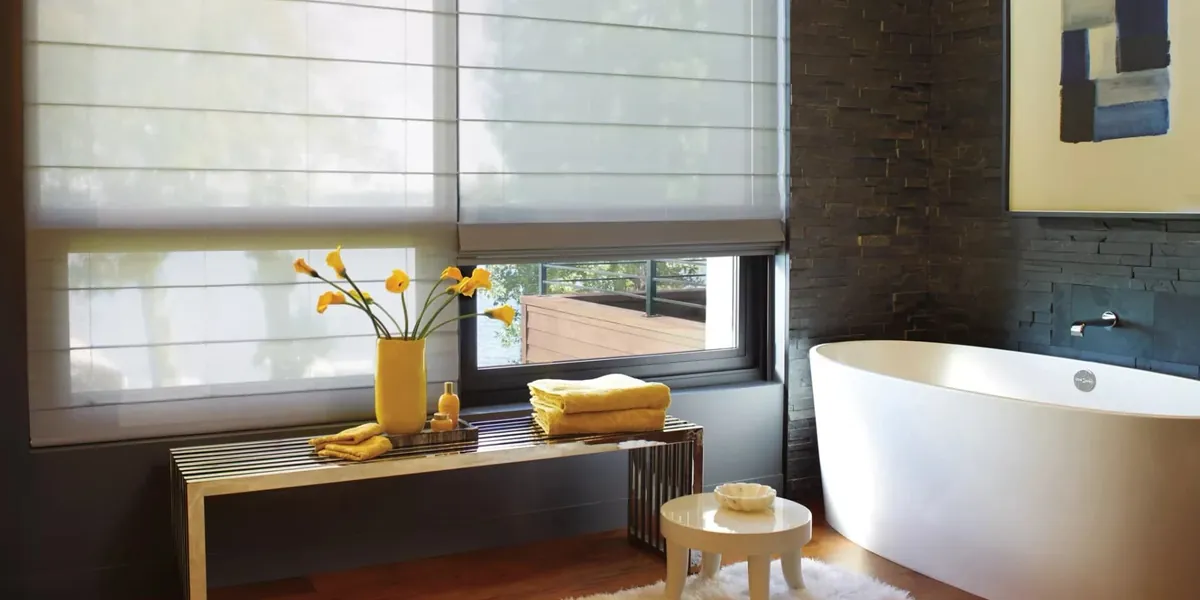
Roman shades
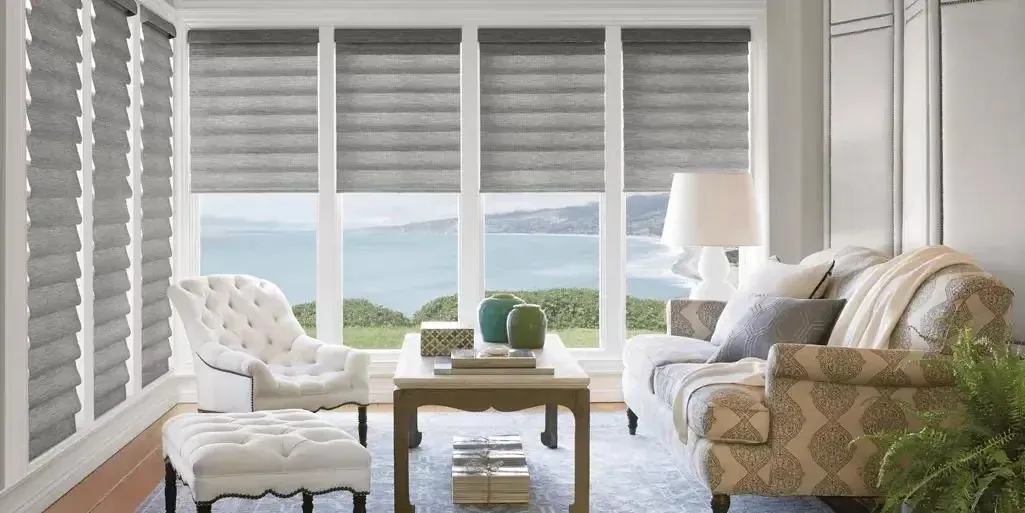
Soft fabric folds for a parlor or bedroom in one of the older houses, moved up and down without a cord.
Short sightlines change how a room is used
On a small lot, one Whitman house stands close beside another. Kitchen faces kitchen. A bedroom may look straight into a stairwell or a bath across the way. In a two-family, the upstairs unit can also look down onto a neighbor’s porch or yard.
The usual response is to pull those shades down and forget them. With a cord, every adjustment takes effort, so the simplest choice wins. The cost is daylight: rooms along that side spend the whole day dimmer than they need to be.
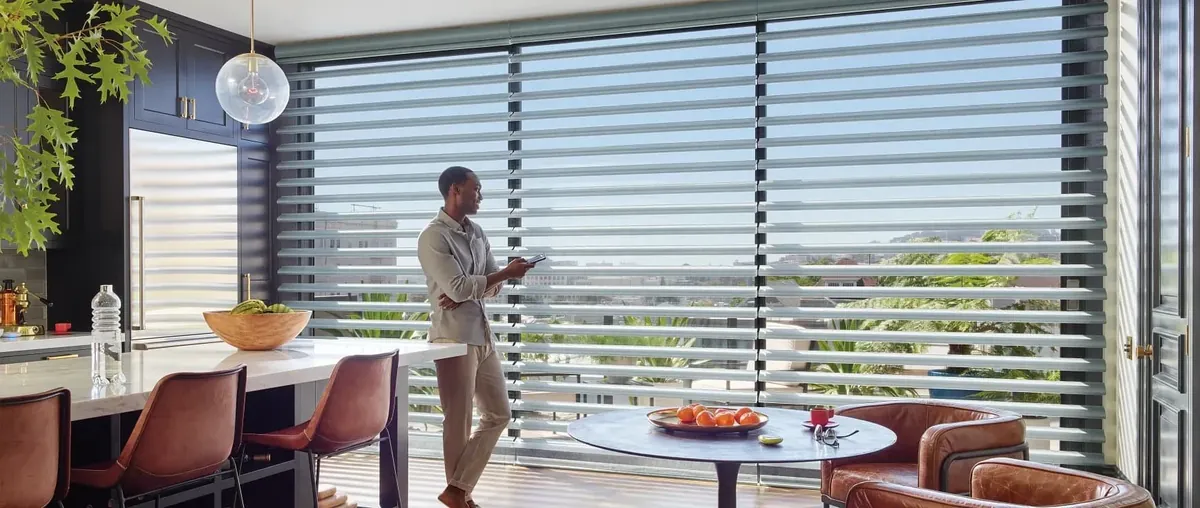
A motor makes small changes so easy that people actually make them. Raise the kitchen shade while nobody is in the kitchen opposite, drop it partway when somebody is, close it fully at dusk. Each change is a single button or a single tap, so it becomes part of walking through the house instead of a job.
Fabrics that admit light but not the view
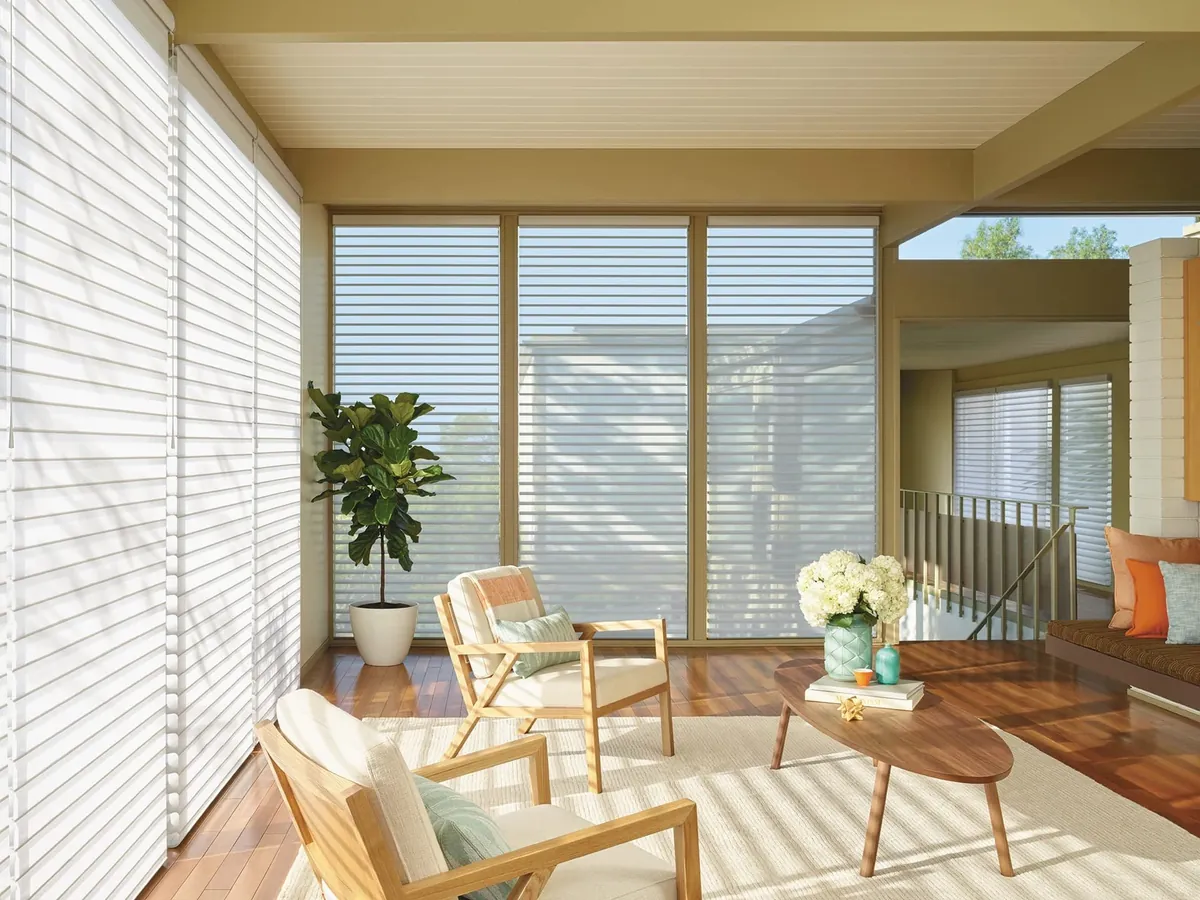
For a close-set Whitman house, the best motorized shades let daylight through while keeping eyes out. Several do that well.
- Light-filtering honeycomb spreads daylight into an even glow and reveals nothing of the room behind it. Good for kitchens, baths and bedrooms that face a neighbor.
- Screen and light-filtering roller fabrics soften neighboring siding into a blur, so the window still feels open.
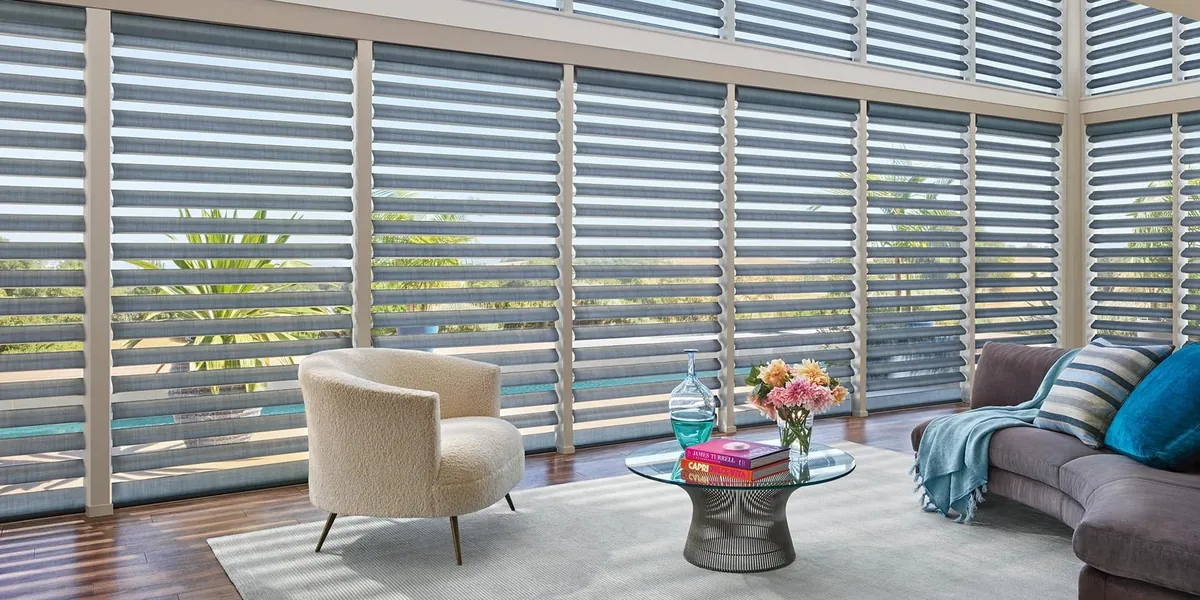
- Sheer shades with fabric vanes tilt to filter light and view together, and on a motor those small tilts cost nothing.
- Tilting blinds angle to cut the line of sight across the gap while throwing light up at the ceiling.
At your consultation, each of these goes up against your actual side windows, so you see exactly what the neighboring wall looks like through it.
Small openings in the older houses
The Victorians near the center and many earlier capes keep their small original openings. That raises a fair question: with so little glass, is a motorized shade worthwhile?
It is, and arguably more than on a big picture window. When glass is scarce, clearing all of it when you want light matters a great deal. A shade that rolls or folds compactly at the top lets the whole opening do its job. And since the motor takes it fully up or fully down with one press, it really does get raised, instead of hanging halfway because halfway was easier.
Older frames are also less regular than modern ones. We measure each opening individually, so every shade suits its own particular window.
Two-families: two households, two setups
Whitman’s two-families place two households under one roof. PowerView lets each keep a separate system: separate shades, separate handsets, a separate app account and separate timetables. Neither side’s choices touch the other.
That makes motorized blinds in Whitman practical for owners who live in one unit and rent out the other. Each side runs independently, and either can add more shades later without involving the other.
What you press, tap or program
Think of PowerView as one set of shades with three ways in.
A handset. Up, down and stop, assigned to one shade, a room or any group you choose. It needs no phone at all. Plenty of Whitman households keep one per main room, or clip one beside the light switch.
Your phone. Inside the app, shades are listed room by room. Slide any of them to an exact height, or store heights you use often, like “kitchen half down”, and recall them in one tap.
A timetable. A weekly plan telling chosen shades when to open and close. It runs by itself week after week, and the handset can step in at any moment.
For more detail, read how motorized shades are controlled, or see window covering automation for whole-house timetables.
The cape’s upstairs bedrooms
A Whitman cape fits its upstairs bedrooms under the roof, with small windows in dormers or gable ends. They are among the hardest windows to reach by hand. A dormer pushes the glass back into its own alcove, and a bed, desk or dresser nearly always sits in front.
On a motor, those windows respond to a button by the pillow or to a morning timetable. Room-darkening honeycomb keeps early light out until the hour you pick, then lifts by itself. For a child’s room, a later weekend timetable takes seconds to set.
Gable-end windows in the attic rooms
Some Whitman capes have a finished room at the gable end, with a small window high in the peak or a pair of windows flanking a chimney. They are often the brightest windows upstairs, because nothing shades them, and the most awkward to reach, because the ceiling slopes right down to the floor around them.
A motorized honeycomb or roller on a gable window means the room can be used at any hour. Lower it for an afternoon nap or a movie, raise it when you want the light back, all from a handset on the shelf. Grouped with the dormer windows, the whole upstairs can follow one morning and one evening timetable.
Behind the faucet in a Whitman kitchen
Plenty of Whitman kitchens put their sink under a small window that looks across at neighboring siding. Small glass, a faucet in the way and a long reach over the counter: that shade tends to sit down for weeks.
Put a motor on that one window and the kitchen feels different. It lifts in the morning with a tap while the kettle heats. Through the day it can rest at a stored height that admits light but softens the outlook. When the evening timetable runs, it closes along with every other shade on that wall.
Dusk on a small lot
After dark, a lamp-lit room on a small lot is on show. Front windows face the sidewalk; side windows face a neighbor a few steps off. Most Whitman homes have a nightly circuit of closing shade after shade.
One evening timetable can lower every street-side and neighbor-side shade together, at whatever hour suits, whether anybody is home or not. A morning timetable raises them again. When the day goes differently, one press on the handset overrides the plan.
Bathrooms close to the property line
In a post-war cape or a two-family, the bathroom window usually sits over the tub or the toilet and faces the neighboring lot at close range. It needs covering nearly all day, and reaching it by hand means leaning over porcelain.
A motorized light-filtering honeycomb solves both problems at once. Daylight comes through as a soft glow, the room stays hidden, and the shade moves from a button by the door. For a bathroom that has felt like a cave for years, that small change is often the one people talk about afterwards. A faux wood blind is the other common choice there: its slats tilt from the handset to send light up toward the ceiling while closing off the view from the neighboring lot, and the motor means the tilt can change as often as the day needs.
Victorian parlors near the center
Around Whitman’s center, the Victorians bring a different kind of room: a front parlor with a pair of original windows facing the street and another on the side facing the next house. The openings are modest in width, but the rooms often have more height than a post-war cape, and the shades in them are seen from the sidewalk every day.
Motorized blinds in Whitman suit these rooms well. Roman shades in a soft fabric look at home against older trim, and on a motor they rise and fall evenly, so a pair of front windows always finishes at the same height. A light-filtering fabric on the side window keeps the parlor bright while hiding it from the neighbors. And because the controls are on a handset, nobody has to reach behind a sofa or a side table to adjust anything.
Stored heights for a busy household
In a small house, rooms do several jobs over the course of a day. The front room is a playroom in the afternoon and a living room at night; the kitchen is breakfast, homework and supper. Each job wants the shades at a slightly different height.
The PowerView app lets you store those heights and name them. “Morning” might open the kitchen and the front room. “Homework” might lower the sunny side halfway to cut glare on the table. “Night” closes every shade facing the street and the neighbors. Each one moves several shades together, and each can be tied to a timetable or called up by hand.
A spare room turned into an office
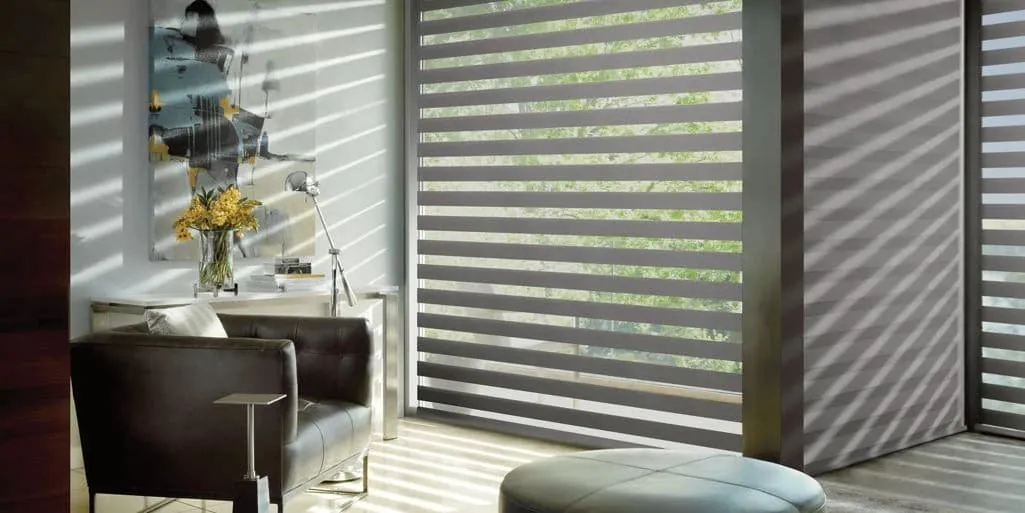
Many Whitman households have turned a small bedroom into a home office. The window in that room is usually small and often faces a neighbor, and the light through it shifts across a screen as the day goes on.
A motorized roller or honeycomb lets you lower the shade partway through the brightest hours without leaving the desk, then raise it again once the sun has moved. A timetable can do it automatically on weekdays and leave the room alone at weekends. It is a small detail that makes motorized blinds in Whitman, MA, feel practical rather than a luxury.
One look from the street
On a close-set street, a house is seen from many angles at once: the sidewalk, the neighbors’ windows, the driveway. When every shade on a small house sits at a different height, the whole front looks restless.
Grouped shades fix that. The front windows, or every window on one side of the house, move together and stop together, so the house looks orderly from outside. Inside, it simply feels calmer.
Stairs and hallways in a two-family
The stair in a Whitman two-family often has a single small window on the landing, lighting the climb to the upper unit. It sits over the treads, out of easy reach, and it faces the neighboring house across the side yard. By hand it rarely moves, so the stair is either dark all day or on show all night.
Motorized, the landing window joins the rest of the household’s system. It can open with the morning timetable, close with the evening one, and answer the handset in between. For the upstairs unit, it is often the window that makes the whole system feel worthwhile, because it is the one nobody could reach before.
A sensible first round
Few households motorize everything at once. In Whitman, popular first choices are:
- The kitchen window behind the faucet, since it is the hardest daily stretch.
- A side window facing a neighbor, where privacy and daylight compete most.
- The upstairs dormer bedroom, where early light and an awkward reach meet.
- The front room on the street side.
Later shades join the same handsets, app and timetables, so you can grow into motorized blinds in Whitman at your own pace.
Samples at your own Whitman windows
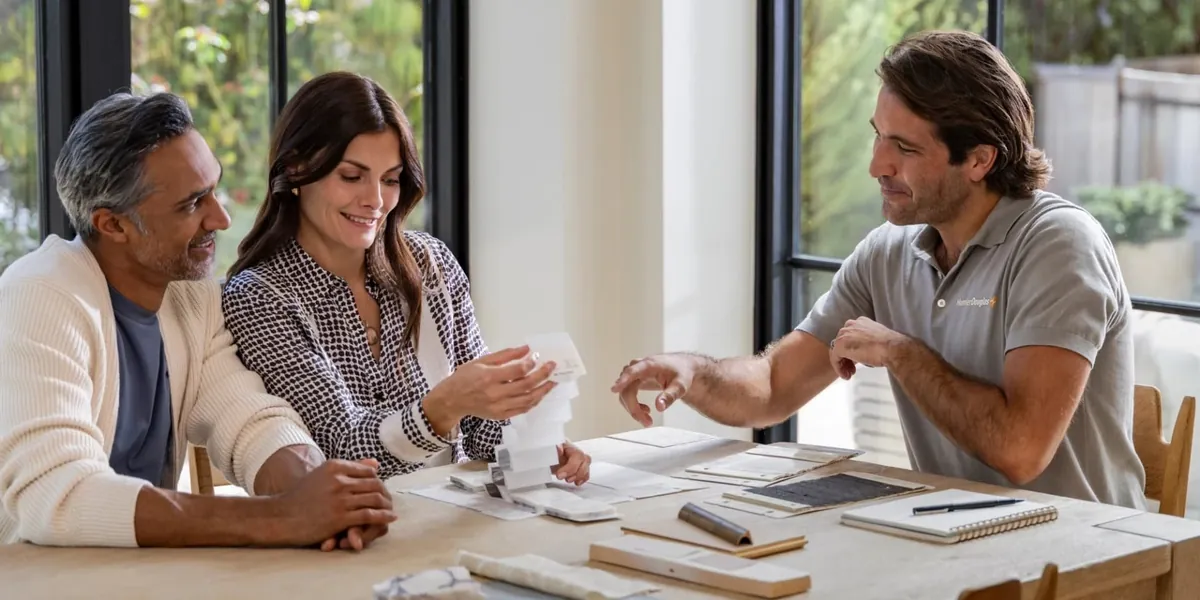
Whitman lies within the Canton shop-at-home territory, which means your consultation happens in your living room rather than ours. A van loaded with Hunter Douglas samples comes to you, and every fabric is judged in your own light. The Canton shop-at-home page describes the service in full.
On a close-set street, nothing else is a fair test. Hold a light-filtering fabric to a side window and you see right away whether it hides the neighboring kitchen and whether the room stays bright enough. During the same visit we sort out groups, timetables, handsets and the way each motor gets its power. Every opening is measured, and afterwards you receive a free estimate with no pressure to decide quickly.
Prefer to visit in person as well? Franklin is the nearest showroom to Whitman; see the Franklin showroom page.
Why the full Hunter Douglas range helps a small house
Small houses reward careful choices, and careful choices are easier with the whole Hunter Douglas line on the table. As a Hunter Douglas Gallery dealer, Blinds & Designs can put honeycomb, roller, roman and sheer options in front of you for the same Whitman house, all running on a single PowerView system.
Certified Hunter Douglas installers fit every shade. Interior design consultations are there if you want a hand with color and fabric, estimates are free, and we repair blinds and shades you already own. Browse the range at motorized blinds and shades, or see all our Whitman services on the Whitman page.
When your shades arrive
A certified Hunter Douglas installer fits each shade to the opening it was measured for. Before heading off, they check that everything responds to the handset and the app, and set up the groups and timetables agreed at the consultation. Then you take the controls yourself, so the system already feels familiar by evening.
Read more on what happens on installation day.
Questions from Whitman
Our older windows are small. Is a motor still worth it?
Often more so. With little glass, clearing the entire opening in one press makes a real difference to how bright the room feels.
Can we have privacy from the neighbors without a dark room?
Yes. Light-filtering honeycomb, screen rollers, sheer shades and tilting blinds all admit daylight while hiding what is inside. Motorized, they are easy to adjust through the day.
We own a two-family. Can each unit run separately?
Yes. Each household can keep its own shades, handsets, app and timetables, with no overlap.
Can we begin with a handful of windows?
Most people do. Additional shades slot into the system you already have.
Must we go to a store to choose?
No. The samples travel to you. For anyone who also wants a showroom visit, Franklin is closest to Whitman.
Your dimmest room is the place to begin
Which room stays gloomy because a shade never goes up? The kitchen, a bath, a bedroom facing the neighbors? Send a consultation request, and we will come to your Whitman house with samples, take measurements and give you a free estimate.
Got a question first? Tap the call button, or read about our in-home consultations.