
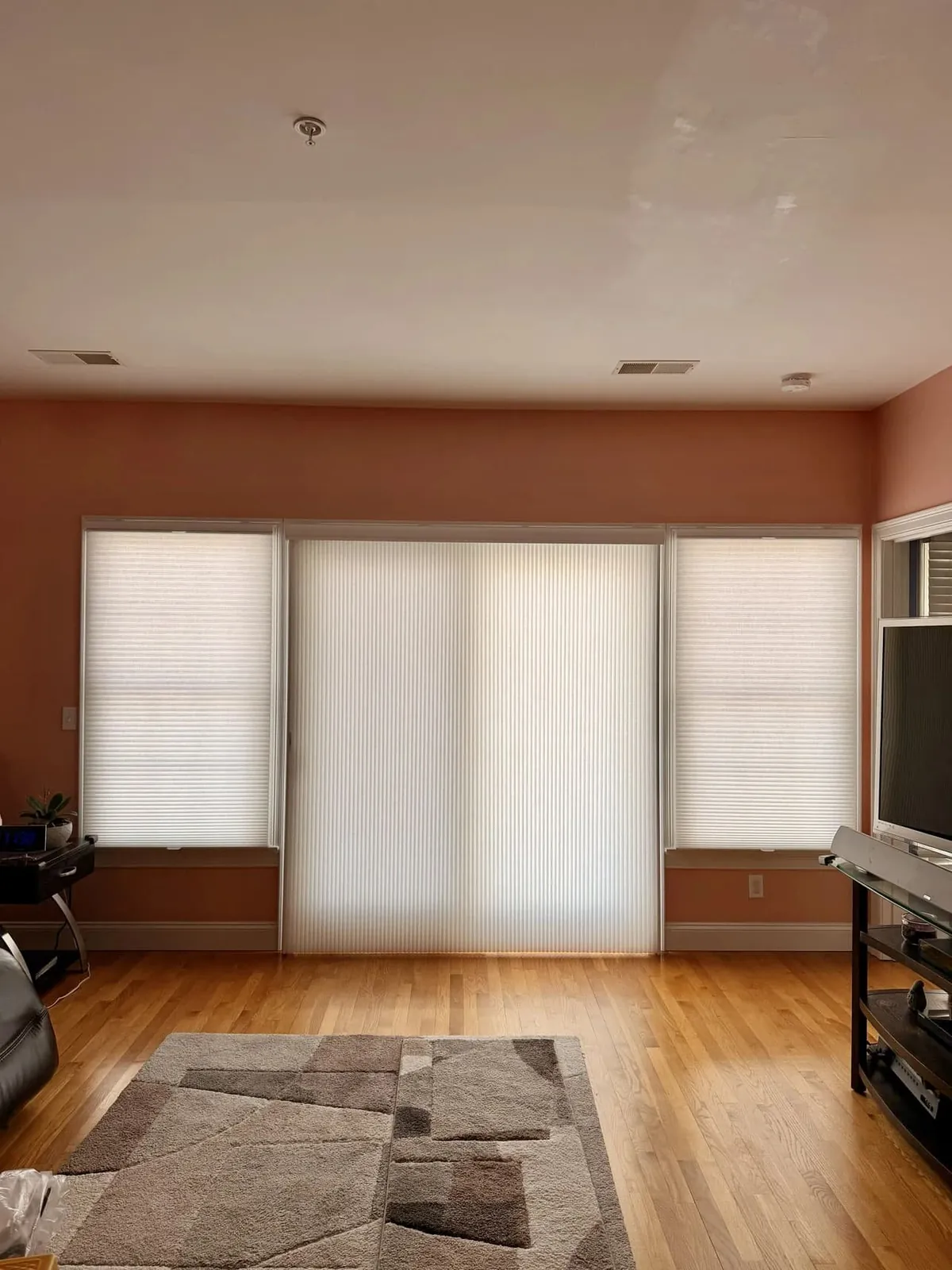
Short sightlines on small lots
Whitman packs a lot of house onto small lots. Two-families sit close beside each other, post-war capes line up with narrow side yards, and the older Victorians near the center share the same tight spacing. Stand at almost any side window and the next house is right there, often near enough that you could talk across the gap.
Short sightlines like that change how a room is lived in. A kitchen window can look straight into a neighbor’s kitchen. A bedroom can face a bedroom. Choosing coverings with a Hunter Douglas dealer in Whitman, MA, therefore starts with a plain question for each window: what do you need to stop seeing, and what do you want to keep?
The older houses add their own wrinkle. Many still have their small original openings, so there is less glass to begin with and every bit of daylight counts. Our job is to give you privacy without making a modest window feel smaller, and we work that out at your house with samples from the van.
Hunter Douglas for Whitman, service by service
These six cards each lead to a Whitman page with more on that product. They reflect what we fit most often in the town’s two-families, capes and older houses.
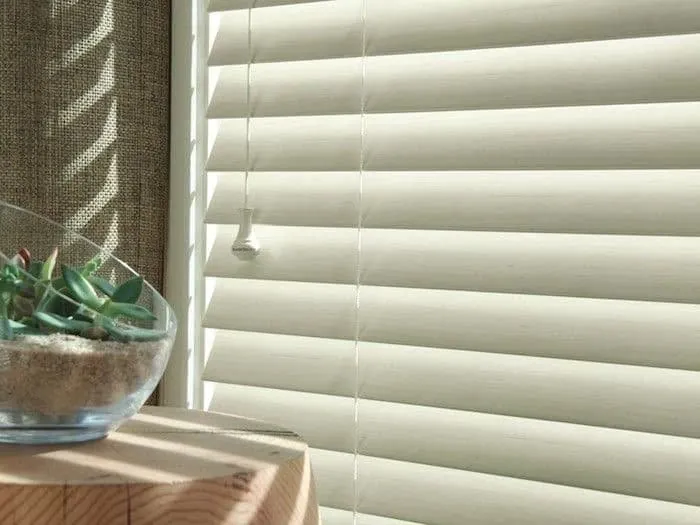
Custom blinds
Tilting slats in wood, faux wood, metal or vertical styles, handy when a neighbor is close.
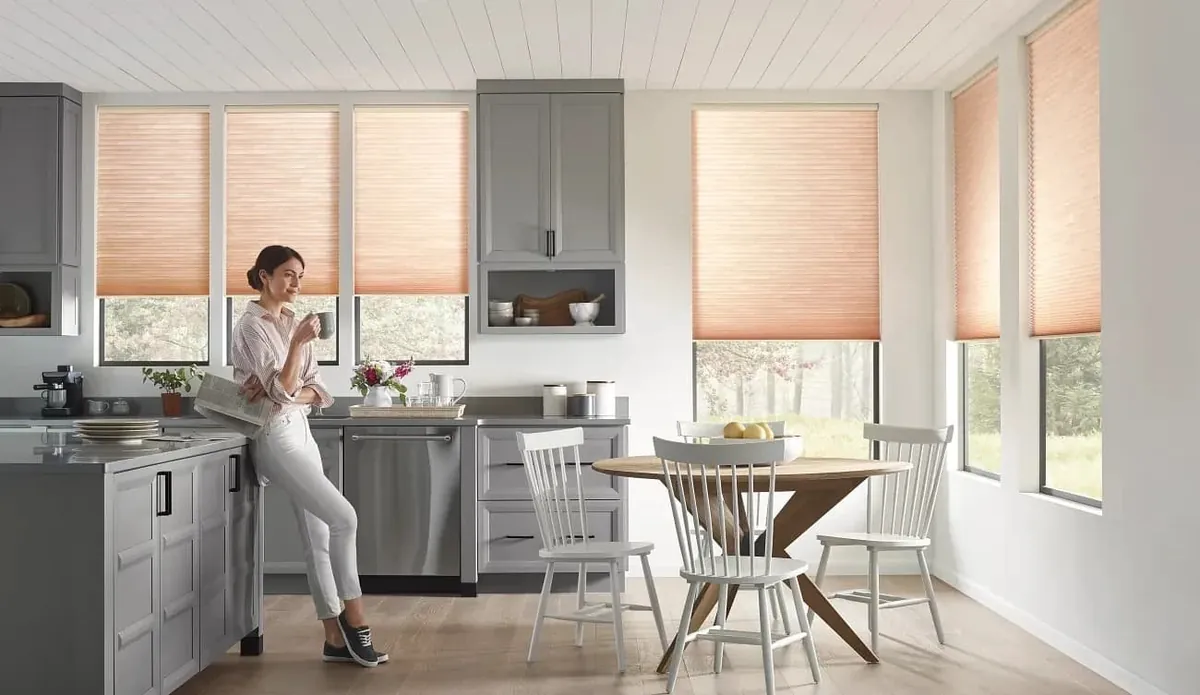
Cellular shades
Duette and Applause honeycomb that folds away small on a modest window.
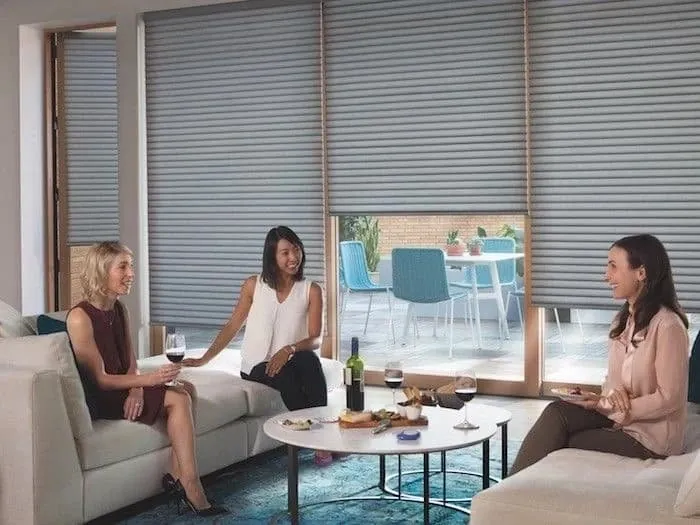
Roller shades
Designer and Alustra rollers and screens that roll up out of sight.
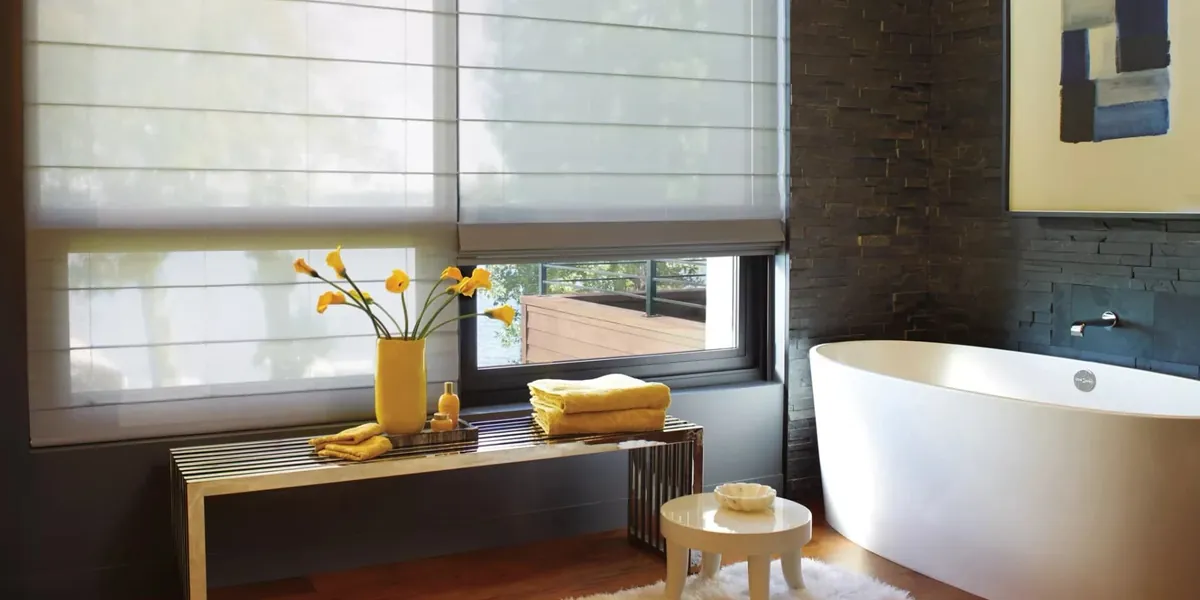
Roman shades
Vignette and Carole Fabrics for a soft, tailored look in a period room.
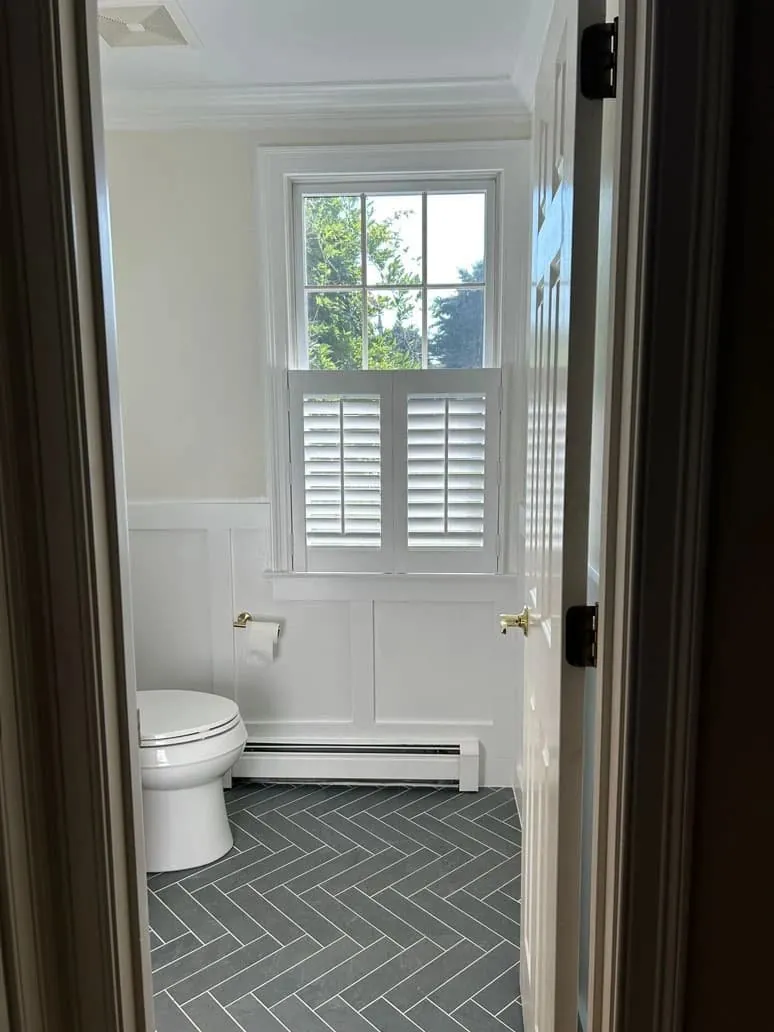
Plantation shutters
Palm Beach, NewStyle and Heritance shutters, built to the size of each opening.
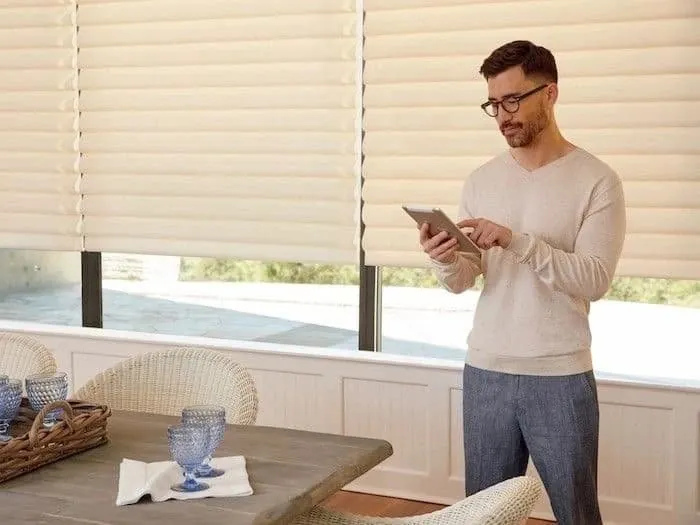
Motorized blinds
PowerView shades you raise or lower by remote, app or schedule.
Small original windows and how to dress them
A lot of the older housing stock in Whitman kept the windows it was built with, or replaced them at the same modest size. These openings are smaller than what you see in newer construction, and the rooms behind them depend on every square inch of glass for daylight.
That makes the stack, the part of a covering that gathers at the top when it is raised, more important than usual. On a big window a few inches of fabric at the head barely registers. On a small one, it can swallow a noticeable share of the view. So we lean toward coverings that clear the glass well:
- Honeycomb shades fold into a compact band, which is a big reason they suit small sash.
- Roller shades wrap around a slim tube and leave almost the whole window open when raised.
- Shutters swing fully clear of the glass on their hinges, so nothing is left at the top at all.
- Blinds stack tighter than many people expect, and the slats tilt so you can light the room without raising them.
Mounting matters too. Fitting the covering inside a small opening keeps the trim on view and avoids the boxed-in look an outside mount can give a little window. Where an older frame is too shallow or out of square for that, we look at the options with you at the window rather than forcing a fit.
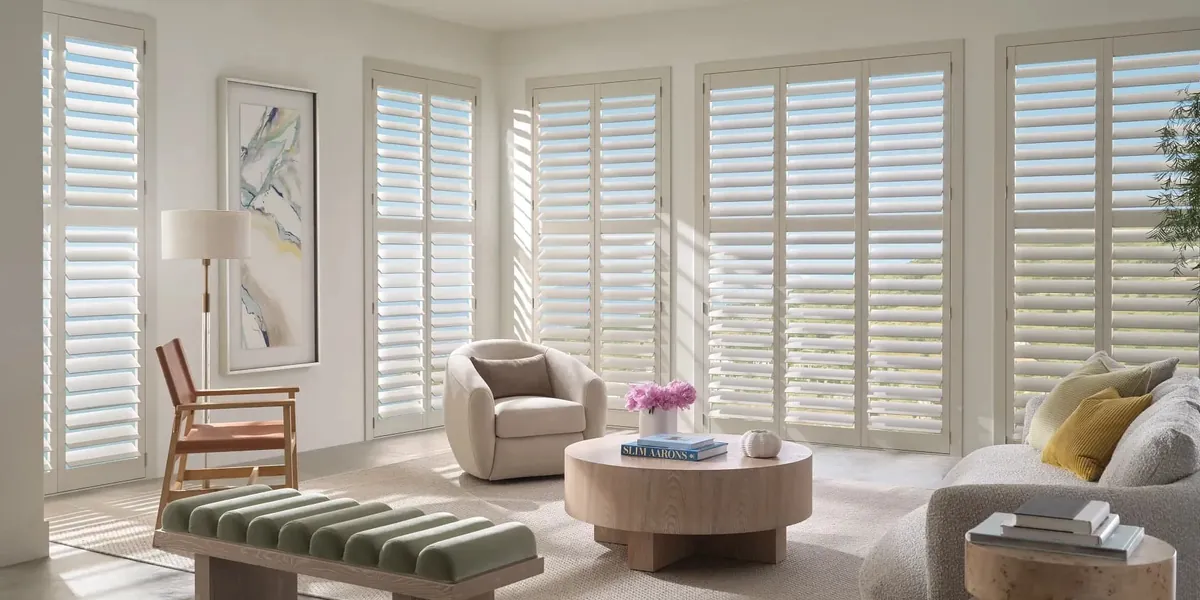
Two-families side by side
The close-set two-family is one of the defining shapes of Whitman’s streets. One household lives on the first floor, another above, and the building next door is often a near twin. Side windows on both floors face side windows on the neighbor’s, at similar heights and only a short gap apart.
On the first floor, the street and the porch are close, and so is the yard next door. Privacy usually leads in every room. Upstairs, the view across the gap is still there, but the floor gets more sky, so glare and morning light come into the conversation in bedrooms and living rooms.
From the road, the two floors are seen as one front. We usually suggest a shared color on the street-facing windows of both units so the building looks consistent, while the rooms inside can be fitted to suit each household. If you own the building, we can plan both floors at once. If you live in one unit, we can focus there and keep the front in mind.
Post-war capes on narrow side yards
The capes in Whitman are compact houses with a lot going on in a small footprint. Downstairs is usually a living room at the front and a kitchen at the back. Upstairs, bedrooms sit under the roof slope with dormer windows.
Downstairs, the narrow side yards are the main issue. A living room side window may look straight at the neighbor’s siding. A sheer shade such as Silhouette softens that view while keeping the room bright, and a pale light-filtering fabric does a similar job at a simpler level. On the street side, shutters with their louvers angled up keep passers-by from seeing in while light still reaches the ceiling.
Upstairs, the dormers are small openings set into the roof, often with angled walls close on each side. A slim covering fitted inside the dormer opening keeps those walls clear and does not crowd the room. For a child’s room or for anyone who sleeps in, a darker fabric helps the room stay dim on long summer evenings.
Victorians near the center
Toward the middle of Whitman, the Victorian houses bring taller rooms and more detailed trim, but many still share the town’s tight spacing. That gives you handsome windows that are in full view of the house next door, which is a particular kind of challenge.
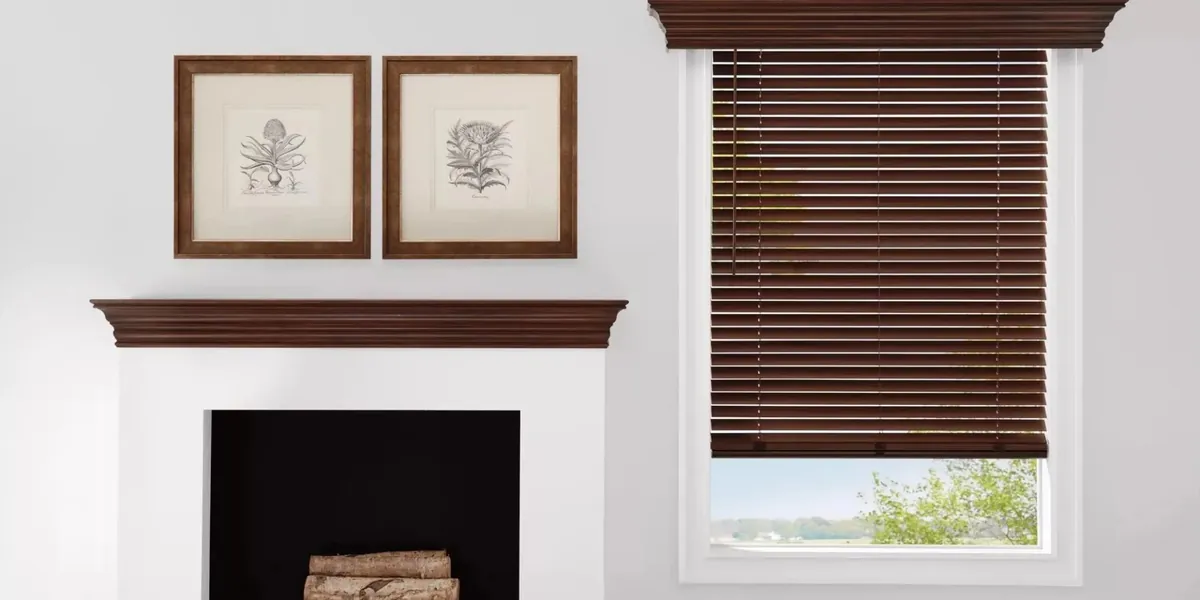
Shutters suit these houses well. They become part of the window frame, they match the weight of period trim, and the louvers let you keep privacy while still bringing in light. Wood blinds are a lighter-looking alternative that gives the same tilting control. Roman shades bring softness to a front room, especially where the walls are a strong color and the window needs a quieter finish.
Older Victorians sometimes have a small window on a stair landing or a narrow side window by the entry. These often face the neighbor directly. A light-filtering shade or a sheer keeps them bright while taking away the view, and because they are often hard to reach, a motorized option can be worth a look.
Bedrooms across the gap
Bedrooms are where short sightlines are felt most. In a Whitman two-family or cape, a bedroom side window may look into the neighbor’s bedroom at the same height, close enough that a lamp on either side lights up both rooms. During the day you may want the window open to the light; at night you want it fully closed off, and you want it to stay that way without fuss.
A common answer is to choose a fabric that does both jobs reasonably well, such as a light-filtering honeycomb that glows by day and screens the room at night. Another is a shutter, with the louvers tilted for daylight and closed tight at bedtime. Where a bedroom is used by a shift worker or a light sleeper, a darker fabric is worth considering, and we can show you how much light each one lets through at your own window. Planning bedrooms is one of the first things we do as a Hunter Douglas dealer in Whitman, because those rooms often decide the color for the rest of the floor.
Motorizing a hard-to-reach window
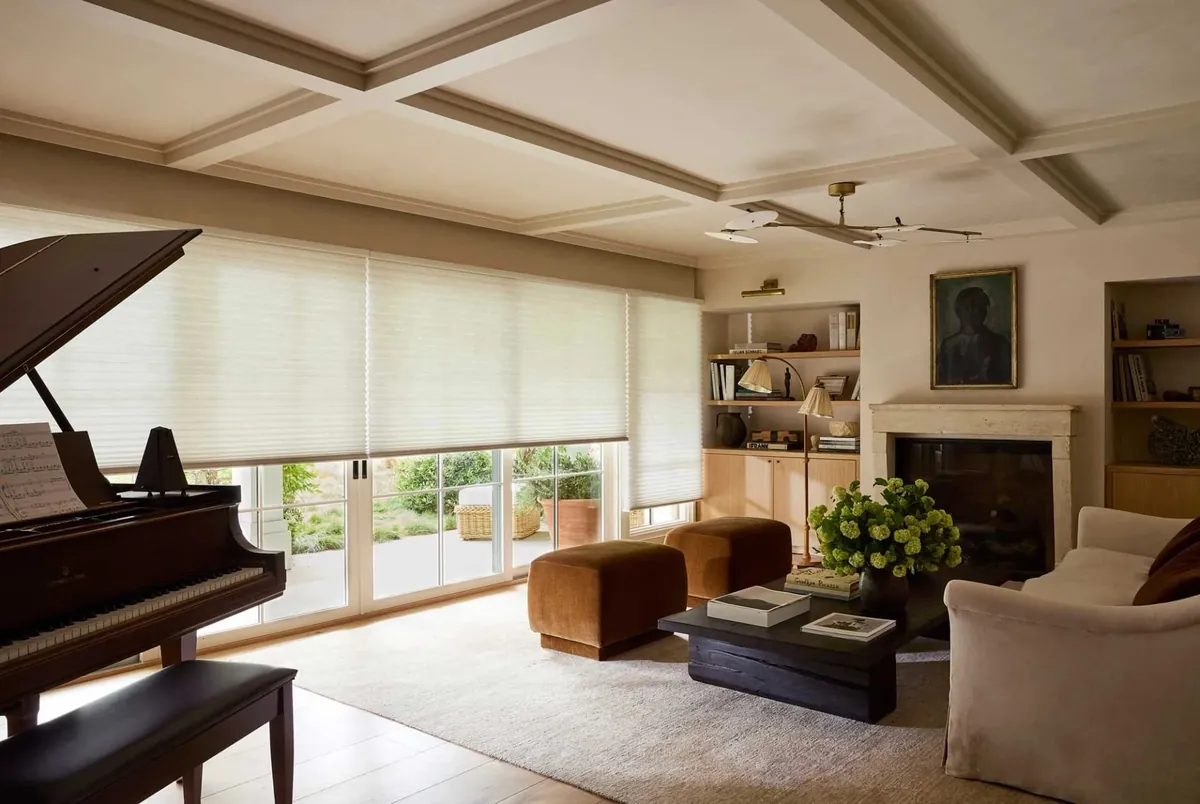
Small houses have their share of awkward windows: the one behind the kitchen table, the narrow pane over a stair, the dormer behind a bed. PowerView puts those windows on a remote, the app or a schedule, so nobody has to lean over furniture or climb a step to reach them. A group of street-facing windows can also be set to close together each evening, which is handy on a close-set street where the front of the house is always in view.
The questions we ask at each window
When we visit as a Hunter Douglas dealer in Whitman, we go window by window, and the same handful of questions sorts out most rooms quickly.
- Who can see in, from where, and at what time of day?
- How much daylight does the room get, and is it direct sun or light bounced off the house next door?
- Is the window small, original or out of square, and how deep is the frame?
- What happens in the room after dark, when lamps make every window easier to see into?
- Who needs to reach the controls, and is there furniture or a counter in the way?
Once those are answered, the choice usually narrows to two or three products, and we hold those up at the window so you can compare them in your own light.
Light that bounces instead of shining
On tight lots, many Whitman rooms do not get direct sun on their side windows at all. What comes in is reflected off the clapboards or vinyl siding next door. That light is softer and cooler, and there is often less of it than you would expect.
Covering a window like that with a heavy fabric can make the room feel dim very quickly. We tend to suggest lighter colors and fabrics that pass more light, so the room stays bright while the view across the gap is blurred. Pale honeycomb fabrics reflect light back into the room. Sheers diffuse it. Light-filtering rollers soften it. Each has its place, and seeing them side by side at your window makes the choice obvious.
Color plays a part as well. A warm white or soft cream fabric tends to make bounced light feel friendlier, while a cool gray can make a north-facing room feel flatter than it is. We bring a spread of whites and neutrals in the van for exactly this reason, because the same swatch can look quite different on the sunny side of the house and the shaded side facing the neighbor.
Bringing the samples to Whitman
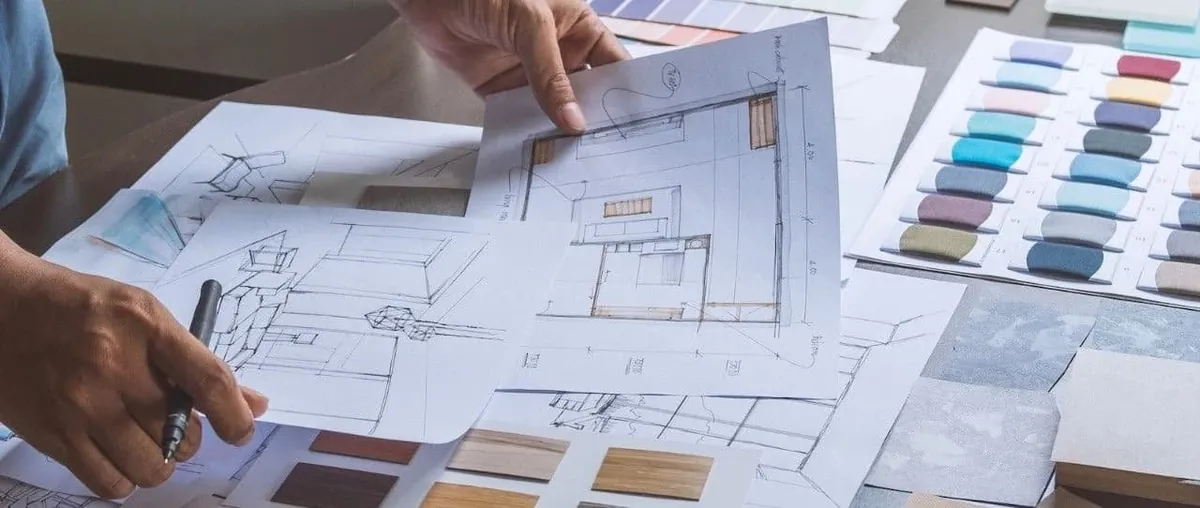
Whitman is part of the shop-at-home area we serve from Canton, which means we come to you rather than asking you to come to us. Our Canton shop-at-home page explains how it works. A consultation starts with our van parked out front and a set of samples carried in. We sit down with you, hear which rooms are the priority, and then walk the house together. At each window we hold up fabrics, slats and louvers so you can judge them in place, and we talk about mounting and whether any window would benefit from motorizing. We measure the openings we are quoting, checking small and older frames one at a time. Afterward you receive a free estimate for the products and certified installation, with no pressure to decide on the day.
More on the visit is on our page about what happens at an in-home consultation. If you are redoing a whole room and want help with colors and fabrics, ask about interior design consultations.
A full range from one Gallery dealer
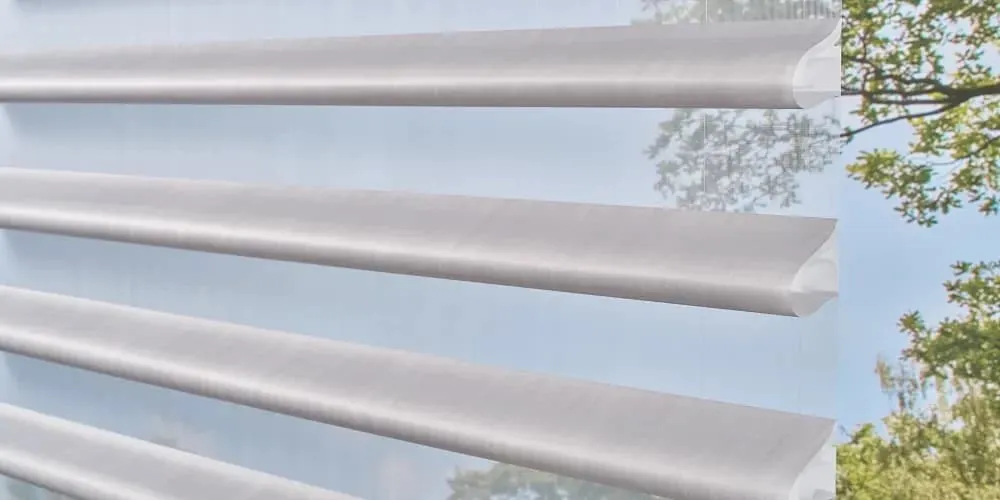
Blinds & Designs is a Hunter Douglas Gallery dealer, and our installers are certified by Hunter Douglas. For a Whitman household, that means every product family is on the table at one consultation: honeycomb, roller, Roman, sheer and woven shades, every style of blind, the three shutter lines and PowerView motorization.
That breadth lets us match the covering to the room instead of the room to the covering. A small original window might get a roller shade, the kitchen a cafe shutter, the bedrooms honeycomb and the front room a sheer, all from one maker and all coordinated on the street side. Working with a Hunter Douglas dealer in Whitman who carries the whole line also means one measurement visit and one installation team. You can browse the Hunter Douglas catalog ahead of time or read more on our main Hunter Douglas page.
Help for coverings already in place
Many Whitman houses come with shades or blinds that were put up by a previous household. If one has stopped working, show it to us when we visit. We welcome blind and shade repair on coverings you already own, and we will tell you honestly if a repair makes sense or if that window is better served by something new.
On installation day
When Hunter Douglas has made your coverings to our measurements, our certified installers return to fit them.
- We set out each covering by the window it belongs to.
- Brackets go in level, with extra care on older frames that have shifted a little over time.
- Each piece is mounted and adjusted so it hangs straight in a small opening.
- Every covering is tested through its full travel, and PowerView motors are linked to your remote or app.
- We show you how everything works, then clear up.
Our page on what happens on installation day goes into more detail.
Visiting a showroom as well
For most Whitman houses the easiest start is a consultation at home. If you would like to see Hunter Douglas products in a showroom too, our nearest is the Franklin location, and the Franklin showroom page has its details.
To read about motorized options before we arrive, see our motorized blinds and shades page. We plan how each motor is powered at the visit. Everything we offer in town is gathered on our Whitman page.
Matching the front of the house
On a close-set street, the front of each house is on show to everyone passing by. A mix of different colors and headrails across the street windows can make even a well-kept house look unsettled. We usually suggest a single tone across the front, so the house reads as one piece from the sidewalk.
That does not mean every room gets the same product. A Hunter Douglas dealer in Whitman can coordinate a shutter in the living room, a honeycomb in the front bedroom and a Roman shade in the dining room so they look like they belong together from outside, while each one does its own job inside.
Questions from Whitman
My older windows are small. Will a shade make them feel smaller?
It depends on the product. Honeycomb and roller shades clear most of the glass when raised, and shutters swing fully open, so a small window keeps its daylight. We show you the difference at the window.
My side window faces the house next door at close range. What helps?
Sheers, pale light-filtering fabrics and tilting shutters or blinds all block the view while keeping the room bright. We try them at that window so you can see the effect.
Can you fit both floors of a two-family?
Yes. We can plan both units together and keep the street side consistent, or handle one floor now and the other later.
Will a shutter fit an old frame that is not square?
Often, yes. Shutters are built to measure, and each window is measured separately. Where a frame is too uneven, we look at other ways to mount it at the visit.
What does the estimate cost?
Nothing. The estimate covering products and certified installation is free for any number of windows.
Book a visit
A small original sash in an older house, a side window facing a neighbor or both floors of a two-family: whatever is on your list, request a consultation and we will bring the samples to your door in Whitman, measure up and leave you a free estimate. To ask a question first, the call button at the top of this page reaches our Canton team.