
The view comes first
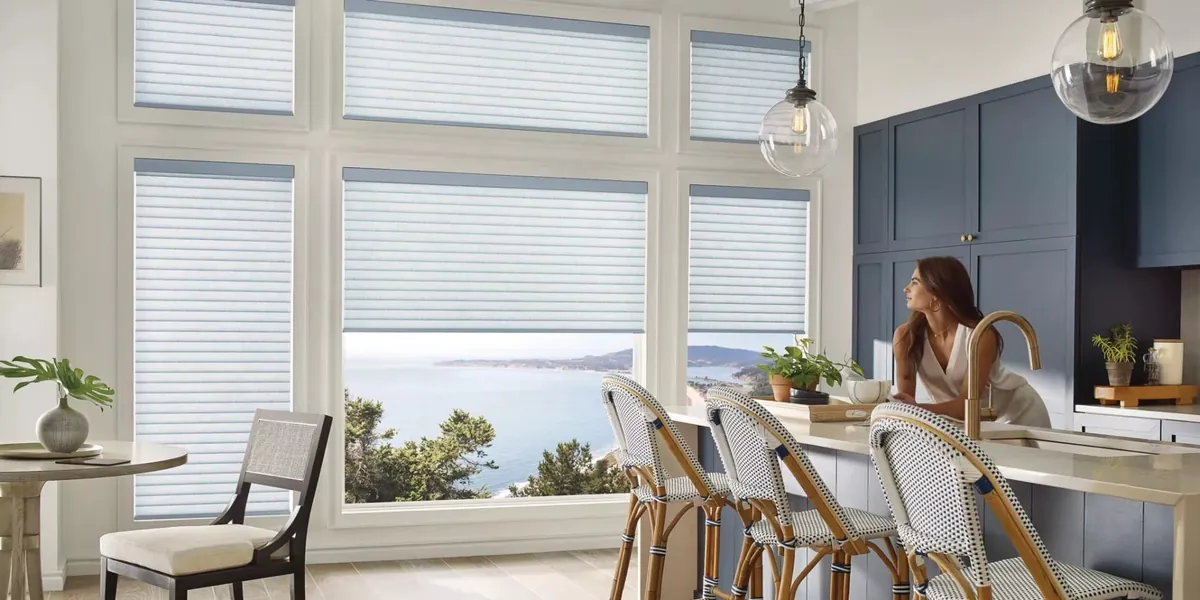
Chatham sits on the elbow of the Cape with water on three sides, and its houses know it. Shingled captains’ houses fill the village, cottages run out along Shore Road and toward Morris Island, and in almost every one the best rooms were arranged around a view of the water. Window treatments in Chatham, MA, have one job above all others: protect that view while making the room comfortable to sit in.
Being exposed on three sides changes everything. Some rooms take the sunrise off the Atlantic, some take the midday sun over the sound, and some catch the evening light across the harbor. The same house can need three different answers.
Then there is the salt. It rides in on every breeze, settles on every surface near an open window and works on anything metal. Choosing what goes on a Chatham window means choosing what will still work well after years of sea air.
What we do in Chatham, service by service
These are the window treatments in Chatham, MA, that we plan, supply and install. Each card leads to its own Chatham page with more detail.
Custom blinds
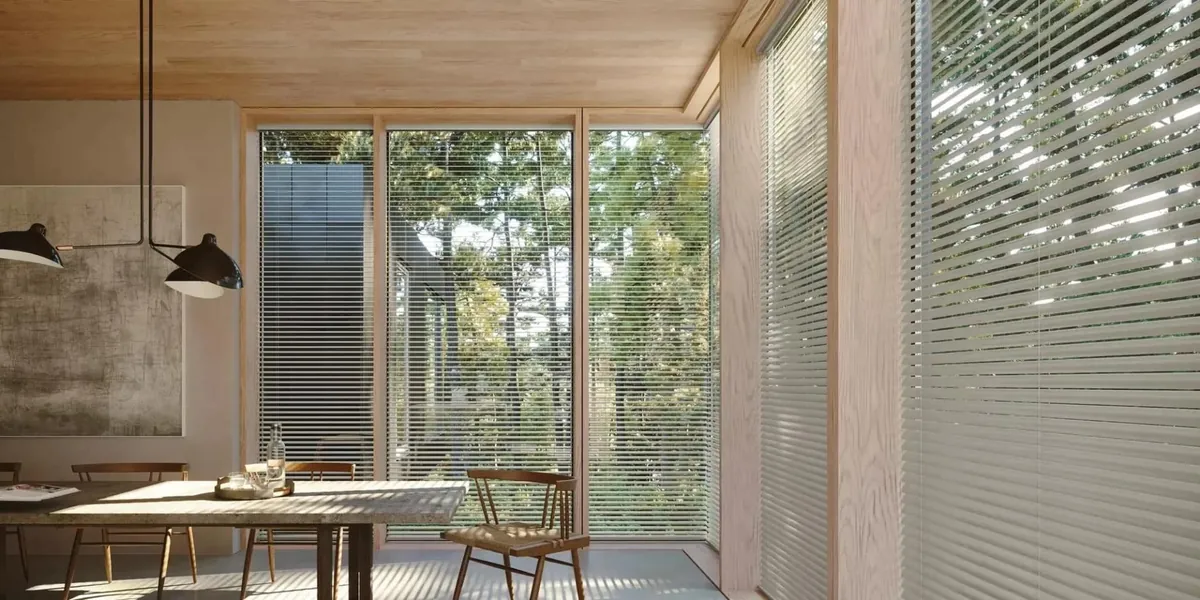
Wood, faux wood and metal blinds whose slats tilt to keep the sun off the table and the water in view.
Cellular shades
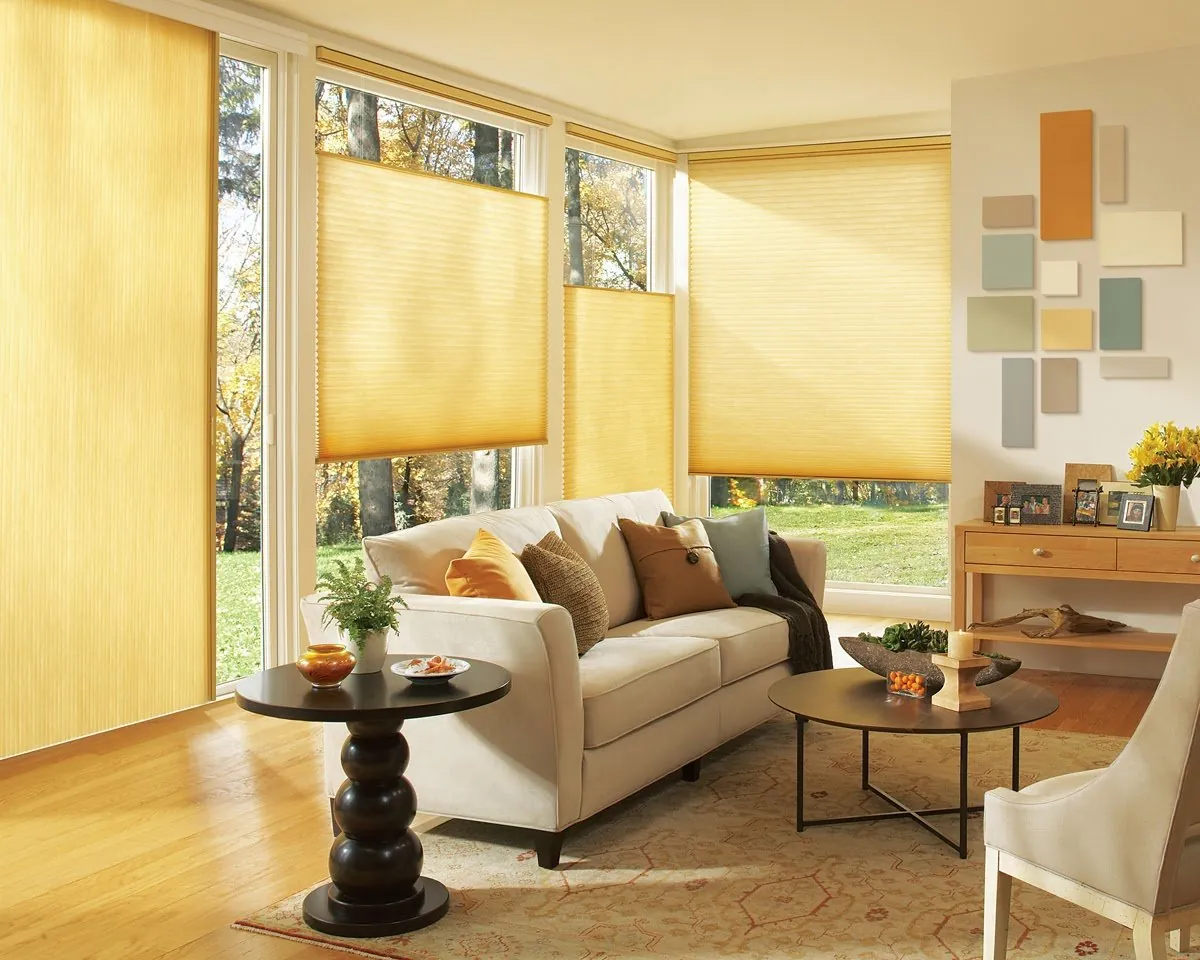
Duette and Applause shades, often top-down, bottom-up, so the lower glass is covered and the horizon stays open.
Roller and screen shades
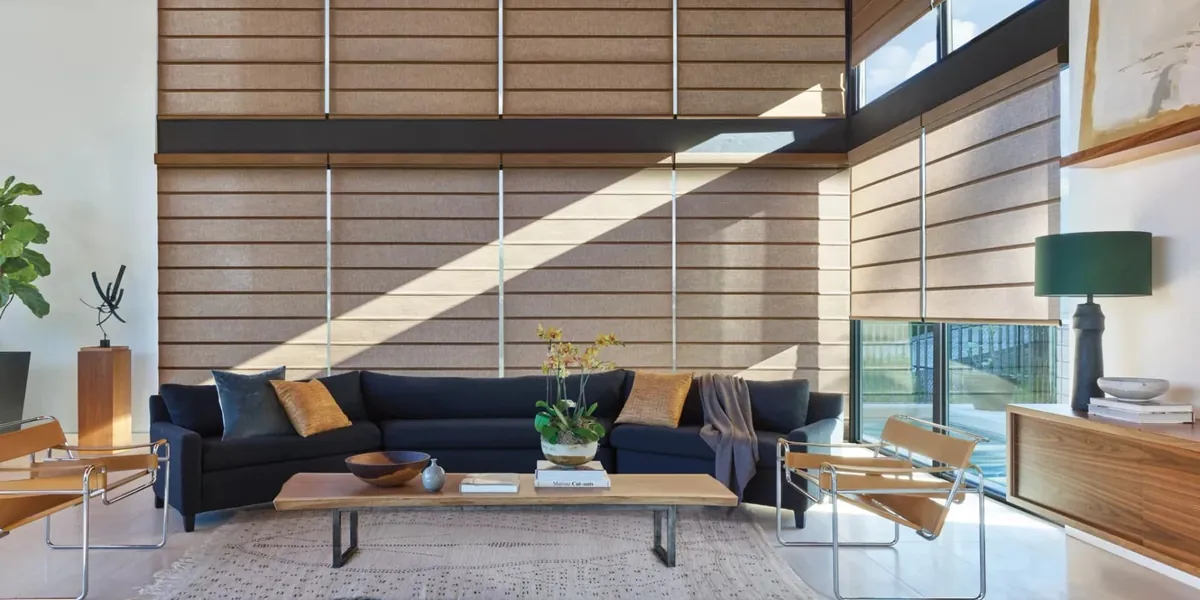
Screen weaves that take the glare off the water and leave the boats in view, plus solid rollers for sleep.
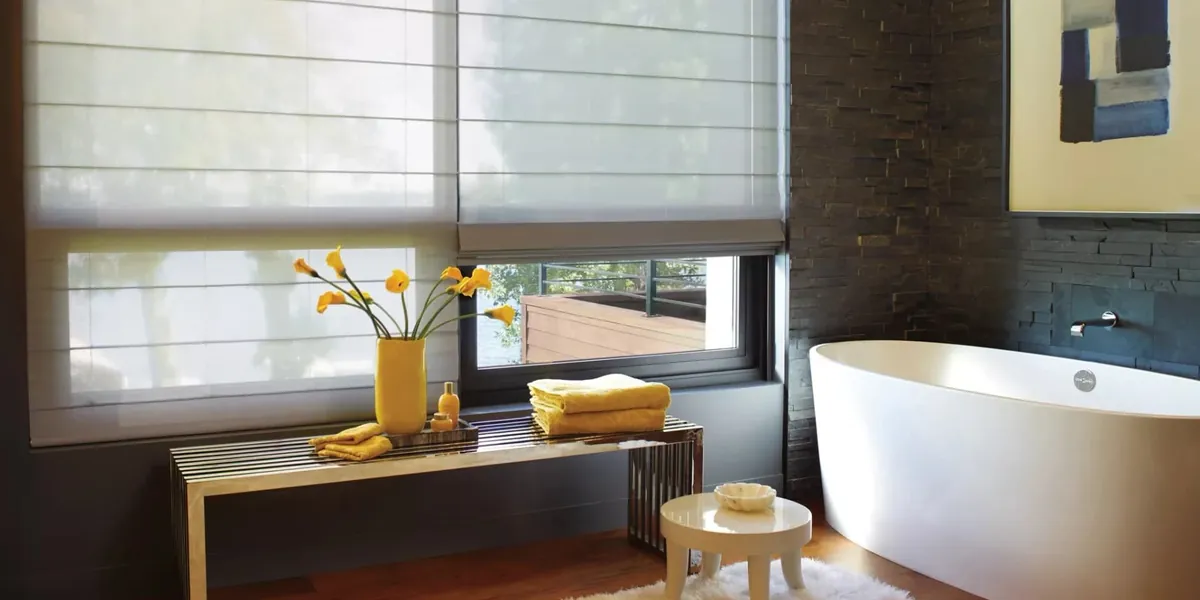
Roman shades
Vignette and Carole Fabrics romans, soft and tailored, for a captain’s parlor or a cottage bath.
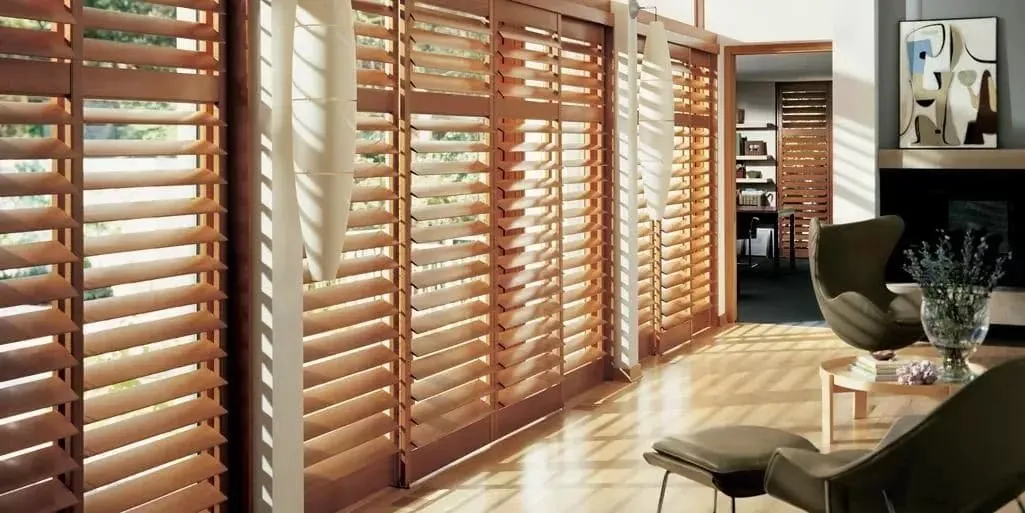
Plantation shutters
Palm Beach, NewStyle and Heritance shutters with very little exposed hardware, a good match for sea air.
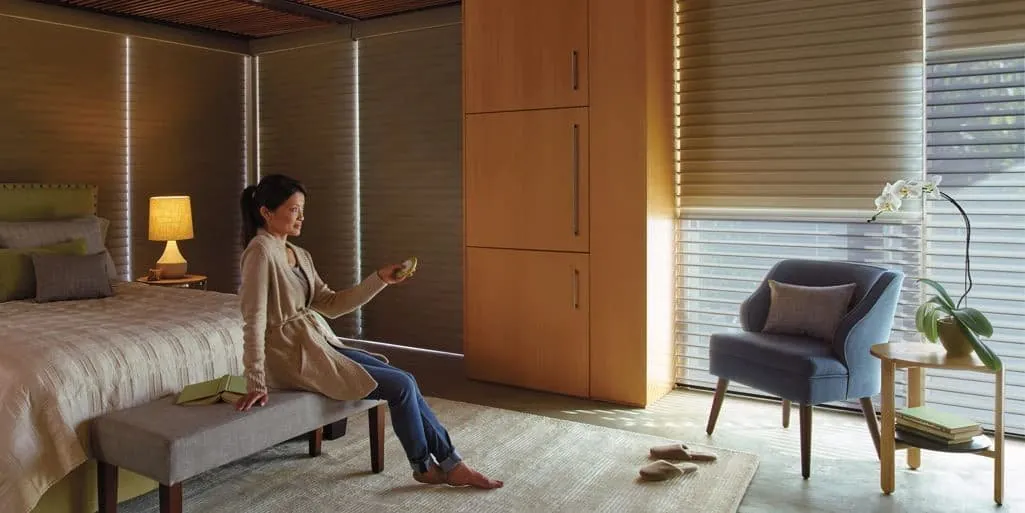
Motorized blinds and shades
PowerView scenes that follow the sun around three sides of the house, room by room.

Hunter Douglas dealer
Every Hunter Douglas product through a Gallery dealer, with certified Hunter Douglas installation.
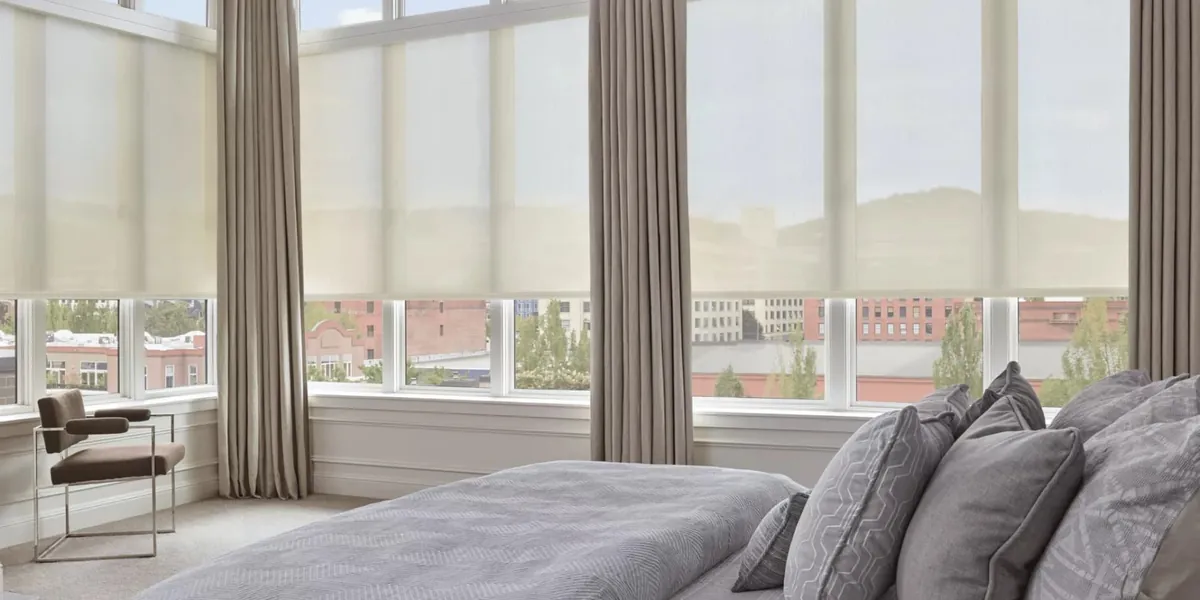
Custom drapery
Hunter Douglas drapery to frame a big view window and close it off on a stormy night.
Protecting a view without hiding it
When a room is built around the water, any covering is a compromise. Close it and you lose the reason you bought the house. Leave it open and the sun, the glare and the eyes of passing walkers come straight in. The answer is a treatment that can do a little, rather than all or nothing.
Solar screen shades are the obvious starting point. A screen weave cuts the glare off the water and much of the heat, while the view stays visible through it. The more open the weave, the more you see and the less it stops; a tighter weave blocks more and still lets the shape of the shoreline show. We bring several openness levels so you can compare them at your own glass.
Top-down, bottom-up shades are the other great tool here. Lower the top rail and you keep the horizon while the lower part of the window stays covered from a path or a neighboring deck. Sheer shades with soft fabric vanes can be tilted open for a filtered view and closed fully at night.
And sometimes the best answer is a shade that disappears. A roller tucked into a slim cassette, or a honeycomb stacked tight at the head of the frame, leaves nothing in the way when it is up.
Sun from three directions
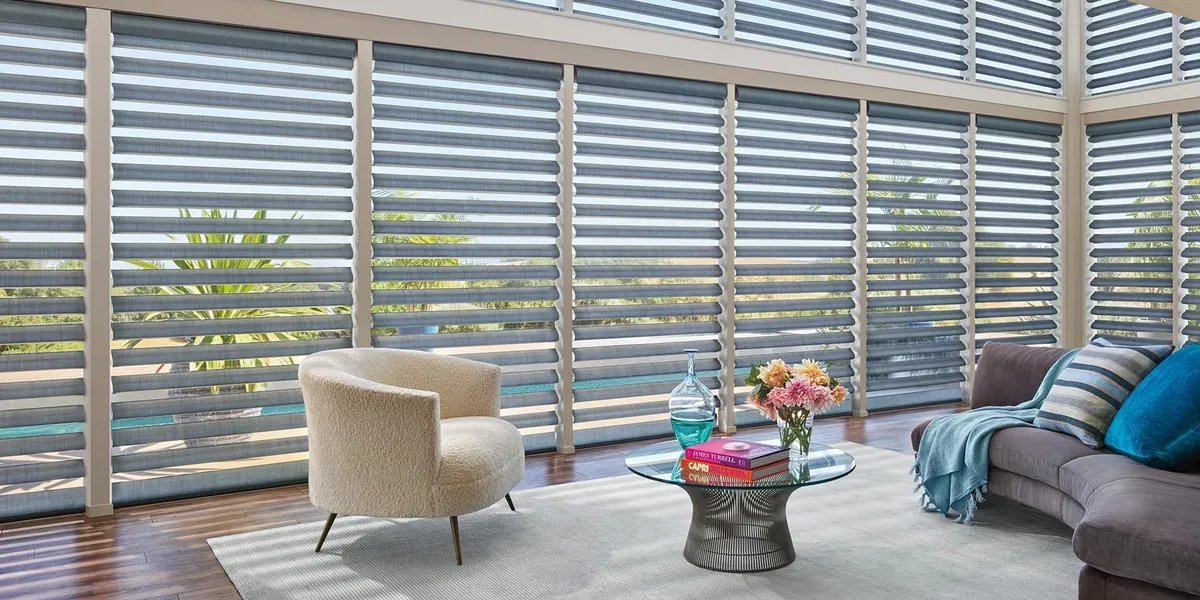
A house on an exposed point gets light from more directions than a house in a sheltered valley. That means every side of a Chatham house can need its own plan.
- East rooms take the sunrise off the open ocean. Bedrooms on this side want room-darkening fabric or a blackout roller, and kitchens want something that cuts the low morning glare without closing the room.
- South rooms take the high sun through the middle of the day. Floors and furniture near the glass fade, and the room heats up. Honeycomb shades, screen rollers and tilting blinds earn their place here.
- West rooms catch the evening light across the water. It comes in low and long, right into your eyes at dinner. A screen shade or a top-down shade lowered just far enough blocks it while the sunset stays in view.
PowerView makes this much easier to live with, because each side of the house can follow its own schedule. East shades rise once you are up, south shades lower through the heat of the day, and west shades drop just before the evening sun reaches the table.
What the salt air asks of every window
Salt is the constant in Chatham. It drifts in on the breeze, collects on sills and settles on any metal near the glass. Over time it can stiffen a cord lock, mark a bracket or roughen a metal slat.
You do not need to give up any type of window covering, but some choices cope better than others. Honeycomb and roller shades keep their working parts tucked inside the headrail, away from the air. Cordless lifts remove the cord lock and cord altogether. Shutters have hinges and little else once they are hung. Where metal blinds are wanted near an open window, we go through the finishes with you and suggest where they suit best.
Fitting matters too. Brackets screwed into solid framing hold a shade steady through years of windows opened and closed all summer. Regular gentle cleaning helps any fabric last longer, and our page on caring for fabric shades explains how.
Captains’ houses in the village
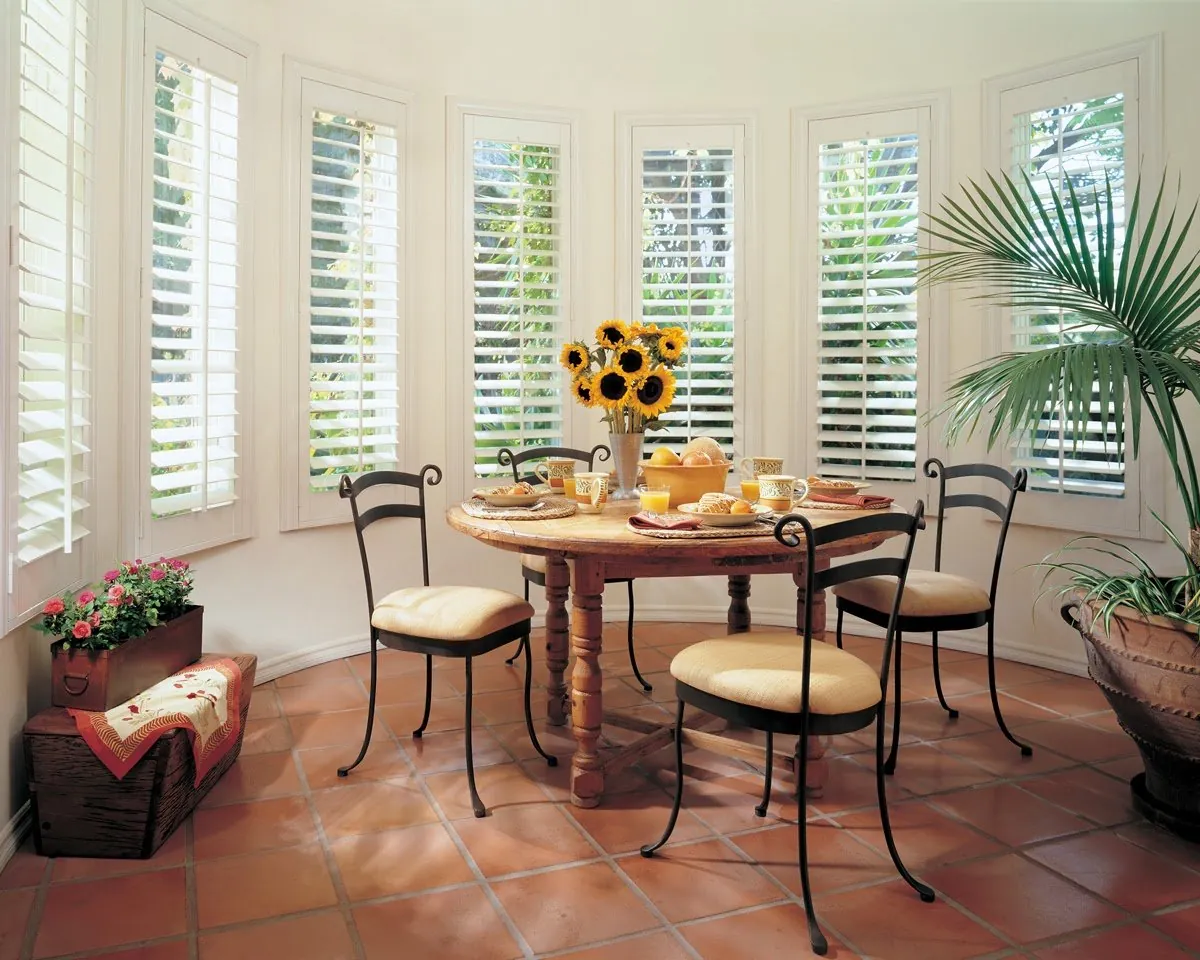
The old houses in the village were built by people who made their living from the sea, and they show it: steep roofs, shingled walls, and front rooms with tall windows set in deep, simple casings. Inside, the trim is often original and often painted many times over.
In these front rooms an inside mount is usually best, so the casings stay on show. Roman shades fold up neatly into the head of the frame. Honeycomb shades stack even slimmer. Shutters set inside the opening give privacy from the busy village streets while the top louvers let the light in. Where the sash hardware leaves too little depth, a mount on the face of the casing works, and drapery hung high above the trim makes a tall window look taller still.
Upstairs, the bedrooms tuck under the roof with small windows and sloping walls. Slim honeycomb and roller shades suit these openings, and each one is built to its own size, so a row of slightly different windows still looks even.
Cottages along Shore Road
The cottages that run out along Shore Road are often small, close to the water and built for summer. Many have been extended over the years, so a living room might have old sash on one wall and modern glass doors on another.
These rooms need light, airy treatments that do not crowd a small space. Woven shades bring texture and filter the light gently. Screen rollers keep the water in view. Cafe shutters over the lower half of a street-facing window give privacy at eye level while the top stays open. Bathrooms take faux wood blinds or shutters that cope with steam and damp air from the sea.
A consultation timed to the light
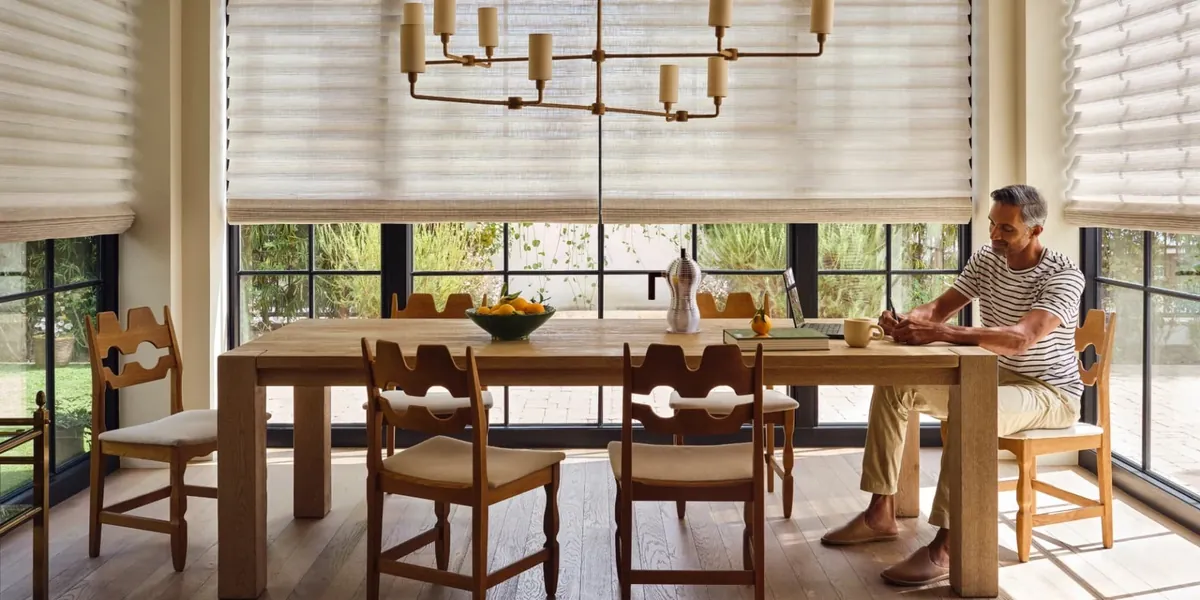
Because the light in a Chatham house changes so much through the day, it helps to see samples at the time a room gives you trouble. If the evening glare is the problem, an afternoon visit tells us more than a morning one.
- Book through the Request a Consultation form or the call button, and mention which rooms are the trouble and when.
- A consultant brings the van with samples of screens, honeycombs, romans, blinds, shutter louvers and drapery.
- You walk the rooms together, starting with the view rooms.
- You hold the screen weaves up at your own glass and see how much of the water each one keeps.
- Every window is measured, along with the frame depth and anything in the way.
- A free estimate follows, and you decide in your own time.
The guide to what happens at an in-home consultation covers the visit in more detail, and our page on the best shades for sun and glare is a good read before it.
Morris Island and the big glass
Out toward Morris Island the houses tend to be newer and the windows much bigger: walls of glass, sliders onto decks and great rooms that look straight out to open water. These rooms are glorious in good weather and exposed in bad.
Wide picture windows are usually split into two or three shades on one headrail, raised together or separately. Motorized shades suit the tall glass, because nobody wants to reach a shade at the top of a double-height wall. Screen rollers and sheer shades keep the view through the day. On a stormy night, a room-darkening honeycomb or drapery drawn across the glass makes a big room feel snug.
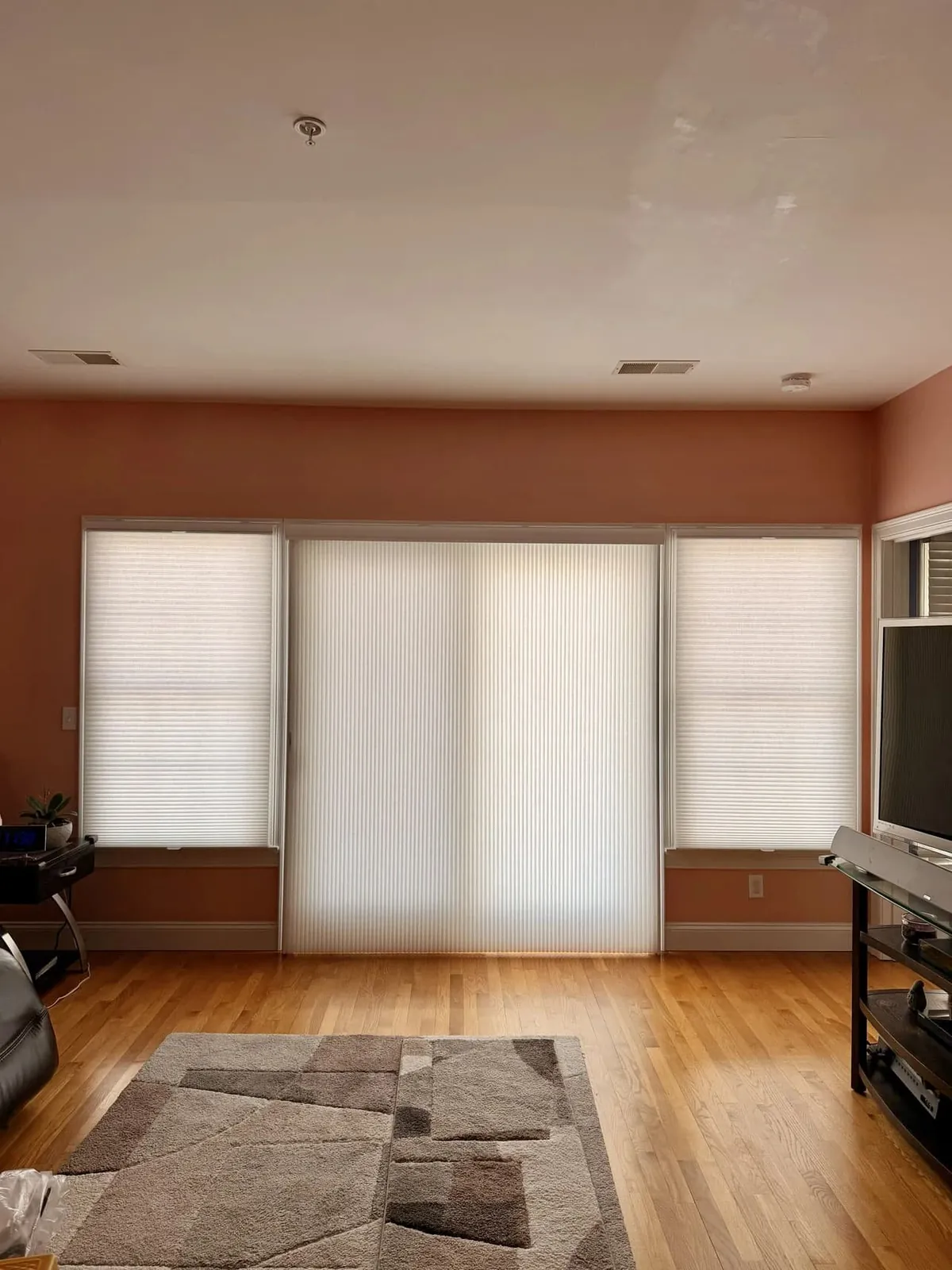
Sliders take vertical honeycomb shades or gliding panels that stack to one side. Vertical blinds work where you want to tilt the vanes instead of drawing them back.
Evening privacy in a lit room
A water-view room that feels private by day can feel very exposed after dark. With the lights on inside, a screen shade becomes see-through from outside, and anyone on the beach or the road can see in.
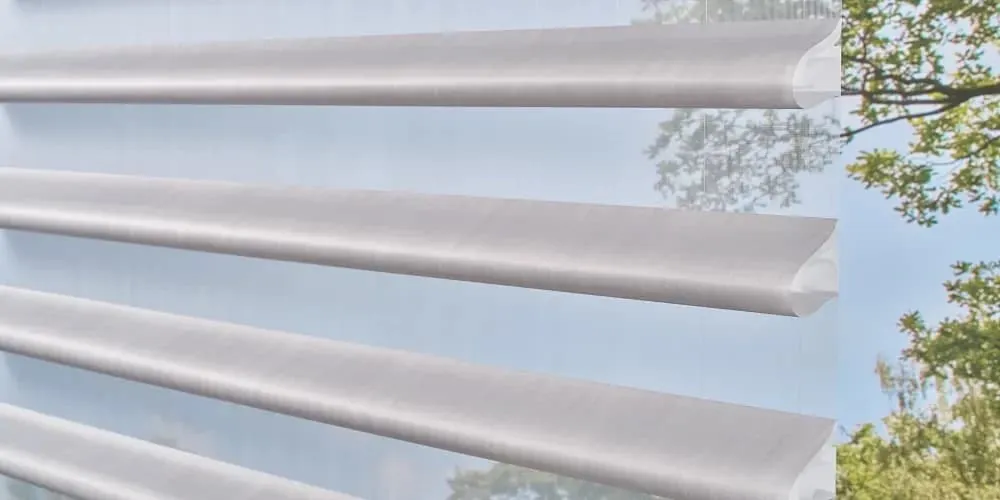
That is why many view rooms in Chatham get two layers: a screen or sheer shade for the day and something more solid for the night. Drapery panels drawn across at dusk do it beautifully, and they add warmth on a cold evening. A dual shade, or a room-darkening honeycomb behind the screen, does the same in one neat headrail. Sheer shades with fabric vanes can simply be closed, which turns them from a filter into a privacy shade.
Porches, sunrooms and decks
Glassed-in porches and sunrooms are common in Chatham, and they take the sun and the weather harder than any other room. Glass on three sides, often a low roof and nothing to block the light make them hot by day and chilly at night.
Screen rollers keep these rooms usable through a summer afternoon. Woven shades soften the light and suit the casual feel of a porch. Honeycomb shades help in a sunroom used in spring and autumn. On a porch where the windows stay open, cordless lifts and simple hardware make sense in the salt air.
Kitchens that look out to sea
A Chatham kitchen with a water view is a wonderful place to start the day and a tricky one to work in. Morning light off the ocean reflects straight across the counters, and on the west side the evening sun lands in the cook’s eyes just as dinner is going on the table.
The kitchen also has the sink, the steam and the splashes. A roller in a wipeable screen fabric handles all of it: it lowers to cut the glare, stays easy to clean and keeps the water in view. Faux wood blinds suit a window right over the sink, because they shrug off damp and the slats tilt to throw the light up to the ceiling. A cafe shutter on the lower sash covers the part of the window closest to a path or the next house and leaves the upper glass free.
Breakfast nooks built into a bay are common in the older houses. Each pane in a bay is usually a different width from its neighbor, so each shade is made to its own opening and set to line up with the others when raised. Choosing window treatments in Chatham, MA, for a bay like that is mostly about getting those lines right.
Bedrooms facing the sunrise
The east side of a Chatham house looks out over open ocean, and in June the sun is up very early. Bedrooms on that side need to stay dark until you decide otherwise.
Room-darkening honeycomb shades fitted closely inside the frame stop most of the light, and side channels or an outside mount over the trim close the edges. A blackout roller in a slim cassette gives the same result with a clean look. A PowerView schedule can raise the shade slowly at the time you want to wake, so the room fills with light gradually instead of all at once.
Drapery and the formal rooms
The finest rooms in a captain’s house can carry drapery well. Panels framing a tall window add softness, warmth and a sense of occasion, and they close off a big window on a winter night.
Most often the panels sit over a working shade tucked into the frame, so the shade deals with sun and privacy while the fabric dresses the room. A lining guards the drapery itself from fading in a bright parlor. Set the rod high and wide, and the panels stack beside the glass when open, so they never trim the edge of the view.
One plan for the whole house
Most Chatham houses end up with a mix: screens in the view rooms, shutters on the street, honeycombs in the bedrooms, a roman in the parlor. What keeps it calm is a single color toward the glass and matching headrails through each floor. Planning window treatments in Chatham, MA, together also means every PowerView shade can run on one app and one set of schedules. The window treatments page gives an overview of the whole range.
A Gallery dealer for a demanding coast
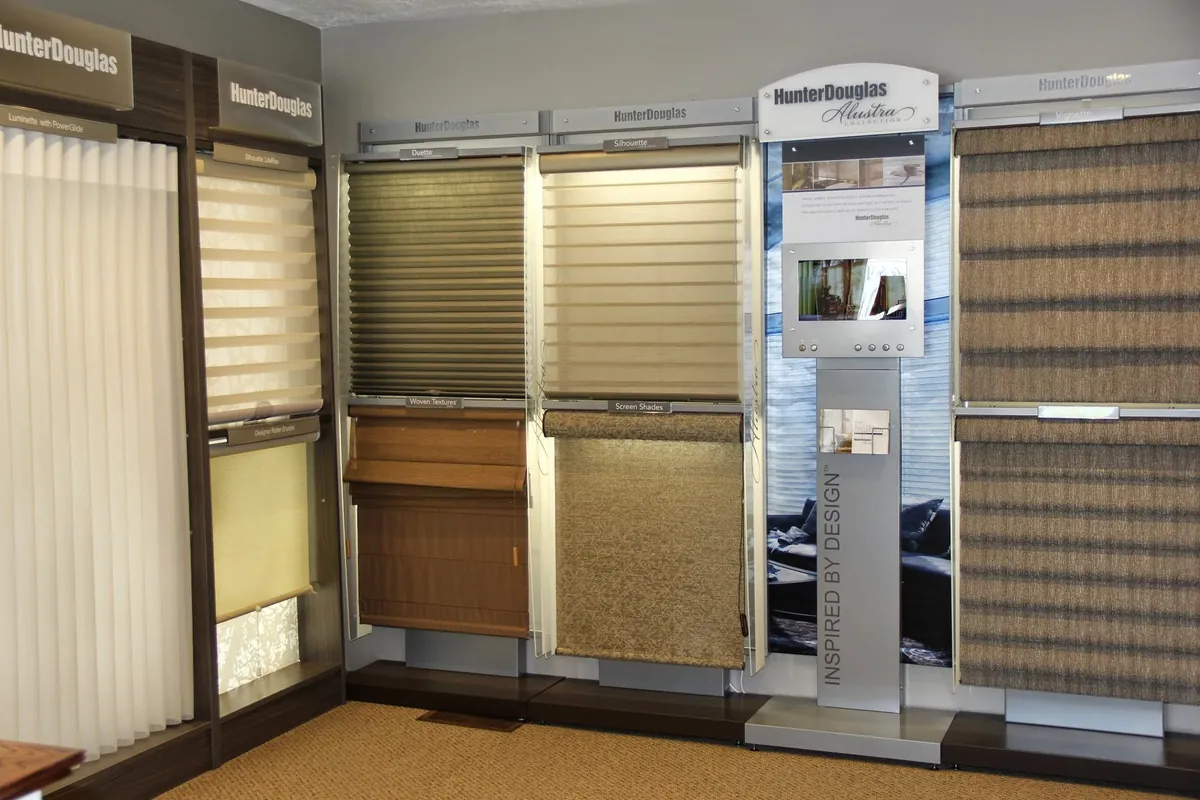
A house this exposed often needs several different products, and buying them all through one Hunter Douglas Gallery dealer keeps things simple. Screens for the view rooms, honeycombs for the bedrooms, shutters on the street, drapery in the parlor and PowerView to tie the lot together all come from Blinds & Designs in a single plan.
Certified Hunter Douglas installers from our own crew hang every piece. If choosing colors across a whole house feels like a lot, an interior design consultation helps, and when an older blind or shade needs attention later, we handle repairs too.
The brand’s full story is on our Hunter Douglas page.
The Sagamore showroom
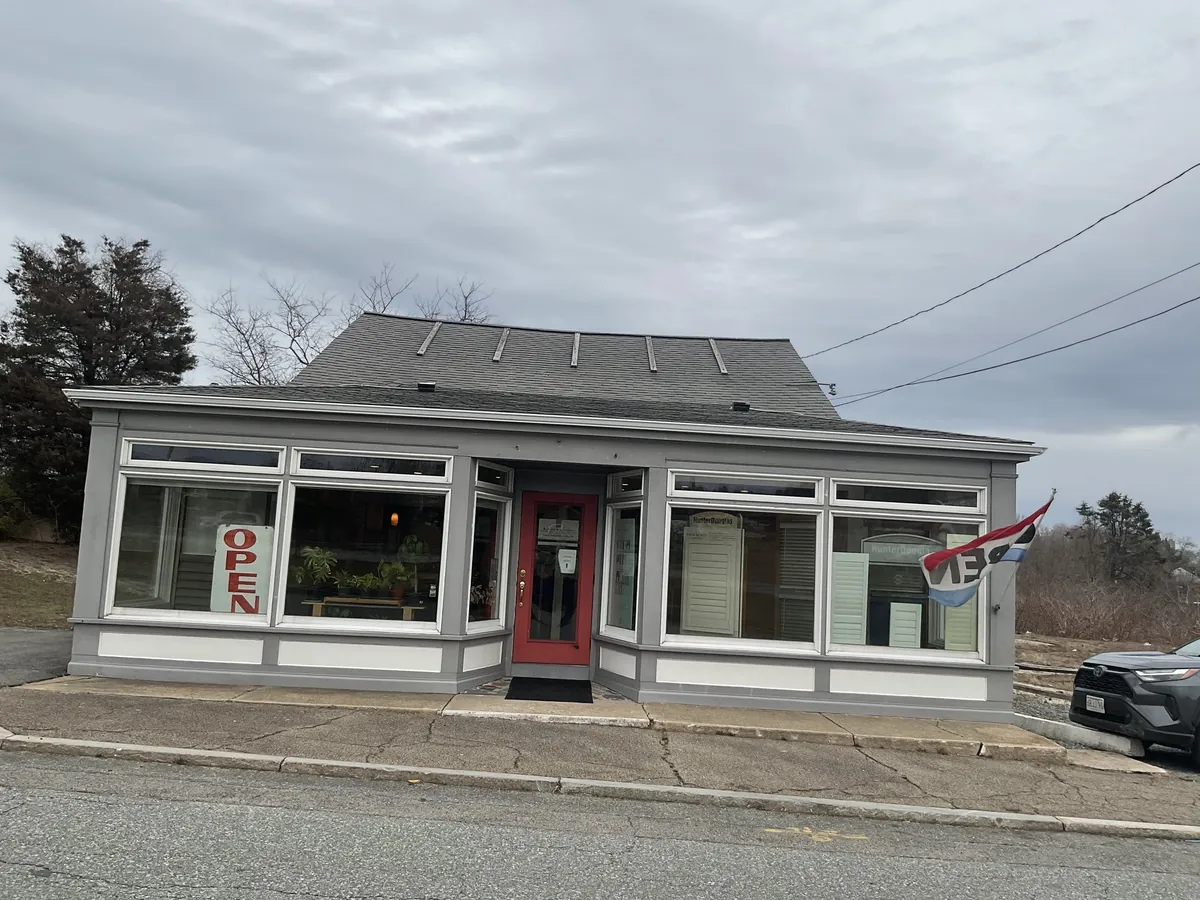
Nearly every Chatham decision gets made at the window it is for, since our van carries the samples. For anyone who prefers to look first, Sagamore is the showroom nearest to the elbow of the Cape.
The estimate costs nothing, and one crew handles measuring, ordering and fitting.
Questions from Chatham
How do I cut the glare off the water but keep the view?
A solar screen roller is the usual answer: the weave cuts glare and heat while the water stays in view. A top-down, bottom-up shade keeps the horizon open while covering the lower glass. We bring several screen weaves to compare at your windows.
Which window treatments cope best with salt air?
Shades with their parts inside the headrail, cordless lifts and shutters expose the least metal to sea air. Nothing is ruled out, but we point out what suits a window you keep open all summer.
My view room feels exposed at night. What can I add?
Pair a screen shade with drapery panels or a room-darkening shade behind it. Screen shades become see-through from outside when the lights are on, so a second layer closes the room after dark.
Can different sides of the house follow different schedules?
Yes. PowerView shades can be grouped by side, so east, south and west rooms each open and close at the times that suit their sun.
Do you charge for the estimate?
No. The estimate is free and covers every window on your list.
Your next step
Window treatments in Chatham, MA, are easiest to judge with the water right there behind the sample. Ask for a consultation, and we will bring screens and fabrics to your view rooms, measure each opening and hand you a free estimate. Prefer a conversation first? Use the call button, or stop by the Sagamore showroom.