
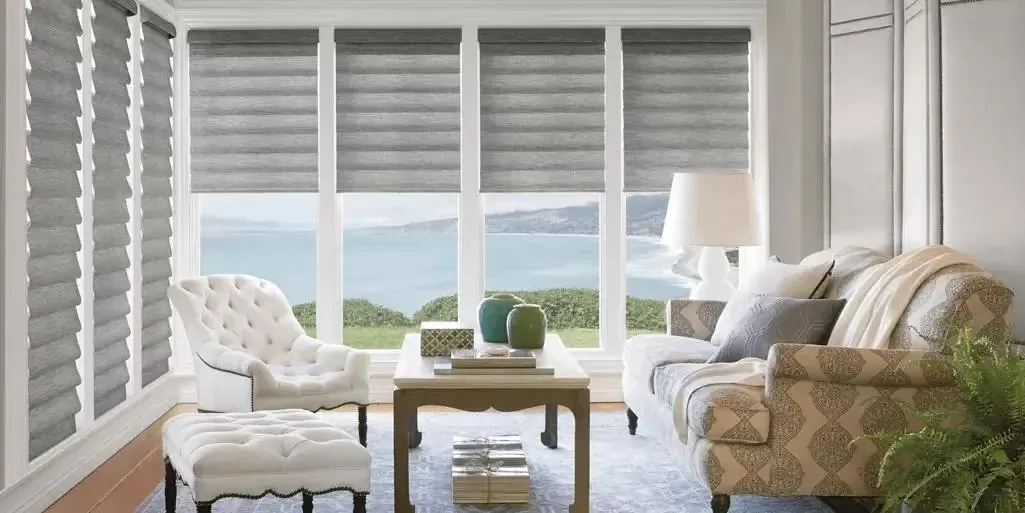
Light from every side of the room
West Bridgewater is one of the most open towns we cover. Farmhouses and capes stand on large lots, newer colonials are scattered between them, and the overall pattern is very low density. In a house like that, many rooms take light from two or three directions, and there is often nothing outside, no neighboring house, no row of trees, to screen any of it. Choosing roman shades in West Bridgewater, MA, is mostly about managing that light: when to welcome it, when to soften it and when to shut it out.
A fabric shade is well suited to the job. It can sit fully raised to give you the whole outlook, drop partway to take the glare off a low sun, or come all the way down for a dark bedroom. In a room with several windows, each shade can be set to its own height, so the sunny side is shaded while the others stay open.
We bring the Hunter Douglas Vignette and Carole Fabrics collections to the house, in flat and soft-folded styles, and try them at the windows where the light actually falls.
Three fabric shade options for open settings
These are the choices most households here weigh up. The consultant can show each of them at your own windows.
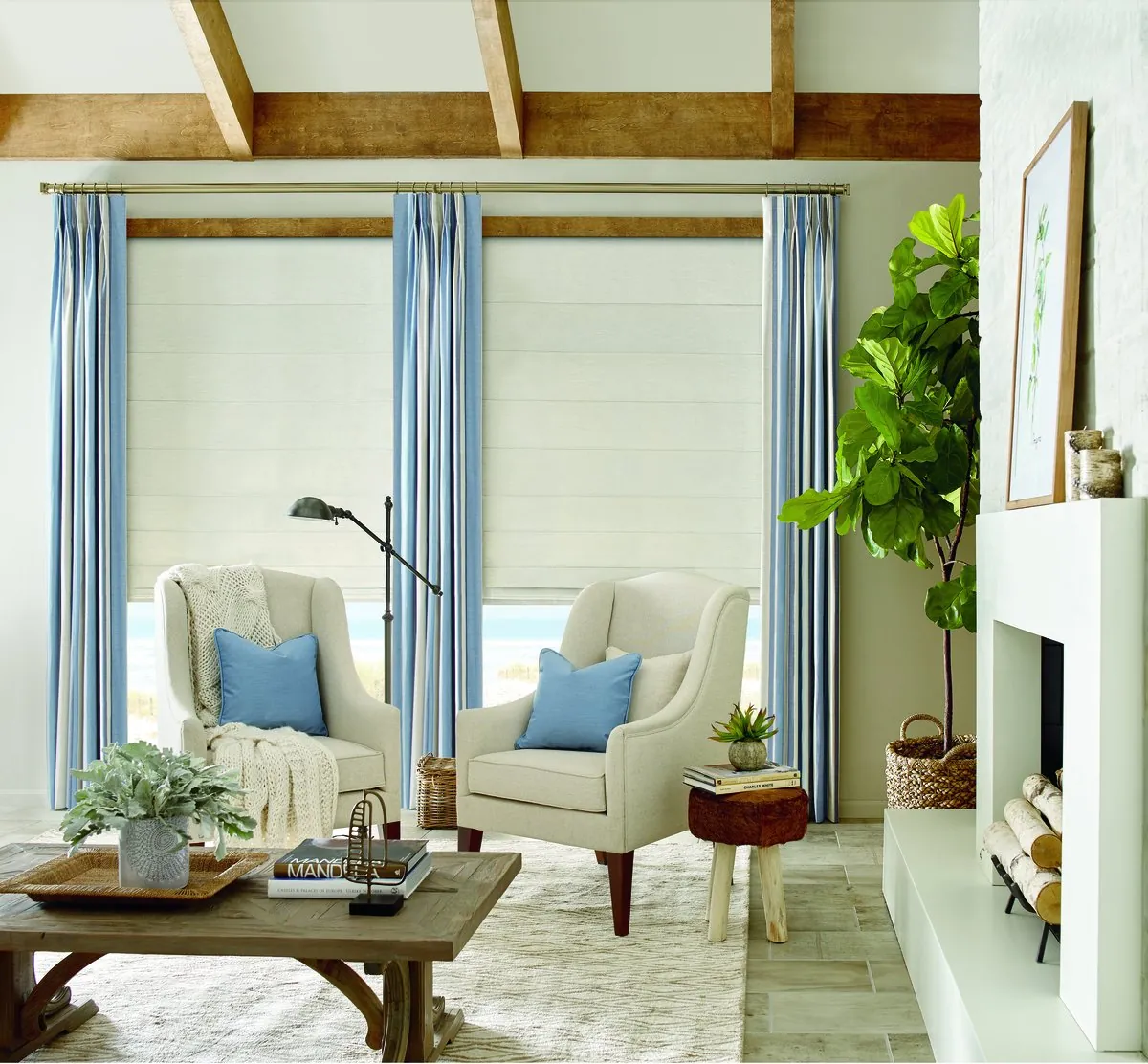
Vignette roman shades
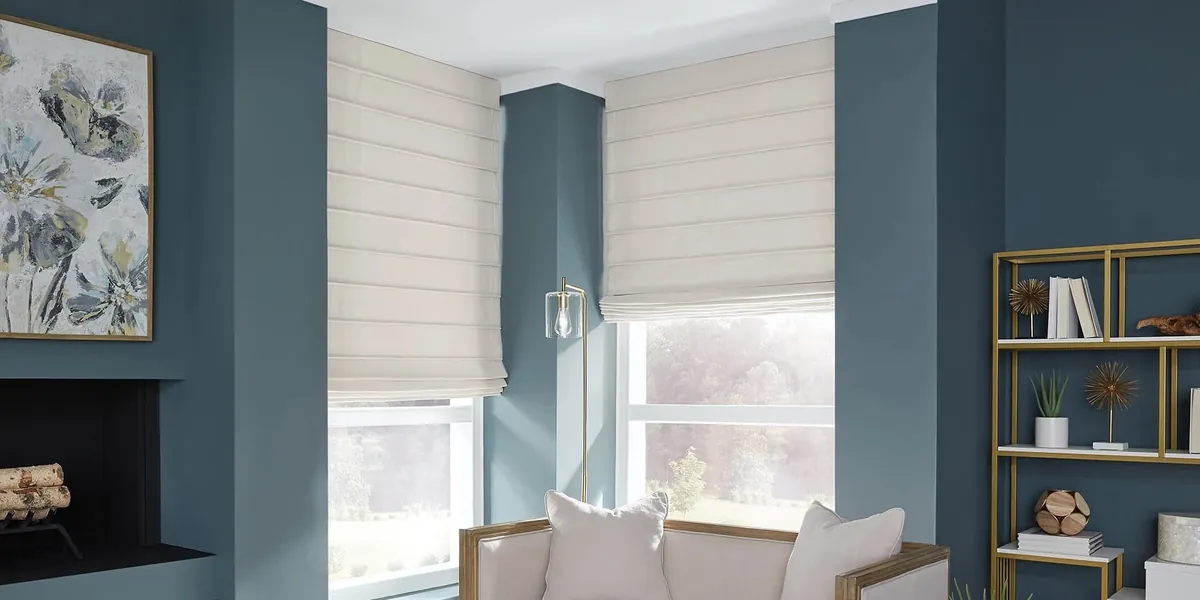
A tailored, even fold that keeps a room with several windows looking orderly, from a farmhouse parlor to a colonial family room.
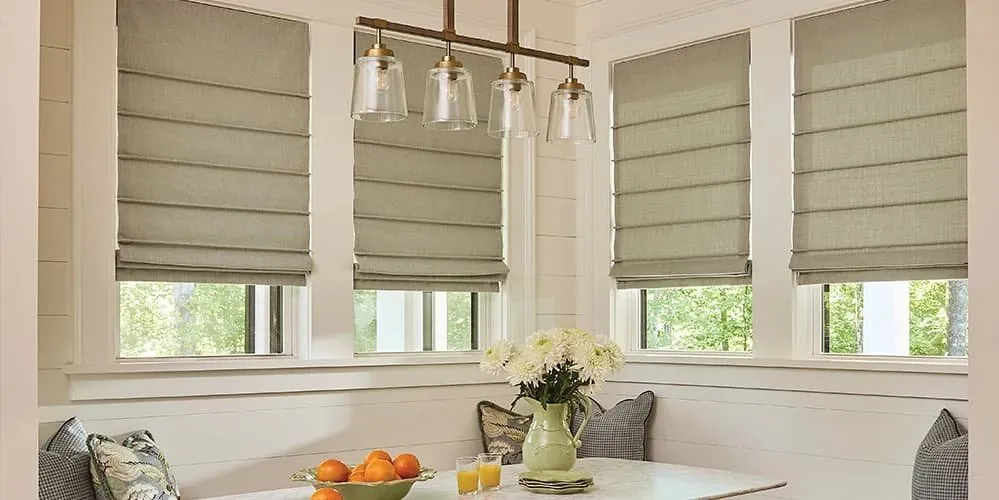
Carole Fabrics roman shades
A deep library of cloths, made up flat or folded, for a room where the fabric should carry color into the space.
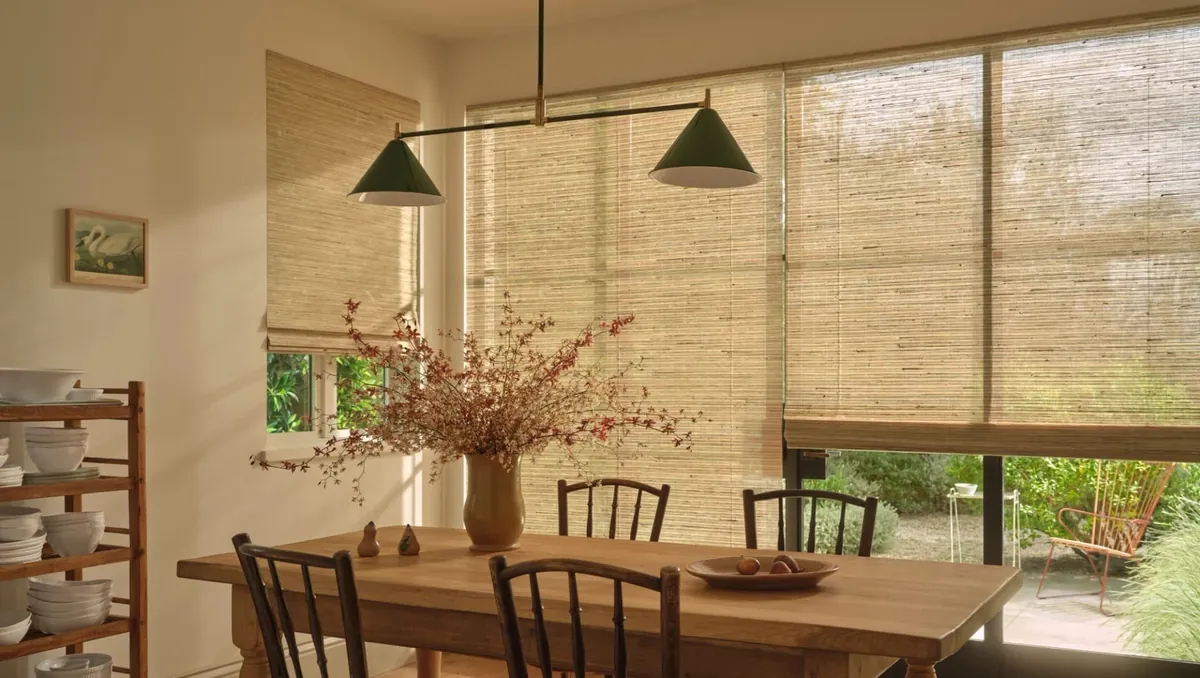
A light weave for corner rooms
In a room lit from two walls, a lighter cloth softens the brightest side without dimming the whole space.
Corner rooms and windows on three walls
A great many rooms in West Bridgewater’s farmhouses and capes sit at a corner of the house, with windows on two walls, and some living rooms and kitchens have windows on three. Light crosses the room from different angles through the day, which is lovely in the morning and harder to manage in the late afternoon.
The answer is rarely one fabric at one height. More often, the shades on the sunny wall come partway down while those on the shaded wall stay up. Because each roman shade works on its own, you can set a room to suit the hour. In a corner room, it also helps to choose one fabric and fold for every window, so that when some shades are raised and others lowered, the room still looks like a whole.
When we plan a corner room, we look at which wall catches the morning sun and which takes the afternoon, and we hold the fabric up on both. A cloth that looks perfect on the shaded side can look different with the sun behind it.
Nothing between the house and the sun
In a denser town, the house next door or a line of mature trees takes the edge off the light. In much of West Bridgewater there is nothing like that. Open yards, fields and long setbacks leave the house exposed, so the sun reaches the windows from the moment it clears the horizon until it sets.
The low sun at either end of the day is the hardest to handle. It comes in nearly level, straight under any roof overhang and across the room into your eyes. A roman shade lowered partway blocks that direct beam while leaving the top of the window open to the sky, so the room stays bright. For the windows that take the strongest sun, a medium-weight cloth often works best: dense enough to stop the glare, light enough to keep the room cheerful. When we discuss roman shades in West Bridgewater, MA, the direction each window faces usually comes up in the first few minutes.
Farmhouses
West Bridgewater’s farmhouses are working houses at heart, with kitchens that face the yard, front rooms that face the road at a distance and bedrooms upstairs under the roof. Their windows are often older, sometimes with original trim, and they look out over land rather than at other houses.
In these rooms, the outlook is worth keeping. A fabric shade that lifts fully clear of the glass gives it back whenever you want it. A natural-looking cloth in a soft fold sits comfortably with old woodwork and plaster. In the kitchen, a lighter flat fold that is easy to raise over the counter suits daily use. Upstairs, where the bedroom windows may catch the first light across an open field, a heavier fabric lets you decide when the day starts.
Capes on large lots
The capes in town follow the familiar plan, but on a large lot their windows face open space on every side. A cape’s gable ends often carry a window on each floor, so the upstairs bedrooms may have a window in the gable as well as a dormer to the front or back.
That gives the upstairs rooms light from more than one direction, which is not always welcome at six in the morning. A heavier fabric on the window that faces the sunrise, with a lighter one on the other, gives a bedroom a dark start and a bright afternoon. Dormers take a flat fold well, because it keeps the raised shade compact in a small recessed opening. Downstairs, the pair of front windows either side of the door looks best treated as a matching set.
Newer colonials scattered between
Between the older houses, newer colonials bring two full floors of standard modern windows. A colonial on a large lot can have windows on all four sides of every room on the corners, and the family room at the back often has a long run of glass facing the yard.
The regular openings make fitting straightforward, so most of the planning goes on fabric weight and color. The street-facing windows can share one color for a tidy front. The family room may want a lighter, glare-softening cloth on the sunny side. The bedrooms usually take something heavier. Vignette’s clean line suits the simple trim of a newer colonial, though a Carole flat style in a textured weave works just as well.
One room, several shades
When a room has three, four or five windows, the shades become a set, and a few simple choices make them look right together. Setting every headrail at the same height across the room means the lowered shades line up even if the windows differ slightly in size. Choosing the same fabric and fold for all of them keeps the room calm when some are up and others down.
Each shade still moves on its own, which is the whole point in a room lit from several sides. You might lower only the west-facing pair in the late afternoon and leave the rest open. Planning roman shades in West Bridgewater, MA, for a room like this is as much about how you will use them through the day as about the fabric itself.
A home consultation in West Bridgewater
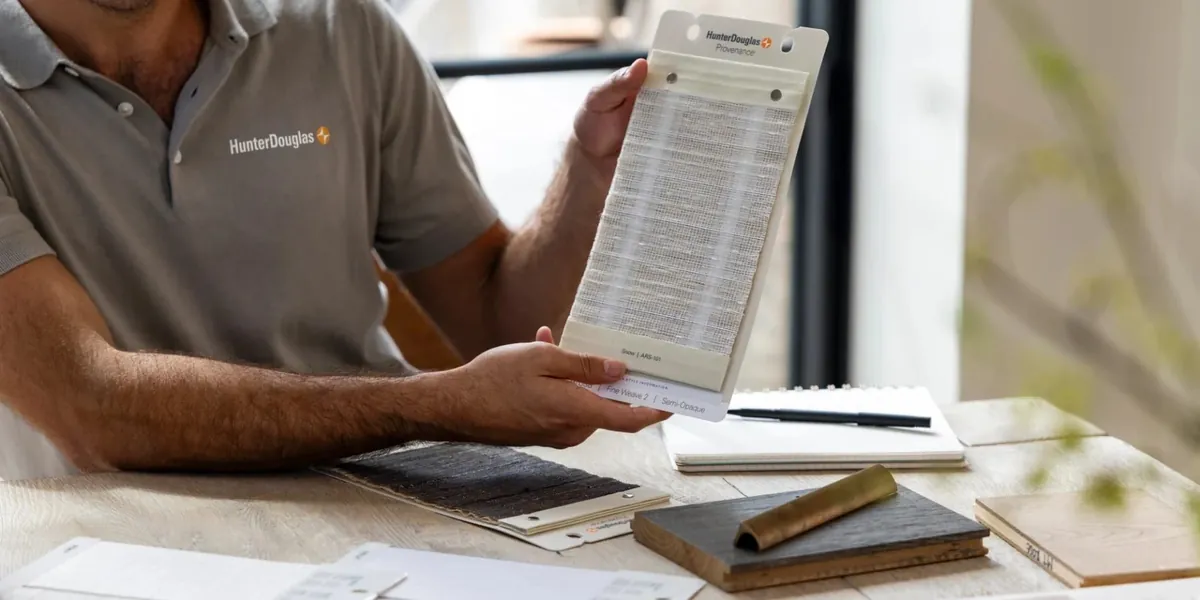
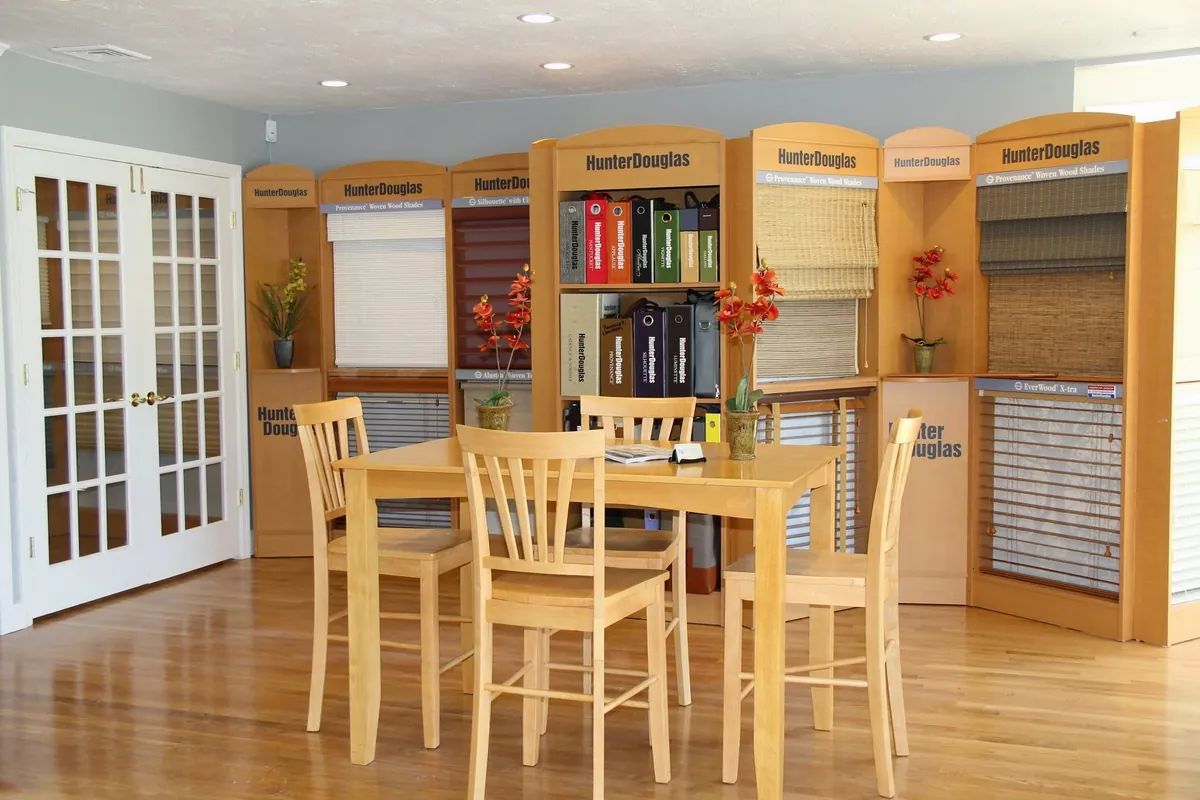
West Bridgewater is part of our shop-at-home territory, served from Canton. A consultant drives out with the swatch books, which matters in a town where each room’s light is so particular to the house. The Canton shop-at-home page explains the service.
- Arrange a time through Request a Consultation, or press the call button.
- Tell us roughly which rooms are involved, and which of them catch the strongest sun.
- The consultant brings the Vignette and Carole Fabrics swatches inside.
- Cloths are held at a window on the sunny side and one on the shaded side, so you see both.
- Every window is measured, and the direction each one faces is noted.
- A free estimate, set out by room, is left with you.
For more, read our guide to what happens at an in-home consultation.
Planning by the compass
On an open lot, the direction a window faces tells you most of what it needs. East-facing rooms are brightest early, so bedrooms on that side usually want a heavier fabric. South-facing rooms get strong light through the middle of the day, and in a living room a light-to-medium cloth that can sit partway down handles it well. West-facing rooms take the low evening sun, often the hardest light of all, and a medium-weight fabric lowered partway is usually the best answer. North-facing rooms get gentle, even light, and a pale translucent cloth keeps as much of it as possible.
Most houses here have rooms facing every direction, so a single house may use three or four fabric weights in the same color. Our guide to choosing fabric for a sunny room is a useful read before the visit.
Evenings on an open lot
During the day, privacy is hardly a concern on a large lot. After dark it changes. A lit room in an open landscape can be seen from the road or across a field from a long way off, because it is the brightest thing in view. Many owners in town are surprised by how visible a farmhouse kitchen or a colonial family room becomes at night.
So most rooms here want shades that stay up through the day and come down in the evening. A fabric with some body gives full cover once lowered. Because the shades get raised and lowered every day, smooth operation and a neat stack matter more than they might elsewhere.
How the house looks from the road
On a long setback, the house is seen whole from the road, at a distance, and the windows read as a pattern across the facade. Shades in different colors on each window break that pattern up, especially in the evening when they are lowered and lit from behind. A farmhouse with a row of matching cream shades looks settled; the same house with three different colors looks unfinished.
The simple rule is to keep the color facing out consistent on every window the road can see, then let the inside follow each room. Fabric weight can still change from room to room, since a heavier cloth and a lighter one in the same color look nearly identical from outside. On a colonial with two rows of front windows, this matters even more, because every shade is visible at once. The consultant can step outside with a swatch held at the glass so you can see the effect from the driveway.
Kitchens that face the yard
Farmhouse and cape kitchens in town usually sit at the back or side, looking over the yard, a garden or open land. The window over the sink is the one used most, and on an exposed lot it may take strong morning or evening sun straight across the counter.
A light flat fold suits it: easy to raise with wet hands nearby, compact when stacked, and able to sit partway down when the sun is low without turning the kitchen dim. If the kitchen has windows on two walls, the shade on the sunny side can drop while the other stays up for the view. A cheerful color or a small print is easy to live with here, since the back of the house is rarely seen from the road.
Doing the house in stages
A large farmhouse or colonial can have a lot of windows, and not everyone wants to do them all at once. A sensible order is to start with the rooms where the light is hardest to live with, usually the west-facing living room and the east-facing bedrooms, then add the rest. Every choice from the first visit is written down, so later shades match. Owners who take that route with roman shades in West Bridgewater, MA, often find the first rooms tell them exactly what they want for the others.
PowerView and the sides of the house
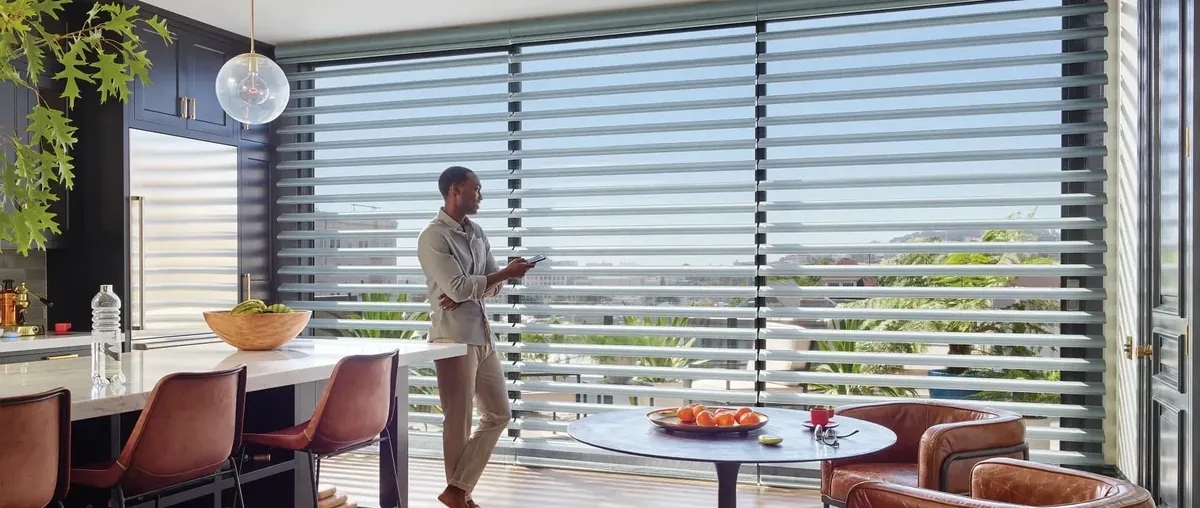
A house with many windows facing many directions is a good fit for motorization. PowerView lets each roman shade move from a remote, an app on your phone or a schedule you set, and shades can be grouped. You might group the east-facing bedroom shades to open at a set time in the morning, and the west-facing living room shades to lower partway in the late afternoon. In the evening, every shade in the house can come down at the time you choose without a walk through each room. The power for each motor is planned at the visit. Our page on motorized blinds in West Bridgewater covers what else can be automated.
Certified installation
Every shade is fitted through certified Hunter Douglas installation. In an older farmhouse, the installer allows for frames that are not quite square and old plaster that needs care. In a newer colonial, the standard openings let headrails line up evenly along each wall, which matters in a room with several windows. Each shade is run through its full travel before the installer leaves. Read what happens on installation day for more.
A Gallery dealer, and the Franklin showroom
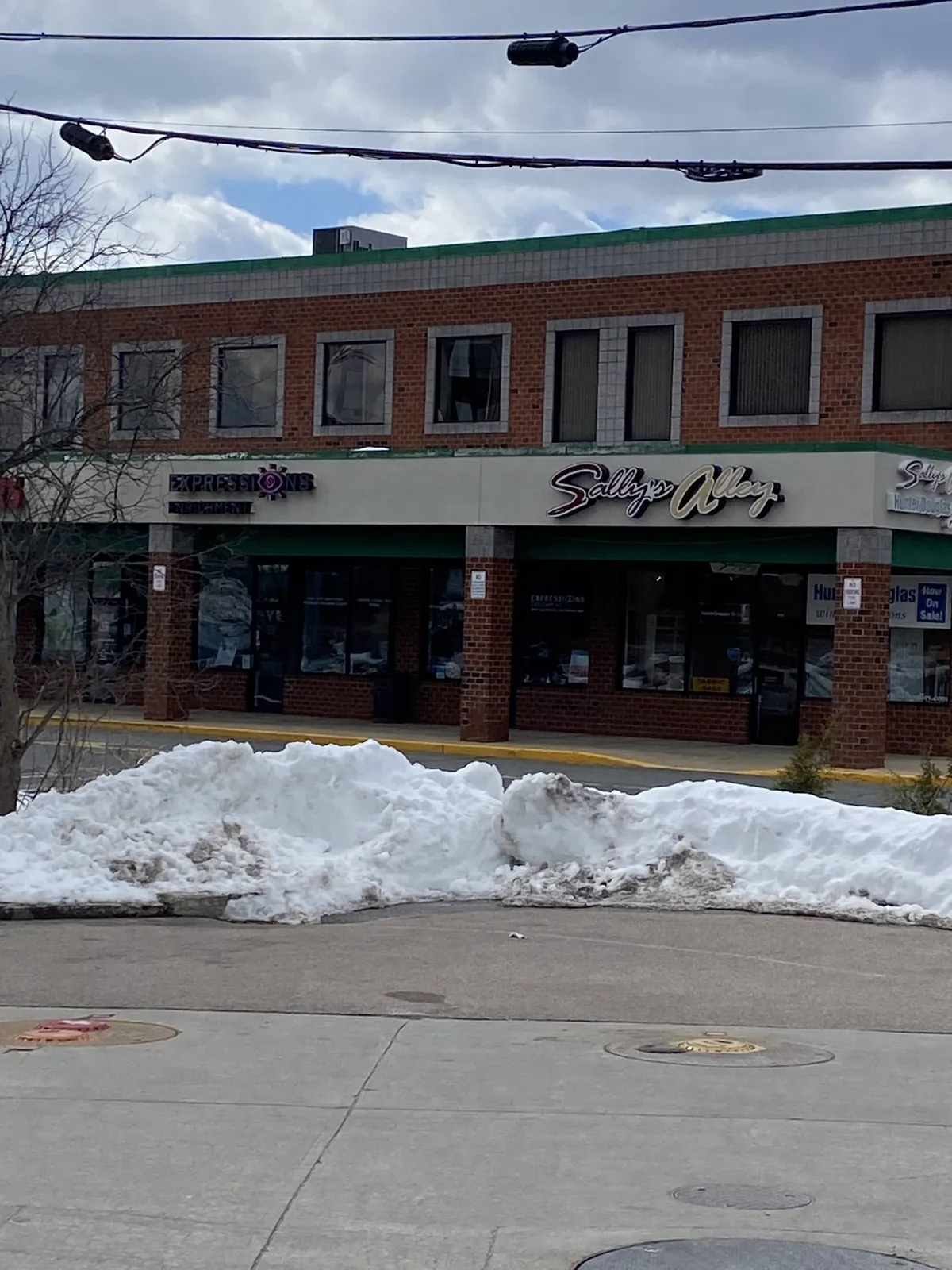
Blinds & Designs is a Hunter Douglas Gallery dealer. For a West Bridgewater farmhouse, cape or colonial, the full Vignette and Carole Fabrics collections can be tried in your own light, and if a room would be better served by a blind, a shutter or another shade, those samples travel in the same van. Installation is certified Hunter Douglas installation.
Estimates are free. We also offer interior design consultations, and we repair blinds and shades you already own. Owners here often look at roller shades in West Bridgewater for the brightest rooms, and the West Bridgewater page lists every service in town. Our roman shades page describes both fabric lines.
Most people begin with the visit to the house. If you would like to see us in person, the nearest showroom is in Franklin.

Questions from West Bridgewater
My living room has windows on three walls. Should every shade be the same?
Usually, yes. One fabric and fold across the room keeps it looking whole, while each shade still moves on its own so you can lower only the sunny side.
The low evening sun shines straight across our family room. What helps?
A medium-weight cloth lowered partway blocks the direct beam and leaves the top of the window open, so the room stays bright.
We have no neighbors close by. Do we need shades at night?
Most owners find they do. A lit room on an open lot is visible from a long way off after dark, so a fabric with some body is useful in the evening.
Can different rooms have different fabric weights?
Yes. Many houses here use a heavier cloth in east-facing bedrooms and a lighter one in the living areas, often in the same color.
Is the estimate free?
Yes. You get a written estimate for each room at the end of the consultation.
See the fabric in your own light
In a house lit from every side, the only way to judge a fabric is at the window, at the time of day that matters. Request a consultation and a consultant will bring both collections to your door, measure each opening and leave you a free estimate. Whether it is a corner kitchen in a farmhouse or a long run of glass in a colonial family room, roman shades in West Bridgewater, MA, are chosen there. For any question beforehand, the call button reaches us.