
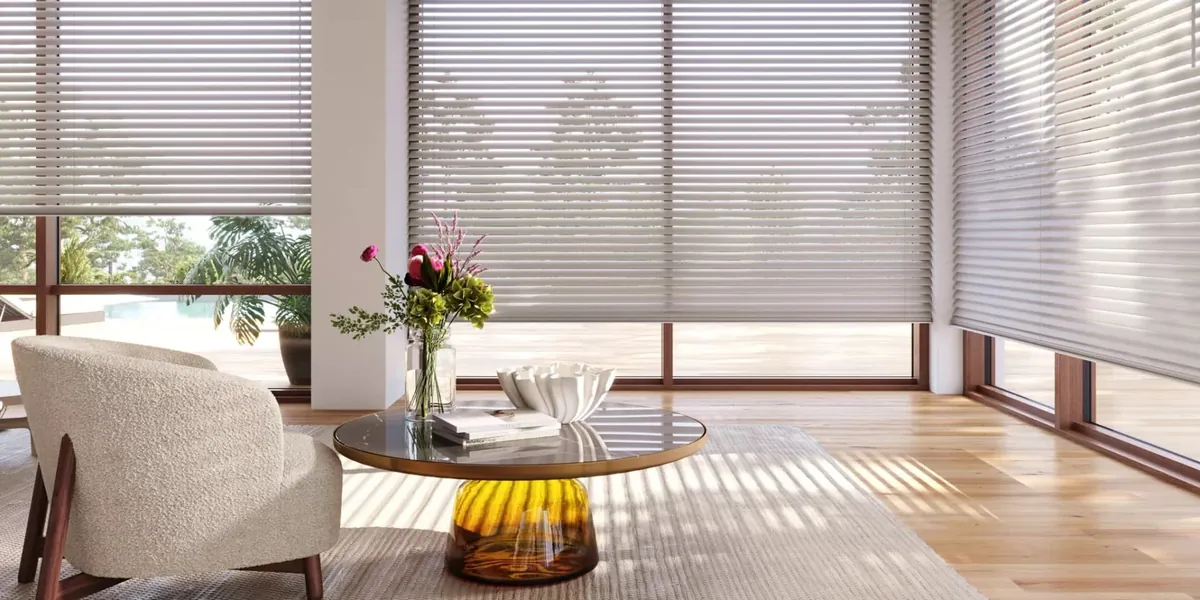
From the Landing to the Back River
Weymouth holds several kinds of house within one town. North and South Weymouth are full of post-war capes and ranches on regular streets. Around Weymouth Landing the housing is older, with two-families standing close together. Near the Back River there are newer condominiums with larger panes and sliding doors. And on the river and harbor side, the light changes: water nearby throws back a bright, shifting glare that a house further inland never sees.
Each of those settings asks something different of a window covering, and that is why custom blinds in Weymouth, MA, make so much sense. A blind’s slats can be set by degrees, angled to block a close neighbor’s view in one house or tilted against the glare off the water in another. Made to the exact frame, a blind fits a cape’s standard opening and a condominium’s wide window equally neatly.
We plan every house and every unit at the window itself, with Hunter Douglas samples in hand, because a color or a slat width that looks right on a card can look quite different in waterside light.
Custom blinds in Weymouth, MA, made to measure
Every blind below is built to the sizes we take at your house or unit. Most homes in town use two or three of these families.
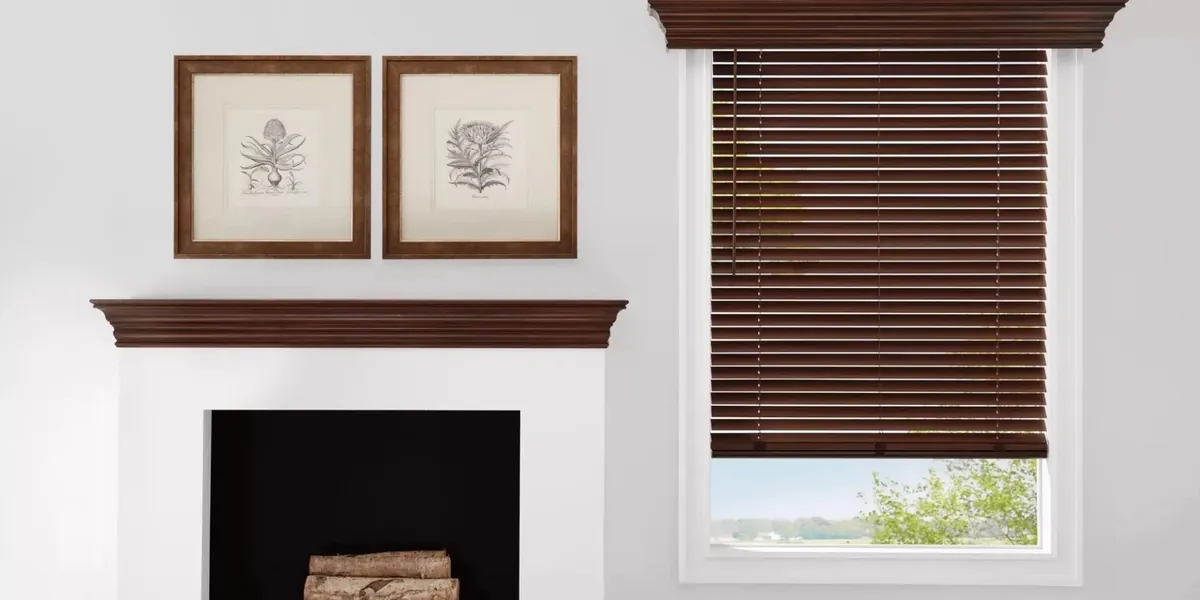
Parkland Wood Blinds
Wood slats for a living room with a fireplace or the front rooms of an older two-family near the Landing.
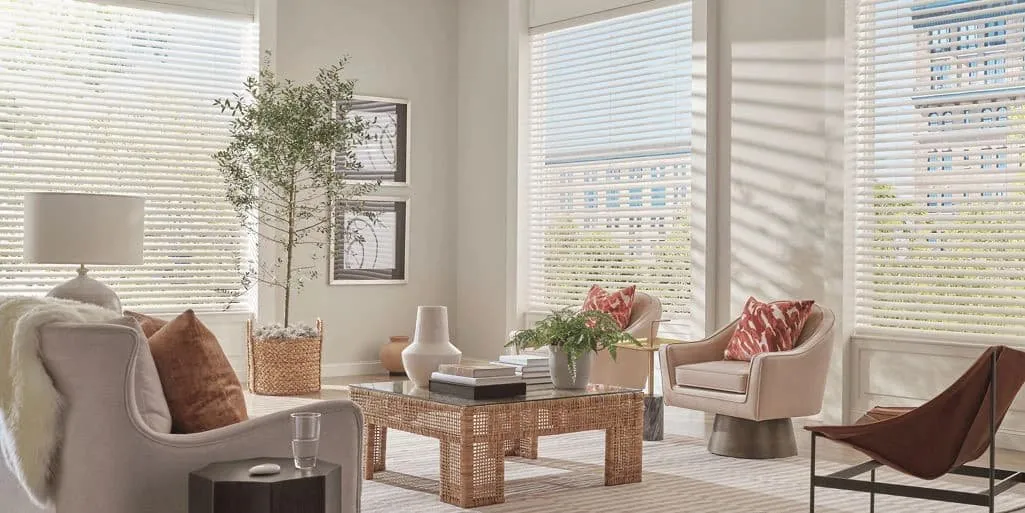
EverWood Alternative Wood Blinds
A faux wood slat that matches the wood colors, for kitchens, baths and capes where one look runs through the house.
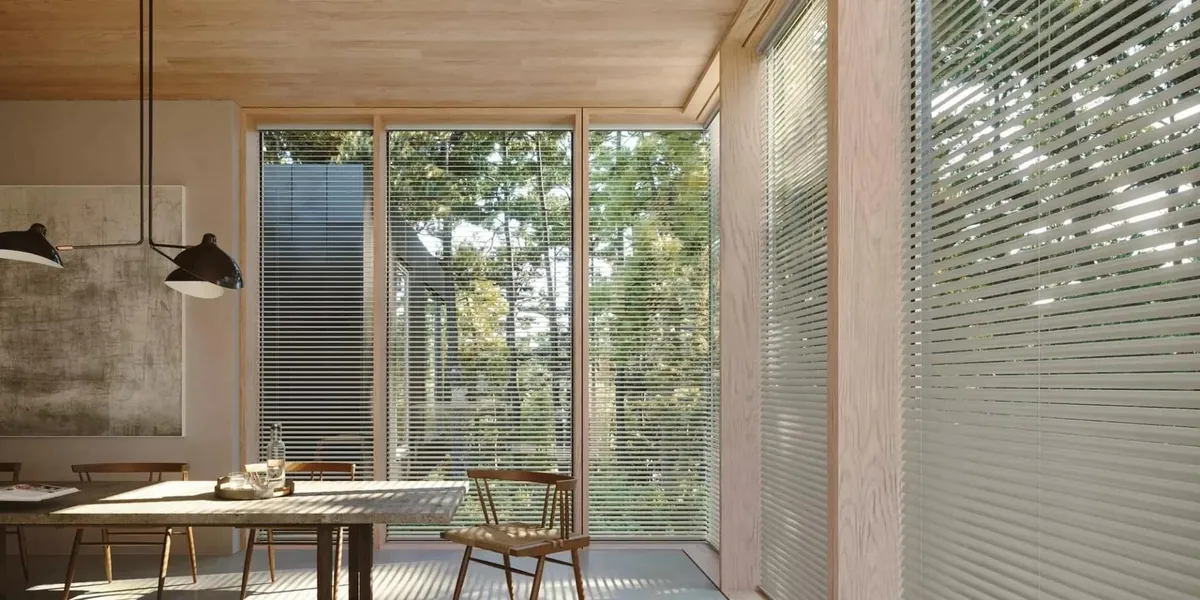
Metal Blinds
Slim aluminum slats with a compact headrail, for shallow frames, door glass and the clean lines of a newer condominium.
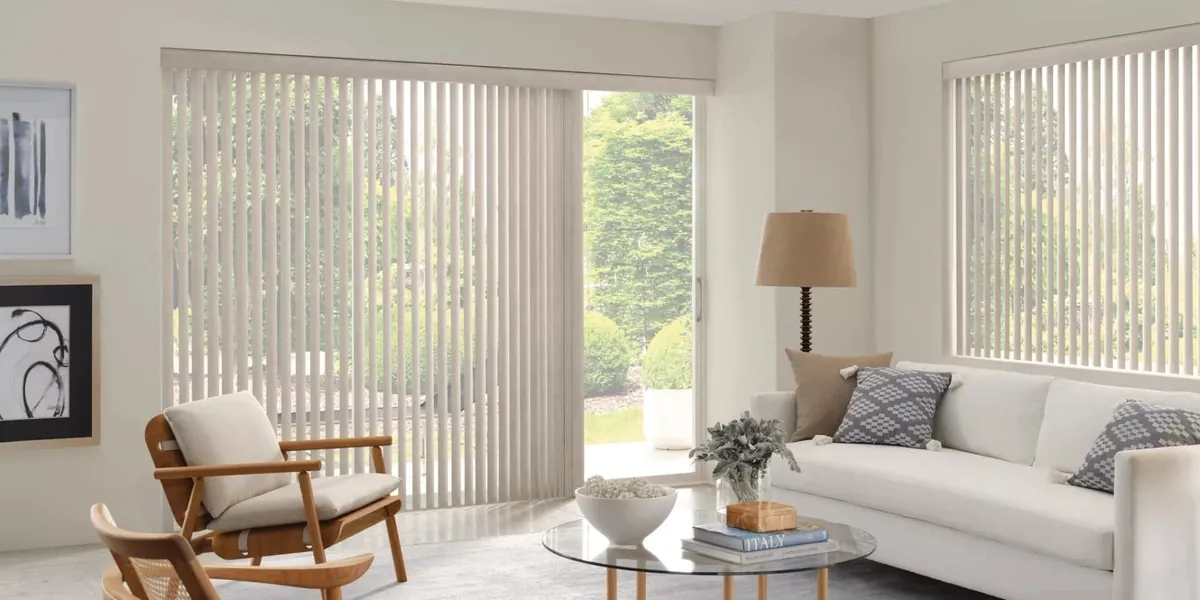
Vertical Blinds
Vanes that draw to one side, for the slider out to a condominium balcony or a ranch’s back deck.
Water light on the river and harbor side
A house or unit that looks toward the Back River or the harbor gets two kinds of light. There is the sun itself, and there is the sun bounced back off the water, which arrives at a lower angle and moves as the surface moves. That reflected light can reach into a room in the middle of the day, glancing off the ceiling and across screens and tabletops, in a way that light from a lawn or a street does not.
Slats are well suited to it. Tilted with their room-side edge raised, they catch low, reflected light and turn it upward, cutting the glare at eye level while keeping the room bright. On a sunny morning by the water, the right tilt can make the difference between a room you can sit in and one you avoid. As the tide and the sun shift, a small change in tilt keeps up.
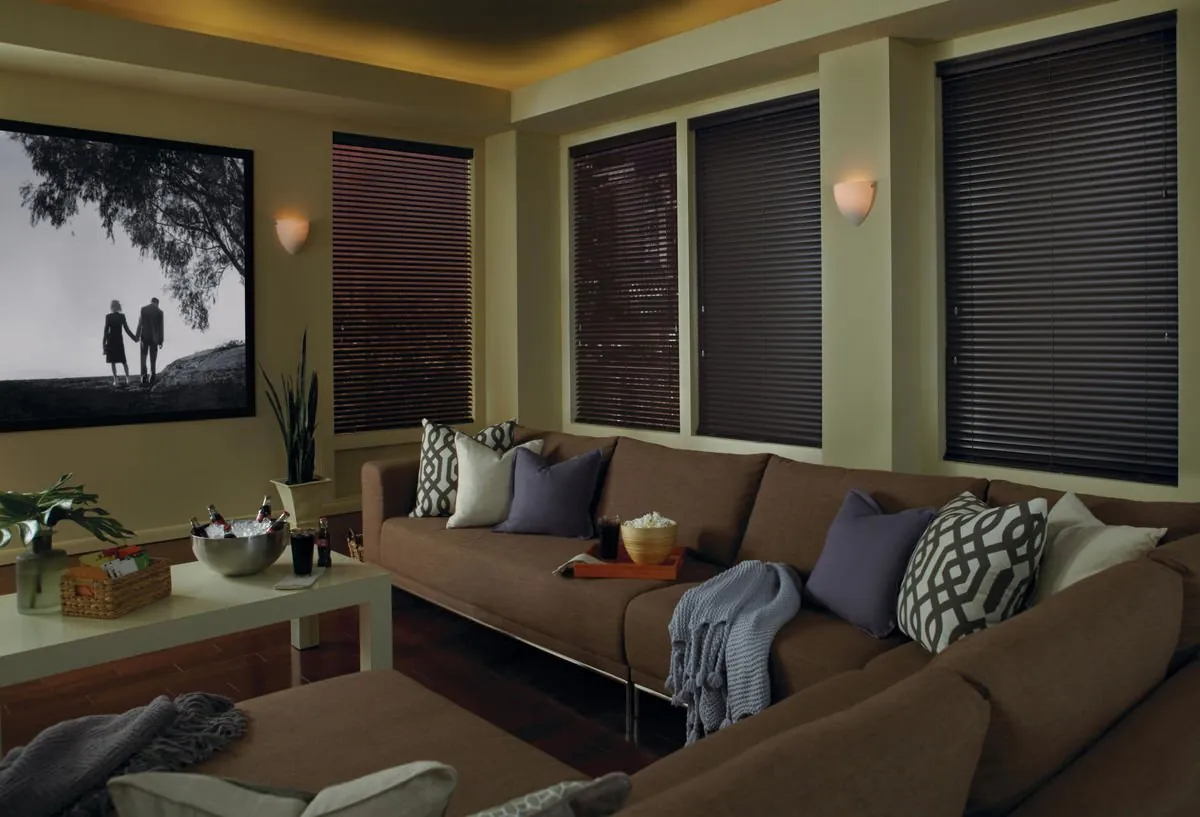
A paler slat color reflects more light back into the room and feels airy by the water. A darker slat cuts brightness more strongly in a room used for screens or sleep. We hold both against your glass so you can see how they behave in your own light.
Condominiums near the Back River
The newer condominiums near the Back River tend to have larger windows than the older houses in town, and many have a sliding door out to a balcony or patio. Units often face the water or each other across a courtyard, so both glare and privacy come into play.
For the windows, a horizontal blind in a slim metal or faux wood slat suits the clean, modern lines of these buildings. For the slider, a vertical blind draws aside fully so the door opens without fuss, and its vanes turn to soften the light when the door is closed. Keeping the windows and slider in one color makes a wall of glass read as a single design.
Some buildings have guidance on what window coverings should look like from outside. If yours does, have it to hand at the visit, and we will show you the Hunter Douglas colors that fit within it.
Two-families near Weymouth Landing
Around Weymouth Landing, the housing is older and closer together. Two-families stand a short distance apart, and side windows often look straight across at the neighbor’s. Front windows sit not far from the sidewalk, and with a separate home on each floor, the building shows two sets of windows to the street.
Privacy is the first job here. A blind tilted so the room-side edge of the slats points up blocks the line of sight from the sidewalk and the house next door, while daylight still bounces in off the ceiling. Closed at night, it gives full privacy with the lights on.
On a two-family, consistency on the street side keeps the building looking cared for. If you own the whole house, one outward color across both floors is the simple answer. If you own one floor, matching the floor above or below is often the neighborly choice. Inside, each home can still choose its own material and colors for the windows that face the back.
When one floor is rented out
When a two-family near the Landing has one floor rented out, or both, the rented rooms need their own thinking. Blinds in a rented unit have a practical brief: they should look neat from the street, suit any furniture a tenant brings, and be simple to use day to day.
A single faux wood color across the whole unit meets that brief well. It looks like wood from across the room, matches from window to window, and leaves the tenant free to dress the rooms as they like. Matching the street-facing color to the other floor keeps the building consistent. Planning custom blinds in Weymouth, MA, for both floors at the same visit means one set of measurements and one estimate covering the whole house.
Capes and ranches in North and South Weymouth
The post-war capes and ranches that fill North and South Weymouth are built from repeated window sizes. A cape’s front windows match each other, as do its bedrooms and the dormers upstairs. A ranch’s bedrooms often share a size, with one wider window in the living room.
That repetition makes these houses straightforward to dress. Once each opening is measured, a whole house can run one slat and one color on the street side, with wood or faux wood in the main rooms and faux wood in the kitchen and baths. We still measure every frame separately, because replacement windows and settled openings rarely match each other exactly.
Ranches put the bedrooms on the ground floor, often near the street or a side neighbor. A deeper slat color, closed, gives those rooms privacy and darkness together. Upstairs in a cape, dormer windows are small and often face the next house, and an inside-mounted blind with a narrower slat suits them.

How a Weymouth visit works
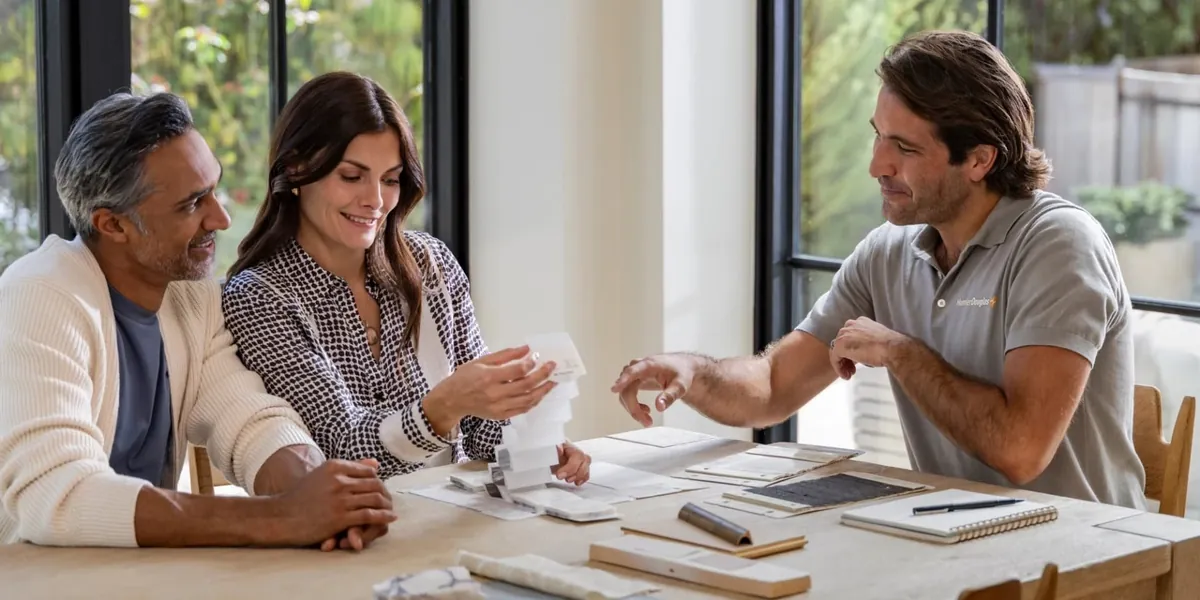
Weymouth is covered from our Canton shop-at-home service, so the samples come to your door. In a house or unit near the water, seeing them in your own light makes all the difference.
- Request a consultation online, or use the call button to talk it through first.
- A van of Hunter Douglas samples comes to your house or building.
- We look at each window with you, including how the light falls and what it faces.
- You compare slat colors, widths and materials against your trim and walls.
- We settle mounts, controls and any windows worth motorizing.
- Every opening is measured, and you get a free estimate to consider at your own pace.
If you are redoing a room and would like advice on more than the windows, ask about our interior design consultations.
Sliders, balconies and back decks
Sliding doors turn up across Weymouth: out to a balcony in a condominium, out to a back deck on a ranch or a cape. A horizontal blind on a slider has to be raised every time someone steps out, which is why most sliders take a vertical blind. The vanes stack to one side, leaving the doorway clear, and turn to filter the light or close for privacy when the door is shut.
On the water side, a slider is often the main view in the room, so the vanes should stack as neatly as possible to keep the glass open. The windows beside a slider usually take horizontal blinds in the same color, with headrails at the same height, so the whole wall looks planned rather than pieced together.
Blinds that keep working while you are out
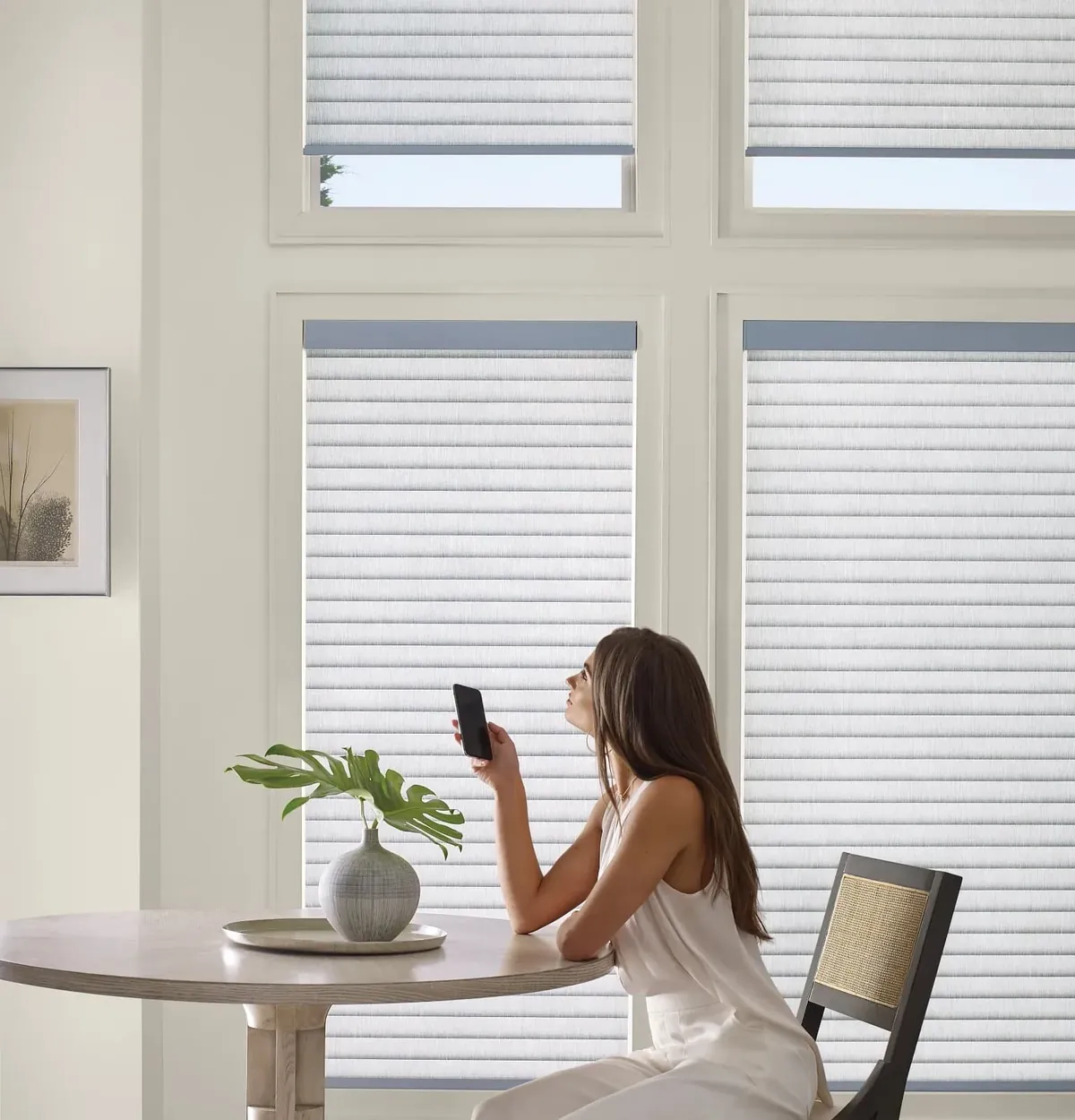
Water glare does not wait for anyone to be home, and neither does dusk. With Hunter Douglas PowerView motorization, a blind can be raised, lowered and tilted from a remote or an app on your phone, and set on a schedule. The blinds on the water side can tilt against the late-morning glare, the street-facing ones can close as the light goes, and the bedroom blinds can open at a set time.
You can start small. Many people motorize only the slider and the windows that catch the most glare, and keep the rest by hand. How each motor is powered is something we plan at the visit, window by window. For more, see our guide on how motorized shades are controlled.
Bedrooms that face the light
A bedroom facing east over the water gets early sun twice: straight from the sky and again off the surface. A blind with a deeper slat color, closed, takes the edge off both. Where the frame is shallow, a blind mounted on the face of the casing overlaps the opening on each side, which reduces the bright line that can show around a blind set inside the frame.
In the two-families near the Landing, a bedroom at the front may face a streetlight instead. The same approach works there: a darker slat, closed at night, tilted open in the morning to let the day in gently. For custom blinds in Weymouth, MA, in a bedroom, the choice of color usually matters more than anything else.
Kitchens, baths and the back door
Kitchen windows in the capes and ranches usually sit over the sink and look out to the side or back yard. Faux wood suits them, carrying the look of the wood blinds in the main rooms in a slat that is not real wood. Bathroom windows are small and often face a neighbor, and a blind closed or tilted for privacy does the job all day.
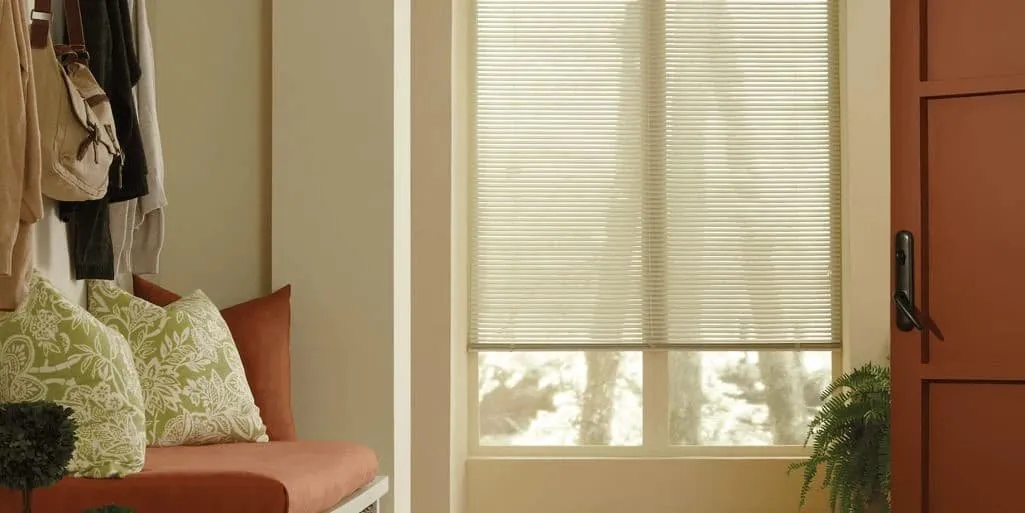
Many houses in town are entered through a side or back door with glass in it. A metal blind with its slim headrail fits that shallow frame and clears the handle as the door swings. Matched in color to the rest of the house, it keeps the back door looking as tidy as the front.
A desk with a view of the water
A desk set by a window that looks over the river or the harbor is a fine place to work until the sun comes round and the glare lands on the screen. Reflected light off the water is especially awkward, because it arrives low and from a slightly different direction as the morning goes on.
Slats tilted partway cut that glare while leaving the view in the gaps between them. A slightly darker slat color narrows the gap in brightness between the window and the screen, which is easier on the eyes over a long day. If the desk sits beside the window rather than facing it, the light falls across the room instead of into the screen, and the blind can often stay more open.
Front doors and side lights
Some of the older houses near the Landing have narrow side lights beside the front door, and many newer houses and condominium entries have a glass panel in or beside the door. These narrow openings are close to the step, so they show straight into the hall.
A slim metal blind mounted inside a narrow side light fits without catching on the door or the trim. Kept in the same color as the front rooms, it ties the entry to the rest of the house as seen from the sidewalk.
In a condominium, the entry window may face a shared hallway or a walkway past the building rather than a street. Privacy there is about people passing close by at all hours, so a blind that stays tilted shut through the day, while still letting a little light into the hall, is usually the setting that suits it best.
Choosing color near the water
Near the river and harbor, color choices behave a little differently. Pale slats, white or cream or a soft gray, reflect light and keep a room feeling open, which suits a bright waterside living room. Darker slats cut the brightness more and can suit a room used for screens or sleep. A wood tone brings warmth to a room that might otherwise feel cool in the reflected light.
From outside, the usual rule applies: one color across every window seen from the street or the water keeps the house or building looking calm. Inside, each room can choose. Picking custom blinds in Weymouth, MA, gets much easier once that outward color is settled. If you are weighing blinds against shades in some rooms, our guide on shades or blinds explains the differences.
Why a Hunter Douglas Gallery dealer
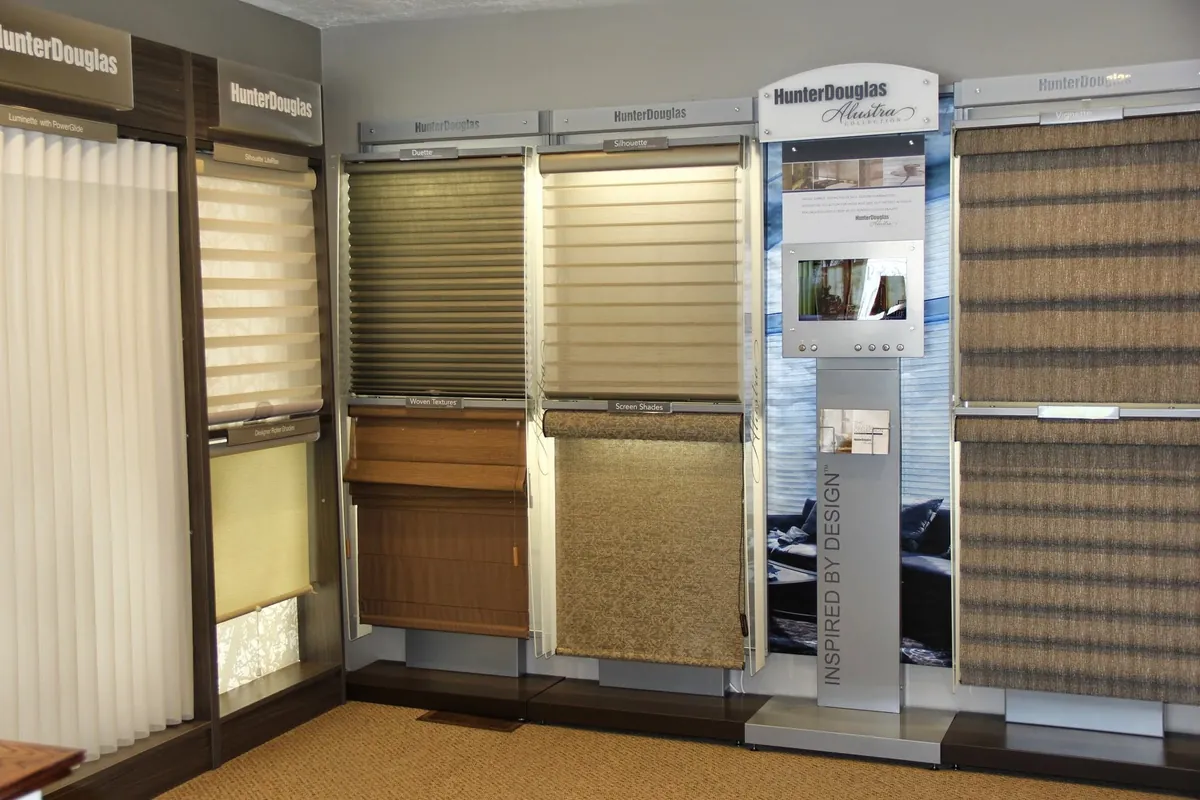
Blinds & Designs is a Hunter Douglas Gallery dealer. Our installers are certified by Hunter Douglas, so the same care that goes into measuring each window carries through to the day the blinds go up.
There is no charge for the estimate. Alongside blinds, we offer interior design consultations, window covering automation and repairs to blinds and shades you already own. Every blind family is on our custom blinds page. The full list of services in town is on our Weymouth page, including roller shades in Weymouth and motorized blinds in Weymouth.
Questions from Weymouth
Our condominium faces the Back River. How do we cut the glare off the water?
Tilt the slats with the room-side edge raised. They catch the low, reflected light and send it up toward the ceiling, cutting glare at eye level while keeping the room bright.
What goes on a slider to a balcony?
A vertical blind. The vanes stack to one side so the door opens freely, and turn to soften the light when it is closed.
Our building has rules about window coverings. Can you work within them?
Bring the guidance to the visit and we will show you the Hunter Douglas colors and styles that fit it.
We live in a two-family near the Landing. Should our blinds match the other floor?
It is up to you, but one outward color across both floors keeps the building looking tidy from the street.
Do you charge for the estimate?
No. The estimate is free once we have measured.
Take the first step today
A cape in South Weymouth, a two-family by the Landing or a unit looking over the Back River: whichever it is, the right blind is easier to choose with the samples against your own glass. Request a consultation and we will come to you, measure every window and leave a free estimate. If you would like to see Hunter Douglas products in person too, our nearest showroom is in Franklin, and the call button reaches us for a quick question.