
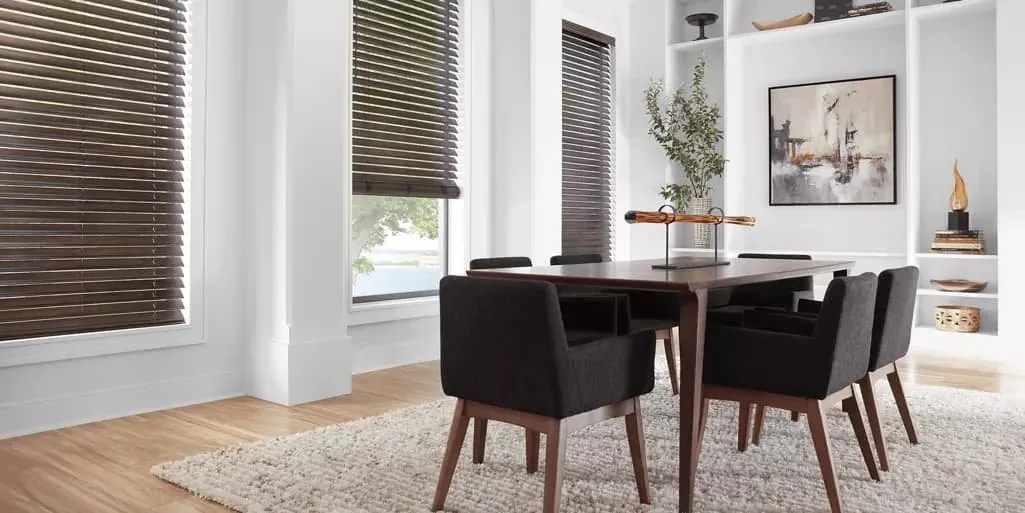
Main Street sash and harbor views
Along Main Street and around the harbor, Hingham’s antique colonials and Federal houses carry a lot of history in their windows. The sash are small and set deep into the walls, the fronts are often arranged in careful, balanced rows, and there is a clear expectation that anything added to a house like this should respect it. Inland, on wooded lots, the houses are larger and newer, with bigger windows and rooms that open onto the trees. And by the water, many rooms were built with one purpose: the view across the harbor.
Custom blinds in Hingham, MA, have to serve all three. In the old houses, a blind should sit discreetly inside the deep recess and look right from the street. In the harbor rooms, it should get out of the way of the view when you want it and soften the glare when you do not. In the newer houses, it should handle large windows and high ones with ease.
A blind made to each frame does that better than anything sized off a shelf. We plan every house window by window, with Hunter Douglas samples held up to your own sash and trim.
Custom blinds in Hingham, MA, in four families
Whatever you choose is made from our own measurements of your frames. Old Main Street rooms usually lean toward wood, while the inland houses draw on all four.
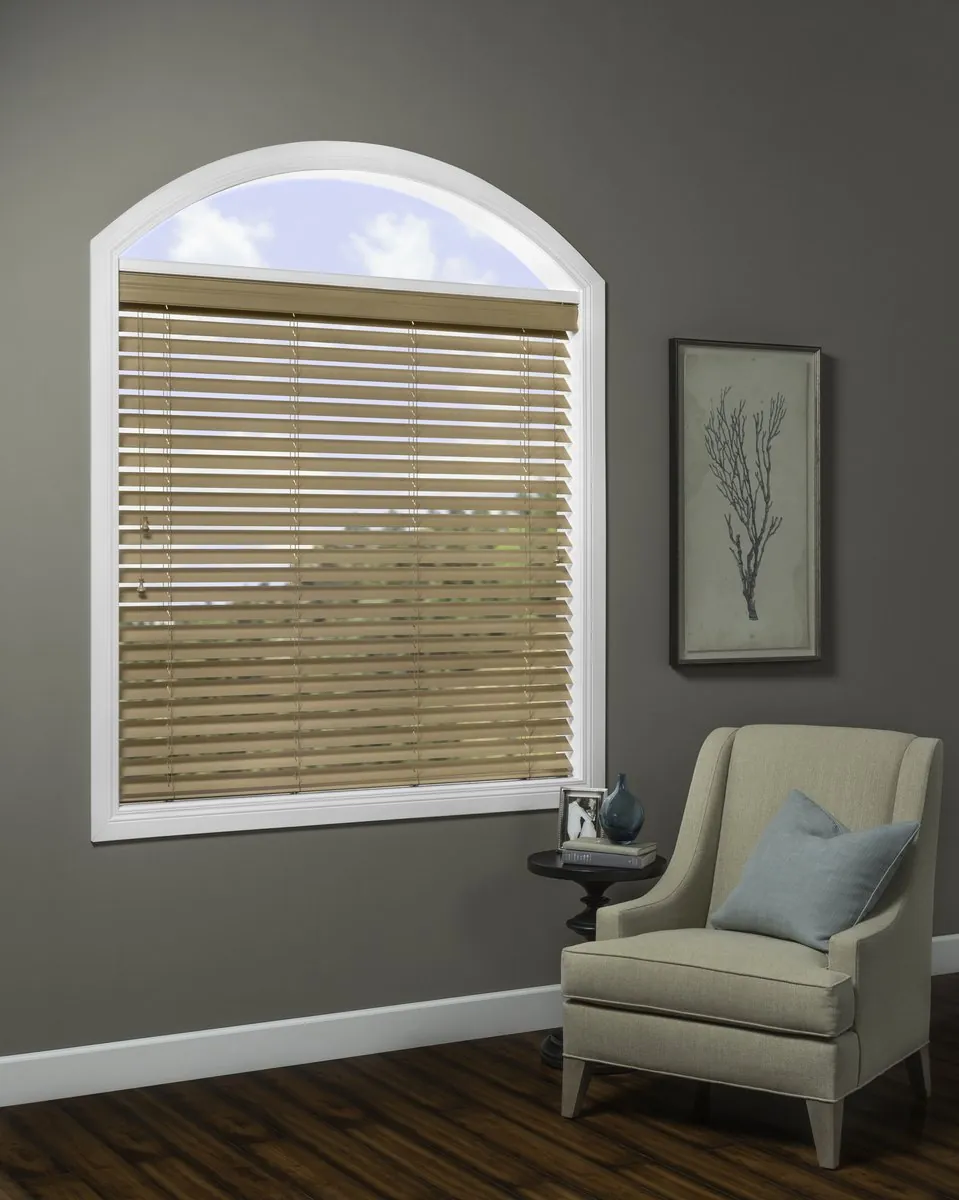
Parkland Wood Blinds
For paneled parlors and studies, so the blind belongs with the original woodwork around it.
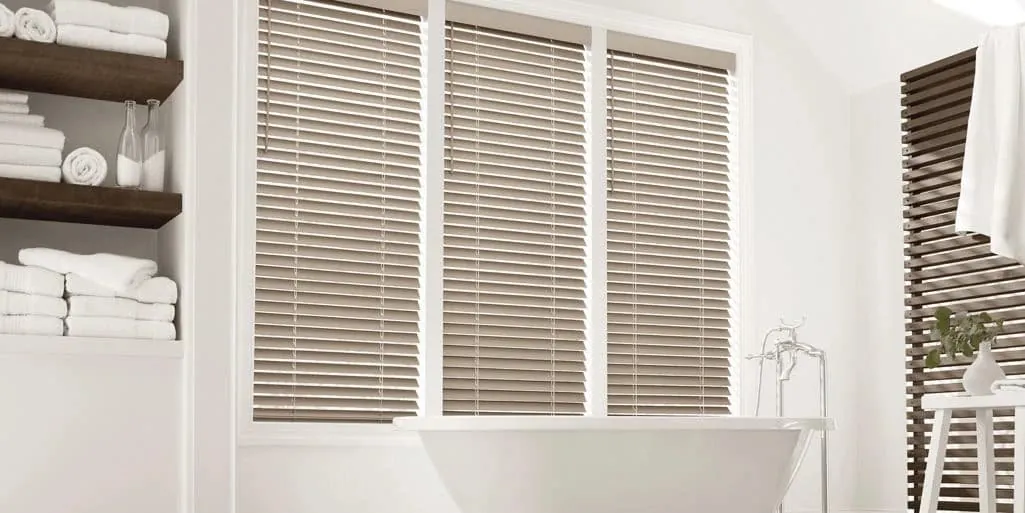
EverWood Alternative Wood Blinds
The wood look in a faux wood slat, matched to the wood colors, for baths, kitchens and service rooms.
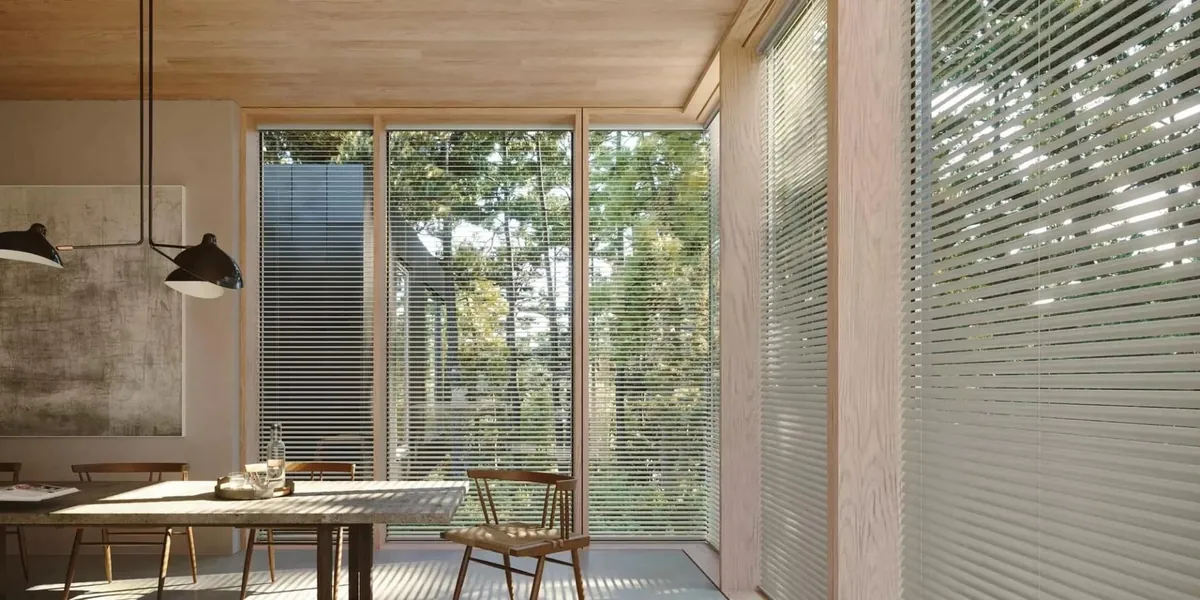
Metal Blinds
Slender aluminum, for side lights at a Federal doorway, door glass and lofty panes inland.
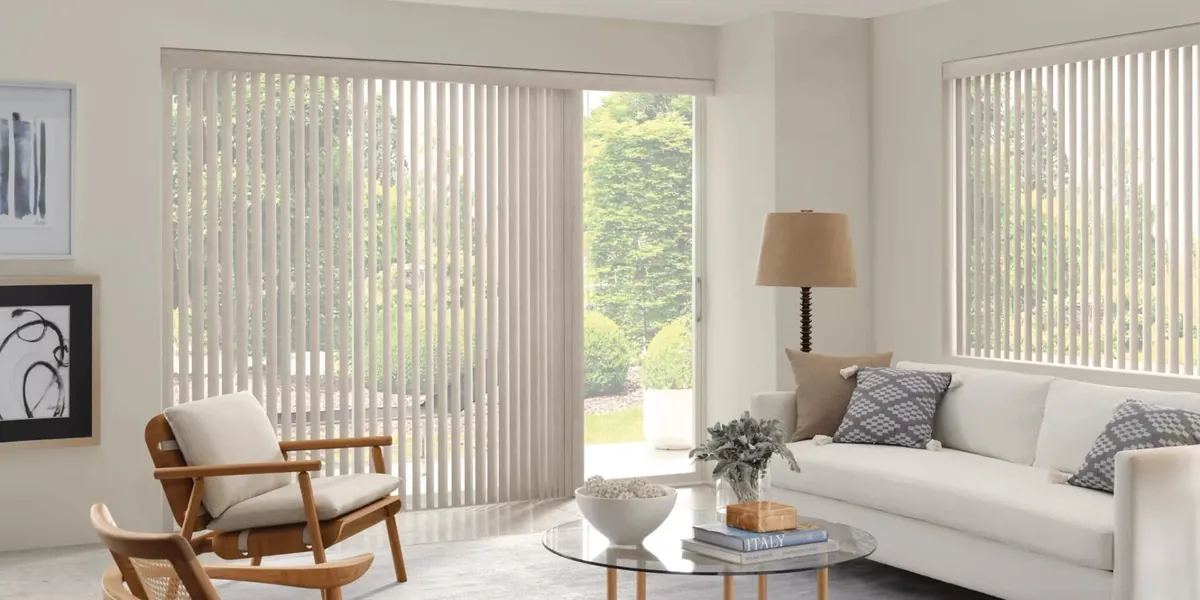
Custom Vertical Blinds
Vanes that draw clear of a slider, for a newer house that opens from the kitchen or family room to a terrace.
Historic expectations on Main Street
A house on Main Street is seen by a great many people, and it is part of a streetscape that has been looked after for a long time. Whatever goes in its windows is seen from the sidewalk first. A window covering that looks modern or out of scale stands out on a street like that, so the aim is usually something quiet and in keeping.
Blinds suit that aim well. Set within the thick walls of an antique sash, a blind sits back behind the glass and leaves the casing, the sill and the whole outline of the window untouched. From the street, a row of matching blinds in white or cream reads simply as part of the house, the same color behind every pane, with nothing hanging in front of the trim. A warm wood tone can suit a house with dark painted sash or natural shingles, where white would look too stark.
The view from inside matters just as much. Many of these houses keep original paneling, built-ins and wide floorboards. A wood blind whose tone agrees with that woodwork looks at home in a way a plastic or fabric covering often does not.
The symmetry of a Federal front
Federal houses and many antique colonials are built around balance: a central door, windows evenly spaced on either side, and the same pattern repeated on the floor above. That symmetry is the point of the design, and the blinds should support it.
In practice that means every window on the front matches: the same color, the same slat, and when the blinds are raised, the same height. A blind left halfway down in one window and fully up in the next breaks the pattern from the street more than you might expect. One answer is to keep the front-facing blinds at a single agreed position through the day. With motorized control, a whole front can move together at the touch of a button.
Because old windows that look identical are rarely exactly the same size, each is measured on its own. The goal is a set of blinds that looks perfectly uniform, built from frames that are not.
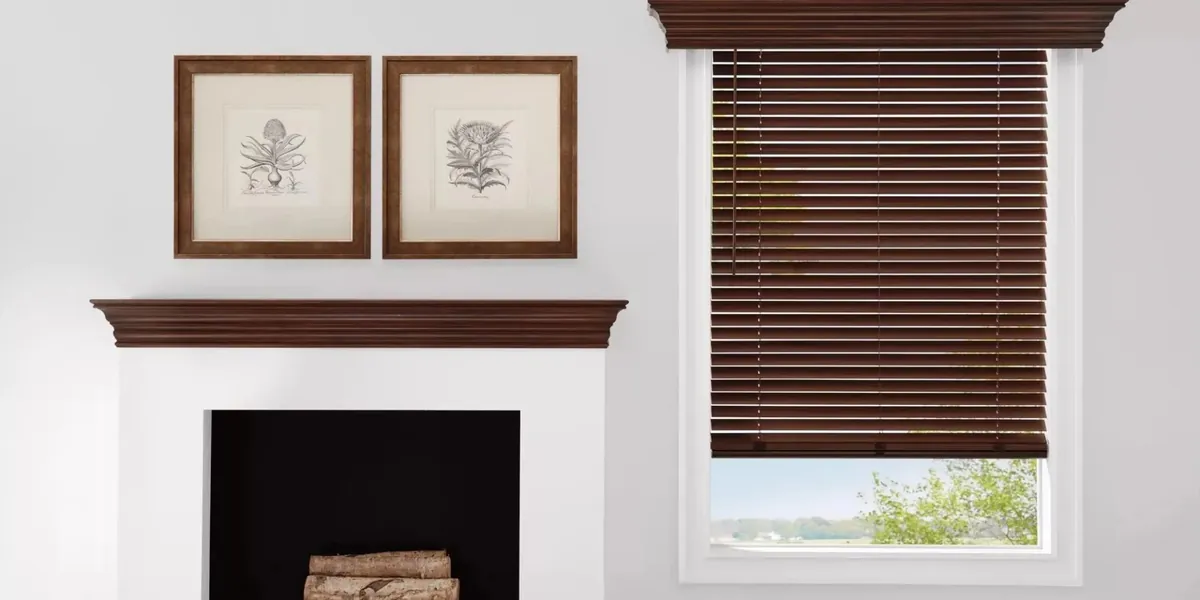
Fitting a small, deep-set sash
The windows in Hingham’s older houses are small by modern standards, and they sit at the back of thick walls. That depth gives a blind somewhere to live. A headrail fits easily inside the recess, the slats can tilt freely, and once lifted, the gathered slats hide in the top of the opening, close to invisible from the room.
Small sash also mean many panes divided by wooden muntins, which already draw lines across the glass. A narrower slat gives a finer pattern that sits quietly behind them and leaves more of the little window open once the blind goes up. A slat in the same color as the sash and trim lets the window itself stay the feature.
Old recesses are seldom perfectly square, so we measure at more than one point. The blind is sized to clear the tightest spot while still looking even from edge to edge, which is what makes it look as though it was always meant to be there.
Rooms built around the harbor view
Around the harbor, many rooms exist for the view. A living room, a dining room or a bedroom may have been arranged entirely around the window that looks out over the water. In a room like that, the most important thing a blind can do is disappear.
There are two ways to keep the view. Raised fully, a horizontal blind stacks at the top of the window. A narrower slat makes a shorter stack, and a blind mounted above the frame can lift the stack clear of the glass altogether, leaving the whole view open. Lowered and tilted, the slats can cut the glare off the water while leaving the harbor visible between them.
Glare is the reason a harbor room needs a blind at all. Sunlight off the water is low and bright and shifts through the day. A slight tilt, room-side edge up, turns that light toward the ceiling and keeps it out of your eyes, without closing the room off from the water. As the light moves, the tilt can follow.
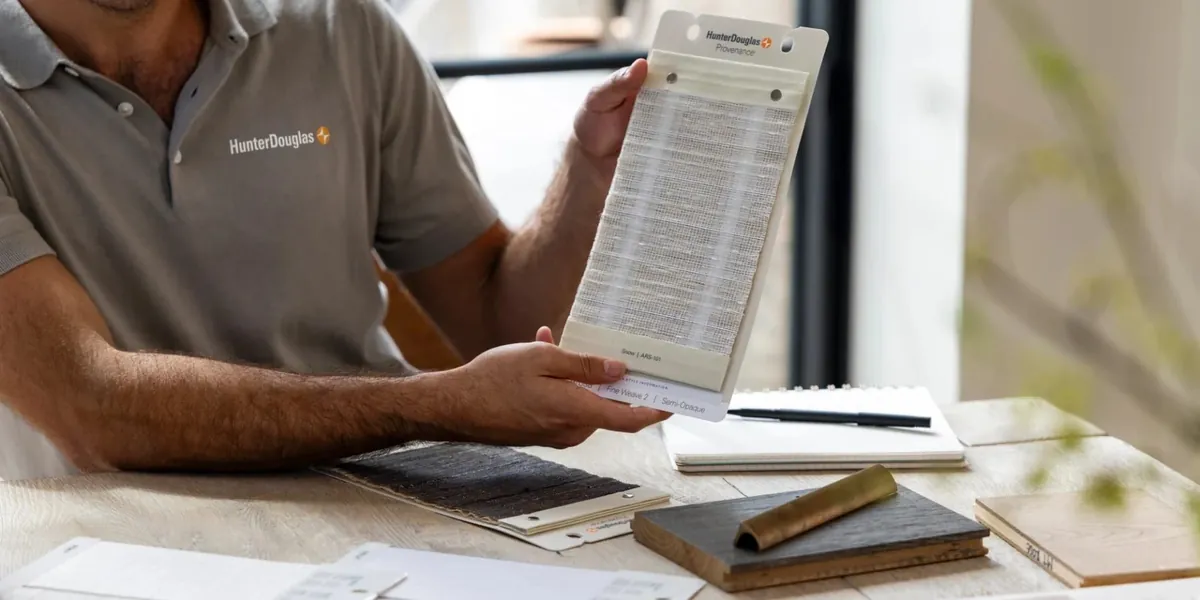
In your own rooms, with the samples
We cover Hingham through the Canton shop-at-home service. With historic sash, harbor light and large inland windows all in one town, we would rather judge a sample at your window than anywhere else.
- Send the Request a Consultation form, or start with a conversation on the call button.
- We come to the house with a van of Hunter Douglas samples.
- We walk the rooms with you, from the street-facing front to the view rooms at the back.
- You compare woods, colors and slat widths against your sash, trim and paneling.
- We agree mounts, how the front windows should line up and any windows worth motorizing.
- We take measurements frame by frame, then hand over a free estimate with no deadline attached.
For a wider look at a room, from paint to fabric, we also offer interior design consultations.
Larger houses on wooded lots inland
Away from Main Street and the harbor, Hingham’s newer houses sit on wooded lots with more space around them. These houses are larger, with bigger windows, higher ceilings in the main rooms and, often, a kitchen or family room that opens to a terrace through a sliding door.
Trees change the light in these houses. Sun comes through the leaves in patches that move with the wind and the hour, bright one minute and shaded the next. A blind handles that well, because the slats can be tilted to soften the bright patches without closing the room off from the woods outside. With fewer close neighbors, privacy is less often the main concern than glare and comfort.
Large windows in these houses can take a single wide blind or a pair side by side, depending on width and on whether you want to raise one part alone. A slider takes a vertical blind, with matching horizontal blinds on the windows beside it. For custom blinds in Hingham, MA, in a newer house, the high windows are usually the question that needs the most thought.
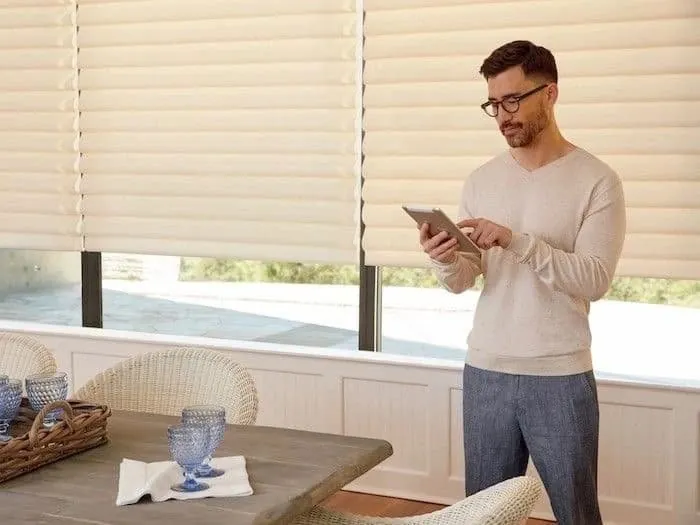
High windows and motorized control
A two-story family room or an entry hall with a window high above the door is common in the larger inland houses, and nobody wants to climb a ladder to tilt a blind. Hunter Douglas PowerView takes the ladder out of it. Up, down and the angle of the slats are all handled from a handheld remote, a tablet or a phone app, and the upper and lower windows in a room can be paired to move as one.
Schedules add to it. West-facing glass can angle away from the late sun by itself, the front of an old Federal house can move as one at dusk, and a harbor room can close for the night at the same time every evening. You can motorize just the windows that need it and leave the rest by hand. We plan how each motor is powered at the visit, room by room. Remotes, the app and schedules are explained in how motorized shades are controlled.
Studies and libraries in the older houses
Many of the older houses have a study, a library or a small paneled room set aside for quiet work. These rooms often have rich woodwork and shelves of books, and light needs handling with care: enough to read by, but not falling straight across the shelves or a screen.
A wood blind in a tone that sits with the paneling suits a room like this naturally. Tilted, the slats can throw soft light up onto the ceiling, brightening the room without sending direct sun across the books. Closed, a darker wood gives the room a calm, enclosed feeling for an evening. The blind becomes part of the woodwork rather than something added to it.
Rooms for screens and for sleep
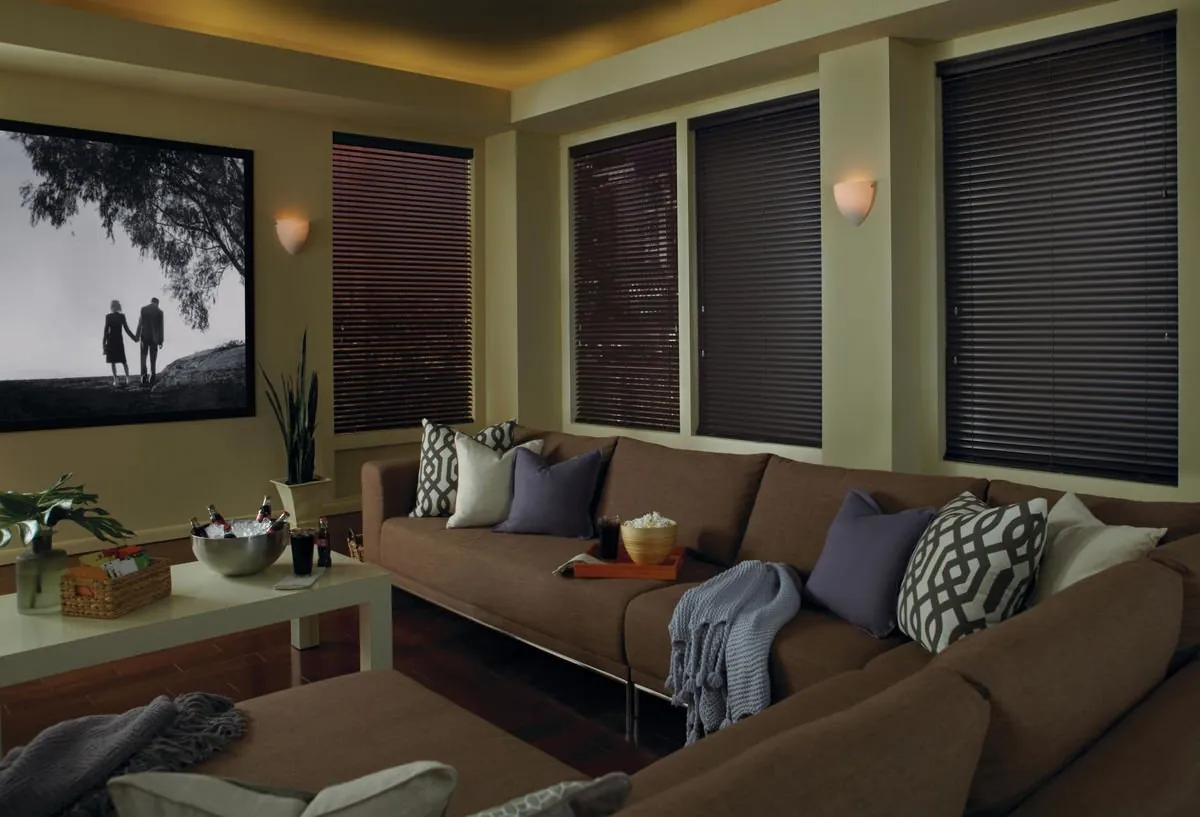
In the newer inland houses, a family room or a lower-level room is often set up for films and television. A darker blind, closed, takes the light out of the room, and partly tilted, it stops glare on the screen while leaving enough light to move around. With motorized control, one scene can close every blind in the room at once.
Bedrooms want that darkness after sunset too. Pick a richer slat finish and the closed blind turns the room dimmer than white ever would. Old Federal bedrooms help here, since their sash sit so far back that light struggles to creep round the edges. Inland, where frames are slimmer, mounting the blind across the face of the casing so it laps over the opening is the usual fix. Come morning, a small turn of the slats lets daylight in slowly, and in a bedroom on the harbor side, a little more turn brings the water back into view.
Kitchens, baths and the back entry
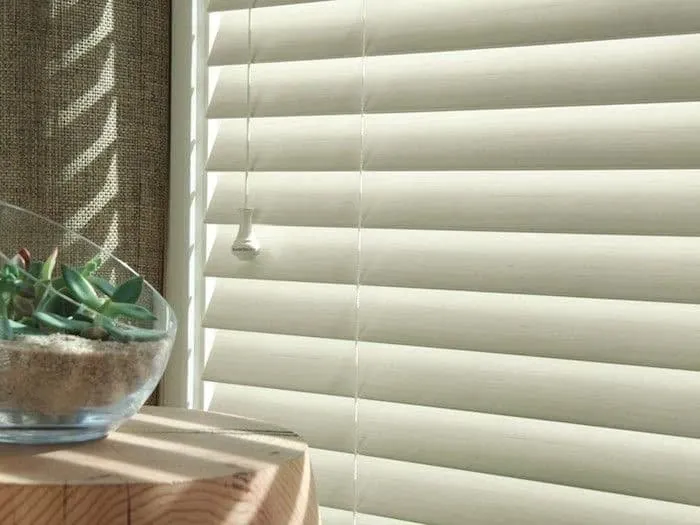
Kitchens in the antique houses are often at the back or in a later wing, with windows that differ from the formal front. Faux wood suits them, carrying the look of the wood blinds at the front of the house in a slat that is not real wood. Baths take faux wood for the same reason, closed or tilted for privacy.
A back entry or mudroom often has a door with glass in it, and a metal blind with its slender headrail fits that shallow frame and clears the handle. In the old houses, narrow side lights beside the front door take a slim metal blind too, matched to the front rooms so the entry stays in keeping with the street face.
Window seats, deep sills and what sits on them
The thick walls of the older houses leave a deep sill in front of many windows, and some front rooms have window seats built into the recess. Those sills tend to collect things: plants, books, a lamp, a row of shells from the beach. A blind that hangs within the recess has to clear whatever sits there when it is lowered.
So when we measure custom blinds in Hingham, MA, for a deep-set window, we note how far back the sash sits and where the blind will stop. Over a window seat, the drop is planned with the cushion in place, so the bottom rail rests where it looks intended rather than where the old casing happened to end. If you keep plants on the sill, the slats can be tilted for light while the blind stays lowered, so the sill can stay as it is.
Where each material belongs
In a typical Hingham house, wood goes into the front parlor, the dining room, the study and the main bedroom, where its warmth suits the woodwork and the age of the house. Faux wood covers the kitchen, the baths and the back rooms. Metal handles side lights, door glass and very tall or shallow windows. Vertical blinds take any slider in a newer house.
Because the wood and faux wood ranges share their colors, nobody on the sidewalk or out on a boat can tell which room has which. When planning custom blinds in Hingham, MA, for a whole house, settling that outward color first makes every other choice simpler. Torn between a blind and a shade for a particular room? Read shades or blinds for a plain comparison.
See Hunter Douglas in a showroom too
In Hingham we start at your kitchen table rather than a store counter. Should you want to browse the Hunter Douglas range in a shop as well, Franklin is the closest of our showrooms.
As a Hunter Douglas Gallery dealer, we send installers who carry Hunter Douglas certification. You pay nothing for the estimate. Design help for the whole room, automation for your window coverings and repair work on blinds or shades already in the house are all available through us. Look through each Hunter Douglas blind family on the custom blinds page; for everything else we do here, see the Hingham page, including plantation shutters in Hingham and roman shades in Hingham.
Questions from Hingham
Will blinds look right on an antique house on Main Street?
Yes, when they are mounted inside the deep recess and matched across the front. From the street they read as part of the house, with nothing hanging in front of the trim.
How do I keep the harbor view?
Raise the blind fully and it stacks at the top; a narrower slat or a mount above the frame keeps more glass clear. Lowered, the slats can tilt to cut glare while the view stays visible between them.
My old windows look identical. Why measure each one?
Old frames are rarely exactly the same size or perfectly square. Measuring each one is how a set of blinds ends up looking uniform.
Can I control a window high above the entry hall?
Yes. A PowerView motor lets that blind follow a remote, a tablet or your phone, and it can be linked with the others in the room. Power for each motor gets planned at the visit.
Is there a charge for the estimate?
No. The estimate is free after we measure.
Begin with the window you look through most
For many houses in town, that is the harbor window or the front parlor on Main Street; for others it is a tall window over the entry inland. Wherever you start, a request for a consultation brings the sample van to your drive, a tape measure to every frame and a free estimate to your table. Anything you want to ask beforehand can go through the call button.