
Steep streets, deep reveals, big harbor glass
Fall River climbs a hill, and its houses climb with it. Through the Highlands and Corky Row, mill-era three-deckers and Victorians stand close together on streets that rise steeply from the water. Their windows are tall, narrow double-hung sash set in deep reveals, and plenty of them look straight across a few feet of side yard at the house next door. Down near Battleship Cove, the newer waterfront condominiums are the opposite: large sheets of modern glass facing the water.
Choosing window treatments in Fall River, MA, means dealing with both. In the older neighborhoods, privacy, tall proportions and deep frames lead the conversation. In the condominiums it is glare, heat and keeping a wide view.
The hill adds a twist of its own. On a sloping street, one side of a house can sit high and open to the sky while the other faces a bank or the house uphill. Two sides of the same house can get completely different light, and they deserve different answers.
Window treatments in Fall River, MA: the full list
Behind each card sits a dedicated Fall River page. Open whichever fits the room in question, or have us look at the whole flat or house in one go.
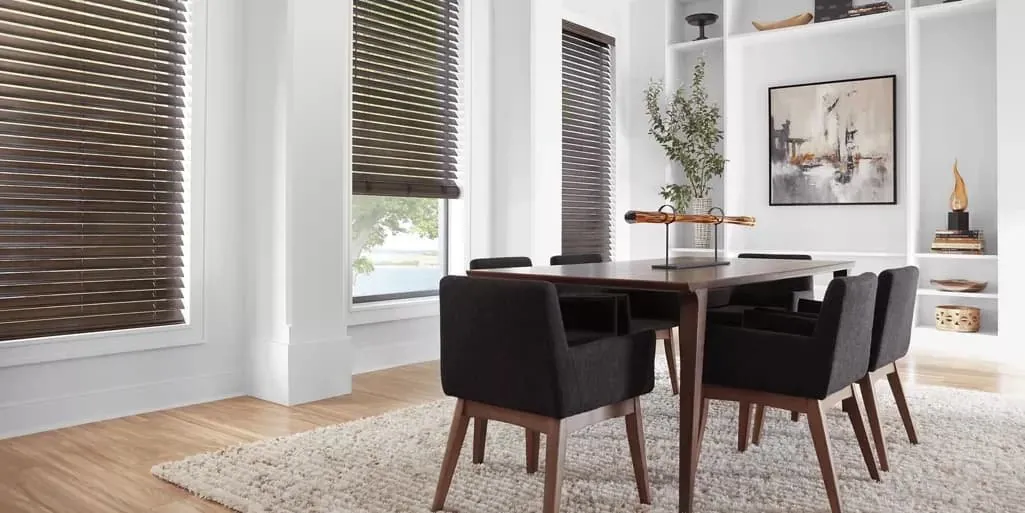
Blinds for tall sash
Slats in stained wood, faux wood or aluminum, plus verticals, sized for a narrow Victorian window or a condominium slider.
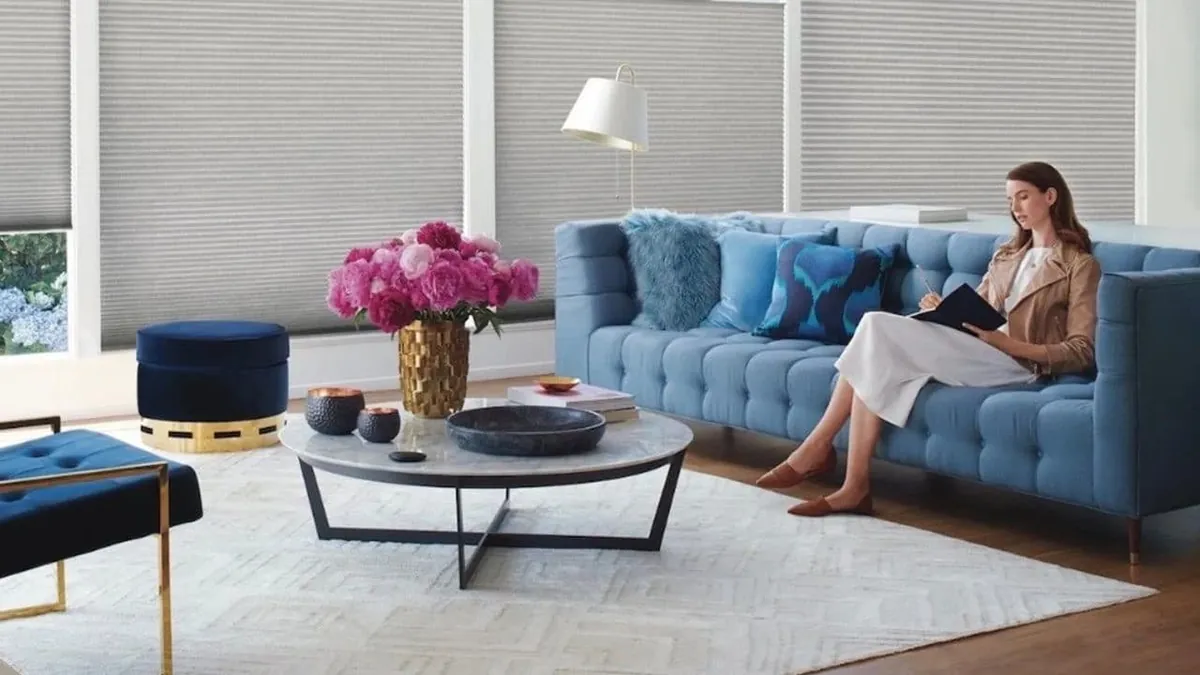
Cellular shades
Honeycomb fabric from the Duette and Applause lines traps still air in front of old panes, helping a tall-windowed flat stay warmer.
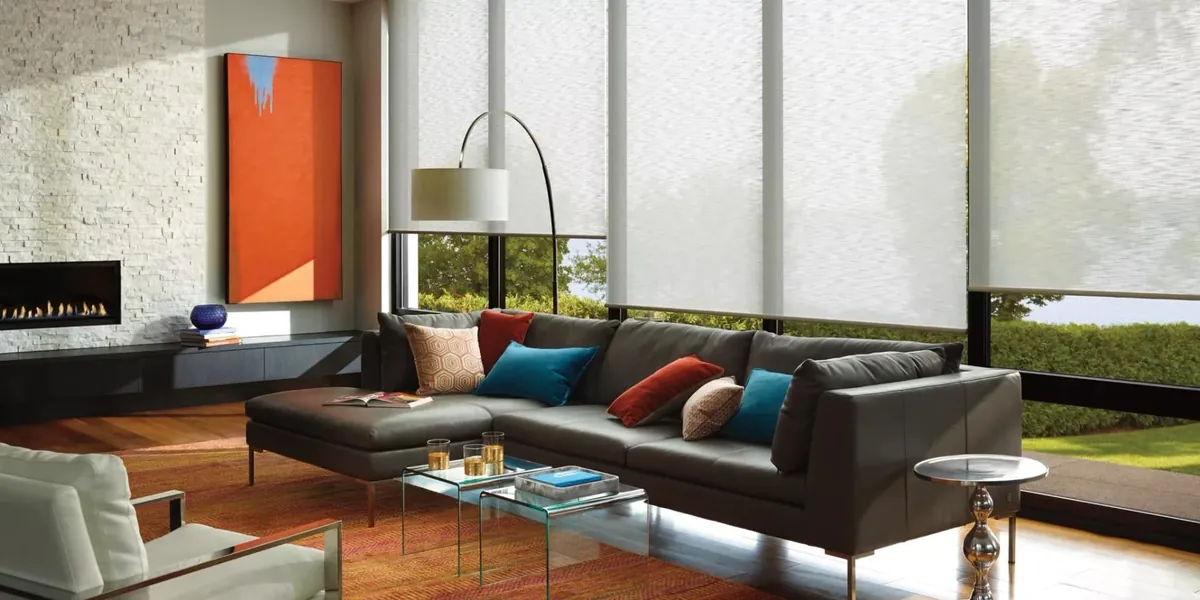
Roller and screen shades
Plain Designer rollers or Alustra weaves, and screens that calm the glare on big waterfront glass but leave the cove in sight.
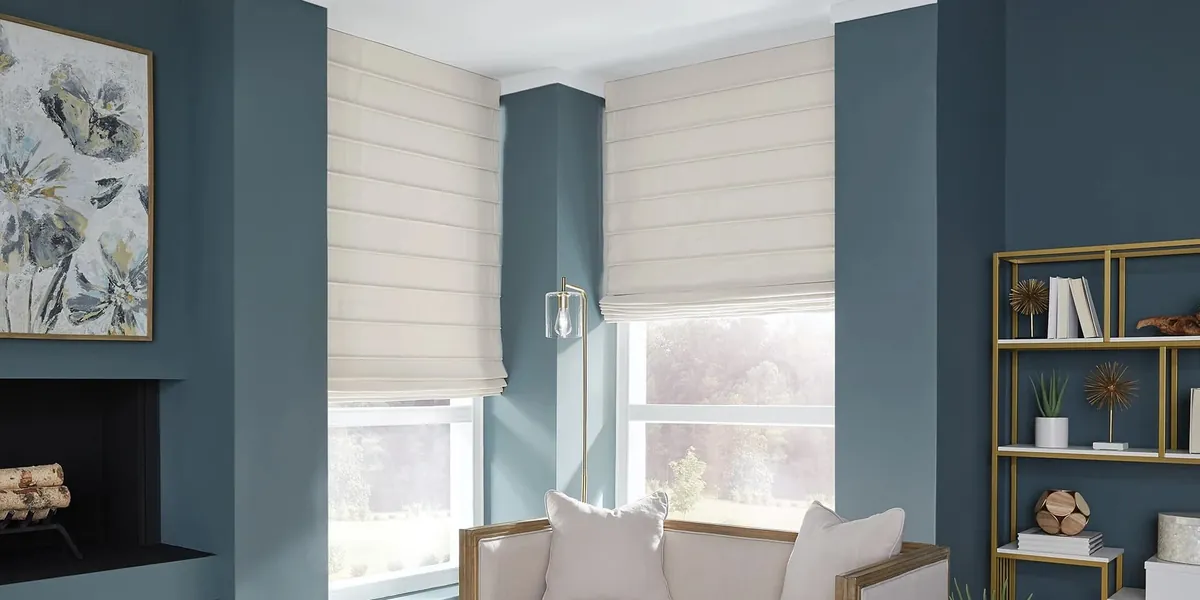
Roman shades
Soft Vignette folds or a tailored Carole Fabrics flat roman, either one at home in the bay of a Highlands Victorian.
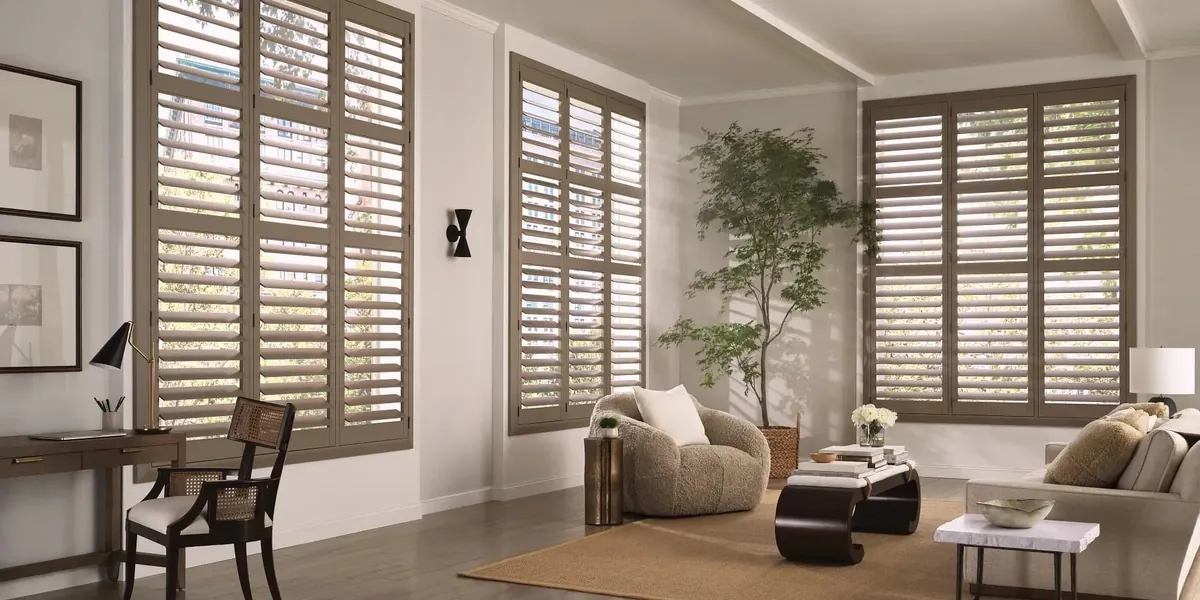
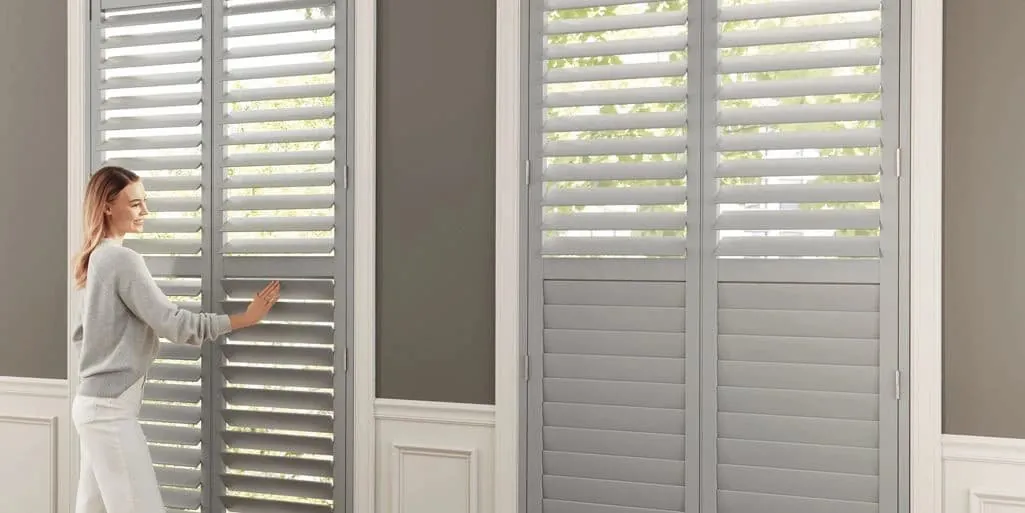
Plantation shutters
Tall Heritance, NewStyle or Palm Beach panels with a divider rail, so the top louvers and the bottom ones move on their own.
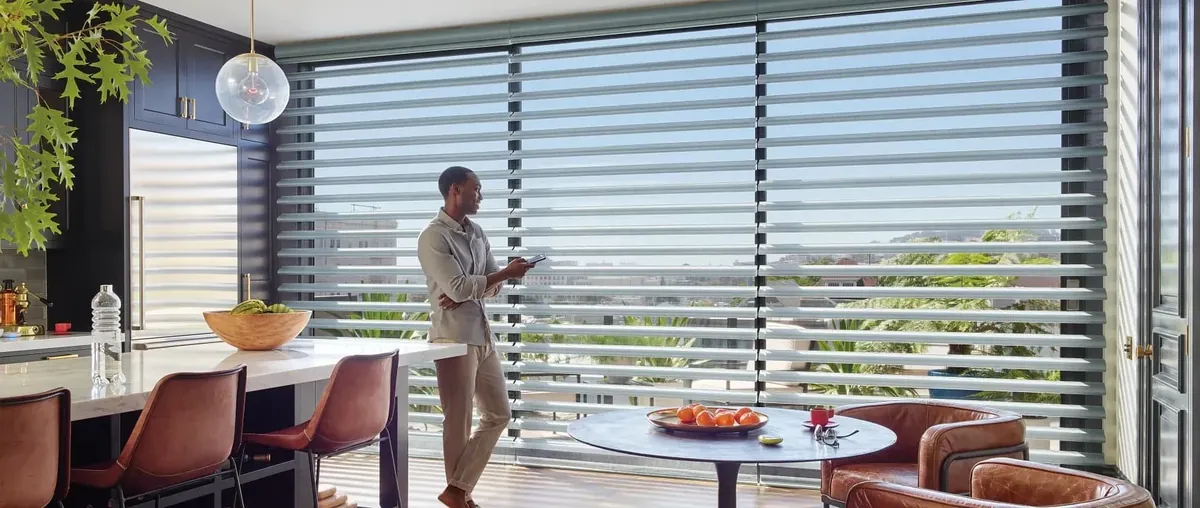
Motorized shades
PowerView by remote, app or schedule, for tall Victorian sash and floor-to-ceiling condominium glass alike.

Hunter Douglas dealer
A Hunter Douglas Gallery dealer, with certified Hunter Douglas installation on every window.
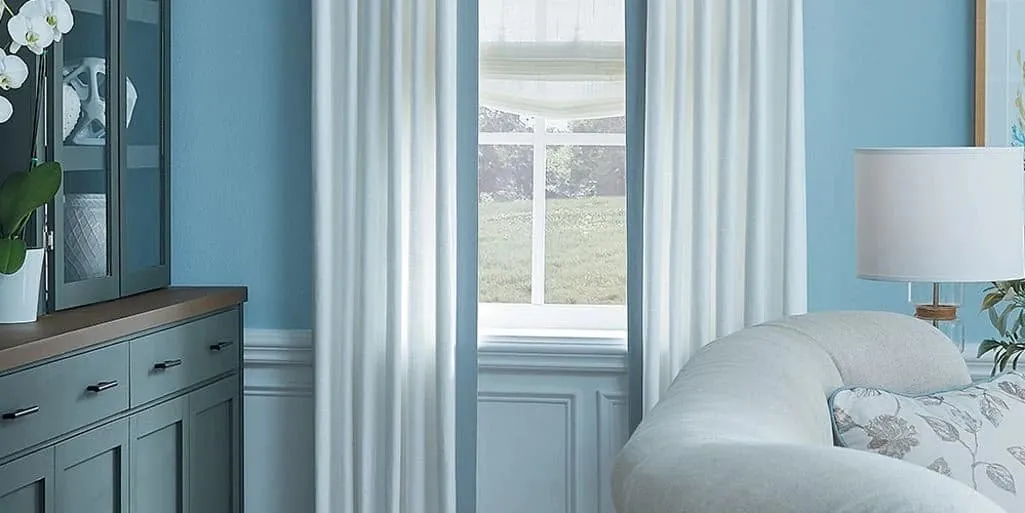
Drapery
Hunter Douglas drapery to make a tall front room feel finished, drawn over a shade for warmth at night.
The uphill side and the downhill side
On the steep streets of the Highlands, a house often has a bright side and a dim side. The downhill face looks out over the roofs toward the water and gets open sky and long views. The uphill face may look into a retaining wall, a bank or the side of the next house up the slope, and it can be shaded for much of the day.
Treating both sides the same wastes the bright side or overdoes the dim one. On the open downhill face, the job is usually glare and heat in the afternoon, and sometimes privacy from the street below. Cellular fabric that filters light, or a screen roller, handles that face. On the shaded uphill face, the job is mostly privacy from close neighbors while keeping every bit of daylight, and a sheer fabric, a top-down, bottom-up shade or a shutter with tilting louvers suits it better.
We keep the color facing the glass consistent on both sides so the house looks tidy from the street, and change only the fabric and the way each shade is used.
Tall, narrow sash in a three-decker
The three-deckers that fill so many Fall River streets were built with tall, narrow double-hung windows, usually set deep in the wall. Each floor is a separate home, and each has a front room, a run of bedrooms and a kitchen at the back, all with the same tall proportions.
Tall narrow windows look best with treatments that respect the height. A shade that stacks small at the top keeps the window looking long; cellular and roller shades do this well. Plantation shutters can be made with a divider rail partway up, so the lower louvers close for privacy while the upper ones stay open for light. Wood blinds suit the proportions too, especially in a front room with old woodwork.
The deep reveals are good news for an inside mount, because there is room for most shades to sit inside the opening and leave the trim on view. The catch is that old reveals are rarely perfectly square, and window weights, pulleys and parting beads can eat into the depth. We measure each window at several points and choose the mount that fits it best.
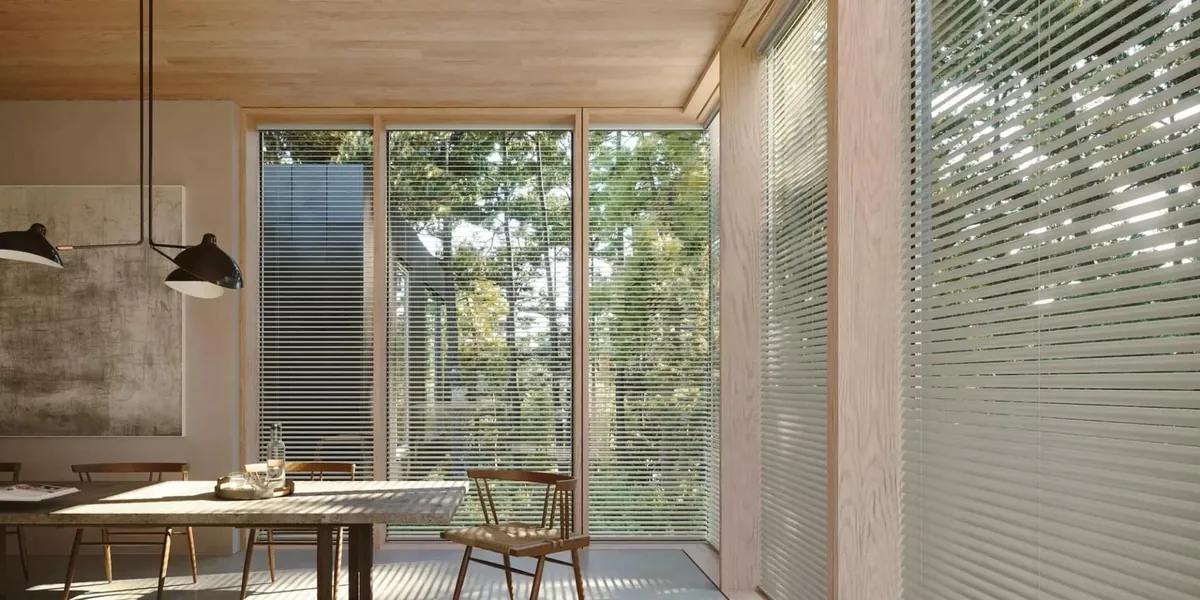
Privacy when the next house is close
In the dense mill-era neighborhoods, the side windows of one house often face the side windows of the next across a narrow strip of yard. Privacy there is not a nighttime concern only; it is an all-day question, and it often decides more than style does.
Several treatments handle it while keeping the light. A top-down, bottom-up shade covers the lower part of the window, where the view in is, and leaves the upper glass open to the sky. Plantation shutters with a divider rail do the same with louvers. Sheer shades with soft fabric vanes let light in while blurring the view from outside. A light-filtering fabric gives full privacy and still glows with daylight.
For bathrooms facing a neighbor, shutters with the louvers tilted up or a faux wood blind both cope with steam and keep the room private. Back porches on three-deckers often have windows that face directly into the porch next door, and a simple cellular or roller shade on those keeps things comfortable on both sides.
Victorians in the Highlands
The larger Victorians in the Highlands bring their own windows: bays that project from the front, tall sash in the parlor and dining room, sometimes a stained or leaded glass panel in a stair hall, and plenty of carved trim.
A bay window is best treated as a set: three or more separate pieces, each built for its own angled opening, lifted to one shared height so the bay reads as a single curve. Roman shades suit a Victorian bay beautifully, and shutters are a classic choice. In a parlor where the trim is the star, an inside mount keeps it fully on show.
Leaded or stained panels are usually best left uncovered and the plain glass below them treated. Where a tall parlor window needs to look even taller, drapery panels hung just below the ceiling and over a working shade draw the eye upward and add warmth in winter.
Condominiums near Battleship Cove
The waterfront condominiums near Battleship Cove are a different world from the hilltop three-deckers. The glass is large and modern, often floor to ceiling, with sliders to a balcony and views across the water. The light is strong and, on the water side, it comes back off the surface as well as down from the sky.
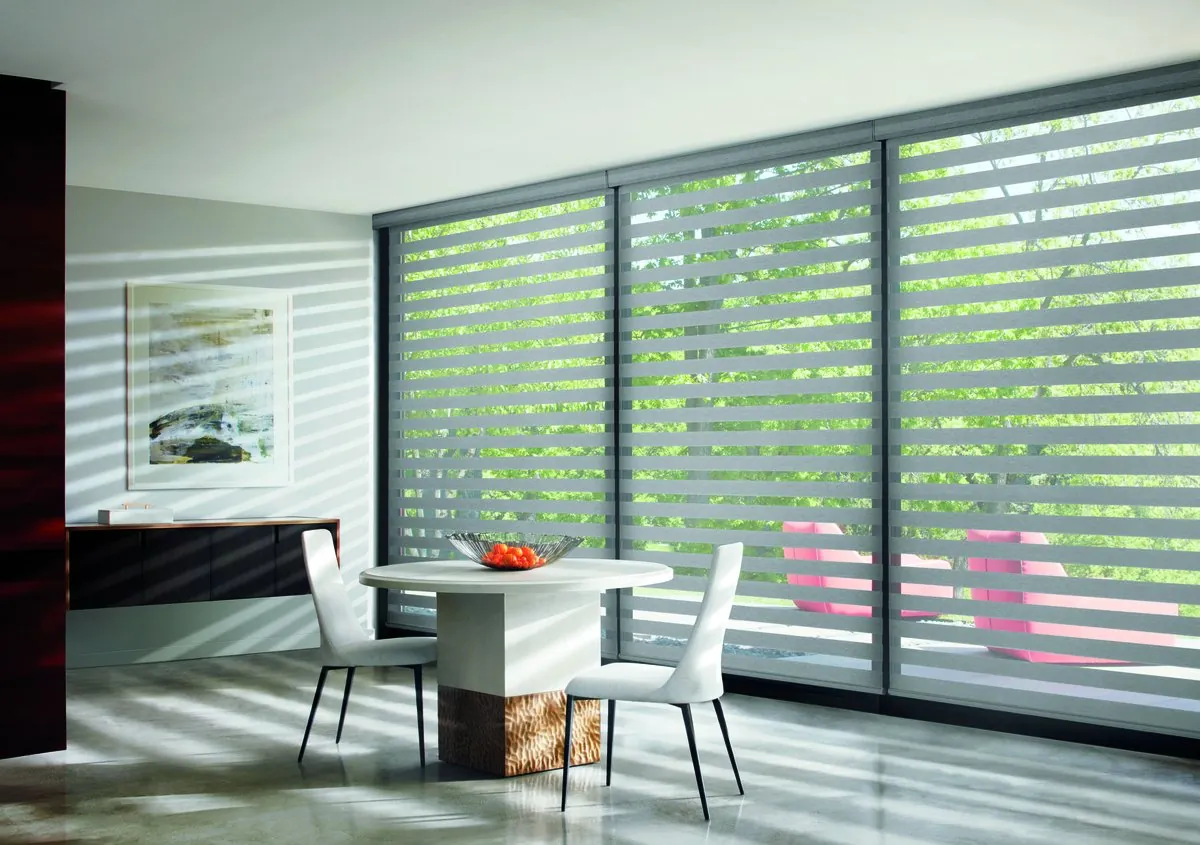
Most of these rooms begin with a screen roller. The weave takes the sting out of the glare and much of the heat, yet the cove and the battleship stay in the picture. How open that weave is sets the trade: looser for more water, denser for less sun. Gray and bronze screens read clearer than white ones from inside. If the look should be gentler, sheer vanes diffuse the daylight and turn shut for privacy after dark.
Wide windows are usually split into several shades on one headrail, raised together or separately. Balcony sliders want something that draws sideways to one jamb: sideways cellular, gliding fabric panels or verticals. For bedrooms, a room-darkening roller fitted close to the glass keeps the room dark when the sun rises over the water.
Street lights and city nights
A dense neighborhood never gets fully dark. Street lights, porch lights and the windows of the houses around you all shine into a bedroom on a close street, and a three-decker bedroom on the street side can be bright enough at night to keep someone awake.
Darkening cellular fabric or a blackout roller copes with it, provided the fit is snug. A deep reveal lets the shade sit tight within the opening, and channels along each jamb catch the glow that would otherwise slip past. Drapery drawn over the shade at night adds another layer and makes a tall bedroom window look finished.
For rooms where you want privacy at night but not full darkness, a light-filtering fabric keeps the view in blocked while still letting the morning light through.
The kitchen at the back of the flat
In a three-decker, the kitchen is usually at the back, often with a door to the back porch and a window over the sink. It gets heavy use, and the windows face the back yards and porches of the neighbors.
Over the sink, splashes and steam rule out anything fussy, so faux wood slats or a roller you can wipe down tend to win. Or a half-height cafe shutter screens the neighbors’ porch while the upper sash stays bare. On the porch door, a slim shade or blind fixed to the door panel rides along every time it swings.
How a consultation works
A swatch looks one way on the sunny downhill face and quite another on the shaded uphill one, so we do the choosing at your windows. That is the point of the sample van.
- Ask for a visit with the Request a Consultation form, or use the call button.
- A consultant climbs the stairs with a bag of fabrics, screens, sheers, slat and louver samples and drapery cloth.
- From the front room back, you go through the flat or house and say which rooms overheat, which face the neighbors and which are too dark at night.
- Swatches are tried on the bright side and the dim side in turn.
- The consultant takes the size of every opening and notes the reveal depth, the sash weights and any lock in the way.
- A free estimate is left with you, to weigh up without pressure.
The appointment is explained step by step under what happens at an in-home consultation, and interior design consultations are there if matching colors across rooms is the hard part.
Motorizing tall windows
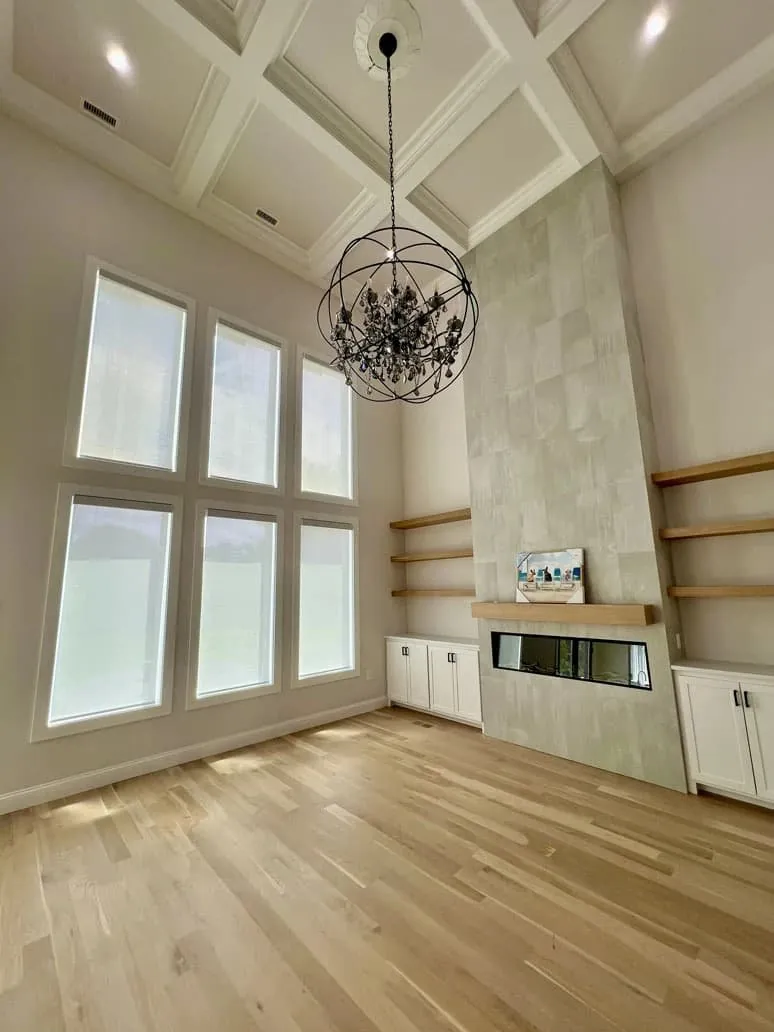
Tall windows are where motorization makes the most sense, whether they are the narrow sash of a Victorian parlor or the floor-to-ceiling glass of a condominium. Reaching the top of a tall shade to adjust it is a nuisance, and a long cord on a tall window is untidy.
PowerView motorized shades move from a handheld remote, the app on your phone or a schedule. In a condominium, the water-facing shades can lower themselves before the afternoon sun and rise again in the evening. In a three-decker flat, a single remote can set every shade on the street side at once. Our page on how motorized shades are controlled explains the options.
Heat in the top-floor flat
The top floor of a three-decker is the warmest home in the building. It sits right under the roof, it gets heat rising from the floors below, and on a hilltop street its windows often catch full sun with nothing taller nearby to shade them. On a July afternoon the front rooms up there can be hard to sit in.
Window treatments in Fall River, MA, top floors have one main task in summer: stop the sun before it gets far into the room. A light-filtering cellular shade lowered on the sunny side holds back heat as well as it holds back cold in winter. A screen roller does a similar job while keeping the view over the rooftops. Plantation shutters with the louvers angled down keep direct sun off the floor and furniture while leaving the room usable.
On a top floor where nobody is home in the afternoon, a PowerView schedule can lower the sunny-side shades before the hottest hours and lift them again in the evening, so the rooms are cooler at the end of the day. The same cellular shades then earn their keep a second time in January, when the wind on an exposed hilltop finds every draughty sash.
Pulling a home together
Whether the home is a whole Victorian or one floor of a three-decker, a little consistency goes a long way. A common plan is shutters or cellular shades in the front rooms, room-darkening shades in the bedrooms, something wipeable in the kitchen and a roman shade in the bay.
From outside, the color facing the glass shows most, so a single white or neutral facing the street keeps the house tidy even when each room has a different product. Inside, matching the headrail color and mount style on each floor finishes the job. Planned this way, window treatments for Fall River homes look considered rather than collected over time. Every product we carry is laid out on the window treatments page.

Why buy from a Gallery dealer
Hunter Douglas names a dealer Gallery when it carries the whole product family, and that is the status Blinds & Designs holds. A city with parlor sash, three-decker bedrooms and floor-to-ceiling waterfront glass needs every part of that family, and one visit can draw on all of it.
Certified Hunter Douglas installers hang each order, which matters in an out-of-square old reveal. Color help comes through design consultations, and repairs are welcome on older blinds and shades. The maker’s story is on the Hunter Douglas page.
The nearest showroom to Fall River
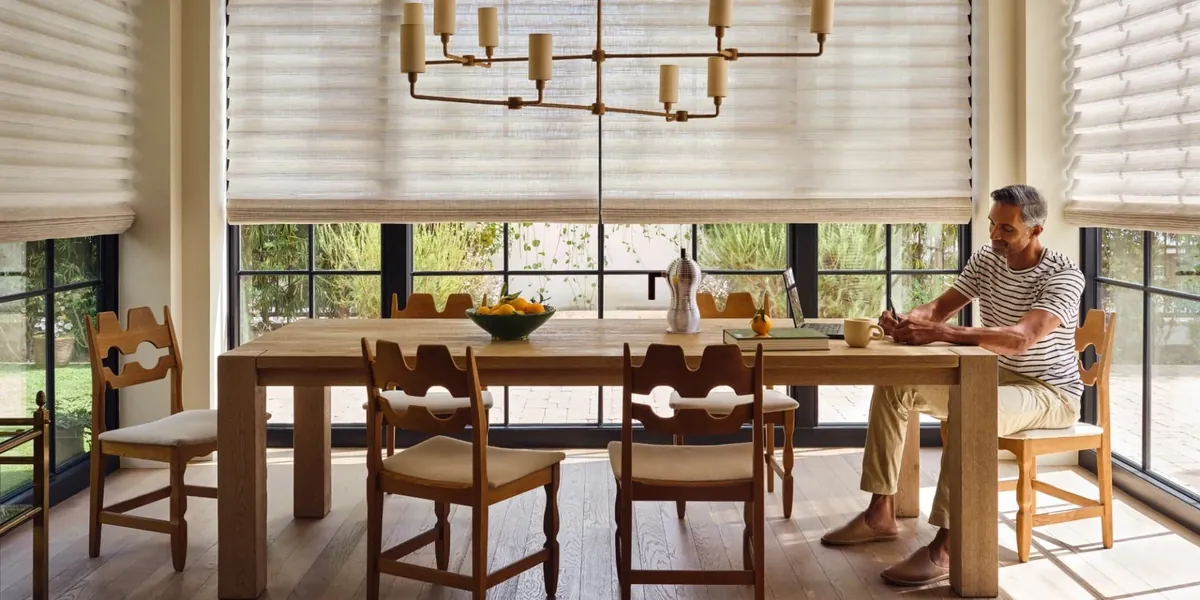
A short drive east along the highway, North Dartmouth has the showroom closest to the city. Most jobs here are decided in the flat itself, swatch against sash, though seeing a shade working first can settle a doubt.
However you begin, one crew handles measuring, ordering and fitting, and you owe nothing for the estimate.
Fall River questions
Our three-decker has tall, narrow windows. What looks best on them?
Treatments that stack small and keep the window looking tall: cellular and roller shades, wood blinds, or shutters with a divider rail. The deep reveals usually allow an inside mount, which keeps the trim on show.
The house next door is very close. How do we keep privacy and light?
A top-down, bottom-up shade covers the lower glass and leaves the top open. Shutters with a divider rail, sheer shades and light-filtering fabrics also keep the view out while letting daylight in.
How do we handle the glare in a waterfront condominium?
Start with a screen roller. Its weave knocks back the glare and a good part of the heat, and the cove stays visible. Several weaves and colors come to the visit for side-by-side testing.
Street lights shine into our bedroom. What helps?
Darkening cells or a blackout roller, sized snug to a deep reveal, with channels down the sides where the light still creeps round. Panels drawn across at night finish the job.
Is a motor worth it on tall sash?
Often. A shade whose top you cannot reach is easier on PowerView, moved from a handset, your phone or a timed scene, and the long cord disappears too.
Book your visit
Uphill or downhill, parlor or condominium, the right choice shows up fastest with a swatch against the glass. Ask for a consultation, and we will measure each window and write a free estimate for window treatments in Fall River, MA. Questions first? The call button reaches us.