
Old houses in open country by the sea
From the Commons out toward Sakonnet Point, the houses sit on very large lots, many of them edged by stone walls and open fields that run toward the water. Antique capes and shingled farmhouses make up much of the stock, and a lot of them still have their small original sash. There is little between these houses and the weather: wind off the ocean, salt in the air, and sun that reaches the windows with nothing to soften it.
Those three things shape every conversation about window treatments in Little Compton, RI. The small old openings need products made to their exact size. The exposure means choosing fabric and hardware that suit a coastal house. And because a good share of houses here are used by the season, many owners also want treatments that look after the rooms while nobody is there.
We plan all of that at the house itself, because light and weather near Sakonnet change so much from one side of a building to the other.
Window treatments in Little Compton, RI, by service
Each card below opens a Little Compton page for that service. Read about one, or ask us to plan every window in a single visit.
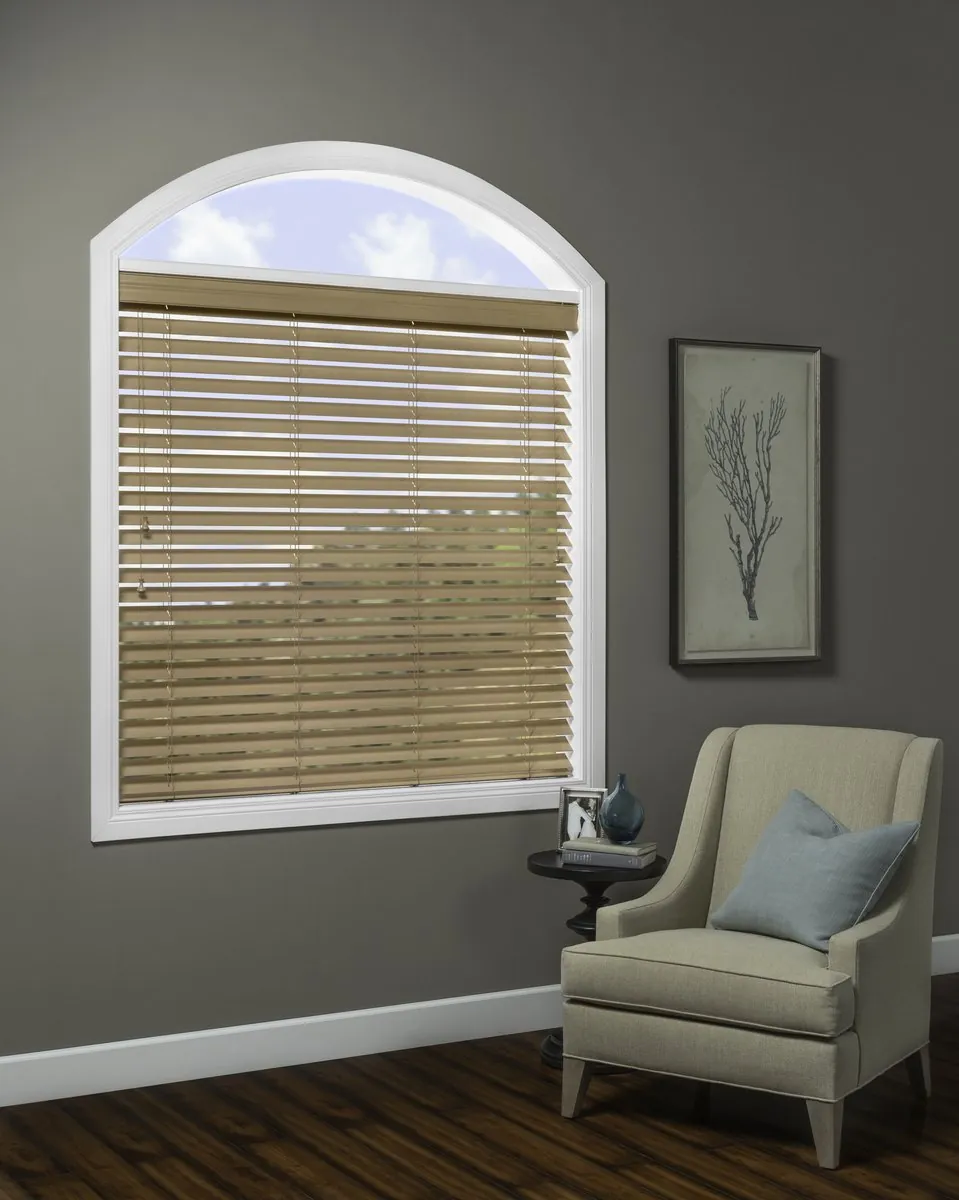
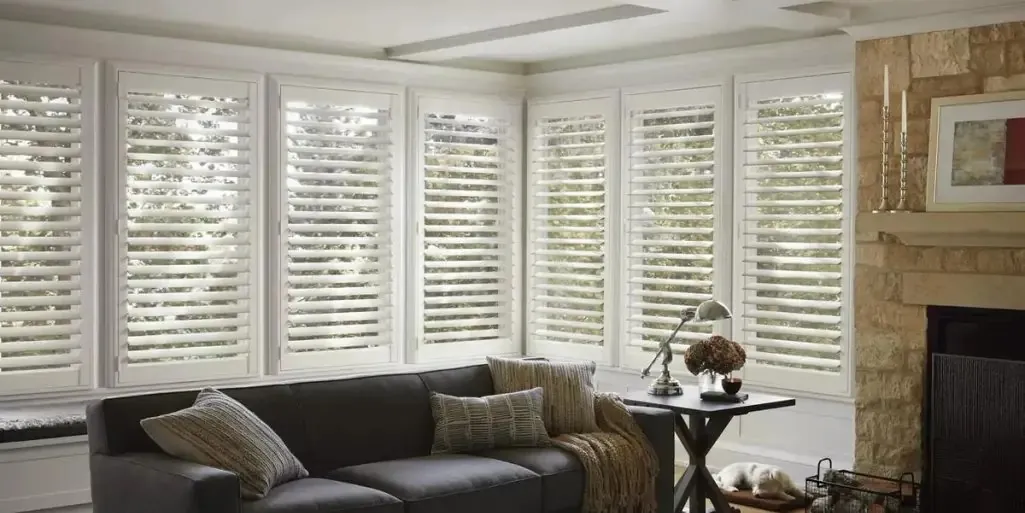
Wood and painted blinds
Slats of real or faux wood, aluminum, or verticals: wood looks right in an antique room, faux wood copes with a damp one.
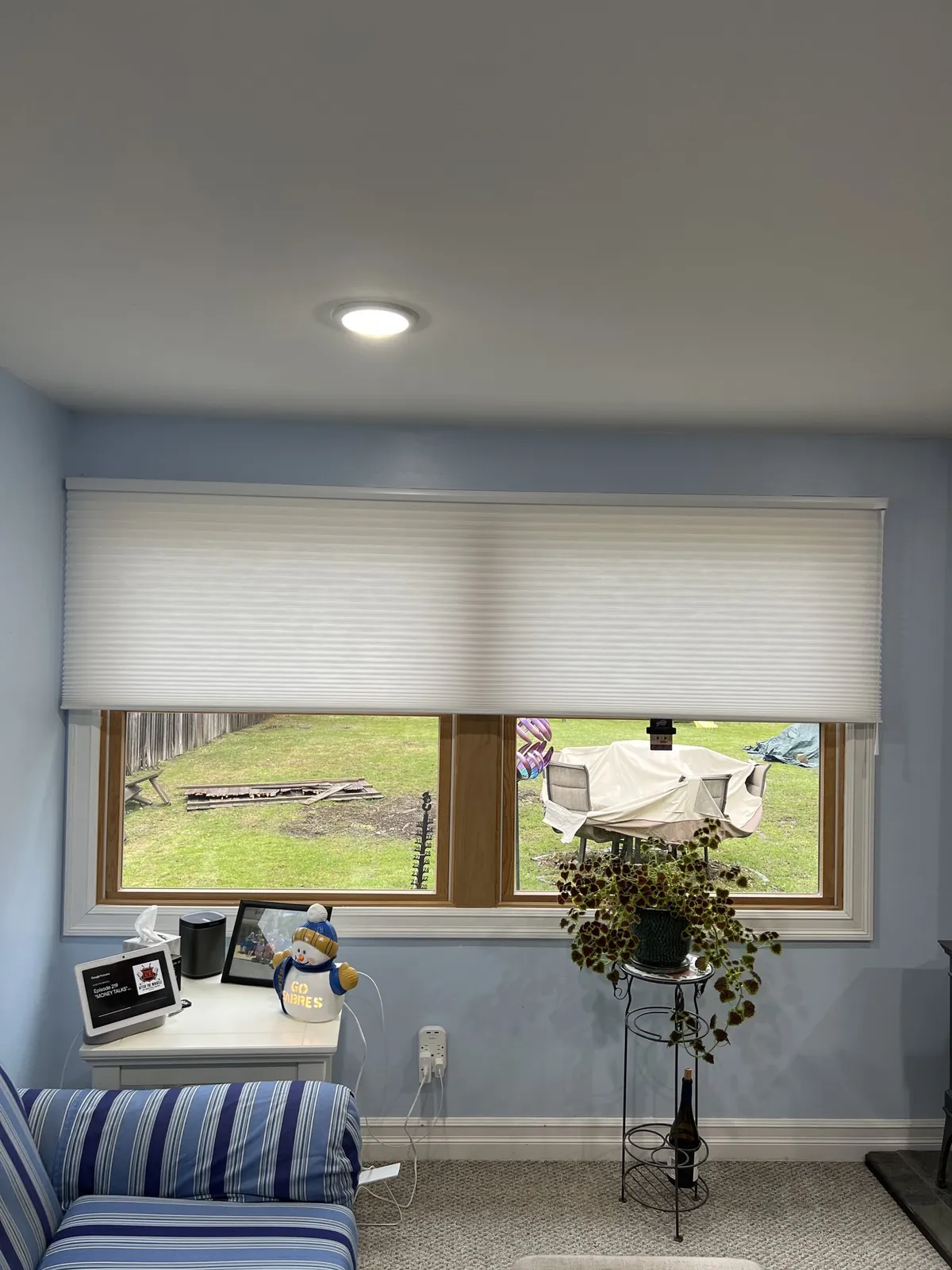
Cellular shades
The honeycomb in Duette and Applause traps air in front of old single panes, a real help in a farmhouse open to the wind.
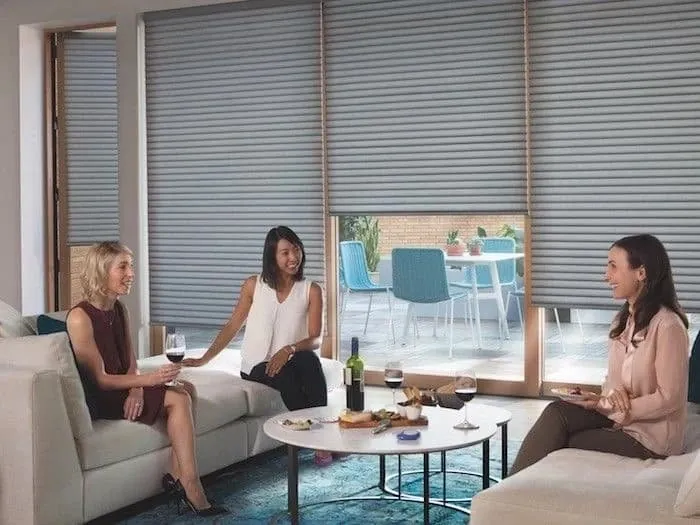
Roller and screen shades
Designer fabrics or Alustra screens, picked for how loose the weave is, so the sea glare drops and the fields stay visible.
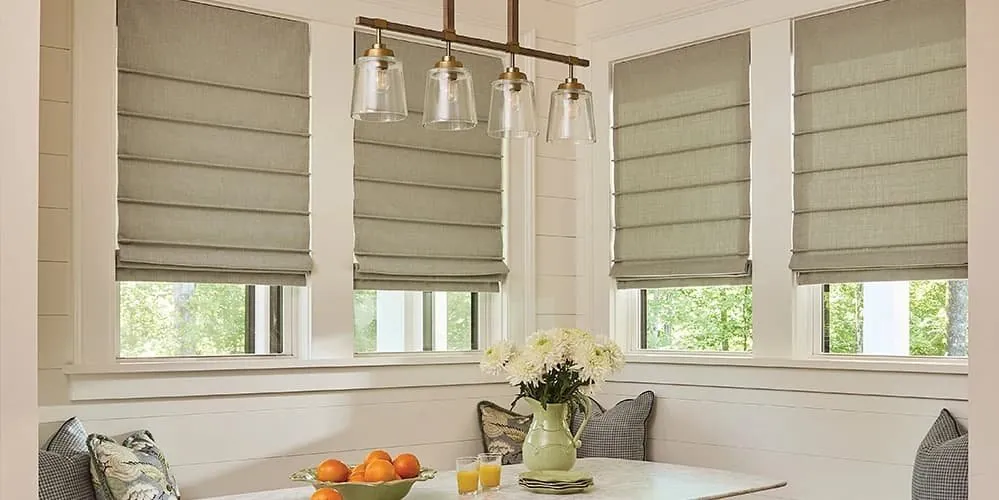
Roman shades
A Vignette fold or a Carole Fabrics flat roman gives the low rooms of an antique cape a soft, finished look.
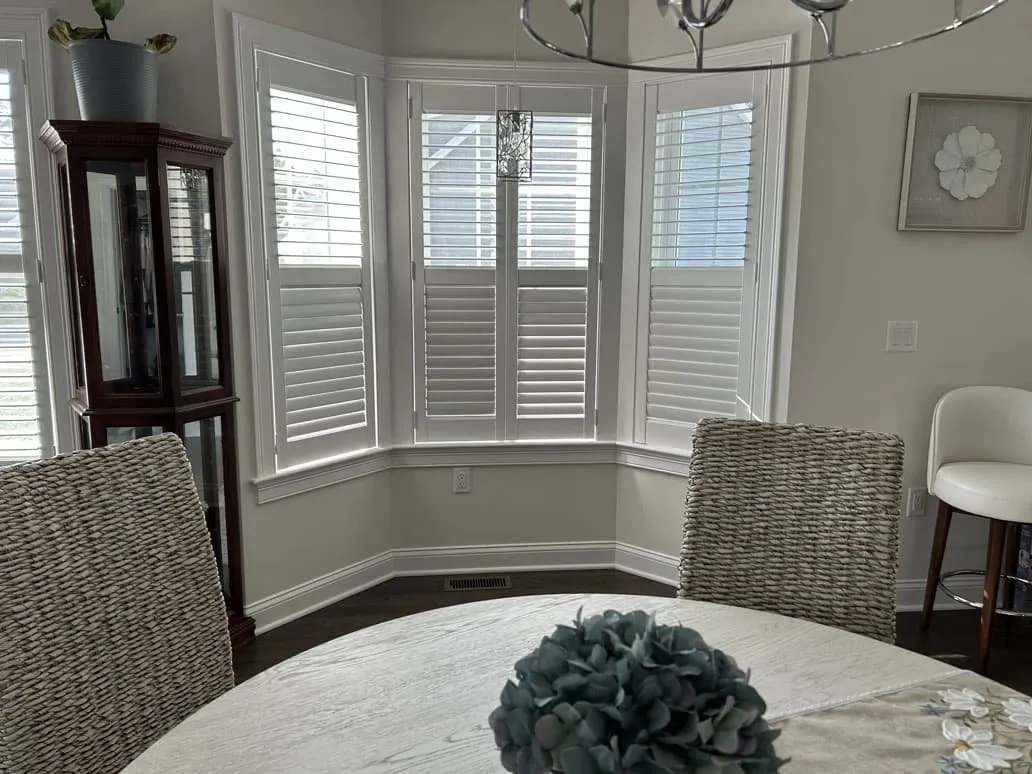
Plantation shutters
NewStyle, Heritance or Palm Beach panels, nearly free of exposed metal, each made for a small, out-of-square sash.
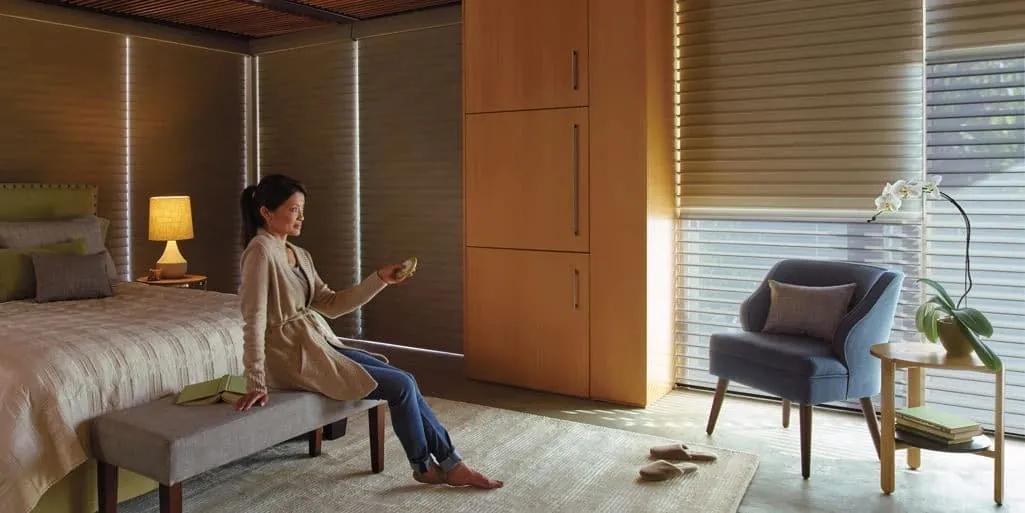
Motorized shades
PowerView answers a handset, your phone or a timetable, so a summer house still opens and closes its shades in February.
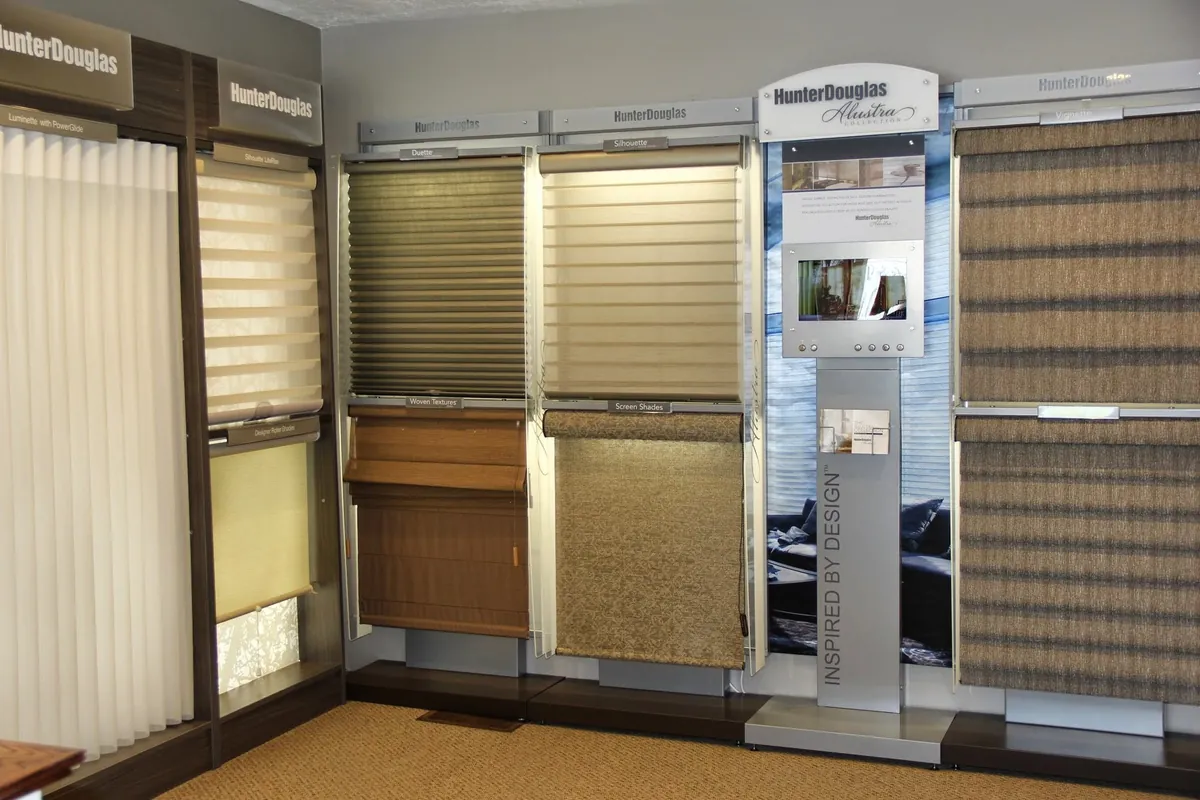
Hunter Douglas dealer
Gallery dealer status means the entire Hunter Douglas range, brought to the house and hung by certified installers.
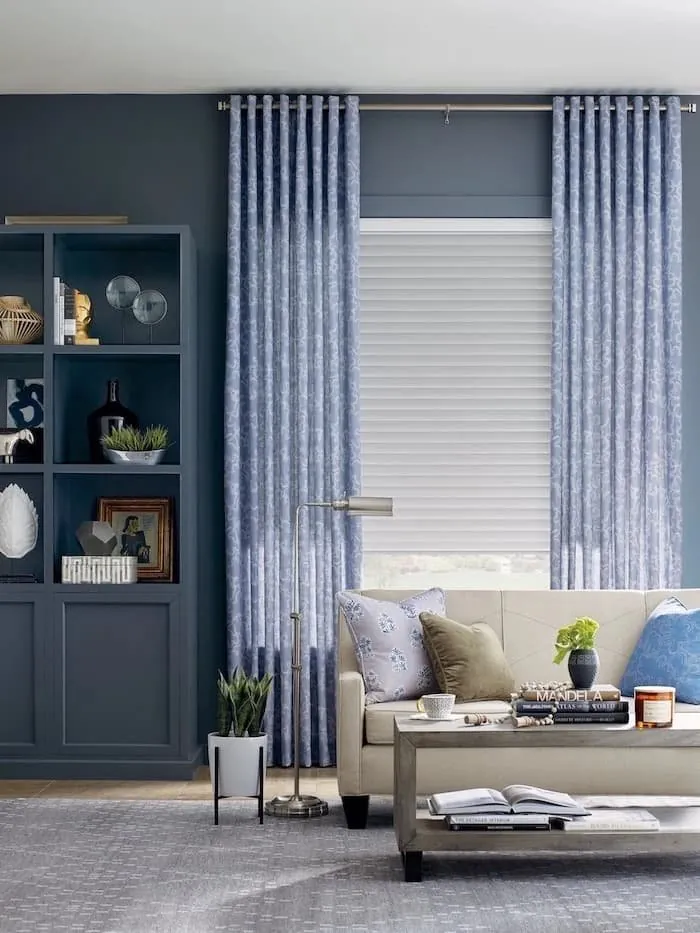
Custom drapery
Hunter Douglas drapery for a farmhouse parlor, hung over a shade to draw closed against a cold night wind.
Small sash in an antique cape
The antique capes along the Commons were built low and snug, with small windows that kept the weather out and let just enough light in. Many still have their original sash, often with several panes each, set into old wood frames that have shifted a little over a long life.
Small windows reward treatments that take up very little of the glass. A shade that gathers into a slim band at the head, such as a cellular or roller shade, keeps the window looking as big as it can. Plantation shutters swing fully off the glass when open. A roman shade looks lovely in a cape, but it stacks deeper, so it is best where it can be set to rise above the top of the glass.
Every one of these windows is made to size. Old frames are seldom square, and two windows side by side can differ in width and height. We measure each opening at several points and use the tightest, so an inside mount clears the whole way down. Where a frame is too far out, a mount on the face of the trim hides the irregularity rather than drawing attention to it.
Low ceilings matter too. In a cape room where the head of the window is close to the ceiling, there may be no room for a valance or a drapery rod above it, which is another reason inside mounts are so common in these houses.
Shingled farmhouses and the open fields
The shingled farmhouses out toward Sakonnet Point stand in open country. With fields on every side, there are few trees or neighboring buildings to break the sun or the wind, and the windows on the south and west sides take everything the weather has.
That exposure has two sides. The light is wonderful, and the views across the fields and the stone walls to the water are a big part of why these houses are loved. But a south-facing farmhouse room can be very bright and warm on a summer afternoon, and the same windows feel the cold in winter when the wind comes in off the water.
Light-filtering cellular shades handle both: lowered against a hot afternoon, they soften the sun, and lowered at dusk in winter, they hold a layer of air against the cold glass. Where the view matters most, a solar screen roller cuts the glare while you still see out across the land. On the north side, which gets far less sun, lighter treatments that stay up most of the day keep the house bright.
Choosing for coastal exposure
A house this close to the ocean asks a bit more of a window covering. Salt air drifts in through open windows all summer, damp air sits in the house when it is shut, and strong sun reaches deep into rooms that face the water.
Hardware is where we start. When the gears and cords live inside a closed rail, the briny air has very little to work on. Going cordless takes away the cleat and lock that used to rust first. Shutters, once up, carry little more than hinges, which helps explain how often they turn up in houses by the sea.
Fabric comes next. Strong sun can lighten deep colors over time, so on the water-facing side we often suggest white, cream or soft neutrals facing the glass. You can still bring color to the room side, where the sun is less direct. In the one room that faces straight into sun and spray, a roller, faux wood slats or a shutter usually outlasts a delicate fabric.
On a windy site, we fix every bracket into sound framing. A gust through an open sash will tug at a shade, and a solid fixing keeps it hanging true.
Gray days and keeping the daylight
Coastal weather is not all bright sun. Fog rolls in off the water, and a gray day near Sakonnet can feel dim inside an antique house with small windows. On those days you want every bit of daylight the windows can give.
That is the argument for treatments that clear the glass completely. Cellular and roller shades raise into a small stack. Shutters swing open. A top-down, bottom-up shade can be lowered from the top to block a low sun on a bright day, then raised fully out of the way on a gray one.
Sheer shades with soft fabric vanes are another good fit. They let light through even when lowered, so a room keeps a soft brightness while still screened. Light-filtering fabrics do the same: they glow with whatever daylight there is rather than turning the room dark.
Color helps as well. A warm white or pale linen fabric facing the room bounces what light there is back into a small cape room, where a dark fabric would swallow it. On the sunny south side the same pale tone keeps the room bright when the shade is lowered against glare.
Houses used by the season
A good share of houses in town are used for part of the year: opened in late spring, lived in through the summer and closed again in the fall. Window treatments for a seasonal house need to work in both states.
In the empty months, sun pouring through bare glass bleaches wide pine boards, rugs and slipcovers. Drawing down an opaque shade, or shutting the shutters tight on the last day of the season, spares most of it. In a house that stays shut all winter, cellular fabric at the glass also evens out the cold.
Here PowerView earns its place. A timed scene can raise and lower the shades through the off season so the house never looks shut up, and the app lets you adjust it from wherever you spend the winter. Remotes, the app and timed scenes are covered on how motorized shades are controlled.
When the house opens up again, treatments that are easy to operate and simple to clean make the first weekend easier. Cordless lifts and wipeable fabrics help.
Long views over the stone walls
Many living rooms in town were opened up over the years to take in the view: a farmhouse wall replaced with a run of windows, a sunroom added on the seaward side, a pair of French doors cut through to a terrace. In those rooms the view across the stone walls and fields to the water is the main event, and the treatment has to know its place.
Window treatments in Little Compton, RI, living rooms of this kind are usually about the late afternoon, when the sun drops toward the water and comes in low and level across open ground. A screen roller in a darker color keeps the horizon readable through the weave while the glare falls away. Two or three shades on one rail can cover a wide run of windows and still move separately, so you only lower the ones the sun is hitting.
French doors to a terrace take shutters or shades mounted on the doors themselves, so they swing with the doors and never block the handle. In a sunroom with glass on three sides, light-filtering cellular shades keep the room usable on a bright day and help it hold some warmth on a cool September evening.
Bedrooms under the eaves
Antique capes and farmhouses often put the bedrooms upstairs under the roof, with small windows in the gable ends or dormers. Those rooms can be warm in summer and cold in winter, and the gable windows face opposite ways, so one bedroom gets the sunrise and the next the sunset.
A room-darkening cellular shade mounted inside a small gable window keeps an east bedroom dark on a summer morning and warmer on a winter night. Where a dormer is very shallow, the shade can mount on the face of the frame. For a softer start to the day, a light-filtering fabric spreads the light gently instead.
Guest rooms in a seasonal house often get used only on a few weekends, so a simple, durable shade that needs no thought is usually the right call.

The consultation, at your house
With small old sash on one side of the house and wide sea views on another, fabric is best chosen right at the window. Our consultants bring the showroom to you, with samples in the van.
- Ask for a visit with Request a Consultation, or use the call button.
- A consultant drives down the coast road with swatch books, screen and sheer samples, slats, louvers and drapery cloth.
- You tour the house together, talking about which rooms take the weather and which months the house is open.
- Swatches are held against the little antique sash and then the seaward glass.
- Each opening is measured more than once across and down, along with its depth.
- We leave a free estimate, and you take as long as you like.
The visit is described step by step under what happens at an in-home consultation. Color across an old house can be tricky, which is what interior design consultations are for.
Kitchens, baths and the back door
The working rooms of an old farmhouse are often at the back, facing the yard, with a door to the garden and a window over the sink. Near the coast, these rooms also handle wet boots, sandy feet and damp air.
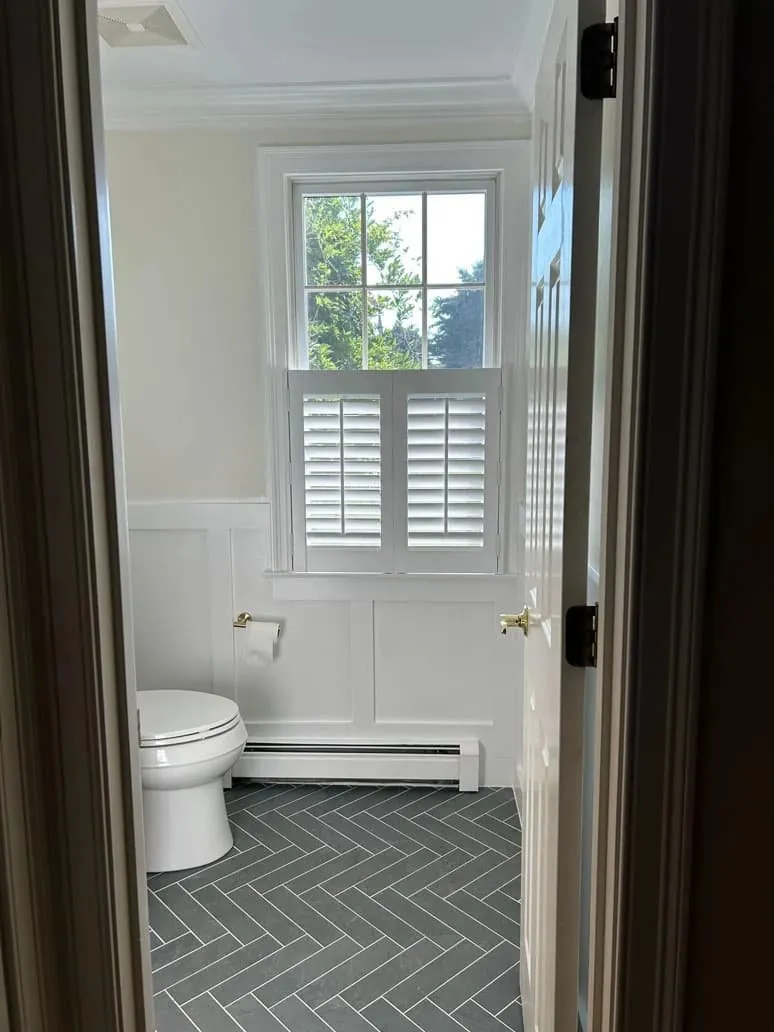
Faux wood blinds suit kitchens and bathrooms: they wipe clean and cope with steam. Shutters with the louvers tilted up keep a bathroom private while letting light in. A cafe-style shutter on the lower sash over a sink covers the part of the window closest to you. A back door can take a slim shade or a blind mounted on the door itself.
Many farmhouses also have a mudroom or an enclosed entry added on the side facing the drive, often with a row of small windows built by hand and frames too shallow for anything inside them. A plain roller or faux wood blind fixed across the face of the frame works well there, and the same color as the kitchen keeps the back of the house consistent. Sand and salt get tracked through these rooms all summer, so we lean toward finishes that a damp cloth will clean.
One plan for the whole house
Antique houses near the sea rarely suit a single product everywhere. A common mix is shutters in the front rooms, cellular shades in the bedrooms, screens on the water-facing glass and faux wood blinds in the kitchen and bath.
What ties it together is repetition where the eye lands. Looking back at the house across a field, you see the glass-side backing of every shade at once, so a single white or oatmeal there keeps the shingled walls calm. Indoors, rails of one color and one mounting habit per story finish the effect. Planned this way, window treatments for Little Compton houses look as if they belong to the building. The full range is on our window treatments page.

What a Gallery dealer brings
As a Hunter Douglas Gallery dealer, Blinds & Designs can offer every line the maker produces. A coastal antique tends to need several of them at once: something tiny for the cape sash, a screen for the seaward room, darkening cells for the gable bedroom. One consultation covers the lot.
Each order is hung by certified Hunter Douglas installers. Design consultations help with color, and an inherited shade that no longer lifts is a repair we are glad to take on. The Hunter Douglas page says more about the maker.
The nearest showroom
Up through Tiverton and across the state line, North Dartmouth has the showroom nearest to Little Compton. Most work out here is chosen in the house, swatch by swatch, though a look at a working shade first is welcome.
The crew that measures also orders and fits, whichever way you start, and every estimate is free.
Little Compton questions
Our antique cape has very small windows. What will not crowd them?
Shades that gather into a slim band at the top, such as cellular and roller shades, or shutters that swing fully off the glass. Each one is made to the size of its opening.
Will salt air and sun damage new shades?
Not if they are chosen for it. Closed rails, cordless operation and shutters give salt little metal to find, and pale colors toward the glass hold their tone in strong sun.
The house is closed from fall to spring. What should we choose?
Opaque shades or tightly closing shutters to keep sun off the furniture through the empty months, and PowerView if you want the house to look occupied, with timed scenes you can change from afar.
How do we keep the daylight on gray, foggy days?
Choose treatments that raise fully out of the way, such as cellular and roller shades or shutters, and light-filtering or sheer fabrics that stay bright when lowered.
Do you come to Little Compton for consultations?
Yes. A consultant brings samples to the house, measures every window and leaves a free estimate.
Your next step
A swatch against your own sash, on a bright day or a foggy one, beats any catalog. Ask for a consultation and we will come out, measure every opening and write a free estimate for window treatments in Little Compton, RI. For a quick word first, use the call button.