
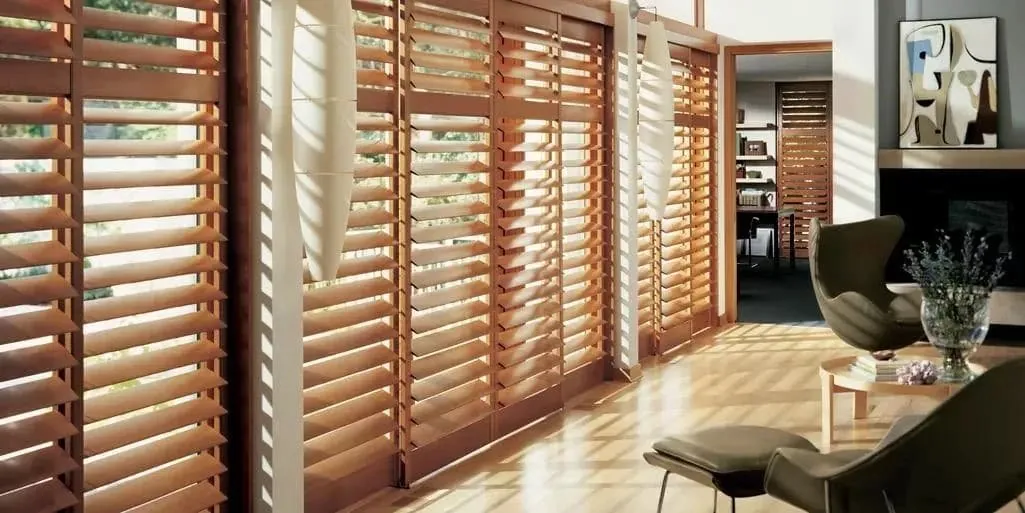
Late sun across the Sakonnet
Tiverton looks west over the Sakonnet River, and a lot of its best rooms face that way. The waterfront houses along the river and around Nanaquaket Pond have heavily glazed water sides, built to catch the view and the sunset, and that glass takes the full afternoon sun along with the salt carried up the river on the wind. Inland, around Four Corners, the farmhouses and shingled capes are older, smaller-windowed and set among fields and stone walls.
For window treatments in Tiverton, RI, the waterfront rooms set the tone. Strong sun and salt air are hard on fabric, so the choice of material, color and openness matters as much as the style. A fabric that looks right in a sample book may not be the one that still looks right after years facing the river.
The inland houses ask simpler questions about privacy, warmth and fitting old openings, and we treat them on their own terms.
Window treatments in Tiverton, RI: our services
Each service has a Tiverton page of its own. Pick a card to dig into one product, or let a single consultation take in the river rooms and everything behind them.
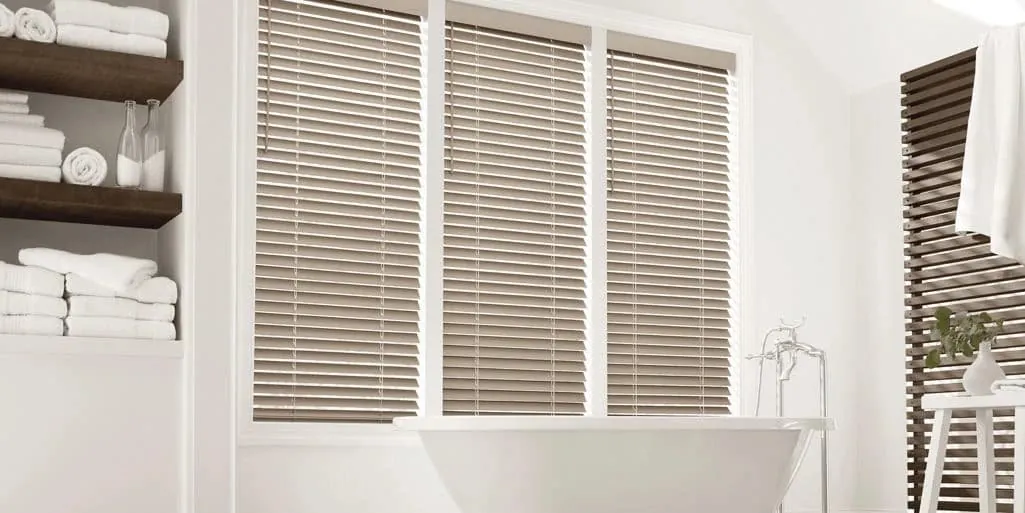
Faux wood and wood blinds
Faux wood shrugs off a steamy bath or a river-side kitchen; real wood, aluminum and verticals cover the drier rooms.
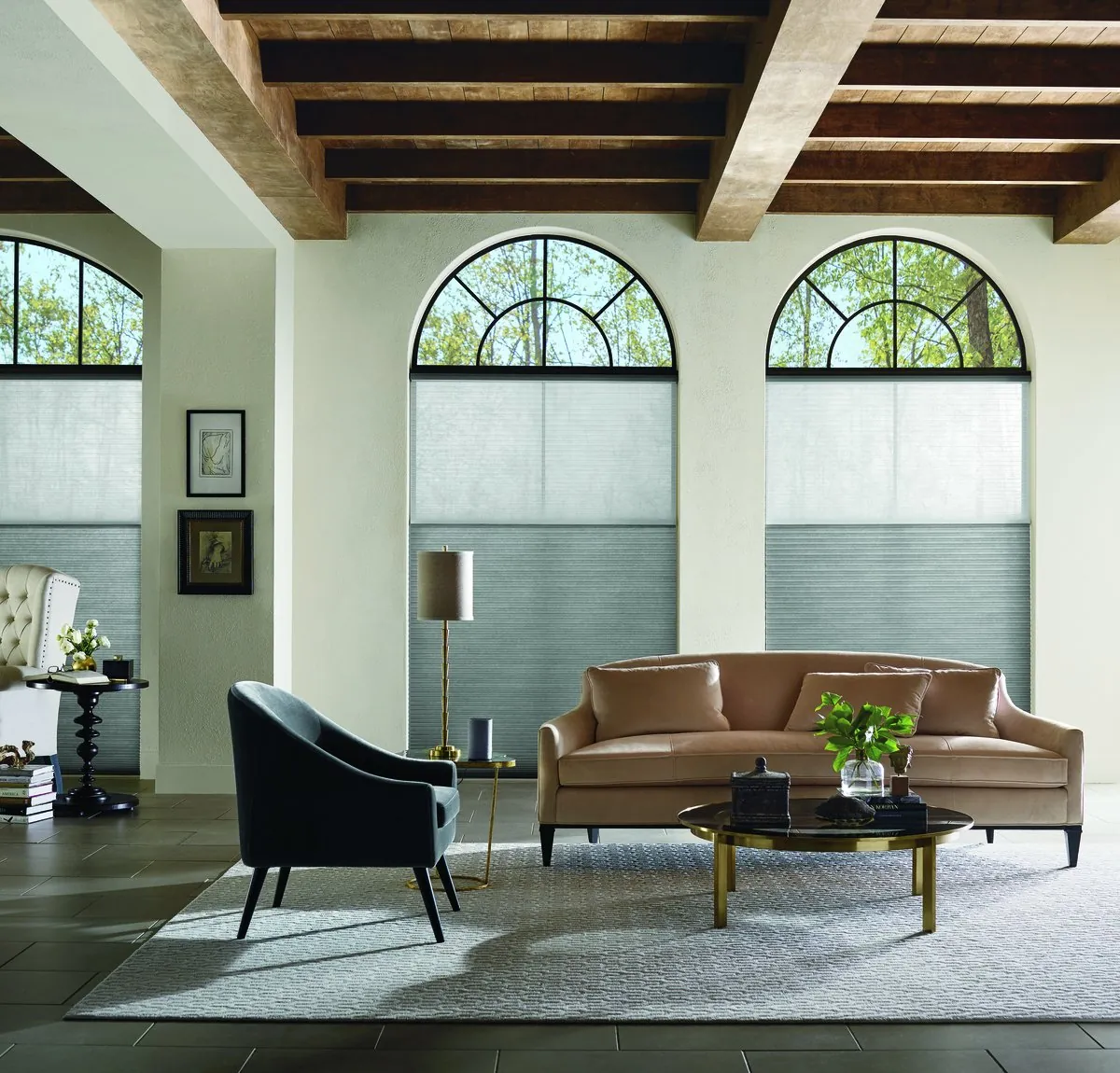
Cellular shades
Light-filtering Duette or Applause honeycomb softens a hot west room in August and keeps a farmhouse snug in February.
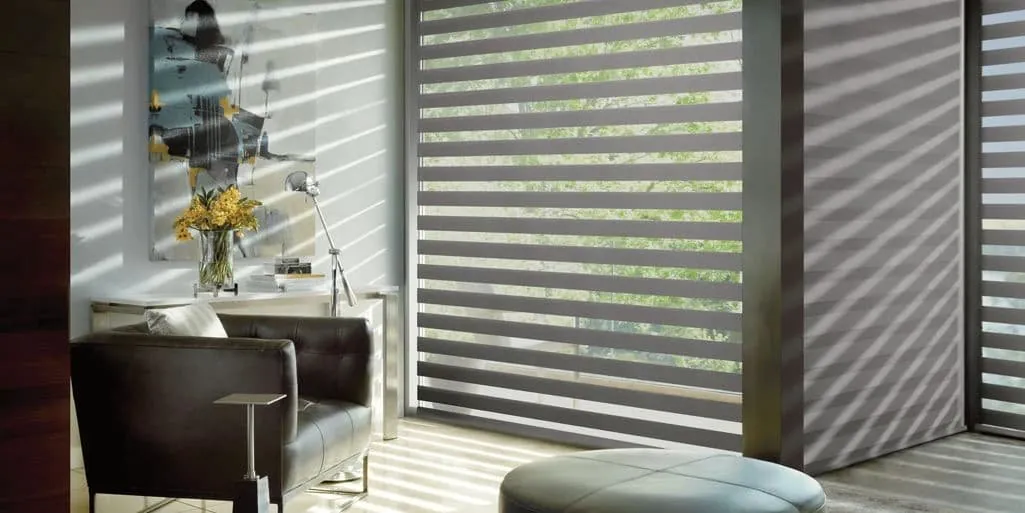
Screens for the river view
Designer rollers and Alustra screens, their weave and color matched to a window that stares at the sunset.
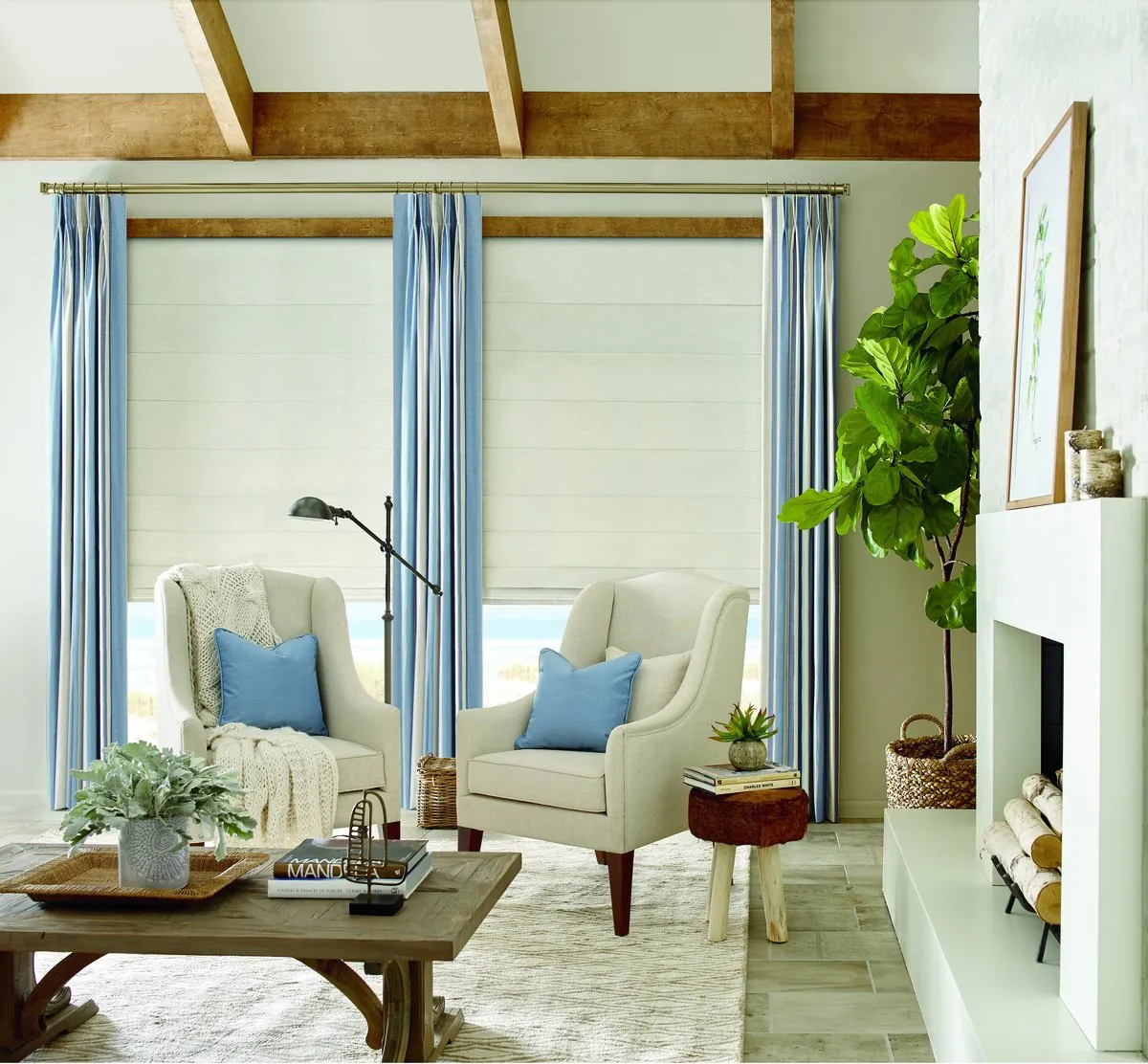
Roman shades
A Vignette fold or a Carole Fabrics flat panel for a Four Corners dining room or a bedroom under a cape roof.
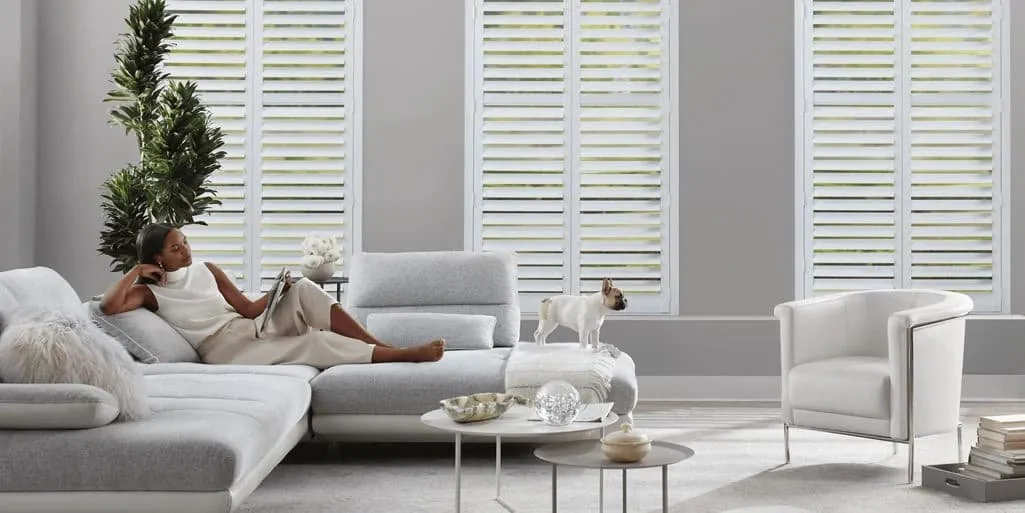
Plantation shutters
Heritance, NewStyle or Palm Beach panels, sturdy and low on hardware for a bright room near salt water.
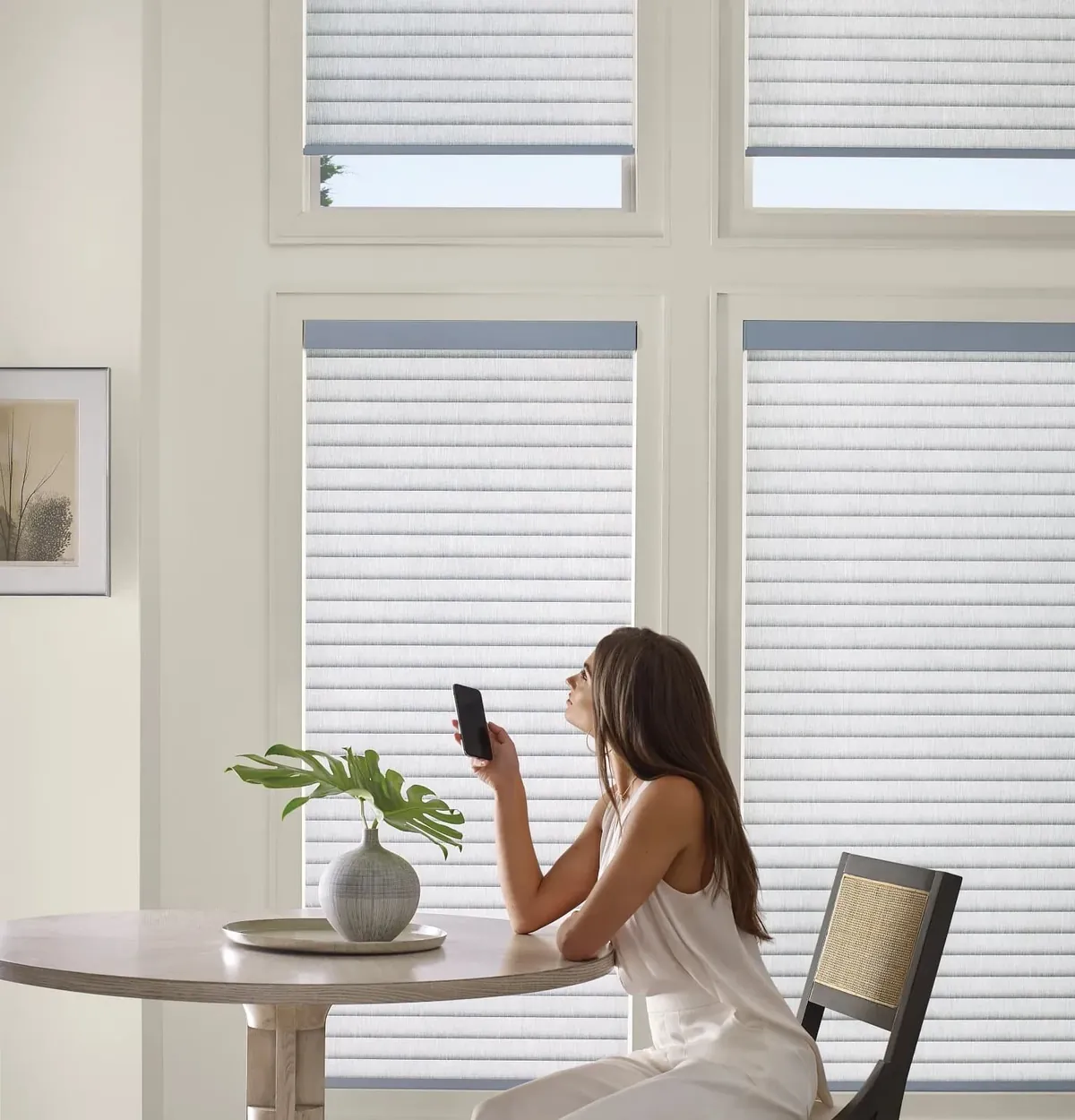
Motorized shades
PowerView lowers the river-side shades before the sun drops, from a handset, your phone or a timetable.

Hunter Douglas dealer
Gallery status with Hunter Douglas, so every line is on the table at one visit, hung by certified installers.
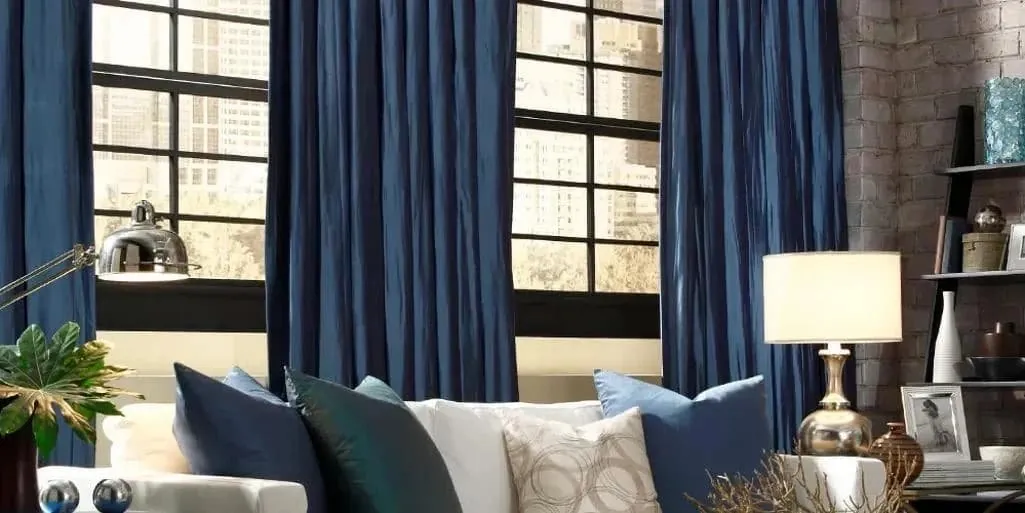
Custom drapery
Hunter Douglas panels for a farmhouse parlor, or hung beside a screen in a waterfront room to soften all that glass.
Choosing fabric for a room that faces the water
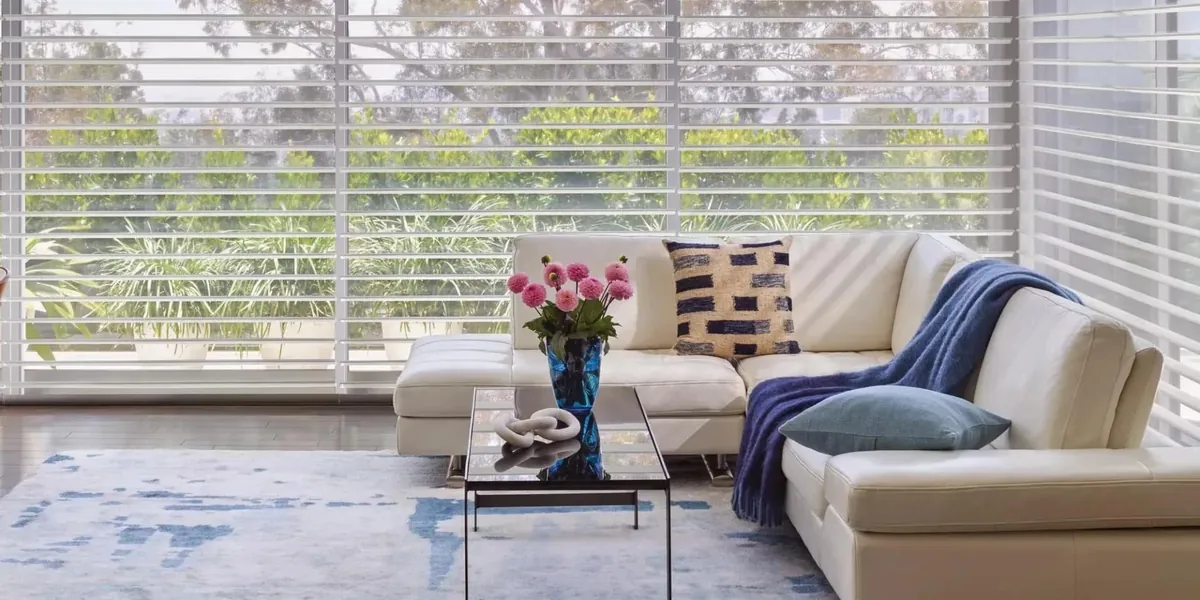
A west-facing room on the Sakonnet gets the hardest sun of the day: low, strong and for hours, with more light bouncing off the water. Over time, that sun lightens color and wears on fiber. Picking the cloth for those rooms is the single biggest decision on the waterfront.
Color comes first. Deep, saturated tones toward the glass show fading sooner than whites, creams and stony neutrals. That does not mean a colourless room: plenty of fabrics carry one tone outside and another inside, so the river side stays pale while the room side picks up the walls. A roman or a pair of drapery panels can bring the stronger color while a screen behind them soaks up the sun.
Then weave, for screens. Loose weaves give you more river and more sun; dense weaves protect the floor and blur the far shore a little. Charcoal or bronze screens are usually clearer to look through than white. We try to hold the choices at your glass in the late afternoon, when the decision really counts.
Last, the kind of treatment. In the room that takes the full brunt of sun and salt, a screen roller, cellular fabric or shutters will usually outlast a fine sheer or a delicate natural weave. Our guide to choosing fabric for a sunny room goes further.
Salt, damp and keeping things clean
Living near salt water means a damp, briny breeze through open windows for much of the year. It settles on anything near the glass, and in a shut room it can leave fabric feeling clammy.
Start with the moving parts. A shade whose gears sit sealed in its rail leaves the salt very little to corrode, and a cordless one has no cleat or lock to pit. Shutters carry hinges and not much else, and their painted finish takes a damp cloth.
For fabric, little and often works: a soft brush or the vacuum’s upholstery head now and then, and spots dabbed off before they set. Faux wood slats and many roller cloths simply wipe down, which suits a kitchen or bath on the river side. Our guide to caring for fabric shades sets out what each fabric likes.
Houses on Nanaquaket
Around Nanaquaket Pond the water is calmer and more sheltered than the open river, but the houses still turn their big glass toward it. A still pond on a bright afternoon is almost a mirror, and the reflected light can reach the back wall of the room.
For those rooms, a screen roller or cellular fabric that filters light earns its keep, and either one lifts clear when the glare passes. A shade that opens from the top is handy here: bring the head down just far enough to shade your eyes from the low sun while the water below stays in view.
Pond houses often have a deck or a dock reached through a slider or French doors. Sliders take something that draws to one jamb, such as sideways cellular fabric or gliding panels. French doors take panels fixed to each leaf so the shade travels with the door.
Farmhouses around Four Corners
The farmhouses around Four Corners are older houses with smaller, evenly spaced windows, set among fields and stone walls. Their sash sit in frames that have settled, and their old trim deserves to stay visible.
Where the reveal is deep enough, a cellular shade or a roller tucks right into it and leaves every bit of the trim showing. Plantation shutters look at home in a farmhouse, inside the opening or on its face. Wood slats in a warm stain pick up old floorboards and ceiling beams.
An old frame almost never measures the same twice, so the tape goes across and down it more than once and the narrowest figure wins. If a frame has wandered too far, the shade goes over the trim instead and the wander disappears behind it. Old single glass is cold in a Tiverton winter, and cellular fabric is the best help there, because the cells pin a layer of still air against the pane.
Shingled capes inland
The shingled capes around town pack a lot of window into a small footprint. Downstairs rooms look at the road; upstairs, bedrooms sit under the roof with a gable window or a dormer each.
On the ground floor, shutters suit the cottage look: shut the louvers for privacy, tilt them for light. Upstairs, darkening cells fitted inside a little gable window keep a summer dawn out of an east bedroom and some warmth in through winter. A shallow dormer that cannot take a shade inside gets one across the front of its frame.
The kitchen in a cape is often one small window above the sink. Faux wood slats or a roller you can wipe down handle the steam, and a half-height cafe shutter screens the lower sash while the upper panes stay open to the yard.
Walls of glass on the waterfront
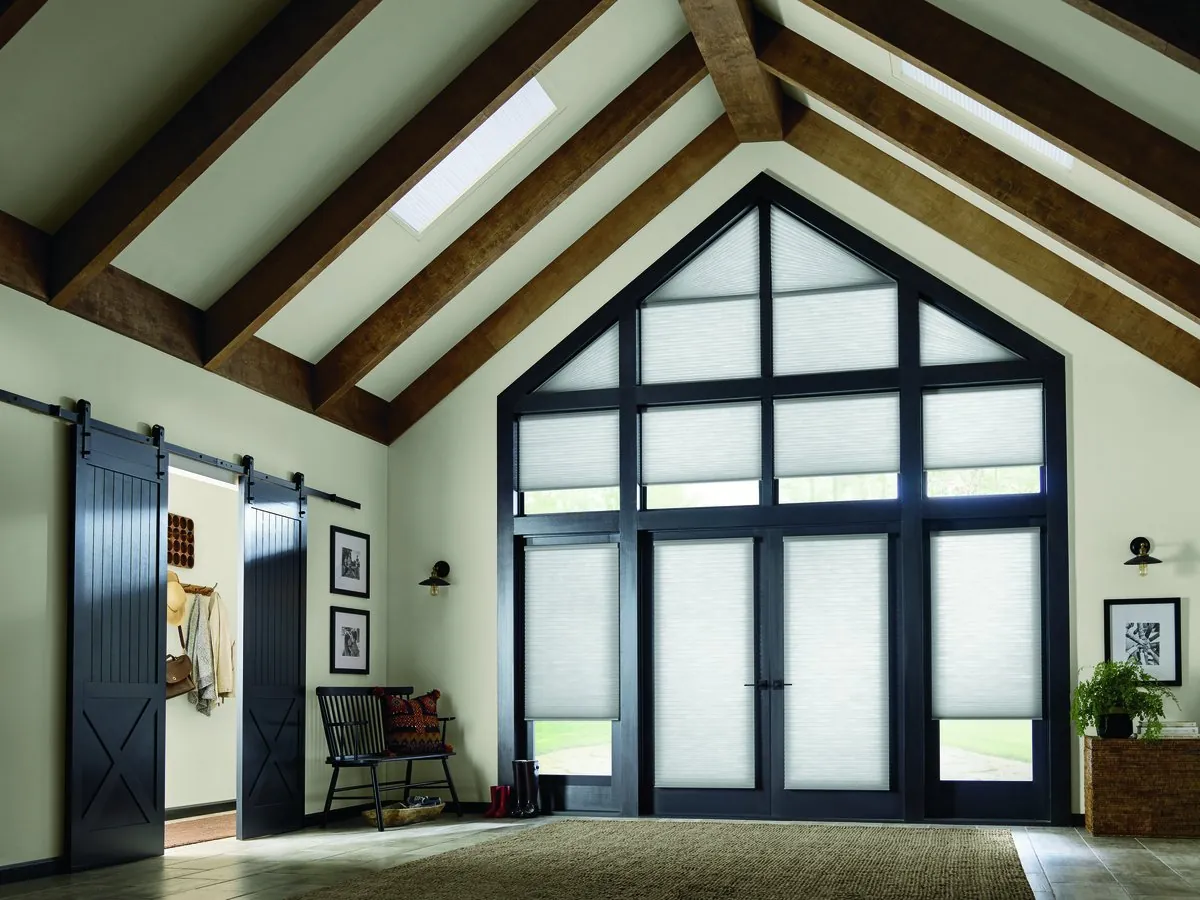
Along the river, houses have been opened up on the water side with picture windows, sliders, transoms and sometimes a solid wall of glass. All of it faces the sunset, and the treatment there has one job: protect the room without stealing the view.
A run of glass too wide for one shade becomes a pair or a trio sharing a rail. Lift them together for a straight line, or only the ones the sun is hitting. Transoms high above a slider are exactly where a motor pays off, since nobody can reach them otherwise. The slider itself takes verticals, gliding panels or sideways cellular fabric.
Keep the head of each window tidy, with a narrow rail or a roller in a slim cassette, and choose shades that gather small, so a clear evening leaves the glass completely open.
Evening privacy on the river
In daylight, a river room is hard to see into: the only view in is from the water or the Portsmouth shore across the river. After dark, with lamps lit, the big glass works the other way, and a waterfront living room is on show to every passing boat.
Vaned sheers answer that neatly. Their soft vanes float between two sheer layers; open, the river shows through a light veil, and turned shut at dusk the room goes private while still glowing warmly from outside. Banded shades do something similar with stripes: align the sheer bands to look out, slide them to close. Where the night also turns cold, a cellular fabric that filters light gives privacy and warmth in one.
Heat in the late afternoon
A west room keeps gathering heat as the day goes on, and a glass-walled river room on a July afternoon can be the warmest place in the house. The answer is to stop the sun at the window rather than fight it with the air conditioning.
Drop a screen as the sun swings round and much of the heat and glare stays outside while the river stays in view. Cellular fabric that filters light slows heat coming in just as it slows warmth going out in winter. Shutters with the louvers angled down keep the hot patch off the floorboards and the sofa.
PowerView takes the remembering out of it. A timed scene can bring the river-side shades down before the sun drops and lift them after sunset, even on days when the house is empty. The page on how motorized shades are controlled explains handsets, the app and timed scenes.
Choosing window treatments at the house
River glass on one side of town and farmhouse sash on the other: neither is easy to judge away from the window itself. So the samples come to you, in our van.
- Ask for a visit through Request a Consultation, or use the call button.
- Your consultant brings screen weaves, vaned sheers, cellular and roman cloth, slats, louvers and drapery swatches.
- The walk-through starts on the river side, with your questions about sunset glare, salt and evening privacy.
- Each fabric goes up against the glass, in afternoon light if the timing works.
- Then the rest of the house, from cape bedrooms to the farmhouse kitchen, is measured opening by opening.
- You receive a free estimate and take whatever time you need.
The appointment is described under what happens at an in-home consultation, and interior design consultations are there if color across a whole house is the sticking point.
Porches that face the river
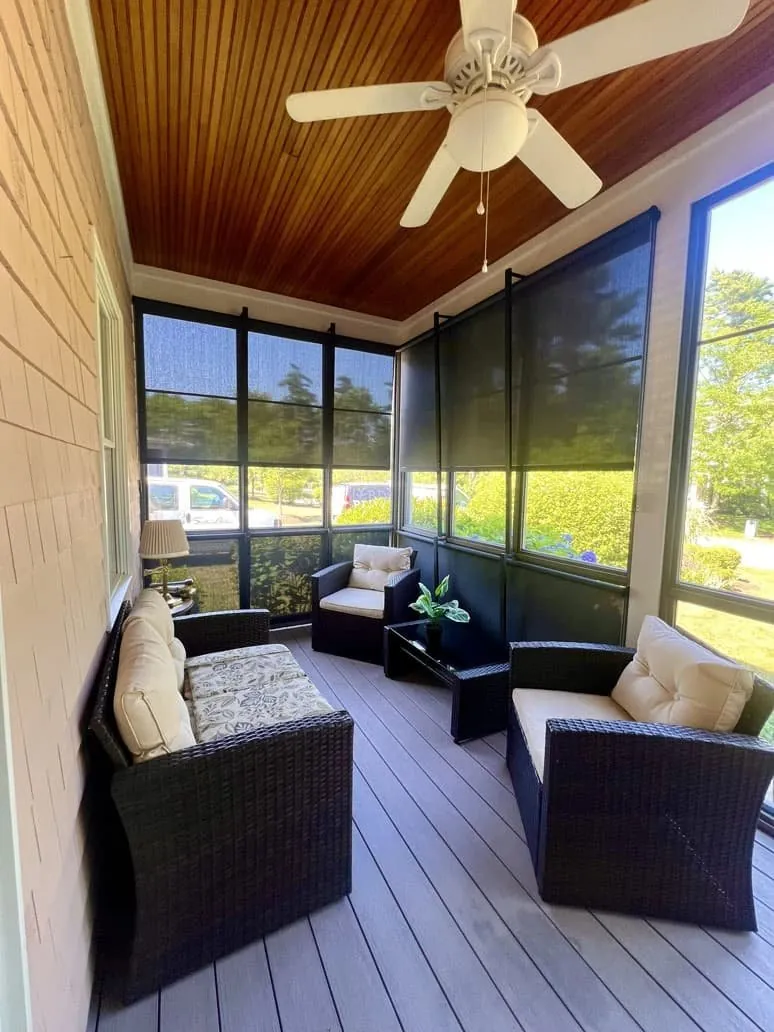
Many river houses have a screened porch or a three-season room on the water side, often the place everyone ends up on a summer evening. It is also the room that takes the sunset most directly, with screens or glass on three sides and nothing to stop the low sun.
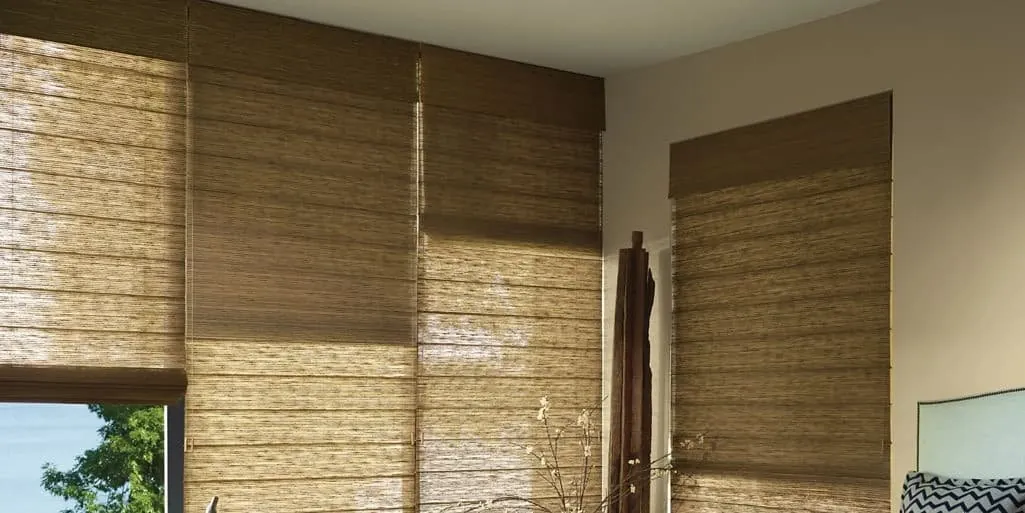
Window treatments in Tiverton, RI, porches of this kind are usually solar screens, lowered all round when the sun comes level across the water and raised again at dusk to give back the view. Darker screens keep the river clearest. On a glassed-in room used into the fall, cellular fabric that filters light holds some of the day’s warmth after sunset, and a woven wood shade gives a relaxed, natural look that suits a porch. Frames on older porches can be shallow or built by hand, so we check each one and fit across the face where a shade will not sit inside.
Bedrooms on the water side
A river bedroom facing west is bright in the evening rather than the morning, which matters for children who go to bed while it is still light in June, or for an afternoon nap. A cape bedroom inland facing east has the reverse problem at sunrise.
Darkening cells or a blackout roller both handle it, as long as the fit is snug. A tight fit within the frame, or channels down each side, keep the edges from glowing. Panels drawn over the top at bedtime catch any light still slipping round. Anyone who likes to wake with the day can choose a light-filtering fabric instead.
Bringing the house together
A typical Tiverton plan mixes products freely: screens or cellular fabric on the river glass, shutters toward the road, darkening shades upstairs and faux wood in the kitchen and bath.
What keeps it calm is the view from outside. From a boat on the Sakonnet or from Main Road, the glass-side backing of every shade shows at once, so one pale tone on that side unifies the house. Indoors, one rail color and one way of mounting per floor does the rest. Planned like that, window treatments for Tiverton houses look chosen together rather than added one at a time. Every product we offer is on the window treatments page.

Why a Gallery dealer
Gallery is the status Hunter Douglas gives to a dealer that carries its entire range, and Blinds & Designs holds it. River glass that needs a tough screen, a farmhouse that wants shutters and a cape bedroom that needs darkening cells can all be planned from one van in one visit.
Certified Hunter Douglas installers fit every order. Design consultations help with color across the house, and an older shade that will not stay up is a repair we welcome. More on the maker is on the Hunter Douglas page.
The nearest showroom to Tiverton
Across the state line and a short drive east, North Dartmouth has the showroom nearest to Tiverton. River houses and farmhouses alike are usually planned at home, swatch against glass, though a look at a working shade first can help.
One crew measures, orders and fits whichever way you start, and the estimate costs nothing.
Tiverton questions
Which fabrics last longest in a west-facing room on the river?
Pale tones toward the glass, such as white, cream and stone, show fading least, and screens, cellular fabric and shutters cope well with strong sun. Many fabrics carry a second color on the room side.
How do we cut the sunset glare and keep the river in view?
A screen roller, in a weave open enough to keep the view you want. Charcoal and bronze screens tend to be clearer to look through than white, and we test them at your glass late in the day.
Will salt air ruin new blinds or shades?
Not if you choose for it. Sealed rails, cordless operation and shutters leave little metal exposed, and wipe-clean fabrics suit a river-side kitchen or bath.
Can the river-side shades close themselves in the afternoon?
Yes. A PowerView timed scene can lower them before the sun drops and raise them after dark, and the handset and app still work whenever you want to change it.
Do you come out to Tiverton for consultations?
We do. The consultant brings the samples to your house, measures each window and writes a free estimate.
Book a consultation
Sunset glare, salt air or a cold farmhouse sash: whichever brought you here, the answer is clearer with the fabric against your own glass. Ask for a consultation and we will measure the house and write a free estimate for window treatments in Tiverton, RI. A quick question first? Use the call button.