
Big glass and a house that is often empty
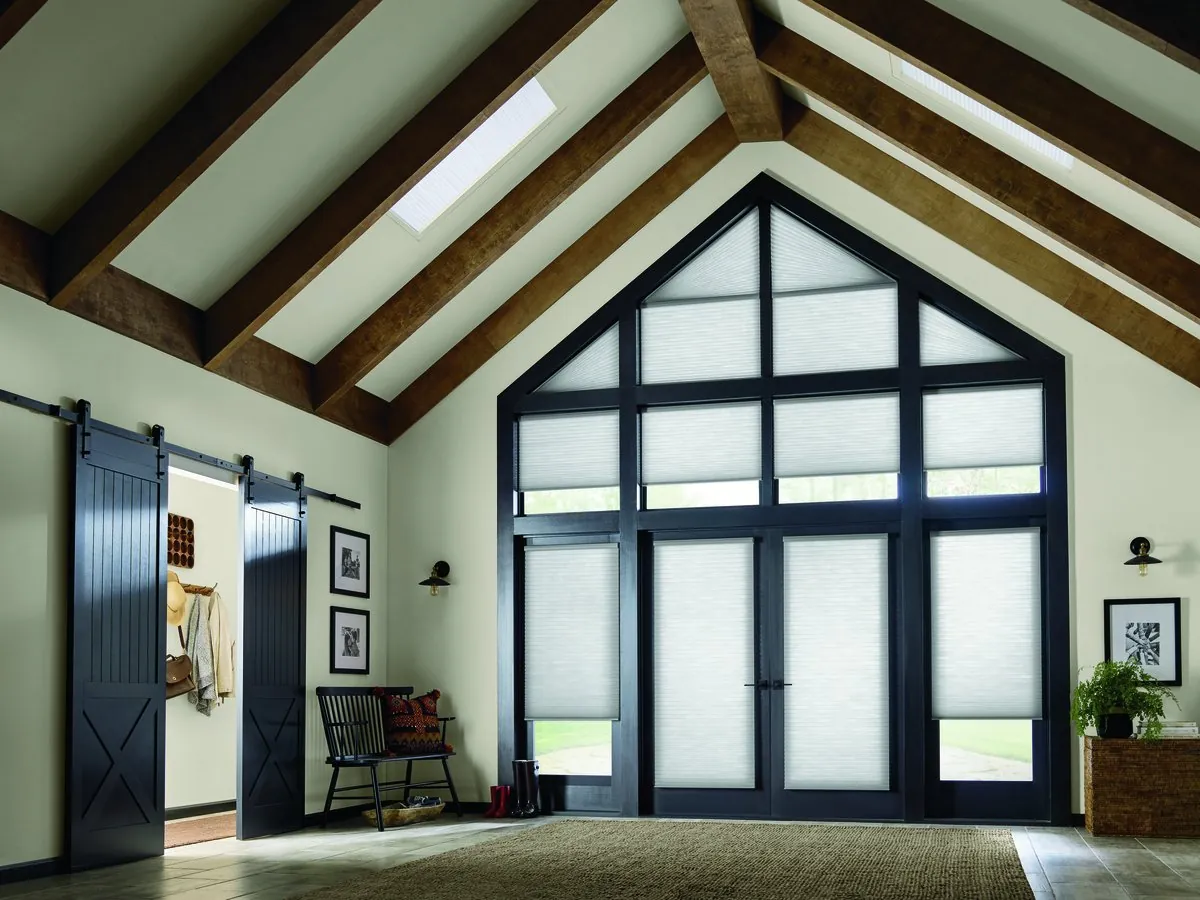
Most of the housing around Mashpee Commons and out toward New Seabury is fairly young by Cape standards: colonials, townhouse rows and condominium villages with generous modern openings. Vaulted living rooms, transoms over the doors, wide sliders to a deck and great walls of glass toward the water or the woods are all common. Choosing window treatments in Mashpee, MA, usually starts with how much glass a room has, because there is a lot of it.
The second thing that shapes the plan is how the house is used. A good share of Mashpee houses are second homes, opened up for the summer and closed for long stretches the rest of the year. A window treatment in that house has two jobs: making the rooms comfortable when you are there, and protecting floors, furniture and fabrics from months of sun when you are not.
We bring the samples to your door in the van, so you can choose while you are on the Cape, in your own rooms and your own light.
Window treatments in Mashpee, MA, and where each one fits
Every product below has its own Mashpee page with more detail on the range and the rooms it suits. Pick one to read about, or ask us to look at the whole house at once.
Blinds
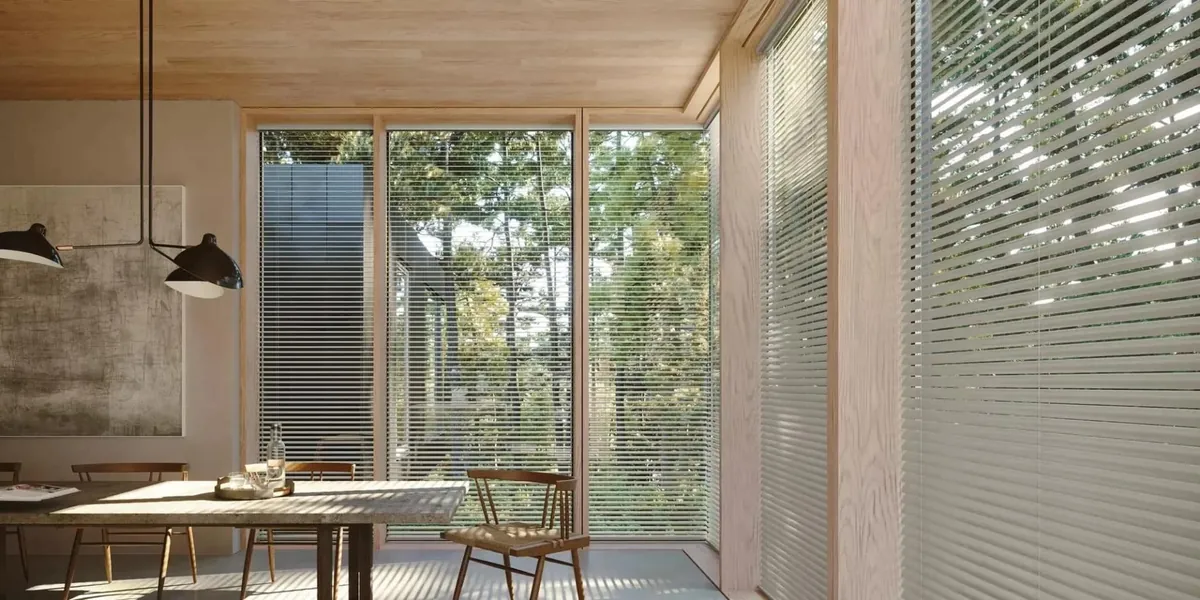
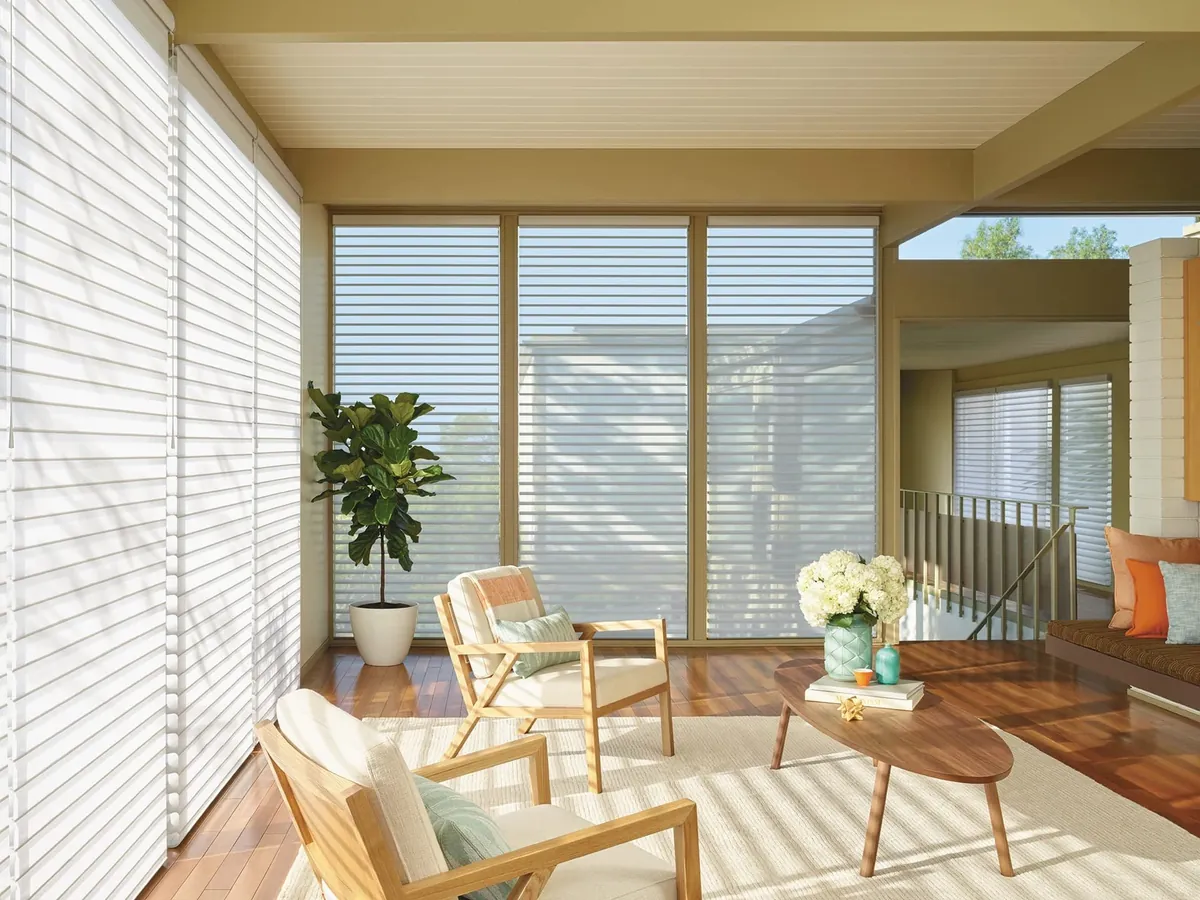
Wood, faux wood, metal and vertical blinds, with slats that tilt to keep the hot afternoon light off a dining table by a big window.
Cellular shades
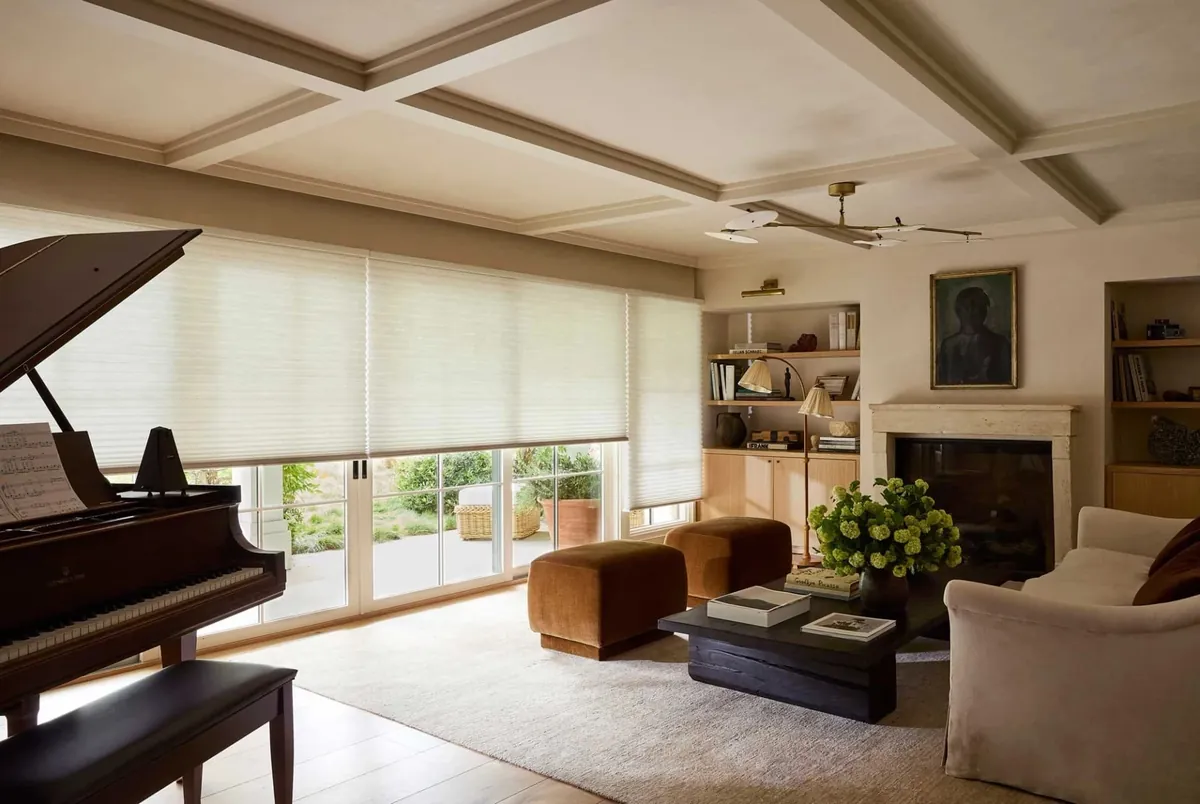
Duette and Applause honeycomb in specialty shapes and wide sizes, for the transoms, angled tops and patio doors in newer houses.
Roller and screen shades
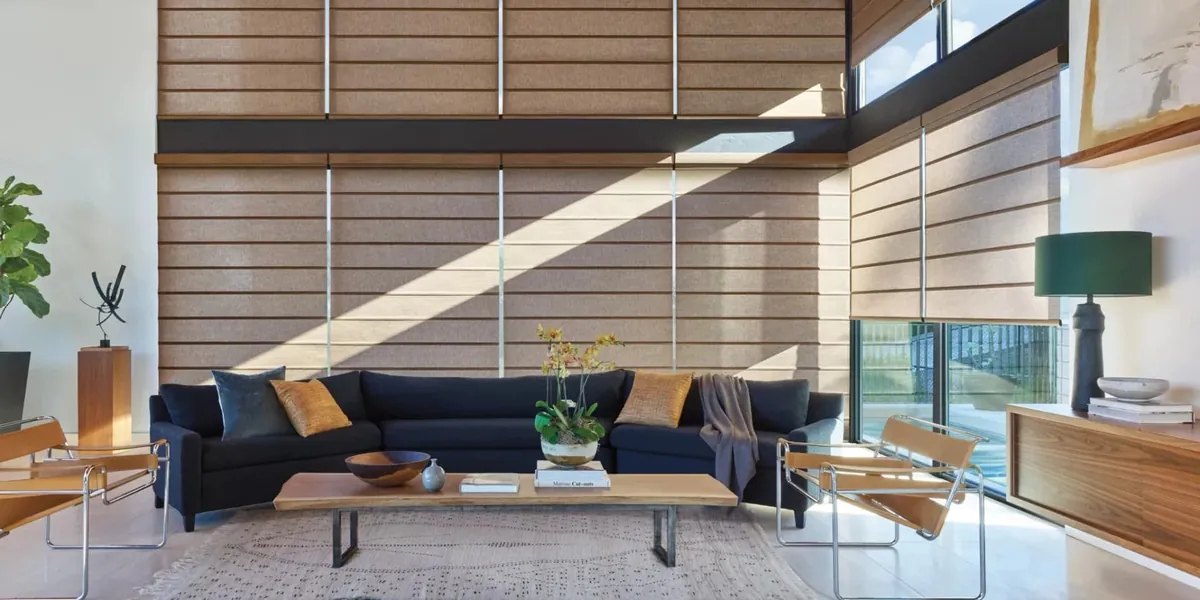
Designer and Alustra rollers, solar screens and banded shades for a clean modern line across a double-height wall of glass.
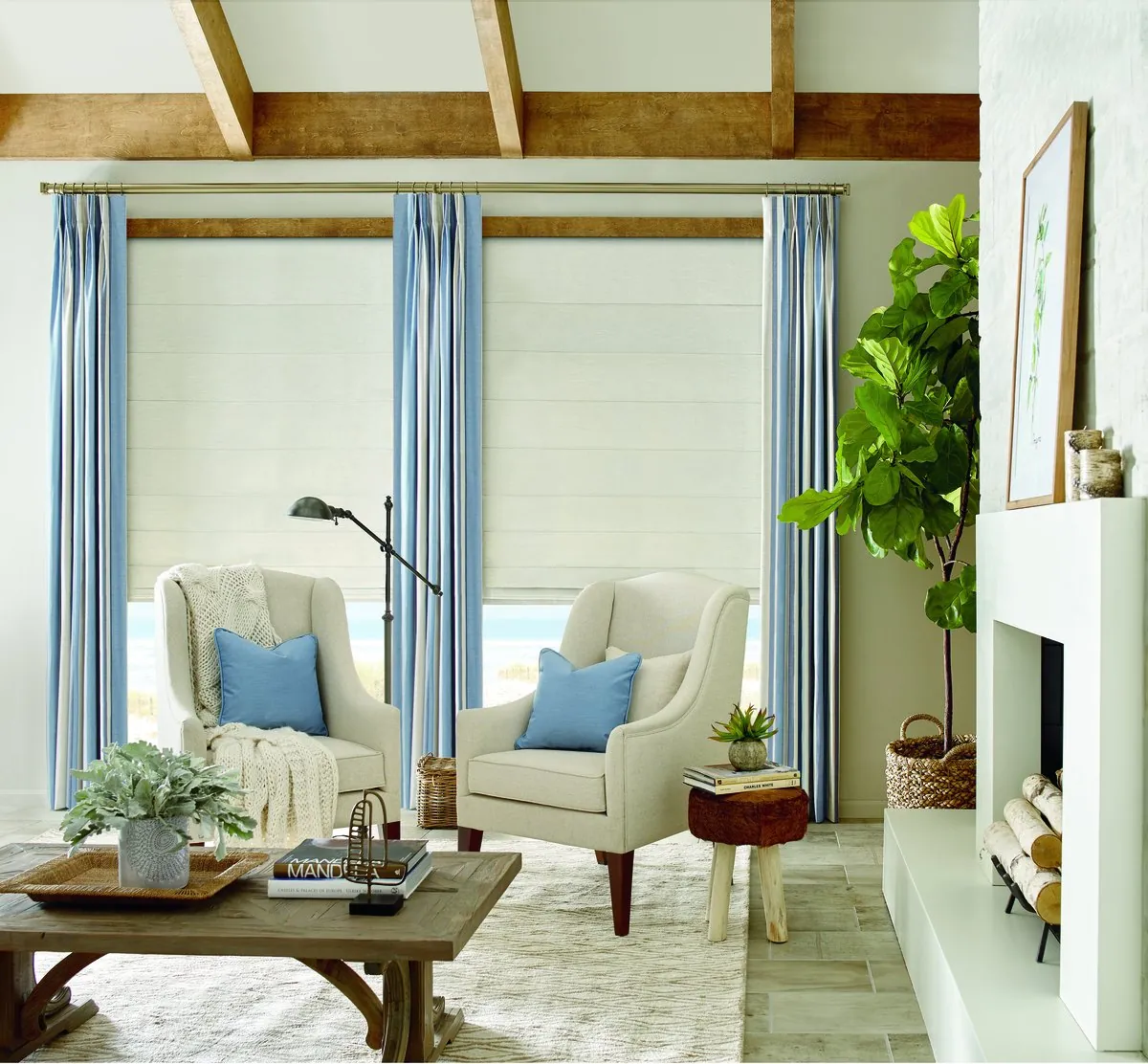
Roman shades
Vignette and Carole Fabrics romans in flat or folded styles, a softer look for a bedroom or a sitting room in a townhouse.
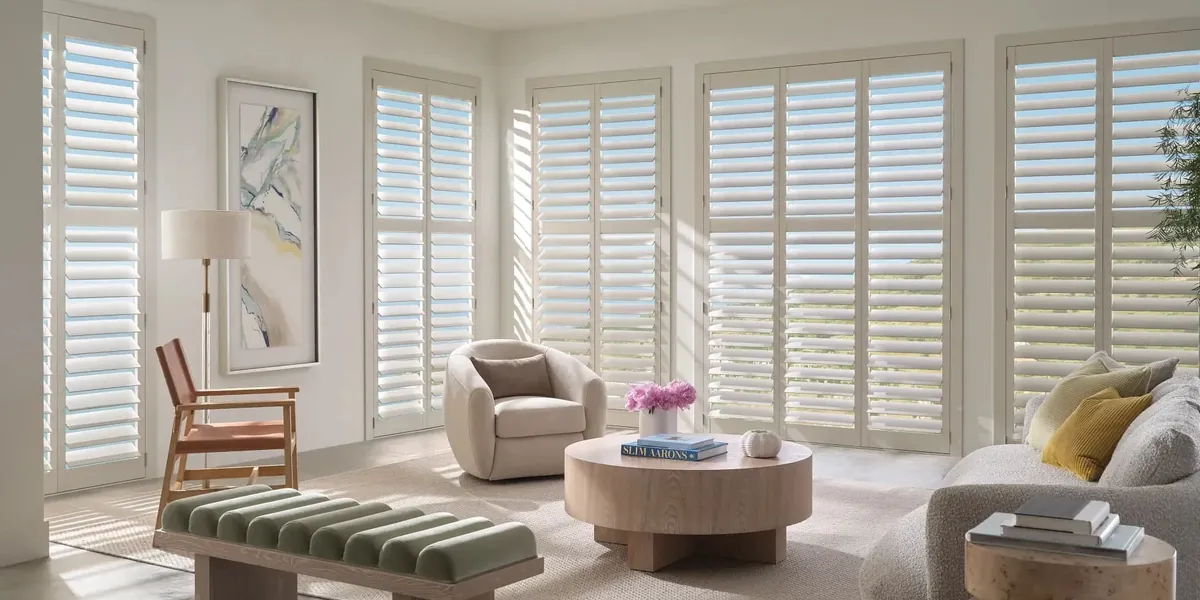
Shutters
Palm Beach, NewStyle and Heritance shutters, sized to large modern openings and simple to close up when you leave for the season.
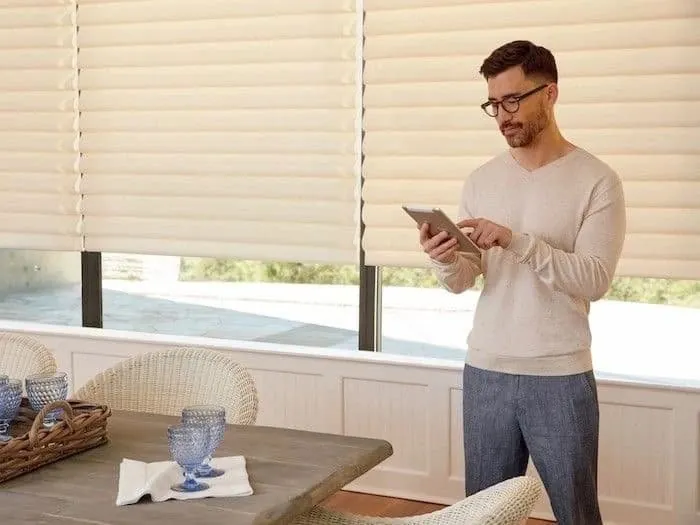
Motorized shades
PowerView shades that rise and lower on a schedule, so the house does not sit with its blinds down all winter.
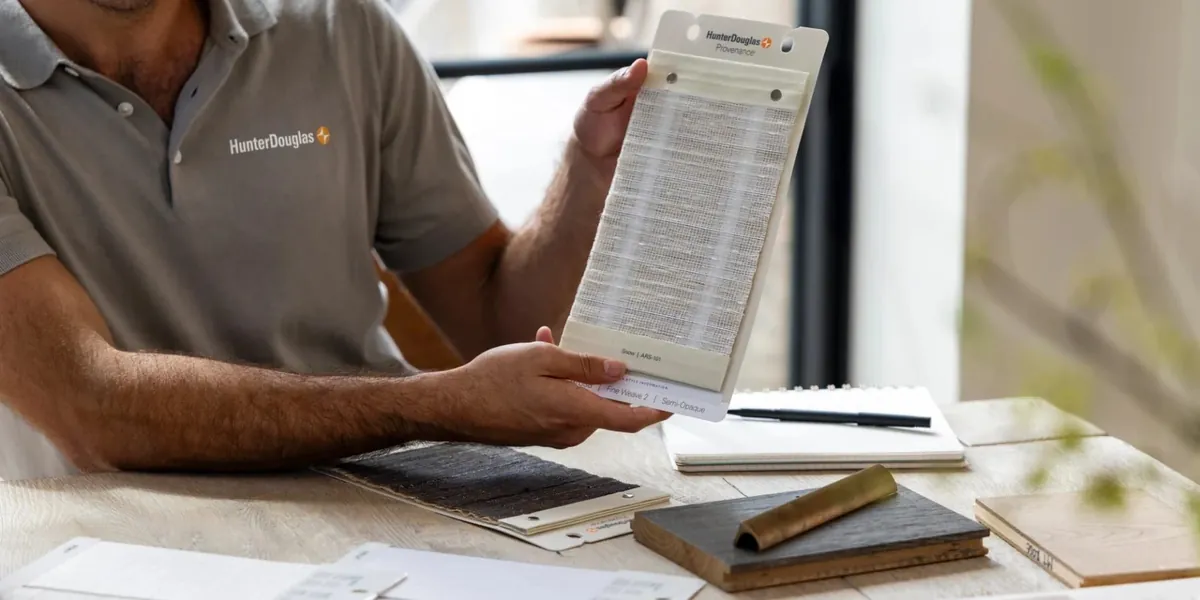
Hunter Douglas Gallery dealer
The full Hunter Douglas range, with certified installation, so a whole condominium or a large colonial is planned in one go.
Drapery
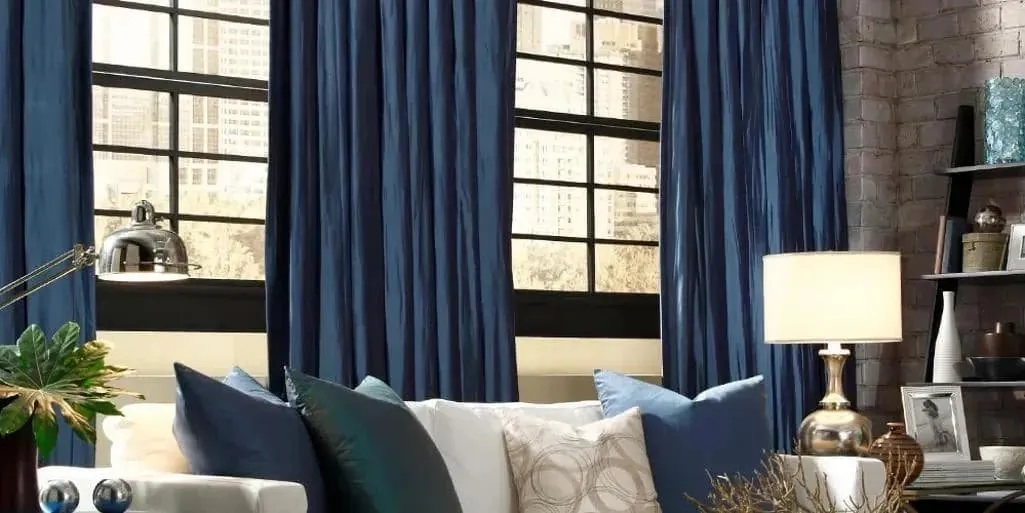
Hunter Douglas drapery for tall windows in a vaulted room, where floor-length panels balance the height of the glass.
When nobody is home for months
A house that sits closed from October to May still gets the sun every day. Light pours across the same patch of floor, the same sofa and the same rug for months, and when you open up in June the difference shows. Shades that stay lowered keep that light off the furnishings, but a house with every shade down looks shut up from the road, and it can also look empty.
There are a few ways to handle that, and many owners combine them.
Motorized PowerView shades can be set to a schedule: lowered through the brightest part of the day, raised in the morning and evening, so the house looks lived in and the rooms stay out of the hardest light. Because the schedule runs without anyone touching a cord, it carries on while you are away. You can also adjust the shades from the app.
Light-filtering fabrics are a good middle ground. Lowered fully, they keep the strongest sun off the floor while the rooms still glow softly from outside, which looks very different from a dark window.
For rooms you rarely use off season, such as a guest room facing south, a room-darkening honeycomb or roller simply stays down. Inside the frame, with the head rail neatly tucked away, it looks tidy from outside.
Strong summer sun on modern openings
When you are in residence, the sun is the other half of the story. From June through Labor Day it climbs high and stays long, and the large openings in these houses let a great deal of it in. A wall of glass that makes a living room feel open in April can make it uncomfortable by July afternoon.
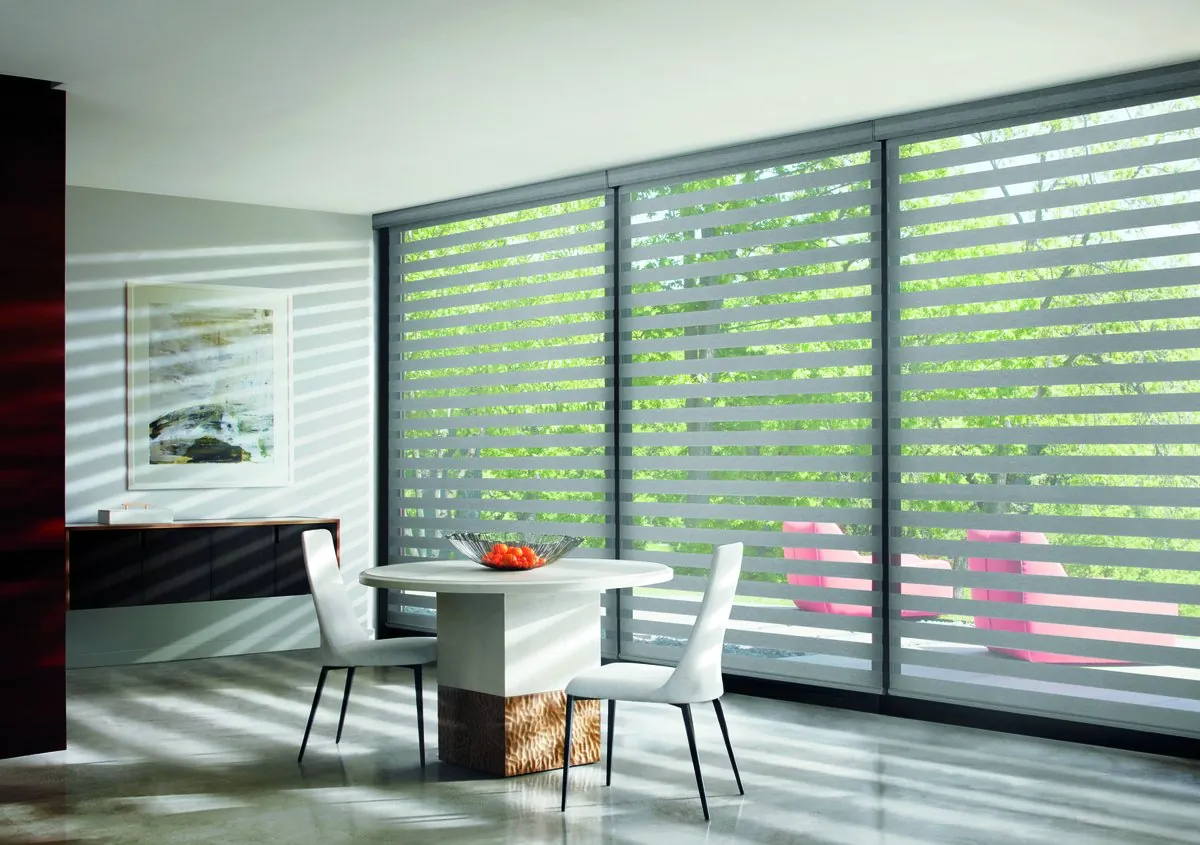
Solar screen rollers are often the first answer. They cut the glare while letting you see out, and the openness of the weave decides how much view you keep against how much light you stop. A more open weave keeps more of the view; a tighter one gives a calmer room. Banded shades, with alternating sheer and solid stripes, let you choose between a filtered view and a closed window with one pull.
Honeycomb shades work well here too. Their cells trap still air, which slows the heat coming through the glass on a hot afternoon and keeps it in on a cool evening in September. On tall windows, a top-down, bottom-up honeycomb lowers from the top to block the high sun while leaving the lower glass open to the view.
Transoms, angled tops and vaulted rooms
Many of the newer houses in town have windows that standard products struggle with: half-rounds above the front door, angled windows following the line of a cathedral ceiling, small transoms above a slider and tall narrow side lights. These are often left bare because they look hard to cover.
Hunter Douglas makes honeycomb shades in specialty shapes for angled and arched windows, and shutters can be built with a fixed arched panel over a rectangular one. Very high windows are a natural place for PowerView, because a motorized shade can be lowered with a remote from the floor. Some owners choose to leave an arch open and treat only the windows below it; we bring samples so you can see both before you decide.
Condominium villages and townhouses
The condominium villages around the Commons and in New Seabury tend to share a style from unit to unit: the same window sizes, the same sliders, the same entry. That makes measuring straightforward and gives you a head start on choosing. It can also mean the association has its own expectations about what shows at the window from outside.
If your village has guidelines about the color that faces the street, bring them to the consultation and we will choose with them in mind. A white or neutral backing toward the glass usually keeps every window in a row looking the same from outside, while the fabric facing your room can be any color you like.
Townhouse rooms are often narrow and deep, with the main window at one end. A shade that stacks very tightly at the top, such as a honeycomb or a roller in a slim cassette, leaves the most glass clear when raised. Upstairs, a room-darkening fabric in the bedroom and a moisture-friendly faux wood blind or shutter in the bathroom are typical choices.
Sliders and doors to the deck
Nearly every house and condominium in town has at least one sliding door, and many have several. They are the doors you use most, out to the deck, the patio or the pool, and anything covering them has to get out of the way easily.
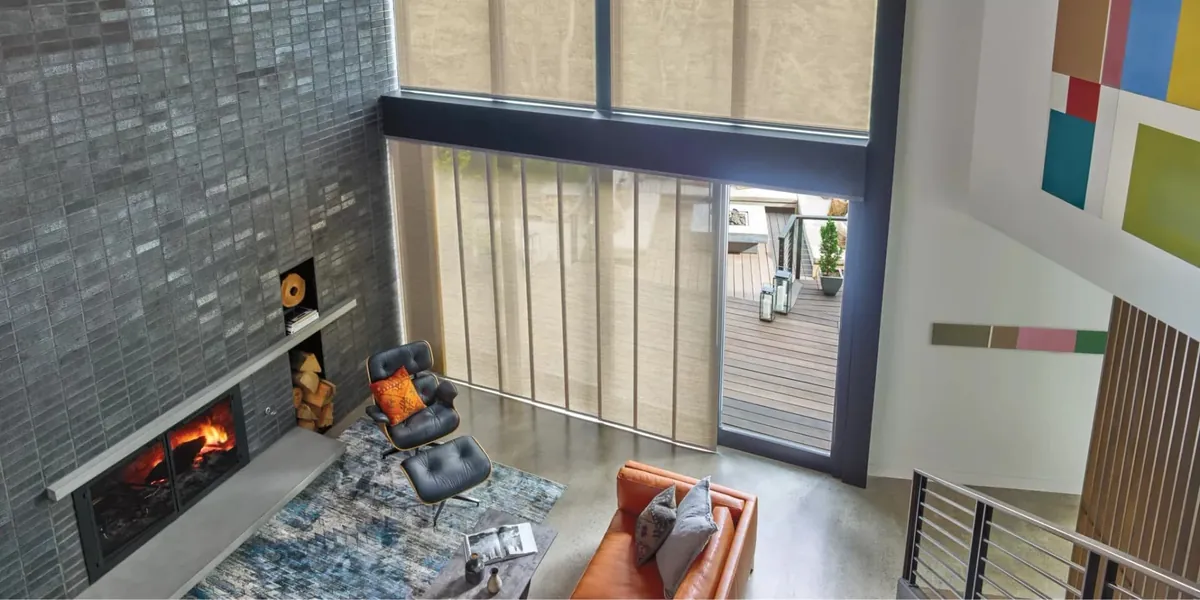
Three products do this well. A vertical honeycomb shade draws to one side like a curtain and stacks neatly. Gliding fabric panels slide on a track and overlap when open. Vertical blinds tilt to let light in without being drawn back. On a pair of French doors, a honeycomb or roller mounted on each door moves with the door when it opens.
Sliders also tend to be the warmest and coldest spots in the room. A honeycomb shade on the slider takes the edge off both.
Planning a visit around your time on the Cape
Second-home owners often want to get the windows decided while they are here, which makes the consultation the important step. Bringing the samples to the house means you choose in your own rooms rather than trying to remember them from somewhere else. For window treatments in Mashpee that you choose on a short stay, the visit runs like this.
- Request a consultation with the form or the call button, and tell us which days you will be on the Cape.
- A consultant arrives in the van with samples of shades, blinds, shutter louvers and drapery fabrics.
- We go room by room, and you tell us what each room needs: sun control while you are there, protection while you are away, privacy, or all three.
- You compare the samples against your own walls and floors, in the bright rooms and the shaded ones.
- Every window is measured, including transoms, angled tops and the doors to the deck.
- You receive a free estimate to look over at your own pace, wherever you happen to be.
If pulling colors together across a whole house feels like too much, our interior design consultations help with exactly that. You can also read about what happens at an in-home consultation before the visit.
Opening up in June, closing up in October
A seasonal house has its own rhythm, and the window treatments fit into it. When you open the house, a quick dust of the shades with a soft brush or a vacuum on low brings them back after the winter. Honeycomb and roller fabrics are made to be cleaned gently in place, and shutters wipe down with a damp cloth. Our guide to caring for fabric shades covers it in more detail.
When you close up, think about which rooms catch the low winter sun. South-facing rooms are the ones where shades left down protect floors and fabrics most. North-facing rooms can be left with the shades raised, so the house does not look completely closed from the road. If you have PowerView, a winter schedule does this for you, and you can check or change it from the app wherever you spend the off season.
Cordless lifts help in a house that sits idle, too, because there are no cords to tangle or fade, and every shade sits at the same height when lowered. These small details are part of why we plan window treatments in Mashpee around the whole year, not just the summer you are standing in.
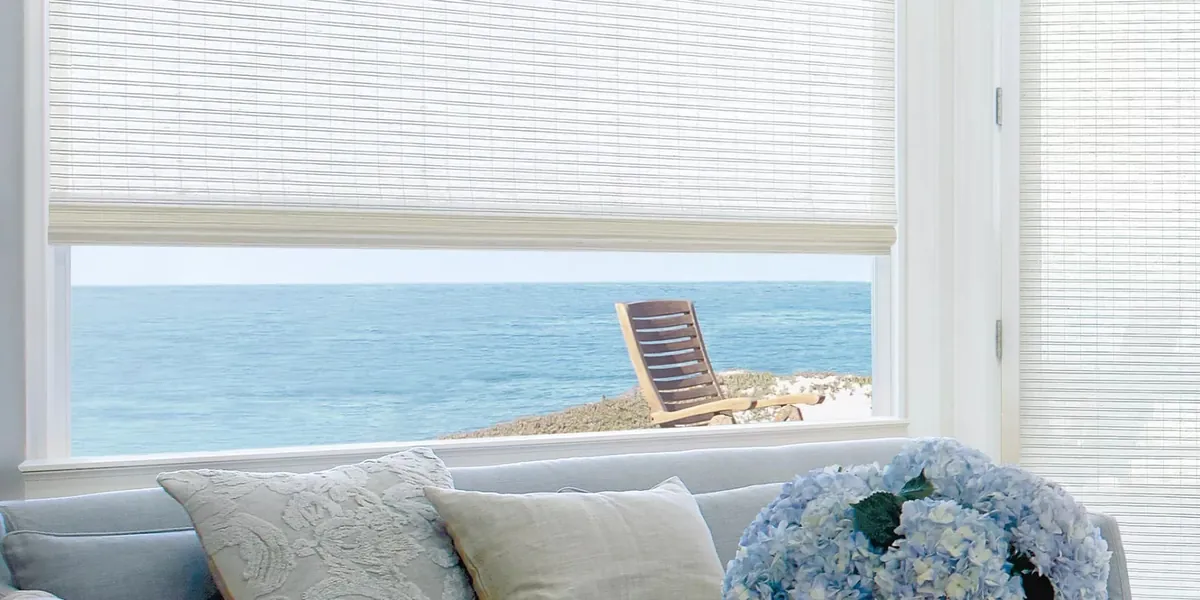
A whole house on one app
Once a house has more than a few motorized shades, it helps to plan them together. PowerView lets you group shades by room, by side of the house or by floor, and run them all from one app or remote. A morning scene might raise everything on the east side; an afternoon scene lowers the west side against the sun; a vacation scene keeps the house looking occupied.
Motorized shades also make sense in rooms you might not think of first. The high windows in a vaulted living room, the window behind a deep kitchen counter and the shades in a bedroom where you want to wake gently are all common places for them. We look at each window when you are planning PowerView and work out how each motor is powered at the visit. Our motorized blinds and shades page goes into more depth.
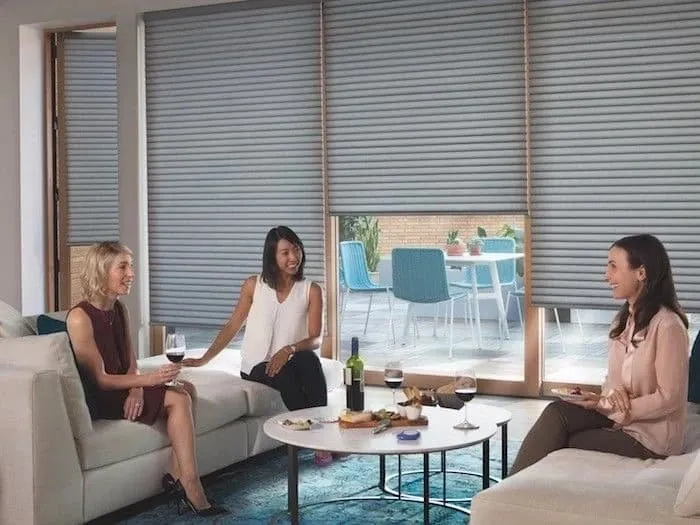
Measuring big openings and fitting them right
Large modern openings are less forgiving than small ones. A small gap at the edge of a narrow shade barely shows; the same gap down a tall window lets a long line of light through. That is why careful measuring matters even on a newer house that seems square.
We measure each opening across and down in several places, check the frame depth, and look for anything that stands proud of the frame, such as a handle, a crank or a lock. A window too wide for a single shade is divided into sections that share one head rail, so they still read as one piece and can be lifted as a group or separately. Nothing is ordered until you have signed off the mount, the color and the lift for every opening.
The fitting itself is done by our certified Hunter Douglas installers. Before they leave, every shade has been run up and down, every shutter panel swung and every louver tilted, and if the house has PowerView, the schedules are set up with you so they carry on after you head home for the winter. Read what happens on installation day for the full picture.
Mixing products across the house
A well-planned house rarely uses one product throughout. A typical Mashpee plan might combine solar screens in the great room, honeycomb shades in the bedrooms, a vertical honeycomb on the slider and shutters in the bathrooms, all with matching head rails and a neutral color toward the glass. A condominium might keep the same product in every room for a calm, consistent look.
Whatever you choose, window treatments in Mashpee work best when the whole house is planned together. It keeps the outside looking even, makes it easy to add motorization later, and means one free estimate covers every room. Our window treatments overview shows the whole range.
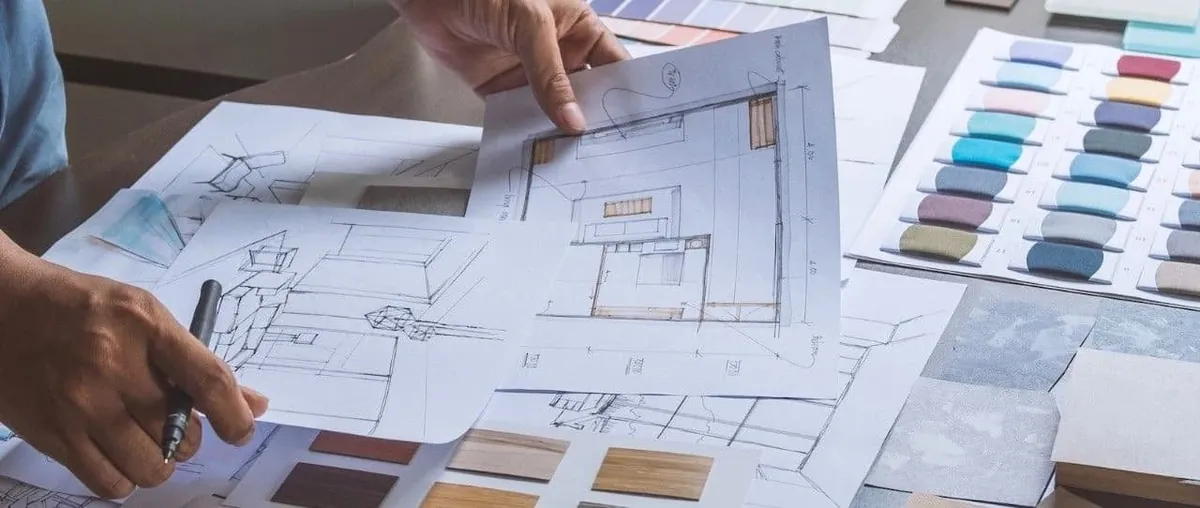
Why a Hunter Douglas Gallery dealer suits a newer house
Newer houses lean hard on the parts of the Hunter Douglas range that a small shop seldom stocks: angled and arched honeycomb, extra-wide rollers, banded fabrics and motorized lifts. As a Gallery dealer, Blinds & Designs offers the lot, so nothing in a vaulted great room has to be a compromise.
The people who hang it are Hunter Douglas certified, and they work for us. Help with color is there through our interior design consultations, and later on we will gladly repair a blind or shade that has stopped behaving. The Hunter Douglas page has more on the brand.
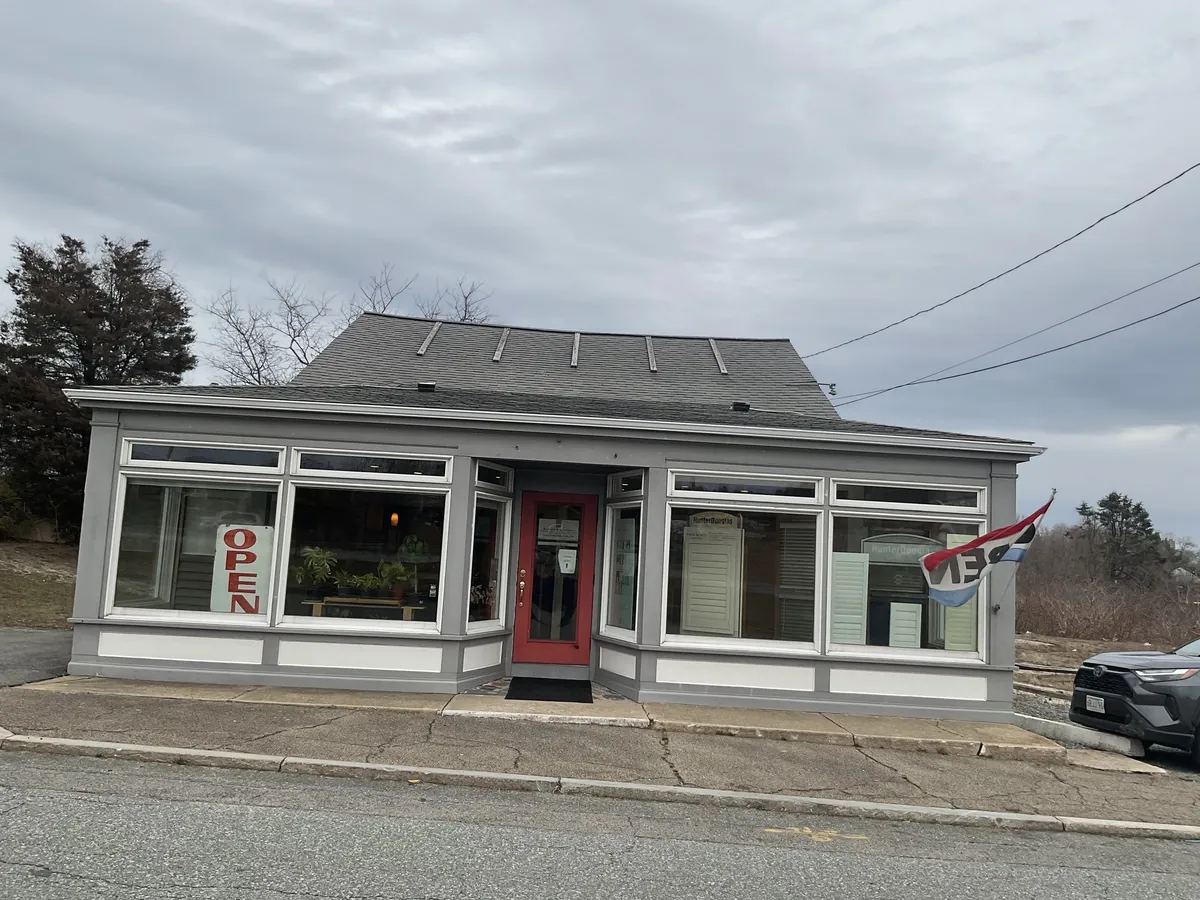
The Sagamore showroom
Plenty of Mashpee projects are chosen entirely at home, since the samples travel to you. If you would like to see the products in person first, our Sagamore showroom by the canal is the nearest. The same people measure, order and install, and the estimate is free either way.
Questions from Mashpee
We are only in Mashpee for the summer. How do we protect the house while we are away?
Motorized shades on a schedule keep the hard light off floors and furniture and raise and lower so the house looks lived in. Light-filtering fabrics left down are another option, and rooms you seldom use can simply keep a room-darkening shade lowered.
Can you cover the transom and angled windows in our living room?
Yes. Honeycomb shades come in specialty shapes, shutters can be built with an arched panel, and high windows can be motorized so they work from the floor. Some owners leave an arch open; we can show you both.
Our condominium has rules about what shows from outside. Is that a problem?
Not usually. Bring the guidelines to the consultation. A white or neutral backing toward the glass keeps every window looking alike from outside, while the room side can be any color.
What works on a sliding door we use all day?
A vertical honeycomb shade, gliding panels or vertical blinds, all of which stack to the side. A honeycomb also helps with heat and cold at the door.
Can we get the consultation done while we are on the Cape?
That is the easiest way. Tell us the days you are here when you request a visit, and the consultant brings the samples, measures and leaves a free estimate to review in your own time.
The next step
Request a consultation for a day you are in town, and a consultant will come to the house with the van, measure every window and leave you with a free estimate. The call button reaches us if you would like to talk first, and the Sagamore showroom is close by.