
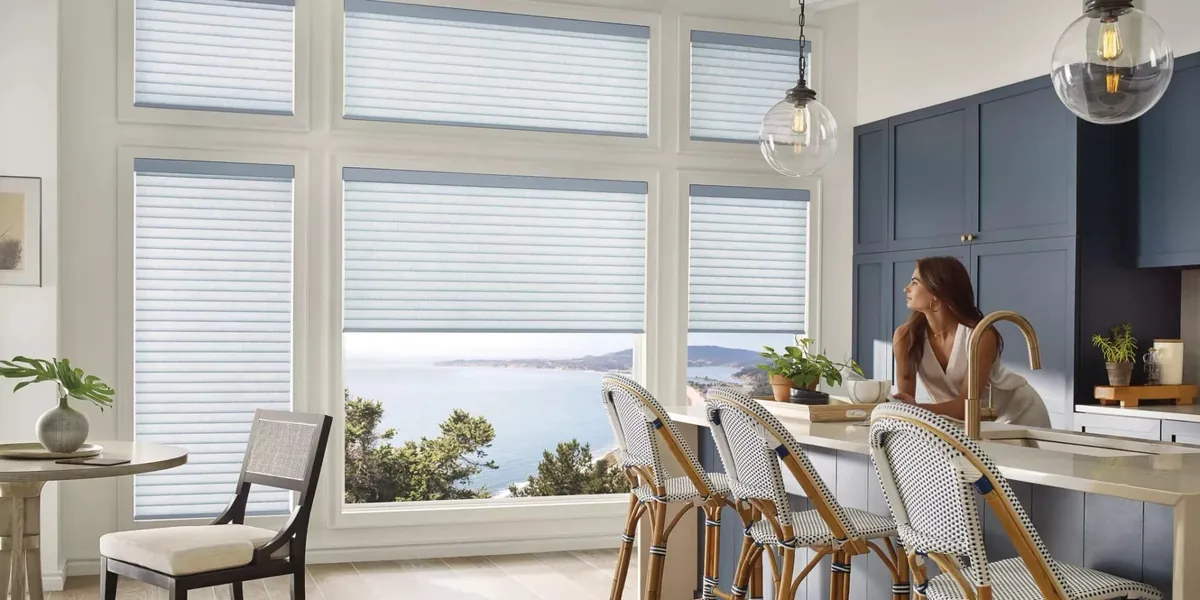
From the village green to the water
Falmouth packs a lot of different houses between its two shores. Around the village green and along Main Street stand the old shingled captains’ houses, square and formal, with rows of evenly spaced sash across the front. Up in Falmouth Heights and down in Woods Hole the houses shrink to cottages, tucked onto hillsides and close to the street. Out toward Sippewissett the houses are newer and the windows grow much larger.
What ties them together is the water. Rooms that face Vineyard Sound or Buzzards Bay take the salt in the air and a sun that sits low over the water for much of the afternoon. When we plan window treatments in Falmouth, MA, those rooms tend to be the first we talk about, because they are the ones you want to use most and the hardest to sit in on a July afternoon.
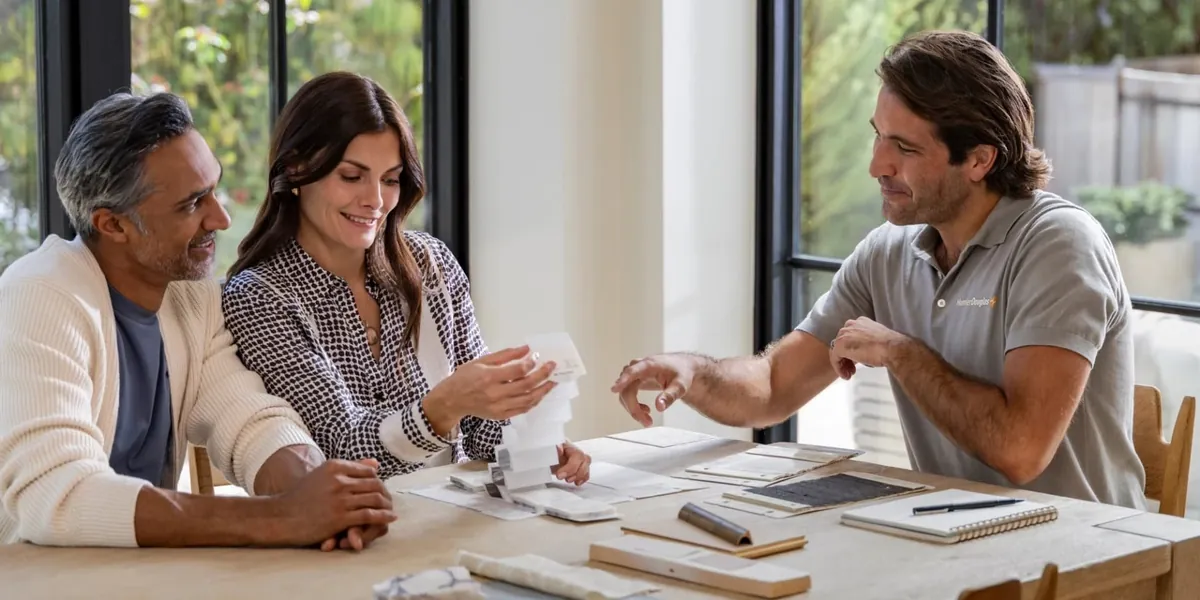
Our consultants bring the samples in the van, so you can hold each one up in those rooms and see how it behaves in that light.
Window treatments in Falmouth, MA: the services
Each of these has its own Falmouth page with more on the products, the choices and the houses they suit best.
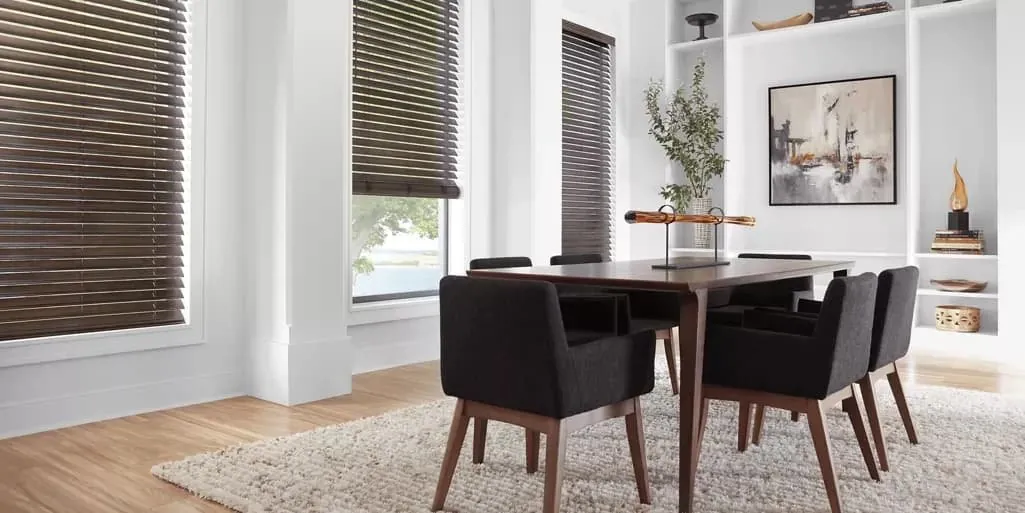
Wood, faux wood and metal blinds
Real wood blinds suit the formal rooms of a captain’s house, and faux wood copes with a steamy cottage kitchen. Verticals cover the wide glass.
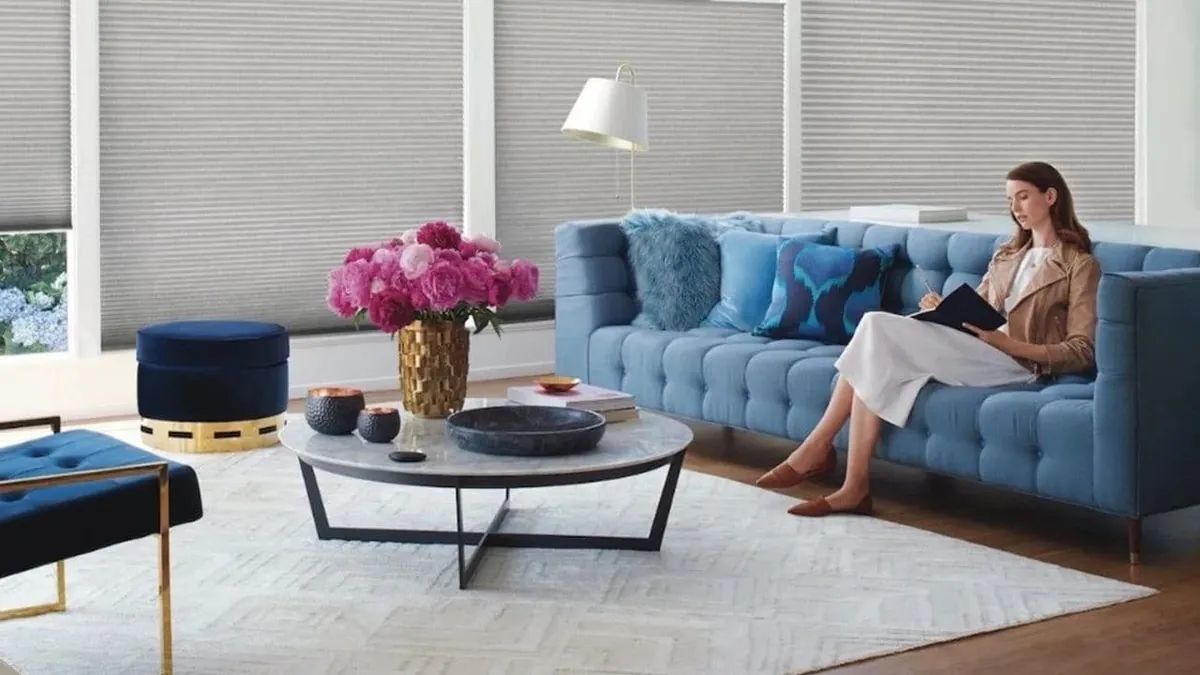
Honeycomb shades
Duette and Applause, whose cells trap still air against the glass to soften a draughty old pane or a hot west-facing window.
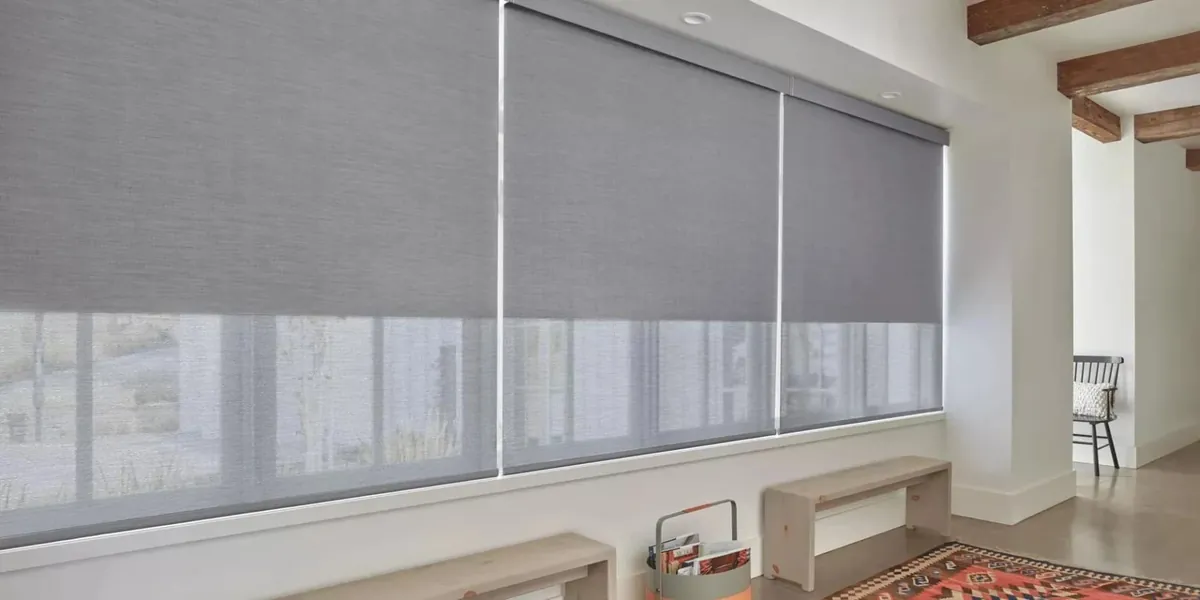
Rollers and screens
Designer and Alustra rollers and solar screens, the screens chosen by openness so the sound stays in view while the glare drops.
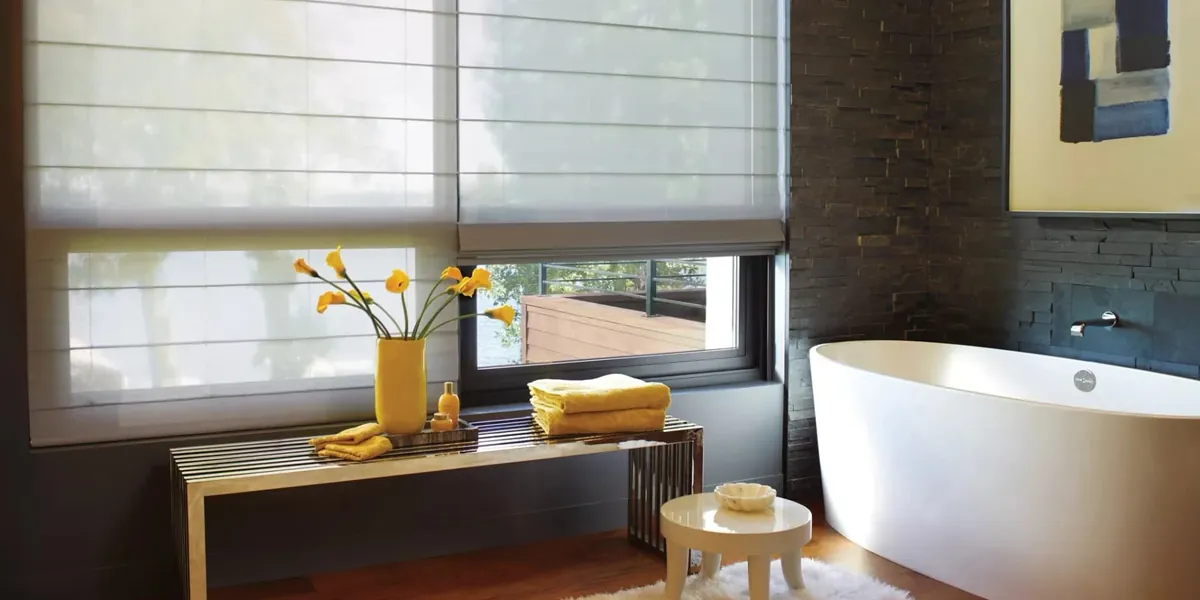
Romans
Vignette and Carole Fabrics romans in flat and folded styles, a soft, tailored look that sits well in an older house.
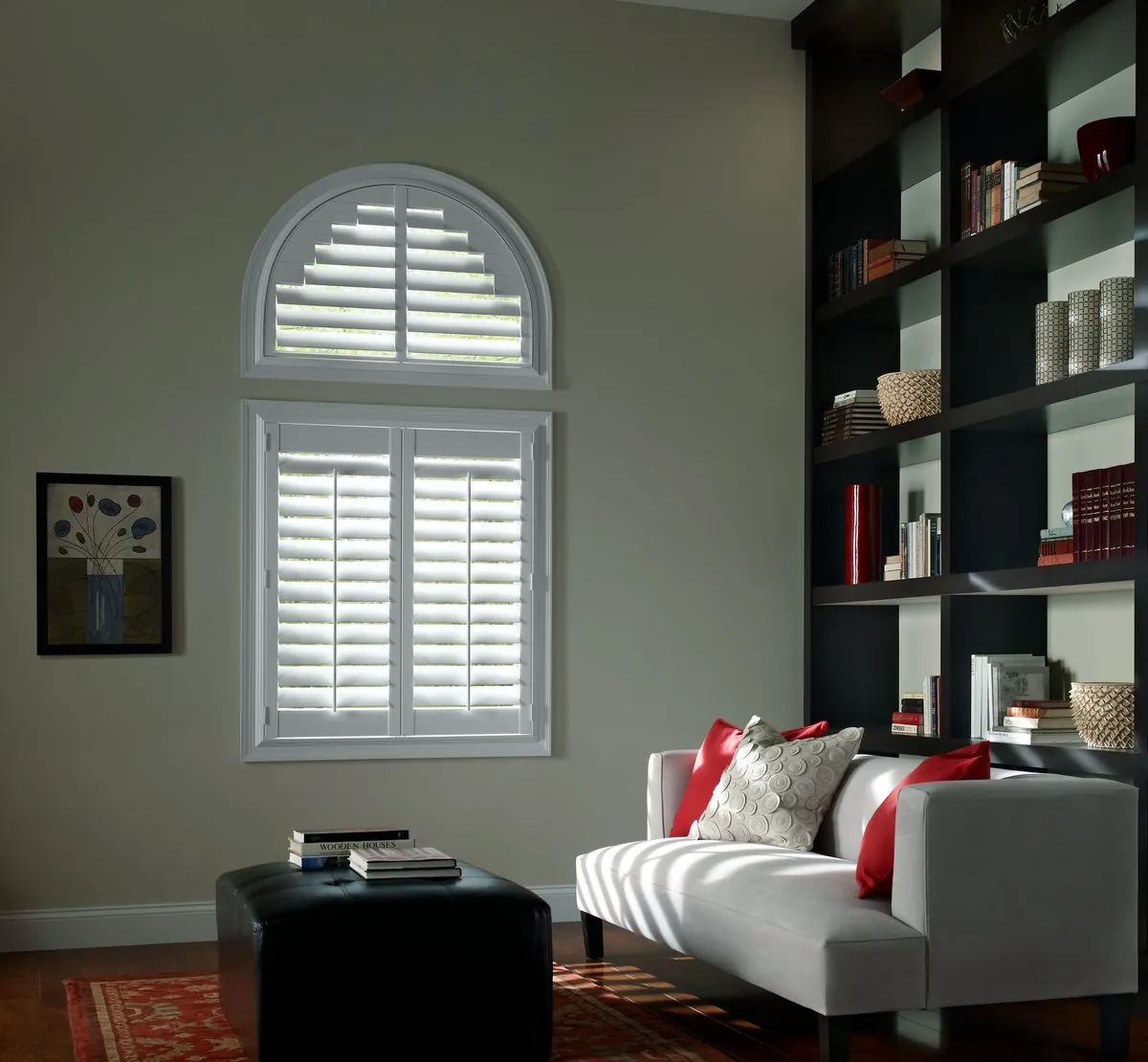
Shutters
Palm Beach, NewStyle and Heritance, with louver size and frame chosen to suit old trim on Main Street or a big Sippewissett window.
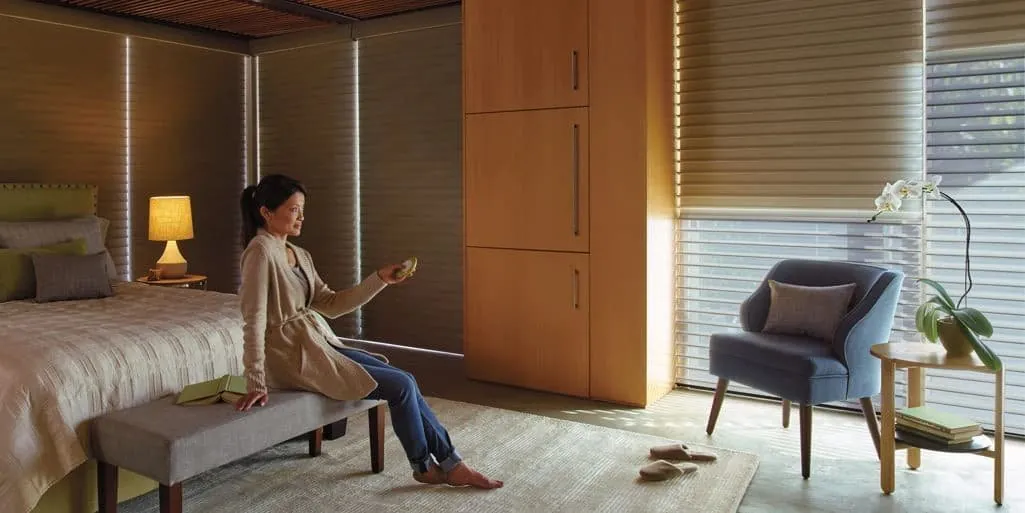
Motorized shades
PowerView shades that lower on their own as the afternoon sun comes round to the water side, run from a remote, the app or a schedule.
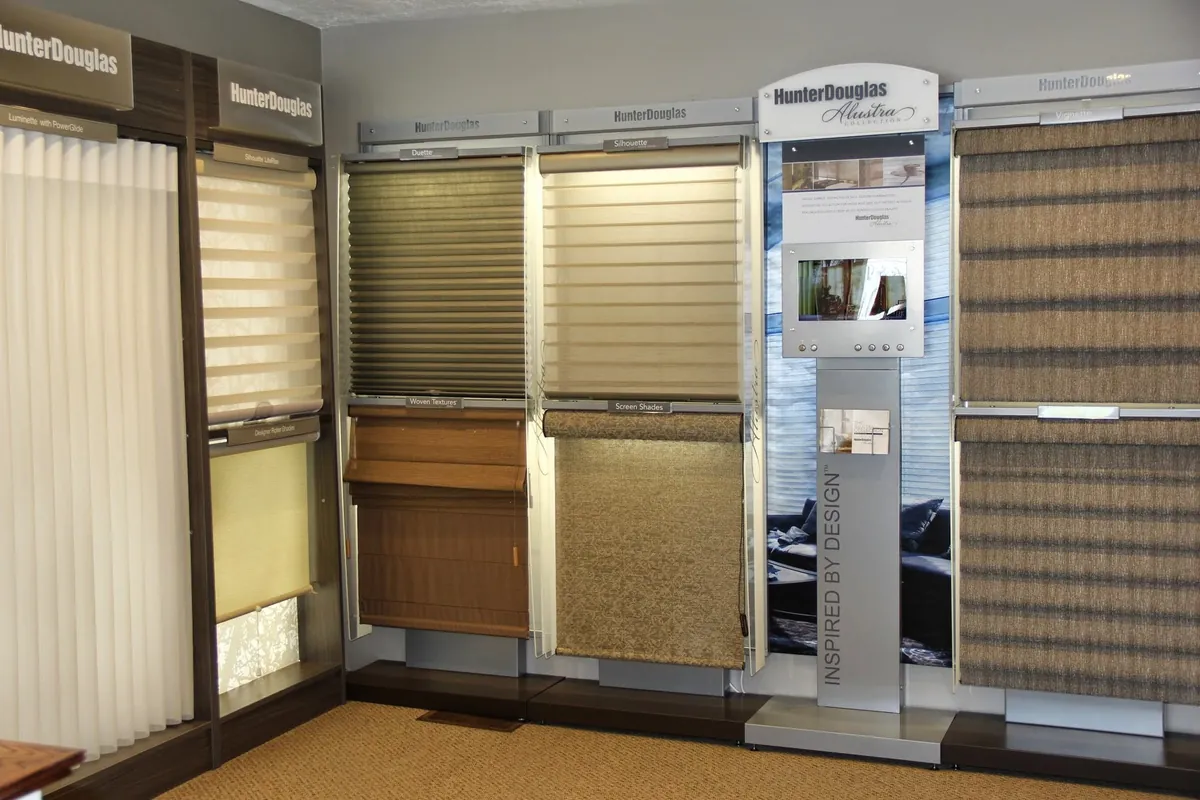
Hunter Douglas Gallery dealer
Every Hunter Douglas product from one Gallery dealer, with certified installation, so one visit can cover the whole house.
Drapery
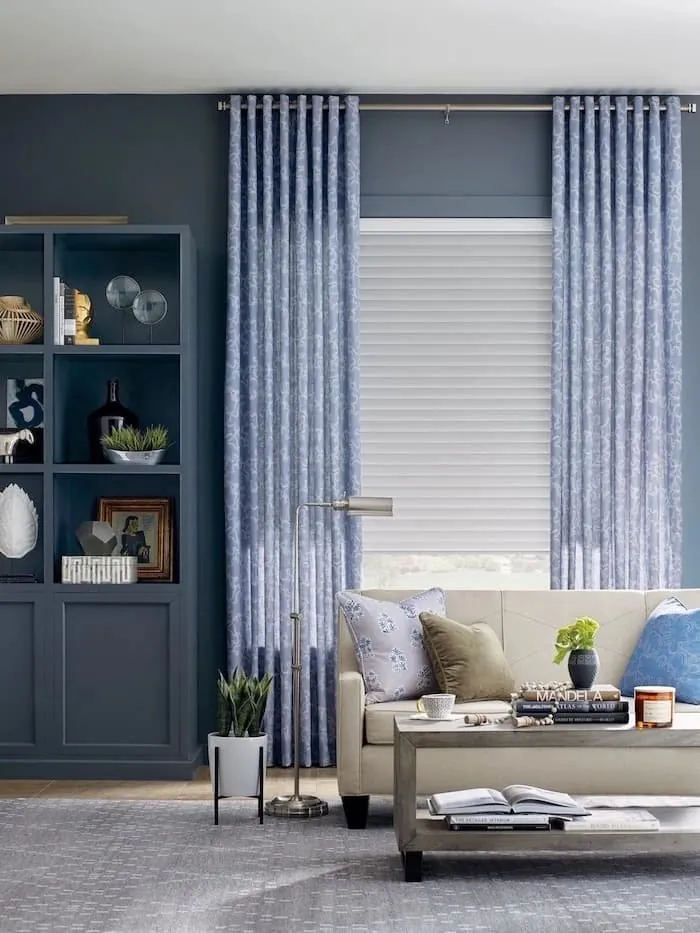
Hunter Douglas drapery panels to dress the formal front rooms of a captain’s house, usually over a shade that does the daily work.
Upstairs in the old houses
Climb the stairs in a captain’s house or an older Heights cottage and the windows change character. Dormers poke out of the roof with a small window at the end of a short tunnel of wall. Bedrooms tucked under the eaves have knee walls and a sloping ceiling, and the windows sit low, sometimes barely higher than the bed. Gable ends often carry a half-round or a small square window high up near the peak.
These are the rooms where a bulky treatment feels cramped, so we lean toward products that disappear when raised. A honeycomb shade folds into a stack only a few inches deep. A roller shade winds onto a slim tube that can hide in a small cassette. Both come in widths narrow enough for a dormer, and both can be made in room-darkening fabric for a bedroom that faces the morning light over the water.
A window high in a gable is a good candidate for leaving open, or for a specialty-shaped shade if the room gets too bright. Where a high window does need covering every day, a motorized shade saves climbing on a chair. Planning window treatments in Falmouth for the top floor this way keeps the rooms that are already small feeling as open as possible.
The afternoon on the sound side
The sun comes round to the water in the afternoon and stays there. On the south and west sides of a Falmouth house it can shine straight into a room from lunchtime until supper, low enough to reach right across the floor, with a second helping reflected up off the water. Anyone with a sound-facing living room knows the moment when the room becomes too bright to read in and too warm to sit in.
Start with what matters more to you in that room, the view or the comfort. Where it is the view, the usual choice is a solar screen, a roller fabric woven loosely enough that the water still shows through it while the glare is knocked back. How loose is up to you. Each step toward an open weave buys a clearer view and costs a little more brightness, so we carry a spread of screens and try them on your own glass at the time of day that troubles you.
If the room needs to cool down more than it needs the view, a honeycomb shade does more. Its cells slow the heat coming through the glass. A top-down, bottom-up version lowers from the top just far enough to block the sun while the lower half of the window stays open. And if the room doubles as a bedroom or a television room, a room-darkening fabric closes it off completely.
Captains’ houses around the green
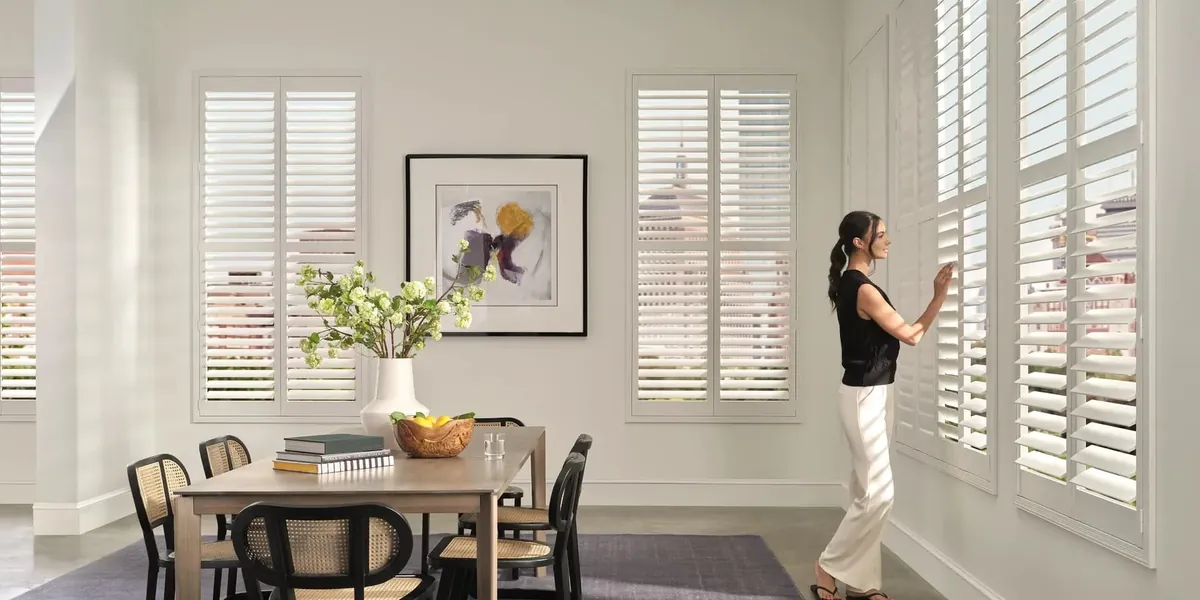
The old houses on Main Street and around the village green were built to impress from the street: a symmetrical front, a central door and windows lined up in neat rows on each floor. Inside, the front rooms are formal, with tall sash, panelled walls and window casings that deserve to be seen.
That symmetry is worth keeping from the outside. Whatever goes in the front windows should look the same from the street in every one of them, even if the rooms behind them are used differently. Plantation shutters are a natural fit for these houses, mounted inside the frame so the casing stays clear, with louvers sized to the scale of the sash. Roman shades in a quiet fabric, or wood blinds, suit the rooms where shutters feel too heavy.
Old sash brings old quirks. Openings that have settled out of square, sash cords and pulleys in the frame and shallow depth all affect what can be mounted inside. We measure each window in several places before we suggest a mount, and where there is not room inside, the treatment goes on the face of the casing instead. A formal parlor often gets drapery as well: panels hung above the trim that make the window look taller and close for warmth on a winter night.
Cottages in Falmouth Heights
The Heights climb up from the beach, and many of the cottages there have rooms that look out toward the sound over the roofs below. A good number began life as summer places and have since been closed in for the whole year, with porches turned into rooms and windows added wherever there was space. The result is a mix of sizes in one house, from tiny original sash to a broad replacement window in the newer part.
Every window is made to measure, so mixed sizes are not a problem. We line up the head rails so a row of different openings looks even when the shades are raised. Light-filtering honeycomb shades and rollers come in narrow widths that suit small cottage windows, and a cafe shutter over the lower half of a street-side window keeps privacy without shutting out the light.
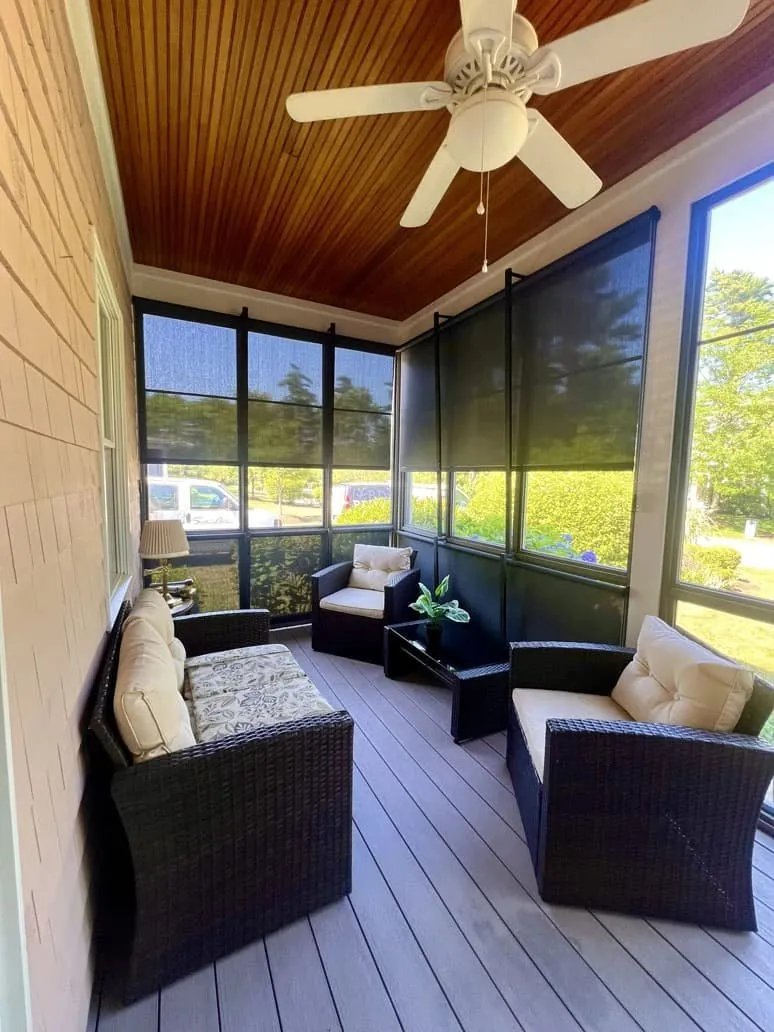
Closed-in porches deserve a special mention. They are bright, they face the water, and they are lined with glass on three sides. Solar screens on each pane, mounted at the same height, take the edge off the afternoon and keep the porch usable all day.
Woods Hole and the hillside houses
Woods Hole houses sit close together on steep streets above the harbor, and many have windows that look straight across at a neighbor’s house or down onto a busy street. Privacy is often the first concern here, ahead of the sun.
A top-down, bottom-up shade is the classic answer for a window that faces the house next door: lower it from the top to let in the sky and keep the lower half covered. Sheer shades with fabric vanes give a softened view out in daytime while blurring the view in. Shutters let you tilt the louvers up so light reaches the ceiling while anyone outside sees only the slats.
Hillside houses also tend to have windows at odd heights, such as a stair window high on a landing or a small window under the roofline. A motorized shade solves the reach problem, and a narrow honeycomb or roller covers a small opening neatly.
Fabric that lives in strong light
In a Falmouth room that faces the water, the fabric works harder than it would almost anywhere inland. The light is strong, it lasts for hours and much of it comes in low. That affects which fabrics we suggest.
For rooms with strong afternoon sun, we often suggest lighter, neutral colors toward the window. They reflect light rather than soaking it up, and they keep the outside of the house looking even. The color facing the room can be anything you like. Screen fabrics and honeycomb shades with a white backing are common choices for that reason. The guide to choosing fabric for a sunny room goes further.
Lowering the shades during the brightest hours also protects what is in the room: floors, rugs and upholstery all fade over time in direct sun. Motorized PowerView shades make that easy, because a schedule lowers them before the sun reaches the water side and raises them again in the evening. When you are planning PowerView, we decide at the visit how each motor is powered.
Sippewissett and the newer houses
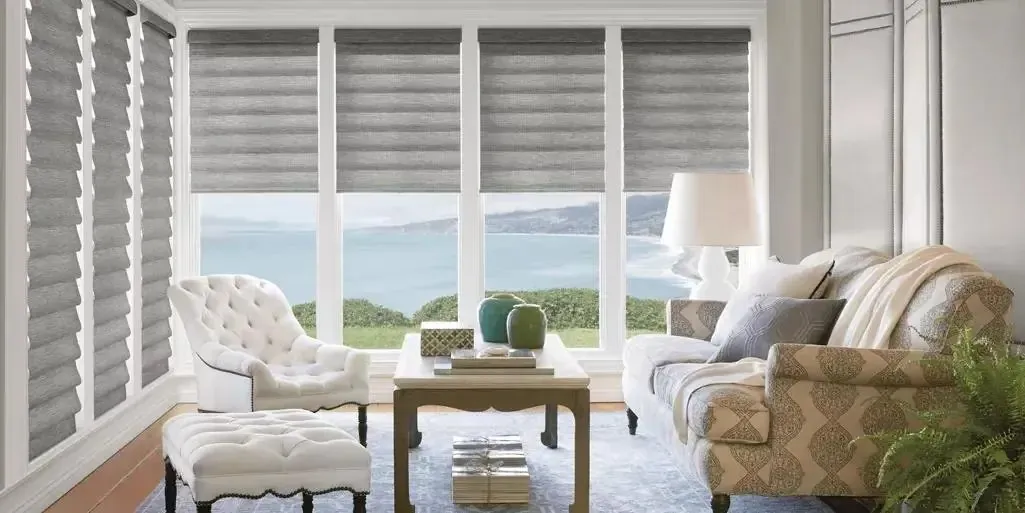
Toward Sippewissett and the Buzzards Bay shore the houses get newer and the windows bigger: picture windows, glass doors onto decks, tall great-room walls and corner windows wrapping a room. Several of these face west, which means a long, low sunset straight across the bay into the room.
Large glass calls for products made in large sizes. A wide picture window is often split into two or three shades on a shared head rail, which can move together or one at a time. A tall great-room wall is a natural place for motorization. Sliders and French doors want something that stacks to the side, such as a vertical honeycomb shade or gliding fabric panels.
For the sunset, banded shades are worth a look: their alternating sheer and solid stripes let you line up the sheer bands for a filtered view across the water or close them for privacy once the lights come on inside.
What the sea air does to hardware
Salt arrives with every breeze through an open window, and over time it collects on metal near the glass. It is no reason to avoid any product, but it does nudge a few decisions on the windows you open most in summer.
Honeycomb and roller shades keep their mechanisms tucked inside the head rail. Cordless operation removes the cord lock entirely. Shutters have hinges and very little else. If metal blinds are what you want on a window you keep open, we will go over finishes and placement with you first.
How we plan and fit window treatments in Falmouth
Here is the whole process, from your first enquiry to the day everything is hung.
- Request a consultation through the form or the call button and choose a day.
- A consultant arrives with the van and its samples of shades, blinds, louvers and drapery fabrics.
- You walk the house together, starting with the rooms that get the afternoon sun, and talk through what each one needs.
- You compare samples against your own trim and walls, in the sunny rooms and the shaded ones.
- Each window is measured in several places, with frame depth and any locks or cranks noted.
- A free estimate follows, and you decide in your own time.
- Once you order, our certified Hunter Douglas installers fit, level and test every piece, and walk you through how it all works.
Our interior design consultations can help if you want a second opinion on color across the house. You can also read about what happens at an in-home consultation and what happens on installation day.
One house, several products
Few Falmouth houses need the same thing on every window. A captain’s house might have shutters across the front, honeycomb shades in the bedrooms upstairs and drapery in the parlor. A Heights cottage might mix screens on the porch, rollers in the kitchen and a cafe shutter in the bath. A Sippewissett house could run PowerView screens in the great room and room-darkening honeycomb in the bedrooms.
Keeping the color toward the glass consistent, and matching the head rails floor by floor, is what makes a mix look deliberate. Planning all the window treatments in Falmouth at once also means one free estimate and the option to add motorization room by room later. Our window treatments overview shows the full range.
Why buy from a Gallery dealer
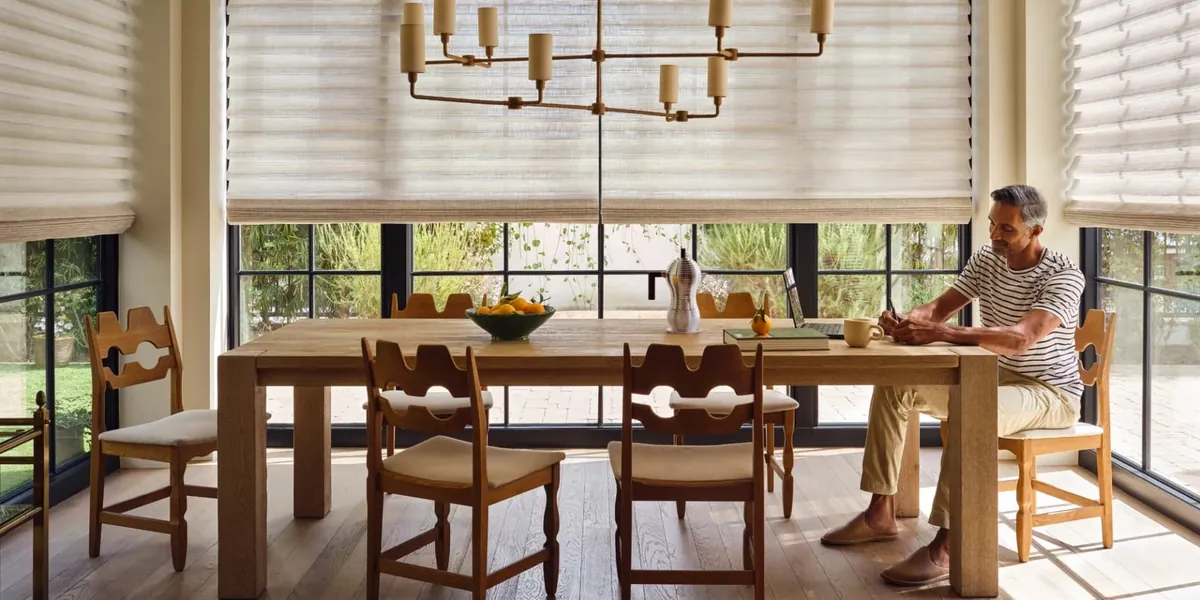
A captain’s house, a Heights cottage and a Sippewissett great room ask for very different things. As a Hunter Douglas Gallery dealer, we can offer all of them: shades of every kind, wood and metal blinds, three shutter collections, drapery and PowerView motorization, from one consultation.
The installers are our own, and Hunter Douglas certified. You can also lean on our interior design consultations for color, and on us for repairs to blinds and shades you already have. The Hunter Douglas page has more about the brand.
Our closest showroom to Falmouth
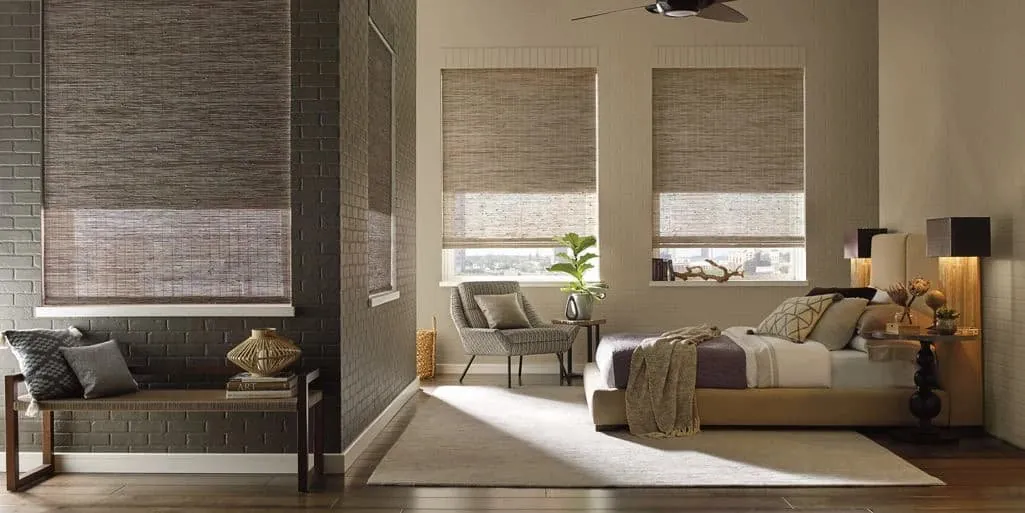
Most Falmouth projects are chosen at the house, because the van brings the samples to you. If you would rather see the products first, our Sagamore showroom is the nearest, up the road at the canal. You meet the same people who will measure and install, and the estimate is free.
Questions from Falmouth
Our living room faces the sound and gets the sun all afternoon. What helps?
A solar screen roller cuts the glare and keeps the view; a honeycomb shade slows the heat more. A top-down, bottom-up honeycomb blocks the low sun at the top and leaves the lower glass open. We bring all three to try.
Can shutters go inside the old windows of a captain’s house?
Often, yes. We measure each window first, because old sash hardware and settled frames can limit the depth. Where there is not room inside, shutters or shades go on the face of the casing instead.
Our Woods Hole windows look straight into the neighbors’. What do you suggest?
A top-down, bottom-up shade lets in the sky and covers the lower half. Sheer shades and shutters with the louvers tilted up are good choices too.
Will the sea air damage new shades?
It does not rule anything out. Shades with hidden mechanisms, cordless lifts and shutters expose the least metal, and we point those out for windows you keep open.
Is the estimate free?
Yes. After the consultation and measuring, you receive a free estimate covering every window on your list.
Take the next step
Ask for a consultation and a consultant will come to the house with the samples, measure every window and leave you with a free estimate. Use the call button if you would like to talk first, or visit the Sagamore showroom.