
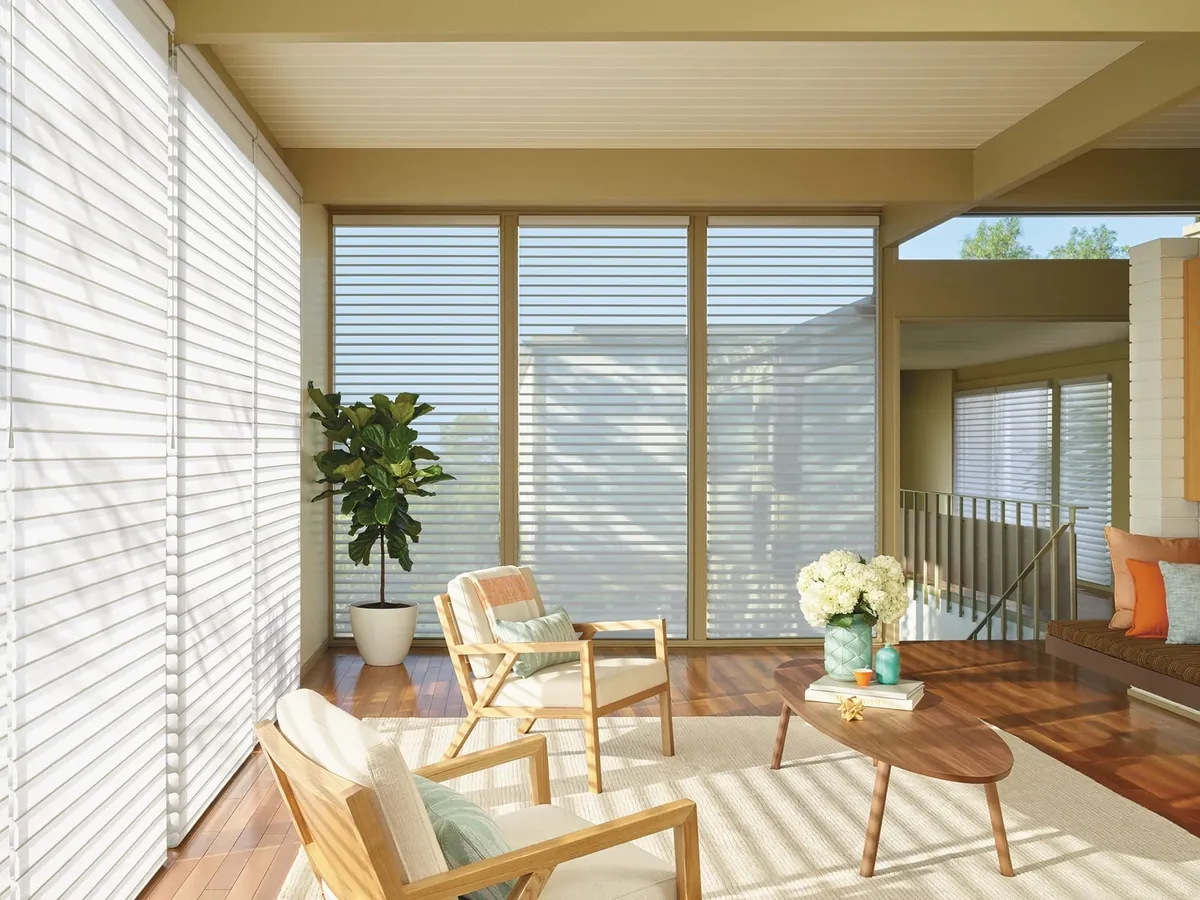
A captain’s house on 6A, a cottage by the sound
Dennis is really two places sharing one name. Up on Route 6A, Dennis Village keeps its antique captains’ houses: square, solid, with tall sash, wide trim and front rooms built to impress a visitor. Down toward Nantucket Sound, Dennis Port is packed tight with cottages and condominiums, many of them a short walk from the sand. Good window treatments in Dennis, MA, start by knowing which of those two houses you are standing in, because they ask for almost opposite things.
Then there is the calendar. A large share of houses in town fill up in summer and sit quiet for months after. A room that gets daily use in July may see nobody in February, and the sun keeps working on it either way. On the bay side, the low light of late afternoon reaches deep into a room and fades a rug or a sofa faster than almost anything else. Planning for those empty weeks matters as much as planning for the full ones.
We bring the samples to you, so every choice is made at your own glass, in the light that room really gets.
Every service we offer in Dennis
These are the window treatments in Dennis, MA, that we plan, supply and fit. Each card opens a Dennis page of its own with the full detail. Pick the one that matches the room on your mind, or ask us to plan the whole house in one visit.
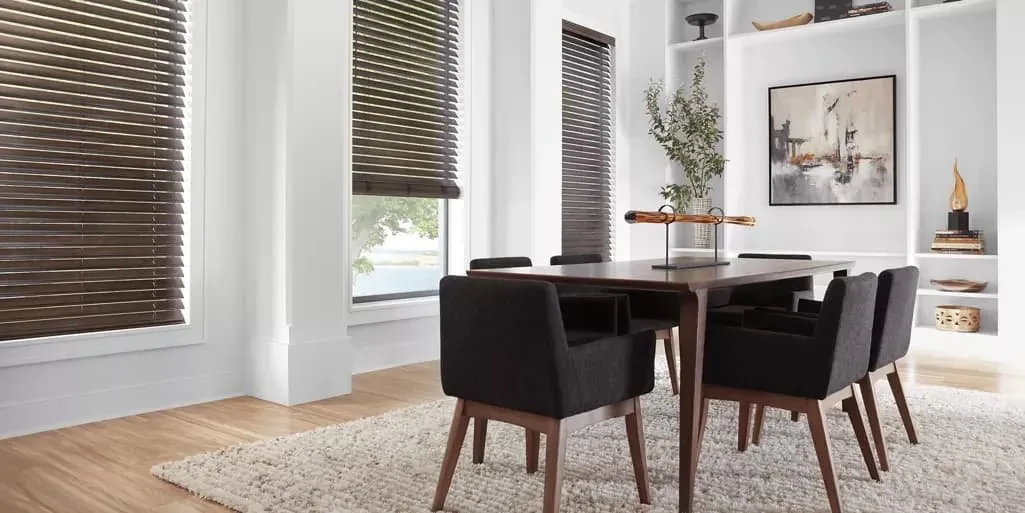
Blinds in wood, faux wood or metal
Real wood suits a formal captain’s dining room; faux wood shrugs off the damp in a cottage kitchen near the beach.
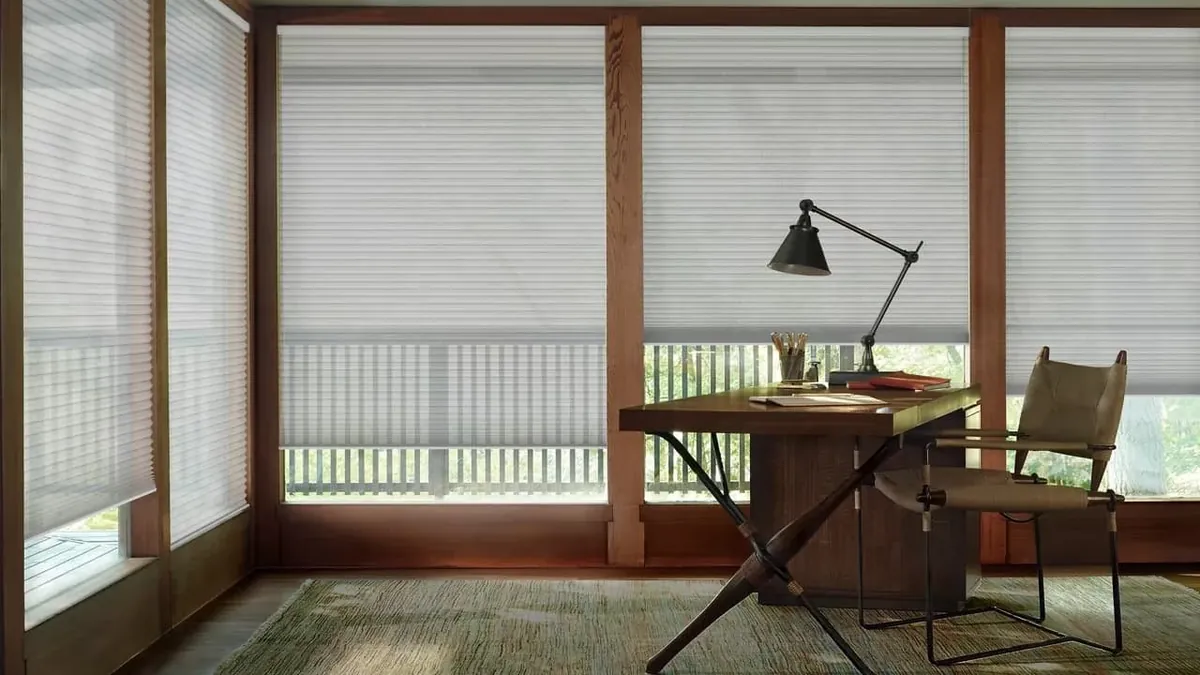
Cellular shades
Duette and Applause honeycombs hold a pocket of air at the glass, a help behind the single panes of an antique sash.
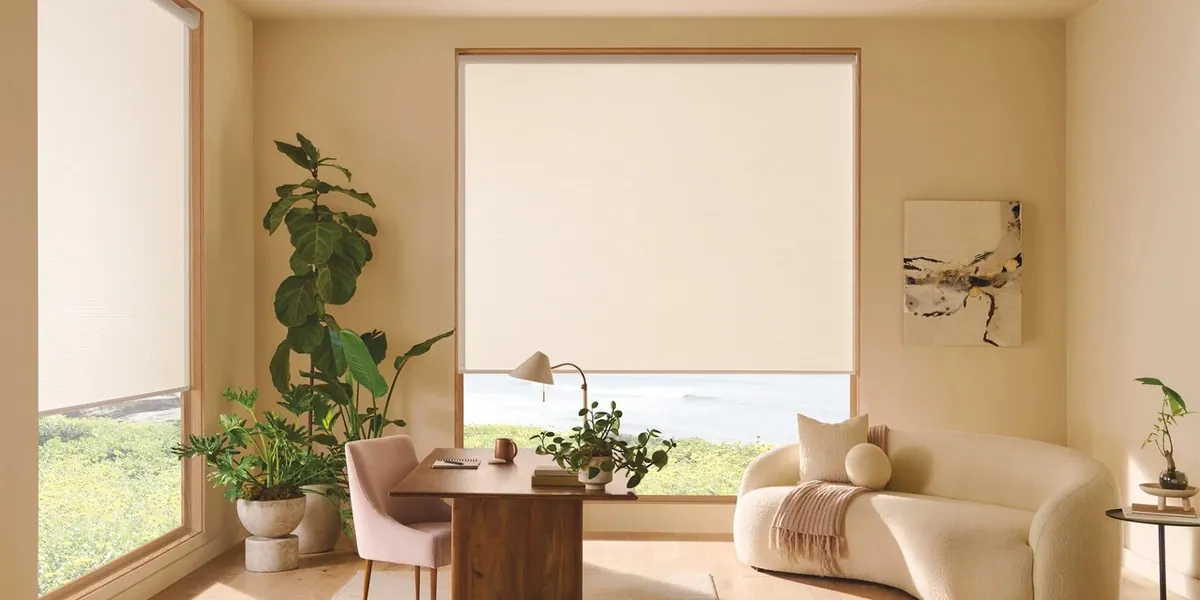
Roller and solar shades
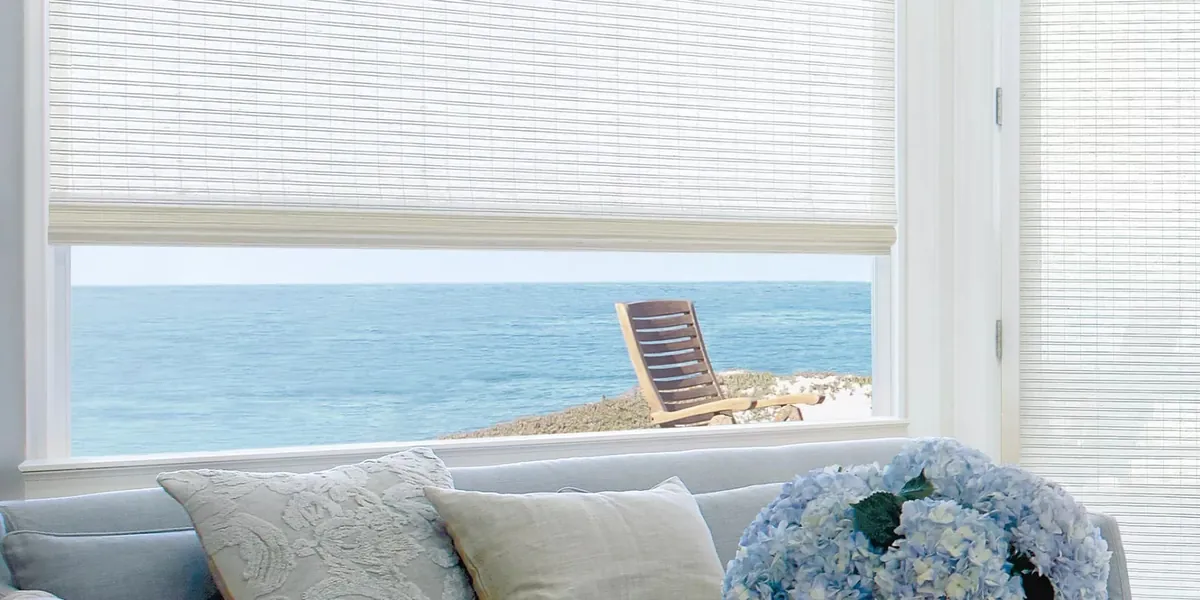
Screen fabrics that soften the bay light while the water stays in view, and blackout rollers for summer guest rooms.
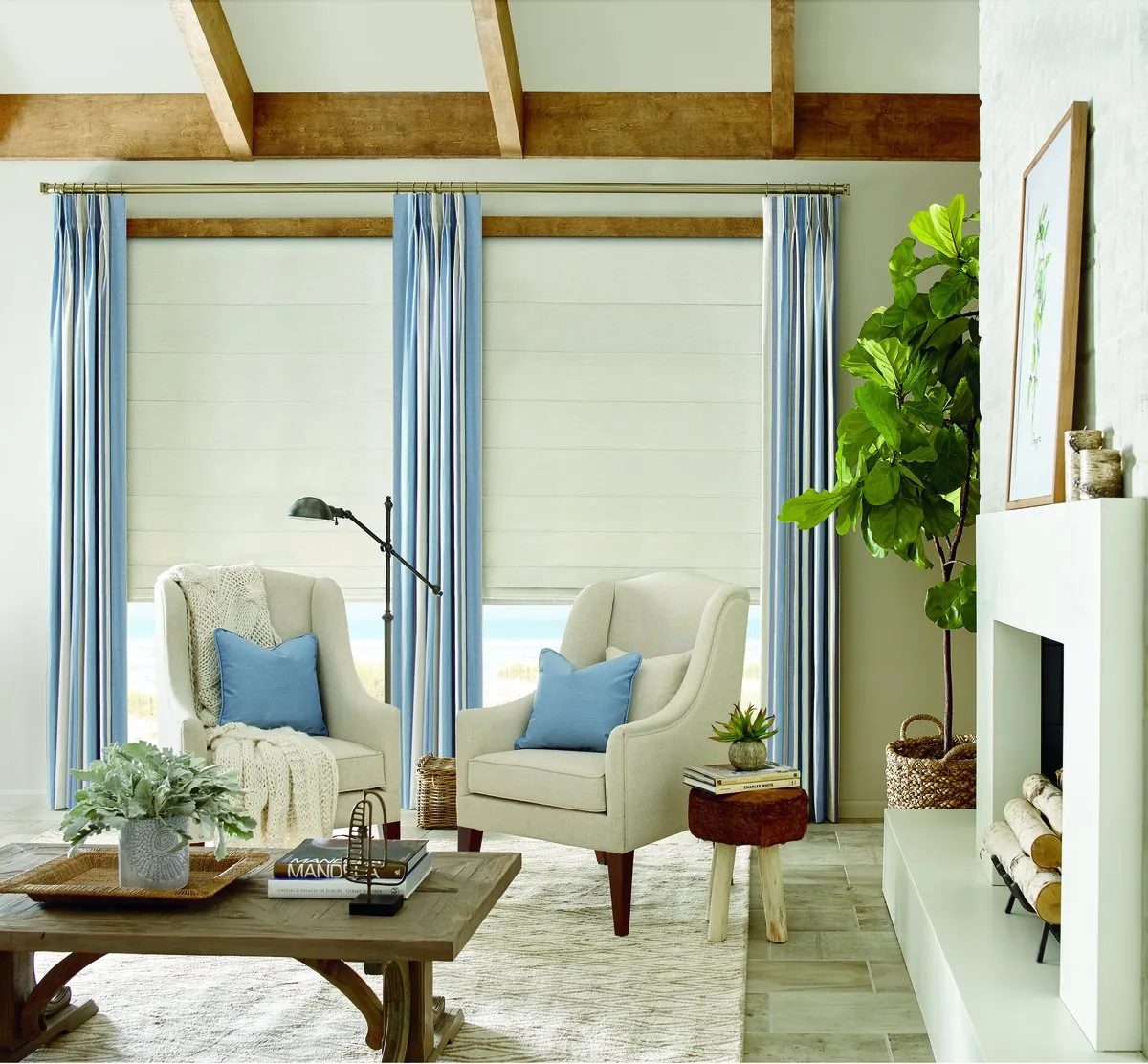
Roman shades
Vignette and Carole Fabrics folds for a parlor on 6A, with linings chosen to slow the fading on the sunny side.
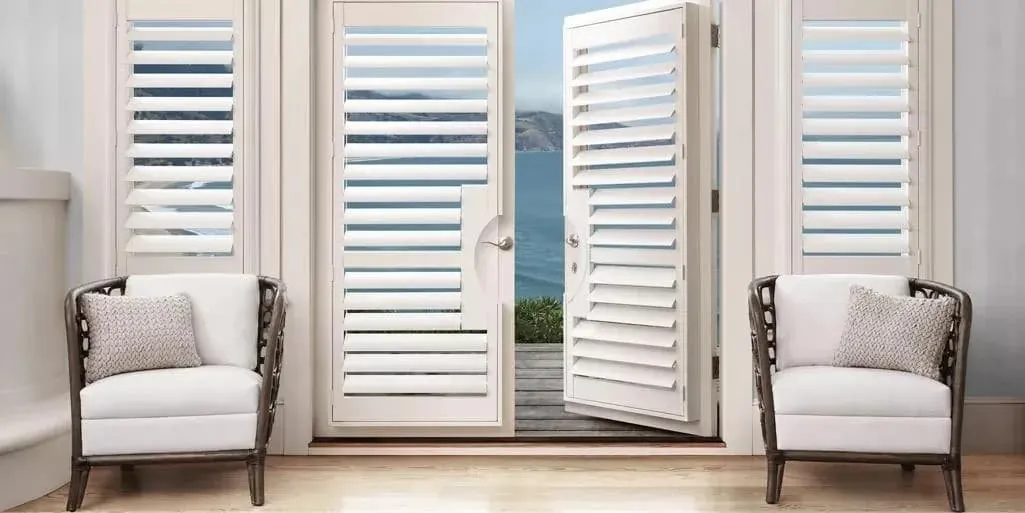
Plantation shutters
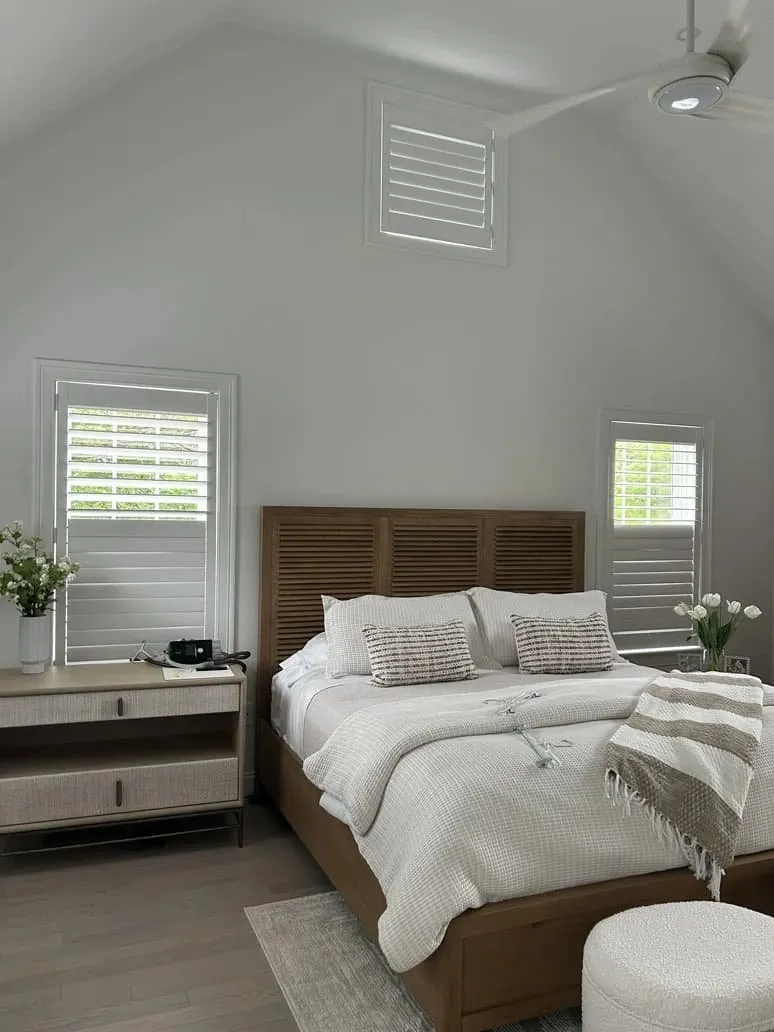
Palm Beach, NewStyle and Heritance panels, from full height in an old front room to cafe panels on a cottage street.
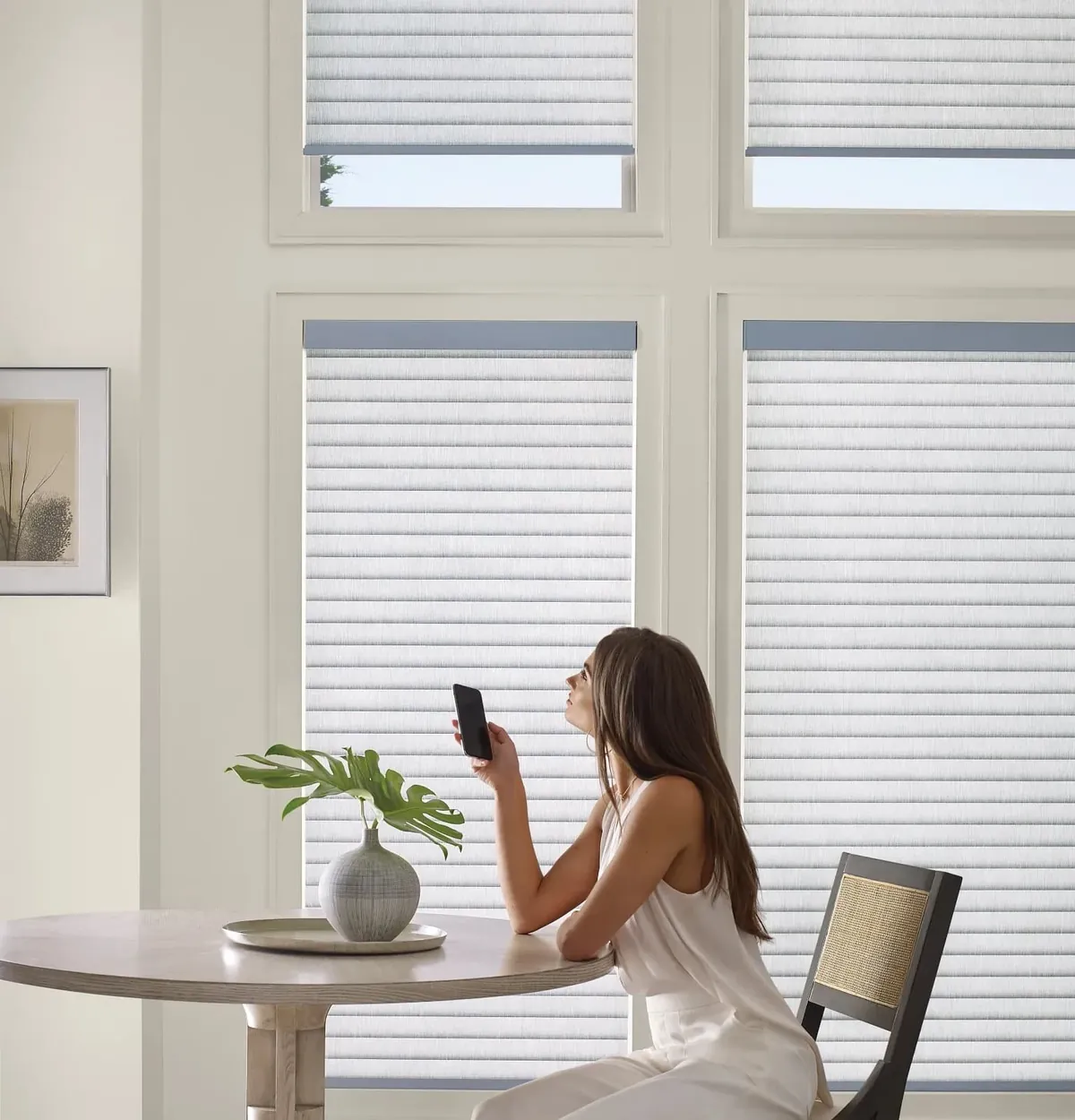
Motorized blinds and shades
PowerView schedules that lower the bay-side shades every afternoon, whether or not anyone is in the house that week.
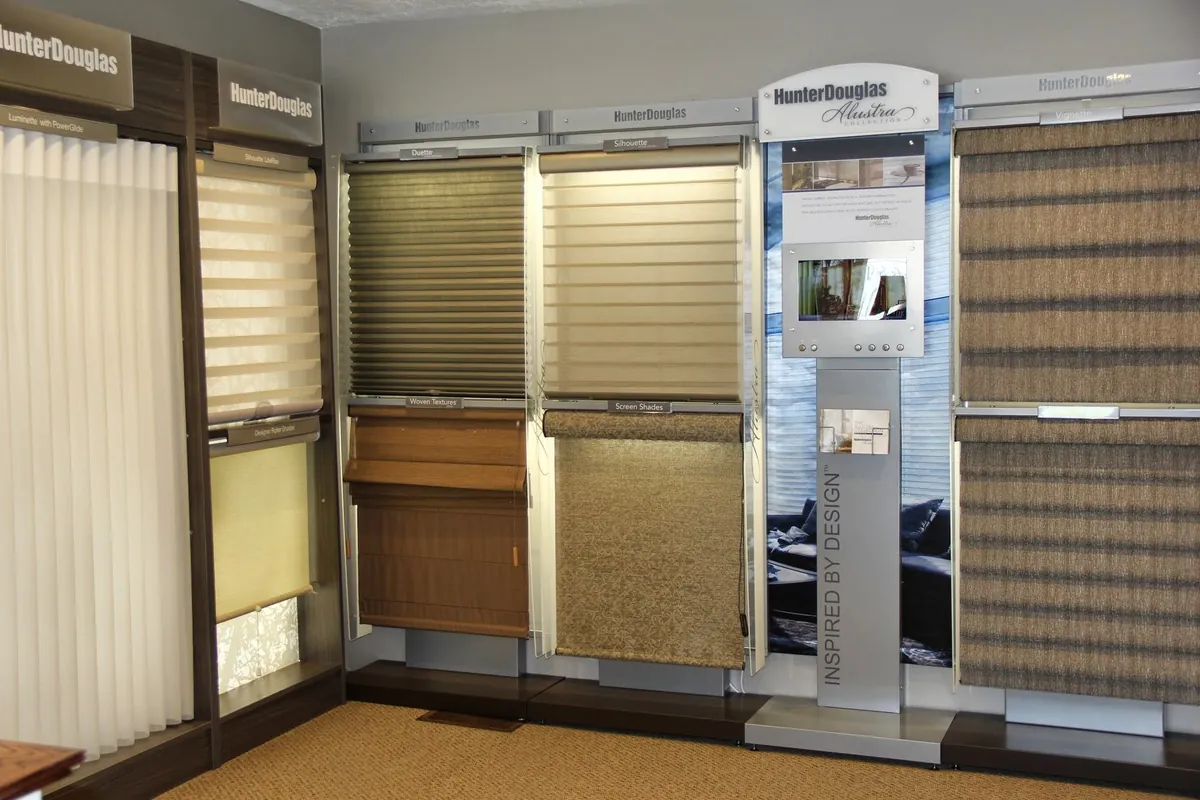
Hunter Douglas Gallery dealer
The whole Hunter Douglas range through one Gallery dealer, fitted by our certified Hunter Douglas installers.
Custom drapery
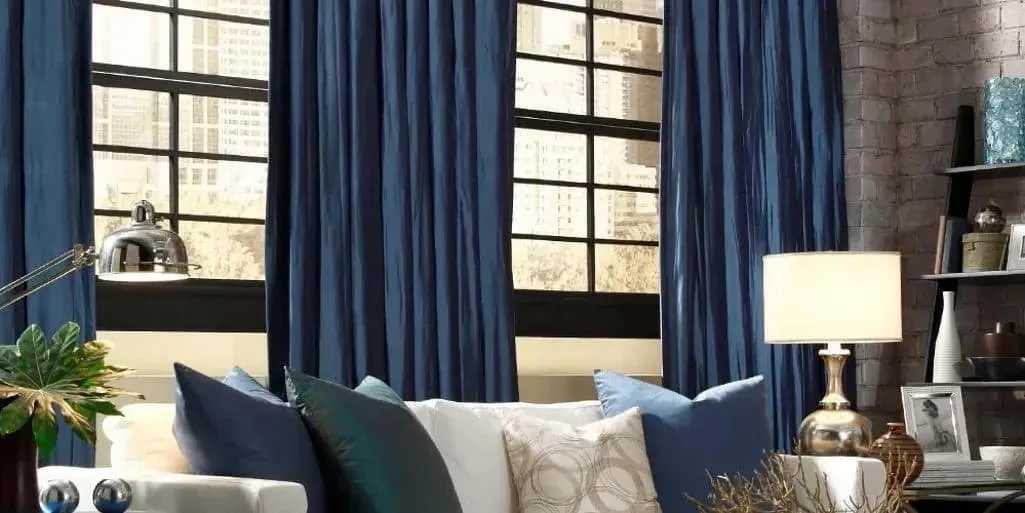
Hunter Douglas drapery to dress a tall captain’s window, hung over a shade that handles the sun day to day.
The rooms the late sun reaches first
Ask anyone who has opened a bay-side house after a long winter and they will tell you about the stripe. A rug that was one color under the table and another where the light lay across it. A chair arm gone pale. A painted sill that looks chalky. The light off Cape Cod Bay comes in low and long in the late afternoon, and in a house with nobody home to lower anything, it falls in the same place day after day.
You do not stop that by darkening the room. You stop it by putting the right fabric between the sun and the furniture at the right times. A solar screen roller takes the sting out of the light while you still see the water, and a tighter weave blocks more of it. A sheer shade with soft fabric vanes filters the light into something gentle and closes completely at night. Honeycomb fabrics come in light-filtering and room-darkening weights, and the darker the fabric, the more it shields what is behind it.
The other half of the answer is timing. A shade only protects a room when it is down, and in a second home it is often up because the last person to leave forgot. That is where motorization earns its place on this side of town, and we come back to it below.
Captains’ houses: tall sash, deep casings, old glass
The antique houses along 6A were built by people who wanted their front rooms seen. Windows run tall, in pairs, inside casings broad enough to rest a cup on. Many still hold old glass with its gentle ripple, and most have been repainted so often that the trim has softened at the edges. A window covering in a room like that has to respect the woodwork first and do its job second.
That usually means an inside mount. A roman shade fitted inside the frame folds up into the head of the window and leaves every inch of the casing showing. A honeycomb shade does the same with an even slimmer stack. Shutters can sit inside the opening on a slim frame, and in a front parlor they give privacy from the road while the upper louvers let the light in over the top.
Old windows rarely measure the same twice, though. Sash weights, pulleys and parting beads take up depth, and two centuries of settling can leave an opening wider at the top than at the sill. We measure every window at several points and check its depth before we suggest how anything should mount. Where an inside mount would leave gaps, a shade fixed across the face of the casing, or drapery hung above it, keeps the room looking finished.
Dennis Port: close neighbors and small rooms
The cottages near the sound sit shoulder to shoulder, and a side window can look straight into the next kitchen. Privacy at eye level is the first thing most of these rooms need, with as little loss of daylight as possible.
Top-down, bottom-up shades are made for this. Lower the top rail a little and the sky shows above while the bottom of the window stays covered. Cafe-style shutters over the lower sash do much the same with a crisp, permanent look, and they suit a cottage well. In a bathroom or a narrow hallway, light-filtering honeycomb or faux wood blinds keep the view out without making the room feel shut in.
Cottage rooms are small, so bulk matters. A thick stack of fabric at the top of a short window steals glass you cannot spare. Roller and honeycomb shades gather into a narrow band at the head, and a slim headrail keeps the frame looking clean. Where a cottage has been added to over the years and no two windows match, each shade is built to its own opening, so they still line up when raised.
Condominiums near the water
Many condominium associations along the sound have a rule about what shows at the window from outside. Often it is a single color or lining facing the street. That does not limit what you see inside. A honeycomb shade can carry one color toward the glass and another toward the room, and most of our roller and roman fabrics can be lined in white or a neutral that keeps the building looking uniform.
Bring your association’s guidelines to the consultation if you have them, and we will work inside them from the start. Condominium sliders onto a balcony or patio are their own question, covered further down the page.
Planning window treatments in Dennis, MA, around a seasonal year
A house that is lived in from June to September and closed the rest of the time needs a plan that works for both. Here is how that tends to look, room by room and season by season.
In spring, the house opens and the first warm days arrive. This is when most people notice what the winter did: the faded rug, the chilly front room, the cord on an old blind that finally snapped. It is a good time to have the consultation, because we see the house as it really is before the summer rush fills it.
In summer the house fills with family and guests. Bedrooms need to be dark enough for someone sleeping late after a beach day, so blackout rollers or room-darkening honeycomb shades go in the guest rooms. Living rooms on the bay side want filtered light in the late afternoon and an open view at dusk. Kitchens need something that wipes clean.
In autumn, the house closes. Shades on the sunny side should come down and stay down, or be set to lower on a schedule. Shutters can be closed with the louvers tilted to keep the sun off the floors. Anything with a cord should be raised clear of the sill.
Through winter, the house is mostly empty, and every hour of low sun across an empty room adds up. Motorized shades on a PowerView schedule keep working with nobody there, and the app lets you check them or change the times from wherever you are.
Motorization for a house you are not always in
PowerView is the Hunter Douglas system that lowers and raises shades by remote, by app or on a schedule. For a Dennis second home it does three useful jobs. It brings the bay-side shades down each afternoon so the sun stops at the fabric. It makes an empty house look lived in, because the shades move through the day. And it puts a high window over a stair, or a hard-to-reach window behind a sofa, within reach of a button.
Most of the shade types in this page’s cards can be motorized: honeycomb, roller and screen, roman, sheer and banded shades among them. At the consultation we look at where each motor is going, plan how it is powered and set up the schedules with you, so the system suits the way the house is used.
Sliders and doors onto the deck
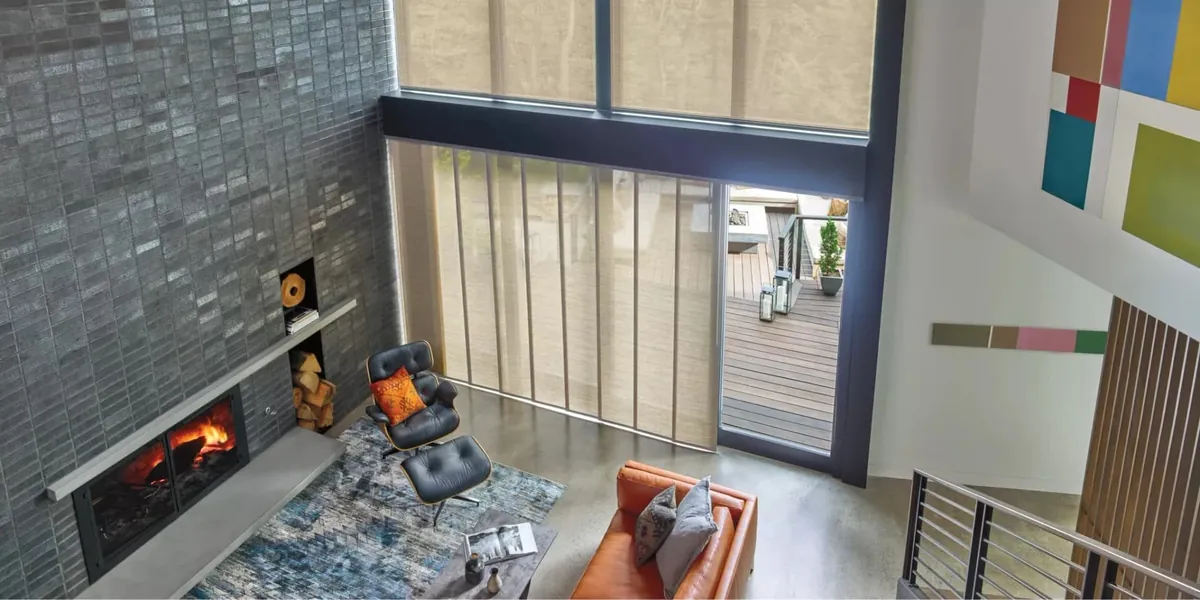
Nearly every Dennis house has at least one sliding door, whether it opens from a condominium onto a balcony or from a cottage kitchen onto a deck. A slider needs a treatment that clears the opening completely when you want to step through.
A vertical honeycomb shade draws to one side and stacks neatly against the frame, keeping the warmth of a cellular fabric on a big pane of glass. Gliding fabric panels slide on a track like a set of sliding doors and suit a wide opening in a newer room. Vertical blinds let you turn the vanes to steer the light without drawing anything back. On a French door, a shade or shutter mounted on the door itself moves with it, so nothing swings into the way.
Formal rooms in the old houses
The best rooms in a captain’s house deserve more than a working shade. A front parlor or dining room with tall windows is where drapery comes into its own, framing the window, softening the hard lines of a big room and adding a layer of warmth on a winter evening.
The usual arrangement is a shade inside the frame that handles the daily light, with drapery panels hung above the trim to frame the window and draw closed at night. A cream roman behind striped panels, a sheer shade behind a solid linen, a wood blind under a simple pleat: each pairing does a different thing to the room. Hanging the rod high and wide makes a window look taller and lets the panels clear the glass when drawn back.
On the bay side, lined drapery also gives fabric a second line of protection against the sun, so the panels themselves need a lining chosen for that light.
Measuring two very different houses
An antique frame and a modern condominium opening are measured the same careful way, but they usually lead to different answers.
- Every window is measured across at the top, middle and bottom, and the smallest width decides an inside mount.
- The drop is taken on both sides, because an old sill can slope.
- Depth is checked against the sash locks, cranks and handles that sit in the way.
- Mount, color, lift and fabric are agreed with you window by window.
- On installation day each piece is fitted level, tried, and you are shown how it works.
Our page on window measuring terms explains the words you will hear at the visit, and what happens on installation day covers the fitting.
One house, several products
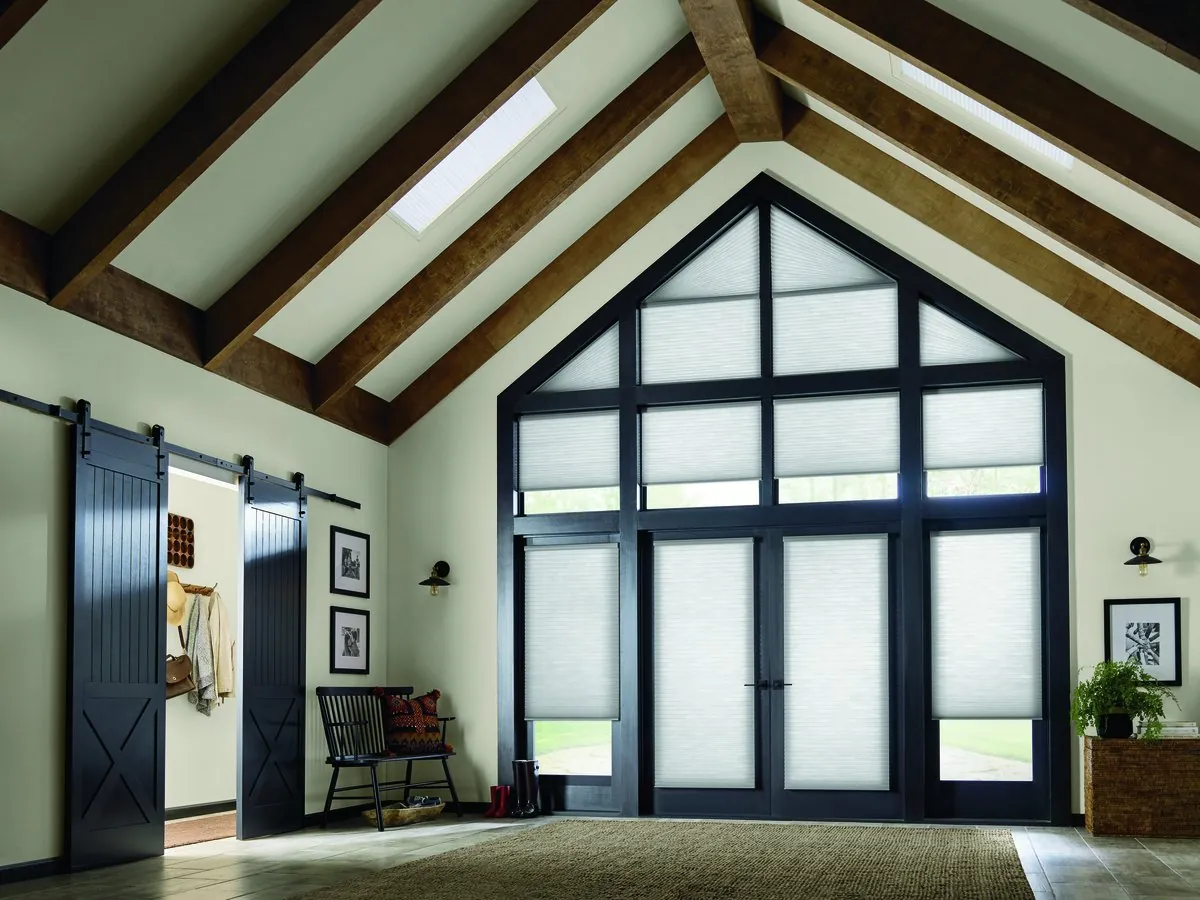
Very few Dennis houses end up with the same thing in every room. A captain’s house might take shutters in the front rooms, romans in the dining room, honeycombs upstairs and a roller in the kitchen. A Dennis Port cottage might take cafe shutters on the street side, faux wood blinds in the bath and a blackout roller in the bunk room.
What holds it together is consistency where it shows. From outside, a single color toward the glass makes the house look calm. Inside, keeping the headrail color and the mount style the same through a floor goes a long way. Planning window treatments in Dennis, MA, as one job also makes it easier to add PowerView later, because every motorized shade runs on the same app and the same schedules. The window treatments overview shows the whole range in one place.

Why a Hunter Douglas Gallery dealer matters here
Blinds & Designs is a Hunter Douglas Gallery dealer, so one visit can cover every kind of Hunter Douglas window covering: honeycomb, roller, roman, sheer and woven shades, wood and metal blinds, three shutter collections, drapery and PowerView.
Our own Hunter Douglas certified installers do the fitting. We also offer interior design consultations when color and fabric across several rooms feel like too many decisions, and we repair blinds and shades you already own.
Read more on our Hunter Douglas page or about interior design consultations.
Sagamore, our nearest showroom
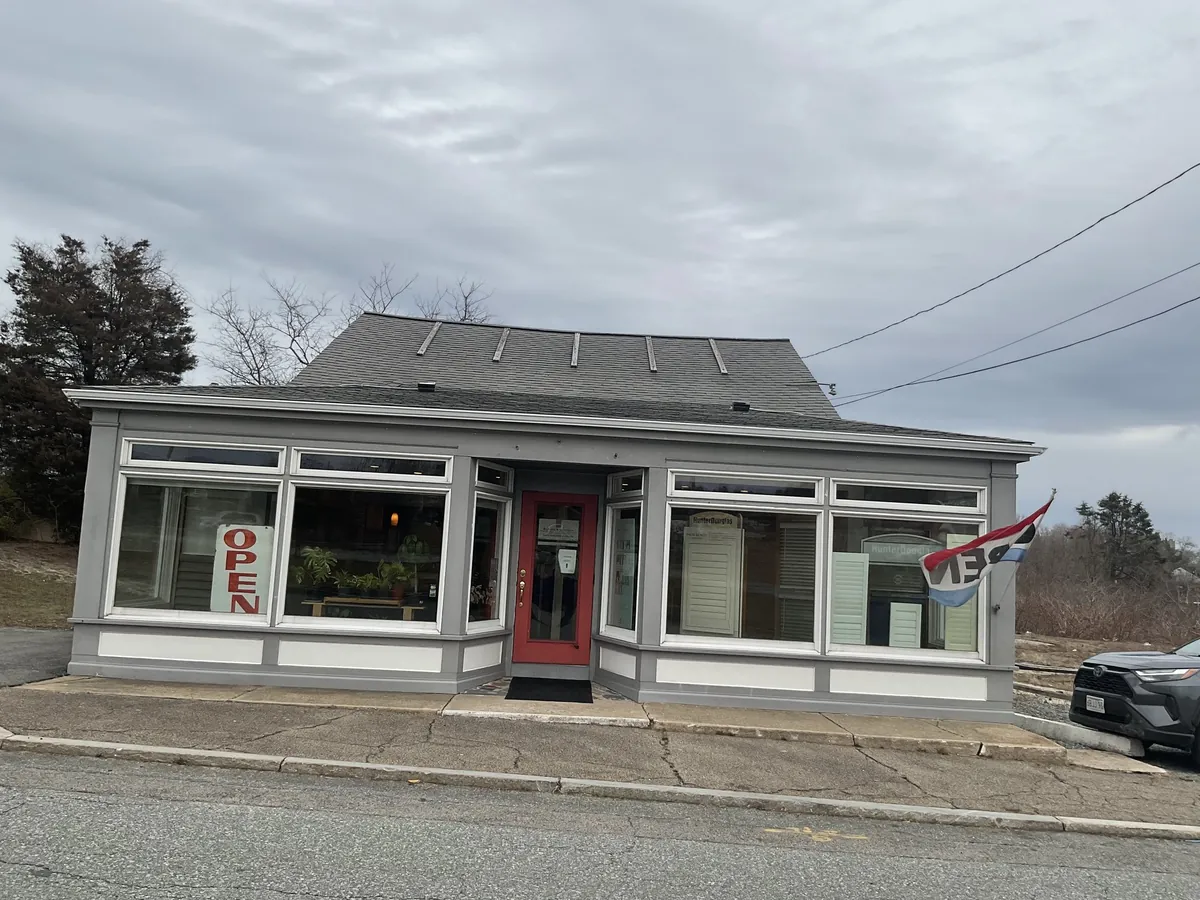
Most Dennis projects are settled at the house, because the samples travel with the consultant. If you would like to see the products in person first, our Sagamore showroom is the closest to town.
The estimate is free, and the same people measure, order and install.
Questions from Dennis
How do I keep the bay-side sun from fading the furniture while the house is closed?
Choose a fabric with enough density for that window, such as a solar screen, a room-darkening honeycomb or a lined roman, and make sure it is down while you are away. PowerView shades can lower themselves each afternoon on a schedule, so nobody has to remember.
Will anything fit the tall old sash in a captain’s house without covering the trim?
Usually, yes. Romans, honeycombs and shutters can all mount inside the frame and leave the casing on show. Old sash hardware sometimes leaves too little depth, so we measure first and suggest a mount on the casing where that looks better.
My condominium wants one color at every window. What can I choose?
Plenty. Honeycomb shades can face the glass in one color and the room in another, and many roller and roman fabrics can carry a white or neutral lining. Bring the association’s rules and we will choose within them.
What works for privacy in a Dennis Port cottage without losing the daylight?
A top-down, bottom-up shade covers the lower glass and leaves the sky open. Cafe shutters over the lower sash do the same with a permanent look. Light-filtering fabrics keep the room bright while hiding the view in.
Is the estimate free?
Yes. After the consultation and measuring you get a free estimate for every window on your list, and the decision is yours.
Your next step
The surest way to choose window treatments in Dennis, MA, is to see the samples against your own glass. Request a consultation and a consultant brings the van to the house, measures every window you want covered and leaves you a free estimate. Use the call button if you would rather talk first, or stop in at the Sagamore showroom.