
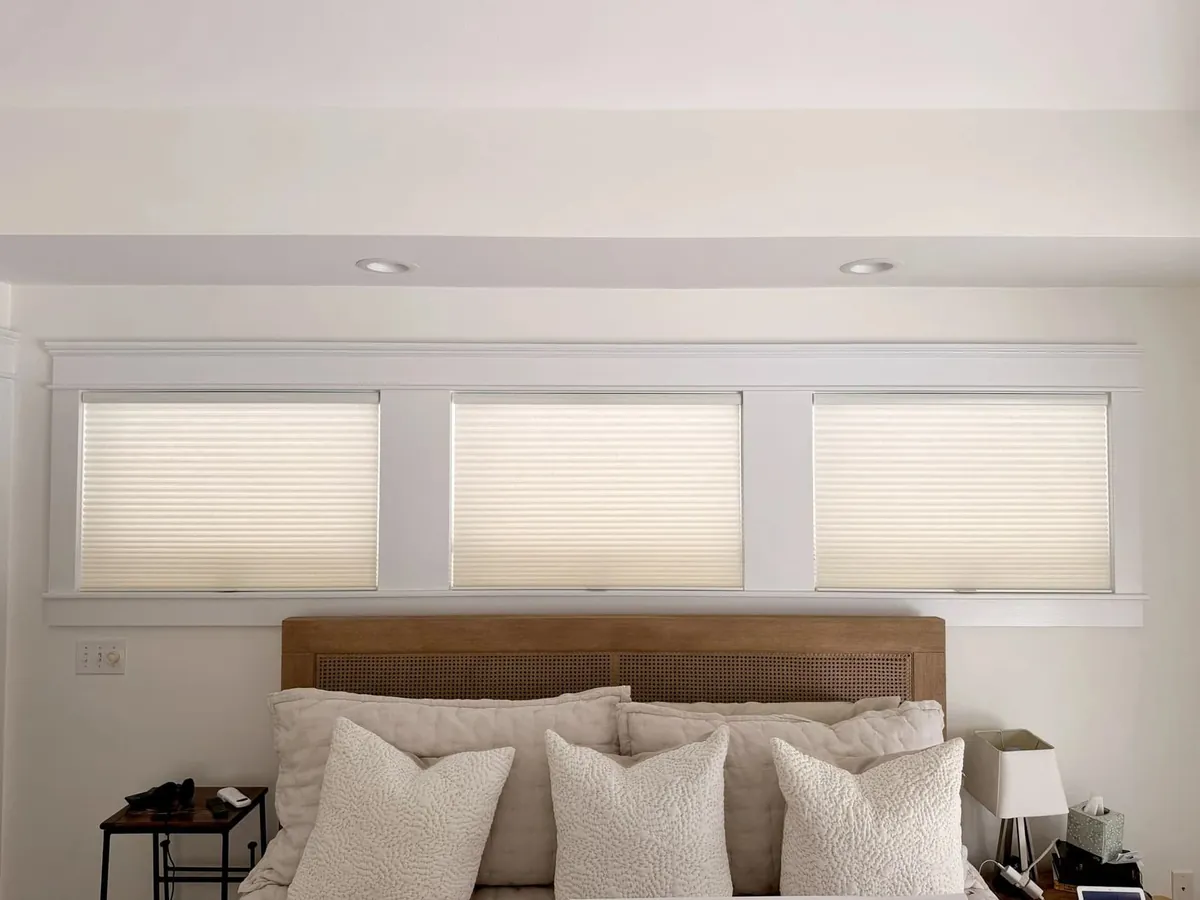
Capes, ranches and sliding sash on modest lots
Along Route 106 and down South Street, most houses are post-war capes and ranches on modest lots, with a scattering of newer colonials built later. Through most of that stock the windows are standard single-hung units and sliders, the kind that open sideways rather than up. Those two window types, and the fact that the houses sit fairly close to their neighbors, shape almost every recommendation we make for window treatments in Plainville, MA.
A single-hung window is straightforward: a fixed top sash, a lower one that rises, and a square frame that takes nearly any shade or blind. A slider is a little different. It is usually wider than it is tall, its handle and latch sit at one side rather than in the middle, and the sash that moves slides across behind the fixed one. A covering has to suit that shape and leave the latch easy to reach.
On a modest lot the house next door is often within view from the side windows, so privacy matters more here than on a big wooded parcel. The good news is that the frames are modern and square, so solving it is rarely complicated.
Plainville service pages
Each card opens our Plainville page for that service, with more on how it suits capes, ranches and colonials in town.
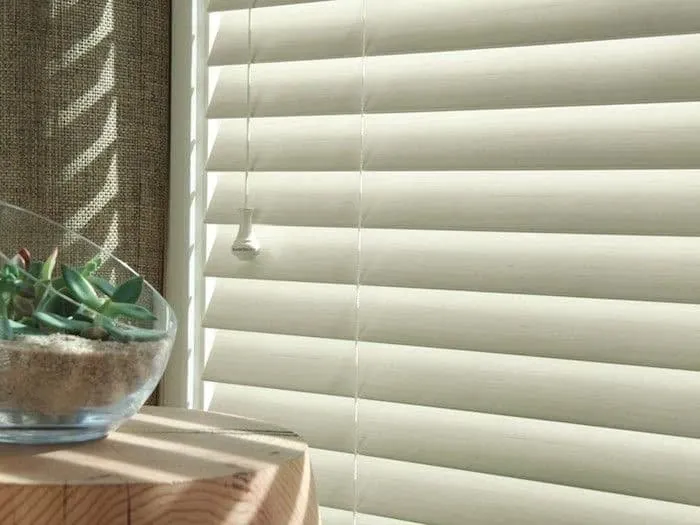
Custom blinds for Plainville
Blinds in real wood, faux wood or metal, and verticals for patio doors. Turn the slats and you keep the light but not the view.
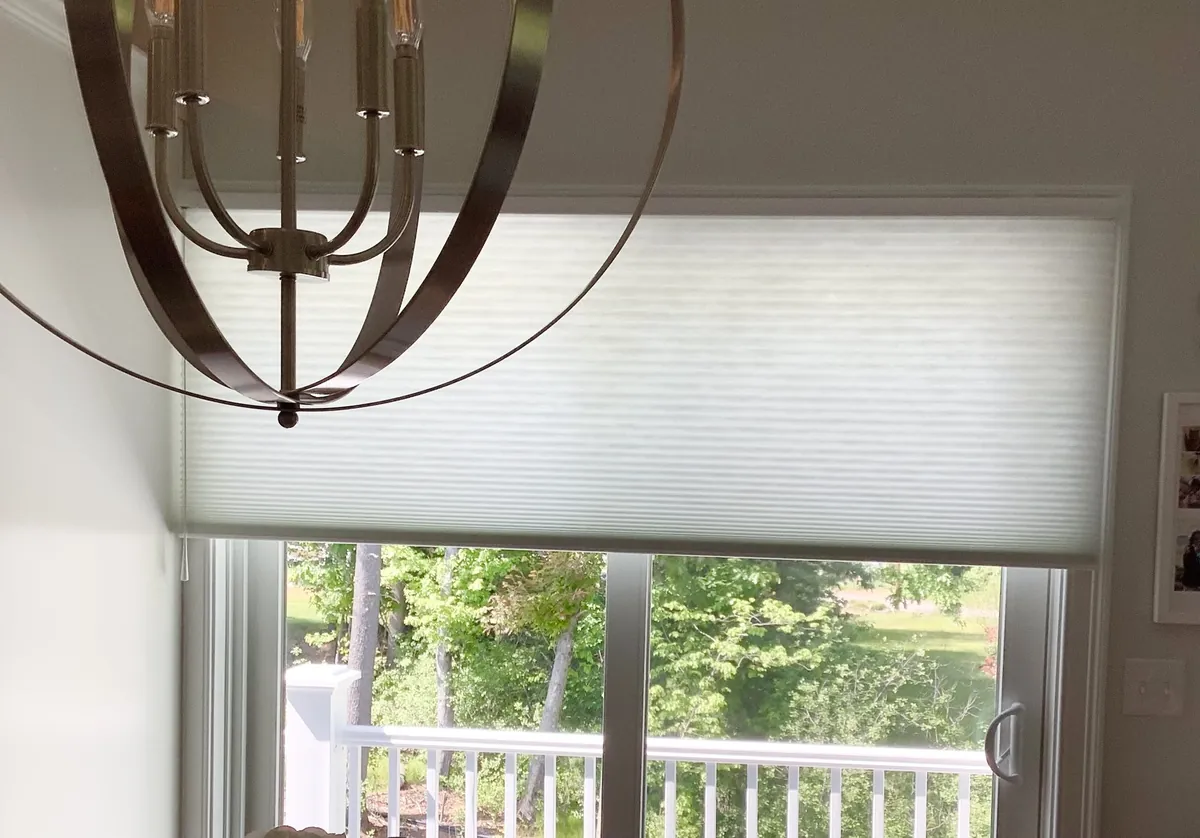
Cellular shades for Plainville
Duette and Applause honeycombs. Air held in the cells helps a cape bedroom or a ranch living room keep its heat.
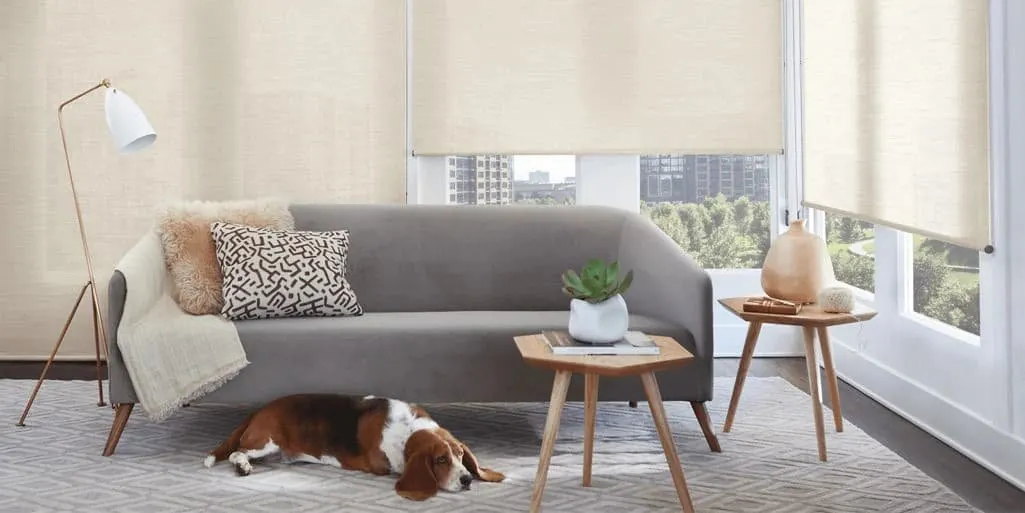
Roller shades for Plainville
Designer and Alustra rollers and screens. Neat and simple on a wide slider window, with openness chosen for view and glare.
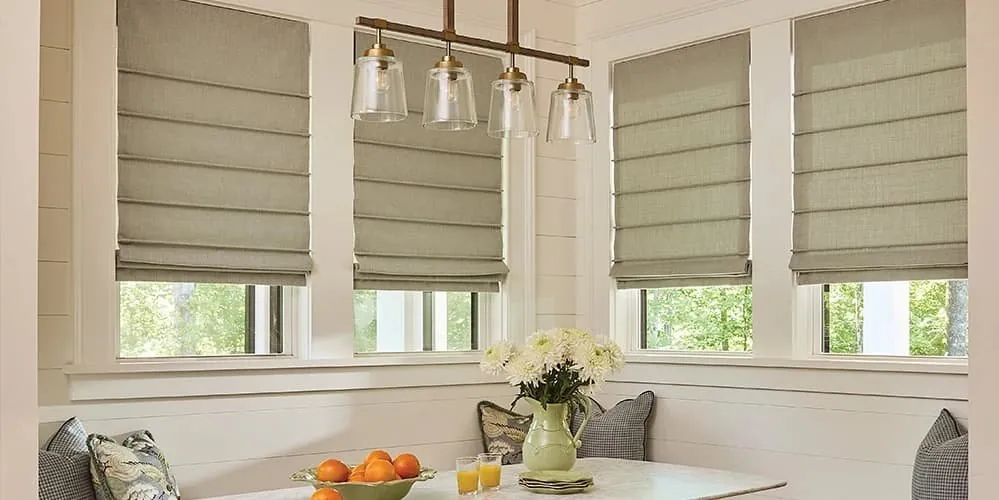
Roman shades for Plainville
Romans from Vignette or Carole Fabrics, folded or flat, to bring softness to a small living room or kitchen nook.
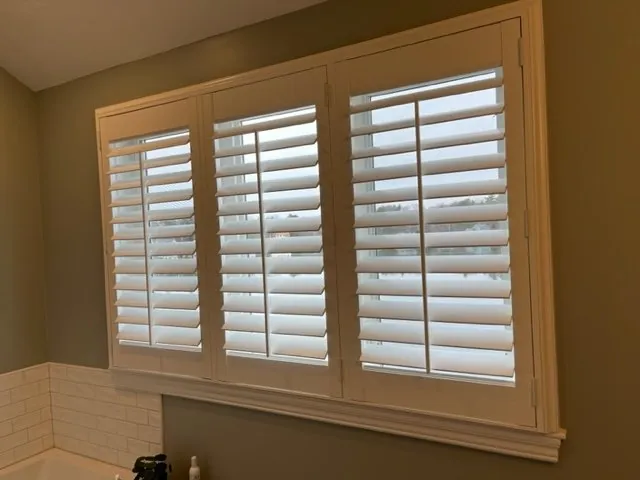
Plantation shutters for Plainville
Palm Beach, NewStyle and Heritance, sized to each opening, with louver and frame chosen to suit.
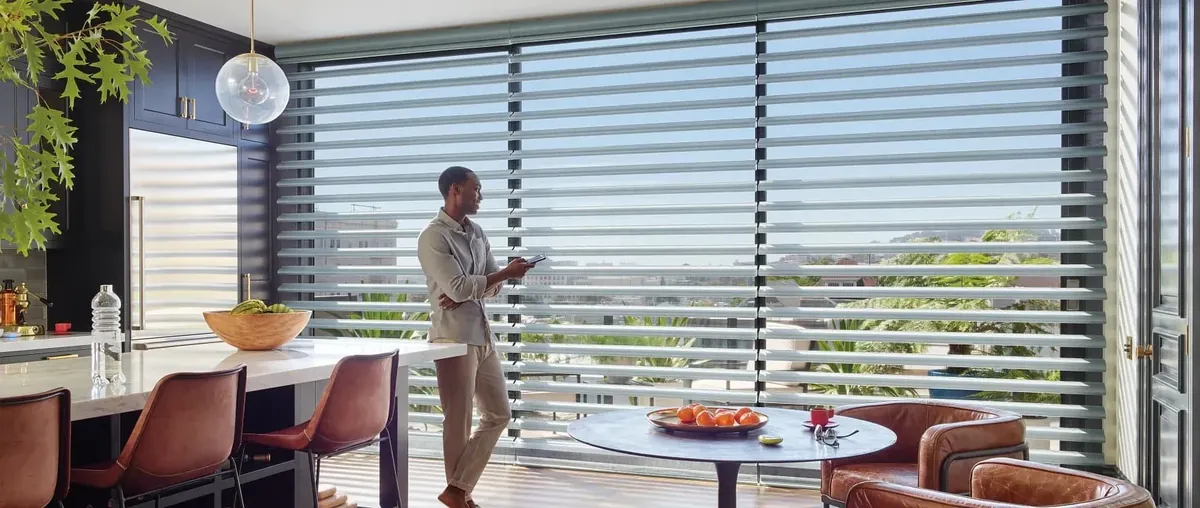
Motorized blinds and shades for Plainville
PowerView: run a shade from a handheld remote, your phone, or a timetable you set.

Hunter Douglas dealer for Plainville
All of Hunter Douglas under one Gallery dealer, with installation by Hunter Douglas certified fitters.
Slider windows need a slightly different plan
Because a slider opens sideways, the usual instinct of fitting a shade that rises and falls still works, but a few details matter more than they do on a single-hung window. Here is what we look at on every slider during a visit.
- Proportion. Sliders tend to be wide and fairly short. A single wide shade looks clean, but on a very wide unit two shades side by side, split where the sashes meet, can be easier to handle.
- The latch. The handle sits at one side. The covering has to clear it when raised and leave room for a hand to reach it when lowered, which affects how deep the mount sits.
- Depth. Many slider frames are shallower than you expect. We check whether there is room inside the frame for the headrail; if not, an outside mount on the trim works well.
- How you use it. If you open the window often in summer, a shade that raises fully out of the way is better than one you have to work around.
- What faces it. A side slider that looks at the neighbor’s wall wants privacy; a back slider facing the yard may only need glare control.
Rollers, honeycombs and blinds all suit sliders well. The right one depends on the room and on those five points, which is why we look rather than guess. If the terms are new, window measuring terms explained covers inside and outside mounts.
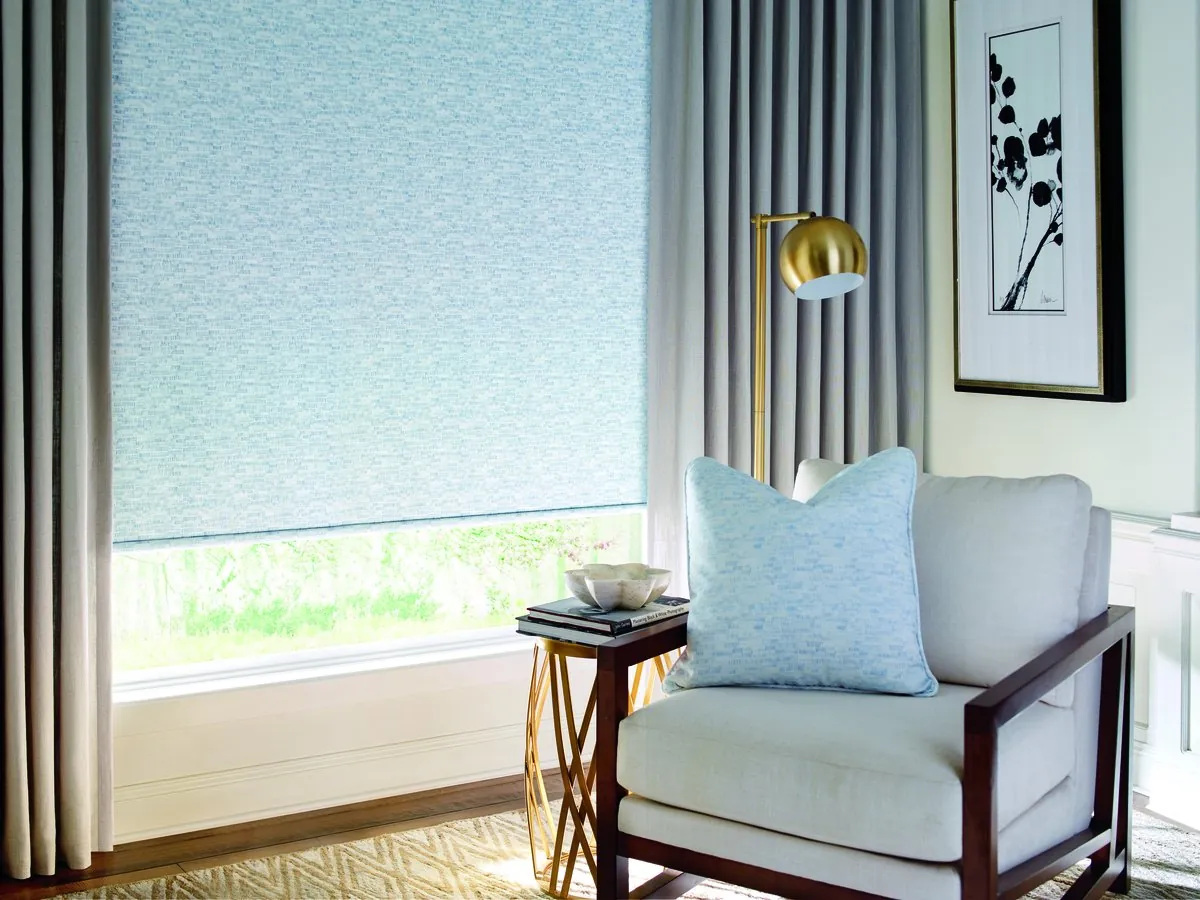
Single-hung windows in capes and ranches
The single-hung windows through most of the capes and ranches are the easy ones. Square frames, standard sizes and usually enough depth for an inside mount mean almost anything in the Hunter Douglas range will fit, and the decision comes down to what each room needs. Inside mounting keeps the trim visible and the window tidy, which suits the plain, honest lines of a post-war house.
Where single-hung and slider windows sit in the same room, as they often do in a ranch with a slider over the kitchen sink and single-hung windows elsewhere, we match the color and product so the room looks consistent, adjusting only the size and the split.
Post-war capes along Route 106
A cape packs living space into a compact footprint: two rooms at the front either side of the entry, a kitchen behind, and bedrooms upstairs under the steep roof, lit by dormers. On a modest lot, the front windows face the road at fairly close range and the side windows may look straight at the house next door.
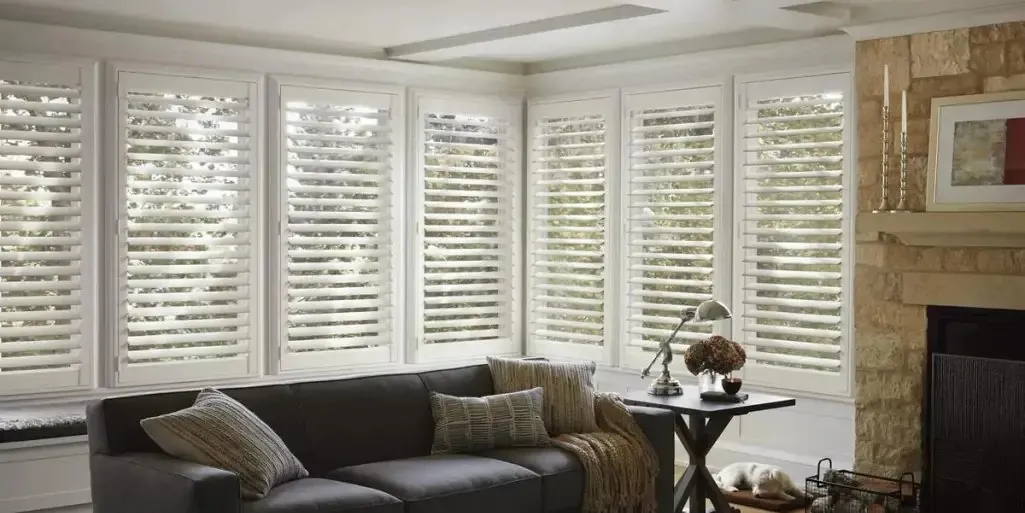
Downstairs, privacy and kerb appeal go together. Shutters suit a cape’s front windows and give a finished look from the road, with louvers you can tilt to let light in while keeping the view out. Romans or honeycombs work too, as long as the color facing the street is consistent across the front.
Upstairs, the dormer bedrooms sit right under the roof and can be warm in summer and cool in winter. A honeycomb mounted inside the dormer frame keeps the alcove clear, helps with temperature and can come in a fabric that darkens the room for early summer mornings.
Ranches along South Street
A ranch spreads everything across one level, typically with a living room window facing the street, a run of bedrooms down a hall, and a kitchen and dining area at the back with a door to the yard. On a modest lot, the bedroom windows often face a neighbor’s side yard.
The living room window is usually the largest, sometimes a picture window flanked by smaller ones, sometimes a wide slider. A roller or honeycomb across the whole width keeps it simple; sheer shades soften the light if you want the room to feel gentle by day. For the bedrooms, a filtering fabric gives privacy by day and a darker one helps with sleep.
Everything on one floor makes a ranch especially easy to fit and to automate. With PowerView, the shades along one side can move together on a schedule, closing at dusk without anyone walking the hall.
Modest lots and close neighbors
Side windows carry most of the privacy burden on a smaller lot. They often face another house a short distance away, sometimes window to window. Leaving them uncovered is not an option, but closing them all day turns rooms dim.
What works is something that passes daylight but hides detail: a filtering honeycomb, a sheer with tilting vanes, or slats and louvers turned up so the brightness lands on the ceiling and a passer-by sees nothing. At night, with lamps on, any covering needs to close fully, so we think about evening use as well as daytime. Window treatments in Plainville, MA, for side windows nearly always balance those two times of day.
How the front looks from Route 106
On a modest lot the house sits closer to the road than it would on a big parcel, so the front windows are on show to every car that passes. That is worth a moment’s thought before choosing anything. A row of front windows with shades stopped at three different heights, or one white and one cream, looks untidy from the pavement even when each room is perfect on its own.
Two simple habits fix it. First, keep the color that faces the glass the same across every street-facing window, whatever the product behind it. Second, where the windows are the same size, mount the coverings at the same height so they line up when lowered. A cape with matching white shutters downstairs and white honeycombs in the dormers looks finished; a ranch with one wide roller on the picture window and matching rollers on the smaller windows beside it looks deliberate. Getting the front right is often the first thing we sort out when planning window treatments in Plainville, MA, and the back rooms follow from there.
There is a practical side too. Many slider windows on the front of a ranch are low enough to see into from the walk, so the fabric facing the street should give enough privacy for evenings without looking heavy by day.
Newer colonials among the older houses
Here and there among the capes and ranches stand newer colonials, two full stories with a bigger window count than their neighbors. Fitting them is simple because the openings are modern. What helps most is a house rule: pick a lead product and color for the bulk of the rooms, so the facade reads as one, then allow a few deliberate exceptions, such as faux wood in a bath or a darker fabric in the main bedroom. Window treatments in Plainville, MA, for a colonial usually settle quickly once that rule is agreed.
Colonials often have a slider or French doors to a deck, usually off the kitchen. A patio slider takes a covering that draws sideways, such as verticals or a vertical honeycomb; on French doors, a shade or shutter mounted on each door moves with it.
What a Gallery dealer offers a Plainville house
Being a Hunter Douglas Gallery dealer means Blinds & Designs can offer the whole Hunter Douglas range, which is useful in a town where one house may need slider shades, dormer honeycombs and front-room shutters all at once.
Certified Hunter Douglas installers hang every order. We also bring in-home consultations with sample-stocked vans, free estimates, interior design consultations, automation through PowerView and repairs on what you already own, so you deal with one company from start to finish.
Making a compact house feel bigger
Capes and ranches are not large houses, and the right window coverings can make rooms feel more open. A few things help.
- Inside mounts. Keeping the shade within the frame shows the full trim and keeps the wall clean.
- Light colors. Soft whites and pale neutrals reflect light into the room and keep walls looking wider.
- A slim stack. When raised, a honeycomb or roller tucks into a narrow band at the top of the window, so you get the most glass and light.
- One look across the front. A consistent color in every street-facing window makes the house feel tidy and calm from outside.
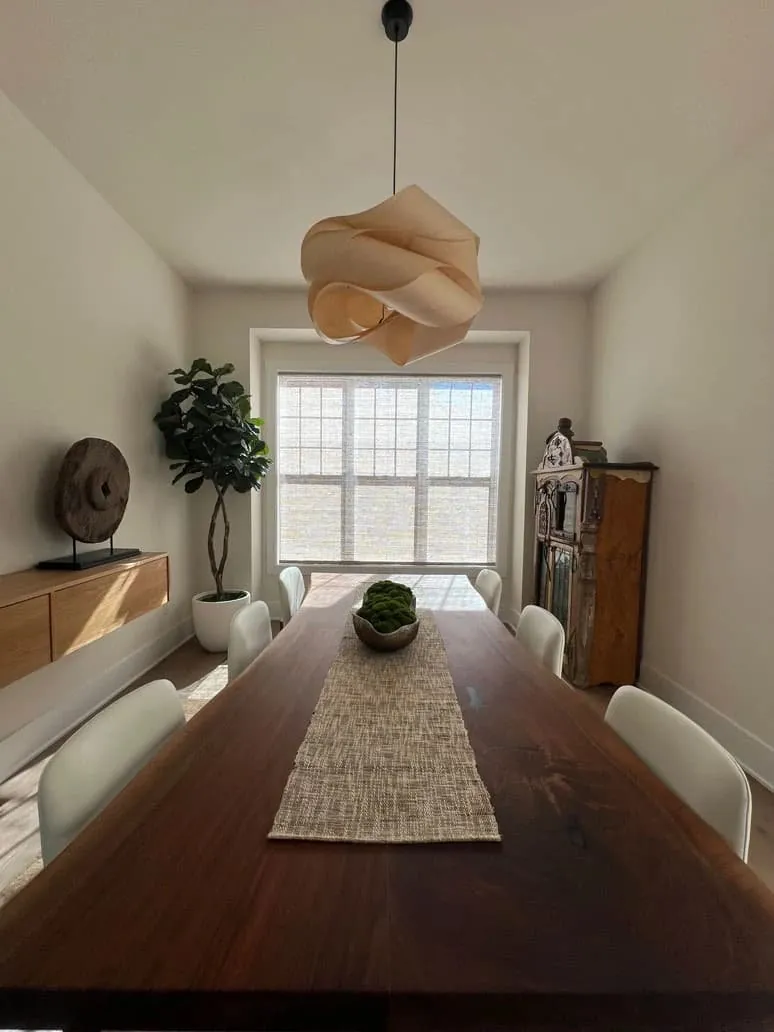
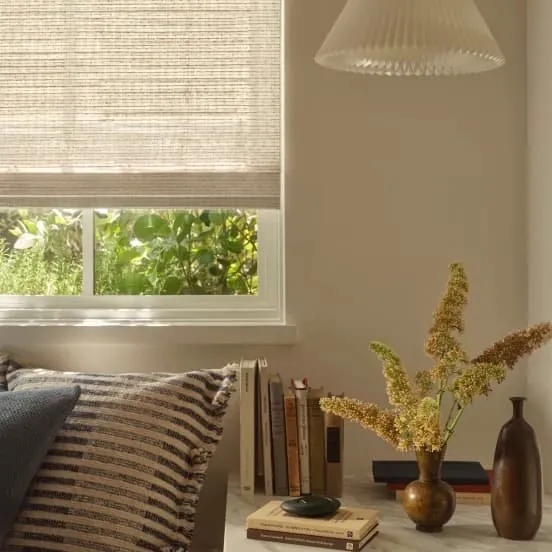
Where a room is small and a window is the main feature, a roman or a woven shade adds texture without clutter.
Kitchens and baths
The kitchen in a cape or ranch is often at the back, with a window over the sink that is frequently a slider. A roller or a faux wood blind is easy to work from across the counter and simple to keep clean. If reaching is awkward, PowerView solves it.
Bathrooms want privacy first. Shutters and faux wood blinds are the usual choices, tilting open for light and closing fully. A small bath with one single-hung window often gets cafe shutters across its bottom half: privacy at eye level, open sky above.
Bedrooms and media rooms
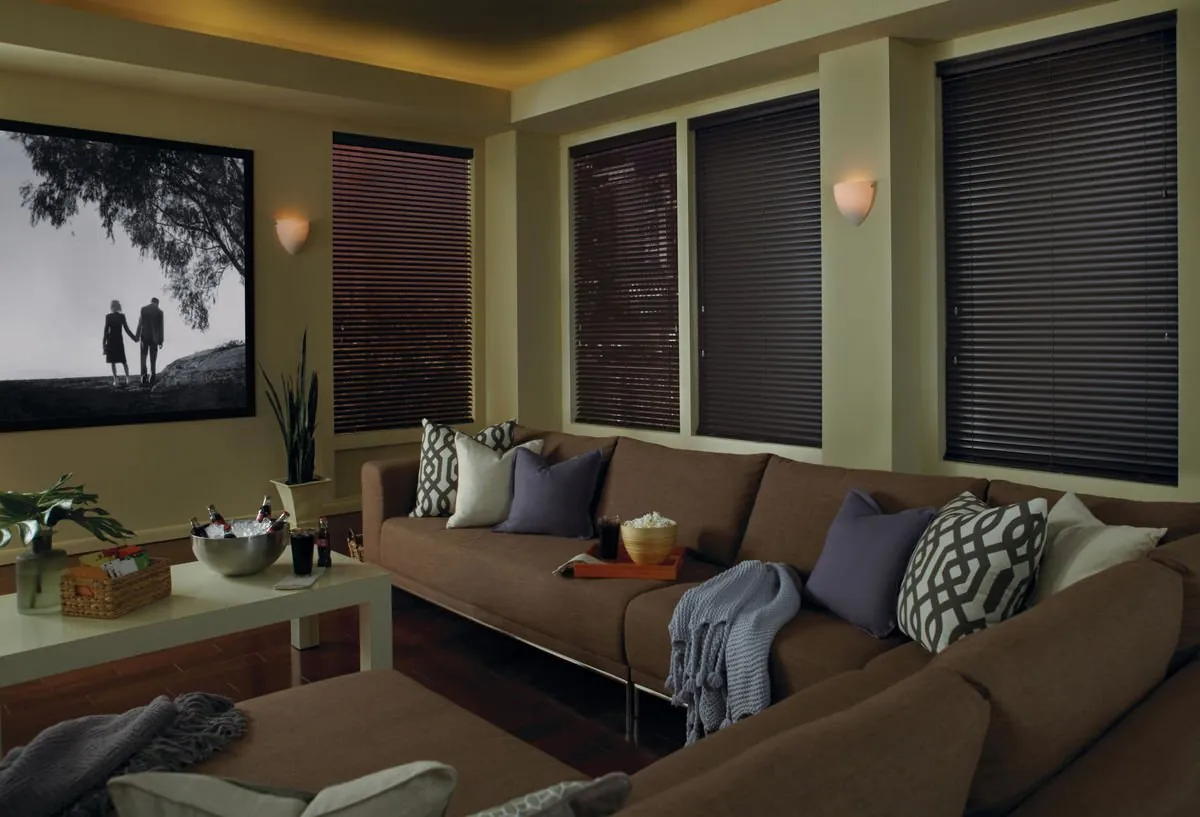
An east bedroom in a ranch sees daylight absurdly early in June. A room-darkening fabric set snugly inside a square single-hung frame is the fix. A den or living room used for television wants glare off the screen, and a wood or faux wood blind lets you angle the slats away from it while keeping some daylight.
Cold glass in January, hot glass in July
Plenty of post-war capes and ranches have had their windows replaced, but a room can still feel chilly beside the glass on a January night. A honeycomb shade lowered at dusk puts a pocket of still air between the room and the window, which is the whole reason Duette and Applause exist; the guide on cellular shades and winter heat goes further. Come July, the ranch living room facing west is the one that bakes. Drop a solar screen or a honeycomb there through the late afternoon and the sofa and floor stay out of the sun. We plan window treatments in Plainville, MA, with both months in view, so one shade can earn its keep all year.
From the first visit to the last bracket
Start with a visit. A consultant drives over in a van loaded with samples (our way of saying we can bring the showroom to you) and walks the house with you. Expect plenty of questions about each slider: which way it opens, where the latch is, how often it is open in summer. Every opening gets a tape measure and a depth check, and by the end you have a list of what suits each room and a free estimate to go with it. Take whatever time you need. See in-home consultations, or ask for one of our interior design consultations if color is the hard part.
Hunter Douglas makes the order, and when it lands our certified installers book a day to put it up. They match each covering to its window, fix it square, test it, link any PowerView motors and show you the controls before they go. What happens on installation day describes it step by step.
A tired old blind on a back bedroom slider? Bring it up during the visit. Fixing coverings people already own is something we are glad to do, and you will hear straight away if a new one is the smarter move. More on blind and shade repair.

The showroom nearest Plainville
For Plainville the nearest Blinds & Designs showroom is Franklin. It can help to drop in before the home visit, perhaps with a snapshot of the slider over the sink.
Still, sliders are best judged in place, latch and all, which is why most choices get finalised at the house. Come to us, have us come to you, or both.
Questions from Plainville
What works best on a slider window?
Rollers, honeycombs and blinds all suit sliders. We check the latch position and frame depth first, and on a very wide slider we may split the covering into two where the sashes meet so each part is easier to use.
My side windows face my neighbor’s house. How do I keep daylight?
A light-filtering honeycomb, a sheer shade with tilting vanes or a blind angled upward all let light in while blocking the view. For evenings, the covering needs to close fully.
Will a shade fit inside my single-hung window frames?
Usually yes. Standard single-hung frames tend to be square with enough depth for an inside mount. We measure each one to be sure.
Can I mix products and still have the house look consistent?
Yes. Keeping the color facing the street the same on every front window makes the house look unified, even if the rooms use different products.
Do you charge to come out and quote?
The estimate costs nothing. You get it after the visit, written room by room, and nobody chases you for an answer.
Take the first step
Request a consultation, pick a time, and the van comes to you. Each slider and single-hung window is measured, each room talked through, and the free estimate follows. Questions before then? The call button reaches us, and the Franklin showroom is close by.
If you want to see the whole range first, our window treatments page has it all.