
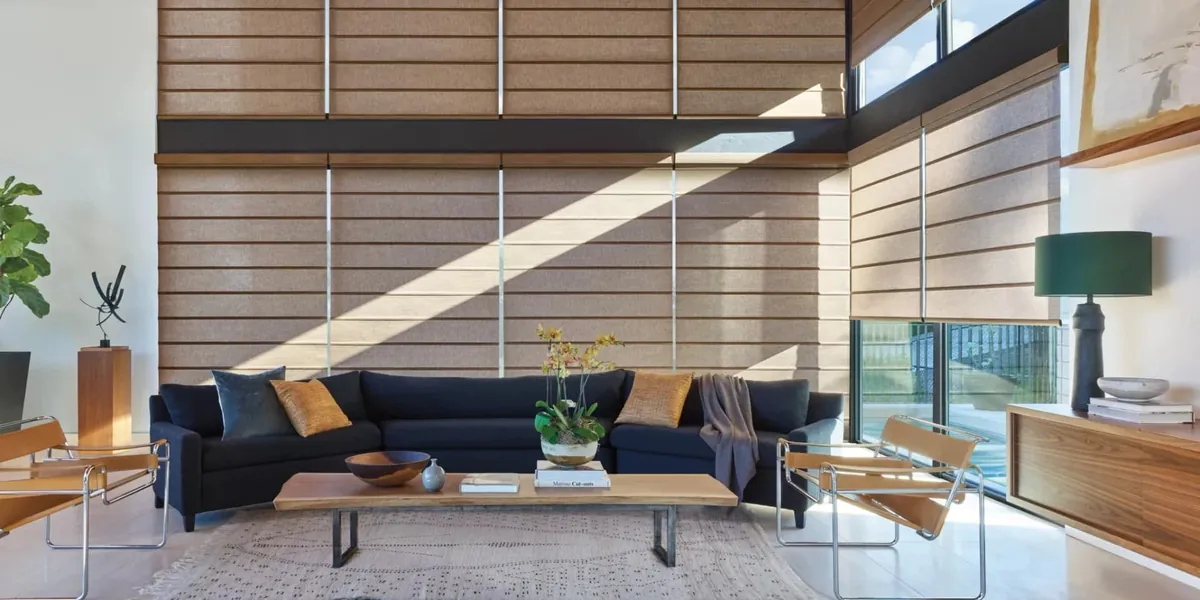
Street-level privacy comes first
Through Woonsocket, the mill-era housing is dense. Triple-deckers and Victorians line close-set streets, with tall, narrow double-hung windows and high ceilings inside. From the sidewalk, the ground-floor windows are right there; from the house next door, the side windows are only a short way off.
That is why privacy at street level is the first thing window treatments in Woonsocket, RI, usually have to solve. A ground-floor room on a close-set street needs a way to keep passers-by from seeing in without losing the daylight those tall windows bring.
The upper floors have their own version of the question. On the second and third floors of a triple-decker, the view in comes less from the sidewalk and more from the matching floors of the buildings alongside. We look at each level separately, because what works on the ground floor is not always what works at the top.
Woonsocket service pages
Each card opens the Woonsocket page for that service, written for the triple-deckers, the Victorians and their tall windows.
Custom blinds
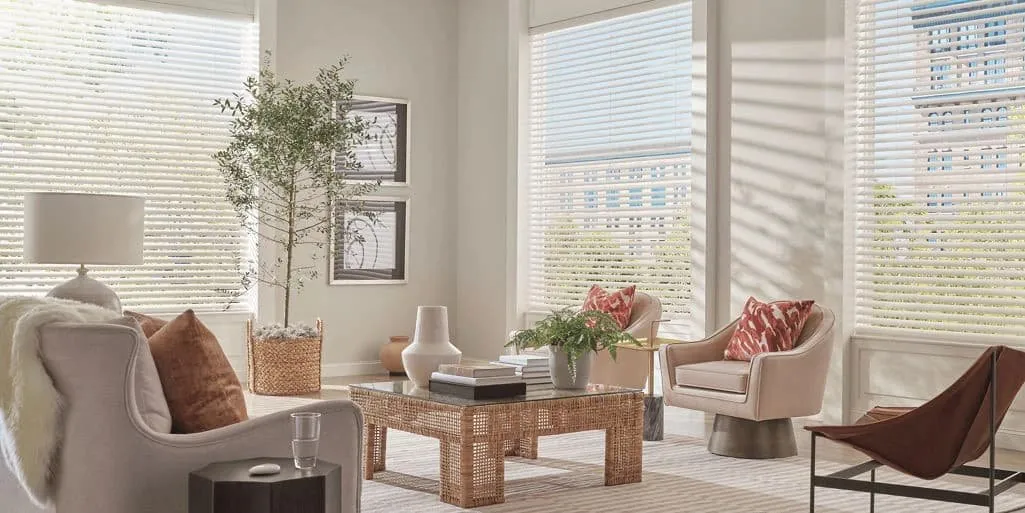
Wood, faux wood, metal and vertical blinds. Tilted slats give daylight and street privacy at once.
Cellular shades
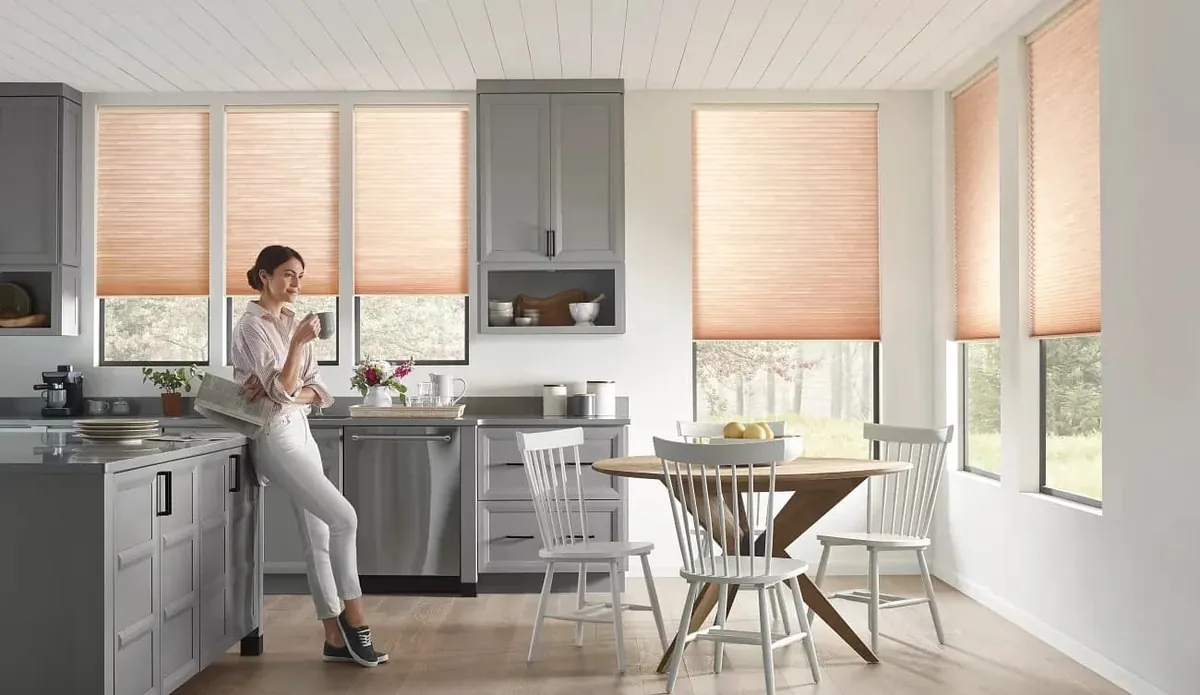
Duette and Applause. A honeycomb holds air in its cells, so a high-ceilinged room keeps more of its warmth.
Roller shades
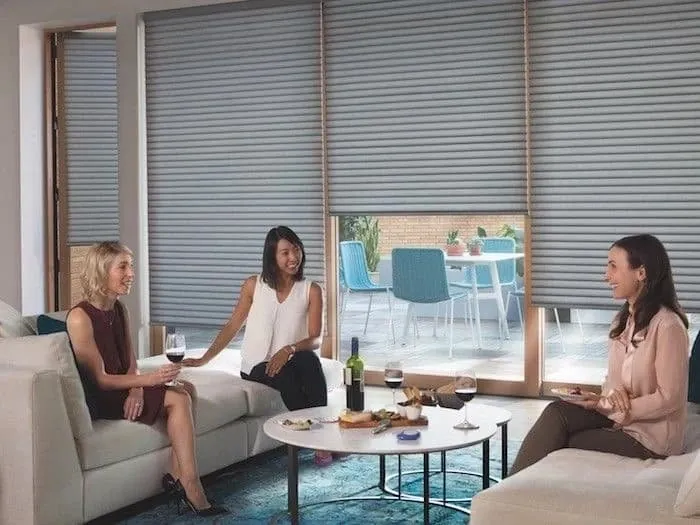
Designer and Alustra rollers and screens. The openness of a screen sets what you see out and how much glare it stops.
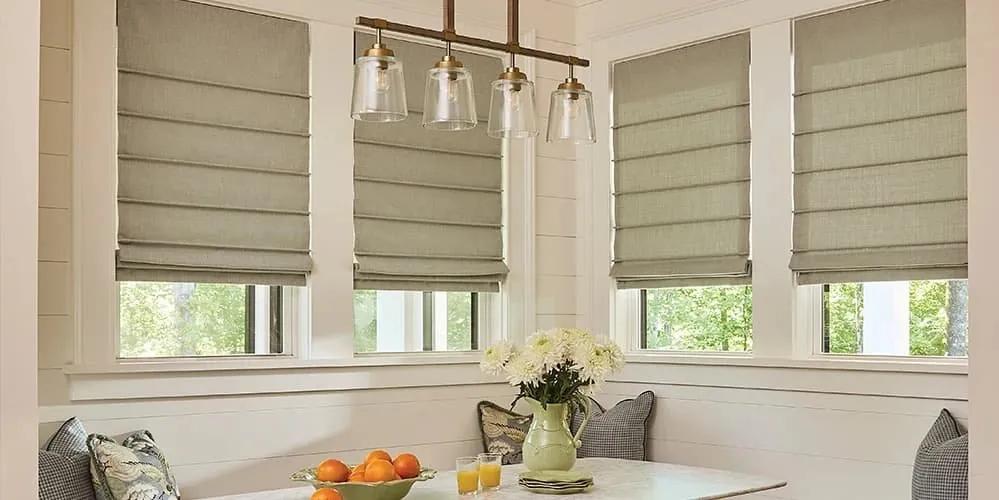
Roman shades
Flat and folded romans from Vignette and Carole Fabrics, for a Victorian parlor or a bedroom on the street.
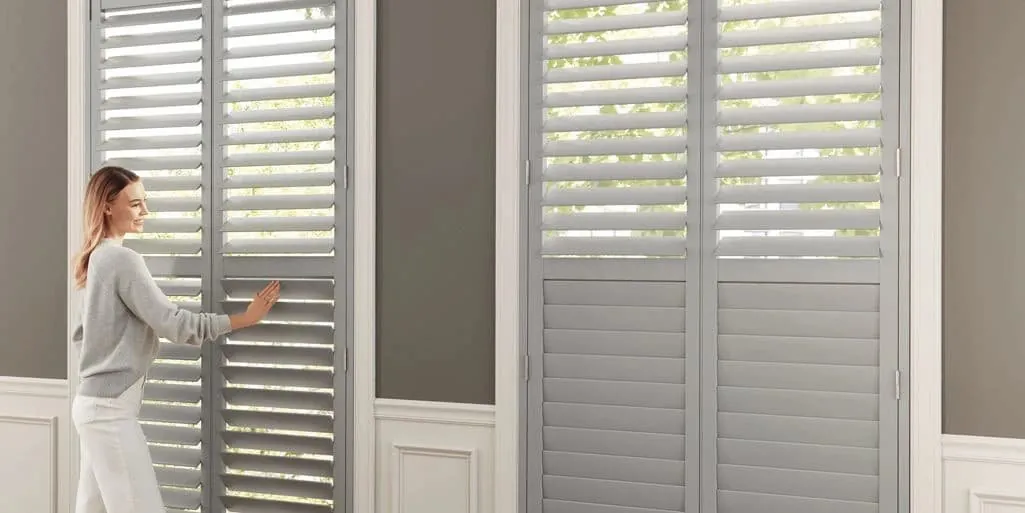
Plantation shutters
Palm Beach, NewStyle and Heritance. Louver size and frame style chosen for a tall double-hung window.
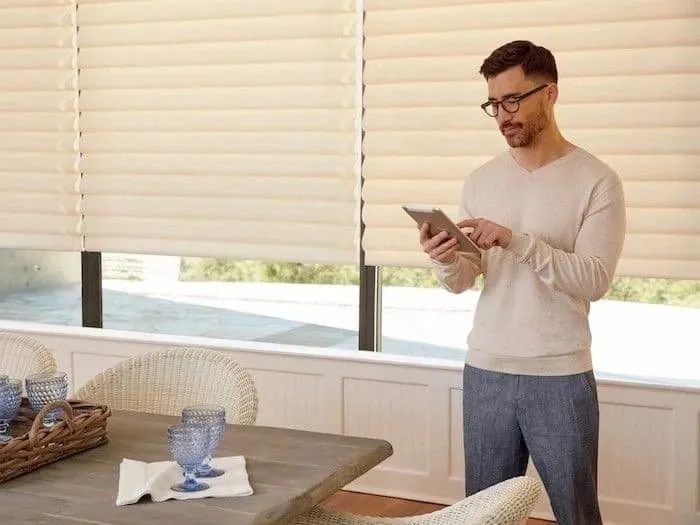
Motorized blinds and shades
PowerView shades moved by remote, app or schedule, which helps when the windows run up toward a high ceiling.
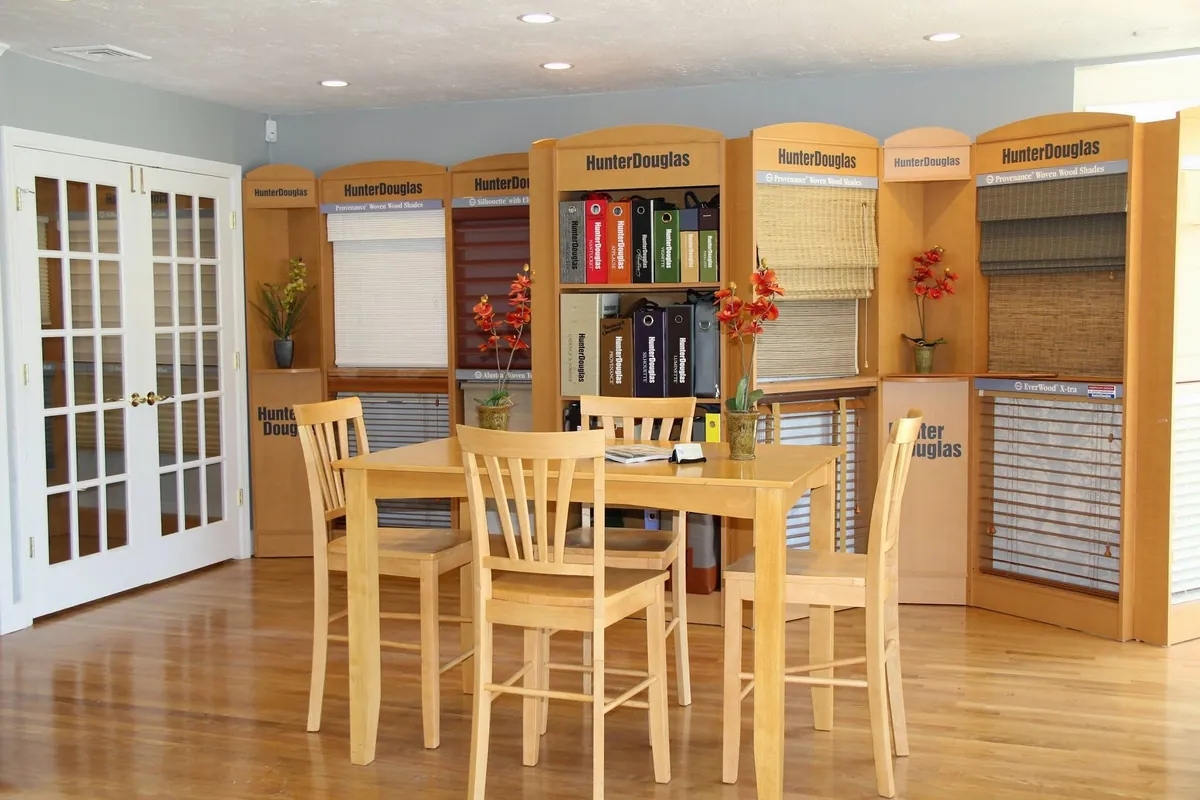
Hunter Douglas dealer
A Hunter Douglas Gallery dealer. Certified Hunter Douglas installers fit every order.
The first floor, a few steps from the sidewalk
Picture a first-floor front room in a triple-decker on a tight street. The sidewalk runs just past the glass, people walk by all day, and the windows are tall enough that a passer-by sees most of the room at a glance. Pull everything shut and the room goes dull at noon. Leave it all open and you are on display.
What solves it is a covering that edits the view rather than blocking the day. Our usual suggestions for a first floor:
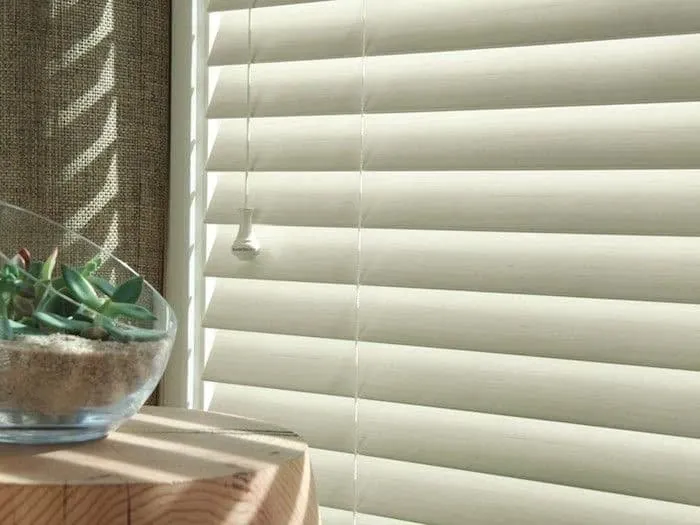
- Slats you can angle. Tip the slats of a wood or faux wood blind, or the louvers of a shutter, so the sky lights the ceiling and the sidewalk sees only the slats.
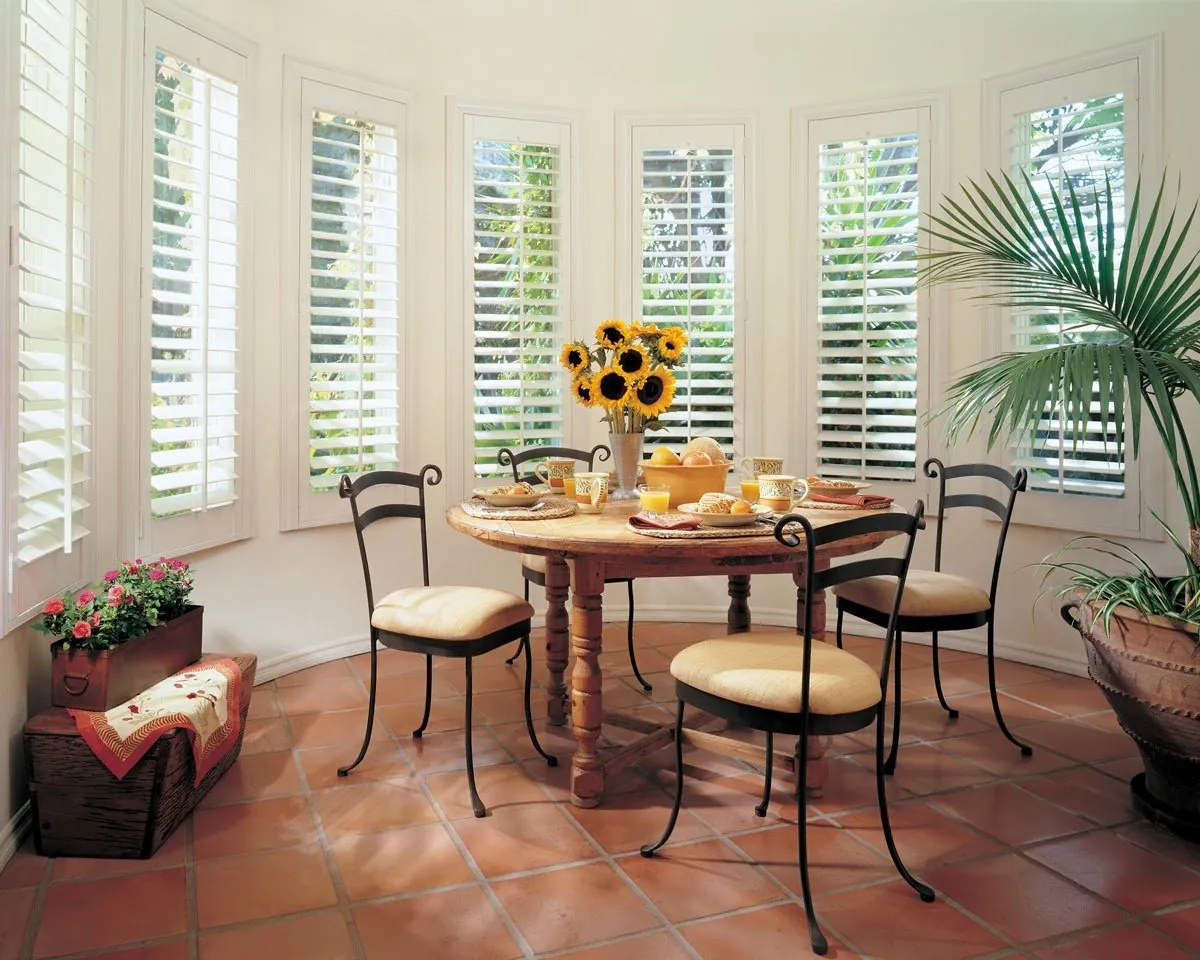
- Half-height shutters. A cafe shutter screens the bottom of the sash, where people look in, and leaves the top of a tall window clear for daylight.
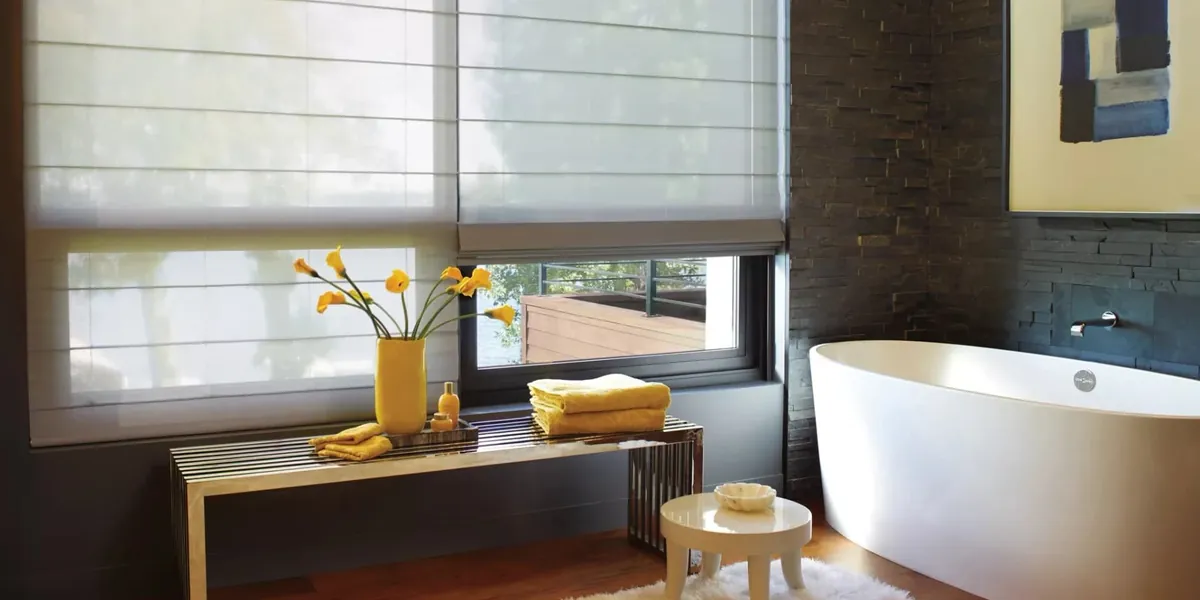
- Vaned sheers. Silhouette or Pirouette fabric vanes turn the street into a soft blur, and close completely with the same control.
- Glow-through fabric. A filtering honeycomb or roller lets the room brighten without showing anyone what is in it.
How close the sidewalk runs, which way the glass faces and whether the room is a parlor or a home office all steer the choice.
When the lamps come on
A filtering fabric that guards a first-floor room perfectly at two in the afternoon can let the whole street see in at nine at night. The reason is simple: privacy follows whichever side is brighter. In daylight that is outdoors; in the evening, with lights on, it is your room.
So on a dense street, window treatments in Woonsocket, RI, for a first floor are usually chosen with evenings in mind. A shutter or blind turned fully shut, a vaned sheer closed flat, or a filtering shade backed by drapery that you draw at dusk all keep the room to yourself after dark. A street-side bedroom simply gets a heavier fabric from the start.
Second and third floors: neighbors at eye level
Climb to the second or third floor and the sidewalk drops out of the picture. What replaces it is the building next door. Triple-deckers often stand side by side with their floors at the same heights, so an upstairs kitchen or bedroom window can look straight into the same room of the next house, a short gap away.
Those side windows are frequently the only light a middle room gets, so blacking them out is a poor trade. Better to keep the brightness and blur the view: a filtering honeycomb or roller, a vaned sheer, or blind slats tipped up toward the ceiling. Upstairs front windows, looking out over the street from a height, usually need less cover than the first floor and can take a lighter fabric.
Long windows under high ceilings
High ceilings give these houses tall double-hung windows, and the length of that glass is one of the best things about them. A covering should run with that length, not interrupt it.
In most rooms that means a shade or blind sitting inside the opening and dropping the whole height of the sash, so the casing shows and the window stays slender. Frames in houses of this age vary, so the consultant measures the depth of each one before recommending how to hang it. If a frame is too shallow, we pick low-profile hardware for the casing instead.
Think, too, about what a long covering does when it is raised. Honeycombs and rollers fold or roll into a small band at the top. Shutters swing aside on hinges and leave nothing above the glass. A blind, which gathers more, can simply be left lowered with its slats open, letting in most of the light.
High tops and PowerView
A ceiling well above head height puts the top of each window up there too, and hauling a long shade up and down, especially over a sofa, gets old quickly. PowerView motors move shades and blinds from a handheld remote or an app, on a timetable, or in groups.
On a busy street, the timetable is the useful part: first-floor shades can drop at dusk by themselves, before anyone notices the room is lit. Powering each motor is settled during the home visit, never left as a question for later. See our window covering automation page for more.
Victorian windows that need extra thought
The Victorians through the city tend to have more varied windows than the triple-deckers, and a few types come up again and again.
Front bays. Each window in the bay gets its own covering, made to its own measurement, with the headrails cut to meet cleanly where the angles turn. Shutters are a natural fit in a bay; honeycombs and romans work too, provided the raised stacks line up.
Parlor windows with ornate casings. Hanging the covering inside the opening keeps every bit of the trim on view. A roman in a plain fabric, or a shutter, sits comfortably with the period.
Landing windows. Tall and often halfway up the stair. Facing a neighbor, they suit a light shade; facing open space, they can stay bare. Too high to reach easily, they suit PowerView.
A triple-decker seen from the street
Stand across the road from a triple-decker and you see three stacked floors of windows at once. If every floor has a different color of covering, the building can look patchy. Owners of a whole building can avoid that by settling on a single street-side color for all three floors and letting each unit choose its own products behind it.
Owners of a single unit get much the same result by picking a street-side color close to what the other floors already have. Inside, anything goes: perhaps shutters in the front room, honeycombs in the bedrooms and a faux wood blind over the kitchen sink.
Choosing color and fabric weight
On a dense street, the fabric you choose does two jobs: it sets how the room feels inside, and it sets how much of the room shows outside. A pale, light-filtering fabric keeps a high-ceilinged room bright and airy, but it is the one most likely to glow and show shapes after dark. A mid-weight fabric still lets daylight through while hiding more in the evening. A heavy fabric gives full privacy and a dark room, which suits a bedroom far better than a parlor.
We often suggest mixing weights by floor and by room: lighter upstairs at the front, heavier on the first floor and in bedrooms. Holding the samples up at your own windows, in your own light, is the quickest way to see the difference, and our guide to choosing fabric for a sunny room covers the rest.
Cold glass in a tall room
These houses predate modern glazing, and a long pane of old glass can chill a high-ceilinged room on a January night. A honeycomb shade is the most direct help. Its cells trap still air against the window, so drawing a Duette or Applause shade down in the evening slows the warmth escaping through the glass. We explain more in cellular shades and winter heat.
Running the honeycomb the full length of a tall sash makes the biggest difference. In a Victorian parlor, drapery hung outside the frame adds a second layer and the fuller look such a room carries well.
Floor by floor, room by room
First-floor front room. On the sidewalk. Shutters, cafe shutters or a vaned sheer by day, closed tight at night.
Kitchens on any floor. Usually at the back or side, looking at the next building. A faux wood blind or filtering roller keeps it bright and private at once.
Bathrooms. A tall, slim window close to a neighbor. Cafe shutters across the lower sash, or a faux wood blind.
Bedrooms. A heavier honeycomb inside the frame, for privacy and a darker room at night.
Upstairs front rooms. High above the street. A lighter fabric, or blind slats left open, is usually plenty in daylight.
If you are still weighing up the main product, read shades or blinds first.
Respecting the old woodwork
Tall double-hung sash, carved or moulded casings and high ceilings give the city’s older houses their charm, and window treatments in Woonsocket, RI, should leave that intact. A shutter recalls the exterior shutters many such houses once wore. Stained wood blinds look at home against original trim. A roman in a restrained fabric belongs in a parlor.
Ornate casings get an inside mount so the detail stays visible; shallow frames get slim hardware. Our shutters for older windows guide covers fitting old frames in more depth.
Rear windows in a dense city block
On close-set streets, the back of one building often faces the back of another across a small yard or a shared drive. Rear windows on every floor can look straight at the windows behind, and because these are often kitchens, bathrooms and back bedrooms, they are rooms where privacy matters.
A rear kitchen usually wants as much daylight as it can get, so a filtering roller or a faux wood blind tilted up is a good fit. A back bathroom needs the glass covered at the tub, which a cafe shutter or a blind handles. A back bedroom needs darkness at night and a fabric that keeps the room private once the light is on. Planning window treatments in Woonsocket, RI, for the rear of a building is as important as the front, even though nobody on the street ever sees it.
Rooms with one window and a lot to do
In the middle of a triple-decker floor, some rooms have a single tall window, and it may face the next building. That one opening has to light the room, keep it private and, in winter, not chill it. A filtering honeycomb is often the best all-rounder here: it lets the glow in, hides the room, and its cells hold air against the cold glass. If the room doubles as an office by day and a guest room at night, a honeycomb in a slightly heavier fabric covers both uses.
In rooms like this, keeping the covering inside the frame also keeps the window looking as tall as possible, which helps a narrow room feel bigger.
What a Gallery dealer brings to a city house
Bays, landing windows, long parlor sash and side windows facing the next building each call for something different, and Blinds & Designs, as a Hunter Douglas Gallery dealer, can draw on the complete Hunter Douglas line for all of them.
Hunter Douglas certified installers hang what you order. You can also count on a home consultation with a van of samples, an estimate at no charge, interior design consultations and PowerView automation, and we will gladly look at a blind or shade you already own that has stopped working: see blind and shade repair.
How a home consultation goes
The showroom rides to your door in our vans, packed with samples. On a close-set street, holding a fabric against your own glass, with the sidewalk or the next building right outside, is the only real test of how private it will be.
- Walk us through the floors and rooms you have in mind.
- The consultant measures each window from head to sill and checks the depth of its frame.
- You compare samples against the actual glass, in the actual light.
- We suggest products room by room, and floor by floor in a triple-decker.
- A free estimate is yours to consider, with no deadline.
After the order arrives, certified Hunter Douglas installers hang every covering, check how it runs, pair any motors and hand over the controls. Read about what happens on installation day or our in-home consultations.

Franklin is the nearest showroom for Woonsocket
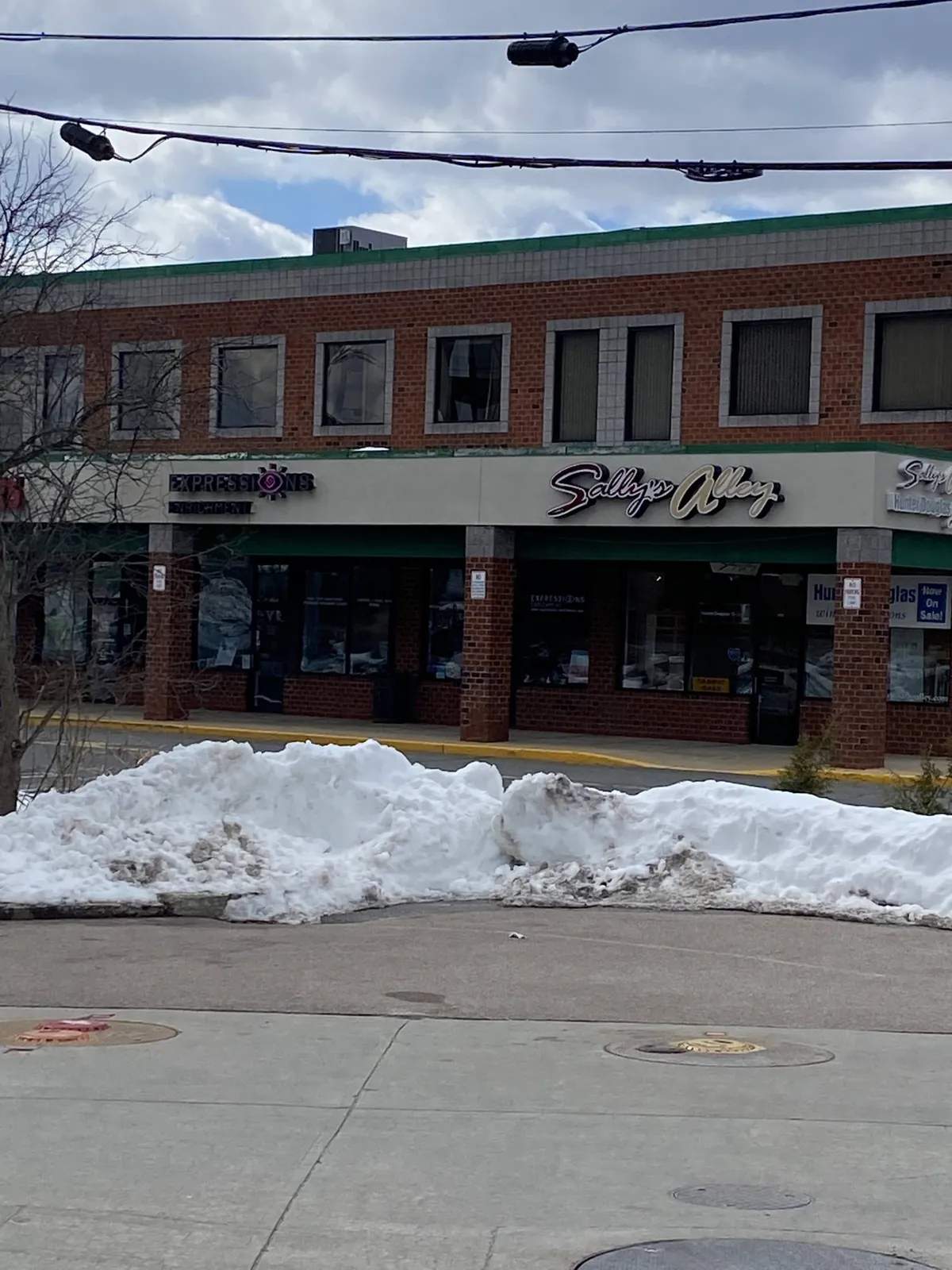
Of our showrooms, the one in Franklin, Massachusetts, is closest to Woonsocket. Calling in ahead of a home consultation suits some people, particularly with a snapshot of a tall front window or a bay in hand.
Still, the decision tends to happen in the house itself, with samples up at your own windows and the street just beyond the glass.
Questions from Woonsocket
Our first floor faces the sidewalk. Can we have daylight without being on show?
Yes. Angled blind slats or shutter louvers, cafe shutters on the lower sash, vaned sheers and filtering fabrics all let light in while blocking the view. For evenings, pick something that closes fully, because a lit room shows through a light fabric.
Do the upstairs floors of a triple-decker need the same thing?
Usually not. Upstairs side windows face the building next door and need privacy; upstairs front windows sit high above the street and can often take a lighter fabric.
How do we work shades on windows that reach toward a high ceiling?
Ordinary controls cope with most of them. For the longest windows, or any behind furniture, PowerView moves the shades by remote, app or timetable.
Should every floor look the same from outside?
One street-side color across all three floors keeps a triple-decker looking tidy. Each unit can still pick its own products inside.
What do you charge for an estimate?
Nothing. Estimates are always free, and you can decide whenever you are ready.
Getting started
Whether it is a triple-decker or a Victorian, window treatments in Woonsocket, RI, are easiest to choose at home. Request a consultation and the van brings the samples to you; every tall window is measured and you keep a free estimate. If you would rather talk it through first, the call button reaches us, and the Franklin showroom is our nearest.
If you want to see the whole range first, our window treatments page has it all.