
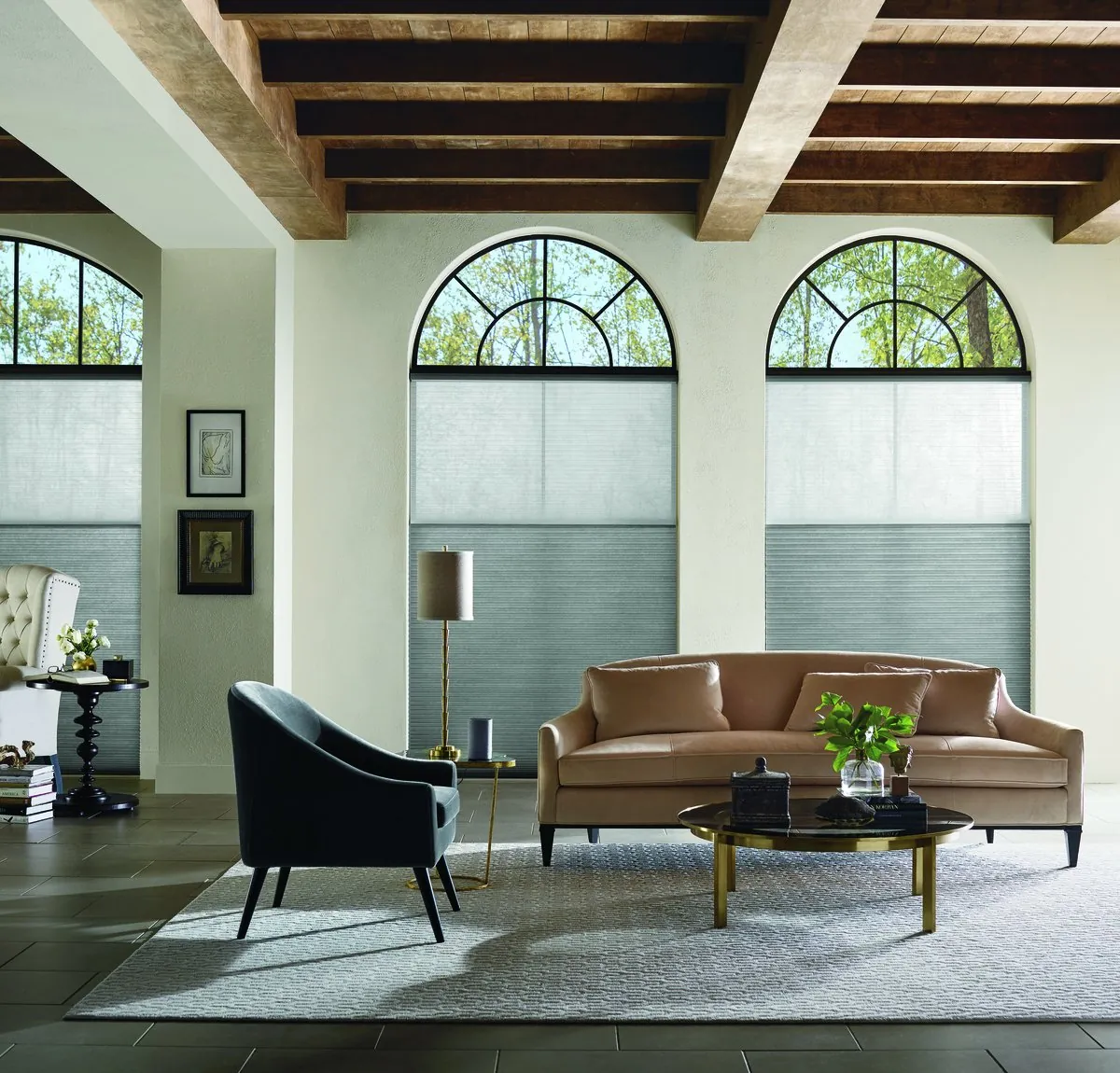
Bays, transoms and the case for made-to-measure
Walk the streets around downtown and up on Oak Hill and you pass Victorians and colonials full of windows that never came in a catalog size. A bay pushes out from the front parlor in three angled sections. A transom sits over the front door or over a wide window, a strip of glass that lights the hall. Those openings are why window treatments in Attleboro, MA, for the older houses are measured and made for each frame rather than bought by the box.
Off Route 123 the housing turns to 1960s split-levels, and down in South Attleboro to ranches. Their openings are more regular, and the choices there are about light, privacy and the way each level of the house is used.
We work across all three. What links them is a tape measure, a look at the sun, and a covering built to fit the window it is going into.
Pick a service to see its Attleboro page
One card for each part of our window treatments in Attleboro, MA. Every button opens that service’s own page for the town.
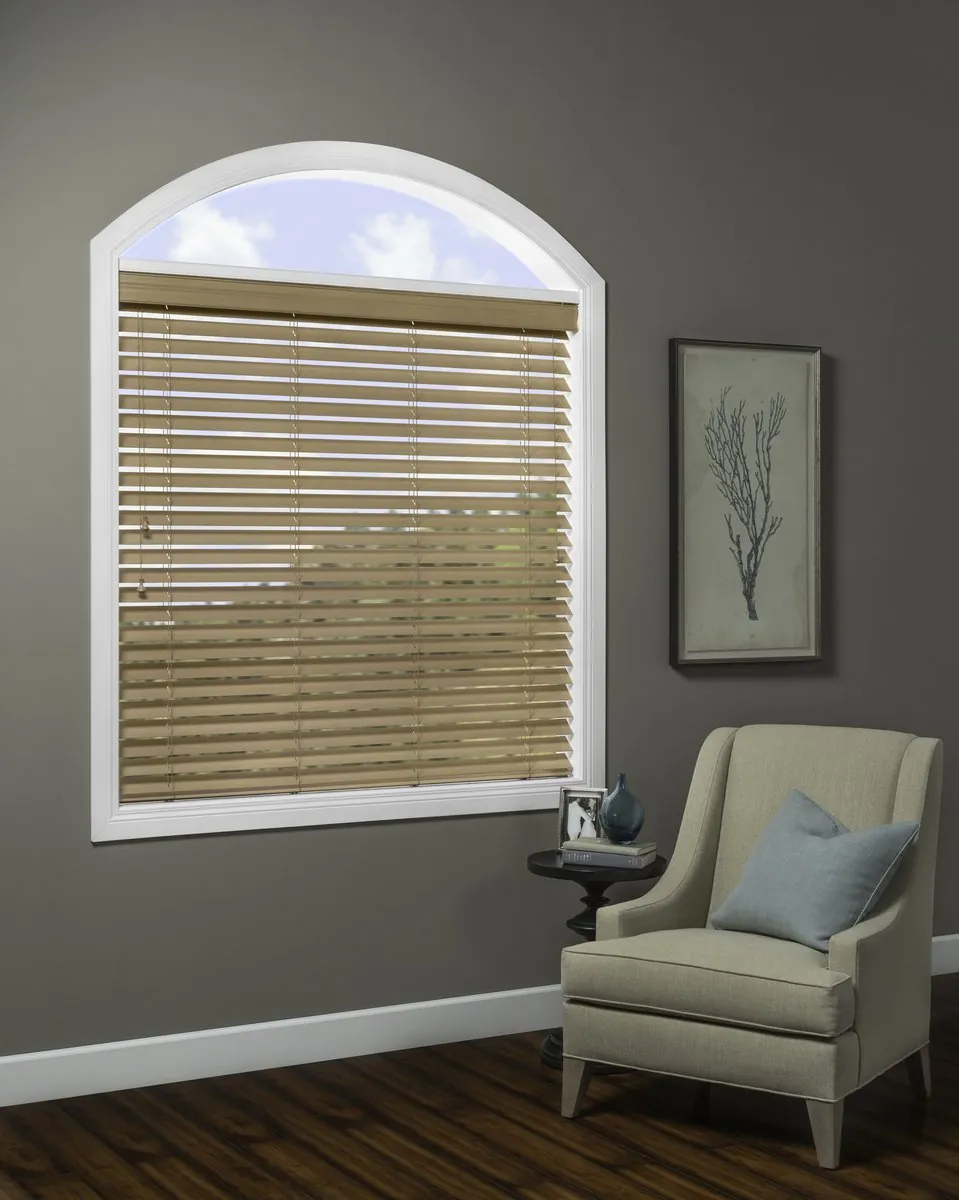
Custom blinds
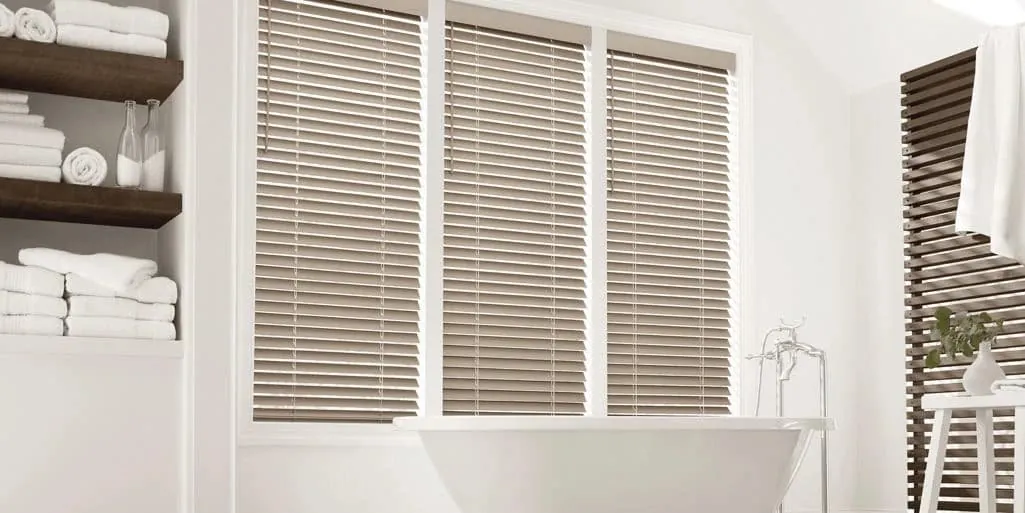
Real wood, faux wood, metal or vertical, cut to each frame. A good fit for a split-level kitchen or a ranch den.
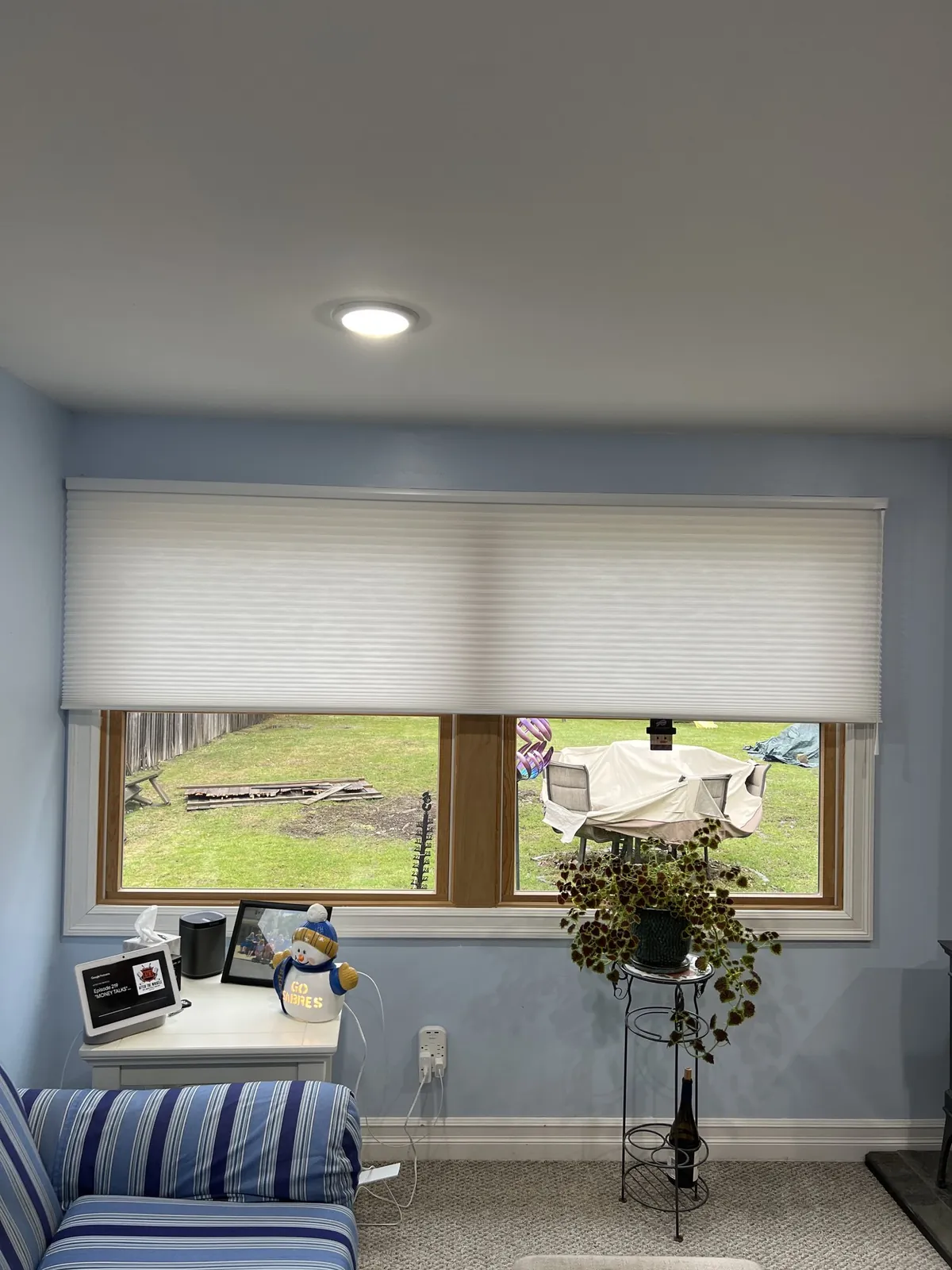
Cellular shades
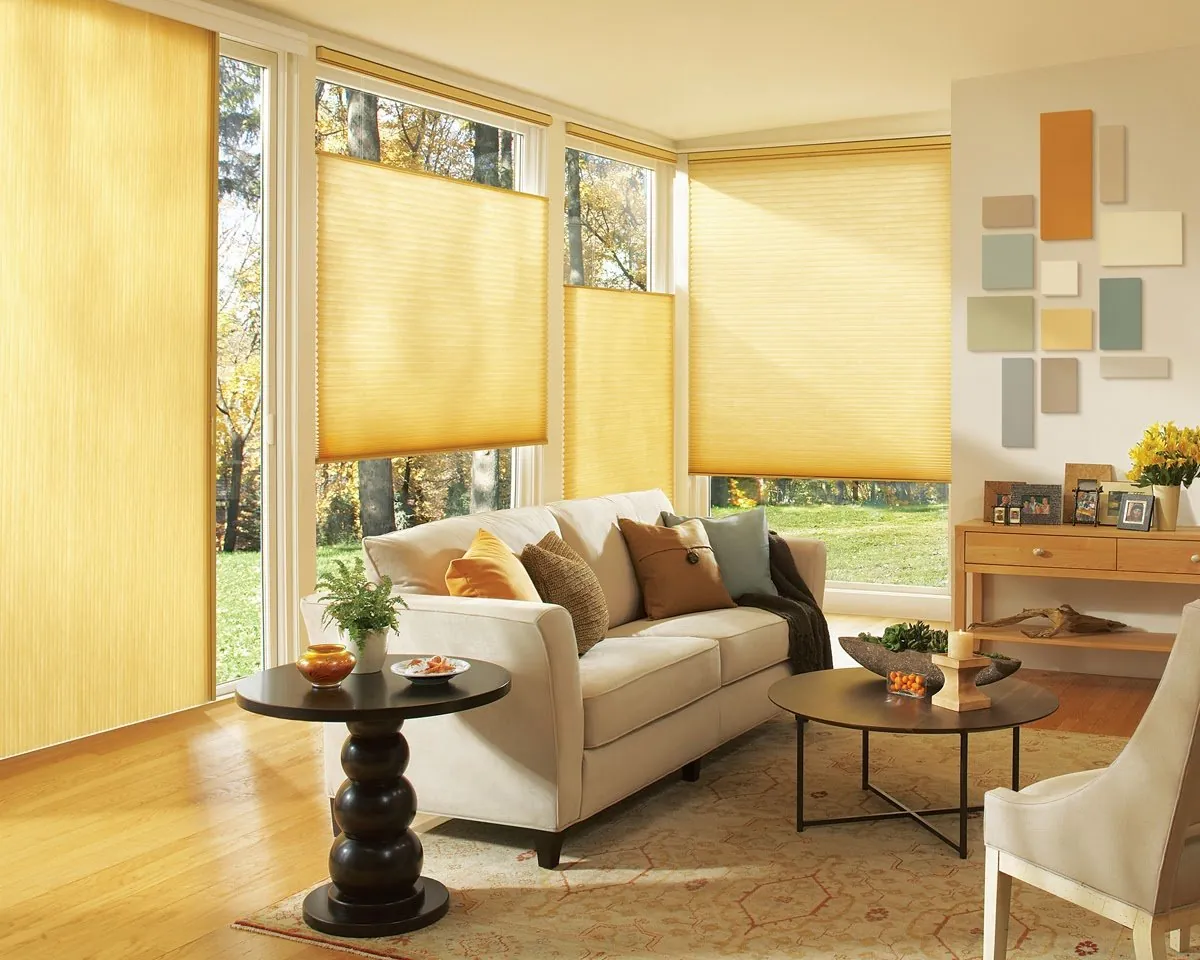
Duette and Applause honeycombs. Air trapped in each cell is what keeps a room by the glass warmer in winter.
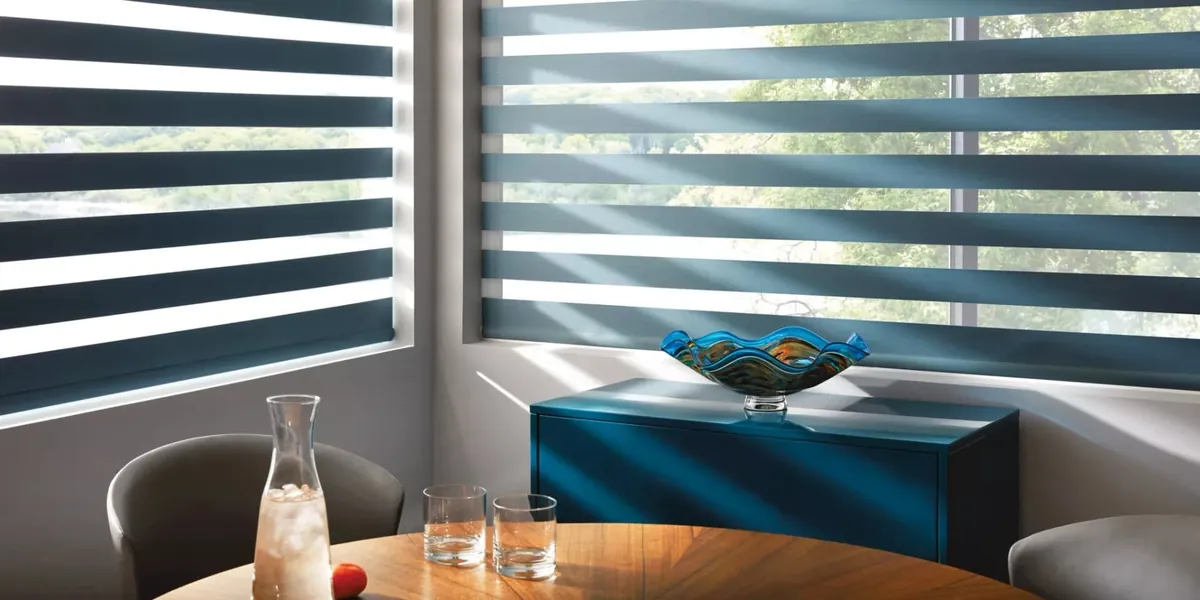
Roller shades
Designer and Alustra rollers, banded shades and solar screens. The openness you choose sets the balance of view and glare.
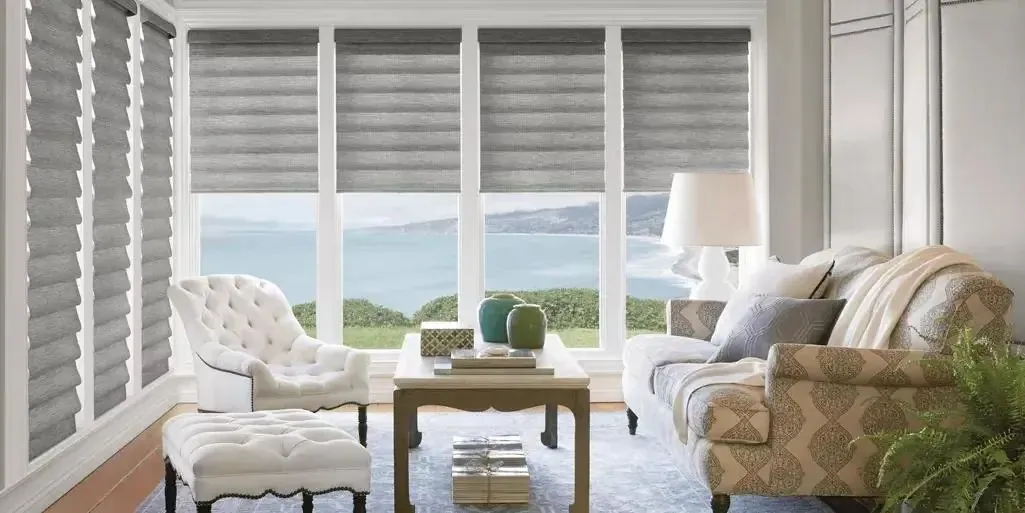
Roman shades
Flat and folded romans from Vignette and Carole Fabrics, made panel by panel for a Victorian bay.
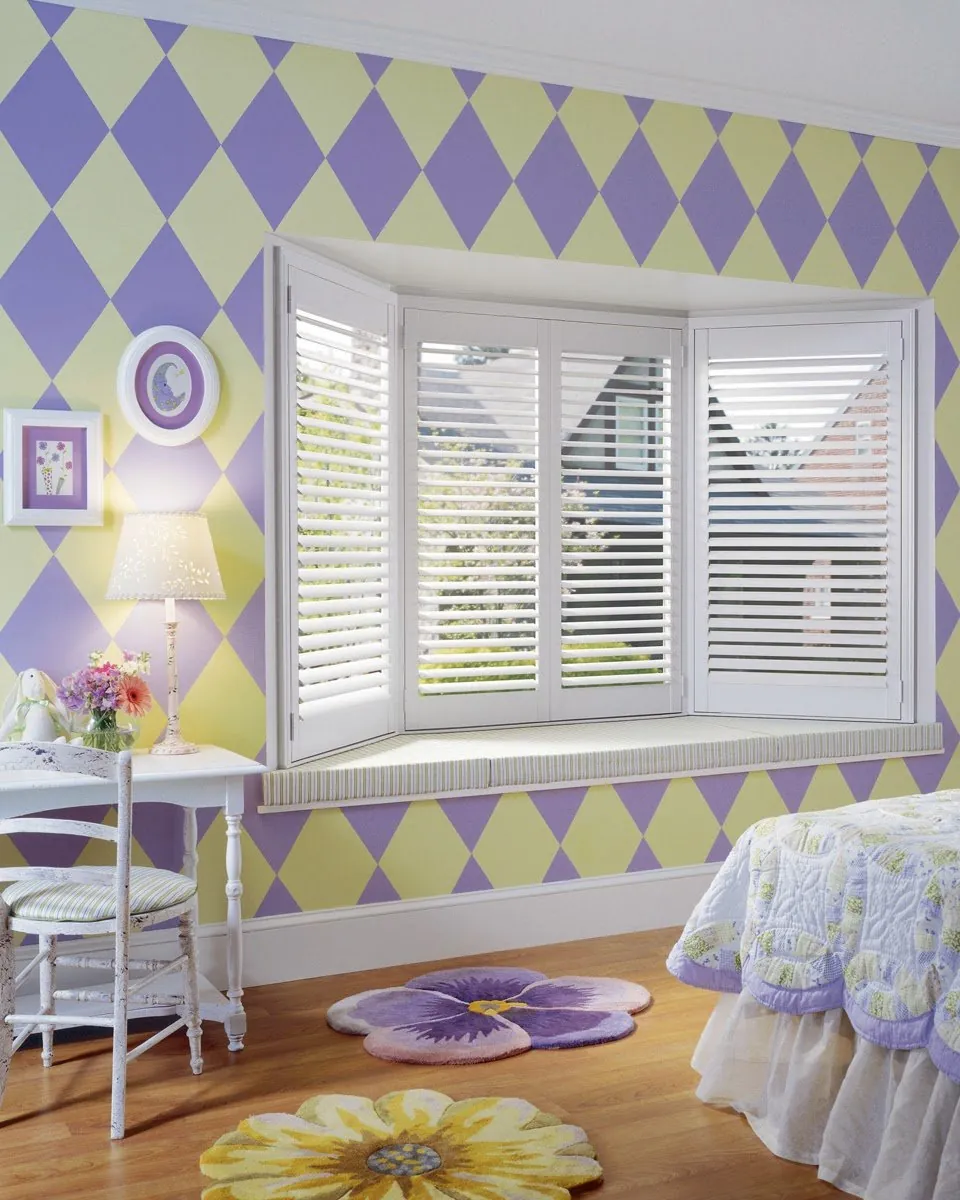
Plantation shutters
Palm Beach, NewStyle and Heritance, with louver size and frame style matched to each opening.
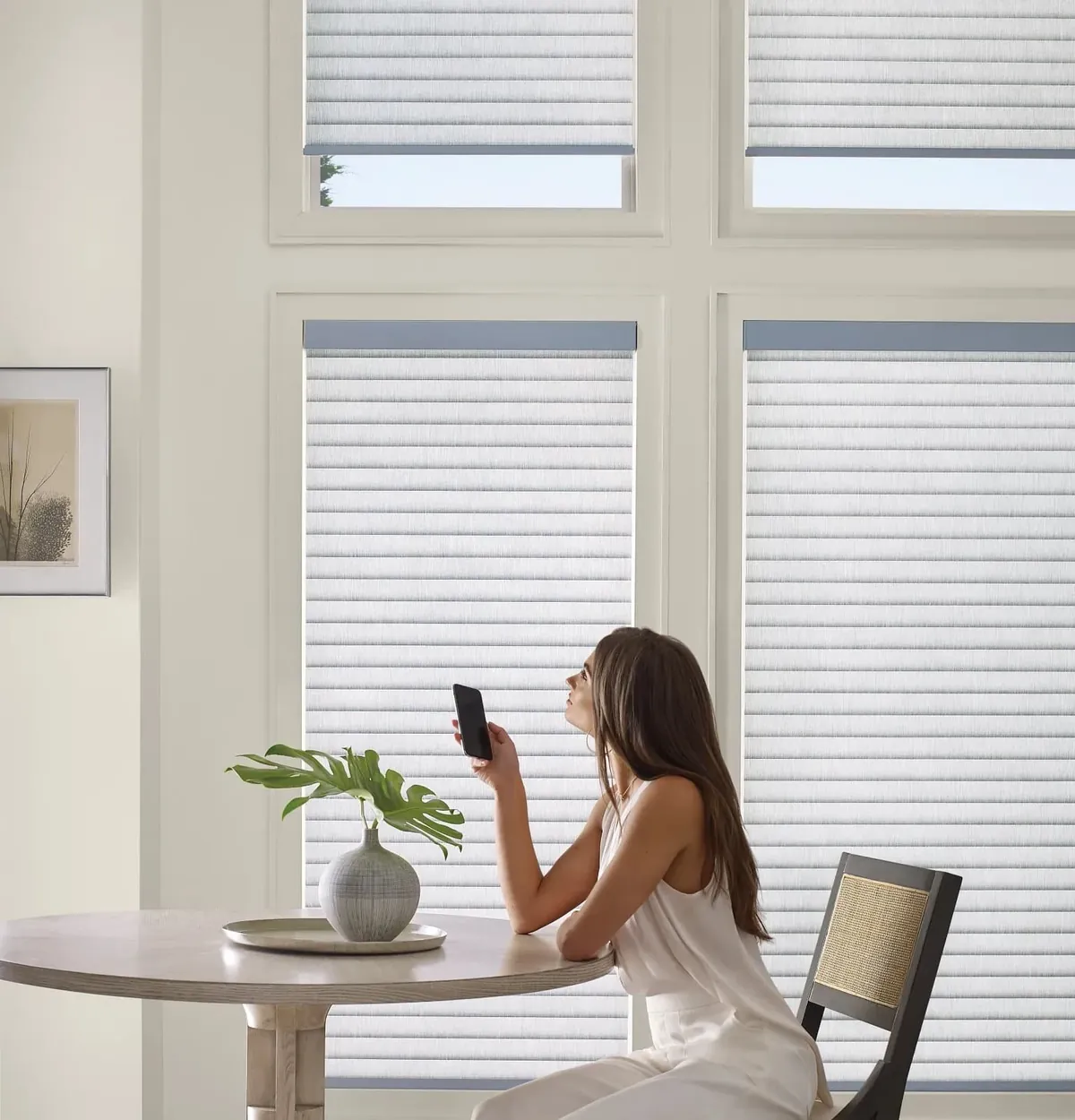
Motorized blinds and shades
PowerView for high glass and transoms: control by remote, by app or by a schedule.

Hunter Douglas dealer
A Hunter Douglas Gallery dealer, with certified Hunter Douglas installation on every order.
Why a bay will not take a stock blind
A bay window looks like three windows, but it behaves like one shape. The center section faces straight out and the two sides angle back toward the wall, so the corners where they meet are where a covering either works or does not. Hang three off-the-shelf blinds and the headrails clash in the corners, light leaks through the gaps, and the sides never quite line up with the middle.
A made-to-measure covering for a bay is planned as a set. Each section is measured on its own, the corners are worked out so the headrails meet neatly, and the three pieces are ordered together so the fabric, color and height match. On an older house that has settled over the years, the sections may not even be the same height, which is another reason to measure rather than guess.
Shutters, romans and honeycombs all suit a bay. Shutters give the most architectural look and suit a Victorian front. Romans bring softness to a parlor with high ceilings. Honeycombs are the lightest and stack neatly at the top of each section.
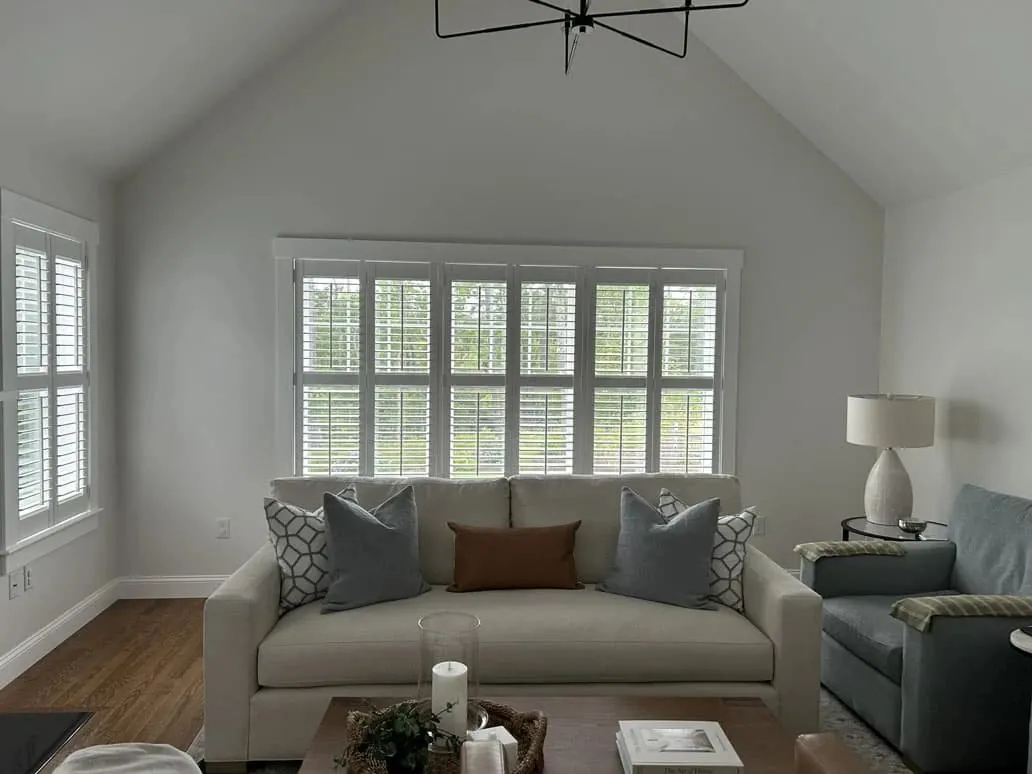
How we measure a bay
Every bay gets the same careful routine.
- Each section on its own. Width at the top, middle and bottom, and height at both sides, because old frames move.
- The angles. How sharply the sides turn back toward the wall decides how the corners meet.
- The depth. Whether there is room for an inside mount in every section, or whether the bay is better covered from the trim.
- The window seat or sill. If there is a seat below, the covering has to clear it when lowered and leave it usable.
- The view from the street. Three sections facing the sidewalk should look like one covering from outside.
If the measuring terms are new to you, our guide to window measuring terms explained sets out inside and outside mounts and the rest.
Transoms: the strip of glass over the door
A transom is often the last window anyone thinks about, and the first one that lets the morning sun straight into a hall or across a bedroom. They come in all shapes on the older houses near downtown: a plain rectangle over a door, a narrow band over a wide window, sometimes a fan.
You have three sensible choices with a transom. Leave it open, because the light it brings is the reason it is there. Cover it with a fixed shade made to its exact shape, so it matches the window below. Or, where it sits high above a tall window, motorize the covering with PowerView so it opens and closes from a remote or the app. Which one is right depends on which way it faces and how bright the room gets.
The Victorians around downtown and Oak Hill
The older houses near downtown and on Oak Hill were built with tall windows, high ceilings and plenty of trim. Those rooms deserve coverings that respect the woodwork. An inside mount keeps the trim visible; a shade that stacks small at the top leaves the whole sash clear on a gray day.
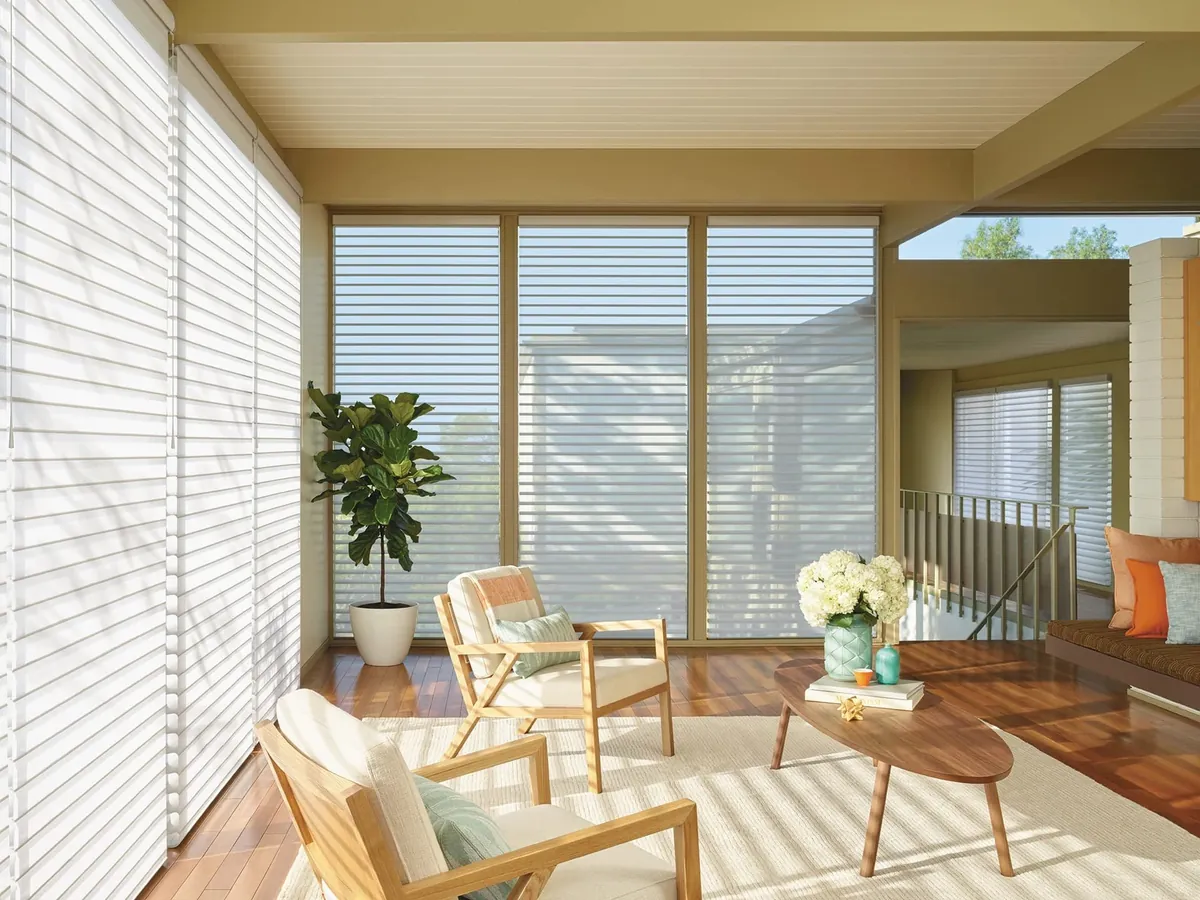
Where the front rooms face a busy street, privacy matters in the evening, but daylight matters more in the day. A light-filtering honeycomb or a sheer shade with fabric vanes gives you a soft glow and hides the room from the sidewalk. Shutters let you tilt the louvers up so the light reaches the ceiling and no one sees in. These are the kinds of window treatments in Attleboro, MA, that let an old house keep its character and still work for daily life.
Drafts at the old sash
Many of the Victorians and colonials near downtown still have their original frames, sometimes with newer sash fitted inside them. On a cold evening the air by the glass in those rooms is noticeably cooler than by the fireplace. A honeycomb shade lowered at dusk helps, because each cell holds a layer of air between the room and the window, and that layer slows the chill. Mounted inside a deep old frame, the shade sits close to the glass, which is where it does the most good.
In a bay, the effect adds up across three sections, and a parlor that felt cold in January can feel noticeably more comfortable with all three lowered. Duette and Applause are both honeycombs, in a wide range of fabrics and colors, so the shade can suit the room as well as the season. Our guide to cellular shades and winter heat explains more about how the cells work.
Colonials in the older neighborhoods
The colonials that stand among the Victorians are simpler in shape: two stories, a center hall, rooms either side and evenly spaced windows. Their regularity is their charm, and coverings should keep it. Choose one product and one color for the front rooms, mount them at matching heights, and the facade looks calm from the street. Behind that, each room can have what it needs: a room-darkening fabric upstairs, a softer roman in the dining room, blinds in the kitchen.
Split-levels off Route 123
The 1960s split-levels off Route 123 arrange the house over staggered half floors, so you walk a few steps up to the bedrooms and a few steps down to a family room. That layout puts windows at several heights and gives each level a different job.
The living room on the main level is usually the showpiece, with a wide front window. A roller or honeycomb across its whole width keeps it simple and lets in plenty of light. The bedrooms on the upper half-level want privacy and, often, darkness for sleep. The lower family room is where the television usually lives, so glare on the screen is the main concern; a blind with tilting slats or a light-blocking roller handles it.
In many split-levels the lower level sits partly below the yard, so its windows can be shorter and set higher in the wall than the ones upstairs. Those openings let in less light to begin with, which makes a light color and a covering that clears the glass completely the better choice there. A heavy fabric that stays half down all day would make a den feel like a basement.
Split-levels often have a window over the stairs between levels, which can be awkward to reach. A PowerView shade there, set to a schedule, opens in the morning and closes at dusk on its own.
Matching the levels
Because each half floor of a split-level is visible from the next, it helps to treat the house as one space. We usually suggest a single color family running through all the levels, with the product changing to suit each room: honeycombs in the bedrooms, rollers in the living room, blinds in the family room and kitchen. Standing on the stairs, you see one house rather than four separate decisions.
South Attleboro ranches
Down in South Attleboro, the ranches put everything on one floor: a living room window facing the street, a run of bedrooms down a hall, a kitchen and dining area at the back opening onto the yard. The openings are modern and square, so almost any Hunter Douglas product fits, and the decision comes down to the room.
A ranch is especially easy to automate. With everything on one level, a single PowerView schedule can lower every shade on the street side at dusk and raise them in the morning. The kitchen window over the sink, which can be a stretch across the counter, is another place a motor earns its keep. If you prefer to keep it simple, a faux wood blind or a plain roller is easy to reach and work by hand.
The back of a ranch often has a slider to the yard. A covering that draws sideways, such as a vertical blind or a vertical honeycomb, keeps the door fully usable.
Kitchens and baths through the house
Kitchens in the split-levels and ranches usually have one window over the sink, sometimes a slider, and it is often a reach across the counter. A faux wood blind or a plain roller is easy to work, and a PowerView motor removes the stretch altogether. In the older houses, the kitchen may be at the back with a tall window that gets the morning sun; a light-filtering honeycomb softens it without darkening the room.
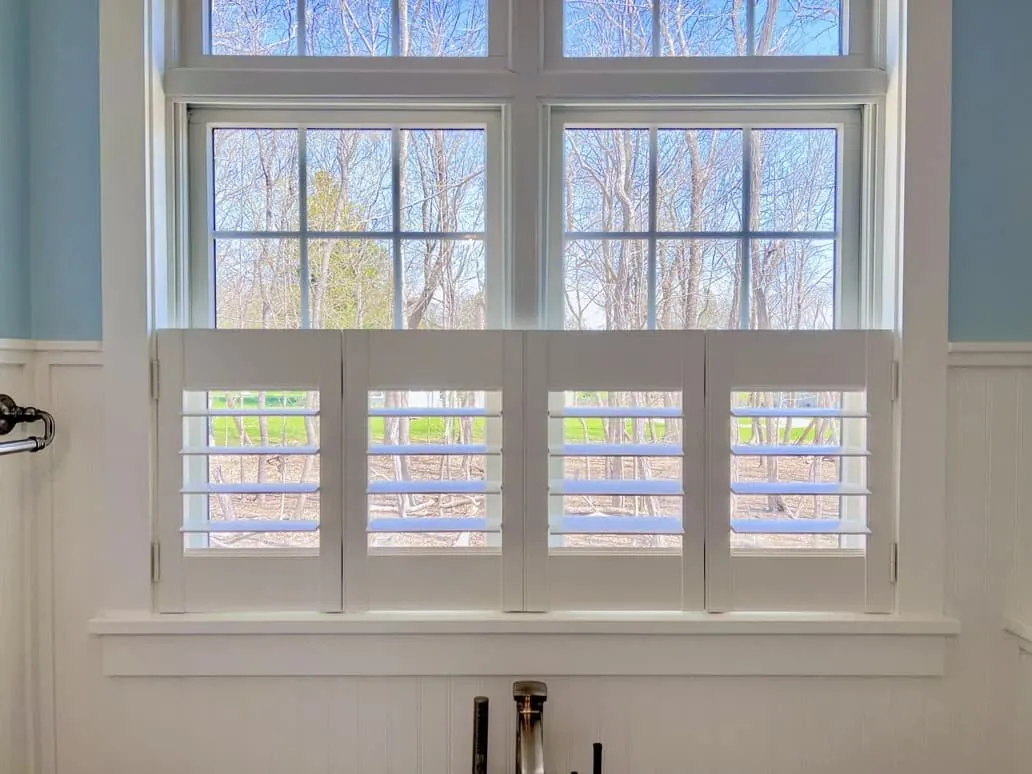
Bathrooms want privacy at eye level and light above it. Cafe shutters across the lower sash do exactly that, and faux wood blinds tilt open for light and close fully for privacy. Practical choices like these are a big part of window treatments in Attleboro, MA, because they are the rooms used most often every day.
Bedrooms that need to stay dark
A bedroom on the upper level of a split-level, or one facing the street in South Attleboro, can catch streetlights at night and early sun in summer. A room-darkening fabric in a roller or honeycomb, measured to sit snugly in the frame, keeps the room dark. If you like a bright room by day, a second, lighter layer or a shade that lowers from the top gives you both. We bring room-darkening samples to the visit and hold them up to the glass so you can see how much each one blocks before you decide on window treatments in Attleboro, MA, for the bedrooms.
Rooms that face the afternoon sun
Whatever the house, the rooms on the west side take the hardest sun from late afternoon into evening. Floors and furniture fade, and a television becomes hard to watch. A solar screen lowered for those hours cuts the glare while keeping the view; the openness you choose decides how much of the yard you still see. A honeycomb does a similar job and adds the benefit of holding air at the glass in winter. Our guide to the best shades for sun and glare covers the choice in more depth.

A Gallery dealer for every kind of Attleboro window
One Attleboro house can need a bay of shutters, a transom shade, honeycombs for the bedrooms and a vertical covering for the back slider. Blinds & Designs is a Hunter Douglas Gallery dealer, so the full Hunter Douglas range is available through one consultant, and certified Hunter Douglas installers hang every order.
We also offer in-home consultations with vans carrying samples, free estimates, interior design consultations, window covering automation and repairs on coverings you already own.
From your first call to the finished room
Most projects in town follow the same path, whether the house is a Victorian near downtown or a ranch in South Attleboro. A consultant comes out in a van stocked with samples, because we can bring the showroom to you. You see fabrics against your own walls and in your own light, which matters most on a bay where three sections catch the sun differently. We walk each room, measure every opening including the transoms, and leave you a free estimate. When you are happy, Hunter Douglas makes the order to those measurements, and certified installers fit it, check every shade and show you how any PowerView motors work. More detail is on our in-home consultations page, and our interior design consultations help when color and fabric are the hard part.
If you have existing blinds or shades that need attention, bring them up during the visit. Repairs on coverings you already own are part of what we do; see blind and shade repair.
Franklin, the showroom nearest Attleboro
Our nearest showroom to Attleboro is in Franklin. A visit before the in-home appointment can help you narrow your thinking, especially if you bring a photo of the bay or the transom you are planning around.
Still, made-to-measure work is best finished at the house, where we can measure every section and see the light. You can start in Franklin, start at home, or both.
Questions from Attleboro
Can you cover a bay window so it looks like one piece?
Yes. We measure each section on its own, plan how the corners meet and order the pieces together so color and height match. Shutters, romans and honeycombs all suit a bay.
Should I cover the transom over my front door?
It depends on how much light it brings and which way it faces. Many people leave it open. If it lets in too much morning sun, a shade made to its exact shape, or a motorized one where it is high, solves it.
What works for the lower family room in a split-level?
Glare on the television is usually the issue. Blinds with tilting slats or a light-blocking roller let you control it while keeping some daylight.
Can a ranch be automated room by room?
Yes. PowerView lets you run a single shade, a room, or every shade on one side of the house from a remote, your phone or a schedule.
Do you charge for an estimate?
No. Estimates are free and come after we have measured, laid out room by room.
Your next step
Request a consultation and choose a time that suits you. We will bring the samples, measure the bays, transoms and everything else, and leave you a free estimate. If you want to see things in person first, the Franklin showroom is closest. For a quick question, the call button on this page reaches us. Whether it is one awkward transom on Oak Hill or every window in a South Attleboro ranch, the first visit is where it starts.
Every product line we offer is gathered on our window treatments page.