
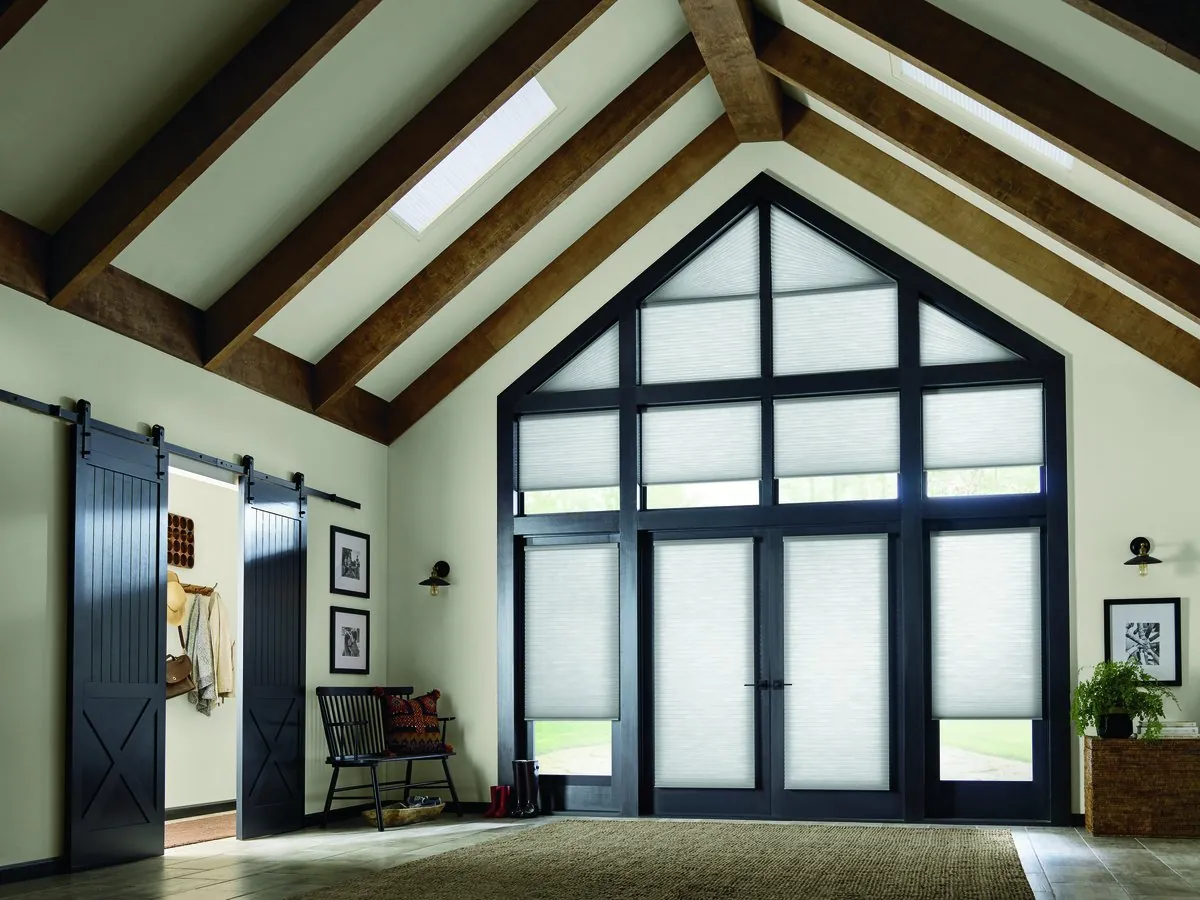
From narrow Victorian sash to two-story foyers
Few towns put such different windows within a short drive of each other. Near the center, Victorians stand with tall, narrow sash, the kind that reach toward high ceilings and leave little width to work with. Across the subdivisions, large newer colonials greet you with a two-story foyer and a sheet of glass rising above the front door. Between them sit post-war ranches with plain, square openings. Good window treatments in Mansfield, MA, start by recognizing which of those three you are standing in.
A narrow sash asks for coverings that stay slim and in proportion. Foyer glass asks how anyone will reach the top of it. A ranch asks mostly about the rooms and the sun. Each has a straightforward answer once someone has measured and looked at the light.
Whatever the house, every Hunter Douglas covering we supply is made to the measurements taken there, so the fit is right on an old frame and a new one alike.
Mansfield services, each with its own page
Tap a card to open one part of our window treatments in Mansfield, MA, on its own page, with more on how it suits the Victorians, ranches and colonials here.
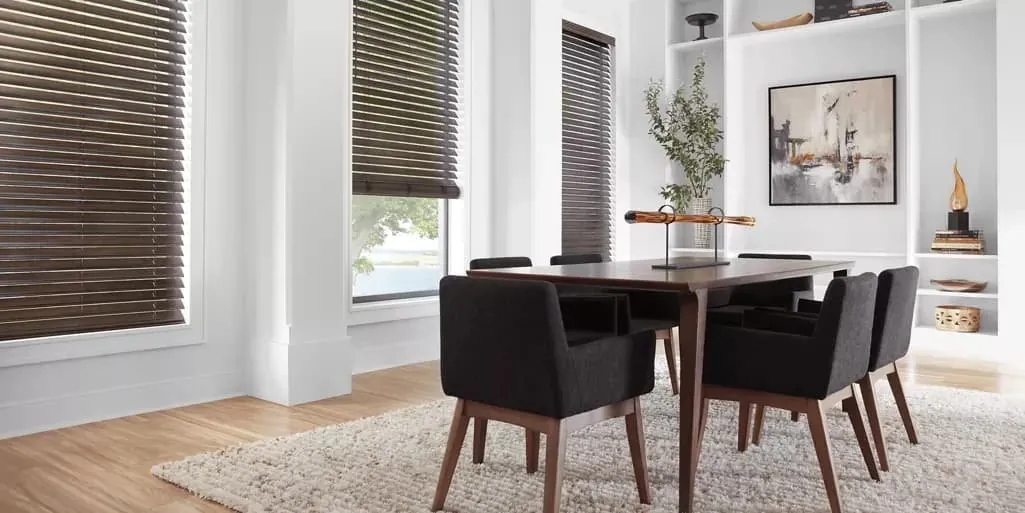
Blinds cut to size
Wood, faux wood, metal and vertical blinds, each built to its own frame, narrow sash included.
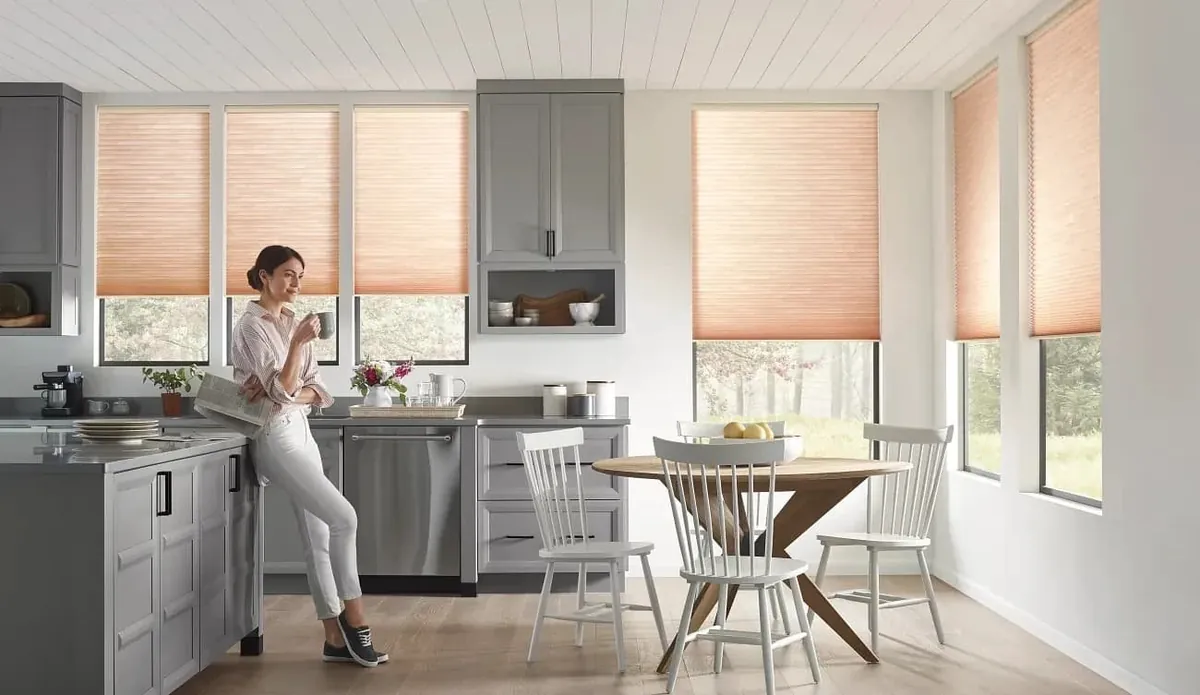
Honeycomb cellular shades
Duette and Applause. The air held in each cell keeps a room more even through a cold night.
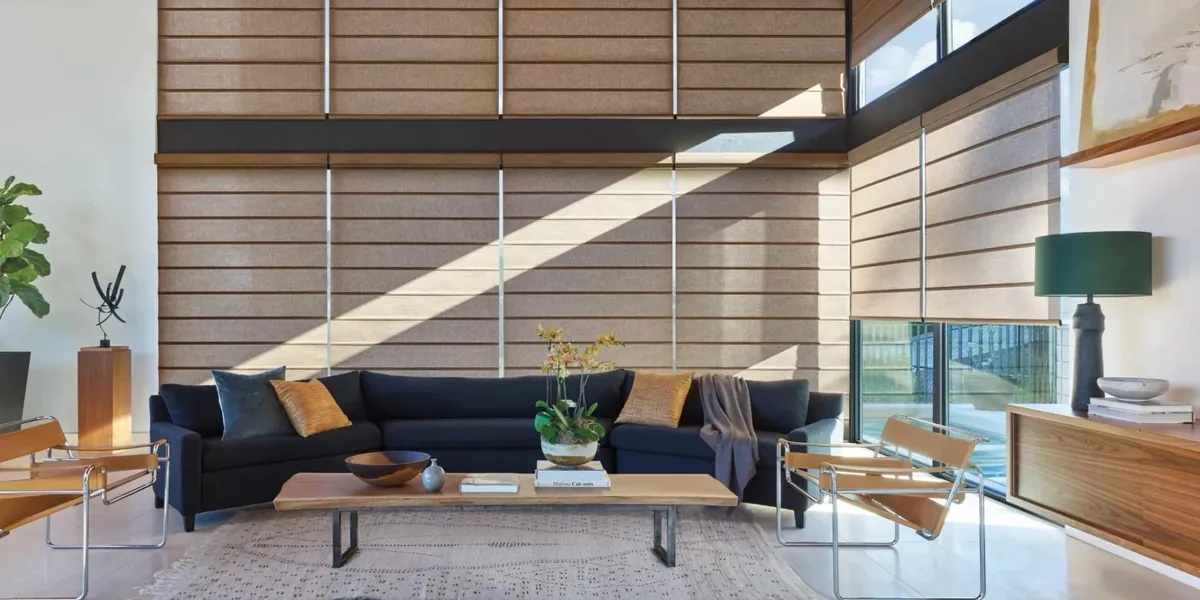
Rollers, screens and banded shades
Designer and Alustra in a choice of openness, from soft view-through screens to fabrics that block the light.
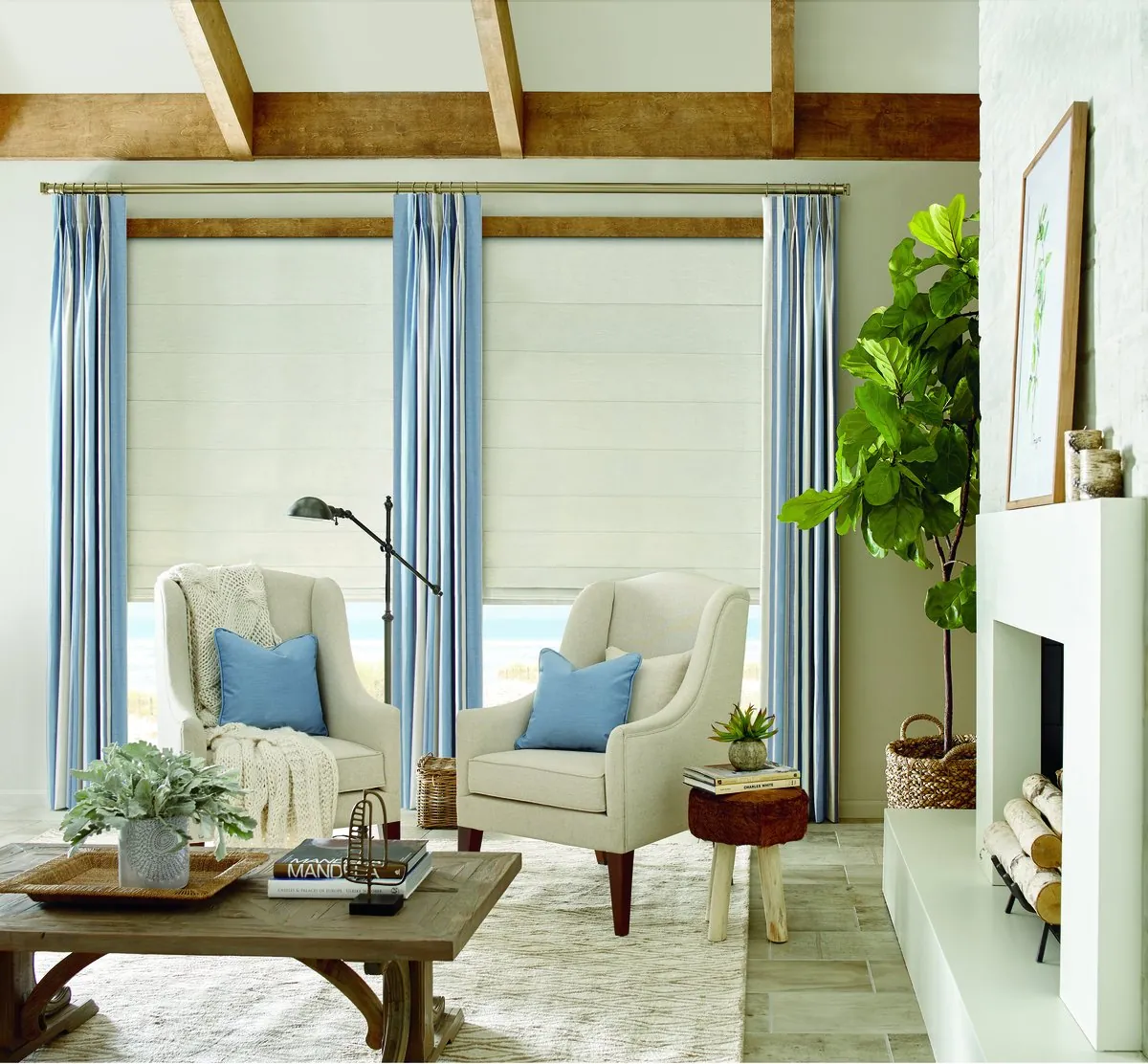
Folded and flat romans
Vignette and Carole Fabrics romans that suit a high-ceilinged Victorian parlor.
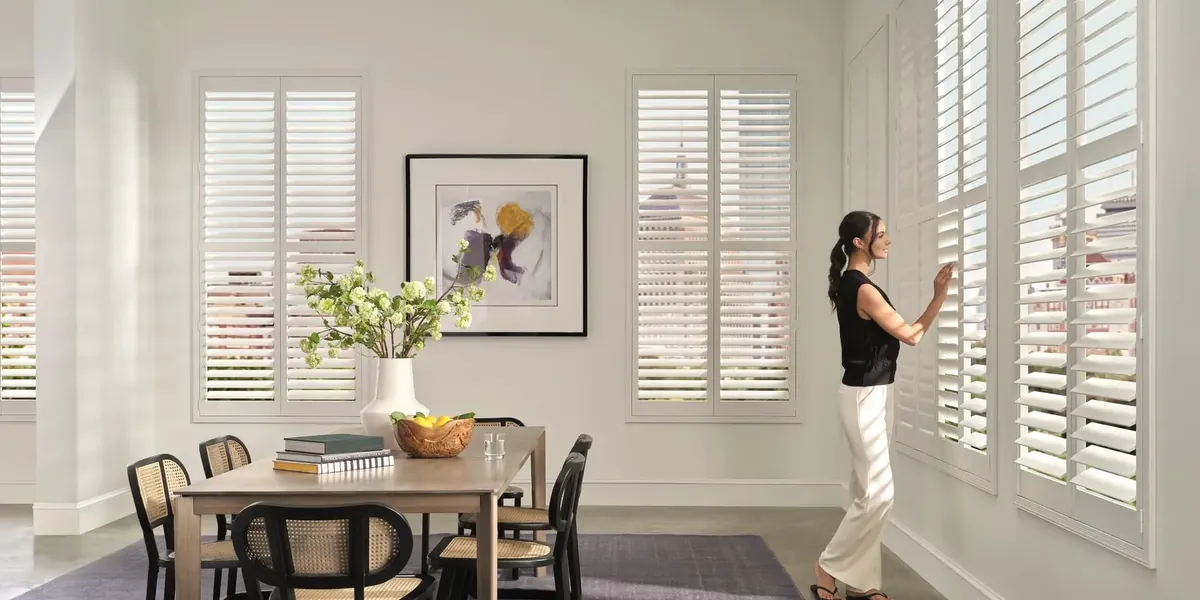
Plantation shutters
Palm Beach, NewStyle and Heritance, with louver size and frame style set to each window.
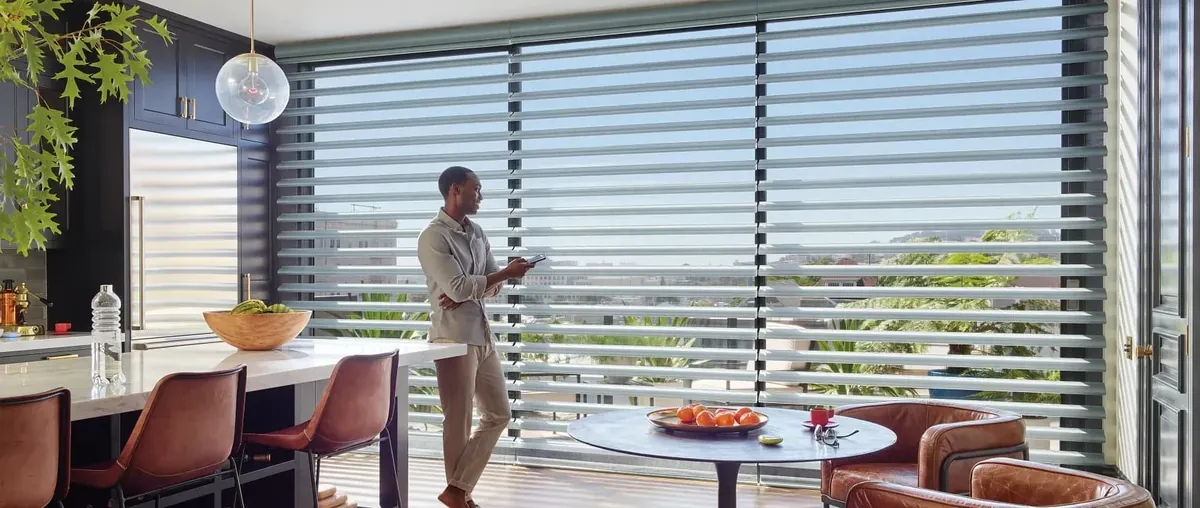
PowerView motorization
The answer to foyer glass you cannot reach: run it from a remote, an app or a daily schedule.
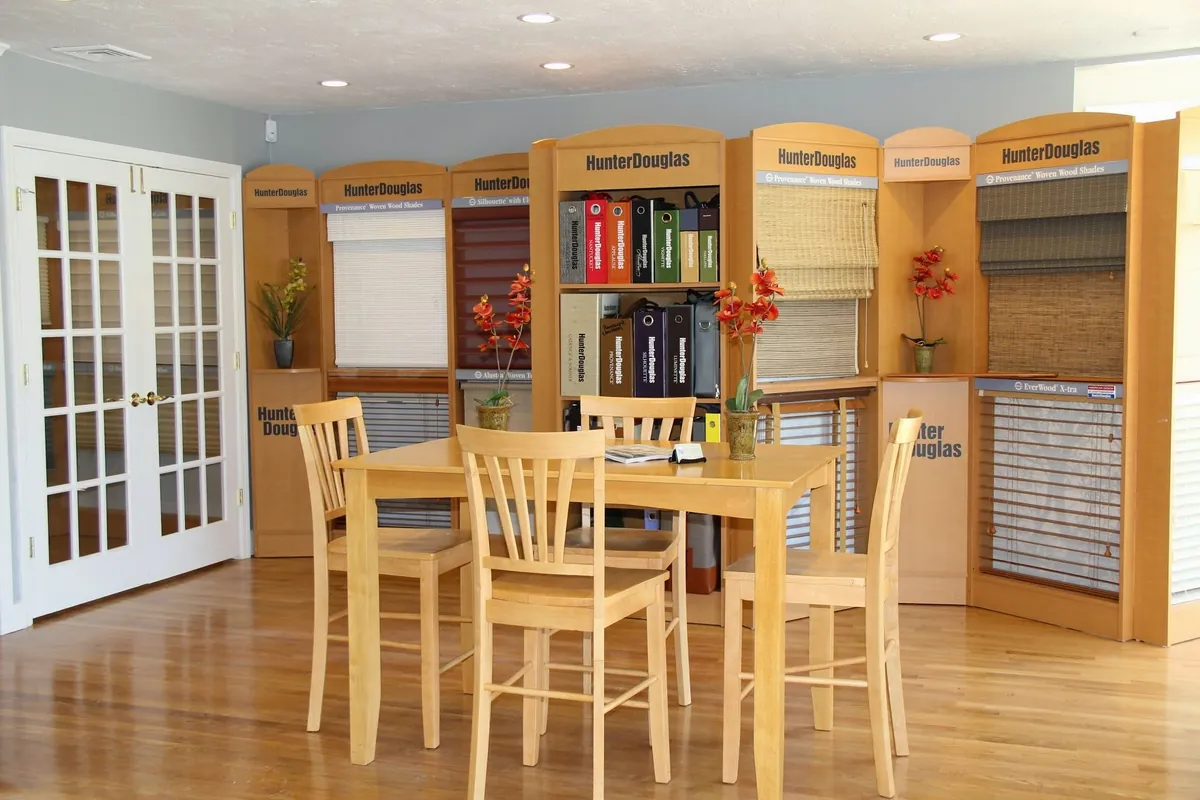
Hunter Douglas Gallery dealer
The whole Hunter Douglas range through one dealer, installed by Hunter Douglas certified installers.
The two-story foyer
Step into one of the newest colonials and the foyer is often the first thing you notice: a tall open hall, a staircase climbing one side, and windows stacked one above the other or a single tall run of glass over the door. It is a handsome space, and a demanding one for coverings.
Three things come up in nearly every foyer we measure.
The first is reach. The upper windows can be well above the top of any ladder you would want to stand on with a coffee in hand. A shade there has to be operated from the floor, which is exactly what PowerView does: a remote, the app on your phone or a schedule raises and lowers it without anyone climbing.
The second is sun. Foyer glass often faces the street, and in the right orientation it pours light across the stairs and into the rooms beyond. That is lovely in the morning and less so when it fades a runner or glares off a hall mirror. A light-filtering fabric or a solar screen softens it without closing off the space.
The third is how the foyer looks from outside. At night, with the hall lights on, an uncovered two-story window shows the whole staircase to the street. A covering that closes fully in the evening keeps the house private, and one that matches the windows beside it keeps the front looking finished.
Pairing the upper and lower glass
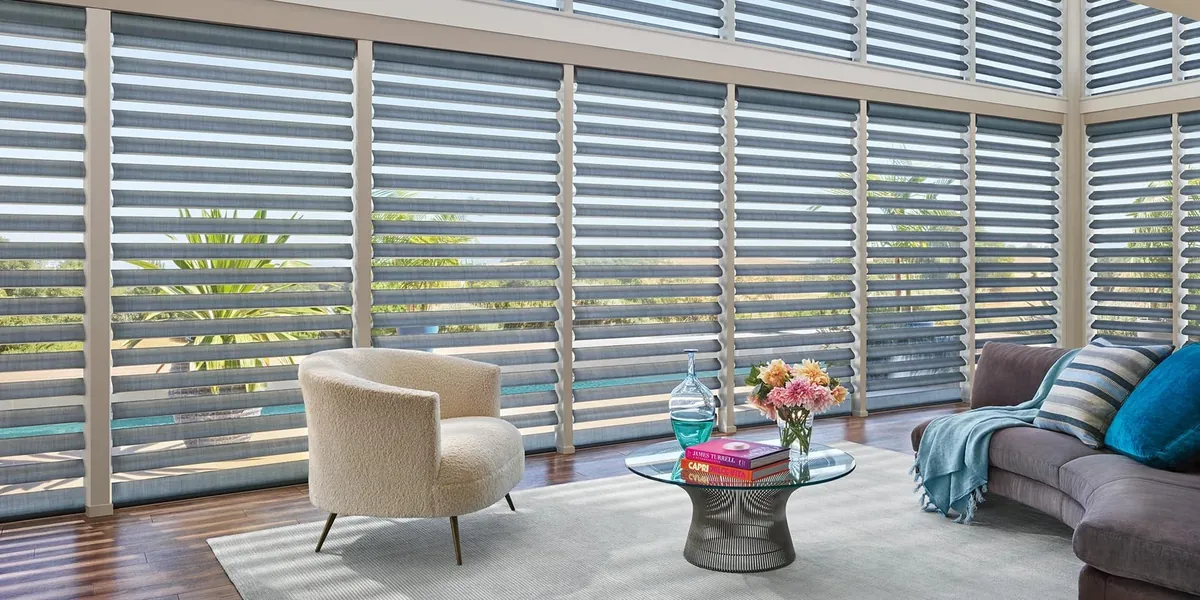
Where a foyer has one window above another, the two coverings need to work as a pair. We match the fabric and color, align the edges so they read as one column from the street, and set the heights so the upper shade and the lower one look deliberate when both are lowered. On a PowerView system the two can be grouped, so one press of a button moves them together.
Some people prefer to leave the upper glass open all the time for the light and cover only the lower window for privacy. That works well where the upper glass faces a quiet direction. We will look at the orientation with you and suggest what suits the light in that particular hall.
Tall narrow sash near the center
Back in the center, the Victorians bring the opposite challenge. Their windows are tall but narrow, sometimes only a little wider than a door, and they sit in rooms with high ceilings and generous trim. Put a covering with a chunky headrail or a wide stack on a narrow sash and it overwhelms the window.
What works on a narrow sash:
- An inside mount keeps the trim on show and the shade within the frame, which suits the proportions.
- A slim stack. A honeycomb or roller gathers into a narrow band at the top, leaving almost all of the tall glass clear when raised.
- Shutters split into upper and lower panels, so you can open the top for sky while the bottom stays closed for privacy.
- Slats sized to the frame. On a narrow window, a smaller slat or louver usually looks more balanced than a large one.
- Romans add softness and suit the high ceilings, as long as the folds are scaled to the width.
Old frames are rarely perfectly square, so we measure every narrow sash at the top, middle and bottom and work to the tightest point. That way the covering runs cleanly up and down without rubbing.
Getting the light right in a Victorian parlor
A Victorian parlor with two or three tall sash windows can be bright and airy or gloomy, depending on what hangs in them. Heavy coverings left half down all day make the room feel smaller. Lighter fabrics that lift clear of the glass let the tall windows do what they were built for.
For the street side, a light-filtering honeycomb or a sheer shade with fabric vanes lets the daylight in and keeps the room hidden from the sidewalk. Shutters with louvers tilted upward bounce light onto the ceiling. In the evening, any of them closes fully. These are the window treatments in Mansfield, MA, that let a tall old room feel bright without feeling exposed.
The street face of an older house
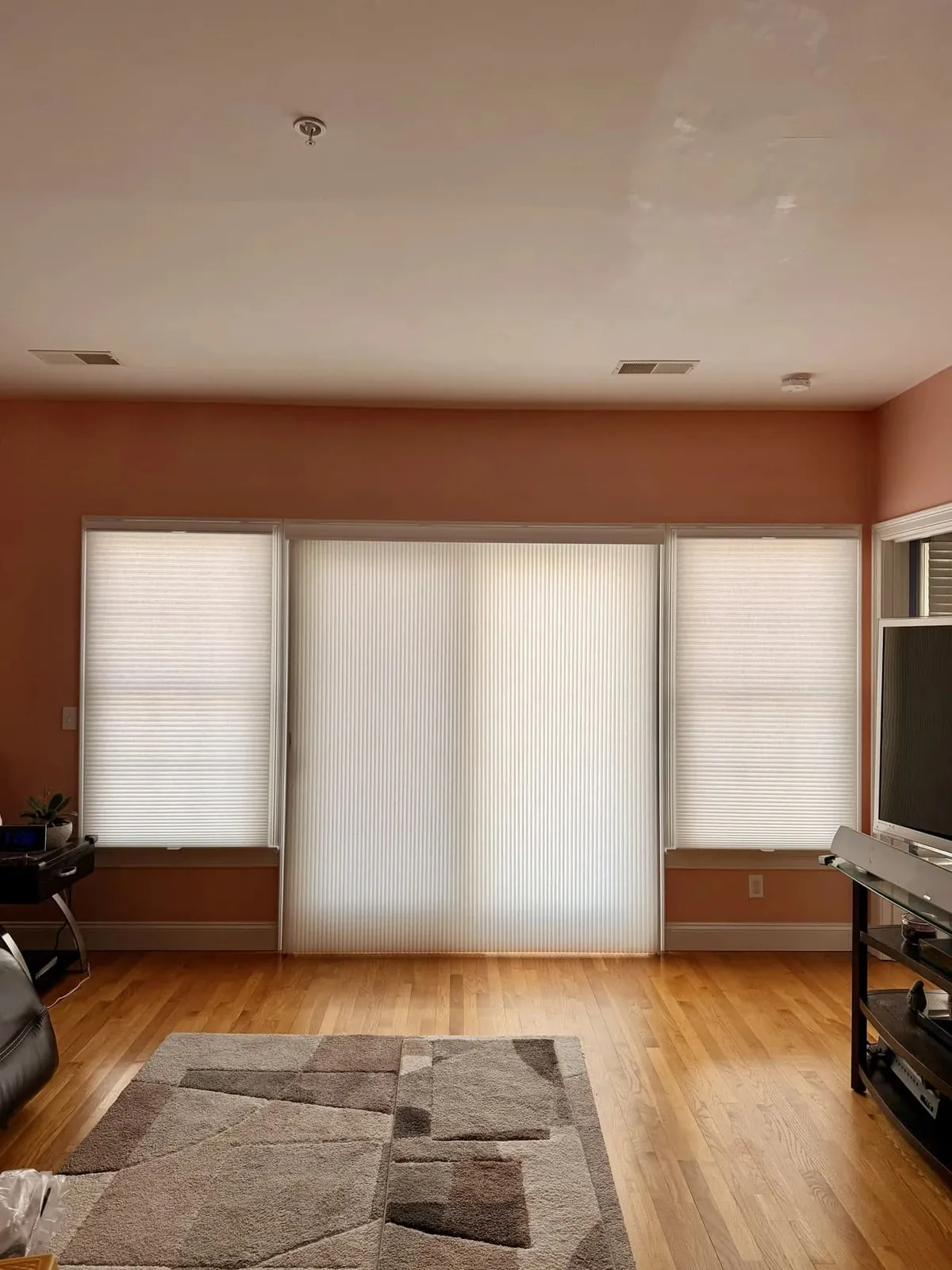
The Victorians near the center sit closer to the road than the newer houses, and their tall front windows are on show to everyone who passes. From the sidewalk, a row of narrow sash with coverings stopped at different heights, or a white shade beside an ivory one, looks unsettled, even if each room is perfect on its own.
The fix is simple. Keep the color facing the glass the same on every front window, whatever the product behind it, and where the windows match in size, set the coverings to line up when lowered. Shutters suit a Victorian front especially well, because the frame and louvers look tidy from both sides. Choosing window treatments in Mansfield, MA, for an older house often starts with that front, and the back rooms follow.
Post-war ranches
Between the old center and the newest subdivisions are the post-war ranches, all on one level with plain square openings. They are the simplest houses in town to fit. Almost any product suits them, so the decision comes down to what each room needs.
The living room window, often the biggest in the house, faces the street and takes a roller or a honeycomb across its full width. Bedrooms down the hall want privacy and darkness for sleep. The kitchen at the back usually has a window over the sink, where a faux wood blind or a plain roller is easy to reach. A slider to the yard takes a vertical blind or a vertical honeycomb that draws aside.
Because every room in a ranch sits on the ground floor, the shades are all within easy reach, and plenty of people are happy to work them by hand. Where a ranch does benefit from PowerView is in the row of bedrooms facing one way: a single schedule can lower them all at bedtime and lift them after breakfast. It is a modest step that removes a nightly walk down the hall, and it can be added later if you would rather start simple.
Large newer colonials across the subdivisions
The big colonials in the subdivisions are where the window count climbs: two full stories, a foyer, a family room at the back and bedrooms on every side, so the openings add up quickly. Fitting them is not hard, because the openings are modern and regular. What takes thought is consistency across so many windows.
We usually suggest picking a lead product and color for most of the house, so the front reads as one from the street. Then a few deliberate exceptions where a room needs something else: room-darkening fabric in the main bedroom, faux wood blinds in the baths, a solar screen in a family room that takes the afternoon sun. That way the house looks considered, and every room still works.
A schedule for a big house
In a large colonial, walking from room to room to raise and lower every shade is a chore. PowerView can do it for you. Shades can be grouped by room, by floor or by side of the house, and set to move on a schedule: up in the morning, down at dusk, the west side lowered through the late afternoon. You can still adjust any one of them from a remote or the app whenever you like. For more, see how motorized shades are controlled.
The foyer glass and any high windows over the stairs are the obvious first candidates. Many people start there and add more rooms later.
Stairs and landings
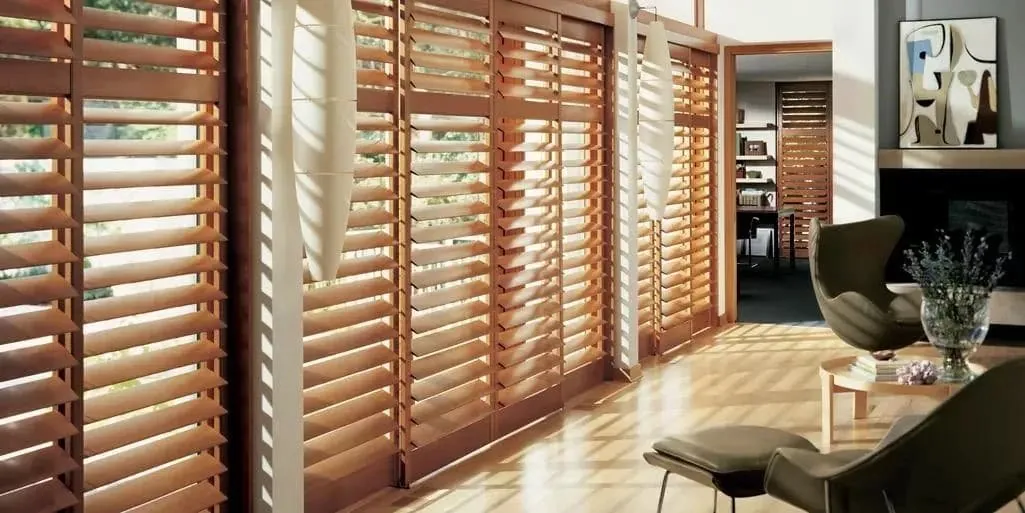
The staircase in a big colonial usually rises through the foyer, but many also have a window on a half landing or along an upstairs hall. Those windows are easy to forget and awkward to reach over a railing. A PowerView shade on a landing can join the foyer group, so the whole stair moves together on one schedule. Where a motor is not wanted, a light-filtering shade left at one height through the day lets the light in and hides the stair from outside, and only needs adjusting now and then.
Family rooms and decks
At the back of most colonials is a family room with a wall of windows or a slider opening onto a deck. That is where the afternoon sun lands, and where a television fights the glare. A solar screen cuts the glare while leaving the view of the yard; the openness you choose decides how much of the yard you see. A honeycomb gives similar comfort and holds air at the glass in winter. The slider itself needs a covering that clears the door: a vertical honeycomb or a vertical blind that draws to one side, or a shade mounted above that lifts fully out of the way.
French doors take a shade or a shutter mounted on each door, so it swings with the door and never gets in the way.
Winter by the glass
Tall old sash and big modern windows share one thing: on a January evening the air beside the glass can feel cool. A honeycomb shade lowered at dusk helps, because each cell holds air between the room and the window. In a Victorian with original frames, that can make a parlor noticeably more comfortable. In a colonial with a two-story foyer, a honeycomb on the tall glass keeps the hall from feeling drafty when the heat is on. Our guide to cellular shades and winter heat explains the idea.
Bedrooms, baths and kitchens
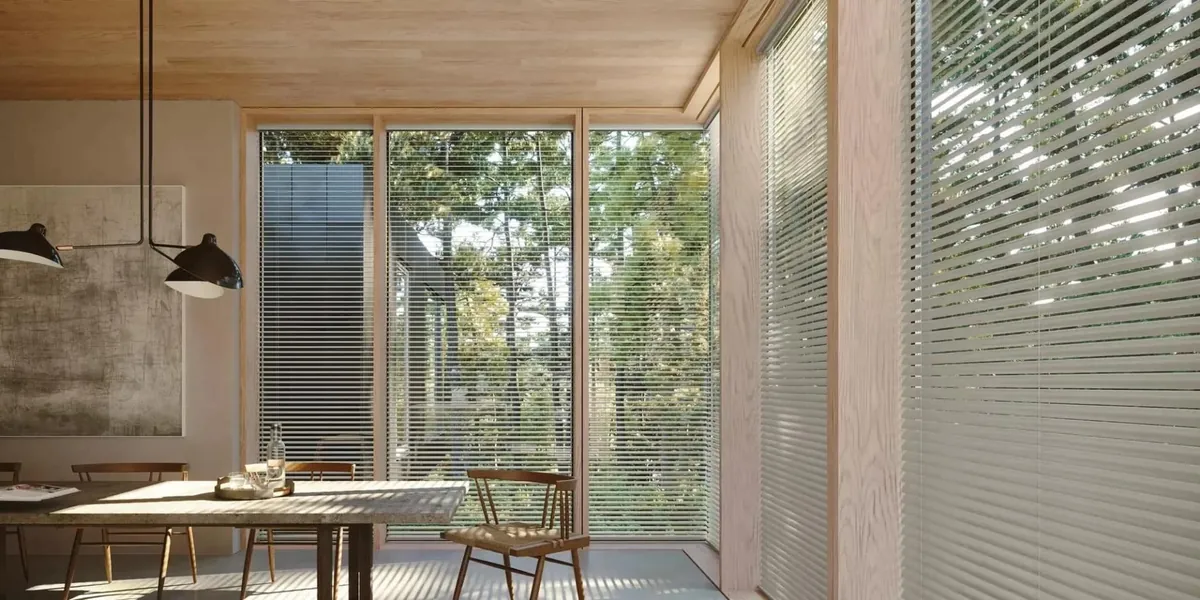
Bedrooms everywhere in town share the same request: dark at night and in the early summer morning. A room-darkening fabric, measured to sit snugly inside the frame, does it, and a lighter layer can be added if you like the room bright by day. On a tall narrow sash, a room-darkening roller or honeycomb is especially neat.
Baths want privacy at eye level. Cafe shutters on the lower part of the window or faux wood blinds that tilt and close are the usual answers. In the kitchen, practical choices that are easy to reach work best, and a PowerView motor takes care of any window over a deep counter.
How a project runs
- Request a consultation and choose a time.
- A consultant brings the samples in a van, because we can bring the showroom to you.
- We walk through the house, from the foyer to the bedrooms, looking at the light, the reach and the view from the street.
- Every opening is measured, narrow sash and foyer glass included.
- You receive a free estimate room by room, so you can do the whole house or start with the foyer.
- Hunter Douglas makes the order, and certified installers hang it, test every shade and set up any PowerView motors.
More detail is in what happens at an in-home consultation. If color and fabric across a large house feel overwhelming, our interior design consultations can help, and if you have older blinds or shades that need fixing, ask about blind and shade repair.
The Gallery dealer behind Mansfield’s tallest windows
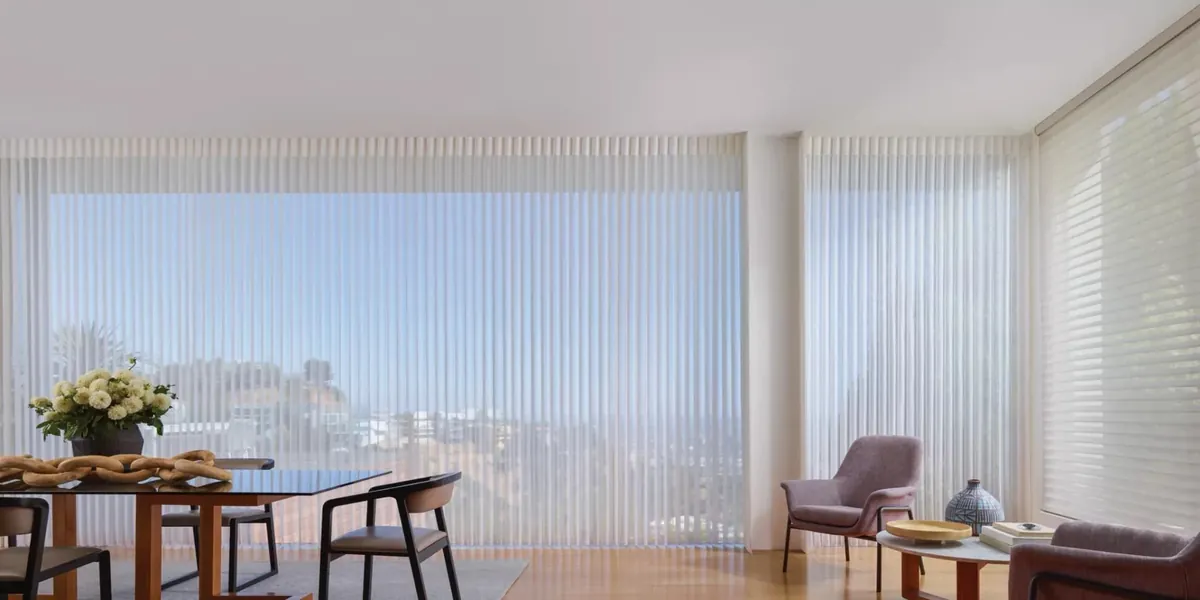
A Mansfield house can need slim shades for narrow sash, motorized coverings for foyer glass and room-darkening fabric for the bedrooms. Blinds & Designs is a Hunter Douglas Gallery dealer, so the whole Hunter Douglas range is available through one consultant who plans every window together.
Certified Hunter Douglas installers hang every order. We also offer in-home consultations with sample vans, free estimates, interior design consultations, window covering automation and repairs.
Our Franklin showroom is the nearest
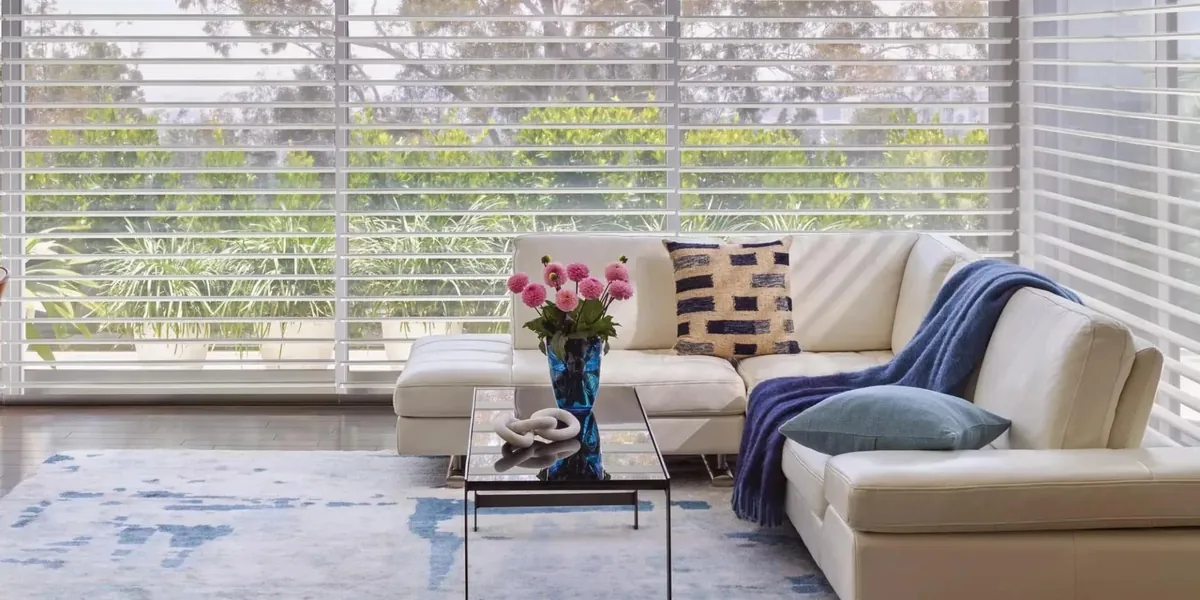
For Mansfield, the closest Blinds & Designs showroom is in Franklin. A visit can help you see the options before the home appointment.
Foyer glass and narrow sash are still best judged at the house, where we can measure the height and see the light. Start at the showroom, start at home, or do both.
Questions from Mansfield
How do you cover the top window in a two-story foyer?
With a PowerView motorized shade, operated from a remote, your phone or a schedule, so nobody has to climb. We match it to the window below so the two read as one.
Will a shade look bulky on our narrow Victorian sash?
Not if it is sized and mounted right. An inside mount and a slim stack keep the covering in proportion, and we measure each frame at several points.
We have a lot of windows. Can they all match?
Yes. Most people choose one lead product and color for the front, with a few rooms that differ inside. We plan the whole house together.
What works on the slider to our deck?
A vertical honeycomb or a vertical blind that draws to one side, or a shade that lifts fully clear of the door.
Is the estimate free?
Yes. After we measure and talk through the rooms, you get a free estimate set out room by room.
Take the next step
Choose a time with Request a Consultation and we will bring the samples to your house, foyer glass, narrow sash and all. You will get a free estimate once every window is measured. To look in person first, head to the Franklin showroom, and use the call button for any question in the meantime. Window treatments in Mansfield, MA, are easier to plan with the windows in front of us.
Our window treatments page lays out every shade, blind, shutter and drapery line we sell.