
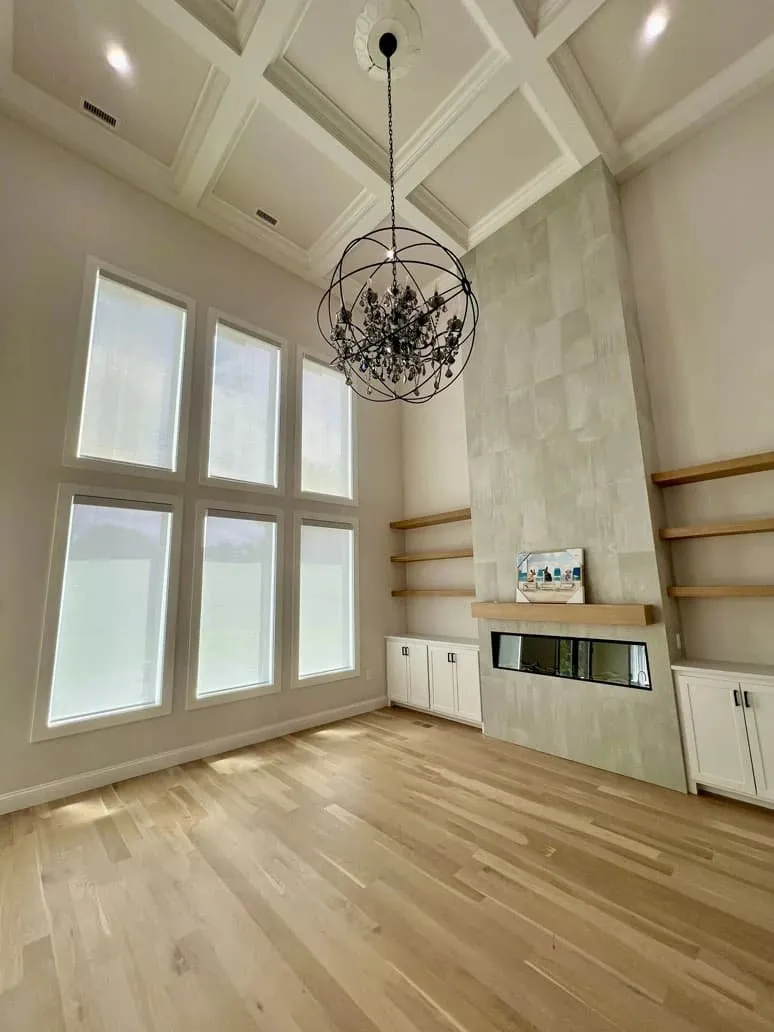
A plain shade for houses with a lot going on
Designer roller shades suit the houses around North Dartmouth for a simple reason: they get out of the way. One piece of fabric, one tube, and a slim finish at the top. When the shade is up, you barely see it. When it is down, it is a calm, flat surface.
That is useful in a mid-century ranch off Faunce Corner Road, where a long picture window and a slider share one wall and anything fussy would look busy. It is useful in a Padanaram colonial, where an inside-mounted roller keeps the painted trim and the small panes in view. And it is useful in a South Dartmouth room that faces Apponagansett Bay, where the shade has to come down for the afternoon glare and disappear again by evening.
Make it your own
The tube and fabric are only the start. These three choices give Designer roller shades their character.
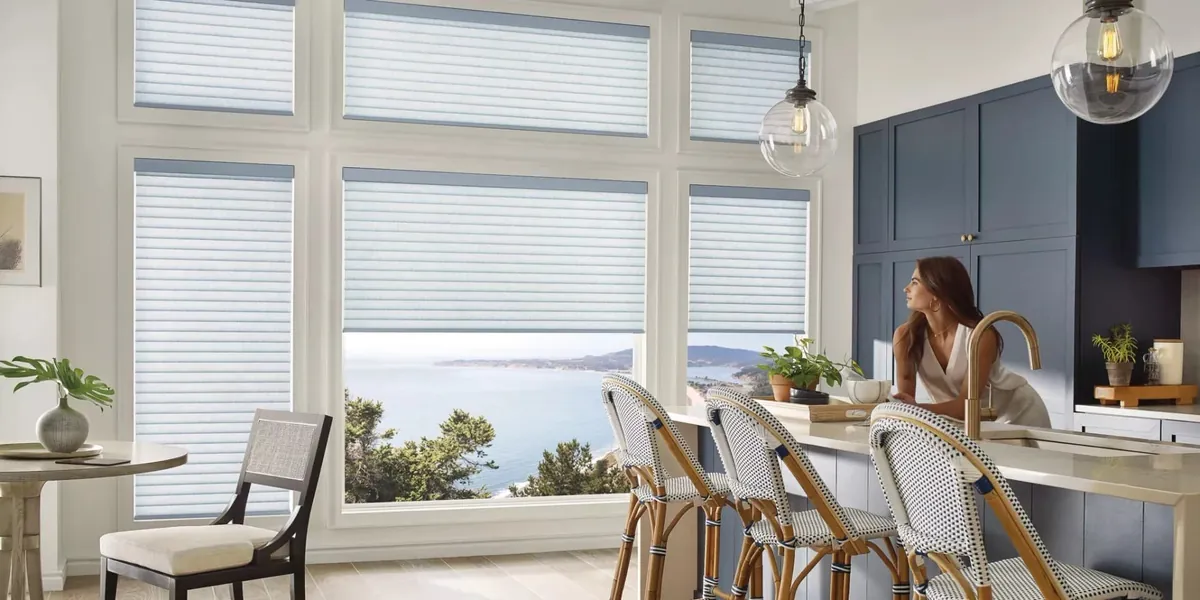
Top finishes
Leave the roll open for a light, simple look, or hide it in a fabric-wrapped or metal cassette that gives the window a finished line at the top.
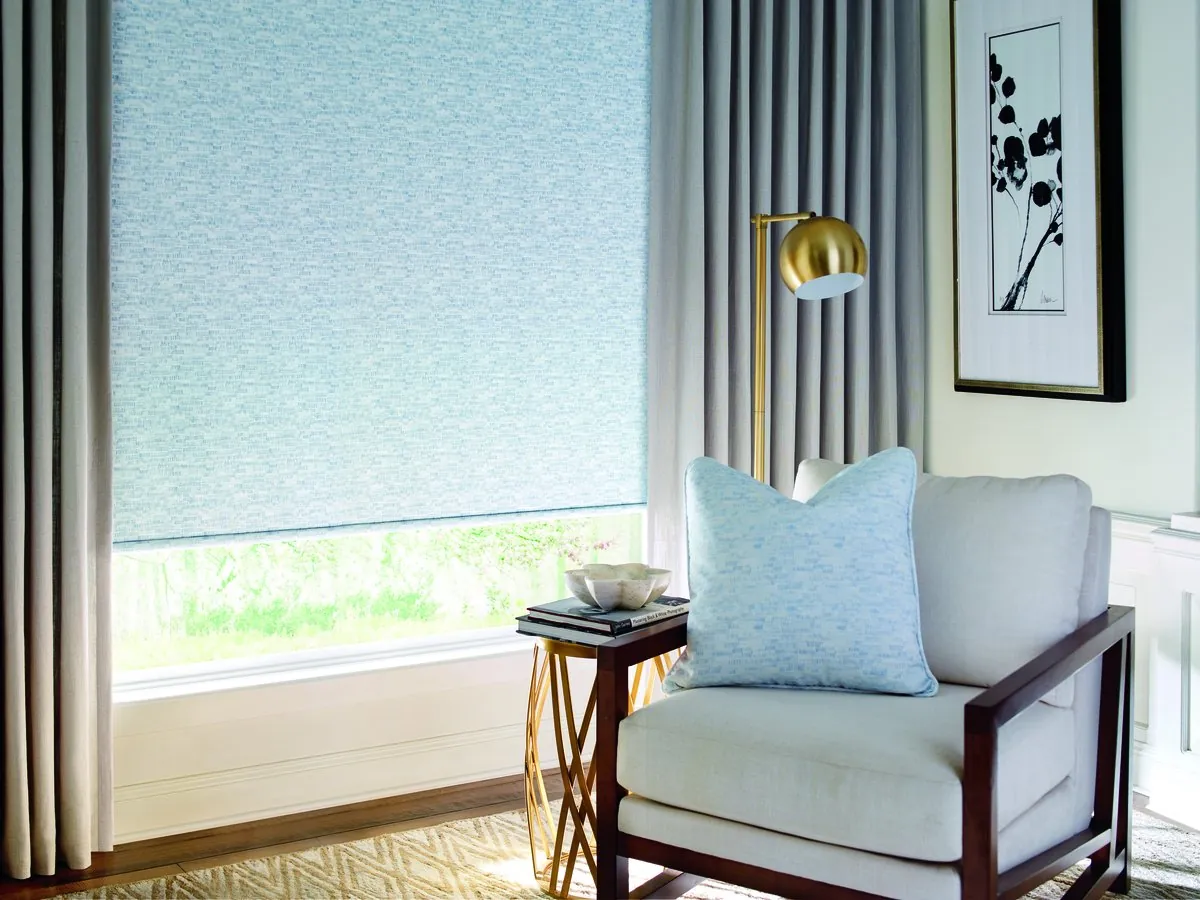
Fabric and pattern
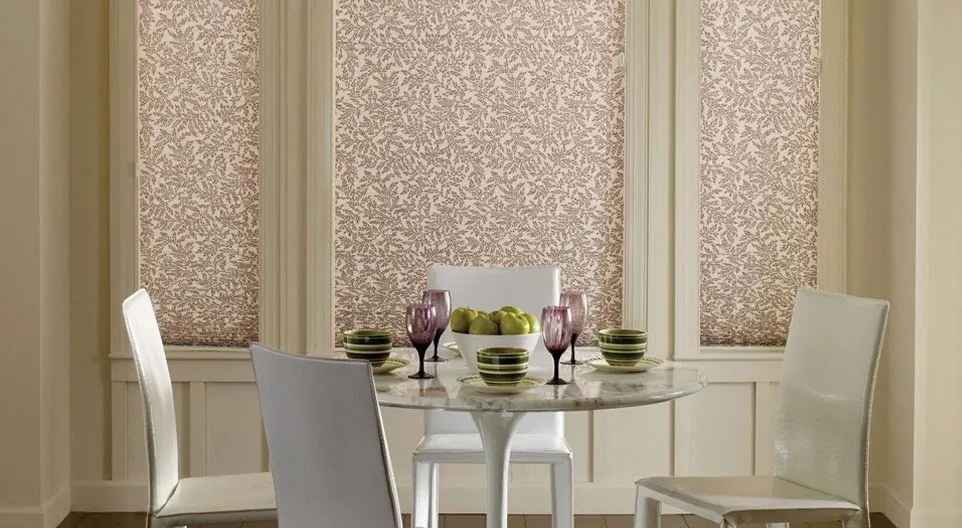
Plain weaves, textures and patterns, in light-filtering, room-darkening and blackout weights. A pattern can carry a room on its own or sit behind drapery.
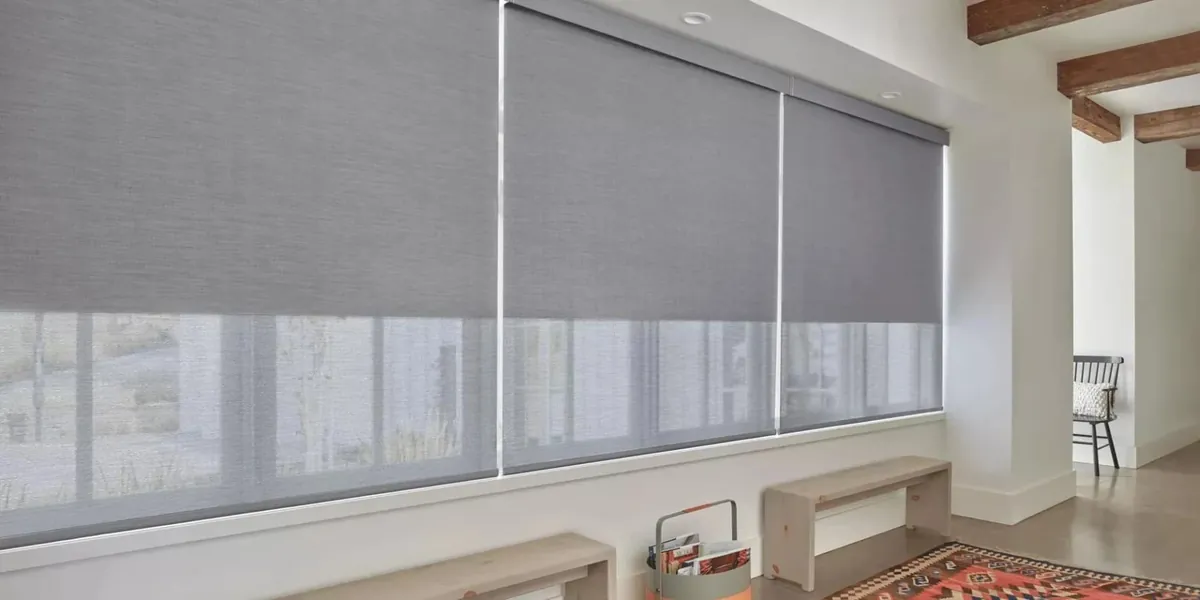
Bottom rails
A slim bar that almost disappears, or a fabric-wrapped hem that matches the shade. Small, but it changes how the shade reads from across the room.
Light-filtering, room-darkening or blackout
Choosing the weight of fabric is the decision that matters most, and it depends on the room more than on taste.
Light-filtering fabric lets daylight through while softening it. You keep a bright room and lose the hard shadows and glare. Kitchens, living rooms and front halls usually want this.
Room-darkening fabric blocks most of the light. It suits bedrooms where you want the morning to start a little later, and family rooms with a television.
Blackout goes further. Some light can still show at the edges of any roller, so in a bedroom we usually suggest an outside mount that overlaps the frame, or a cassette that closes the gap at the top.
A sunroom or west-facing room where you want the view more than the dark is a different case. That calls for solar screen fabric, which we cover on the Designer Screen page.
Older windows and wide ones
Designer roller shades work on both ends of the housing here. In the farmhouses out toward Russells Mills, the deep-set nineteenth-century sash often has room in the jamb to mount the roller inside, so the shade sits flush and the frame stays on show. We measure each window, because old openings are rarely square and a roller shows any taper as a gap down one side.
On wide ranch glass, one shade can often cover the whole run. Where it cannot, two or more shades can share a single head rail so the fabric lines up and the hems sit level.
Chain, cordless or PowerView
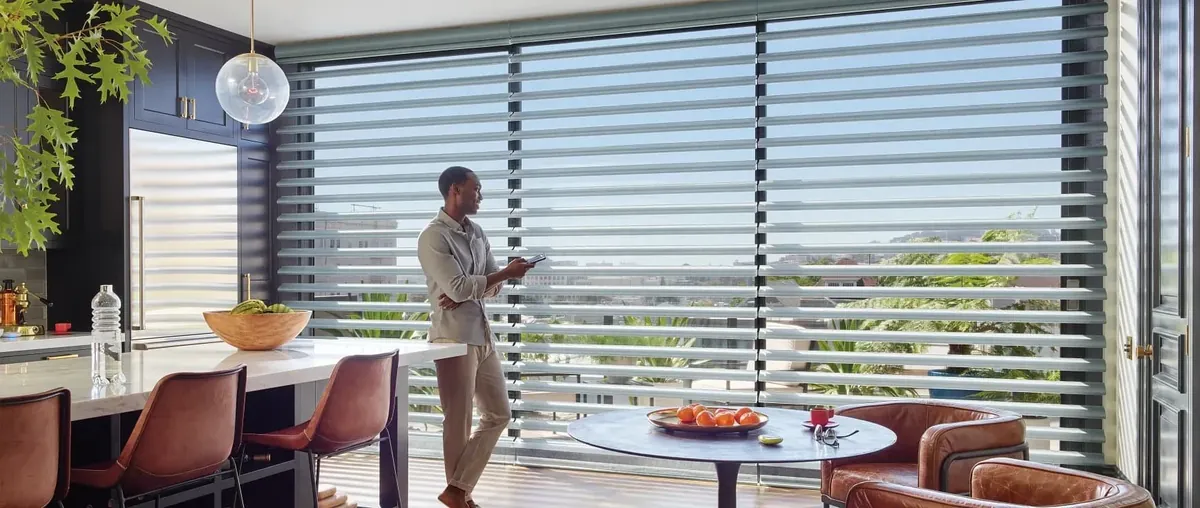
Designer roller shades can run on a continuous loop, which is simple and lasts. Cordless lift keeps the window clear for children and pets. For tall or out-of-reach windows, PowerView motorization raises and lowers the shade from a remote, an app on your phone or a schedule. A bedroom shade can lift a little before your alarm; a bay-facing room can drop its shades before the glare arrives. See our motorized blinds and shades page for how the controls work.
How we take it from sample to window
- You request a consultation using the form or the call button.
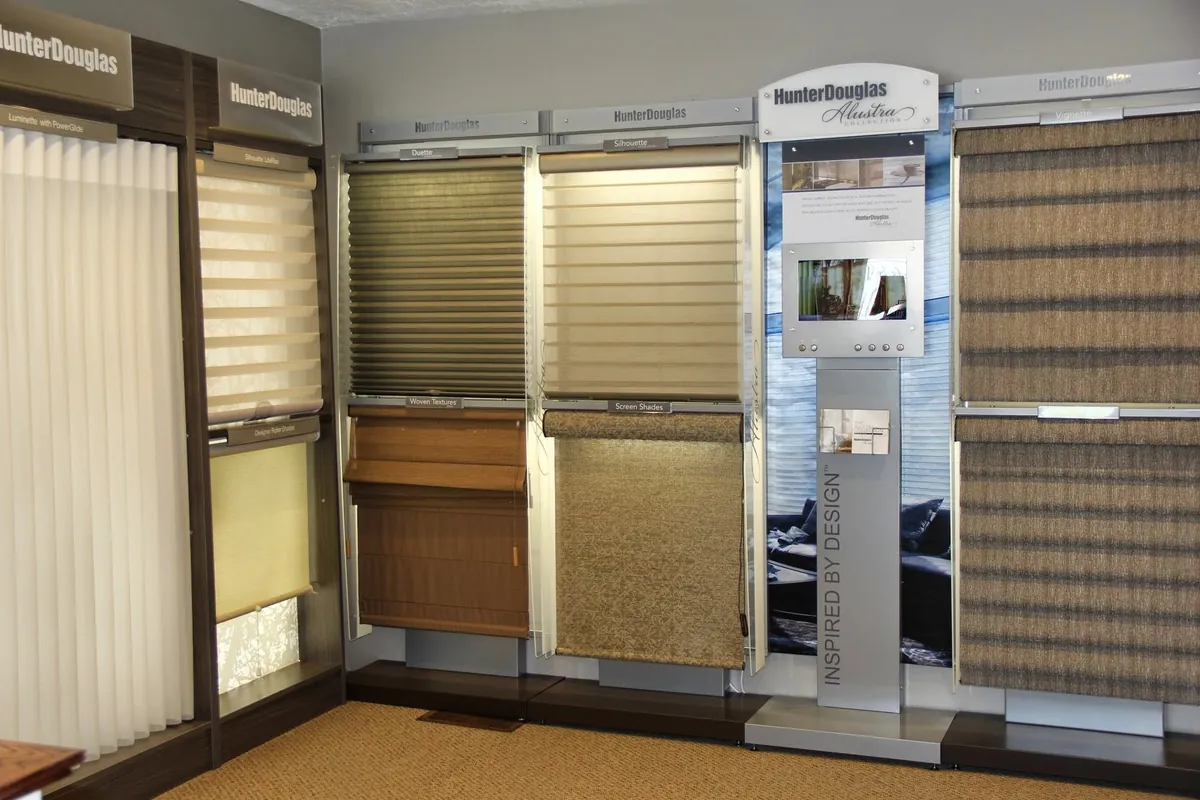
- We bring the fabrics. Our van carries Designer Roller samples, so you can see each weight and pattern in your own light.
- We measure every window and check the depth for an inside mount and the space for the top finish.
- You receive a free estimate for exactly what you picked.
- Certified Hunter Douglas installation, with each shade checked for a straight roll and a level hem.
You can browse the full fabric range in the Hunter Douglas Designer Roller catalog before the visit.
Why buy from a Hunter Douglas Gallery dealer
Blinds & Designs is a Hunter Douglas Gallery dealer. Our sample vans carry the fabrics for Designer roller shades to your home, so you choose in the light you live with.
- Certified Hunter Douglas installation
- In-home consultations with sample vans
- Free estimates
- Interior design consultations
- Repairs on the rollers you already own
Designer Roller questions
Should I mount the roller inside or outside the frame?
Inside shows off the trim and looks built in, which suits older sash. Outside covers more of the glass and blocks more light at the edges, which suits bedrooms. We check the depth of every frame before suggesting one.
Can I see the roll at the top?
Only if you want to. An open roll is light and simple. A cassette hides it and gives a tidier line.
Is a patterned roller a good idea?
It can be the focal point of a plain room, or a quiet partner to drapery. We bring patterns to the consultation so you can see them at full size against your walls.
Will a Designer Roller cut glare off the water?
A light-filtering fabric softens it, but if keeping the view matters most, a solar screen is the better tool. Our guide to the best shades for sun and glare compares the two.
How do I clean it?
A soft brush or vacuum attachment handles most fabrics. Our guide to caring for fabric shades has more.
Do you repair roller shades?
Yes. We welcome repairs on Hunter Douglas window coverings you already own, through our blind and shade repair service.
See the fabrics at home
The weight and color of a roller fabric are easiest to judge at your own windows. Request a consultation and we will bring the samples, measure and give you a free estimate. Or visit the North Dartmouth showroom, and compare the rest of our roller shades.
Every Hunter Douglas line we carry is on our Hunter Douglas Gallery dealer page.