
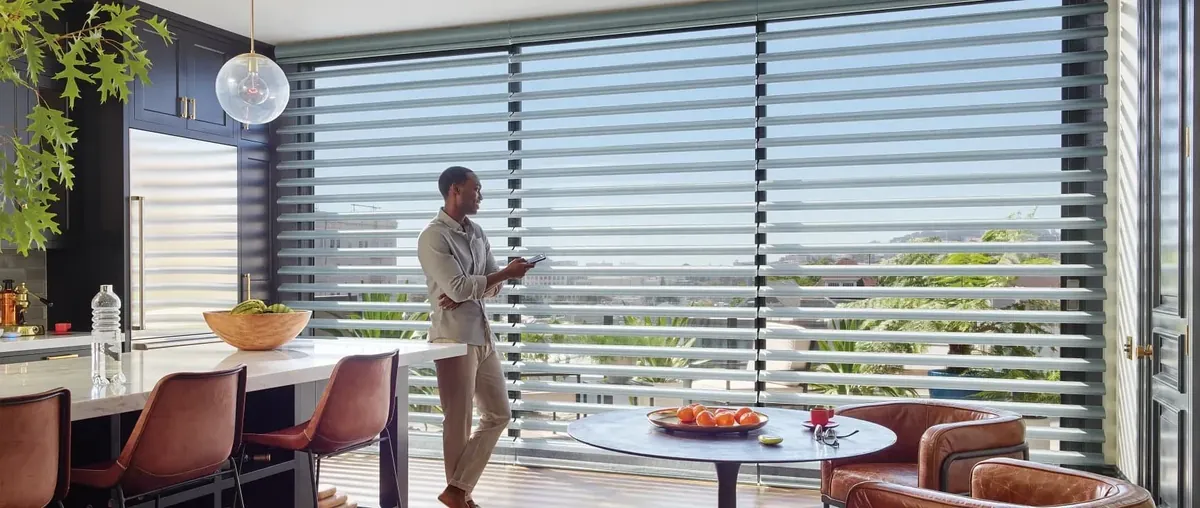
Glare, deep sash and wide glass: why Dartmouth motorizes
Dartmouth covers a lot of different housing in one town, and each kind has its own problem window. In Padanaram the older colonials and shingled capes have small rooms and windows tucked over sinks, tubs and window seats. Along Faunce Corner and Slocum Road the post-war ranches have broad picture windows made of several panes side by side. Out toward Russells Mills the farm properties have nineteenth-century sash set deep into thick walls, so the shade sits well back from where you stand. And in South Dartmouth, any room that faces Apponagansett Bay takes a hard wash of afternoon sun off the water.
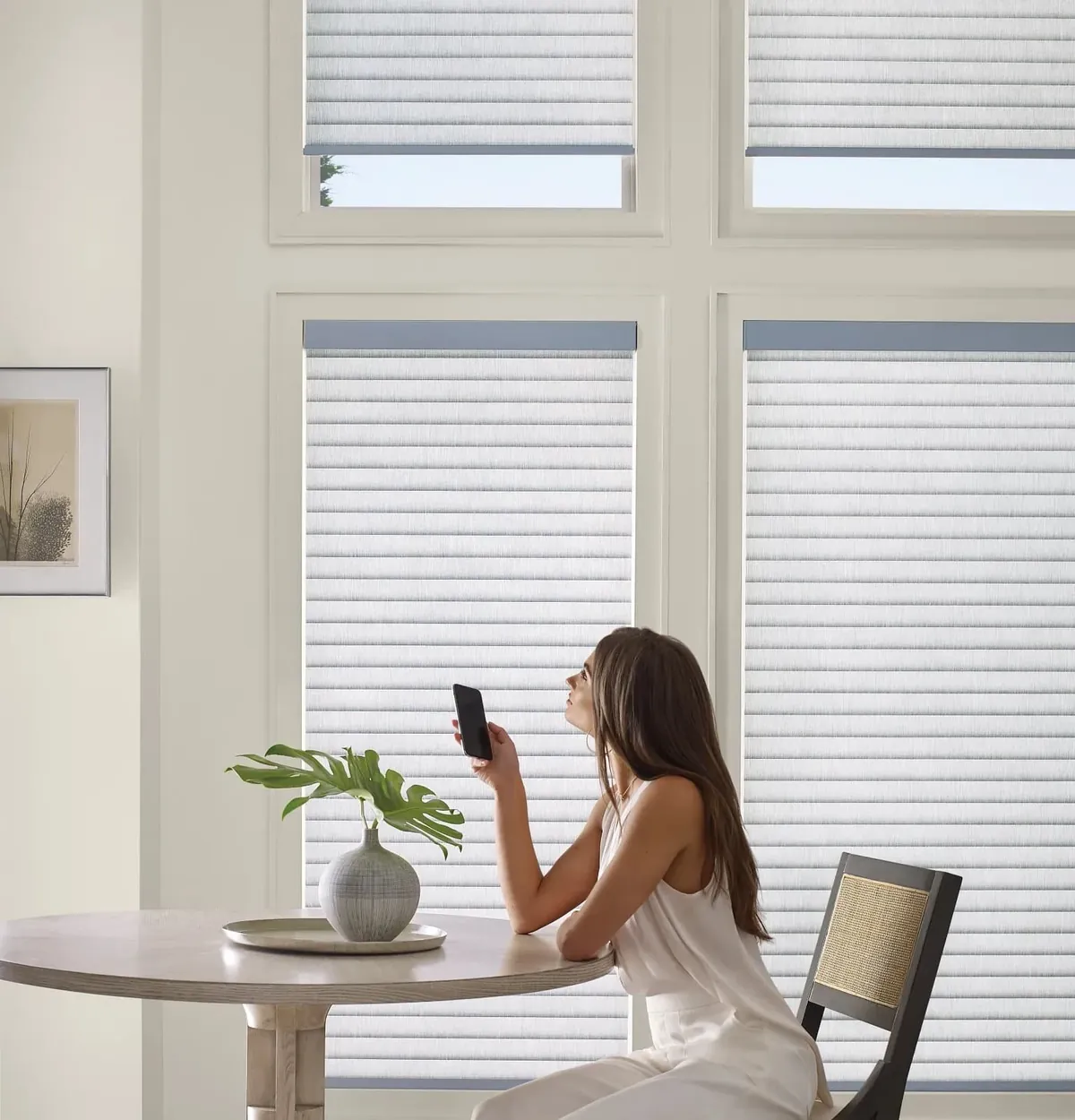
Motorized blinds in Dartmouth, MA, answer all four in the same way: the shade moves without anyone reaching for it. Hunter Douglas PowerView puts a motor inside the headrail, and you control it from a remote, from an app on your phone or tablet, or with a schedule that runs by itself. The window looks cleaner too, because there is no cord or wand hanging beside it.
This is also our home town. Blinds & Designs’ main showroom is in North Dartmouth, so the houses on this page are the ones we know best.
PowerView on the Hunter Douglas lines Dartmouth houses use
The motor is an option on the product, not a product of its own. Pick the shade or blind that suits each room, and PowerView runs it. These are the lines we fit most often across town.
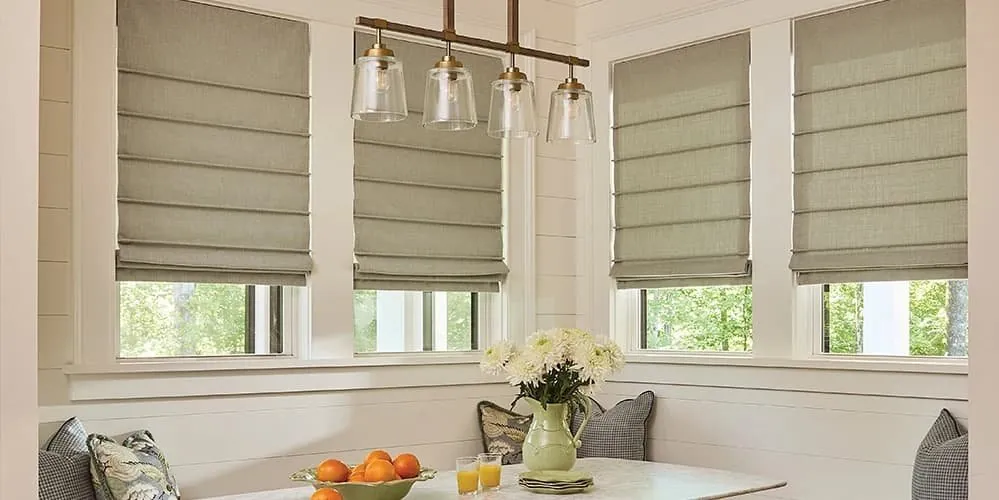
Vignette Roman shades
Soft folds for a Padanaram dining room or a breakfast nook. A motor keeps every fold even, which is hard to do by hand over a banquette.
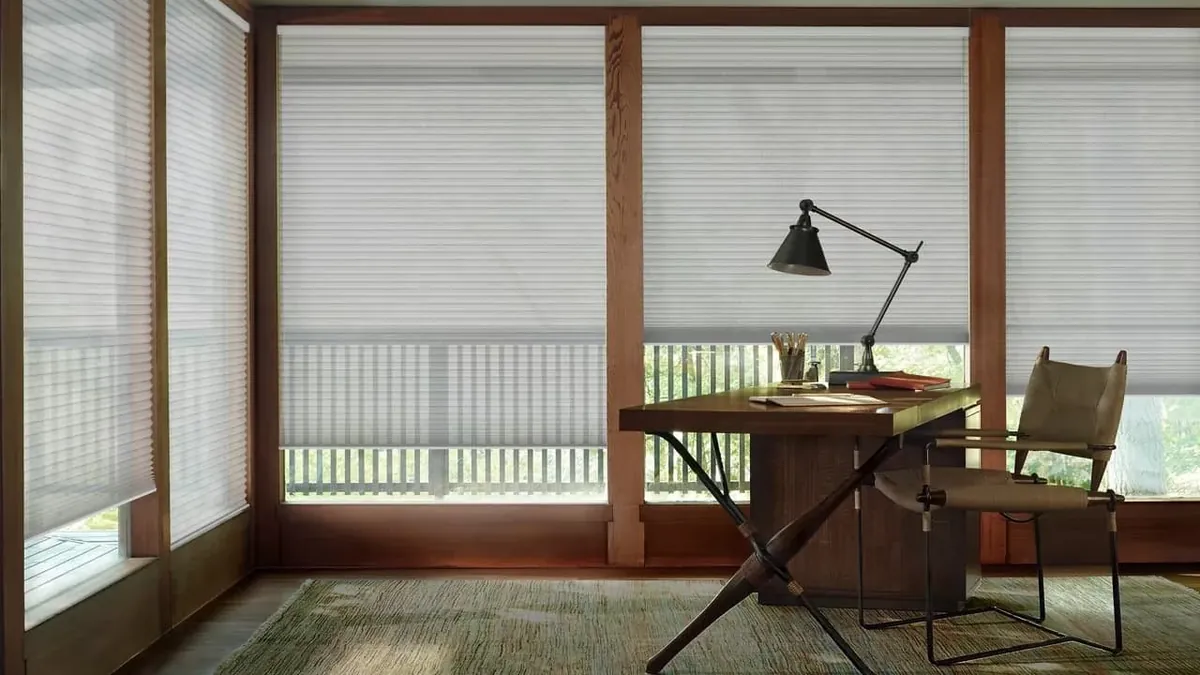
Duette honeycomb shades
The air held in each cell makes a cold room more comfortable. A good match for deep farmhouse sash where reaching the shade is awkward.
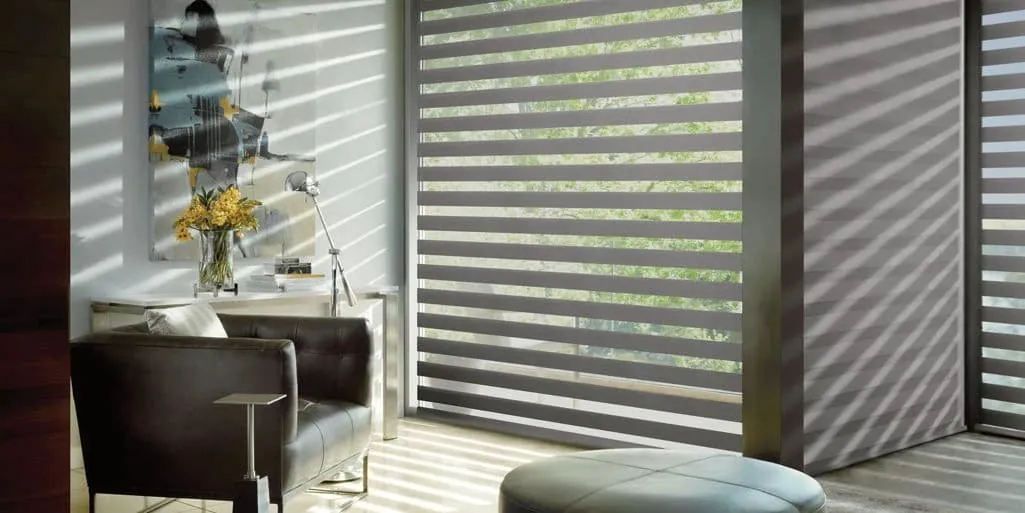
Banded shades
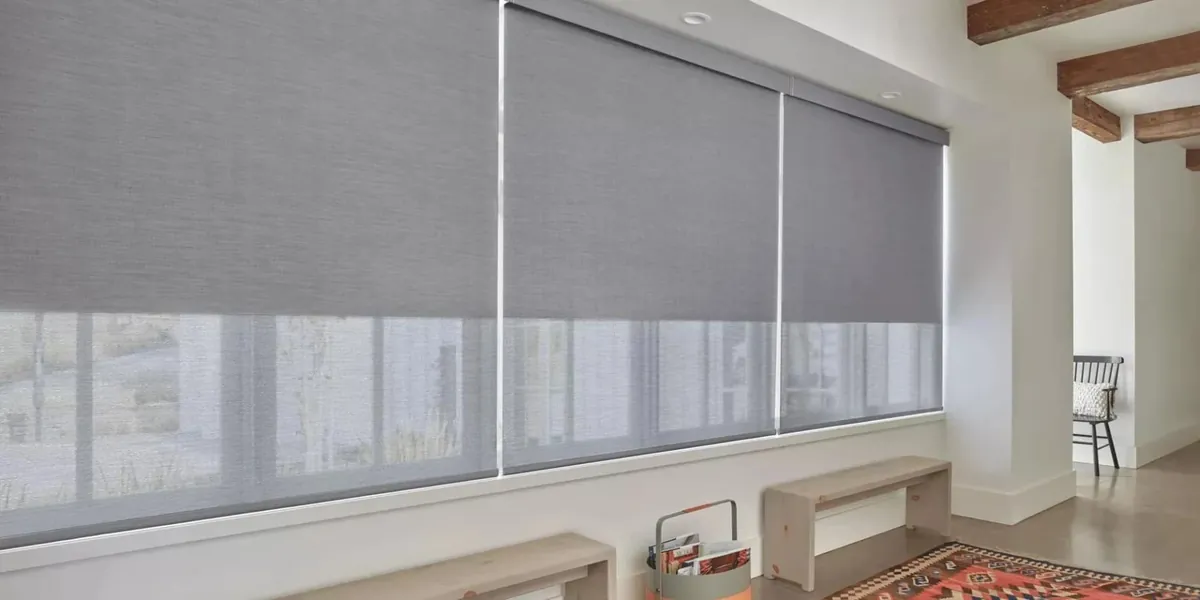
Alternating sheer and solid stripes let you shift from view to privacy with a small move, ideal for a ranch picture window on a schedule.
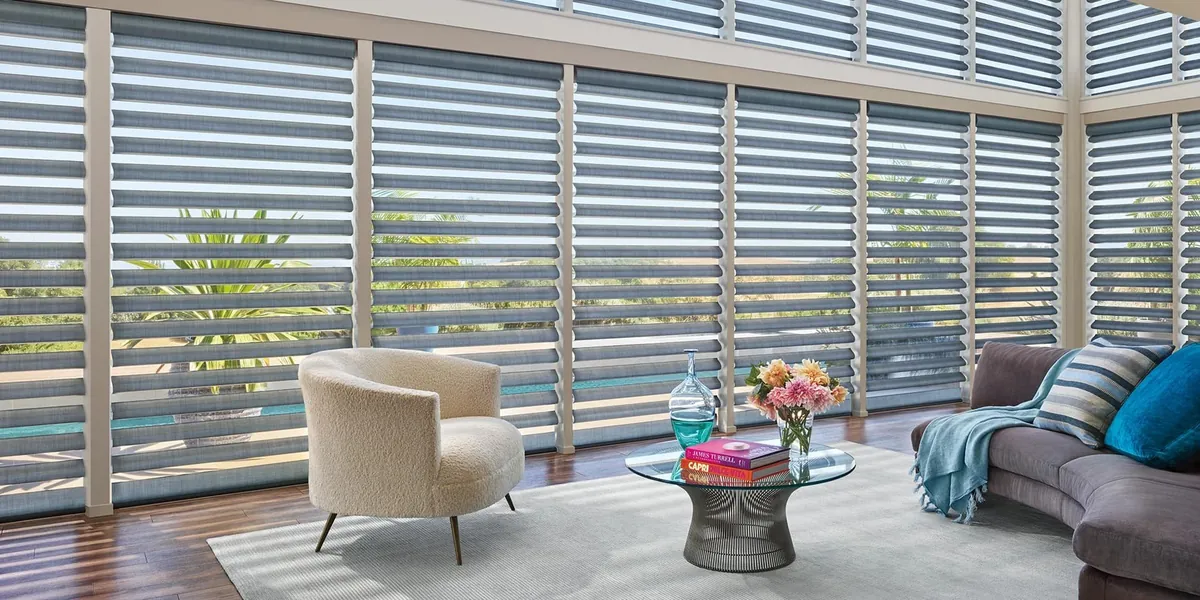
Silhouette and Pirouette sheers
Fabric vanes that tilt to soften glare off the bay. PowerView lifts the shade and angles the vanes from one control.
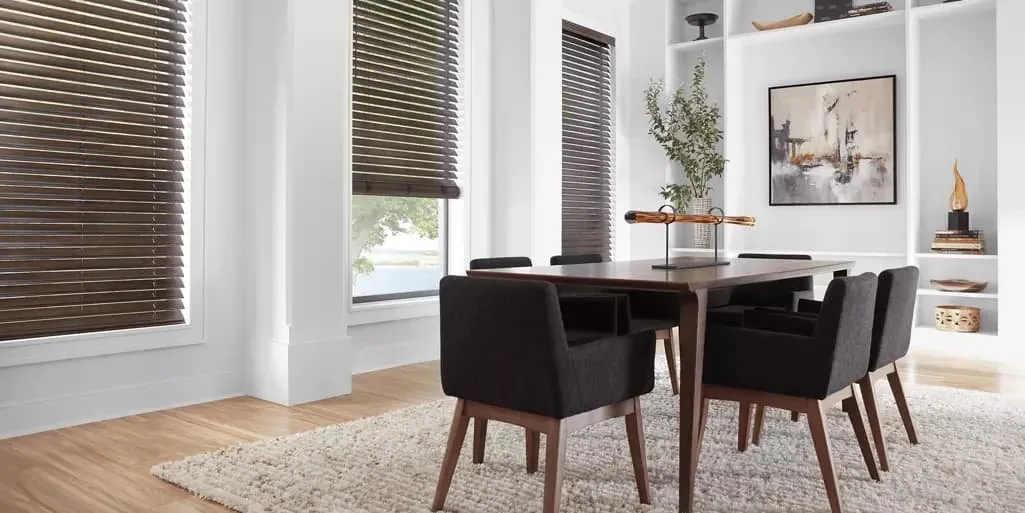
Motorized wood blinds
For rooms where tilting slats matters most. We confirm which blind lines and operating options suit the windows you have in mind.
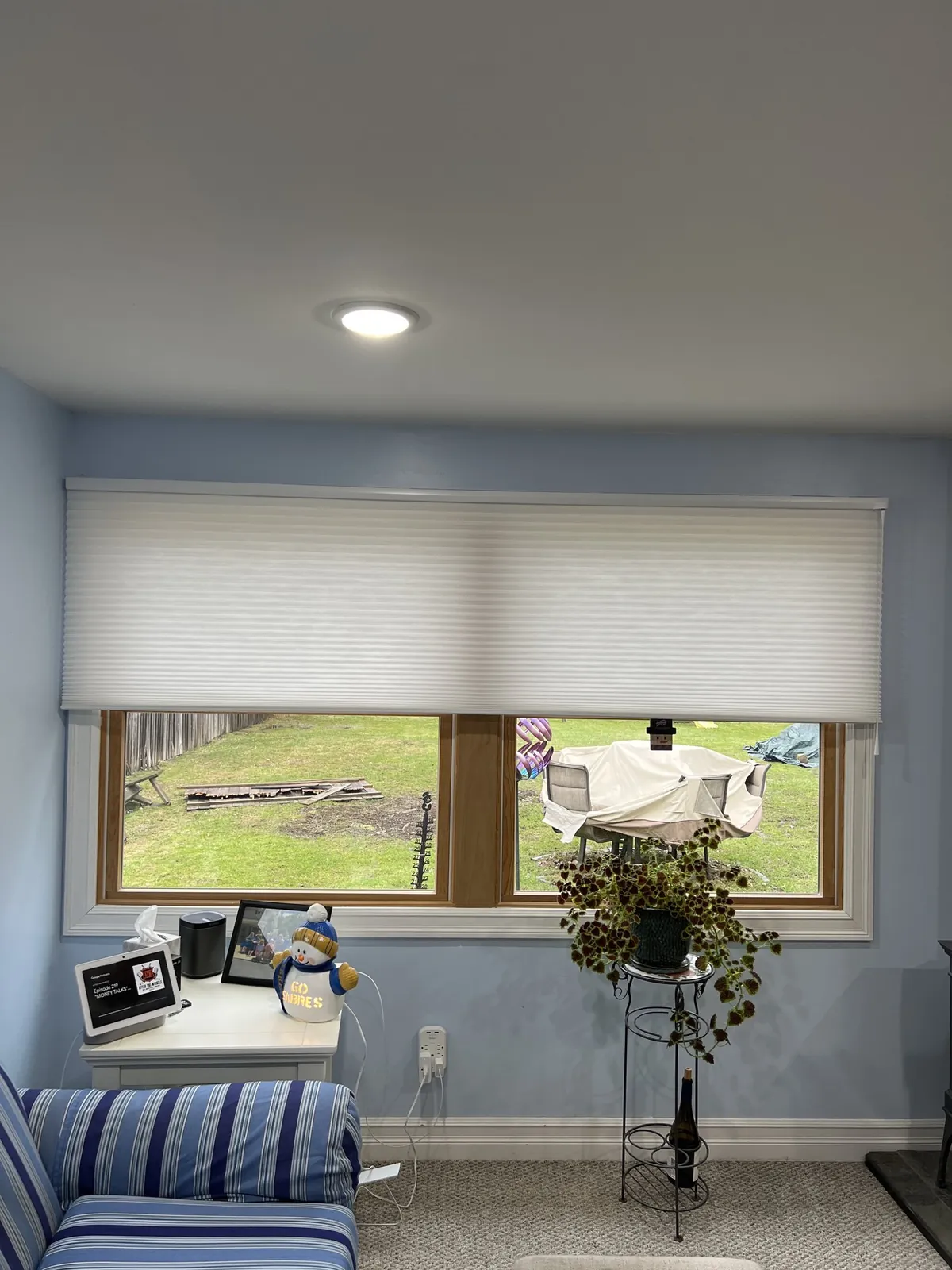
Cellular shades on a family room window
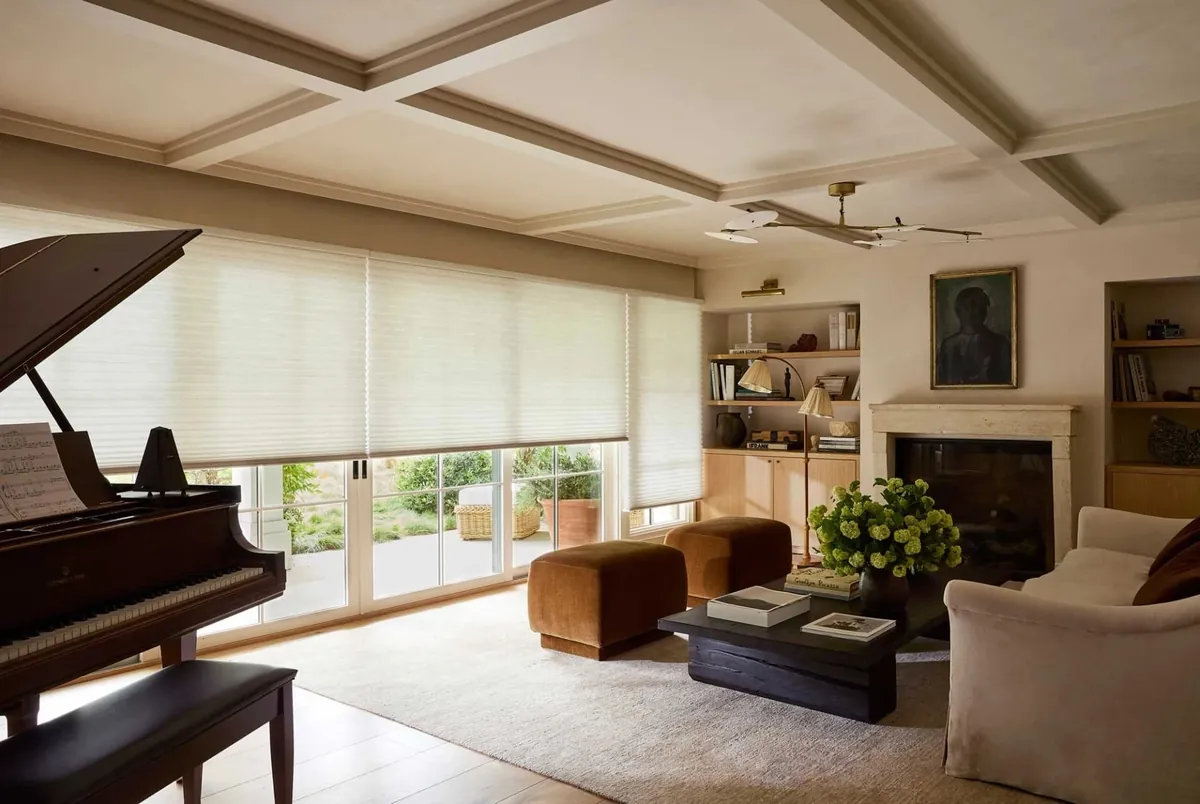
One of our own installs: a wide family room window, where a single honeycomb shade can be motorized so it rises evenly across the full width.
Padanaram colonials and capes
The houses around Padanaram village were built close together and built to last, with modest windows and a lot of trim. What makes them awkward is placement rather than size. A window over the kitchen sink means leaning across wet counters. A bathroom window sits above the tub. A cape’s upstairs bedrooms have dormer windows set back into the slope of the roof, where the shade is at arm’s length even before you add a nightstand in front of it.
These are the windows where a motor pays off first. You do not need to motorize the whole house to make a difference. A remote that runs the dormers, the kitchen and the bath clears away the daily stretch, and the easy windows downstairs can keep a cordless lift that you move by hand.
In a colonial with original trim, an inside mount keeps the casing visible and lets the headrail hide inside the opening. We check the depth at the top and bottom of each frame before recommending it, because an older frame is rarely the same depth all the way round.
Ranches off Faunce Corner and Slocum Road
The ranches built across the middle of town after the war tend to share a layout: a living room with a picture window, a slider out to the yard and bedrooms down a hall. The picture window is usually the biggest single piece of glass in the house, and it is often split into three or four sections.
Covering it by hand means three or four separate shades that never quite line up. With PowerView those shades can sit on one control and move as a group, so the bottom rails stay level whether the shades are up, down or stopped at the same height halfway. Banded shades are a favorite on these windows because one small movement switches the stripes from open to closed. Roller and screen shades work well too, cutting brightness while the yard stays in view.
The slider can take a vertical shade that travels side to side. Whether that one is motorized depends on how often you use the door, and we talk it through at the visit rather than assuming every window needs a motor.
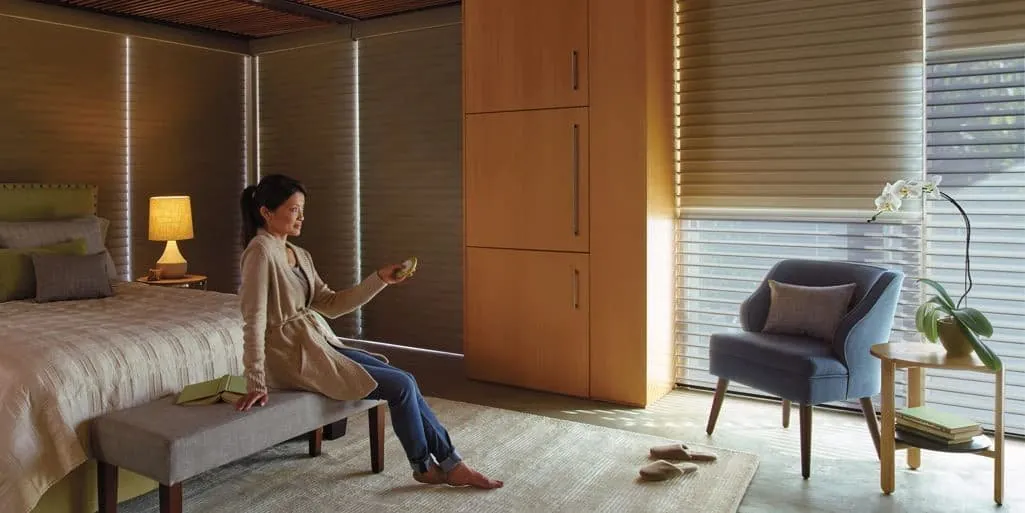
Deep sash at the Russells Mills farmhouses
The older farm properties out toward Russells Mills have walls far thicker than a modern house, and the windows sit deep inside them. That depth is part of their character. It also means a shade mounted inside the frame is a long reach over the sill, and in many rooms there is a radiator, a window seat or a deep ledge in the way.
Here a motor solves a practical problem rather than adding a convenience. A honeycomb or Roman shade fitted inside a deep frame, with PowerView doing the lifting, keeps the old sash and its deep reveal on show while the shade moves at a touch. Deep frames are generous for inside mounts, so the headrail usually tucks away out of sight.
Old sash also tends to be out of square after more than a century of settling. We measure each opening at several points across its width and height, and the shades are made to the measurements we take, so the fit stays tight even on a frame that is not perfectly true.
Afternoon glare off Apponagansett Bay
South Dartmouth’s water-facing rooms get the bay’s reflected light in the afternoon, and it can be strong enough to wash out a television, overheat a sunroom and fade a rug. Many of these rooms were designed around the view, so covering the glass entirely is the last thing anyone wants.
This is where schedules come in. A set of sheer or screen shades on the bay side can lower partway at the same time each afternoon, take the edge off the glare and keep the water visible, then rise again toward evening. On a cloudy day you can stop the schedule from the remote, and it carries on as normal the next afternoon. Through the summer you can shift the timing as the sun moves.
Fabric is half the answer. A screen shade with a more open weave keeps the view sharper, while a tighter weave cuts more brightness. A Silhouette sheer softens the light into an even glow across the room. We bring several openness levels so you can compare them at your own window at the time of day the sun is worst.
One day with PowerView in a Dartmouth house
The easiest way to picture motorized blinds in Dartmouth is to walk through an ordinary day with them.
Early morning, the bedroom shades stay closed until the time you chose, then lift slowly so the room brightens gradually. Downstairs, the kitchen shade over the sink is already up. Mid-morning, nobody touches anything. In the early afternoon on a bay-facing house, the sheers on the water side lower halfway on their own. Toward evening, the street-side shades close as the lamps go on, so the front rooms are private without anyone walking from window to window.
All of that runs from schedules you set in the PowerView app. When the day does not follow the plan, the remote overrides any shade instantly. If you want to change a time, move a shade to a new height or add a room, you do it from your phone. Our guide on how motorized shades are controlled covers the remote, the app and scenes in plain terms, and the window covering automation page goes deeper into schedules.
Slats or fabric on a motor
The question of blinds against shades does not go away when you add a motor, so it is worth settling room by room. Slats are about direction. A wood blind in a south-facing study lets you angle the light up toward the ceiling, keep the glare off a screen and still see out. That is hard to match with fabric, and for a Padanaram colonial with painted trim, wood slats also look right from the street.
Fabric is about the quality of the light and the feel of the room. A honeycomb shade adds insulation from its cells, a Roman shade brings soft folds to a dining room, and a sheer filters the bay’s glare into something gentle. Room-darkening fabrics belong in bedrooms where sleep matters.
If you are leaning toward motorized blinds in Dartmouth for a study or a kitchen, say so at the start. We will confirm which blind lines and operating options suit that window and hang a shade sample beside it, so the choice is made by looking rather than guessing.
Winter evenings in an older house
A colonial or a farmhouse with original windows loses heat through the glass on a cold night, and the first hour after sunset is when it is most noticeable. The trouble is that sunset in December comes early, often before anyone is home to lower the shades.
A schedule that closes the honeycomb shades at dusk keeps that warmth in the room without anyone remembering to do it. Through the spring the timing can move later as the evenings stretch. In summer, the same shades can lower in the middle of the day on the sunny side of the house and rise again in the cool of the evening.
A ranch with a big picture window gains the most from this. That single wide pane is where most of the room’s heat escapes on a January night, and where most of the sun pours in on a July afternoon. Two schedules, one for each season, turn a set of honeycomb shades into something that works for the house all year rather than a covering that sits in one position. You can also give the vacation weeks their own pattern, so the shades still rise and fall while the house is empty and it never looks closed up from the road.
Bedrooms, nurseries and the den
Some rooms need to get properly dark. A nursery at nap time, a bedroom for someone who works nights or a den with a big screen all benefit from room-darkening fabric, and a motor makes it easy to close them fully and evenly. In a cape’s dormer bedroom, where the window is set back and hard to reach, the remote on the nightstand is the simplest way to run the shade.
For a den, a scene that closes every shade in the room at once is handy for a film on a sunny afternoon. When it ends, another press brings them all back up together.
Cordless windows for children and pets
A motorized shade has no lift cord, no loop and no tilt cord, which is why so many families with young children or pets choose it for bedrooms and playrooms. Nothing hangs where small hands or paws can reach it. The window also looks tidier, with just the shade and its headrail.
There is a practical benefit to the shade itself. A motor lifts evenly from both sides, so the fabric is not tugged at an angle every day, and the bottom rail stays square to the sill for longer.
How we plan motorized blinds in Dartmouth
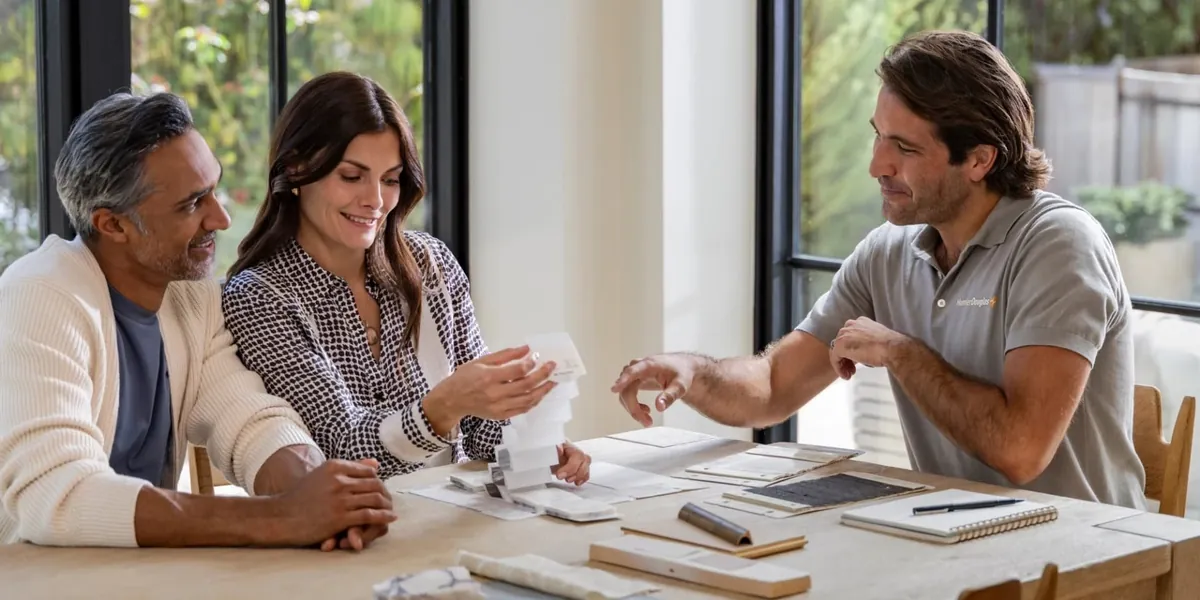
Because we are based in town, much of the planning happens at your kitchen table. The visit is shaped around the windows that cause trouble, not around a catalog.
We start with a walk through the house. You point out the windows you reach over, the rooms that get too bright and the ones you want closed at night. We note the depth of each frame, the direction each window faces and anything in front of it. Then we pull samples from the van and you hold them against the glass at the time of day that matters.
From there the plan usually falls into place. Some windows get a motor and some stay manual. Some rooms share a remote. Schedules are sketched out so you know what the house will do on its own. At the end you receive a free estimate for the shades and motors you are considering, with no pressure to decide that day. The page on what happens at an in-home consultation describes the visit in more detail.
Installation day
Once Hunter Douglas has made the shades to our measurements, a certified installer brings them to the house.
- Each bracket goes into solid framing, so the headrail sits level and stays firm.
- The shade goes up, and the installer sets its top and bottom stopping points for that window.
- Every shade is paired with its remote and added to the PowerView app.
- Shades are grouped into rooms, and the first schedules and scenes are set the way you want them.
- You get a walkthrough of the remote and the app before the installer leaves.
A Gallery dealer for every kind of window
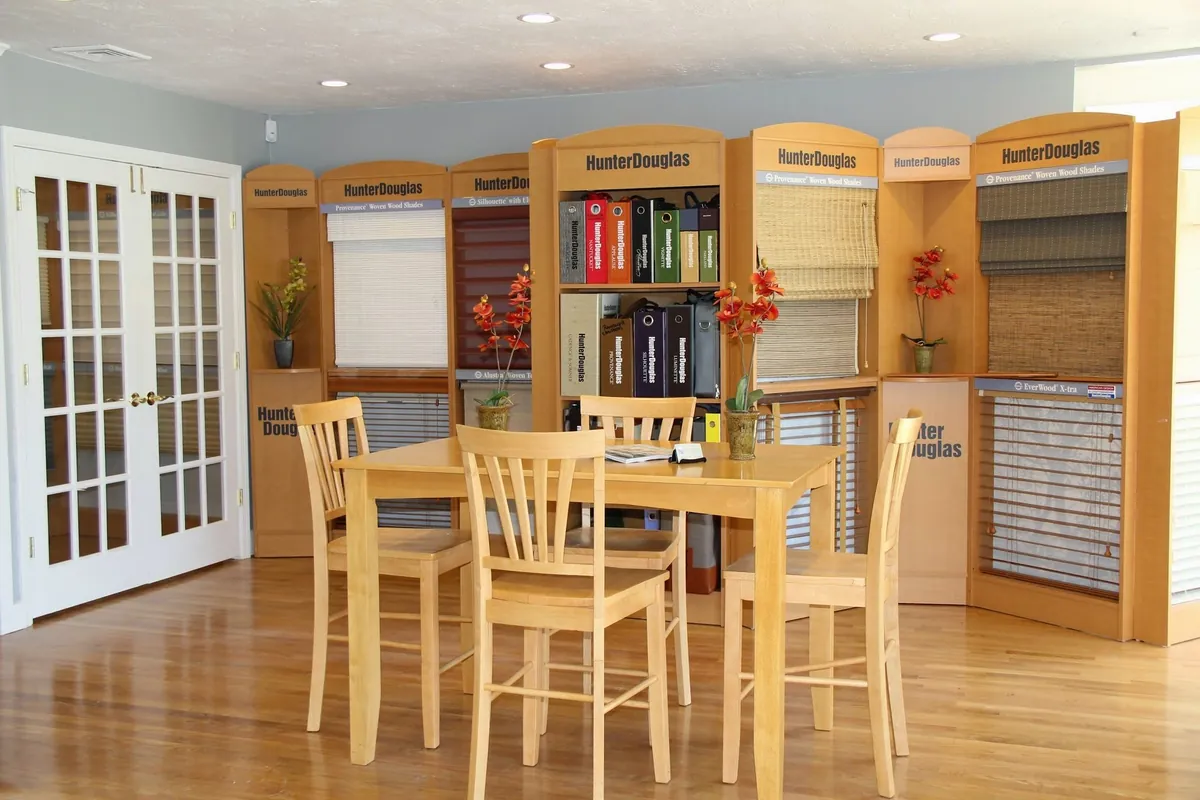
Hunter Douglas reserves the Gallery dealer designation for dealers who meet its standards, and Blinds & Designs holds it. For motorization that breadth matters, because PowerView works across honeycomb, Roman, sheer, roller and screen shades as well as blinds. You can choose the right product for each window and still run them all from one app.
Installation is certified by Hunter Douglas. We also offer interior design consultations when a room needs a fuller plan, and blind and shade repair in Dartmouth for coverings you already own.
For other rooms, see our Roman shades in Dartmouth, cellular shades in Dartmouth or everything we offer in town on the Dartmouth page. The main motorized blinds and shades page covers the whole range.
Our main showroom is in town
The North Dartmouth showroom is our main location, so for most of Dartmouth it is a few minutes from home. Stop in with a list of the windows you are thinking about, or ask us to come to you with samples instead.
Either works well. A consultation at home lets you judge fabrics in your own light, while a showroom visit is a good first step if you are still deciding between motorized blinds in Dartmouth and a shade for the same room.
Questions from Dartmouth
Can motorized shades fit the deep windows in an old farmhouse?
Yes, and deep frames are often the easiest to work with. There is usually plenty of room for an inside mount, so the headrail and motor tuck inside the opening and the shade moves without anyone reaching across the sill.
Will a schedule really help with the glare off the bay?
It is one of the most useful things it does. Sheer or screen shades on the water side can lower partway each afternoon and lift again toward evening, and you can override them from the remote whenever you like.
Can the three shades on my picture window move together?
Yes. Shades on a wide window can be grouped so they rise and fall as one and stay level with each other, whether fully open, fully closed or stopped at the same height.
Do I have to motorize every window?
No. Many Dartmouth houses motorize only the windows that are hard to reach or that benefit from a schedule, and keep cordless lifts on the rest. More rooms can be added later and run from the same app.
How much does it cost to have you measure?
Nothing. The estimate is free. We measure at the consultation and give you a free estimate for the shades and motors you are considering.
Come in, or let us come to you
Tell us which windows you reach over, squint at or close every night, and we will plan motorized shades around them. Request a consultation for a visit at home with samples and a free estimate, use the call button to talk it through, or drop in to the North Dartmouth showroom.