
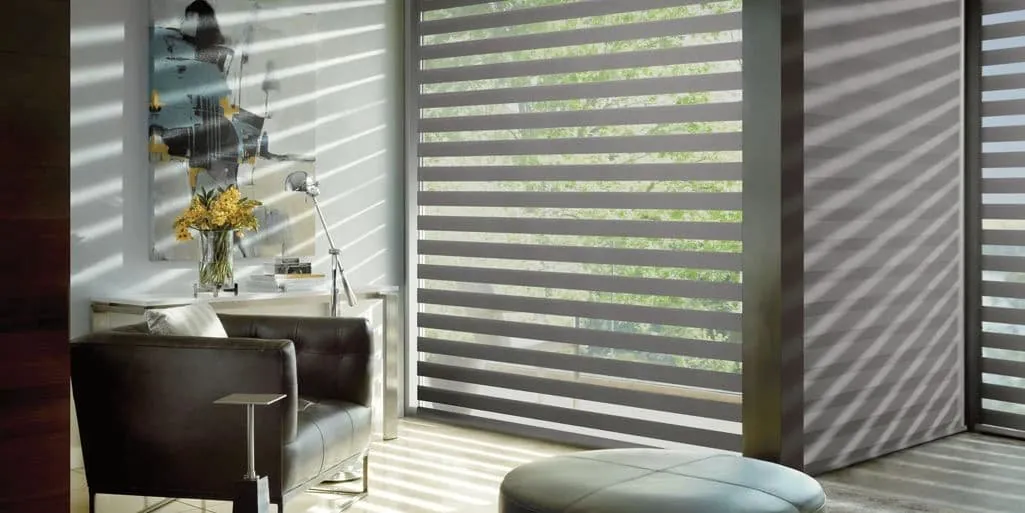
Privacy comes first in the village
In the village center at the western end of the canal, houses stand close together. Older homes sit a short step from their neighbors, cottages have been converted into year-round houses, and many of the buildings along Main Street have apartments over the ground floor. Look out of a side window in most of them and you are looking at someone else’s window a few yards away. That short sightline is the first problem a window treatment has to solve here, ahead of glare, heat or style. Roller shades in Buzzards Bay, MA, handle it neatly, because the right fabric lets daylight in while keeping the inside of the room to yourself.
The windows themselves are part of the challenge. Many of the original openings are small, set into thin walls with limited depth, and some of the converted cottages have a jumble of sizes where rooms were rearranged. A shade has to fit those modest frames without crowding them.
So at every window we ask the same thing first: who can see in, and when?
Roller shades in Buzzards Bay, MA, sorted by the privacy they give
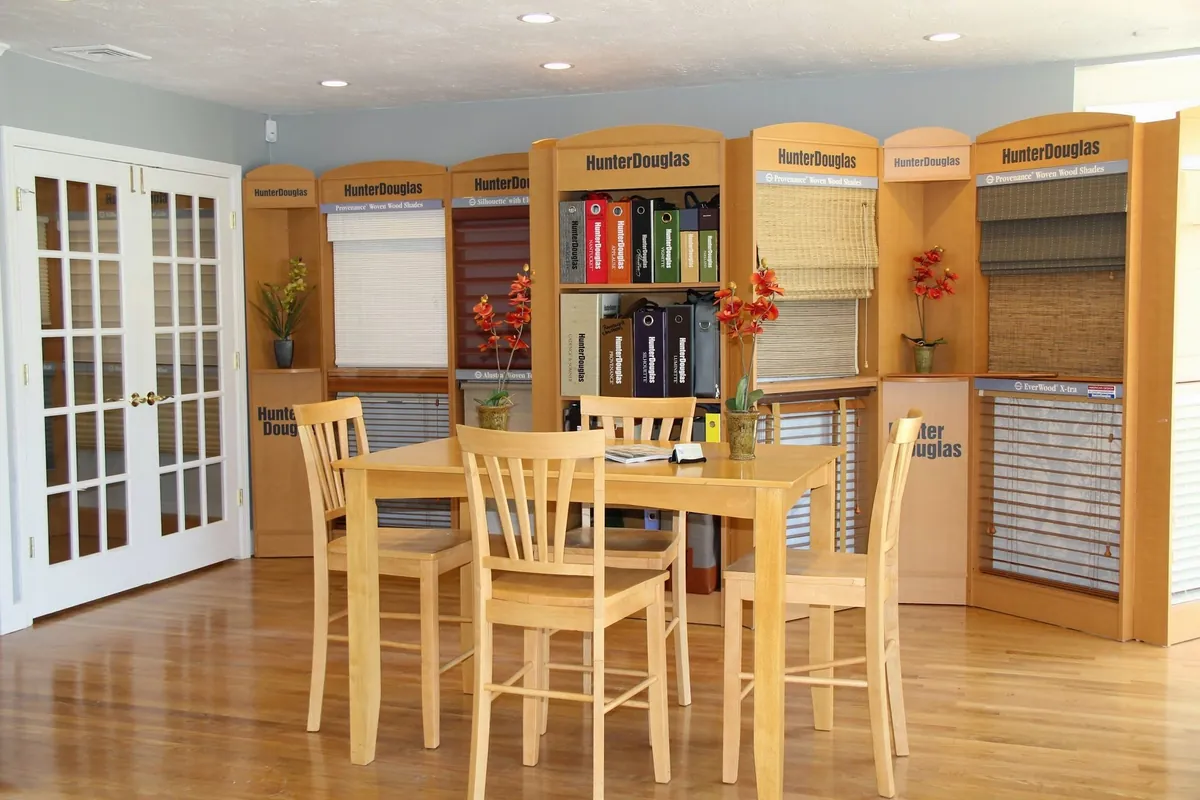
Each of these is a Hunter Douglas shade, and we carry samples of all of them in our vans.
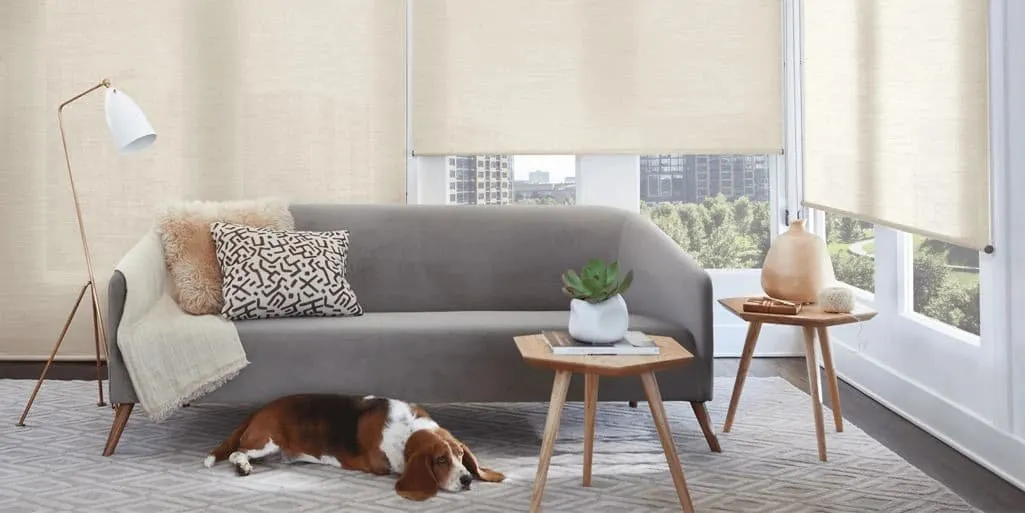
Light filtering rollers
The everyday answer for close neighbors. Daylight comes through, but shapes and faces do not, day or night.
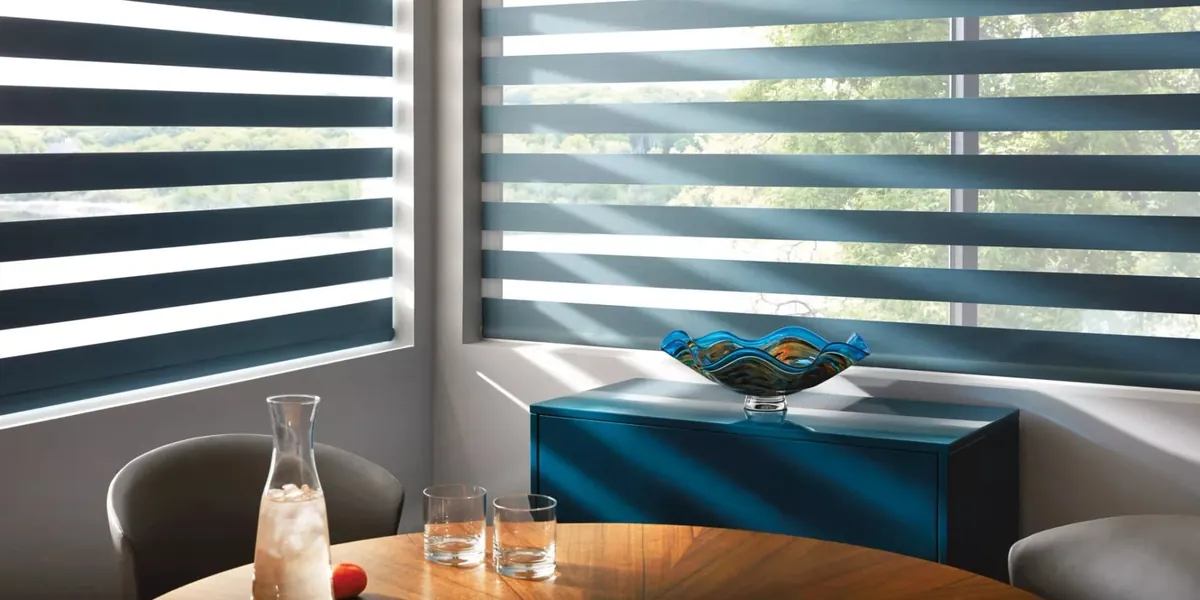
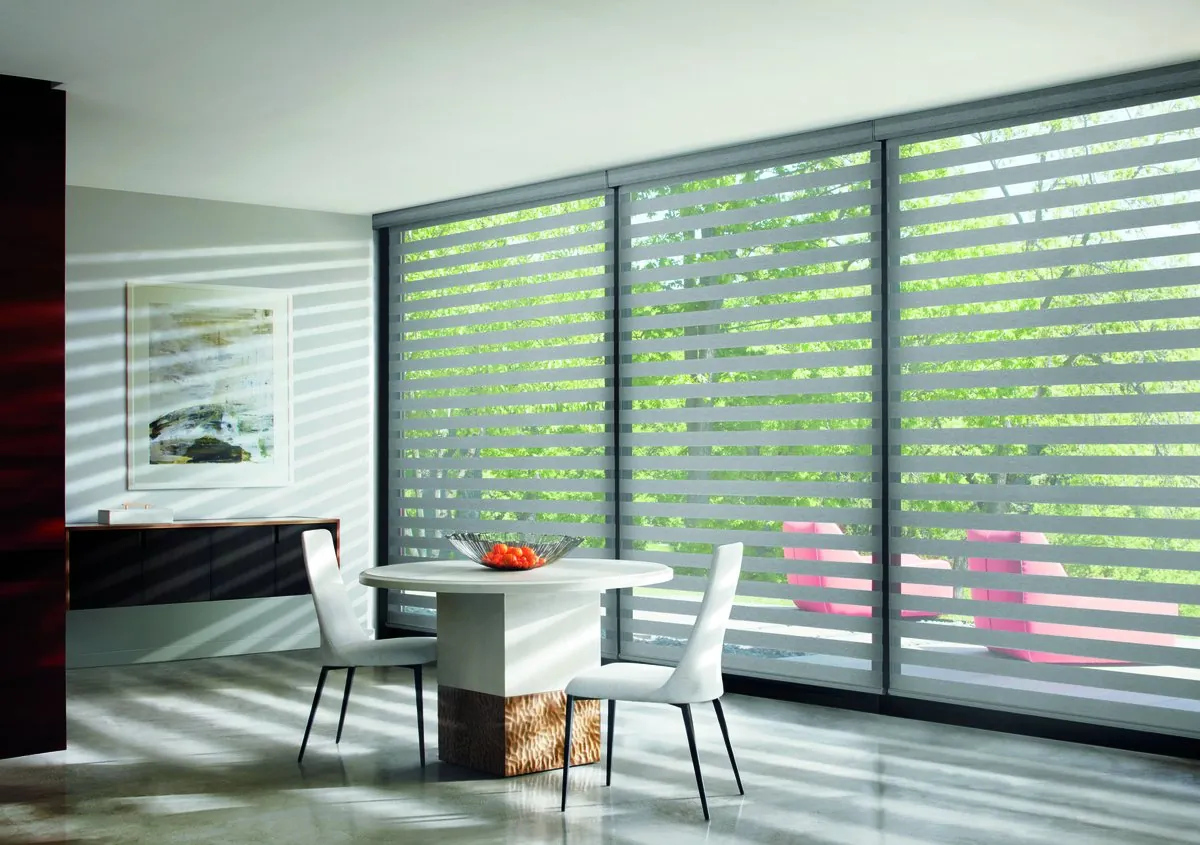
Banded shades
Stripes of sheer and solid fabric. Line them up to see out, shift them half a band to close the view, all with the shade lowered.
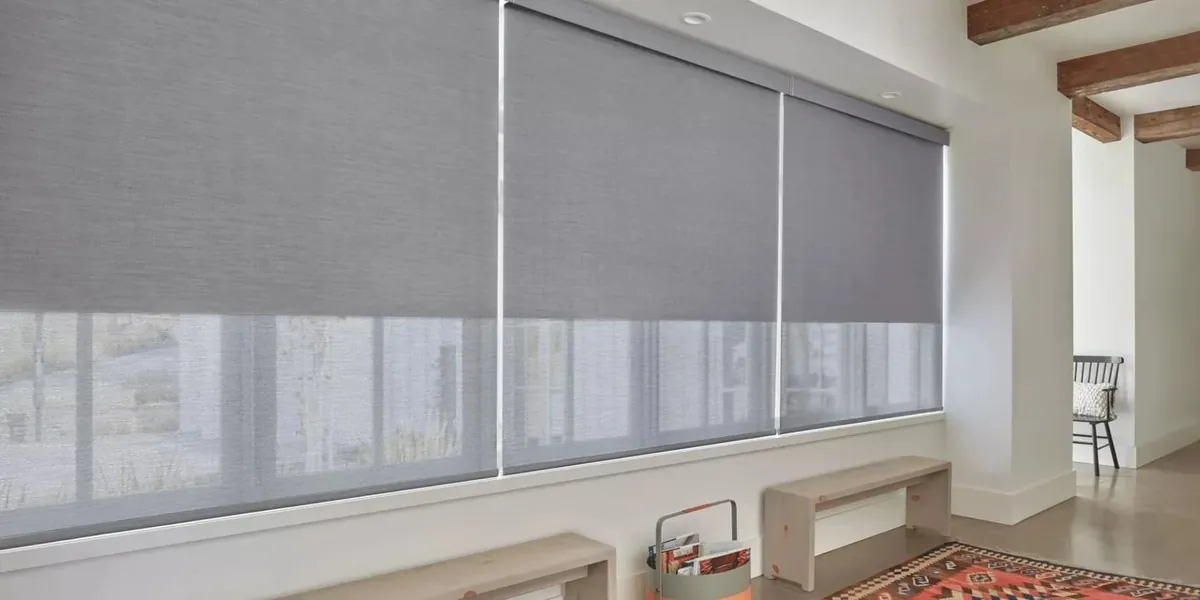
Blackout rollers
For bedrooms facing a streetlight, a shop sign or the house next door, an opaque fabric that keeps the room completely private.
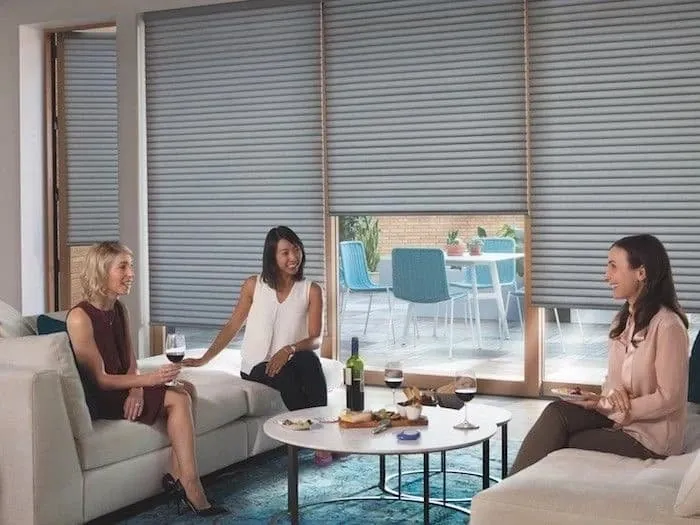
Sonnette cellular rollers
A roller with a softly scalloped face and a pocket of air behind it, a little cosier looking in a small cottage room.
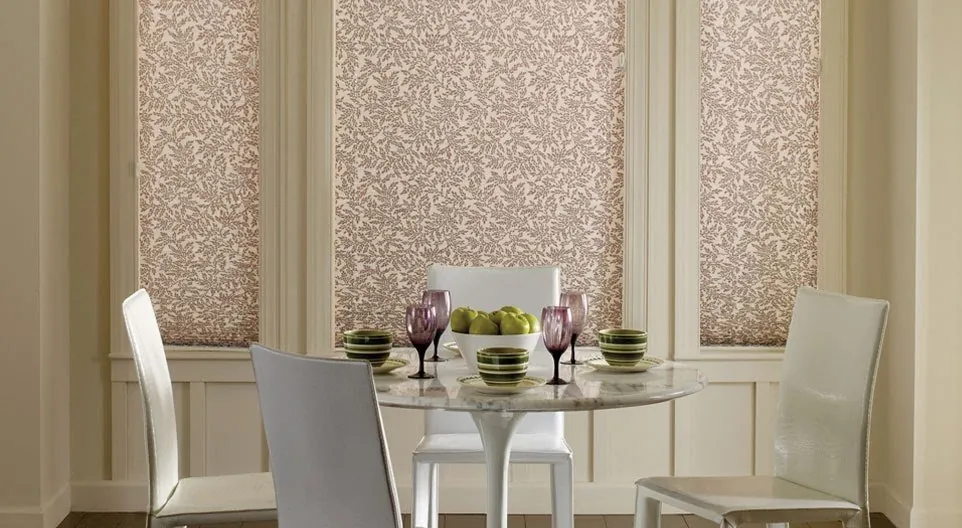
Patterned Alustra fabrics
When a front window faces the street, a fabric with pattern or texture gives privacy and a bit of personality at the same time.
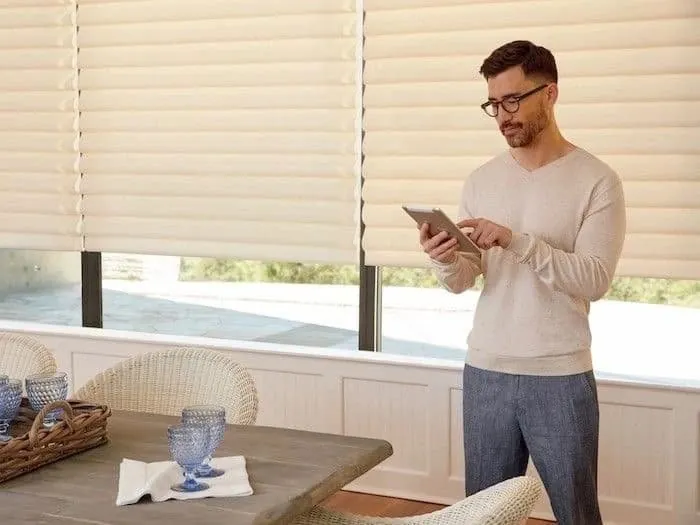
PowerView control
Lower every shade in the flat at dusk with one tap, or let a schedule do it, so privacy never depends on remembering.
Daytime privacy and night-time privacy are different
This is the single most useful thing to understand before you choose a fabric for a close-set house. Privacy through a shade depends on which side is brighter.
During the day it is brighter outside than in. Almost any fabric, even an open solar screen, makes it hard for someone outside to see into the room, because their eyes are adjusted to the daylight and the room looks dark. After sunset the balance flips. With lamps on inside and darkness outside, a screen or a very sheer fabric turns transparent, and the room is on show.
For a side window facing a neighbor a few yards away, that matters a great deal. A solar screen is a fine choice for a room you only use by day, or for a window that faces open space. For rooms you use in the evening, a light filtering roller is the safer choice: it glows softly when lit from inside but does not show detail. For a bedroom, a room-darkening or blackout fabric gives complete privacy at any hour.
There are also ways to have both. A dual shade puts a screen fabric and a solid fabric on one bracket, and you lower whichever one the time of day calls for. A banded shade does something similar with a single fabric, shifting from see-through to closed with a small movement.
Small original openings
The older houses in the village were built with modest windows, and many of them still have the original frames. Small openings bring a few practical questions.
The first is depth. A thin wall leaves little room between the face of the trim and the sash, and old sash hardware takes up some of that. A roller needs only a shallow space compared with many other shades, and a compact headrail makes the most of it. Where even that will not fit, the shade mounts on the face of the trim, which also makes a small window look a little larger.
The second is width. A narrow window means a narrow shade, and the fabric and the tube have to suit it. We check every opening against what each fabric and lift can do, so you are never shown something that will not work.
The third is how much a shade takes from the light. In a small room with one small window, every inch of glass counts. A roller rolls up to a compact cylinder at the top of the frame, so when it is raised it hides almost none of the glass, unlike a stacked shade that sits in the top of the opening.
Converted cottages and their odd windows
Many cottages near the village were built for summer use and later converted to live in all year. Rooms were joined, walls were moved, windows were added where they were needed. The result is often a house where a bathroom has a window in an unusual spot, a living room has three different sizes of glass, and a bedroom window looks straight at the cottage next door.
Rollers suit that kind of house well. Each shade is made for its own opening, so a run of different sizes ends up looking consistent once the shades are lowered to the same line. The outward face of the fabric can be the same on every window, which makes the house look tidy from the lane even when each room behind has a different opacity.
In the bathroom of a converted cottage, a light filtering roller mounted inside the frame keeps the room bright and private, and a fabric that copes with damp is worth asking about. Where the window sits low, beside the tub or above the toilet, we look at whether the shade can be set to stop partway so the top of the glass stays open to the sky.
Flats above Main Street
The apartment conversions above the shops on Main Street have their own conditions. Windows face the street, so the activity below is right there: headlights, shop lighting, the glow of signs into the evening and the streetlights all night. Across the road, the building opposite may have windows looking straight back.
Bedrooms in these flats usually need a blackout roller. Mounted outside the frame so the fabric overlaps the trim, it leaves very little light at the edges, which matters when a streetlight sits right outside. Living rooms can take a light filtering fabric that keeps daytime light while stopping views in from across the street.
A cassette headrail is worth considering here. It encloses the rolled fabric in a neat box at the top of the window and closes the gap above the shade, which helps both with light and with appearance from the street. If the flat has several windows on the street side, matching fabrics and cassettes across them gives the front of the building a calm, even look.
Ground-floor rooms near the sidewalk
Some of the older village houses have their front rooms only a few steps from the sidewalk, with windows at eye level for anyone walking by. That is a different kind of privacy problem from a neighbor’s side window: the people outside are moving, close, and passing at every hour.
A shade that can be lowered partway is a real help. Bring a light filtering roller down to cover the lower part of the glass and leave the top open, and passers-by cannot see in while the room still gets sky and light from above. A banded shade gives you a similar balance without any lowering at all. For roller shades in Buzzards Bay, MA, on a front room like this, we usually suggest a fabric that looks plain and neat from outside, since the street sees the back of the shade all day.
The narrow strip of light at the edges
Any roller that sits inside a window frame leaves a thin line of light down each side, where the fabric meets the jamb. In a living room nobody minds it. In a bedroom facing a streetlight, or a bathroom facing a neighbor, it can be enough to matter.
Mounting the shade outside the frame, so it overlaps the trim on each side, closes most of that gap. A cassette headrail closes the top. In a bedroom you can also hang drapery panels beside a blackout roller, which covers the edges and softens a small room. We look at each window and suggest the neatest fix rather than the same answer every time.
Light off the canal
Some houses in the village look toward the water at the end of the canal, and in those rooms glare can matter as well as privacy. Light reflected off the water comes in low and bright. A solar screen cuts that glare while keeping the view, and in a room you use mainly by day it may be all you need.
For a room used both day and evening, a screen on its own will not give night privacy, so a dual shade or a second roller behind it is the better plan. Our guide to the best shades for sun and glare explains the trade-offs between screen weaves and colors.
Screens also suit an enclosed porch or a sunny kitchen at the back of a village house, where the view is over a garden rather than toward a neighbor. There, a looser weave keeps the room bright and the garden clear, and privacy matters less.
Lifts that suit small rooms
How a shade is raised matters more in a small room than a large one, because every cord and handle is close at hand.
- Cordless lift. Push the bottom bar up or pull it down and it stays where you leave it. Nothing hangs at the side, which suits small windows and homes with children or pets.
- Continuous cord loop. A loop at one side turns the tube, fixed to the frame with a tensioner. Easier on a larger shade or a window behind furniture.
- PowerView. A motor in the tube, moved by remote, app or schedule. Useful for a window over a sink or a bed, and for lowering every shade in a flat at once.
You can read more about the motorized options in how motorized shades are controlled.
A visit to your home
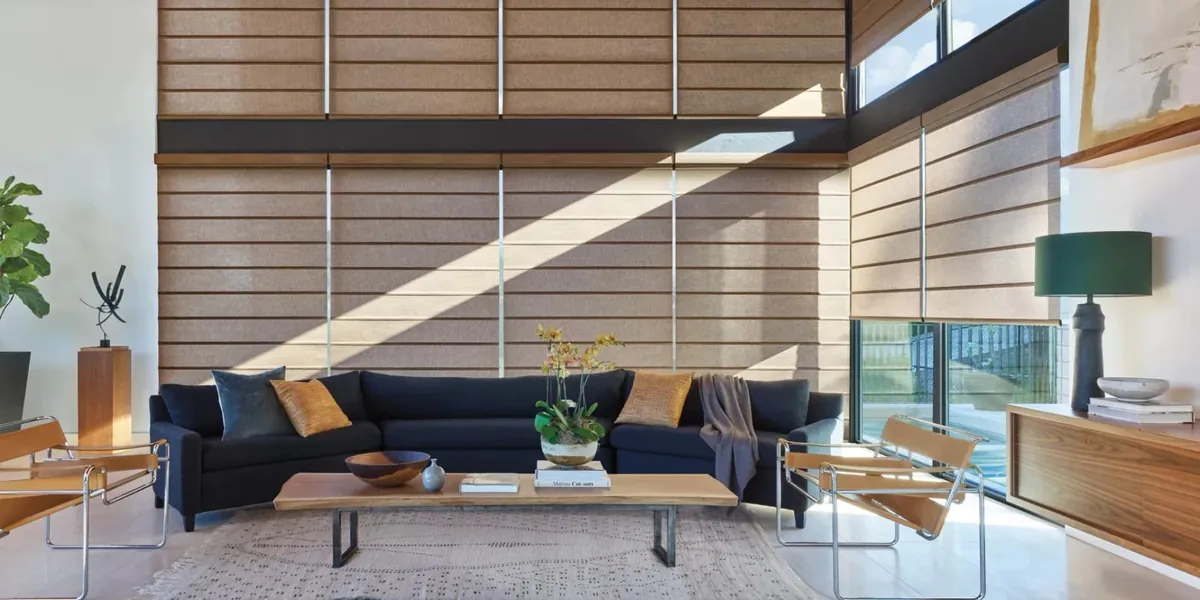
In a house where privacy is the main concern, it helps to see a fabric at your own window, at the time of day you are most exposed. We bring the samples to you; our vans carry the roller range, so we bring the showroom to your door.
- You request a consultation online or with the call button, and we agree a time.
- We look at each window with you and talk about who can see in, and when.
- You hold light filtering, screen and blackout samples up to the glass, and we can step outside so you see how each looks from the street.
- We measure every opening and check the depth, the width and any hardware in the way.
- We go through lift options and whether a cassette, a dual shade or a banded shade would help.
- You get a free estimate and decide in your own time.
More is on our in-home consultations page.
Fabric color in a small room
A small room shows every choice. A dark fabric on a small window can make the room feel closed in once the shade is down, while a pale fabric keeps it light and lets the window read as a soft glow. Texture helps too: a fabric with a slight weave looks warmer and hides the odd fingerprint better than a flat, shiny one.
We usually suggest lighter, warm neutrals for the rooms that depend on one window, and save stronger colors or patterns for a room with more glass. Whatever the color facing the room, the side facing out can be kept consistent across the house. When you choose roller shades in Buzzards Bay, MA, we bring enough fabric samples to hang them in place, so you see the color against your own walls rather than under a shop light. If you want more help, our guide to fabric for a sunny room covers fading and light.
Designer and Alustra
Hunter Douglas makes two main roller collections. Designer is the broad one, with a very large choice of light filtering, room-darkening, blackout and screen fabrics and every lift option. Alustra is the premium collection, with more distinctive fabrics and textures and refined finishes on the headrail and hem.
For roller shades in Buzzards Bay, MA, Designer covers most windows in a village house. Alustra comes into its own for a front room where the shade is part of the decor. See Designer Roller, Designer Banded and the main roller shades page.

Certified installation from a Gallery dealer
Blinds & Designs is a Hunter Douglas Gallery dealer, a standing Hunter Douglas reserves for a limited group of dealers. You get the full roller range, the banded and Sonnette shades and PowerView, through one visit.
Our installers are certified by Hunter Douglas. In an older village house that means finding solid wood for every bracket, even in thin walls, so each shade hangs level. We also handle blind and shade repairs on window coverings you already own.
For other rooms, see custom blinds in Buzzards Bay or plantation shutters in Buzzards Bay, and everything we offer in the village on the Buzzards Bay page. Our Sagamore showroom is the closest to you.
Questions from Buzzards Bay
Which roller fabric stops the neighbors seeing in at night?
A light filtering fabric glows when your lamps are on but does not show detail. A room-darkening or blackout fabric gives complete privacy. A solar screen on its own does not, because it turns see-through after dark.
Will a roller fit my small, shallow window frames?
Usually. A roller needs less depth than most shades, and a compact headrail helps. Where there is still not enough room, the shade mounts on the face of the trim.
How do I keep streetlight out of a bedroom above Main Street?
A blackout roller mounted outside the frame, overlapping the trim, cuts most of the light. A cassette headrail closes the gap at the top, and side drapery covers the edges.
Can I have a view by day and privacy at night?
Yes. A dual shade puts a screen and a solid fabric on one bracket, and a banded shade lets you switch from open to closed with a small movement.
What does the consultation lead to?
A free estimate for the shades you are considering, based on the measurements we take at your home. There is no obligation to go ahead.
The next step
Privacy is easiest to judge at your own window, in the evening as well as the day. Request a consultation and we will bring samples, measure your windows and leave you a free estimate. You can also visit our Sagamore showroom, a short drive from the village, to see working shades first.