
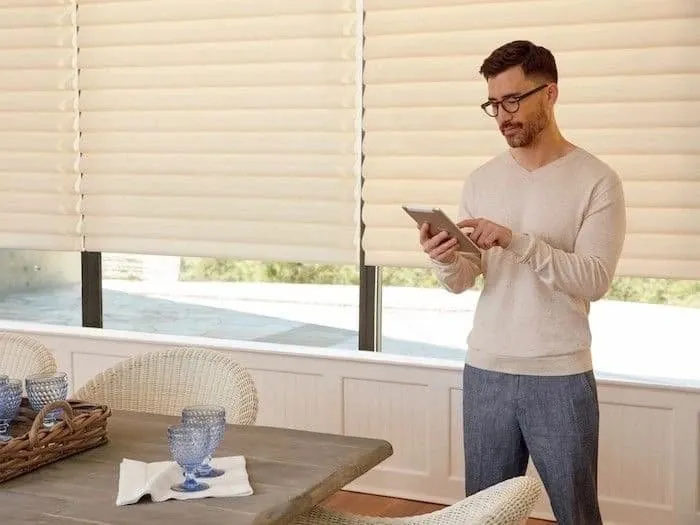
Privacy comes first in the village
Buzzards Bay village grew up tight around the western end of the canal. The older houses stand close together, many of the cottages have been converted into year-round homes, and above the shops on Main Street a good number of upper floors have been turned into apartments. Windows here are often small and original to the building, and from many of them the nearest thing in view is the window of the house next door.
That puts privacy at the top of the list. Before anyone talks about glare or warmth, the question is how to keep a kitchen or a bedroom from feeling on show. Motorized blinds in Buzzards Bay, MA, help because privacy is mostly about timing: the right window closed at the right moment, every day, without anyone having to remember.
Hunter Douglas PowerView puts a motor inside each headrail. A remote, the PowerView app on a phone or tablet, or a schedule raises and lowers the shade. In a small house with windows facing in every direction, that is far easier than walking round to close each one as the lights go on.
Privacy-minded shades with PowerView
Every one of these can carry a PowerView motor. They are the shades that do most for privacy in small rooms with close neighbors.
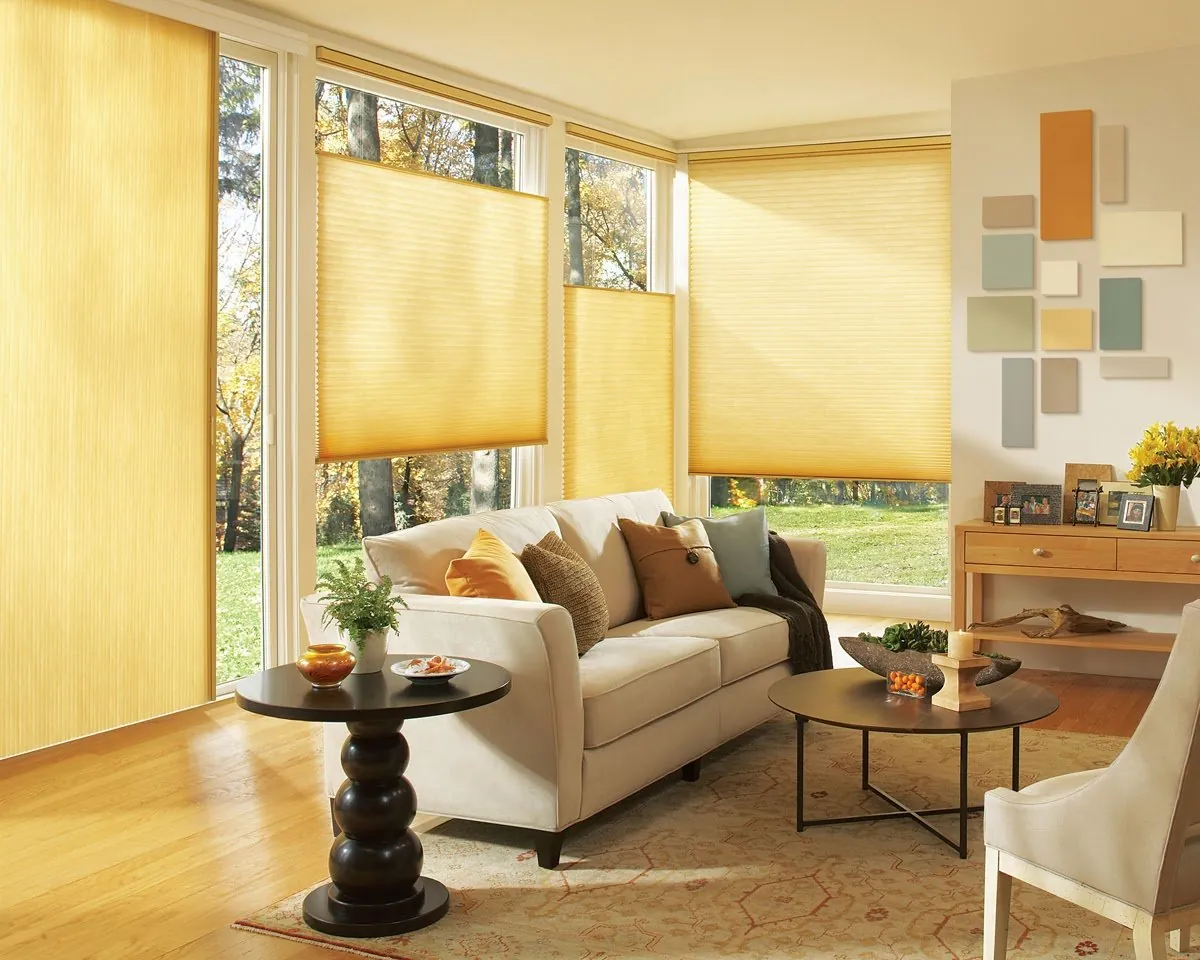
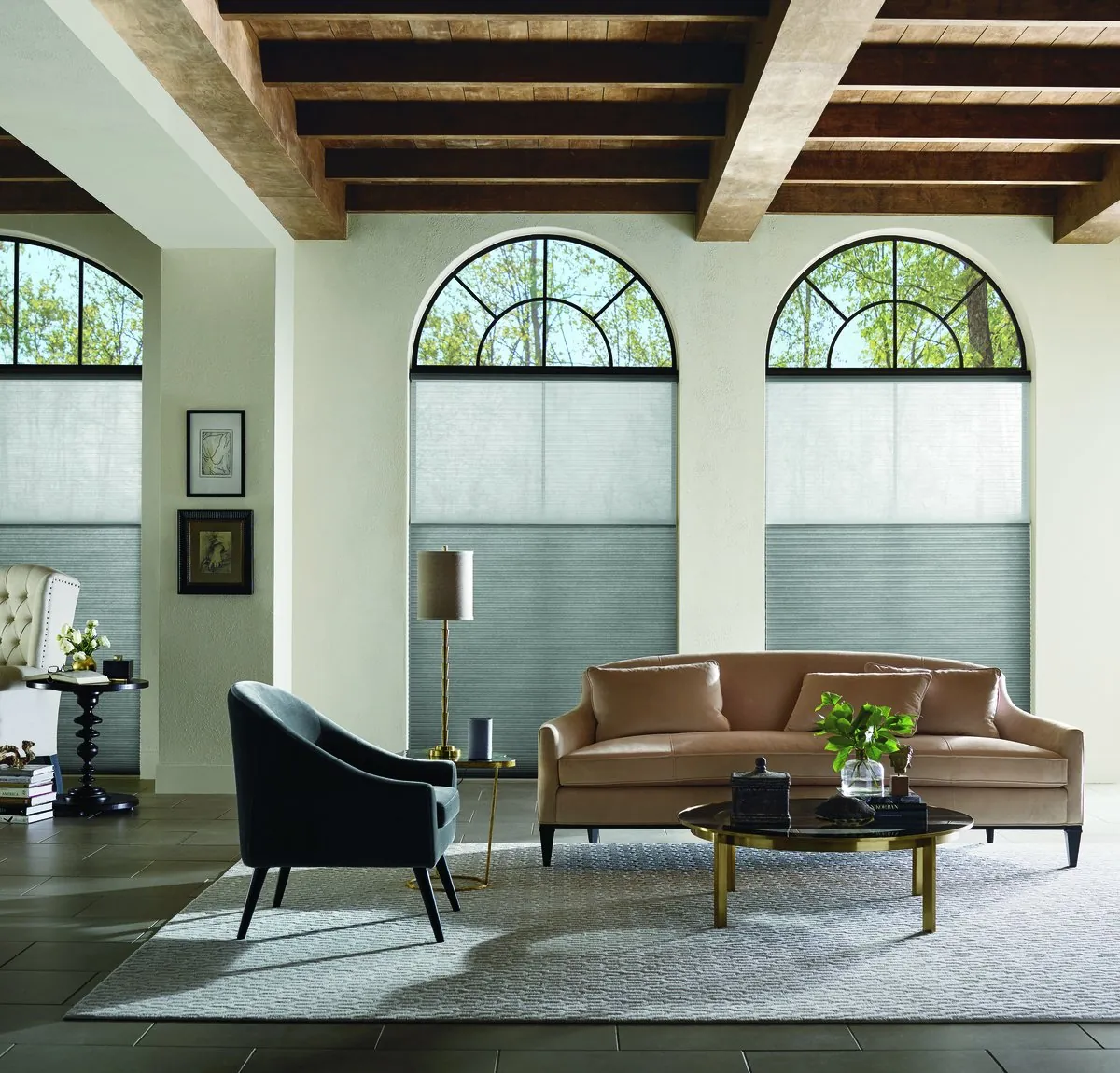
Top-down, bottom-up honeycomb
Lower the shade from the top for daylight and sky while the lower glass stays covered. A motor sets the split exactly where you want it.
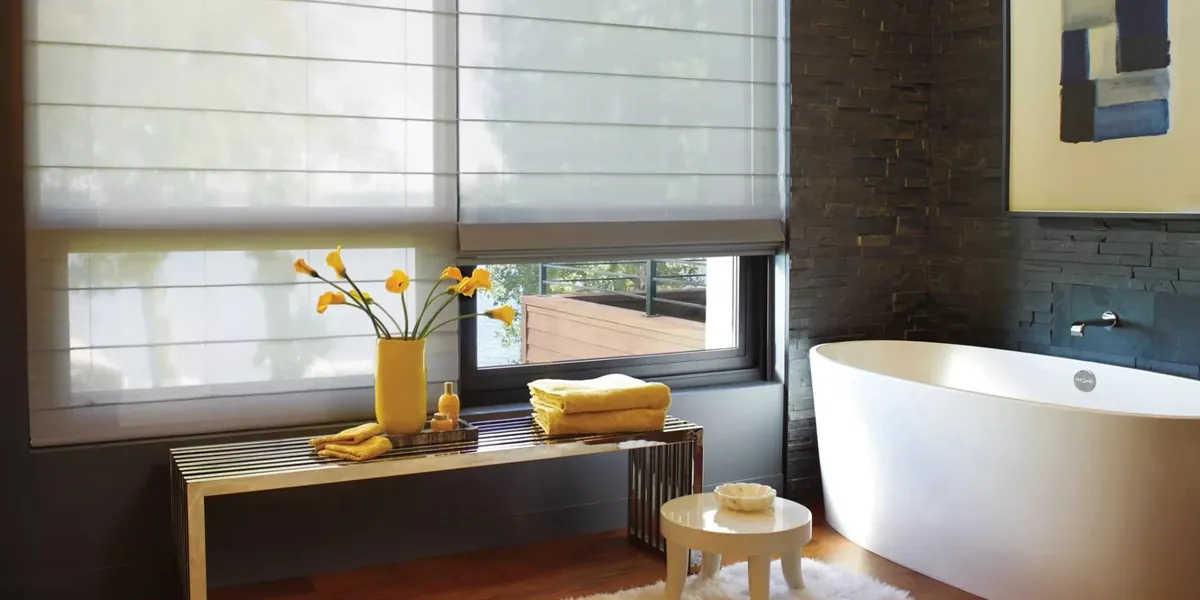
Sheer Roman shades for bathrooms
A soft, light fabric that keeps a bathroom bright and private. With a motor there is no reaching over the tub.
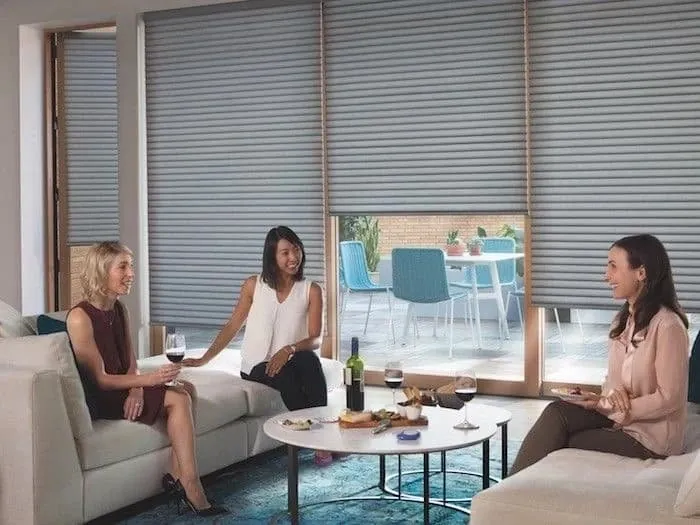
Sonnette cellular roller shades
A rolling shade with a cellular fabric, slim enough for small openings. Good in a converted cottage where depth is limited.
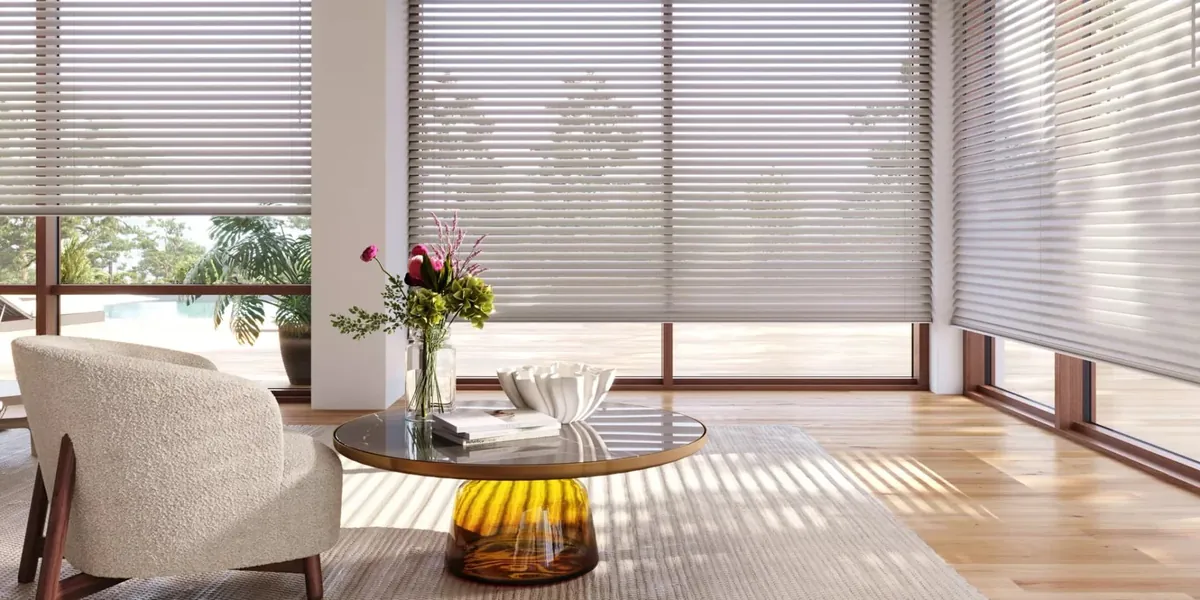
Blinds that tilt closed
Angle the slats upward and light comes in while views in from the street are blocked. We confirm which blind lines and motor options suit your windows.
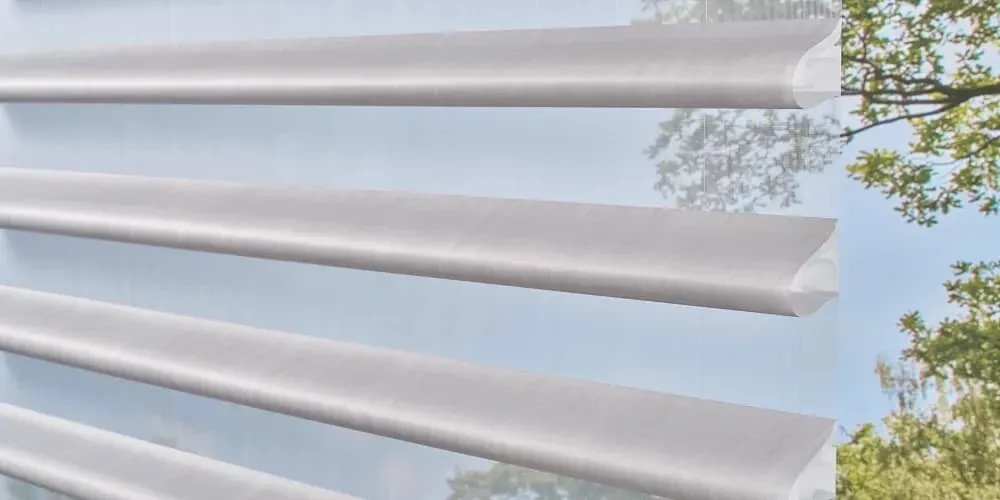
Sheer shades with vanes
Silhouette and Pirouette soften daylight and give daytime privacy. Close the vanes at night and the room is screened.
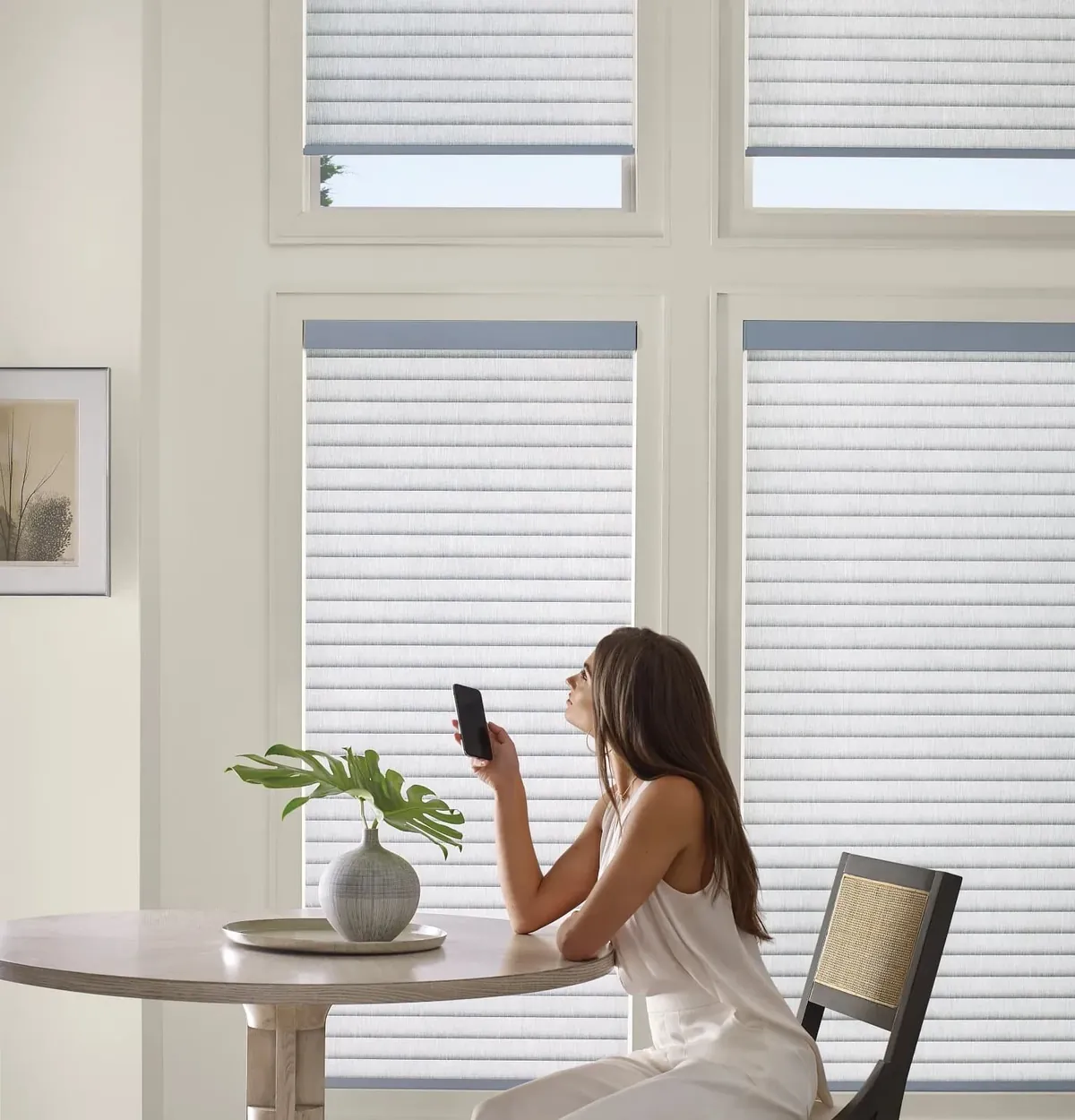
App control for small houses
Every shade in the house on one screen, so the upstairs can be closed from the kitchen without climbing the stairs.
Houses a few steps apart
In the streets around the village center, side windows often face the side windows of the next house across a narrow strip of yard or a driveway. During the day that is mostly a question of light. After dark, with lamps on, those side windows become the most exposed in the house.
The answer most customers settle on is simple: shades that stay open for light through the day and close on the sides that face the neighbors as soon as it gets dark. By hand, that means going round the house every evening, and the time changes through the year. With PowerView, a dusk schedule closes the side-facing shades on its own, whether you are home or not, and you can shift the time from your phone as the evenings lengthen.
During the day, a light-filtering fabric gives a soft privacy that a plain glass window cannot. From outside, the fabric glows and the room behind it reads as a blur, while inside the light stays even. In rooms that need more, a top-down, bottom-up shade covers the lower half of the window and leaves the top open for sky.
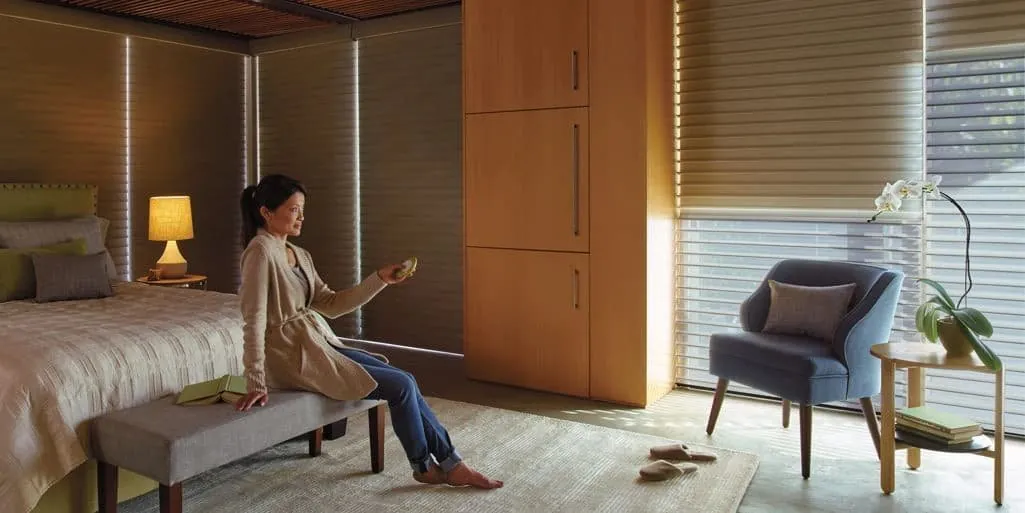
Small original openings
Many of the older houses and cottages still have their original windows, and they tend to be small: narrow double-hungs in the bedrooms, a little square window in the bathroom, short windows tucked under the eaves upstairs. Small windows need careful sizing, because a shade that is even slightly too large catches on the frame and one that is slightly too small leaves light gaps that defeat the point of privacy.
We measure every small opening at several points across its width and height, and Hunter Douglas makes each shade to our figures. Older frames are often out of square, so the narrowest measurement governs an inside mount. Where a frame is too shallow for a motorized headrail to sit inside, a slim outside mount on the casing covers the edges completely, which actually improves privacy on a small window.
Small windows are also where a motor can surprise people. It is easy to think a little window does not need one. But a small window is often in an awkward place, over a tub, behind a toilet, above a kitchen sink or high in a stair, and those are exactly the windows you want to close without leaning in.
Apartments above Main Street
The upper floors above the shops have been converted into apartments of all shapes. Rooms are often long and narrow, with windows at the street end and sometimes a window at the back facing a yard or the backs of other buildings. Street-facing windows look down on Main Street and across at other upper floors.
A motorized shade suits these rooms well. In an apartment, a remote and the app let you run the street windows from the back of the unit. A schedule can close the street side in the evening and open it in the morning, which is the privacy routine most apartments need. Separate apartments get separate controls: one tenant’s evening schedule has nothing to do with the flat next door.
If you own the building and want the same look across all the street-facing windows, we can match fabrics and colors so the facade looks consistent from the sidewalk, while each unit keeps its own controls.
Ground-floor rooms on the sidewalk
Some village houses sit right at the edge of the sidewalk, with the front room only a pane of glass away from passers-by. In those rooms the daytime matters as much as the evening. Leaving the shade fully down all day makes the room dim, and leaving it up means anyone walking past can see straight in.
A motor lets you treat that window differently through the day. A top-down, bottom-up shade can hold its lower edge at just the height that blocks the view from the sidewalk, with the top open for daylight, and the app remembers that exact position so you can return to it with one press. In the evening the whole shade closes. If the room is used as a home office, a sheer or light-filtering fabric keeps the screen free of glare while the room stays private.
Bathrooms close to the neighbors
Bathroom windows in close-set houses are a classic problem. They are usually small, often frosted or covered with film, and very often face the house next door. The window is also frequently over a tub or behind the toilet, where reaching it is awkward and a wet hand on a cord is no one’s idea of a good fit.
This is one of the most common places for motorized blinds in Buzzards Bay and for motorized shades alike. A sheer Roman or a light-filtering honeycomb keeps the room bright and screened, and a motor means the shade goes up to air the room and down again without anyone leaning over the bath. Bathroom fabrics are chosen to suit the moisture of the room, and we point those out at the visit.
Converted cottages
Many of the village’s cottages started life as seasonal places and have since been winterised and lived in year round. The conversions are often clever, but they leave a patchwork of window sizes and positions: an old window kept in a new wall, a small window added in a bathroom, a skylight-style window high in a gable.
These are the houses where we most often recommend motorizing just a handful of windows: the bathroom, the high gable and any window behind furniture. The rest can keep a cordless lift you raise by hand. All the motorized shades answer to one remote, and more can be added later.
Being close to the canal, these cottages also live with damp, salty air. The motor and the lifting parts of a PowerView shade are inside the headrail, so there is no exposed cord lock or tilt wand to stiffen over time.
A privacy routine that runs itself
Most of what privacy needs in a close-set house can be written as a short daily routine, and PowerView will carry it out.
- Morning: bedroom shades rise at the time you choose, while the side-facing bathroom shade stays down.
- Daytime: light-filtering fabrics stay lowered on the side that faces the neighbors, with the top of the window open for daylight.
- Dusk: every shade that faces another house closes as the lamps go on, with the timing moving through the year.
- Bedtime: the last rooms close from the remote by the bed.
You build the routine with our installer on the day the shades go up, and you can change any step in the app. Our guide to how motorized shades are controlled explains remotes, the app and scenes, and the page on window covering automation goes further into schedules.
Winter in a small house
The village’s older houses and converted cottages were not built tight. Small original windows and thin walls let the cold in, and the damp air off the canal makes a draughty room feel colder still. A honeycomb shade helps, because the air trapped in its cells sits between the glass and the room.
The motor’s job in winter is timing. Shades that close at dusk on a short December afternoon keep more warmth in before the house cools, and shades that open on the sunny side in the morning let what winter sun there is warm the rooms. Both happen on schedules, so a cottage stays comfortable whether or not anyone is home at four o’clock.
Light in small rooms
The trouble with privacy in a small house is that it can make rooms dark. Close a heavy shade on the only window in a small bedroom and the room loses its daylight with it. The trick is to separate privacy from light.
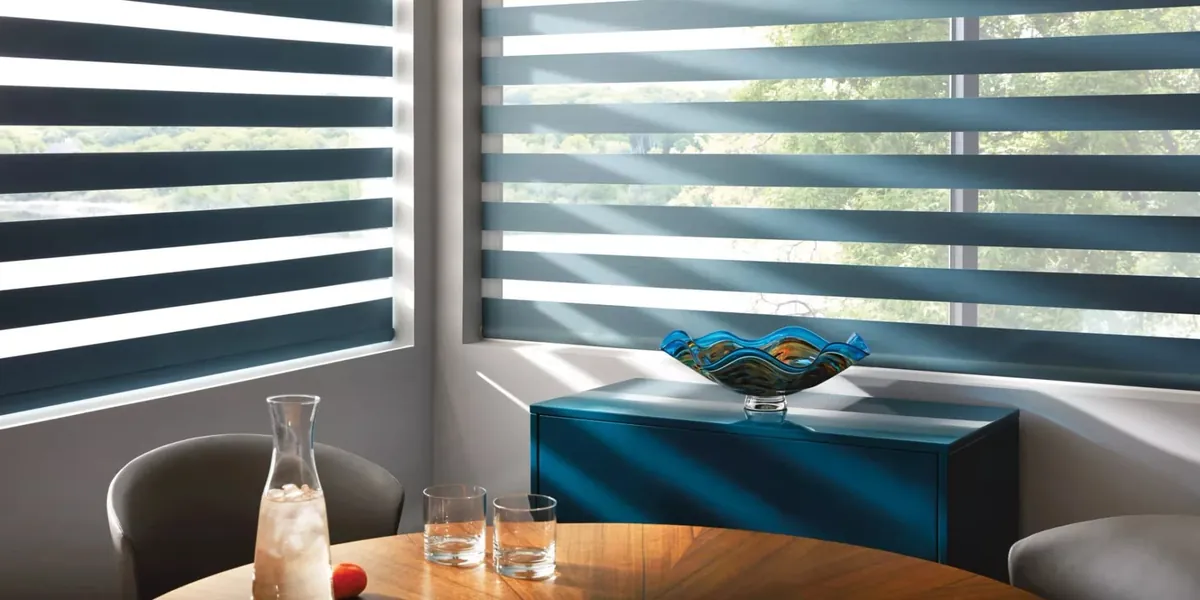
A top-down, bottom-up shade does it one way, covering the lower glass and leaving the top open. A banded shade does it another, with stripes of sheer and solid fabric that slide past each other, so a small move switches the window from open to private while the sheer stripes keep some light flowing. A sheer shade with vanes does it a third way, closing the vanes for privacy while the sheer facing still glows.
All three can carry a motor, and the motor is what makes the fine adjustments practical. Setting a top-down shade to exactly the right height by hand on a small window is fiddly. From the remote it is one press, and the app remembers the setting.
Motorized blinds in Buzzards Bay for privacy
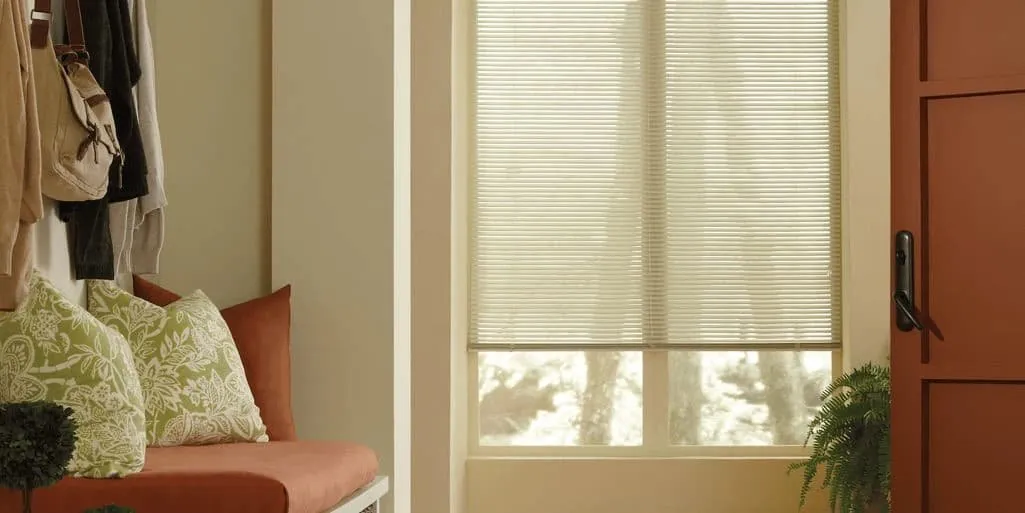
Blinds have a particular trick for close-set houses. Tilt the slats so their upper edges face into the room and the slats block the downward view from a neighbor’s upstairs window, while light still bounces off them into the room. Few shades manage that as well.
Thinking of motorized blinds in Buzzards Bay for a room that looks at the neighbors? Mention it early, and we will check which Hunter Douglas blind ranges take a motor at that window’s size. We will also put a shade alternative next to it, because in a small window a slim cellular roller or a honeycomb can sometimes do the job with less depth. Many village houses end up with blinds in the kitchen, shades in the bedrooms and a sheer in the living room, all on one app.
No cords in small rooms
Small rooms put cords within reach of everything: a crib next to the window, a cat on the sill, a toddler at the sofa. A motorized shade has no lift cord and no loop, so nothing hangs at the window at all. For families, that alone often decides it.
The window looks tidier too, which matters in a small room where every window is close to where you sit. And because the motor lifts both sides evenly, the shade stays square in the frame, with no light gaps opening up at one edge.
Planning begins indoors
We usually begin with a visit, because privacy depends on which window faces which neighbor, and the only way to see that is from inside the house. Our vans carry samples, so we can bring the showroom to you. We go room by room, look at what each window faces, note the small and awkward ones and talk about when you want each room open and closed. Measurements come next, and after them a free estimate covering the shades and motors on your list. Nobody expects an answer on the doorstep.
When Hunter Douglas has built the order, our certified installer hangs each shade, teaches it where to stop at the top and bottom, links it to your remote and the app, and programs the privacy routine alongside you. The page on what happens at an in-home consultation describes the first visit step by step.
Why choose a Hunter Douglas Gallery dealer
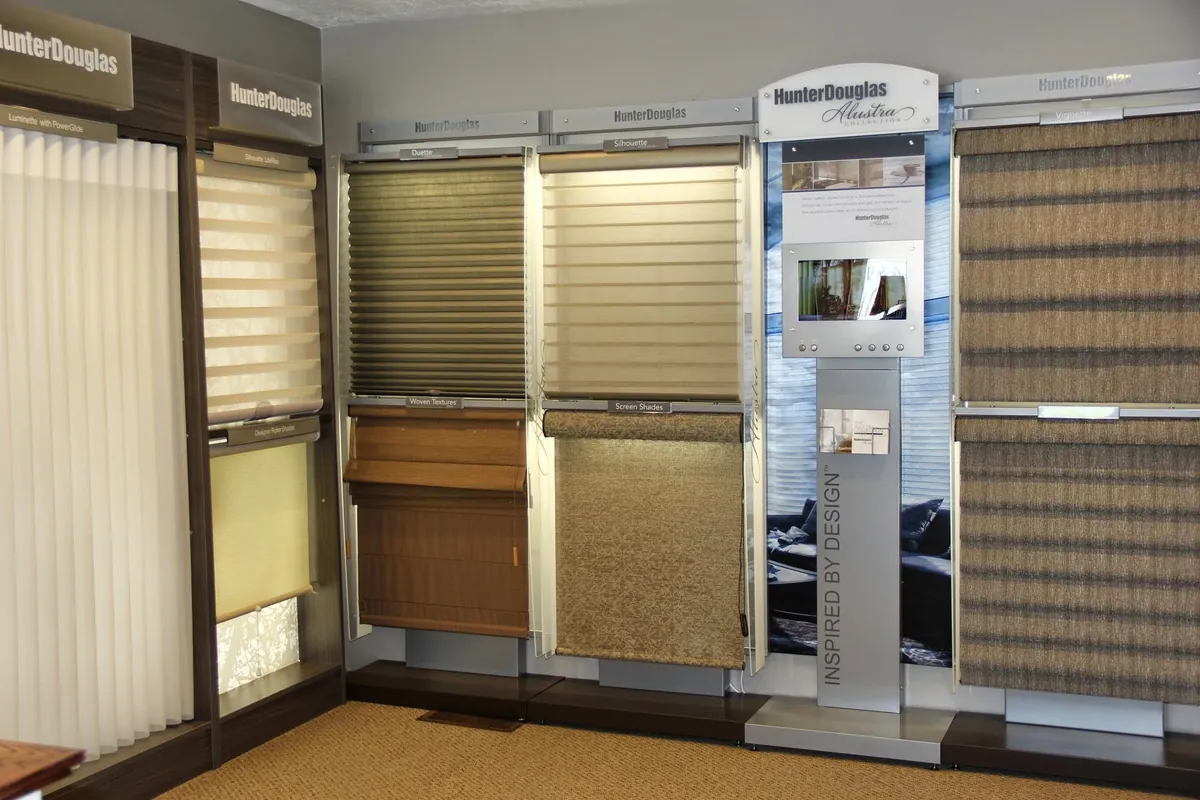
Blinds & Designs is one of dealers who meet its standards that Hunter Douglas recognises as Gallery dealers. For privacy work in small houses, that range is the point: honeycomb, sheer, roller, Roman and banded shades, plus blinds, can all run on PowerView, so we can choose the right product for each small window instead of one style for all.
The installers who fit our shades are certified by Hunter Douglas and program the motors themselves. For a room that needs a complete rethink, ask about our interior design consultations, and for older coverings that have stopped behaving, there is blind and shade repair in Buzzards Bay.
Other pages for the village: cellular shades in Buzzards Bay, roman shades in Buzzards Bay and our Buzzards Bay page. The main motorized blinds and shades page covers the full range.
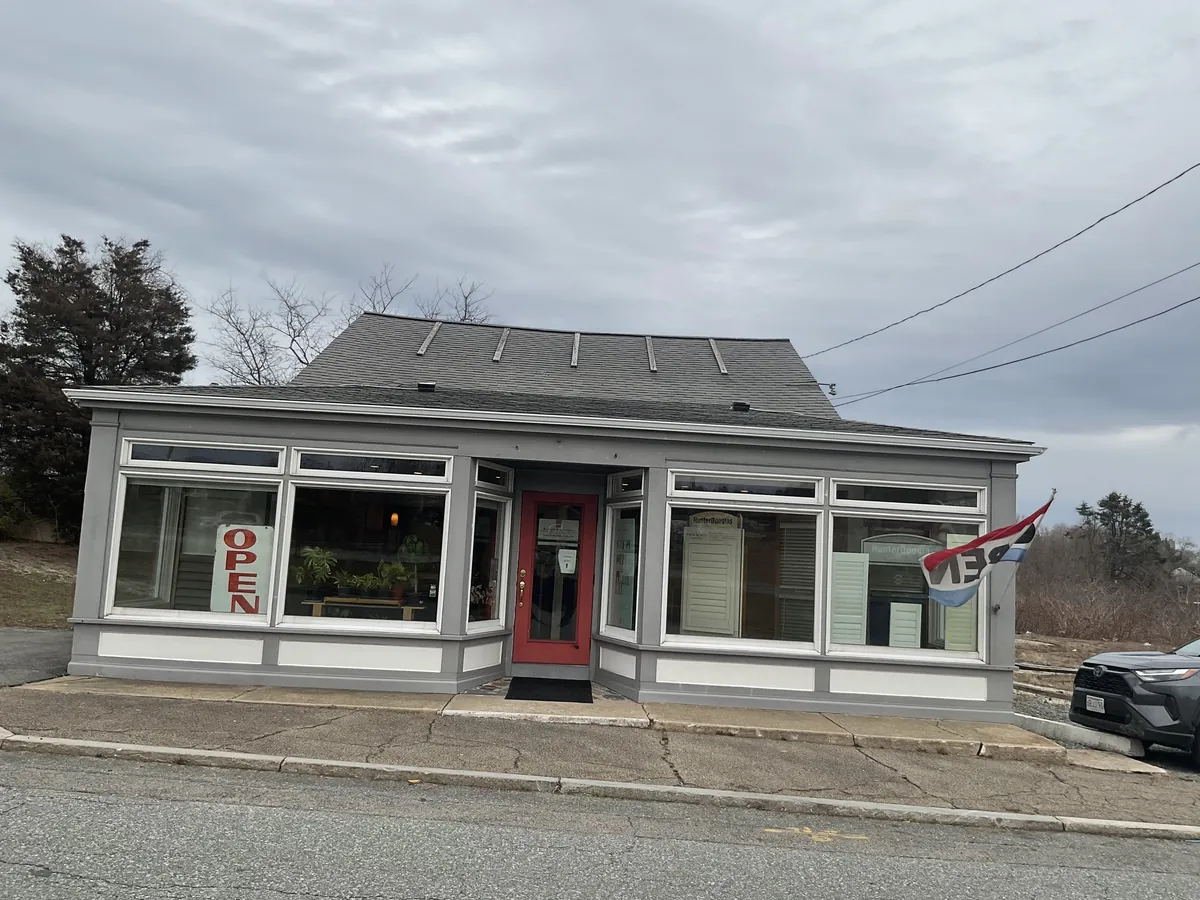
Just across the canal in Sagamore
The Sagamore showroom is our nearest location to the village, a short drive along the canal. Drop in to talk about your windows, or ask for a visit at home with samples.
For a privacy question, a home visit is usually the faster route to an answer, because we can see exactly which window faces which house. That is where planning motorized blinds in Buzzards Bay really starts.
Questions from Buzzards Bay
My windows face the house next door. What works best?
A top-down, bottom-up shade, a banded shade or blinds tilted upward all give privacy while keeping daylight. With a motor, a dusk schedule closes the side-facing windows every evening on its own.
Are my small original windows worth motorizing?
Often, yes. Small windows tend to sit in awkward places, over a tub, behind a sink or high on a stair, and a motor means you never have to lean in to close them.
Can each apartment in a building have its own controls?
Yes. Each apartment is set up on its own, with its own remote and its own list of shades, so neighbors never move each other’s windows.
Will a privacy shade make my small rooms dark?
Not if it is chosen well. Light-filtering fabrics, top-down shades, banded shades and sheers all keep daylight coming in while screening the view.
Is the estimate free?
Yes. We measure at your house and you receive a free estimate for the shades and motors you are considering.
Your next step
Make a note of the windows that face the neighbors or the street, and the small ones you never close because they are awkward to reach. Bring that list to a consultation: we come to the village with samples, measure each opening and leave you a free estimate. The call button and the Sagamore showroom are there too if you would rather talk first.