
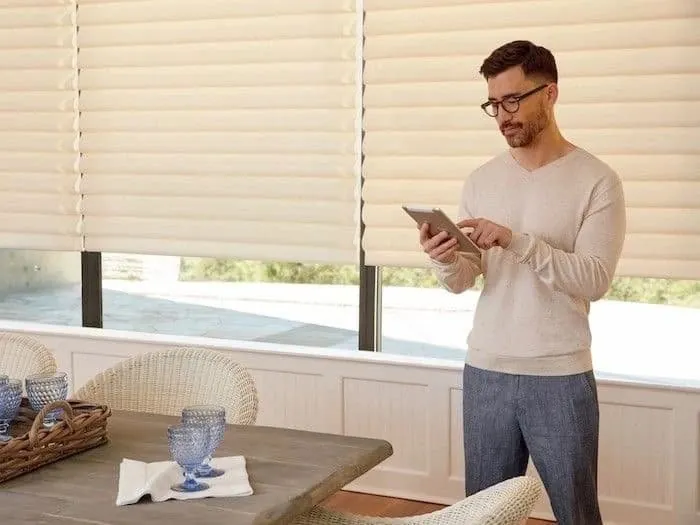
One town, three very different windows
Plymouth is the largest town in Massachusetts by area, and its houses cover the whole history of building here. In the historic center, antique colonials keep their small, deep-set sash. In the Pinehills, large newer houses are built around modern glass, with windows that rise through two stories. And in between, post-war ranches spread out with their picture windows and sliders. No single window treatment answer fits all three, and that is exactly why motorization is worth thinking about room by room.
Motorized blinds in Plymouth, MA, mean something different in each kind of house. In an antique colonial, a motor saves leaning into a deep frame over a wide sill. In a Pinehills great room, it is the only practical way to move a shade that hangs high above the floor. In a ranch, it lines up a row of shades across a picture window and runs them on a schedule.
Hunter Douglas PowerView handles all three. Each headrail hides a motor; a handheld remote, the PowerView app or a timed schedule tells it when to move. Whichever house you live in, the glass is left free of cords.
Starting points for a Plymouth house
The shade comes first and the motor is added to it. These three cover a lot of ground in Plymouth, from modern glass to period rooms.
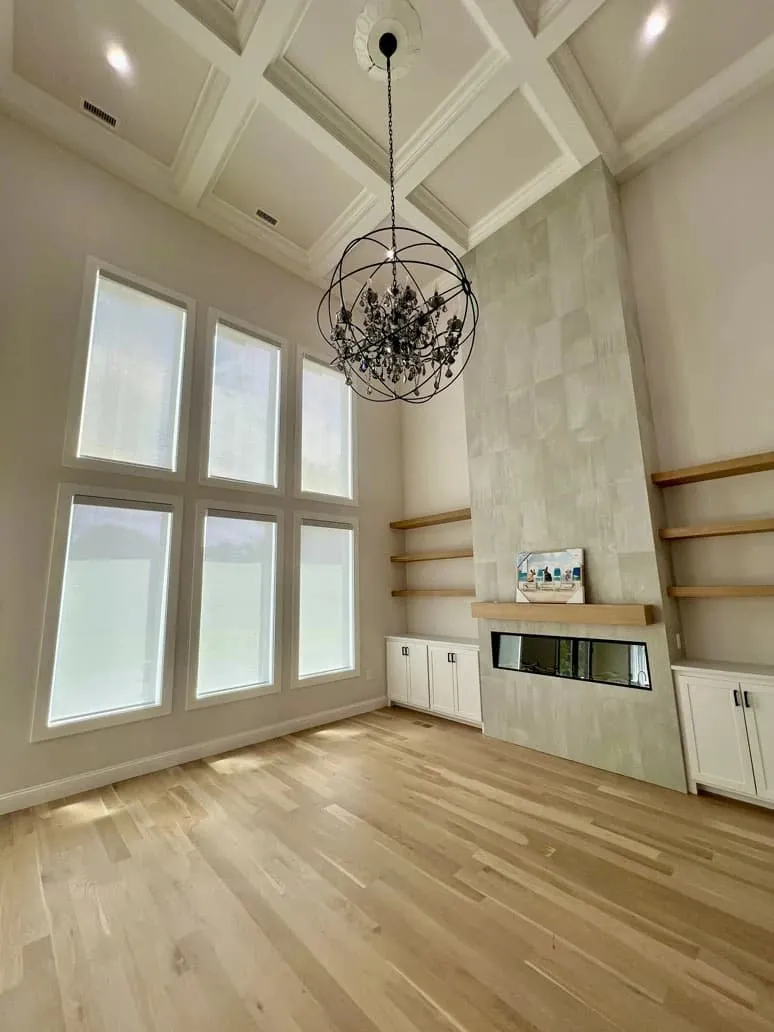
Roller shades for tall glass
One of our own installs: a two-story living room with roller shades on every tall window, exactly the kind of room where PowerView makes sense.
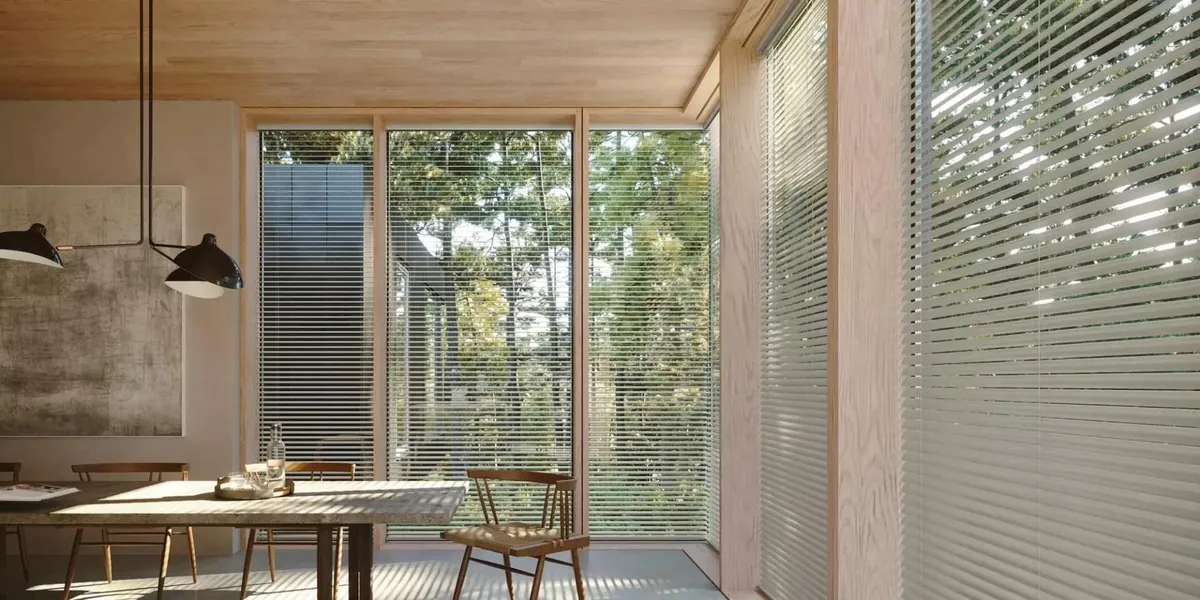
Slim blinds for window walls
Narrow slats that tilt to direct light on a floor-to-ceiling window. We confirm which blind lines and operating options suit your windows.
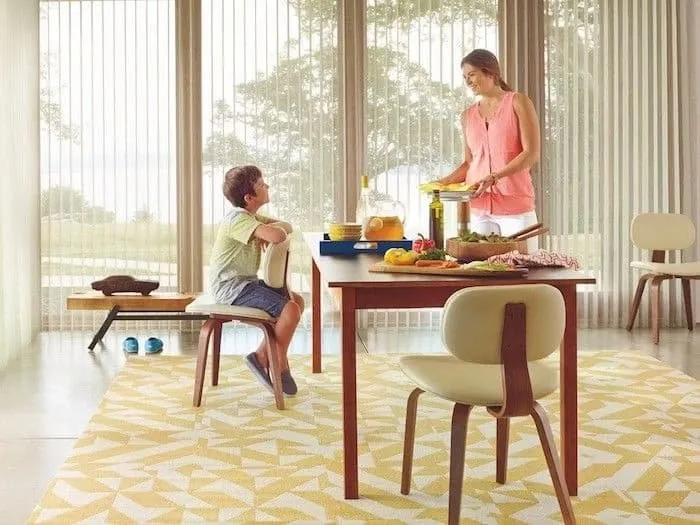
Luminette vertical sheers
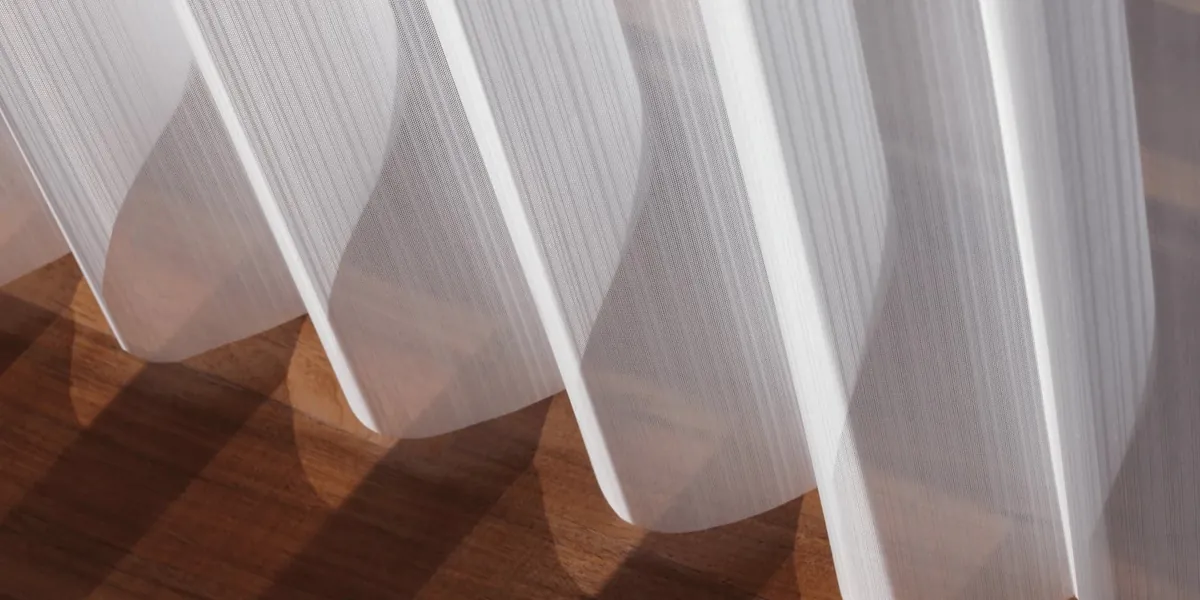
Soft vertical panels that draw aside for a slider and filter the light when closed. Well suited to the wide glass in a newer house.
Colonials in the historic center
The antique colonials around the historic center were built with small windows in thick walls. The sash sits deep inside the frame, often behind a wide sill, and in many rooms a radiator or a window seat sits underneath. Upstairs, the ceilings are lower and the windows smaller still.
These windows are not out of reach because of height. They are out of reach because of depth. Raising a shade mounted well inside the frame means leaning across the sill and whatever sits on it, and doing that at every window in the house, twice a day, adds up.
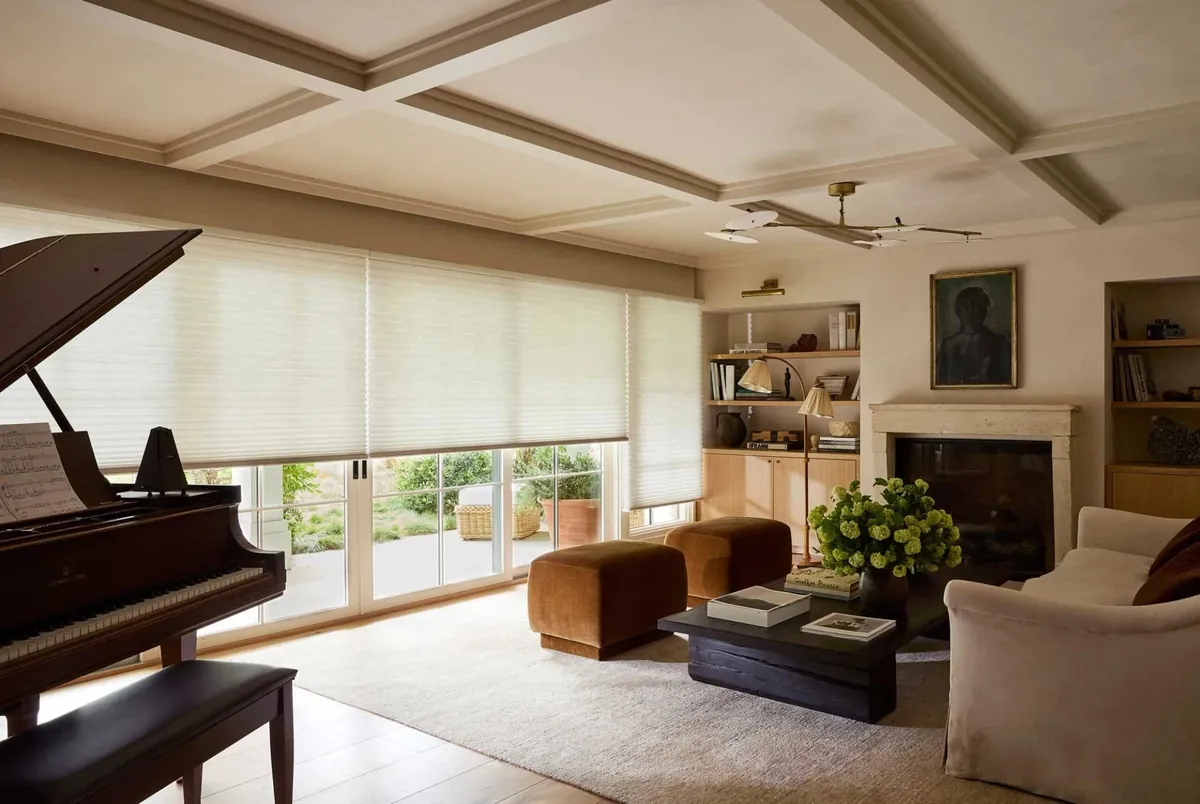
A motorized shade takes the leaning away. Fitted inside the deep frame, the shade and its headrail sit back within the opening, leaving the trim and the old glass in full view. The remote does the rest. Honeycomb and Roman shades suit these rooms best, the first for warmth in an old house, the second for its soft fabric folds in a period interior.
Small, deep-set sash
Deep frames are generous for mounting, because a motorized headrail usually has plenty of room to sit inside the opening. The difficulty with antique sash is size and squareness instead. A little window forgives nothing, and frames that have moved with the house over the centuries seldom stay square.
So each window gets measured top, middle and bottom, side to side and up and down, with the depth checked at more than one spot. Hunter Douglas builds the shade to the tightest of those readings for an inside fit. On a small pane, that care is the difference between a shade that looks built in and one that leaks light down both edges.
In the historic center, the street view matters as well. A row of front windows on one control moves together and stops at the same height, so the house reads as calm and orderly from the sidewalk. We suggest a soft neutral backing for street-facing shades so the outside stays quiet, whatever fabric faces the room.
The Pinehills and modern glass
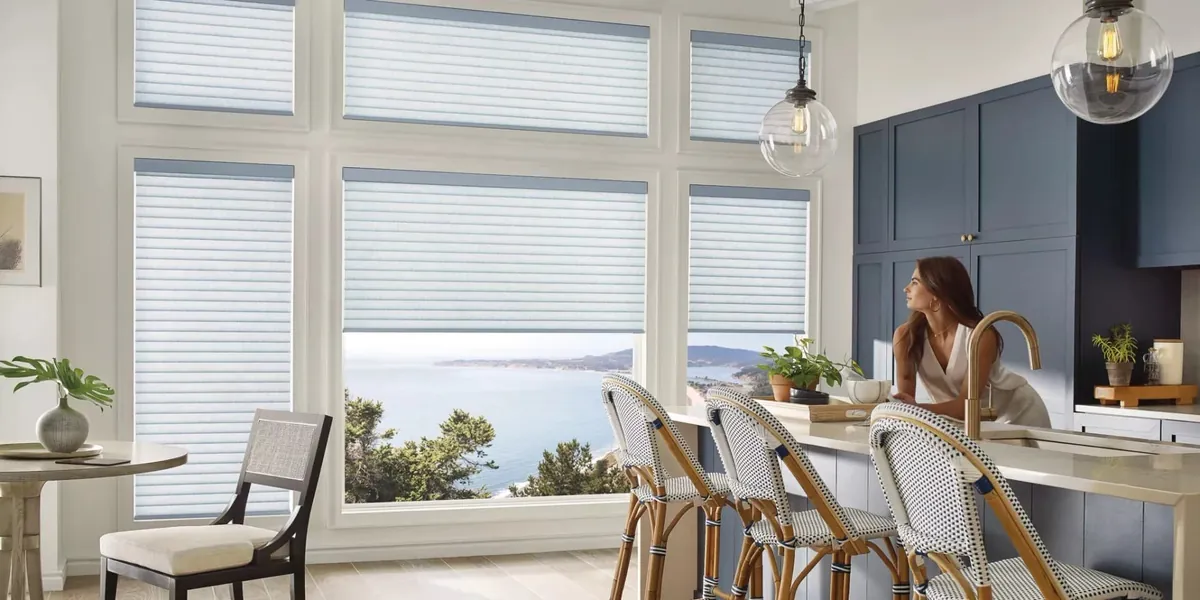
The Pinehills houses are a world apart from the historic center. They are large and newer, built with open plans and walls of glass. Great rooms rise through two stories with tall windows stacked one above another, and many rooms have floor-to-ceiling windows or wide sliders opening onto a deck.
That glass is the point of these houses, with light and outlook all day. It also brings the usual problems of a lot of glass: strong afternoon sun, heat building up in summer, glare on screens and fading on floors and fabrics. And the upper windows in a two-story room are well beyond anyone’s reach.
Here a motor is not a convenience. Nothing else will move those upper shades. PowerView can tie the top row and the bottom row to one button or keep them apart, so the high glass gets its shade at midday while the lower windows keep the garden in view.
Roller and screen shades suit modern glass well, tucking into slim headrails that almost disappear when the shades are up. A screen fabric cuts glare and heat while the outside stays visible, and the openness of the weave decides how much you see. Banded shades and sheers work beautifully on the big windows too.
Two-story rooms on a schedule
A two-story great room often faces the sun for part of the day, and the light that pours through the upper windows can make the room too hot and too bright for hours. A schedule takes care of it.
Set the upper shades to lower as the sun comes round and rise again once it has passed. The lower shades can follow a different timing, or stay open, depending on how you use the room. In winter you might reverse the pattern, letting the low sun in through the day and closing everything at dusk to hold the warmth.
This is where motorized blinds in Plymouth earn their place in a newer house. The shades handle the sun without anyone thinking about it, and the remote overrides the schedule whenever you want the full view.
The ranches in between
Between the old center and the newest neighborhoods, Plymouth has plenty of post-war ranches. Most follow the same pattern, with a sectioned picture window at the front, a slider at the back and the bedrooms strung along one corridor.
That big front window gains the most from a motor. Put its several shades on a single button and they rise and settle together, hems in a straight line. Give them a summer timer and the hot side closes for the afternoon, then opens for the evening light. Come winter, honeycombs drawn at sundown keep the living room snug, their cells holding a cushion of air against the chill of the pane.
For the slider, a side-travelling vertical shade keeps the way out to the yard clear. We decide together whether that door is worth a motor, since a door you use every half hour may be simpler by hand. In the bedrooms, room-darkening fabrics on a morning schedule let the rooms brighten at the time you choose.
Bedrooms and early light
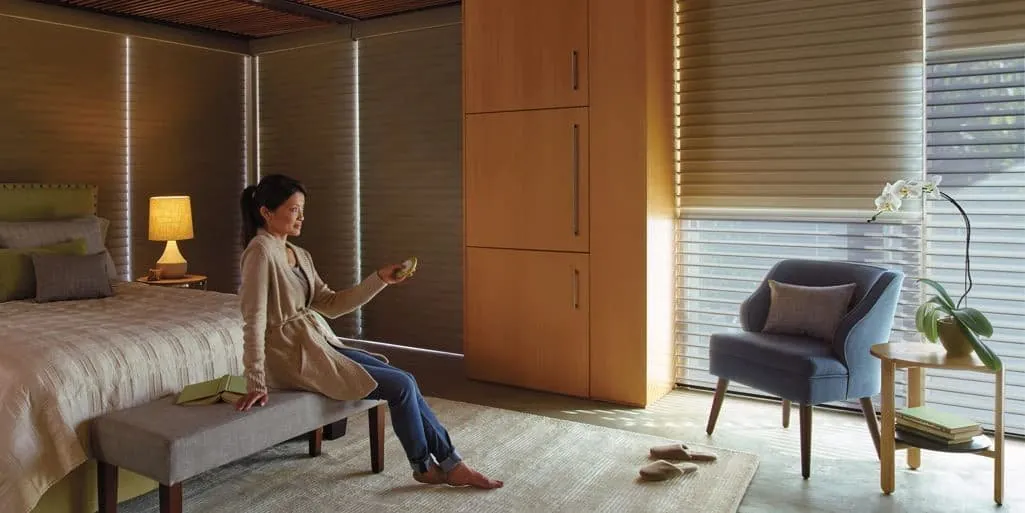
Big windows and open plans are lovely in daytime and harder at dawn. A Pinehills main bedroom with tall glass, or a ranch bedroom on the east side, can fill with light hours before anyone wants to be up, and in summer that is very early indeed.
Room-darkening honeycomb or roller fabrics keep those rooms dim, and the motor decides when they open. A wake-up schedule can raise the shades gently at the time you choose on weekdays and later at the weekend. In an antique colonial, where the bedroom windows are small but often face east under the eaves, the same approach works on a smaller scale, with a remote on the nightstand for the mornings that do not follow the plan.
Home offices and screens
A lot of Plymouth houses now have a room used as an office, and screens and windows rarely get on. Afternoon sun across a desk washes out a monitor, and a window behind the chair puts your face in shadow on every video call.
Here motorized blinds in Plymouth make a strong case, because tilted slats can throw the light upward and away from the screen while keeping the room bright. A screen shade is the fabric alternative, cutting glare while the view stays put. Either can sit on a schedule that follows the sun across the working day, or move at a press of the remote when a call starts.
Why no single answer fits Plymouth
In a town this size, the same street can hold houses built centuries apart, and houses face every direction. A shade that suits a north-facing colonial parlor may be wrong for a Pinehills great room that takes the full afternoon sun. That is why we plan motorization window by window rather than room by room or house by house.
The questions are always the same. How hard is the window to reach? Which way does it face, and when does the sun hit it? Does it face the street or a neighbor? And how do you use the room? The answers decide the shade, the fabric, whether it gets a motor and what its schedule should be.
Many Plymouth houses end up with a mix: motors on the high, deep or wide windows, cordless lifts on the easy ones, and every motorized shade in one app. More can be added later, and new shades join the rooms and schedules already set up.
Open kitchens and the great room
In the newer houses, the kitchen usually opens straight into the great room, so one long run of glass serves both. The trouble is that the two spaces want different things at different hours. The kitchen end needs light while you cook in the late afternoon, just when the sun is hitting the sofa end hardest.
Splitting the run into separately controlled groups solves it. The sofa end can close against the sun while the kitchen windows stay open, and both can come together into one scene in the evening when the whole room wants privacy. Fabrics can still match across the run, so the room reads as one wall of shades even when they sit at different heights. We sketch these groups with you at the consultation, because they depend on how the room is actually used rather than on where the windows happen to be.
Programming the house by room
Three kinds of control run every PowerView shade.
- Remote. A handheld or wall-mounted remote moves a single shade, a group or a whole room. For many households, it is all they need.
- App. Your phone or tablet becomes a map of the house’s shades. Pick any one, park it at the height you want, sort shades into rooms, run the upstairs from the kitchen.
- Scenes and schedules. Save a set of positions as a scene, then hand it to the clock. A Pinehills house might run one scene at breakfast, another for the afternoon sun and a third at nightfall.
Our guide to how motorized shades are controlled explains each one in plain terms, and the window covering automation page covers schedules and scenes in depth.
Motorized blinds in Plymouth, or shades
Slats steer light. Angle a blind and daylight bounces off the ceiling instead of hitting the laptop, while you can still look out between the slats. Thin metal slats match the crisp frames of a modern window wall; wood belongs in a colonial dining room. Picturing motorized blinds in Plymouth for one particular room? Bring it up early, and we will check which Hunter Douglas blinds can take a motor at those sizes.
Shades handle light in more ways. Screens and sheers cut glare while keeping the view, honeycombs insulate, rollers almost vanish when raised, Romans add soft folds, and room-darkening fabrics make bedrooms properly dark. A typical Plymouth project might pair screen shades in a great room with honeycombs upstairs and blinds in the office, all running from one app.
No cords at any window
Take away the cord and you take away the loop a toddler or a dog might tangle in. For nurseries and playrooms that settles the matter for many parents. It counts double on tall glass, where a manual shade would need a cord running most of the way to the floor.
A motor pulls evenly at both ends as well, so a wide shade over a Pinehills window never rises lopsided.
From first visit to first schedule
- Ask for a visit through Request a Consultation, or press the call button.
- Samples travel with us in the van, so fabric is judged in the light of your own rooms.
- Together we look at the tall windows, the deep ones and the ones the sun finds first.
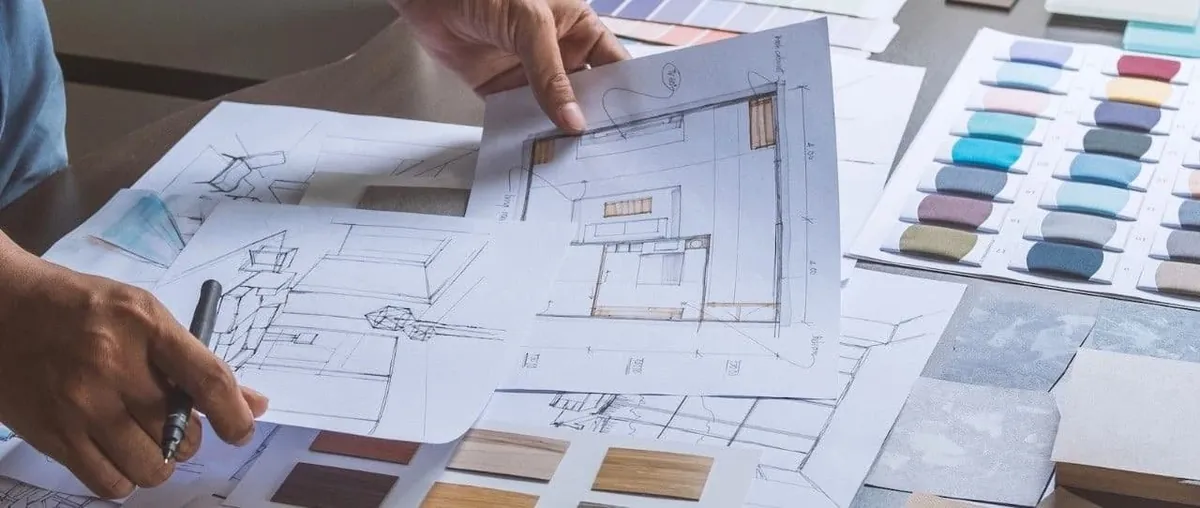
- Measurements are taken, and we sketch out which windows get motors and which rooms group together.
- A free estimate arrives for the shades and motors on that list; take your time with it.
- When Hunter Douglas has built the order, our certified installer hangs everything, sets each stopping point, links the shades to remote and app, and programs your first schedules alongside you.
Our page on what happens at an in-home consultation covers that first visit in more detail.
A Gallery dealer for every era of house
Only some Hunter Douglas dealers are named Gallery dealers, and we are one of them. For Plymouth, with centuries-old sash on one road and walls of new glass on the next, the full range is what makes the planning work. A motor can be added to honeycomb, Roman, sheer, roller, screen or banded shades, or to a blind, which leaves each window free to have the product it suits.
Our installers carry Hunter Douglas certification and set up the motors before they leave. Interior design consultations are there for rooms that need a fuller rethink, and older coverings can come back to life through blind and shade repair in Plymouth.
Planning other rooms in town? Look at roller shades in Plymouth, cellular shades in Plymouth or the Plymouth page. For PowerView across every product, see motorized blinds and shades.
Our nearest showroom is in Sagamore
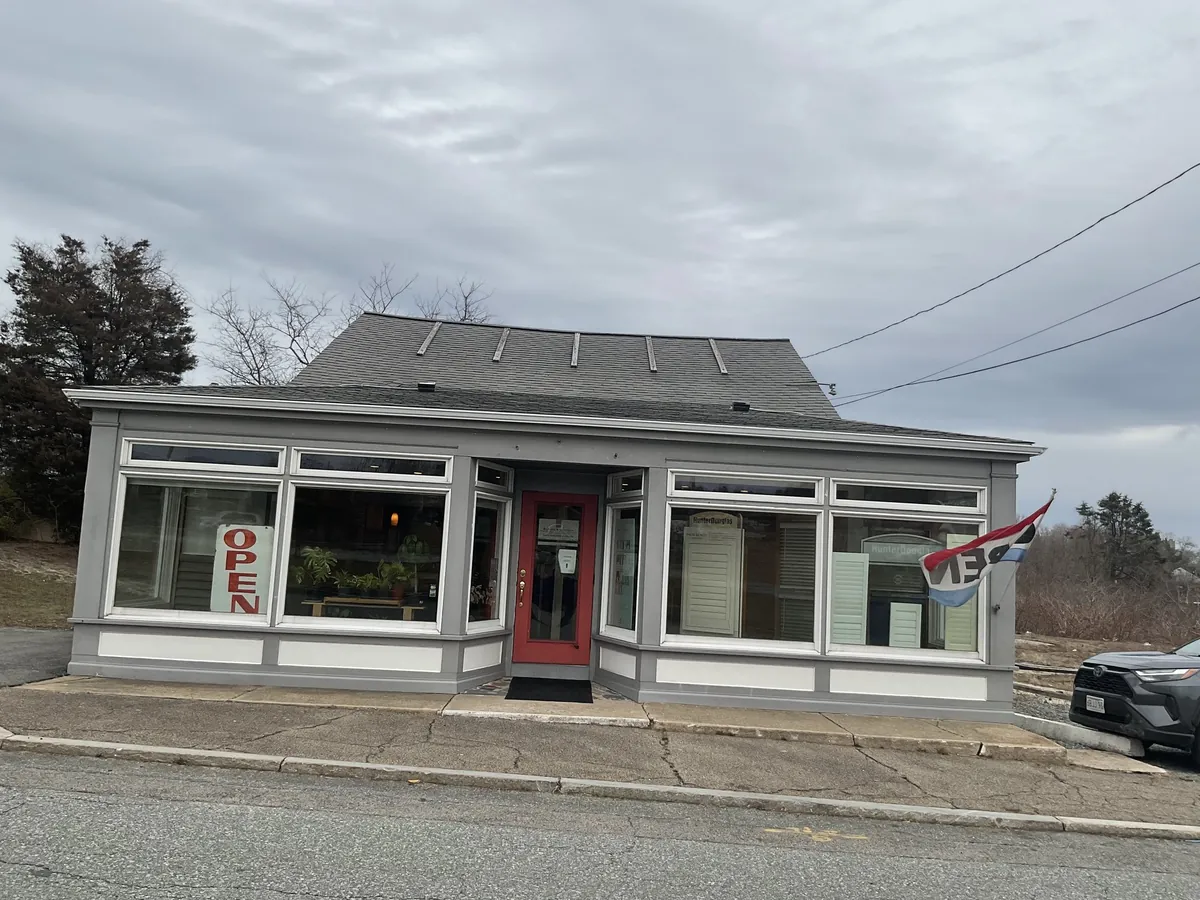
From Plymouth, the nearest of our locations is the Sagamore showroom, a drive down toward the canal. Come and talk windows with us there, or have the samples brought to your door.
With two-story glass or antique sash, we generally suggest the house first. How big each window is, how deep it sits and which way it faces will steer every choice, and those are easiest to judge on the spot.
Questions from Plymouth
Can the upper windows in my two-story great room be motorized?
Yes. Two-story windows are one of the strongest reasons to choose PowerView, since there is no practical way to reach them otherwise. They can move with the lower windows or on their own schedule.
My colonial’s windows sit deep in the wall. Is that a problem?
Usually it helps. A deep frame gives the motorized headrail room to sit inside, out of sight. The care goes into measuring, because old openings are seldom perfectly square.
Can I block the afternoon sun without losing the view?
Yes. Screen and sheer shades cut glare and heat while the outside stays visible, and a schedule can lower them through the sunniest hours and raise them again afterwards.
Do I have to motorize every window in the house?
No. Many Plymouth houses motorize only the high, deep or wide windows and keep cordless lifts on the rest. More can be added later and run from the same app.
Is the estimate free?
Always. After measuring, we put together the estimate at no cost to you and leave you to think it over.
Plan it window by window
Whether your house is a colonial in the historic center, a Pinehills house with two-story glass or a ranch in between, the next step is the same. Book a consultation and a van of samples comes to you, every window is measured and the free estimate follows. To talk before booking, press the call button or visit us at the Sagamore showroom.