
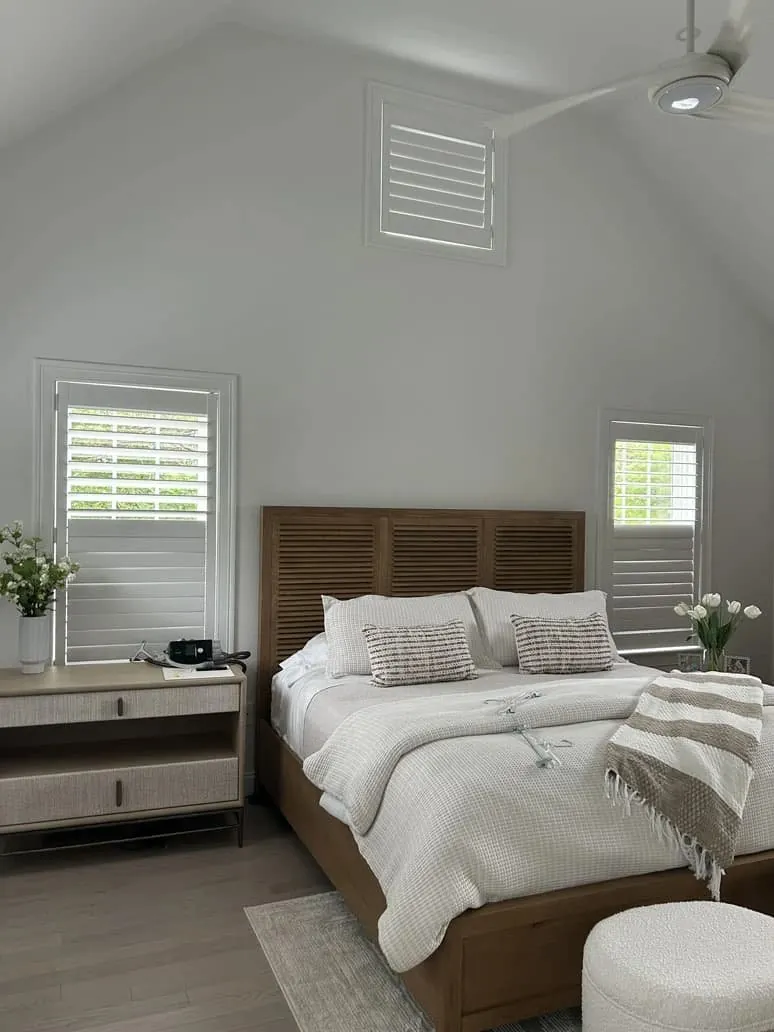
Why one answer never fits Plymouth
Plymouth is the largest town in Massachusetts by area, and its houses cover just as much ground. In the historic center near the harbor, antique colonials keep their small, deep-set sash, often with thick walls and window reveals deep enough to rest a cup on. Up in the Pinehills, the houses are large and new, built around modern two-story glass, great rooms and long runs of windows facing the woods. Between the two, across the town’s many villages and back roads, sit post-war ranches with picture windows, sliders and plain double-hung units.
That spread is the whole reason the choice of a Hunter Douglas dealer in Plymouth, MA matters. A product that is perfect in a Pinehills great room would look wrong in a colonial parlor, and the right shutter for a downtown sash may be the wrong one for a ranch bedroom. What helps is a dealer with the whole range to choose from and installers who know how to fit each piece.
Blinds & Designs is a Hunter Douglas Gallery dealer, so every Hunter Douglas family is on the table, and our installation is certified by Hunter Douglas.
From downtown sash to Pinehills glass, the right Hunter Douglas family
Every house in town needs something a little different from its Hunter Douglas dealer in Plymouth. These six families cover nearly all of it, and each card links to our page for that product in town.
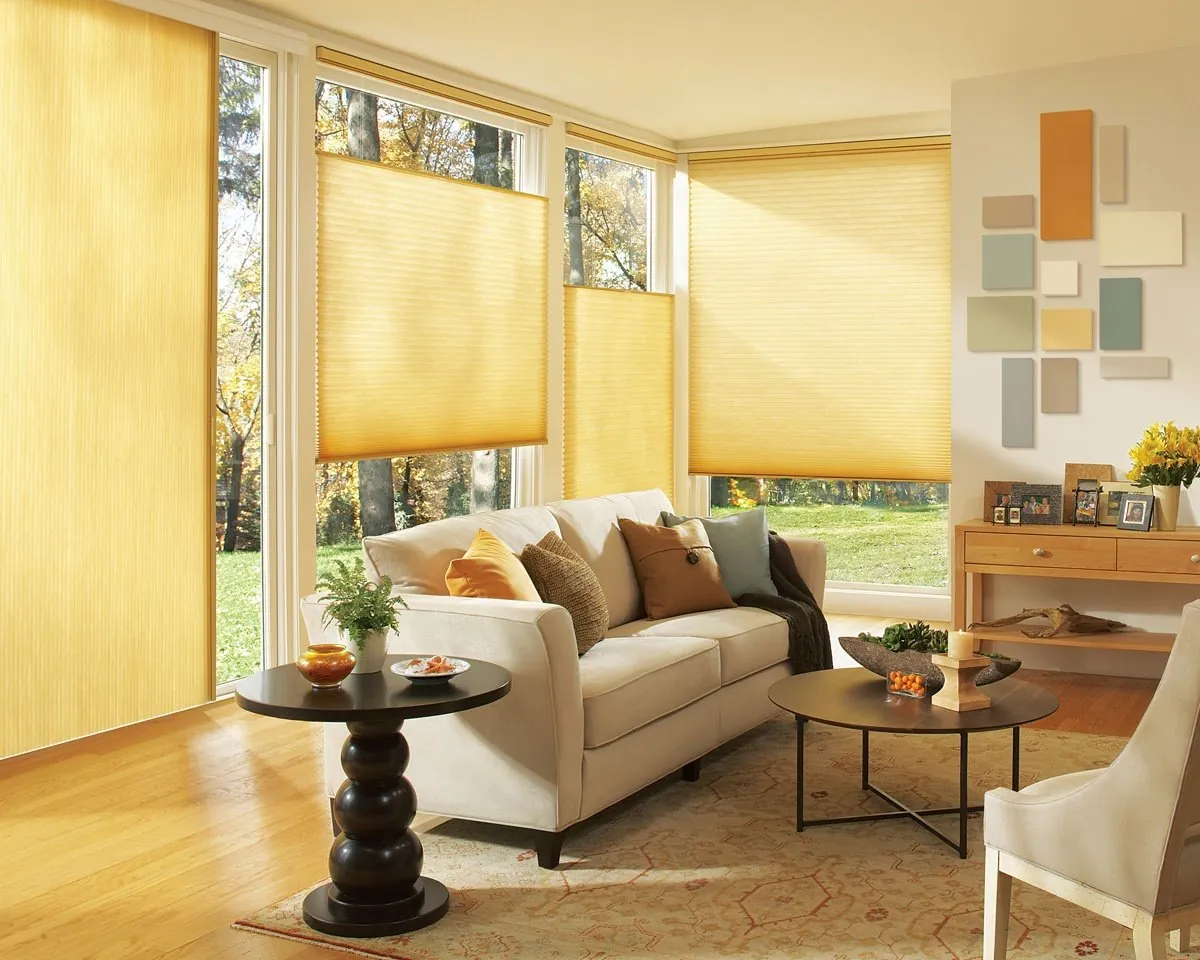
Honeycomb shades
Duette and Applause, for warmth in an old colonial, darkness in a bedroom and a matching vertical shade on a slider.
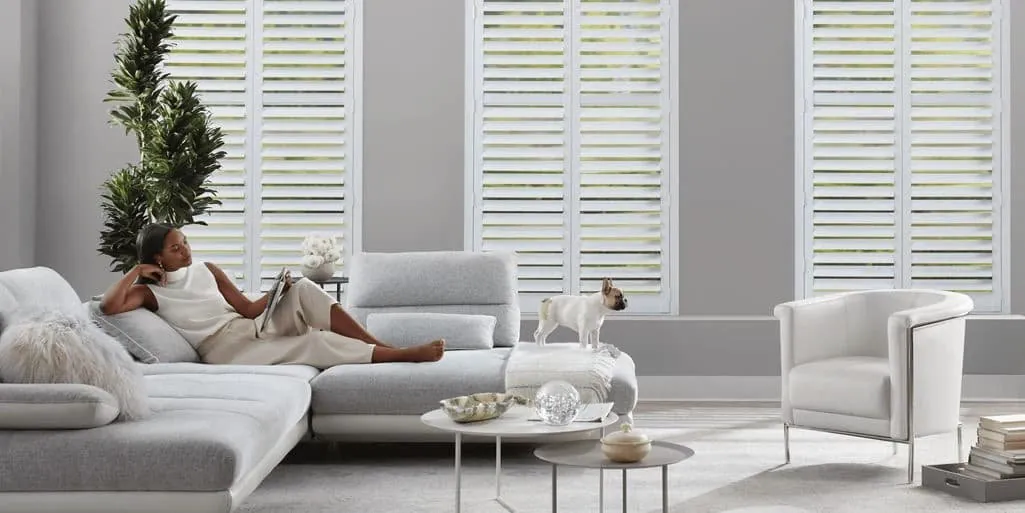
Plantation shutters
Palm Beach, NewStyle and Heritance, built into deep reveals so the window looks finished from inside.
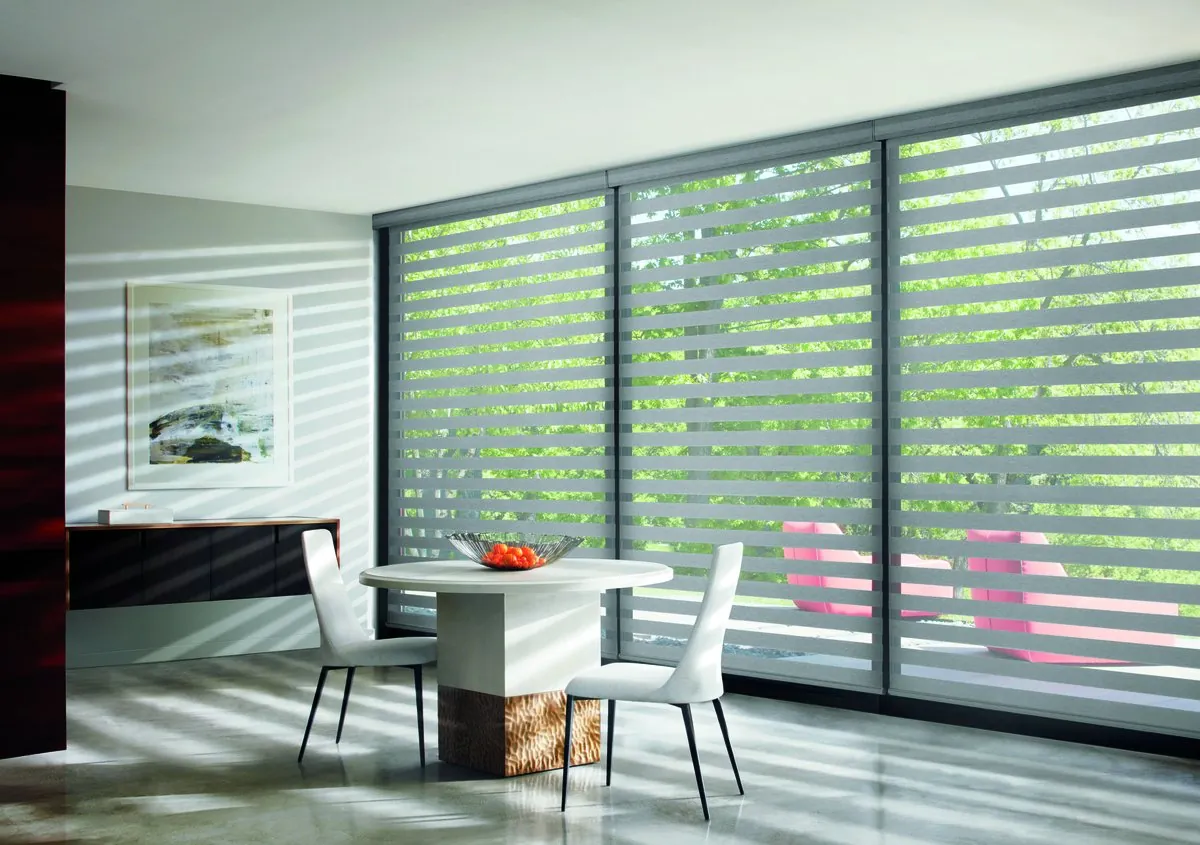
Roller, screen and banded shades
Designer, Alustra and Sonnette, for clean lines on large modern glass and glare control without losing the view.
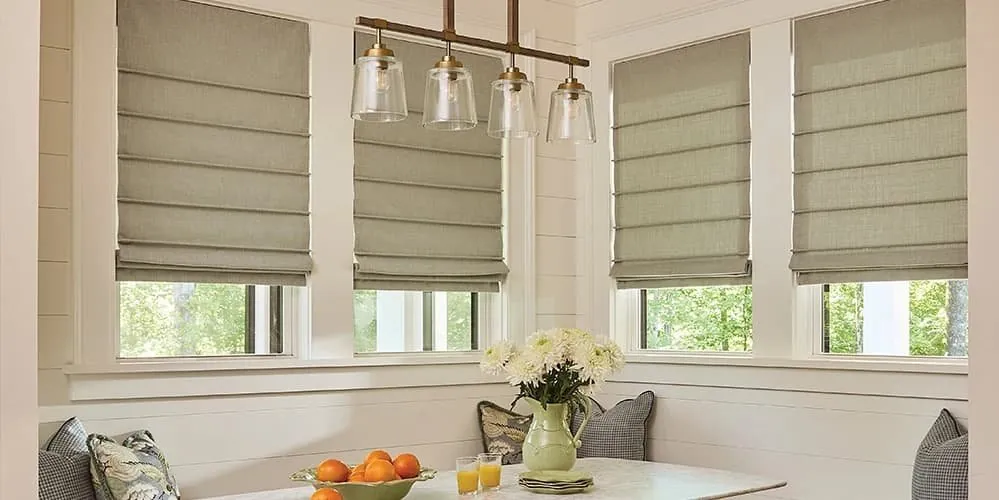
Roman shades
Vignette and Carole Roman shades soften a room with fabric folds, from a ranch kitchen to a colonial dining room.
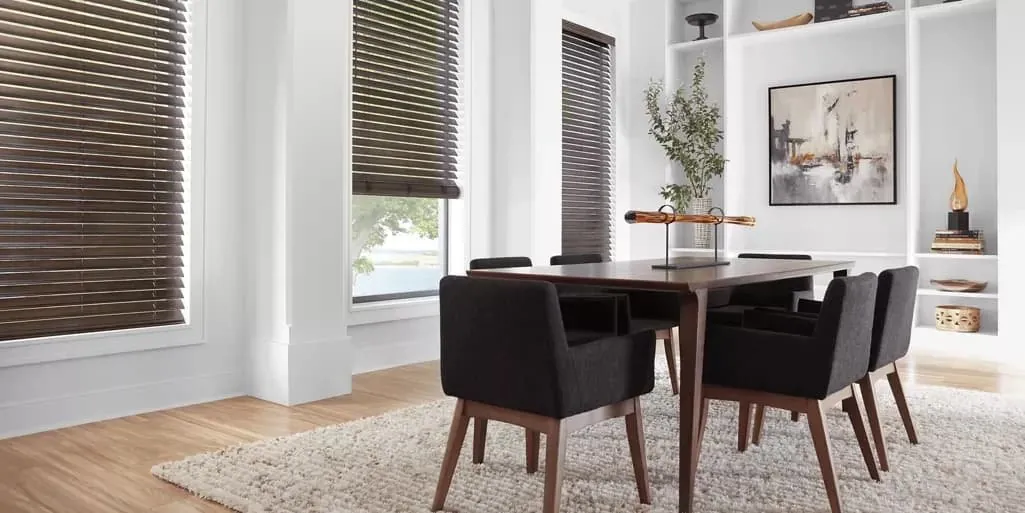
Wood, faux wood and metal blinds
Parkland, EverWood, metal and Aria fabric blinds, with tilting slats for exact control of light.
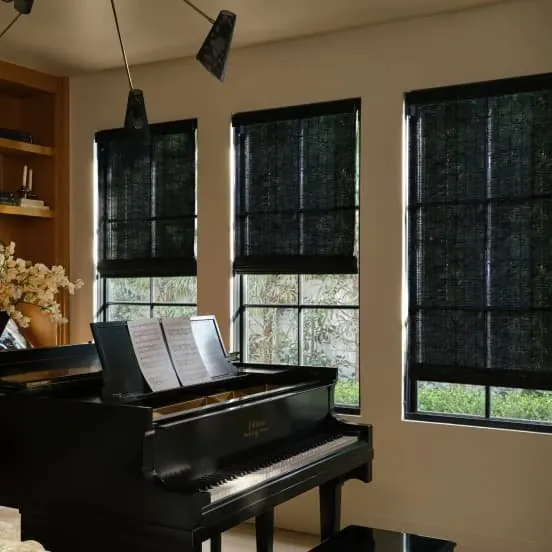
Drapery and woven shades
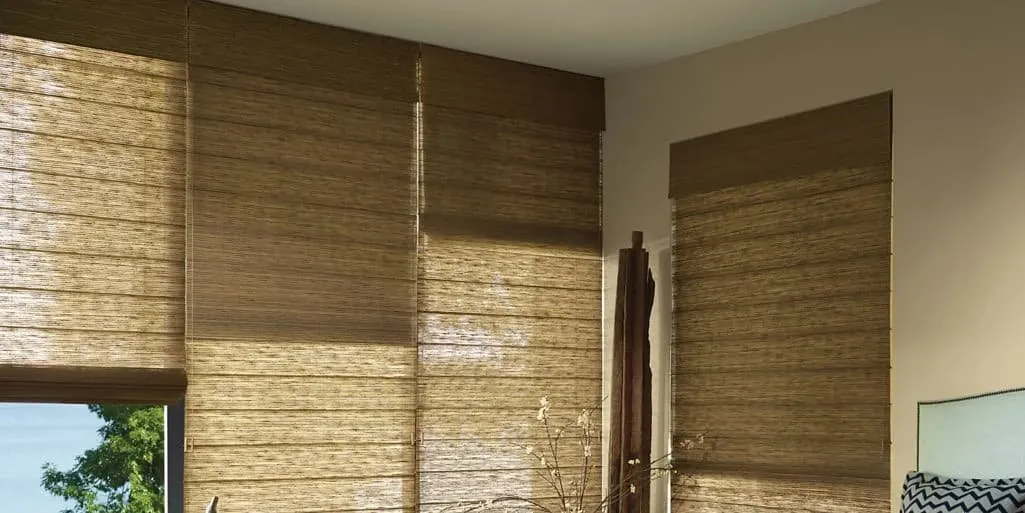
Carole drapery and natural woven shades, to frame a window or add texture over a working shade.
The historic center: deep reveals and small panes
The oldest houses downtown were built with heavy timber frames and thick walls, so the window sits well back from the face of the room. That depth is a gift. It gives an inside mount plenty of room, which means a shade or shutter can sit entirely within the opening and leave the old casing untouched.
The sash itself is the challenge. Antique colonials often have small panes and narrow openings, and the frames have moved over the years. We measure each one separately, because two windows that look alike from the street can differ enough that a single size would leave a gap on one of them.
Shutters are a natural fit here. A Heritance hardwood shutter set into a deep reveal looks as if it came with the house, and it can be painted to match the trim or stained to pick up old floorboards. Where a shutter would feel too heavy for a small window, a honeycomb shade inside the reveal stacks almost out of sight when raised and holds a layer of still air against the cold glass in winter.
Halls, stairs and the awkward windows
Antique colonials hide a few awkward openings: a narrow window on the stair landing, a tiny light in a closet under the eaves, a pair of slim sidelights by the front door. They are easy to forget and hard to treat, because a standard product rarely fits them.
Honeycomb shades can be made very narrow and very short, so even the smallest landing window can match the rest of the house. Sidelights usually take a slim shade mounted on the door or in the frame, giving the hall privacy without blocking the daylight the sidelights were built to bring in. A Hunter Douglas dealer in Plymouth, MA sees plenty of these, and we measure them with the same care as the main rooms.
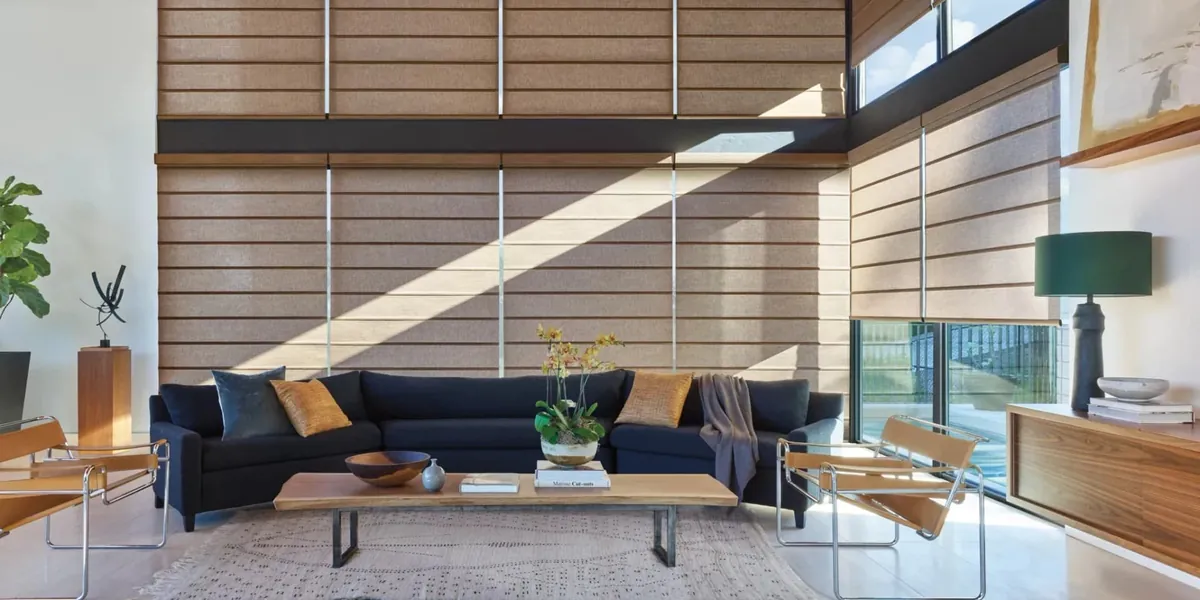
The Pinehills: two-story glass and big rooms
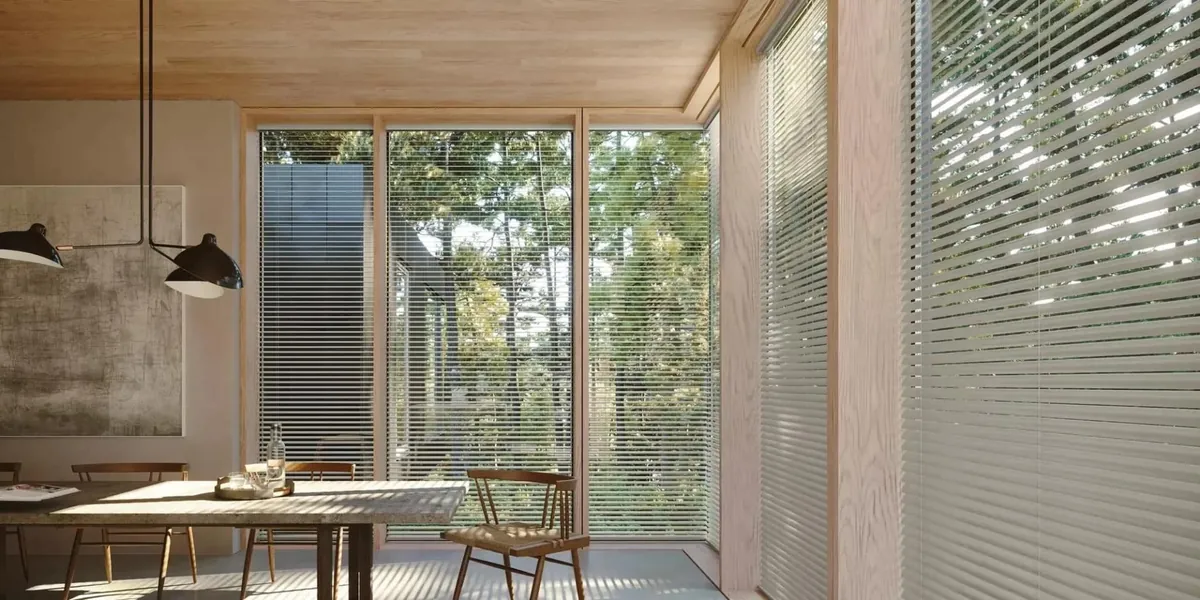
Up in the Pinehills the problems run the other way. The houses are newer and the openings are square, but the glass is large. Great rooms rise two stories, with a wall of windows facing the trees and a row of transoms or clerestory windows near the ceiling. Kitchens open onto family rooms with sliders to the patio. Some bedrooms have a window above the bed that no one can reach without a ladder.
Three things decide what works:
- Reach. Anything above head height needs a way to move without a pole or a ladder. PowerView motorization lets those shades rise and fall from a remote, an app or a schedule.
- Scale. A wide wall of glass usually takes several shades side by side. We plan how they line up so the headrails and bottom rails form one level line across the wall.
- Light through the day. Glass that faces south or west can flood a room with afternoon sun. Screen fabrics, sheer shades with tilting vanes and light-filtering honeycomb each tame it in a different way.
Transoms and clerestory windows near the ceiling are usually left fixed and treated with a shade shaped to the opening, or with a motorized shade that drops only when the sun is on that glass. The tall glass is also where a dealer’s measuring and installation matter most. A shade that is a fraction off on a wall of tall glass is plain to see from the sofa, which is why every piece is fitted by our certified installers and checked at the window before we leave.
Post-war ranches between the two
Much of Plymouth lies between the old center and the newest developments, and a lot of it is post-war ranches. They are straightforward houses with honest windows: a living room picture window, bedrooms with wide horizontal units and a slider or patio door at the back.
A ranch rewards a consistent plan. Many owners choose one product and color for the whole house, so every window matches from the road, then vary the fabric inside: room-darkening honeycomb in the bedrooms, a light-filtering roller or Roman shade in the kitchen, shutters in the front room. The picture window can take a group of shades on one headrail, and the slider gets a vertical honeycomb or Luminette sheer that slides aside when you open the door.
The picture window deserves its own thought. It is usually the biggest single pane in a ranch and the one the living room is arranged around. A Designer roller shade in a light fabric keeps it bright and simple. Silhouette sheers turn it into a soft glowing panel in the afternoon. Shutters split it into sections that tilt independently, which suits a front window close to the road. We bring each option so you can stand back from the sofa and see which one belongs.
Ranches also tend to have one or two rooms that were changed later: a den added at the back, a converted garage, a sunroom with glass on three sides. Those rooms often need a different answer from the rest of the house, and a sunroom in particular benefits from a light-filtering honeycomb or screen shade that tempers the heat.
Because the openings are regular, nearly every Hunter Douglas line mounts inside a ranch window cleanly, which keeps the look tidy and the trim untouched.
What we do when we come to your house
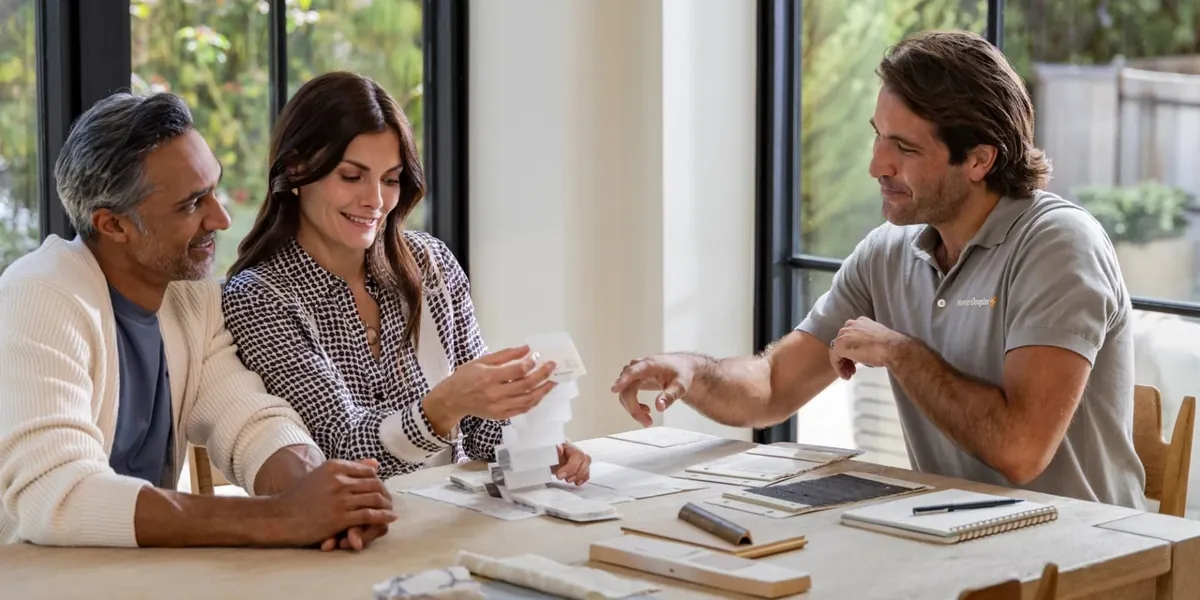
You learn more about a window covering at your own glass than from any amount of browsing. That is why most Plymouth projects start with a visit. The van comes loaded with samples, so you are choosing in the light the shade will live in.
- You ask for a time through Request a Consultation or the call button.
- We arrive with sample books and working samples of the lines that suit your house.
- You tell us what each room needs: warmth downtown, glare control in a Pinehills great room, privacy in a ranch bedroom that faces the street.
- We hold fabrics and finishes against your windows at different angles, so you see how each one handles the light.
- We measure every opening, checking reveal depth, squareness and anything that would get in the way of the headrail.
- You get a free estimate and take your time deciding.
For a bigger rethink of a room, our interior design consultations bring color, fabric and layering into the same conversation. More on how the first visit works is in our guide to what happens at an in-home consultation.
Bedrooms: darkness and quiet mornings
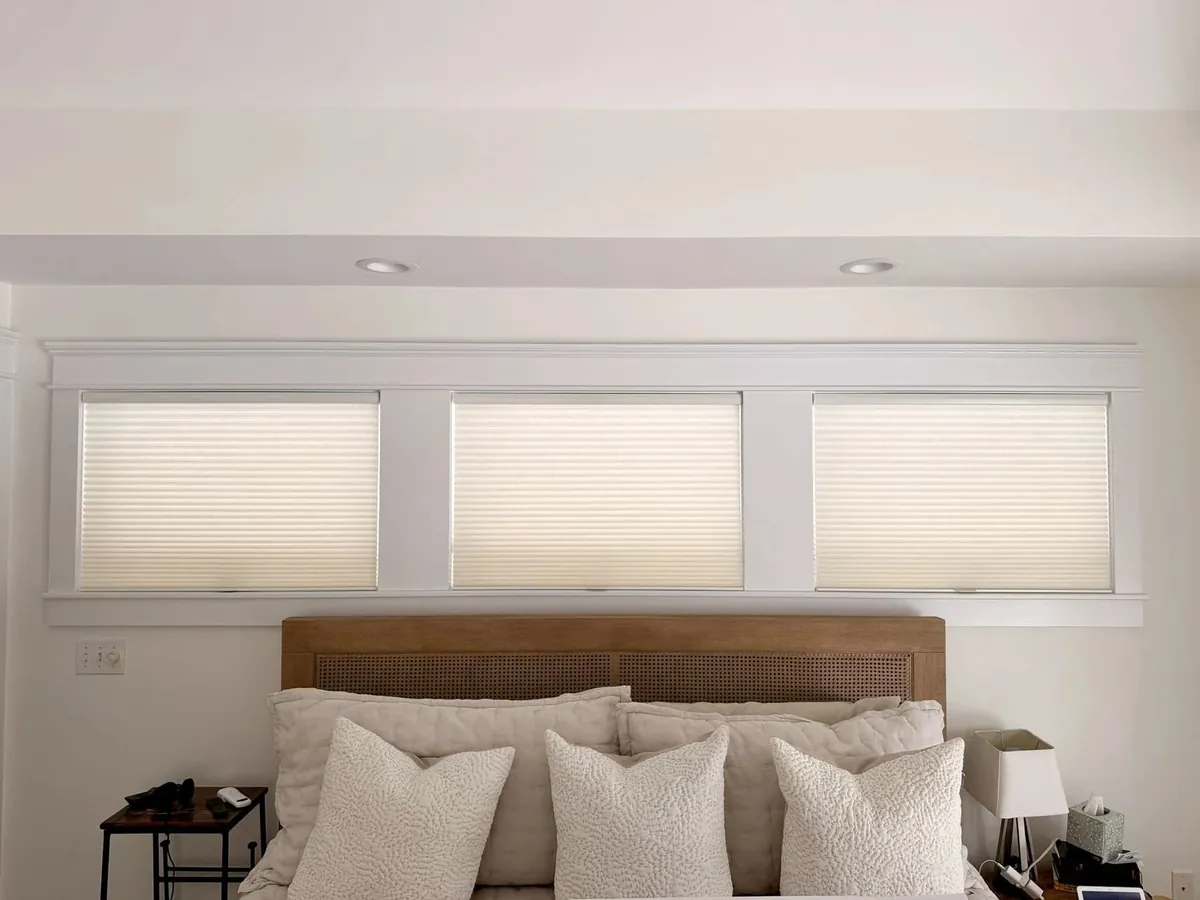
Every kind of Plymouth house has bedrooms that catch the early light. In a ranch the bedroom windows are wide and low; in a colonial they may be small and set into the roof slope; in a Pinehills house the main bedroom might face a wall of east glass. Each wants a dark room at dawn and an easy way to let the light back in.
Room-darkening honeycomb is the most common choice, because the fabric blocks the glow and the cells still hold air against the glass on a cold night. Shutters with tight-closing louvers work well too, especially in a colonial where they suit the room. For a large east-facing window, a room-darkening roller shade behind a sheer gives you both a soft daytime look and a dark night. PowerView can raise the bedroom shades on a schedule, so the room wakes up gently.
Kitchens, baths and moisture
Steam and splashes are hard on fabric and on real wood. For the window over a sink, or a bathroom that fills with steam, Palm Beach shutters are the dependable choice: the polysatin stays straight in moisture and wipes clean. EverWood faux wood blinds do the same job with a slimmer look, and a cafe-height shutter on the lower sash keeps a kitchen or bath private while the upper glass stays open.
In a Pinehills kitchen that opens to the family room, a matching roller or Roman shade across both spaces keeps the open plan looking like one room. We usually suggest a fabric that copes with a little cooking steam and still looks soft.
Glare, heat and the afternoon sun
Big windows bring big light. In a Pinehills great room or a ranch living room that faces west, the late sun can make a television unreadable and fade a rug. There are a few good ways to handle it, and they suit different rooms.
Screen shades in the Designer and Alustra lines cut glare while you still see out. The tighter the weave, the more glare they block and the less of the view you keep, so we bring a few openness levels to compare.
Sheer shades such as Silhouette and Pirouette have fabric vanes that tilt. Open, they let in soft light with the view behind; closed, they give privacy. They suit living rooms where you want the window to feel open most of the day.
Honeycomb shades in a light-filtering fabric spread the light evenly and slow the heat that comes through the glass on a summer afternoon. Top-down, bottom-up versions let you cover only the band of glass where the sun is coming in.
Choosing between them is easiest at the window, at the time of day the sun is worst. Our guide to the best shades for sun and glare goes into it further.
Matching lines across one house
A house that mixes old and new rooms, such as a downtown colonial with a modern addition at the back, needs products that look related even when they do different jobs. Hunter Douglas makes that easier than most, because several families share fabric palettes and finishes.
- Old front rooms, new back rooms. Heritance shutters in the original rooms, NewStyle in the addition, both in the same painted finish.
- Honeycomb throughout, different opacities. Duette in a light-filtering fabric downstairs and the same color in room-darkening upstairs, so the outside looks uniform.
- Sheers and rollers together. Silhouette in the living room and a Designer roller shade in a matching tone in the kitchen.
Whichever mix you settle on, the Hunter Douglas dealer in Plymouth who measures it should be the one who fits it. You can browse each family on our pages for Hunter Douglas shades, blinds, shutters and drapery, and the brand as a whole on our Hunter Douglas page.
When drapery belongs over a shade
Drapery is not for every window, but in a few Plymouth rooms it makes the space. A colonial dining room with tall-for-its-age windows can take Carole drapery panels either side of a Roman shade, which adds color and a second layer on cold nights. In a Pinehills great room, floor-length panels at the ends of a wall of glass soften a big, hard-edged space while a motorized shade does the daily work behind them. Woven shades bring texture to a ranch living room where everything else is smooth.
We bring drapery fabrics alongside the shade samples, so you can see how the two sit together before deciding. Our page for custom drapery in Plymouth has more on the options.
PowerView for windows no one can reach
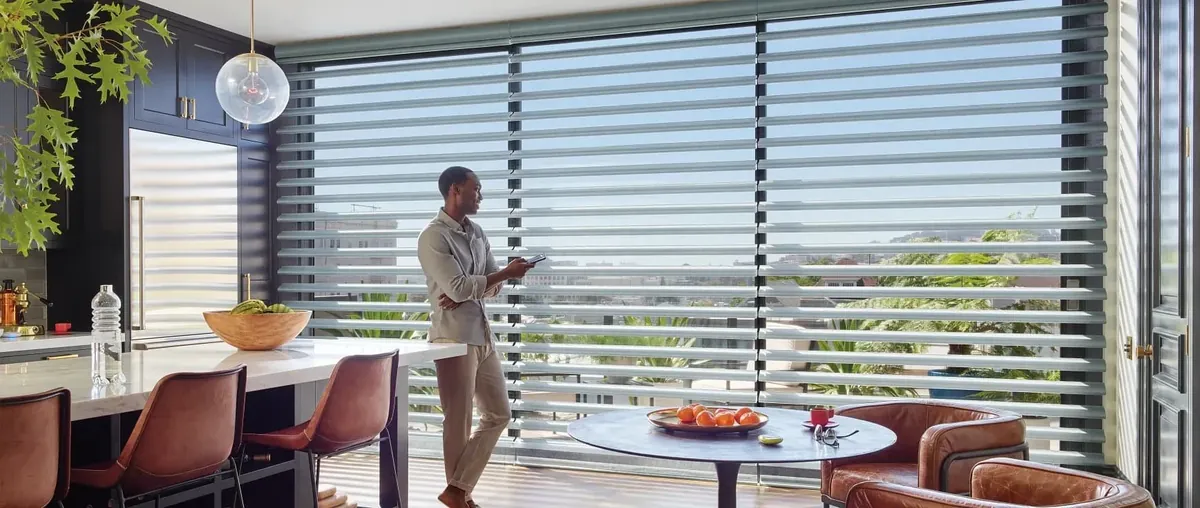
Two-story glass is where motorization stops being a luxury and starts being the practical choice. PowerView lets a shade move from a remote, a phone app or a wall control, and it can run on a schedule, so the great room closes before the afternoon sun hits and opens again in the evening.
It works on many Hunter Douglas lines, including honeycomb, roller, screen and sheer shades, so you are not limited in style. Shades can be grouped, so one press moves the whole wall of glass together, or set by room.
We talk through how each motor is powered and where controls go at the consultation. Our page for motorized blinds in Plymouth covers it in more depth.
Certified installation, from the first bracket to the last test
Hunter Douglas products are made to order, so the measuring and the fitting decide how good they look. Our installers are certified by Hunter Douglas, and they follow the same care whether the job is one cape window or a Pinehills great room.
On a downtown colonial that means brackets set level even when the frame is not, and inside mounts that clear the old sash lock. On tall modern glass it means lining up a row of shades so they sit as one, and pairing and testing every motorized shade before we go. On a ranch it means a tidy, matching result across every window in the house.
Once the work is done, we stay available. We handle blind and shade repair in Plymouth on window coverings you already own, and we can add motorization to suitable shades later.
A Gallery dealer for the whole of Plymouth
As a Hunter Douglas Gallery dealer we can offer the full family of shades, blinds, shutters and drapery, which matters in a town this varied. You are not steered toward the few products a smaller dealer stocks; you choose the one that fits each window.
Our in-home visits bring samples to the house, our estimates are free, and our installation is certified by Hunter Douglas. When a whole house is being done, we can treat every room in one plan.
The Sagamore showroom is our nearest location, a short drive south toward the canal. Every other service we offer in town is on our Plymouth page, and you are always welcome to talk to a Hunter Douglas dealer in Plymouth, MA before deciding anything.
Plymouth window questions
Do shutters suit the deep window reveals in an old colonial?
Very well. The depth lets a shutter frame sit fully inside the opening, so the panels look built in and the old casing stays visible. We measure each window separately, because antique frames are rarely square.
How do I control shades on two-story windows?
PowerView motorization moves them from a remote, an app or a wall control, and can run them on a schedule. Shades on the same wall can be grouped to move together.
What stops afternoon glare in a big great room without hiding the view?
A screen shade or a sheer shade with tilting vanes. Screen fabrics come in different openness levels, and we bring a few so you can compare them at your own window.
Can a whole ranch be done in one matching style?
Yes. Many owners choose one product and color for every window so the house looks uniform from outside, then pick different fabrics or opacities room by room inside.
Is there a charge for the estimate?
No. After we measure, the estimate is free.
Ready when you are
Request a consultation and we will bring samples to your windows, measure, and leave a free estimate.
Or press the call button to talk it over, or stop by the Sagamore showroom first.