
Deep sills near the village, tall foyers off Holliston Street
Medway’s housing splits neatly in two. Near the village stand antique colonials whose oldest windows are very small and set deep into thick walls, so each one sits at the back of a recess with a wide sill in front. Across the subdivisions off Holliston Street the large newer colonials go the other way, with a two-story foyer window over the front door and broad, modern openings everywhere else. We plan roman shades in Medway, MA, around both.
A fabric shade suits the old recesses because it can hang inside them and leave the surrounding wall and trim untouched. It suits the newer houses because it warms up rooms that are large, bright and full of hard surfaces. The details of mounting and lifting are what differ, and they are where most of the planning goes.
Two Hunter Douglas lines cover almost everything we do here: Vignette, whose fold rolls up into the headrail, and Carole Fabrics, sewn to order in flat and folded styles.
What goes on Medway windows
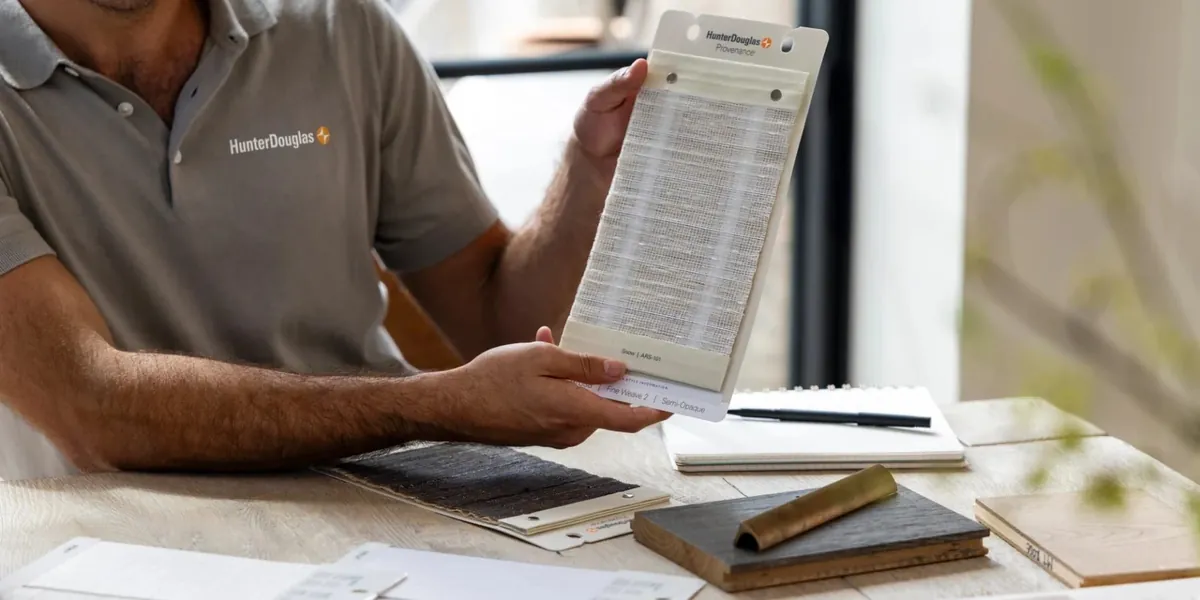
We bring each of these to your door so you can see how it looks in your own light.
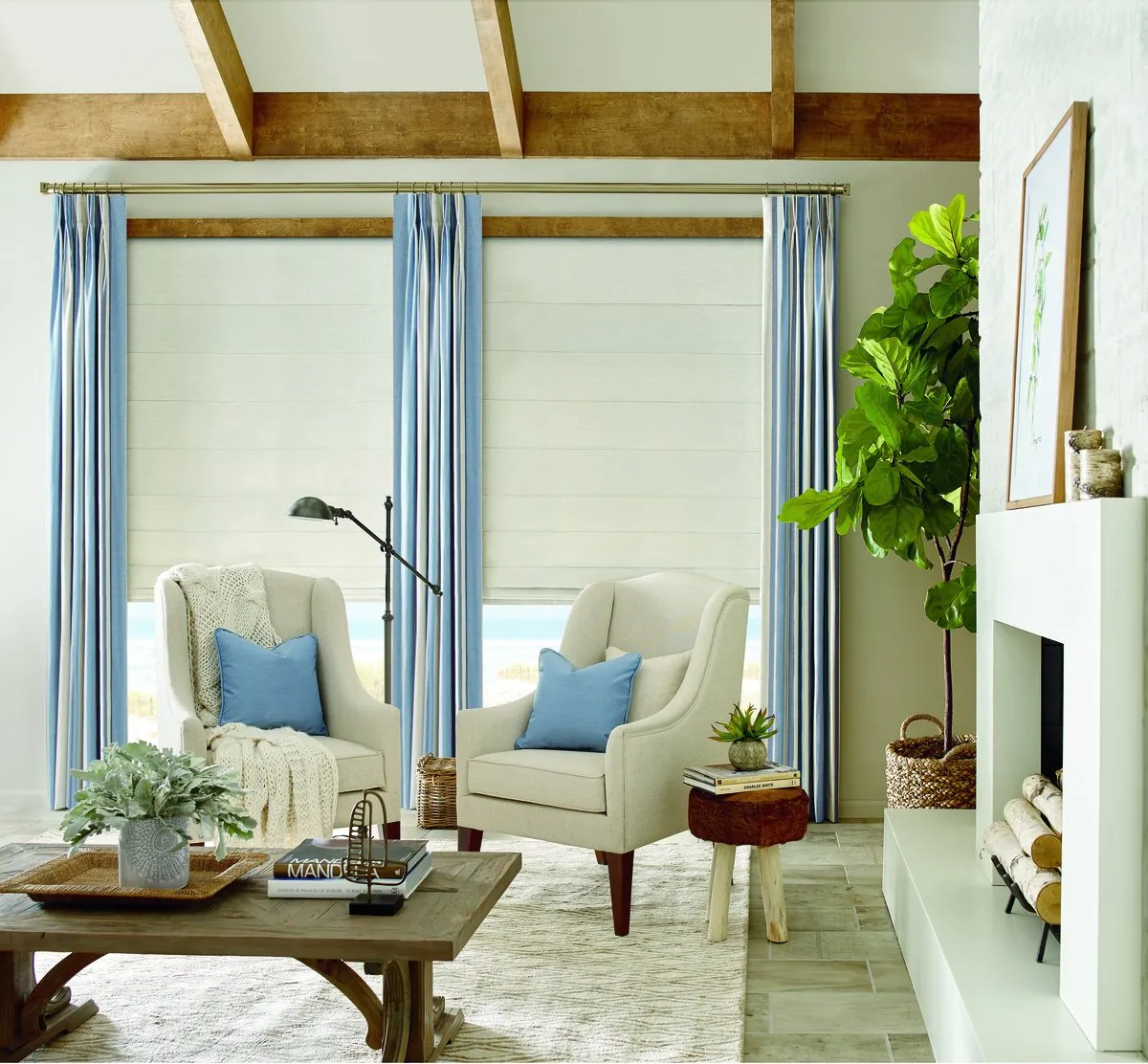
Carole Fabrics, made to measure
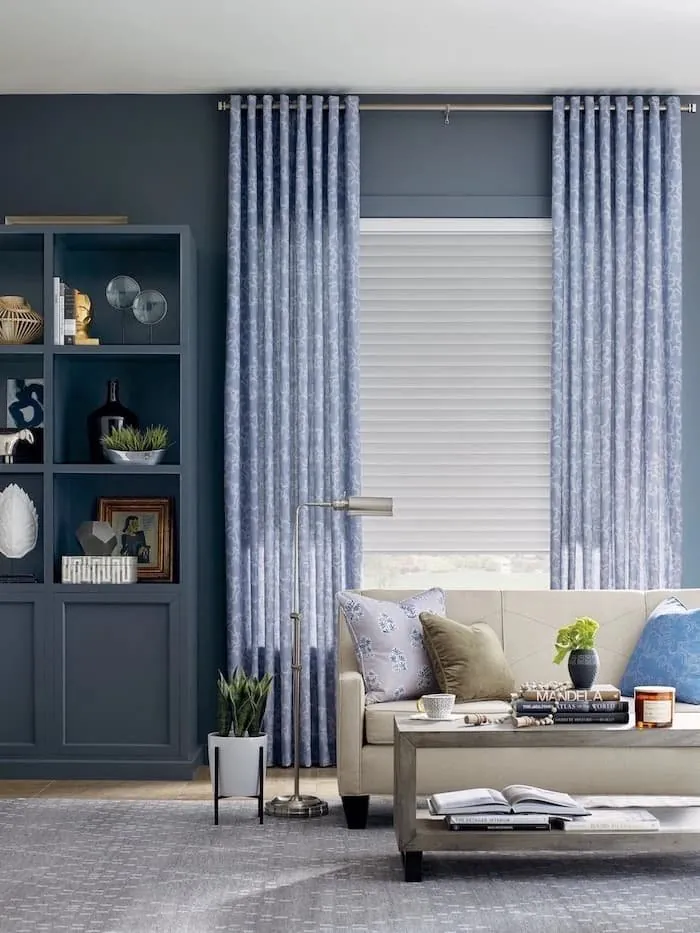
Sewn to your sizes from a wide library of decorator fabrics, in a crisp flat fold or a softer folded style. A natural partner for an antique colonial.
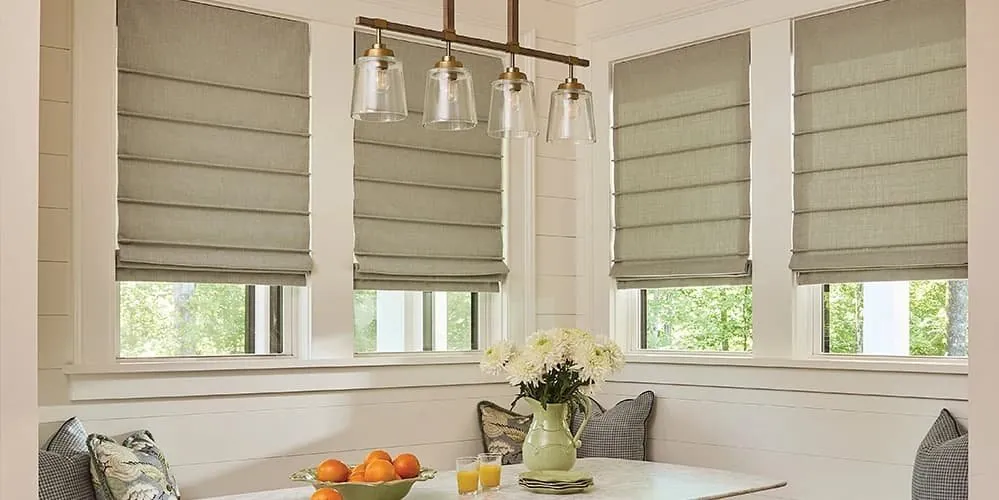
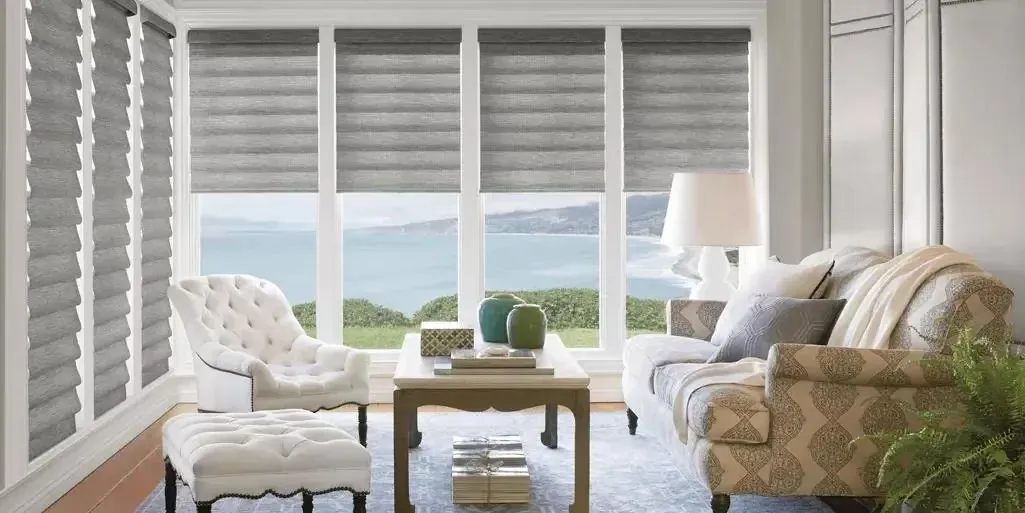
Vignette, rolled away
Uniform folds that tuck into the headrail when raised, so even a small opening keeps most of its glass. Clean and modern in a newer kitchen.
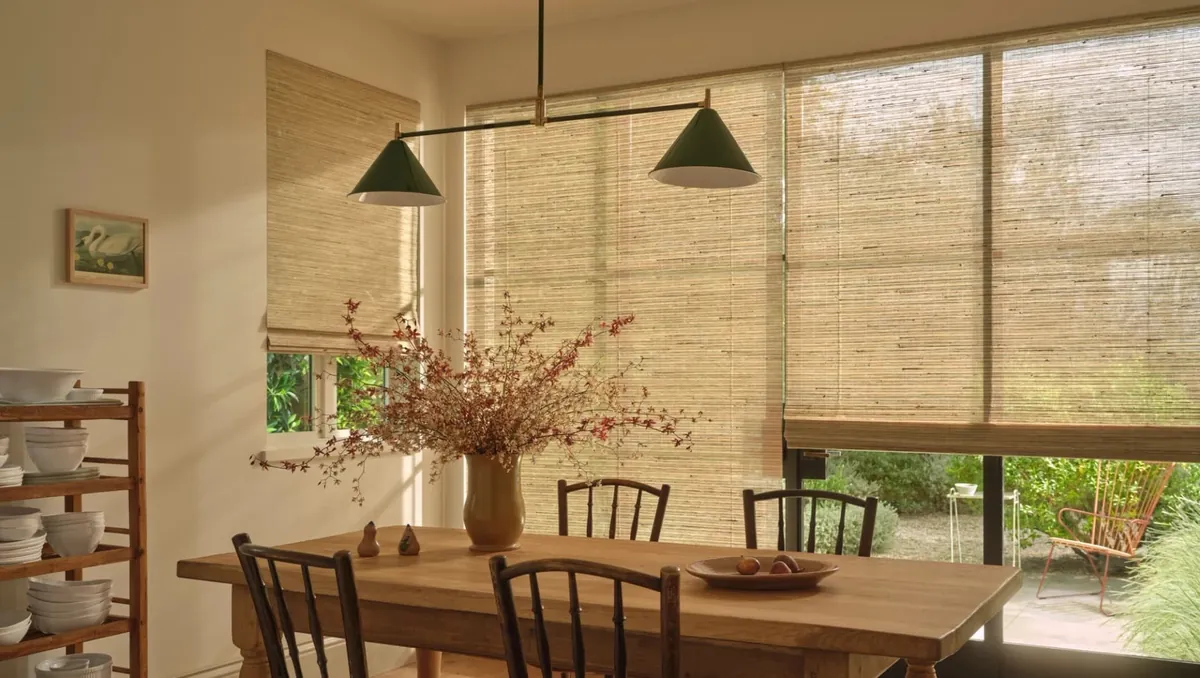
Natural weaves
Alustra Woven Textures in a roman shape, for a relaxed dining room or family room that suits a natural, textured look.
Working with a deep-set window
The smallest, oldest windows in Medway’s antique colonials are set into walls so thick that the sash sits well back from the room. The recess in front of the glass can be deep enough to hold a plant, a lamp or a row of books. It is one of the nicest features of an old house, and the window covering should keep it.
That depth works in your favour. There is nearly always enough room for an inside mount, so the headrail can sit up inside the recess and the shade can hang behind the face of the wall. That leaves the sill free and keeps the plaster and trim around the opening completely clear. Some customers prefer the shade mounted at the front edge of the recess instead, so the shade comes down in front of the sill and closes off the whole opening. That works well in a bedroom, where it blocks more light around the edges. We will show you both positions at the window so you can choose.
The challenge with these windows is their size. A raised roman shade gathers its fabric at the top, and on a very small opening the gathered fabric can cover a good part of the upper sash. Vignette helps here, because its fold rolls into the headrail. With Carole Fabrics, a light, unlined fabric makes a smaller stack than a heavy one, and the fold spacing can be set to suit a short window. We hold up samples so you can see how much glass each one leaves open.
Old recesses are rarely square. Plaster bows, and a frame that has settled over a long life may be wider at the bottom than the top. We measure across the top, middle and bottom and check the depth at several points, then order to the tightest figure so the shade moves freely without catching.
The foyer window in a newer colonial
Many of the large colonials off Holliston Street open with a two-story foyer: the front door below, a tall window or a stacked pair of windows above it, and a staircase climbing past. In daylight it fills the hall with light. After dark, with the hall lights on, it does the opposite and turns the foyer into a lantern that shows the stairs and the landing to the whole street.
A roman shade on that window gives the foyer privacy in the evening and softens the light in the afternoon, when a west-facing foyer can glare straight down the stairs and fade a runner or a painted banister. The problem is reach. Nobody can lift a shade by hand at that height, so the shade needs PowerView motorization. It can be raised and lowered from a remote, from the app on your phone, or on a schedule that closes it at dusk and opens it in the morning without anyone thinking about it.
We look at how the motor will be powered, where any power connection can hide behind the shade, and whether any other shades in the house would benefit from being on the same schedule. Where a tall window wall would suit a different look, Hunter Douglas sheer shades are another option we can show you.
The rest of the newer house
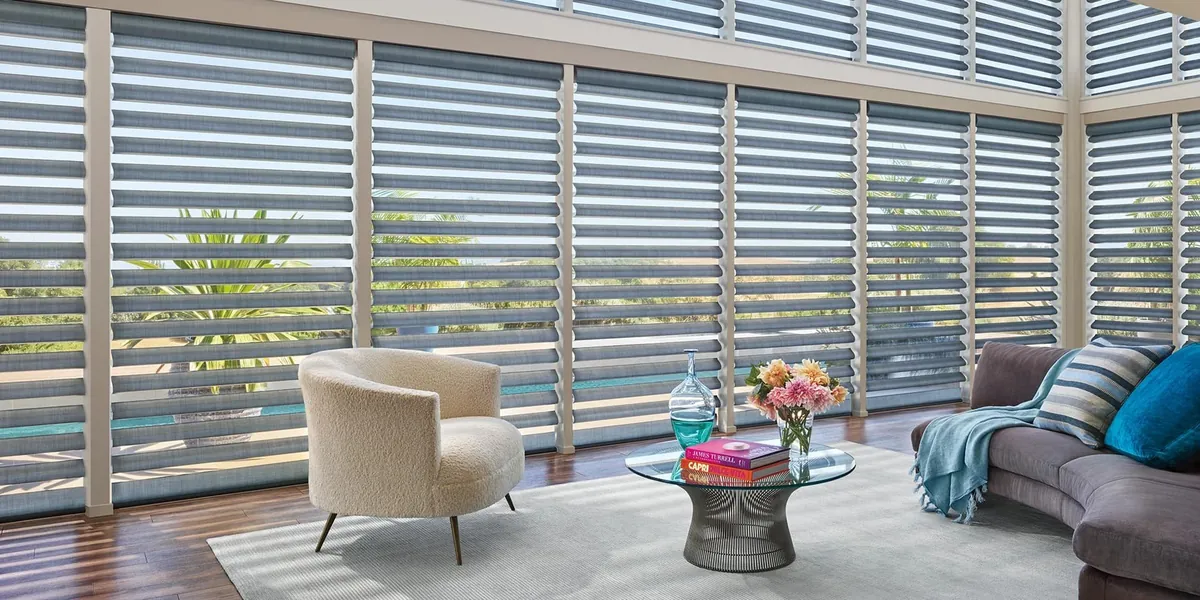
Beyond the foyer, the newer Medway colonials have generous, square openings with plenty of frame depth. Inside mounts are easy, and a full house of shades can sit at one height. In an open kitchen and family room, matching shades across every window keeps a big space calm.
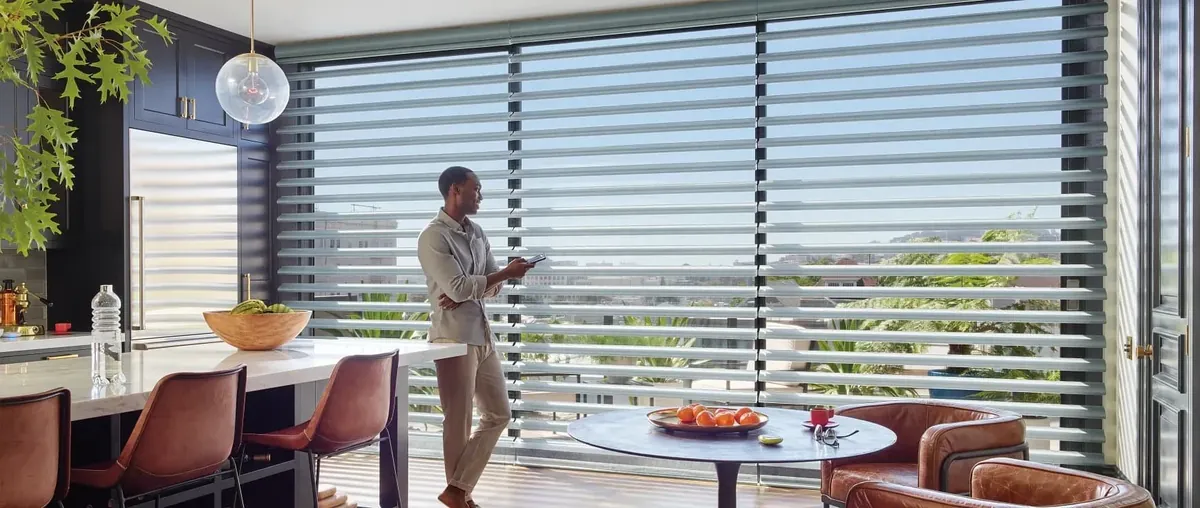
Vignette tends to suit these rooms. Its folds are even from top to bottom, the back of the shade looks neat from outside, and the raised shade takes up very little of the window, which matters on a kitchen window over a counter. A Carole flat fold in a patterned fabric can then dress a dining room or a study where you want the window to be more of a feature.
Bedrooms in these houses are often on the east or south side and catch early sun. A room-darkening lining keeps them dim until you raise the shade. Because these openings are so regular, the same fabric, fold and lining can run through every bedroom, so the upper floor looks uniform from the street. If you are planning other rooms too, our cellular shades in Medway page covers a shade that is often used on bedroom windows alongside roman shades elsewhere.
Pattern and scale on a small window
Choosing fabric for roman shades in Medway’s antique colonials, with their tiny windows, is a different exercise from choosing for a big modern room. A shade on a small, deep-set sash might be little more than a hand span or two across, and a large print simply does not fit on it. A bold floral or a wide stripe gets cut off at the edges, and what is left can look like an accident rather than a choice.
On those windows we usually steer towards solids, small repeats, fine stripes and textured weaves such as a linen or a slub cotton. Texture gives the shade interest without needing width to show it. If you love a particular print, it can still work: put it on the largest window in the room and use a plain fabric in a matching color on the small ones.
The foyer and family room windows of the newer houses are the opposite case. A tall shade has the length to carry a big pattern, and the Carole flat fold keeps a print smooth and readable when lowered. The folded style, with its rounded loops, partly hides a pattern, so it is better kept for plain cloth. At the consultation we drape the sample over the window itself, so you can judge the scale at the real size rather than on a swatch.
A second look at the recess before ordering
Because the oldest recesses vary so much, we treat each one as its own window rather than assuming a row of them is identical. Two windows side by side in the same front room can differ in width, in depth and in how far they lean out of square. We note every figure on its own sheet, and we flag any recess where the shutter hinges, old pulls or a window lock sit in the path of a headrail. If a recess is too uneven for the shade to hang cleanly inside, we say so and suggest the front-edge mount instead. That care is the reason roman shades in Medway look made for the house rather than added to it.
Choosing which line for which room
Most Medway orders end up using both Hunter Douglas lines. Carole Fabrics tends to win in the antique houses, because a sewn, tailored shade matches the age of the rooms and the fold can be scaled to a short window. Vignette tends to win in the open kitchens and family rooms off Holliston Street, where its even, modern fold and tidy back suit large windows and simple lines. The two can sit happily in one house if the fabric colors are related. The Vignette and Carole Fabrics pages explain each one, and the roman shades overview compares the full family, including Alustra Woven Textures.
Lifts, cords and small hands
How a shade is raised matters more than most people expect, especially in a house with young children or pets. A cordless lift has nothing hanging at the side of the window: you lift or lower the bottom rail by hand, and the shade stays where you leave it. It is the setting we suggest for bedrooms, playrooms and any window a child can reach.
A wide, lined shade can be heavy, though, and on a big window in a newer colonial a continuous cord loop makes it easier to raise. The loop is held taut against the wall or frame by a tensioner, so it does not dangle. For the highest windows, and for anyone who would rather not lift shades at all, PowerView takes over. Our guide to how motorized shades are controlled covers remotes, the app and schedules.
Motorizing more than the foyer
Once the foyer shade is motorized, many customers ask whether other windows should join it. PowerView lets shades be grouped, so one button or one schedule moves several at once. A common plan in the larger houses is to group the front-facing shades so they close together at dusk, and the family room shades so they lower on summer afternoons when the sun reaches them. Bedroom shades can be set to open gently at a chosen time in the morning.
None of this has to be decided on day one. We can plan for it at the consultation, and you can choose which roman shades in Medway are motorized now and which stay cordless. The motorized blinds in Medway page goes into the options in more detail.
How much light comes through
The fabric, and any lining behind it, sets how bright the room stays. Unlined light fabrics glow when the sun is on them and suit kitchens, sitting rooms and any space where daylight matters most. They give good privacy by day but can show the room after dark.
A privacy lining fixes that: the shade still looks soft and bright from inside in daylight, but the room cannot be seen from the street at night. It is a sensible choice on the front of a house, and on the foyer window in particular.
A blackout or room-darkening lining keeps a bedroom dim when the sun rises and protects the face fabric on a window that takes sun for hours each day. If a room faces south or west and you are unsure, our page on choosing fabric for a sunny room is worth a look.
Fitting the shades
When the shades are ready, our certified Hunter Douglas installers return to put them up. Here is the order the work usually follows.
- Each shade is matched to its window and checked before it comes out of its packaging.
- Brackets go into solid timber, inside the recess or on the casing, depending on the mount you chose.
- Headrails are levelled by eye and by tool, even on an old recess that has settled.
- Each shade is run up and down several times so the folds settle and fall evenly.
- Motorized shades are paired with their remote or the app, and your schedules are set.
- You get a short walk-through of every lift before the installer packs up.
There is more detail in what happens on installation day.

What a Gallery dealer brings to a Medway house
Hunter Douglas names dealers who meet its standards Gallery dealers, and Blinds & Designs is one. In practice that gives you one company for the whole job: the full Vignette and Carole Fabrics range, Hunter Douglas blinds, shutters and other shades for the rooms that suit them better, and drapery to layer with a shade.
The consultation takes place at your house. Our vans carry the sample books, so you choose in the rooms where the shades will hang. Our installers hold Hunter Douglas certification, and after the job we remain the people to call for blind and shade repairs.
Want to see what else we do nearby? Our Medway page lists every service in town.
Our nearest showroom: Franklin
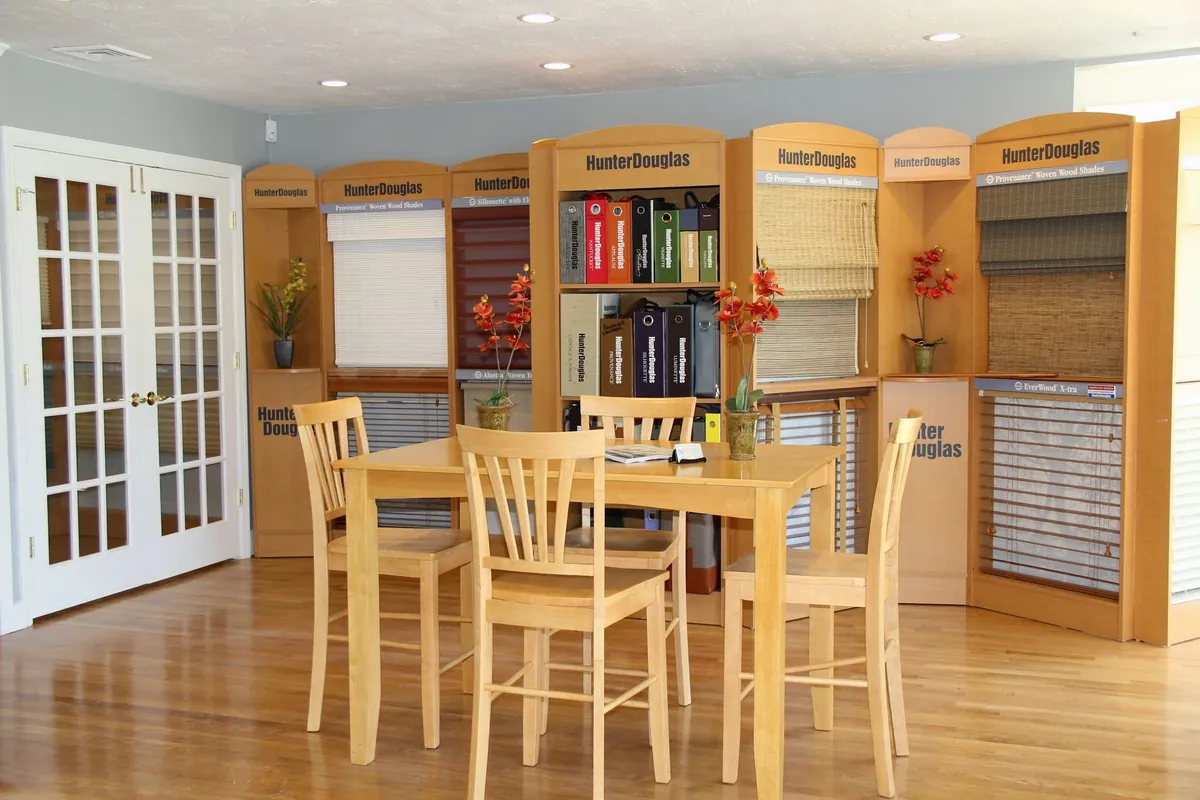
The Franklin showroom is the closest to Medway. If you like to try things before a home visit, stop in, raise and lower a few roman shades and feel the fabrics. Then book a consultation so we can see your recesses and your foyer in person, since both are hard to judge from memory.
Questions from Medway
My antique house has very deep window recesses. Where does the shade go?
Usually inside the recess, with the headrail at the top and the shade hanging behind the face of the wall, which keeps the sill free. You can also mount it at the front edge of the recess so it closes off the whole opening. We show you both.
Will the raised shade cover too much of a small window?
It can, so we compare stacks before you choose. Vignette rolls into its headrail and leaves more glass open, and a lighter Carole fabric folds smaller than a heavy lined one.
What can I do about the foyer window at night?
A motorized roman shade with a privacy lining. PowerView can close it at dusk on a schedule, so the lit stairway is no longer on show to the street.
Does a big print work on a small window?
Rarely. Small repeats, solids and textured weaves suit small sash better. Save a large print for a tall window, where a flat fold keeps it readable.
What does the visit cost?
The estimate is free. We measure each window you are considering and give you a free estimate, with no obligation to order.
Start with a visit to your house
Choosing roman shades in Medway, MA, is easiest with the fabric in your hand and the window in front of you. Request a consultation and we will arrive with the sample books, measure every opening from the smallest recess to the foyer, and leave you with a free estimate to think over. The call button reaches us too, and the Franklin showroom is close by if you would like to try a few shades with your own hands before the visit.