
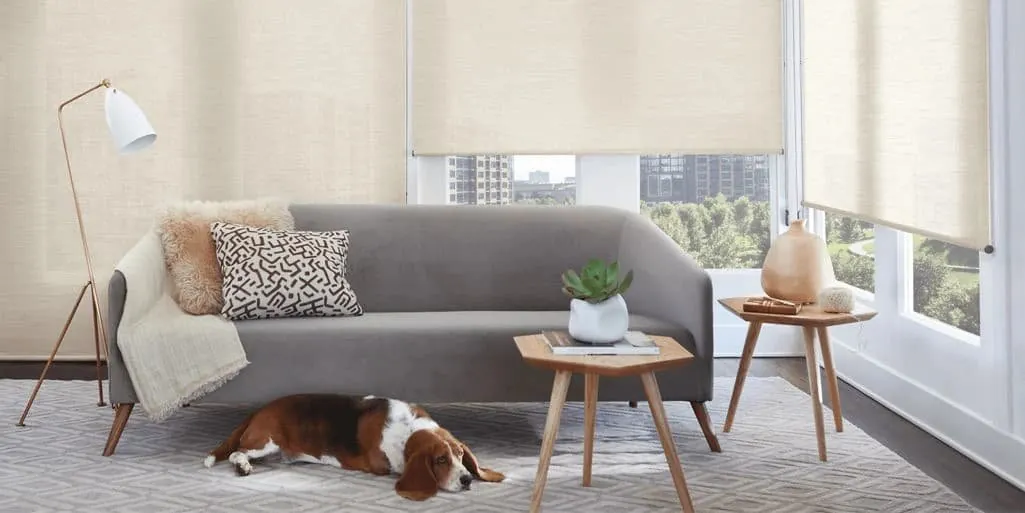
Canton Center sash, mid-town capes and hillside glass
Canton’s houses change as you move across town. Near Canton Center, Victorians and older colonials have tall sash windows, narrow and upright, in deep painted frames. Through the middle of town, post-war capes and ranches line the side streets with simpler, standard openings and the occasional big picture window. On the Blue Hills side, larger newer houses sit up on lots that climb steeply from the road, with long driveways and wide windows looking out over the treetops.
Fitting roller shades in Canton, MA, means treating each of those differently. A tall Victorian sash wants a slim shade that keeps its trim in view. A ranch living room wants privacy from the street without losing the daylight. A hillside house wants to keep its view while taming the sun, which hits that kind of glass with nothing between it and the window.
A roller does all three with one simple mechanism, a single piece of fabric on a tube. The difference is in the cloth, the mount and how you control it, and we work those out with you at home.
Your consultation comes to you
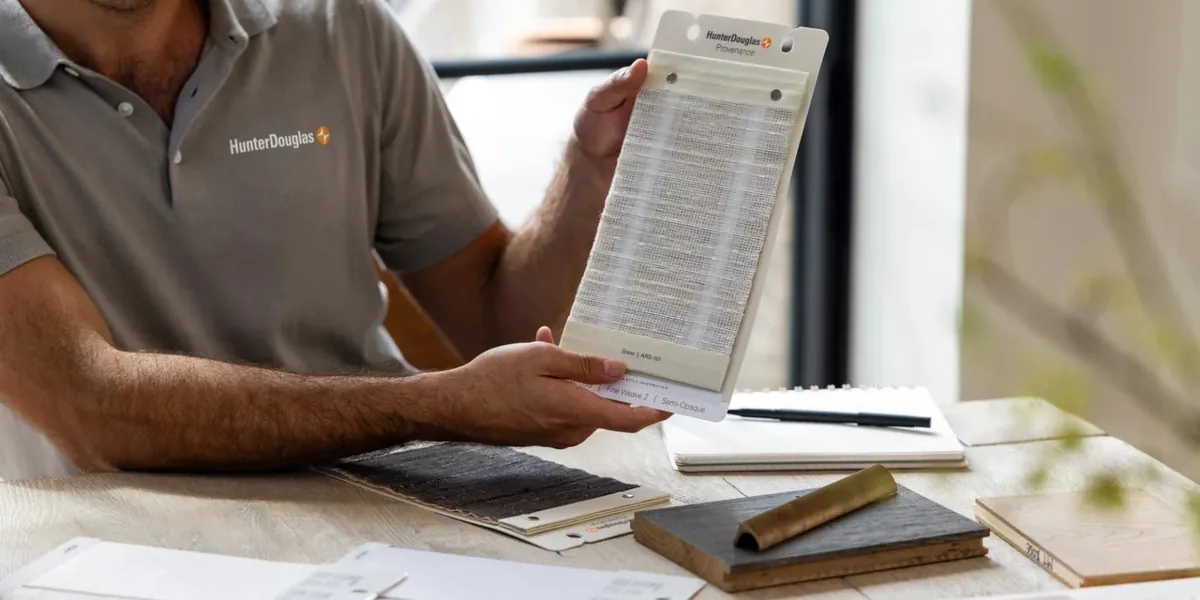
Canton is shop-at-home territory for Blinds & Designs: rather than you coming to us, our vans carry the samples to your door. It is the best way to choose a roller anyway, because fabric only shows its true color and opacity in the light of the room where it will hang.
- Book a time through Request a Consultation, or use the call button.
- A consultant arrives with the Hunter Douglas roller range: plain and textured fabrics, solar screens, banded shades and Alustra.
- You walk the house together and talk through what each room needs, whether that is light, privacy, a view or darkness for sleep.
- Samples go up at your own windows so you can compare them in place.
- Every opening is measured and its frame depth checked.
- You receive a free estimate and take whatever time you need to decide.
You can read more about in-home consultations and the Canton shop-at-home service before your visit.

What a roller can do in a Canton house
Every option below arrives in the sample kit, so you can try each one where it would hang.
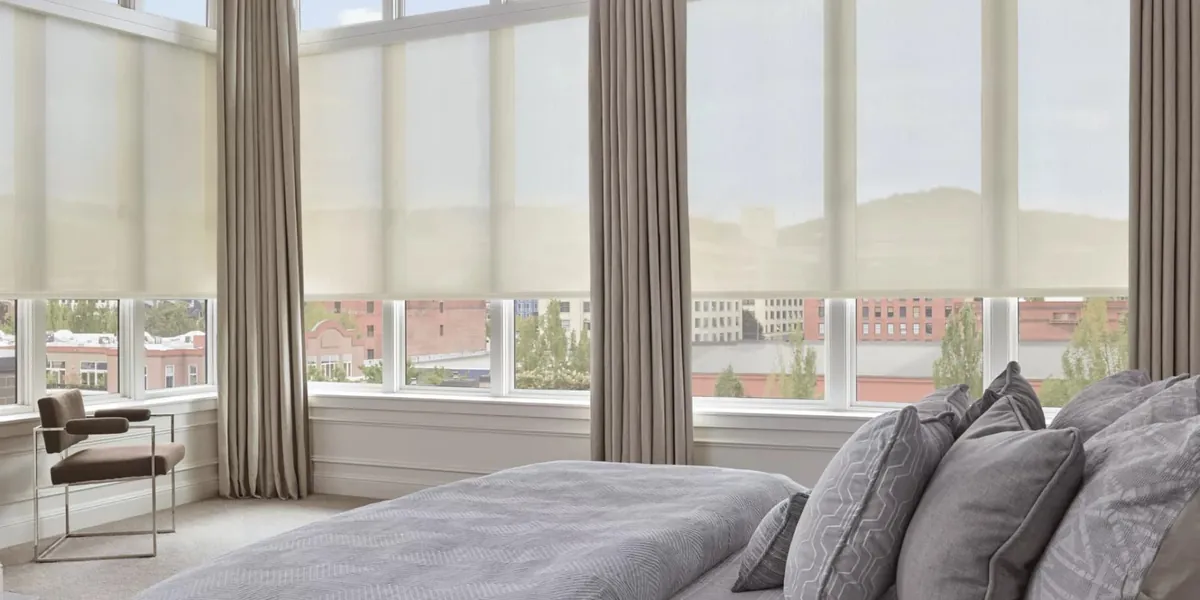
Slim inside mounts
A narrow headrail tucked inside a tall Center sash, leaving the casing on show.
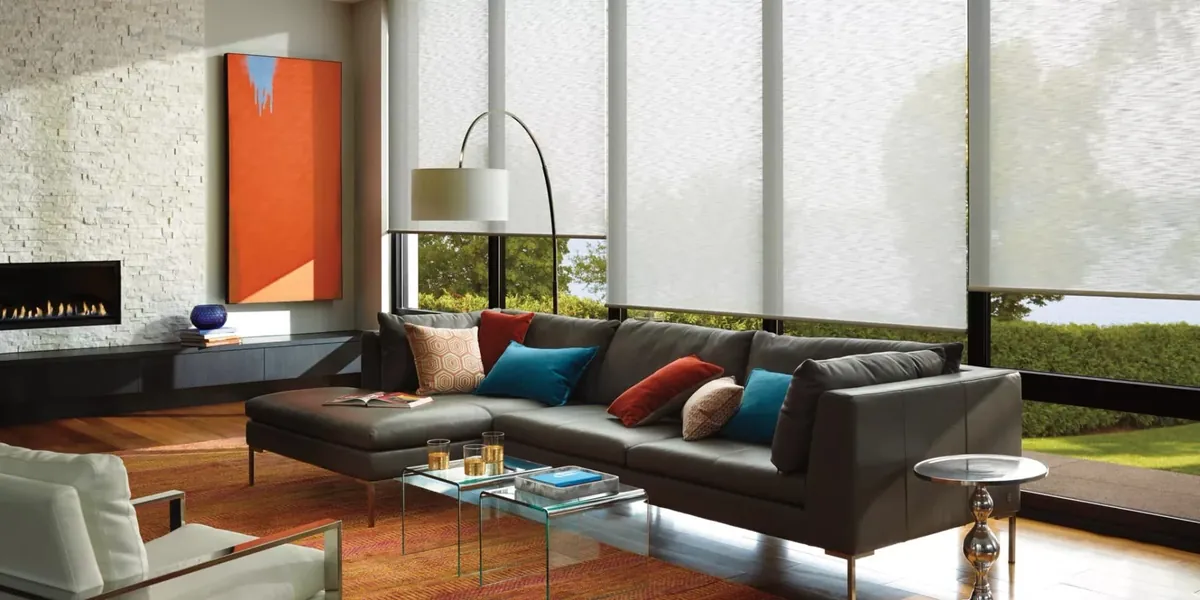
Solar screen for hillside views
Woven screen fabric that cuts glare and keeps the treetops in sight.
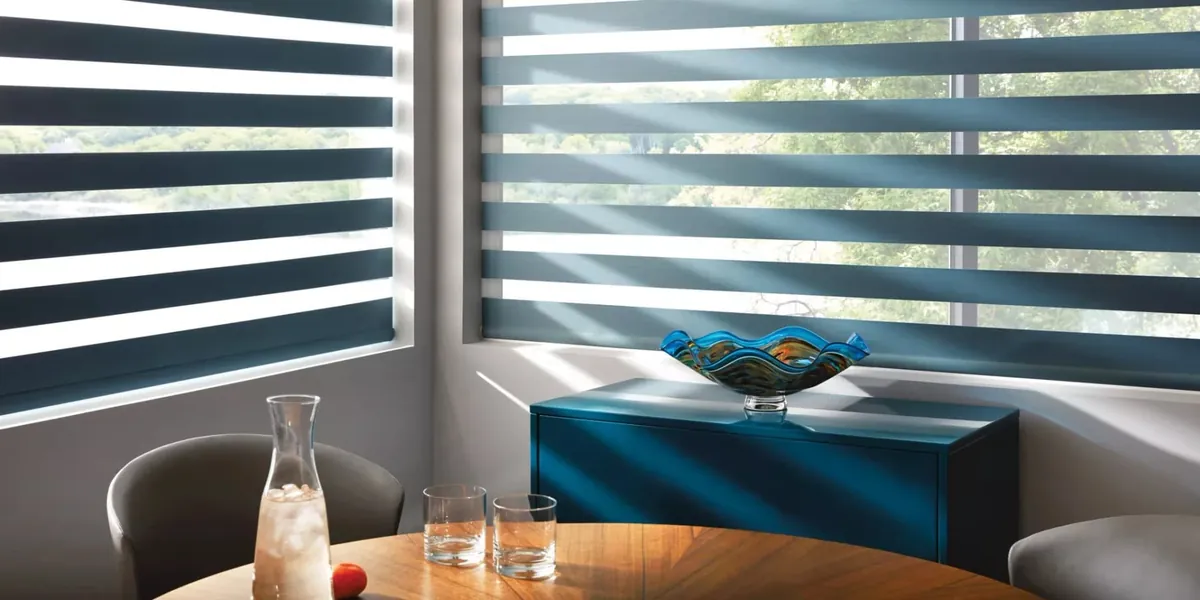
Banded for street-facing rooms
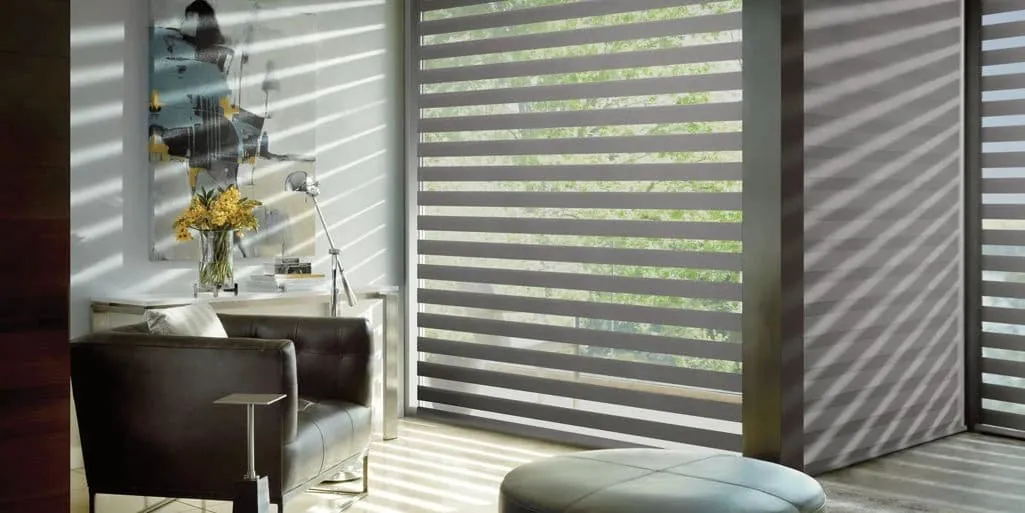
Sheer and solid stripes that open for the view or close for privacy with a small adjustment.
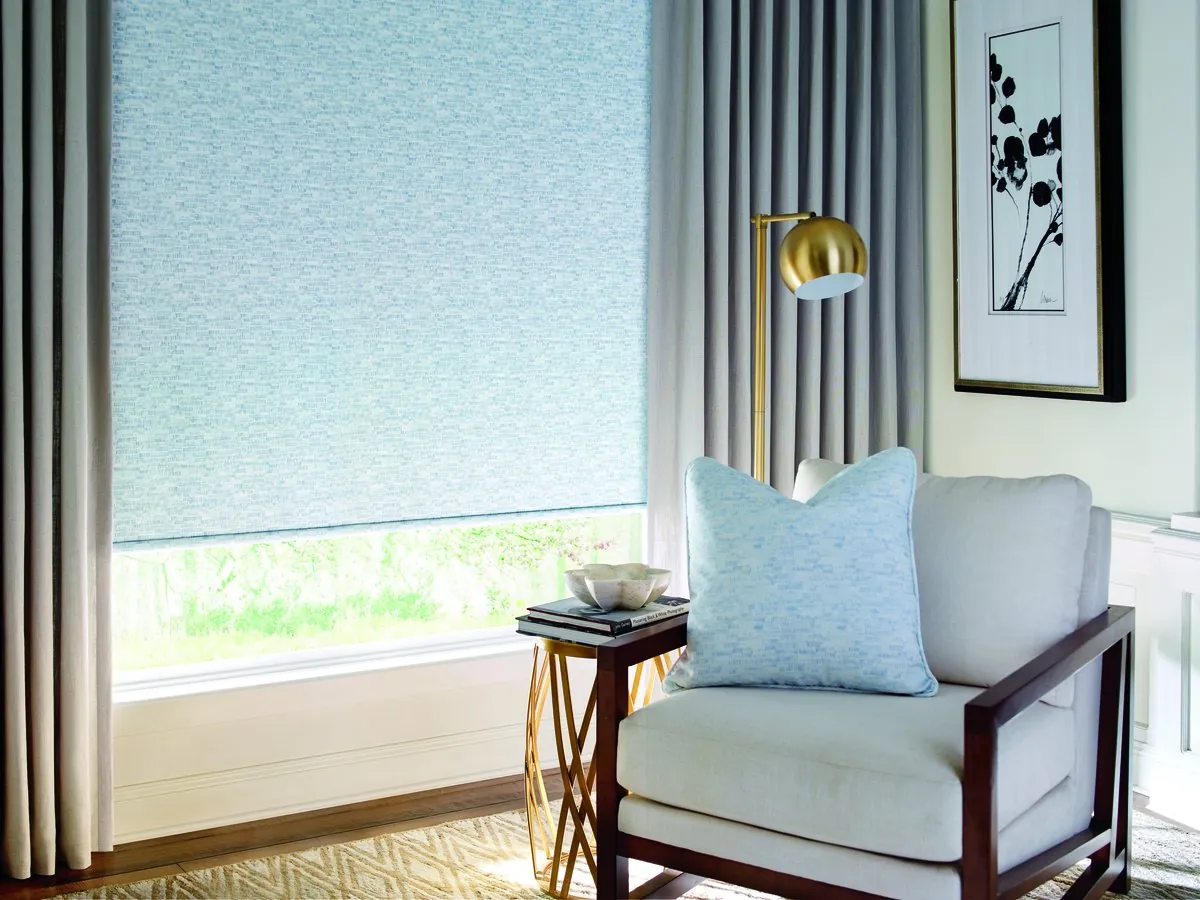
Blackout for bedrooms
Dense fabric that passes no light through the cloth, for nurseries and late sleepers.
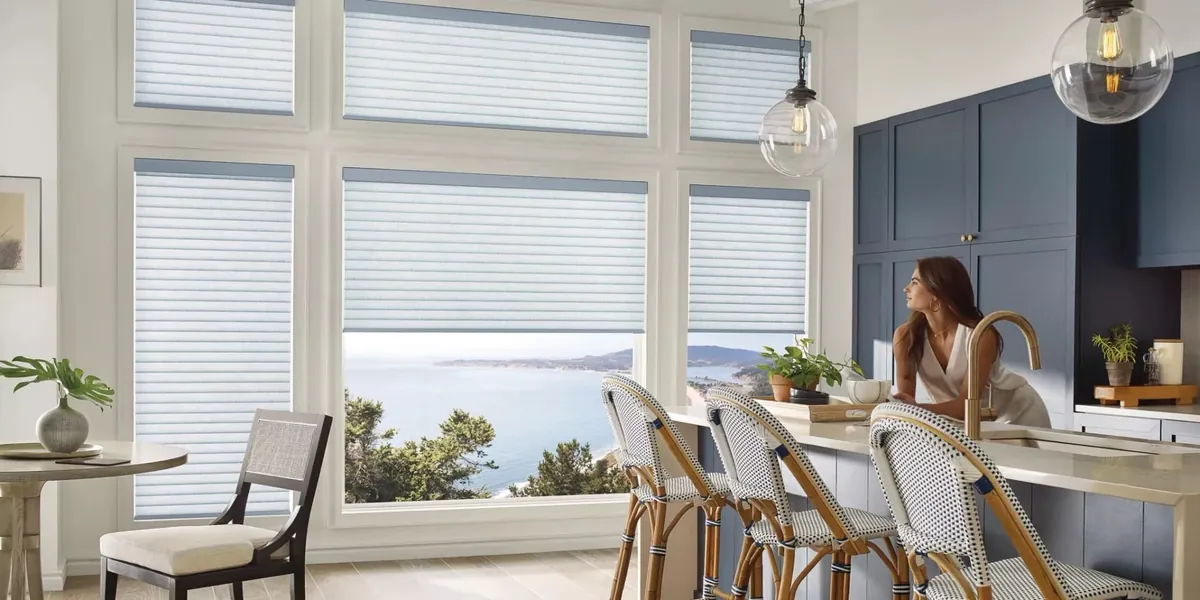
Headrails and cassettes
A neat finish at the top of the shade, chosen to suit the trim and the room.
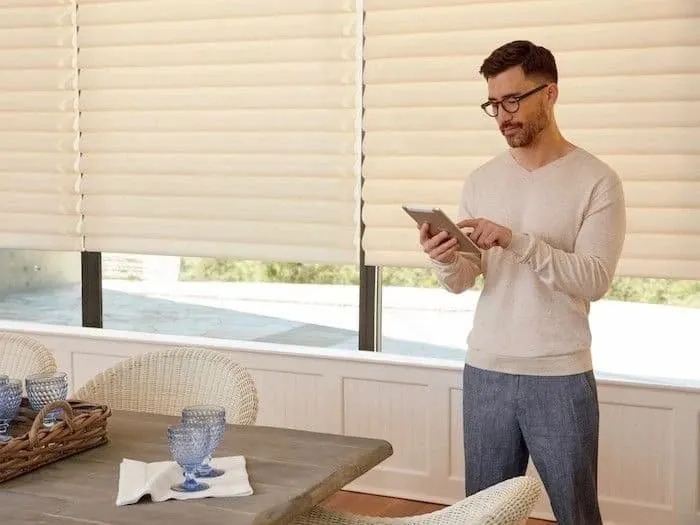
PowerView control
Shades that move from a phone, a remote or a schedule.
Tall sash near Canton Center
The Victorians and colonials around the Center were built with tall, narrow windows, often in pairs, with deep wood casings and sometimes interior shutters or storm panels added over the years. A roller suits them because it is the most compact shade there is. Mounted inside the frame, the headrail sits behind the head casing and the fabric hangs flush with the sash.
Depth decides whether that works. As a roller rises, the fabric winds around the tube and gets thicker, so the frame needs room for the full roll without catching on the sash lock or the stop bead. Many old frames have plenty of depth. Some have lost it to interior storms or later stops. We check at several points on each window before suggesting a mount.
Where an inside mount will not fit, a slim outside mount fixed to the head casing still looks neat, especially with a fascia across the front. It also helps in a bedroom, because a shade that overlaps the frame cuts the thin line of light an inside mount leaves at each edge.
On a tall window, the length of fabric matters too. A long roller holds a lot of cloth when it is up, so we pay attention to the roll size and the top treatment, keeping the shade compact enough that it does not crowd the top of the window when raised.
Fabric and finish for an older room
The rooms in a Center Victorian often have high ceilings, picture rails, deep baseboards and painted or stained trim. A bright white vinyl-look shade can feel out of place in a room like that. Hunter Douglas makes roller fabrics with texture and weave, including the Alustra Woven Textures range, that sit far more comfortably against old woodwork while still rolling up out of sight.
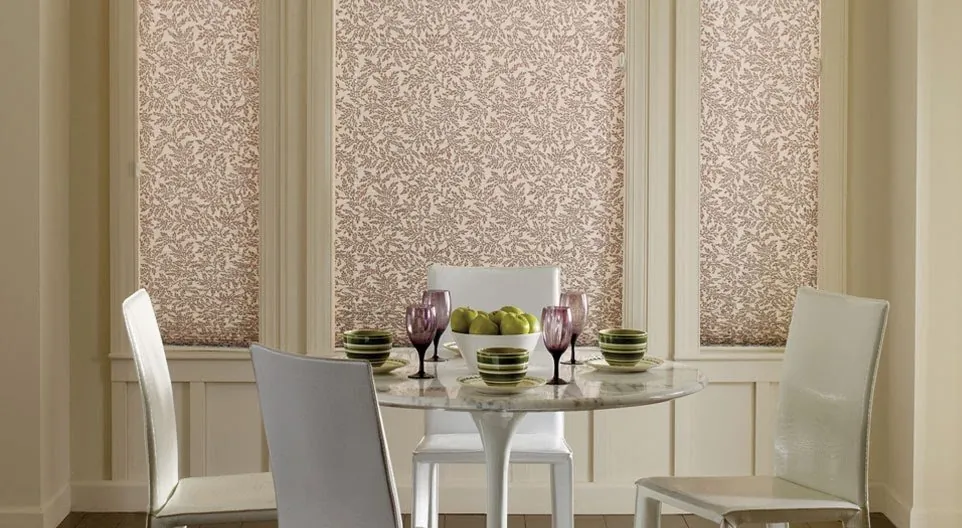
Color is the other half. A shade in a warm neutral, close to the color of the walls or the trim, disappears when lowered and lets the window frame do the talking. A patterned roller can work in a dining room or a child’s bedroom, where the shade becomes part of the decoration. In a parlor with drapery, a plain roller behind the panels handles light while the drapery carries the look.
The top of the shade deserves the same care. A fascia or cassette in a finish that matches the casing hides the roll, and on a tall window, where you look up at the headrail, that finish shows more than you might expect. Choosing roller shades in Canton, MA, for an older house is as much about these details as about the light.
Capes and ranches through the middle of town
The post-war houses that fill the middle of Canton were built with standard openings, which makes them some of the easiest windows to fit. Frames are usually square, depths are consistent, and an inside mount works almost everywhere.
The challenges here are about how the rooms are used. In a ranch, the living room picture window often faces the street, close to the sidewalk. A solid roller gives privacy but darkens the room. A banded shade or a light filtering roller is the usual compromise, letting daylight in while blurring the view from outside.
In a cape, the upstairs bedrooms sit under the roof with dormer windows. Dormers are small and recessed, and they often catch the morning sun. A blackout roller mounted inside the dormer gives a surprisingly dark room, because the recess itself shades the edges of the shade.
Kitchens at the back of these houses often look onto the yard through a window over the sink and a door or slider to a deck. A roller that clears the faucet and the crank, in a fabric that wipes clean, is all most of those windows need.
Hillside houses toward the Blue Hills
On the Blue Hills side, the newer houses climb up steep lots well above the road. That changes how the windows behave. From up the hill, the front windows look out over the street and the trees rather than straight into a neighbor’s house, so privacy is less pressing. What matters more is the sun and the view.
Big windows high on a slope catch full sun, with nothing to shade them, and an afternoon facing west can be glaring and warm. A solar screen is often the answer, because it keeps the view across the treetops while breaking up the glare. A darker screen is easier to see through from inside. A lighter one brightens the room but looks more like a panel.
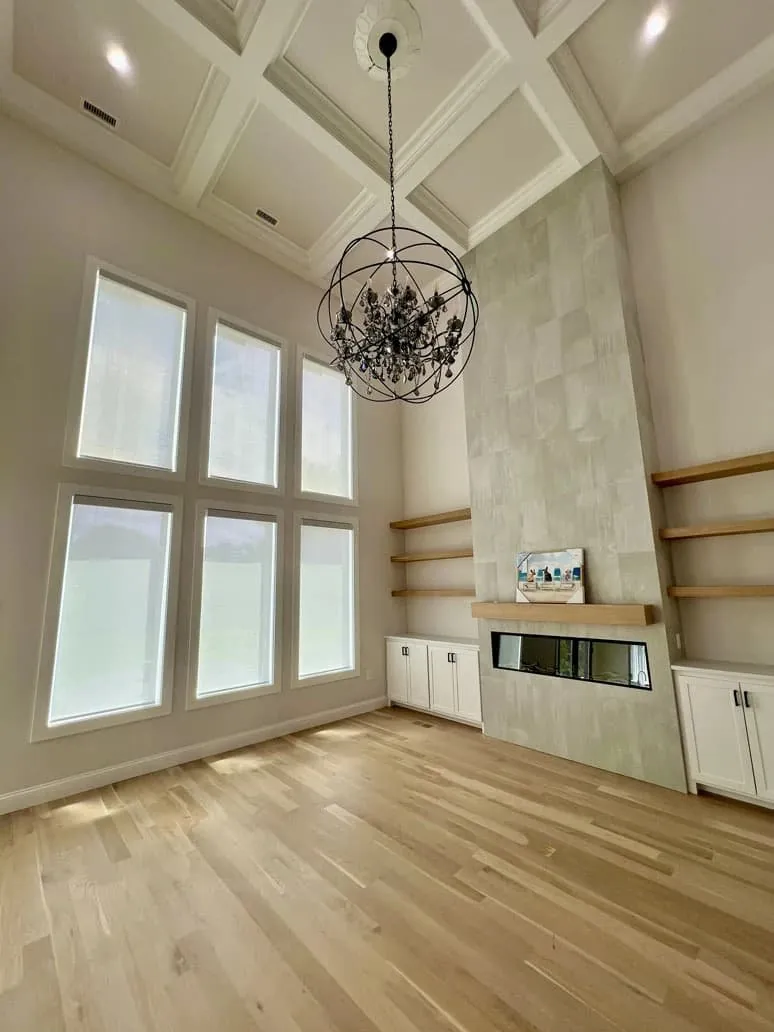
Many of these houses have great rooms or two-story entries with windows out of reach. For those, PowerView motorization lets the shades rise and fall from your phone, a remote or a schedule. Group the shades in a room and they move together, which keeps a large wall of glass looking tidy.
For roller shades in Canton, MA, on a hillside house, we look at each elevation separately: the uphill side may be shaded by the slope and trees, while the downhill side takes the full sun.
Walkout lower levels
A steep lot often gives a house a walkout lower level, with a slider or a row of windows on the downhill side opening onto a patio. Those rooms tend to become family rooms, playrooms, offices or guest suites, and each has its own needs.
A family room or media room down there usually wants glare control on the television, so a tight screen or a room darkening fabric works well. A guest suite needs darkness for sleep. An office wants light without glare on the monitor. The slider wants a shade that clears the handle and lets the door slide freely, which is often best done with two rollers, one for the fixed panel and one for the door.
Because the lower level is partly below grade on the uphill side, the windows on the downhill side are often its only source of light. A light filtering fabric that keeps those rooms bright by day matters more here than anywhere else in the house.
Patios below a deck also bring stripes of shade and sun that move through the day. A screen fabric evens that out, so the room does not swing from dim to glaring as the afternoon goes on. If the lower level has its own entrance, a roller on the door glass gives that entry privacy without a curtain to push aside.
Street-facing rooms and evening privacy
A roller’s fabric behaves differently by day and by night. In daylight, with the sun outside, a light filtering or screen fabric looks like a soft panel from the street and hides the room behind it. After dark, with lamps on inside, the balance flips: the room is now brighter than the street, and a light fabric or a screen lets shapes and movement show through.
For the capes and ranches close to the road, and the Victorians near the Center that sit near the sidewalk, that evening privacy is often the deciding factor. There are a few ways to handle it. A banded shade can be closed fully at night. A room darkening fabric gives full privacy at the cost of daytime light. Or a roller can be layered with drapery, using the roller by day and drawing the drapery at night.
We hold samples up in the evening light when we can, or show you how each fabric looks with a lamp behind it, so the choice is made on how the room is actually used.
Openness: view against glare
The openness of a solar screen is simply how open its weave is, and it is the one decision that shapes how a screen behaves.
- A more open weave: clearer view, more daylight, more glare and warmth through the glass.
- A tighter weave: less glare, more daytime privacy, a softer view.
- A darker color: easier to see through from inside.
- A lighter color: brighter room, hazier view.
There is no single right answer. A sunroom that looks over the trees might take an open weave in a dark color. A home office facing west might take a tight weave. We bring a range to try in place. One thing to remember: a screen shows the room at night when the lights are on, so street-facing rooms often need a second layer.
Measuring a Canton window
A roller is made to the size of each opening, so the fit depends on careful measuring. The tall old sash near the Center are rarely square, and even the post-war houses can vary from one window to the next.
- Width is read at the top, middle and bottom; an inside mount is built to the narrowest figure.
- Height is read at the left, center and right.
- Depth is checked where the headrail sits, with any sash locks, cranks or storms noted.
- The mount, the roll direction and the controls are agreed with you before anything is ordered.
- Installers certified by Hunter Douglas then fit each shade, level the headrail and run it through its travel.
Once the shades are up, the installer shows you how each one works, including any PowerView remotes or app set-up.
Choosing how each shade moves
On windows you can reach, a cordless roller is the simplest: you lift or lower it at the bottom rail. On a wide shade that would be heavy, a continuous loop at one side makes the work easier. On windows that are out of reach, or that you want to move on a schedule, PowerView motorization does the job.
Motors are not only for big houses. In a cape, a single motorized shade in a dormer above a bed saves climbing over furniture. In a ranch, a schedule can close the front window at dusk every day. You can read more in how motorized shades are controlled.
Shop-at-home, run from Canton
Our Canton territory works on a shop-at-home basis. Rather than a storefront, the samples travel to you, which means every choice is made against your own windows, walls and light.
If you would like to see shades in person before a visit, our nearest showroom is in Franklin. Most Canton customers simply book the home visit and choose there.
A Hunter Douglas Gallery dealer
Hunter Douglas names dealers who meet its standards Gallery dealers, and Blinds & Designs is one. For your roller shades in Canton, MA, that means the full roller range in one visit: Designer Roller, Designer Screen, Designer Banded, Sonnette and both Alustra collections, with PowerView.
Our installers are certified by Hunter Douglas, so each shade goes up as Hunter Douglas intends. Should a shade need attention later, see blind and shade repair in Canton.
The main roller shades page explains each line. For other windows, see cellular shades in Canton or plantation shutters in Canton, and every service in town on our Canton page.
Questions from Canton
Do I need to go anywhere to see the shades?
No. Canton is served shop-at-home, so we bring the samples to your house. If you would like to see shades in person first, our nearest showroom is in Franklin.
Will a roller fit the tall sash in my Victorian near the Center?
Usually. The slim headrail sits inside many old frames. Where depth is short or the frame is out of square, we suggest a neat outside mount on the casing.
What is best for a hillside house with big west windows?
A solar screen. It cuts glare and keeps the view over the trees. We bring several openness levels to compare at the window in the afternoon.
Can I control shades on windows I cannot reach?
Yes, with PowerView motorization from a phone, a remote or a schedule.
Is the estimate free?
Yes. After measuring, we give you a free estimate with no obligation.
Book your home visit
The simplest way to choose roller shades in Canton, MA, is to see them at your own windows. Request a consultation and a consultant will bring the samples, measure every opening and leave you a free estimate. You can also reach us through the call button.