
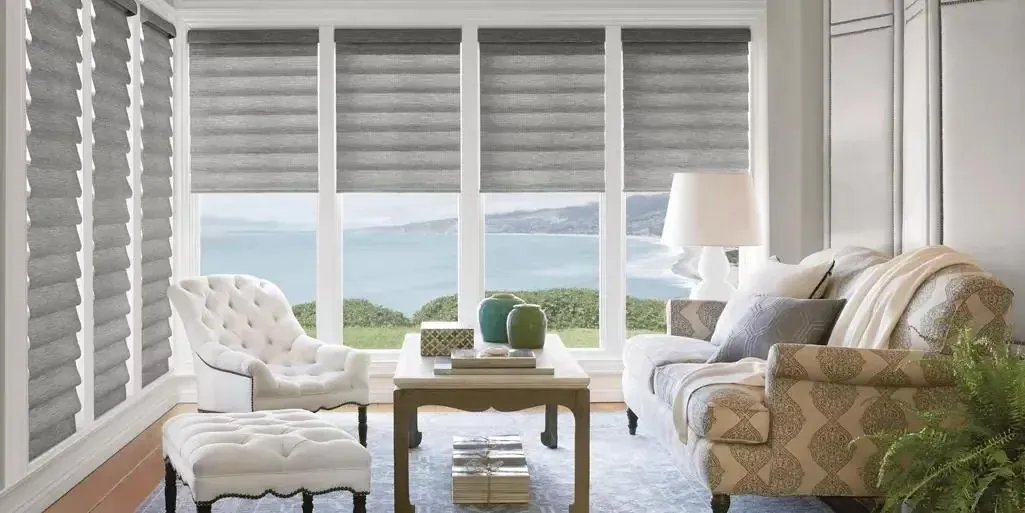
Sun, salt and the Sakonnet in Tiverton
Tiverton has two very different sets of windows. Inland, around Four Corners, farmhouses and shingled capes keep their traditional proportions: modest sash, wide trim, rooms arranged around a central chimney. On the water, along the Sakonnet River and around Nanaquaket, the houses open up. Rooms facing the water are glazed from floor to ceiling, porches and sunrooms run the length of the house, and the glass takes the sun and the salt air with nothing in between.
That waterfront glass is where motorized blinds in Tiverton, RI, do their best work. A long run of water-facing windows needs its shades adjusted through the day as the light moves, and a Hunter Douglas PowerView motor does that from a remote, from the app, or on a schedule you set once. Inland, the same motors take the reaching out of small windows set deep in old walls.
On an exposed shoreline, though, the motor is only half the decision. The fabric matters just as much, because strong sun and salt air are hard on anything that hangs at a window. Choosing the right one is most of what we talk about at a Tiverton consultation.
What we fit on Tiverton waterfront and village windows
Most conversations about motorized blinds in Tiverton begin with the water-facing rooms and work back through the house. Here is what we usually bring as samples.
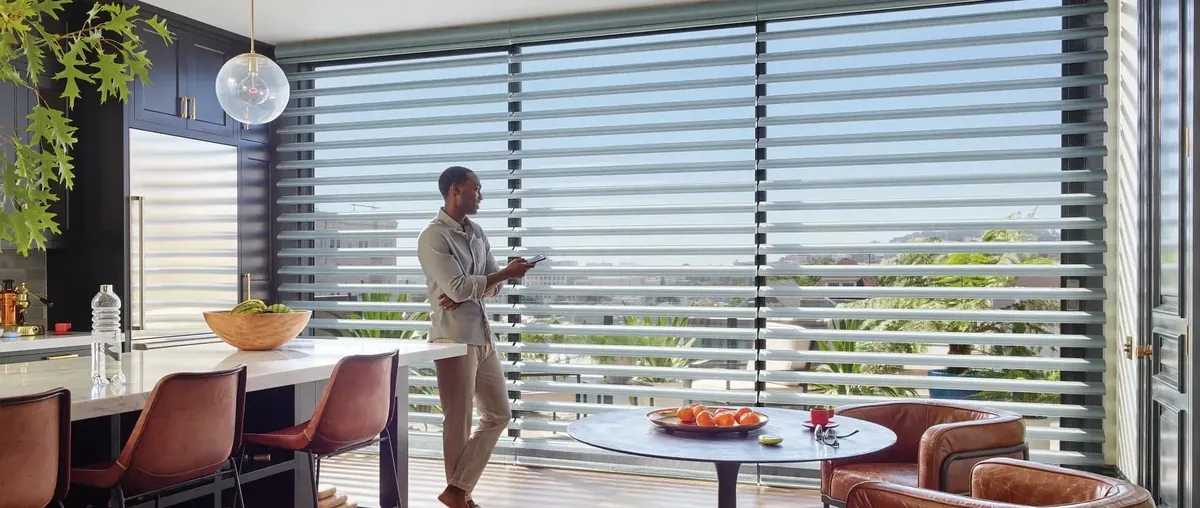
App control for a long wall
A whole wall of river-facing shades on one screen. Lower them partway at the brightest hour, or let a schedule do it.
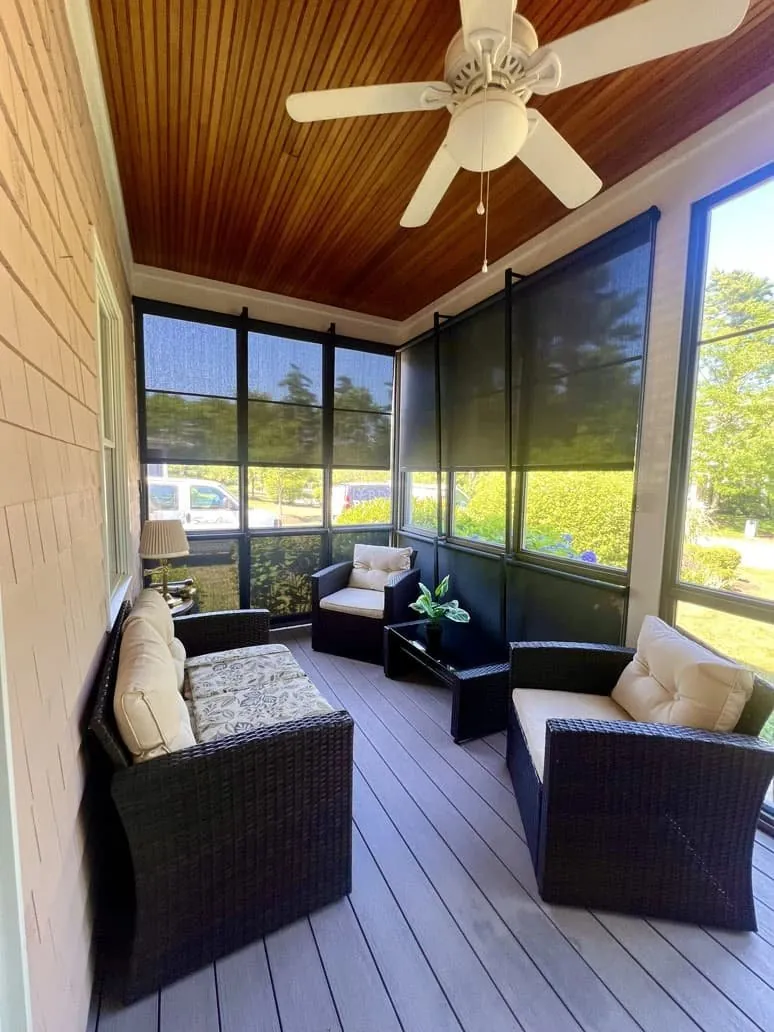
Screen shades on a porch
One of our own installs: dark screen shades around a screened porch. We look at which porch openings suit a motor during the visit.
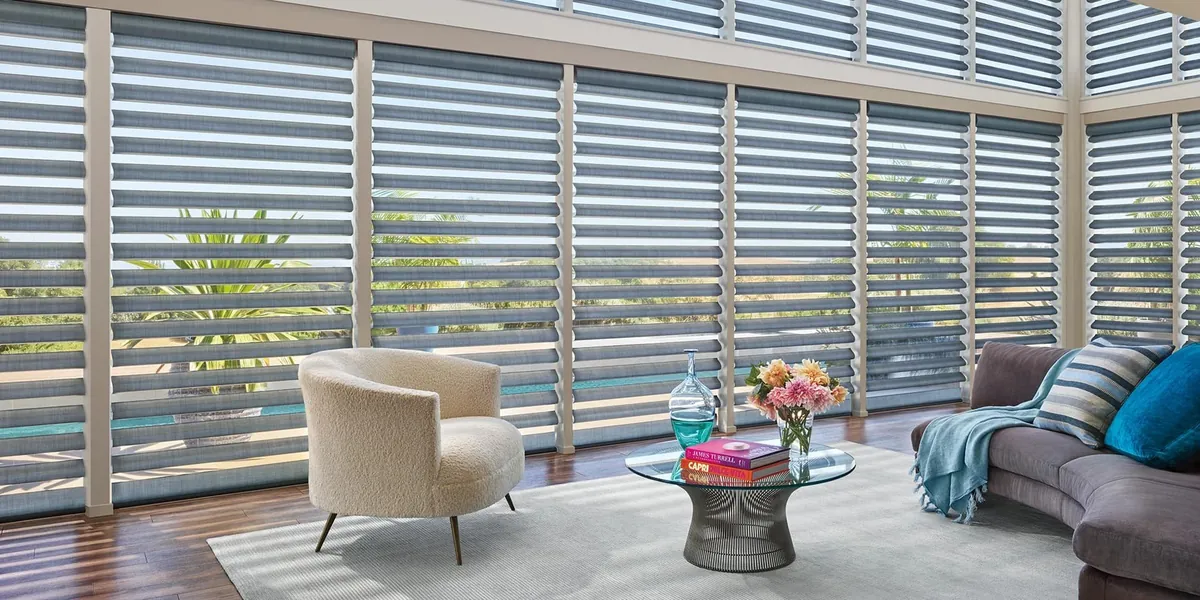
Sheers with rounded vanes
Soft vanes tilt to tame reflected light while the water stays visible through the sheer. A natural fit for a living room facing west.
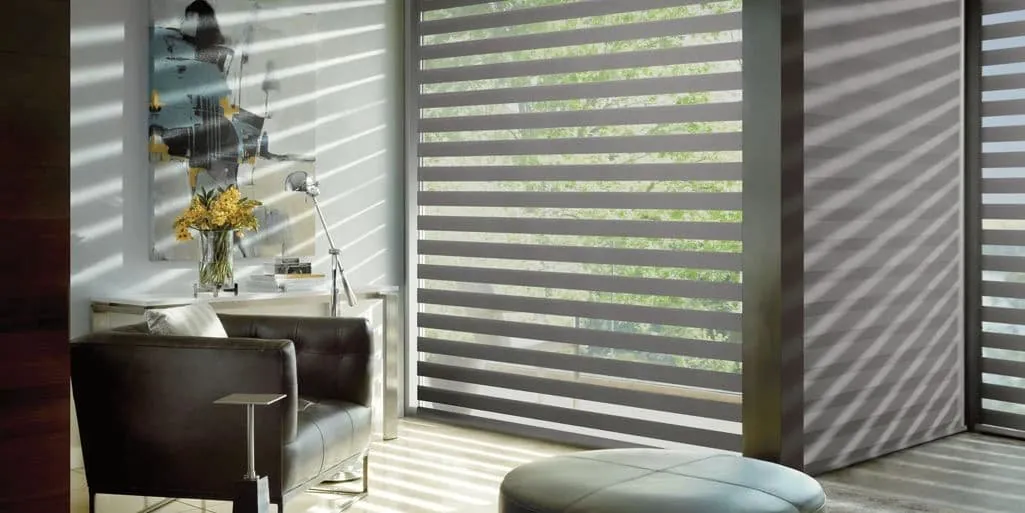
Banded shades
Sheer and solid bands slide past each other. Line up the sheers to see out, offset them for privacy, all at the press of a button.
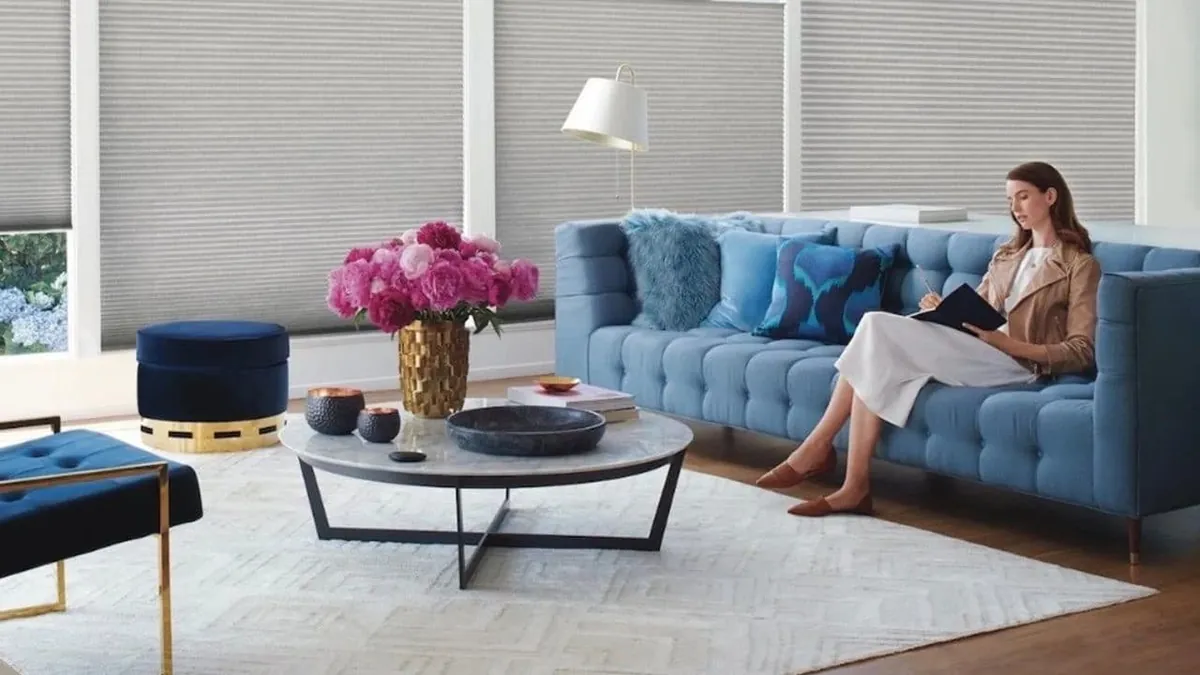
Honeycomb for winter evenings
Cells of still air between the glass and the room help a waterfront house keep its warmth once the wind comes off the river.
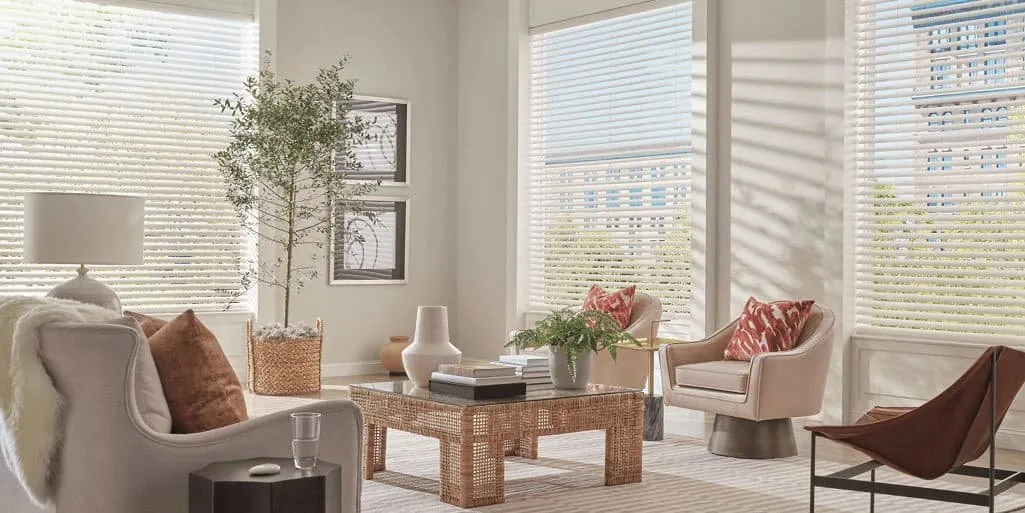
Blinds for a bright study
If a room wants slats, tell us. We confirm which blind lines and lift systems suit the window before anything is ordered.
Choosing fabric for sun and salt
The waterfront rooms in Tiverton put a fabric through more than most. The sun reaches them directly and again off the surface of the river or the pond, and the air carries salt for much of the year. Picking the right fabric at the start is what keeps a shade looking good for the long run.
Color
Strong light fades color, and reflected light off water doubles the dose. Deep, saturated colors show it soonest on a window that faces the water all day. Softer neutrals, whites, creams, grays and natural tones, tend to hold their look far longer. If you want color in the room, it usually sits more happily on a side window or a room that faces inland, with the water-side glass in a neutral.
Openness
Screen fabrics come in different weaves, and the openness of the weave decides what you see and how much light gets through. A more open weave keeps the river and the far shore crisp but lets more brightness in. A tighter weave cuts more glare and heat, at the cost of a slightly softer view. In a living room where the view is everything, we usually lean toward a more open weave. In a room with a television or a desk facing the window, a tighter one makes the screen readable.
Sheer or screen
Sheers and screens both keep the view, but they feel different. A sheer softens light into a gentle glow and adds a fabric warmth to the room. A screen is cleaner and more architectural, with a sharper outlook through it. Many waterfront houses use sheers in the living spaces and screens on the porch or sunroom.
We bring all of these to your house so you can hold them up at your own glass at the time of day the sun is strongest. Our page on roller shades in Tiverton explains screen fabrics in more depth.
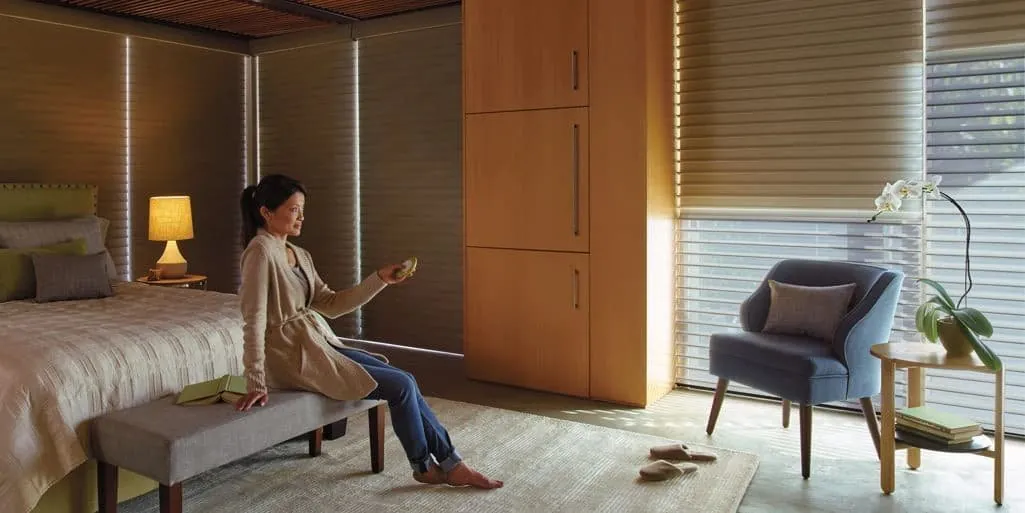
Along the Sakonnet River
The houses on the Sakonnet look west across the river toward Portsmouth. That orientation means the mornings are gentle and the afternoons are bright. As the day goes on the sun swings round over the water, and by late afternoon it is low, level and straight into the living room, with its reflection off the river adding to the glare. Then comes the sunset over the far shore, which is the reason many of these houses face the way they do.
The challenge is to take the glare out of the late afternoon without missing the evening. A motorized sheer or screen shade on a schedule handles that neatly. It lowers partway as the sun reaches the water, softening the light while you still see the river, and rises again as the sun sets so the view is clear for the best part of the day. As the seasons change, you nudge the times in the app.
Riverfront houses often have two levels of glass on the water side, with a second-floor bedroom or a loft above the living room. Those upper windows join the same schedule, so the whole elevation works together.
Around Nanaquaket
Nanaquaket is more sheltered than the open river, but the houses around it are glazed just as heavily, with sliders onto decks, wide picture windows and sunrooms facing the water. The pond’s still surface reflects light strongly on a calm day, and depending on which shore a house sits on, that reflection arrives in the morning or the afternoon.
Because the water is close on more than one side for some of these houses, schedules can be split by direction. The east-facing glass lowers in the morning, the west-facing glass in the afternoon, and the rooms in between stay open. You set that up once and the shades simply follow the sun around the pond.
Decks and sliders here get heavy use in summer. A motorized shade on a slider can join the group with the windows beside it, and a screen shade on a porch can turn an afternoon that is too bright to sit out into a comfortable one.
Porches and sunrooms on the water
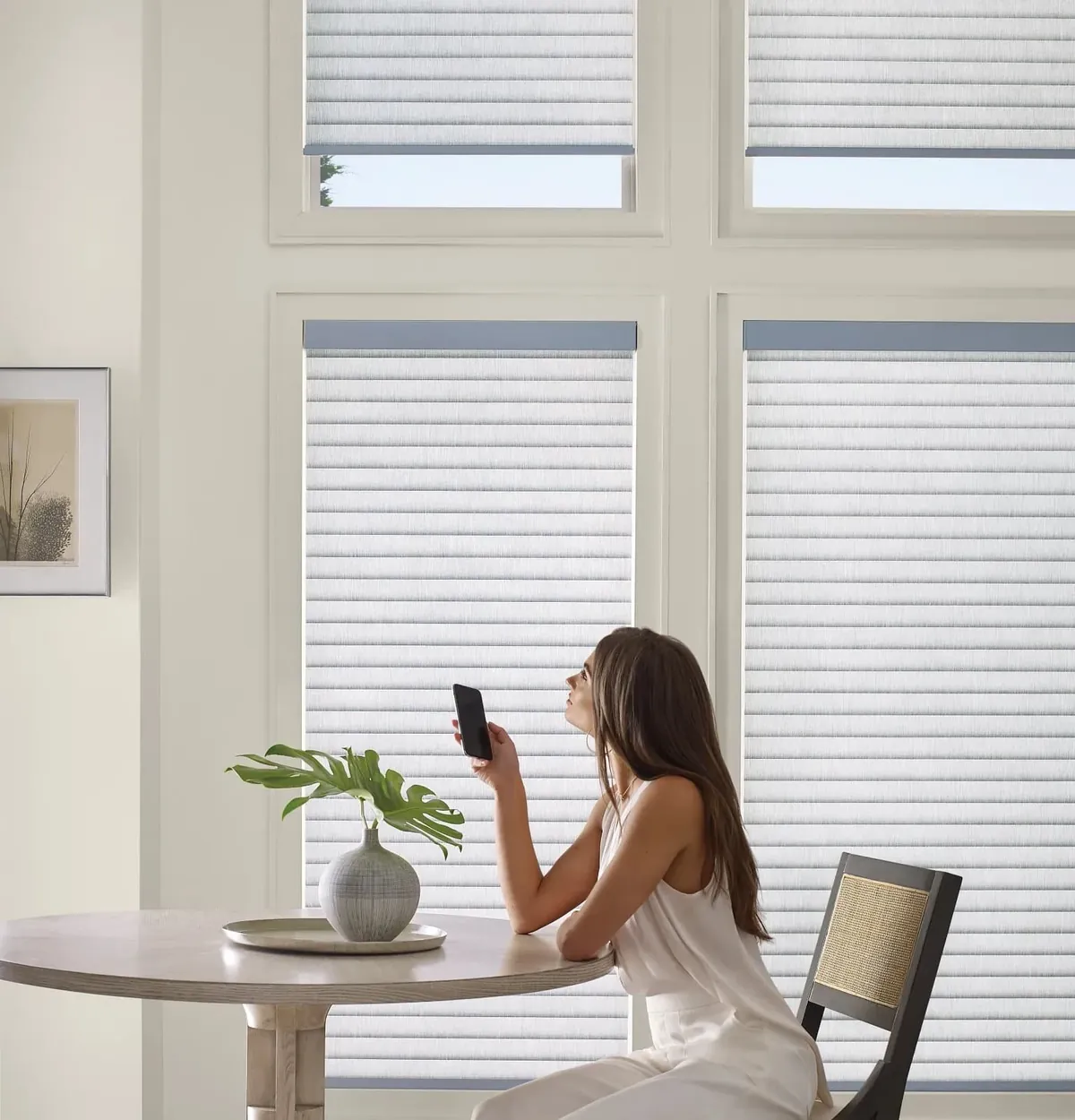
Plenty of Tiverton waterfront houses have a screened porch or a glassed sunroom along the water side, and those rooms are the brightest in the house. A porch facing west over the Sakonnet can be unusable after lunch in July, with the sun low under the roof and bouncing off the river.
Dark screen shades are the usual fix on a porch. They cut the glare and the heat while the river stays in plain sight, and they turn the porch back into a room you can sit in all afternoon. A sunroom suits soft Roman folds or sheers, which add warmth to a space made almost entirely of glass. When a porch or sunroom has many openings in a row, motorized blinds in Tiverton make the difference between a room you adjust once with a single press and one you give up on. During the visit we look at each opening and say which ones suit a motor and how the shades would be mounted.
Salt air and the moving parts
Salt is hard on anything metal that is exposed and handled. On a traditional corded blind, the cord lock and the tilt gear are out in the air and gripped every day, which is exactly how wear builds up. A window open through the summer brings that air straight in.
A PowerView shade keeps its motor and lifting parts inside the headrail, and nobody needs to grip anything to move it. That combination, nothing exposed and nothing handled, is the main reason motorized shades suit a house on the water.
Our certified Hunter Douglas installers screw the brackets into the timber behind the trim. A riverside sash gets thrown open on windy afternoons, and only a headrail anchored that firmly stays true.
Farmhouses and capes around Four Corners
Away from the water, the older houses around Four Corners are a different kind of job. The farmhouses and shingled capes there were built with small sash windows, deep sills and wide wood casings, and many of those windows have been in the same openings for a very long time. Frames move as a house settles, so no two windows are quite alike.
Every shade is built to your own figures: three widths across each opening, several heights, and the depth available for an inside mount. If the reveal is deep enough, the headrail tucks inside it and the old casing stays completely visible. Where it does not, a slim mount on the casing is the better choice, and we say so.
The motor solves the reach. Deep sills and furniture under the window make the glass hard to get to, and upstairs in a cape the windows tuck into dormers and gable ends. A remote by the bed or a wall control by the door moves those shades without anyone leaning in. Grouping the upstairs shades means one press at bedtime closes every room.
These rooms tend to suit softer treatments. A Roman shade looks right in a farmhouse front room, and a honeycomb adds warmth at old sash. See roman shades in Tiverton and cellular shades in Tiverton for more on each.
Controlling the shades
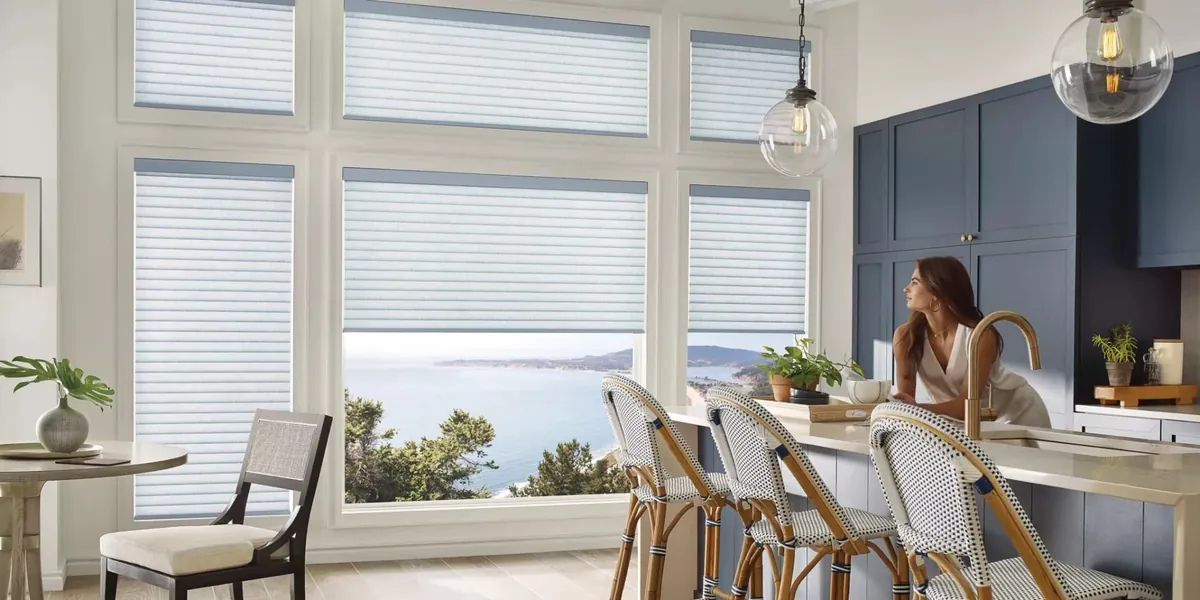
PowerView gives you a choice in how you move your shades.
- Remote: handheld or fixed beside the light switch, it sends a single shade or a whole room up or down. No phone involved.
- App: on a phone or tablet it lists each shade by room, lets you halt one at any height, and holds your scenes and timers.
- Scenes: a saved arrangement, such as river side half down, porch open, bedrooms closed.
- Schedules: a scene that fires on its own at a set hour, daily or on chosen weekdays.
Each option is laid out in how motorized shades are controlled; timers and scenes get their own page under window covering automation.
A riverfront day, set in advance
Here is the kind of pattern many waterfront houses settle into. It is only an example, and you can change any step.
- The bedroom shades stay down until the time you choose, then rise to show the river.
- The kitchen opens early to the soft morning light.
- Through the early afternoon, the river-facing living room stays open while the sun is still high.
- In late afternoon, the river-side sheers lower partway to soften the low sun and its reflection.
- As the sun sets, they rise again for the evening view.
- At bedtime, one scene closes the house for the night.
Go away for a long weekend and the pattern repeats without you: the house keeps its daily rhythm, and the rooms facing the river are covered when the sun is hottest.
Winter on the water
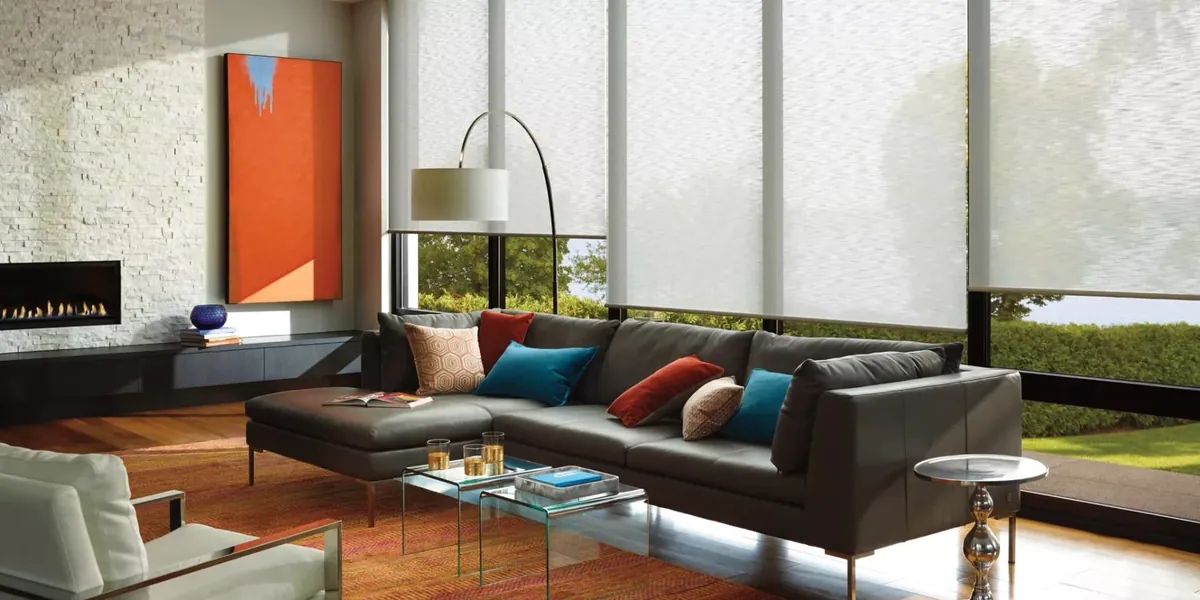
From late autumn, the wind comes up the river and across the pond, and a house with a lot of glass on the water side feels it once the sun goes down. A honeycomb shade traps a layer of quiet air in its cells, a buffer between the chilled pane and your sofa. Timed to close at dusk, the honeycombs are down for the cold hours; timed to open after sunrise, they let the low sun reach the floorboards. Choosing motorized blinds in Tiverton for the summer glare tends to pay off just as much in January.
No cords at the window
A motorized shade has no lift cord. In bedrooms and playrooms, or in a summer house full of visiting children and dogs, that is one less thing at the window to catch or tangle. It also keeps old casings clear of cleats and leaves every window looking tidy.
From the visit to installation
We start at your house, because sun and salt are things you judge at your own glass. Our vans carry samples, so we can bring the showroom to you.
- You request a consultation online or by the call button, and we agree a time.
- Room by room, we mark which windows look at the water and which look at the road.
- You compare color, openness, sheer and screen samples at your own windows.
- We talk through how you would like to control the shades.
- We measure every window and check depth for mounting.
- A free estimate follows for everything you are weighing up, and you take whatever time you need over it.
Once the order arrives, the installer levels each headrail, sets the travel of each shade, links them to your remote or app and builds the first timers beside you. For more on that first meeting, see what happens at an in-home consultation.

A Hunter Douglas Gallery dealer on the Sakonnet
Gallery is the name Hunter Douglas gives dealers who meet its standards, and only a select group carry it. Blinds & Designs is one. On a house by the water, the benefit is choice: every sheer, screen, banded, roller, honeycomb, Roman and woven fabric, plus blinds, and PowerView can drive any of them.
Our installers hold Hunter Douglas certification. Interior design consultations are there when a room needs a fuller plan, and shades or blinds you already have can come to us for repair.
For other rooms in the house, look at plantation shutters in Tiverton and custom blinds in Tiverton, or the whole picture on our Tiverton page. To compare every motorized option, go to motorized blinds and shades.
North Dartmouth is our nearest showroom
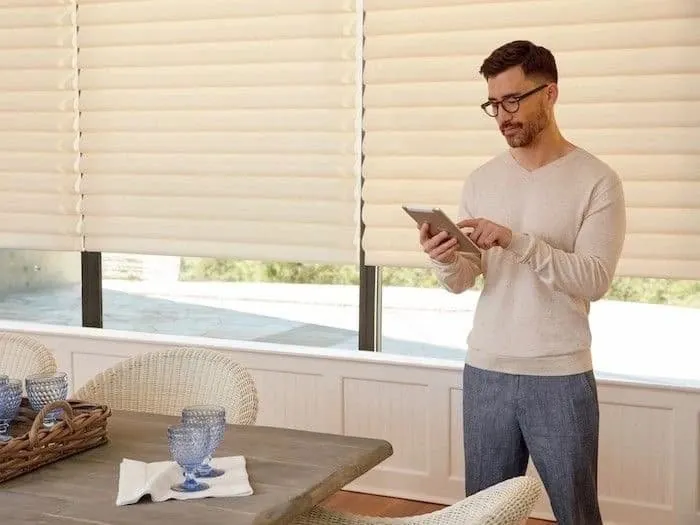
Our closest location to Tiverton is the North Dartmouth showroom, across the state line to the east. You are welcome to come in and talk about your windows.
For a house on the river or the pond, though, the home visit usually settles the fabric question fastest. One look at a sample against your own view, when the sun is on the water, tells you what you need to know.
Questions from Tiverton
Which fabrics hold up best on water-facing windows?
Softer neutrals, whites, creams, grays and natural tones keep their color longest under strong sun and its reflection off the water. We show you the options at your own windows.
How open should a screen shade be?
A more open weave keeps a clearer view and lets in more light; a tighter weave cuts more glare and heat. We bring several so you can compare them at the brightest time of day.
Can I take the glare off the river without losing the sunset?
Yes. A schedule can lower sheer or screen shades partway in late afternoon and raise them again as the sun sets.
Do motorized shades stand up to salt air?
Better than corded ones. Everything that moves is sealed up in the headrail and no hand ever pulls on it, which leaves salt very little to attack.
Is the estimate free?
It is. The estimate costs nothing and follows the measuring visit at your house.
See the fabrics against your own view
The surest way to choose a fabric for a water-facing room is to hold it at the glass when the sun is on the water. Request a consultation and our van brings the fabrics for motorized blinds in Tiverton to your door; we measure each opening and leave you with a free estimate. The call button and the North Dartmouth showroom are there as well.