
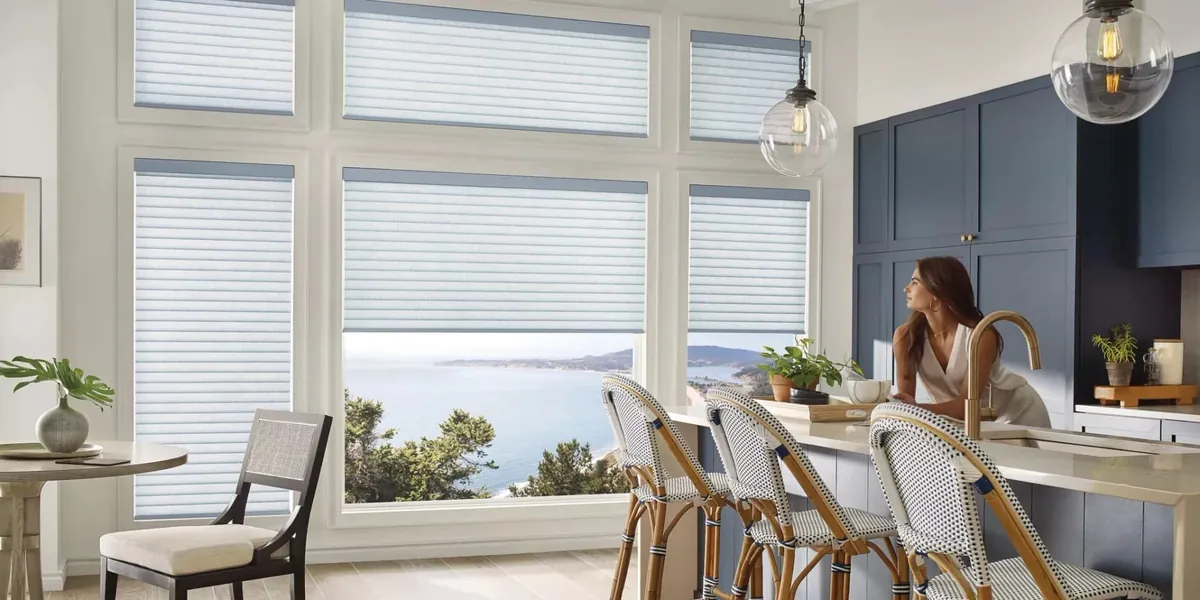
Harbor glass and sea air in Mattapoisett
The shingled cottages around the harbor were built for summer, and many have since been turned into year-round homes. Out along Ned’s Point the same story repeats: small houses opened up with new glass on the water side, decks added, walls taken down to bring the view into the kitchen. The rooms that face the harbor are now mostly window, and the salt air reaches every one of them.
That combination is why motorized blinds in Mattapoisett, MA, make so much sense. A wall of water-facing glass needs its shades moved several times a day as the sun swings round, and a Hunter Douglas PowerView motor does that from a remote, an app or a timed schedule. The lifting parts are enclosed in the headrail rather than hanging in the open, with no cord to fray and nothing for a hand to grip.
Further inland, the larger newer houses bring a different challenge: high ceilings, great rooms and windows well out of reach. A motor answers that too.
Shades we pair with PowerView in Mattapoisett
Most of the conversation about motorized blinds in Mattapoisett comes down to which fabric handles the harbor light. These are the shades we reach for first, and every one of them travels in our vans as a sample.
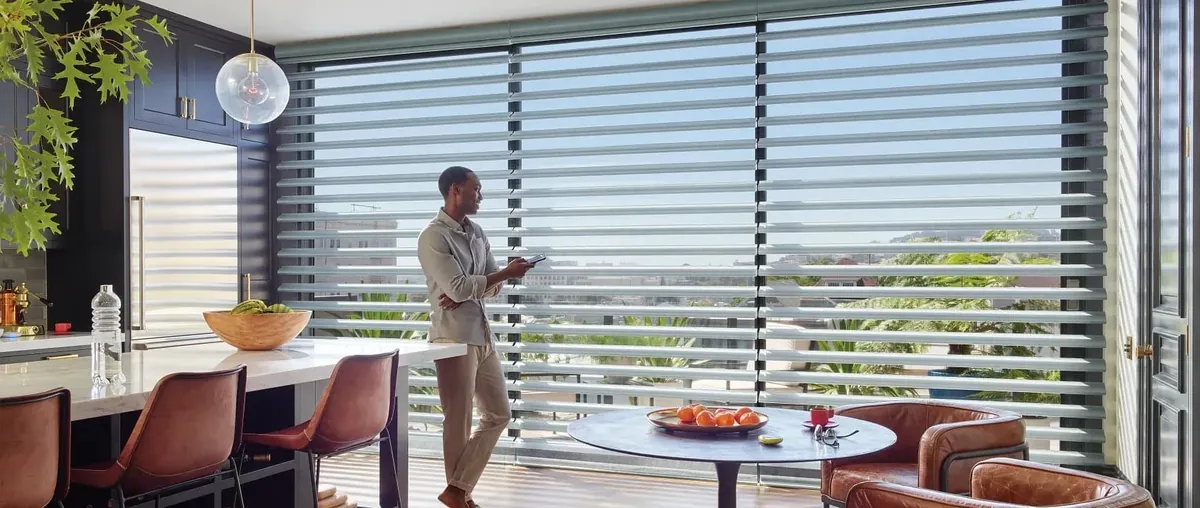
The app on your phone
Move one shade or a whole wall from anywhere in the house. Handy when the deck is full and the sun swings onto the kitchen glass.
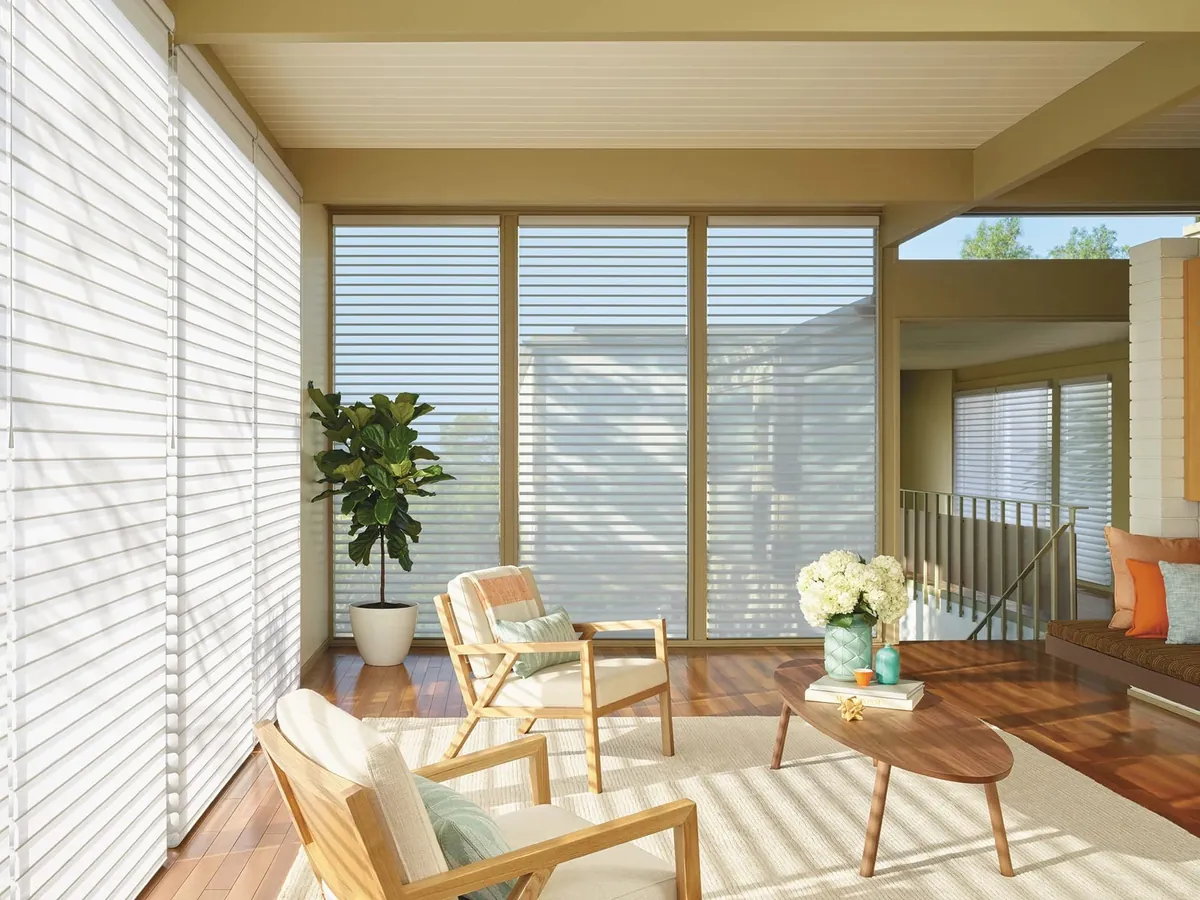
Floor-to-ceiling sheers
Sheer shades soften the glare while the harbor stays in view through the fabric, the usual first choice for a converted cottage’s water side.
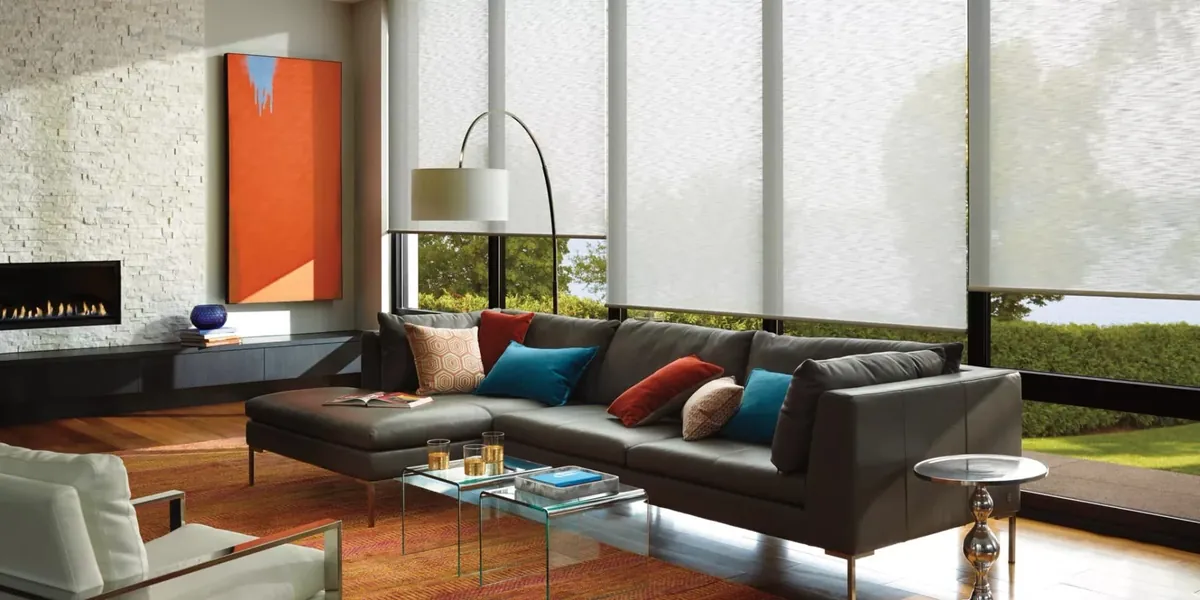
Light sheer rollers
A simple roller in a sheer weave keeps a modern room clean and bright, and lowers neatly across a long run of glass at once.
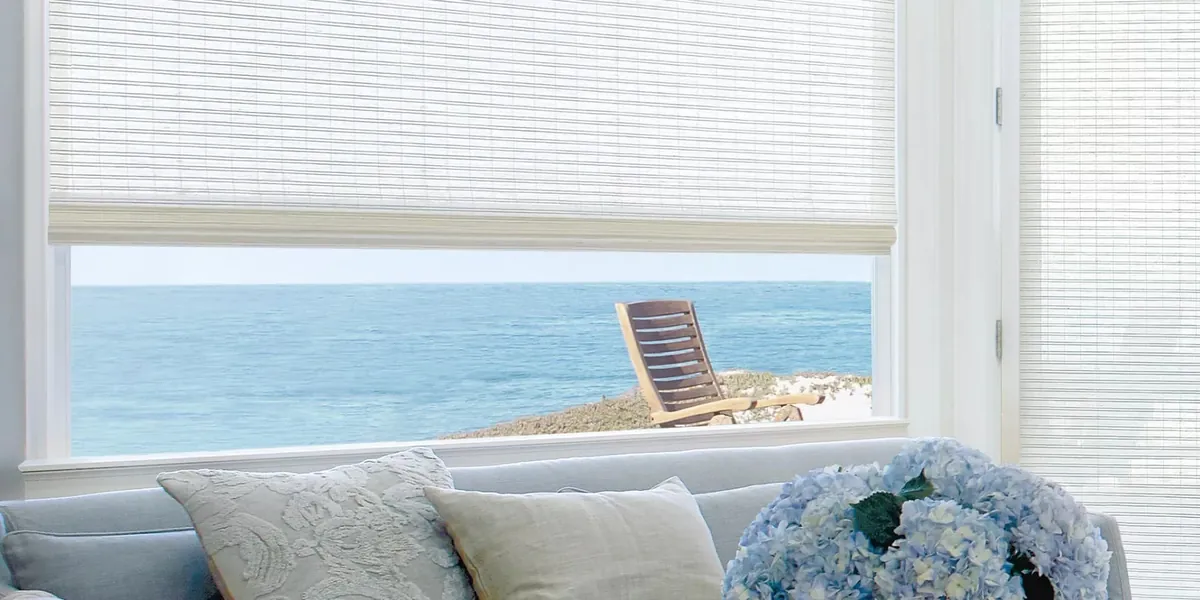
Woven shades with a sea view
Natural texture that suits a shingled cottage. A motor raises it evenly, so a woven shade on a wide window never hangs crooked.
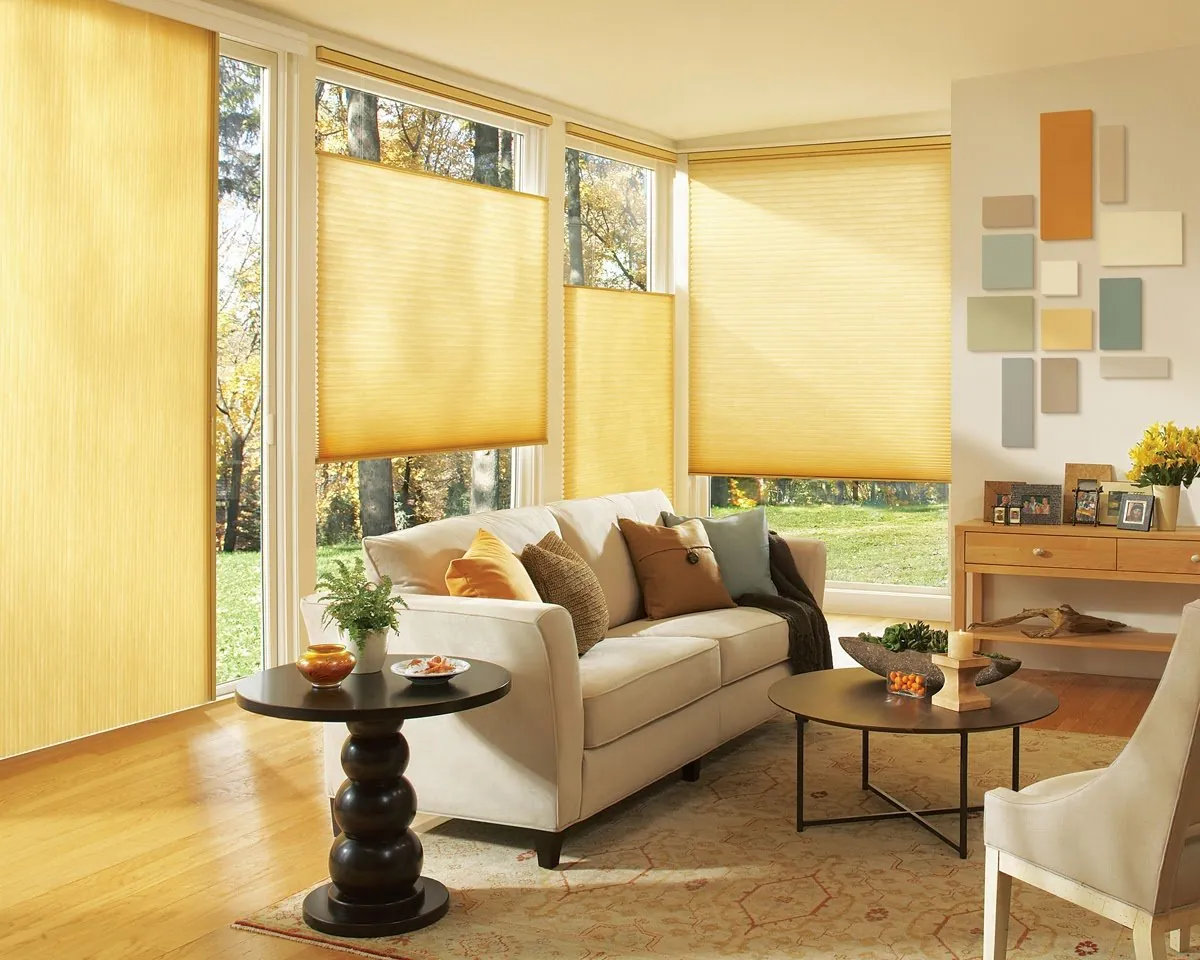
Honeycomb for corner rooms
Top-down honeycomb on the corners and a vertical honeycomb on the slider, so the whole room holds its warmth once the wind turns.
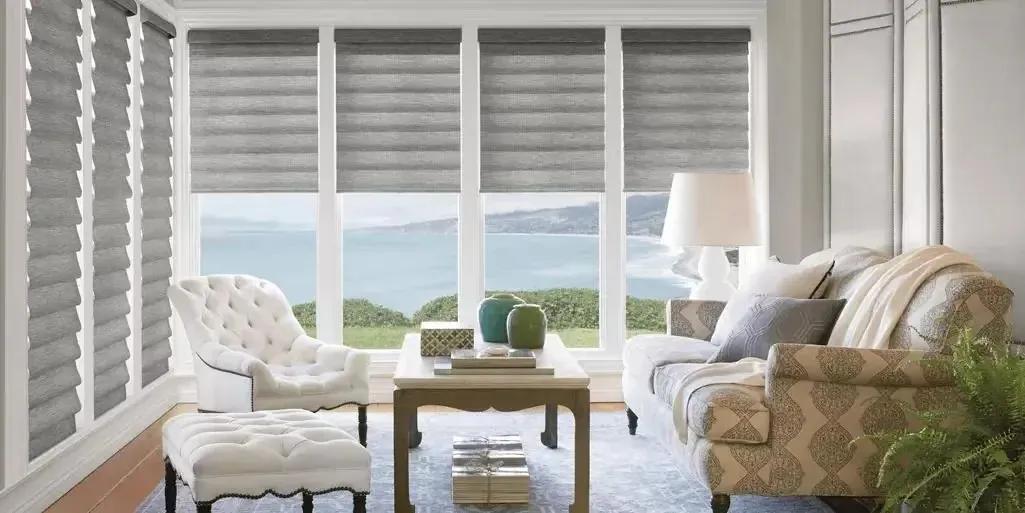
Soft Roman folds
Rounded Roman folds soften a sunroom that is nearly all glass. With a motor, each shade in the room stops at exactly the same line.
Cottages around the harbor
The original summer cottages near the harbor are small, close together and full of character: low ceilings, narrow stairs, a front porch that faces the water. When they were winterised, most gained bigger windows on the harbor side and kept the smaller original ones on the street side. So one house often has two quite different sets of windows to dress.
On the water side the goal is to keep the view open as much as possible. A motorized sheer or a light screen shade can stay lowered through the bright part of the day without hiding the boats, then rise fully in the evening. On the street side, where neighbors are close, privacy matters more, and a light-filtering honeycomb or a Roman shade keeps the room screened while still letting daylight in.
Because these houses are compact, every room tends to have a window in an awkward spot: over the sink, behind the couch, high on a gable wall above a loft bed. Motorizing those particular windows is often where a cottage project starts, and many households add the rest once they see how much easier it is.
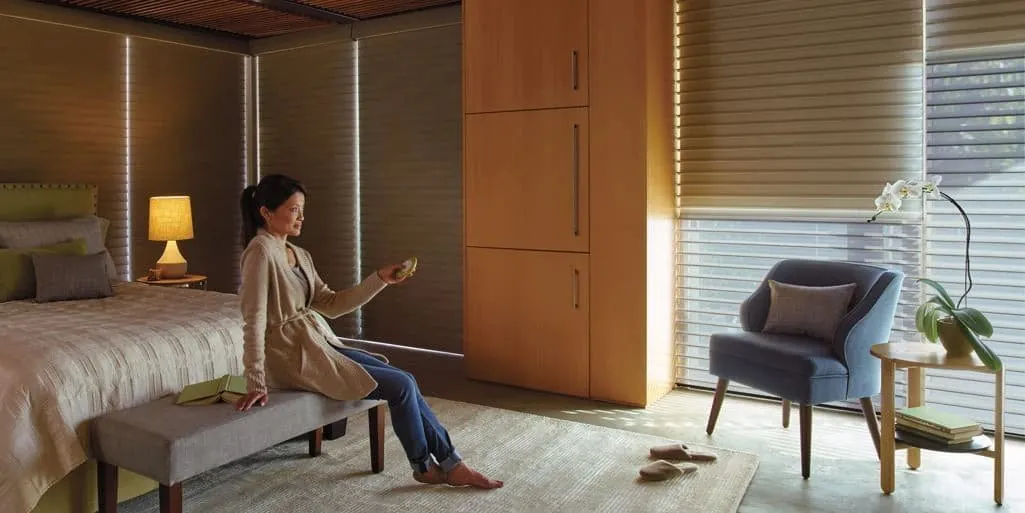
Conversions out along Ned’s Point
The houses toward Ned’s Point were mostly built as seasonal places, and the year-round conversions there have taken the idea of the view further. Expect wide sliders, corner windows meeting at the angle of the room, and the occasional clerestory high on the wall to catch the light over the bay. That kind of glass gives you the water from every chair, and it also lets in a great deal of sun.
Corner windows are a good example of where a motor helps. Two shades meeting at the corner should rise and fall together so they line up. Done by hand, they never quite match. On PowerView, they are grouped and move as one, to the same height every time.
Clerestory windows are simply out of reach, and a motor is the only practical way to cover them. They can join the same group as the windows below, so a single command shades the whole wall.
Winter in a cottage built for summer
A summer cottage that has been converted for year-round living still carries traces of its first life. Walls are thinner than in a newer house, the original windows on the street side may be single glazed, and the big new glass on the water side faces straight into the wind once autumn arrives. On a gray January afternoon those rooms cool quickly as the light goes.
Honeycomb shades are the answer we suggest most often for that. Each cell holds a pocket of still air between the cold pane and the room, so the warmth from the stove or the radiators stays where you are sitting. The catch is that a shade only helps when it is down, and nobody remembers to walk round a cottage lowering shades at half past four. Planning motorized blinds in Mattapoisett around a dusk schedule solves that: the honeycombs close as the light fades, earlier in midwinter and later each week into spring, and open again in the morning so the low winter sun can warm the floor.
The same schedule works the other way on a bright, still day in February. The sunny side stays open into the afternoon to take in what warmth the sun offers, then closes before the temperature drops.
What sea air does to a window covering
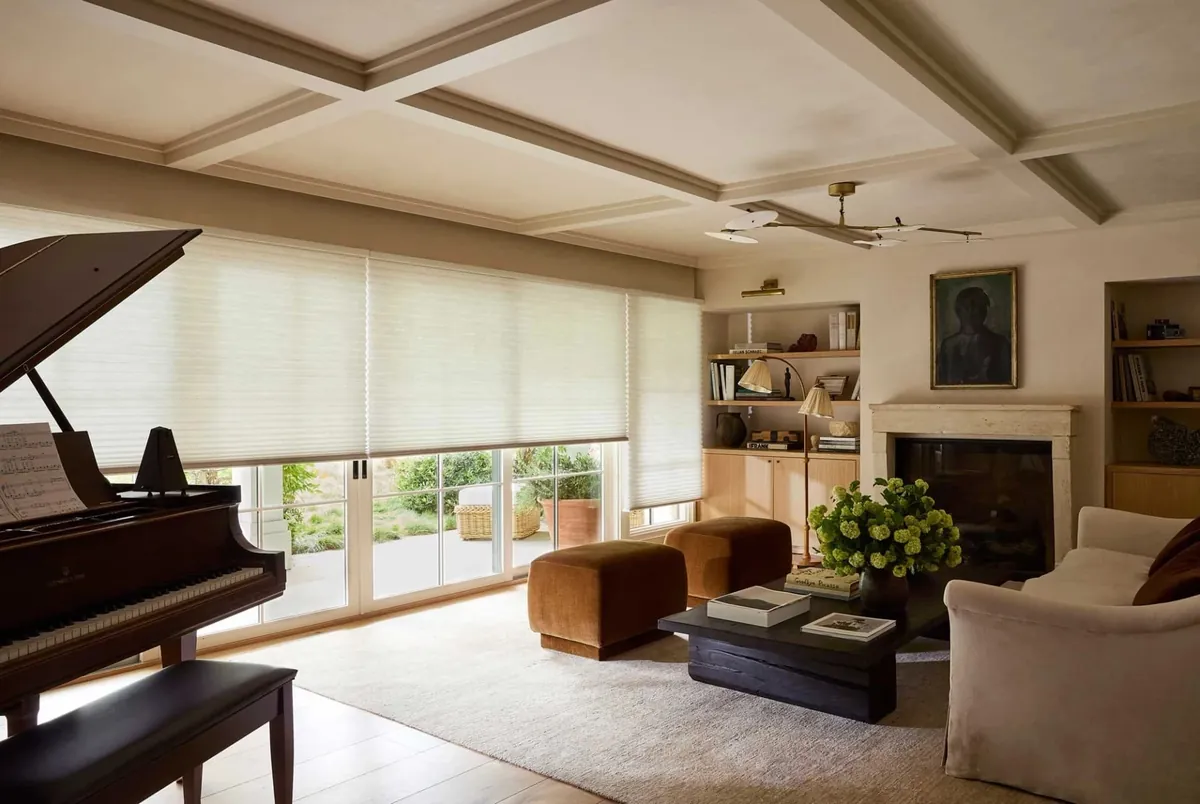
Spend a summer with the windows open near the harbor and you find a fine film of salt on hinges, latches and anything chrome. Corded blinds suffer from it most, because the cord lock and tilt gear sit out in that air and get pulled on every morning and night. Wear builds where salt and handling meet.
On a PowerView shade, the motor and the lift live inside an enclosed headrail and nobody pulls on anything. That simple change, nothing exposed and nothing gripped, is the main reason motorized shades suit a house this close to Buzzards Bay.
Color is the other thing the harbor tests. A dark or saturated fabric facing south over open water can look tired after a few seasons of reflected sun. We point out the fabrics we would trust on that kind of window, usually softer neutrals and natural tones, and a sheer or screen in front of the glass also shields the rugs and upholstery in the room.
Our certified Hunter Douglas installers anchor every bracket into the framing behind the trim, not just the plaster or the casing. A cottage window that is open half the year, with a sea breeze pushing at the shade, needs that solid fixing to keep the headrail straight.
When the glare comes off the water
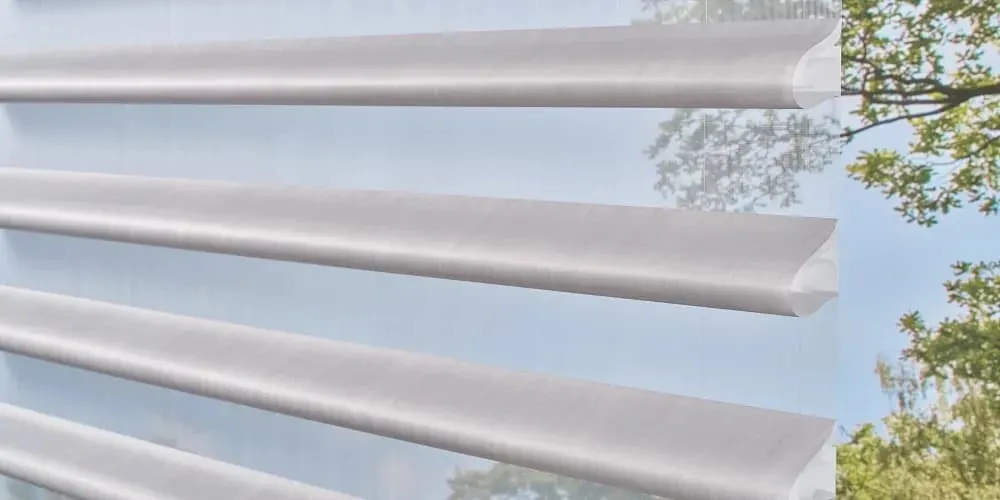
Harbor light does not stay in one place. Early on a summer morning, the sun climbs over the bay and comes in low across the water into east-facing bedrooms. By mid-afternoon it is high and bright, reflecting off the surface onto the ceilings and into your eyes. In the evening, the light on the west side drops level just as you sit down to eat.
Moving every shade by hand to keep up with that is a full-time job. A schedule does it for you. The east bedrooms stay closed until a set time, the harbor side drops to half height around midday, and the western windows come down before supper, then everything opens again for the last of the light. You change the times as the season moves on, and a press of the remote overrides any of it.
Larger houses inland
Away from the harbor, the newer houses inland are bigger, with open-plan living spaces and ceilings that rise two stories in the main room. Windows high above the front door, transoms over the sliders and a wall of glass in the great room are common. None of those can be reached without a ladder.
For these houses motorization is less a convenience and more the only sensible way to have shades on the high windows at all. The top row is tied to the row beneath it, so when the afternoon scene runs, the whole wall drops together and you are not left with a strip of hot, bright glass near the ceiling. In a bedroom over the garage or a home office on the sunny side, a motorized room-darkening shade gives you a dark room whenever you want it.
These houses often have many windows, too. Grouping them into rooms and scenes means one tap closes the whole ground floor at night instead of a walk round the house.
Inland lots are more private than the harbor streets, so the question in these rooms is usually heat and glare rather than neighbors. A screen shade with a more open weave keeps the garden and the trees visible; a tighter weave cuts more brightness for a family room where the television faces the window. We bring both so you can compare them side by side in your own light.
How you control them
Hunter Douglas PowerView gives you a few ways to move your shades. You can use one or all of them.
- A handheld remote, or one fixed to the wall, moves one shade or a group with a press.
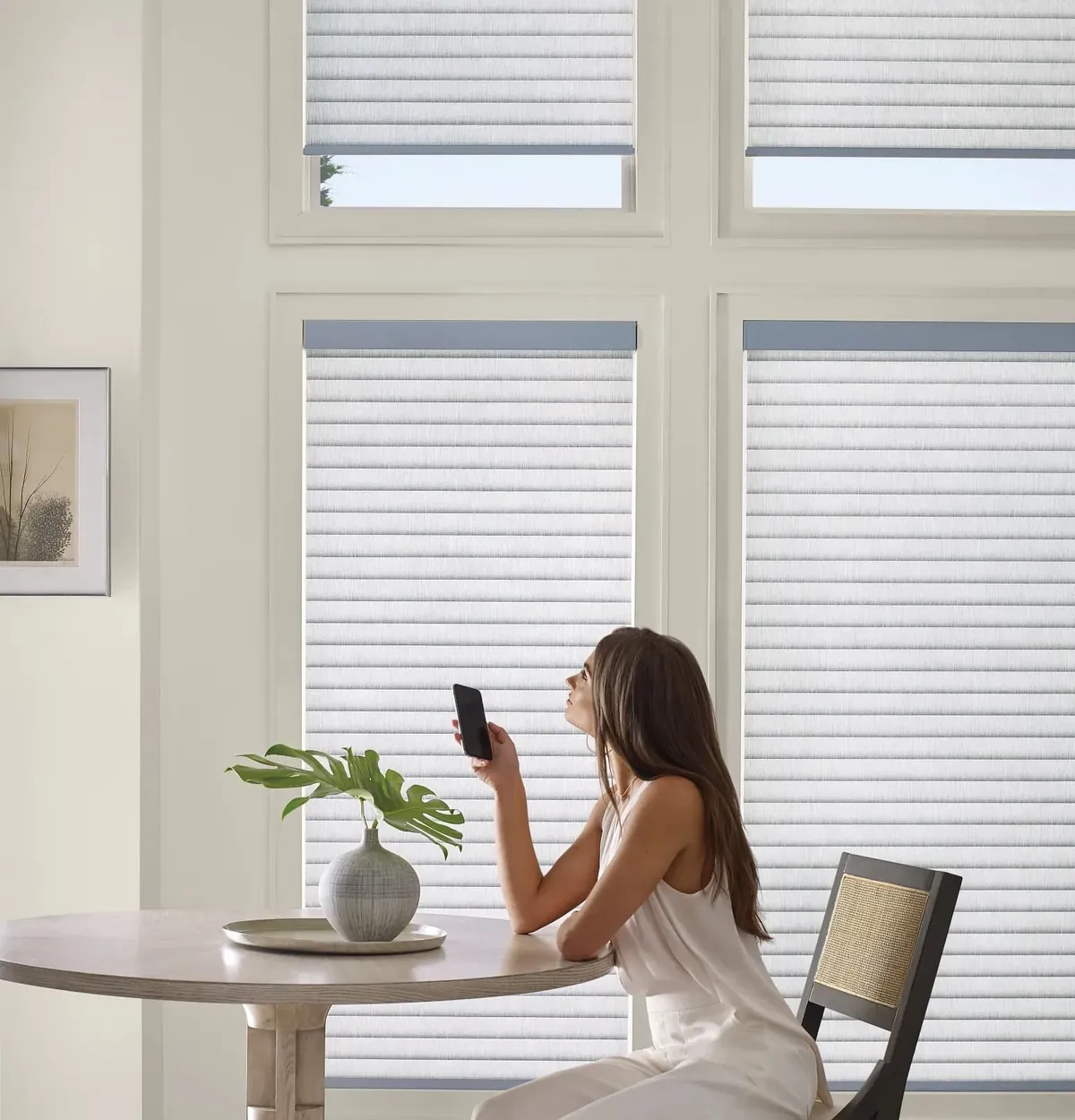
- The app on a phone or tablet lists every motorized shade in the house, stops any of them partway and lets you sort them into rooms.
- Scenes save a set arrangement, such as harbor side half down and bedrooms closed.
- Schedules run a scene at a set time each day.
Read more in how motorized shades are controlled, and see window covering automation for scenes and timed schedules.
Weeks when the cottage is shut
Some cottages are still used mainly in summer, or lived in full time by households who travel often. Shades on a timer go on opening in the morning and closing at night while you are gone, so the cottage does not sit blank-faced toward the harbor all week. Rooms that bake in the afternoon get their shade on time, which spares the furniture from the sun when there is no one there to lower anything.
Arrive on a Friday evening and the house is already in its evening arrangement. If your plans change, the times are a quick edit in the app.
Slats for some rooms, fabric for others
A few rooms really do want slats. Picture a study on the water side: tilt a wood or faux wood blind upward and the light bounces onto the ceiling, the screen on the desk stays readable and the moorings are still there between the slats. If motorized blinds in Mattapoisett are what you are picturing for that kind of room, mention it at the visit. We check which blind lines and controls work with that particular window and tell you plainly.
Everywhere else, shades tend to win. A sheer or screen protects the view, a honeycomb keeps a cottage room warm when the north-east wind arrives, and a room-darkening fabric lets you sleep past sunrise. Mixing them is normal, and the app runs them all the same way. Our pages on cellular shades in Mattapoisett and roller shades in Mattapoisett say more about each.
What a home visit looks like
Harbor light is the whole question, and nobody can judge it from a sample book in a shop. So the visit happens at your house, with our vans bringing the showroom to you.
- You request a consultation online or with the call button, and we agree a time.
- We go room by room with you, noting the compass direction of each window and which ones sit out of reach.
- You hold sheer, screen, honeycomb and Roman samples at your own windows to see how each handles the light off the water.
- We talk through the controls you would like: remote, app, schedules or all three.
- Each window is measured, along with the depth available for the headrail.
- A free estimate follows for the shades and motors you are weighing up, and nobody expects a decision on the spot.
If you want help pulling the whole room together, ask about our interior design consultations at the same visit.
Gallery dealer range, one consultation
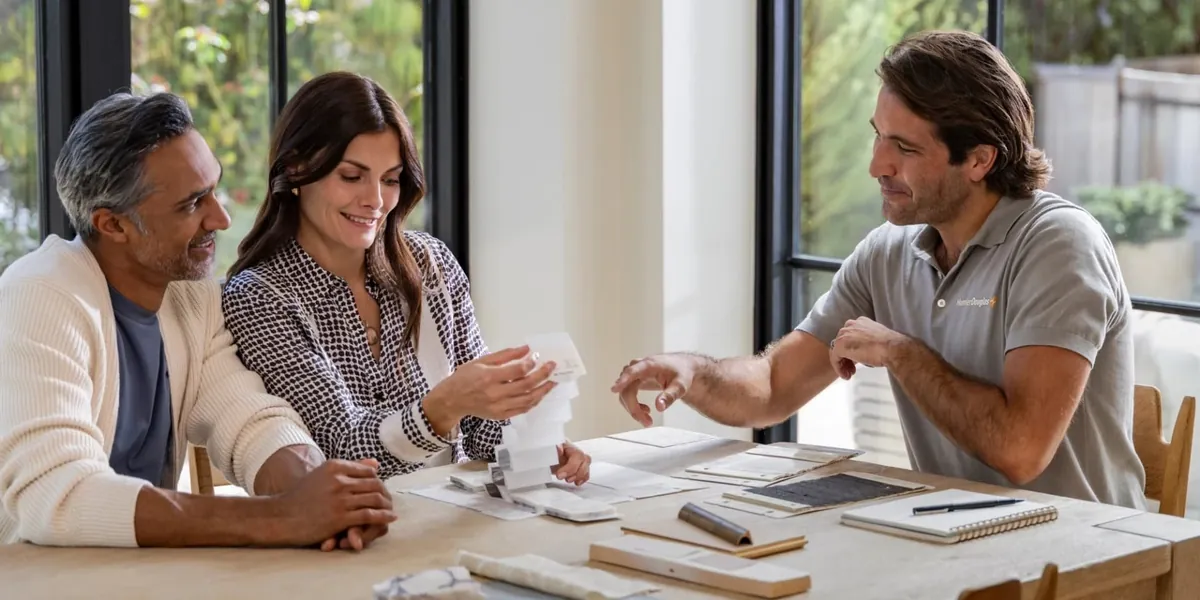
Hunter Douglas names only dealers who meet its standards as Gallery dealers, and Blinds & Designs is one of them. On a motorization project that opens up the full range, from sheer and screen fabrics to honeycomb, roller, Roman and woven shades and blinds, all running on PowerView. That lets us choose window by window instead of forcing one product into every room.
Installation is certified by Hunter Douglas. The installer who fits the shades also pairs them with your remote or app and builds the first schedules with you. We also repair blinds and shades you already have.
Planning more rooms? Look at our roman shades in Mattapoisett, plantation shutters in Mattapoisett or the full Mattapoisett page. For the range as a whole, start with motorized blinds and shades.
North Dartmouth, or the harbor itself
Our closest showroom to Mattapoisett is North Dartmouth, a short drive west, and you are welcome to call in and talk it over.
With a house on the water, though, the home visit nearly always settles things faster. One look at a sheer sample against your own mooring field in the middle of the afternoon answers most fabric questions. If you would like to know what to expect, see what happens at an in-home consultation.
Questions from Mattapoisett
Are motorized shades a good idea this close to the harbor?
Yes. The motor and lift are enclosed in the headrail and never handled, so there is no exposed cord lock or tilt gear for salt to work on. We also guide you toward fabrics that keep their color on a sunny water-facing window.
Can I still see the boats with the shades down?
With a sheer or a screen fabric, yes. Both cut the glare and leave the harbor visible, and a schedule can lower them around midday and raise them again when the sun moves off the water.
Can you reach the clerestory windows in my great room?
Yes. They are some of the best windows to motorize, since no one can reach them by hand. They join the group below and move with it.
What happens to the shades when we are away for the week?
Timed schedules carry on without you, opening and closing the shades on their normal pattern and keeping the sunniest rooms covered through the afternoon.
Is there a charge for the estimate?
No. After measuring at your house, we give you a free estimate covering the shades and motors you have in mind.
Bring the samples to the harbor
A water-facing room is best judged with a sample held to the glass at the brightest point of the day. Request a consultation and we will bring samples for motorized blinds in Mattapoisett to your door, measure each window and give you a free estimate. The call button and our North Dartmouth showroom are there too if you would rather talk first.