
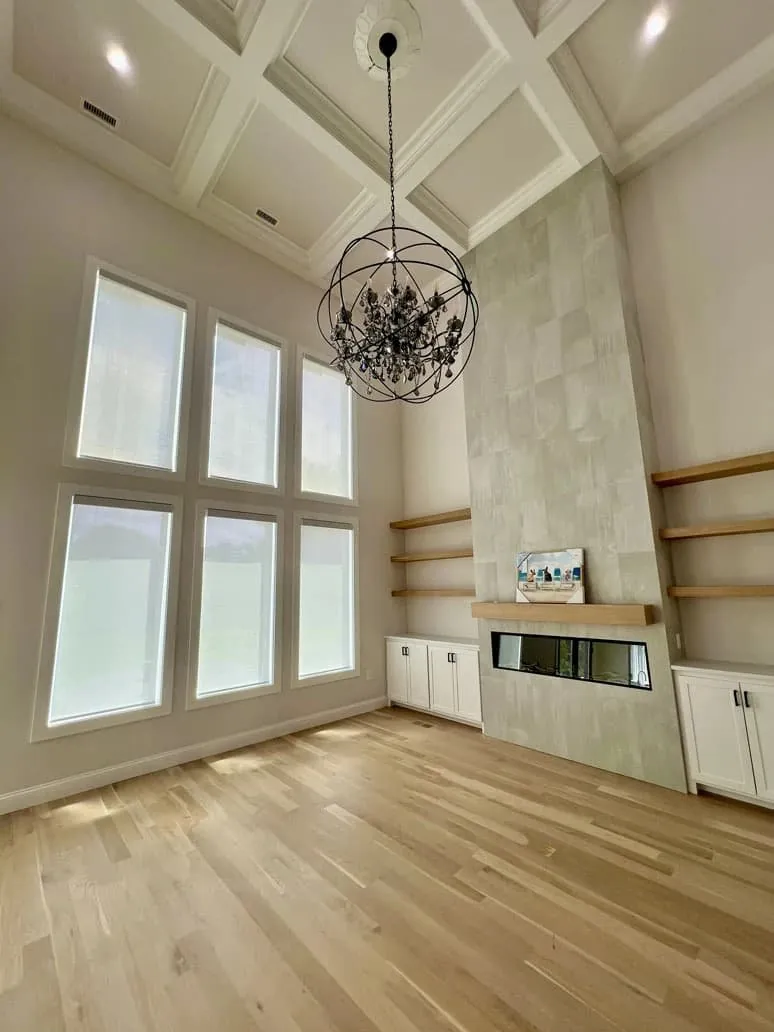
Keeping the pond in view in Lakeville
Around Assawompset and Long Pond, the view is the reason the house is there. The old camps along the shore were built as simple summer places a few steps from the water, and many have been winterised and opened up into year-round homes. Further back, newer colonials sit on larger lots with their main rooms turned toward the pond. Either way, the rooms that face the water were planned around the glass, and a bulky treatment hanging over that glass would defeat the purpose of the room.
That is the brief we work to with motorized blinds in Lakeville, MA. The shades need to be light, slim and able to disappear almost completely when raised, so the pond fills the window. When the afternoon sun comes off the water, they need to come down just far enough to cut the glare and then get out of the way again. A Hunter Douglas PowerView motor handles that from a remote, from the app on your phone, or on a timed schedule.
The result is a room where the shades are barely noticed. They work in the background and the view stays front and center.
Light shades for pond-facing rooms
Most choices for motorized blinds in Lakeville come down to one question: how much of the view does the fabric keep when the shade is down? These are the shades that answer it best, and we bring samples of all of them to your house.
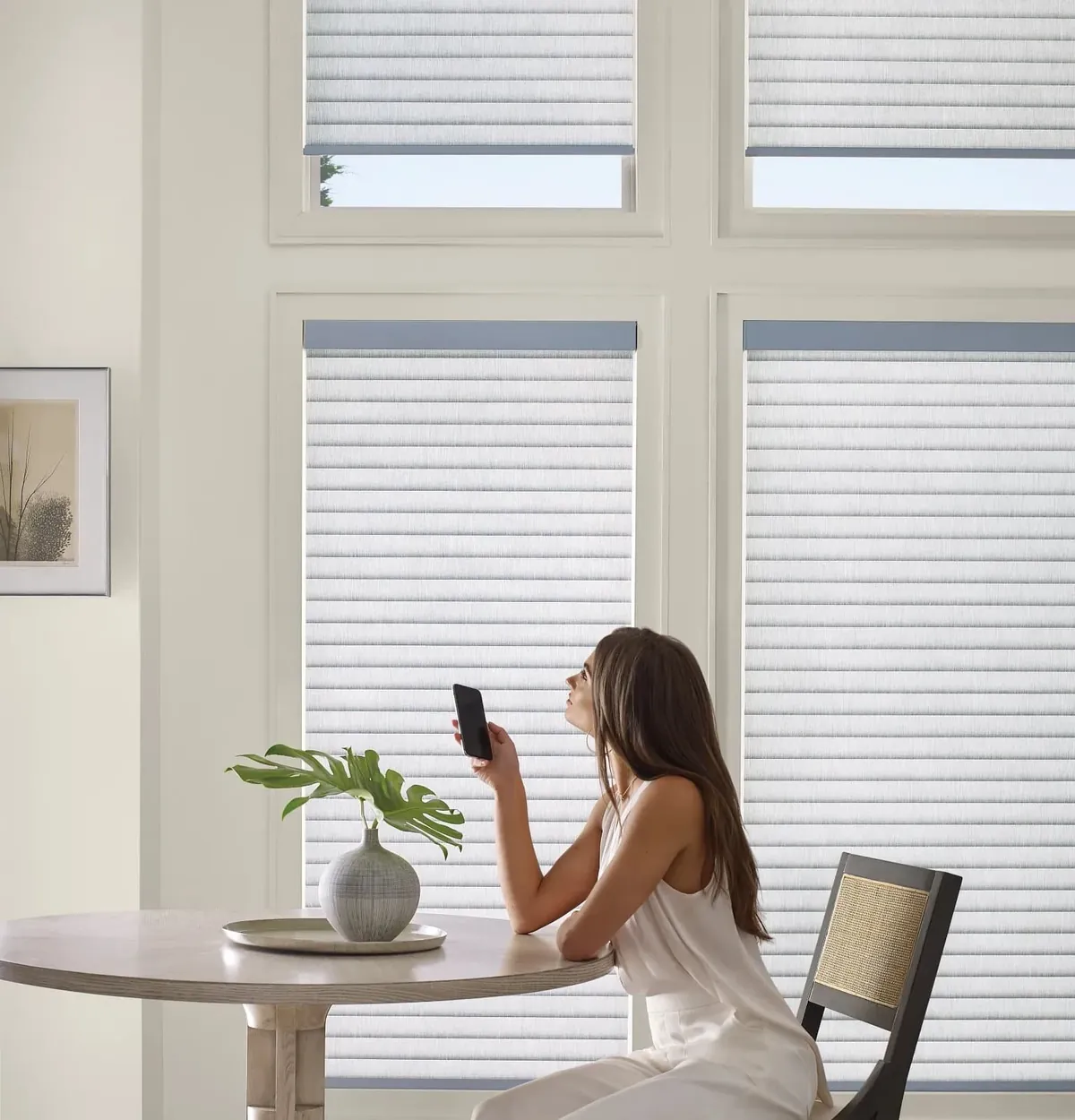
Phone control for the water side
Open or close the water-side shades from the app in any room of the house, or let a schedule take care of it.
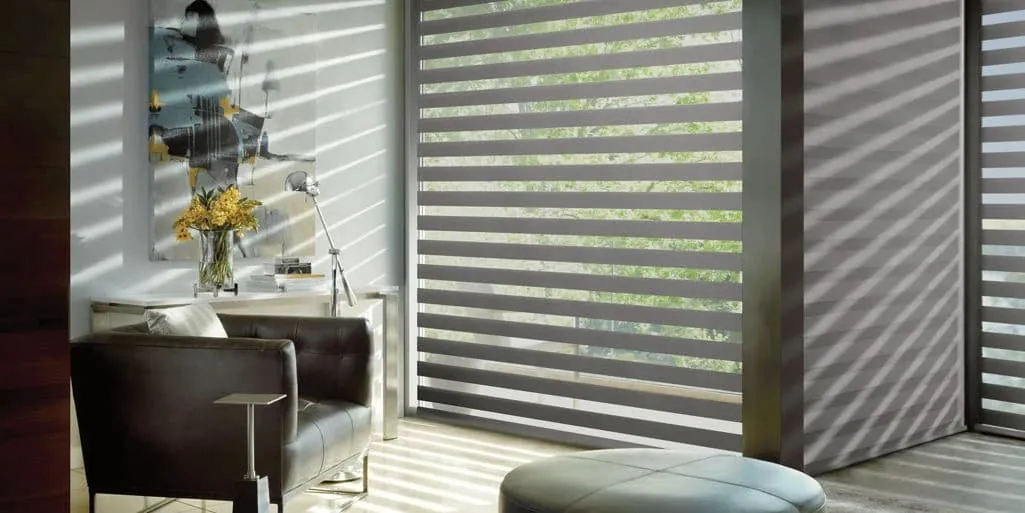
Banded shades
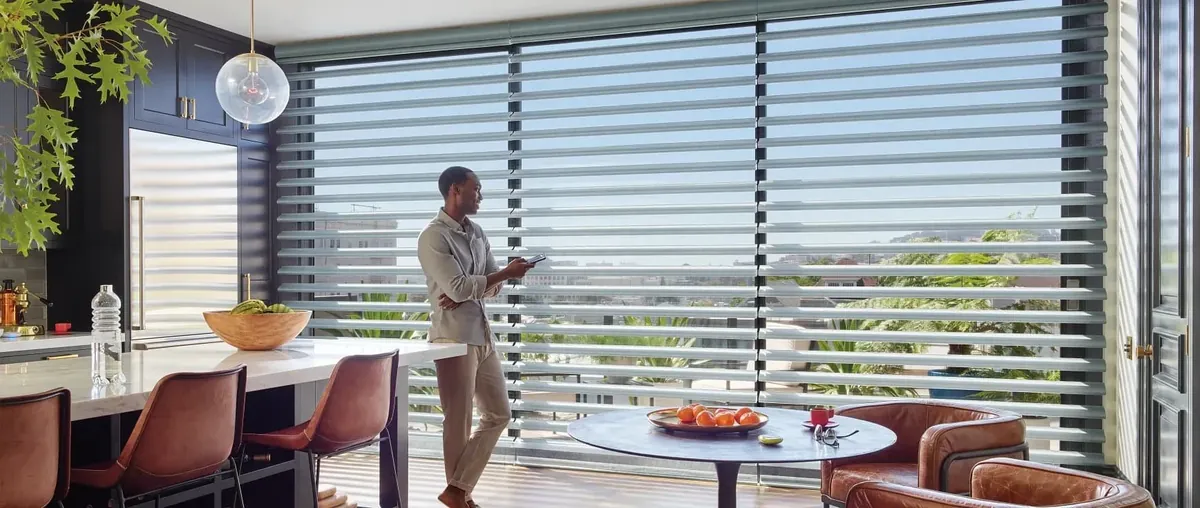
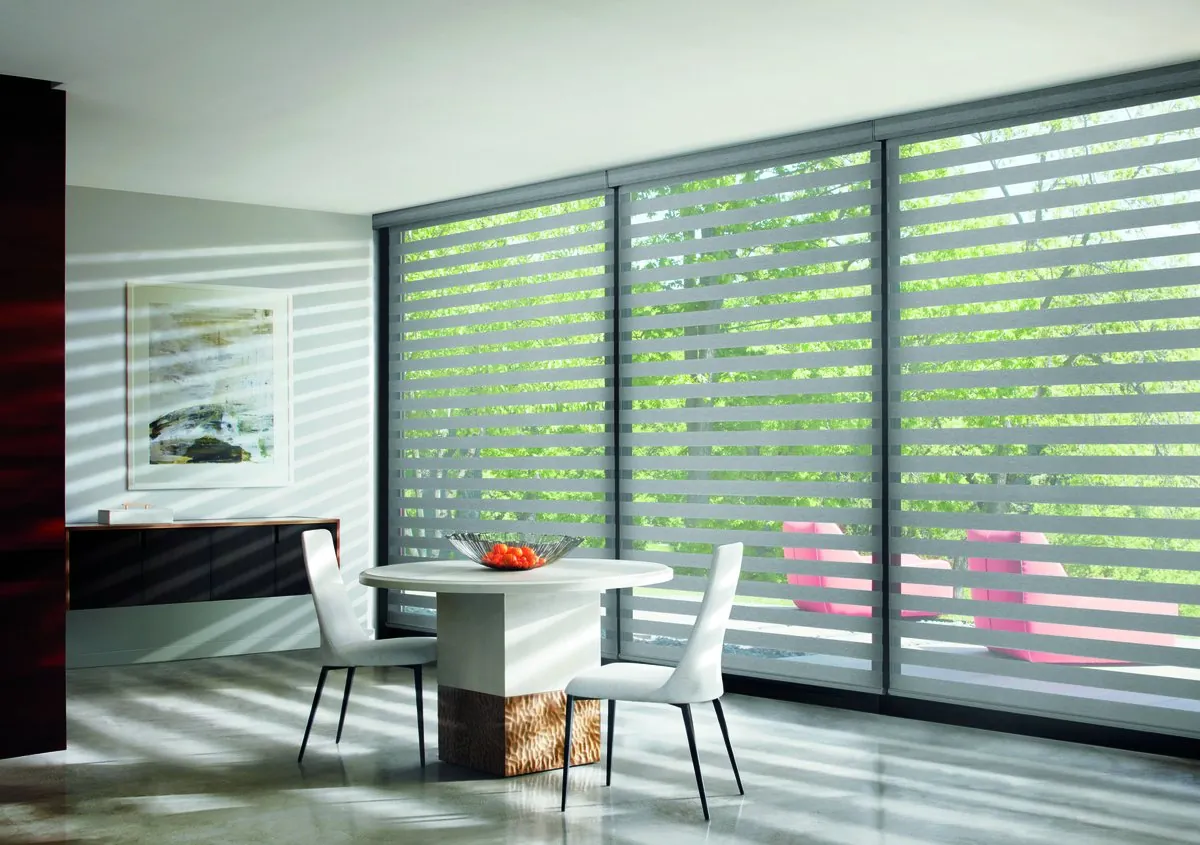
Sheer and solid stripes slide past each other. Line up the sheer bands and the pond shows through; offset them and the room is private.
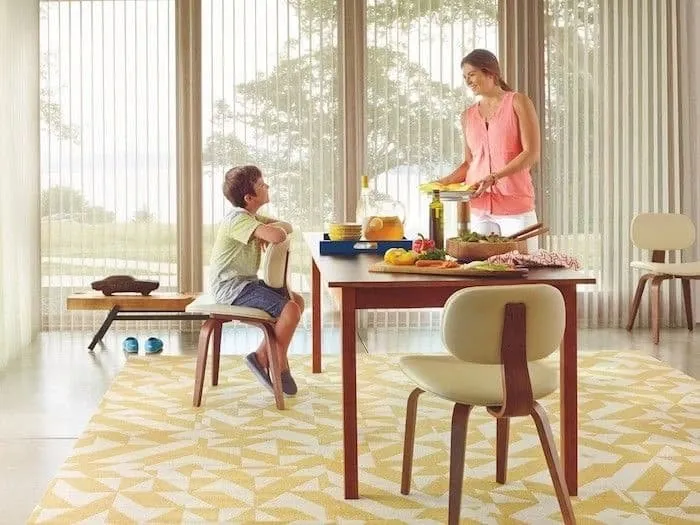
Vertical sheer panels
For a wall of sliders onto the deck, soft vertical sheers draw aside to open the doors and turn to filter the light.
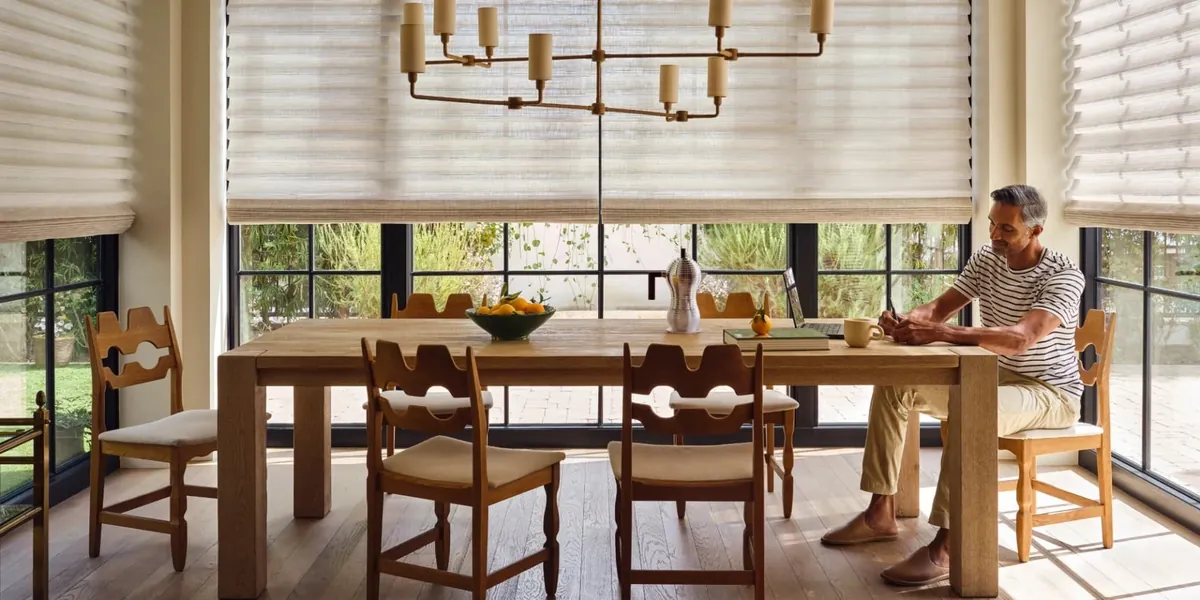
Natural soft-fold shades
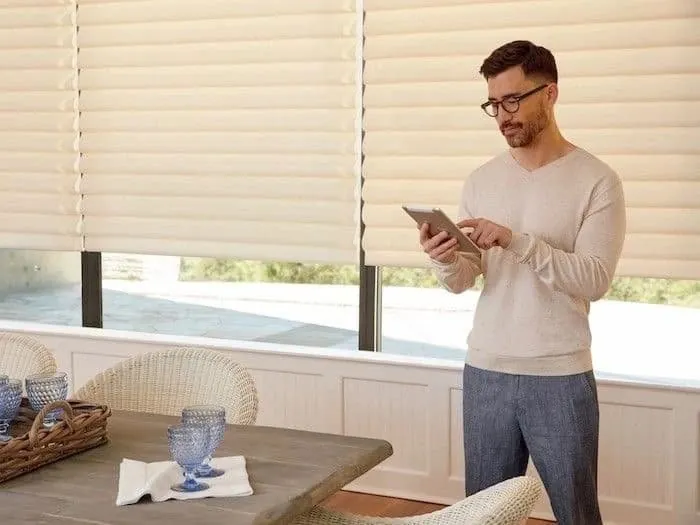
A light weave suits a converted camp well, letting in an airy glow and folding up neatly out of the view when raised.
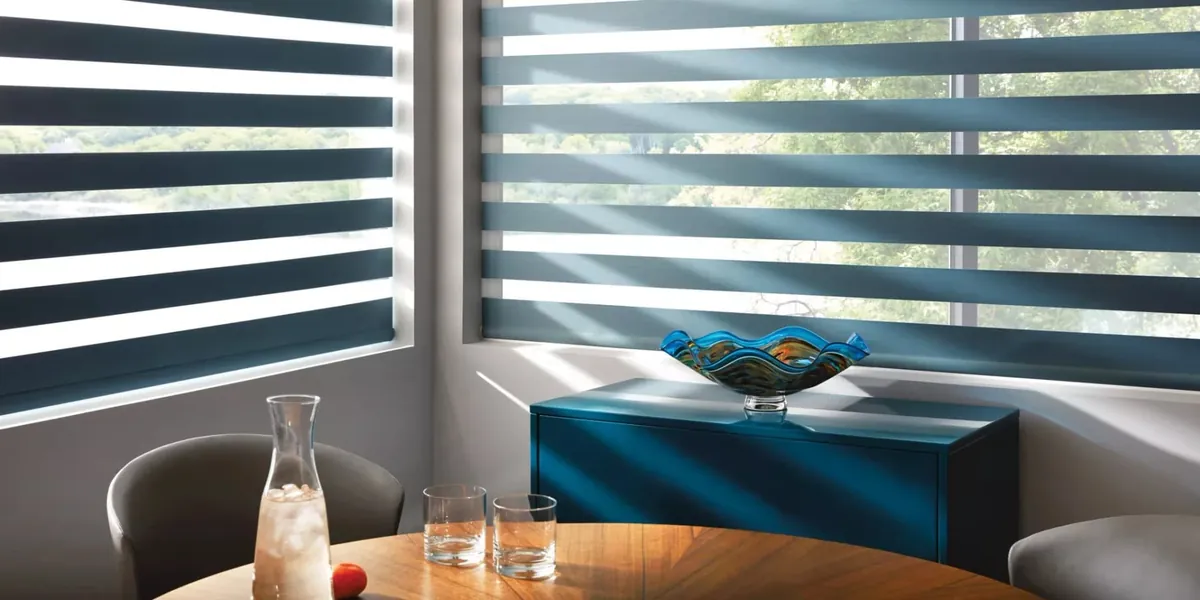
Banded shades in color
Banded fabric comes in color too, a good way to add character to a breakfast corner that looks out over the water.
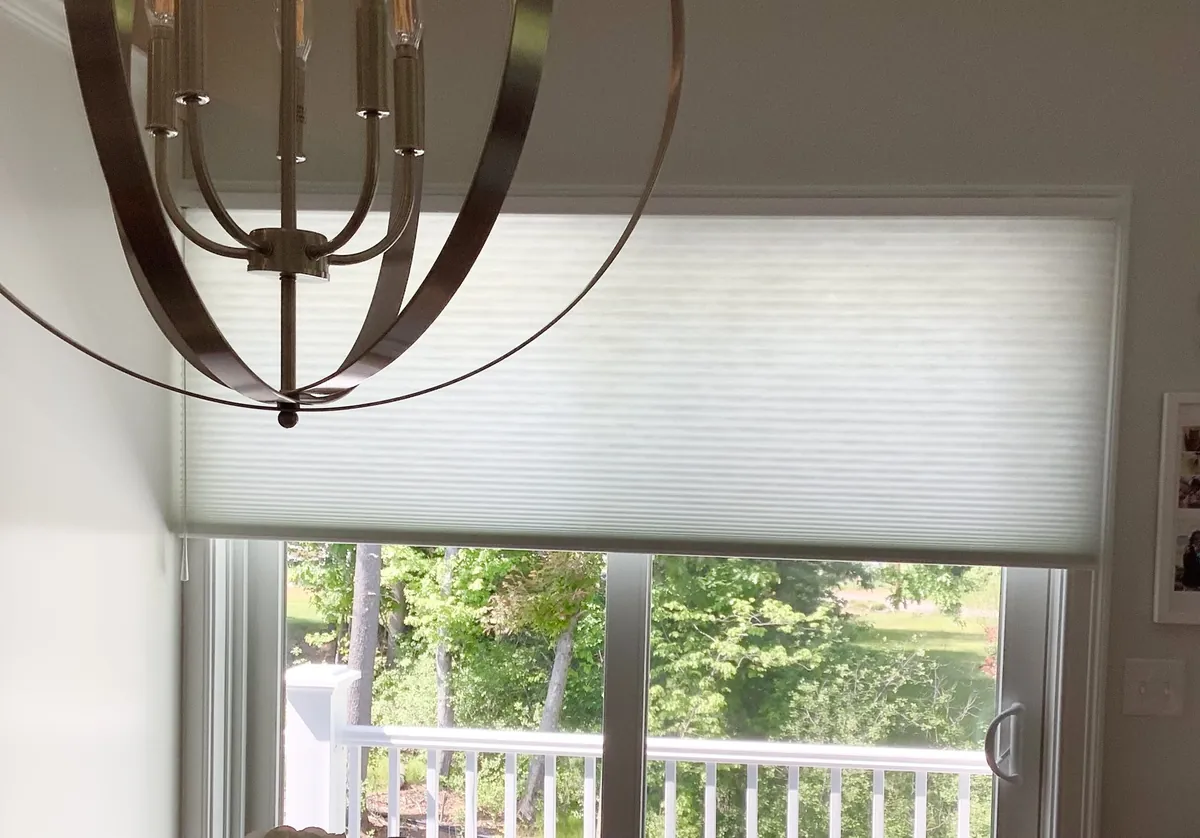
Honeycomb for the slider
One of our own installs: a cellular shade on a slider to a deck. Honeycomb on the door helps a pond room hold warmth through the winter.
Why heavy treatments do not suit a pond room
A pond-facing room gives you something most rooms do not: a changing picture all day, from mist over the water in the morning to the light going down behind the trees on the far shore. Heavy curtains, thick valances or deep wooden blinds hanging in front of that glass take a slice of it away even when they are open. They stack at the top or the sides and frame the view in a way that shrinks it.
The shades we suggest for these rooms work the other way. A roller shade rolls up tight into a slim headrail. A sheer or banded shade lifts out of sight above the glass. A honeycomb folds into a narrow stack. When raised, each leaves the window almost bare, so the room feels as open as it would with nothing on the glass at all.
When the shade comes down, the fabric matters. Sheer, screen and banded fabrics keep the water visible while softening glare. Solid and room-darkening fabrics belong in the bedrooms, where seeing out is less important than sleeping well.
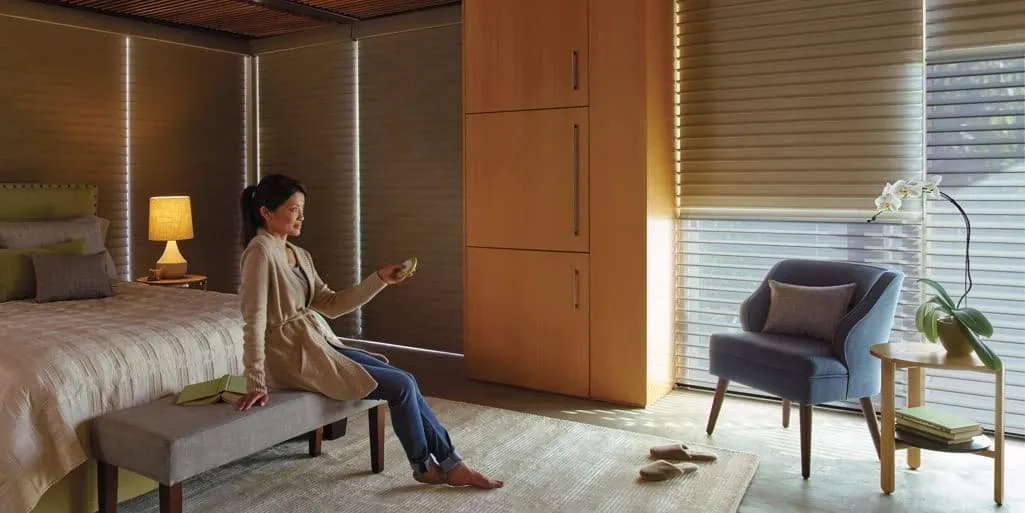
Converted camps on the shore
The camps along Assawompset and Long Pond started life as weekend and summer places: one story or a story and a half, knotty pine or painted board walls, a screened porch facing the water, small bedrooms off a central room. Converting them for year-round living usually meant enclosing the porch with glass, adding windows on the water side and leaving the smaller original windows elsewhere.
That leaves a house with two personalities. The new pond-side glass is large and wants something light and nearly invisible. The original windows are small and often a little irregular, and they want shades made to size so they fit snugly in an opening that was never standard to begin with. Every shade we order is made to the measurements taken at your windows, so both kinds fit properly.
The enclosed porch is often the favorite room in a converted camp, and also the hardest to keep comfortable. Glass on three sides catches the sun from morning to evening. Motorized screen or sheer shades on every pane, grouped to move together, let you take the heat out of the room at the brightest hours without losing the outlook over the water.
Newer colonials on larger lots
Set further back from the shore, the newer colonials on Lakeville’s bigger lots take a more formal approach. There is a front living room and dining room, a family room at the back facing the pond, a two-story foyer, and bedrooms upstairs. The back of the house is usually where the largest windows are, often with a slider or French doors to a deck and a window high above for light.
The high windows are a natural place for PowerView. Above a foyer or the top of a two-story family room, they are impossible to reach by hand, and leaving them bare means a band of bright sky at the top of the room through the afternoon. With a motor they join the same group as the windows below and lower together.
Upstairs, the main bedroom often faces the pond as well. A room-darkening shade on a morning schedule keeps the room dim until the time you choose, then lifts to show the water as you wake.
The front rooms of these colonials face the road rather than the pond, and they suit a different treatment. A Roman shade or a light-filtering honeycomb sits well in a formal living room or dining room, giving daytime privacy without darkening the room. Because the whole house can be on PowerView, the road side can close at dusk while the pond side stays open, all from one scene. The children’s rooms upstairs can have their own bedtime schedule, and a guest room can simply stay closed until someone is staying.
Glare off open water
Still water makes a near-perfect mirror. On a clear afternoon the sun reflects off the pond and comes into the house at a low angle, under the eaves and straight into your eyes. It lands on screens, warms the floor and fades fabrics over time. The view at that hour is lovely, but sitting facing it can be hard work.
A motorized sheer or screen shade lowered partway takes the sting out of that light while leaving the water visible. Tilt the vanes on a sheer and the glare spreads into a soft, even glow. Set a schedule and the shades come down as the sun reaches the water and go back up once it moves off, so the view returns for the evening. When friends come round and you want every shade up, one press on the remote takes over from the timer.
Winter brings its own version of this. When the pond freezes and snow covers the ice, the reflected light can be even brighter than in summer, and the low sun shines straight across the white surface into the house. The same shades handle it, on a winter schedule that matches the shorter days.
Long Pond and Assawompset, morning and evening
Which side of the pond a house sits on decides when the light becomes a problem. A house on the western shore looks east across the water, so the sun rises over the pond straight into the bedrooms and kitchen, and the brightest reflection comes early. A house on the eastern shore faces west, and its living room takes the full afternoon glare followed by the sunset over the far trees.
That difference shapes how we plan motorized blinds in Lakeville from one street to the next. On an east-facing shore house, the bedroom shades matter most, with a room-darkening fabric on a morning schedule and a sheer in the kitchen that lowers for the first hours of the day. On a west-facing house, the work happens after lunch, with sheers or banded shades in the living room timed to the afternoon sun and raised again for the sunset, which is the view most of these houses were built to watch.
Setting a pond-side routine
Every household uses its rooms differently, but here is a typical pattern for a pond-facing house. It is easy to change in the app at any time.
- Bedroom shades on the water side stay down until a set time, then rise to show the pond.
- The kitchen and porch shades open early to let in the morning light over the water.
- Through the brightest part of the afternoon, the pond-side sheers lower partway to soften the glare.
- As the sun moves off the water, the sheers rise again so the evening view is clear.
- At dusk, the road-side windows close for privacy while the pond side stays open a little longer.
- At bedtime, one scene closes everything for the night.
When the house is empty for the weekend, or for weeks at a time in the off season, the routine keeps running. From the road and the water the house looks occupied, and the rooms that catch the most sun stay covered through the warmest part of the day.
Remote, app, scene and schedule
PowerView can be run in whatever way suits you.
A handheld remote, or a wall control beside the light switch, moves one shade or a whole group. Many households use nothing else for day-to-day changes.
The app on a phone or tablet lists every motorized shade in the house. You can stop any shade partway, group shades into rooms and build scenes. A scene saves a setting, such as water side half down and bedrooms closed, and a schedule runs it at the time you choose.
Our guide to how motorized shades are controlled explains each option, and the window covering automation page goes into scenes and schedules.
Winter in a converted camp
A camp built for summer can feel the cold once winter settles over the pond. The wind comes across the open ice with nothing to stop it, and the new glass on the water side loses warmth quickly after dark. Honeycomb shades help, because each cell holds a pocket of still air between the window and the room. On a schedule they close as the light fades and open again in the morning, so the room keeps its warmth without anyone remembering to lower them.
Households who choose motorized blinds in Lakeville for the summer glare are often surprised how much they come to rely on that winter routine. Our cellular shades in Lakeville page explains honeycomb in more detail, and our roller shades in Lakeville page covers screen fabrics and openness.
No cords to catch
A motorized shade has no lift cord hanging at the side of the window. In a camp full of visiting children and dogs coming in wet from the pond, that is one less thing to worry about. It also keeps the window clean and simple, with nothing to tangle or tie up, which suits the light, uncluttered look a pond room calls for.
From visit to installation
A pond view cannot be judged from a catalog, so the first meeting happens in your rooms, with the water outside the glass. Our vans carry the samples, and that is how we bring the showroom to you.
Together we go through the house deciding which windows look onto the pond and which onto the road or the neighbors, and how you spend your time in each room. Sheer, banded, screen and honeycomb samples go up against the actual glass so you can see how much of the far shore stays visible with each one. Then each opening is measured, and a free estimate follows for the shades and motors on your list. Nobody expects an answer on the day. If a whole room needs rethinking, our interior design consultations can be part of the same visit.
Installation comes once the shades are made to those measurements. Our certified Hunter Douglas installers set the brackets into the framing so each headrail sits true, hang every shade, set where it stops at the top and bottom, link it to the remote or app you chose and build your first schedules alongside you. To read ahead, see what happens at an in-home consultation.

Gallery dealer choice for every window
Hunter Douglas recognises only dealers who meet its standards with Gallery status, and Blinds & Designs holds it. In a house built around a view that range is useful, because sheers, banded fabrics, screens, rollers, honeycombs, Romans, woven shades and blinds can all be motorized with PowerView, and we can put the lightest workable option on each window.
Every installation we do is certified by Hunter Douglas. We also fix blinds and shades that are already hanging in your house.
Thinking past the pond rooms? Our roman shades in Lakeville and plantation shutters in Lakeville pages may help, and the Lakeville page lists all we do in town. For the whole motorized range, visit motorized blinds and shades.
A showroom nearby, or samples at the shore
Of our locations, North Dartmouth is the nearest to Lakeville, and you can drop in to talk your project over.
With a house on the water we still lean toward the home visit. Hold a sheer against the pond in mid-afternoon, with the sun right on the surface, and you know within a minute whether it is the one.
Questions from Lakeville
Will the shades block my view of the pond when they are up?
Very little. Roller, sheer, banded and honeycomb shades all raise into a slim stack or headrail above the glass, leaving the window almost bare.
How do I cut the afternoon glare off the water?
A sheer or screen shade lowered partway softens the reflected light while you still see the pond. A schedule can do it automatically as the sun reaches the water.
Can the camp windows that are not a standard size be motorized?
Yes. Every shade is made to the measurements we take at your windows, so small or irregular original openings are no problem.
Will the schedule keep running when we are not at the house?
It will. Timers do not need anyone at home, so the shades rise and fall on their normal pattern through a quiet week or the whole off season.
Is there any charge for the estimate?
None. The estimate is free, and it comes after we have measured every window on your list.
Plan it with the pond in front of you
You will only know how a shade treats your view once you see it against the water. Request a consultation and we will bring samples for motorized blinds in Lakeville to your door, measure each window and prepare a free estimate. Prefer to talk first? Use the call button, or call in at our North Dartmouth showroom.