
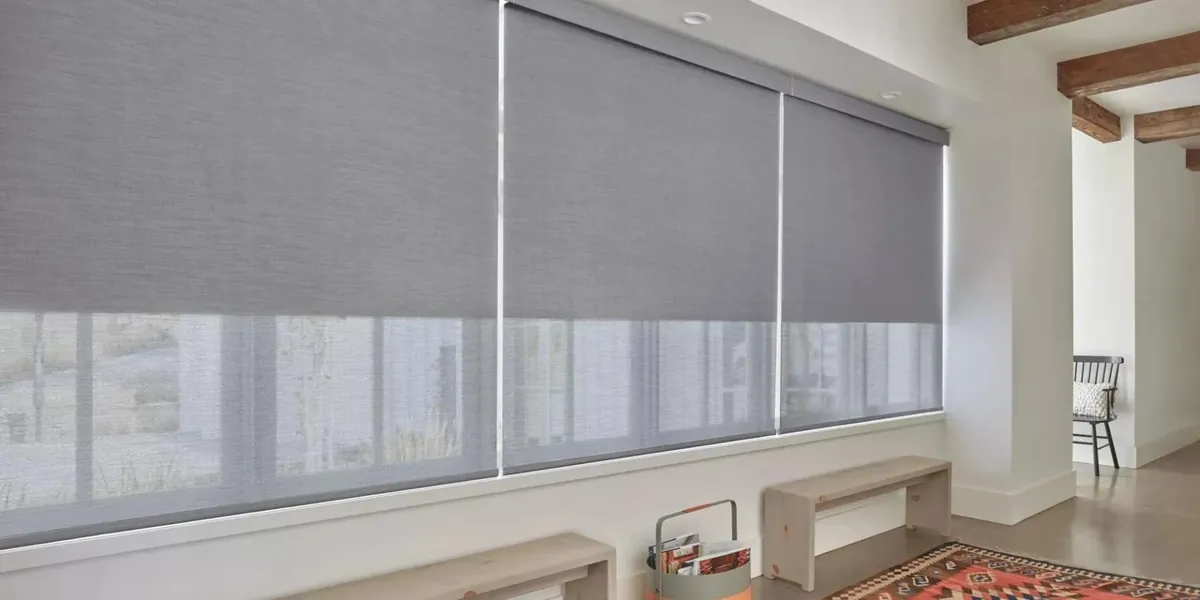
Tall windows, close neighbors and a hillside sun
Fall River is built on a hill that runs down to the water, and its houses were built close together. Through the Highlands and Corky Row, mill-era three-deckers and Victorians stand shoulder to shoulder, with tall, narrow double-hung windows set into deep frames. Down by Battleship Cove, the newer waterfront condominiums have the opposite kind of window: wide, modern panes that run from floor to ceiling.
The hill does something to the light that surprises people. On a sloping street, the downhill side of a house can face open sky and the water, taking strong afternoon sun, while the uphill side looks straight into the next house and barely gets direct light at all. Two rooms on the same floor can need completely different shades. That is the first thing we look at when we plan roller shades in Fall River, MA.
The second is privacy. With a neighbor’s window a few yards away across a narrow side yard, the view in matters as much as the view out.
Roller shades in Fall River, MA, for every floor
All of these come from the Hunter Douglas Designer and Alustra collections, and we carry samples of each to your door.
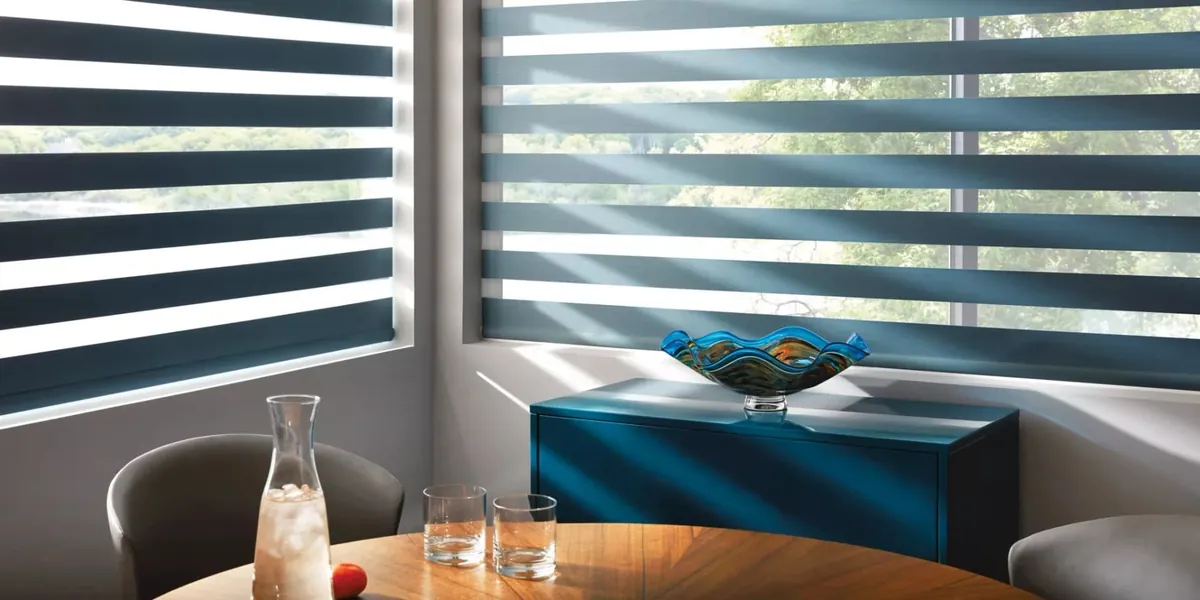
Banded shades for close side yards
Line the sheer stripes up to let daylight in, then offset them so the neighbor across the way sees nothing. No need to raise the shade.
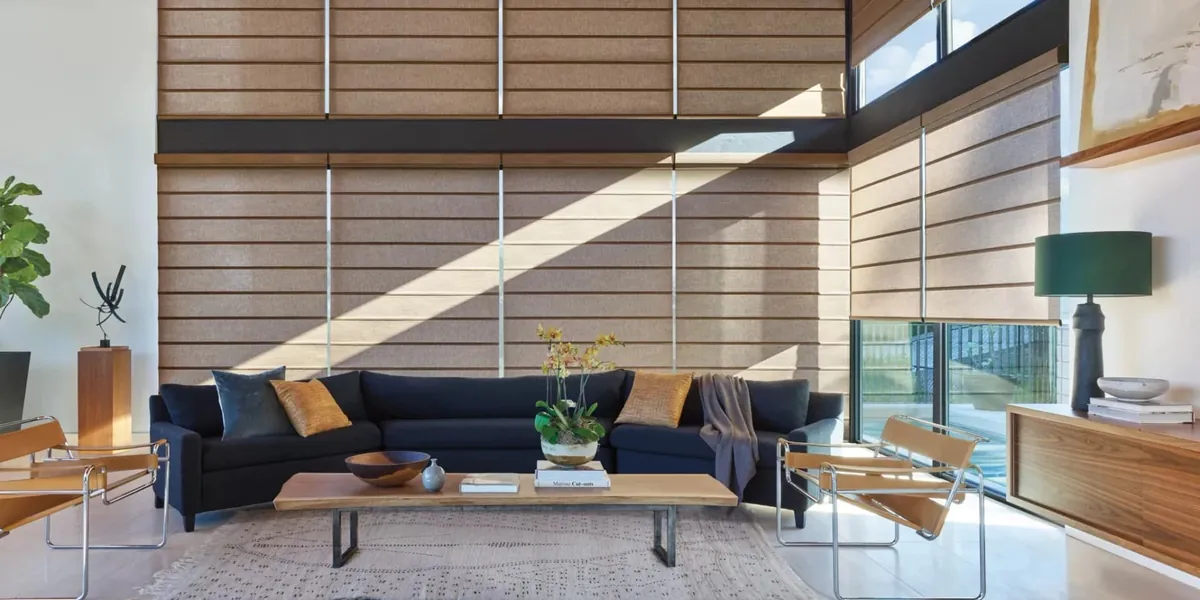
Alustra for condominium glass
Tailored fabrics and hardware for the tall, wide panes in waterfront condominiums, with a clean line across the whole wall.
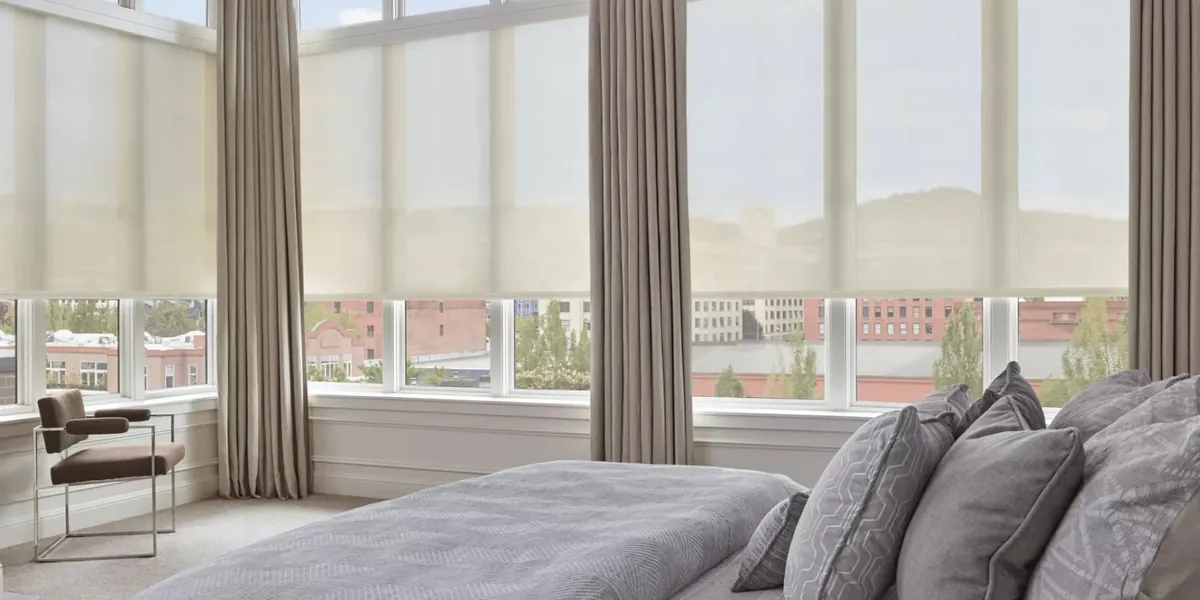
Screens for the downhill side
Designer Screen cuts the afternoon glare on the water-facing side of the house while you keep the view down the hill.
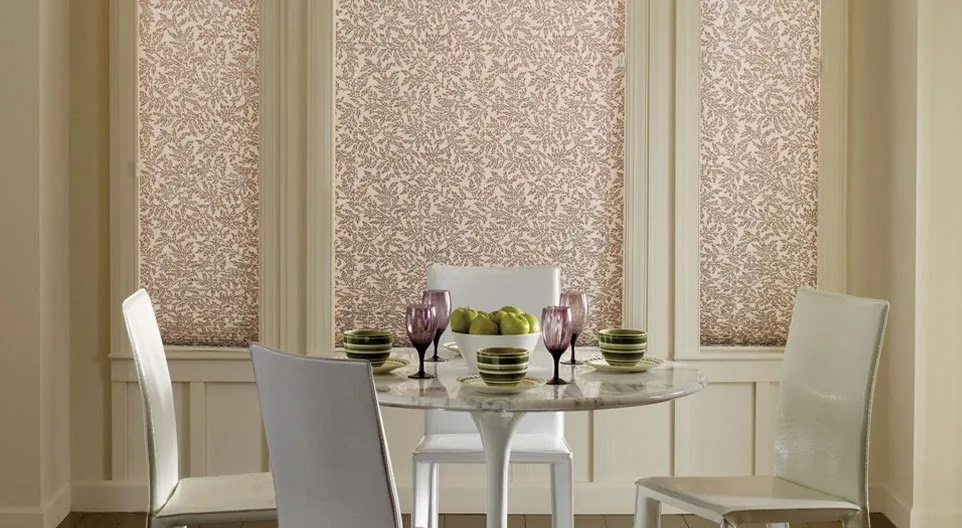
Light filtering in printed fabrics
A pattern on a tall Victorian window turns the shade into part of the room. It suits a dining room with high ceilings.
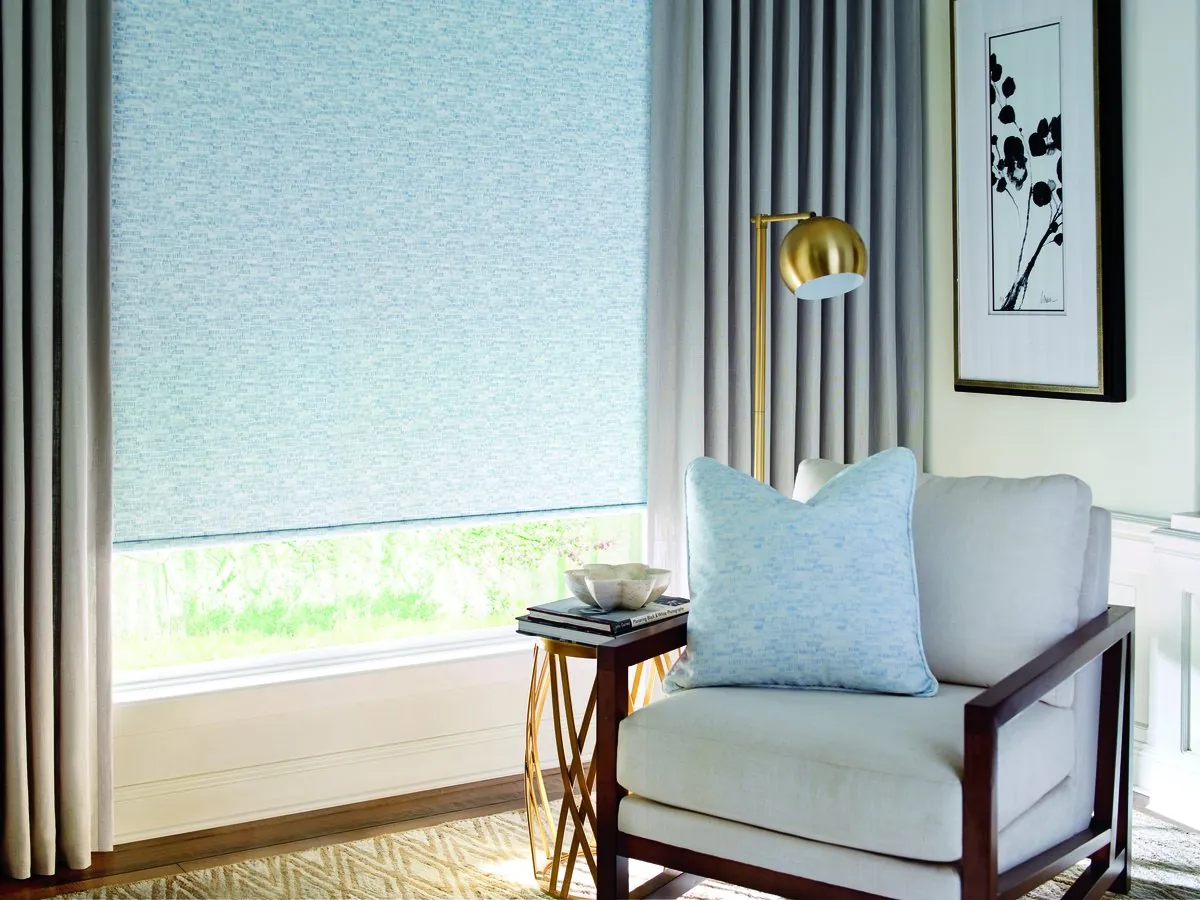
Rollers under drapery
A roller handles light and privacy at the glass, and side panels frame a tall window. A classic pairing in a Victorian parlor.
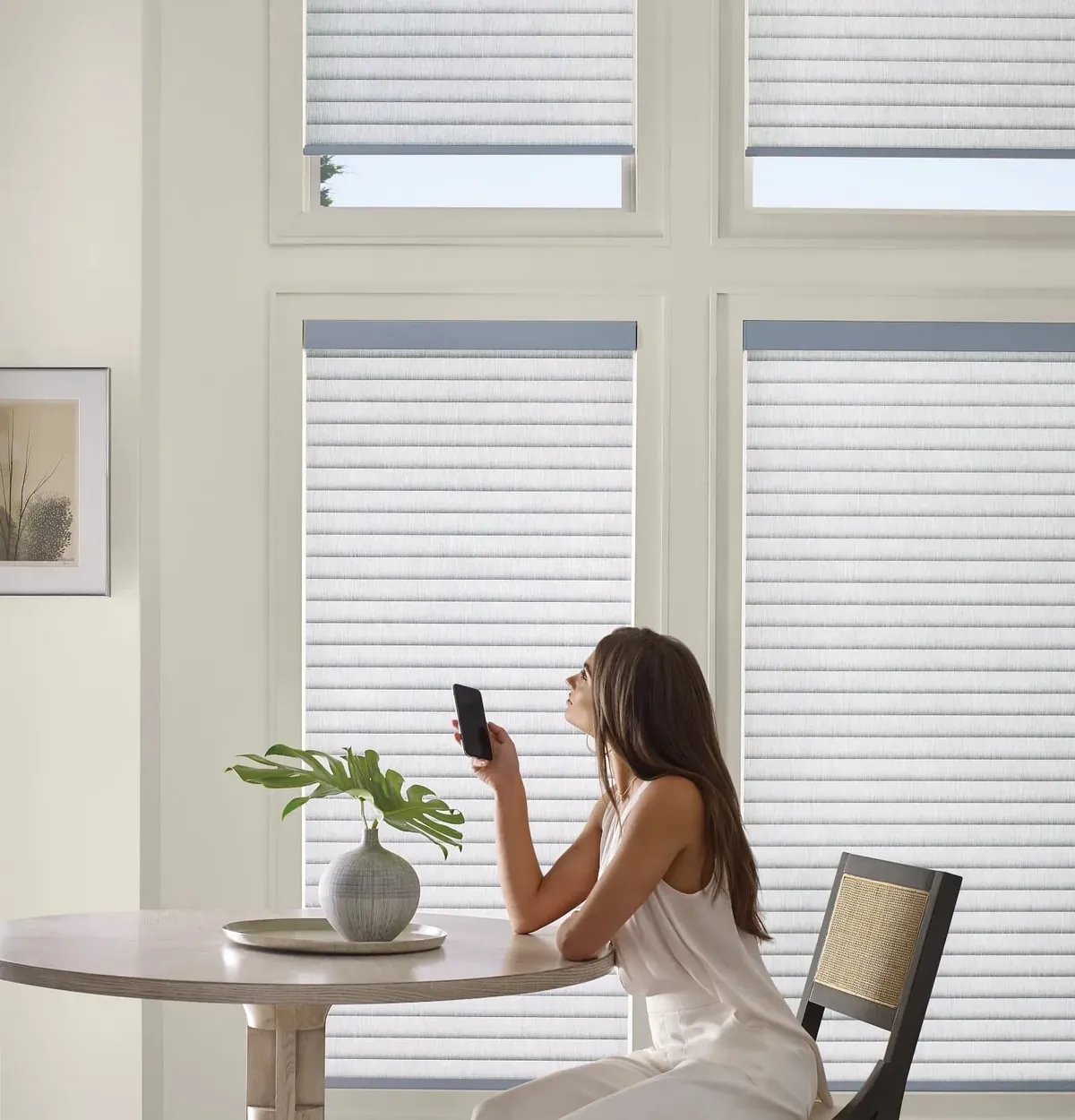
PowerView
Lower a whole wall of condominium shades from your phone, or let a schedule close the west windows before the afternoon sun arrives.
Deep reveals make a good home for a roller
Fall River’s older houses were built with thick walls, and their windows sit well back from the face of the interior wall. That deep reveal is ideal for an inside-mounted roller. The bracket fits easily within the frame, the shade sits back in the opening, and the window trim stays fully visible. When the shade is raised, the roll is tucked so far up and back that you barely notice it.
Tall, narrow double-hungs suit rollers particularly well. A roller does not stack at the top the way a folded shade does, so even on a very tall window it leaves the full height of glass clear when raised. And because the fabric hangs flat, it does not look bunched or crowded on a narrow opening.
These frames have often been painted many times, and some have settled. We measure the width at the top, middle and bottom and the height on both sides, and we make the shade to the narrowest point so it runs freely. Where old sash hardware sits at the head of the frame, we check that the bracket clears it.
Three-deckers, floor by floor
A three-decker is really three houses stacked one on top of another, and each floor lives a little differently. The first floor sits closest to the sidewalk, so its front windows are only a few steps from passing traffic. The top floor gets the most sky and, on the downhill side, a view over the rooftops toward the water. In between, the middle floor is often the most private, looking straight across at the house next door.
That means the same window on each floor may need a different shade. On the ground floor, front rooms usually want daytime privacy without losing light, which points to a light filtering roller or a banded shade. On the top floor, a screen on the downhill windows handles the strong afternoon sun while keeping the view. On every floor, the side windows facing a neighbor a few yards away need something that closes fully.
Many three-deckers also have porches front and back, with doors out from the kitchen or living room. A roller mounted above the door frame clears the handle and rolls fully up when you step out. Whether you own the whole building or live on one floor, we plan the shades so each floor gets what its windows need.
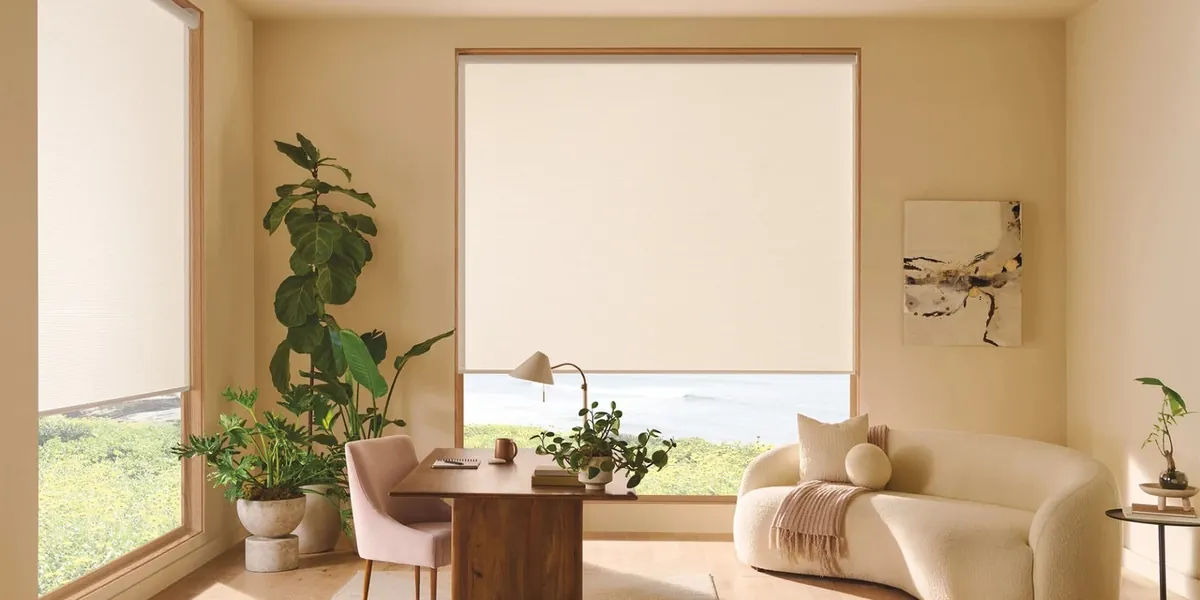
Victorians in the Highlands
The Victorians through the Highlands are taller and grander, with high ceilings, bays, and windows that seem to go on forever. Their trim is often elaborate, and nobody who has restored it wants to cover it up. An inside-mounted roller is the quietest option: it sits within the frame and leaves every bit of casing on show.
Bay windows get one roller per window, all made to the same bottom height so they line up across the bay. On a very tall window, a roller can be paired with drapery panels at the sides, which lets the roller handle the daily work of light and privacy while the drapery adds softness to a big room. For the highest windows, such as a stair landing or a transom above a door, PowerView motors mean nobody has to climb to reach them.
Fabric texture matters in a Victorian room. A linen-look or lightly textured weave sits more naturally against old plaster and dark woodwork than a smooth, modern fabric, and a printed roller can add a touch of pattern in a dining room or study.
Two sides of one house, two kinds of light
On a hillside street, the side of the house facing downhill and west takes the long afternoon sun, often with water glinting in the distance. The side facing uphill looks into the neighbor’s wall and gets little direct sun at any time. A front room may be dim in the morning and blazing by four o’clock, while the kitchen at the back stays even all day.
We plan the two sides separately. The sunny side gets a solar screen or a heavier light filtering fabric, chosen to handle heat and glare. The shaded side gets a lighter fabric that keeps as much daylight as possible while still giving privacy from the house next door. Keeping both in the same color family stops the house from looking mismatched from the street.
When we talk about roller shades in Fall River with people on these streets, this is usually the moment the plan clicks: once you see that each side of the house has its own job, choosing the fabrics becomes much simpler.
Privacy when the next house is a few yards away
On a narrow lot, the most common complaint is not glare but the window across the way. Light filtering fabric gives good privacy during the day, because the outside is brighter than the inside and the fabric glows. After dark the balance flips. With the lamps on, a lit room shows through light filtering and screen fabrics, so a side window facing a neighbor needs something more for the evening.
There are a few good answers. A room-darkening or blackout roller closes completely and is the simplest choice for bedrooms. A banded shade lets you keep sheer stripes aligned for daylight and close them at night with one movement. A dual roller puts two fabrics on one bracket, a light filtering shade for the day and an opaque one behind it for the night. For a bathroom with a side window, a top-mounted roller in an opaque fabric is usually the neatest answer.
Waterfront condominiums near Battleship Cove
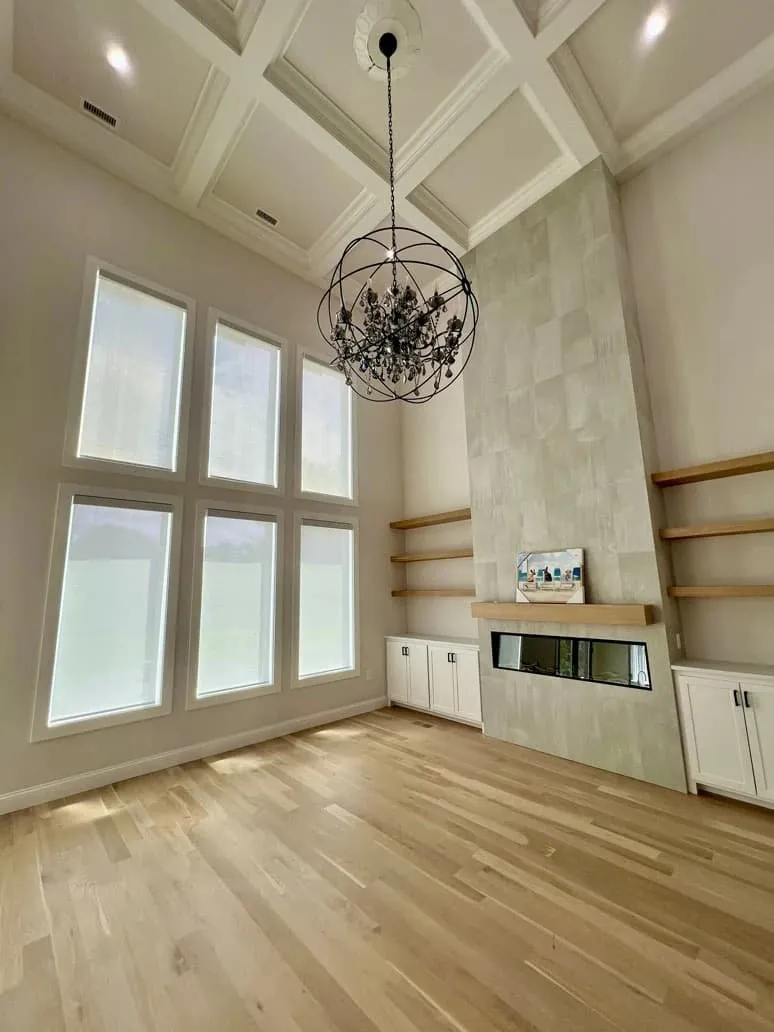
The condominiums along the waterfront are a different world from the three-deckers up the hill. Their living rooms are walls of glass facing the harbor and the bay, often with sliding doors to a balcony. The view is the point, and so is the afternoon sun that comes with it, reflected off the water and straight into the room.
Rollers are the natural fit for this kind of glass. A wide window wall is divided into several shades on a shared bracket, so the bottoms line up and the whole wall can move together. A solar screen keeps the harbor in view while taming the glare and some of the heat; a darker color makes the view clearer. In the bedroom, a blackout roller, or a dual roller with a screen in front and blackout behind, keeps the room dark at night and bright by day.
Condominium windows often sit in shallow frames or directly against drywall, so the shades may mount on the ceiling or the wall above the glass. A cassette or fascia across the top gives a finished look on a wide run. If your building has a rule about what color shows from outside, let us know at the visit and we will take it into account when you choose fabrics.
Screens, opacity and what openness means
A solar screen is a woven fabric with small, regular openings. The openness factor is the share of the fabric that is open, and it decides the balance between view and glare. A higher openness keeps more of the view, but more light and heat come through. A lower openness blocks more glare, and the view behind the fabric softens. Darker screens are easier to see through; lighter ones reflect more heat but glow when the sun hits them.
Outside of screens, Hunter Douglas rollers come in light filtering, room-darkening and blackout fabrics. Most Fall River houses use more than one: screen or light filtering on the sunny side, lighter fabrics on the shaded side, blackout in the bedrooms. Our guide to the best shades for sun and glare explains the choices in more depth.
Designer and Alustra in a Fall River house
Designer Roller is the broadest of the Hunter Douglas roller families, with colors and textures for any room from a three-decker kitchen to a Victorian dining room. Designer Screen is the solar screen line and Designer Banded is the striped shade. Alustra is the architectural collection, with tailored fabrics and hardware that suit big modern glass. Sonnette brings a cellular fabric to a roller, which helps a drafty old room feel warmer near the window.
Our pages on Designer Banded, Alustra Architectural and Designer Roller shades go into each one, and the main roller shades page covers the whole range.
Your consultation, at your door
On a street of tall windows and close neighbors, the right fabric is easiest to judge where you live. Our vans carry the full range of samples, so we bring the showroom to you.
- Book through Request a Consultation or the call button, and we fix a time.
- We walk each floor with you and note which windows face the sun, the water or the house next door.
- You compare light filtering, banded, screen and blackout samples at your own glass, in daylight and with the lights on if you like.
- We measure every window, including the depth of each frame and anything at the head of the opening that a bracket must clear.
- You get a free estimate for the shades you choose, with no pressure to decide that day.
We also offer interior design consultations if you want help with color and fabric across several rooms or floors.
Fitting day in an older house
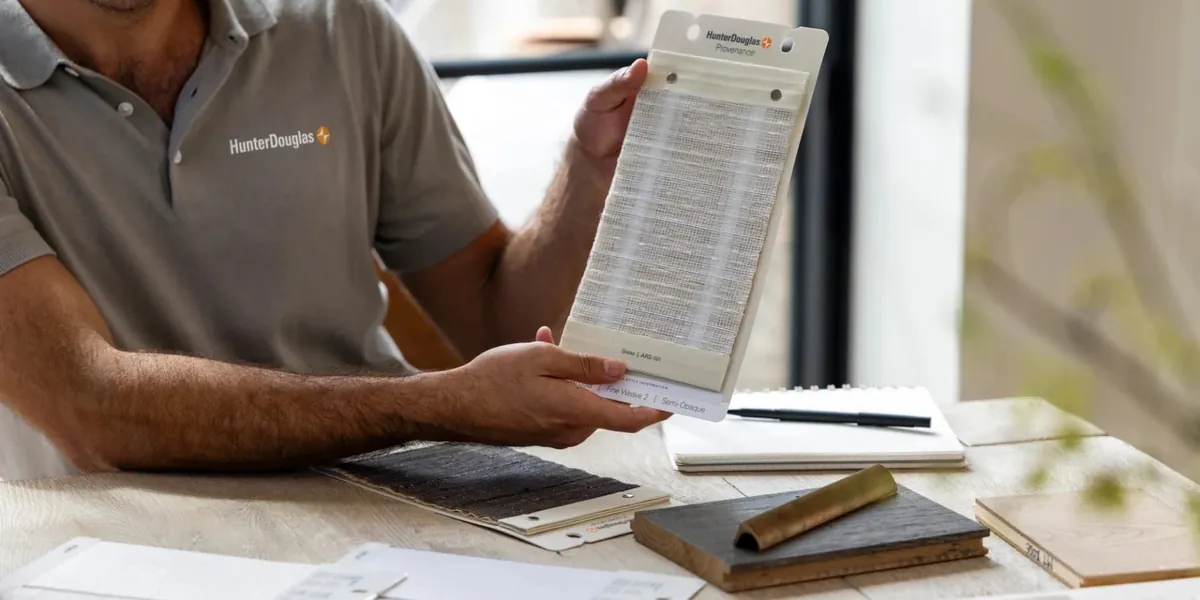
When the shades arrive, our certified installers come back to put them up. In a three-decker or a Victorian, the frames have usually been painted many times and may have shifted a little, so the first job at each window is finding solid wood for the brackets rather than relying on old plaster. A bracket fixed into sound framing keeps the shade level even when the house moves with the seasons.
Each roller is then run through its full travel and adjusted so it rolls straight without drifting to one side. Cordless shades are set to stop where you leave them. On a tall window, the bottom rail is checked so it sits evenly at the sill. If you chose PowerView, the motors are paired and any schedules you want are set up before the installers leave, and they show you how the app and remote work.
For a building with several floors, we can plan the work floor by floor so each apartment is disturbed as little as possible. Fitting roller shades in Fall River buildings like these often means carrying everything up narrow stairs, and we plan the day around it. Our guide to what happens on installation day explains the day in more detail, and caring for fabric shades covers the little upkeep a roller needs afterwards.
Gallery dealer standards on every floor
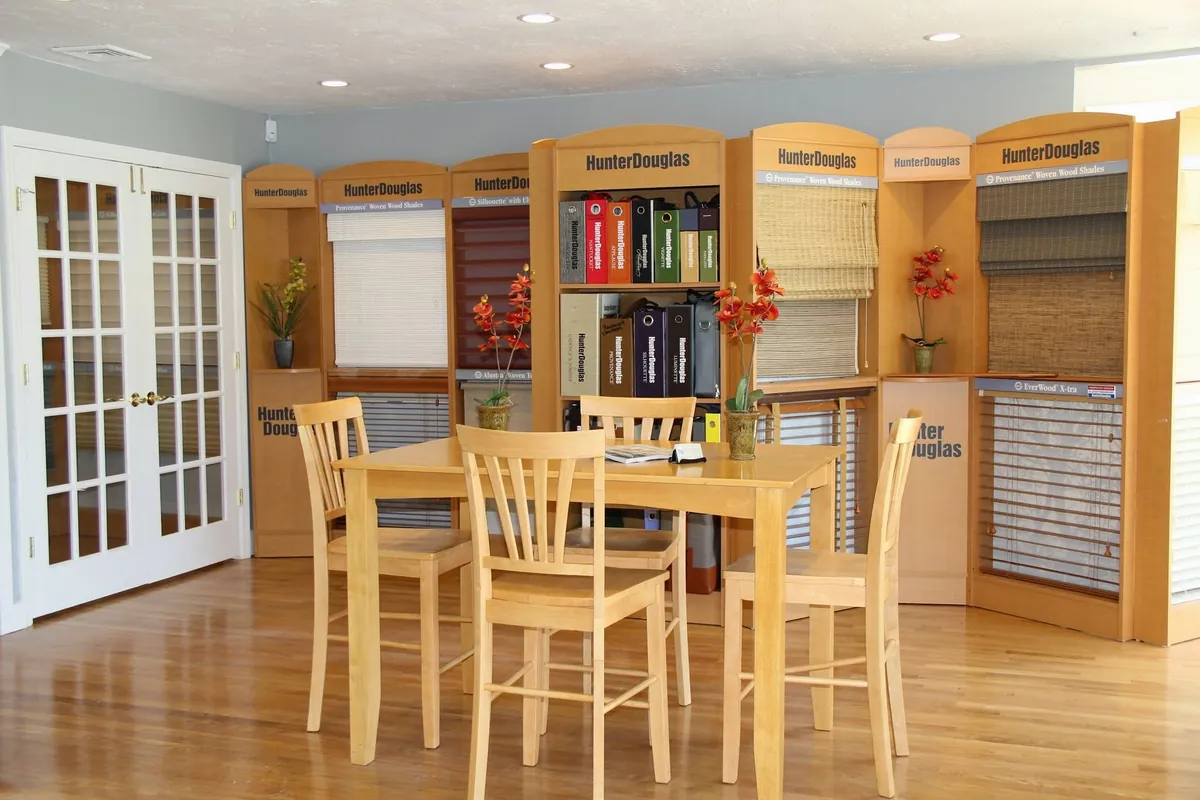
Blinds & Designs is a Hunter Douglas Gallery dealer. Hunter Douglas gives that name to a small group of dealers, and for you it means access to every roller collection, every fabric and PowerView motorization through one local company.
Fitting is done by our certified Hunter Douglas installers. In an old frame they find solid wood for each bracket so the shade hangs level on a window that has moved over the years, and on a condominium wall they line up long runs of shades so they read as one. We repair blinds and shades too, if something needs attention later.
If other rooms need something different, look at cellular shades in Fall River for a cold back bedroom or plantation shutters in Fall River for a Victorian front room. Every service we offer in the city is on our Fall River page.
Questions from Fall River
Will a roller fit my three-decker’s deep window frames?
Yes, very well. Deep frames give plenty of room for an inside mount, so the shade sits back in the opening and the trim stays visible. We measure each window at several points, since older frames are often slightly out of square.
How do I stop the neighbors seeing in at night?
Light filtering fabric shows a lit room after dark. Use blackout or room-darkening fabric on side windows, or a banded or dual roller that gives daylight during the day and full privacy at night.
One side of my house is bright and the other is dim. Do I need different shades?
Usually, yes. We suggest a screen or heavier fabric on the sunny side and a lighter one on the shaded side, in the same color family so the house looks consistent.
What works on condominium glass facing the harbor?
A solar screen roller, ideally darker, keeps the view while cutting glare. Wide walls are split into several shades on a shared bracket, and PowerView can lower them together.
Is there a cost for the estimate?
No. Once we have measured your windows, the estimate is free.
Book your visit
Choosing roller shades in Fall River, MA, is easiest with the samples at your own windows, on both sides of the house. Request a consultation and we will bring the Designer and Alustra range to you, measure every window and give you a free estimate. Our nearest showroom is in North Dartmouth if you would like to visit, or tap the call button with any question.