
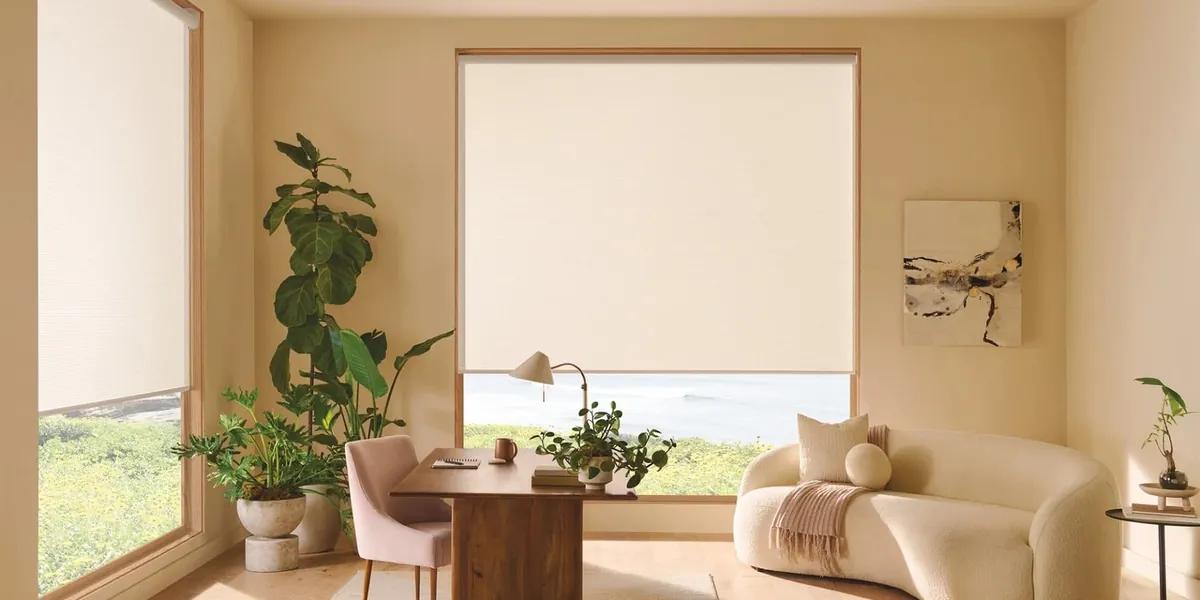
Small sash, big skies and an empty house in Little Compton
Little Compton houses stand on a lot of land. Antique capes and shingled farmhouses sit back from the roads around the Commons, stone walls run across the fields between them, and out toward Sakonnet Point the open ground runs down to the water with the full weather of the coast coming straight in. Many of the older houses still have their small original sash, set low under the eaves, and a good share of the houses are used for part of the year rather than all of it.
Each of those things points toward motorized blinds in Little Compton, RI. Small antique windows deserve shades made to their exact size, and a PowerView motor from Hunter Douglas means they can be raised and lowered without anyone reaching across a deep sill. On an exposed site, the shades need to work hard against sun and wind-driven weather. And when the house is empty for weeks at a time, a schedule keeps the shades moving on their own.
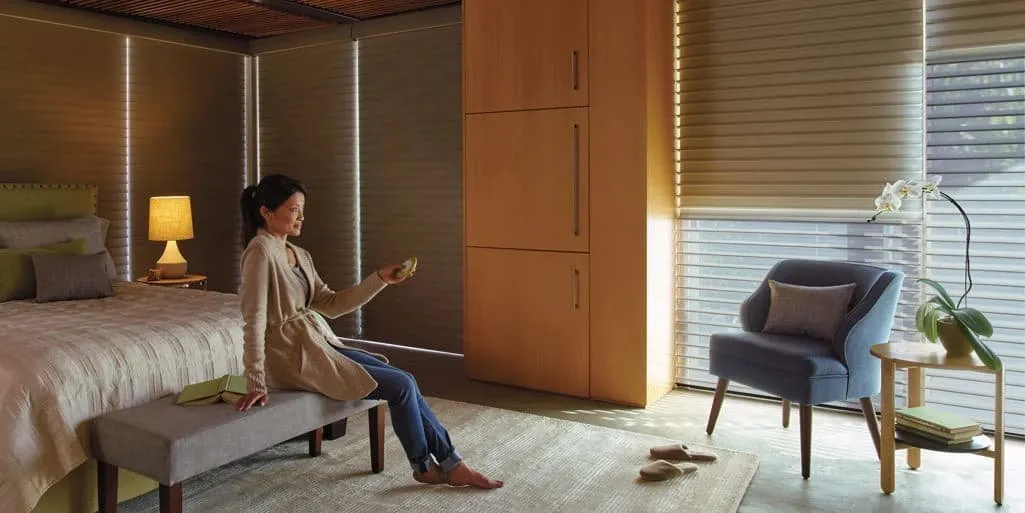
You control them with a remote, with the app on your phone, or by setting a schedule once and letting the house look after itself.
Motorized shades for antique and seasonal houses
When we plan motorized blinds in Little Compton, the first questions are usually how old the windows are and how often the house is lived in. These are the shades that answer best, and we bring samples of each to the house.
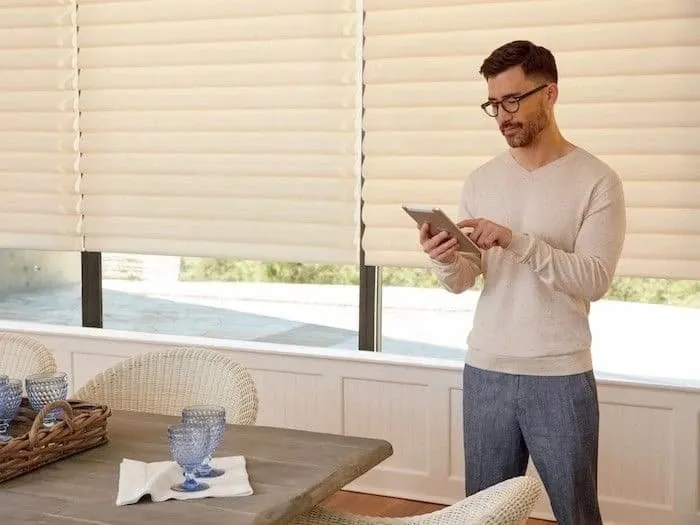
Set it all from a tablet
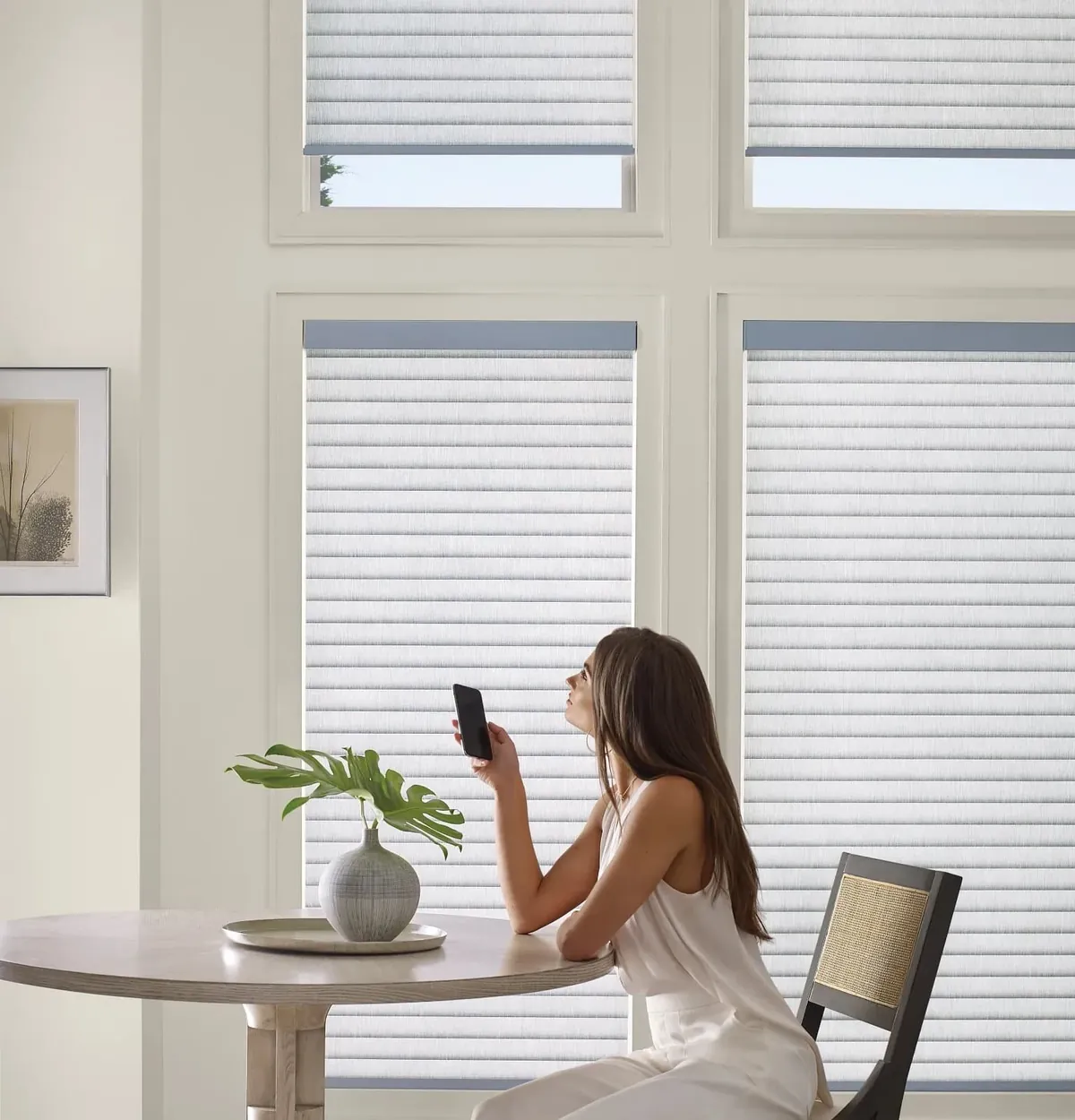
Group the rooms, set the times, and check the shades from the app whether you are in the kitchen or up in the bedroom.
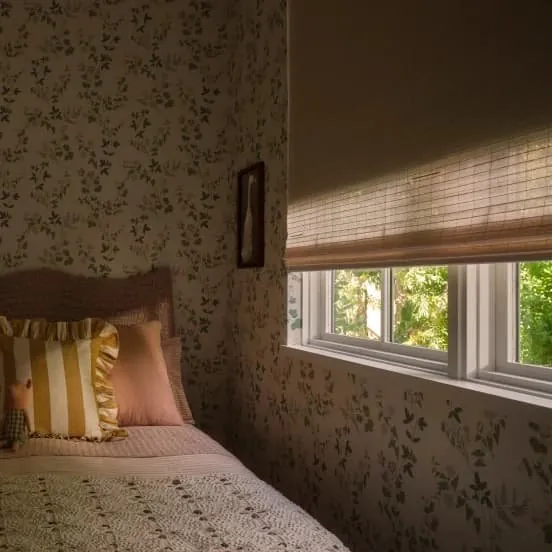
Woven shades for small sash
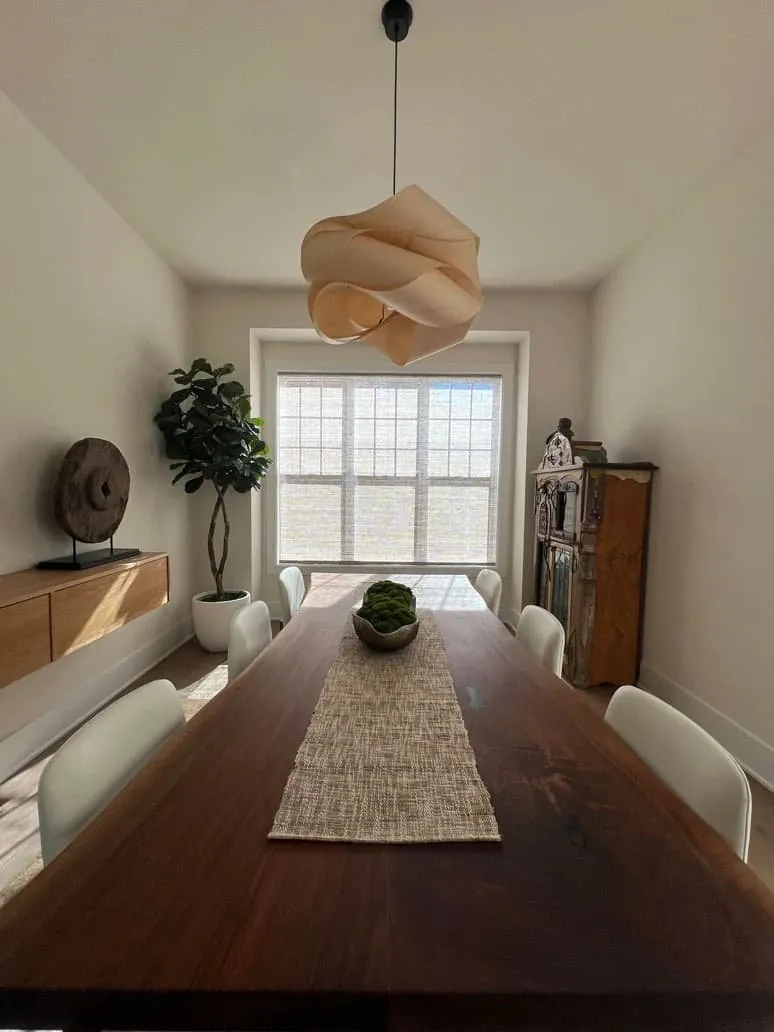
Natural texture suits a farmhouse bedroom, and a woven shade can be made to fit a small, slightly uneven antique opening.
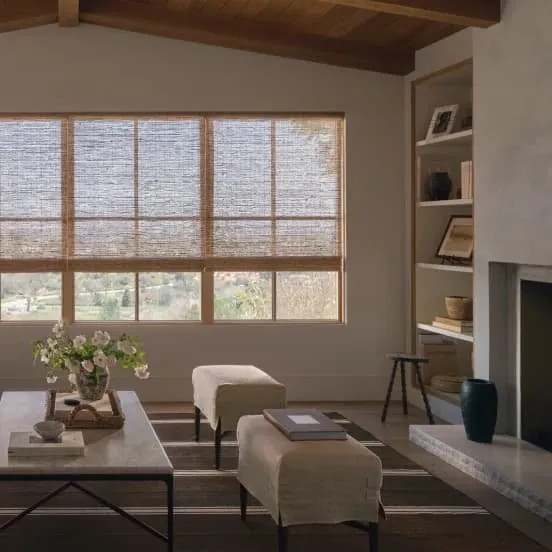
Woven shades in a vaulted room
In a barn conversion or an addition with a high ceiling, a woven shade on a motor covers the tall glass with no reaching.
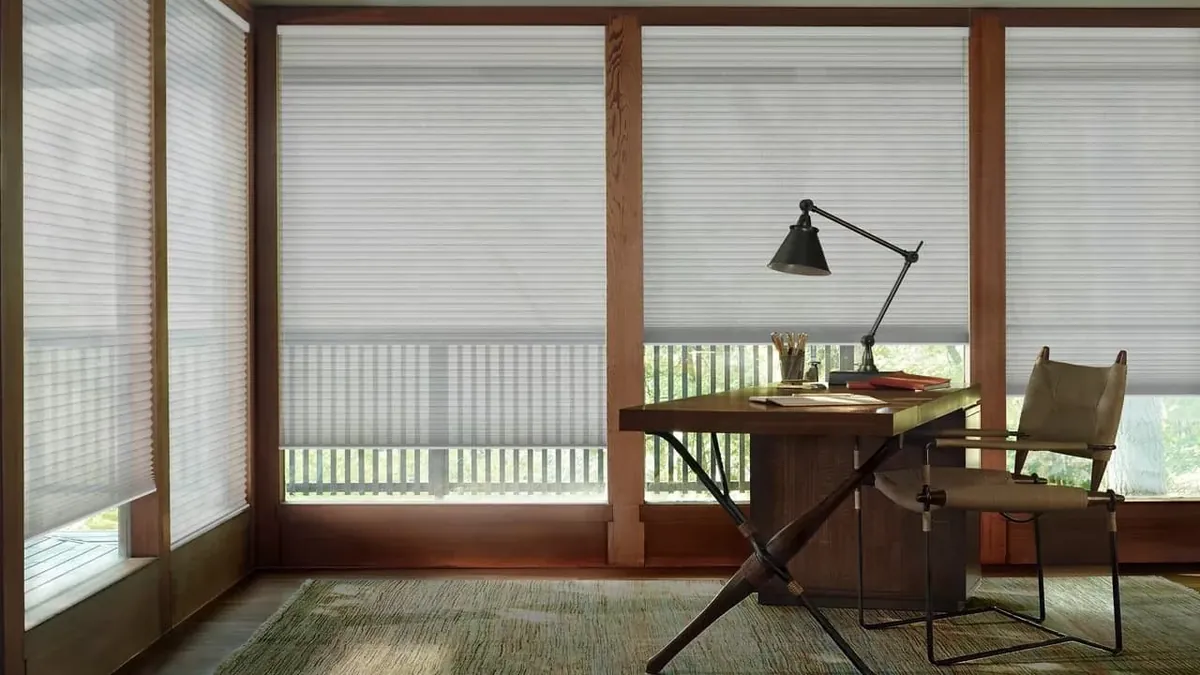
Honeycomb for cold rooms
Air held in the cells sits between the old glass and the room, so a study with original sash keeps more of its warmth.
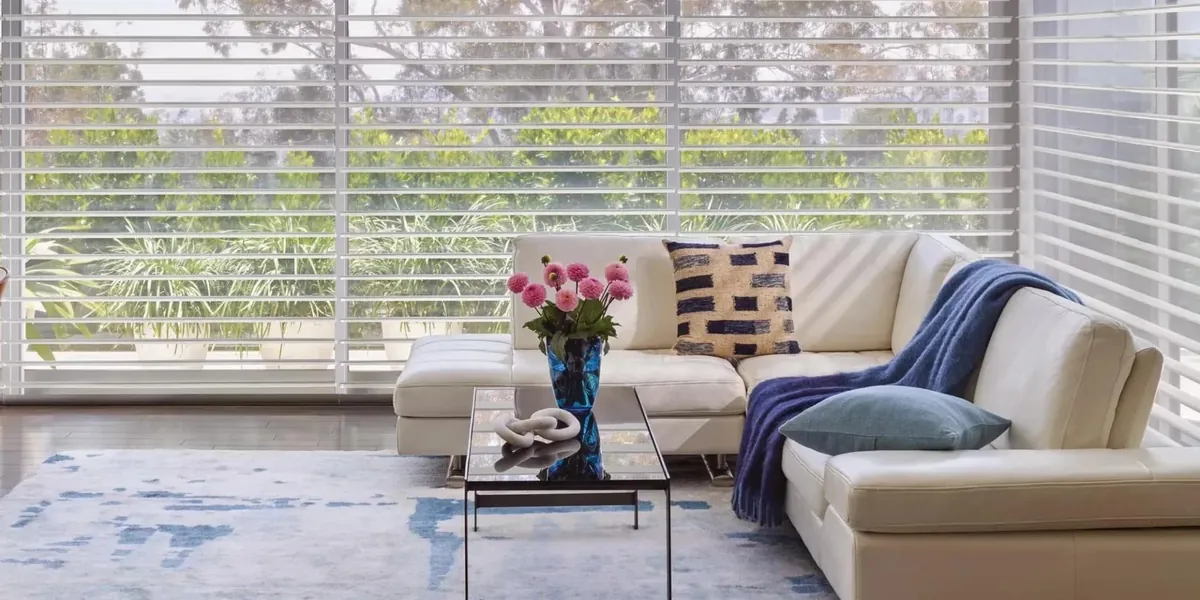
Sheers for a sitting room
Tilt the vanes to soften the sun across the fields while the view stays visible through the fabric.
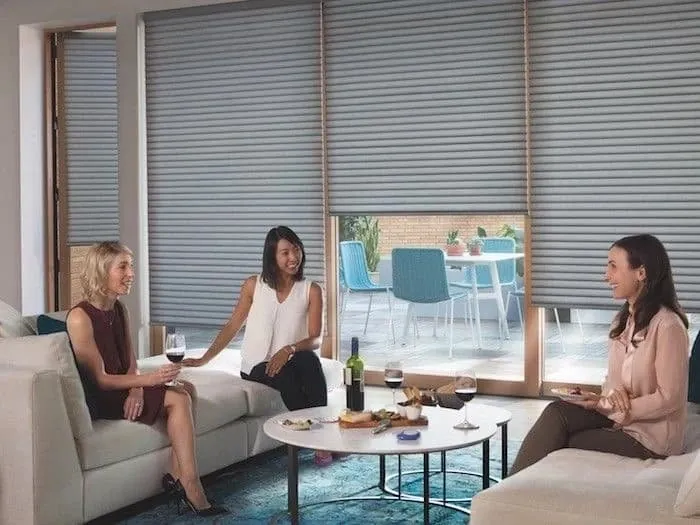
Cellular rollers for patio glass
Each shade on a run of patio windows can move alone, so the door shade rises while the windows beside it stay down.
Antique capes around the Commons
The capes around the Commons were built low and solid, with a central chimney, small rooms and windows that are modest by any modern standard. Their sash is often original or close to it: small panes, thick muntins, and a frame set deep enough in the wall to leave a broad sill inside. Upstairs, the windows tuck under the roof in the gable ends or in small dormers.
These windows deserve care. A shade bought in a standard width leaves a gap at the sides that looks wrong against old woodwork. We measure each opening at the top, middle and bottom and at more than one point for height, because a frame that has stood this long has usually moved, and each shade is made to fit its own window. Where the depth allows, an inside mount sits back near the glass and leaves the casing in full view.
The motor matters here for a simple reason: reach. The sills are deep, the windows are low, and furniture is usually pushed up against the wall beneath them. A shade that lifts on its own from a remote on the side table, with no cord to fish for, makes these rooms easier to live in without changing anything about how they look. Upstairs, the gable-end and dormer windows under the roof are the hardest of all to reach, and grouping them on one button turns bedtime into a single press at the top of the stairs.
Shingled farmhouses toward Sakonnet Point
The farmhouses further south are larger and more exposed. Many have grown over the years, with ells, kitchens and sunrooms added on, so a single house may combine small antique sash in the oldest rooms with larger, newer windows in the additions. The additions tend to face the best of the view, toward the fields and the water, and they take the full brunt of the sun and weather.
That mix is easy to handle with motorized shades because each part of the house can have its own treatment and its own schedule. The old rooms get shades made carefully to their small sash. The newer rooms get sheers or screens on the big windows to soften the glare while keeping the outlook. One app runs them all.
On a very large lot with no close neighbors, privacy in the daytime is rarely the concern. Light and heat are. After dark it is a different matter, since a lit room is visible from a long way across open land, and a dusk scene closes the road-facing shades without anyone thinking about it.
Sunrooms, ells and barn conversions
The additions on the older farmhouses are where the biggest windows are. A glassed-in sunroom off the kitchen, an ell turned into a family room, or a converted barn with a tall end wall of glass can hold more window than the whole original house. These rooms catch the morning or the afternoon sun across the open fields, and on a clear July day they heat up fast.
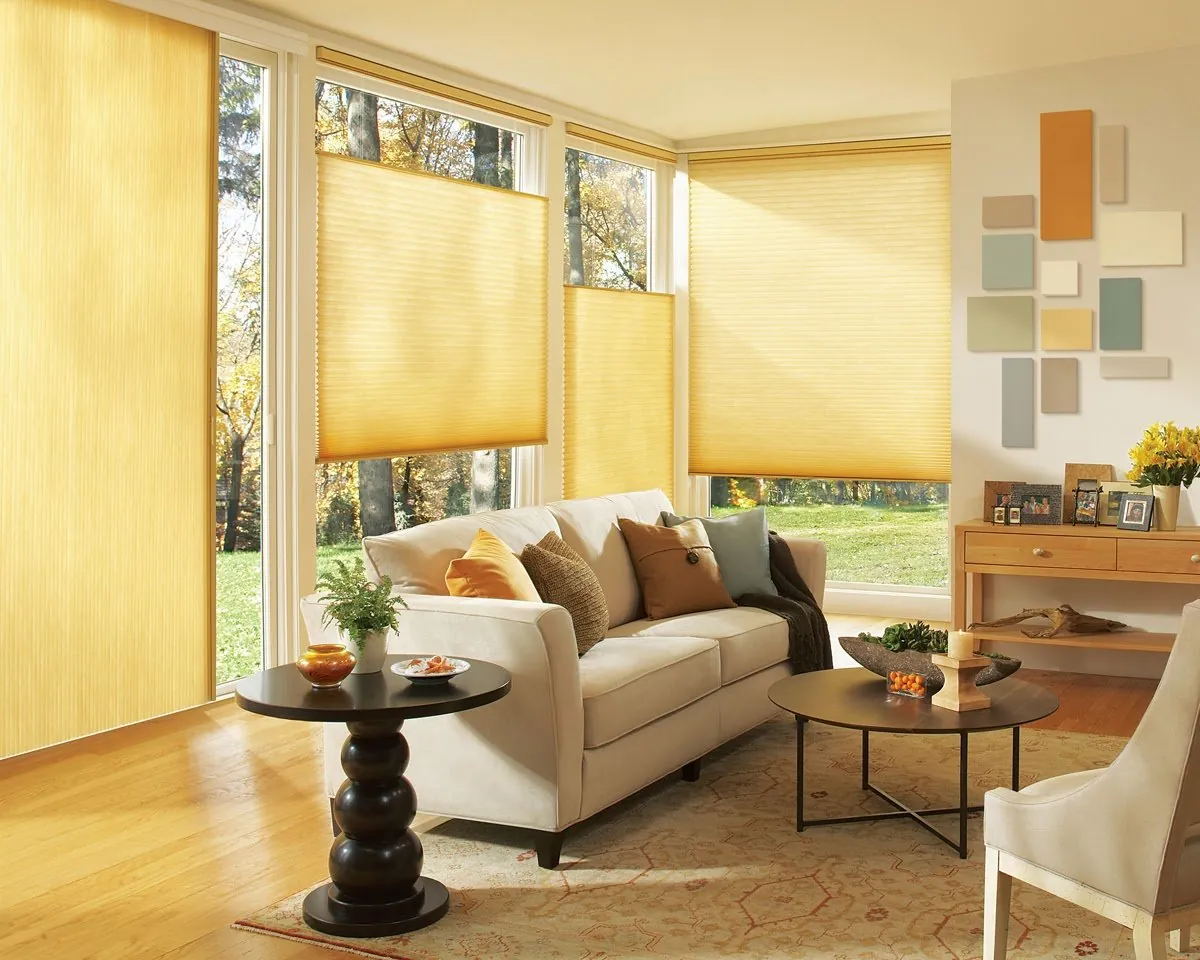
A sunroom with glass on three sides is hard work by hand, with eight or ten shades to move every time the sun shifts. With motorized blinds in Little Compton sunrooms, the whole room moves as one group, or each wall moves on its own timing as the sun travels round. In a barn conversion, the high windows at the top of the gable lower with the ones below, so the room is shaded evenly instead of leaving a hot band of glass near the roof.
Living with heavy coastal exposure
There is little shelter on the open ground toward the Point. Wind comes off the water with nothing to slow it, salt hangs in the air for much of the year, and the sun reflects off the sea and the pale fields with real strength. A window covering on that side of a house works harder than one in a sheltered village street.
Motorized shades handle those conditions well because the working parts stay inside the headrail. There is no cord lock or tilt gear out in the salt air, and no daily tugging on a cord to wear it down. We also look at fabric with the exposure in mind: softer, lighter neutrals keep their color better on a window that faces the sea all day, and a screen or sheer in front of the glass also protects the floors and furniture inside.
When the shades go up, our certified Hunter Douglas installers fix the brackets into solid framing rather than old plaster. On a windward wall, where a window may be opened on a breezy summer day, that firm fixing keeps the headrail straight and the shade quiet.
A house that is only used part of the year
Plenty of Little Compton houses are opened in late spring and closed again in the autumn, or visited on weekends through the year. That pattern raises a few questions that motorized shades answer neatly.
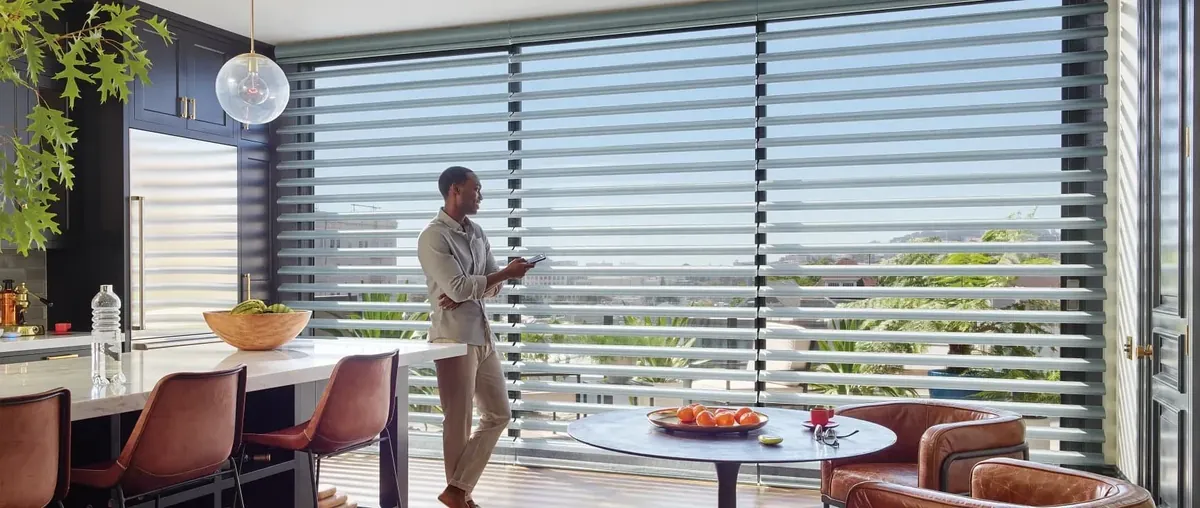
While the house is empty, the shades can keep rising in the morning and lowering at dusk on their usual schedule, so the house never has the shut-up look of a place nobody is watching. Rooms that face the sun stay shaded through the brightest hours, which helps protect rugs, wood floors and upholstery from fading over a long, bright summer when no one is there to lower anything.
When you arrive, the house is already set for the evening. Before you leave, one scene closes everything. And if your plans change, the schedule is a quick edit in the app.
Opening the house in spring is simpler too. Instead of walking every room to raise shades that have been down since October, you run one scene and the whole house opens to the light at once. With motorized blinds in Little Compton, that first evening back feels like coming home rather than reopening a closed building, and the sea air can come straight in through the windows you choose to open.
For a house closed through the winter, the shades can stay down in a single position, or follow a reduced routine, whichever you prefer. Some households like the sea side left partly open so the rooms do not feel shut away; others want everything down to keep the winter sun off the furniture until spring. We talk through how you use the house at the consultation and set the first schedules up with you.
Ways to control PowerView shades
You do not need to use every option. Most households pick what suits them.
A remote. Handheld or fixed to the wall, a remote moves one shade or a group with a press. Guests and family can use it without learning anything.
The app. On a phone or tablet, it shows every motorized shade in the house, stops any of them partway and is where rooms and scenes are set up.
Scenes and schedules. A scene saves a set arrangement, such as sea side half lowered and bedrooms dark. A schedule runs a scene at the time you choose, every day or only on certain days.
Our guide to how motorized shades are controlled explains each option, and window covering automation goes into scenes and schedules in more depth.
One summer day, set in advance
Here is a typical summer pattern for a farmhouse near the water. It is only an example.
- East-facing bedrooms stay dark at sunrise and open at the time you choose.
- The kitchen and breakfast room open early for the morning light.
- Around midday, the shades on the sea side lower partway to cut the glare off the water and the fields.
- Late in the afternoon, the west windows come down to soften the low sun.
- At dusk, the road side closes, and the bedrooms follow at bedtime.
The same pattern can carry on while you are away, or switch to a simpler routine once the house is closed for the season.
Cold rooms and old glass
Antique sash is beautiful and thin. In the shoulder seasons, or in a house that is lived in through the winter, rooms with original windows can feel cold by the glass even when the heating is running. Honeycomb shades help, because the cells hold a layer of still air between the window and the room. Lowered at dusk on a schedule, they keep more of the warmth in through the evening and open again in the morning to let in the low sun.
For a farmhouse study or a cape bedroom, that can make a real difference to how comfortable the room feels. Our page on cellular shades in Little Compton explains the cells in more detail.
Shades or blinds for a farmhouse room
Some rooms suit slats. A wood blind on a farmhouse window has a warm, traditional look, and tilting the slats lets you aim the light. If motorized blinds in Little Compton are what you have in mind for a particular room, mention it at the visit and we will confirm which blind lines and lift systems suit that window.
Elsewhere, fabric usually serves better. Woven shades bring natural texture to an antique house, sheers and screens keep the view in a sea-facing addition, and honeycomb adds warmth at old sash. Our roller shades in Little Compton page covers screen fabrics, and roman shades in Little Compton covers fabric folds.
No cords anywhere
With a motorized shade there is no lift cord at the window. For a house full of visiting grandchildren and dogs in the summer, that is a sensible choice in every bedroom. It also keeps antique woodwork free of cord cleats and tidies, which matters on a casing that has survived this long.
The consultation and the installation
A house this exposed and this old needs to be seen in person, so we come to you. Our vans carry samples, and we bring the showroom to your door.
We walk through the house with you, look at the age and size of each window and which way it faces, and talk about how and when you use the house. You hold fabrics at your own windows in your own light. We measure each window, check depth and note any old hardware, and you receive a free estimate for the shades and motors you are considering. There is no pressure to decide that day, and interior design consultations are available if you would like help with a whole room.
Once the shades are made, our certified installers fit them, set each shade’s stopping points, connect them to your chosen controls and build the schedules with you, including any away-from-home routine. Read about what happens at an in-home consultation if you would like to know more first.
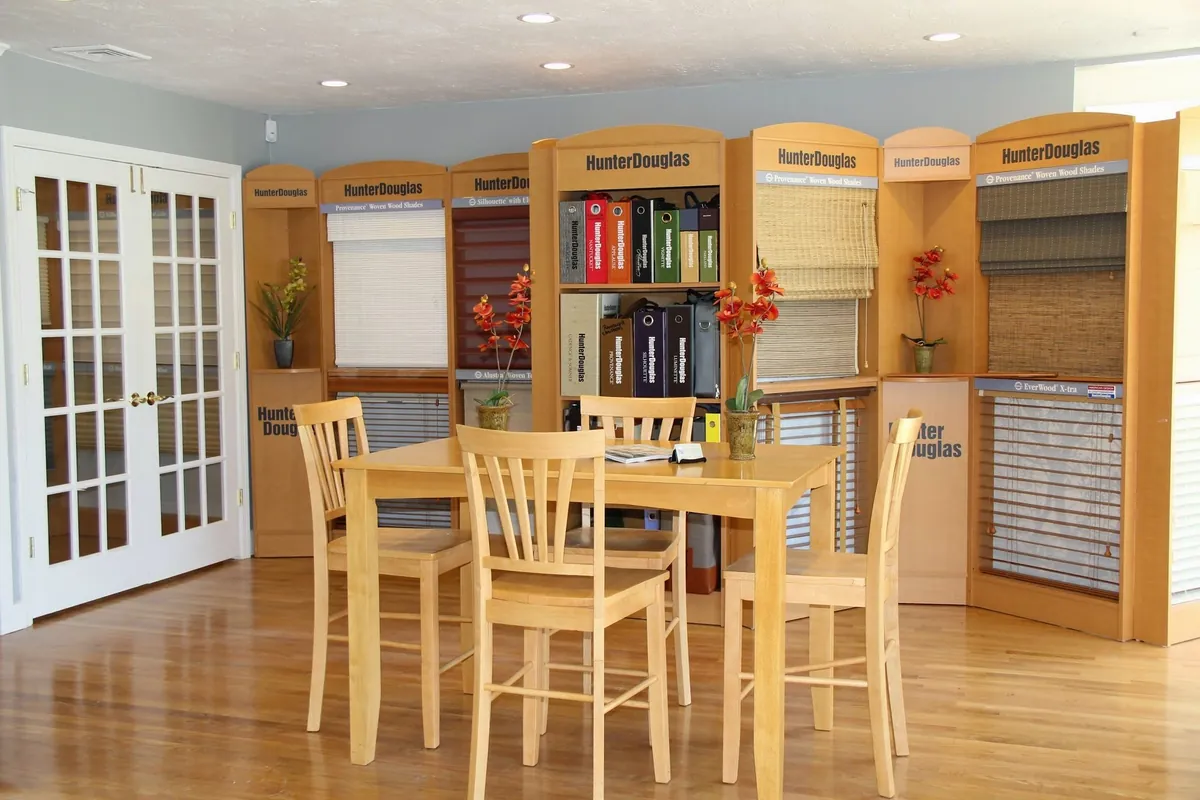
A Hunter Douglas Gallery dealer for coastal Rhode Island
Blinds & Designs is a Hunter Douglas Gallery dealer, a recognition Hunter Douglas gives only dealers who meet its standards. For a motorization project that means every shade type is available: woven, honeycomb, sheer, screen, roller and Roman shades, and blinds, all able to run on PowerView. We choose what suits each window, from the smallest antique sash to the widest sea-facing glass.
Installation is certified by Hunter Douglas. We also repair blinds and shades you already own.
Looking at other rooms? See our plantation shutters in Little Compton, custom blinds in Little Compton or everything we do in town on the Little Compton page. The main motorized blinds and shades page covers the range.
Questions from Little Compton
Can you fit shades to small antique sash?
Yes. Every shade is made to the measurements we take at each window. We check the depth and any old hardware before recommending an inside mount or a mount on the casing.
Can the shades run while the house is empty?
Yes. Schedules keep running whether anyone is there or not, so the shades open and close on their usual pattern and the sunniest rooms stay shaded.
Will motorized shades cope with the coastal weather?
They suit it well. The motor and lifting parts stay inside the headrail, away from salt air and daily handling, and we suggest fabrics that hold their color on a sea-facing window.
Do I have to use my phone?
No. A remote works on its own. The app is there for schedules and for checking the shades from another room.
Is the estimate free?
Yes. We measure at your house and give you a free estimate for the shades and motors you would like.
The next step
Seeing a sample at your own antique window, or against your own view of the water, is the best way to decide. Request a consultation and we will bring samples to your house, measure every window and give you a free estimate. Our nearest showroom is in North Dartmouth, and the call button is there if you would rather talk first.