
An island house with two kinds of light
Portsmouth sits between two stretches of open water, Narragansett Bay to the west and the Sakonnet River to the east, and that gives most houses on the island a split personality. One side faces the water and takes the full sun and glare off it. The other side looks inland, toward a neighbor, a stand of trees or the road, and stays cooler and dimmer through the day. When we plan motorized blinds in Portsmouth, RI, that difference between the two sides of the house is where the conversation starts.
It holds true whatever kind of house you live in. The cottages packed onto the lanes of Island Park and Common Fence Point have small rooms with windows on three sides, so a single room can face the water and the road at once. The newer colonials off East Main Road have larger, standard windows and often a two-story entry or family room. Out toward Carnegie Abbey, the larger houses open whole walls of glass to the bay.
A motor lets each side of the house behave the way it needs to. With Hunter Douglas PowerView, the shades on the bright side can lower as the sun comes round, while the shaded side stays open for the light it has. You run them from a remote, from the PowerView app on a phone or tablet, or on schedules that move them without anyone touching a thing.
Shades that suit an island house
Any of these can carry a PowerView motor. These are the three that come up most on Aquidneck Island, and our vans bring samples of each.
Roller shades for the water side
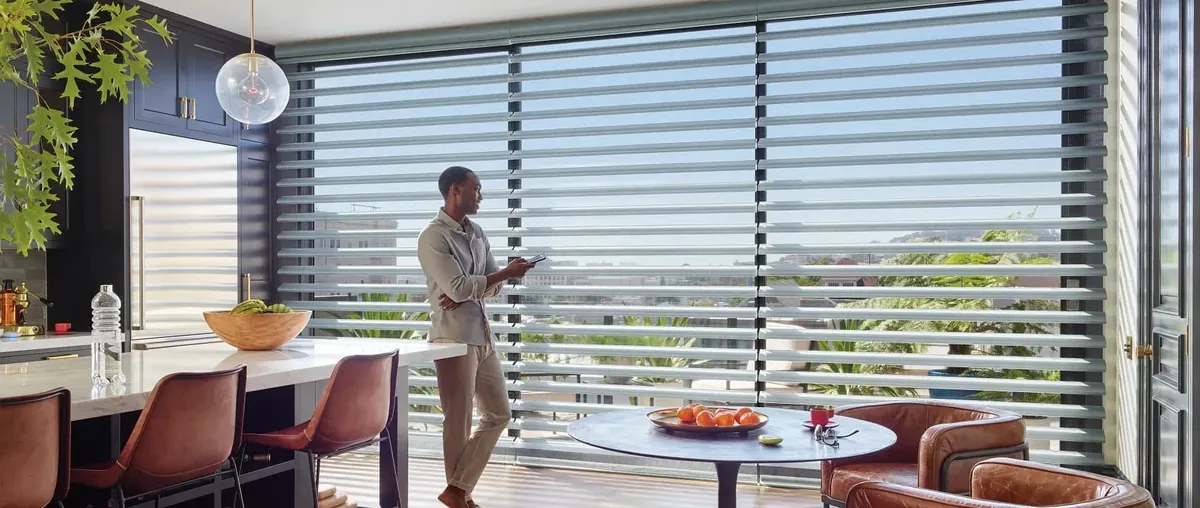
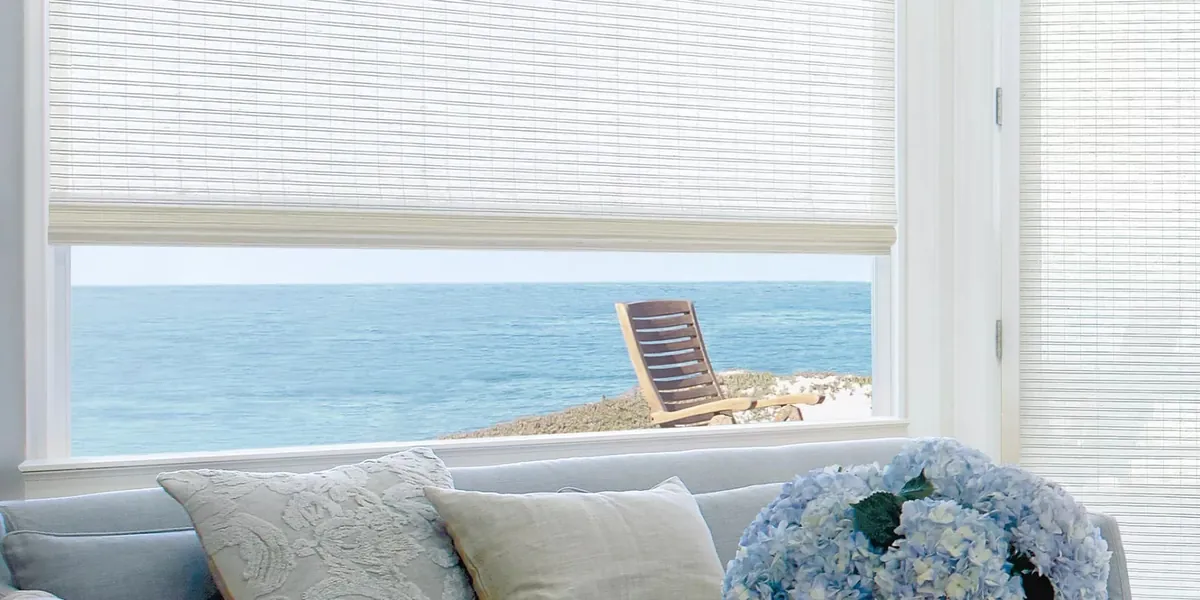
Clean, flat fabric that rolls up tight into a slim headrail. A screen fabric cuts glare off the bay while you still see the boats.
Honeycomb shades for comfort
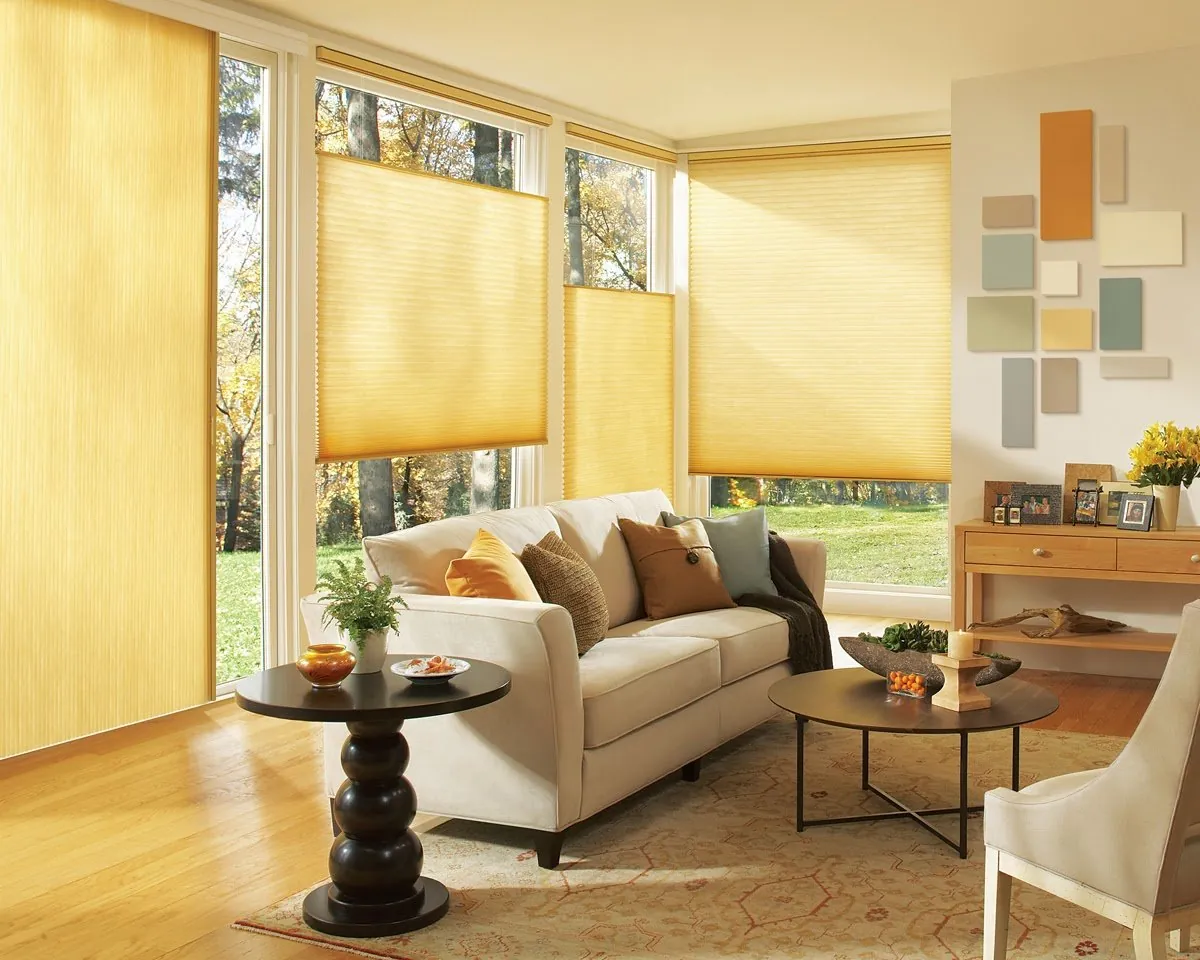
The cells hold still air between the glass and the room. Good for cottage bedrooms that face the wind and for corner rooms with glass on two walls.
Sheer shades for the living room
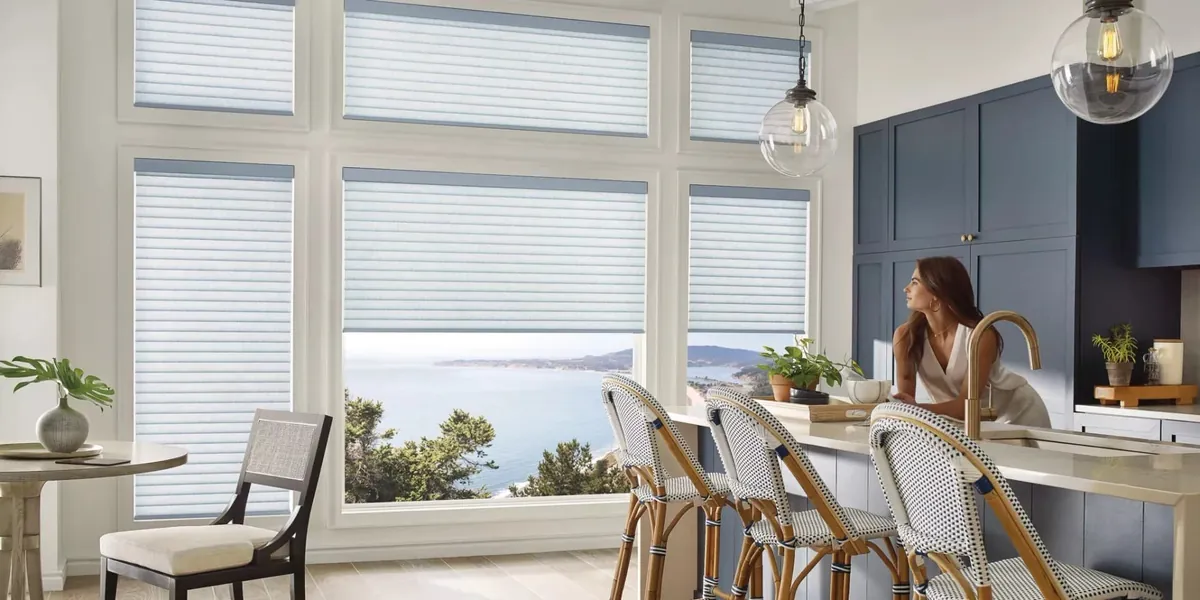
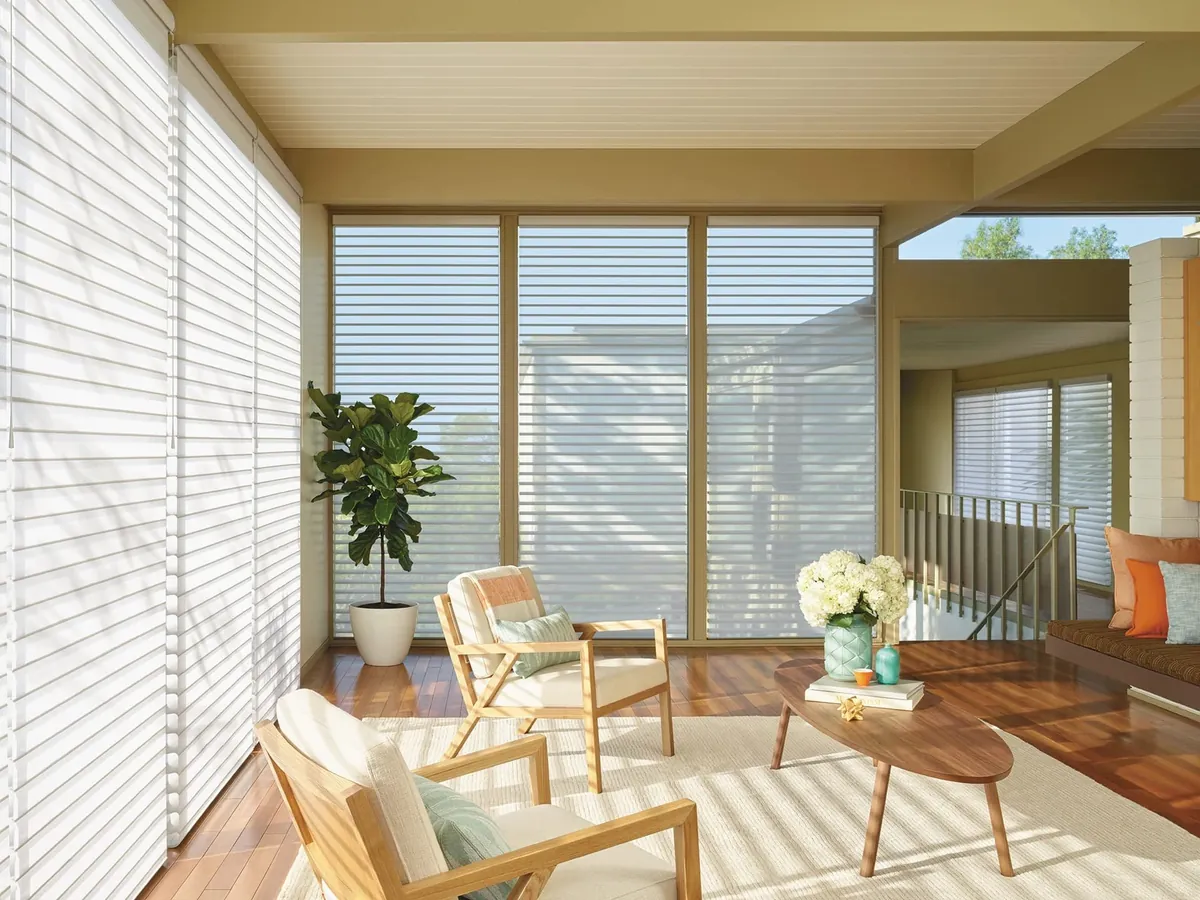
Soft fabric vanes between two sheer layers. Tilt them to soften bright light without shutting out the view across the water.
Cottages at Island Park and Common Fence Point
The cottage neighborhoods at the north end of the island began as summer places, and many of the houses still show it. Rooms are small, ceilings are low and the windows are close together, often a pair on each wall. Plenty of these cottages have since been winterised and lived in all year, and some have been raised or added to, which brings newer windows into an older frame.
In a small cottage, a window is always close to where you sit, eat or sleep. That makes the shade one of the most handled things in the house. Lifting four or five of them by hand every morning, and lowering them again at dusk, adds up quickly. With a motor, one press on the remote brings every shade in the room up together, and a schedule can do it for you before you are out of bed.
There is also the question of what is right outside. On the tighter lanes, a cottage window may look straight at the neighbor’s window a few steps away. A shade that lowers on its own at dusk, before the lamps go on, keeps the room private without anyone having to remember. During the day, a light-filtering fabric lets the room stay bright while hiding what is inside.
Colonials off East Main Road
Away from the water, the newer neighborhoods off East Main Road and the side streets around it are mostly colonials and capes with standard-sized windows, a kitchen slider and often one room with windows set high. That high window, above a two-story entry or over a family room fireplace, is the one most customers mention first. Nothing reaches it without a ladder, so the shade on it tends to stay in one position for years.
Motorizing that window changes how the whole room works. It joins the same remote as the windows below it and the same schedule, so the family room can lower in step on a hot afternoon and open again in the evening. Because a PowerView motor lifts both sides of the shade at once, the high shade stops perfectly level with the ones beneath it.
These houses usually have more windows overall than the cottages, which makes grouping useful. You might set all the shades on the front of the house to close together, all the bedroom shades to lower at night and the kitchen and slider to open first thing. Each group answers to one button, so you are not working through the house window by window.
The larger houses toward Carnegie Abbey
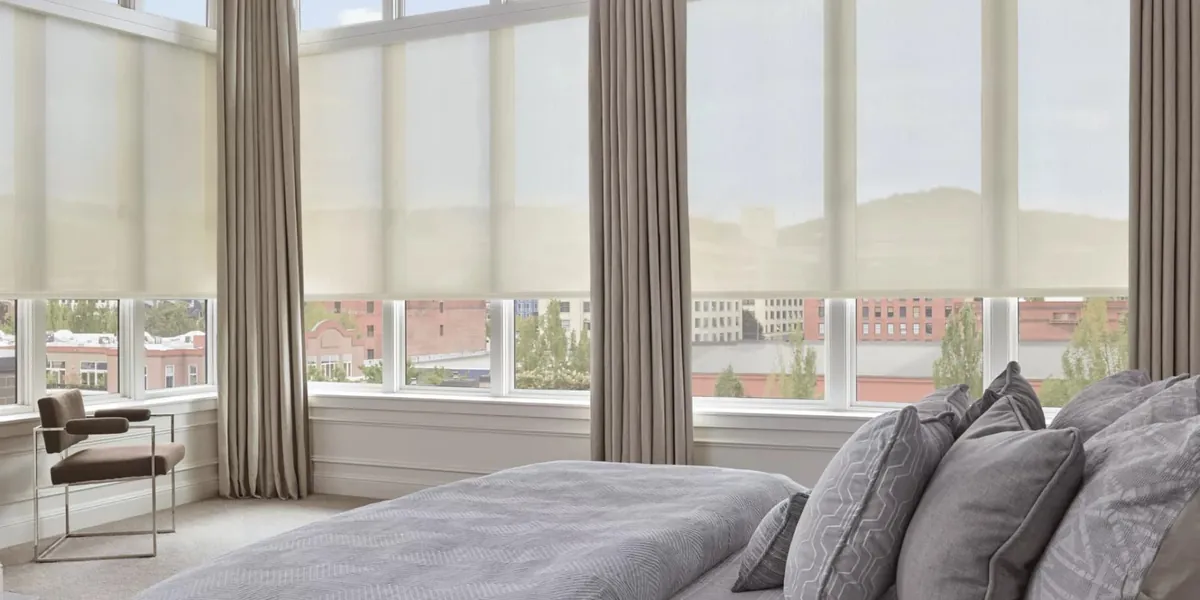
Toward the south-west of the island, near Carnegie Abbey and along the roads that look out over the bay, the houses get bigger and the glass gets bigger with them. Great rooms open onto the water through tall windows and wide doors. Some rooms have glass from the floor nearly to the ceiling.
These walls of glass are where motorized shades earn their keep. Large shades are heavy to lift by hand, and a run of six or eight of them across one wall would take a while to adjust. A motor moves the whole run at once, every shade stopping at the same height, so the wall looks finished whether the shades are up, down or halfway. Schedules then take care of the sun: the shades on the bay side can lower as the afternoon light comes in low off the water and lift again once it has passed.
For a room like this, we often pair a screen roller shade for daytime glare with a second, heavier shade for evening privacy, both run from the same app. That way the view stays during the day and the room closes up fully at night.
Planning the bright side and the shaded side
On a house with water on one side and trees on the other, every room needs something a little different. Here is how we usually think it through on a Portsmouth house:
- The water-facing rooms take the strongest sun and the most glare. Screen roller shades or sheer shades soften the light while keeping the view, and a schedule lowers them through the brightest hours.
- The inland rooms often need light more than shade. A light-filtering fabric that stays open most of the day, and closes at dusk for privacy, usually suits them best.
- Bedrooms on either side benefit from a room-darkening fabric, so the morning light off the water does not wake you before you choose.
- Corner rooms, common in cottages, may have one window facing each way. Each shade in the room can stop at its own height, so one can be down against the glare while the other stays open.
Thinking of the house as two halves like this makes the schedules much simpler to set. Instead of one rule for every window, the water side and the inland side each get their own.
Fabric choices for bay light
The water around the island reflects a lot of light, and that changes how a fabric behaves at the window. A color that looks soft in a sample book can read much brighter with the bay behind it, and a weave that seems nearly opaque indoors may show a surprising amount of glow at midday. That is why we always hold samples up against your own glass, ideally on the water side, before anything is chosen for motorized blinds in Portsmouth, RI.
For rooms that face the bay, pale neutrals and screen fabrics tend to work best. They cut glare, they keep the outlook and they hold their color well on a window that sees sun every day. For the inland rooms, there is more freedom: warmer tones, textured weaves and patterned fabrics all show well where the light is gentler. Bedrooms usually get a room-darkening lining whatever the face fabric looks like.
The motor does not limit any of this. The same PowerView system runs a sheer, a screen roller and a blackout honeycomb, so you can choose each fabric for its room and still control the whole house from one app. When people ask us where to begin with motorized blinds in Portsmouth, RI, our answer is usually the room with the worst glare, because that is where you notice the difference first.
Three ways to run them
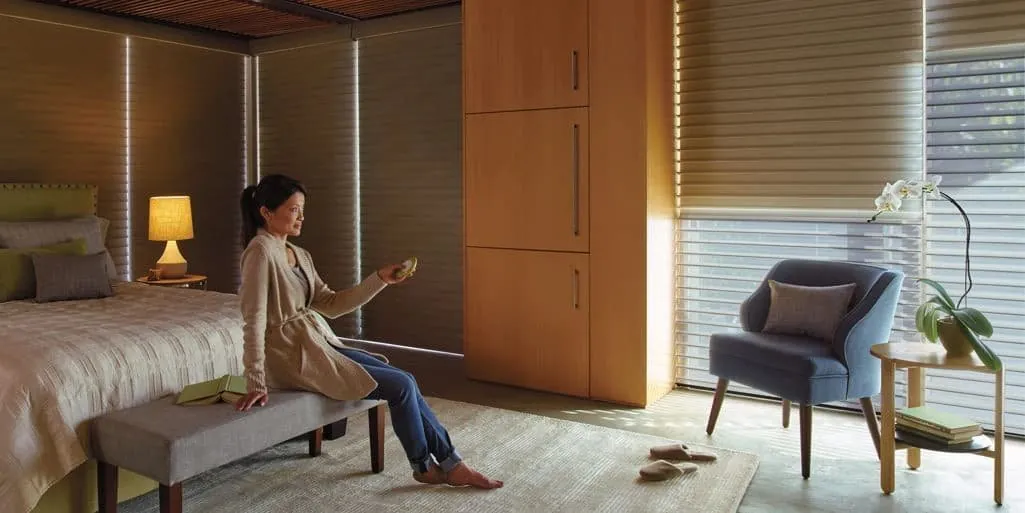
Most households begin with the remote. It sits on a side table or in a wall holder by the door, and you choose a window, or a whole group, and press. For a small cottage, that is often all anyone ever needs.
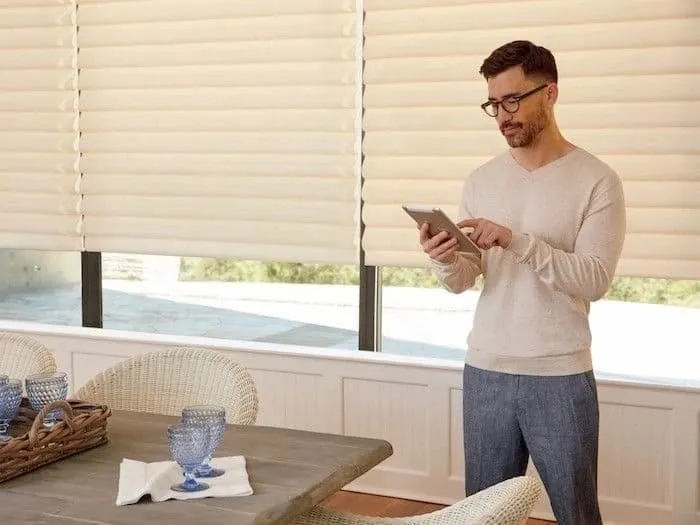
The PowerView app does the same from a phone or tablet, and shows every shade in the house in one place. You can move a single shade a little, send a whole room to the same position or bring up a scene you have saved. In a colonial with windows on two floors, it saves trips up and down the stairs.
Schedules are what make the system feel automatic. A schedule is simply a time and a position: lower the bay-side shades at two in the afternoon, raise the bedroom shades at seven, close the front of the house at dusk. Once they are set, the shades move on their own every day. Our guide to how motorized shades are controlled explains each of the three in plain terms, and the window covering automation page goes further into scenes and timers.
Blinds or shades on a motor
The word motorized usually brings blinds to mind, but most of what we motorize on the island is fabric shades. Rollers, honeycomb shades and sheer shades all take a PowerView motor across a wide range of sizes. Blinds can be motorized too, and wood or faux wood slats give a crisp look in a study or a kitchen, but whether a particular blind can take a motor depends on its size and style. We check that against your actual windows rather than assuming.
What matters most is what the room needs. Want to tilt the light up toward the ceiling and keep a view? Slats or sheer vanes do that. Need warmth in a cottage bedroom? A honeycomb shade does it better. Want the cleanest possible look on a big window over the water? A roller is hard to beat. Many orders for motorized blinds in Portsmouth, RI mix several of these, and every one of them answers to the same remote and the same app.
Wind, salt and windows left open
Houses on the island live with the wind. On a summer day with the windows open, a corded shade can swing and knock against the frame, and salt air finds its way onto anything metal left out in it. A motorized shade keeps its lifting parts inside the headrail, with no cord hanging at the side and no cord lock to wear.
With no cord to tangle and nothing for a child or a pet to catch, motorized shades also suit the bedrooms and playrooms in a year-round cottage. The bottom rail moves evenly on both sides, so the shade stays straight even when the breeze comes through.
How each motor is powered is something we plan at the visit, window by window, once we have seen where each shade will go and how easy each one is to reach.
Our visit, step by step
Nothing about a motorized shade makes sense until you see it at your own window. Here is how a home visit usually goes:
- Book through Request a Consultation or the call button, and we agree a time that suits you.
- One of our vans arrives with samples, so you can hold real fabric against your own glass.
- We walk the house together, the water side first and then the inland side.
- You show us which windows are hardest to reach and which rooms get the most glare.
- We measure every opening and note how each one is mounted and grouped.
- We talk through the remote, the app and the schedules you would want.
- You receive a free estimate to look over in your own time.
Our page on what happens at an in-home consultation covers that first visit in more detail.
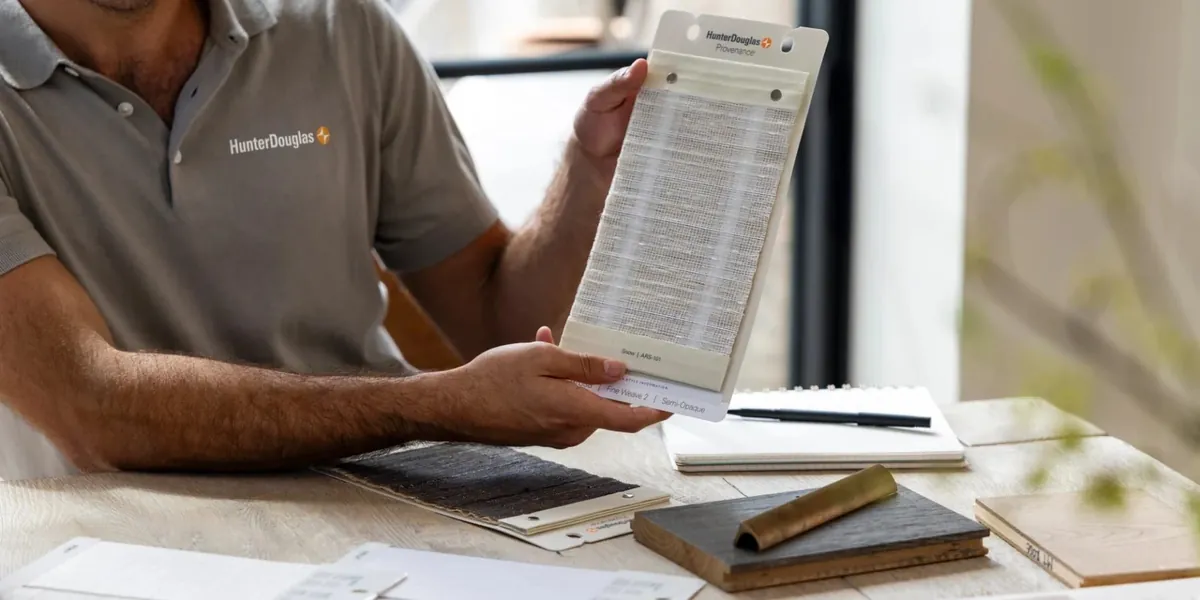
Hunter Douglas Gallery dealer, certified installers
Blinds & Designs is a Hunter Douglas Gallery dealer, which puts the full Hunter Douglas range within reach from one consultation. For an island house that mixes cottage windows, high colonial glass and bay-facing walls, that range matters: PowerView runs across rollers, honeycomb shades, sheer shades, Roman shades and blinds, so each window gets the product that suits it.
Our installers are certified by Hunter Douglas. They fit each shade, set its upper and lower stopping points, pair it with the remote and the app, and program your schedules before they leave. If a shade you already own needs attention later, we handle blind and shade repairs as well, and interior design consultations are there if you are rethinking a whole room.
To see what else we do on the island, visit our Portsmouth page, or look at cellular shades in Portsmouth and roller shades in Portsmouth. The full range lives on our motorized blinds and shades page.
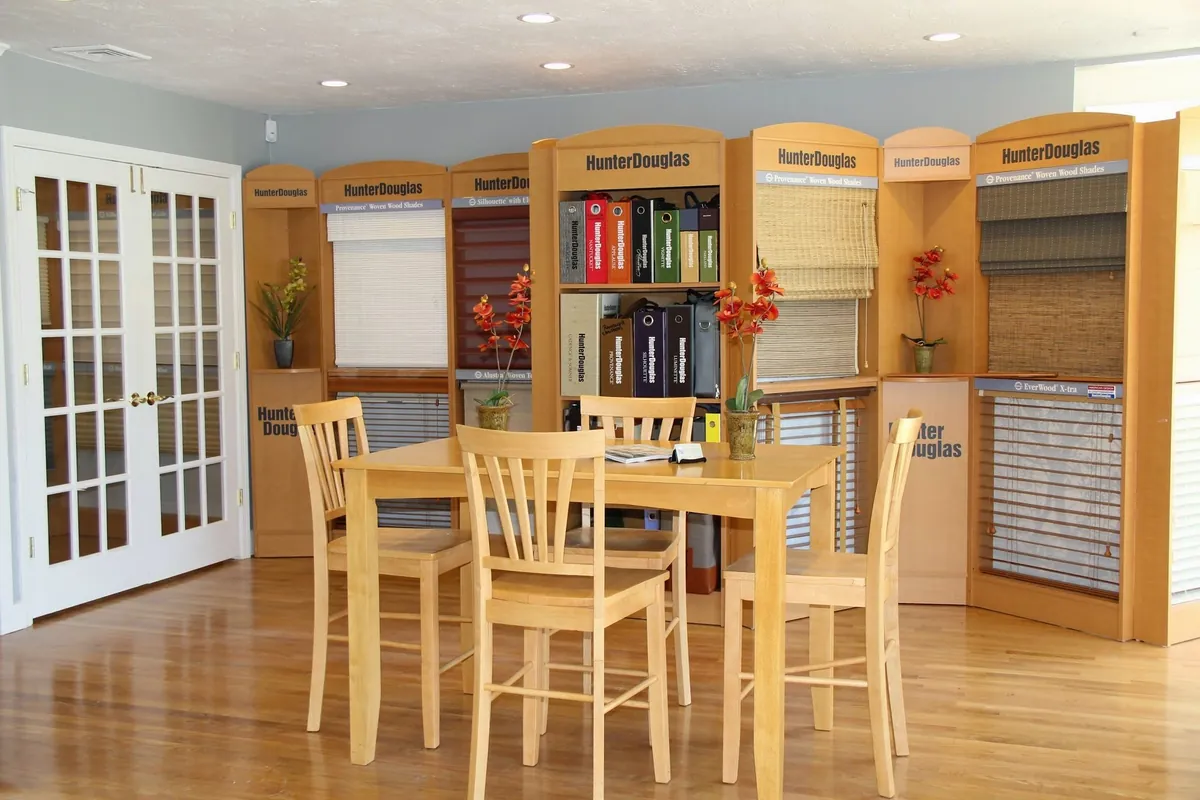
North Dartmouth is our nearest showroom
From Portsmouth, the North Dartmouth showroom is our closest location, across the line in Massachusetts. You are welcome to stop in and talk through your windows there.
Most island customers start at home, though. A water view, a high window and a cottage room that faces three ways are all hard to describe and easy to see, which is why our vans bring the samples to you. Planning motorized blinds in Portsmouth, RI goes fastest standing at the glass.
Questions from Portsmouth
My cottage has windows facing the water and the road in the same room. Can they work differently?
Yes. Every motorized shade can stop at its own height, and you can put shades in the same room into different groups. The water-side window can lower against the glare while the road-side one stays open, or the reverse at night.
Will I lose my view of the bay if I motorize the shades?
Not if we choose the right fabric. Screen roller shades and sheer shades soften glare while keeping the view, and a schedule can lower them only during the brightest part of the day.
Can the high window over my family room join the rest?
Yes. A high window runs from the same remote, app and schedules as the windows below it, and the motor stops it level with its neighbors.
What happens to motorized shades on a windy day with the windows open?
The lifting parts sit inside the headrail and there is no cord to swing. If you prefer, a schedule can raise the shades on the windward side out of the way while the windows are open.
Is there a charge for the estimate?
No. After we measure, the estimate is free and covers every shade and motor we talked about.
Start with a visit
Ask for a consultation and we will bring samples to your island house, measure every window and plan which shades move together. You will get a free estimate to think over. If you would like to talk first, use the call button, or stop in at the North Dartmouth showroom.