
Big glass and long empty weeks
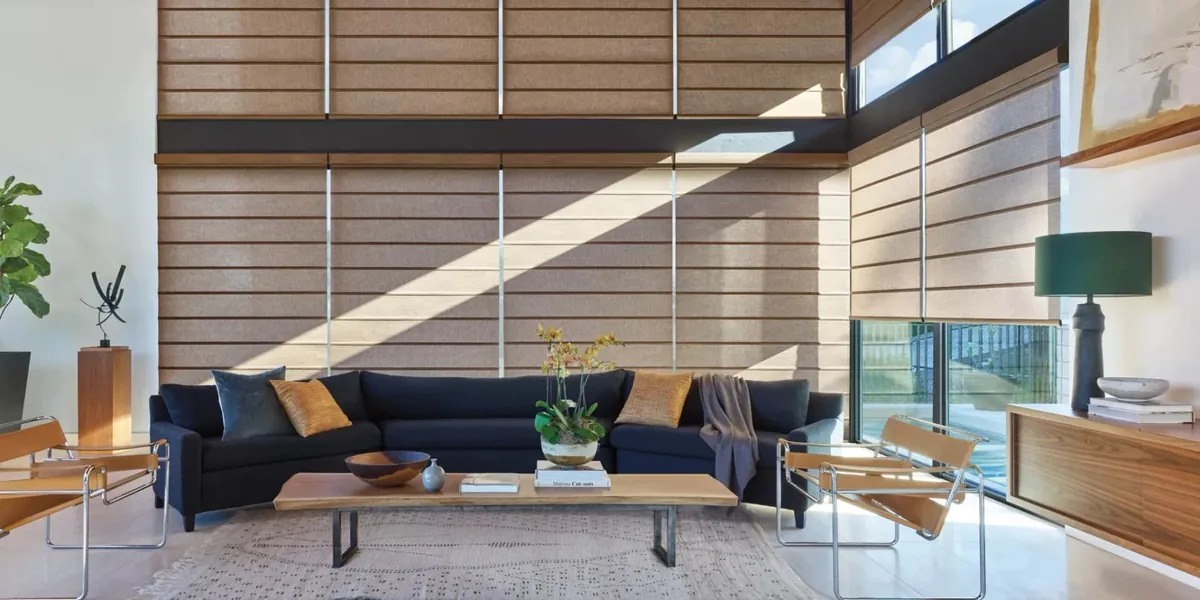
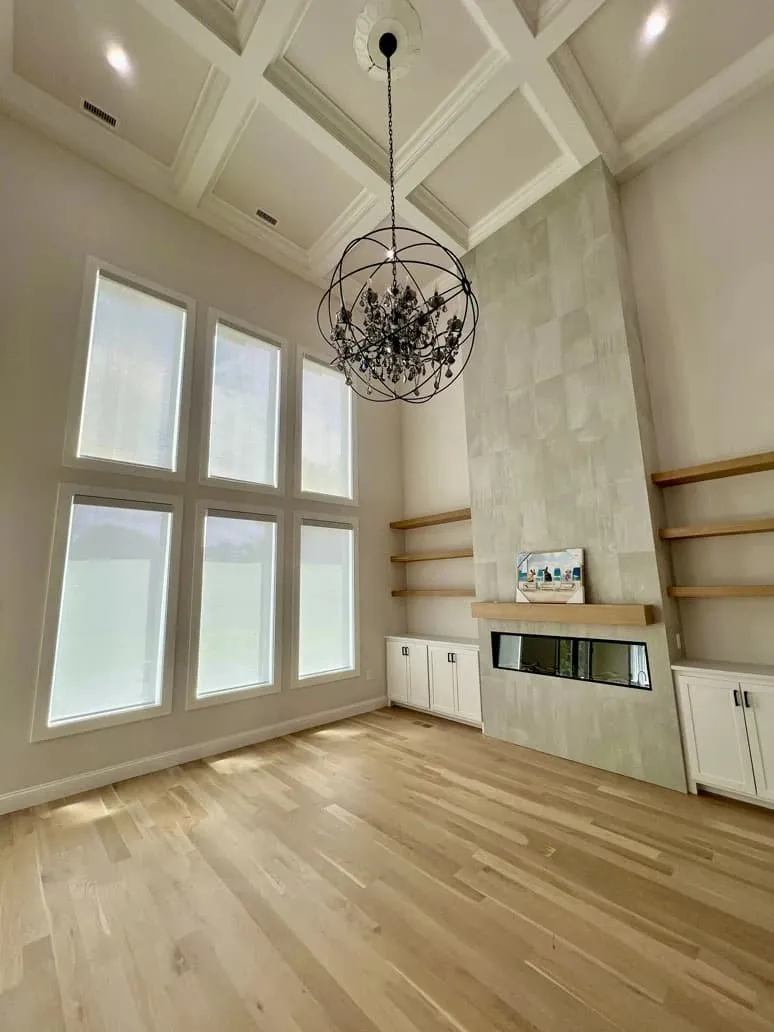
Most of the houses around Mashpee Commons and New Seabury are newer construction, and they were designed with large modern openings: tall living room windows, sliders that run most of the width of a room, corner windows and transoms stacked above the doors. That is a lot of glass to cover, and a lot of summer sun coming through it. Roller shades in Mashpee, MA, are a natural fit for openings that size, because a roller comes in generous widths and drops and still rolls up into a slim tube that leaves the window clean.
There is a second thing that sets this town apart. A high share of the houses here are second homes, used for a summer, a few long breaks and the holidays, and shut up in between. A window treatment in a house like that has to look after the rooms when nobody is there to raise and lower anything.
So the questions we ask in Mashpee are a little different. How do the shades behave in an empty house in July? Who lowers them before a storm? What does the house look like from the road in February? Those answers shape the fabric, the openness and whether the shades are motorized.
Roller shades in Mashpee, MA, for wide modern openings
We carry the full Hunter Douglas roller family. These three come up in nearly every house here, and we bring samples of each.
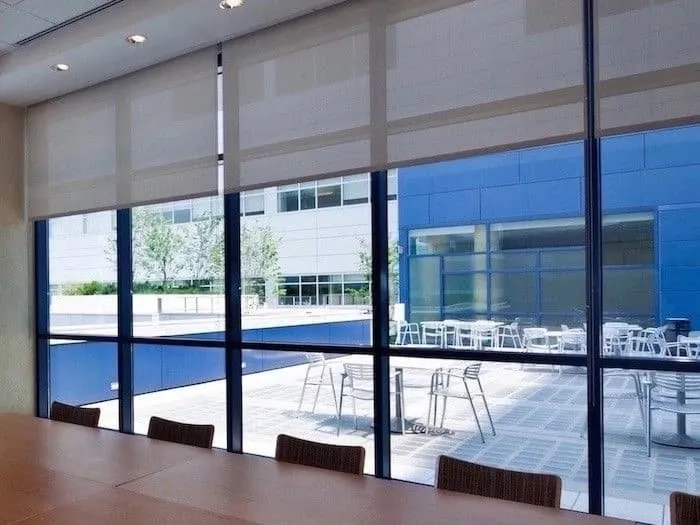
Designer Screen
A solar screen weave that tames glare and heat through big glass while you keep the view of the garden or the water.
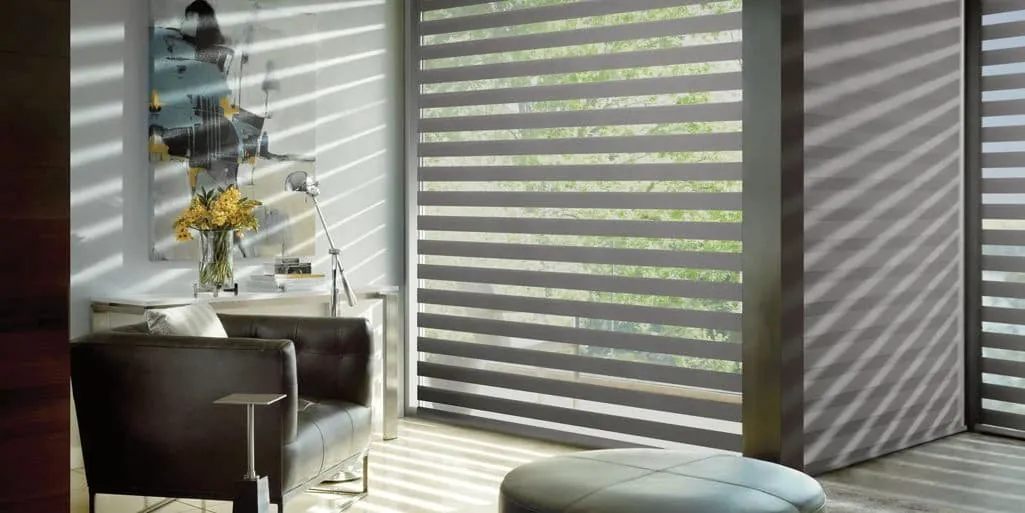
Designer Banded
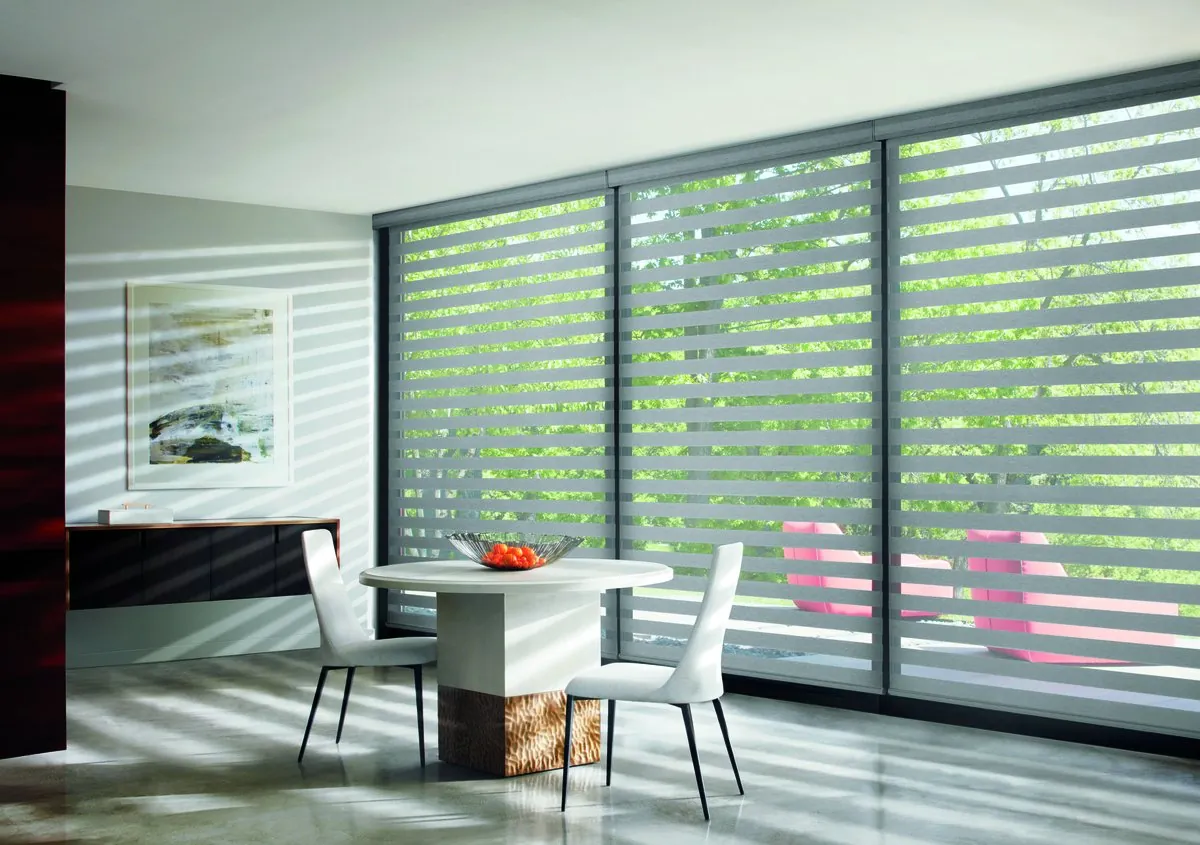
Bands of sheer and solid fabric that slide across one another. Open for the view, closed for privacy, without raising the shade.
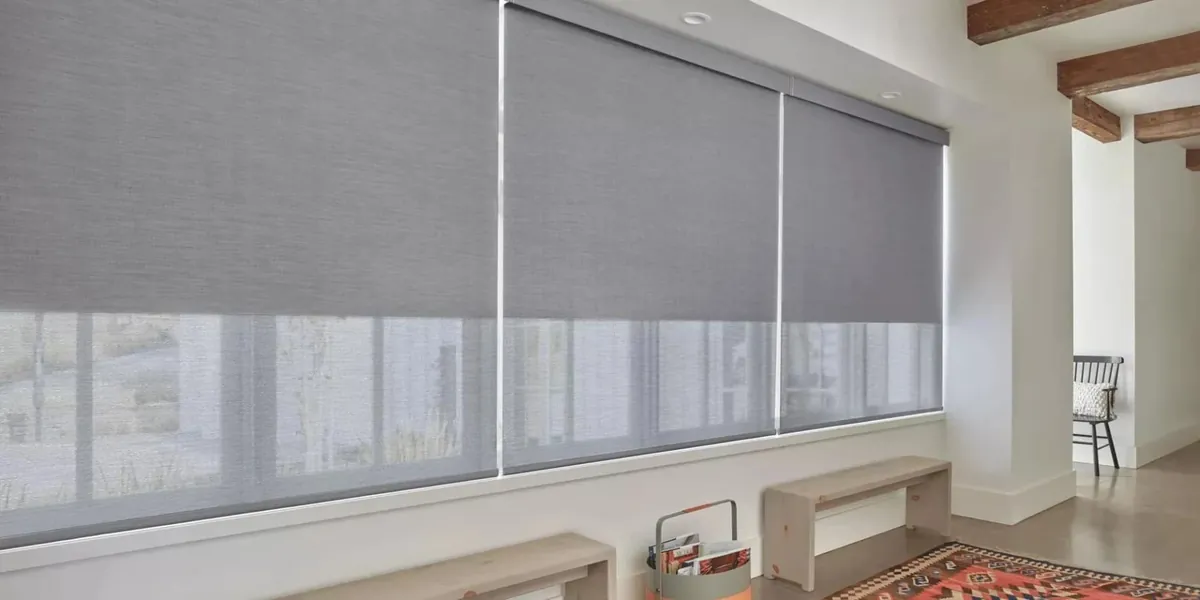
Designer Roller
Light filtering and blackout fabrics in a wide palette, for bedrooms, hallways and the rest of a whole-house order.
When the house is closed for the season
A shuttered second home is still taking sun every day. Through the long summer evenings and into the fall, light pours across floors, rugs and upholstery with nobody there to draw a shade. Wood floors near a slider can change color unevenly, and fabrics that sit in a sunny window gradually lose their depth.
Roller shades help in two ways. Lowered, a screen fabric cuts much of the glare and softens the light reaching the floor, while a blackout fabric stops it altogether. And with PowerView motorization, the shades do not depend on someone being home. You can set a schedule so the sunny elevations lower in the middle of the day and rise in the evening, or simply open the app from wherever you are and close the house down.
Storms are part of the picture too. When a nor’easter or a late summer blow is on its way and you are a long drive from the Cape, you can lower every shade from the app so the rooms are not lit up and exposed behind bare glass. A schedule also changes how the house looks from outside. Shades that rise and fall through the day make a house look lived in, rather than sitting in the same position for weeks. And when you arrive for the summer, you can open the whole house from the driveway with one tap, so the rooms are bright the moment you walk in.
Condominium villages around the Commons and New Seabury
Condominium living brings its own set of windows. A typical unit has a slider to a deck or patio, a pair of large living room windows and a couple of bedrooms, often with the bedrooms facing a shared green or a parking court. Units can be close together, so privacy at night matters as much as glare in the afternoon.
Many associations also have expectations about what a window treatment shows to the outside, often a white or neutral backing so that every unit in a building looks uniform. Roller shades suit that well. Most roller fabrics can be chosen with a neutral outward face, so the building looks consistent while the room side is the color you want. It is worth checking your association’s guidelines before you choose, and we are happy to bring samples that meet them.
For the slider, a roller can cover the whole door as one shade, or two narrower shades can sit side by side so you can raise only the half you walk through. A Sonnette cellular roller is another good option on a slider, with a softer, curved face and a little more body than a flat fabric.
Wide windows, tall windows, corner windows
Big openings ask a few practical questions that smaller windows never do.
The first is width. Every roller fabric comes on a roll of a set width, and a very wide window may be wider than one piece of fabric can cover. When that happens, we split the window into two or three shades, placing the breaks over the mullions so they disappear. Linked together, the shades travel as one and their hems finish level.
The second is height. On a double-height wall, the shade has to roll a long length of fabric onto its tube, which means a larger roll at the top. We plan the headrail and any fascia or cassette to hide that roll neatly, and on windows that tall the shades are almost always motorized.
The third is corners. Where two windows meet at a corner with no wall between them, the shades have to meet without a bright gap. We set the brackets so the two shades close against each other cleanly, and we check how the fabrics look side by side when the sun hits one wall and not the other.
Transoms are the last piece. Many great rooms around New Seabury have fixed glass above the main windows or above a set of French doors. Those upper panes let in the strongest light of the day and are almost impossible to reach. A roller sized to the transom, motorized and grouped with the shades below, lets you close the whole wall at once or leave the transoms open for sky while the lower shades handle privacy.
Openness, glare and summer sun
The main control on a solar screen fabric is its openness, the size of the tiny gaps in the weave. Openness is really about view and glare. Loosen the weave and the outlook stays sharp, with more light allowed in. Tighten it and you block more glare and gain daytime privacy, at the cost of a softer outlook.
Color matters as much as openness. Darker screens are usually easier to look through, because the fabric itself does not glow in the sun. A light screen fabric bounces more light and looks bright from inside. In a modern great room with big south and west glass, we often find a darker, fairly open screen keeps the room comfortable in July without giving up the outlook.
At night the situation reverses. With lamps on inside, a screen shade lets people see in. For bedrooms and street-facing rooms, a second blackout or light filtering shade behind the screen covers the evening hours.
Planning a seasonal house, step by step
Most roller shades for Mashpee houses are planned in the house itself, because nowhere else shows the real light on the real glass. We can bring the showroom to you: the vans are loaded with samples. A typical visit runs like this.
- Book through Request a Consultation or the call button. The time can be planned around your next trip down.
- We walk the house with you and note which rooms take the strongest sun and which ones are used least while you are away.
- You look through screen, light filtering, banded and blackout samples at your own windows.
- We talk through whether the house should be motorized and how you would like schedules to run when you are not there.
- We measure every opening and check the mounting surface.
- A free estimate follows, and nobody expects an answer before we drive away.
Furnishing a newer house from scratch? Our interior design consultations look at fabric, color and every window together. There is more on the visit itself in what happens at an in-home consultation.
Light filtering or blackout for a summer house
Guests change how a house is used. A bedroom that sits empty most of the year might sleep four people over a holiday week, and a den becomes a spare room the moment the house fills. When we plan roller shades in Mashpee for a seasonal house, we ask who sleeps where in high summer, not just how the rooms are used in a quiet month.
Light filtering fabric is the everyday choice: it keeps rooms bright and private in daylight, and it looks soft from inside. Blackout fabric is for any room where someone needs to sleep past sunrise, which on the Cape in June comes very early. Some customers choose blackout on every bedroom simply so the house works for whoever is staying. Others keep it to the main bedroom and the bunk room and use light filtering everywhere else. Either way works, and the two fabrics can share the same outward color.
PowerView in a house you visit
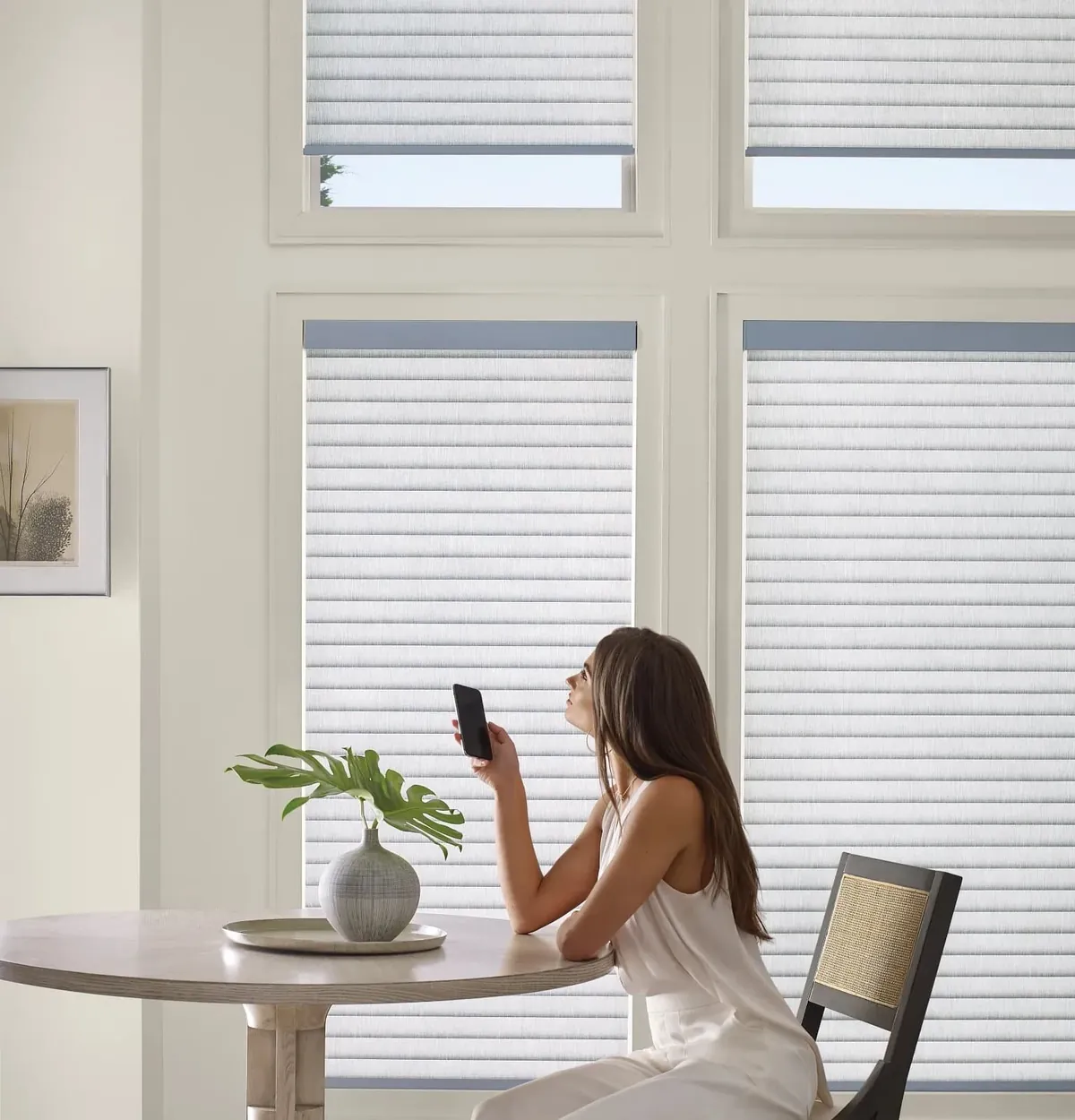
PowerView motorization is the piece of a roller shade order that matters most in a second home. Each shade has a quiet motor in the headrail. You control the shades from the PowerView app, a remote or a wall control, and you can set schedules that run whether you are in the house or not.
Common schedules we set up in houses here include lowering the west-facing screens through the afternoon, closing the bedroom blackouts at dusk, and raising everything at sunrise so the house looks occupied. Shades can be grouped by room or by side of the house, so a single tap moves every shade on the water side. How each motor gets its power is worked out at the visit, and we test every shade and every schedule before we leave.
Newer colonials, room by room
Away from the condominium villages, a lot of Mashpee is newer colonials with a large family room, an open kitchen and bedrooms upstairs. These houses are usually year-round or close to it, and they suit a whole-house roller order very well.
The family room often has the biggest glass in the house, and it usually takes a screen fabric or banded shades. The kitchen and breakfast area want a light filtering fabric that keeps things bright. Bedrooms upstairs get blackout, especially any that face east or sit under a skylight. Keeping the outward color the same across all of them gives the front of the house one calm look.
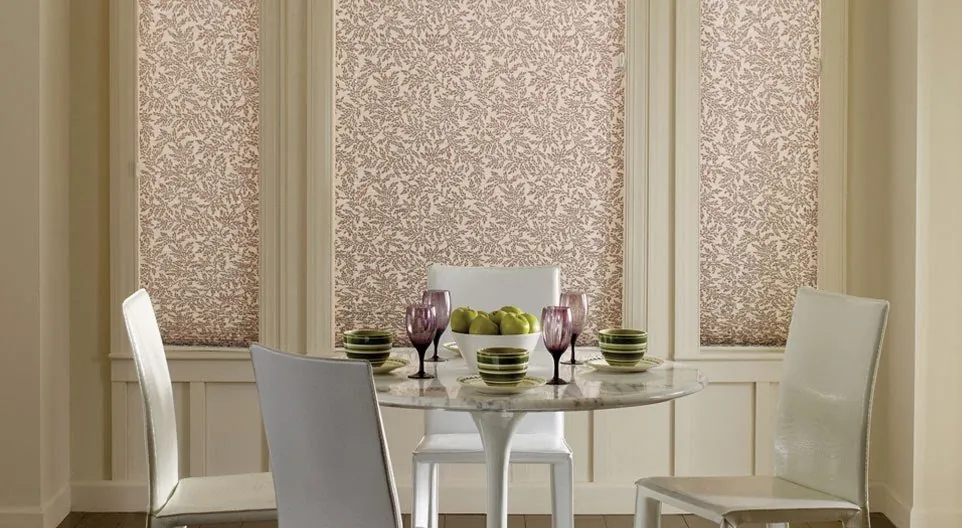
Patterned rollers are worth a look in a dining room or a child’s room. A printed fabric on a plain roller adds color without the bulk of a fabric shade, and it rolls away completely when you want the window clear.
Many of these colonials also have a bonus room over the garage, often with a dormer or a pair of skylight-lit gable windows. Those rooms heat up fast in summer and are frequently used as guest rooms when the house fills in July. A blackout roller there gives visitors a dark room in the morning, and if the windows are high or awkward to reach, a motorized shade saves anyone climbing onto furniture.
Home offices are the other room that has grown in these houses. Glare on a screen is the usual complaint, and the answer is often a screen fabric with a fairly tight weave on the window behind or beside the desk, so the light stays even through a working day.
Measuring newer openings
Newer houses often have a detail older houses do not: drywall returns. Instead of a wood casing around the window, the wall turns straight into the frame, with a narrow wood stool at the bottom or no trim at all. That changes where a shade can be mounted, because a bracket needs solid framing behind it, not just plasterboard.
We check every opening for that. Where there is a wood jamb deep enough, we inside mount the shade so it sits within the frame. Where the return is drywall, we find the framing above the window and mount there, or use a fascia that spans the opening. On a big opening the brackets carry a real weight of fabric and tube, so getting them into solid wood matters.
When the order comes in, certified Hunter Douglas installers hang each shade, level the headrails, check that every fabric rolls straight, and show you how the controls work. If the shades are motorized, they pair them with the app and set your schedules with you.
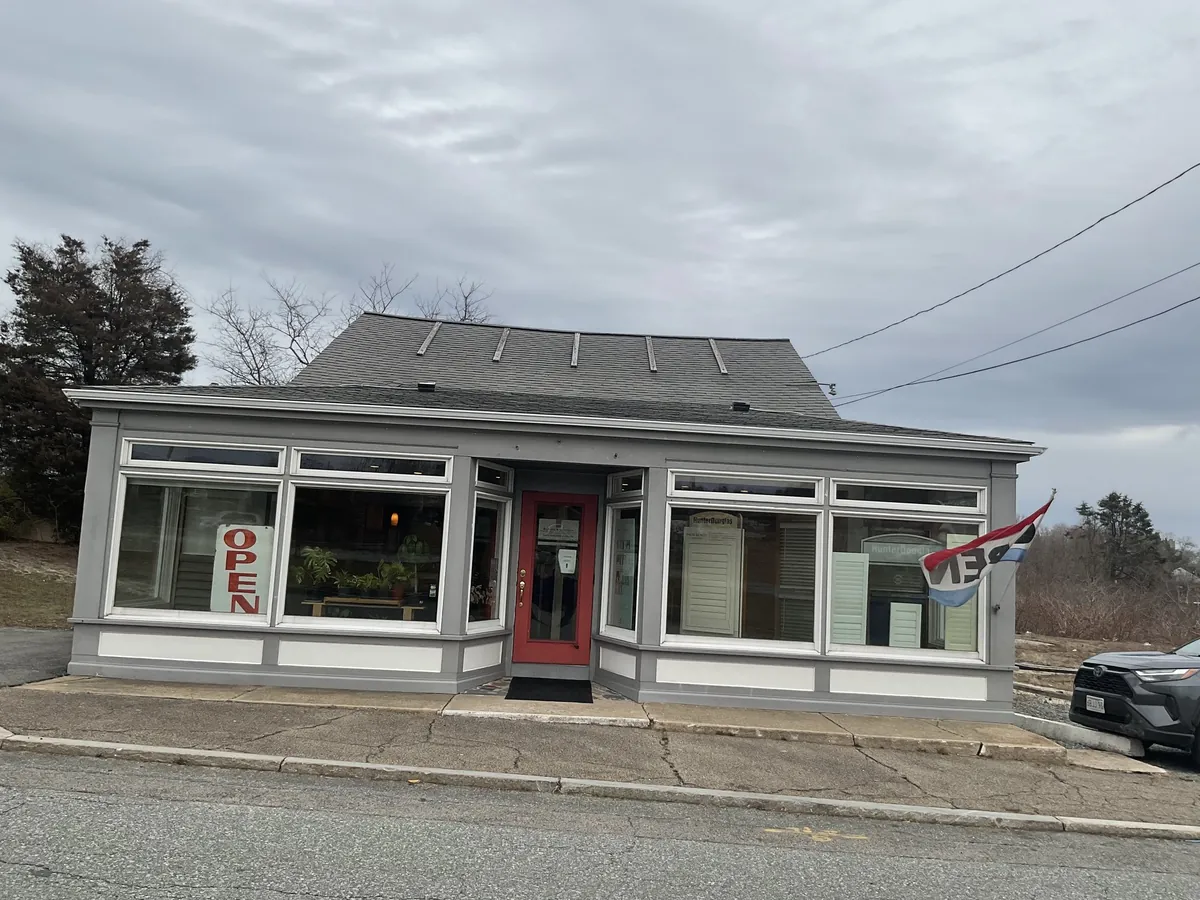
Sagamore is our closest showroom to Mashpee
For houses here, our nearest showroom is in Sagamore, just over the canal. If you would like to talk about your house before we visit, the Sagamore team is the one to ask.
Hunter Douglas names dealers who meet its standards Gallery dealers, and Blinds & Designs holds that status, with installers certified by Hunter Douglas themselves. That means the full roller family, every fabric and openness, and PowerView, all from one place. We also carry cellular, roman and sheer shades, blinds, shutters and drapery, and we take on blind and shade repairs for coverings you already have.
If you are treating more of the house, see our cellular shades in Mashpee, motorized blinds in Mashpee or everything we do in town on our Mashpee page. For every fabric family in one place, start from our roller shades overview.
Mashpee questions we hear often
Can the shades run while I am not at the house?
Yes, with PowerView motorization. You can set schedules that lower and raise the shades at set times, or control them from the app wherever you are. We set the schedules up with you before we leave.
Does my condominium association limit what I can choose?
Many associations ask for a neutral color facing outside. Most roller fabrics can be chosen with a neutral outward face and the color you want inside. Check your guidelines, and we will bring samples that meet them.
Our living room window is very wide. Can one shade cover it?
Sometimes. If the window is wider than the fabric allows, we split it into two or three shades, with the breaks over the mullions, and they can move together on one system.
Which fabric handles the afternoon sun but keeps my view?
A solar screen roller. The tighter the weave, the more glare is stopped; the looser, the more of the outlook survives. Seeing a handful side by side on your actual glass makes the choice easy.
Do I pay for the estimate?
No. Estimates are free. Once every opening is measured, we write up the shades you have talked about, and you can take your time with it. Booking a consultation around your next stay at the house is no trouble.
Ready to start
Choosing roller shades in Mashpee, MA, is far easier with real fabric held against your own sliders and great room glass. Book a visit and the samples come to the house, every window gets measured, and the free estimate is yours to think over. You can also use the call button, or stop by the Sagamore showroom.