
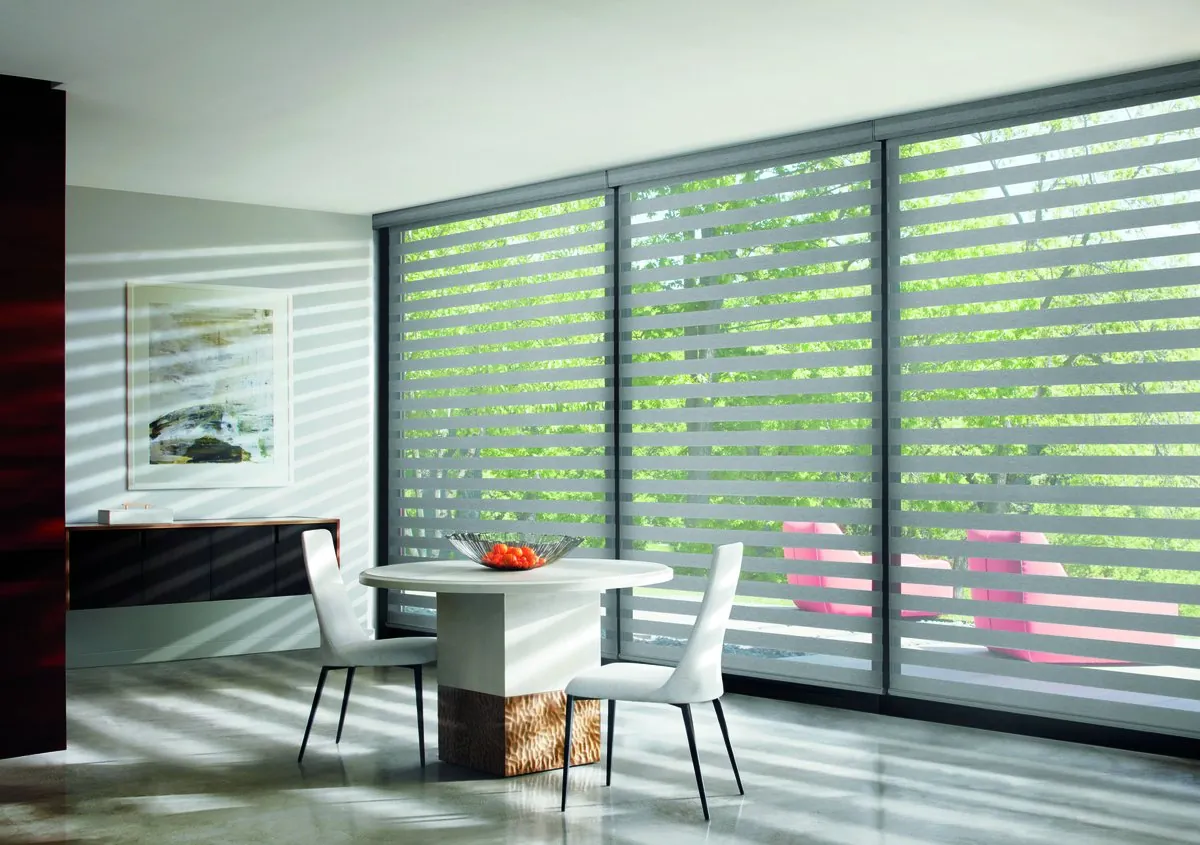
Two eras of house, two kinds of light
Yarmouth is really two places sharing one name. Up on the bay side, Route 6A is lined with antique capes, with small windows and low rooms. Down on the sound side, South Yarmouth is a dense grid of post-war ranches and summer cottages on modest lots, facing a brighter southern sky. Choosing roller shades in Yarmouth, MA, starts with knowing which of those two houses you live in.
The difference is not only in age. The bay side, with its northern outlook, tends to give softer, steadier light, and the main concern is keeping old rooms private and bright. The sound side is more open to the sky and the south, so glare and summer heat come first. A fabric that is perfect in one can be wrong in the other.
Roller shades work in both because they are the plainest, most adaptable shade there is: a single panel of fabric on a slim roll that can be sheer, screen, light filtering or blackout. The job is to match fabric and mount to the house in front of us.
Roller shades in Yarmouth, MA: three fabrics to start with
Most Yarmouth houses begin with one of these three families. Samples of each come in the van.
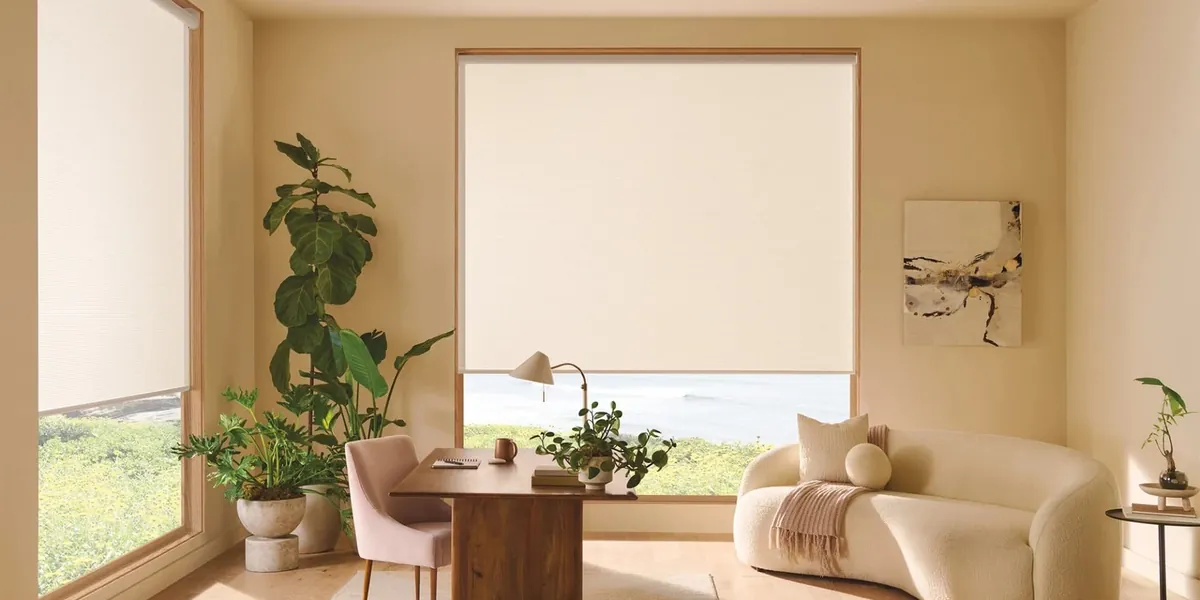
Designer Roller for the capes
Soft light filtering fabric that gives privacy from a busy road while keeping a small, low room as bright as it can be.
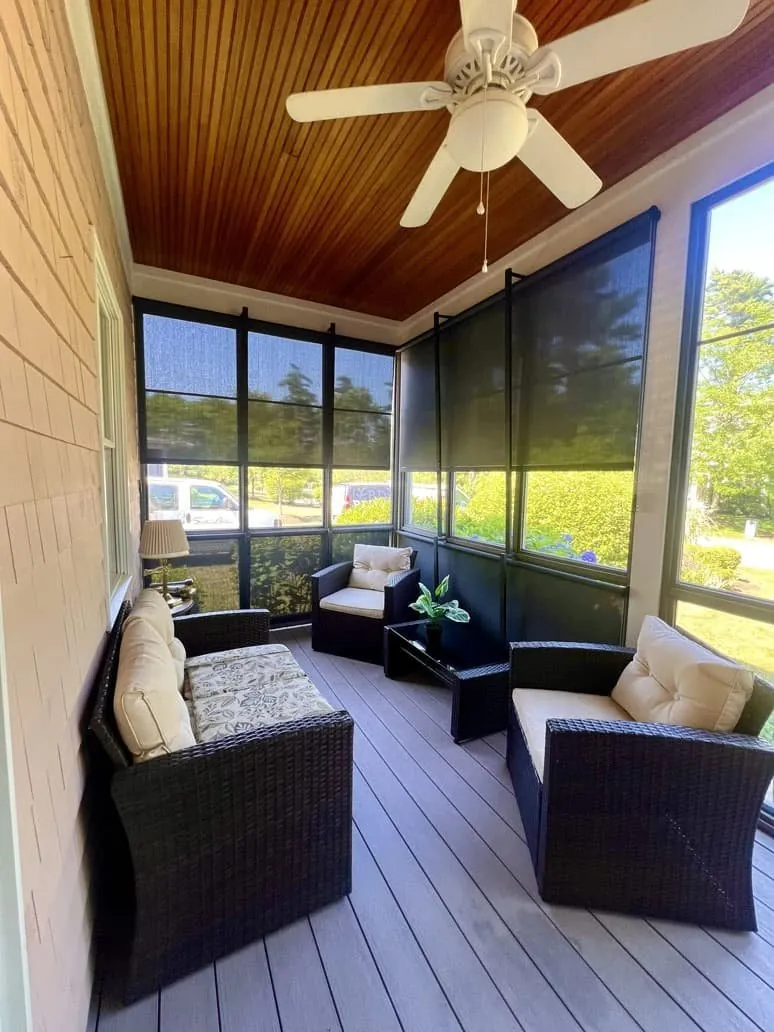
Designer Screen for the sunny side
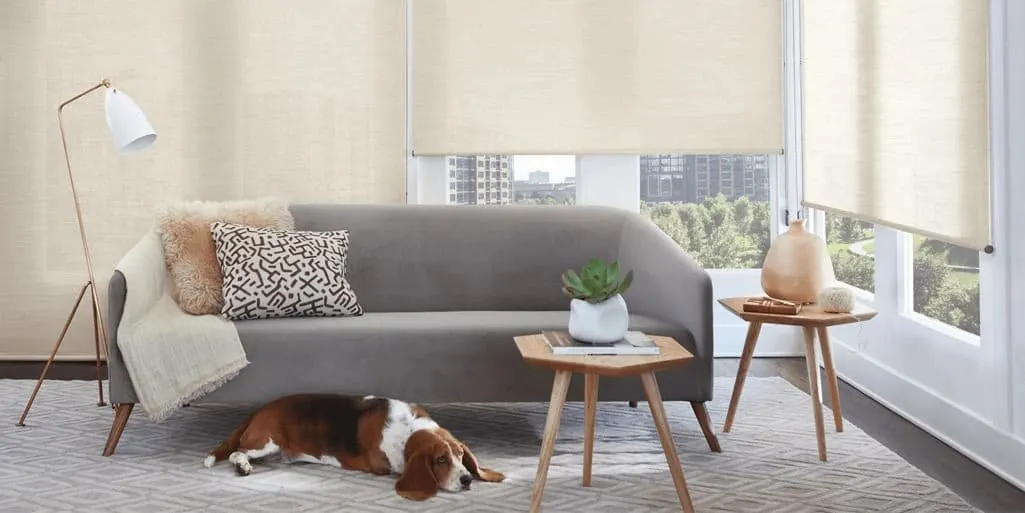
An open weave that tames the strong southern sun in a ranch living room or an enclosed porch, without hiding the yard.
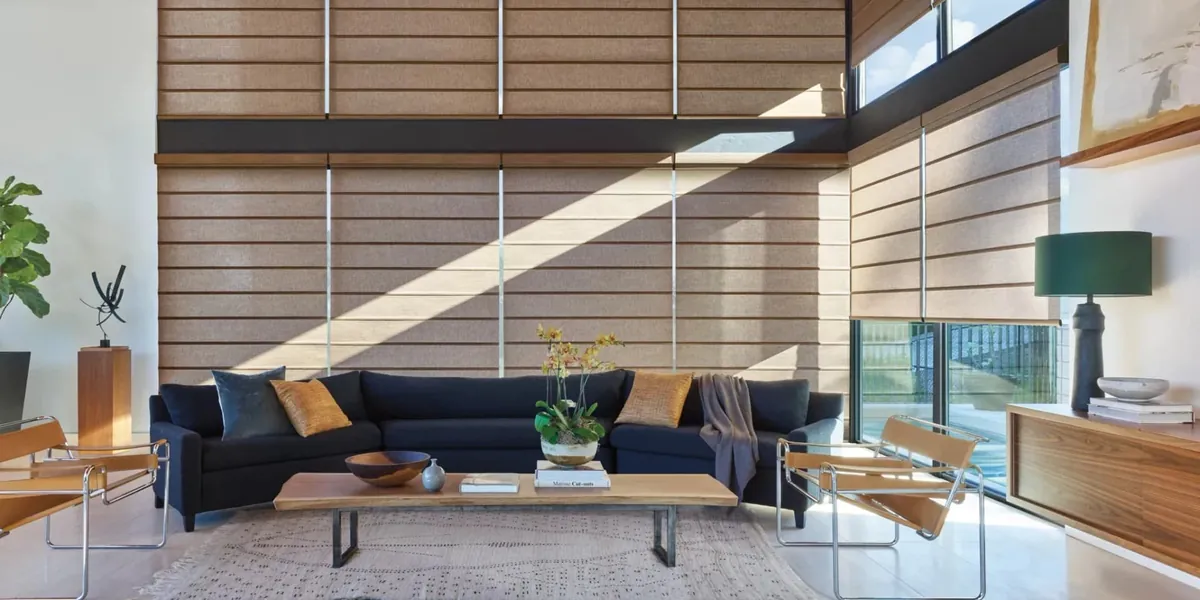
Woven textures for a relaxed room
Alustra Woven Textures fabrics give a roller a natural, casual weave that suits a cottage or a beach-house sitting room.
The antique capes along Route 6A
The capes on the old road are some of the most recognisable houses on the Cape: a steep roof, a central chimney, a front door between two pairs of windows, and rooms tucked low under the eaves. Inside, the windows are small by modern standards, often with many little panes, and the walls and ceilings are close around them. Some still have their old, slightly wavy glass.
A shade in a room like that has to be modest. Anything bulky makes a small window look smaller and a low room feel lower. A roller is about as slim as a window covering gets. Fitted inside the frame, it leaves the trim showing, and raised, it shrinks to a thin roll at the head of the window, so the old glass is fully on view.
Because these rooms are small and their windows are few, daylight is precious. We generally steer toward light, fairly translucent fabrics in the capes, which give privacy without dimming a room that is already modestly lit. In a bedroom where darkness matters, a blackout roller can still be the right choice, and we make sure it suits the scale of the window.
Bay-side light and the road out front
Many of the capes stand close to Route 6A, with the front rooms only a short distance from passing cars and people walking by. Privacy in those front rooms is a daily concern. Light filtering cloth does that job by day: it turns into a soft lit panel from outside instead of a window into the parlor. After dark, with lamps lit, a denser fabric or a blackout roller gives full privacy.
The light on this side of town is usually gentler than on the sound side. Rooms facing north toward the bay get steady, even light rather than direct sun, and where a lot is shaded by trees the effect is stronger still. That means glare is rarely the main problem in the front rooms. Where a cape does have a sunny room, usually a kitchen or a later addition on the south or west, a screen roller there takes care of it.
From the road, the capes are part of a historic streetscape. Our habit is to keep a single pale backing facing the road across the whole front, which keeps the old façade looking settled, and to let each room choose its own face fabric.
South Yarmouth’s post-war ranches
Cross to the sound side and the houses change completely. South Yarmouth’s streets are packed with post-war ranches: single-story houses with a picture window in the living room, wide horizontal windows in the bedrooms and a slider or back door to the yard. Lots are modest and houses sit close together.
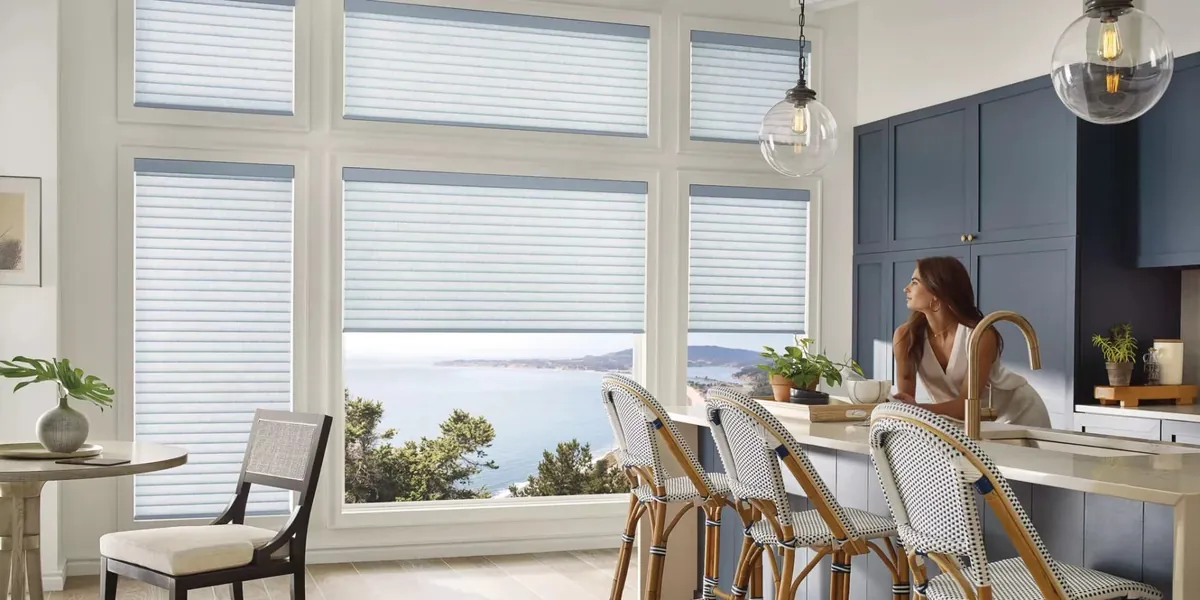
Ranches are among the easiest houses to fit with rollers, and among the ones where rollers make the most difference. The picture window, usually facing the street, takes a light filtering fabric that gives privacy without blocking the daylight. When the picture window is too wide for one piece of fabric, it becomes a pair or a trio of shades sharing a headrail, moving as a unit or independently, whichever you prefer.
Sleeping rooms in a ranch sit at ground level, sometimes only a few strides from a driveway or the sidewalk. Room darkening or blackout fabric keeps those rooms private after sunset and dim at dawn. Since the windows sit close under the eaves, a compact roller fits the space above them easily, and a cassette can neaten the roll where it shows.
Cottages on the sound side
Mixed in among the ranches, and especially near the water, are summer cottages: small, simple houses that may be opened for only part of the year. Rooms are compact, windows are a mix of original sizes and later replacements, and neighbors are close.
Rollers suit cottages for the same reasons they suit ranches, with a few extras. A single fabric across mismatched windows makes the cottage look tidier. A cordless lift keeps the window clear of cords, which is welcome in a house full of guests, children and sandy towels. And because roller fabrics are flat, they are easy to dust and many can be wiped clean after a season by the water.
For a cottage left closed between visits, PowerView motorization lets you lower the shades from the app while you are away, keeping the sun off floors and furniture, and set schedules that make the house look occupied.
Full sun on the sound side
With more southern exposure, sound-side rooms take a lot of direct light, especially on an open lot. Living rooms facing south or west can be glaring by early afternoon, and enclosed porches heat up quickly.
This is where solar screen rollers come in. A screen fabric is woven with small gaps, and the size of those gaps, its openness, decides the balance between view and glare. A looser weave leaves the yard and the street in clear sight while softening the light. A closer weave blocks more glare and makes it harder to see in by day, though what is outside turns hazy. Dark screen colors tend to be easier to see through than pale ones.
For a ranch living room that faces the afternoon sun, a fairly open, darker screen often keeps the room comfortable without shutting it in. For a porch with glass on three sides, a closer weave may be more comfortable. We bring both to compare.
How a home visit works
Yarmouth’s two halves are so different that we plan almost every job at the house. Our vans carry samples, so we can bring the showroom to you.
- Book online through Request a Consultation, or press the call button and pick a day.
- We arrive with light filtering, screen, woven texture and blackout fabrics, plus lift and motor options.
- We look at each room’s light with you: tree shade or full sun, north or south, road or yard.
- You try samples at your own windows and look through the screens.
- We measure each opening and check the frame for depth and squareness.
- Your free estimate comes next, and the decision waits on you, not on us.
Pulling a whole house together? An interior design consultation can sit alongside the shade visit. The visit itself is explained on our in-home consultation guide.
Additions and sunrooms
On both sides of town, many houses have been extended. A cape on 6A may have a modern kitchen wing or a family room at the back with sliders to the garden. A ranch in South Yarmouth may have gained a sunroom, a primary suite or a second story. These additions usually hold the largest windows in the house and the strongest light.
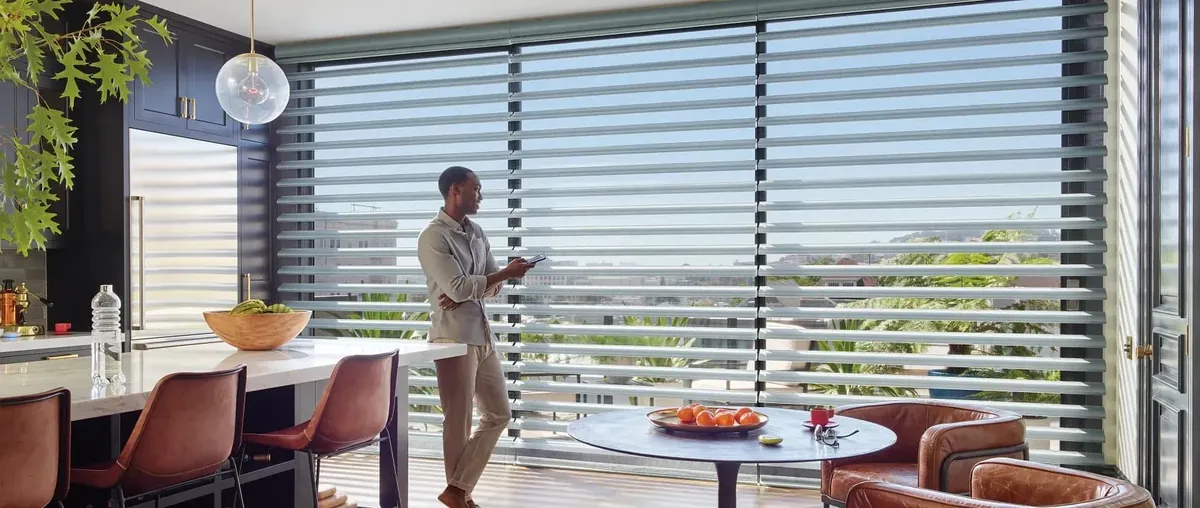
Rollers help an addition feel part of the house. A screen or light filtering roller in the addition, in a fabric with the same outward color as the shades in the original rooms, keeps the back of the house consistent from the yard. On sliders, a Sonnette cellular roller gives a softer look than a flat fabric and raises easily over the door you use. For tall windows or high transoms, PowerView motorization takes care of the reach. Powering each motor is part of what we work out on site.
A sunroom added to a ranch often has glass on three sides and a roof that holds the heat. Screens on each window, lowered through the early afternoon, are usually what turns it from a room you avoid in July into one you actually use.
Bedrooms that face the road or the neighbors
Whether it is a cape on 6A with its front bedroom close to traffic or a ranch with a bedroom beside the neighbor’s driveway, many Yarmouth bedrooms need privacy and darkness more than anything else. Blackout roller fabric stops light passing through the shade. What remains is a slim line around the edges.
Mounting makes the difference there. Inside the frame, the shade keeps the trim on show but leaves a small gap down each side. Mounted on the trim, overlapping the opening, it blocks most of that edge light. Side channels close the gap further for anyone who needs a truly dark room. We explain all three at the window so you can decide.
A dual roller, with a light filtering shade in front and a blackout behind, is a good answer for a bedroom that doubles as a sitting room or office by day.
Cape bedrooms under the eaves
Upstairs in a cape, the bedrooms sit under the slope of the roof. The windows are usually in the gable ends, sometimes in a dormer, and the knee walls and sloped ceilings leave little room around them. These rooms heat up on summer afternoons and catch the first light early.
A roller’s small headrail fits comfortably in the tight space at the top of a gable window. In a dormer, the shade can sit right at the window inside the little alcove, which keeps the alcove usable as a reading nook. Choosing roller shades in Yarmouth capes for these rooms usually means blackout fabric for sleep, in a pale outward color so the gable looks the same as the rest of the house from the road. Where a bedroom is also a daytime retreat, a light filtering shade in front of the blackout covers both uses.
Patterns, color and the kitchen
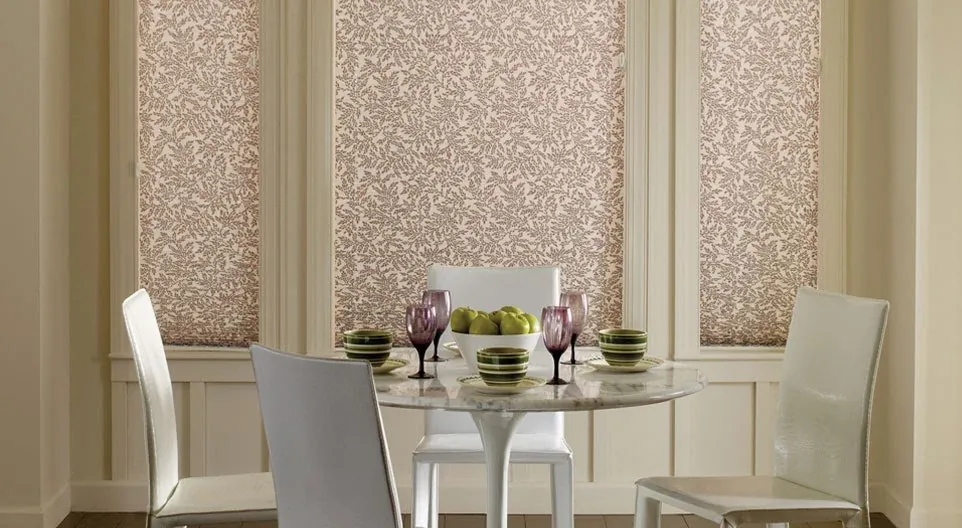
Rollers are not only for neutral fabrics. A printed or patterned roller can bring color to a cottage kitchen or a ranch dining room while staying as flat and slim as any plain roller, and it rolls away completely when you want the window bare. In a cape, a soft pattern can suit the period character of a small dining room.
Kitchens deserve a practical choice: a light filtering fabric that wipes clean, on a cordless or motorized lift so you are not reaching over the sink. Bathrooms usually take a room darkening fabric for privacy.
When choosing roller shades in Yarmouth for a whole house, we lay the samples out room by room so you can see how color and pattern carry through.
Measuring both kinds of house
The two halves of town ask different things at the measuring stage. An antique cape has frames that have moved over a long life, so each opening gets three widths and two heights, plus a depth reading at several points across the head. Where the shade would scrape or hang crooked inside the frame, mounting it on the casing is the honest recommendation.
A post-war ranch is usually squarer, but its picture windows and sliders raise questions of fabric width and where to split a shade, and its windows sit close under the eaves, so we check the space above each one.
On installation day the certified Hunter Douglas crew screws every bracket into sound timber, sets the headrails dead level and runs each shade top to bottom to watch it track. Motorized shades are paired to the app and their schedules agreed with you there and then.
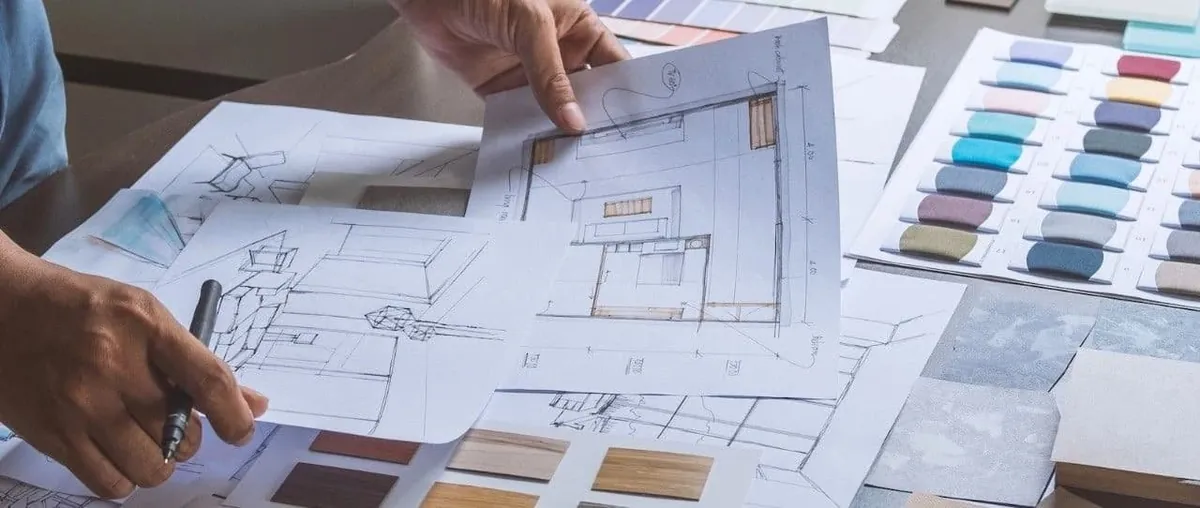
A Hunter Douglas Gallery dealer on both sides of town
Gallery status is something Hunter Douglas awards only to dealers who meet its standards, and Blinds & Designs has it. What that gives a Yarmouth homeowner is access to every roller line we have talked about here, from the plainest Designer Roller to the Alustra collection, along with each screen openness and the PowerView system.
The crews who hang the shades are Hunter Douglas certified. Repairs on blinds and shades you already have are welcome too. For the rest of the house there are cellular, roman and sheer shades, blinds, shutters and drapery: try our plantation shutters in Yarmouth, custom blinds in Yarmouth and everything else on our Yarmouth page, or the full roller shades collection.
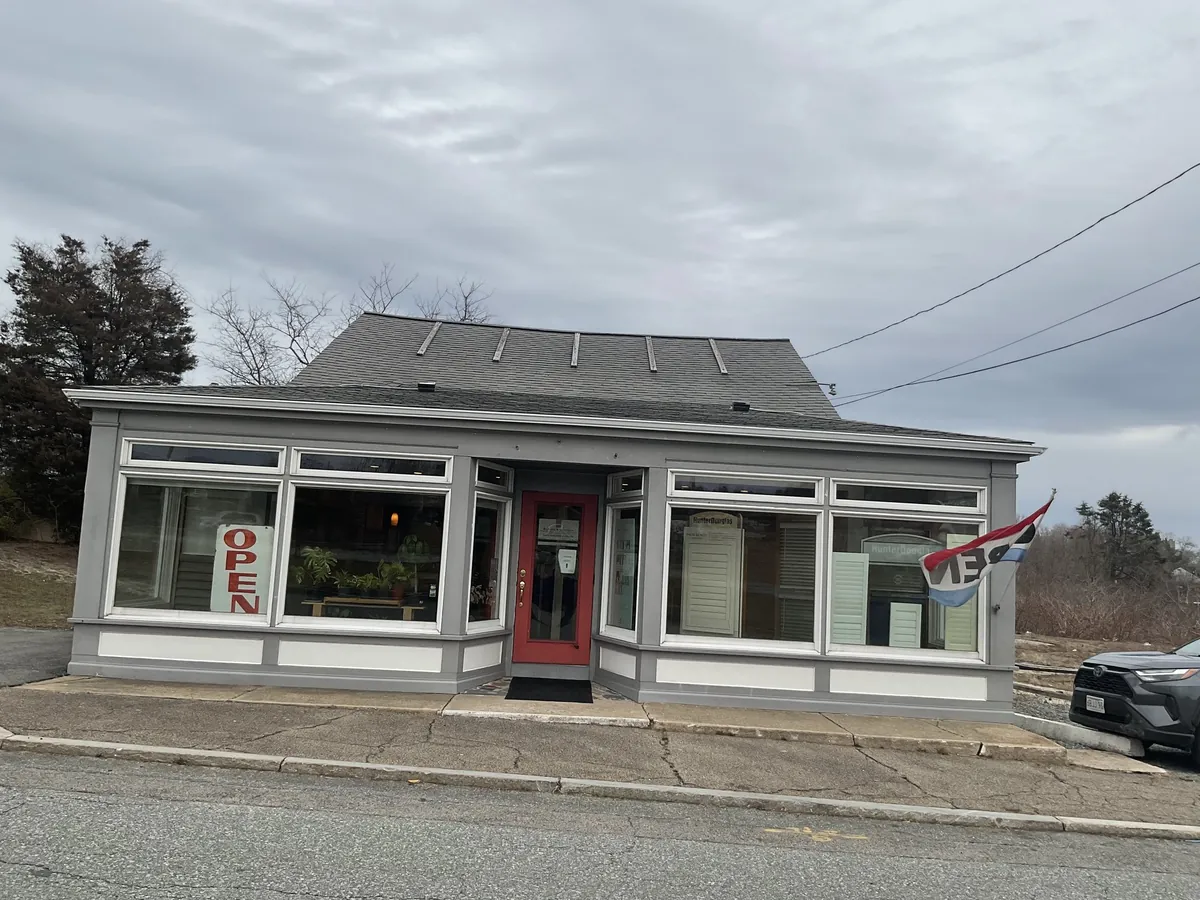
Sagamore, the closest showroom to Yarmouth
Our nearest showroom is in Sagamore, at the canal. The Sagamore team is happy to hear about your house ahead of any visit.
For most Yarmouth customers, though, the samples tell the story best at home, whether that is an antique cape on 6A or a sunny ranch near the Sound.
Questions from Yarmouth
Do roller shades suit an antique cape on 6A?
Very well. A roller is slim enough to sit inside a small, old frame and nearly vanishes when raised, so the trim and the glass stay on view. We check each frame’s depth and squareness before recommending an inside mount.
My South Yarmouth ranch gets strong afternoon sun. What should I choose?
A solar screen roller in the living room usually works best. A fairly open, darker screen controls glare while keeping the yard in view. We bring several to compare.
Can I get privacy in a front room close to the road?
Yes. By day, light filtering cloth hides the room yet keeps it bright. Once the lamps are on, a heavier fabric or blackout is the safer choice.
Can the shades be lowered while my cottage is closed?
With PowerView motorization, yes. You can lower and raise the shades from the app and set schedules that run on their own.
What will the estimate cost me?
Nothing at all. Estimates are free, written up once each window has been measured, and you are under no obligation to go ahead.
Getting started
Antique cape or sunny ranch, roller shades in Yarmouth, MA, are easiest to pick with the fabric right there against your glass. Book a consultation and the samples come to you, each opening is measured, and a free estimate follows. Questions first? The call button reaches us, and the Sagamore showroom is the nearest place to stop in.