
Two towns’ worth of houses in one
Drive from Yarmouth Port down to South Yarmouth and you cross two eras of building. On the bay side, Route 6A runs past antique capes and old village houses with small-paned sash, set back behind fences and lilacs. On the sound side, the streets around Bass River and toward the beaches are packed with post-war ranches and cottages, close together on small lots. The light changes just as much: cool and steady to the north, strong and hot to the south. Planning motorized blinds in Yarmouth, MA starts with knowing which half of town the house is in.
What the two halves share is a set of everyday nuisances that a motor fixes. On the bay side, the windows are small, deep and often behind furniture. On the sound side, the windows are bigger, the sun is fiercer and the neighbors are closer. Either way, someone is walking round the house twice a day adjusting shades by hand.
Hunter Douglas PowerView takes that job away. Each shade carries a quiet motor in its headrail and moves at the press of a remote, from the PowerView app on a phone or tablet, or on a schedule you set once.
Six options for Yarmouth windows
Every one of these can be ordered with a PowerView motor. We bring samples to your door so you can try them against your own windows.
Banded shades
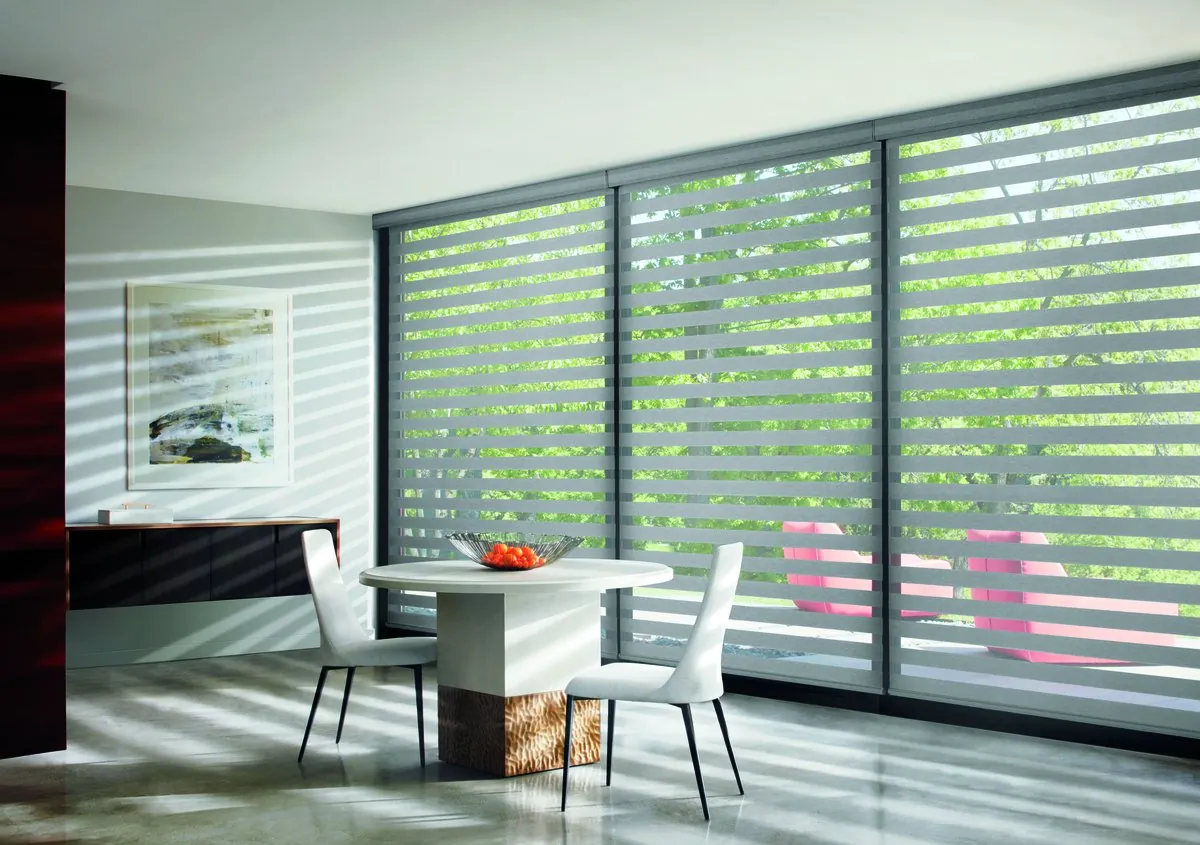
Sheer and solid stripes that shift to open or close the view. A good match for a bright, south-facing room.
Wood blinds
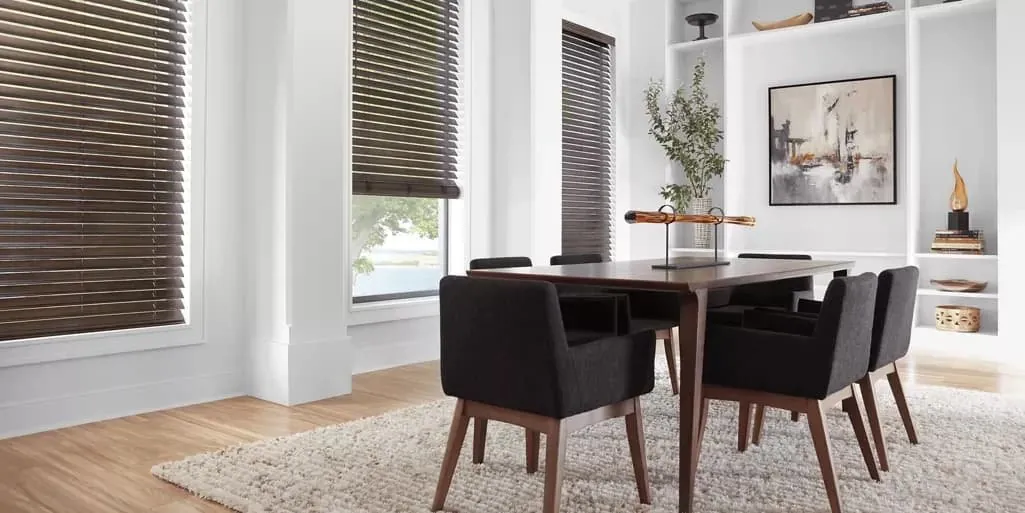
Warm slats that suit an antique dining room. Which sizes can take a motor is confirmed when we measure.
Cellular roller shades
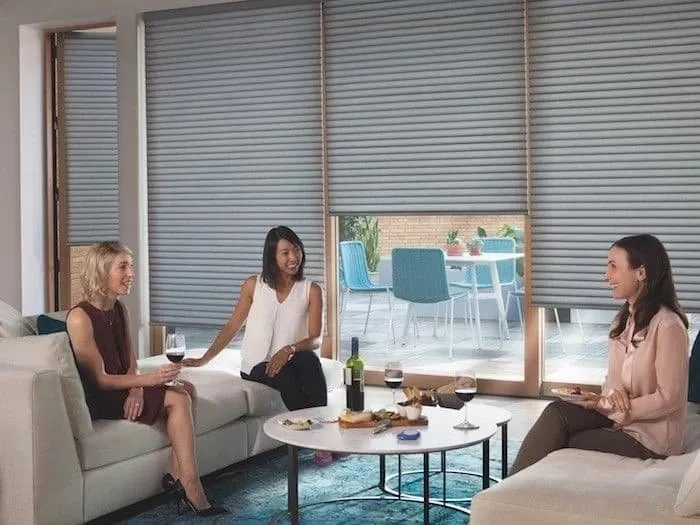
A roller with honeycomb fabric, combining a slim look with cells that hold air against the glass.
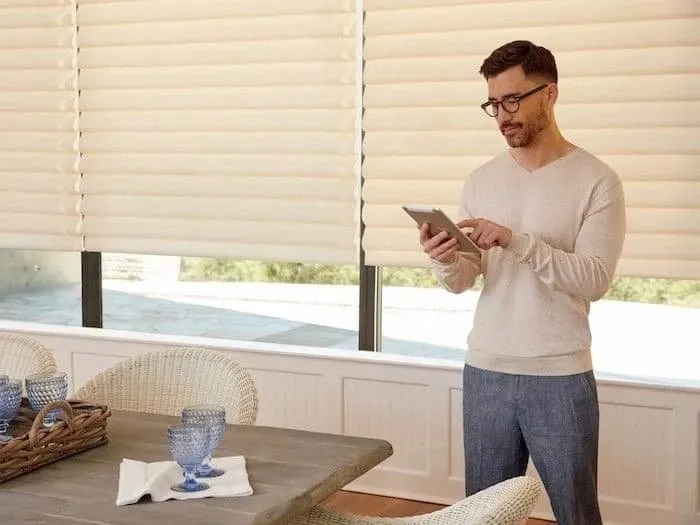
App control
The PowerView app gathers the whole house on one screen, with a room for every group of shades.
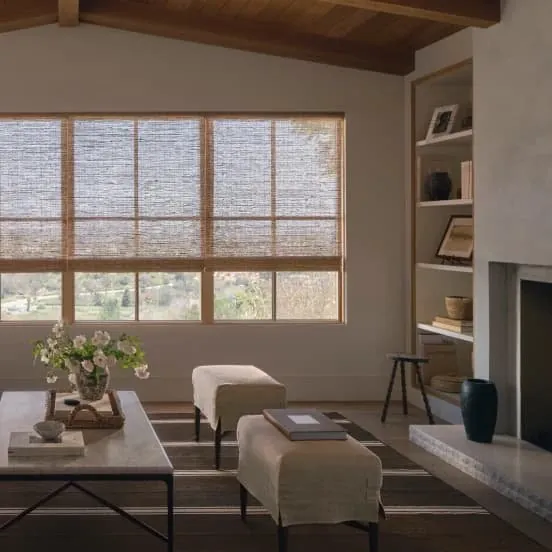
Woven shades
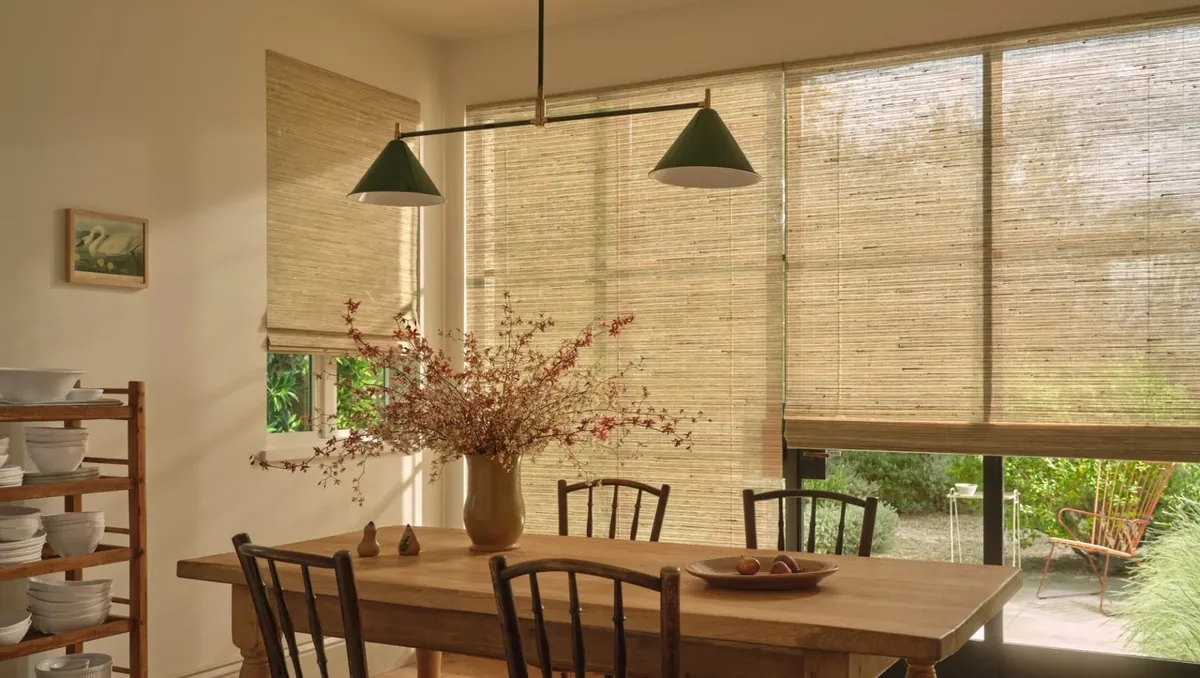
Natural fibers that soften a modern room or a cottage, with light passing through the weave.
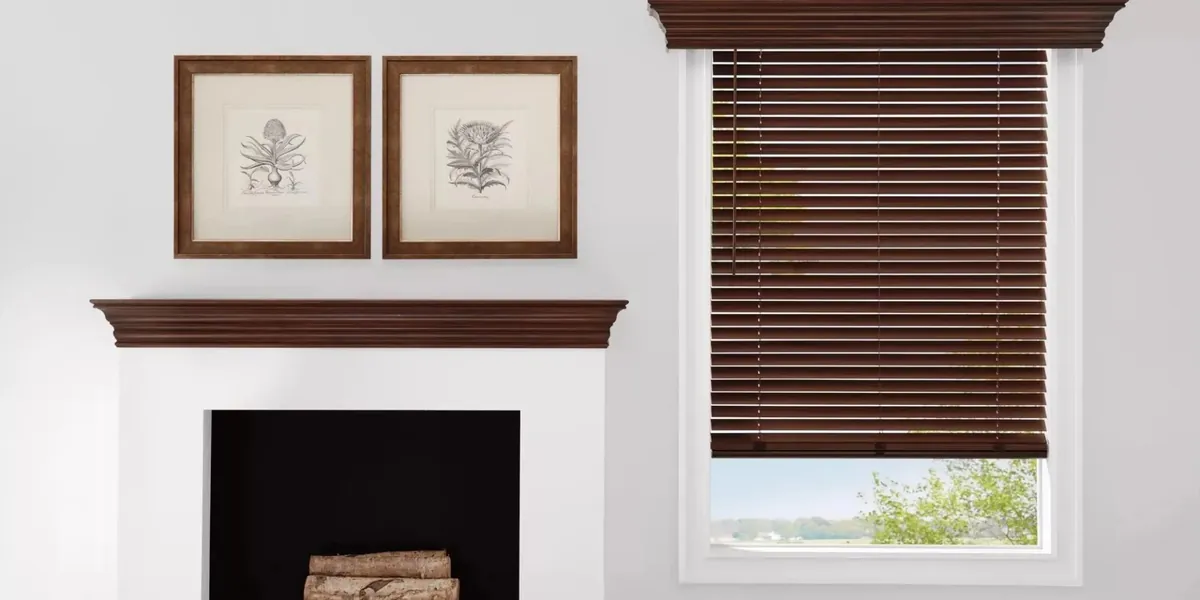
Wood blinds with a cornice
A tailored, traditional finish for a period parlor, with a cornice hiding the headrail.
The bay side: capes on the Old King’s Highway
North of the Mid-Cape Highway, Yarmouth Port and the stretch of 6A through it hold some of the town’s oldest houses. Capes and old colonials face the road with small double-hung windows, many still with their original panes, and the rooms behind them are snug and low. Windows sit where the frame allowed: tight under the eaves upstairs, beside chimneys, over built-in benches.
Those positions are what make a manual shade awkward. A shade over a window seat means kneeling on the cushion. A shade in an upstairs gable means leaning across the bed. A shade beside a chimney breast is half hidden behind a chair. Motorizing them puts all of these on a button, and a morning and evening schedule means nobody has to reach for them at all.
The bay side of town also looks out toward Cape Cod Bay and the marshes behind it. North-facing glass rarely gets direct sun, so the motor’s main job here is comfort and privacy: closing the shades at dusk to keep warmth in and lamplight private, and opening them in the morning to let the soft northern light in. For an old cape on 6A, motorized blinds in Yarmouth, MA are as much about winter evenings as summer afternoons.
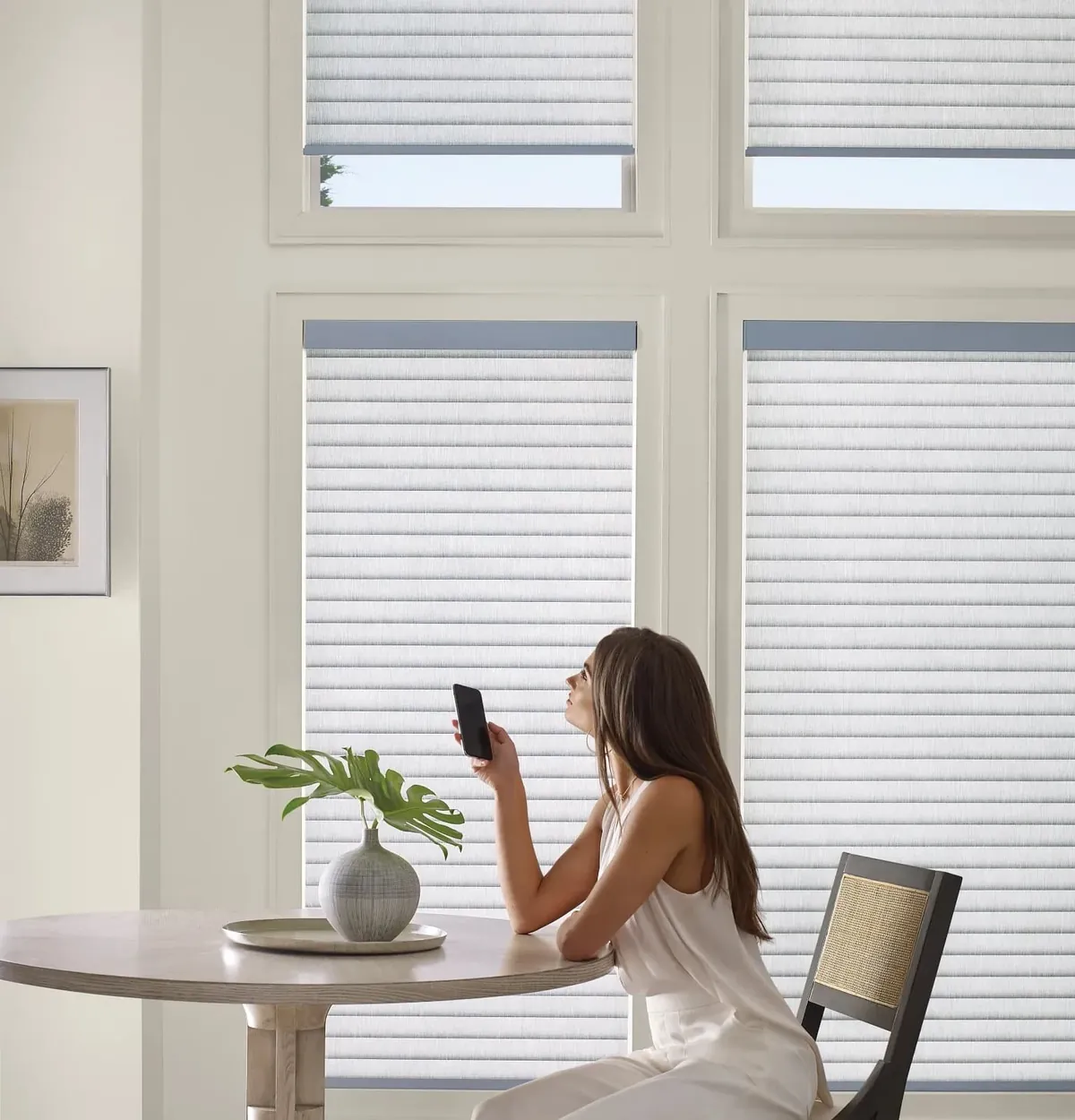
Small-paned sash and the look from the road
The old houses along 6A are part of a long, unbroken streetscape, and how a window looks from the road counts. Muntins divide the glass into small panes, and whatever hangs behind them shows through every one. A shade stopped crooked, a cord looped across the glass or a bright pattern facing out spoils the effect.
A motorized group keeps the front of the house orderly: every street-facing shade stops at the same height, and there is no cord to be seen behind the panes. Choosing a pale lining for the street side of each shade, whatever the room side looks like, keeps the house looking calm and uniform from outside.
Fitting inside the frame lets the casing and its trim stay fully visible, with the headrail tucked up at the top of the opening. On old frames the width can vary from top to bottom, so we measure each opening at several points and check the depth before deciding on the mount.
The sound side: South Yarmouth’s ranches and cottages
South of the highway, the housing changes completely. The neighborhoods around Bass River and toward the beaches on Nantucket Sound filled up after the war with ranches and cottages built close together: single stories, picture windows at the front, sliders at the back, small bedrooms down a hall. Many of the cottages started as summer places.
Here the sun is the main story. South- and west-facing glass takes the full afternoon light off the sound, and a ranch’s picture window can turn the living room into a greenhouse by three o’clock in July. Bedrooms on the east side get the early sunrise. With houses so close together, privacy matters at night too.
Motorized shades deal with all of it on schedules. The picture window lowers as the sun comes round and rises again in the evening. The bedrooms stay dark until the hour you choose. The windows facing the house next door close at dusk. For a ranch in South Yarmouth, motorized blinds in Yarmouth, MA usually start with the picture window and the slider, the two biggest pieces of glass in the house.
Along Bass River
The houses that line Bass River, and the streets running down to it, sit somewhere between the two halves of town. Some are older and some are post-war, but many have been rebuilt or enlarged to make the most of the water, with wide windows and decks facing the river. Light here comes off the water in the morning or the evening depending on which bank the house is on, and it can be surprisingly bright.
For these rooms, the aim is usually to keep the river in view while taking the edge off the glare. A screen roller does this well, and its weave can be chosen to keep more or less of the outlook. Sheer shades are another option, softening the light while their vanes tilt for privacy when boats are passing close by. Either can be grouped and set to lower only for the hour or two when the sun is low over the water.
Riverside houses often have rooms on two levels facing the same way. Grouping the shades by floor, or by room, lets each part of the house close when its own sun arrives and stay open the rest of the day.
Picture windows and sliders
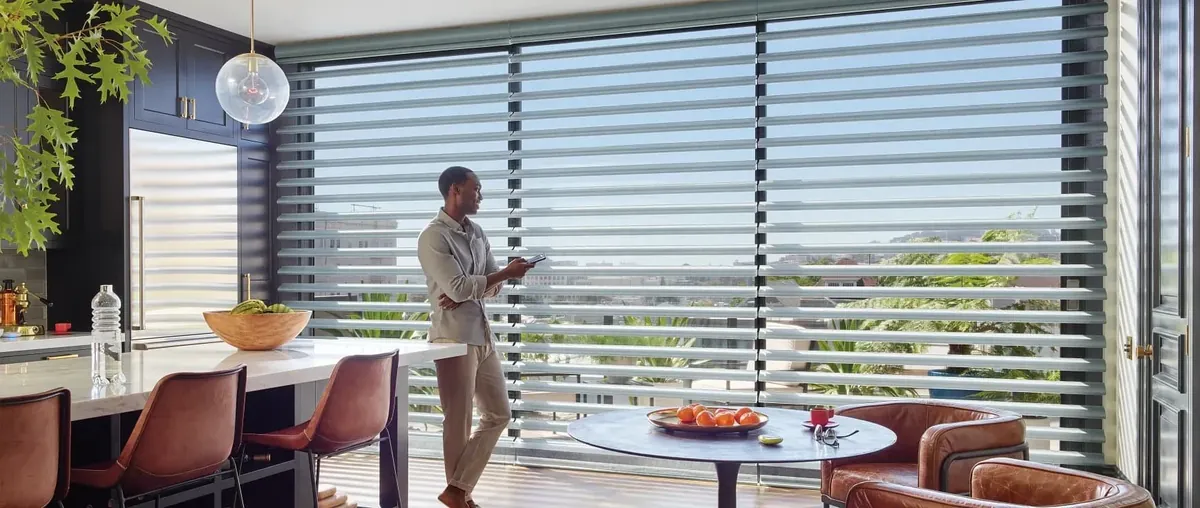
A ranch’s picture window is often made of three or more sections, sometimes with narrow side windows that open. Each section gets its own shade, made to its own size, and the motors let them move together as one, all stopping level at any height. You can also split them, keeping the middle open for the view while the sides close against the sun.
The slider at the back is a different case, because it is a door. A vertical honeycomb shade that travels to one side keeps the door usable. A roller set high above the frame is another option. Whether the slider is motorized depends on how often the door is used, and we talk that through with you rather than assume.
Banded shades and cellular rollers suit these modern openings well. Banded fabric shifts its sheer and solid stripes to control the view and the light, while a cellular roller gives the clean look of a roller with the warmth of honeycomb fabric.
Two halves, two plans
Because Yarmouth splits so clearly, we often think of a house as belonging to one half or the other, and plan accordingly:
- Bay-side antique houses need help with awkward, small windows and with winter warmth. Honeycomb and Roman shades, grouped for the street side and closed at dusk on a schedule, suit them best.
- Sound-side ranches and cottages need help with strong sun, glare and close neighbors. Screen rollers, banded shades and light-filtering honeycomb fabrics, lowered on afternoon schedules, suit them best.
- Bedrooms everywhere benefit from room-darkening fabric and a morning schedule.
- Houses that have been extended, on either side of town, may have both kinds of window. One PowerView system runs them all.
Seeing which half your house belongs to makes it much easier to decide what motorized blinds in Yarmouth, MA should do for you, room by room.
Setting up schedules and scenes
A schedule is simply an instruction: at this time, put these shades in this position. Most Yarmouth houses run on a handful. On the sound side, a summer afternoon schedule lowers the south and west shades, an evening one opens them, and a dusk one closes the privacy windows. On the bay side, a dusk schedule closes everything for warmth and a morning one opens it again.
Scenes are saved positions you call up yourself. A movie scene might dim the den. A guests scene might open the living room and close the bedrooms. You call scenes from the remote or the app, and schedules can call them too.
The app is where you build and change these, and the remote is how you use them day to day. Our guide to how motorized shades are controlled walks through each part, and the window covering automation page explains timers and scenes in more depth.
Summer cottages near the beaches
Many of the cottages toward the sound are summer places, busy for a few weeks and empty for the rest. When they are empty, motorized shades keep a daily routine, opening and closing so that rooms do not sit under full sun and the cottage does not look closed up from the lane. When you arrive, a scene brings the place back to life in seconds.
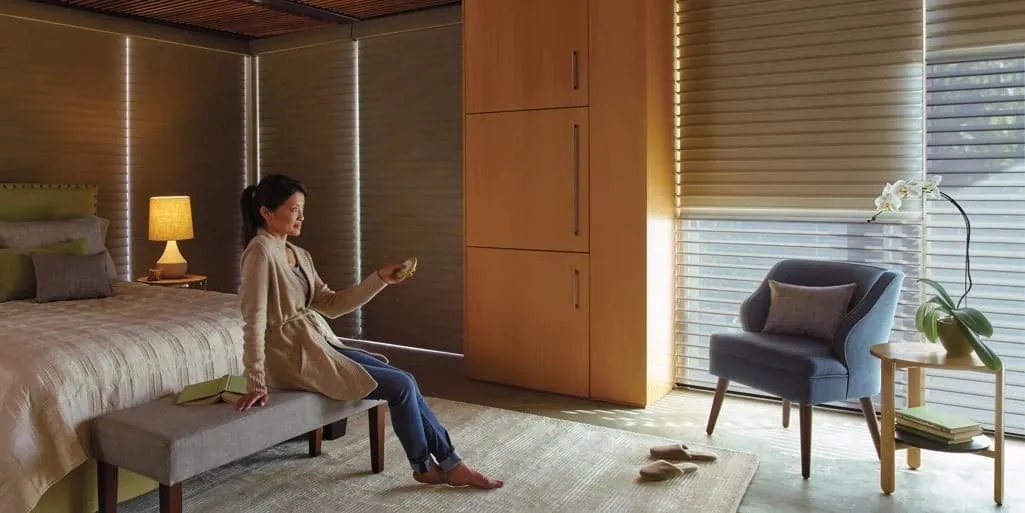
For visitors, a remote by the bed is easy to explain. For a cottage near the beach, the lack of cords is practical too: nothing to tangle, nothing to catch on a window opened for the sea breeze, and the lifting parts tucked inside the headrail away from the salt air.
The question of powering each motor is answered at the visit, room by room, once we have seen every window.
Dens, studies and media rooms
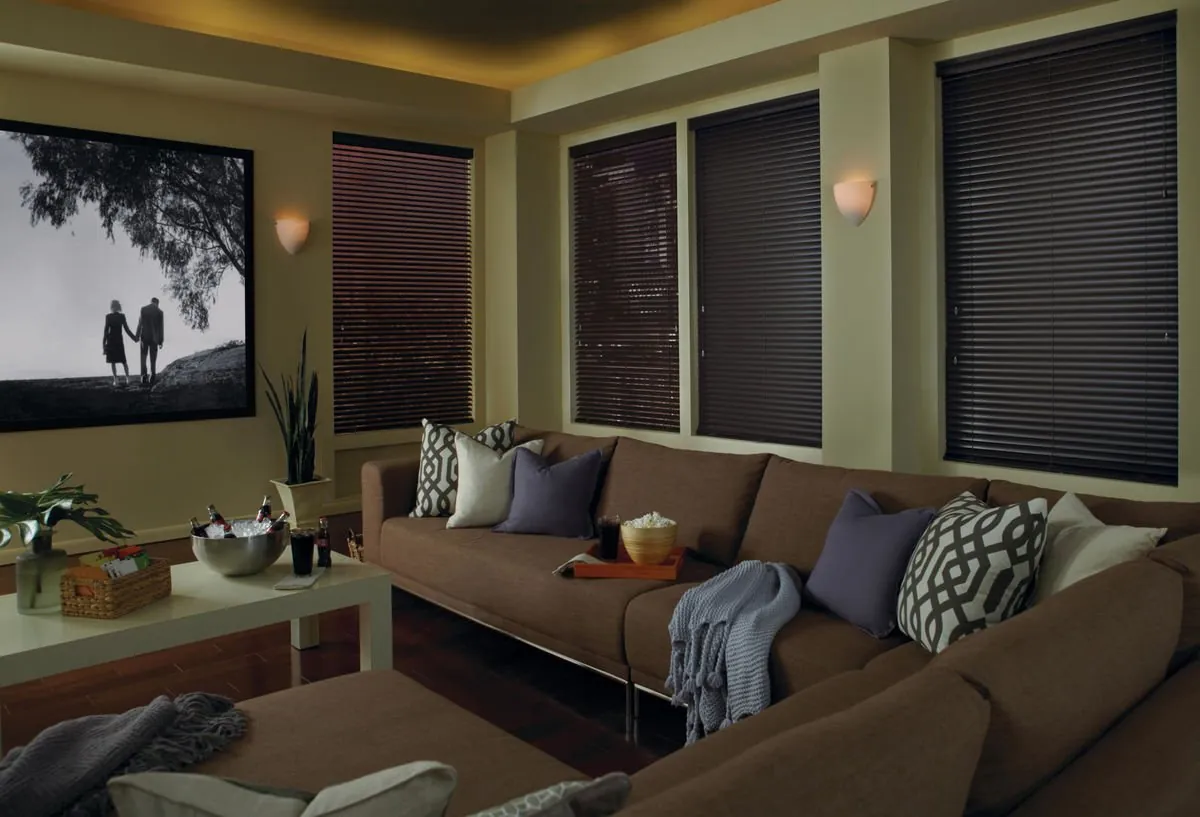
Plenty of Yarmouth houses have a room set aside for a television, a computer or a quiet evening, often in a converted garage or a back bedroom. Glare on a screen is the usual complaint. Blinds are a good answer here: the slats tilt to send light up toward the ceiling, keeping it off the screen while the room stays light. With a motor, the tilt can be changed from your chair.
For a room that needs to go properly dark, a room-darkening shade does more than a blind. Either can be part of a movie scene that dims the den with one press. Whether a particular blind can take a motor depends on its size and style, which we check at your windows.
Warmth in the old houses, coolness in the new
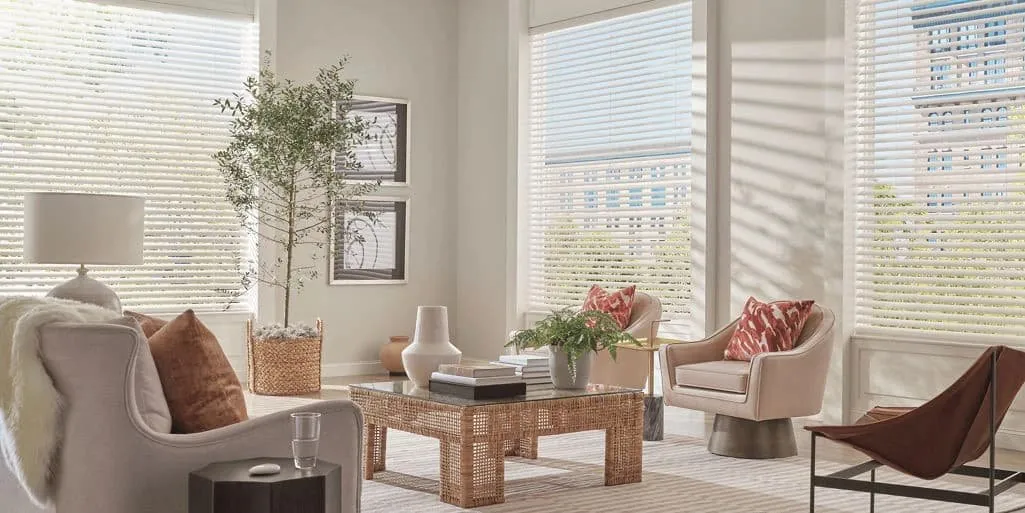
Two very different problems, the same tool. In an antique cape on the bay side, the original glass is thin and the north wind finds it, so a honeycomb shade lowered at dusk adds a layer of still air against the cold. A motor makes sure it happens every evening without anyone remembering.
In a ranch on the sound side, the summer sun through big glass is the challenge. Shades lowered through the hottest hours slow the heat coming in and protect floors and furniture from fading. Again, the motor and the schedule do the remembering.
Many houses need both, depending on the season. The app lets you keep a summer set of schedules and a winter one and switch between them in a moment.
How we work with you
- Request a consultation online, or reach us with the call button.
- We bring samples in one of our vans, so you choose in your own light.
- We walk through the house and note which rooms face the sun, the street and the neighbors.
- We measure every window, from small-paned sash to picture windows and sliders.
- We plan groups, scenes and schedules, and how each motor will be powered.
- You receive a free estimate to consider without any pressure.
- Our Hunter Douglas certified installers fit everything and program it before they leave.
You can read about what happens at an in-home consultation before we come.
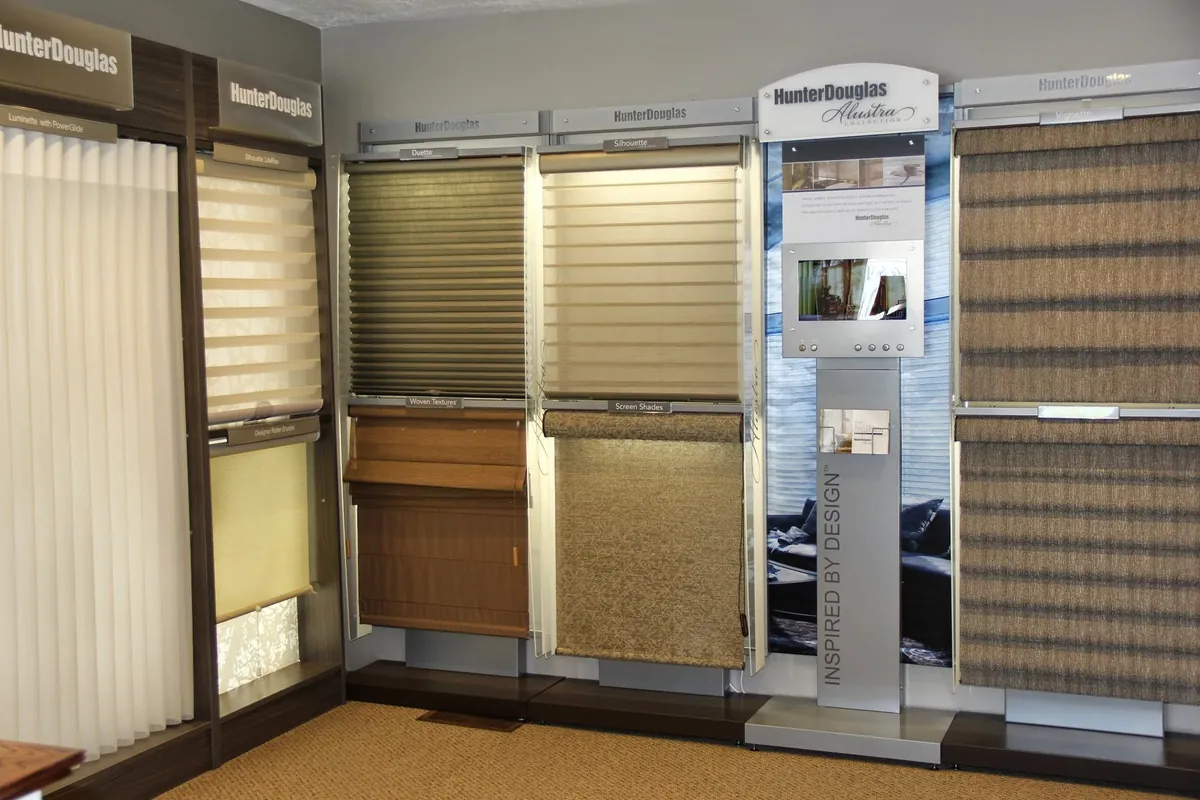
What a Gallery dealer brings
Blinds & Designs is a Hunter Douglas Gallery dealer, so the full Hunter Douglas range is available from one consultation. That is useful in a town with two such different kinds of house: Roman and honeycomb shades for an antique cape, banded and roller shades for a ranch, and blinds wherever slats suit, all able to run on PowerView.
Our installers are certified by Hunter Douglas and handle the programming as part of every fitting: stopping points, remotes, the app and schedules. We also offer interior design consultations and repairs on blinds and shades you already have.
For all our services in town, see the Yarmouth page, or go to cellular shades in Yarmouth and roller shades in Yarmouth. The full range of PowerView options is on our motorized blinds and shades page.
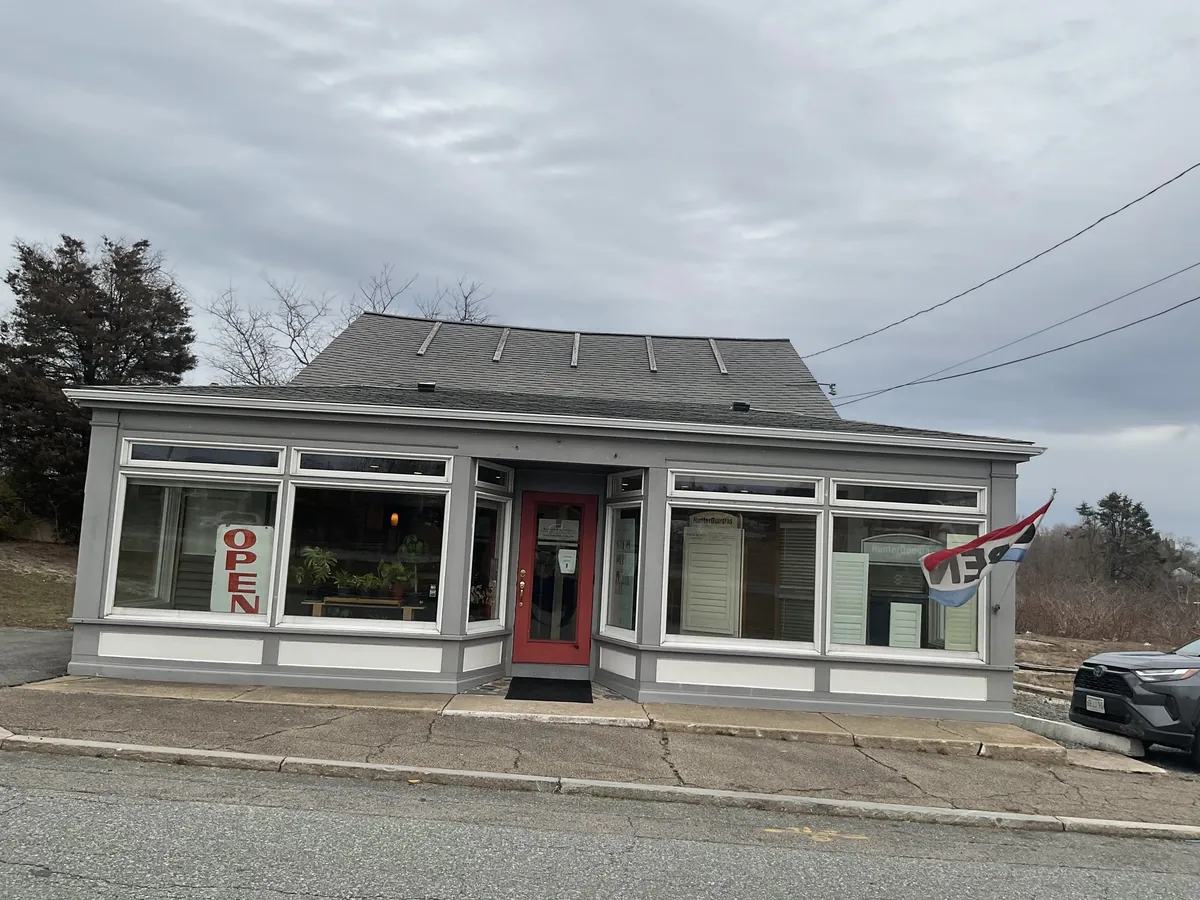
Sagamore is our closest showroom
The Sagamore showroom is the nearest of our locations to Yarmouth, at the Cape end of the bridge. You are welcome to come in.
That said, the quickest way to plan motorized blinds in Yarmouth, MA is usually at home, where we can see whether your rooms take the northern light of the bay side or the strong sun of the sound side.
Questions from Yarmouth
Our antique cape on 6A has very small windows. Can they be motorized?
In most cases, yes. Shades are made to each window’s own size, and thick old walls usually leave room for a motorized headrail. We measure each opening at several points and confirm what fits.
Our ranch’s living room gets far too hot in the afternoon. What helps?
A schedule that lowers the picture window shades as the sun comes round, with a screen or light-filtering fabric that keeps the room bright. The shades rise again in the evening.
Can we keep the middle of our picture window open and close the sides?
Yes. Each section has its own shade, and they can move together or separately, so the center stays open for the view while the sides close against the sun.
Will the shades in our summer cottage keep moving while we are away?
Yes. Schedules run every day from the system itself, whether or not anyone is in the cottage.
Is the estimate free?
Yes. We measure at your house and give you a free estimate for every shade and motor we discussed.
Ready when you are
Request a consultation and we will bring samples to your house, on the bay side or the sound side, measure every window and give you a free estimate. Prefer to talk it over first? Use the call button, or call in at the Sagamore showroom.