
Long bay light and empty weeks in Dennis
Two very different kinds of house share this town. Up on Route 6A, Dennis Village keeps its antique captains’ houses: square, dignified, with rows of tall sash looking out over old yards toward the bay. Down in Dennis Port the streets tighten into close-set cottages and condominium buildings a short walk from the water of the sound. We fit motorized blinds in Dennis, MA, in both, and the reasons for choosing a motor are not the same in each.
What they do share is the light. Rooms that face the bay take a long, low sun late in the day, and that slanting light is the kind that bleaches a sofa, a rug or a shade fabric fastest, because it reaches deep into the room and lingers. They also share a pattern of use. A good many houses here sit empty for weeks at a stretch, or fill up for a summer and then go quiet again.
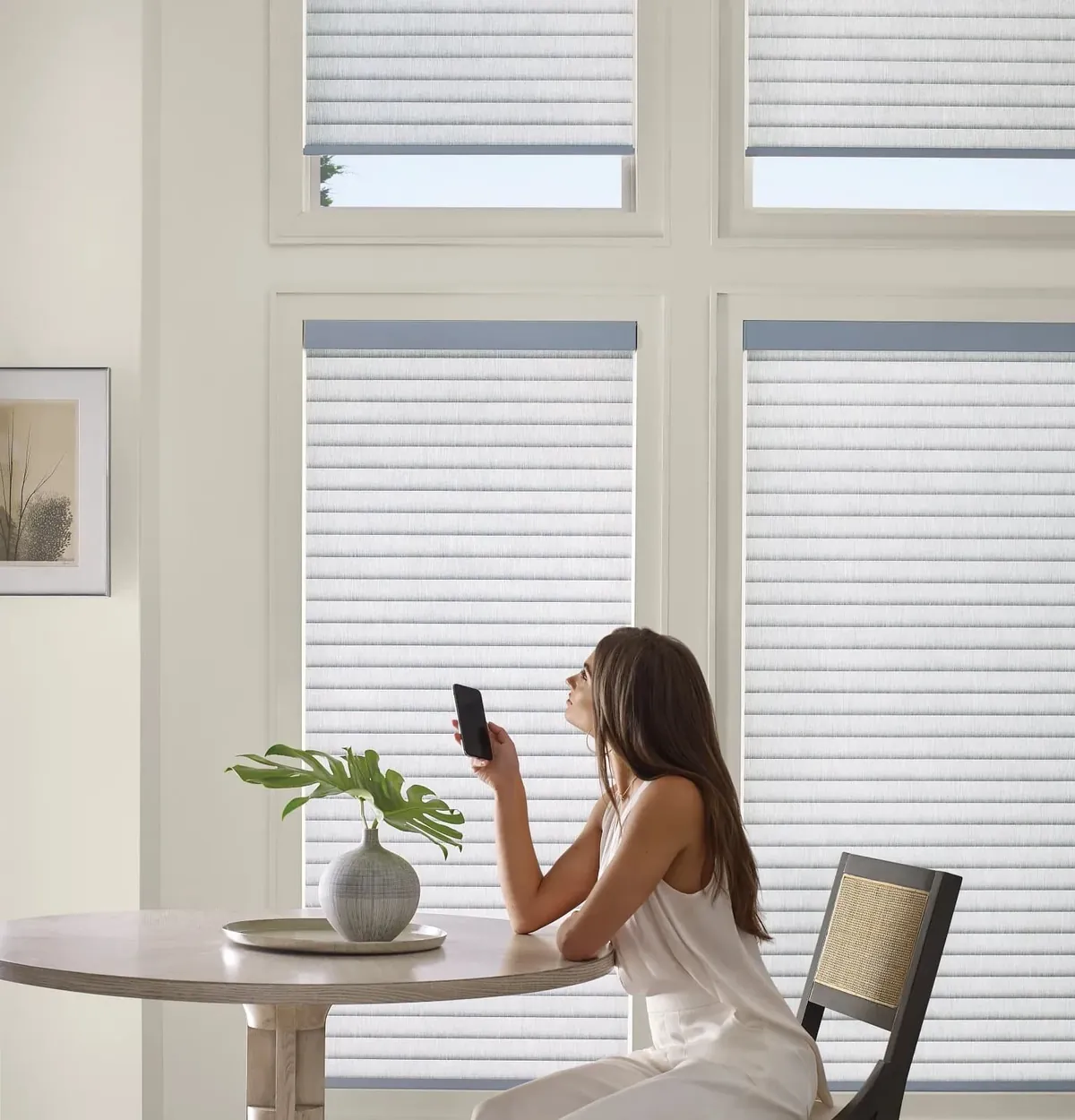
A PowerView shade answers both. It lowers on a schedule as the afternoon sun comes round, whether anyone is home or not, and you can check on it or move it from the app on your phone wherever you happen to be.
Shades and blinds we put on a motor here
Each of these can be ordered with a Hunter Douglas PowerView motor, and between them they cover most requests for motorized blinds in Dennis, MA. They are the ones that come up most often in village and Dennis Port houses, and every sample travels to your door in our van.
Silhouette sheer shades
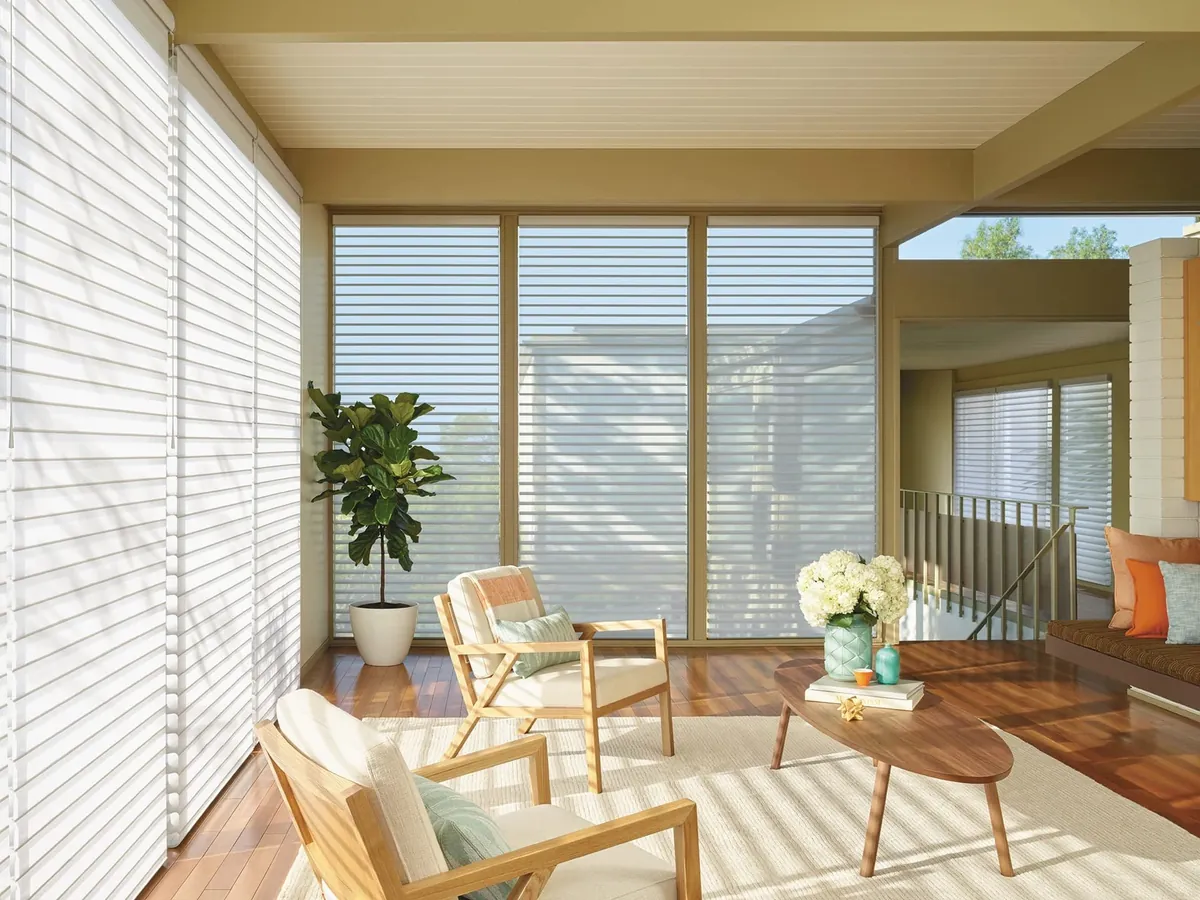
Soft fabric vanes between two sheer layers. Tilt them to dim the low bay sun without losing the view, a good match for a sound-side living room.
Duette honeycomb shades
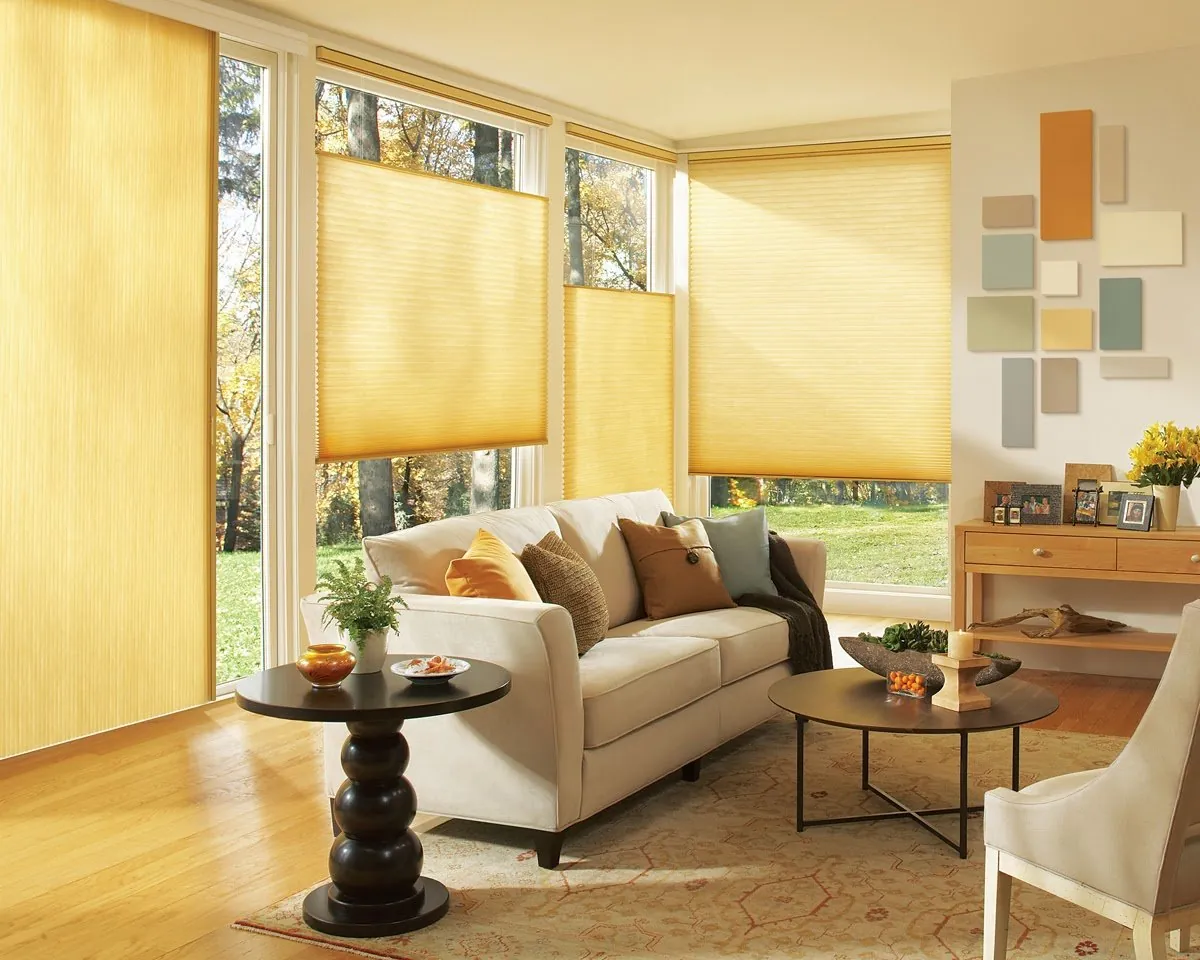
Air held in each cell keeps a captain’s house parlor warmer on a winter evening. Top-down styles keep the upper sash clear.
Designer Roller shades
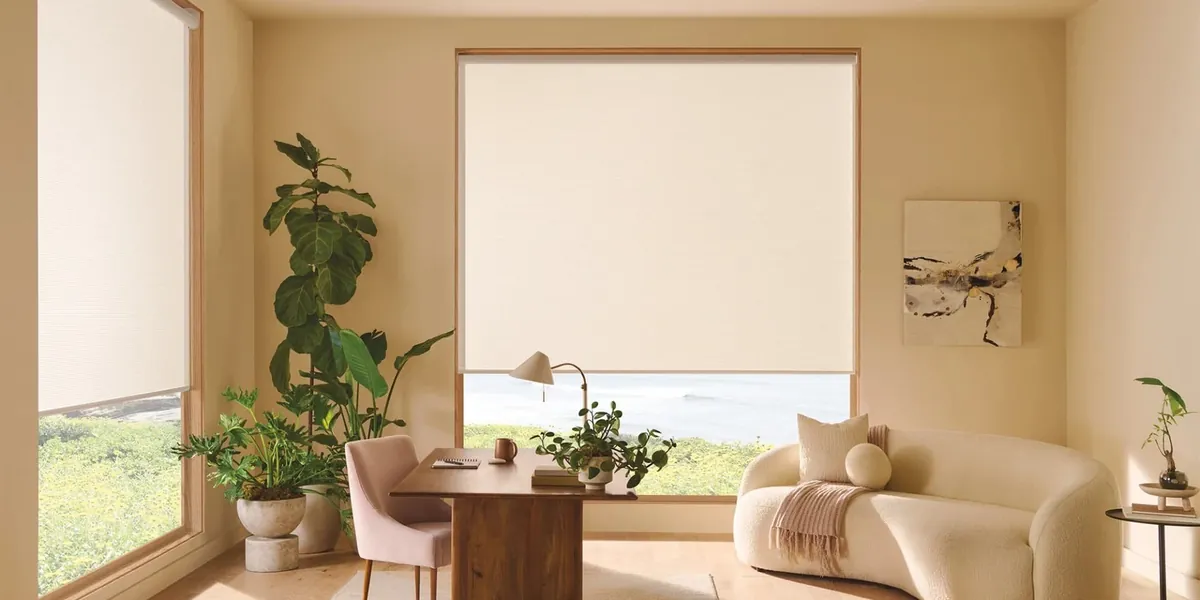
A clean roll of fabric on a slim headrail. Easy to motorize across a run of wide condominium windows.
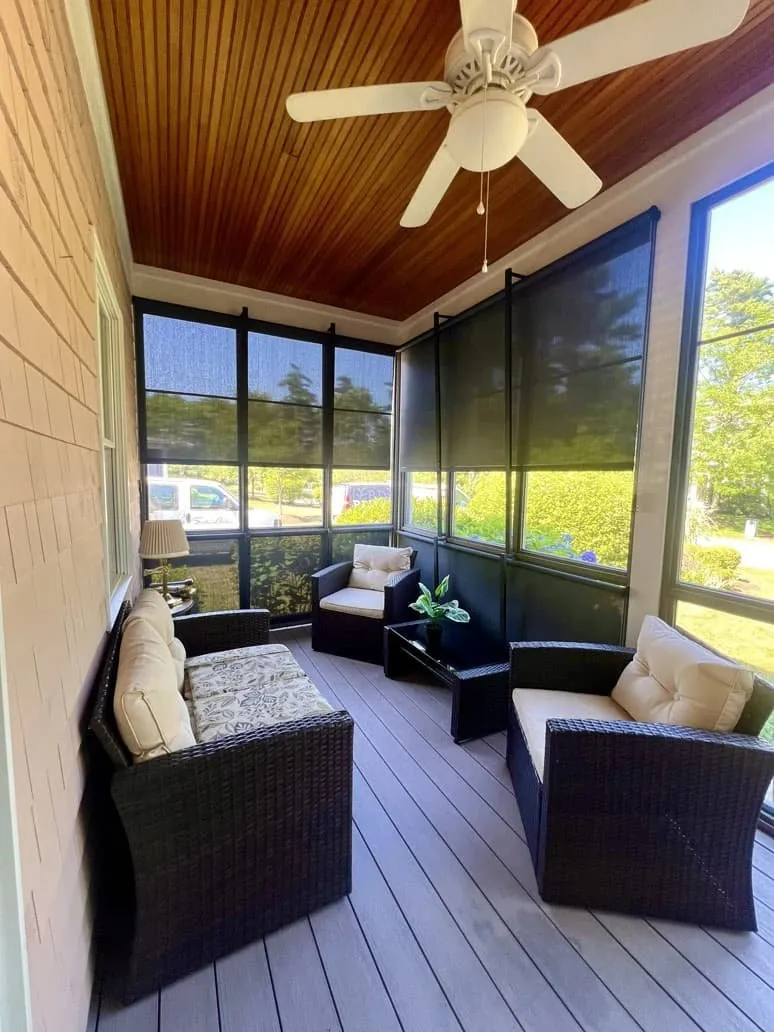
Designer Screen shades
One of our own installs. Screen fabrics cut glare and heat while you still see out, useful on a porch or sunroom facing west.
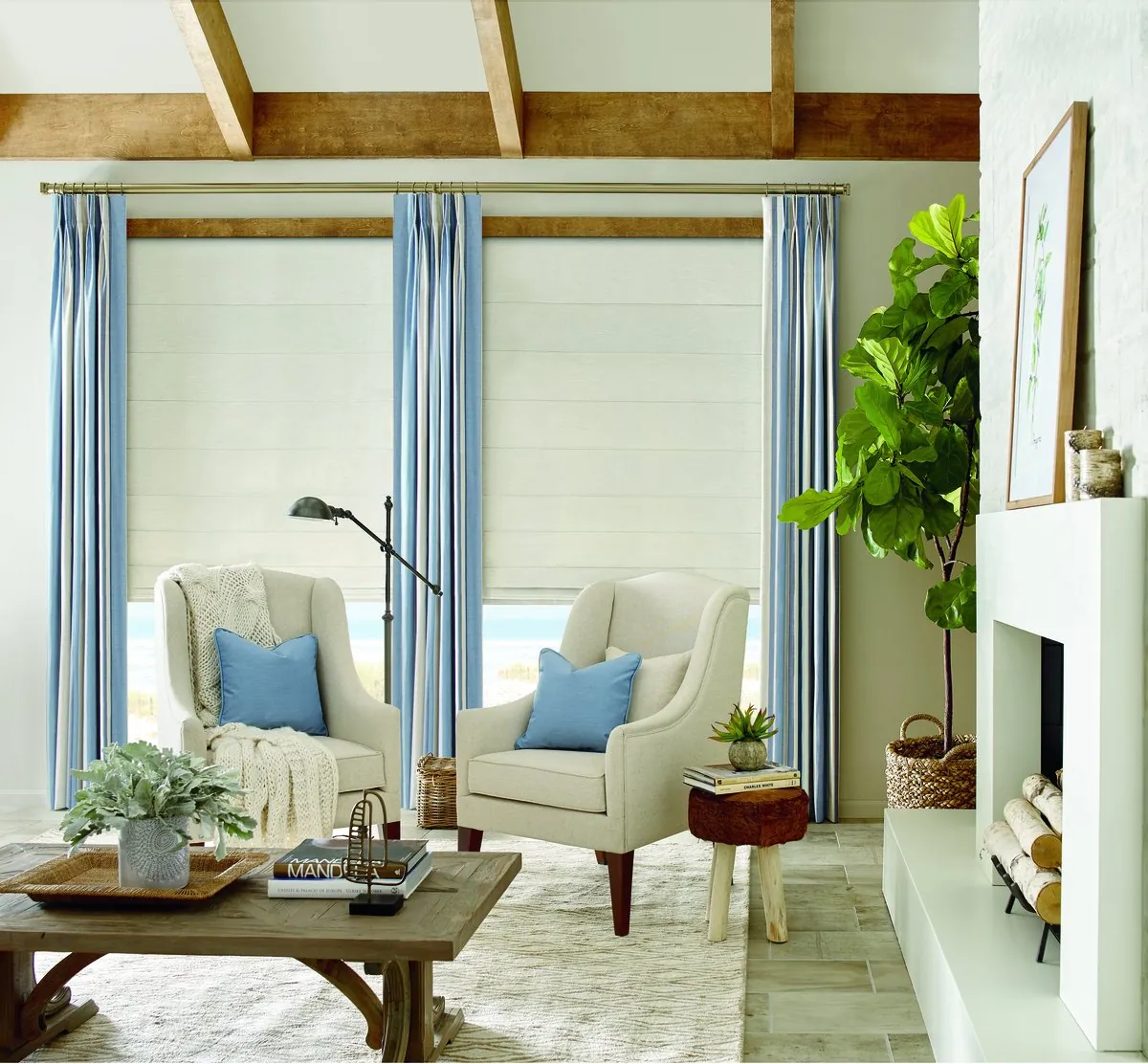
Vignette Roman shades
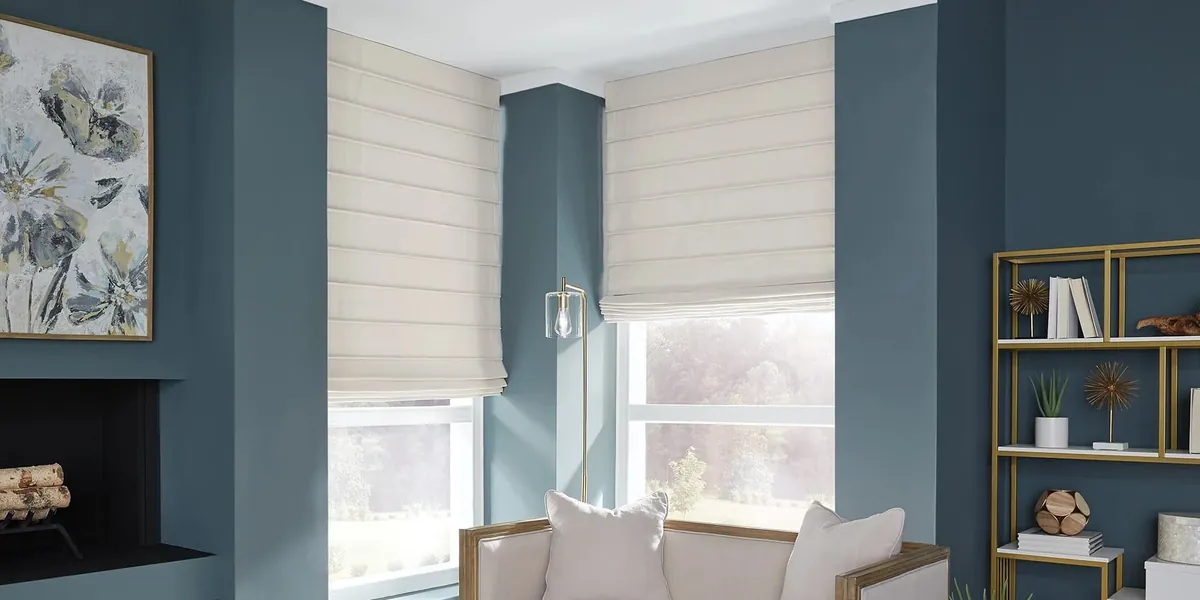
Flat or folded fabric for a formal front room. The motor keeps every fold even on a row of tall sash.
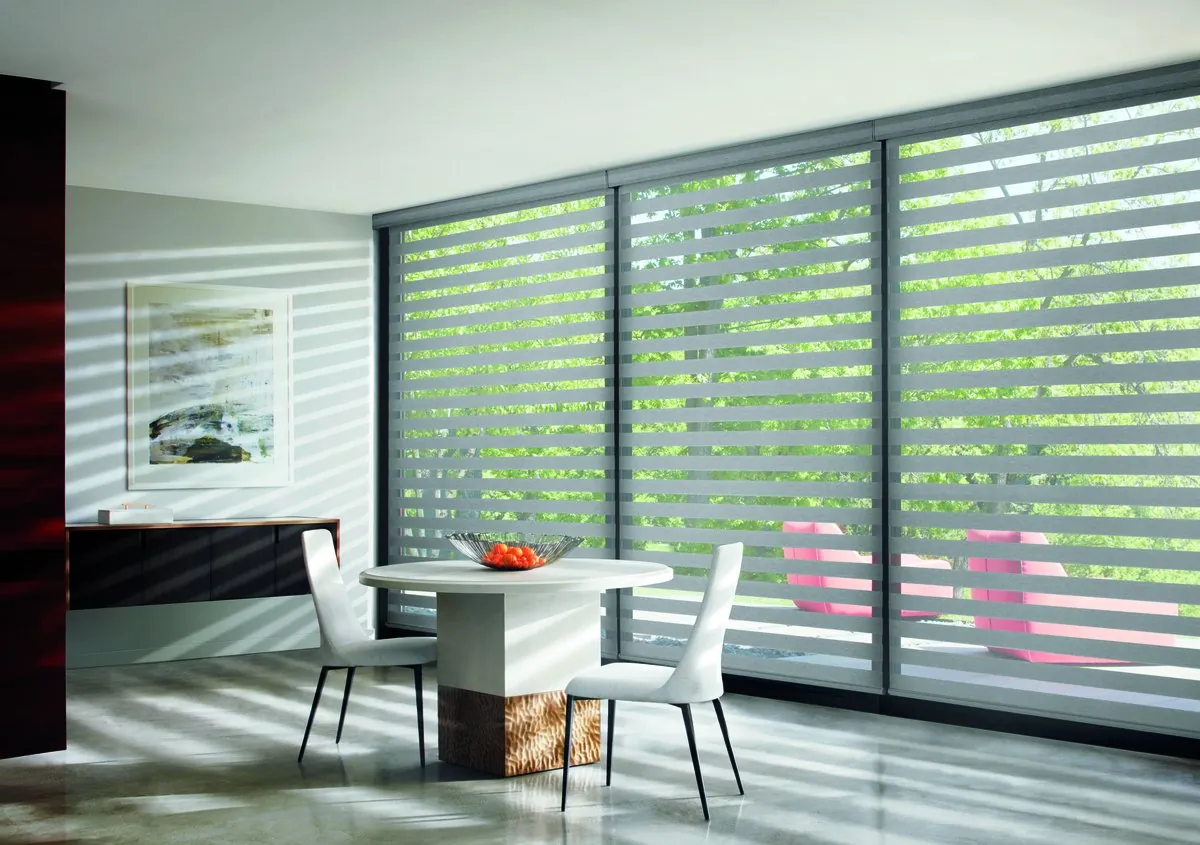
Designer Banded shades
Alternating sheer and solid stripes that slide past each other, so light and privacy change with a tap.
Captains’ houses along 6A
The old houses of Dennis Village were built by and for people who made their living at sea, and they show it in their windows. A typical front has four or five tall double-hung sash on each floor, set in deep painted casings, with matching windows marching down both sides. Inside, the ceilings are generous and the rooms are square and formal. It is a lot of glass to manage by hand, and in an upstairs bedroom the top sash is often a stretch.
Motorizing those rooms is less about novelty and more about order. With every shade in a front parlor on one PowerView group, the whole row lifts and settles to the same line. From the road that looks tidy and deliberate, which suits the character of 6A. Inside, it saves walking from window to window twice a day.
We fit the shades inside the casing wherever the depth allows, so the painted trim stays in full view and the motorized headrail sits out of sight at the head of the opening. Where an old frame is too shallow, or has been painted so many times that the stops crowd the opening, we suggest a slim mount on the face of the casing and show you how it will look before anything is ordered.
How the bay light fades a room
Sun that comes in high at midday falls on a short strip of floor near the window. Late-day sun off the bay does something different. It comes in nearly level, travels the full depth of the room and stays on the same fabric for hours. Upholstery, a wool rug, the spines of books on a shelf, the face of a shade itself: all of it fades from the side nearest the glass first.
The simplest protection is a shade that is down while that sun is on the room and up when it is gone. That is very hard to manage by hand, because the window of strong light shifts through the year and you are not always home at the right hour. A PowerView schedule can lower the bay-side shades through the late afternoon and lift them again around sunset, and you set it once.
Fabric choice matters as well. A sheer or light-filtering shade on a schedule lets the room stay bright while it takes the worst off the sun. A screen fabric handles the hottest glare. For the shade itself, lighter neutrals hold their color longest on a window that takes direct sun day after day, and we point those out when you are choosing.
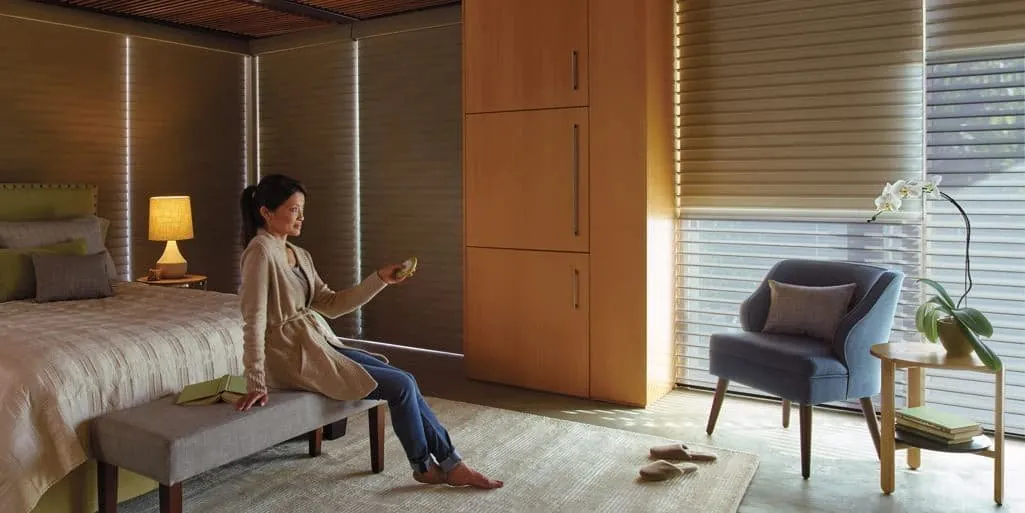
Closing up a house between visits
For a house that is used in spells, the shades matter most when nobody is there to touch them. Left fully up for weeks, they let sun pour onto the furniture all day and announce to the street that the house is empty. Left fully down, the rooms sit dark and the house looks shut tight.
Scheduled shades give you a middle course. They can rise in the morning and lower in the evening, the way they would if someone were living there, and they keep doing it while you are away. The rooms that take the bay sun can come down earlier in the afternoon to protect what is inside. When you arrive for a weekend, one tap in the app sets the whole house the way you like it before you have unpacked the car.
The app also shows you where each shade sits. If a storm is coming through and you want the sound-side windows covered, you can lower them from home without asking a neighbor to let themselves in.
Cottages in Dennis Port
The streets near the sound are a different picture: smaller cottages set close together, many of them added onto over the years, with windows of every size from a narrow bathroom sash to a newer slider out to a deck. Rooms are compact, and the house next door may be only a few steps away.
Privacy is usually the first thing a cottage asks for. Top-down, bottom-up shades are the answer we suggest most, because you can lower the top to let in sky and light while the bottom stays covered from the neighbors. On a motor, that position can be saved as a favorite, so getting it right takes one button rather than fiddling with two rails.
Cottage windows are often low and wide, sometimes behind a bed or a built-in bench. Reaching over to raise a shade every morning gets old quickly. Motorized shades remove the reach and the hanging cords at the same time, which also makes them safer in a house where grandchildren come to stay.
Condominiums near the water
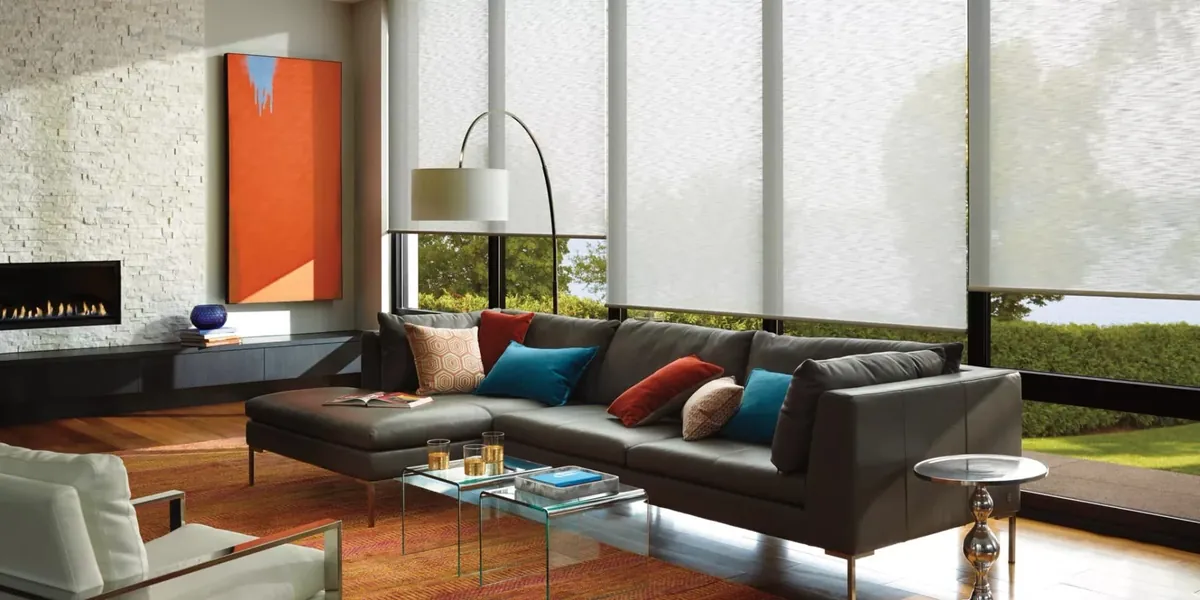
Condominium buildings along the sound tend to have larger windows than the cottages around them, often a wall of glass or a pair of sliders onto a balcony, facing the water and the light. That combination makes a unit bright and pleasant in the morning and very warm by mid-afternoon.
Roller and screen shades suit that kind of glass well. Their headrails are slim, and a long run of windows can be split into several shades that move together as one group. A screen fabric takes the glare and heat off the room while keeping the water in view; a room-darkening roller in the bedroom closes it off completely.
Because many units are second homes, the scheduling features earn their keep here. A unit can close up for the hottest part of each day and open again in the evening without anyone in residence. If your building has rules about how window coverings look from outside, bring them along to the consultation and we will choose fabrics and backings with them in mind.
Three ways to run them
Every motorized shade we fit can be controlled in more than one way, and most households end up using all three.
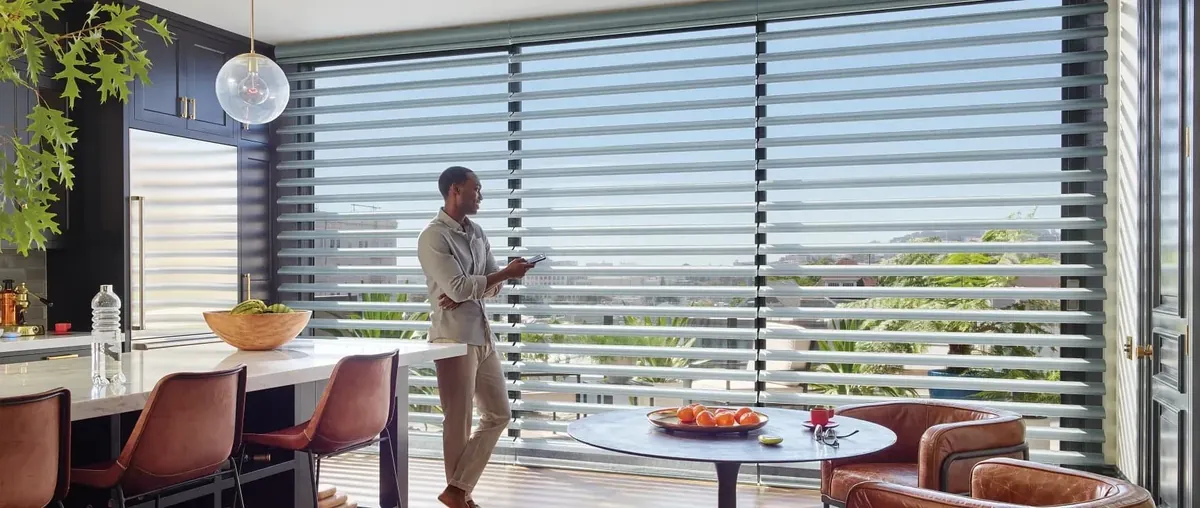
The remote is the everyday tool. It is small, it lives on a side table or on the wall by the door, and it can move one shade, a room or a whole floor. In a cottage with a few motorized windows, the remote may be all anyone ever needs.
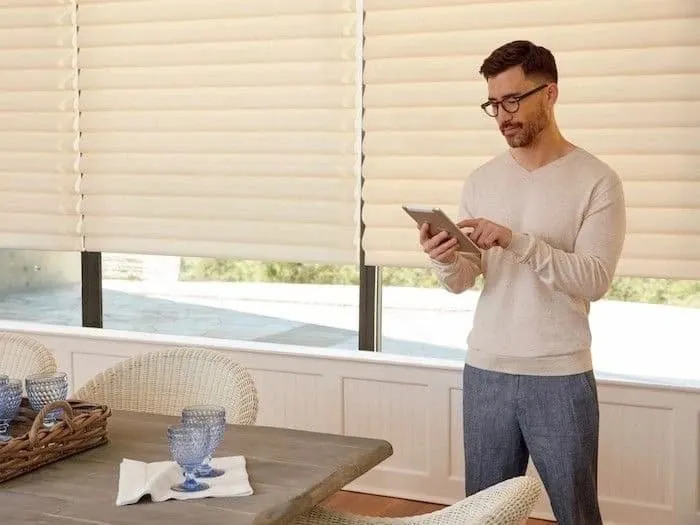
The PowerView app puts every shade on your phone or tablet. You can see each window, move a single shade a little, gather the shades into rooms, and create scenes, which are saved positions such as “front parlor half down” or “everything closed”. For a second home, the app is how you keep an eye on the house from wherever you are.
Schedules tie scenes to the clock or to sunrise and sunset. They are the part that does the work when you are not thinking about it: shading the bay side in the late afternoon, closing the bedrooms at night, opening the house in the morning. Our guide to how motorized shades are controlled explains each one in plain terms, and window covering automation covers scenes and schedules in more depth.
Planning power and placement
A motor needs power, and how each shade is powered is something we work out window by window during the visit. It depends on the shade, the window, the wall and the room, and on an antique house it also depends on how much you want to disturb the plaster and trim. We talk it through with you at each opening and make sure the plan suits the house before anything is ordered.
We also look at where the remote will live, which rooms belong together in a group, and whether any shades should move on their own rather than with their neighbors. A guest room that sits empty most of the year might simply stay on a morning and evening schedule, while the main living room gets several scenes. In a captain’s house with windows on three floors, we often suggest one group per floor as well, so the top story can close on its own on a hot afternoon while the rooms below stay open.
Blinds or shades on a motor
Many people ask about motorized blinds in Dennis when they first call, and then find that a shade suits a particular window better, or the other way round. Both have their place.
Slatted blinds let you tilt the light, sending it up toward the ceiling while blocking the direct sun, and wood finishes look right in a captain’s house study or dining room. Not every blind range or size takes a motor, so if you have your heart set on motorized blinds for a certain window, tell us early and we will check that window rather than promise ahead.
Fabric shades bring softness, insulation in the honeycomb styles, and the view-friendly glare control of sheers and screens. A great many Dennis houses end up with a mix: honeycomb shades in the bedrooms of the village house, sheers in the bay-side living room, a screen shade on the porch, all on the same app.
Our in-home visit, step by step
- You request a consultation online or with the call button, and we settle on a time.
- We arrive with a van of samples, so you see each fabric at your own windows in your own light.
- We go room by room, starting with the ones that face the bay or take the most sun.
- Each window is measured carefully, with the depth checked for an inside mount.
- We talk through which shades will be motorized, how they will be grouped, and how each one is powered.
- You receive a free estimate to consider in your own time.
- Once the shades are made, our certified Hunter Douglas installers fit them, set each stopping point, pair them with the remote and app, and program your first schedules with you.
More on that first meeting is in our guide to what happens at an in-home consultation.
Hunter Douglas Gallery dealer, start to finish
Blinds & Designs is a Hunter Douglas Gallery dealer, a status Hunter Douglas gives dealers who meet its standards. For a motorized order that matters, because PowerView runs across the whole Hunter Douglas family: honeycomb, sheer, Roman, roller, screen and banded shades, and a number of blinds. We can pick the right shade for each Dennis window rather than forcing one product onto every opening.
Our installers are certified by Hunter Douglas and handle the motor setup as part of the fitting, so the shades are working and scheduled before we leave. If you are rethinking a whole room, ask about our interior design consultations at the same visit.
For other rooms in town, see cellular shades in Dennis, roller shades in Dennis and plantation shutters in Dennis, or everything we offer on the Dennis page. Our main motorized blinds and shades page covers the full PowerView range.
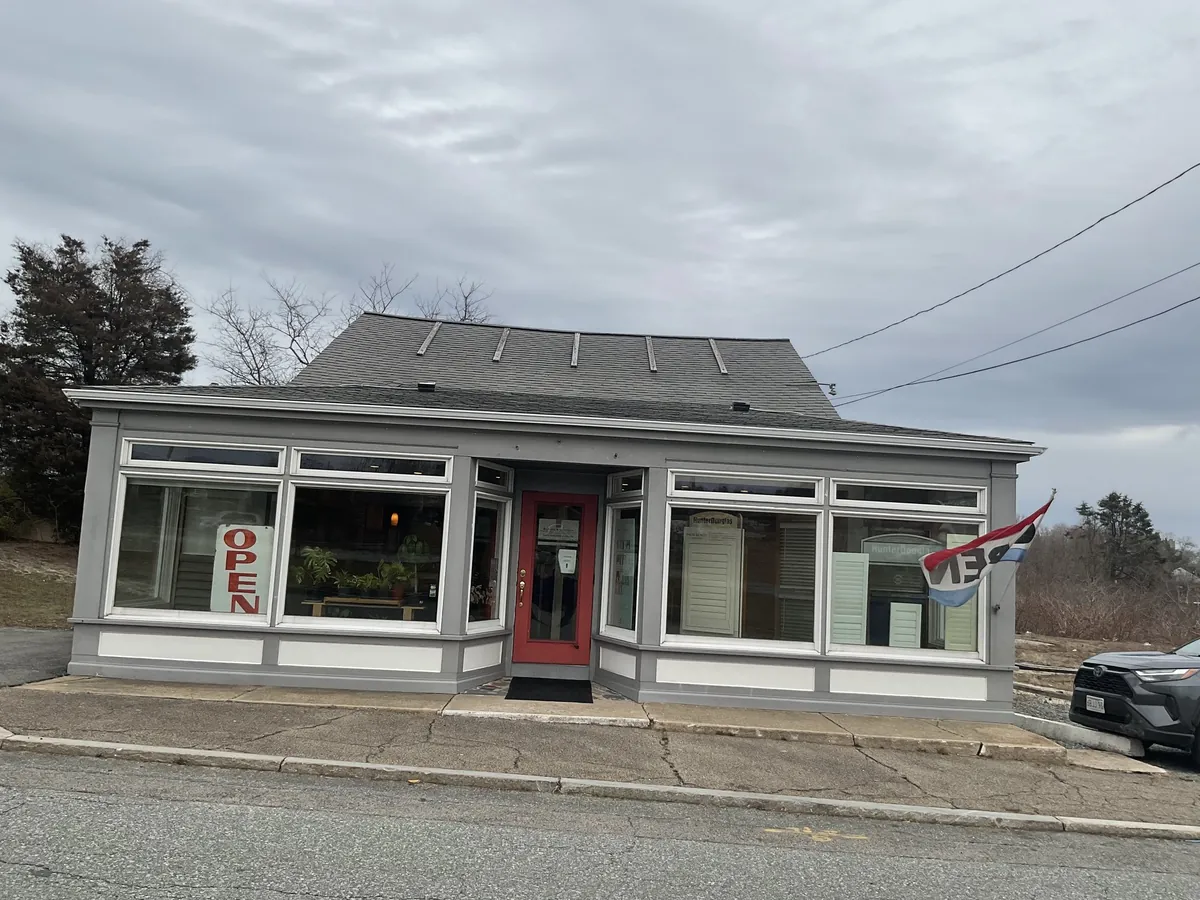
The Sagamore showroom, just up the Cape
Our Sagamore showroom is the nearest of our locations to Dennis, on the way up toward the bridge. Stop in if you would like to talk through a project in person.
For most motorized orders, though, a home visit is the better start, because the light in your rooms and the shape of your windows decide so much. It is also the easiest way to plan motorized blinds in Dennis, MA, for a house you only visit part of the year: we can arrange a time when you are down.
Questions from Dennis
Can the shades run on a schedule while the house is empty?
Yes. Schedules keep running whether anyone is home or not, so the shades can open in the morning, lower through the late-day sun and close at night all season. You can change a schedule or move a shade from the PowerView app wherever you are.
Will motorized shades suit the tall sash in a 6A captain’s house?
They suit it well. Grouped on one control, a row of tall windows lifts and lowers to the same line. We fit inside the casing where the depth allows so the trim stays visible, and suggest a slim outside mount where an old frame is too shallow.
How do I stop the bay light fading my furniture?
Lower the bay-side shades while that sun is on the room. A schedule does it for you every afternoon, and a sheer or screen fabric keeps the room bright and the view open while it does.
Do motorized shades work in a small Dennis Port cottage?
Yes. Top-down, bottom-up shades on a motor give you privacy from close neighbors with light from above, saved to one button. With no cords at the window, they also suit a cottage where children stay.
Is the estimate free?
It is. We measure at your home and the estimate that follows is free, covering each shade and motor we talked about.
Your next step in Dennis
The quickest way to judge motorized blinds in Dennis is to watch a shade move at your own windows, in the light your rooms actually get. Request a consultation and we will bring the samples, measure every opening and leave you with a free estimate. Rather talk first? Use the call button, or drop in at the Sagamore showroom.