
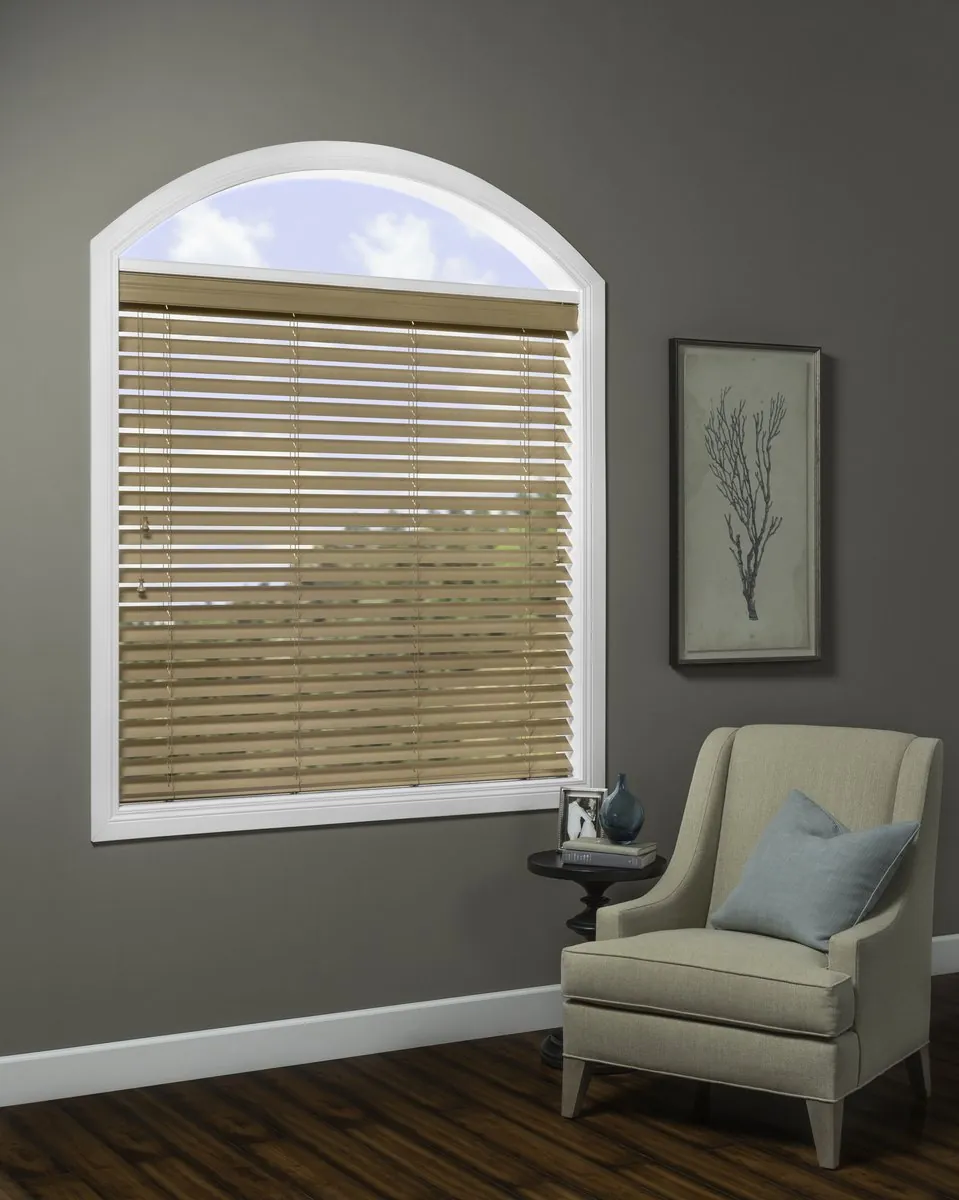
Small sash, deep reveals and wooded lots
Drive the length of 6A through Brewster and the old houses come one after another: low antique capes, then a square Federal house with its chimneys at the ends, each set back on a deep lot with tall trees around it. Their windows are small by modern standards, the sash divided into little panes, and the walls are thick enough that each window sits in a deep reveal. Toward the bay flats the houses get newer and the glass gets bigger. Fitting custom blinds in Brewster, MA means knowing both.
The deep reveal is the detail that matters most. A thick wall leaves a generous pocket between the face of the wall and the glass, and that pocket is a gift for an inside-mounted blind: the headrail can tuck right back into the opening, and the blind can sit almost flush with the wall. Small sash is the challenge, because every part of a blind has to be in proportion with a window that may be only a little wider than your shoulders.
Then there is the season. A high share of Brewster houses are second homes, shut for months at a time, and blinds in a closed house have to look after the rooms without anyone there to open or close them.
Custom blinds in Brewster, MA, chosen for the window
We work from the Hunter Douglas range, and every blind is made to the measurements we take at your house. Rather than start with a catalog, we start with the window. These three situations cover most of what we see along 6A and toward the bay.
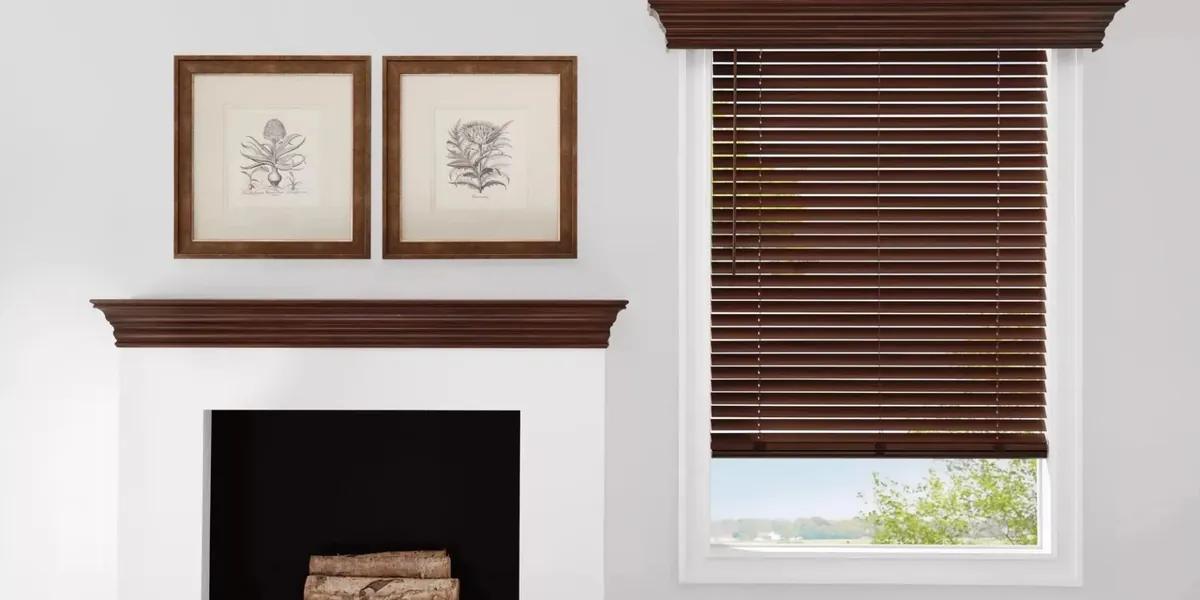
For the deep reveal of an antique cape
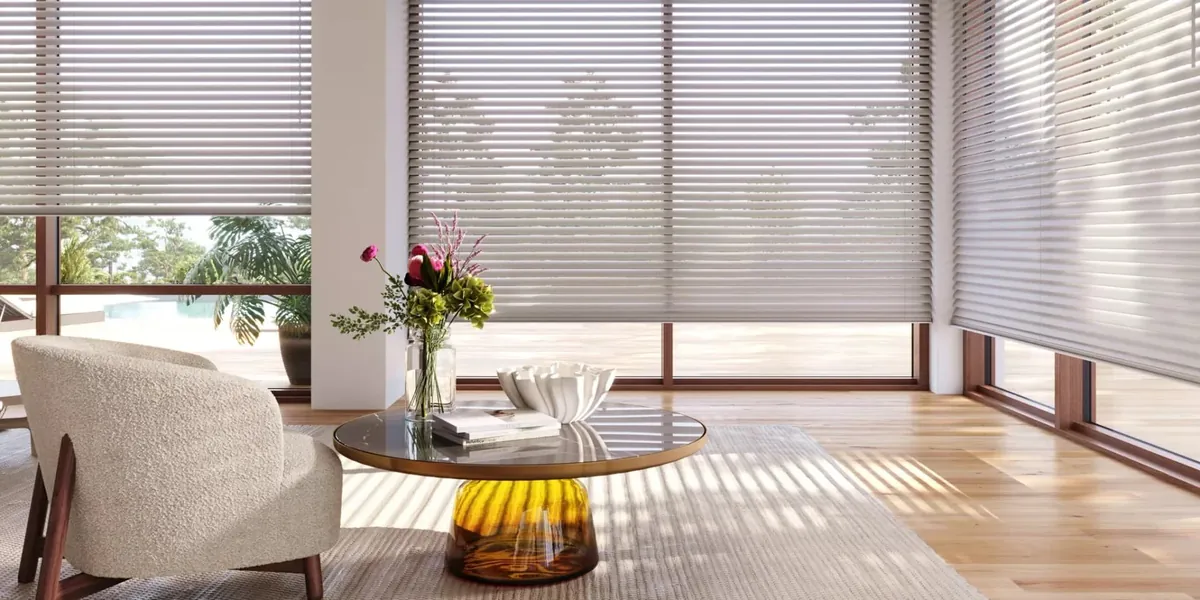
Real wood, stained or painted, recessed into the thickness of the wall. It suits a room with old floorboards and a fireplace, and the deep frame hides the headrail.
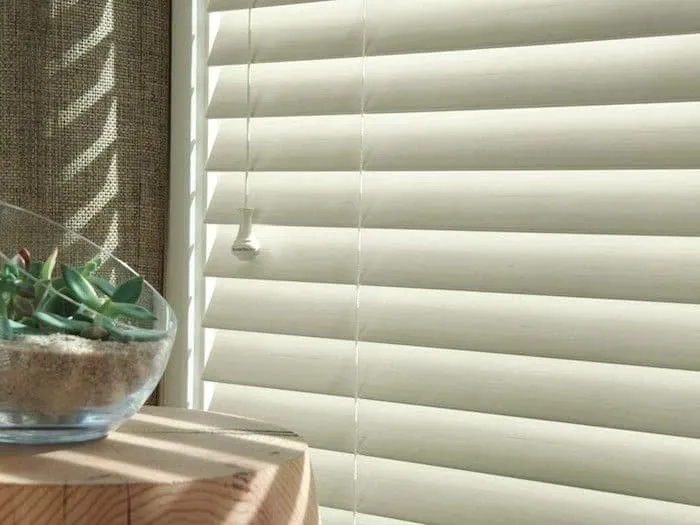
For a house that sits closed
Faux wood with a painted-wood finish, which keeps its shape through a damp, shut-up winter and cleans with a cloth when you come back.
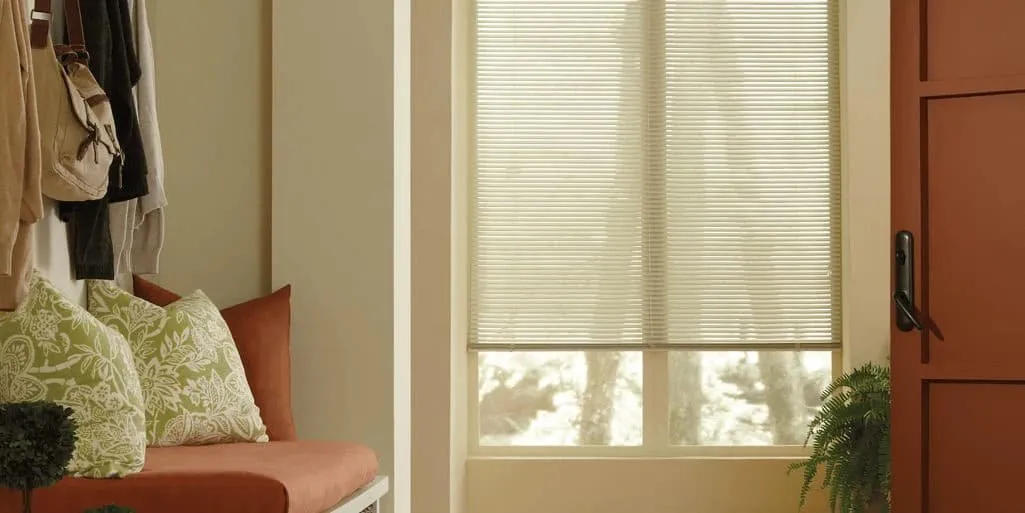
For the smallest panes
Aluminum mini blinds with a slim headrail and a shallow stack, so a narrow window by a door or under the eaves keeps nearly all its glass.
What a deep reveal makes possible
In a newer house the window frame is often shallow, and a blind mounted inside it sticks out into the room a little. In an antique Brewster cape, the opposite is usually true. The walls were built thick, the window sits back from the plaster, and there is room for the whole headrail to disappear inside the opening. The blind then reads as part of the window rather than something added to it.
That depth has other benefits. A recessed blind leaves the casing, the sill and any old moulding completely uncovered, so the woodwork that makes the room what it is stays on show. It also means the blind is protected by the frame on both sides, which cuts down on the light that slips round the edges.
There are a few things to check before we rely on it. A deep reveal in an old house is not always a clean one. Plaster returns can be uneven, the head of the frame may slope, and an interior storm window or an old shutter track may take up part of the space. We look at each window closely, measure the depth at more than one point, and confirm that the slats can tilt fully without brushing the sash or the storm.
Old sash in the capes
The capes along 6A were built with what glass makers could supply at the time: small panes held in thin wooden muntins. Many of those sashes are still in place, and they are worth keeping. A blind on one of those windows should not overpower it.
Proportion is the first thing to get right. A narrow slat looks at home on a small window, and it gathers into a compact bundle when raised, so the top panes are not hidden behind a thick stack. The headrail matters too. A low-profile headrail takes up less of the opening, which counts on a short upstairs window under the roof slope where every inch of glass lets in light.
Color comes next. On a house where the sash and trim are painted white or cream, a blind in the same shade disappears into the window when it is open and looks calm from the road when it is closed. Stained wood is a good choice where the trim is natural wood or where the room has a dark, warm feel. We bring both so you can see them against your own paint.
Federal houses and their taller windows
The Federal houses on 6A have more presence than the capes: taller windows, set symmetrically across a broad front, with moulded casings and rooms of a more formal size. Their sash is still old, but large enough to take a fuller blind.
Wood is the natural match here. A wider slat, in a painted finish that matches the trim or a stain that echoes the floor, has the weight a formal room expects. On the front windows we usually suggest one color throughout, raised to one height, so the house looks orderly from the street. Behind the formal rooms, the kitchen ell and the back bedrooms can take whatever suits them best.
Some Federal windows have lost their depth to later changes, such as replacement sash set further forward. Where that happens, a blind mounted on the face of the casing, finished with a valance across the top, gives a tidy result and still lets the window open.
A house that stays closed for months
When a house is shut from autumn to late spring, its windows keep working whether anyone is there or not. South- and west-facing rooms still take the sun on clear winter days. Wooded lots hold damp, and a closed house with no heat or only a little can develop a cool, moist air that finds its way into anything absorbent.
Faux wood is made for this. It looks like painted wood but does not swell or warp in damp air, and it comes through a closed winter looking the same as it did when you left. In rooms that stay dry, real wood is fine and often preferred. Whatever the material, closing the blinds before you lock up keeps sun off the floors and furniture and stops anyone looking in from the road.
We often plan custom blinds in Brewster with this in mind from the start: faux wood for the kitchen, baths and any room on the shady, damp side of the lot, and real wood in the front rooms where the house is shown at its best.
Newer houses toward the bay flats
North of 6A, toward the bay, many of the houses were built much later than the village capes. They have larger windows, wider openings, and often a slider or French doors leading out to a deck that looks across the flats. The frames are square and regular, and the choice comes down more to light and use than to fitting around an old window.
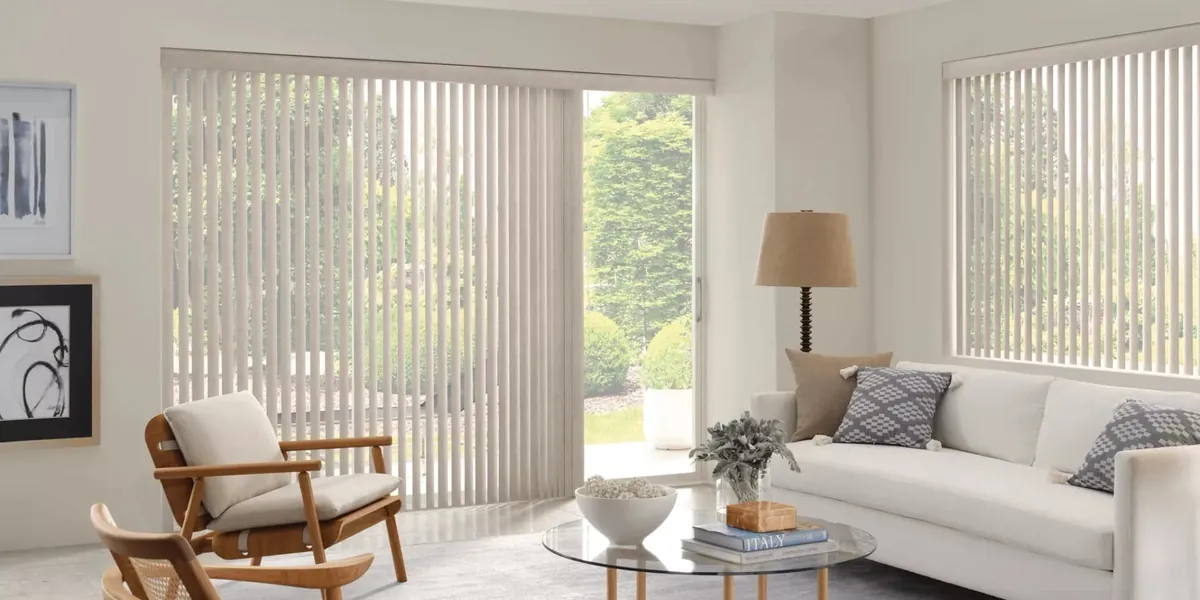
Wide living room windows work well split into two or three blinds side by side, each lifting on its own, so you can open the view at one end and shade the other. Metal blinds look crisp and modern in these rooms, while faux wood gives a softer, painted look. On a slider, vertical blinds are the practical answer: the vanes turn to manage light and draw aside to clear the door.
Wooded lots and the light they give
Many Brewster houses sit under tall trees, and that shapes the light indoors. For much of the day a room can be dim and green, then a gap in the canopy sends a bright shaft straight across the floor. A window covering for a house like that needs to stay open most of the time and still deal with the occasional glare.
Blinds are well suited to it. Raised, a slim stack leaves the window almost clear so you get every bit of daylight the trees allow. Lowered and tilted open, the slats let the soft light through and catch the bright patches. Tilted upward, they bounce what light there is onto the ceiling, which makes a shaded room feel lighter. Lighter slat colors help too, reflecting light into the room rather than absorbing it.
Toward the bay, where the trees thin out and the flats reflect the sun, the light is stronger and the same tilt control keeps a room comfortable on a bright afternoon. For more on dealing with strong sun, see our guide to the best shades for sun and glare.
Running blinds from a distance
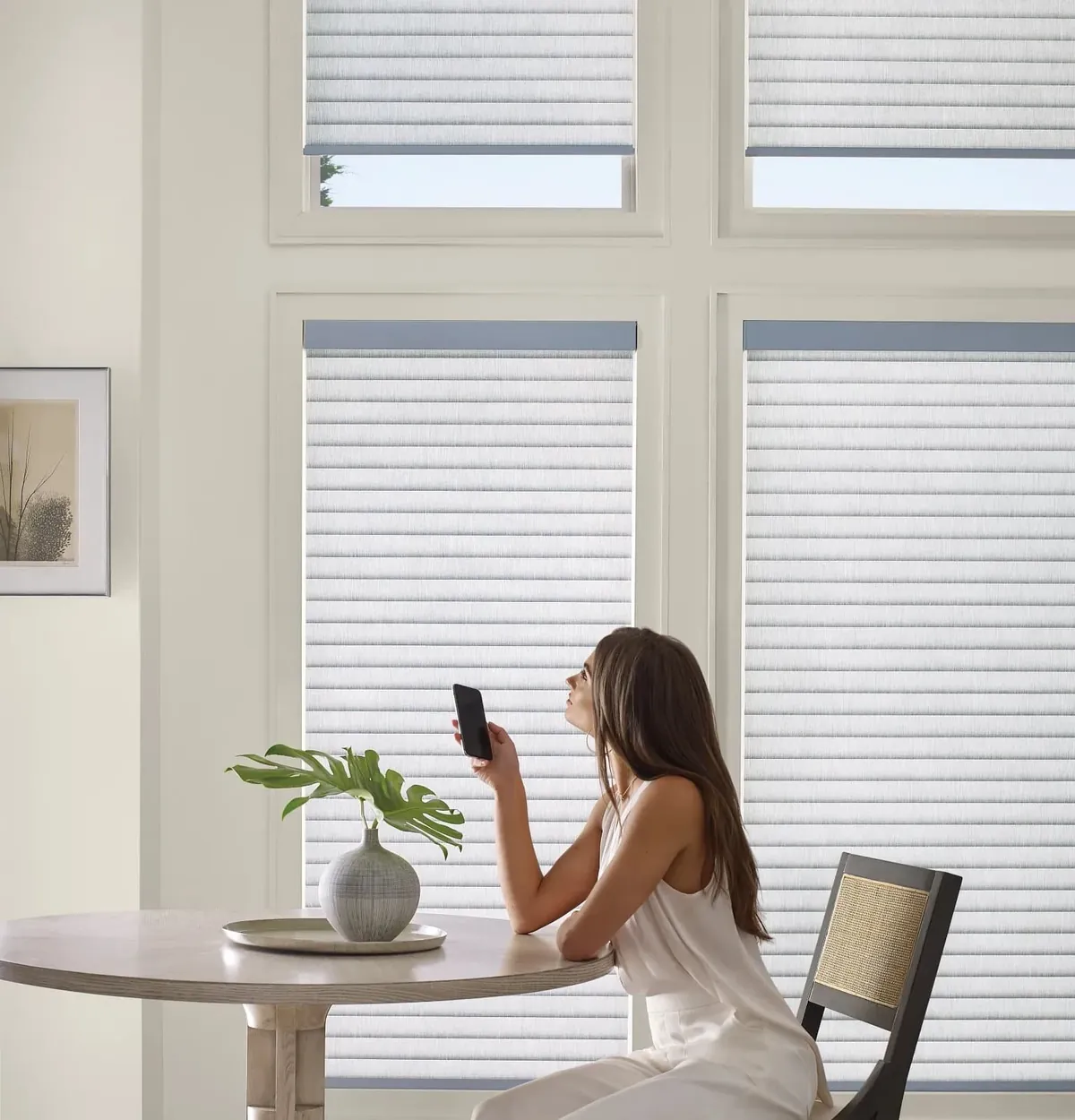
For a house you are not always in, Hunter Douglas PowerView motorization makes a real difference. Motorized blinds tilt and lift from a remote or from the app on your phone, and they can follow a schedule. That means you can have the south rooms shaded through the middle of the day and opened again in the evening, even when the house is empty, so it looks lived in from the road.
It also helps with windows that are hard to reach in an old house: a high window over a stair, a small window tucked under the eaves, or one behind a deep counter. We talk through how each motor is powered and where controls go when we visit. Our page on motorized blinds in Brewster has more on it.
Where the old house meets the addition
Very few antique houses on the Cape have stayed exactly as they were built. A kitchen ell, a family room off the back, a primary bedroom over a new garage: each was added in its own decade with its own windows. The original rooms keep their small sash and deep reveals, while the newer rooms have larger, shallower, more modern frames.
That mix can make a house feel like several houses joined together. Blinds are one of the simplest ways to pull it back into one. Each blind is made for its own window, so the deep old opening and the wide new one both fit properly, yet they can share a color and a slat size. Wood suits the antique rooms; faux wood or metal may work harder in the addition. From the road, and walking from room to room, the windows read as a set.
When we plan custom blinds in Brewster houses like this, we usually start in the oldest room, settle on a color that works there, and carry it through. The old part of the house sets the tone and the newer rooms follow.
Measuring a deep, old opening
Old windows reward patience. Here is how we measure one before we order.
- We measure the width at the head, the middle and the sill, because old openings rarely match, and an inside-mounted blind is made to the narrowest.
- We measure the height on both sides and in the center to find any slope in the head or the sill.
- We check the depth of the reveal at several points and note anything in it: storms, shutter tracks, sash locks or old hardware.
- We confirm with you whether the blind sits inside the reveal or on the casing, and which way the slats tilt.
- When the blinds arrive, our certified Hunter Douglas installers fix the brackets into sound wood, level each headrail, and test every tilt and lift with you.
That care is what lets custom blinds in Brewster, MA sit straight and tilt freely in openings that were framed long before anyone measured to a fraction.
When we come to the house
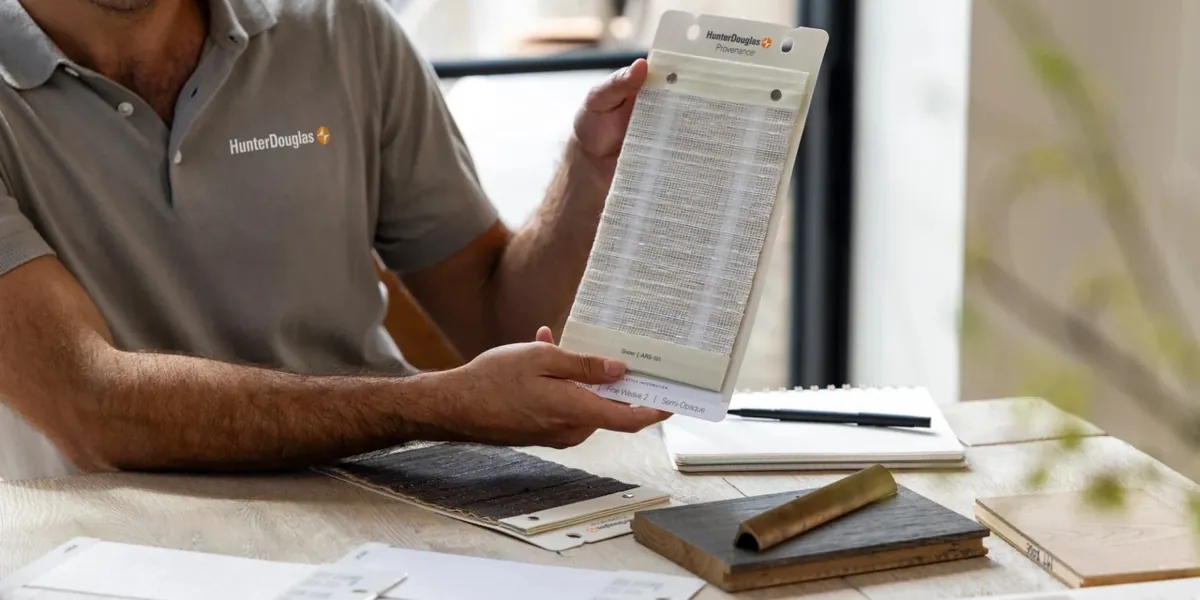
Our vans carry samples of every blind material, so we can bring the showroom to you. That matters in an antique house, because a slat color that looks right in a catalog can look quite different against old paint under a tree-shaded window.
We walk the house with you, starting with the rooms you use most and the windows that bother you. In the old part of the house we look at depth, proportion and how the front looks from the road. In the newer rooms and any addition, we talk about how each room is used and which material suits it. If you are planning ahead for a closed winter, we cover that too.
Before we leave, you have a free estimate for the blinds you are considering, and there is no need to decide on the spot. If you would like help with color, or with how blinds sit beside shades or drapery in the same room, our interior design consultations can be part of the visit. Our page on what happens at an in-home consultation explains more.
For the materials in detail, see our wood blinds, EverWood faux wood blinds, metal blinds and vertical blinds pages, or the main custom blinds page.

Why buy blinds from a Gallery dealer
Blinds & Designs is a Hunter Douglas Gallery dealer, the brand’s own mark for dealers who meet its standards. For you that means the whole range of Hunter Douglas blinds, along with shades, shutters and drapery for the rooms where a blind is not the answer.
Our installers are certified by Hunter Douglas, so each blind goes up the way it was designed to. If you have blinds already that need attention, we look after blind and shade repair too.
The Sagamore showroom is our nearest to Brewster if you would like to see the blinds in person. For other rooms, see roman shades in Brewster or plantation shutters in Brewster, or everything we offer in town on our Brewster page.
Questions from Brewster
My antique cape has very deep window reveals. Is that good or bad for blinds?
Usually good. A deep reveal lets the headrail sit fully inside the opening, so the blind lines up with the wall and the casing stays on show. We check that the reveal is even and clear of storms or hardware first.
Will a blind look too big on my small original sash?
Not if it is chosen for the window. A narrow slat and a low-profile headrail keep the blind in proportion and make a small stack when it is raised.
What should I choose for a house that is closed all winter?
Faux wood for any room that gets damp, because it keeps its shape without heat or airing. Close the blinds before you leave to keep sun off the floors and furniture.
Can I control the blinds when I am not there?
With PowerView motorization, yes. The blinds can follow a schedule or be adjusted from the app, so the rooms are shaded and the house looks lived in.
Is the estimate free?
Yes. After we measure, you get a free estimate for the blinds you are considering.
Your next step
Whether it is one small window under the eaves or every room in a Federal house, the best way to choose is with samples at your own windows. Request a consultation and we will bring them, measure each opening and leave you a free estimate. Or use the call button to reach our Sagamore showroom.