
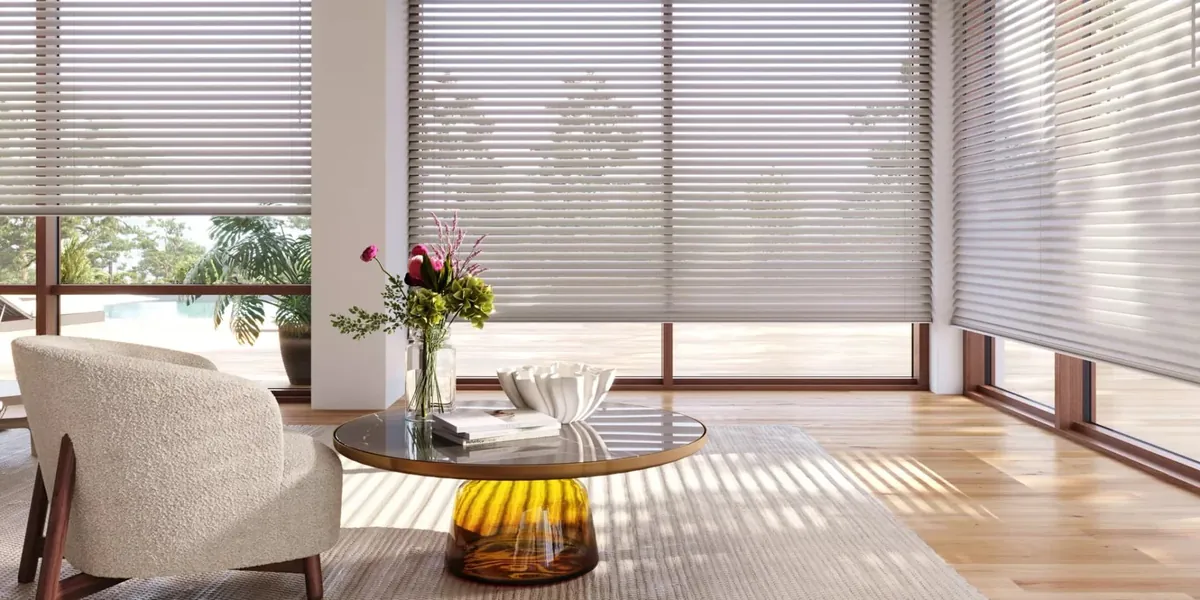
Built around the view, open to the weather
Chatham sits on an elbow of coast with water on three sides, and its houses have been turned toward that water for as long as they have stood. The shingled captains’ houses in the village, the cottages along Shore Road, the houses out on Morris Island: in almost every one, the best room is the one with the view, and its windows are the biggest in the house. Choosing custom blinds in Chatham, MA starts with protecting that view, not hiding it.
The same position that gives those rooms their outlook also exposes them. Sun arrives off the water in the morning on one side of town and sets over it on the other. Wind carries salt against the glass almost every day of the year, and it gets into any window left open in summer. A blind in a Chatham room has to be easy to open fully, quick to adjust when the glare comes, and made of materials that do not mind salt.
Inside the village, the older houses add a further layer: original sash, painted trim, and front windows that show to the street.
What we fit on Chatham windows
Every blind we sell is from the Hunter Douglas range and is built to the measurements we take in your house. Most custom blinds in Chatham come down to one of these three, chosen window by window, with vertical blinds for any slider.
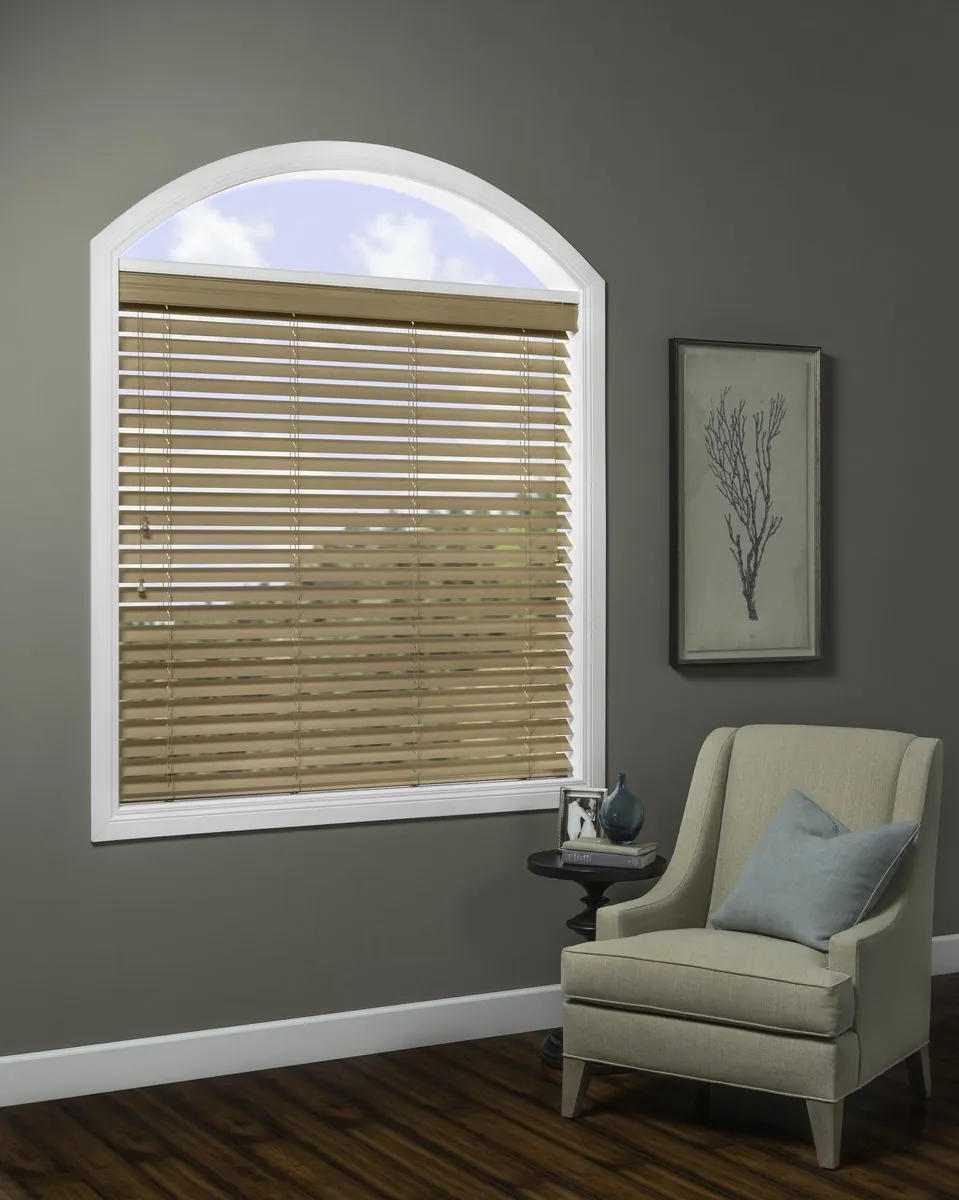
Natural wood in the captains’ houses
Real wood slats in a stain or paint that suits old trim and floorboards. Happiest in the dry, heated rooms at the heart of an old house.
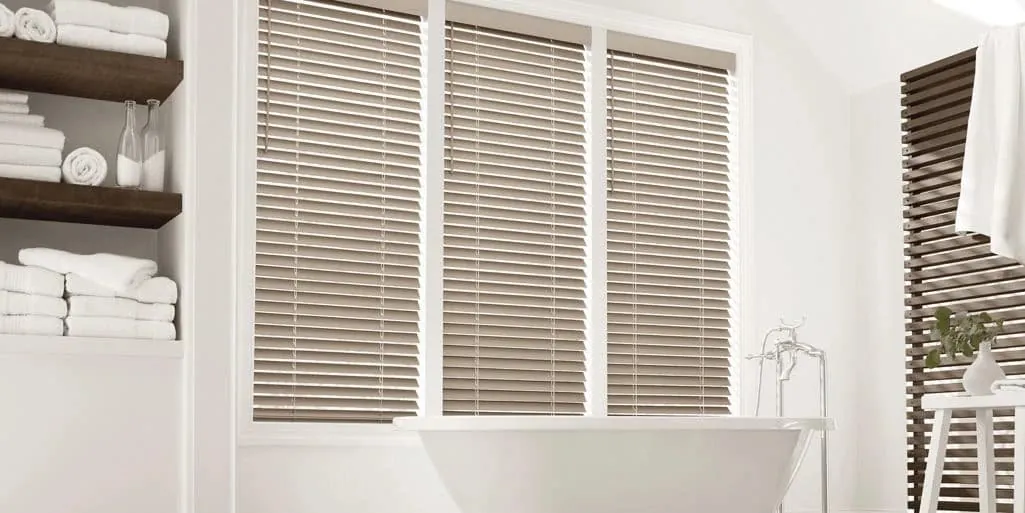
Faux wood where the salt reaches
A painted-wood look that stays straight in damp, salty air and cleans with a cloth. Right for kitchens, baths and the summer rooms that stand open.
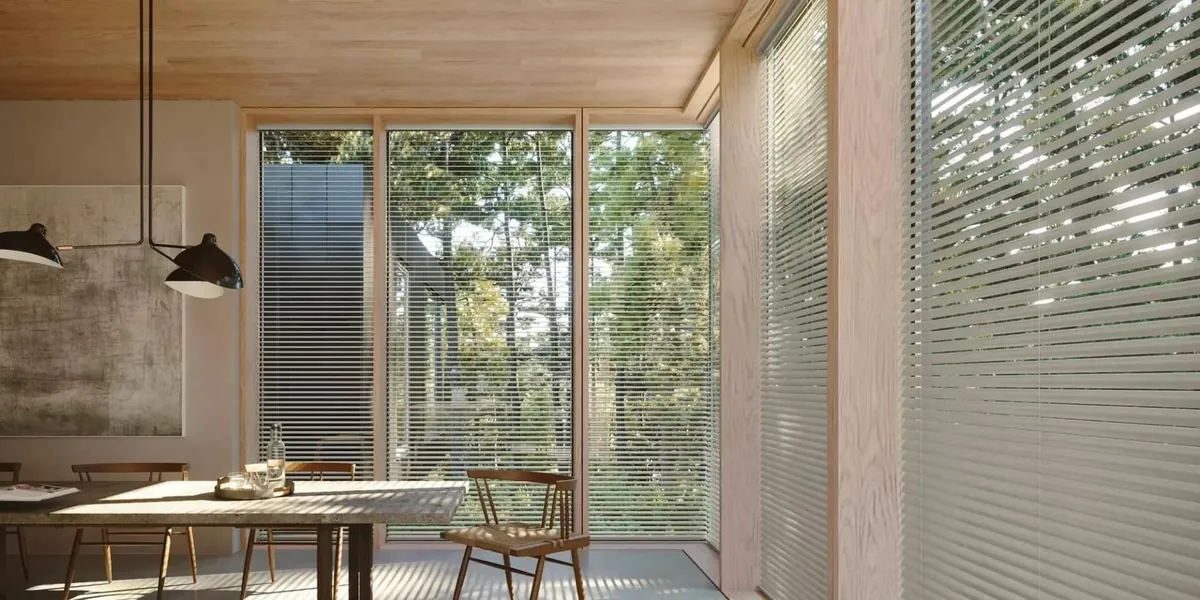
Aluminum for the view rooms
Slim metal slats that almost vanish when tilted open and raise into a small stack, so a wall of glass facing the water stays as clear as possible.
Three exposures on one elbow of coast
Because the town wraps around the water, the light changes depending on which way a room faces. That matters more than the style of the house when choosing a blind.
Rooms that look east over the Atlantic and the outer beach take the sun at first light. It comes in low and bright, reflected off the water, and it reaches deep into a bedroom long before anyone wants to be up. Rooms facing south over the sound and Monomoy get strong light through the middle of the day, the kind that heats a room and washes out a screen. Rooms facing west toward the harbor and Pleasant Bay catch the late sun, which is beautiful at dinner and blinding for an hour before it.
Blinds handle all three with the same control. In the east bedroom, a deeper slat closed tight keeps the room dim until you choose to open it. In the south-facing living room, slats tilted upward send the midday light to the ceiling so the room stays bright without glare. On the west side, slats tilted level block the low sun while you still see the water between them.
Salt air, every day
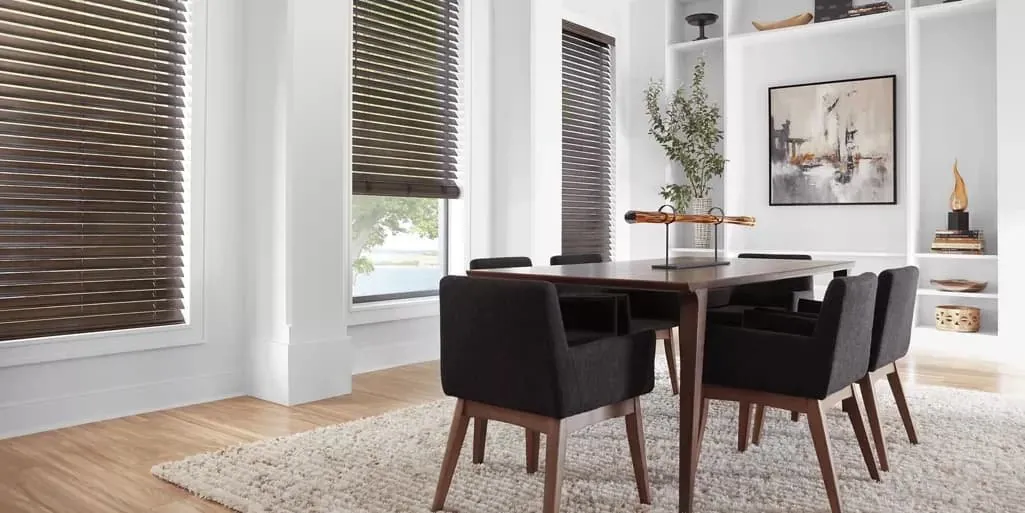
In a house this close to open water, salt is part of the weather. It settles as a fine film on glass, sills and anything near a window, and it rides in on every breeze through an open sash. Over the years it is hard on exposed metal parts and on materials that soak up moisture.
That shapes the choice of material. Faux wood is the material we suggest most often for the rooms that take the worst of it, because it does not absorb moisture, swell or warp, and the salt film wipes off. Aluminum slats suit a dry, heated room with a view and are easy to keep clean. Real wood looks wonderful in the sheltered rooms of a captain’s house, where the windows stay shut for much of the year and the heat keeps the air dry.
The mechanism matters too. On a modern blind most of the working parts sit inside the headrail, out of the air, and a cordless lift removes the cord and cord lock that used to hang at the side. On a window you open often in summer, that leaves very little exposed.
Captains’ houses in the village
Through the village center, the old captains’ houses are shingled, trimmed in white, and built with a formal front of evenly spaced double-hung windows. Many keep their original sash, sometimes with interior storm windows added behind the trim. Inside, the front rooms have high ceilings and tall windows, and the rooms behind are a mix of later additions.
For the street-facing windows, consistency is what makes the house look settled: one color, one slat width, and every blind raised to the same height. White and soft cream blend with the trim. Stained wood gives the front rooms a warmer, more traditional look against wide pine floors.
Depth is the practical question in these frames. Old sash cords and pulleys, painted-over stops and interior storms all eat into the room a headrail needs. We measure for it at each window. Where an inside mount fits, the moulded casing stays fully on show; where it does not, a blind mounted on the casing with a valance across the top keeps the look tidy and leaves the window free to open.
Cottages on Shore Road and out toward Morris Island
Further from the center, along Shore Road and out onto Morris Island, the houses are often cottages or cottage-scale homes, rebuilt or added to over the years so that the water side is mostly glass. A typical living room might have a picture window flanked by casements and a slider onto a deck, all facing the view, with small, plain windows on the road side.
That calls for two approaches in one house. On the road side, slim blinds in a neutral color give privacy without fuss. On the water side, the blinds need to disappear when they are up: a compact headrail, a small stack, and slats thin enough that tilted open they barely interrupt the view. Splitting a long run of glass into several blinds lets you shade the window catching the sun and leave the rest open.
Cottages that have been raised or rebuilt often have a mix of window makers and sizes on the water side, set at slightly different heights. Each blind is made for its own opening, but we line the headrails up where the trim allows, so the whole wall looks even when every blind is lowered. On the road side, where the windows are small and plain, a cordless metal blind keeps things simple.
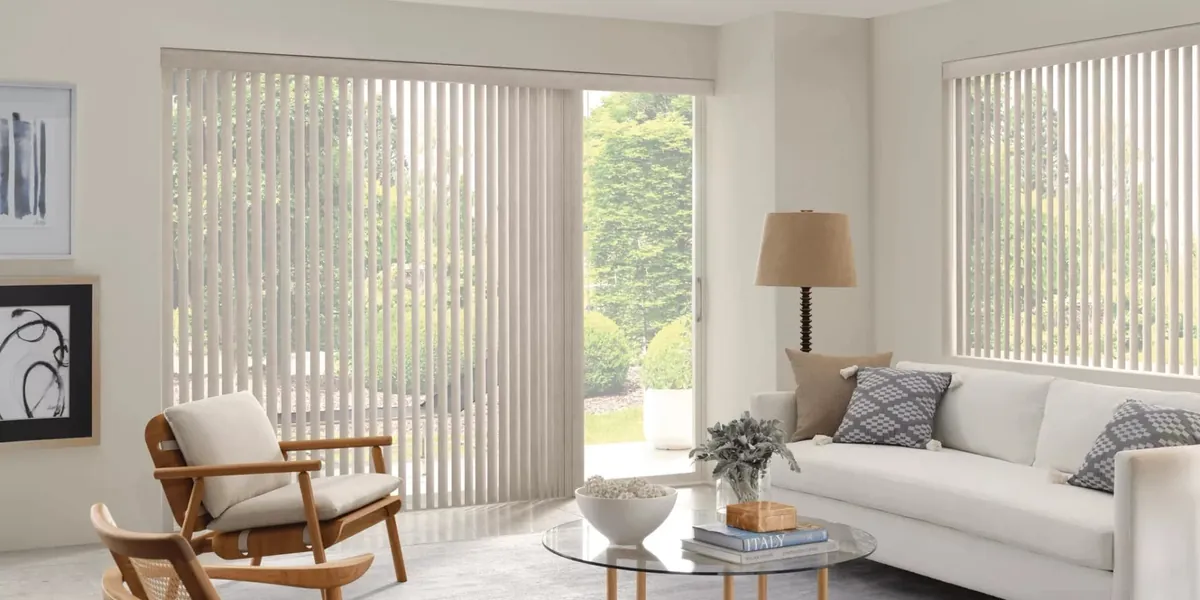
The slider gets vertical blinds, which draw aside so the door can be used and turn to manage the light, or wide gliding panels if you prefer a softer look.
Keeping the glass clear when the blinds are up
In a room built around a view, how a blind looks raised matters more than how it looks closed. Most of the time it is up, and anything that cuts into the top of the window cuts into the view.
There are a few ways to keep the glass as open as possible. A low-profile headrail takes up less of the opening. A thinner slat gathers into a smaller stack. And on some windows the best choice is to mount the blind above the opening rather than inside it, so the raised stack sits on the wall and the whole pane is clear. That also makes a window look a little taller.
We hold samples up at your windows and raise them so you can see exactly how much of the view each option leaves. For anyone planning custom blinds in Chatham rooms with a water view, this is usually the deciding question.
Windows that stand open all summer
Shore houses are aired by the breeze, and in summer many windows and sliders stay open most of the day. A blind in an open window moves in the wind, and a slat knocking against a frame is the last sound you want on a quiet evening.
Tell us which windows you keep open and how you use them. We plan the mount and the type of blind with that in mind: an inside mount set far enough back to clear a crank or a screen, vertical blinds on a door that stands open, and a blind raised clear of the opening on the windows you rely on for a cross-breeze. On casement windows, we check that the crank handle and the blind do not get in each other’s way.
Bedrooms and the early sun
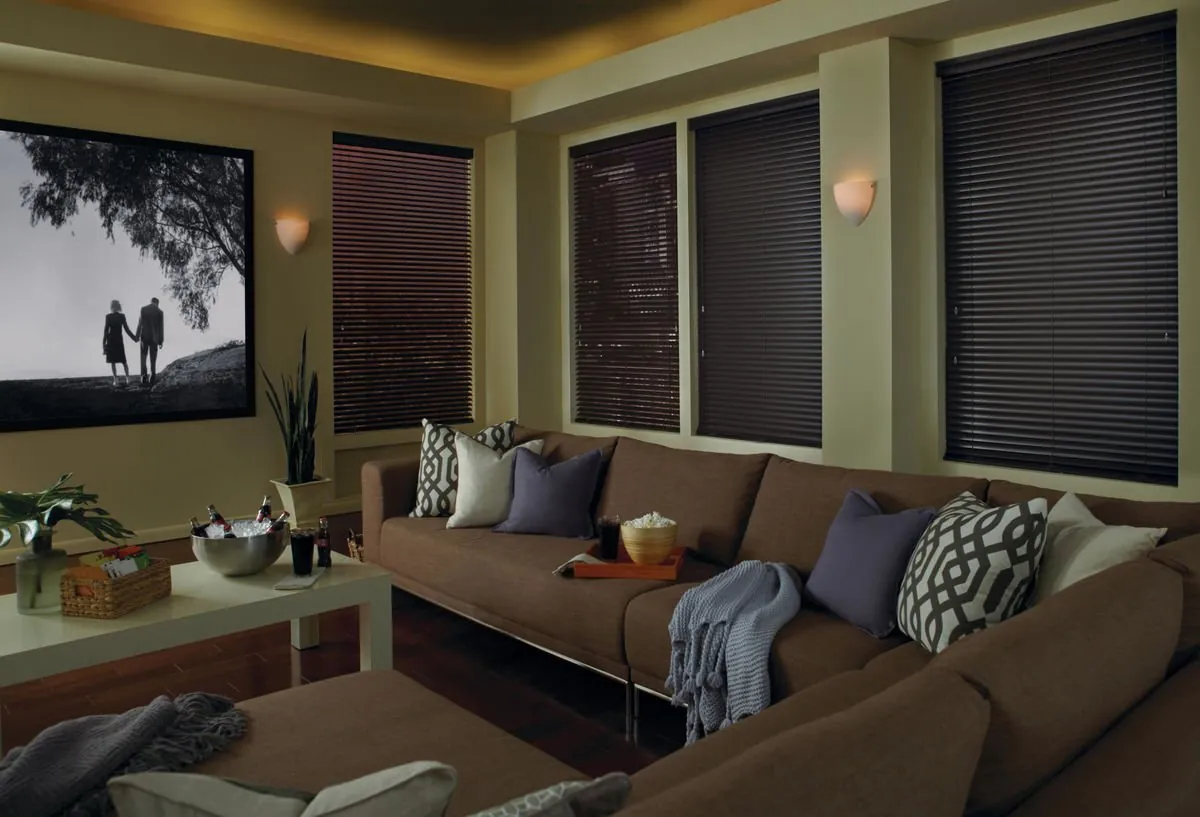
The east-facing bedrooms on the Atlantic side of town catch the sun as soon as it clears the horizon. It comes in flat and strong, reflected off the water, and a pale blind left half-closed is no match for it.
For a bedroom like that, choose a slat in a deeper color and keep it closed tight overnight. With the curved side of the slats facing into the room, a wood or faux wood blind dims the room well. Mounted outside the opening, it also overlaps the frame and cuts the line of light at the edges. If you want the room darker still, we can show you a room-darkening shade beside the blind so you can compare.
Color against shingle, trim and sea
Weathered gray shingle, crisp white trim and a great deal of blue outside the glass: the palette of a Chatham house is set before you choose a thing. The blinds work best when they sit inside it rather than fight it.
From the street, white or a soft off-white blind blends with the trim and the sash, so the windows look clean and even whether the blinds are up or down. That is the safe choice for a captain’s house on a village street. Inside, you have more freedom. A pale wood stain warms a room that faces cold northern light. A gray or driftwood tone suits the water-side rooms, where it echoes the shingle and the sea and does not show salt film as readily as bright white. Deep stains look handsome in a study or a dining room with dark floors.
The best test is your own wall. We bring slats in several finishes and hold them against your trim with the view behind, so the color of custom blinds in Chatham rooms is judged in the light it will live in.
A shore house that runs itself
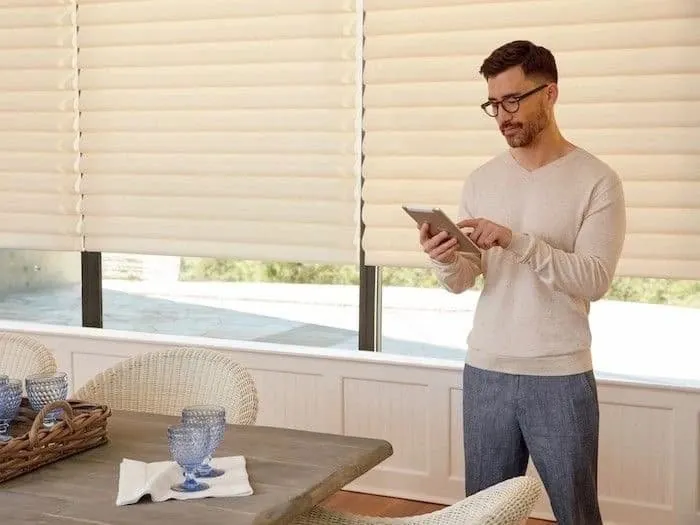
For houses used mostly in summer, or for windows that are hard to reach, Hunter Douglas PowerView motorization is worth a look. Motorized blinds tilt and lift from a remote or the app on your phone, and they can follow a schedule: closing the south rooms through midday, tilting the west windows as the sun drops, and opening everything again in the morning. A house that sits empty for weeks still looks lived in from the road.
It also solves the high windows: a transom above a slider, a gable window in a vaulted room, a window behind a deep counter. We go through how each motor is powered and where controls sit during the visit. See motorized blinds in Chatham for more.
From first look to fitted blinds
Our vans carry samples of each material, so we can bring the showroom to you, and the whole process starts in your house.
- Request a consultation online, or use the call button, and we will settle on a day for the visit.
- In each room we look at the view, the exposure and the way you use it, and hold slats up to your own trim and glass.
- Every opening is measured in several places, its depth is checked, and cranks, storms or old sash hardware are noted.
- You get a free estimate for the blinds you are considering and decide in your own time.
- Once the order arrives, our certified Hunter Douglas installers fix the brackets into sound wood, level each blind, and show you every control.
If you want help pulling a room together, ask for an interior design consultation at the same visit. Our pages on what happens at an in-home consultation and window measuring terms explain more.

Matching blinds across an old house and its additions
Few Chatham houses are a single build. A captain’s house might have a kitchen wing from one era and a sunroom from another; a cottage may have been lifted, extended and given a new water-side wall. Each part has its own windows.
Blinds made to measure for each window, in one shared color, bring those parts back together. Wood can stay in the original rooms, faux wood can take over in the kitchen and sunroom, and metal can serve the newest glass, yet from the deck or the road the house reads as one. When we plan custom blinds in Chatham, MA houses like this, we settle the color first in the oldest room and carry it through.
For the materials in more detail, our wood blinds, metal blinds, Metals aluminum blinds and vertical blinds pages each go further, and the custom blinds page covers the whole range.
See them first in Sagamore
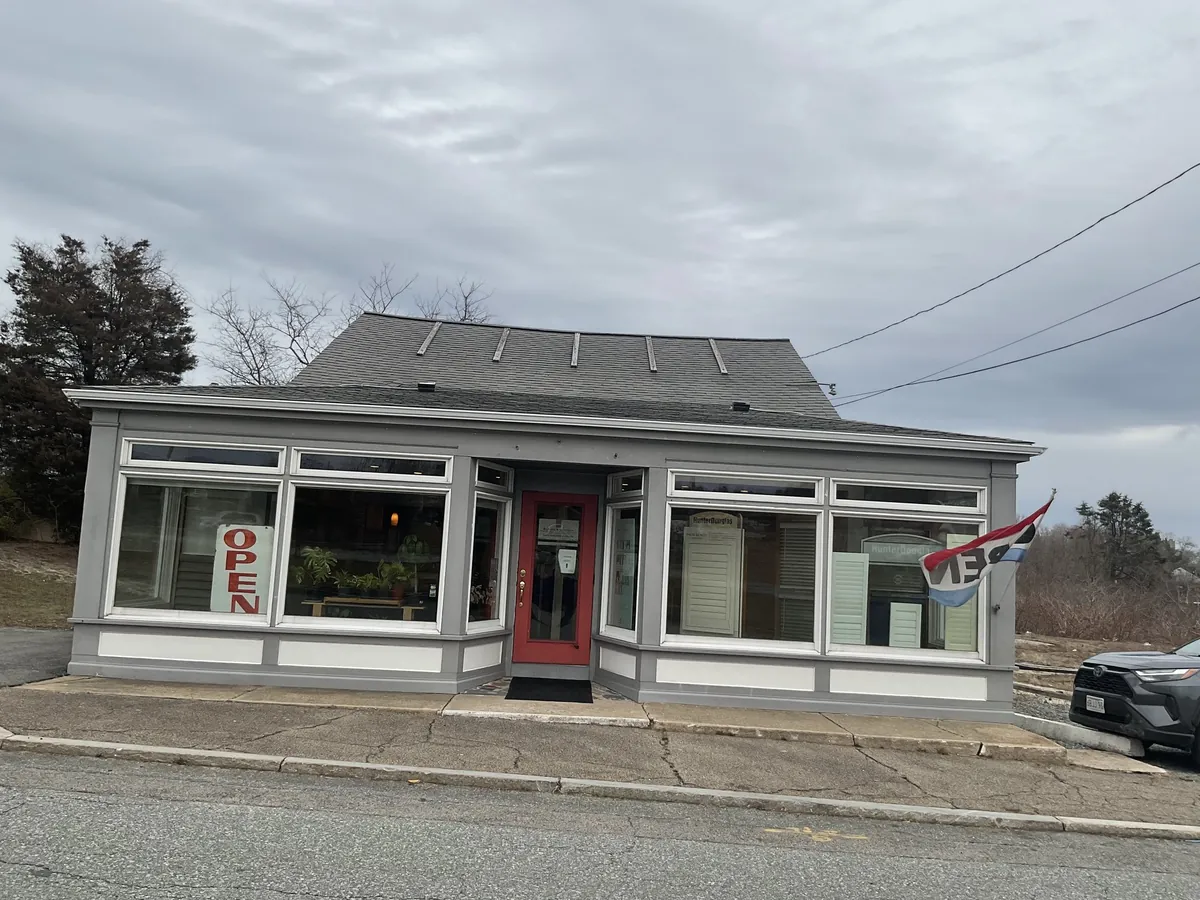
Our Sagamore showroom is the nearest to Chatham if you would like to see the blinds in person before a visit.
Blinds & Designs is a Hunter Douglas Gallery dealer, a status the brand reserves for dealers who meet its standards. That puts the entire Hunter Douglas range of blinds within reach, alongside the shades, shutters and drapery that may suit other rooms better. Our installers carry Hunter Douglas certification. If blinds you already own need fixing, we offer blind and shade repair as well.
For other rooms, see roller shades in Chatham or cellular shades in Chatham, or everything we offer in town on our Chatham page.
Questions from Chatham
How do I keep my water view and still control the glare?
Choose thin slats and a low-profile headrail, and tilt the slats level or slightly upward when the sun is on the water. You still see out between them while most of the direct light is turned away.
Which blinds hold up best to salt air?
Faux wood and aluminum both cope well and wipe clean. Real wood is best kept to sheltered, heated rooms. Cordless lifting means no exposed cord lock to corrode.
Can blinds work on casement windows?
Yes. We check the depth and the crank handle at each window, and mount the blind so the two do not interfere.
Will blinds rattle when the windows are open?
They are less likely to if they are planned for it. Tell us which windows stay open and we will choose the mount and the blind type with the breeze in mind.
Does the estimate cost anything?
No. Once each window has been measured, you receive a free estimate for the blinds you are looking at.
Talk to us about your windows
The rooms facing the water are worth getting right. Request a consultation and we will bring samples of every material, look at each room’s view and exposure, and leave you with a free estimate. Or use the call button to reach our Sagamore showroom and arrange to see the blinds there.