
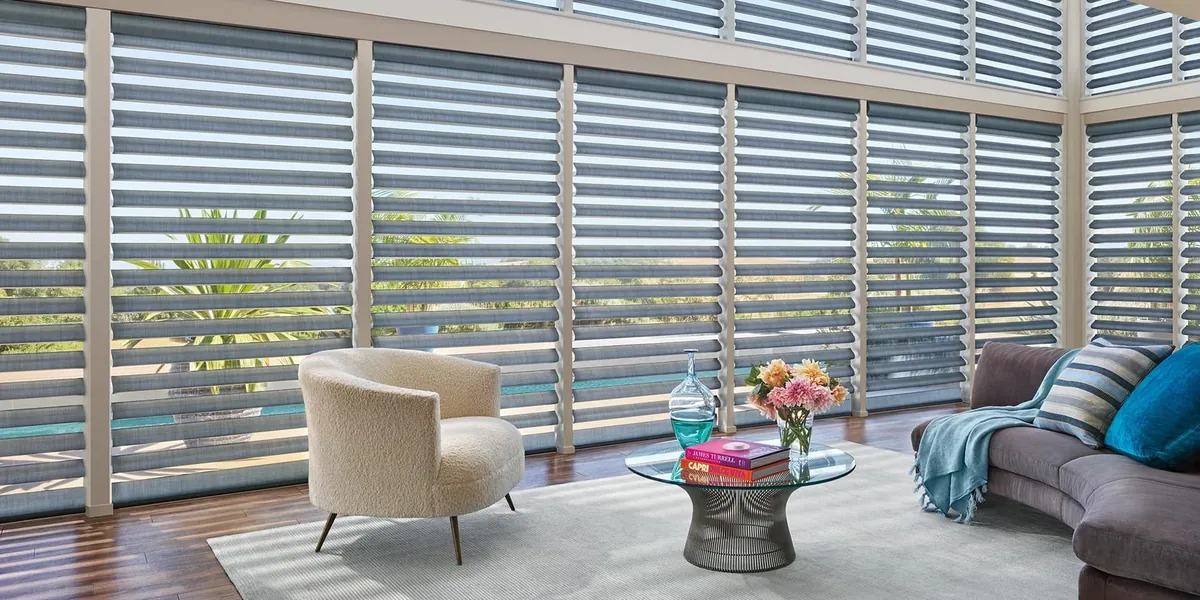
Small old windows and big glass walls in one town
Duxbury asks two opposite things of a window covering. On the older streets, around Washington Street and down toward the Nook, the antique capes and Federal houses still have their small original openings: little panes, narrow sash and casings that leave very little room for hardware. Out on Powder Point it is the reverse. Rooms that face the water are glazed almost from wall to wall, and a single living room can have more glass than a whole antique cape. That contrast is the first thing we talk through when someone asks us about motorized blinds in Duxbury, MA.
The large newer houses inland, on wooded lots, sit somewhere between the two. They have generous rooms, tall foyers and plenty of windows, but the trees soften the light for much of the year.
Planning motorized blinds in Duxbury therefore means planning room by room. Hunter Douglas PowerView works across all three. Each shade carries a quiet motor in its headrail and answers to a remote, to the app on a phone or tablet, or to schedules you set once.
What we motorize most in Duxbury houses
Three kinds of room account for most of the motorized blinds in Duxbury, MA, that we plan. Each links to the matching service in town if you want to read about the shade itself.
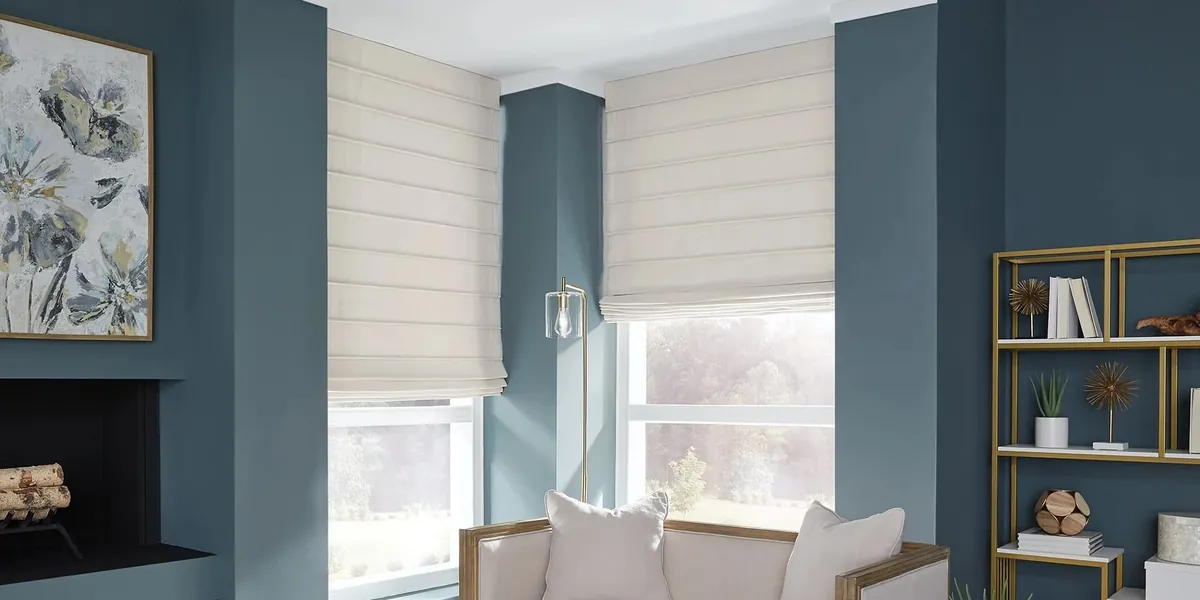
Antique keeping rooms and parlors
Flat Roman shades or honeycomb shades made narrow enough for the small openings of an old cape, raised and lowered as one row.
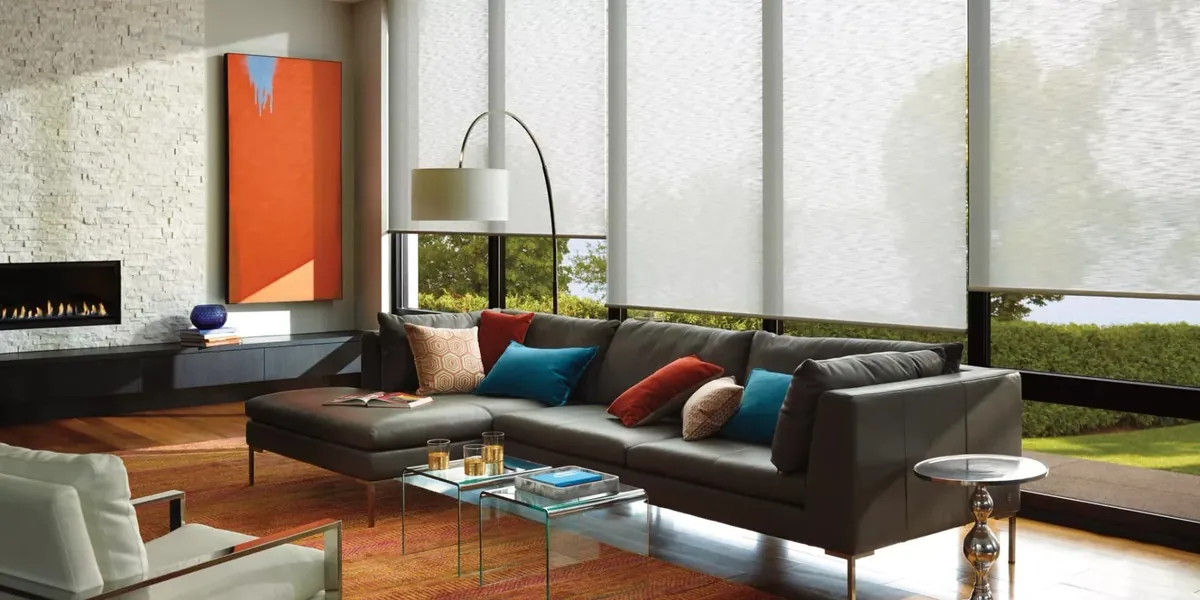
Powder Point glass walls
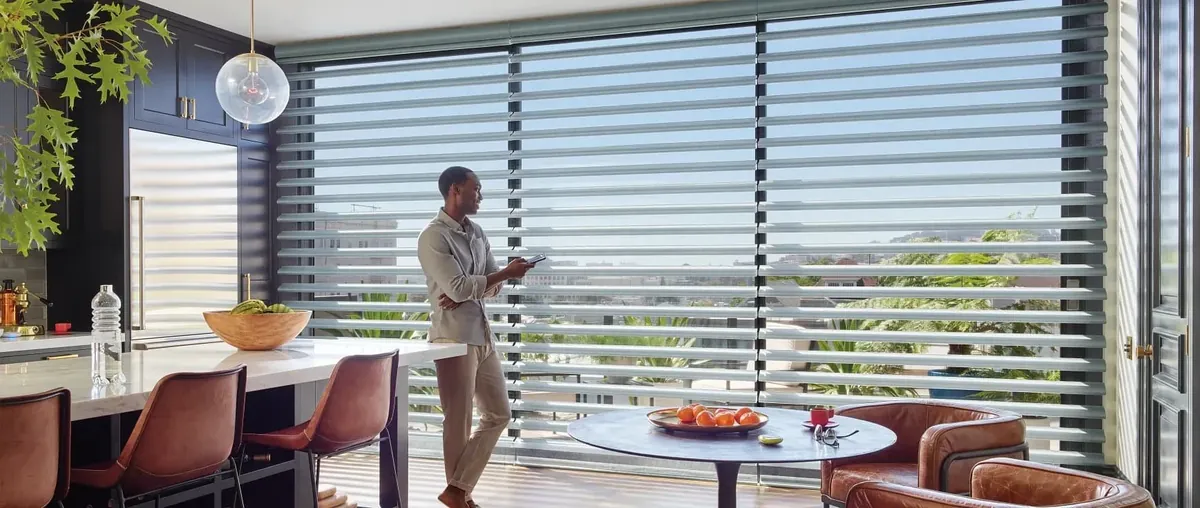
Sheer or screen shades in long runs, grouped so a whole wall of water-facing glass moves together and stops on one line.
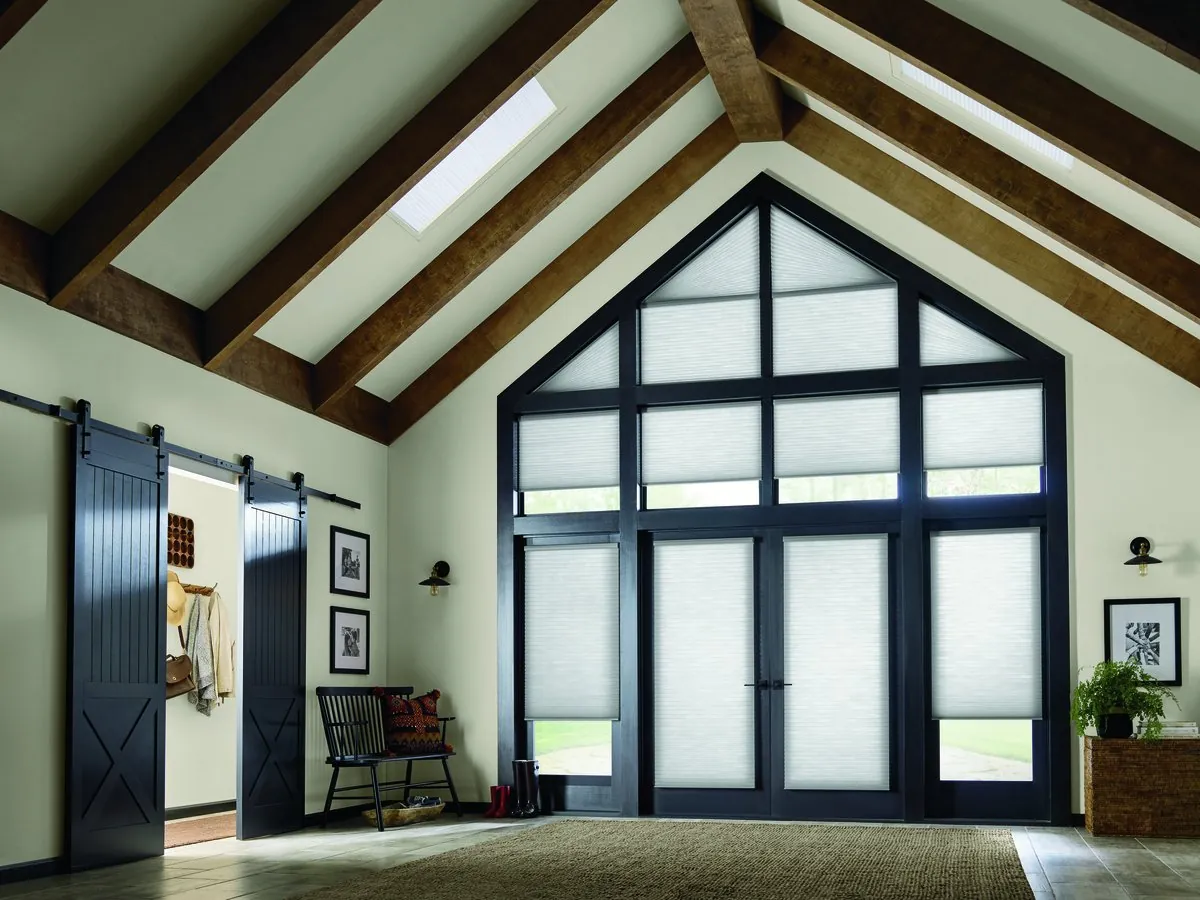
Inland foyers and high windows
Honeycomb shades on windows set far above the floor, reached from the remote instead of a ladder.
Fitting a motor into a very small opening
The windows in a Duxbury antique are often smaller than people expect. A cape built close to the ground has low ceilings, and its windows were sized to keep the heat in, not to frame a view. Federal houses are taller, but their sash is narrow and the panes small. Both have wood casings that the owners have usually spent real effort keeping.
The question with a small opening is not whether it can have a motor but how the headrail sits. A motorized headrail carries the motor and the lift inside it, and it needs a certain depth inside the casing to mount flush. We measure that depth at several points across the head of the window, because an old frame is seldom the same at both ends. Where there is room, the headrail tucks inside the opening and the trim stays in view. Where there is not, we show you a slim mount on the face of the casing and how it will look before anything is ordered.
Width matters too. Some shade types and some motors have a minimum width, and a very narrow side window beside a front door may fall under it. We check each opening against what Hunter Douglas will make, and where one window cannot take a motor we tell you at the visit, along with the best manual option to match its neighbors.
Rows of small windows, moved as one
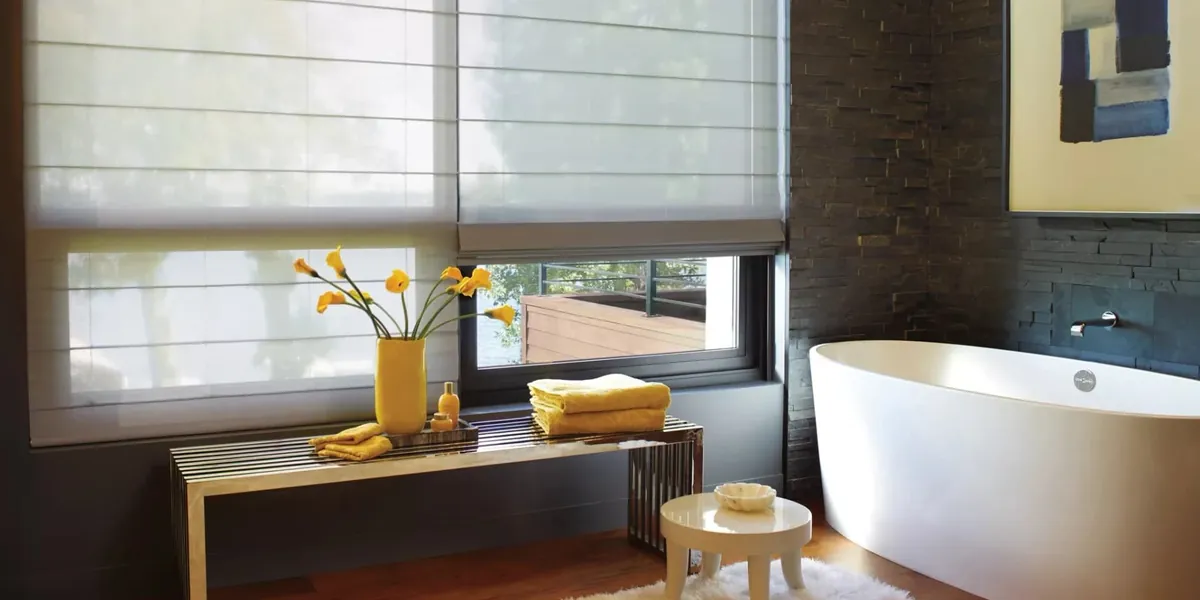
An antique house makes up in number what its windows lack in size. A front room may have four or five small openings, and the house as a whole may have thirty or more. Raising and lowering that many by hand twice a day is exactly the kind of chore that gets skipped, which is why so many old houses end up with shades left at odd heights.
With PowerView, the small windows become groups. The front of the house is one group, each room another, the upstairs bedrooms a third. One press on the remote moves the whole set, and the shades all stop at the same height, so the house looks tidy from the road. Groups can also be built into scenes, such as “front closed for the evening” or “morning, upstairs half open”, that run from the app or on a schedule.
Powder Point and the water-facing rooms
On the Point the problem is too much glass rather than too little. Rooms that face the bay often have a continuous wall of windows and sliders, sometimes with transoms above, and the light coming off the water through all that glass can be intense by mid-morning. It also moves: the bay side is bright and glaring at one hour and pleasant the next.
Long runs of glass suit shades that keep the view. A sheer shade with soft fabric vanes, such as Silhouette or Pirouette, tilts its vanes to soften the glare while the water stays visible through the sheer. A screen roller shade cuts glare in a different way, with a woven fabric whose openness you choose: more open keeps more of the view, tighter blocks more of the sun. We bring both so you can stand at your own glass and compare.
On a wall that wide, a motor is close to essential. Several shades side by side on a manual lift rarely stop at the same line, and the transoms above are out of reach anyway. Motorized and grouped, the whole wall lowers in one smooth movement and stops level.
Letting the schedule follow the sun
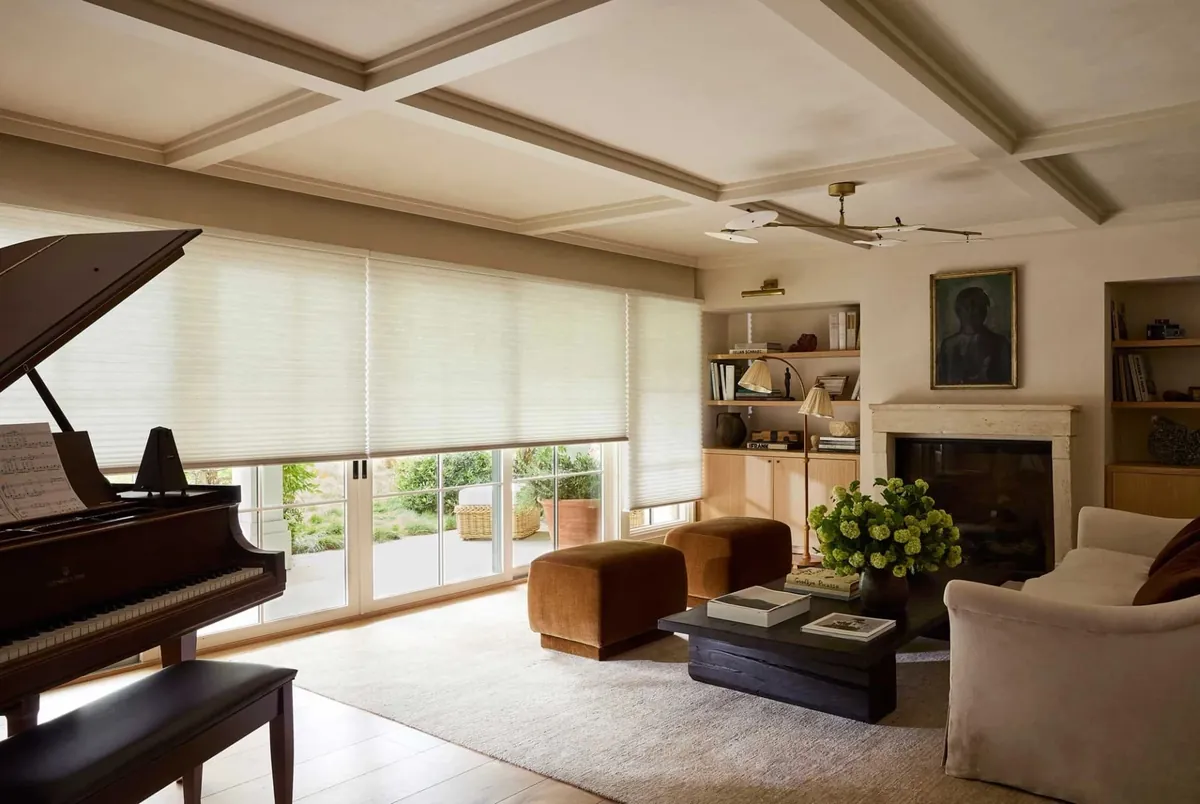
PowerView schedules can run at a set time or be tied to sunrise and sunset, which suits a water-facing room very well. On the Point, a common pattern is to lower the bay-side sheers partway when the sun is strongest on the water and lift them once it moves round, then close everything for privacy at dusk. Because the schedule follows sunrise and sunset, it shifts through the seasons on its own and you do not have to keep adjusting it.
Inland, under the trees, the pattern is gentler. A schedule there is more about routine: bedrooms open at the alarm, the main rooms close as the light goes. You can change any schedule in the app, and a shade moved by hand or by remote simply carries on with its program the following day.
Large newer houses on wooded lots
The newer houses inland are a different job again. They are built on generous lots with mature trees, and the rooms are large: a two-story family room, an open kitchen, a primary suite with windows on two walls, a foyer with glass above the door. The openings are modern and regular, which makes the fitting straightforward.
Here the case for motors is reach and number. A window set high above a fireplace or over a staircase is awkward to cover by hand, so it tends to be left bare, and in summer it lets a lot of heat into a tall room. On a motor it joins the windows below it and follows the same schedule. With a house this size, many people motorize the main floor and primary suite first and add the rest later; new shades simply join the same app.
The trees help, but they also change with the season. A room shaded all summer by full leaves can be flooded with low winter sun once the leaves drop. A schedule tied to sunrise and sunset copes with that shift without you having to remember it.
Controls for every member of the household
Not everyone in a house wants to reach for an app. PowerView gives you three ways to work the shades, and most houses use all of them.
- A remote or wall control in each main room, for one shade, a room or a group. Easy for guests and for anyone who prefers a button.
- The app on a phone or tablet, with every motorized shade in the house laid out by room, and the scenes you have saved.
- Schedules that run scenes at set times or at sunrise and sunset, every day or only on the days you choose.
If you want to read more first, our guide to how motorized shades are controlled explains each one, and the window covering automation page goes into scenes and timing.
Which shades can take a motor
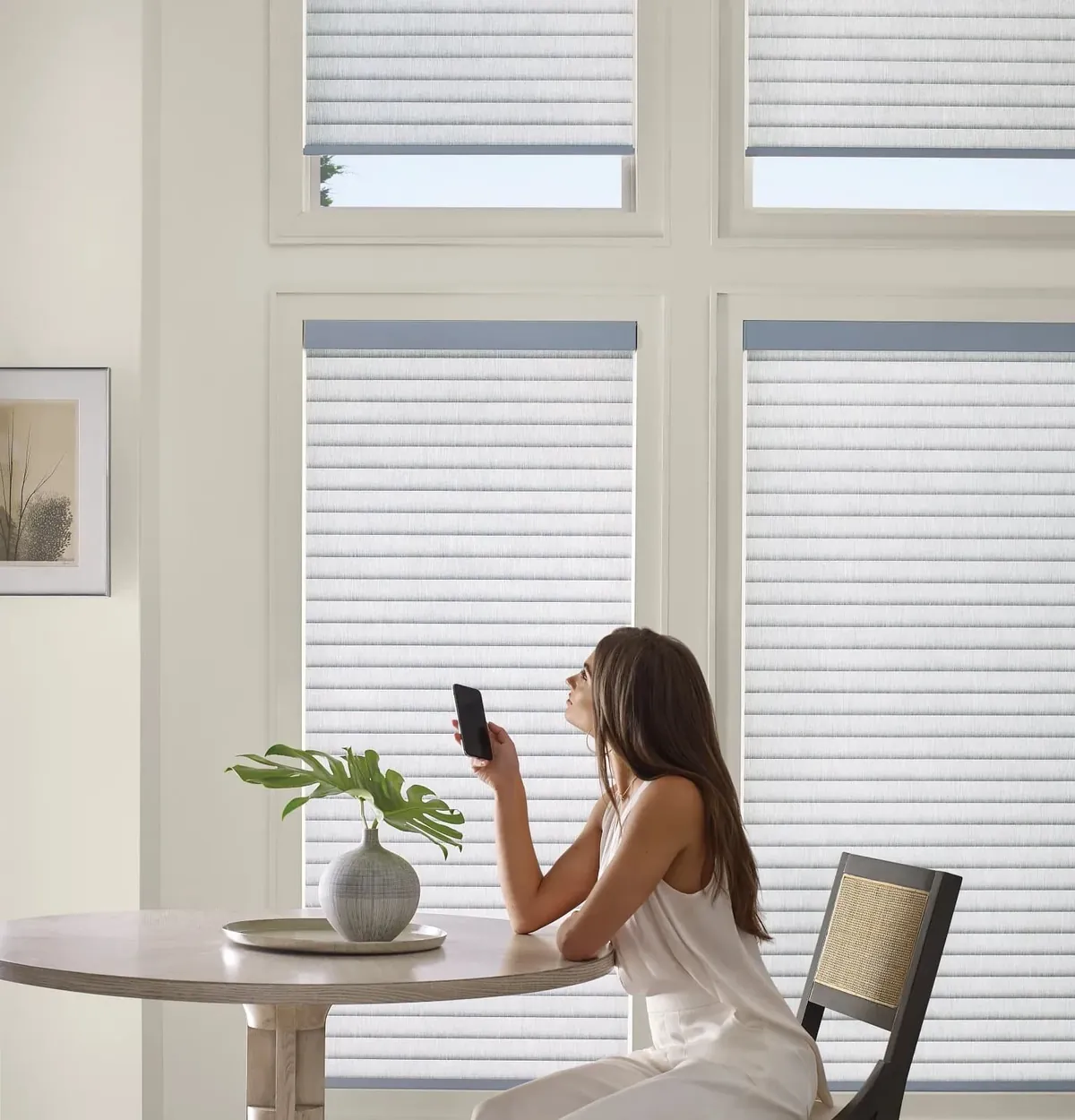
PowerView is available on many Hunter Douglas lines, and the right one depends on the room as much as the window.
- Duette and Applause honeycomb shades for bedrooms and cold rooms in an old house, where the cells help hold warmth at the glass.
- Silhouette and Pirouette sheer shades for water-facing rooms where the view matters most.
- Designer roller and screen shades for long runs of modern glass and for glare.
- Vignette Roman shades for a parlor or dining room in a Federal house that wants a softer, more traditional look.
Not every product or size takes a motor, so if you have a particular shade in mind for a particular window, mention it at the start and we will check it during the visit. More on each line is on our motorized blinds and shades page.
Bedrooms under the eaves
The upstairs of an antique cape is its own small world. Bedrooms tuck under the roof, the ceilings slope, and the windows sit low in the gable ends or in dormers set into the roofline. A dormer window is often recessed at the end of a short alcove, so reaching it means leaning over a chest or a bed, and in a cape the sill may be close to the floor.
These rooms are where a motor earns its keep in a quiet way. A room-darkening honeycomb shade in a dormer can stay down until the hour you choose and lift on its own, and nobody has to clamber into the alcove to do it. In summer, when an attic bedroom warms quickly under the roof, lowering the shades through the middle of the day on a schedule keeps it noticeably more comfortable by bedtime. Requests for motorized blinds in Duxbury, MA, often begin with exactly these upstairs rooms.
With no cords hanging at the window, a motorized shade also suits a child’s room or a guest room under the eaves.
Mixing motorized and manual windows
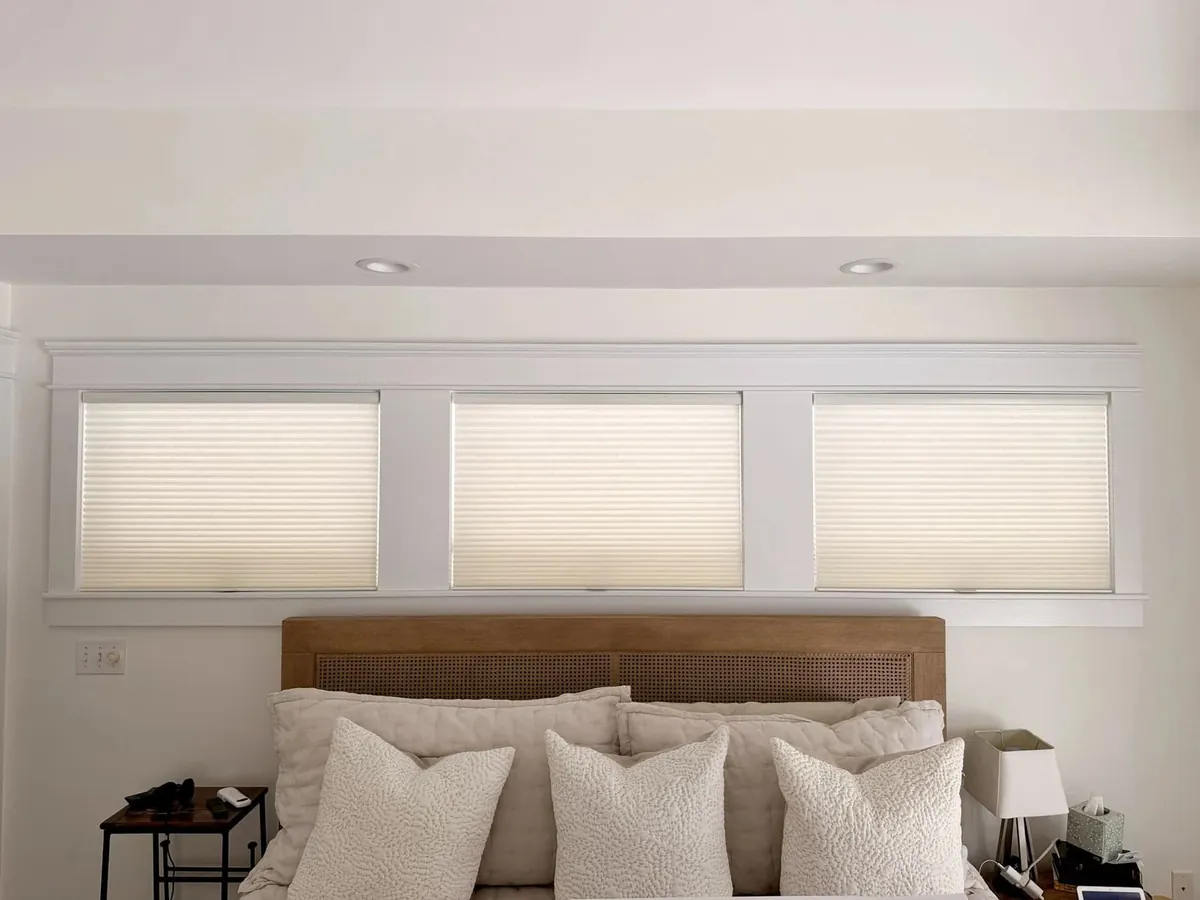
Few houses need a motor on every window. A pantry, a back hall or a small bath that nobody sits in may be perfectly happy with a cordless shade lifted by hand. We help you decide where the motors pay their way: the rows, the high windows, the glass walls and the rooms you use at the start and end of each day.
The manual shades can match the motorized ones in fabric and color, so from the street the house still reads as one. And if you change your mind later, more motorized shades can join the same app and the same groups. Many projects start with the front of the house and the water-facing rooms, then add the bedrooms the following year once the household has lived with the first shades for a season.
Powering each motor
Every motor needs power, and in an antique cape the answer may be quite different from the one in a newer house with modern walls. We plan how each motor is powered at the visit, window by window, and nothing is ordered until you have agreed that plan.
The visit and the installation
Because the windows in this town vary so much, almost every project begins in the house itself. Our vans carry samples, so we can bring the showroom to you.
- Request a consultation online or with the call button, and choose a time that works.
- We walk the house with you, looking at the small antique openings, the glass walls and the high windows separately.
- You hold fabrics up at your own windows, ideally on the water side at the brightest time of day.
- We measure each opening at several points and check the casing depth for the motorized headrail.
- Together we decide which windows get motors, how they group and which scenes you want.
- You receive a free estimate to read in your own time.
- Our certified Hunter Douglas installers fit the shades, set each one’s stopping points, pair them with the remote and app and program your schedules.
There is more about the first visit in what happens at an in-home consultation, and about the fitting itself in what happens on installation day.

A Gallery dealer for a town of contrasts
Blinds & Designs is a Hunter Douglas Gallery dealer. For a town where a single street can hold an antique cape and a glass-walled house, that matters: the full PowerView range is ours to suggest, so we can put a narrow honeycomb shade in a tiny Federal window and a long run of sheers on Powder Point without forcing one product to do both jobs.
Our installers are certified by Hunter Douglas, and setting up the motors, groups and schedules is part of their visit. We also offer interior design consultations when a room needs more than shades, and blind and shade repairs on window coverings you already own.
Other services in town include custom blinds in Duxbury, plantation shutters in Duxbury and our Hunter Douglas dealer page for Duxbury. Everything we do here is on the Duxbury page.
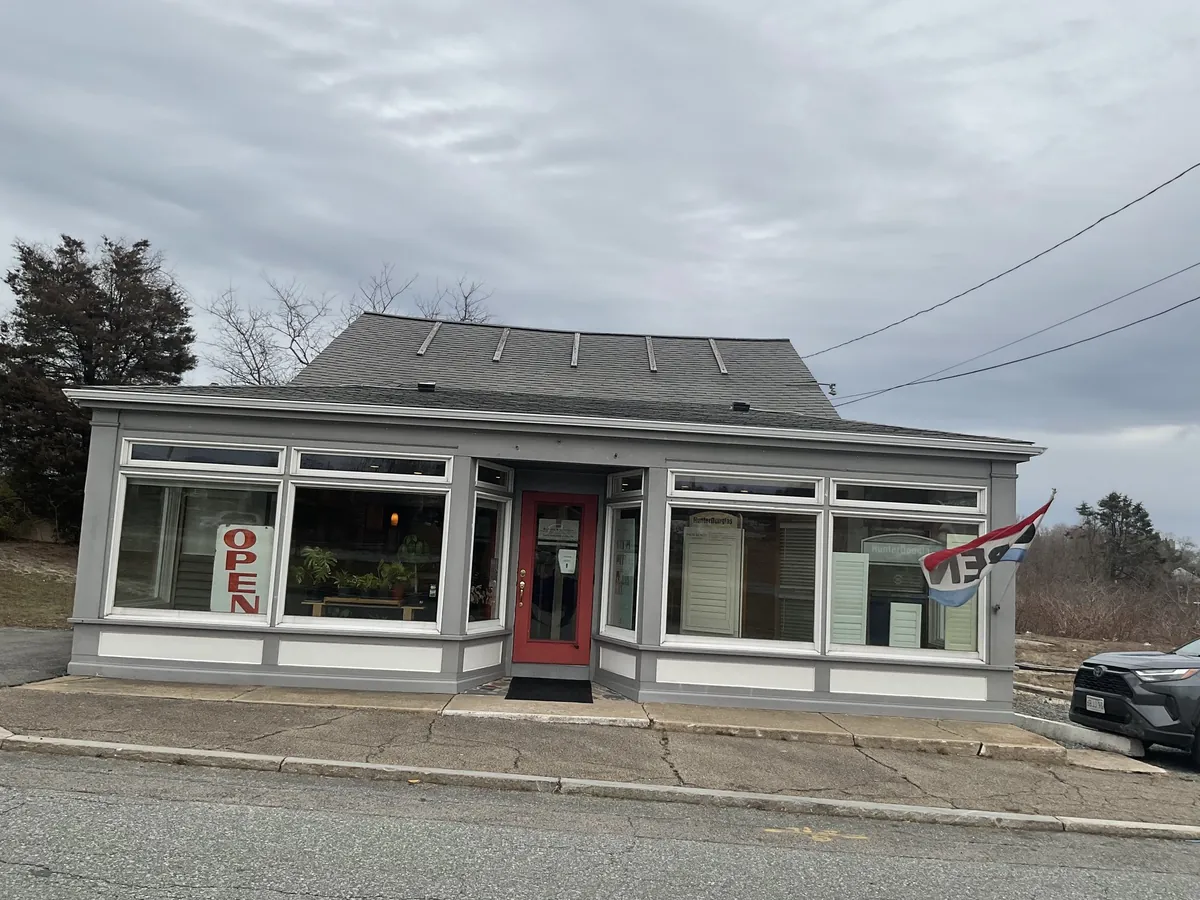
The showroom nearest Duxbury
Our nearest showroom is in Sagamore, south along Route 3 by the canal. You are welcome to stop in and talk over a project.
For most motorized shades here, though, the house is the better place to decide, because the gap between a tiny antique opening and a wall of bay-facing glass only really shows when we stand in front of them together.
Questions from Duxbury
Can a tiny window in an antique cape have a motorized shade?
Often, yes. It depends on the depth of the casing and the width of the opening. We measure both at the visit. If a window is too shallow for an inside mount we show you a slim outside mount, and if it is too narrow for a motor we suggest a manual shade that matches the rest of the row.
How do I keep the bay view and still cut the glare?
A sheer shade with tilting vanes, or a screen shade with an open weave, softens the light while the water stays visible. On a schedule tied to sunrise and sunset, they lower only while the glare is at its worst.
Will all the shades on a long wall stop at the same height?
Yes. Grouped on PowerView, they move together and stop on the same line, which is hard to achieve by hand across a wide run of glass.
Do I need the app to use motorized shades?
No. A remote or wall control works on its own, and schedules run without anyone touching a phone. The app is there when you want to change things or move every shade in the house at once.
What does the estimate cost?
Nothing. We come to your house, measure and leave you a free estimate.
Plan your Duxbury shades
The quickest way to see how motorized blinds in Duxbury, MA, will work in your house is to look at your own windows with the samples in hand. Request a consultation and we will come to you, measure every opening and leave a free estimate. If you would rather ask a question first, use the call button, or call in at the Sagamore showroom.