
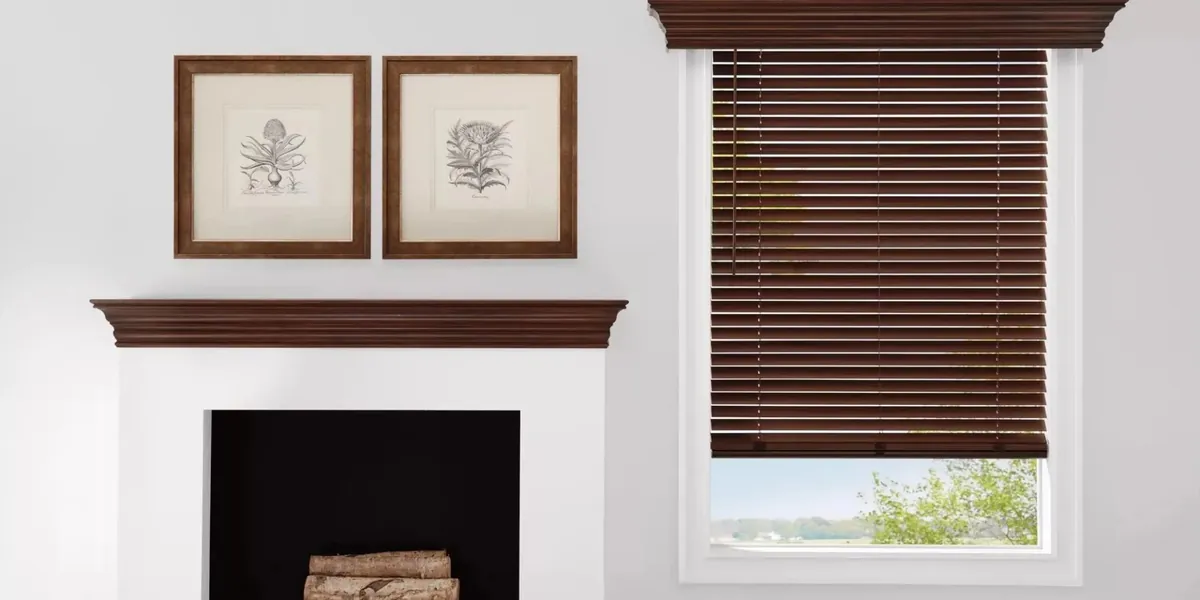
Standard openings, with tall sash at the center
Most windows in Bridgewater are a pleasant surprise to measure. Across the post-war ranches and the newer subdivisions that spread out from the middle of town, standard modern openings are the rule: square frames, regular sizes and plenty of depth for a headrail. The exception is the older core. Near the common and around the college, colonials and Victorians keep tall older sash, with deep casings and frames that have had a long time to move. A good plan for custom blinds in Bridgewater, MA, treats those two groups differently.
On a standard opening, the work is about choice: which material suits the room, which color sits with the walls, and which way of raising and tilting the blind you will enjoy using every day. On the tall sash near the common, the work is about proportion and fit: a blind that respects a narrow window, stacks out of the way of the upper glass and sits square in a frame that may not be.
Hunter Douglas covers both with the same four families: wood, faux wood, metal and vertical blinds, each one made to the window it will hang in.
The Hunter Douglas blinds we fit in Bridgewater
We are a Hunter Douglas Gallery dealer, so the whole blind catalog is open to you. These are the six products we show most often in town.
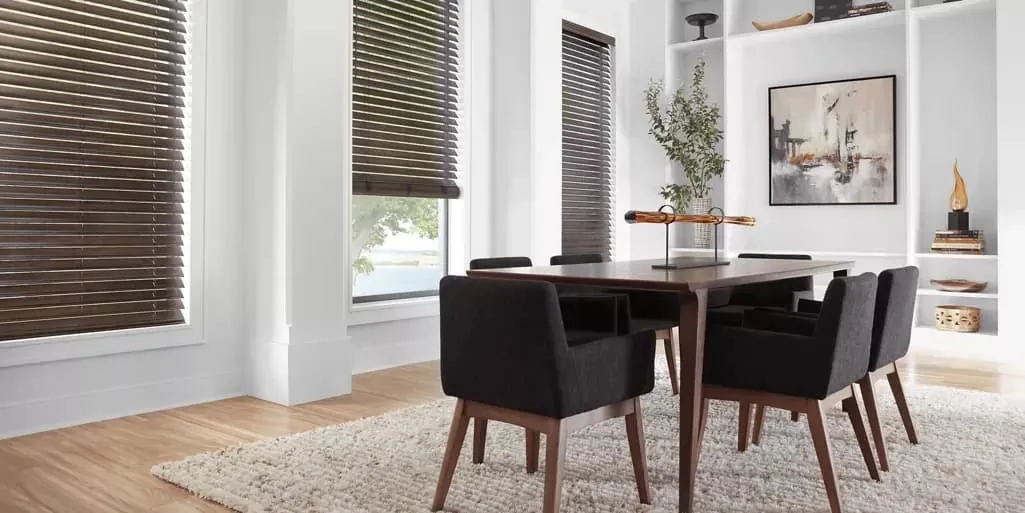
Parkland wood blinds
Real hardwood slats in stains and paints. Handsome on the tall sash of a colonial near the common, and warm in a newer dining room.
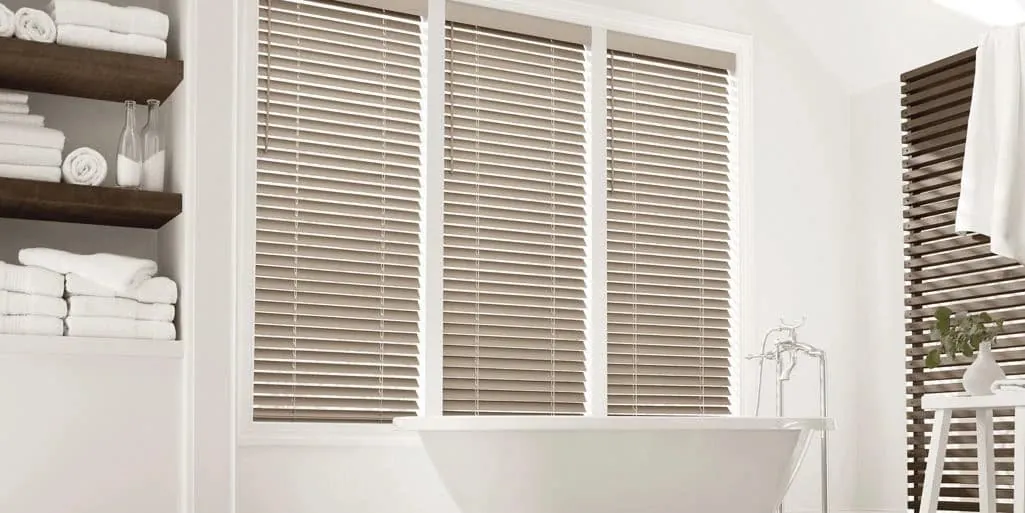
EverWood faux wood blinds
A wood look that does not mind moisture. The natural pick for kitchens, bathrooms and the laundry.
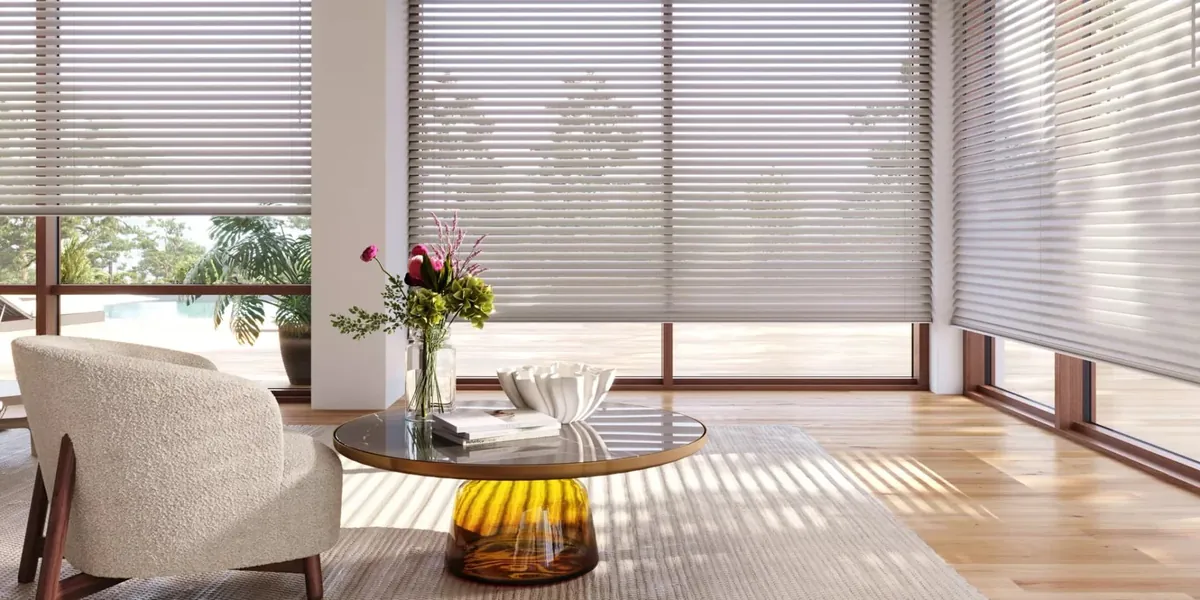
Metal blinds
Slim aluminum slats with a light, modern line. Good in offices, sunrooms and any room where you want precise control of the sun.
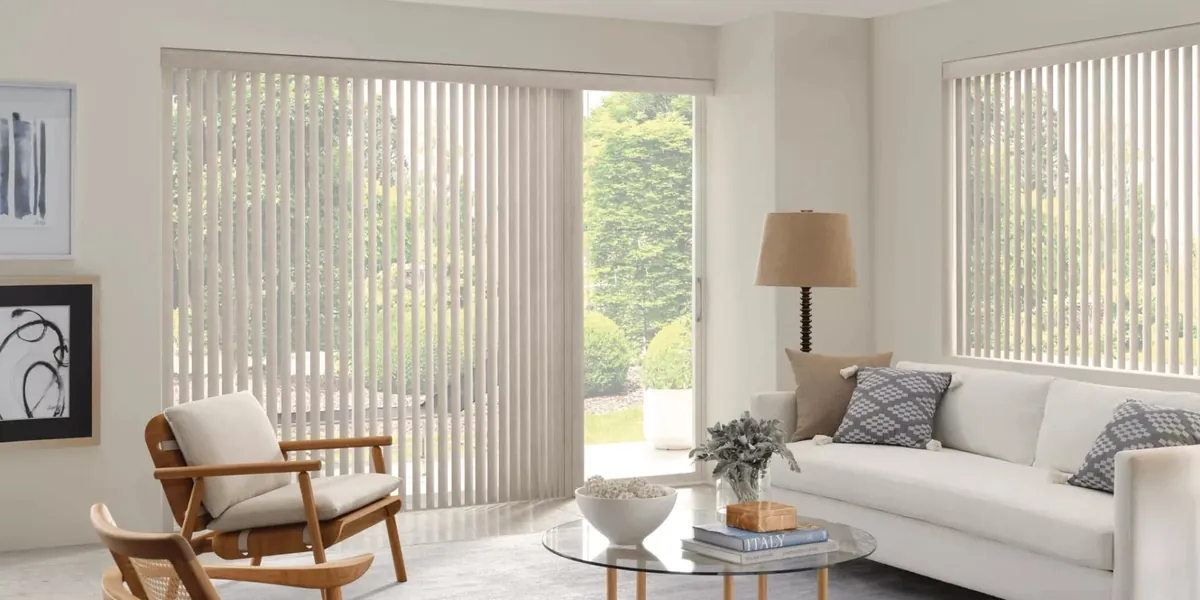
Verticals
Vertical vanes for sliders and patio doors. They rotate for light and stack to the side so the door opens freely.
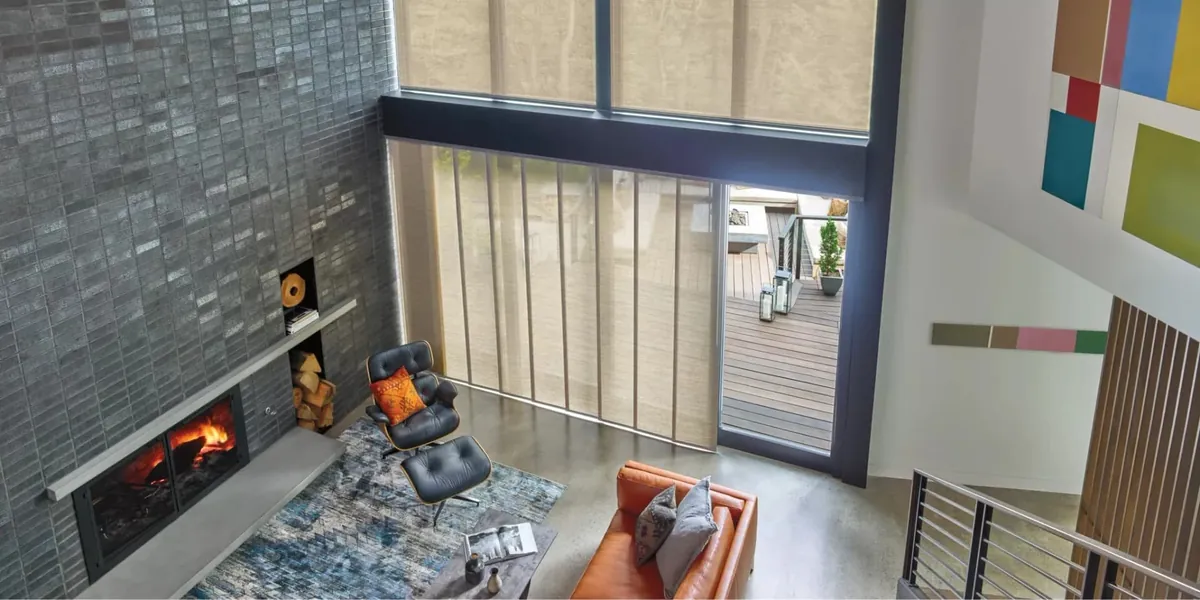
Skyline gliding panels
Wide fabric panels that glide across a track. A softer alternative to vanes on a big slider in an open plan.
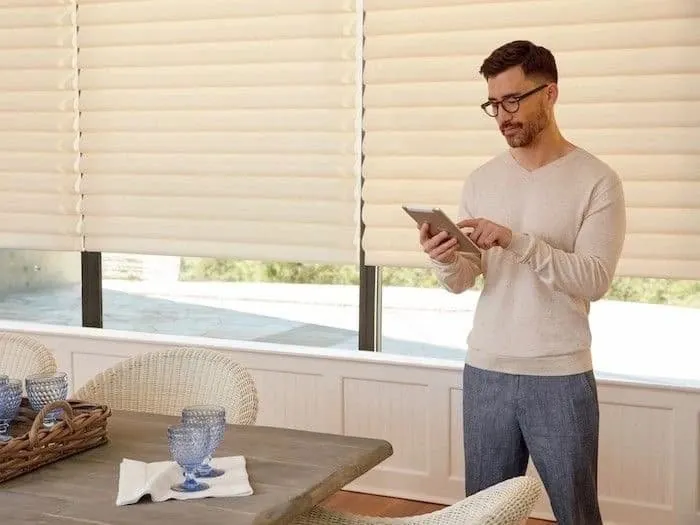
PowerView motorization
Raise, lower and tilt from a phone, tablet or remote, or let a schedule do it. Handy across a long row of family room windows.
Colonials and Victorians around the common
The oldest houses in Bridgewater cluster around the common. They are colonials with steep roofs and plain, balanced fronts, and Victorians with porches, bays and more decoration. What they share is the window: tall, older sash, usually in pairs or threes in the front rooms, with heavy moulded casings that have been painted many times.
On sash that tall, the first thing to plan is where the blind goes when it is up. A blind gathers its slats into a stack at the head of the window, and a tall blind makes a deep stack. If that stack hangs in front of the top sash, it shades the high glass that lights the back of a deep room. We look at slat width and material to keep the stack compact, and set the headrail as high in the frame as it will go.
The second thing is the frame itself. An old opening can be slightly wider at the head than at the sill, or pinched at the middle where the house has settled. We take the width at three heights and make an inside-mount blind to the narrowest, so it never rubs. Where the frame is too shallow because of sash hardware, or too far out of true, a mount on the face of the casing is the tidier answer.
The third is the look. These houses deserve a blind that sits quietly in the window: real wood stained to match a floor, or painted to blend with the trim. Matching every front window keeps the façade calm from the common.
Cloth tapes over the ladder cords are worth a look on these windows. They give a softer, more traditional finish and hide the small holes the cords pass through, so a closed blind lets less light through at the slat edges. A matching valance hides the headrail at the top of the casing. When we plan custom blinds in Bridgewater, MA, for a house near the common, we bring tape colors and valance profiles alongside the slats so you can see the whole blind against your own trim.
Streets toward the college
The streets running toward the college carry the same older housing stock as the common: colonials and Victorians, some with porches right on the sidewalk and front rooms only a few steps from passers-by. Upstairs, bedrooms often have the same tall sash as the front parlor, sometimes with a smaller window tucked into a gable.
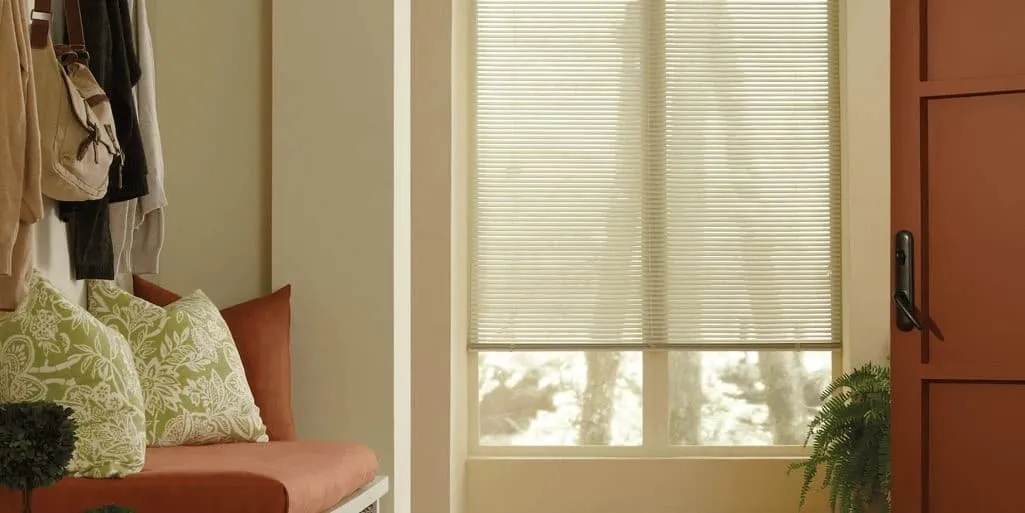
Where a house sits close to the street, privacy shapes the plan as much as light. A horizontal blind does this well. Tilt the slats so the room side points up and passers-by see only the slat faces, while daylight still comes in over the top. In the evening, closing the slats fully gives a private room. On a gable window that is narrow or oddly shaped, we look at what can be made to fit and are honest when a different product would do better.
Ranches as you head out of the center
Leave the common in almost any direction and the houses change to post-war ranches. These are one-story houses built to standard sizes: a picture window in the living room, a window over the kitchen sink, a short hall of bedrooms and often a back door or slider to a patio.
Because the windows are regular and square, the visit moves quickly to what you want from each room. A picture window is often best as two or three blinds on a single headrail, so each part moves on its own. The kitchen window gets faux wood. Bedrooms take a deeper color that keeps early light at bay, or an outside mount that covers the edges of the frame. Many ranches have had a family room or sunroom added at the back, and that room usually gets the most attention, because it often has the most glass.
Newer subdivisions further out
The newer subdivisions at the edge of town are mostly larger colonials and similar two-story houses with modern windows in neat rows. Kitchen, dining and family rooms often run into each other at the back of the house, with a slider or French doors to a deck.
In those open rooms, the blinds act as one surface. We keep the color and slat the same across every window you can see from the kitchen island, and line the headrails up at one height. For the slider, there are two good routes: classic vertical blinds, or Skyline gliding panels for a softer, more modern look. Both clear the door when drawn. On a long run of windows, PowerView lets you tilt the whole row with one tap, or close the sunny side automatically in the afternoon.
Bigger subdivision houses also tend to have a two-story entry or a stair window that no one can reach without a ladder. A motorized blind is the practical answer there, and it can be grouped with the family room blinds so the whole back of the house opens and closes together.
Sunrooms and family rooms added at the back
Many Bridgewater ranches and older colonials have grown at the back over the years. A sunroom, a family room or a kitchen extension often has far more glass than the original house, with windows on two or three walls and sometimes a run of transoms above. Those rooms are lovely in spring and can be hard to sit in on a July afternoon.
For a room like that we plan each wall on its own. The wall that takes the morning sun might need nothing more than a pale slat tilted up. The wall that takes the late sun needs a slat that closes well and a control you can reach easily, or PowerView on a schedule. Custom blinds for Bridgewater sunrooms are usually one color and slat across every wall, so the room stays calm, with the material chosen to handle the heat and the light the room actually gets.
Screens, bonus rooms and bedrooms
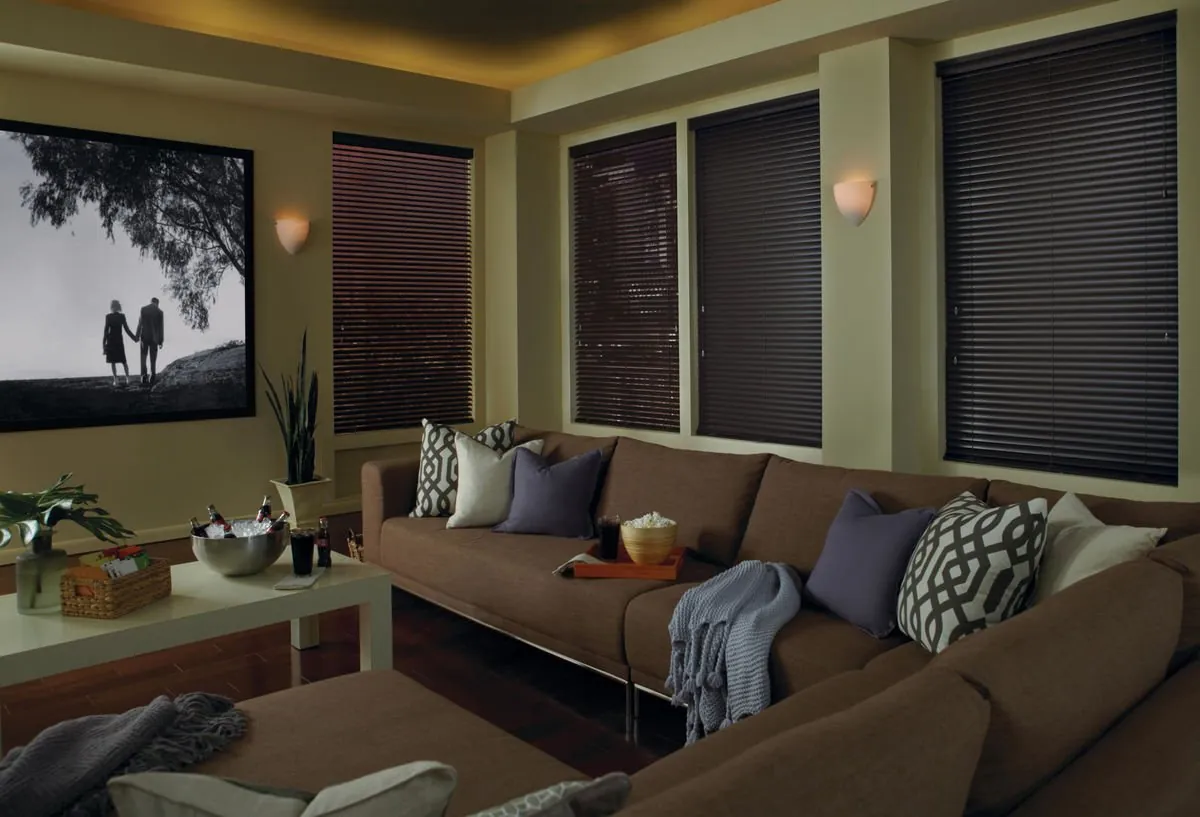
Plenty of Bridgewater houses have a room with one clear job: a study where the sun falls on a monitor at the same hour every day, a bonus room over the garage used for films, a bedroom where someone works nights. A blind is one of the simplest tools for each.
For a screen, the trick is angle. A metal or faux wood slat tilted just enough keeps direct sun off the display while leaving a view of the yard. For a media room, color matters more than people expect: a deep espresso slat closed tight darkens a room far more than a pale one, and an outside mount that overlaps the casing cuts the line of light at the sides. In a bedroom, the same approach, with slats closed upward, keeps the room dim and private.
Why a standard window still deserves a made-to-measure blind
It is fair to ask why custom blinds in Bridgewater matter when so many windows are standard sizes. The answer is in the gaps. A blind made to the exact opening sits inside the frame with a small, even clearance on each side, so there is no wide bright line down the edges and no slat catching on the jamb. The headrail is the right depth for the frame, so the blind sits flush rather than jutting into the room.
Made to measure also means made to choice. You pick the material, the slat width, the color, the tape or cord style, the valance and the controls, window by window. A kitchen and a living room in the same ranch can have different blinds that still look like a set.
If you want to compare families before we come, our custom blinds overview is a good start, followed by wood blinds, metal blinds, vertical blinds and the Skyline gliding panels page.
Choosing how each blind is worked
How you raise and tilt a blind decides how pleasant it is to live with. A few questions help.
Do children or pets use the room? Then cordless is the obvious choice. There are no hanging cords; you lift or lower the bottom rail by hand and it stays put.
Is the window easy to reach? A tilt wand is simple and tidy on most windows. On a window over a deep counter or high on a stair, motorized lift and tilt saves the stretch.
Do you adjust it often? On a family room or a screen-facing window you might tilt the slats several times a day. PowerView lets you do that from your phone, a remote or a schedule, and group blinds together. We plan how each motor is powered during the visit.
Is it a door? Verticals or Skyline panels draw to the side so the door stays usable.
Your appointment, step by step
Bringing the samples to your house is the heart of how we work. The sample vans mean the showroom can come to you, and seeing a slat beside your own trim is worth any number of catalog pictures.
- Ask for a visit through the Request a Consultation form, or use the call button.
- We come with slats in wood, faux wood and metal, vanes and Skyline fabrics for doors, plus valances and controls to try.
- We go room by room with you, beginning wherever the light or privacy bothers you most.
- You hold samples up to the glass at different times of day if you like, and compare colors against your walls.
- Each window is measured, with the frame depth checked for an inside mount.
- We prepare a free estimate covering the choices you are weighing, and you decide when you are ready.
If you are also thinking about color schemes or how blinds will sit with curtains, interior design consultations can be part of the same appointment. The what happens at an in-home consultation page explains more.

Installation by certified installers
Our Hunter Douglas certified installers hang every blind we sell. On a colonial near the common that can mean finding solid timber behind old plaster, packing a headrail level in a frame that is not, and lining up a row of blinds so their tops match across the front of the house. In a newer subdivision house it means a quick, clean fit, tested blind by blind.
Motorized blinds are paired with their remotes and set up in the app before we leave, along with any schedules you want. Our guide to what happens on installation day walks through the visit. Done this way, custom blinds in Bridgewater, MA look as though they were part of the house from the start.
When a shade or shutter suits better
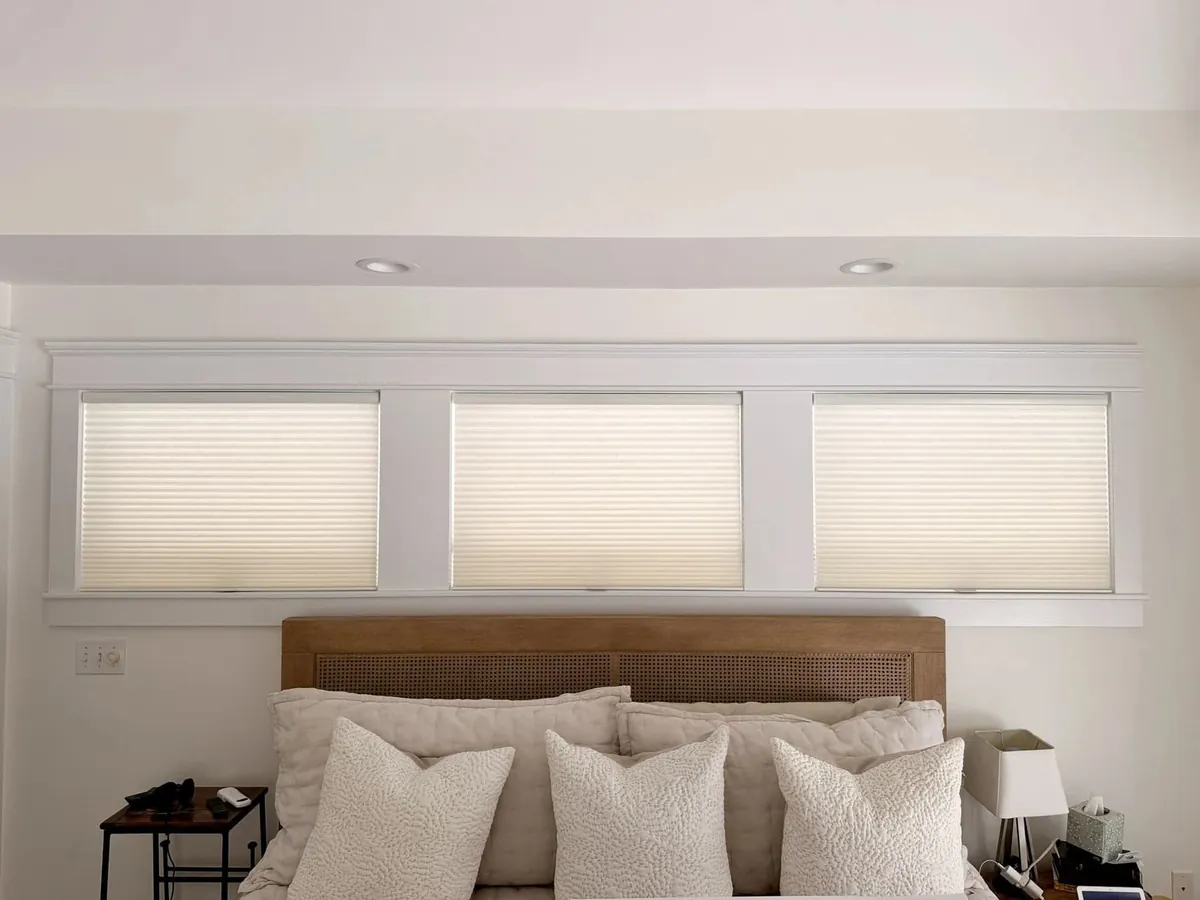
A blind is not always the answer. A cold bedroom on the north side might be warmer with a honeycomb shade, and a front room on a busy street might suit shutters. As a Hunter Douglas Gallery dealer, Blinds & Designs carries shades, shutters and drapery as well as blinds, so one visit can cover every window.
Our installers hold Hunter Douglas certification for all of it, and we repair blinds and shades you already own through our blind and shade repair service.
Take a look at cellular shades in Bridgewater, plantation shutters in Bridgewater or motorized blinds in Bridgewater, or see everything on our Bridgewater page.
Sagamore, our closest showroom
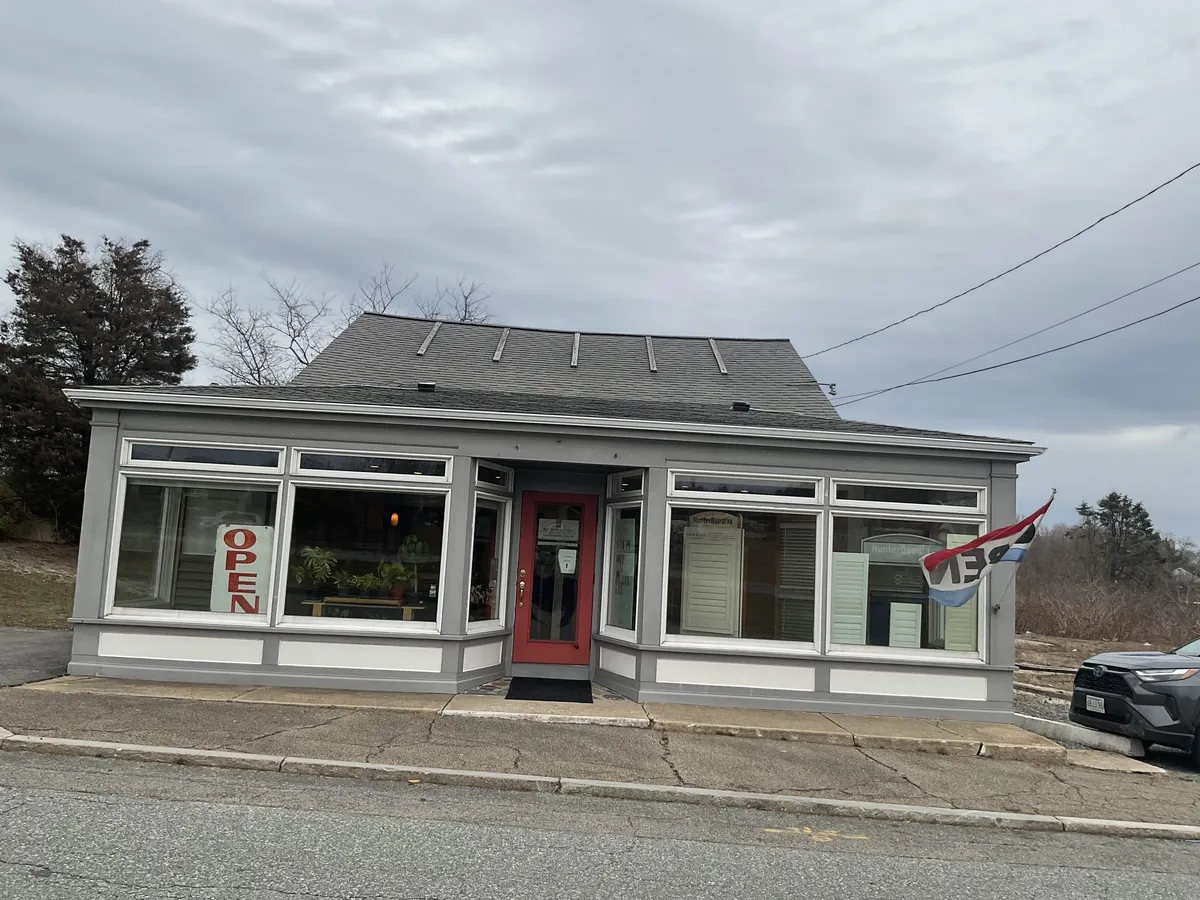
The nearest Blinds & Designs showroom to Bridgewater is in Sagamore. You will find the address and hours on the Sagamore showroom page.
Even so, most Bridgewater customers prefer the home visit, because it settles the questions a showroom cannot: how a slat looks on your tall sash, your ranch picture window or your family room slider.
Questions from Bridgewater
Do blinds work on the tall old windows near the common?
Yes. We choose a slat and material that stack compactly and set the headrail high, so the top of the glass stays clear when the blind is raised. Old frames are measured at several heights so the blind fits without rubbing.
My house is on a busy street. How do blinds help with privacy?
Tilt the slats with the room side up and people outside see only the slats, while daylight still comes in. Close them fully at night for a private room.
Vertical blinds or Skyline panels for my slider?
Both clear the door when drawn. Verticals rotate to control the light precisely; Skyline panels give a softer, wider fabric look. We bring samples of each so you can compare.
Can my blinds be motorized?
Yes. PowerView motorization lets you raise, lower and tilt from a phone, remote or schedule, one blind at a time or in groups.
What does the estimate cost?
Nothing. We give a free estimate once your windows have been measured.
Take the next step
The right blind for a tall sash near the common is rarely the right one for a ranch slider, and the way to know is to try them in place. Request a consultation and we will come to you with the Hunter Douglas blind range, measure each window and write up a free estimate. Prefer to talk first? The call button reaches our Sagamore showroom, which you can also visit.