
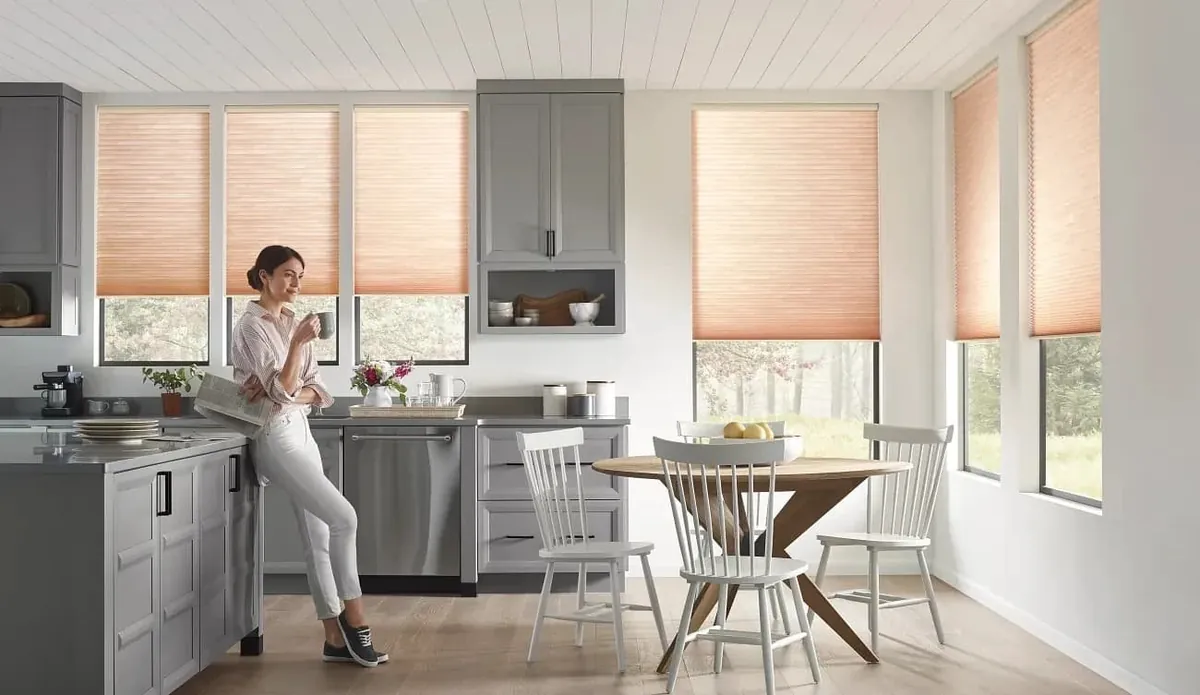
From the common outward
Bridgewater’s oldest houses cluster near the common and the college: colonials and Victorians with tall sash, deep window casings and rooms laid out around a central hall. Head outward and the housing changes to post-war ranches and then newer subdivisions, where the windows are standard modern sizes. Across the town as a whole, those regular openings are by far the most common, which shapes how we approach motorized blinds in Bridgewater, MA.
With regular windows, the fitting is rarely the hard part. The interesting decisions about motorized blinds in Bridgewater are about how the household lives: which rooms need to be dark in the morning, which ones take the afternoon sun, which windows are out of reach, and how much of the day you want the shades to run on their own.
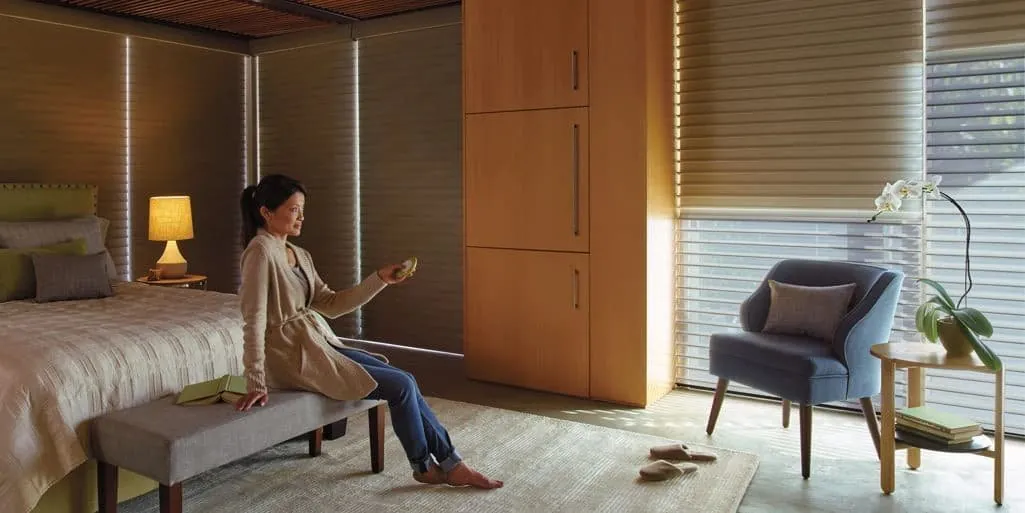
Hunter Douglas PowerView covers all of it. Every motorized shade answers to a remote, to the app on your phone or tablet, and to schedules you set once.
Six things a motor changes at the window
These are the reasons most people give us for choosing motorized blinds in Bridgewater. Any of them can apply to a ranch, a subdivision house or an older home near the common.
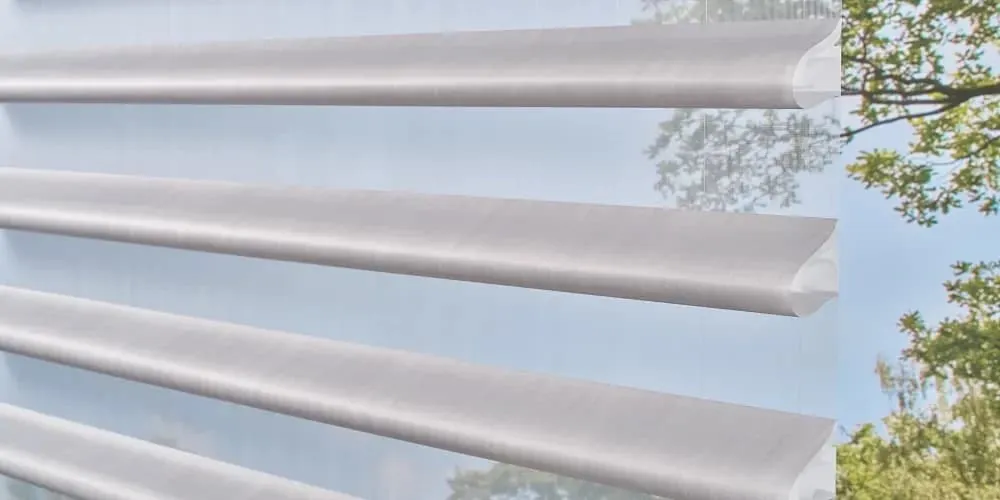
Shades that keep a timetable
Schedules open and close the shades at the hours you choose, every day or only on working days.
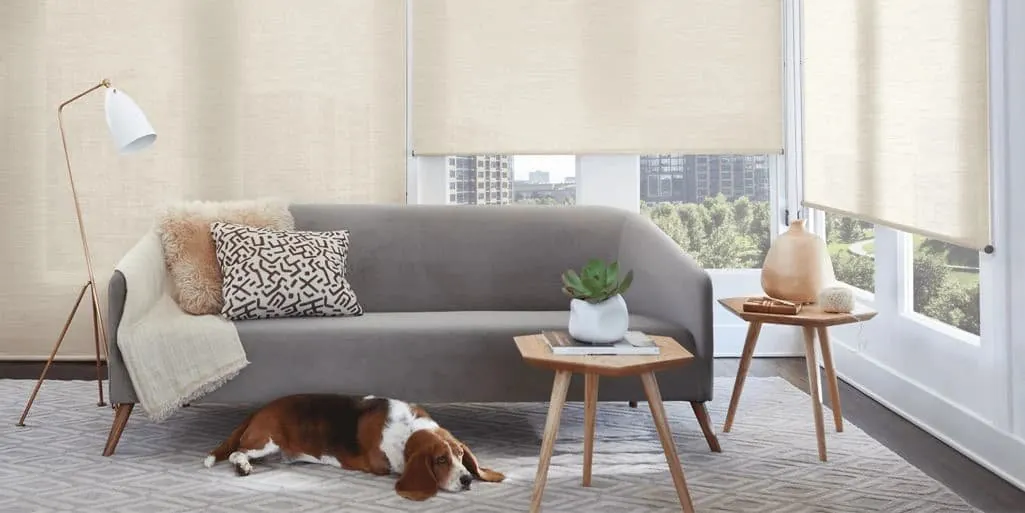
Rooms that move as one
Grouped shades rise and fall together and stop on the same line, however many windows the room has.
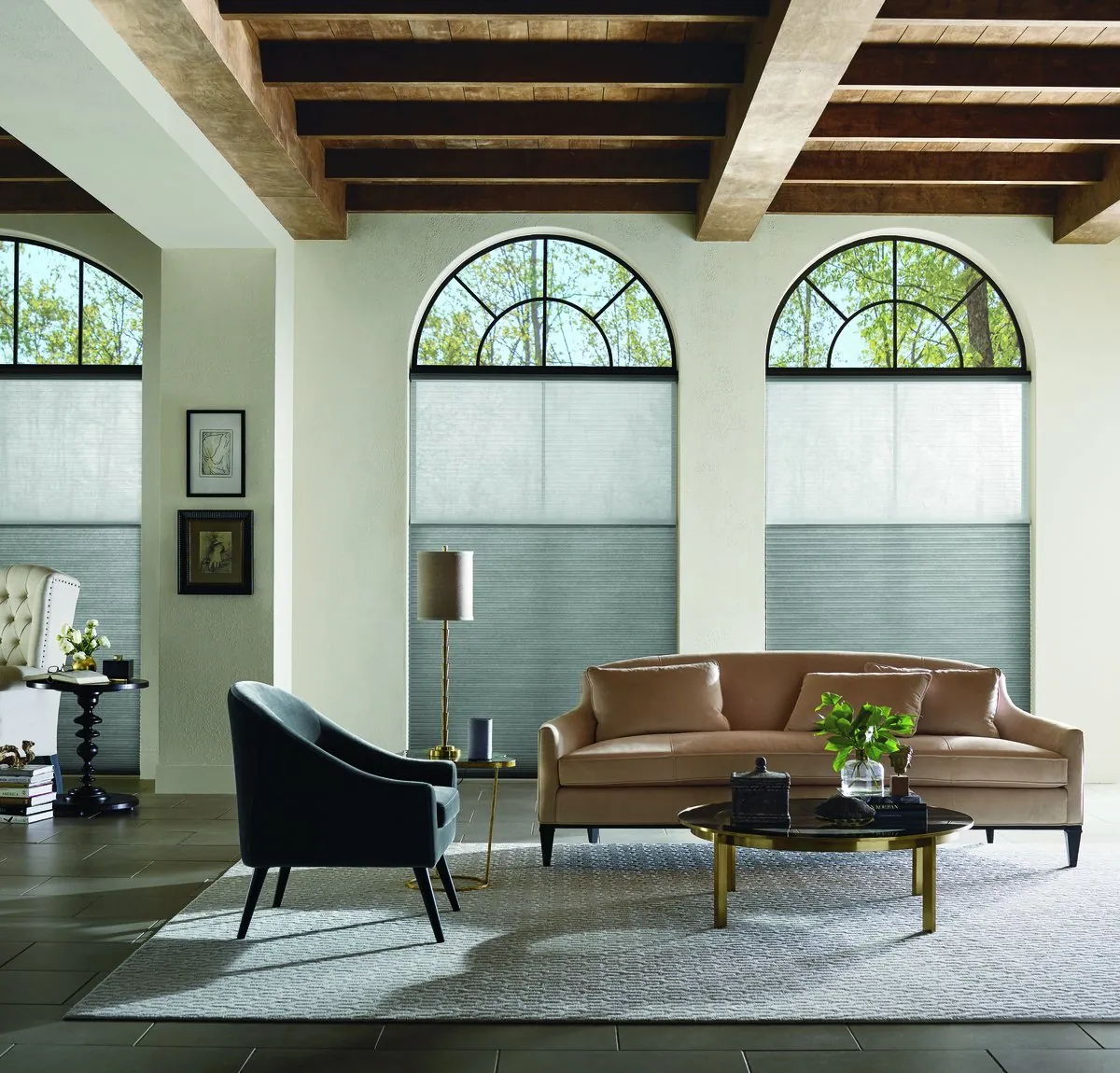
Windows out of reach
High foyer glass and the top of a tall old sash, covered from a remote instead of a ladder.
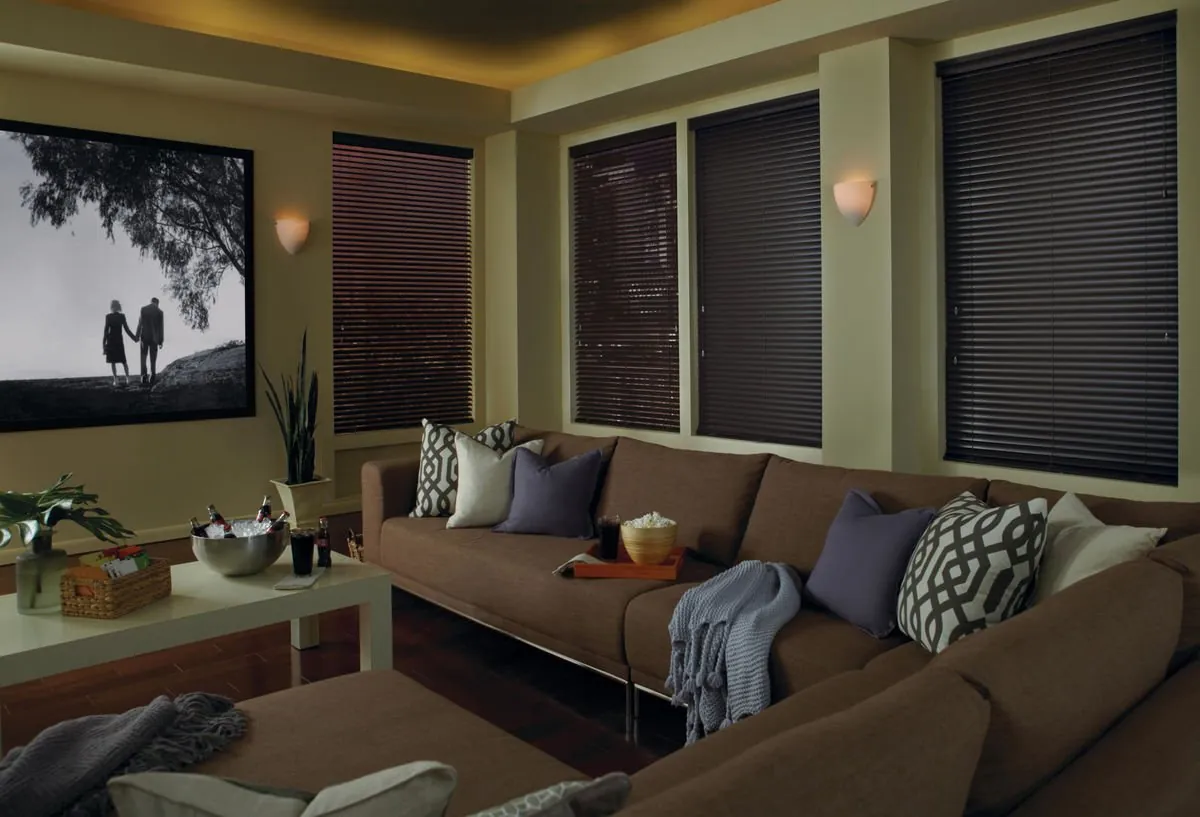
Dark rooms on demand
A den or media room that darkens at one touch for a film or a game.
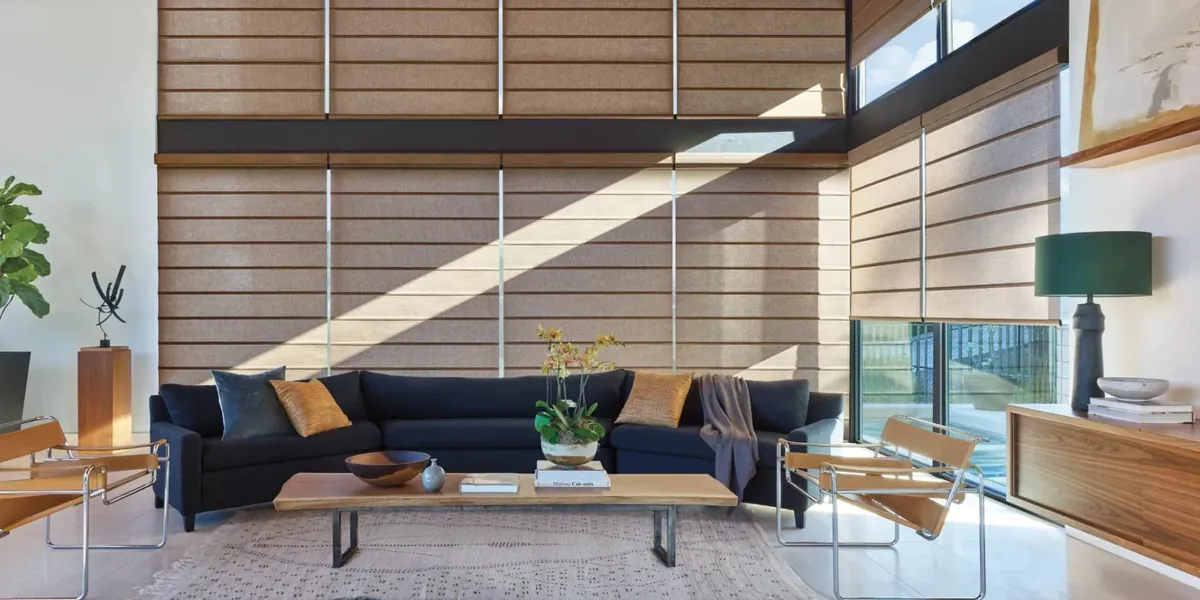
Glare off screens
A home office or family room shaded only during the hours the sun hits the monitor or the TV.
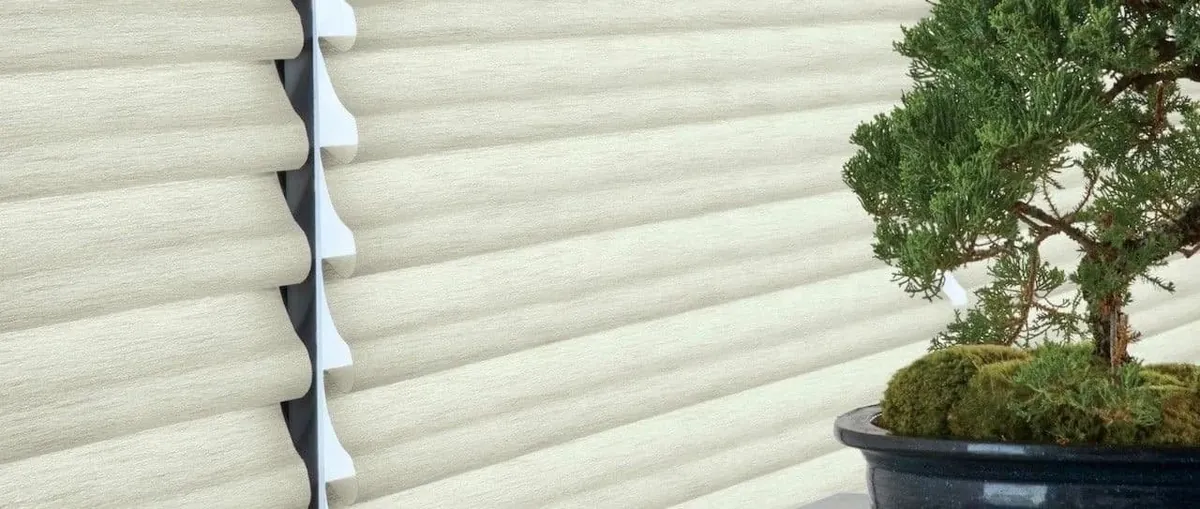
No cords at all
Nothing hanging at the window, which suits children’s rooms and a tidy, simple look.
Sash near the common and the college
The colonials and Victorians closest to the common are the exception to the rule of standard sizes. Their windows are tall, often taller than a modern unit, set in wood casings that may have been painted many times. In a Victorian the upper sash can sit well above arm’s reach, and a front room may have a bay with three tall openings side by side.
For these windows, the shade needs to stack neatly at the top when raised so the full height of the glass and the trim shows. Honeycomb and Roman shades both do this well, and on a motor the shade can be stopped at any height without a long cord running down the casing. We measure each old opening at several points, because a frame that has settled is rarely square, and check the depth for the motorized headrail before suggesting an inside mount. If the frame is too shallow, a slim mount on the face of the casing is the alternative, and we will show you how it looks.
In a colonial with a row of identical front windows, grouping keeps the face of the house even. Each floor’s front windows move together and stop on the same line, so the house never looks half awake from the street.
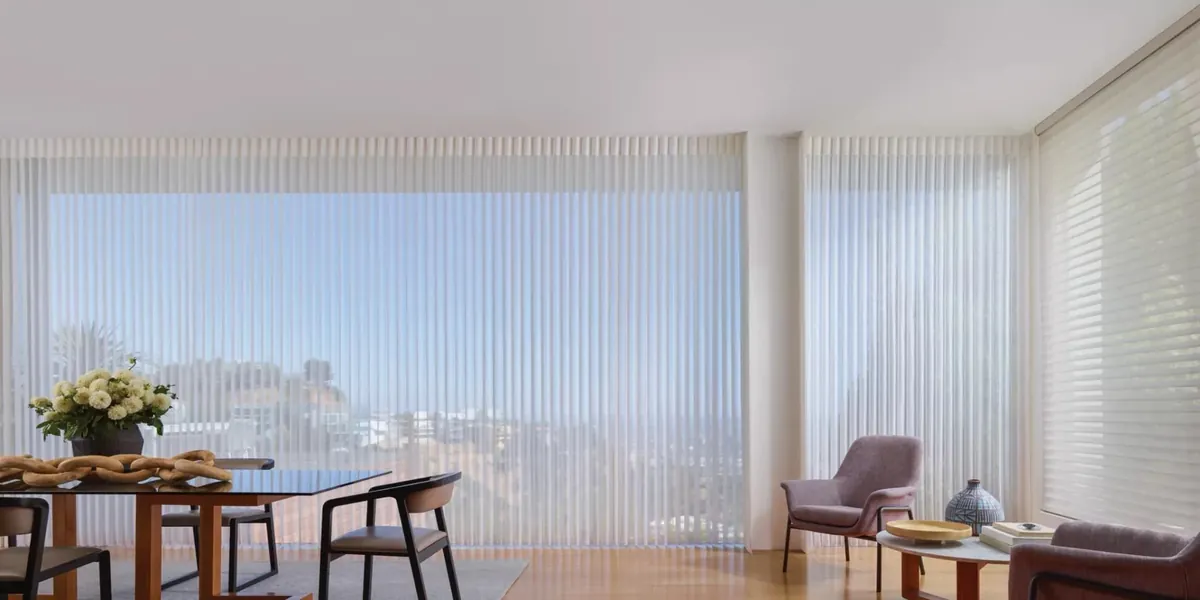
Ranches and the start of the day
A post-war ranch keeps the bedrooms together along one hallway, usually on the quieter side of the house, with the living room and kitchen at the front or back. That layout lends itself to a simple morning routine on a motor.
Bedroom shades with a room-darkening fabric stay closed until a set time, then lift, either fully or in two steps a few minutes apart. The kitchen shade can open a little earlier, so the first person up walks into a lit room. The living room follows when the household is up and about. Each step is a scene in the app, and the whole sequence runs on its own once you have set it.
Ranches also tend to have one or two windows that are awkward to reach: the window over the sink, a window behind a sofa, or a high strip window in a bathroom. These are worth motorizing even if nothing else is, because they are the windows most often left at the wrong height. A single wall control by the doorway, or a remote in a drawer, is all it takes to bring them back into daily use.
Newer subdivisions and their great rooms
The newer subdivisions further from the center have the most regular windows in town, and often the biggest rooms. A typical house has a two-story family room open to the kitchen, with tall windows and sometimes a row of transoms or a half-round window above. There may be a window over the front door that lights a double-height foyer.
Those high windows are where the case for a motor is strongest. By hand they cannot be covered, so they are usually bare, and in summer they let a lot of heat into a tall room. On PowerView, they become part of the room’s group, lowering with the windows below and following the same schedule. A sheer or banded shade across the family room wall gives you control of the light without making the space feel closed in.
Because subdivision windows are so regular, many owners motorize the main living spaces and the primary bedroom together, then add other rooms as they go. Every new shade joins the same app, groups and scenes.
Working from home without the glare
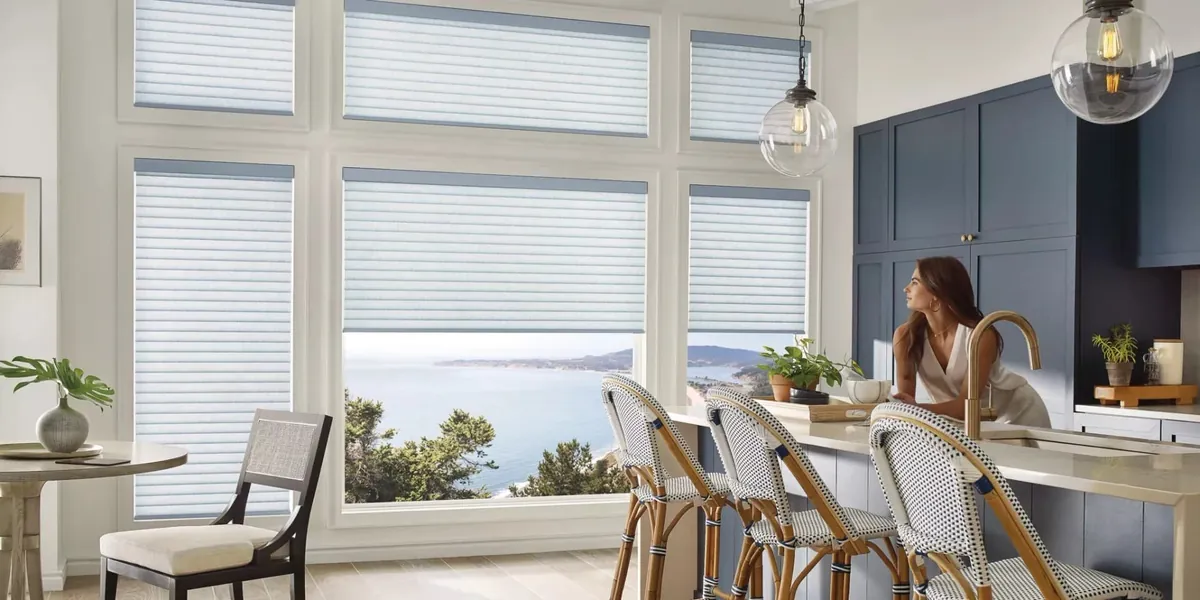
A spare bedroom or den turned into a home office is now a feature of many houses, and the desk is rarely in the ideal spot for the light. A monitor facing a window is unreadable when the sun is on that side, and a monitor with its back to the window picks up reflections.
A screen shade is often the right answer. Its open weave cuts glare while keeping the view outside, and you choose the openness: more open for more view, tighter for less glare. On a motor, the shade can lower for the hours the sun is on the office window and lift again afterwards, or drop from a button on the desk when a video call starts. For a household weighing up motorized blinds in Bridgewater, MA, the home office is often the room that settles the question.
Front rooms after dark
Near the common the older houses stand close to the sidewalk, and in the subdivisions the front windows face a street of neighbors. Either way, a living room with its lamps on in the evening is on show to anyone passing. The answer has always been to close the shades at dusk, but in November dusk comes before many households are home, and in June it comes after the children are in bed.
A sunset schedule solves the timing. The street-side shades close as the light goes, whatever the date, and open again in the morning at the hour you choose. In a colonial, the front windows on both floors can follow the same scene, so the whole face of the house closes together. A light-filtering fabric in the daytime and the shades fully down at night give you privacy at any time of day without anyone touching a cord.
Upstairs bedrooms in summer
The second floor of a colonial, old or new, collects heat on a summer afternoon. Bedrooms on the south and west sides can be uncomfortably warm by bedtime, especially under a roof with little shade from trees. Lowering the shades through the hottest hours makes a real difference, but nobody is upstairs at three in the afternoon to do it.
A schedule takes care of it. The upstairs shades on the sunny sides lower in the early afternoon and lift again in the evening, or stay down if the room is used for sleeping early. Honeycomb shades suit these rooms particularly well, because the cells that hold warmth in winter also slow the heat coming through the glass in summer. Many families we speak to about motorized blinds in Bridgewater, MA, start upstairs for exactly this reason.
Sliders to the deck and yard
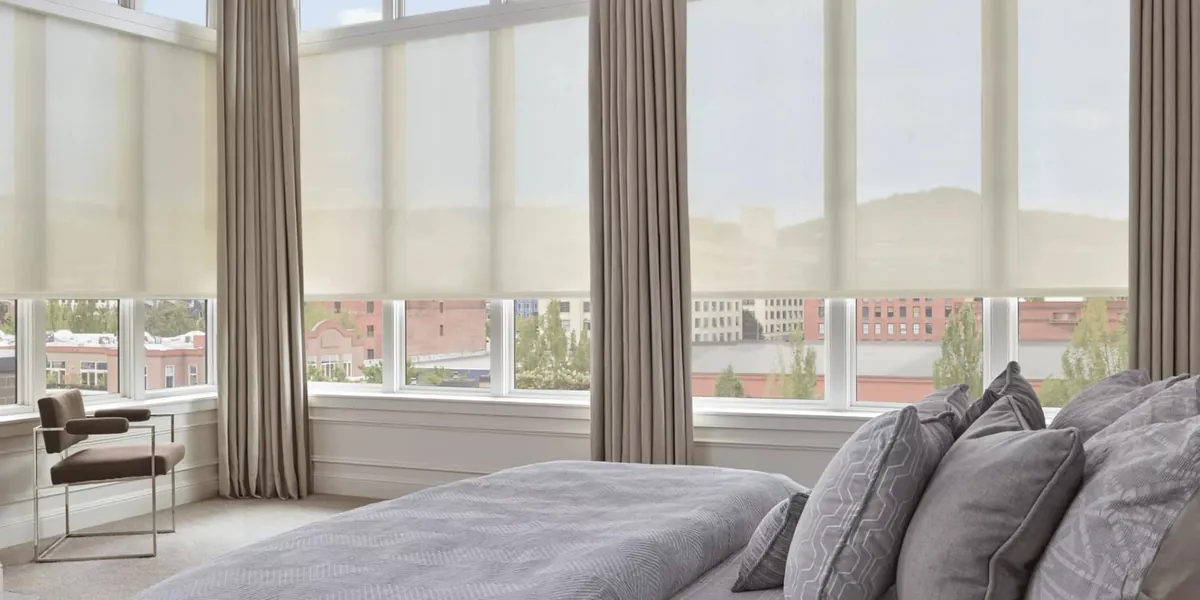
At the back of most ranches and subdivision houses there is a glass door out to a deck, patio or lawn, usually sitting among the kitchen or family room windows. For that opening we generally suggest a shade that opens sideways rather than up: a vertical honeycomb, or a vertical sheer, which parks beside the frame so nobody ducks under a hem on the way out with a tray of drinks.
The motor question for the door is really a question about habits. In a house where the door is in and out all summer long, a shade drawn by hand beats waiting for a motor every time. In a house where the door is mostly a window, kept shut and part of a long wall of glass, putting it on the same group as the windows round it lets the whole back of the house close at one press. We ask how the door is actually used before we suggest either, and it is fine to motorize the windows and leave the door manual in matching fabric.
Dens, playrooms and media rooms
A finished basement or den used for films and games wants to be dark on demand, and a playroom wants to be bright most of the day. Both benefit from a motor. In a media room, a room-darkening fabric closes from the remote without anyone getting up. In a playroom, a cordless motorized shade keeps the window free of anything a child might pull.
Wood and faux wood blinds suit a den well, with slats that tilt to send the light up to the ceiling. Not every blind range or size can take a motor, so if a blind is what you want for a particular room, tell us at the start and we will check each window during the visit.
Choosing the fabric for a motorized shade
The motor decides when the shade moves. The fabric decides what it does once it is down. Choosing well matters as much as anything else in the project.
- Sheer fabrics soften the light and keep the outside visible. Good for living rooms and for keeping a garden view.
- Light-filtering fabrics give privacy in the daytime while the room stays bright. The usual choice for kitchens, dining rooms and living rooms at the front of the house.
- Room-darkening fabrics block most of the light. Right for bedrooms, nurseries and media rooms.
- Screen fabrics cut glare and heat while keeping the view, with a choice of openness.
Many rooms need two of these, and a dual shade or a top-down, bottom-up honeycomb shade can give you both on one window. We bring examples of each, so you can see them in your own light. Our guide to choosing fabric for a sunny room has more.
Setting up scenes, room by room
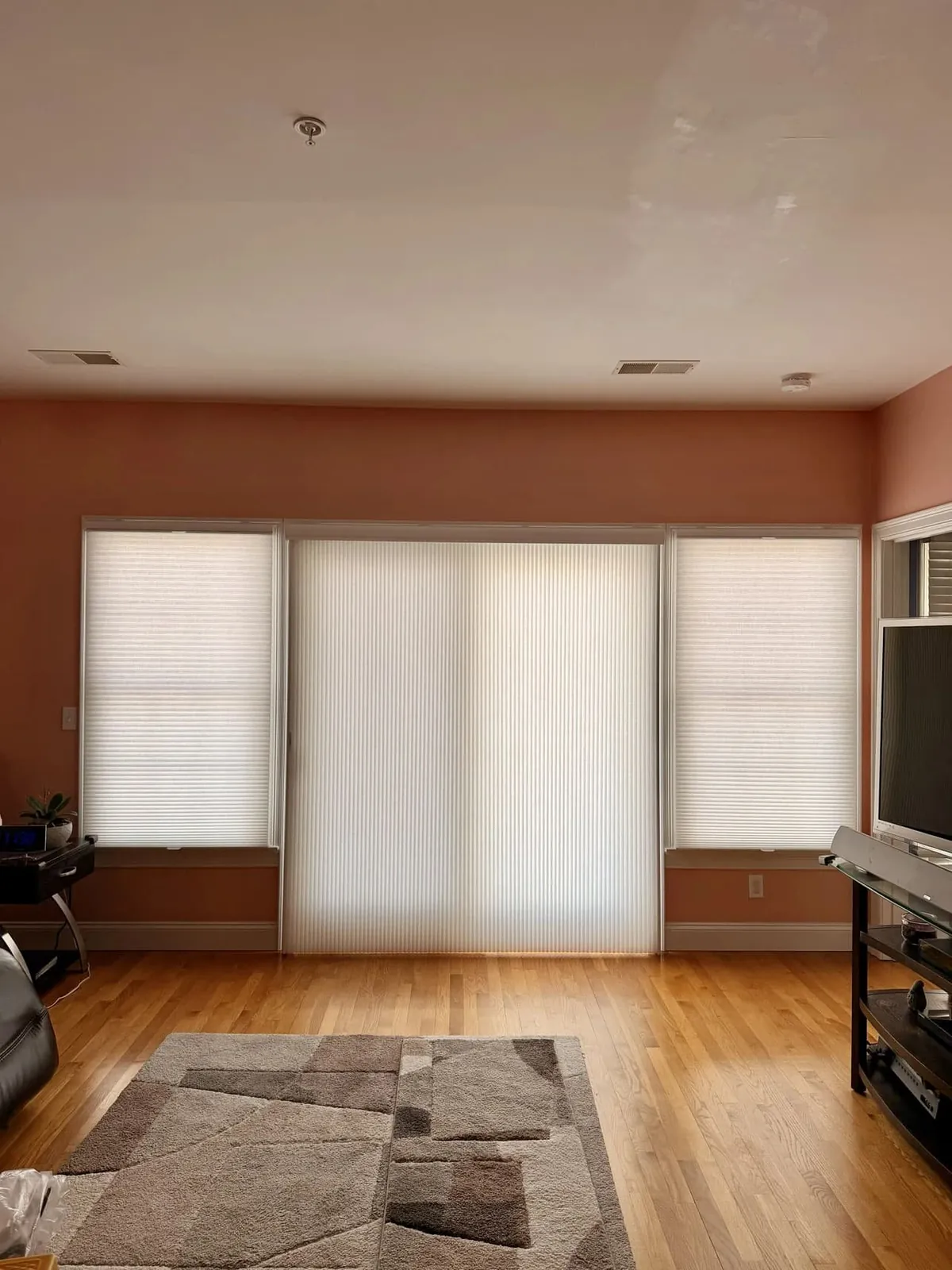
Once the shades are fitted, the scenes are what make the system feel your own. Here is the order our installers usually follow with you on the day.
- Each shade’s top and bottom stopping points are set, so it never runs past the glass or leaves a gap.
- Favorite in-between positions are saved, for example halfway on the street side.
- Shades are sorted into rooms and groups in the app: front, back, upstairs, the family room wall.
- Scenes are built from those groups, such as “morning”, “away” or “movie”.
- Schedules are attached to the scenes you want to run on their own, by clock time or sunrise and sunset.
- Remotes are paired to the rooms where they will live, and we show everyone in the house how to use them.
You can change any of it later in the app, and add more shades whenever you like. Our what happens on installation day guide describes the visit in more detail.
Remote, app or both
Some people never open the app after the first week, and that is fine. A remote in each main room handles a single shade, a room or a group, and the schedules keep running in the background. Others use the app every day to fine-tune a position or move every shade in the house at once. Most households end up with a mix. Our guide to how motorized shades are controlled compares the options, and the window covering automation page covers scenes and schedules.
Powering the motors
How each motor is powered depends on the shade, the window and the wall. We plan it at the visit, window by window, and agree the plan with you before anything is ordered.
Samples at your own windows
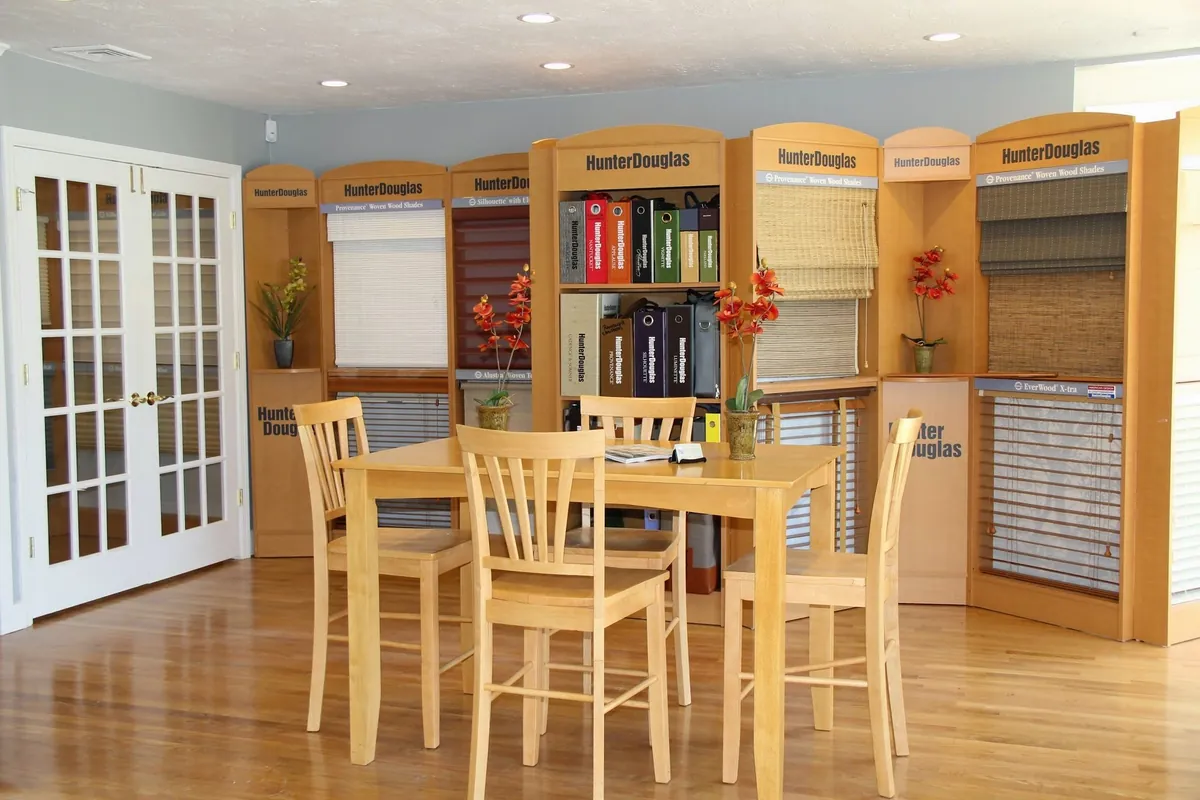
Our vans carry samples, so we can bring the showroom to you. Most projects in town start with a visit to the house, where we look at each room, hold fabrics up at the windows and measure every opening. You then receive a free estimate to consider at your own pace, with no pressure to decide on the spot.
If you would like to know what to expect, read what happens at an in-home consultation. Interior design consultations are also available if you want help with color and fabric across a whole room.
A Hunter Douglas Gallery dealer
Blinds & Designs is a Hunter Douglas Gallery dealer, a designation Hunter Douglas gives dealers who meet its standards. For you it means the full PowerView range in one place: honeycomb, sheer, Roman, roller, screen and banded shades and a number of blinds, all on one app.
Our installers are certified by Hunter Douglas and set up the motors, groups and schedules as part of the installation. If a blind or shade you already own needs attention, we handle repairs as well.
More in town: custom blinds in Bridgewater, cellular shades in Bridgewater, roller shades in Bridgewater and the Bridgewater page. The Sagamore showroom is our nearest location, and the whole range is on the motorized blinds and shades page.
Questions from Bridgewater
My windows are all standard sizes. Is motorizing them straightforward?
Very. Regular modern openings are square and usually deep enough for an inside mount, so the shades fit cleanly and a whole floor can often be done in one project.
Can a tall Victorian window near the common take a motorized shade?
In most cases. We measure the old frame for depth and squareness. Honeycomb and Roman shades suit tall sash and stack neatly at the top, and a slim outside mount is the fallback where the casing is shallow.
What is the best shade for a home office that gets glare?
Often a screen shade, which cuts glare while keeping the view. On a motor it can lower only for the hours the sun is on that window.
Will the shades still work if I never use the app?
Yes. Remotes and schedules work on their own. The app is there whenever you want to change a scene or a time.
Is there a charge for the estimate?
No. We measure at your house and the estimate is free.
Your next step
Request a consultation and we will bring samples to your house, measure every window and leave a free estimate for your motorized shades. If you would rather ask a question first, use the call button, or visit our Sagamore showroom.