
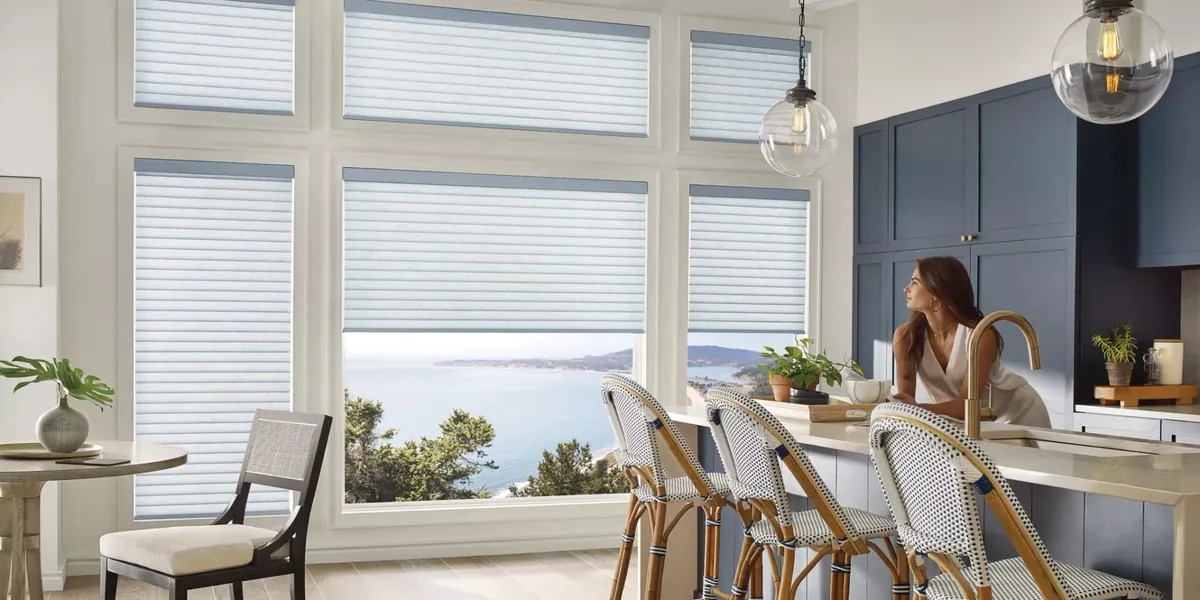
Harbor rooms that exist for the view
Along the harbor and out past Minot to Peggotty Beach, Scituate’s shingled houses face some of the most exposed water on the South Shore. Their best rooms were laid out for the outlook: a kitchen over the harbor, a living room toward the open sea, a bedroom that catches first light on the water. In rooms like those, a window covering has to justify itself. It should vanish when the view is the point and come down only when the sun, the glare or the night calls for it. That is how we approach motorized blinds in Scituate, MA.
A motor is what makes that practical. The right moment to lower a harbor shade is brief and changes with the season: the hour the sun sits low on the water, the afternoon a south room overheats, the moment lamps go on. PowerView handles the timing so the view is open the rest of the day.
Inland, the newer colonials have their own reasons for a motor, mostly to do with height and the sheer number of windows.
Rooms we motorize around Scituate
Six rooms where motorized blinds in Scituate earn their place most often, from the harbor front to the newer streets inland. Some cards link to a related page for the town.
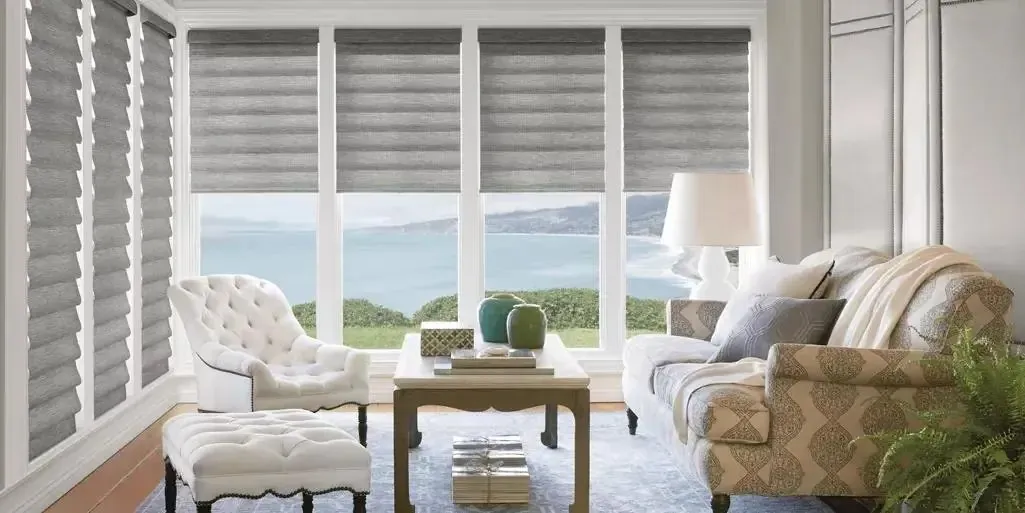
The harbor living room
Shades that stack into a slim band at the top for most of the day, lowered only while the glare lasts.
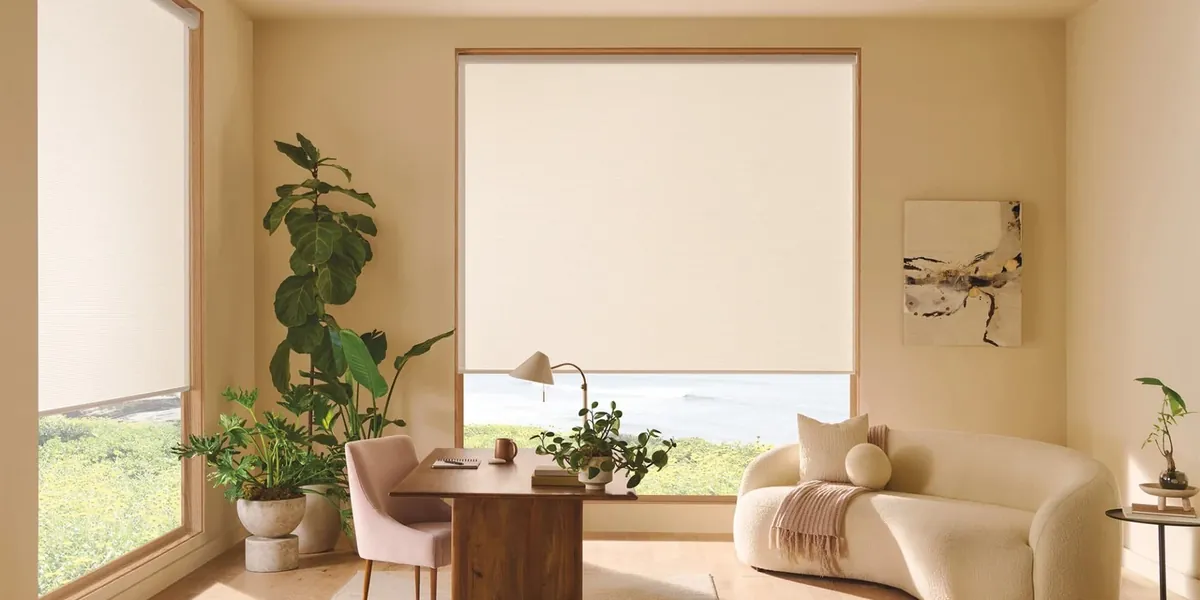
A desk with a sea view
Screen fabric that cuts the glare on a monitor while the water stays in sight.
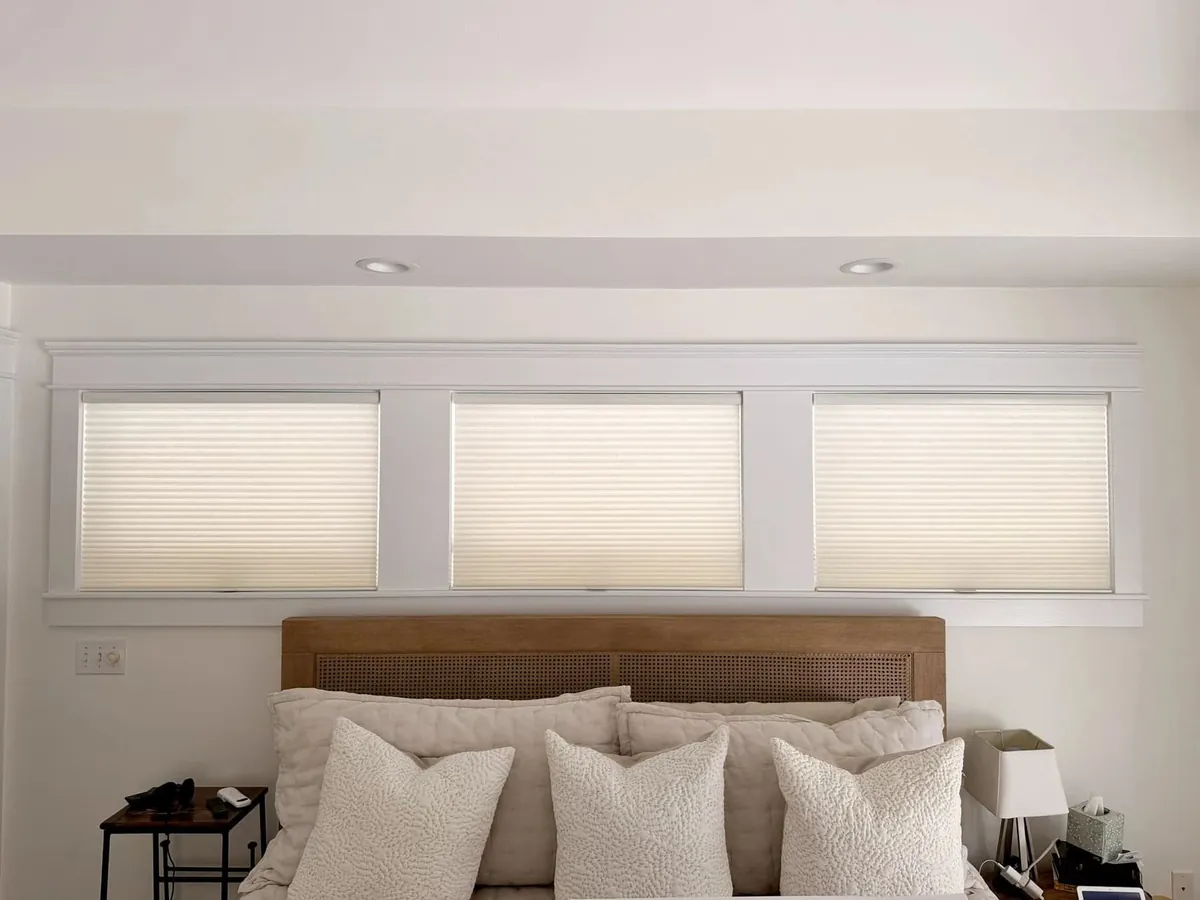
The east bedroom
One of our own installs. Room-darkening honeycomb held down until the hour you choose, whatever time the sun comes up over the water.
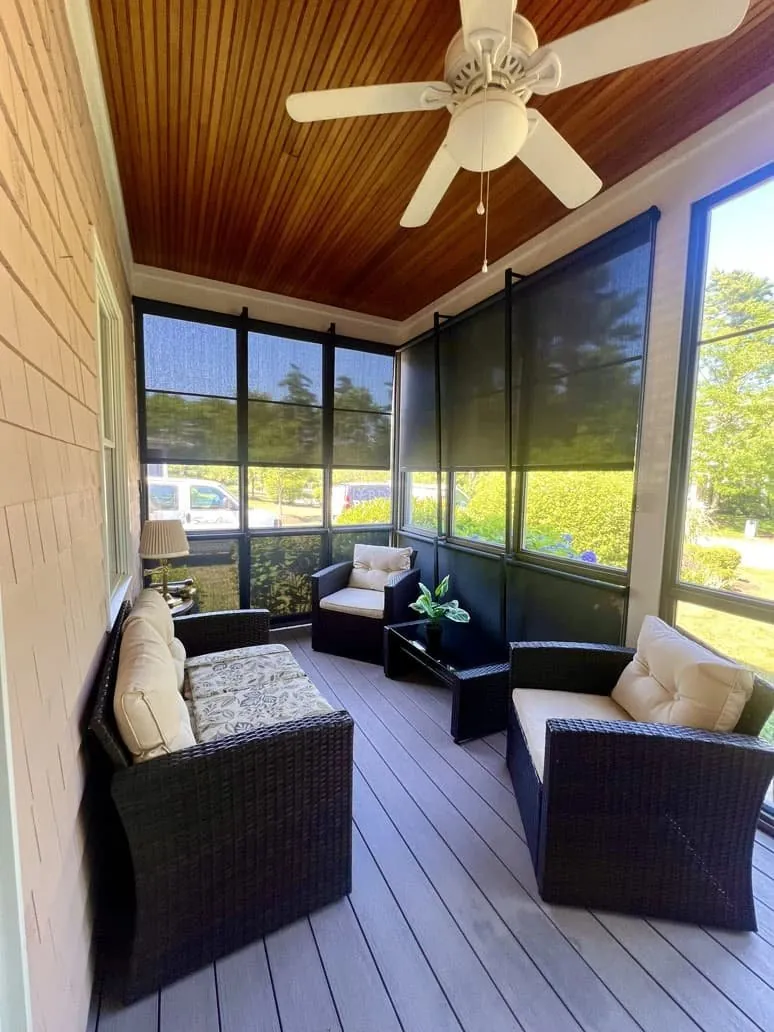
Screened porches
Another of our installs. Solar screens around a porch, lowered together against the late sun and the breeze.
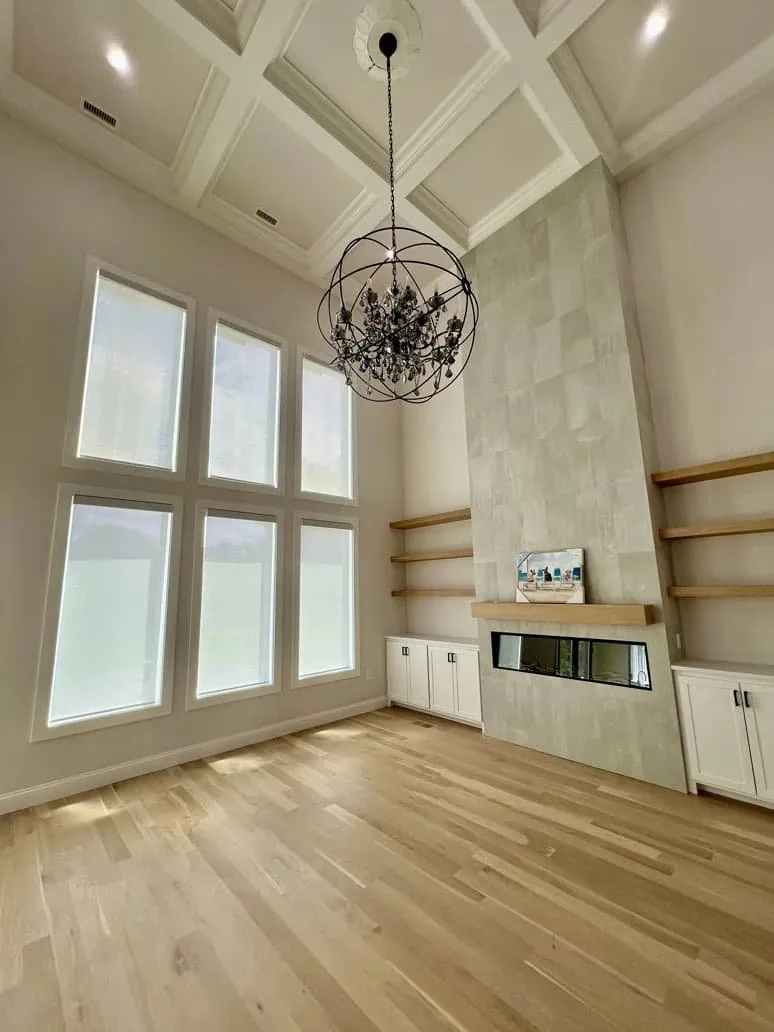
Tall inland family rooms
From our own portfolio. Long runs of tall windows in a newer colonial, grouped so they move as one.
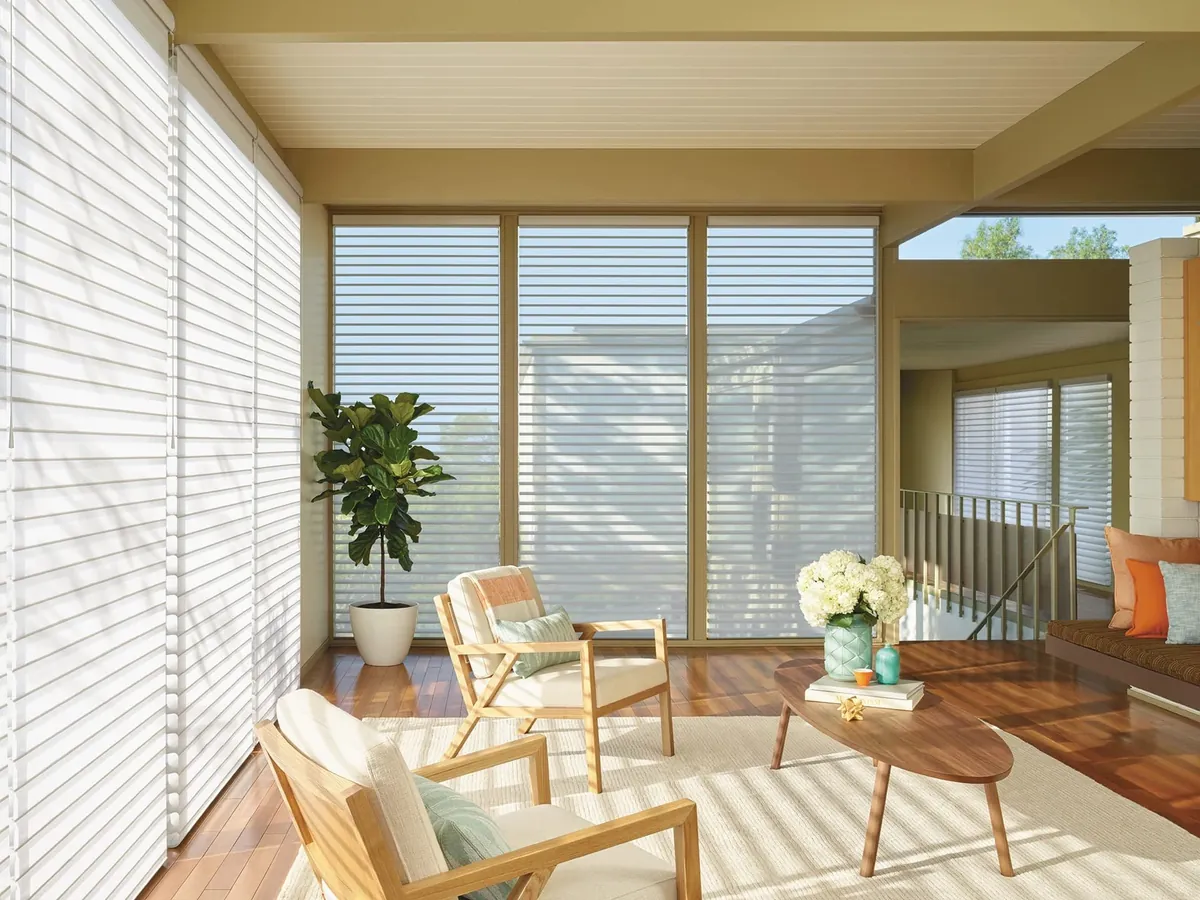
Sitting rooms with soft light
Sheer shades whose vanes tilt to diffuse bright light without closing the room in.
Shades that disappear
The first rule for a harbor window is that the shade should be out of the way when it is up. Honeycomb, roller and sheer shades all retract into a compact band at the top of the opening. Mounted inside the frame, with the motorized headrail tucked at the head of the window, they leave the glass almost completely clear. From the room you see the harbor and the casing, not the shade.
Shingled houses near the water often have a mix of windows: older double-hung sash in the original part of the house, larger picture windows or sliders where a room was opened up toward the view, and sometimes transoms or a window high in a gable. We measure each one separately and check the frame depth for an inside mount. Where a frame is too shallow, a slim outside mount is the alternative, and we show you how it looks against the trim.
A motor adds one more thing: every shade stops at exactly the same height. On a wall of harbor glass that matters, because a row of shades at slightly different heights is the first thing the eye catches against a clean horizon.
Light off open water
The light in a room facing the sea is unlike light anywhere inland. On a clear day it arrives twice: from the sky and reflected off the water. At low sun angles the reflection can be harsher than the direct light, and it reaches deep into a room, across the floor and onto the far wall.
Different shades deal with it in different ways. A screen fabric reduces glare and heat while you still see through it, and its openness decides how much view remains. A sheer shade with soft vanes diffuses the light, so the room is bright but nothing is dazzling, and closes fully for privacy. A top-down honeycomb shade can drop from the top just far enough to block a low sun while leaving the lower glass open to the water. We bring all three, because the only fair test is your own window at the time of day that troubles you.
Out at Minot and Peggotty Beach
Further along the shore toward Minot and Peggotty Beach, the houses are even more exposed. There is open water on more than one side, wind for much of the year, and spray on the glass in a storm. Windows on the weather side stay closed for long stretches.
That exposure is a strong argument for a motor. A PowerView shade keeps its working parts boxed up in the headrail, with no hanging cord, no cleat on the trim and no wand to stiffen in the damp, so there is very little for salty air to attack. When a storm builds in the evening, one press brings down every shade on the weather side, and nobody has to go round leaning over wet sills.
Fabric color matters on this stretch as well, because sun off open sea fades strong colors quickly. Paler, neutral fabrics tend to hold their color longest in a room that sees the sun all day, and we point those out when you choose. Requests for motorized blinds in Scituate, MA, from the Minot side very often begin with exactly this pair of worries, weather and fading.

Following the sun round a shore house
A house near the water often has windows on three sides of its main rooms, so the sun moves round the room through the day. The east glass is bright in the morning, the south through midday, the west late in the afternoon, and the water side whenever the sun lies on it.
PowerView schedules handle this side by side. Each wall becomes a group, and each group gets its own timing: the east windows lowered at sunrise and lifted by mid-morning, the west lowered in the late afternoon and lifted at sunset. Because those times can follow sunrise and sunset rather than the clock, the routine moves by itself through the year, and you can still override any shade from the remote.
The harbor after dark
A harbor view works both ways. Once the lamps are on, a waterfront room is easy to see into from the water, from the opposite shore and from the street that runs along the harbor. Most people want the view until dusk and privacy after it.
A sunset scene closes the harbor-facing shades as the light goes, at whatever time that is that week. A sheer shade with its vanes closed, or a light-filtering honeycomb, gives privacy while the room still glows softly from outside. In the morning the shades open again at a time you choose, so the first thing you see is the water.
Newer colonials inland
Head inland, away from the spray, and Scituate’s housing turns into newer colonials on bigger, often wooded lots. The windows here are modern units in regular sizes, so the shade-fitting side of the job is simple. What these houses do have is height and quantity: a foyer that rises through both floors, a family room with tall glass and sometimes a transom row, and a principal bedroom with two exposures.
The upper windows are the usual reason an inland household asks about motorized blinds in Scituate, MA. Glass above a front door or over a mantel is beyond reach, so it tends to go uncovered, and through July it heats the stairwell. A motor brings it into the same group as the windows beneath, on the same timetable. Downstairs, the family room’s run of tall windows closes as one block at dusk, and upstairs a darkening fabric keeps the bedroom dim until the weekday alarm.
Trees around an inland lot shade a lot of glass in summer and very little in winter, once the leaves are down. A timetable tied to the sun rather than the clock copes with that swing, and a winter scene can be added in a minute from the app if the low sun becomes a nuisance in the family room.
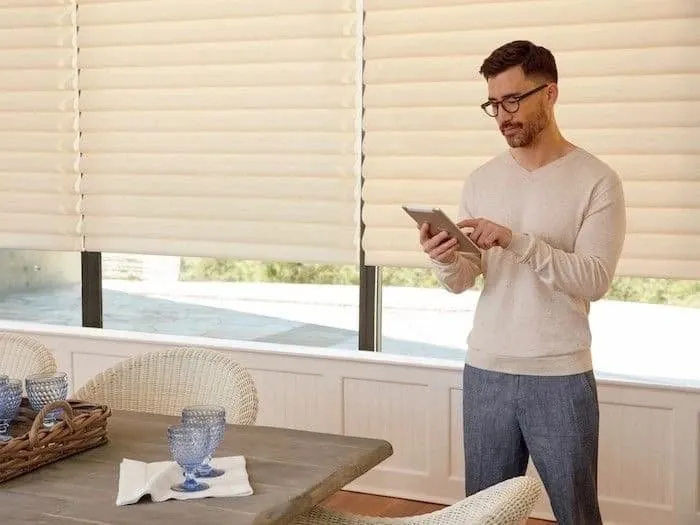
A summer day facing the harbor
This is one way a waterfront house might set its timetable for the warm months.
- While it is still dark, the east bedrooms keep their shades down so the early glow off the water stays outside.
- At your chosen hour, those shades rise, perhaps halfway first and fully a little later.
- All morning, the kitchen and living room stay wide open to the boats and moorings.
- By midday the south glass drops to a screen position and holds the heat back.
- When the evening sun lies across the harbor, the water-side shades come down to their glare setting and go back up when it fades.
- As dusk falls, the harbor side closes for the night.
For winter, swap it round: leave the south glass open to soak up the low sun, then let honeycomb shades close the whole house at dusk to keep that warmth in.
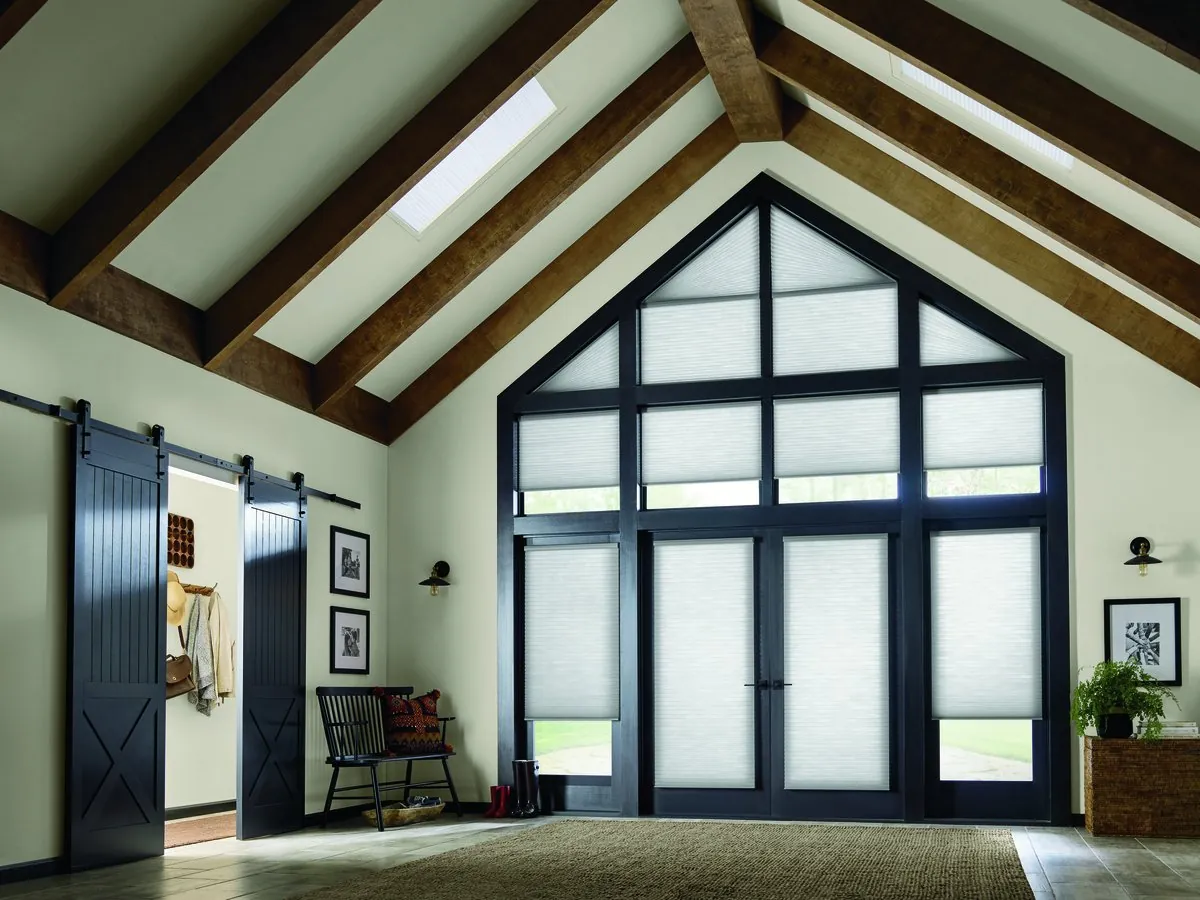
Older shingled houses and their windows
The shingled houses closest to the harbor were built and rebuilt over many years, and their windows tell the story. Original sash sits beside picture windows cut in later for the view, dormers have been added under the roof, and a back porch may have been closed in as a sunroom. Each change brought a different size and depth of window.
For a motorized project that variety is manageable as long as every opening is treated on its own. Some old frames take an inside mount comfortably. Others, especially where the sash has been painted many times, leave too little depth for the headrail, and a slim mount on the face of the trim is the tidier answer. Where an enclosed porch has a long row of windows, they can become one group that moves as a single strip of fabric. Planning motorized blinds in Scituate for an older house is mostly a matter of patience with the tape measure.
A closed-in porch deserves a particular mention. It is often the brightest room in the house, with glass on three sides and the harbor in front, and it heats up fast on a summer afternoon. A row of screen or honeycomb shades on one group, set to drop through the hottest hours and lift again before supper, keeps the room usable all day. Gable windows high in a dormer or an attic room are the other common case: impossible to reach by hand, they can join the bedroom below on the same remote, so the light upstairs is controlled from one place.
Controlling it all
On the water, the handheld remote tends to live by the harbor windows, because that is where the light changes fastest. A wall control by the kitchen door is popular too. The app is where you name each window, arrange them into walls and rooms, and save scenes like “glare”, “evening” or “storm”. The timetables then run those scenes at fixed times or at sunrise and sunset. For a fuller explanation, read how motorized shades are controlled; for building scenes and timing them, our page on window covering automation. Glare off the water is covered in our guide to the best shades for sun and glare.
Getting power to each motor
A shingled house on the harbor and a new colonial up the road rarely have the same walls, so the way each motor is powered is decided window by window when we visit. You see that plan and agree it before a single shade is ordered.
From first visit to finished harbor room
The samples travel in our vans, which means the showroom comes to your door. In a harbor room that is the only fair way to choose, since a fabric’s behavior depends entirely on the light off your own piece of water.
- Book a time through Request a Consultation, or ask for one with the call button.
- We walk the house with you and mark which windows look at the water, the road and the strongest sun.
- Screen, sheer and honeycomb samples go up against your own glass, ideally at the time of day that bothers you.
- Each window is measured, and its frame depth noted for the headrail.
- You decide which windows get motors, how they are grouped and which scenes they run, and the power plan is agreed.
- A free estimate comes to you to read without any pressure.
- Certified Hunter Douglas installers hang every shade, set its upper and lower limits and load your timetables before leaving.
There is more about that first meeting in what happens at an in-home consultation.

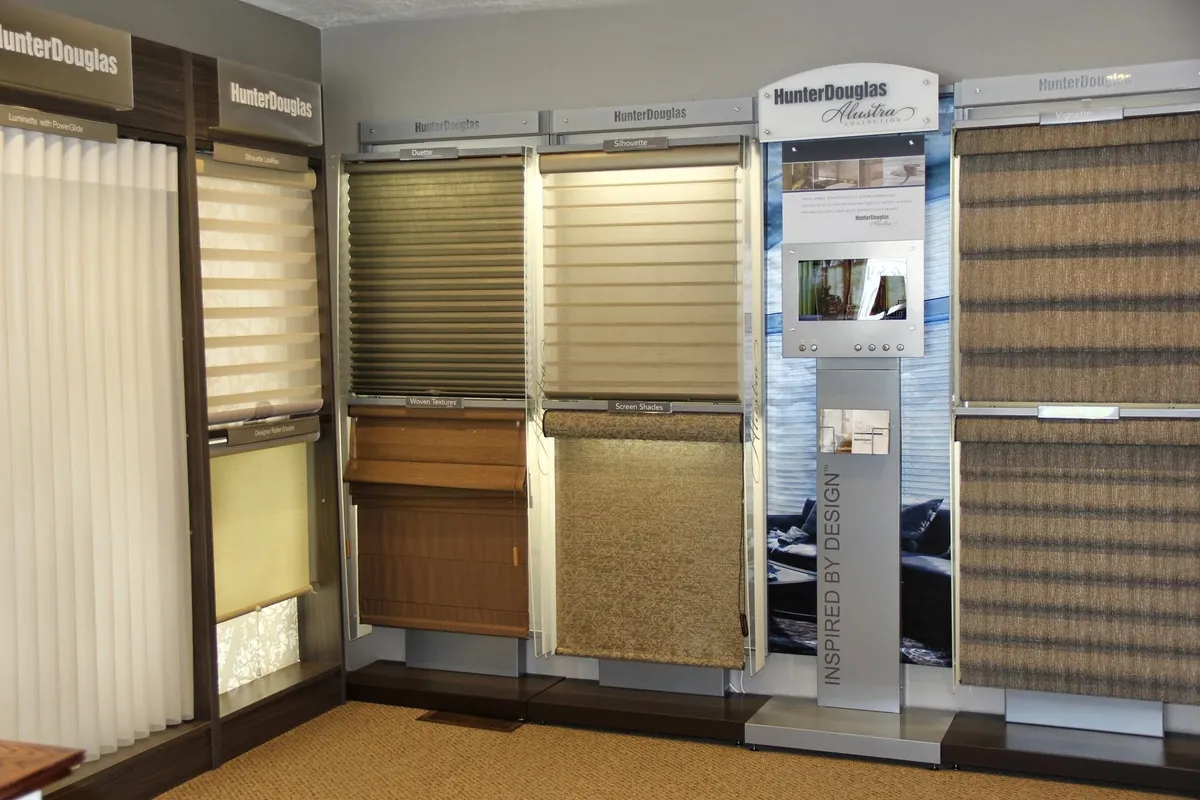
Why the Gallery dealer title matters here
Hunter Douglas gives the Gallery dealer title dealers who meet its standards, and Blinds & Designs holds it. On a harbor house that means we are free to choose across PowerView: a screen for the kitchen over the water, sheers in the sitting room, darkening honeycomb upstairs, banded shades in a den, all answering to one app. A colonial inland gets the same freedom.
Installation is carried out by Hunter Douglas certified installers, and they finish by programming the motors and timetables. If a room needs a fuller rethink, interior design consultations are available, and existing window coverings can be repaired.
For rooms where a motor is not the answer, see custom blinds in Scituate and plantation shutters in Scituate. Everything we do in town is on our Scituate page, and the full motorized range is on the motorized blinds and shades page.
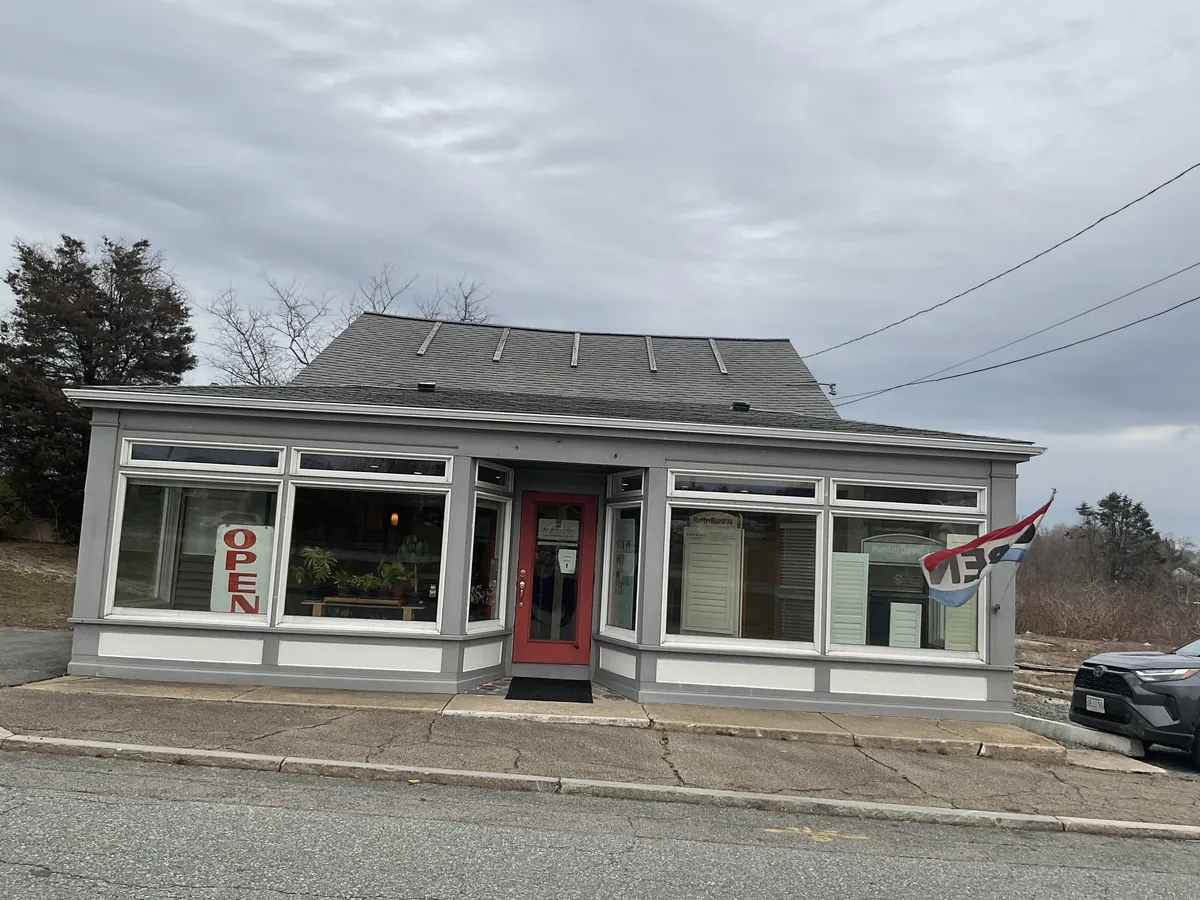
Sagamore, the closest of our showrooms
Of our locations, the Sagamore showroom is the one closest to Scituate, and you are always welcome to call in.
Even so, a room arranged around the harbor is best judged from inside it, at the hour when the light off the water is at its strongest.
Questions from Scituate
Will motorized shades block my harbor view?
Not when they are up. Honeycomb, roller and sheer shades retreat into a slim band at the head of the window, and on a timetable they come down only for glare or for privacy after dark.
How do shades cope on an exposed stretch like Minot?
Everything that moves is housed in the headrail, and nothing dangles at the side, so salt in the air has very little to work on. We also steer you toward fabrics that suit a window in full sun off the sea.
Can I cut the glare off the water and still see out?
Yes. A screen fabric, or a sheer with its vanes tilted, takes the edge off the brightness while the water stays in view.
Can each side of the house keep its own timing?
Yes. Every wall becomes its own group with its own timetable, so the east, south, west and water sides can all behave differently.
Does the estimate cost anything?
No. After measuring at your house, we leave you a free estimate.
Your next step on the harbor
The way to judge motorized blinds in Scituate, MA, is from your own windows with samples in hand. Ask for a consultation and we will stand at the harbor glass with you, measure every opening and leave a free estimate. For a quick question first, the call button reaches us, and Sagamore is our nearest showroom.