
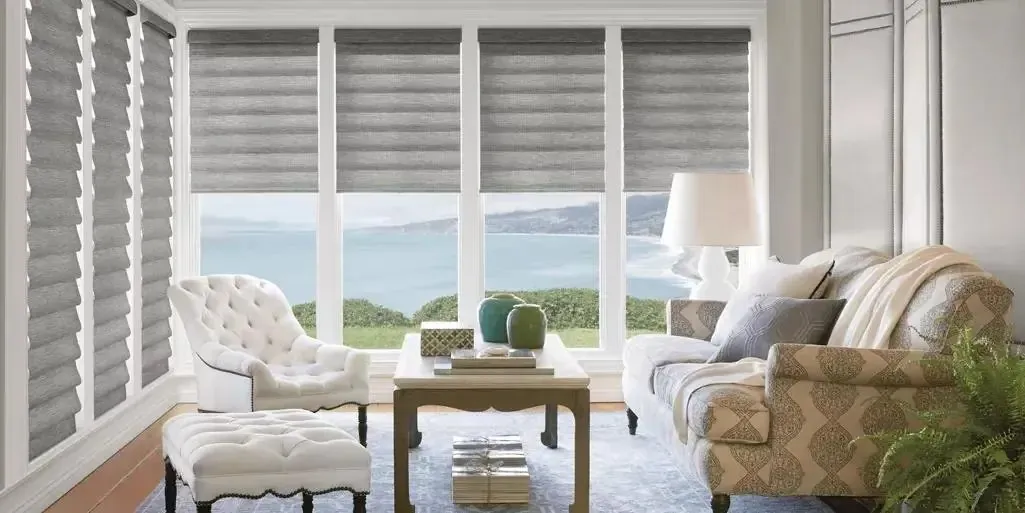
Small panes on Main Street, tall glass off Route 123
Norwell asks two very different things of a window covering. Along Main Street the antique colonials still carry their original sash: small panes in modest openings, framed by old trim that deserves to stay on show. Off Route 123 the newer houses sit far back on wooded lots, and many of them have a stretch of modern glass that runs up through two stories. When we plan roman shades in Norwell, MA, we are usually working with one of those extremes, and sometimes both in the same order.
A roman shade is a good answer to each. It is soft, it is tailored, and it folds up neatly out of the way, so it suits a period room without looking fussy and warms up a big modern room without hiding the view. The fabric does the talking. What changes from house to house is the fold, the lining, the mount and how the shade is lifted.
The deep setbacks shape the job as well. A house a long way from the road, with trees all around it, has fewer privacy worries at the front and more questions about light: how bright the rooms are, where the low sun breaks through the trees, and which rooms need darkening.
The roman shades we bring to your door
We carry two Hunter Douglas roman lines and a woven option, and we bring samples of each to the house so you can see them in Norwell light, filtered through the trees.
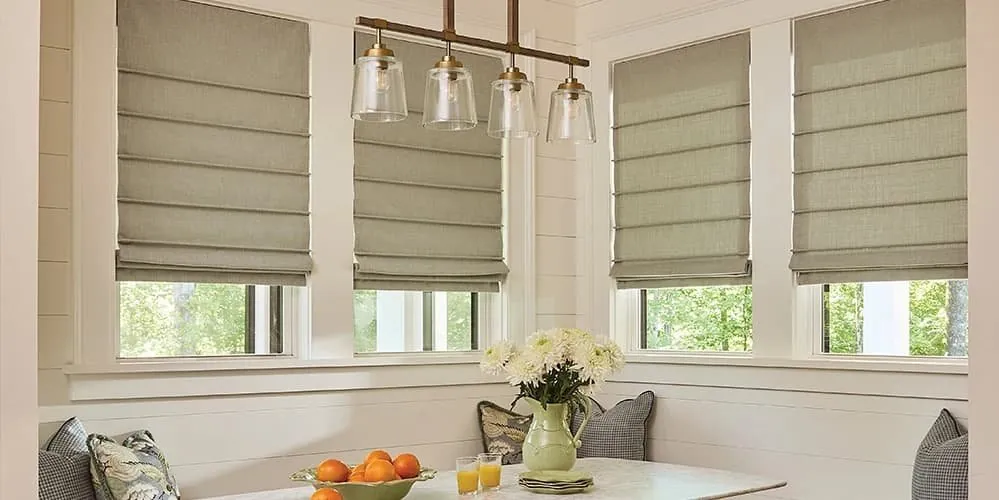
Vignette Modern Roman Shades
Even, modern folds that roll up into the headrail when raised, so the shade leaves the most glass open. A tidy choice for the kitchens and family rooms of the newer houses.
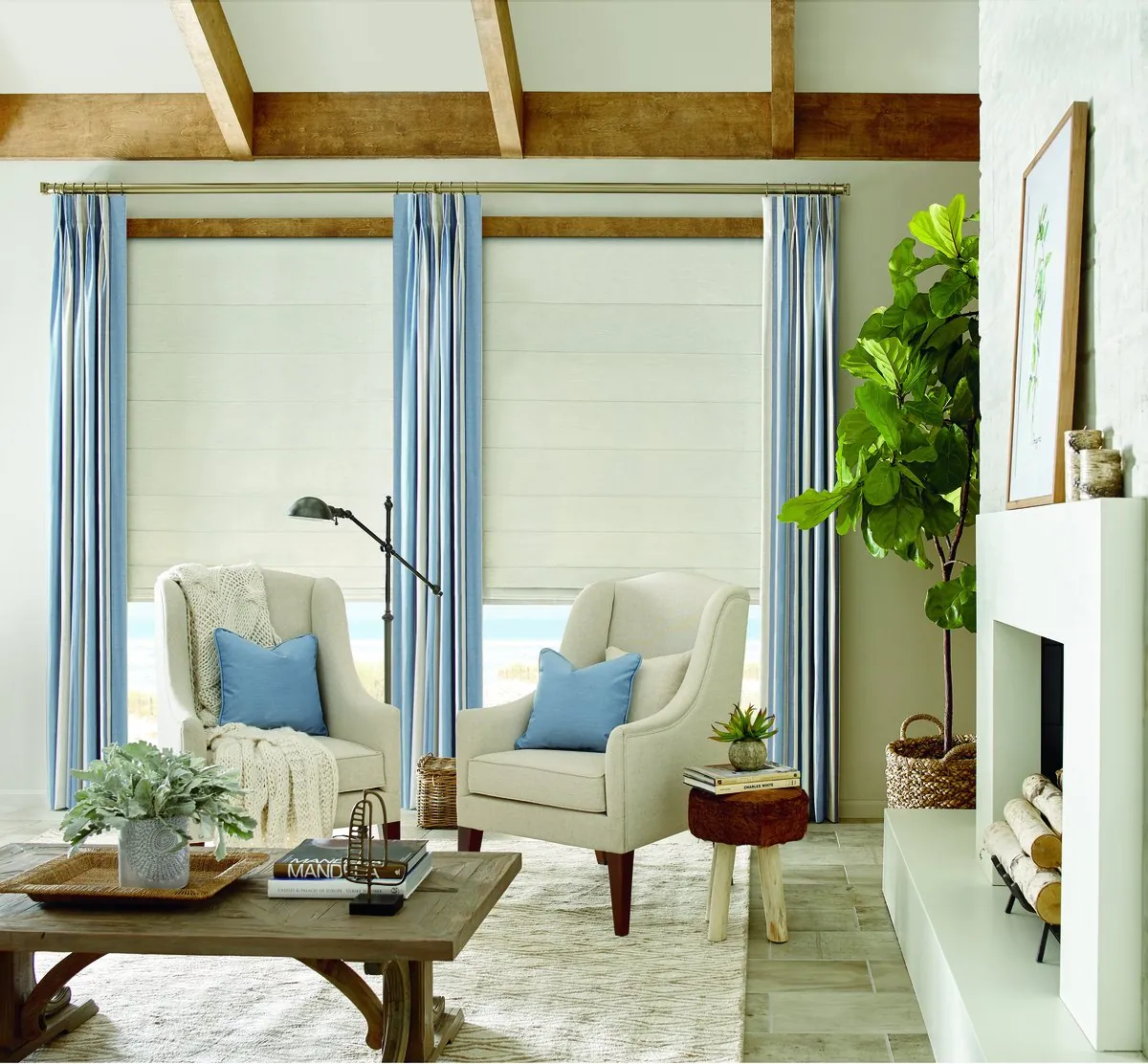
Carole Fabrics Roman Shades
Sewn to order from a broad library of decorator fabrics, in a crisp flat fold or a softer folded style. The natural match for an antique colonial’s front rooms.
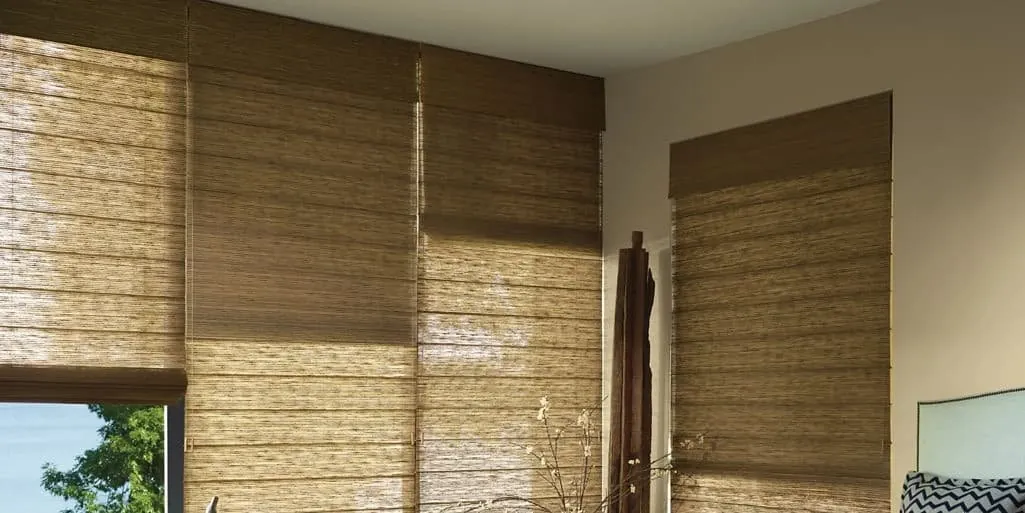
Alustra Woven Textures Roman
A natural weave in a roman shape, for a den or sunroom that looks out into the woods and suits a relaxed, textured finish.
Dressing the small sash of an antique colonial
The oldest houses on Main Street were built with windows sized for the glass of their day. The openings are modest, the panes are small, and the trim around them is often original or carefully restored. A heavy treatment overwhelms a window like that. A roman shade, mounted inside the opening, keeps the casing completely clear and only shows itself when it is lowered.
The catch with a small window is the stack, the bundle of fabric that gathers at the top when the shade is raised. On a big window it hardly matters. On a short antique sash it can cover a fair part of the upper pane and make the room feel darker than it needs to. There are three ways round that, and we usually combine them.
- A lighter fabric folds into a smaller stack than a thick, heavily lined one.
- The fold spacing on a Carole shade can be set to suit a short drop, so there are fewer, neater folds.
- Vignette rolls its fold into the headrail, which keeps the raised shade compact.
We hold samples at the window so you can see how much glass each option leaves open before you choose.
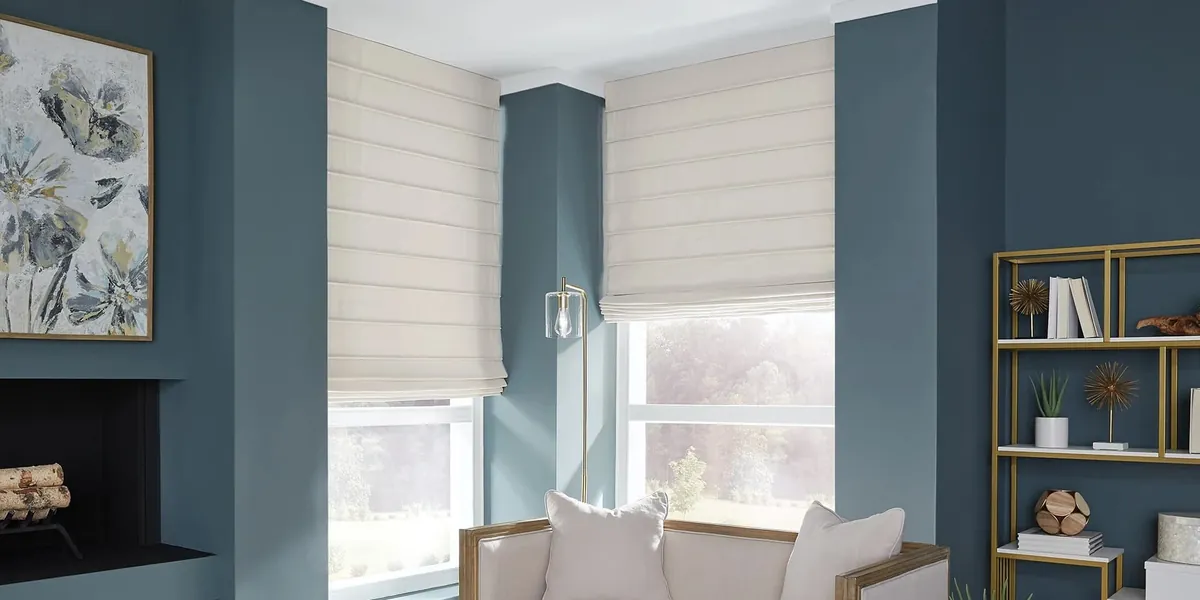
Flat fold or folded style
Both Carole Fabrics styles start from the same idea, a panel of fabric that lifts into horizontal folds, but they look quite different on the wall.
A flat fold hangs as one smooth, unbroken panel when it is down. It is the cleaner of the two and it shows a printed fabric at its best, so a stripe or a small pattern reads properly across the window. It suits a formal front parlor or a dining room where the trim is the star and the shade should be quiet beside it.
A folded style keeps soft, rounded loops in the fabric even when the shade is lowered. It has more depth and a gentler outline, and it suits a bedroom, a library or a sitting room where you want the window to feel relaxed. Because the loops break up the surface, it works better with a solid or a textured weave than with a busy print.
Vignette has its own look again: evenly spaced folds from top to bottom, front and back, with no visible cords on the face. It feels more contemporary, which is why it tends to go into the newer houses rather than the antique ones. Many Norwell orders end up with Carole shades in the period rooms and Vignette in a kitchen extension or a family room added later.
Light through the trees
Deep setbacks and wooded lots change the way a room is lit. Much of the day the light reaching the glass has already been filtered by leaves, so rooms can feel dim in summer and then suddenly bright in late autumn once the trees are bare. Low winter sun also slips between the trunks and lands on the floor in long, hard shafts.
That is a good reason to choose fabric carefully. In a room that already feels shaded, an unlined, light-colored fabric keeps as much daylight as possible and still softens the glare when the sun does break through. In a room that takes that low winter sun straight in, a lined shade protects furniture and floors and cuts the glare across a screen or a dining table.
Because the houses sit so far back, daytime privacy at the front is rarely the main worry. Night is different. With lamps on, a lit window shows clearly across a dark lawn, so a privacy lining is worth thinking about for any room you use in the evening.
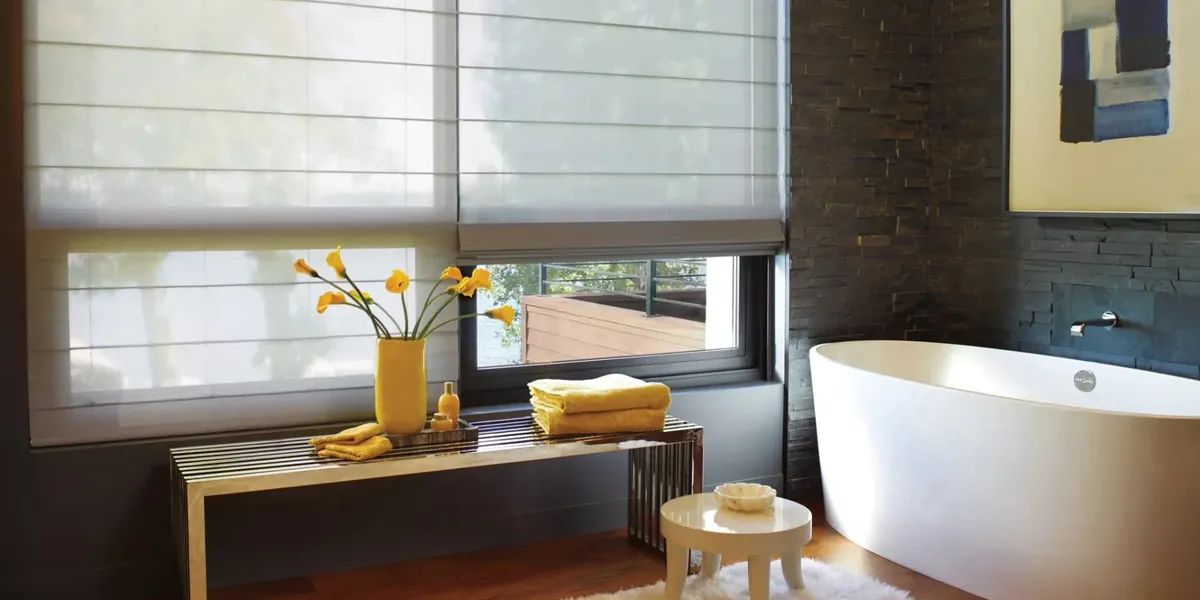
Two stories of modern glass
Many of the larger houses off Route 123 have a great room or an entrance hall with windows stacked up through two floors. They are the reason the house was built that way, and nobody wants to cover them completely. They also catch the afternoon sun, and on a warm day a room like that can get hot and glary very quickly.
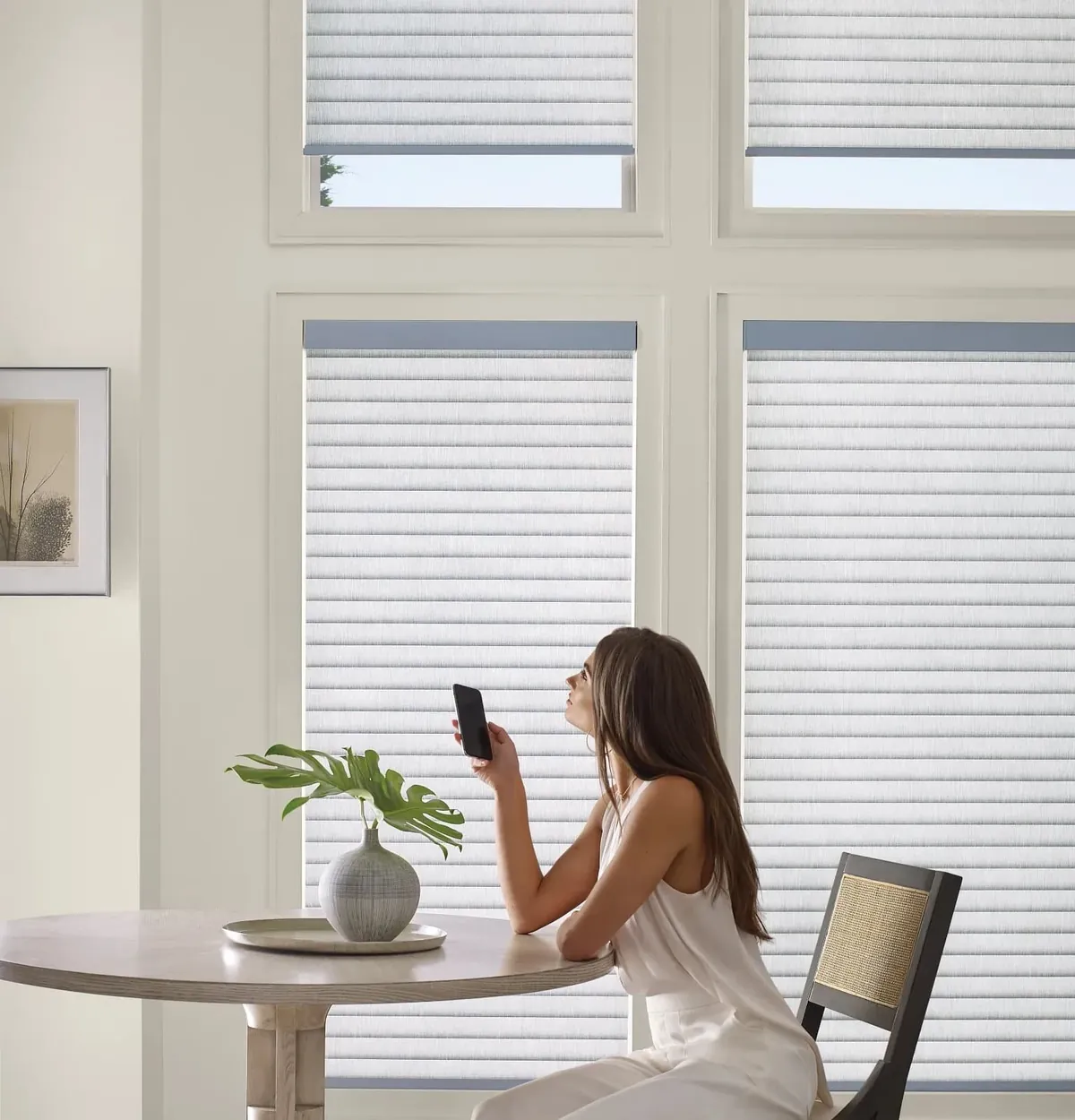
Roman shades on the upper windows soften the light and give the room a finished look, while the lower windows can be left open for the view or fitted with matching shades on their own schedule. The problem is reach. A shade at that height cannot be lifted by hand, so it needs PowerView motorization. You raise and lower it from a remote or the app on your phone, or set a schedule so it lowers on summer afternoons and opens again in the evening.
We plan how each motor is powered at the visit, and we line up the bottom rails of the upper and lower shades so the whole wall reads as one design. If the glass is wide and you would rather keep a sheer view, we can also show you Hunter Douglas sheer shades for that wall.
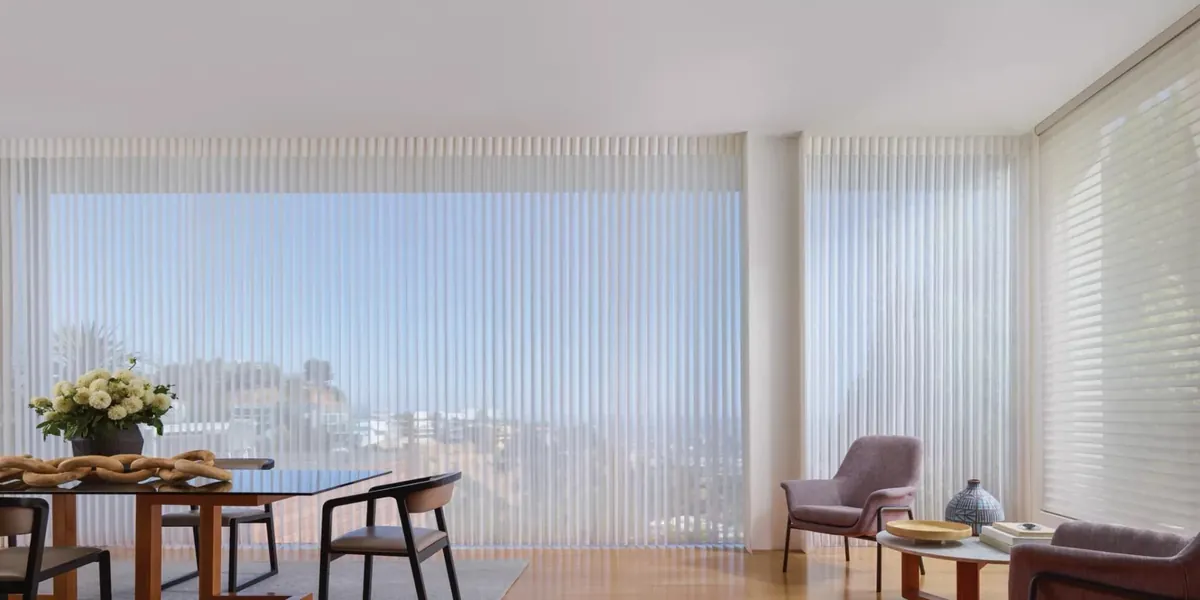
How a Norwell consultation runs
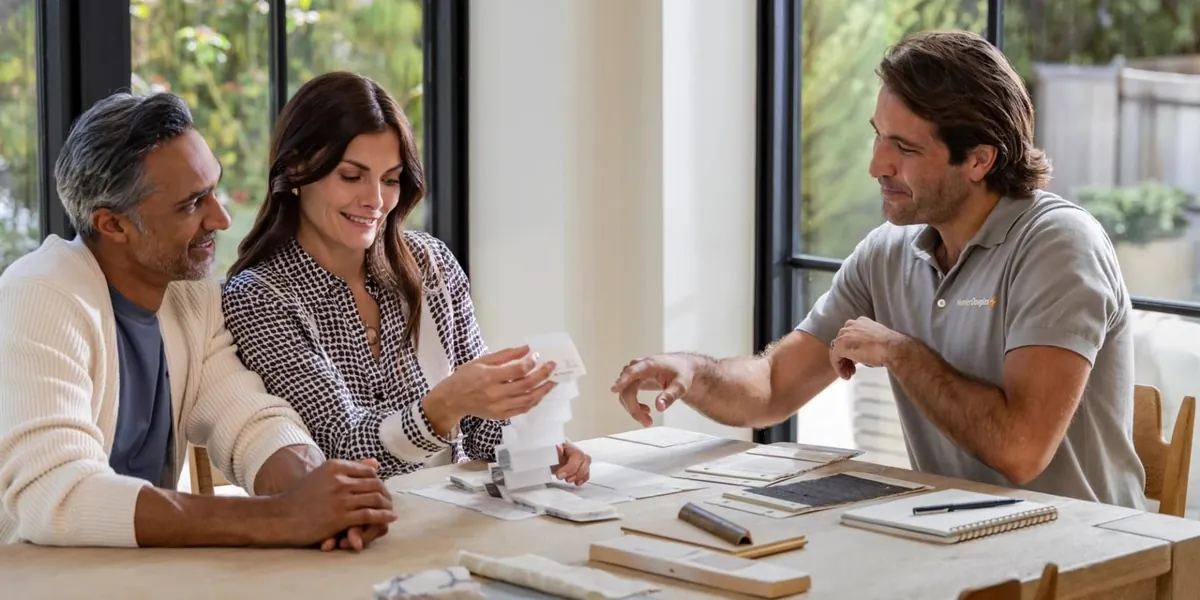
You cannot judge a fabric fairly under shop lighting, and you certainly cannot judge it for a room that sits in the woods. That is why most of our roman shades in Norwell are chosen at home. Our vans carry the samples, so we can bring the showroom to you.
- You request a consultation online or with the call button, and we agree a time.
- We arrive with Vignette and Carole Fabrics samples, linings, and the lift options.
- We walk the house with you and note which rooms are dim, which take hard sun and which you use after dark.
- You hold fabrics against your own trim and walls, by the windows that matter most.
- We measure every opening and check the depth for an inside mount.
- You get a free estimate, and you can take your time deciding.
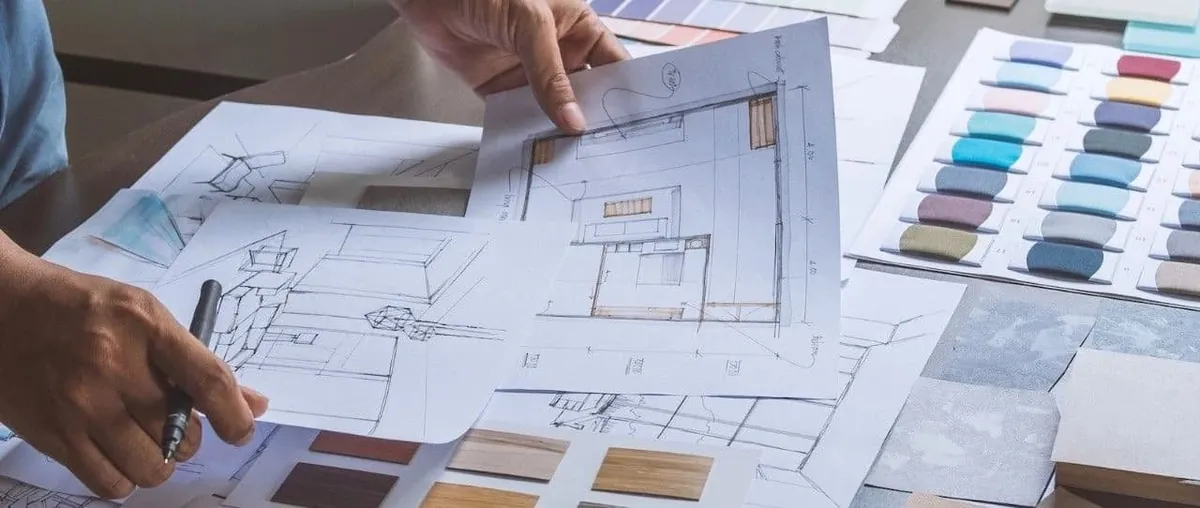
If you want help with color, pattern or how the shades sit with drapery and furniture, ask about our interior design consultations, which can happen at the same visit. Our guide to what happens at an in-home consultation walks through it in more detail.
Linings, from glowing to dark
The lining behind a roman shade decides how much light it lets through and how it looks from outside.
- Unlined: the fabric glows in the sun and the room stays bright. Good for kitchens and sitting rooms in shaded houses.
- Privacy lining: the face fabric still looks soft from inside, but the room cannot be seen at night. Sensible on any window that faces a drive or the road.
- Room-darkening lining: keeps a bedroom dim when the sun rises and protects the face fabric on a window that takes sun all afternoon.
A lining also gives the fabric more body, so the folds hang more crisply. On the small antique sash, though, it adds to the stack, so we often suggest an unlined or privacy-lined fabric there and save the heavier linings for bedrooms in the newer houses. If a room is especially sunny, our page on choosing fabric for a sunny room is worth reading.
Measuring old openings that have moved
An antique house settles. Window frames that were square when they were built can now lean a little, bow in the middle or be wider at the bottom than the top. Two windows that look the same from the lawn can differ by enough to matter.
So we measure each opening on its own: width at the top, middle and bottom, height at both sides and the center, and depth at several points where the headrail will sit. We note any sash locks, old pulleys or stops that get in the way. Where the opening is too uneven for an inside mount to hang cleanly, we recommend an outside mount on the casing instead, set just above the trim so it still looks deliberate.
The newer houses are simpler, with square frames and plenty of depth, but the two-story windows need their own care because the upper and lower shades have to line up. We check those heights twice. When the shades arrive, our certified Hunter Douglas installers fit them, level every headrail and run each shade up and down until the folds settle. You can read about what happens on installation day before we come.
Cords, children and pets
How a shade is lifted matters, especially in a house with young children or a dog that likes the window seat. For roman shades in Norwell, MA, a cordless lift is our usual starting point. It leaves nothing hanging at the side: you lift or lower the bottom rail by hand and the shade stays where you put it. We suggest it for bedrooms and any window a child can reach.
A large, lined shade can be heavy, and on a wide window a continuous cord loop held taut by a tensioner makes it easier to raise. For high windows, or anyone who would rather not reach at all, PowerView takes over. Our guide on how motorized shades are controlled explains remotes, the app and schedules.
A whole house seen from the road
On a generous lot with a deep setback, the house is usually seen whole from the road: every front window at once, framed by the lawn and the trees. That changes how we plan a large order. Shades that differ in color, lining or height from one window to the next show up clearly from a distance, especially in the evening when the rooms behind them are lit.
So for most roman shades in Norwell we start with the street side and work inwards. The front windows usually share one lining color, so the house looks even from outside, even when the face fabrics change from room to room. Bottom rails can be set to stop at the same height when the shades are half raised, which keeps a row of windows calm. Inside, each room can then have its own character: a patterned Carole flat fold in the dining room, a plain folded style in the study, Vignette in the kitchen.
The larger newer houses can have a great many windows, and a whole-house order does not have to happen in one go. We can plan every room at the consultation, give you a free estimate for all of it, and you decide which rooms come first. The plan stays on file, so the second round of shades matches the first.
Why choose a Hunter Douglas Gallery dealer
Blinds & Designs is a Hunter Douglas Gallery dealer, the name Hunter Douglas gives dealers who meet its standards. For a Norwell house that means one company for the whole job: the full Vignette and Carole Fabrics range, Alustra Woven Textures, and Hunter Douglas blinds, shutters, cellular and roller shades for the rooms where they suit better.
Our installers are certified by Hunter Douglas, and the people who plan the shades are the people who fit them. We also handle blind and shade repairs, so you have someone to call if a lift ever needs attention.
For the rest of the house, see our cellular shades in Norwell for warmer bedrooms, or every service we offer in town on our Norwell page. The main roman shades page covers the whole family.
The Sagamore showroom
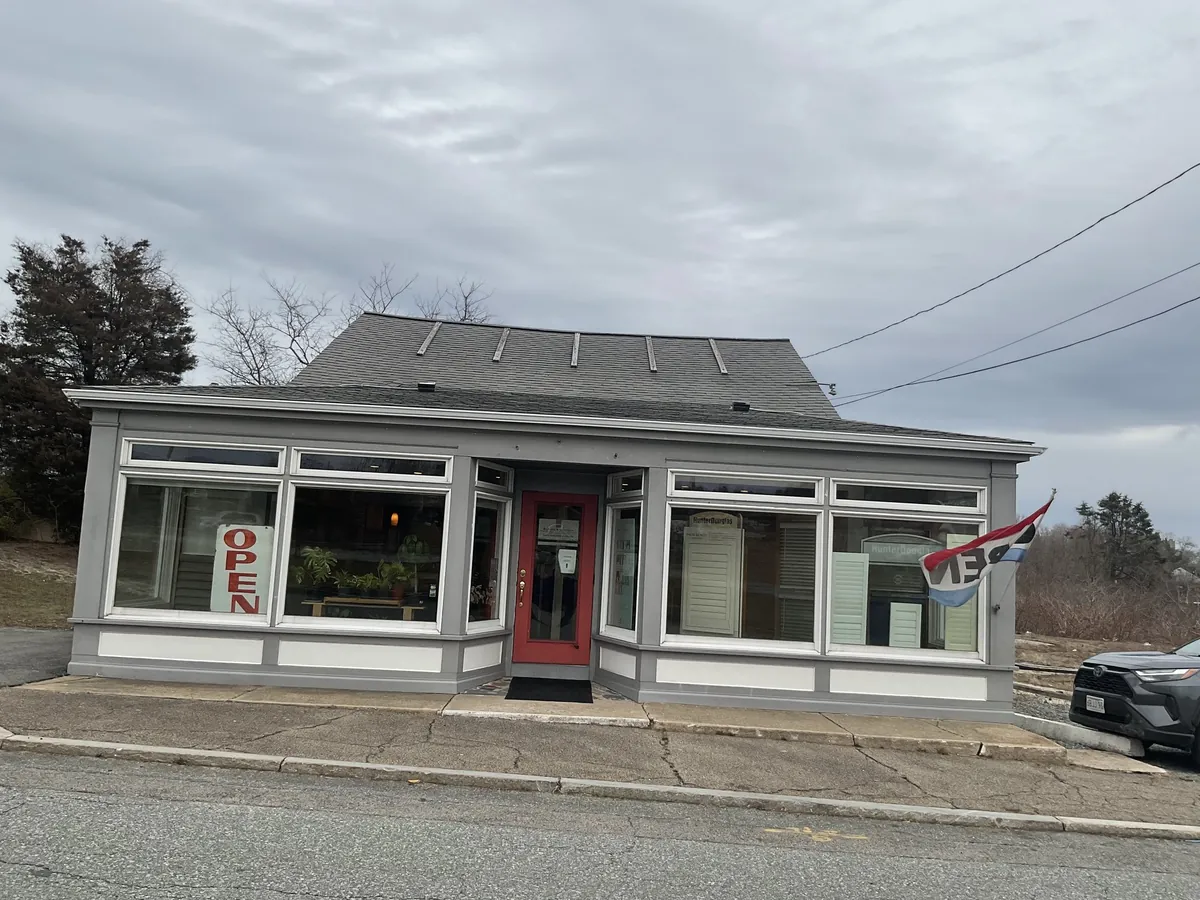
The Sagamore showroom is our nearest to Norwell. If you would like to talk things over before a home visit, you are welcome there during its opening hours, or by appointment at the weekend.
For roman shades, though, the visit to your house is where the real decisions get made. Small antique sash and two-story glass are hard to describe and easy to measure, so we would rather see them.
Questions from Norwell
Will a roman shade fit the small original windows in my antique colonial?
Usually, yes. The shade can be made narrow and short, and an inside mount keeps the old trim on show. We choose a lighter fabric or a Vignette shade where the stack at the top would otherwise cover too much of a small upper pane.
Can you put shades on our two-story windows?
Yes. The upper shades are motorized with PowerView, so you control them from a remote, the app or a schedule. We line up the upper and lower shades so the wall looks like one design.
Our house is set back in the trees. Do I need a privacy lining?
By day, often not, because the distance and the woods do the work. In rooms you use after dark, a lit window shows clearly across a dark lawn, so a privacy lining is worth considering there.
Should I choose Vignette or Carole Fabrics?
Carole Fabrics suits a period room, with its sewn panel and wide fabric choice. Vignette suits a modern kitchen or family room, with its even folds and compact stack. Plenty of houses use both.
Is the estimate free?
Yes. After we measure, you get a free estimate for the shades you are considering, with no pressure to decide on the spot.
Book your visit
The quickest way to see what roman shades in Norwell, MA, will look like in your rooms is to try the fabrics at your own windows. Request a consultation and we will bring the samples, measure every opening and give you a free estimate. If you would rather talk first, use the call button, or visit the Sagamore showroom.