
Two kinds of window under one town name
Ask anyone who measures windows for a living and they will tell you Norwell holds two very different jobs. Along Main Street the antique colonials still carry very small original sash: narrow frames, slim muntins, panes no bigger than a sheet of paper and casings that were cut by hand. A mile or two away, off Route 123, large newer houses sit back on wooded lots with modern glass that can run two stories from the floor of a great room to the peak of the roof.
As a Hunter Douglas dealer in Norwell, MA, Blinds & Designs plans for both, often inside the same week and sometimes inside the same house, where an older core has been joined to a modern addition. We are a Hunter Douglas Gallery dealer, so the whole Hunter Douglas family is open to us, and every piece we sell is fitted by our certified Hunter Douglas installers.
The deep setbacks and generous lots change the brief too. With the road far away and trees on every side, privacy from the street matters less than in a village. What matters more is controlling light that arrives from several directions, filtered through leaves in summer and bare and low in winter.
Hunter Douglas lines we bring to Norwell houses
A Gallery dealer is not tied to one product, and a Hunter Douglas dealer in Norwell sees too many kinds of window to lean on just one. Each card below links to our page for that product in town. Most Norwell houses end up with two or three of these, chosen window by window.
Custom blinds
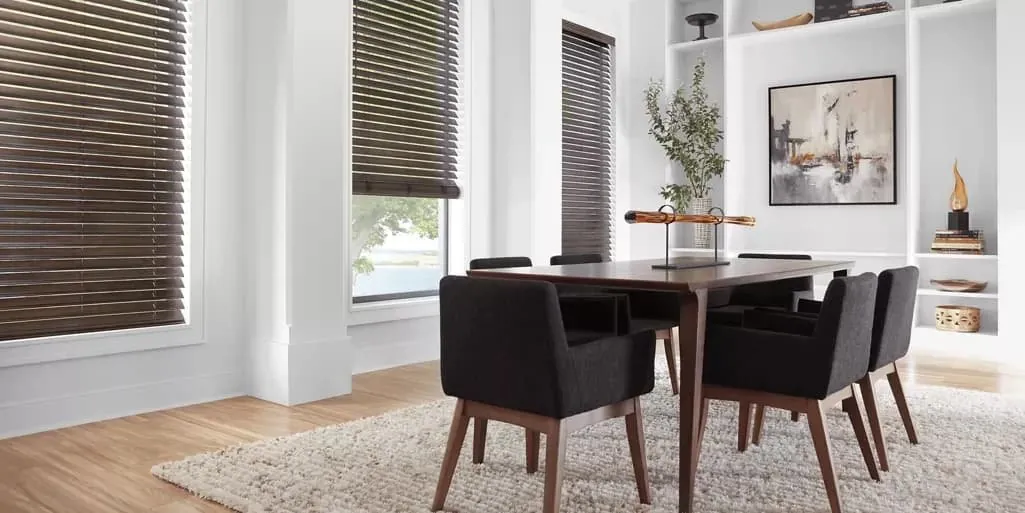
Parkland wood and EverWood faux wood in slat sizes that suit a period dining room or a modern kitchen.
Cellular shades
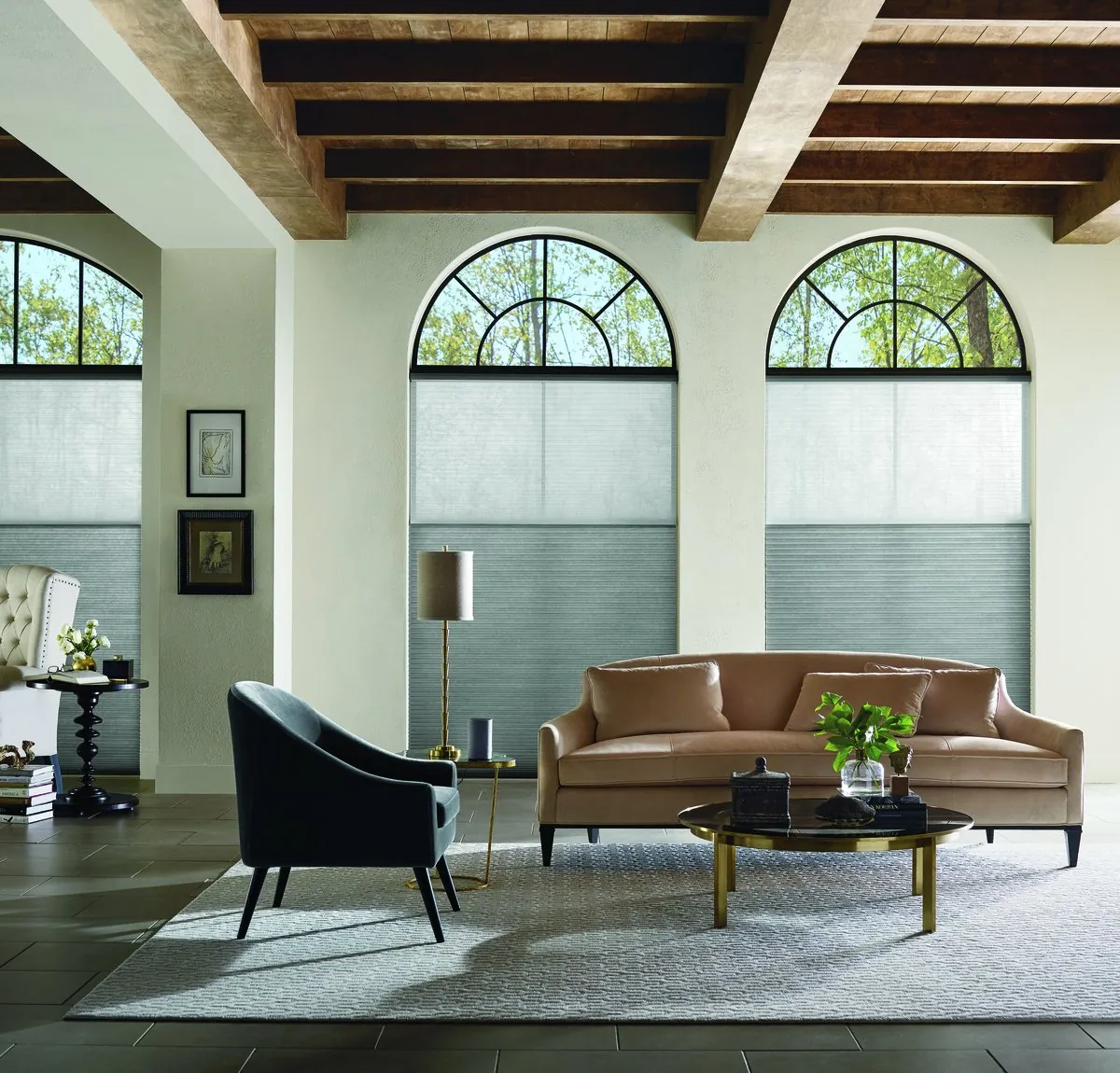
Duette and Applause honeycomb, slim enough for antique sash and large enough for a great room.
Roller shades
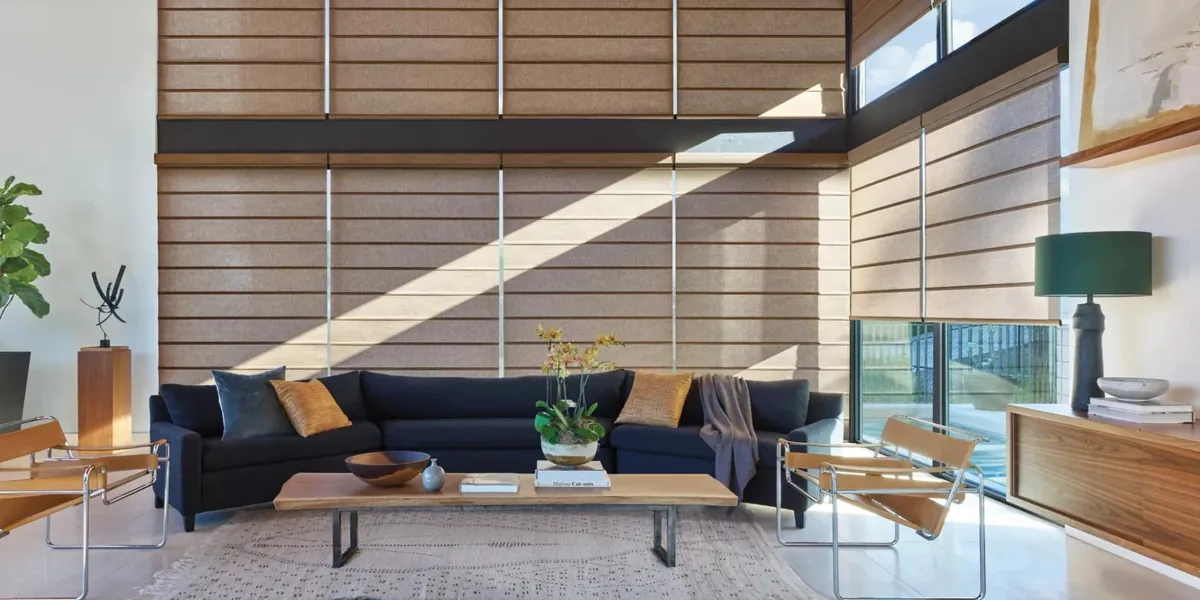
Designer and Alustra rollers, screens and banded shades for wide modern glass.
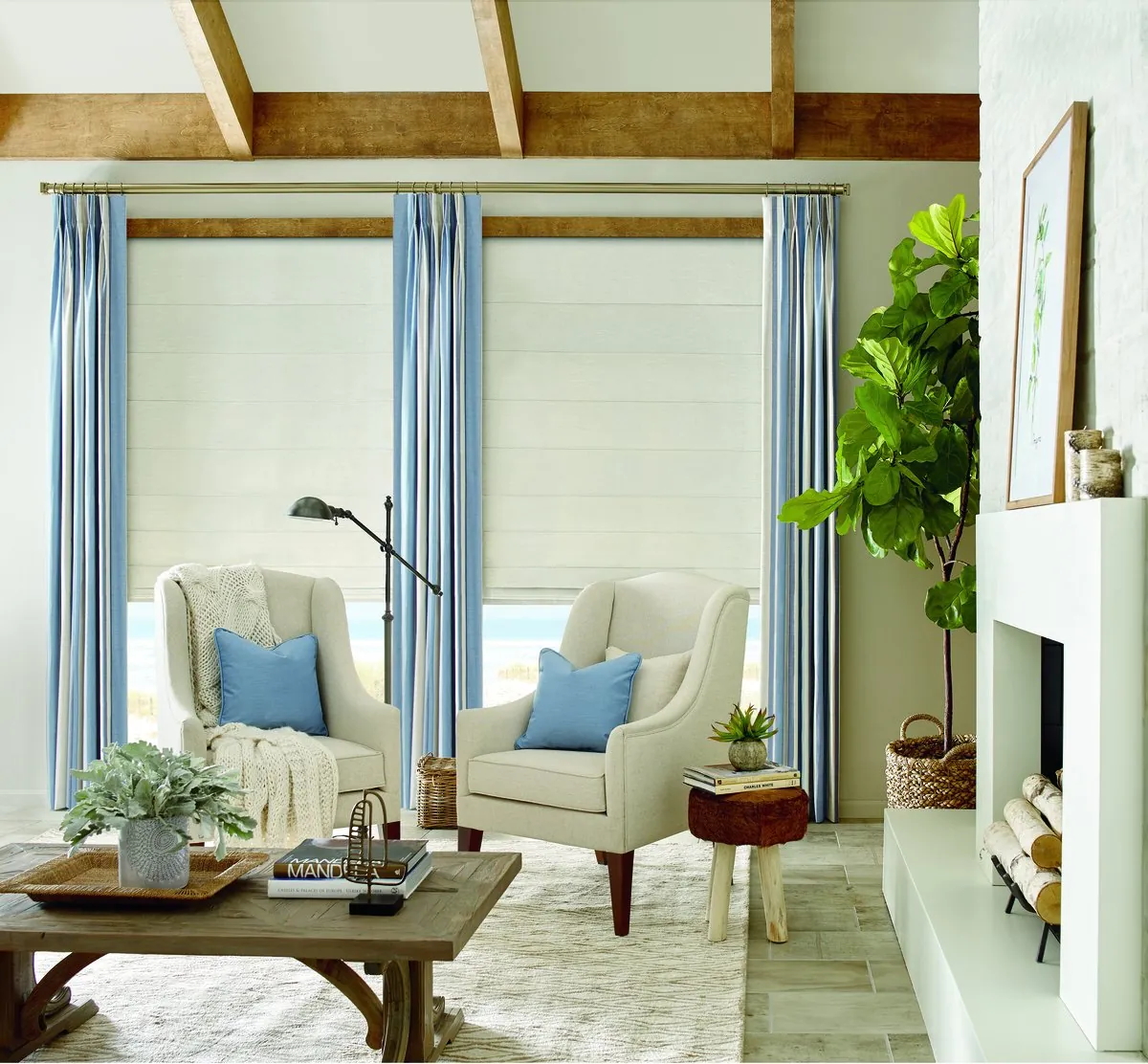
Roman shades
Vignette and Carole Roman folds for a formal front room or a softer bedroom.
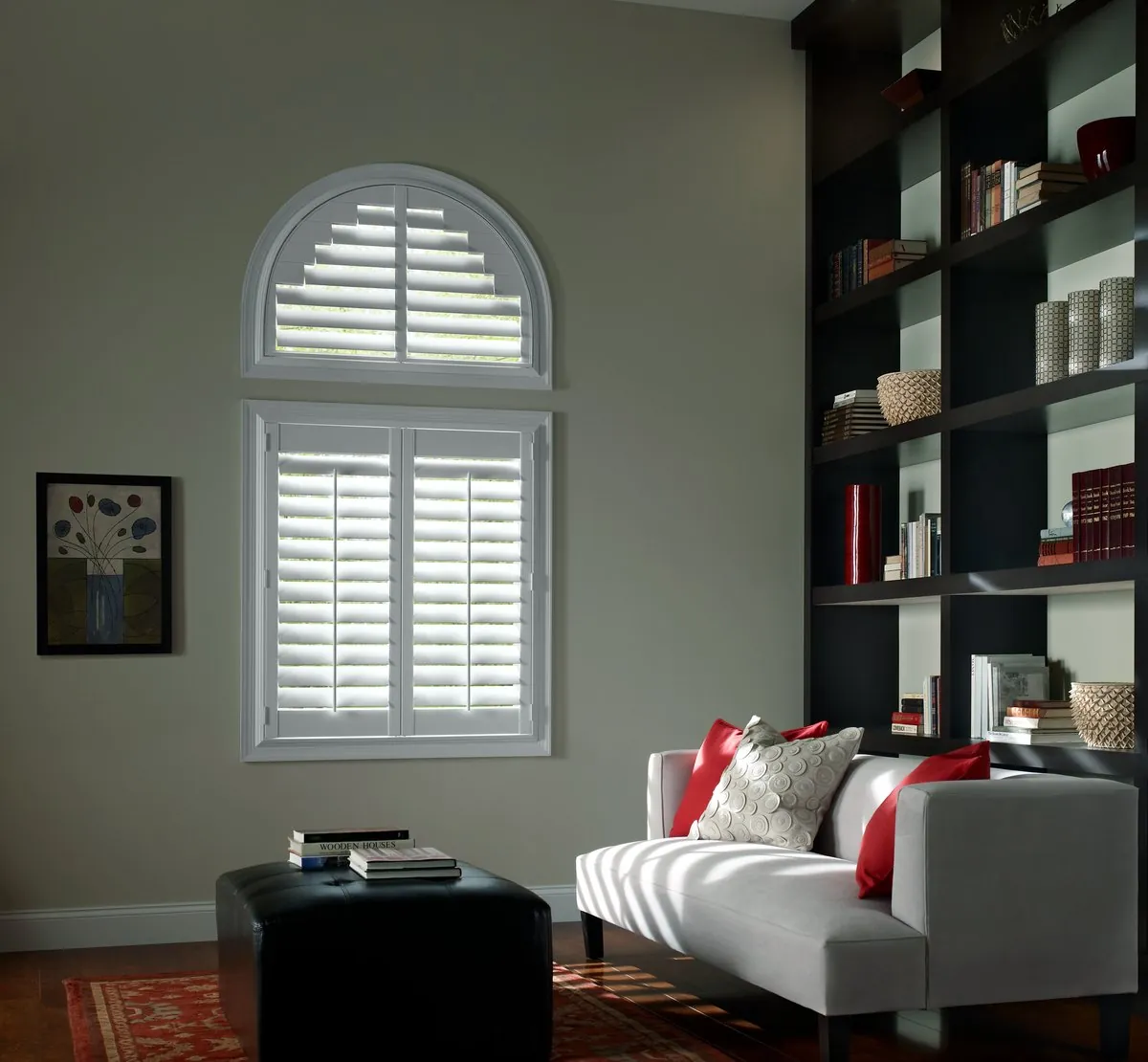
Plantation shutters
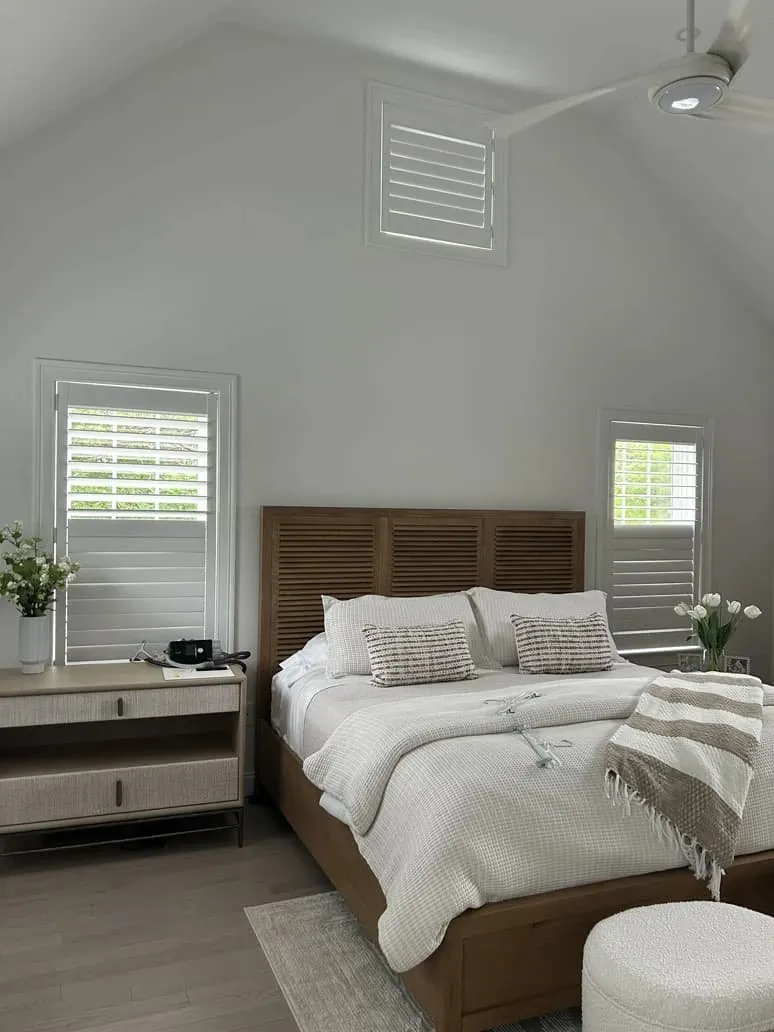
Palm Beach, NewStyle and Heritance, built to the opening, shaped tops included.
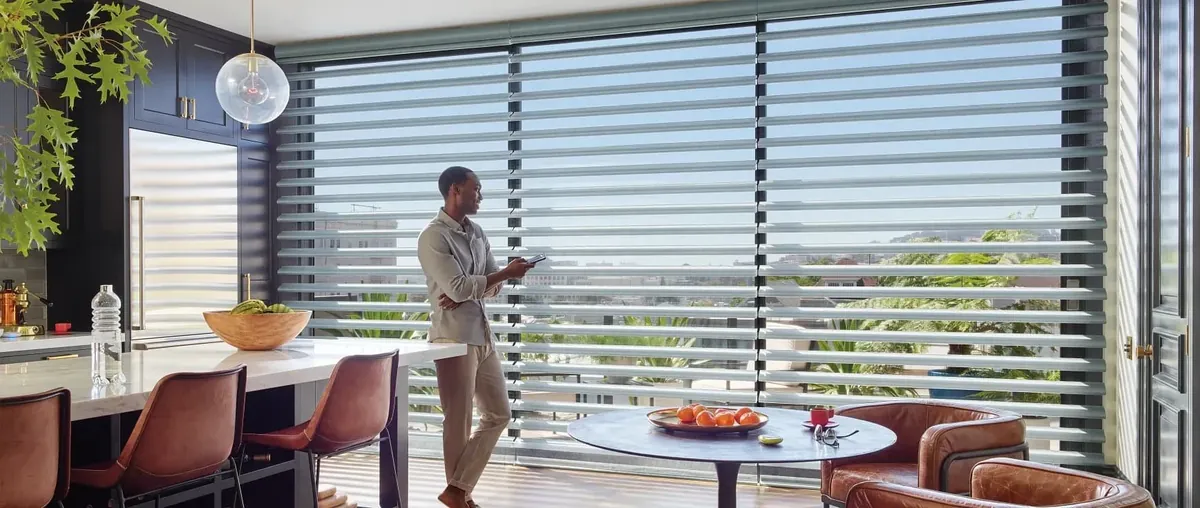
Motorized blinds and shades
PowerView for glass that is out of reach, run from a phone, a remote or a schedule.
Small sash on the Main Street colonials
The oldest houses in town were built when glass was costly and windows were kept small. Many still have their original sash, or careful copies of it, and that old glass is worth protecting. It shapes every decision about what goes on the window.
The first question is depth. An antique casing is often shallow, and the sash lock or a sash lift can sit where a headrail would want to go. Before we suggest anything we check whether an inside mount will clear the hardware. If it will, a slim honeycomb shade or a Vignette Roman disappears into the frame and leaves the old trim on show. If it will not, a neat outside mount above the casing works, and we set it so it covers the trim as little as possible.
The second question is scale. A small window looks crowded by a bulky product. Duette honeycomb stacks into a narrow band when raised, which keeps almost all of a little window’s daylight. Parkland wood blinds in a narrow slat look right on period sash and give you fine control of the light. Shutters can work very well too, but on a small opening the louver size matters: a smaller louver keeps the proportion of the window, where a big modern louver would swamp it.
Then there is the look from the street. A colonial’s front elevation is usually symmetrical, with matching windows either side of the door and a row above. Most people want every front window to look the same from outside, even if the rooms behind them need different things, so we keep the street side to one line and one color and vary fabric and opacity inside.
Modern glass on the wooded lots off Route 123
The newer houses on the larger lots are a different job almost entirely. Windows are big, regular and plentiful. A typical plan has a two-story great room or foyer, a kitchen that opens to a deck through a slider or French doors, a first-floor office, and bedrooms on the second floor with wide double-hung units.
The two-story glass is where most of the thinking goes. The upper windows are out of reach without a pole or a ladder, the lower ones are behind furniture, and the whole wall takes strong light at some point in the day. A few approaches work well:
- Matching shades top and bottom. A Duette or a Designer roller across every pane, with the upper row on PowerView so it moves from a remote or a schedule. Lined up correctly, a tall wall of shades reads as one surface.
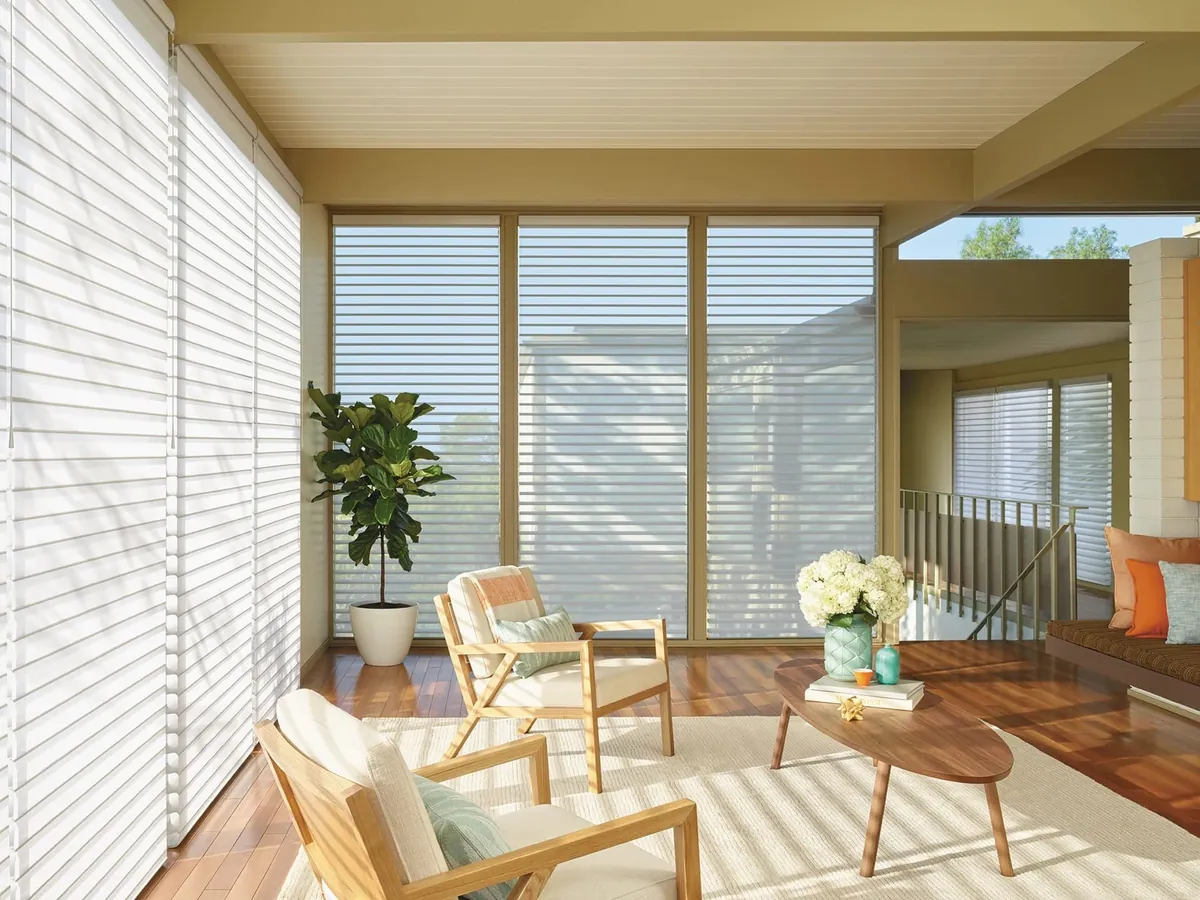
- Sheer shades for the lower row. Silhouette or Pirouette on the windows you sit beside, so the vanes can tilt to soften light while the woods stay in view.
- Shaped-top shutters. Where a great room has an arched or angled top, Hunter Douglas shutters can be made to follow the shape, which finishes the window rather than leaving a bare arch.
- Screens for the hot side. Designer Screen or an Alustra screen on the glass that faces the afternoon sun, chosen for openness so you keep the trees in sight.
Because the lots are wooded, light in these rooms changes with the season more than in most towns. Leaves filter it hard in summer, then in winter the sun comes in low under bare branches and straight across the floor. A schedule on PowerView can follow that, and a top-down, bottom-up shade lets you block the low winter angle while keeping the upper glass open.
Where old meets new in one house
A good number of Norwell properties are both at once: an antique front block with a later family room, kitchen wing or primary suite added behind. The two parts have different windows, and the join between them is often where a plan goes wrong if nobody looks at the whole house.
We usually suggest letting each part be itself. Small sash in the old block takes slim honeycomb, narrow-slat wood blinds or a small-louver shutter. The addition, with its big modern units and sliders, takes larger products that suit its scale. What ties them together is color and finish. Picking one white or one wood tone for both halves means the house reads as one from inside, even though the products differ.
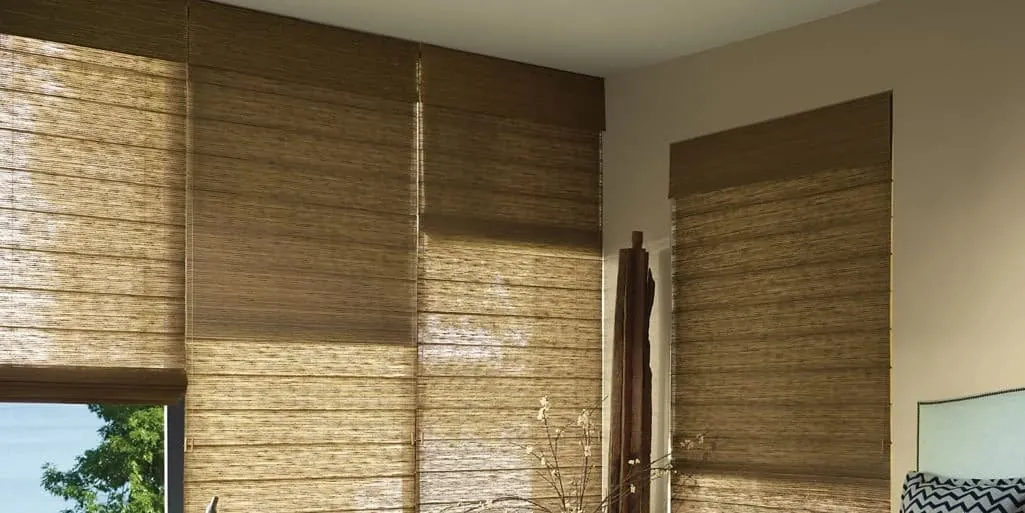
How light behaves on a deep, wooded lot
Most Norwell houses sit well back from the road, with trees between them and their neighbors. That changes what people ask a window covering to do.
Privacy is gentler. On a lot like this the street is often out of sight, so many rooms only need covering at night. A light-filtering fabric is usually enough, and in some rooms a sheer shade that stays half open all day works well.
Light comes from several sides. A house in the woods often has windows on three or four sides of a room, and each takes light at a different hour. We look at every wall separately rather than putting one product throughout the room.
Bedrooms still need darkness. Even on a quiet lot, summer mornings start early. Room-darkening honeycomb or a blackout roller behind a sheer gives a dark room without losing the look of the window by day.
Warmth matters in winter. Big glass loses heat. The cells of a honeycomb shade hold a layer of still air against the window, which makes the room feel more comfortable on a cold evening. We do not quote figures; we simply point you to the honeycomb fabrics that suit a room where warmth is the goal.
Choosing a line for each room
Rather than starting from a product, it helps to walk the house room by room and ask what each window has to do.
- Front rooms of a colonial. Narrow-slat Parkland blinds, slim Duette or Vignette Roman inside the frame, with one look across the street side.
- Dining rooms. Roman shades in a heavier fabric, or shutters, often with drapery panels to frame a formal room.
- Great rooms and foyers. Matching shades on every pane, PowerView on the high glass, screens on the hot side.
- Kitchens and baths. EverWood faux wood or Palm Beach shutters, which cope with steam and wipe clean.
- Bedrooms. Room-darkening honeycomb, or a sheer shade layered with a blackout option.
- Offices. A screen shade or a light-filtering honeycomb to keep glare off a screen without darkening the room.
Our guides on shades or blinds: how to choose and shutters for older windows go further on the two questions we hear most in houses like these.
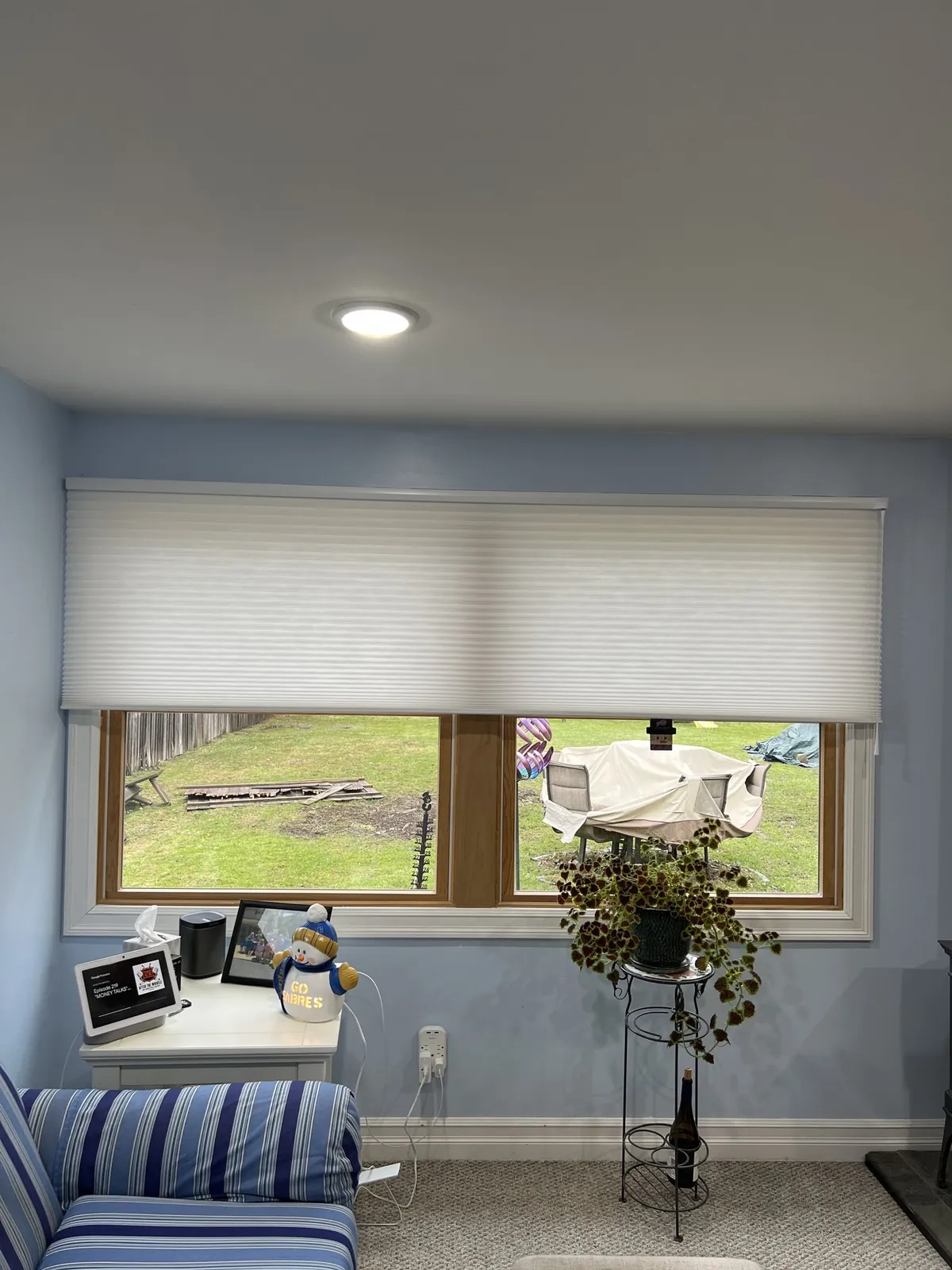
Sliders and French doors to the deck
Nearly every newer house off Route 123 opens to a deck or a patio somewhere, usually from the kitchen or the family room, and many older houses have gained one in a later addition. A door is used far more than a window, so the covering has to get out of the way easily and stay put when the door swings.
For a slider, products that move sideways work best. A vertical honeycomb shade, Luminette sheers or a set of vertical blinds stack to one side and leave the full opening clear. For French doors, a shade mounted on each door, with hold-down brackets at the bottom, moves with the door instead of swinging loose. When a slider sits beside a run of matching windows, we plan it with them so the heights and colors line up across the wall.
Color in light that comes through the trees
Light on a wooded lot is softer and greener in summer than in an open town, then bright and white off the snow in winter. That affects how a fabric looks. A warm white can read gray in the shade of the trees; a cool gray can turn almost blue on a snowy morning. This is one of the best reasons to see samples at home rather than choose from a picture, and it is why a Hunter Douglas dealer in Norwell, MA will always want to hold the fabric against your own glass before you decide.
On the sunny side of a house, the side that faces a clearing or the driveway, lighter neutral fabrics tend to hold their look longest. Our guide to choosing fabric for a sunny room covers that in more depth.
Drapery for the formal rooms
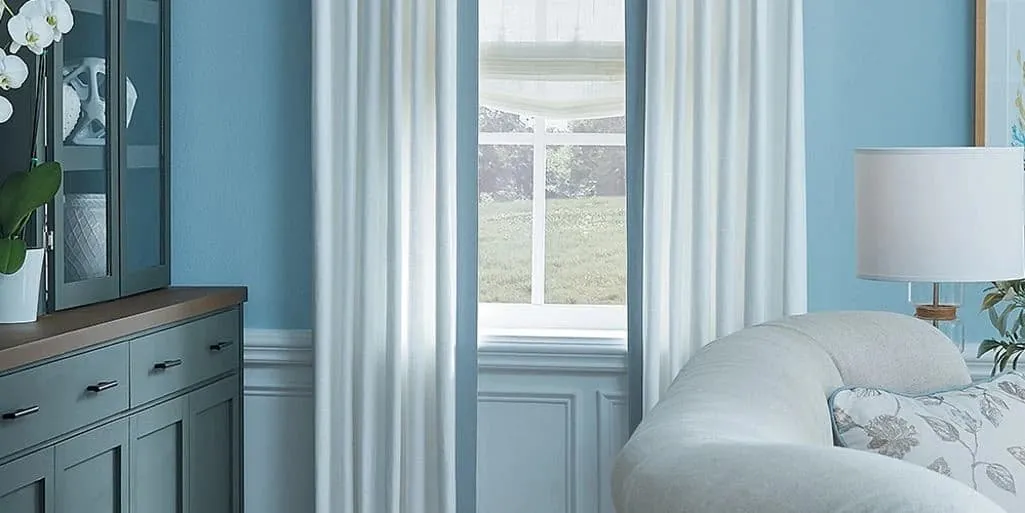
The older houses on Main Street often have a front parlor or a dining room where drapery belongs. Hunter Douglas drapery from Carole can be made to the room, either as stationary panels that frame a shade or as working panels that draw across the window. Layered over a Roman or honeycomb shade, panels soften a room and add warmth to an older window without hiding its trim. Our Hunter Douglas drapery page has more on the collection.
A visit, step by step
We bring the showroom to you. Our vans carry samples, so you can judge fabrics on your own glass, in your own light, which on a wooded lot can be quite different from a bright showroom.
- Request a consultation online, or use the call button, and choose a time that suits you.
- We walk the house with you, starting with the rooms that matter most to you, often the great room or the front parlor.
- You hold samples to the glass and compare lines, fabrics and opacities side by side.
- We check every opening for depth, square and hardware, and measure each one.
- You receive a free estimate, with no obligation, and decide in your own time.
- Hunter Douglas makes the order to our measurements, and our certified installers fit it.
For help with color, pattern and layering across a whole room, ask about our interior design consultations. To read more about the first visit, see what happens at an in-home consultation.

Why a Gallery dealer suits Norwell
A house that mixes antique sash with two-story modern glass needs a dealer who can reach for very different products without switching suppliers. Being a Hunter Douglas Gallery dealer gives us that. We can put narrow-slat wood blinds on a colonial’s front room, honeycomb on the bedrooms and motorized screens across a great room, and plan them as one job.
The other half is fitting. Our installers are certified by Hunter Douglas. On old frames that are seldom square, that care shows: brackets shimmed level, inside mounts that clear the sash lock, and shades on a two-story wall set so every bottom rail lines up.
As a Hunter Douglas dealer in Norwell, MA we also look after what you already own, with blind and shade repair when something needs attention.
PowerView for high glass and wide walls
The two-story windows in the newer houses are the clearest case for motorization in town. Once a high shade is on PowerView, it moves from a phone, a remote or a wall control, singly or with the rest of the wall. Schedules can lower the shades on a sunny side during the afternoon and raise them again at dusk, or open the bedroom shades at the same time each morning.
We plan motorization at the consultation, where we look at where each shade sits, where a control would be easiest to reach and how each motor is powered. You can read more on how motorized shades are controlled, or see our page for motorized blinds in Norwell.
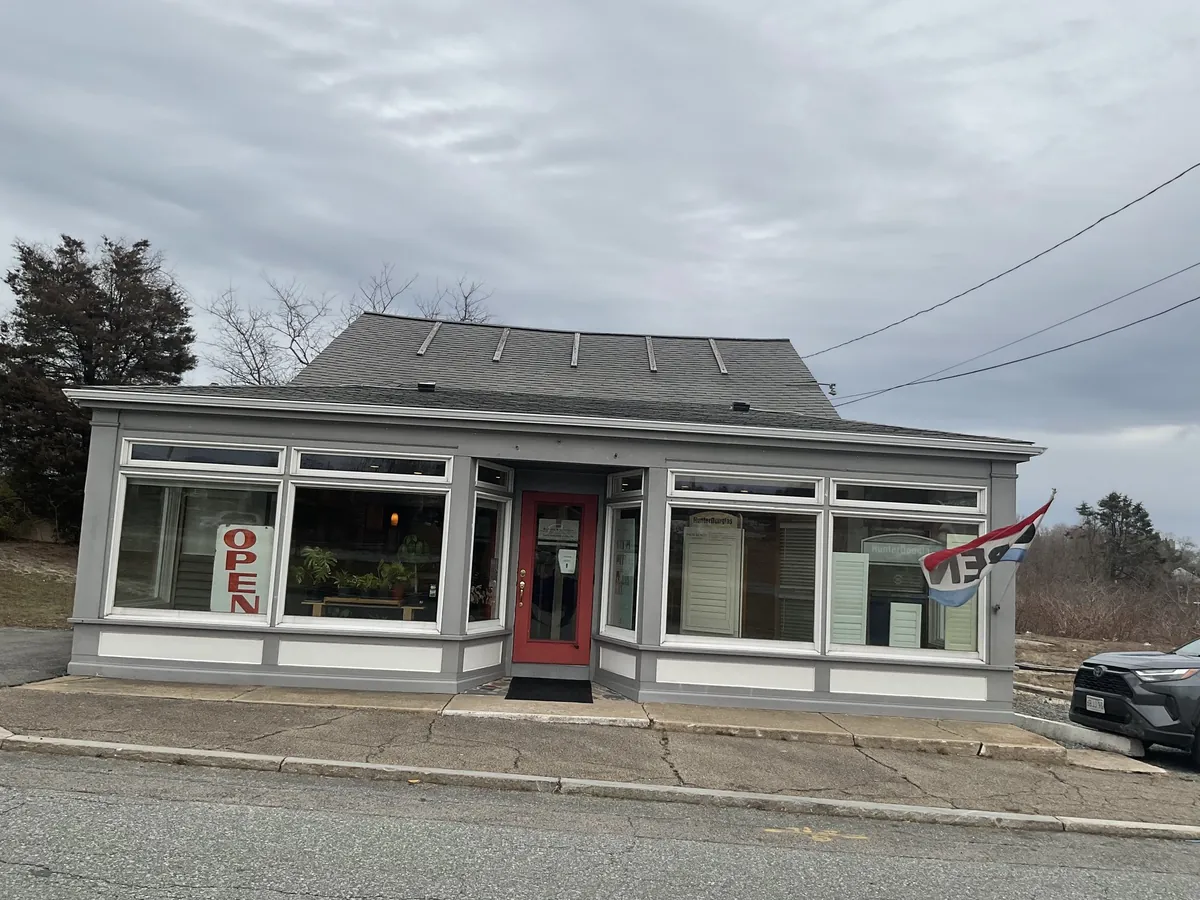
Our nearest showroom is in Sagamore
Most Norwell customers start with an in-home visit, because seeing samples on your own windows answers more questions than anything else. If you would rather see Hunter Douglas products before we come, the Sagamore showroom is our nearest.
You can also explore the brand on our Hunter Douglas page, browse the full Hunter Douglas catalog or see everything we do in town on our Norwell page.
Questions from Norwell
Can you fit shades inside the small original sash on an antique colonial?
Often, yes. We check the depth of each casing and where the sash lock sits. Slim honeycomb shades and narrow-slat wood blinds fit many antique frames; where an inside mount will not clear, we mount neatly above the casing.
How do you cover a two-story window wall?
Usually with matching shades on every pane, so the wall reads as one surface, with PowerView on the upper glass so it moves without a pole or ladder. Shaped tops can be fitted with shutters made to follow the arch.
Should the old part of my house match the new addition?
Not product for product. We suggest products that suit each part’s windows, then tie the house together with one color or wood tone throughout.
Do I need privacy shades if my house sits far back in the trees?
Many rooms only need covering at night, so light-filtering fabrics or sheer shades are often enough. Bedrooms usually still want a room-darkening option for early summer mornings.
Is there a charge for the estimate?
No. Every estimate is free, and it is based on the measurements we take at your house.
Your next step
Request a consultation and we will bring samples of the whole range to your house, look at every window with you and leave a free estimate. Your Hunter Douglas dealer in Norwell, MA can also be reached through the call button, or you can visit the Sagamore showroom first.