
Capes, ranches and colonials under the trees
Much of Hanover was built in the years after the war, and it shows in the houses: tidy capes with dormers poking out of the roof, long single-story ranches with a picture window facing the street, and, off Washington Street and around the Four Corners, newer colonials with a center hall and evenly spaced windows. Almost all of them sit on wooded lots with a proper setback from the road. That mix is a good match for roller shades in Hanover, MA, because the windows are mostly standard modern openings that take a clean, close fit.
Standard does not mean every room behaves the same. A cape’s upstairs bedroom under the slope of the roof gets light very differently from a ranch living room with one big pane. A colonial’s front rooms face the road; its family room faces the woods. Pine and oak around the house filter the sun in summer and step aside in winter.
A roller handles all of it with one simple idea: a single piece of fabric on a tube, rolled up out of sight or let down to exactly the height you want. The skill is in choosing the right cloth for each room and fitting it so it looks made for the window, which is what we do.
A roller for every room of a cape or ranch
These six choices cover most Hanover houses from the kitchen to the upstairs bedrooms. We carry every one of them to your door, so you can compare them at the glass.
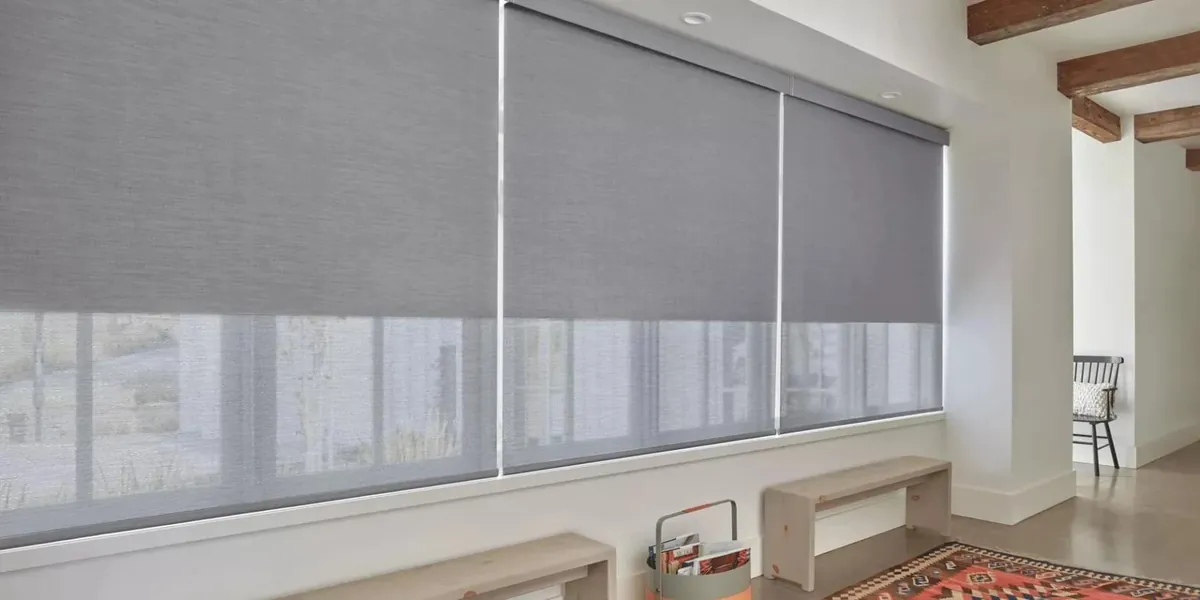
Designer Roller
The all-rounder: plain, textured or patterned cloth from light filtering to blackout. Right for kitchens, bedrooms and dens alike.
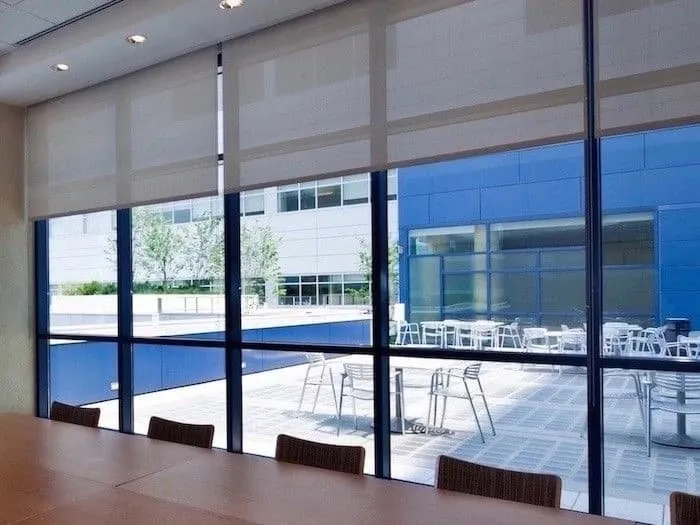
Designer Screen
Solar screen with a chosen openness, so a ranch picture window keeps its view of the yard while the glare drops.
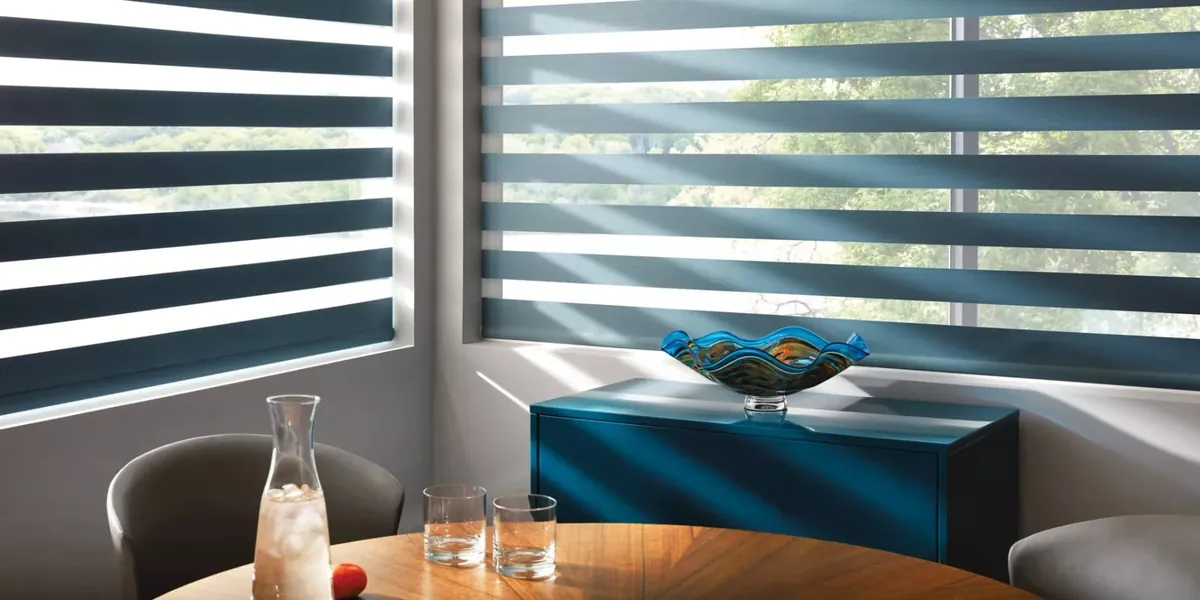
Designer Banded
Sheer and solid stripes on two layers. Line them up to see out, offset them for privacy, all in one shade.
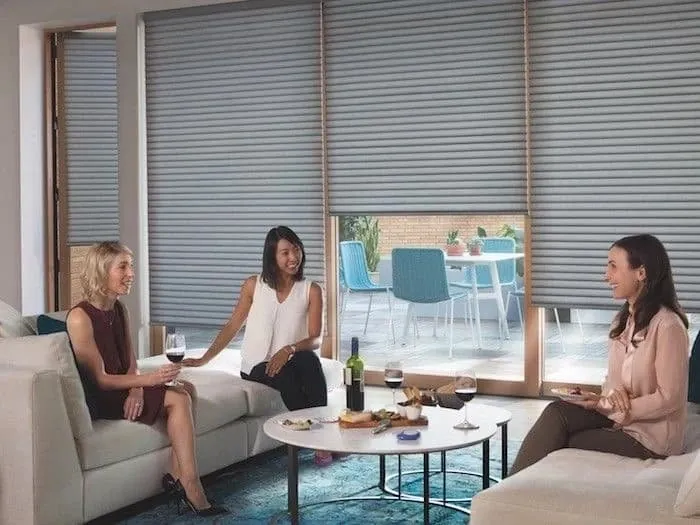
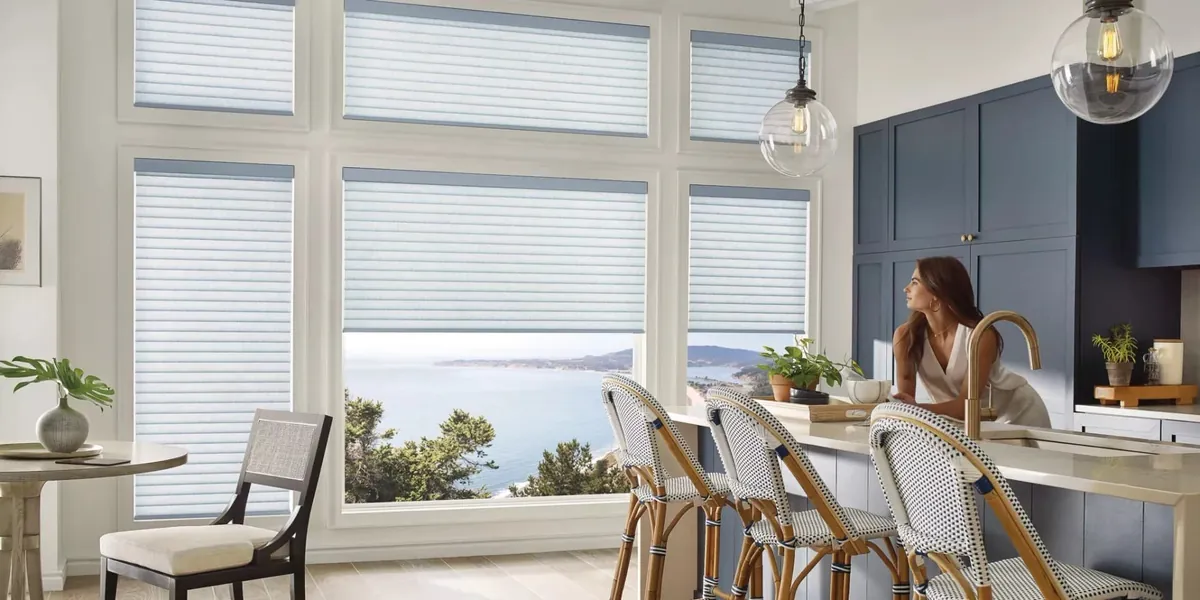
Sonnette Cellular Roller
A softly curved cell of fabric that still rolls up into a slim headrail. A gentler look for a living room or bedroom.
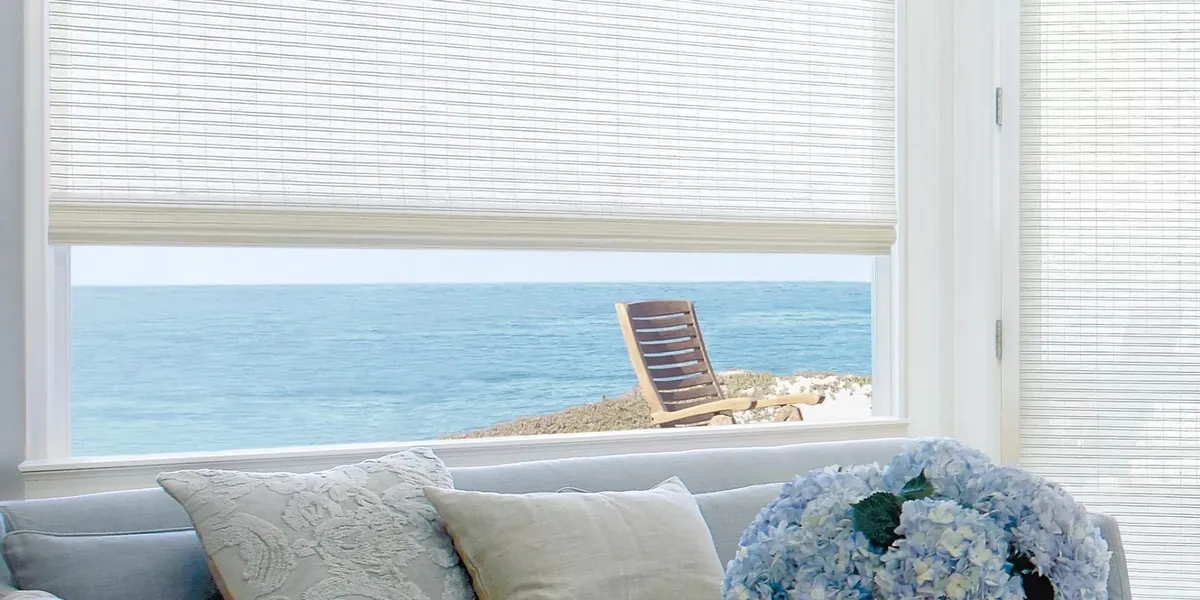
Alustra Woven Textures
Roller shades in textured, natural-looking weaves for a room that wants warmth and character rather than a flat finish.
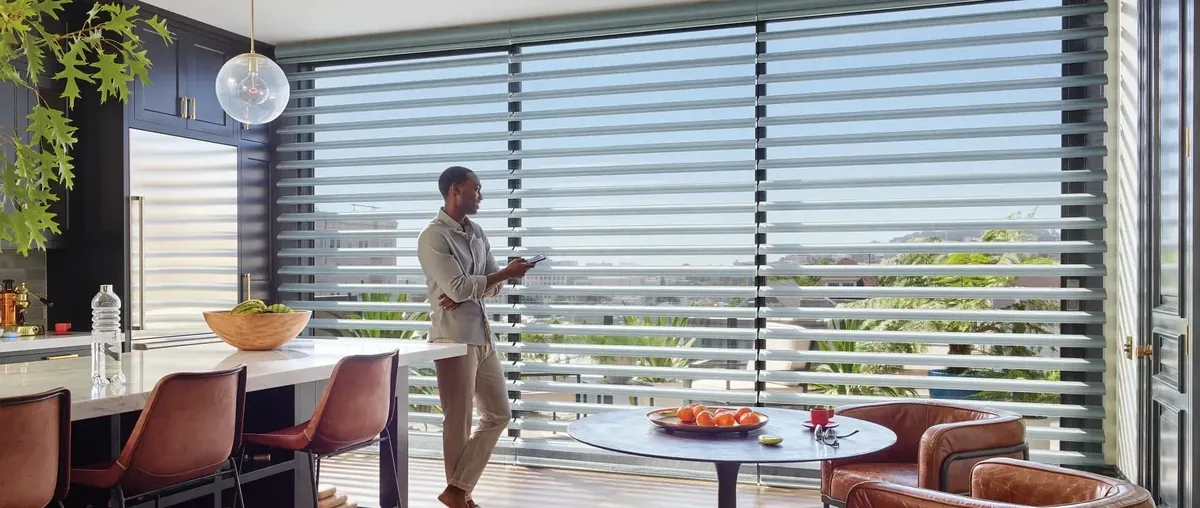
Motorized Blinds and Shades in Hanover
Any of these rollers can run on PowerView, from an app, a remote or a schedule. Our Hanover motorization page explains how.
Upstairs in a cape: dormers and sloped ceilings
The second floor of a Hanover cape is usually tucked under the roof. Bedrooms there have knee walls, ceilings that slope down toward the eaves, and windows set into dormers that push out from the roof line. A dormer window often sits at the back of a short, deep alcove, with walls on three sides and very little room for anything bulky.
That is where a roller earns its place. All of its working parts live in a compact headrail, so it fits inside the dormer opening without crowding the alcove, and when it is up you hardly know it is there. Drapery would have nowhere to stack; a thick shade would eat into the little light the window gives. A light filtering roller in a pale color keeps the room bright by day. A room darkening or blackout cloth turns the same room into a proper bedroom at night.
Gable-end windows are common upstairs too, often a pair on the end wall of the house. Those take a roller in the usual way, and we match the fabric to the dormer shades so the floor feels like one set of rooms rather than a patchwork.
Children’s rooms under the eaves are a frequent request. Cordless rollers keep the window free of hanging cords, and a blackout fabric helps with early bedtimes in June when the sky stays light into the evening.
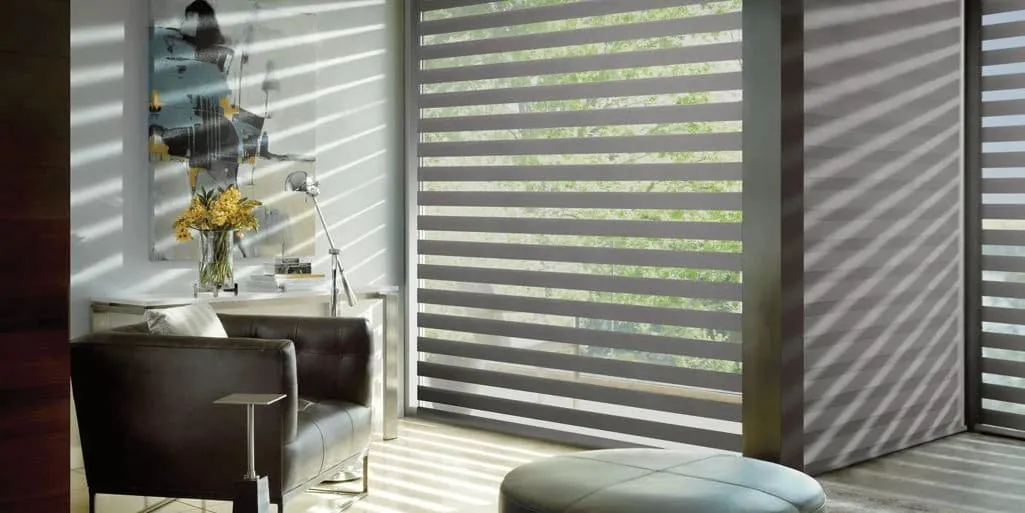
Picture windows and sliders in a ranch
A ranch puts everything on one floor, which usually means a living room with one wide picture window at the front, sometimes flanked by smaller opening windows, and a slider or a pair of glass doors at the back onto a deck or patio.
The picture window is the centrepiece. Covering it with one very wide shade is possible within limits, but splitting it into a center shade and two side shades often looks better and is easier to use, especially where the flanking windows open for air. All three can share one fabric and line up at the same height when lowered, so from the street the window still reads as a single piece.
On the slider, the roller has to clear the door handle and let the door glide freely. Some households like one roller across the whole opening; others prefer two, one over the fixed panel and one over the moving door, so they can step outside without raising everything. Our certified installers set the brackets so the fabric hangs clear of the frame and the handle.
A deck facing south or west can bounce a lot of light through a slider in the afternoon. A solar screen on that door cuts the glare and keeps the backyard in view, so you can still watch the dog or the kids from the kitchen.
Standard openings and the case for an inside mount
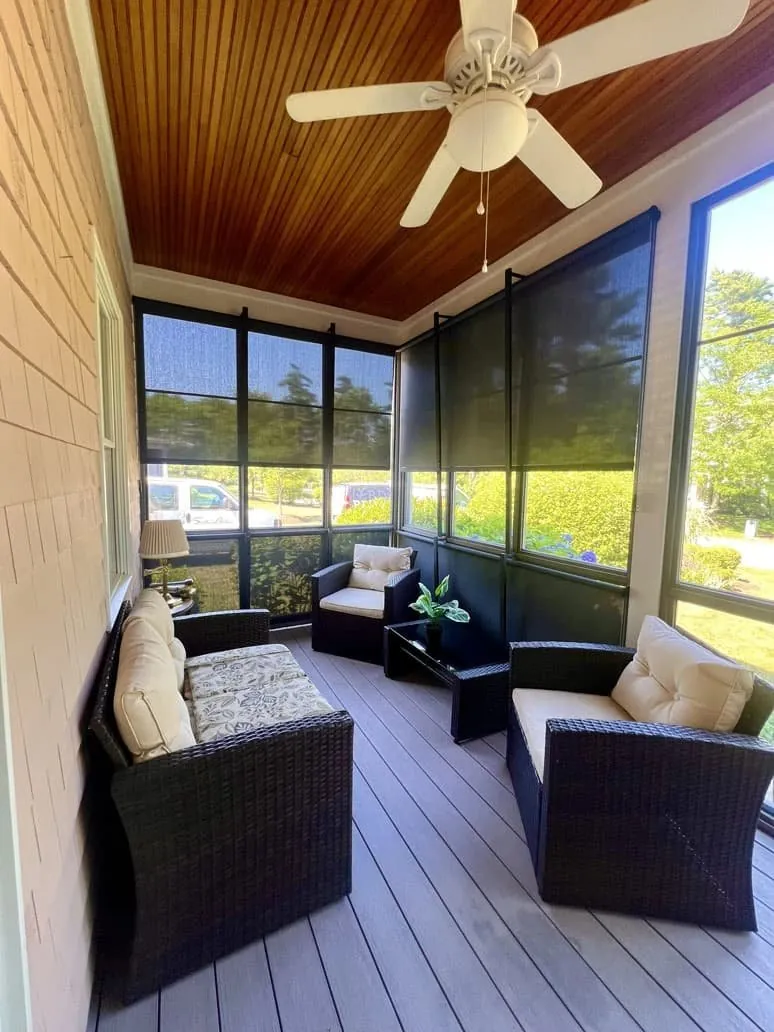
One real advantage of Hanover’s housing is that most windows are regular, square and reasonably deep. That makes an inside mount, with the shade sitting within the window frame, the natural first choice. It looks neat, shows off the trim around the window and keeps the shade close to the glass.
There are still a few things we check. Window cranks on casements, tilt latches on double-hungs and the depth of the frame all affect whether the headrail fits fully inside. A roller also leaves a narrow gap at each side, because the fabric is slightly narrower than the tube’s brackets. In a living room that gap is a non-issue. In a bedroom where you want darkness, we may suggest side channels, which close the gap with slim tracks, or an outside mount that overlaps the frame.
Because the openings in a house of this age are so consistent, a whole-house order comes together easily. Shades in neighboring rooms line up, and with one fabric family running through the house the windows feel calm and finished.
From first call to fitted shade
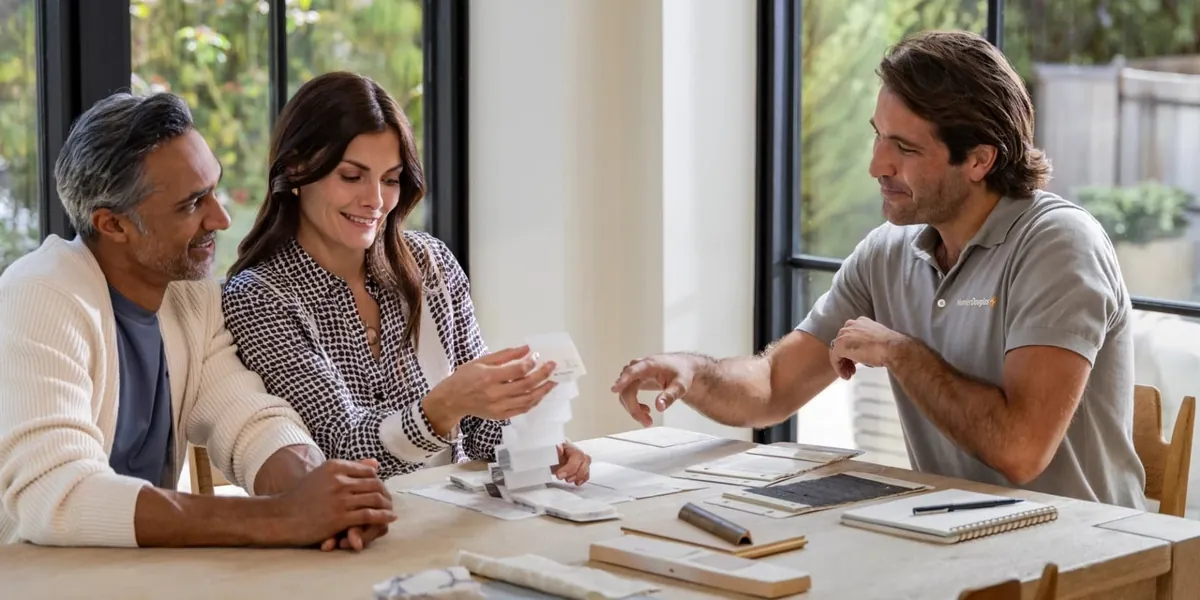
Everything starts in your own rooms, because fabric only shows its true color in your own light. Our vans carry the samples, so we can bring the showroom to you.
- Book a time with Request a Consultation, or press the call button.
- We come to the house with roller, screen, banded, woven and Sonnette samples.
- You walk us through the rooms and tell us what bothers you about each: glare, heat, privacy or early light.
- You try samples at the window and see how each cloth changes the room.
- We measure every opening and check the frame depth and any hardware in the way.
- You receive a free estimate for the shades you are considering, and take whatever time you need.
- When you go ahead, our certified Hunter Douglas installers fit each shade, check the level and show you how it works.
Want a second opinion on color or fabric across the whole room? Ask about our interior design consultations during the same visit. Our guide to what happens at an in-home consultation explains the appointment in more detail.
Which way does the room face
On a wooded lot the trees soften the light, but the direction a window faces still decides most of what a shade has to do. A rough guide we use when choosing roller shades in Hanover, MA:
- North-facing rooms get soft, even light all day. A light filtering cloth in a warm color keeps them from feeling gray, and you rarely need a screen.
- East-facing rooms catch the morning sun, low and direct. Bedrooms on this side often want room darkening or blackout fabric.
- South-facing rooms take steady sun through the middle of the day, more so in winter when the leaves are down and the sun sits lower. A solar screen helps in a family room; a light filtering roller suits a kitchen.
- West-facing rooms get the hottest light of the day, coming in at a shallow angle late in the afternoon. This is where a screen pays off most, especially on a slider or a picture window.
The tree canopy changes things through the year. A west room that stays shaded in July can be flooded with light in December. We ask about this at the visit and choose fabric that suits both.
Bedrooms that actually get dark
The most common complaint we hear about bedroom shades is light creeping in around the edges. A blackout fabric blocks light through the cloth itself, but a roller in an inside mount still has those small gaps at each side and a little light along the top.
There are three ways to close them. An outside mount places the shade on the wall or trim above and beyond the opening, so it overlaps the frame on every side. Side channels are slim tracks fitted inside the frame that the fabric runs down, sealing the gaps at the edges. And a valance or cassette at the top covers the roll and the light above it. We will tell you which suits the window, and we will be honest if the frame makes one of them awkward.
In a cape bedroom under the eaves, an inside mount with side channels is usually the cleanest answer because there is little wall space for an outside mount. In a ranch, where bedroom windows often sit in plain drywall, an outside mount is easy and very effective.
Colonials near the Four Corners
The newer colonials off Washington Street and around the Four Corners tend to have a symmetrical front: a door in the middle and matching windows to each side, upstairs and down. That symmetry is part of their charm, and it is easy to spoil with shades at different heights and in different colors.
Choosing one neutral fabric, or at least one color family, for every front-facing window keeps the facade orderly. Many roller fabrics have a white or neutral back, so even a deep color inside shows as a light tone from outside. If you like everything to match without thinking about it, PowerView can bring every front shade down to the same position at dusk.
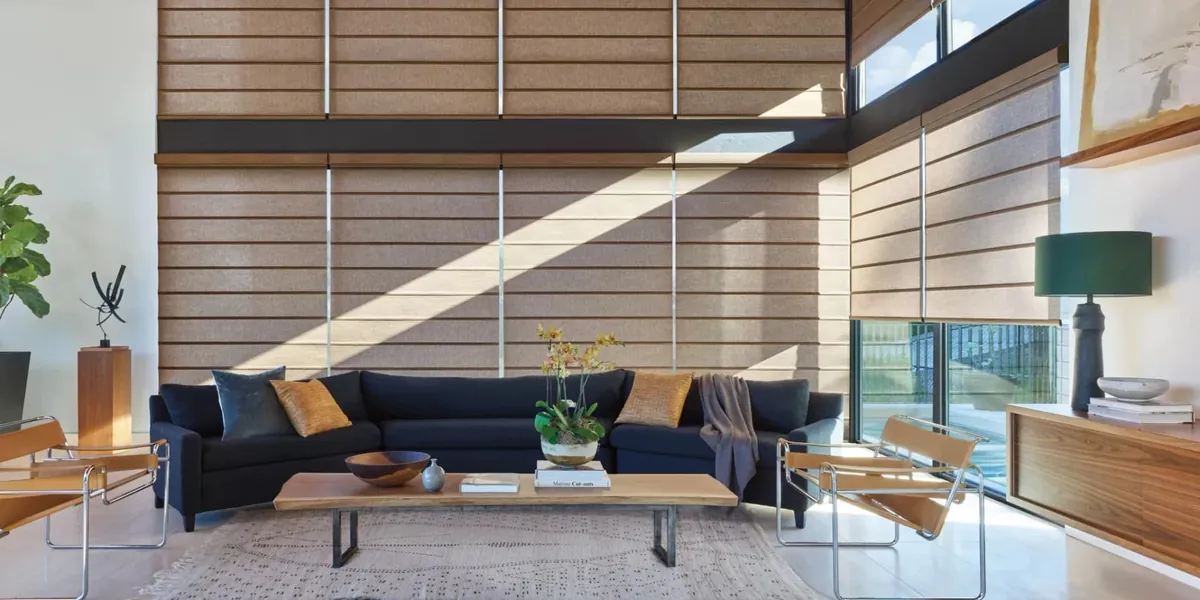
Inside, these houses often have an open kitchen and family room across the back, with a bank of windows and a slider. One light filtering fabric across that whole wall makes the space feel connected. For the home office in a front room, a solar screen controls glare on a computer while keeping the room bright.
Kitchens and bathrooms in older capes and ranches
Kitchens in Hanover’s post-war houses are often on the small side, with a single window over the sink looking out to the backyard. That window works hard. It has to let in daylight while you cook, give you privacy in the evening and cope with steam and splashes. A light filtering roller mounted inside the frame stays well clear of the faucet when raised and lets the window do its job by day. A fabric that wipes clean makes life easier.
Where a kitchen has been opened up into the old dining room, there may be a second window or a slider to the deck as well. Carrying the same cloth across all of them ties the space together. If the sink window faces west, a screen fabric there cuts the late sun on the counter without blocking the view of the yard.
Bathrooms in capes and ranches tend to have one small window, sometimes with obscure glass, sometimes clear. A roller in a moisture-friendly fabric gives full privacy when down and disappears when up. For a bathroom that needs light and privacy at the same time, a top-mounted light filtering roller lowered most of the way keeps the room bright while screening the lower part of the window. Many of the roller shades for Hanover homes we fit start with exactly these two small rooms.
Caring for roller fabric
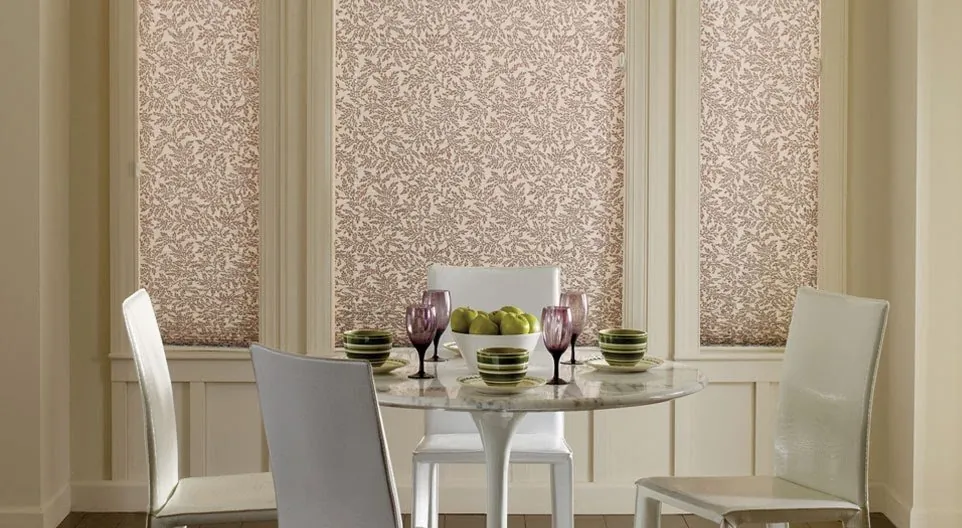
Roller shades in Hanover, MA, are among the easiest window coverings to live with. With nothing to tilt and no slats to dust one by one, most of the care is a light going-over now and then. A soft brush or a vacuum with a brush attachment on low suction removes dust from the fabric, and a lowered shade is easier to reach than a raised one. Spills and marks are best dealt with gently, following the guidance for the particular fabric you choose, which we go over when the shades are fitted.
Kitchens and bathrooms benefit from fabrics that wipe clean, so we point those out when you are choosing for the room over the sink or beside the tub.
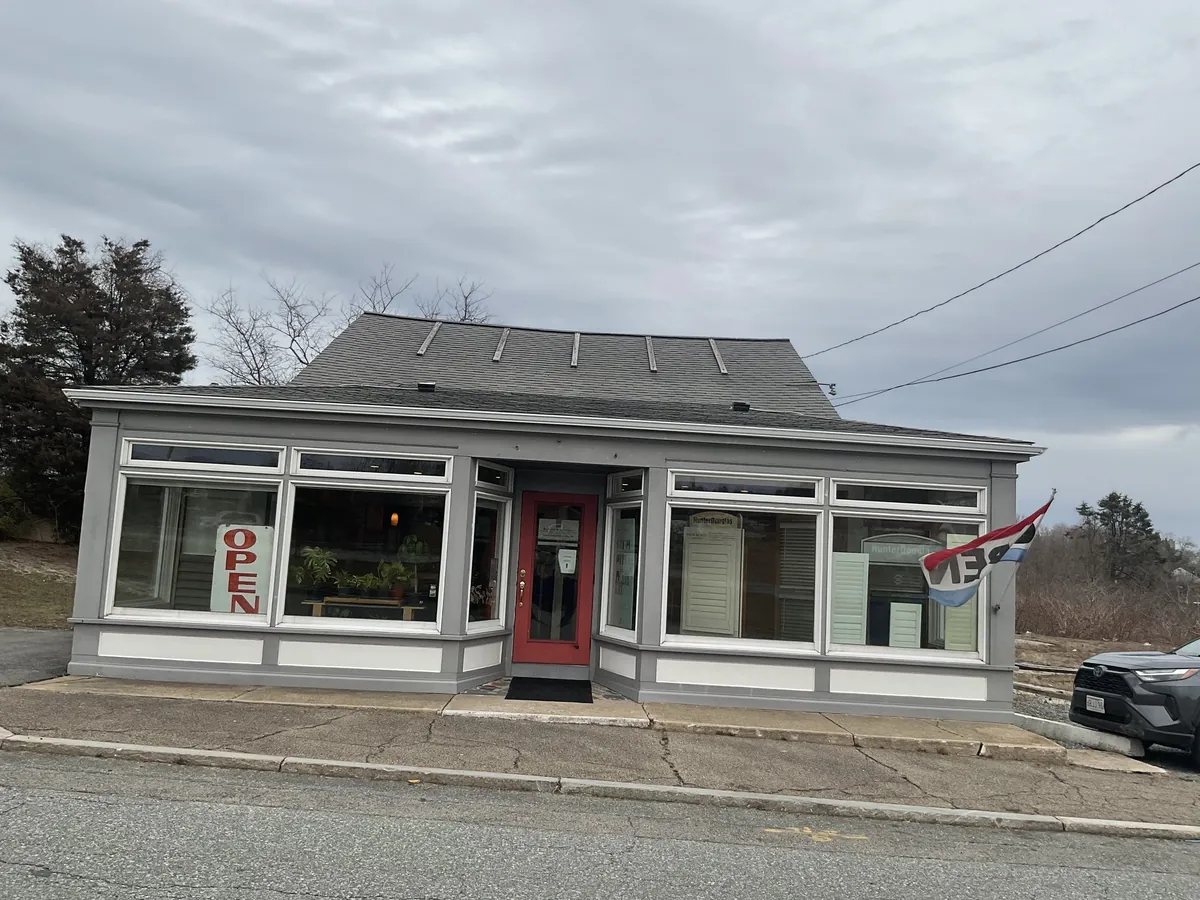
The nearest showroom to Hanover
Of our showrooms, Sagamore is the closest to Hanover. It is worth a visit if you want to see and handle shades before booking a home appointment.
The home visit is still where the decision gets made, because only there can you see the fabric in your own rooms.

Why choose a Gallery dealer
Blinds & Designs is a Hunter Douglas Gallery dealer, a designation the brand gives dealers who meet its standards. That puts every Hunter Douglas roller line, every lift option and PowerView automation within one appointment.
Our installers hold Hunter Douglas certification, so every bracket, headrail and motor goes up as the maker intends. We also take care of blind and shade repairs, so a shade that needs attention later comes back to people who know it.
Beyond rollers, we carry Hunter Douglas blinds, shutters, cellular and roman shades, and drapery. See cellular shades in Hanover, plantation shutters in Hanover and everything else on our Hanover page, or compare every line on the main roller shades page.
Questions from Hanover
Will a roller fit the dormer windows in my cape?
Yes, in most cases. The mechanism sits in a slim headrail, so the shade fits inside the dormer opening without crowding the alcove. We check the depth when we measure.
Should my ranch picture window have one shade or three?
It depends on the width and on whether the side windows open. Three shades in one fabric, lined up at the same height, often look better and are easier to use. We show you both options at the visit.
How do I stop light leaking around a bedroom roller?
Choose a blackout fabric and close the edges, either with side channels inside the frame or with an outside mount that overlaps it. A cassette at the top hides the roll as well.
Can I see the backyard through a solar screen?
Yes. The openness of the weave decides how clear the view is, and darker colors are easier to see through. We bring a few to try on your slider or picture window.
Is the estimate free?
Yes. We measure your windows at the consultation and give you a free estimate with no obligation.
Ready when you are
The best way to choose roller shades in Hanover, MA, is to see the fabric in your own rooms. Request a consultation and we will bring the range to you, measure every window and give you a free estimate. If you prefer to talk first, use the call button, or visit the Sagamore showroom.