
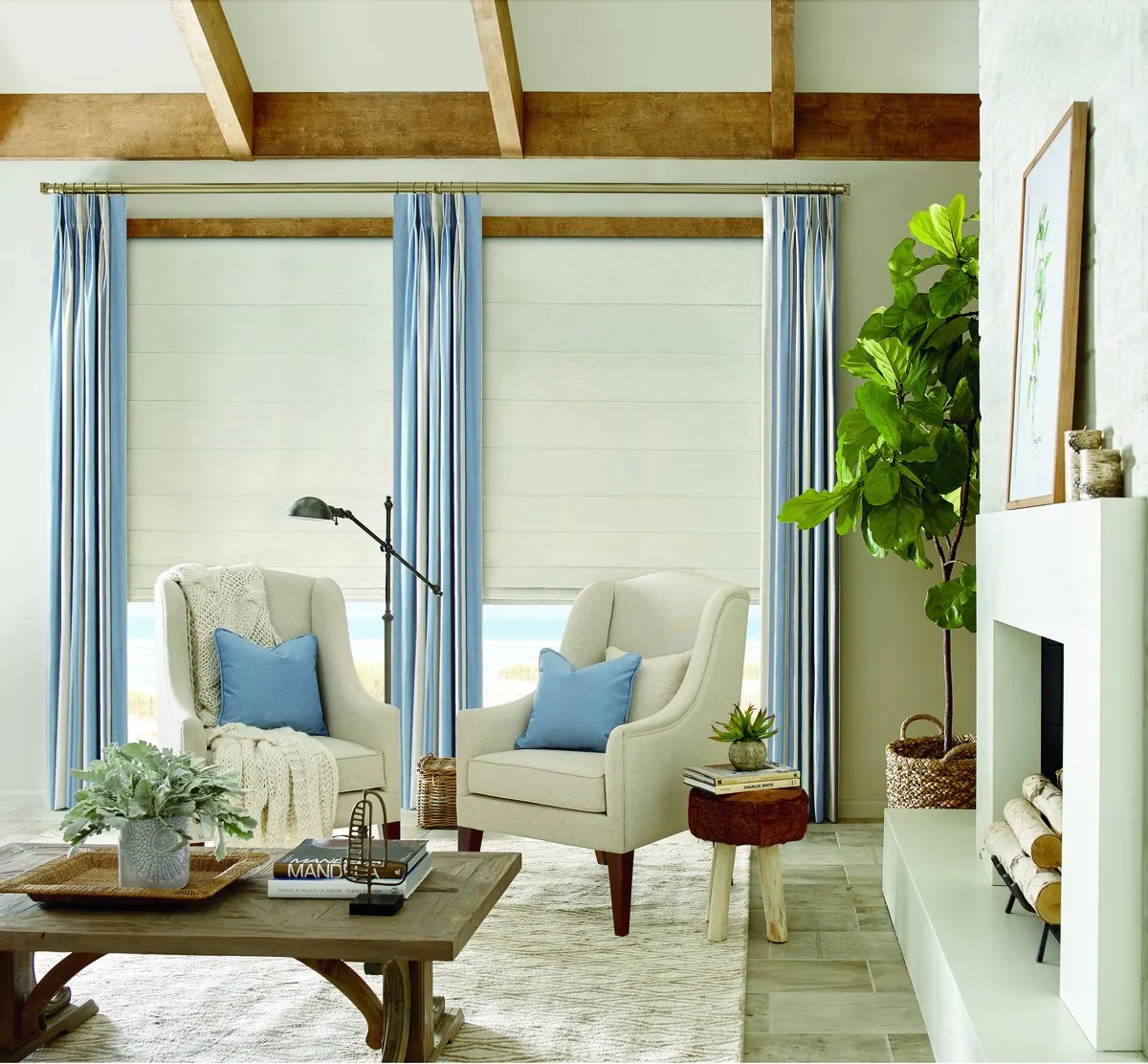
Capes, ranches and colonials around the Four Corners
Drive out from the Four Corners and the houses tell you a lot about the windows inside them. The post-war capes have a symmetrical front with a window either side of the door and smaller windows tucked into the roof upstairs. The ranches stretch out sideways, with a picture window in the living room and a row of bedroom windows along one side. Off Washington Street the newer colonials are taller and roomier, with bigger openings on both floors. We fit roman shades in Hanover, MA, in all three, and each one has its own habits.
What they share is helpful. Most of the openings are standard modern sizes, square and true, with enough depth for an inside mount. That makes roman shades straightforward to plan, and it means the time goes into the enjoyable part: choosing fabric, fold and lining for each room.
The wooded lots and real setbacks matter too. A house with trees around it and a lawn in front gets softer, more changeable light than a house on a bare street, and that affects which fabrics look their best.
Roman shade choices for Hanover houses
Two Hunter Douglas roman lines cover nearly every room, with a woven option for a more casual space. We bring samples of all three.
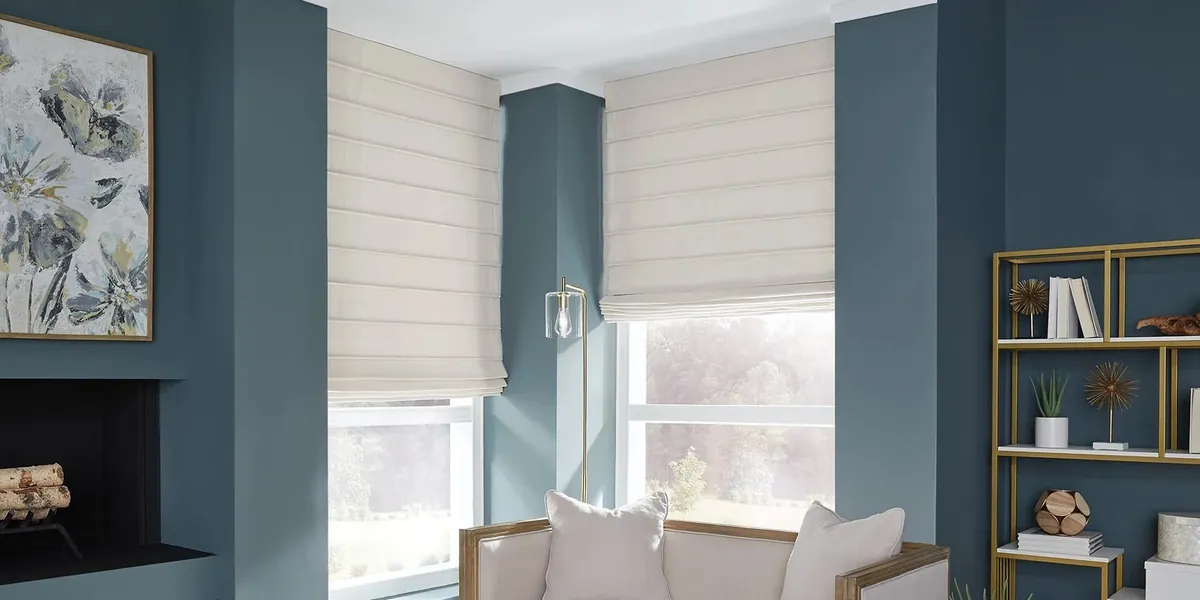
Carole Fabrics Roman Shades
Tailored to your sizes from a wide range of decorator fabrics, in a flat fold or a softer folded style. Ideal when you want the shade to carry color or pattern.
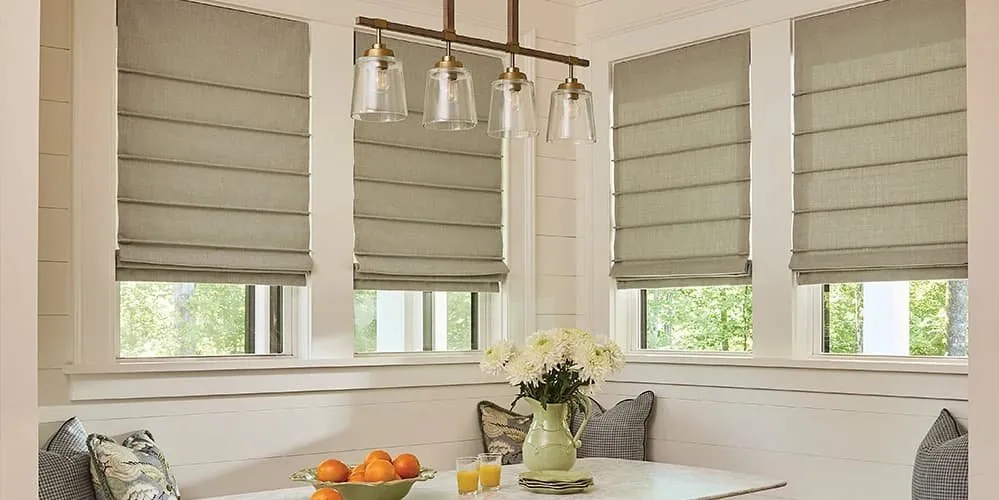
Vignette Modern Roman Shades
Uniform folds that roll neatly into the headrail, so a raised shade covers very little glass. Popular in kitchens and family rooms.
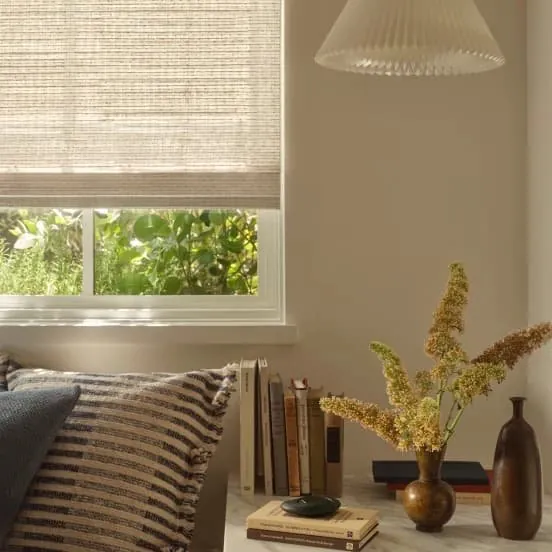
Alustra Woven Textures Roman
A natural weave in a roman fold, for a sunroom, a den or a garden-facing window where texture suits the room.
Inside a post-war cape
A cape packs a lot into a small footprint. Downstairs there is usually a living room and a dining room either side of the front door, each with a pair of double-hung windows, and a kitchen at the back. Upstairs, the bedrooms sit under the roof, lit by dormer windows that are often shorter than the ones below.
Downstairs, roman shades give a cape a finished, tailored look without the bulk of heavy curtains in what are often modest rooms. A Carole flat fold in a soft solid or a small pattern keeps the front rooms light and calm, and because the windows come in matched pairs, the shades can be set to stop at the same height so the front of the house looks even from the road.
Upstairs is where planning pays off. A dormer window is set back into a small alcove, which suits an inside mount perfectly, but its shorter height means the stack of a raised shade matters. Vignette, with its fold that tucks into the headrail, or a lighter Carole fabric, keeps more of that small window clear. Dormer bedrooms also tend to catch early sun, so a room-darkening lining is a common choice up there.
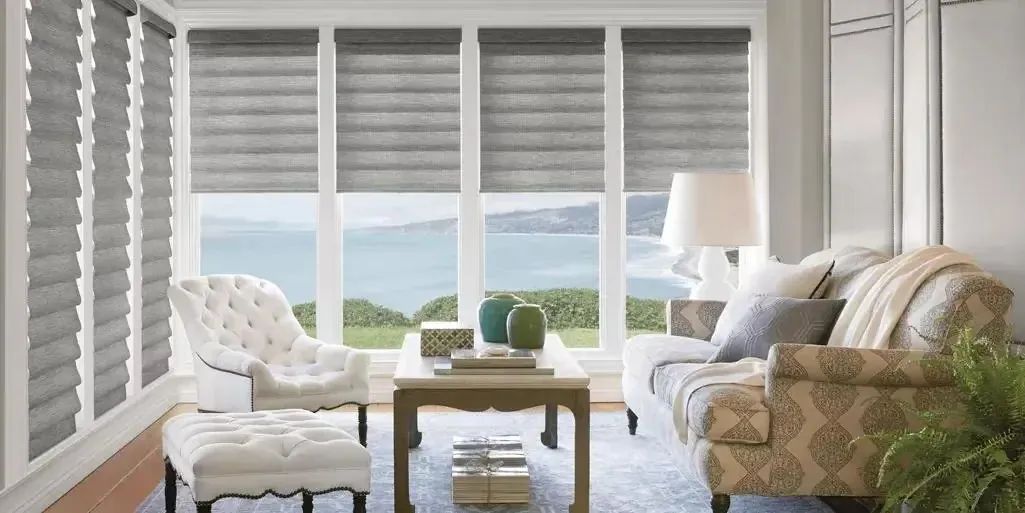
The ranch and its picture window
A ranch puts everything on one floor, and the living room picture window is usually the biggest single piece of glass in the house. It faces the front lawn, it lets in a great deal of light, and in the evening it shows the whole room to anyone passing.
A single roman shade can cover a fairly wide window, but beyond a certain width the fabric gets heavy to lift and the folds can sag in the middle. For a broad picture window we often split the glass into two or three shades side by side, mounted so their edges line up and their folds match. You can raise them together for the view or leave one down where the afternoon sun comes in.
The bedrooms along the side of a ranch often have wider, shorter windows set higher in the wall. Roman shades suit them well, and a cordless lift is easy to reach because the windows are not tall. If a bedroom faces east, a room-darkening lining keeps it dim at sunrise.
Newer colonials off Washington Street
The newer colonials are bigger houses with bigger, more regular windows: tall double-hungs in the main rooms, sometimes a larger window over the stairs, and often a family room opening onto the back garden. Because the openings are consistent, a full house of roman shades can share one mount height and one lining color, which keeps the outside of the house tidy and makes ordering simple.
Inside, the rooms can each have their own fabric. A family room might take Vignette for its clean, modern lines, a dining room a patterned Carole flat fold, and the primary bedroom a softer folded style in a heavier weave. Where a window over the stairs is out of easy reach, PowerView motorization lets you raise and lower that shade from a remote or the app on your phone.
For many of these houses, roman shades in Hanover are one part of a larger plan. A family room slider might suit a different treatment, and bedrooms might be better with honeycomb shades for warmth. Our cellular shades in Hanover page covers that option.
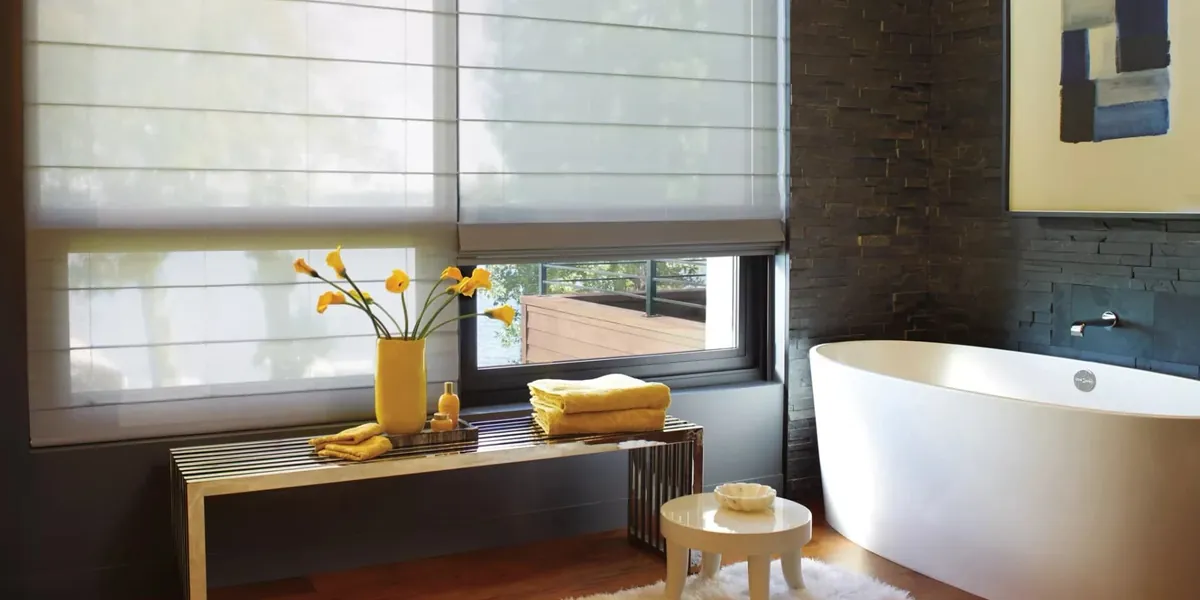
Kitchens and baths at the back of the house
In both the capes and the ranches, the kitchen usually sits at the back, looking over the garden, with a window above the sink. It is one of the most used windows in the house and one of the hardest to reach, because you are leaning over a counter to get to it. A roman shade there needs to be easy to raise and compact when it is up, so it does not hang into the view while you are washing up.
Vignette suits that window well. The raised shade tucks its fold into the headrail, and a cordless lift means you only need to reach the bottom rail. A light fabric keeps the kitchen bright, which matters on a wooded lot where the back garden may be shaded for much of the day.
Bathrooms ask for privacy without darkness. A sheer or light-filtering fabric lets daylight in while blurring the view from outside, and an inside mount keeps the shade close to the glass. In a newer colonial with a larger primary bathroom, a lined shade can give full privacy in the evening, with the fabric chosen to suit a room that sees steam every day.
Inside mount or outside mount
With standard modern openings, an inside mount is usually the first choice. The headrail sits within the window frame, the shade hangs inside the opening and the trim around the window stays fully visible. It is the neatest look and it suits most rooms in a cape, a ranch or a colonial.
An outside mount fixes the headrail above the window, on the casing or the wall, and the shade covers the whole opening including the trim. There are good reasons to choose it:
- the frame is too shallow for the headrail, or a window crank or lock is in the way;
- you want the window to look taller, by mounting the shade higher than the frame;
- you want the room darker, because an outside mount blocks the light gaps at the sides;
- the shade needs to clear the window entirely when raised, to keep every bit of glass open.
We look at each window and recommend one or the other, and we will explain why.
Choosing fabric for a Hanover room
Fabric is where a roman shade becomes yours, and it is the part most people enjoy. A few things are worth keeping in mind.
Light. On a wooded lot much of the daylight arrives already softened by the trees, so rooms can feel dimmer than you expect, particularly in summer. A light-colored, unlined fabric keeps those rooms bright. Rooms that face open lawn and take full sun can handle a darker color or a lined shade.
Pattern. A flat fold lets a pattern read clearly when the shade is down. A folded style hides part of a pattern in its loops, so it suits solids and textures better. On a small dormer window, keep the pattern small; save a bold print for a big window where it has room.
Texture. A linen, a slub cotton or a woven fabric gives a plain color depth, and it works on any size of window.
Color from outside. The back of the shade, or its lining, is what the street sees. A shared lining color on every front window keeps the house looking even.
At the visit we drape the actual fabric against your window, so you are judging it at full size in your own light. If a room gets strong afternoon sun, our page on choosing fabric for a sunny room has more ideas.

What to expect when we visit
We do our planning in your house, because that is the only place a fabric can be judged in the light it will live in. Our vans carry the samples, so we can bring the showroom to you.
- Book online with Request a Consultation, or use the call button, and pick a time.
- We bring Vignette and Carole Fabrics samples, linings and lift options to your door.
- Together we go room by room, talking about light, privacy and how each room is used.
- You try fabrics at the windows, so you see them against your own walls and furniture.
- We measure each window and confirm the mount.
- You receive a free estimate, with time to think it over.
If you want a second opinion on color or how the shades work with the rest of the room, ask about an interior design consultation at the same visit. You can also read what happens at an in-home consultation beforehand.
Seasons on a wooded lot
Trees change a room through the year. In summer the leaves filter the light and the house stays cool and green inside. In late autumn the leaves drop and suddenly the low sun reaches straight across the floor, onto the sofa and the television, for most of the winter.
Roman shades handle that change well. In summer you can leave them raised to make the most of a softer light. In winter, lowering a lined shade part way cuts the glare from the low sun while keeping the top of the window open to the sky. A shade with a privacy or room-darkening lining also adds a layer between the glass and the room on a cold evening.
If you want the shades to follow the seasons without thinking about it, PowerView can set different schedules for different rooms. Our guide on how motorized shades are controlled explains the remote, the app and schedules.
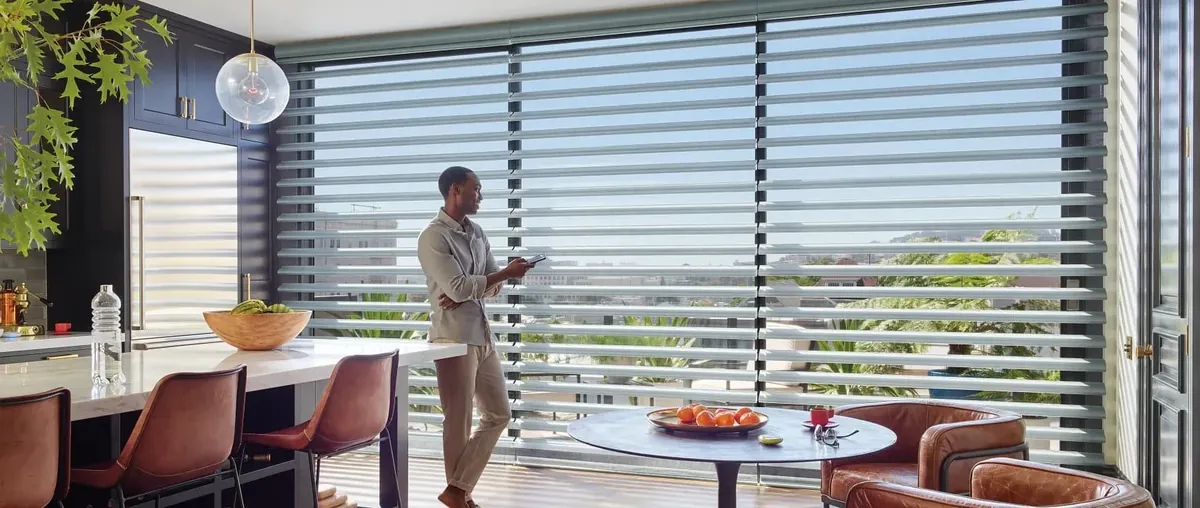
Lifting a roman shade
There are three common ways to raise a roman shade, and the right one depends on the window and who uses the room.
A cordless lift has nothing hanging at the side. You push the bottom rail up or pull it down and it stays put. It is our usual suggestion for bedrooms, playrooms and any window a child or pet can reach.
A continuous cord loop suits a wide, heavy shade, such as a lined shade on a ranch picture window. The loop is held taut by a tensioner on the wall or frame, so it does not dangle.
PowerView motorization lifts the shade for you, from a remote, the app or a schedule. It is the answer for a window over the stairs, behind a sofa or anywhere hard to reach, and we plan how each motor is powered at the visit.
Most houses end up with a mix. A cape might have cordless shades in the bedrooms, a cord loop on a wide living room window and one motorized shade over the stairs. A ranch might stay cordless throughout, because almost every window is within easy reach. There is no need to choose one system for the whole house; each window gets the lift that suits it.
When the shades are made, our certified Hunter Douglas installers fit them, level each headrail and test every lift with you. Our page on what happens on installation day explains the steps.
Looking after the fabric
Roman shades are made from real fabric, and like any fabric they collect a little dust over time. Regular light dusting with a soft brush or a vacuum on a gentle setting keeps them looking fresh, and most marks can be dealt with by blotting gently rather than rubbing. Lined shades protect the face fabric from the sun on bright windows, which helps color last. Our page on caring for fabric shades covers it in more detail, and if a lift ever stops working as it should, we repair blinds and shades as well as fitting them. Planned properly, roman shades in Hanover rooms simply become part of the house.
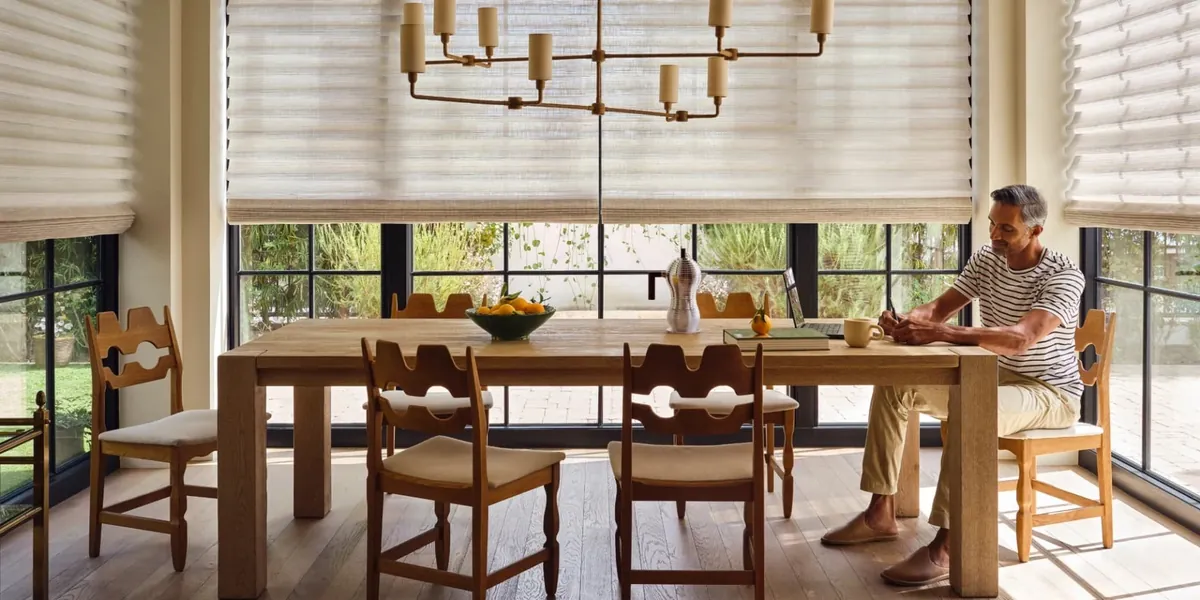
A Gallery dealer for the whole house
Blinds & Designs is a Hunter Douglas Gallery dealer, the designation Hunter Douglas gives dealers who meet its standards. That gives you one place for the full range: every Vignette and Carole Fabrics option, Alustra Woven Textures, and Hunter Douglas blinds, shutters, cellular and roller shades for the rooms where they fit better.
Our installers are certified by Hunter Douglas, and the same company handles blind and shade repairs if anything needs attention later. If you are planning more than roman shades in Hanover, see every service we offer in town on our Hanover page, or the full roman shades family.
Our nearest showroom
The Sagamore showroom is the closest of our showrooms to Hanover. You are welcome to call in during its weekday hours, or at the weekend by appointment, if you would like to talk through ideas before we come to the house.
Hanover questions, answered
My cape has short dormer windows upstairs. Will a roman shade take up too much of the glass?
Not if it is planned for the window. A Vignette shade rolls its fold into the headrail, and a lighter Carole fabric makes a smaller stack. We show you how much glass each one leaves clear before you choose.
Can one roman shade cover our ranch picture window?
Sometimes, but a very wide shade gets heavy and its folds can sag. We often split a picture window into two or three matched shades that line up and can be raised together or separately.
Are inside mounts possible on our windows?
On most standard modern openings, yes. We check the depth at each window and look for cranks or locks in the way. Where an inside mount will not work cleanly, we suggest an outside mount instead.
Which lift is safest with young children?
A cordless lift, because there is nothing hanging at the side of the window. PowerView motorization is another cord-free option, controlled from a remote or the app.
Is there a charge for the estimate?
No. The estimate is free. We measure your windows at the consultation and give you a free estimate for the roman shades you are considering.
Ready when you are
The best way to choose roman shades in Hanover, MA, is to see the fabrics at your own windows, in your own light. Request a consultation and we will bring the samples to you, measure every window and give you a free estimate. Prefer to talk first? Use the call button, or visit the Sagamore showroom.