
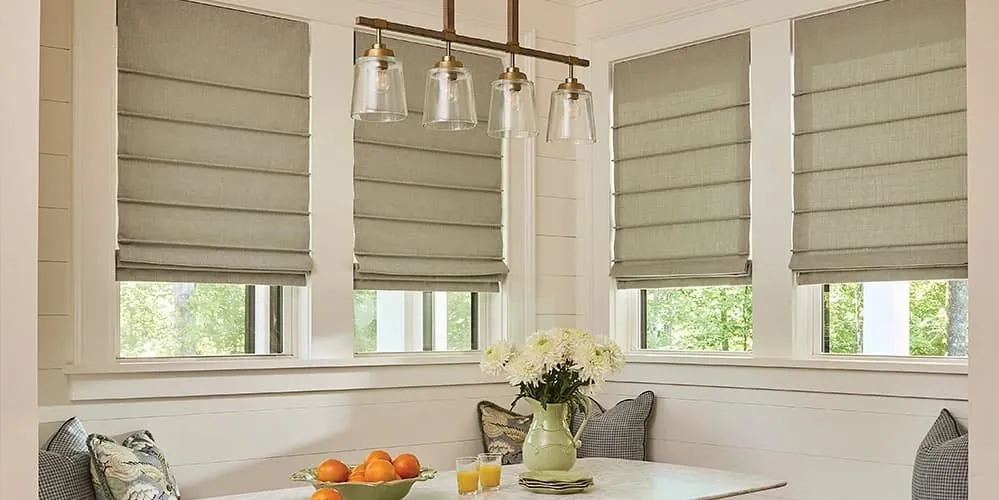
Small, tall openings in a tightly built village
The company houses of the Draper mill village were laid out close together, and most of them still have their original narrow sash: openings that are small across and tall from sill to head. When we plan roman shades in Hopedale, MA, that shape drives almost every choice. A shade on a slim opening has to look like it belongs there, sit neatly inside a frame that may be only a little wider than a hand span, and fold away without swallowing what little glass the window has.
Because the village houses stand only a short gap apart, a window on one side of a house often faces a window on the next. Fabric that softens the view across that gap, while still letting daylight into a small room, is usually the goal.
Around Hopedale Pond the picture changes. The larger houses there have wider rooms and more glass, and many of their windows look toward the water, so the shade has to frame a view rather than block one.
Two lines, two styles, made for your openings
Every Hopedale window is measured on its own and the shade is made to that size. These are the choices we bring to the house.
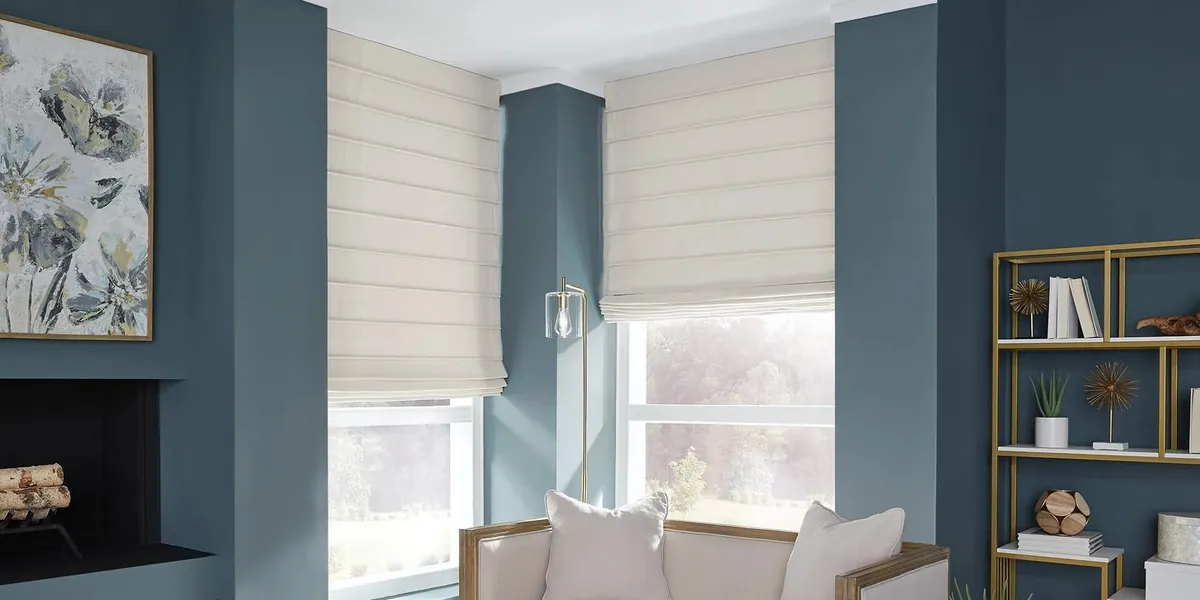
Vignette roman shades
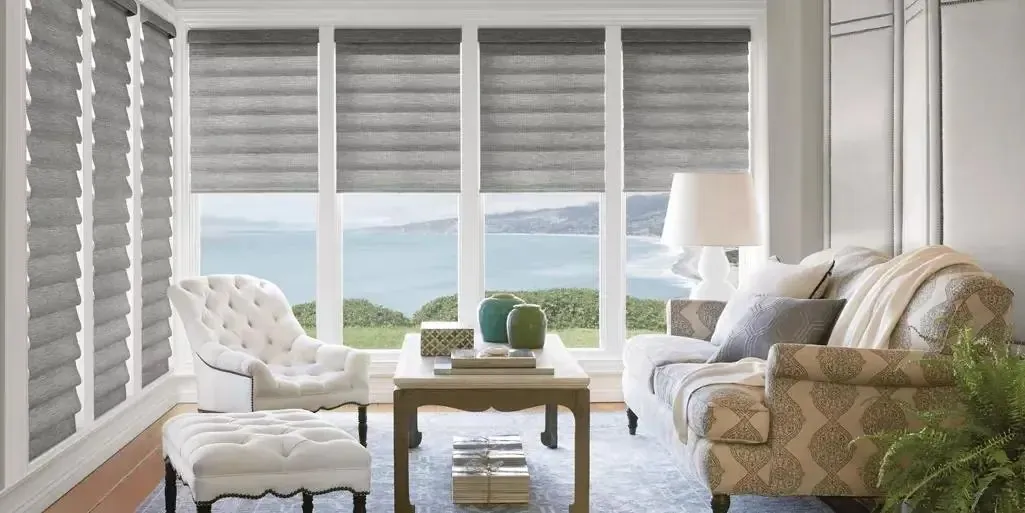
The Hunter Douglas roman line, offered in flat and folded styles. Its neat lines suit the small, upright windows of a village house.
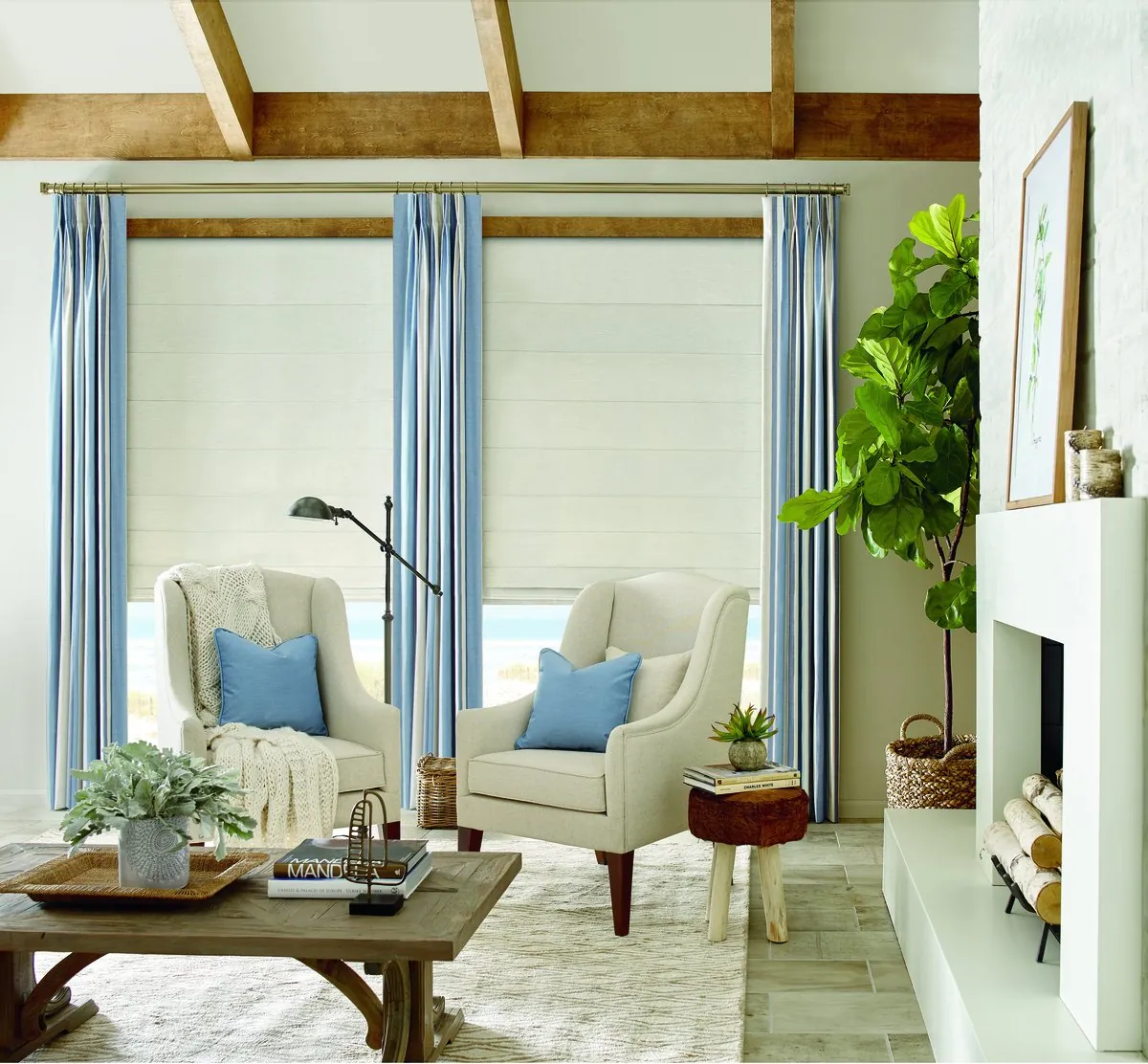
Carole Fabrics roman shades
Fabric roman shades from Carole, also in flat and folded styles, with plenty of color and pattern to work with in a larger room by the pond.
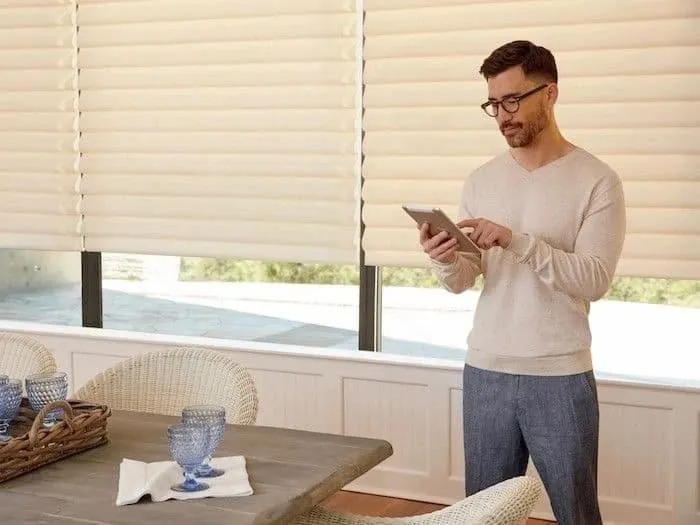
PowerView control
Raise and lower a shade from a remote or the app, or set it on a schedule. Useful on the wide windows facing the water.
The narrow sash of the mill village
A small opening asks more of a shade than a big one. On a wide window, a few extra inches of folded fabric at the top hardly show. On a slim sash, that same fold can take a real share of the glass, so the way the shade stacks when it is raised matters a great deal.
There are two simple ways to keep the glass clear. The first is to choose a flat style, which gathers into crisp, tidy pleats, so the raised shade sits compactly at the head of the window. The second is to set the headrail a little above the frame rather than inside it. The fabric then stacks over the wall, the whole pane is free when the shade is up, and the window looks a touch taller than it is. On a village house with low ceilings, that small lift can make a room feel less boxed in.
Inside mounting has its own appeal on original sash. A shade fitted inside the frame leaves the old trim on show, which many owners of these houses want to keep in view. We look at the depth of each frame before we suggest one or the other, because a shallow frame or a sash lock in the way can decide the matter.
Matching also counts. A village house might have four or five of these openings on one face, and from the street they read as a row. When the shades on that face share one fabric and stop at one height, the house looks settled and calm.
When the next house is a short step away
The mill housing was built for people who walked to work, and the lots show it. Side windows face side windows. A kitchen may look straight into the neighbor’s pantry, and a bedroom may sit level with a bedroom across the way.
A roman shade handles this well because it covers the whole opening in one piece of fabric, with no slats to tilt and no gaps across the middle. The question to settle is how much you want to see through it. A lighter fabric lets in plenty of daylight and turns the house next door into a soft blur during the day. A heavier or darker fabric closes the window off more completely, which suits a bedroom.
Many village owners use both: lighter fabric on the kitchen and stair windows, where daylight is scarce, and a more solid fabric in the bedrooms. We bring both kinds to the visit so you can hold each one up to the glass and see the house next door through it, or not, before you choose.
On a window where the gap to the neighbor is very small, an outside mount that overlaps the frame a little closes off the thin strip of light down each side. It is a small detail, but on a close-set street it is often the one people notice.
Kitchens, stairs and back rooms
The rooms at the back of a company house tend to be the smallest and the darkest, because the house next door is close behind or beside them. A kitchen window over the sink, a narrow window on the stair, a back bedroom tucked under the roof: these are the places where every bit of daylight counts.
For roman shades in Hopedale kitchens, we usually suggest a lighter fabric that can stay lowered for most of the day. It hides the view across the gap but still glows with light, so the room does not feel shut in. A shade over a sink needs to be easy to reach, so we look at how far you have to lean before we settle the size and mount.
A stair window is often the hardest one in the house to reach, sitting halfway up a flight with the banister in the way. It is a natural place for a PowerView shade, which you can move from the bottom of the stairs with a remote. The back bedrooms, with their small windows set close to the eaves, often suit a darker fabric so the room stays dim in the early morning.
Houses around Hopedale Pond
The larger houses near the pond were built with bigger rooms and more generous windows, and the water is the reason many of those windows are there. Privacy is rarely the first concern on that side. Light is.
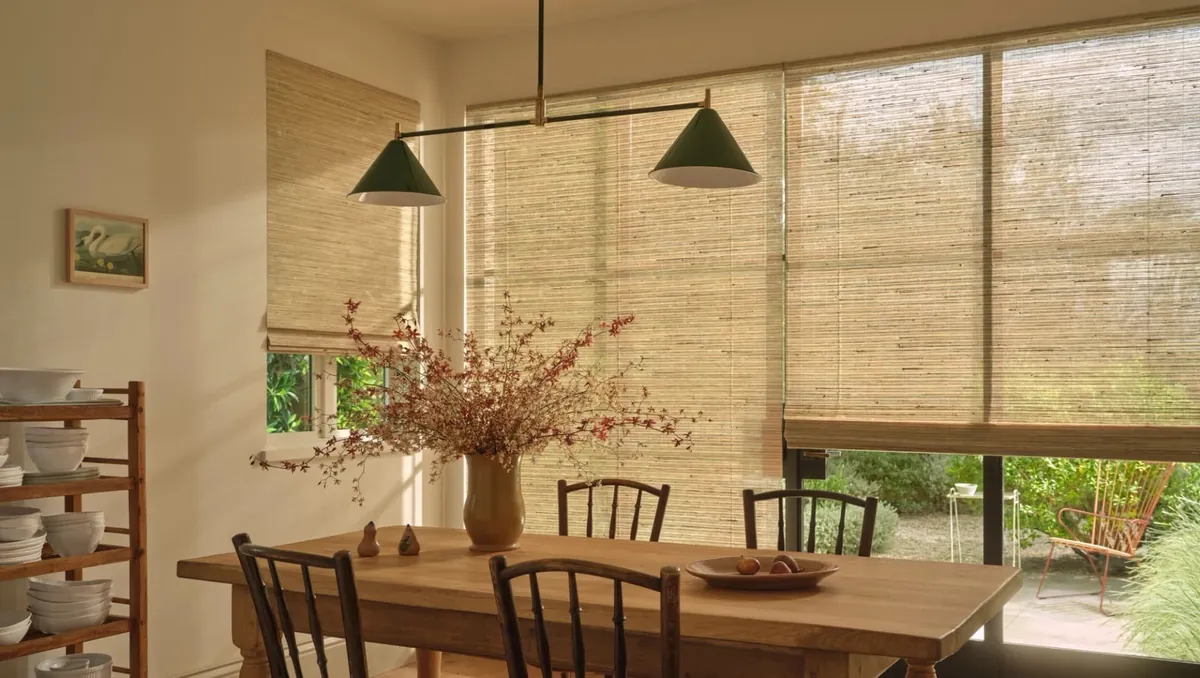
A lake or pond throws a lot of brightness back into a room, especially when the sun is low. A roman shade lowered partway takes the edge off that glare while leaving the lower part of the view open. Raised fully, it disappears into a neat band at the top and the window is all water and sky again.
Wider windows also open up the choice of style. A folded style, with soft fabric loops that stay visible even when the shade is down, looks relaxed and generous across a broad opening and suits a living room or a sunroom facing the water. Where a room has several windows side by side, separate shades on each one, set to line up, are easier to raise than one very wide shade and keep the folds even.
For roman shades in Hopedale near the pond, color is worth extra thought, because the view will be framed by whatever you choose. Some owners keep the fabric quiet so the water stays the focus. Others use the shade to bring a deeper color into a pale room. Our consultants carry Vignette and Carole Fabrics samples in a wide range so you can test both ideas against your own outlook.
Flat style or folded style in a village house
Both Vignette and Carole Fabrics roman shades come in flat and folded styles, and the choice changes how a room feels.
- Flat style: the fabric hangs smooth when the shade is down, so a print or a weave shows cleanly, and it folds into tidy pleats as it rises. It is the usual pick for small mill-village openings because it stacks neatly.
- Folded style: soft loops of fabric remain even with the shade lowered, which gives a fuller, more relaxed look. It shines on the wider windows near the pond and in bedrooms where a softer feel is welcome.
In a small company house, a flat style in a plain or lightly textured fabric keeps the rooms feeling open. A folded style can still work, especially on one feature window such as a front parlor, but on a run of narrow sash the flat style is easier on the eye.
If you are unsure, we hang both styles at the same window during the visit. Seeing the two side by side on your own sash settles it faster than any picture.
Color and pattern in a small room
A small room with a narrow window can carry a bold fabric, but it changes the feel of the space more than it would in a large one. A strong pattern on a flat style shade becomes the main thing you see when the shade is down, almost like a piece of art in the window. A plain or softly textured fabric does the opposite and lets the walls and furniture lead.
Think about the outside view of the house as well. On a village street where the houses stand close, the back of every shade faces the street or the neighbor, and the fronts of several houses are seen together. Keeping the street-facing shades in one quiet color helps your house sit comfortably in the row, while the rooms at the back can take any color you like.
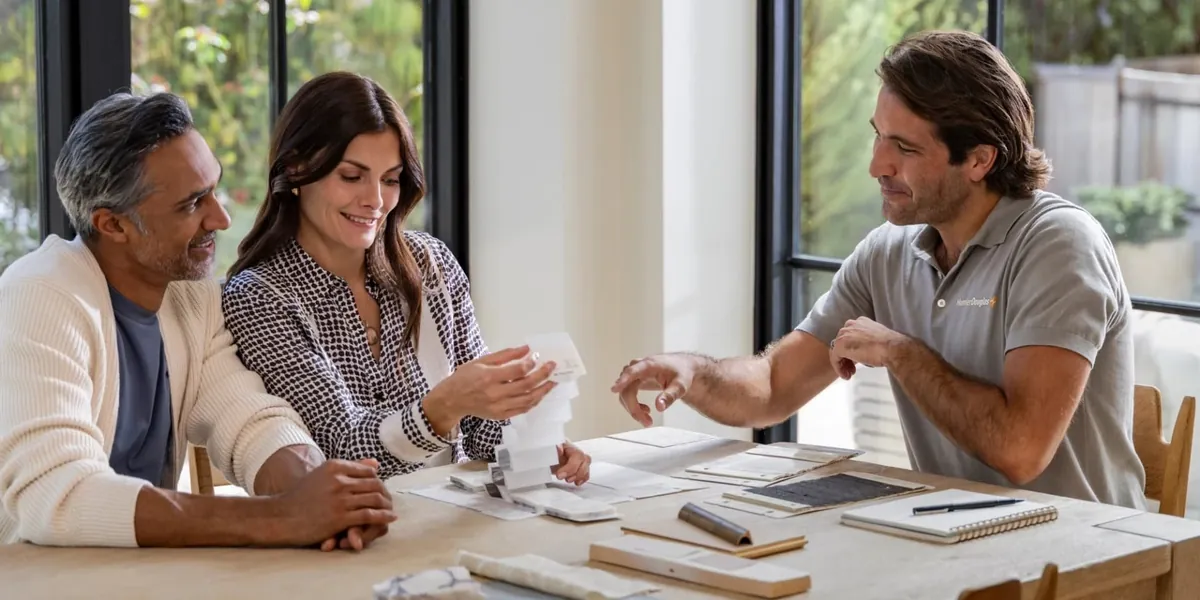
When we visit, we hold the fabrics up in the actual room, in the light you live with, so you can see how a color reads on a small window before you commit. Many people change their minds once they see a sample against their own walls, and that is exactly why we bring them.
How a home visit goes
Most Hopedale customers choose to see the fabrics at home, because the light inside a close-set village house or a bright room by the water is hard to picture anywhere else. Our vans carry the samples, so we can bring the showroom to you.
- Ask for a visit through Request a Consultation, or use the call button, and pick a day that suits you.
- A consultant arrives with Vignette and Carole Fabrics samples in flat and folded styles.
- You walk through the rooms together, looking at each window from inside, and from outside where privacy matters.
- Fabrics are held up at the glass so you can judge color, light and privacy in your own rooms.
- Every opening is measured, including the frame depth, and any lock or old hardware is noted.
- You receive a free estimate and decide in your own time.
If you would like help with color and pattern for a whole room, an interior design consultation can be part of the same visit. For roman shades in Hopedale, MA, this one visit is usually all it takes to settle the plan. Our page on what happens at an in-home consultation goes into more detail.

Measuring old sash in a mill house
The original windows in the village have been opened and closed for a very long time, and frames that look square often are not. One side can lean, a sill can dip, and a stop can carry many coats of paint.
We measure each opening at the top, middle and bottom for width and at both sides and the center for height, then check how deep the frame is where the headrail will sit. On a small window, a difference of a fraction of an inch matters, because there is less room to hide it. If a frame is too far out of square for a shade to hang cleanly inside it, we suggest an outside mount on the face of the trim instead.
Installation is carried out by certified Hunter Douglas installers. They fix each headrail level, even when the frame around it is not, and run every shade up and down until the folds sit evenly. You can read about the day itself in what happens on installation day.
Before they leave, the installers show you how each shade raises and lowers, and on a PowerView shade how the remote and the app control it. If a frame turned out to need a small adjustment to take the brackets, they explain what was done and why.
Buying from a Hunter Douglas Gallery dealer
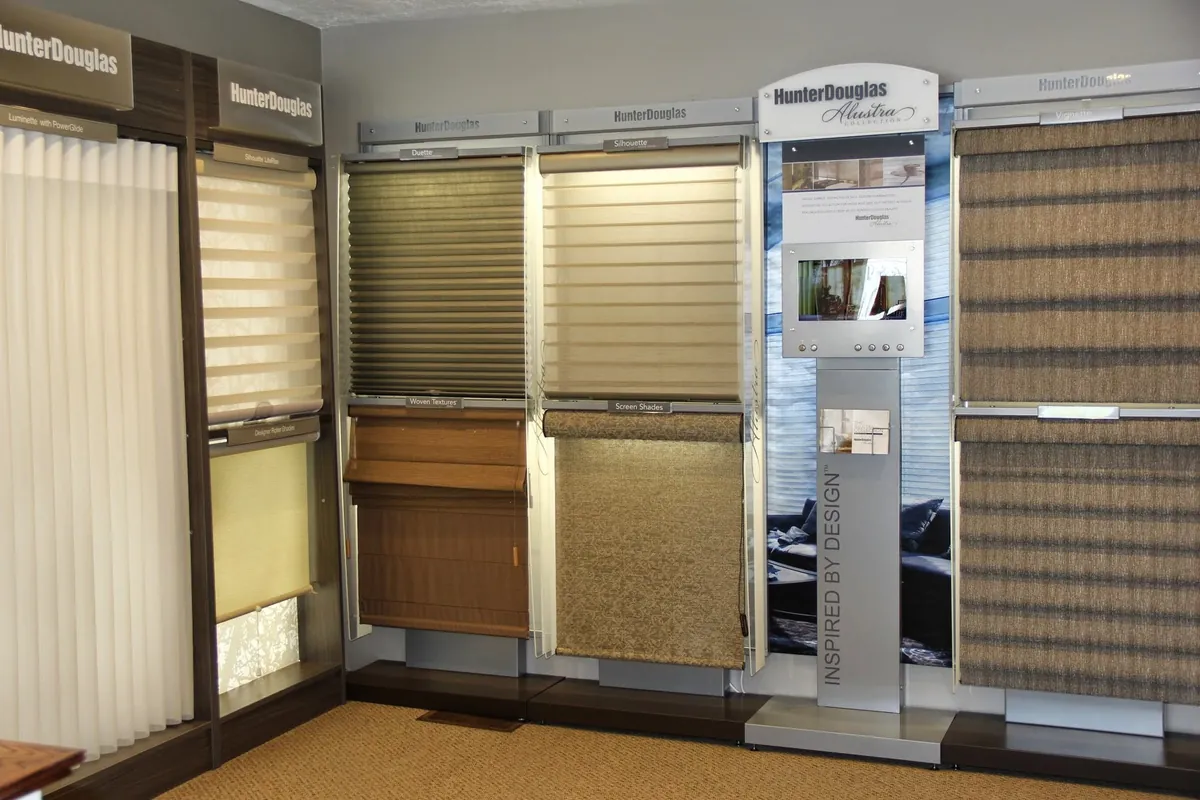
Blinds & Designs is a Hunter Douglas Gallery dealer, and our installers carry Hunter Douglas certification. For a Hopedale house that means the full Vignette and Carole Fabrics range is open to you, with the measuring and fitting handled by the same business that sold you the shades.
Because we carry the wider Hunter Douglas range too, a room that would be better served by another kind of shade, such as honeycomb shades for a cold bedroom or shutters on a bathroom window, can be planned at the same visit. We also repair blinds and shades you already own, which helps when one old shade in a set has given out.
To see everything we offer in town, visit our Hopedale page, or browse the full roman shades range.
PowerView on the pond side
A broad window facing the water is often the one that needs adjusting most, as the sun moves across the pond through the day. PowerView motorization lets you raise and lower the shade from a remote or the app, and set schedules so it lowers when the afternoon glare starts and lifts again later.
In the village houses, motorization earns its place on a hard-to-reach window, such as one over a stair or behind a deep piece of furniture. We plan how each motor will be powered at the visit, window by window.
If more than one room is involved, motorized shades can be grouped so a single command moves several at once. Our motorized blinds in Hopedale page covers the wider choice of motorized products in town.
Questions from Hopedale
Our village house has very narrow windows. Will a roman shade look too bulky?
Not when it is sized and styled for the opening. A flat style stacks neatly, and setting the headrail just above the frame lets the fabric fold over the wall so the glass stays clear when the shade is raised.
Can a roman shade keep the original trim on show?
Yes. An inside mount fits the shade within the frame, so the old casing stays visible. We check the frame depth first, because a shallow frame or a sash lock can make an outside mount the better choice.
We face the pond. How do we cut glare without losing the view?
Lower the shade partway when the sun is bright on the water and leave the lower glass open. A PowerView shade can do this on a schedule.
Should every window on the house match?
On a village house where several narrow windows sit on one face, matching fabric and a matching stopping height make the house look orderly from the street. Inside, different rooms can still take different fabrics.
What does the estimate cost?
Nothing. Once your windows are measured, the estimate is free.
Ready when you are
The simplest way to choose roman shades in Hopedale, MA, is with the fabric in your hand and your own window in front of you. Request a consultation and a consultant will bring Vignette and Carole Fabrics samples to the house, measure every opening and leave a free estimate. If you would rather talk it over first, use the call button, or stop in at our Franklin showroom.