
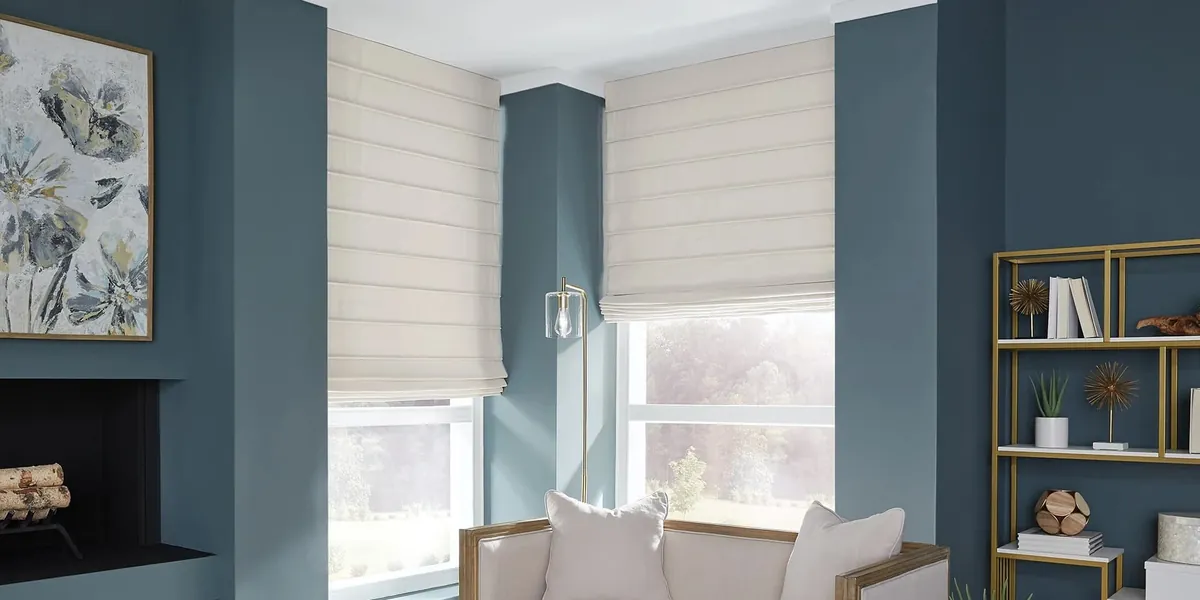
Open land, deep frames and full sun
Along Main Street and Hartford Avenue, the antique colonials and farmhouses sit on very large lots, often with open fields or lawn on every side. That openness is lovely to look out on, but it also means nothing stands between the windows and the sun: no close neighbor, no row of houses, often no tall trees right beside the walls. Light pours in, from morning to evening, depending on which way a room faces.
That is the main reason people ask us about roman shades in Mendon, MA. A roman shade can be lowered a little or a lot, so it tames strong light without turning a room dark, and it folds up out of the way when you want the full view across the land.
The antique houses add a second reason. Their small sash sit deep in thick walls, and that deep frame is a gift for a roman shade, which can tuck right inside it and leave the old trim untouched.
What we offer for Mendon windows
We bring every one of these to your house as samples, so you can see each one at your own windows before you decide.
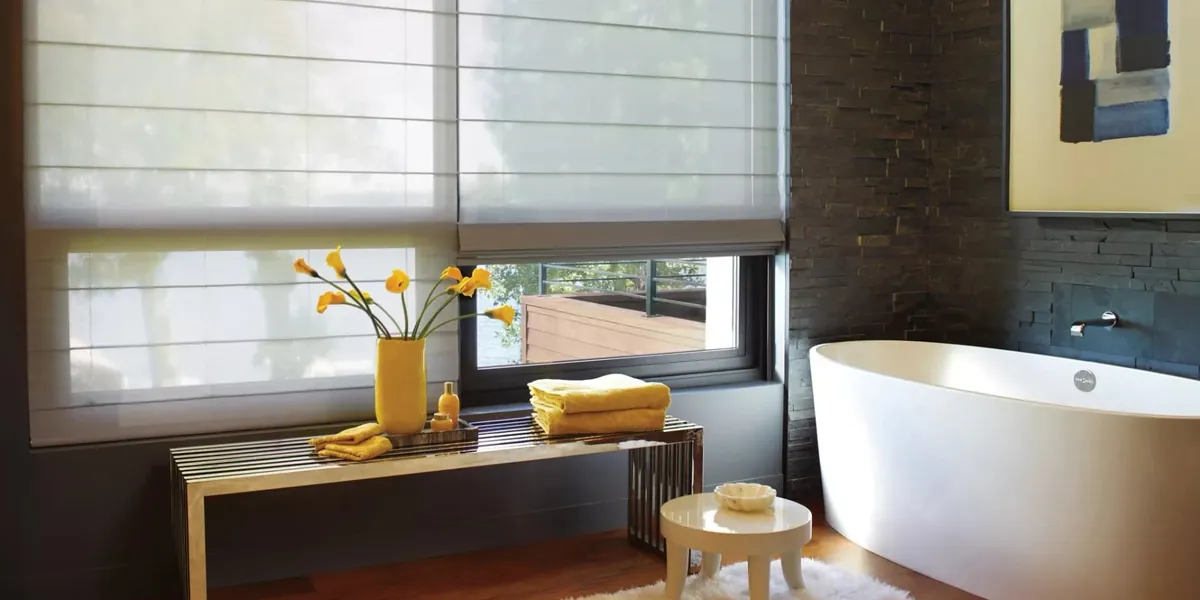
Vignette, flat or folded
Hunter Douglas Vignette roman shades in both styles. A clean choice for the newer houses scattered between the old farms.
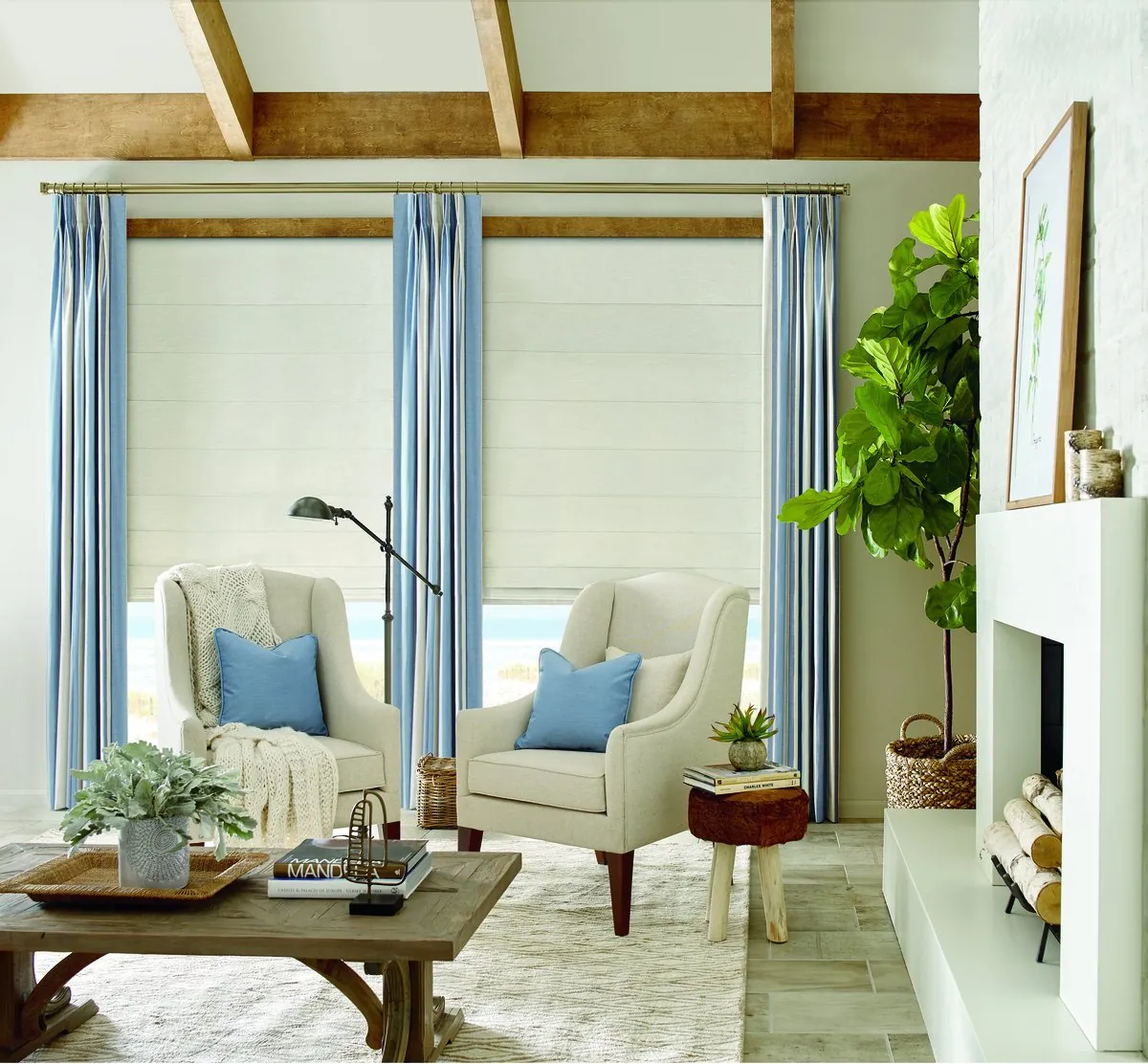
Carole Fabrics, flat or folded
Fabric roman shades from Carole in both styles, with colors and patterns that sit well in an antique parlor or dining room.
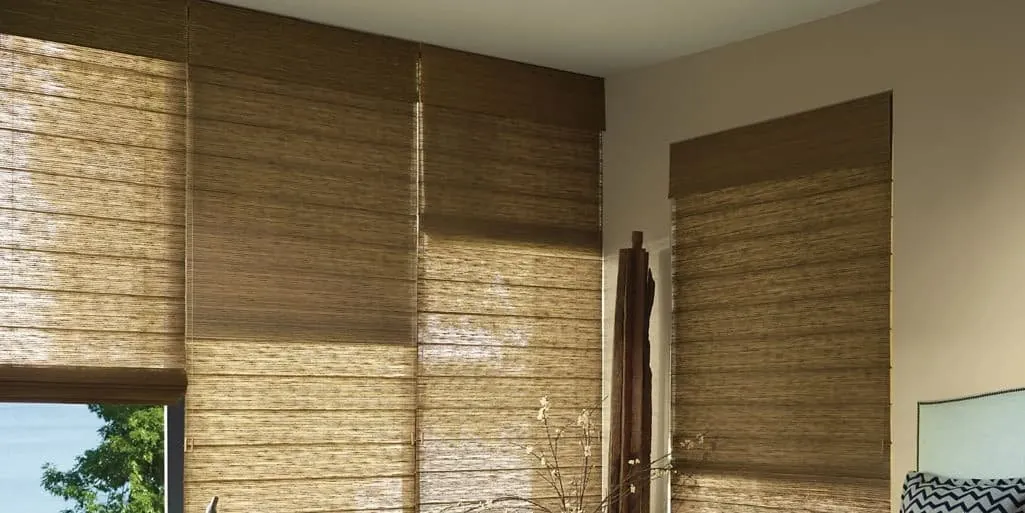
Light you can dial in
A roman shade stops at any height, so you can block the high sun and keep the view of the fields along the bottom of the glass.
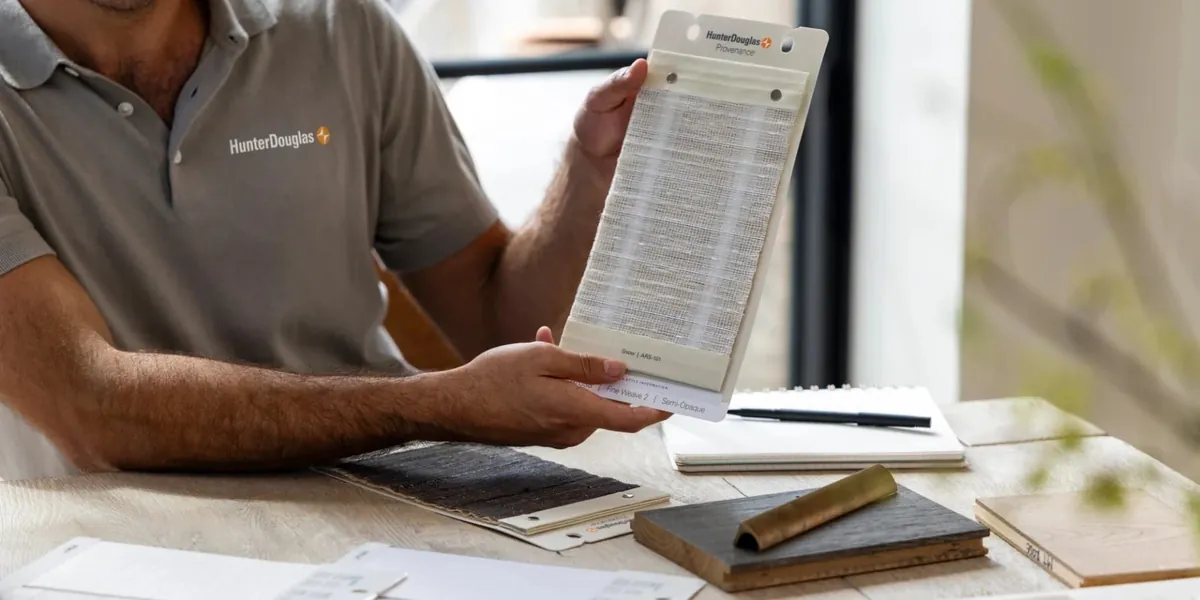
Samples at your window
Our vans carry the samples, so the choosing happens in your own rooms and your own light.
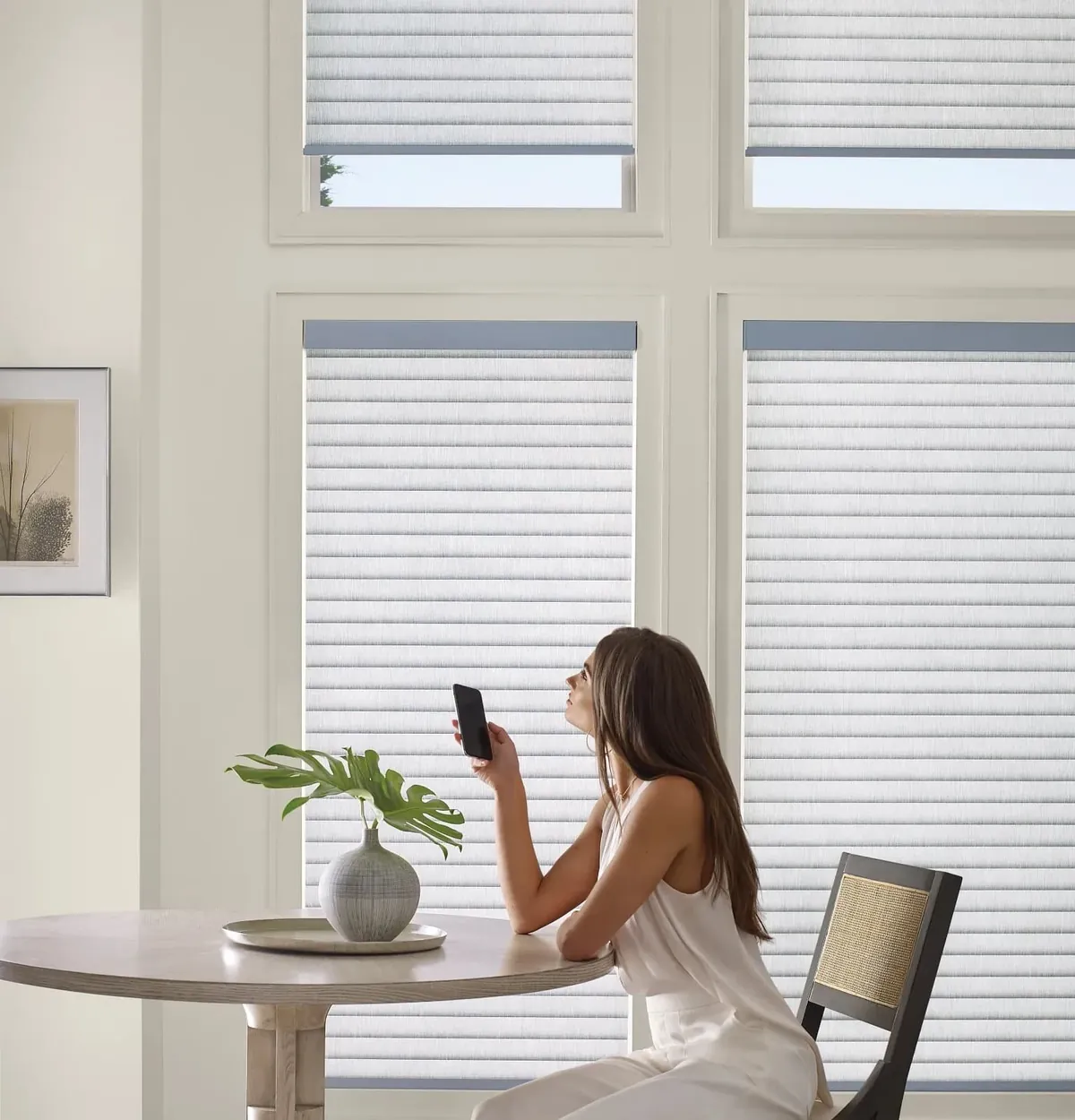
PowerView schedules
Set shades to lower as the afternoon sun swings round and lift again later, from the app or a remote.

A free estimate
Every window measured, every option priced in writing, and the estimate costs you nothing.
Sun on every side of the house
On a big open lot the sun is not just a problem on one wall. East rooms catch the morning, south rooms carry it through the middle of the day, and west rooms get the low, hard light of late afternoon, which reaches deep into the house. In a farmhouse kitchen or a sitting room that faces west, that late glare can be the moment of the day when you most want a shade.
The easiest way to plan is room by room, starting with the way each one faces. An east bedroom wants a shade that can block the early light. A west sitting room wants one that can come down partway at the end of the day, leaving the lower glass clear so you still see out. A north room, which gets gentle light all day, may hardly need its shade lowered at all except at night.
Fabric weight follows from that. A lighter fabric filters the sun and keeps a room bright, which suits a kitchen or a family room you use all day. A heavier fabric darkens the room further and suits a bedroom. We bring both weights in Vignette and Carole Fabrics so you can try them in the actual room, at the time of day that matters.
Deep frames in the antique houses
Old walls in Mendon’s colonials and farmhouses are thick, and the small sash sit well back from the room. That depth gives a roman shade plenty of space to sit inside the frame, close to the glass, with the headrail hidden and the original casing fully on show.
An inside mount like that has several benefits on an antique house. The shade lines up neatly with the sash rather than sitting on the wall. The wide old trim, often one of the best features of the room, stays visible. And the deep sill below is left free, which matters if you like to keep plants or a lamp there.
The catch with very small sash is the stack. When a roman shade rises, its fabric gathers at the top, and on a short window that fold can take up a fair share of the glass. A flat style stacks most compactly. If even that feels like too much on a tiny window, we can move the headrail up to the wall above the frame, so the raised shade rests over plaster rather than glass. On an antique house, we talk this through window by window, because the right answer depends on the trim and on how much glass each window has.
Corner rooms with two exposures
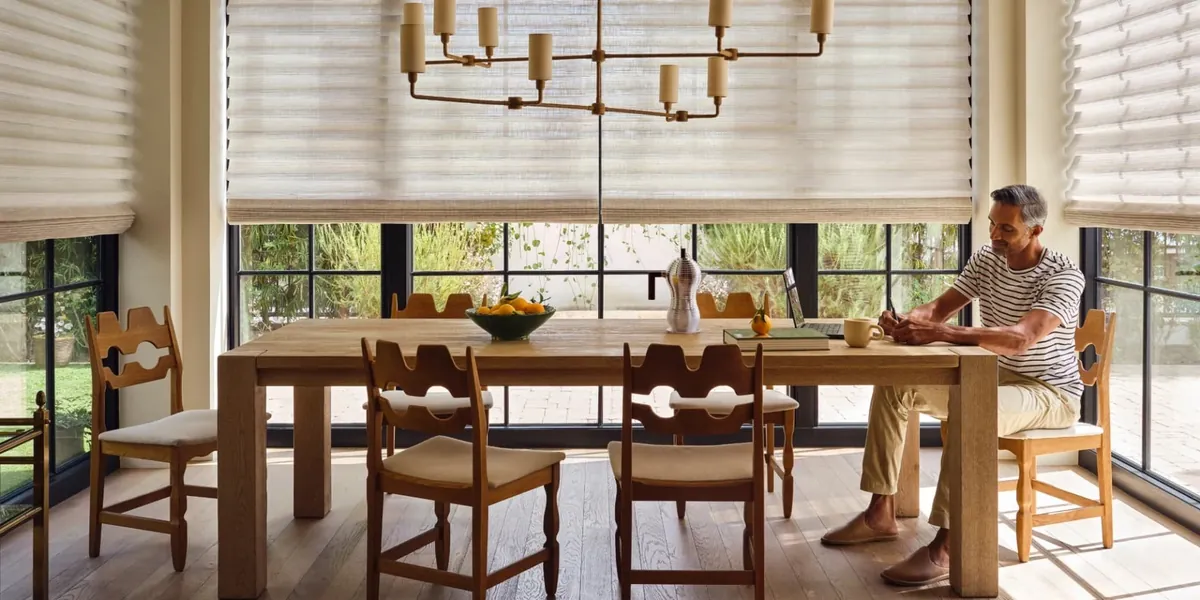
Plenty of old farmhouses have corner rooms with windows on two walls, and on an open lot those two walls can face very different skies. A front parlor might take the morning sun through its east windows and the full afternoon through its south ones. A dining room at the back corner might catch the evening light from the west and the cooler northern light at the same time.
Those rooms are where roman shades in Mendon earn their keep, because each window can be set on its own. You might lower the south shades halfway through the middle of the day while the east shades stay up, then reverse that the next morning. Matching fabric on both walls keeps the room looking calm, even when the shades sit at different heights.
If the room is one you use a lot, such as a family sitting room, PowerView can group the shades on each wall so a single tap moves just the sunny side. We plan how each motor will be powered when we visit, since an antique wall is not like a new one.
Privacy when the house is the only light for miles
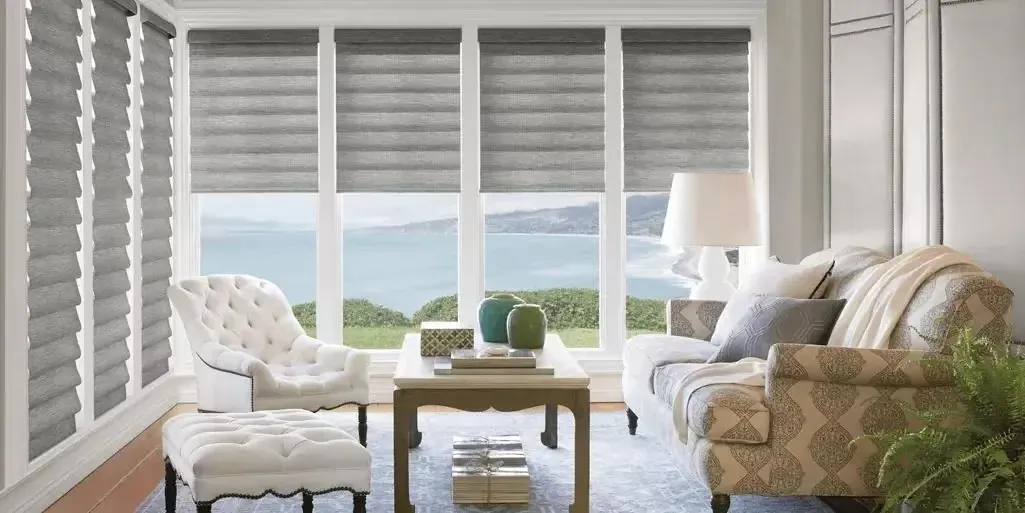
You might think privacy is not a concern on a big lot, and during the day it rarely is. At night, though, a house standing alone in the dark is easy to see into from the road, because every lit window glows across the open ground. Along Main Street and Hartford Avenue, some of the old houses sit fairly close to the road, which makes the front rooms even more visible after dusk.
A roman shade fixes that simply. Lowered in the evening, it closes the window in one even panel. For front rooms that face the road, a heavier fabric hides the room completely. For side and back rooms that face only fields, a lighter fabric that softens the view may be all you need, even at night.
This is also where PowerView can help. Shades can be set to lower at a time you choose each evening, so the front of the house is closed up whether you are home or not, and lift again in the morning.
The newer houses between the farms
Mendon’s newer houses, scattered between the older properties, have larger, standard-sized windows and more open rooms than the antique homes. The sun is just as strong on them, because they share the same open land, but the shades are easier to plan because the openings are regular.
A newer colonial or a contemporary house can carry one style through every room: the same Vignette flat style throughout, for example, with lighter fabric downstairs and darker fabric in the bedrooms. A big family room with a wide window or a set of windows in a row looks best with separate shades that line up, rather than one oversized shade, because each one is easier to raise and the folds stay even.
Some owners of newer houses like a folded style in one or two rooms for a softer look, such as a primary bedroom or a dining room, while keeping the flat style elsewhere. That mix works well and still looks consistent from outside if the fabric colors are kept in the same family. If a bedroom also needs extra warmth in winter, our cellular shades in Mendon page covers honeycomb shades, which we can plan at the same visit.
Choosing between flat and folded
Both of our roman lines, Vignette and Carole Fabrics, come in flat and folded styles. The difference is easiest to understand with the shade lowered.
A flat style hangs smooth when it is down. It shows off a pattern or a woven texture cleanly, and it gathers into neat horizontal pleats as it rises. On small antique sash, where the stack needs to stay compact, it is usually our first suggestion.
A folded style keeps soft loops of fabric across its face even when it is fully lowered. It looks fuller and more relaxed, and it suits a larger window, a bedroom, or a formal room where you want the shade itself to be a feature.
In an antique Mendon house with deep window frames, a folded style can look especially handsome in a front parlor, where the rounded folds sit inside the deep opening like a framed picture. In the kitchen or the mudroom, a flat style in a practical fabric is usually the better fit. Mixing the two in one house is perfectly normal.
Roman shades in Mendon, MA, room by room
Here is how the choice often falls out in the houses we visit, though every house is different.
- Front rooms facing Main Street or Hartford Avenue: heavier fabric, lowered at night for privacy, often in a flat style to keep the deep sash tidy.
- West-facing sitting rooms: lighter fabric, lowered partway in late afternoon to cut glare, possibly on a PowerView schedule.
- Farmhouse kitchens: light, practical fabric in a flat style that stacks neatly above the sink.
- Bedrooms: heavier fabric to keep the room dark at sunrise, in a flat or folded style.
- Newer family rooms: separate shades lined up across a run of windows, in the same fabric.
We use a list like this as a starting point at the consultation, then adjust it once we have seen how the light actually falls in each of your rooms.
Fabric against old plaster and wide trim
Antique rooms have their own palette: painted plaster that is rarely perfectly white, wide trim with layers of paint, and wood floors that have mellowed over the years. A fabric that looks crisp on a sample card can feel too bright, or too cold, once it is hung against an old wall.
That is why we suggest choosing color in the room itself. Warm creams and soft natural tones tend to sit easily in an old colonial, while a stronger color or a pattern can work beautifully on one feature window, such as a dining room or a parlor, if the rest of the room is quiet. In the newer houses, with brighter white walls and larger openings, cooler grays and crisp whites often feel more at home. Whatever you lean toward, roman shades in Mendon, MA, are easiest to get right when the sample is hanging against your own trim.
What happens at the consultation
Because the light on an open lot changes so much through the day, it pays to see fabrics in your own rooms. Our consultants bring the samples to you.
- Book through Request a Consultation, or press the call button, and choose a day.
- The consultant arrives with Vignette and Carole Fabrics samples in both styles and a range of fabric weights.
- You walk the house together, room by room, talking about which way each window faces and when the sun is a problem.
- Samples go up against the glass so you can see how each fabric handles your light.
- Every opening is measured, with the depth of each deep frame noted for an inside mount.
- A free estimate follows, and you decide when you are ready.
An interior design consultation can be part of the same visit if you are thinking about color across several rooms. For more detail, see what happens at an in-home consultation.
Measuring an antique house
Old frames move. A sash that has swollen and shrunk through many New England winters may be wider at the bottom than the top, a sill may slope, and the depth of the frame can vary from one side to the other. On deep-set windows, the depth matters most, because an inside mount relies on a flat surface at the head of the frame to fix the headrail.
We measure every window at several points across its width and height, check the depth wherever the headrail would go, and note anything in the way, such as an old lock, a pulley or a stop that has been painted many times. If a frame has shifted too much for a shade to hang straight inside it, we explain the choice of an outside mount on the trim and show you how it will look.
Certified Hunter Douglas installers do the fitting. They level each headrail, test each shade through its full travel, and make sure the folds sit evenly before they leave. Our guide to what happens on installation day explains the day step by step.
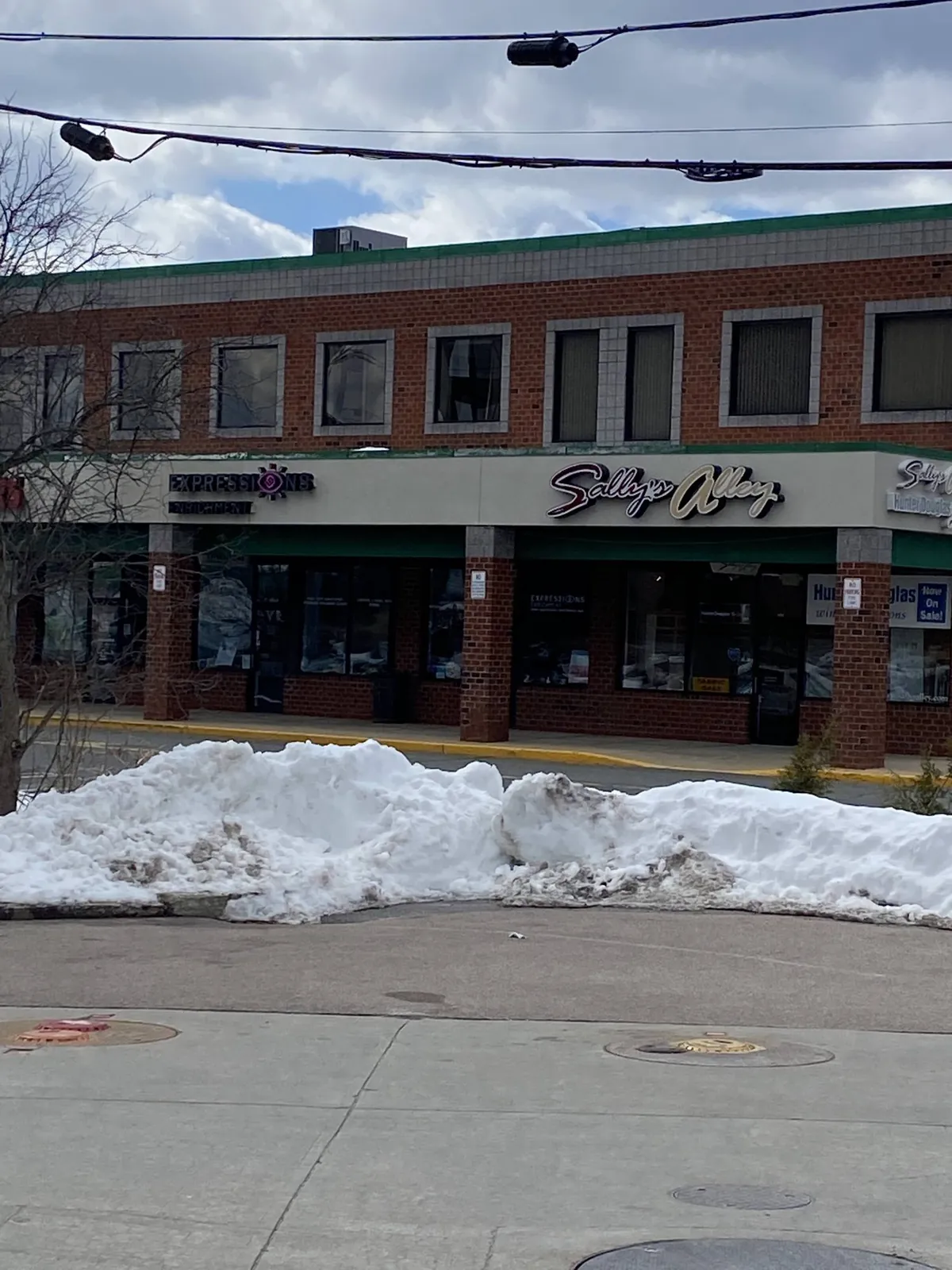
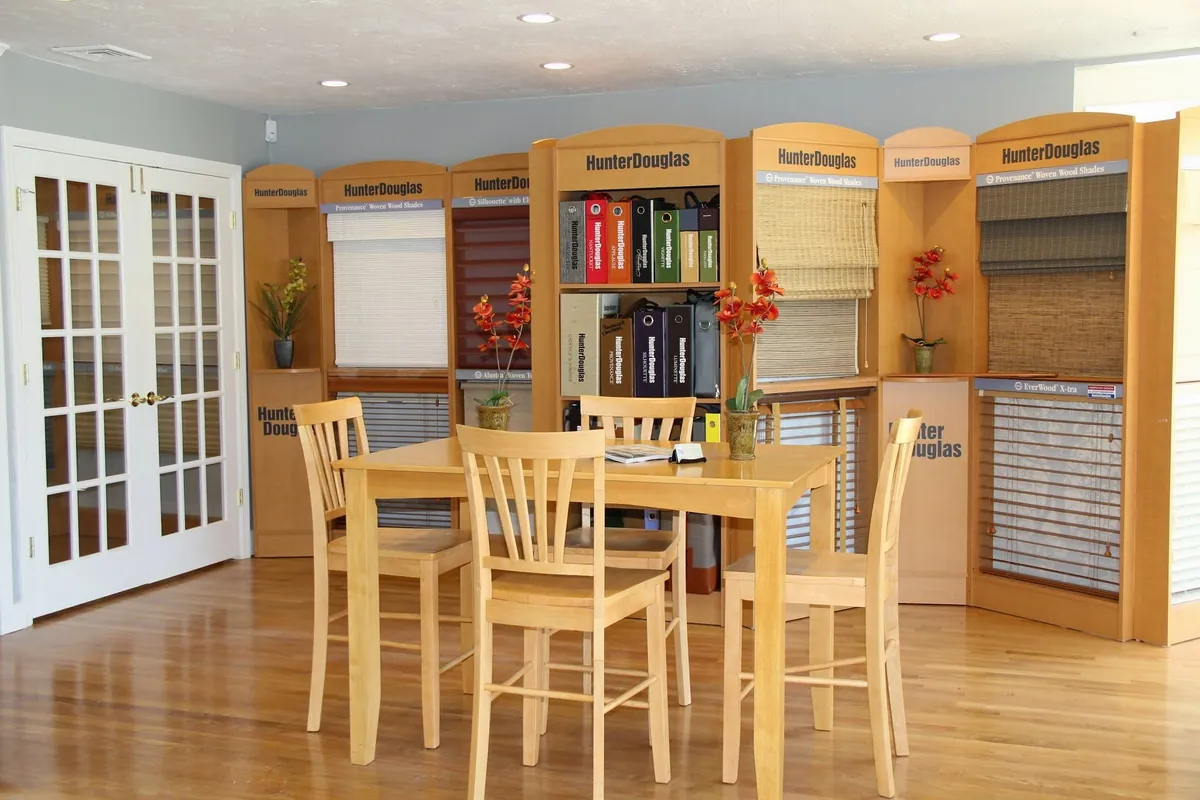
Our nearest showroom: Franklin
Franklin is our nearest showroom to Mendon, and you are welcome to stop in when it is open.
For roman shades in Mendon, though, most of the real decisions are made at home, where you can see how the sun on your own land falls across each window. A visit brings the samples to you.
Why a Gallery dealer
Blinds & Designs is a Hunter Douglas Gallery dealer, with certified Hunter Douglas installation. You get the full Vignette and Carole Fabrics range, the measuring and the fitting from one business, and someone to call if anything needs attention later. We repair blinds and shades as well, including ones you already own.
If some rooms would suit another product better, we carry the wider Hunter Douglas range of shades, blinds and shutters and can plan the whole house at once. See every service we offer in town on our Mendon page, or look through the full roman shades range.
Questions from Mendon
Our antique house has deep window frames. Can the shade sit inside them?
Usually, yes. Deep frames are ideal for an inside mount, which keeps the shade close to the glass and leaves the old trim on show. We check the depth and the condition of each frame first.
The afternoon sun is fierce in our west rooms. What helps?
A roman shade lowered partway cuts the low sun while leaving the bottom of the window open to the view. A PowerView shade can do this automatically at the same time each day.
Do we really need privacy out here?
In daylight, often not. After dark, a lit house on open land is easy to see into from the road, so the front rooms usually benefit from a heavier fabric lowered in the evening.
Our windows are tiny. Will the raised shade block too much glass?
A flat style stacks most compactly. If that is still too much, the headrail can go on the wall above the frame so the raised fabric rests over the wall, not the glass.
Is there a charge for the estimate?
No. After we measure, the estimate is free.
Take the next step
Light on an open Mendon lot is best judged on site, with the fabric in hand. Request a consultation and a consultant will bring Vignette and Carole Fabrics samples to the house, measure every window and leave you with a free estimate. Prefer to ask a question first? Use the call button, or call in at our Franklin showroom.