
Company houses close to the sidewalk
In Whitinsville’s mill village, the company housing was set close to the street and close to the next house along. The front windows can be only a few strides from the sidewalk, and the side windows look across a narrow gap to the neighbors. Most still have their original sash: tall, narrow double-hungs that give the rooms height and light but put the inside of the house very much on view.
That is the setting for most of the roman shades in Northbridge, MA, that we plan. The front rooms need cover from people walking past, especially once the lamps go on. The side rooms need cover from the house next door. And all of it has to suit a window that is much taller than it is wide.
Out on the edges of town, the newer colonials have bigger lots, bigger rooms and more regular windows, and the thinking shifts from privacy toward light and style.
Roman shades for Northbridge homes
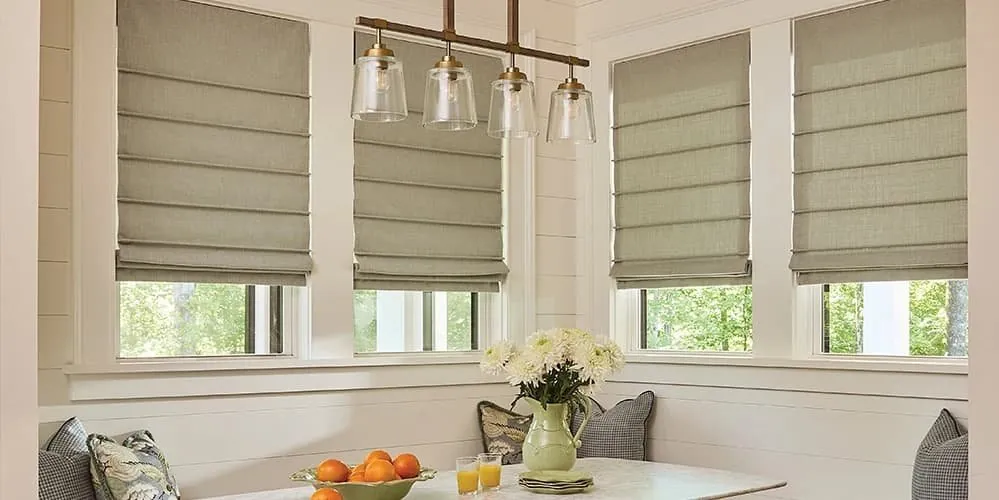
Vignette
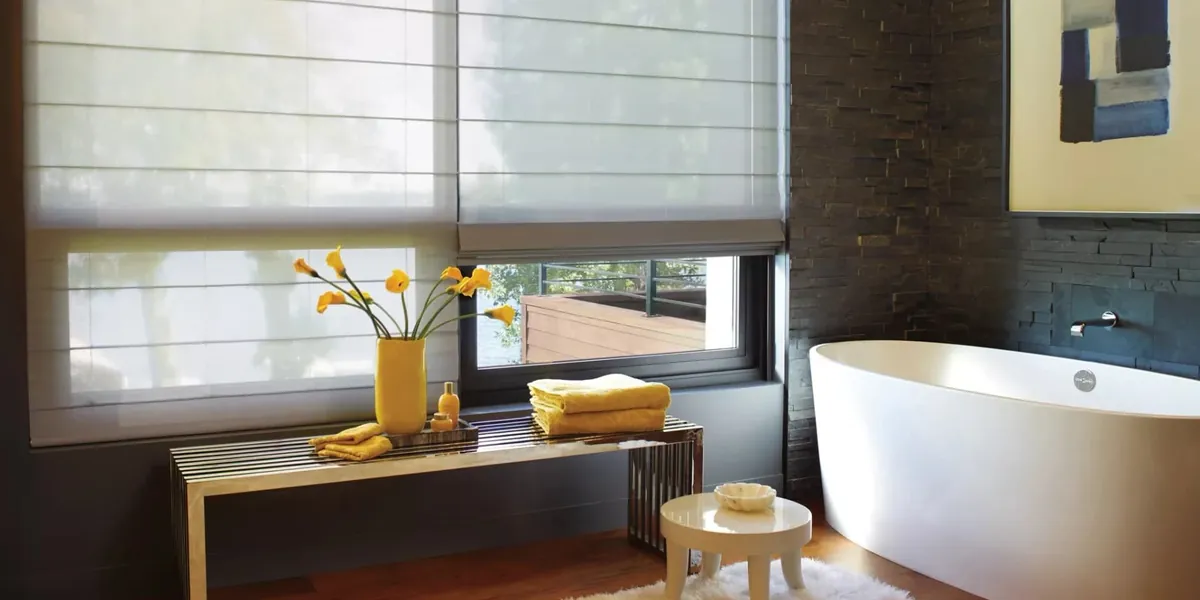
The Hunter Douglas roman shade, offered flat or folded. Its long, clean lines follow a tall, narrow sash well.
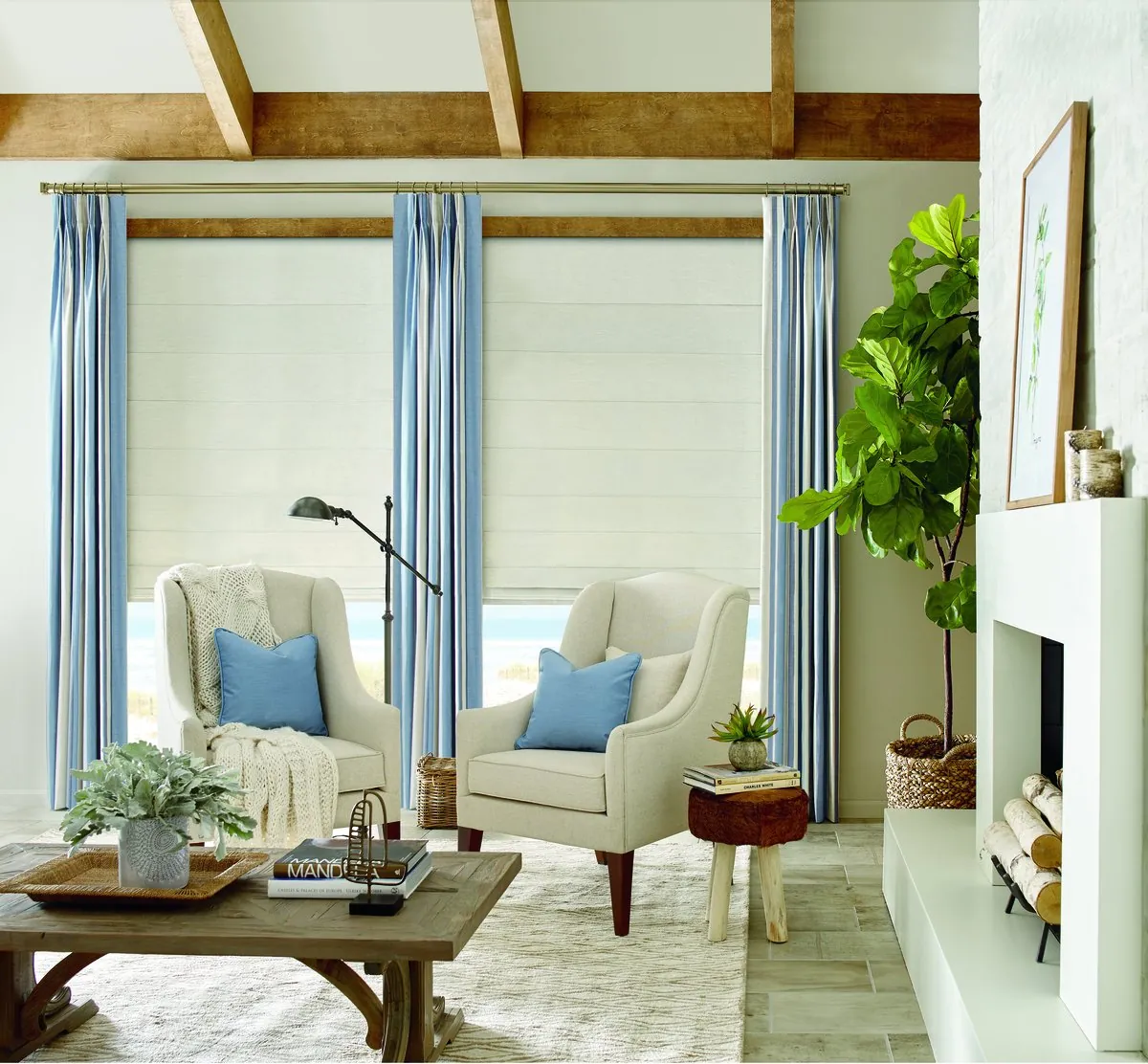
Carole Fabrics
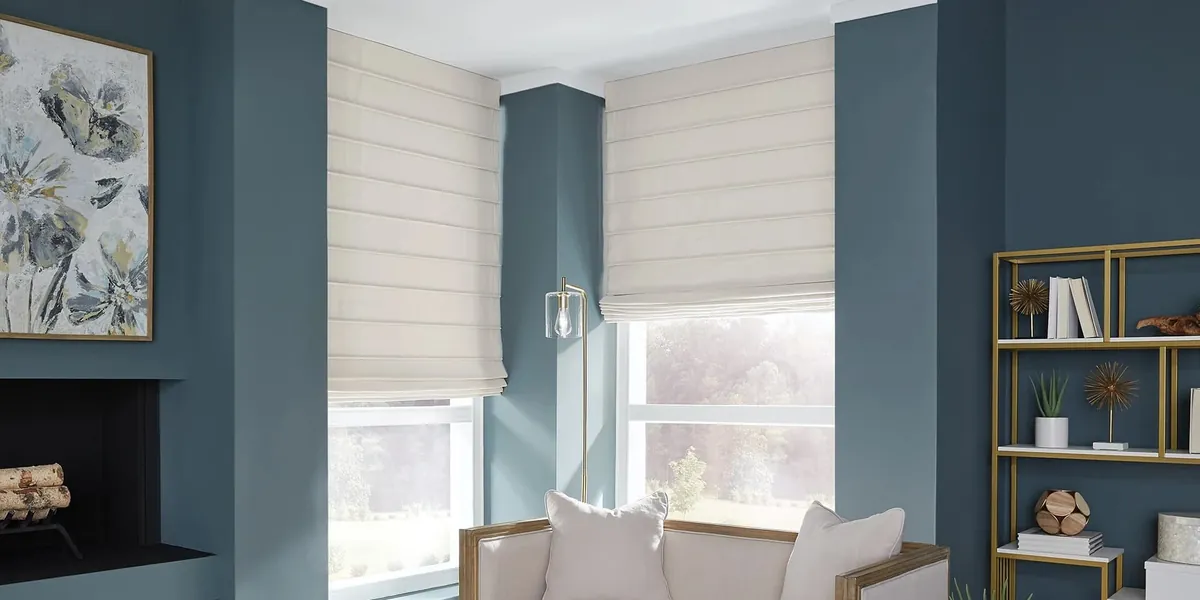
Carole Fabrics roman shades, flat or folded, with plenty of color and pattern for a front parlor or a colonial dining room.
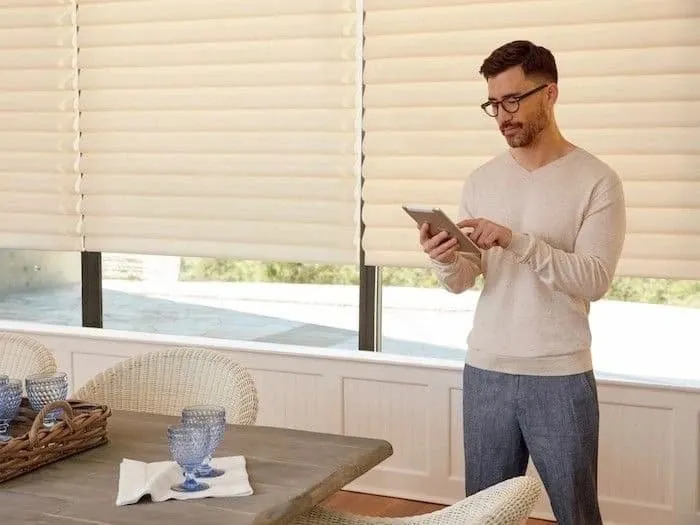
Automated with PowerView
Shades that lower themselves at dusk, or answer to a remote or the app. Useful on street-facing windows that should close as soon as it gets dark.
Privacy at the sidewalk
When a front window is a few steps from a sidewalk, the people passing by are at eye level with your living room. In the mill village, that is the normal arrangement, and it is the first thing a window treatment has to deal with.
A roman shade suits this well because it covers the whole window in one piece of fabric, with nothing to tilt or part. The choice that matters is the fabric. In daylight, a light or medium fabric gives good cover, because the bright street outside makes it hard to see in. After dark, that changes: with lights on inside, a light fabric lets the room show through. For front rooms used in the evening, a fuller fabric is the reliable choice.
Some owners want daylight and privacy at the same time on a front window. A shade lowered to just above the line of sight from the sidewalk covers the lower glass, where the eyes of passers-by fall, and leaves the top of the tall sash open to the sky. On a tall, narrow window, that can leave a surprising amount of light coming in.
The tall, narrow sash
The company houses were built with upright windows, and those proportions are part of their character. A good roman shade keeps that line rather than fighting it.
Each shade is made to the exact width of its window, so it hangs as one tall, slim panel. Where several windows share a wall, setting every shade to stop at the same height keeps the room orderly. From the street, a row of company houses with matching shades in the same outward color looks tidy and settled.
On a tall window, the raised shade gathers more fabric than it would on a short one. With high ceilings, that is easy to handle: fixing the headrail on the wall above the frame lets the fold sit over the wall, not the glass, and also makes the window look even taller. Where the original casing is a feature you want to keep in full view, an inside mount works too, with a slightly deeper fold at the top of the glass.

Side windows facing the next house
The houses in the village stand close together, so the side windows of one look straight at the side windows of the next. The gap can be no more than a driveway.
These windows need a slightly different approach from the front ones. They often bring in useful light, especially if the front of the house is shaded by a porch or a tree, so closing them off completely is not always the answer. A lighter fabric, lowered most of the way, softens the view across the gap while letting the room stay bright. In bedrooms and bathrooms, a fuller fabric is the better choice.
Because the side windows are seen mostly from inside, you can be freer with color and pattern there than on the street side. Many owners keep a calm, matching look at the front and let the side windows suit each room.
Streetlights and passing headlights
A house set near the street gets more than glances from the sidewalk. After dark, streetlights and the headlights of passing cars throw light through the front sash and across the ceilings, which is a nuisance in a front bedroom and a distraction in a living room with a television.
A dense cloth deals with both. Lowered fully on a front bedroom sash, it keeps the room dark from the street side, and an outside mount that laps the casing trims the bright slivers that would otherwise show down each edge. For a front living room, a medium cloth may be enough, since the lamps inside usually outshine the street.
Bathrooms across a narrow gap
Village bathrooms often have one small window facing the house next door at very close quarters. Cover has to be complete there, yet the room still wants some daylight. A dense cloth lowered most of the way, with a sliver of glass left open at the top where nobody can see in, often strikes that balance. For roman shades in Northbridge, MA, a bathroom like this is a good place to try a flat style, which keeps a tidy line on a small opening.
Back kitchens and the stairwell
In a Whitinsville company house the kitchen tends to sit at the rear, its one sash aimed at the clapboards of the next house over. You cook, eat and do homework there, so the room cannot afford to go dim. A pale, airy cloth, left down through the day, screens the neighbor’s wall and still lets the kitchen glow. Before picking the mount, our consultant checks how far you stretch across the counter, so lifting it stays effortless.
The stairwell window is the other awkward one: tall, set mid-flight, with a handrail between you and the cord. Motorizing it with PowerView means a press of a remote from the hallway below does the work.
A row of company houses, seen together
The mill village was built as a set. Houses of the same shape stand one after another along a street, and from the sidewalk you see several of them at a glance. That makes the outward face of your shades part of the streetscape in a way it would not be on a lone house.
Many owners like their front windows to read as one calm row: every shade stopping at the same line on the sash, every back face in the same quiet tone. It does not have to match the house next door, but within your own frontage, consistency makes the old house look cared for. Inside, behind that tidy face, each room can wear whatever color or print you fancy.
Upstairs in a village house
The upper floor of a company house usually holds the bedrooms, each with one or two of those tall sash. Upstairs the sidewalk matters less, because passers-by are below the sightline, but the windows of the next house are often level with yours across the gap.
A fuller cloth suits these bedrooms, both for that close neighbor and for sleeping past sunrise. Where a room has two windows on different walls, one facing the street and one facing the side, the street window can take the darker fabric and the side window something lighter, so the room is not plunged into gloom on a gray afternoon. A child’s room up here often gets the denser cloth on every window, so naps and early bedtimes are not cut short by a bright summer evening.
Colonials on the edge of town
Beyond the village, newer colonials stand on roomier lots, with more lawn between them and the road. Their sash are bigger and come in regular, repeating sizes, often paired or set in a row, so privacy drops down the list and light, comfort and a coherent look rise to the top.
One clear scheme suits a house like that: a single style everywhere, a brighter cloth where the family gathers and a denser one where it sleeps. In a family room lined with windows, side-by-side shades that stop on one line let you drop just the sunny pair. A folded style in the primary bedroom or dining room brings a softer touch. For roman shades in Northbridge’s outlying colonials, PowerView is often worth considering too, simply because there are so many windows to move. And should a cold bedroom want honeycomb shades instead, our cellular shades in Northbridge page explains them, and they can be planned on the same visit.
The colonial living room
The living room in a newer colonial is often the largest room in the house, with two or three big windows and sometimes a wider one facing the back yard. It gets used morning to night, and the light through it changes all day.
Separate shades on each window give you the most control: drop the one facing the low sun, leave the others up. A medium cloth tends to suit this room, enough to soften glare on a screen without turning the room gloomy, and a folded style looks generous across larger glass. If the room opens to a kitchen or eating area, carrying the same cloth through both spaces ties the open plan together, even where the windows differ in size. A wide back window can take two or three shades in a row so each one stays light to lift.
Flat or folded in Whitinsville
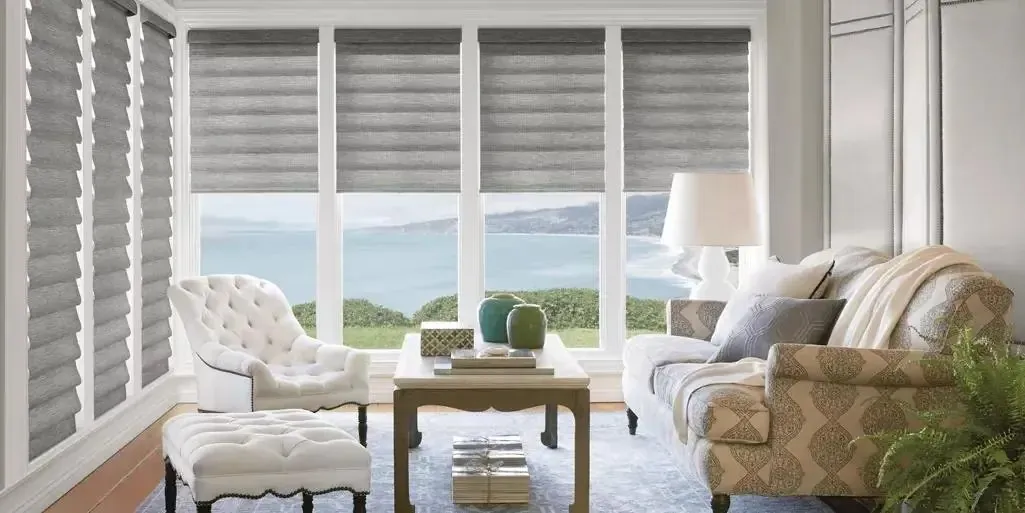
Vignette and Carole Fabrics each come both ways.
- Flat: lies smooth when down and pleats crisply on the way up. On a slender village sash it keeps the long vertical line and a small fold at the head.
- Folded: rounded loops stay visible even fully lowered. It looks generous on bigger glass or on one feature window in a front parlor.
A common village approach is flat across the street-facing sash for a crisp frontage, with folded saved for a bedroom only the household sees. Out in the colonials, either works anywhere. Hanging one of each on a single window during the appointment usually settles it in seconds.
How much light should the cloth let in
Fabric weight decides more about a Northbridge room than anything else.
- Front rooms lived in after dark: dense cloth, so nothing shows once lamps are lit.
- Kitchens and stairwells: airy cloth, bright inside and blurred across the gap.
- Bedrooms: dense again, for sleep and for the window opposite.
- Rooms facing the back lot: light or medium is generally plenty.
Swatches of each weight travel with our consultant, in both roman lines.
Choosing at the sash itself
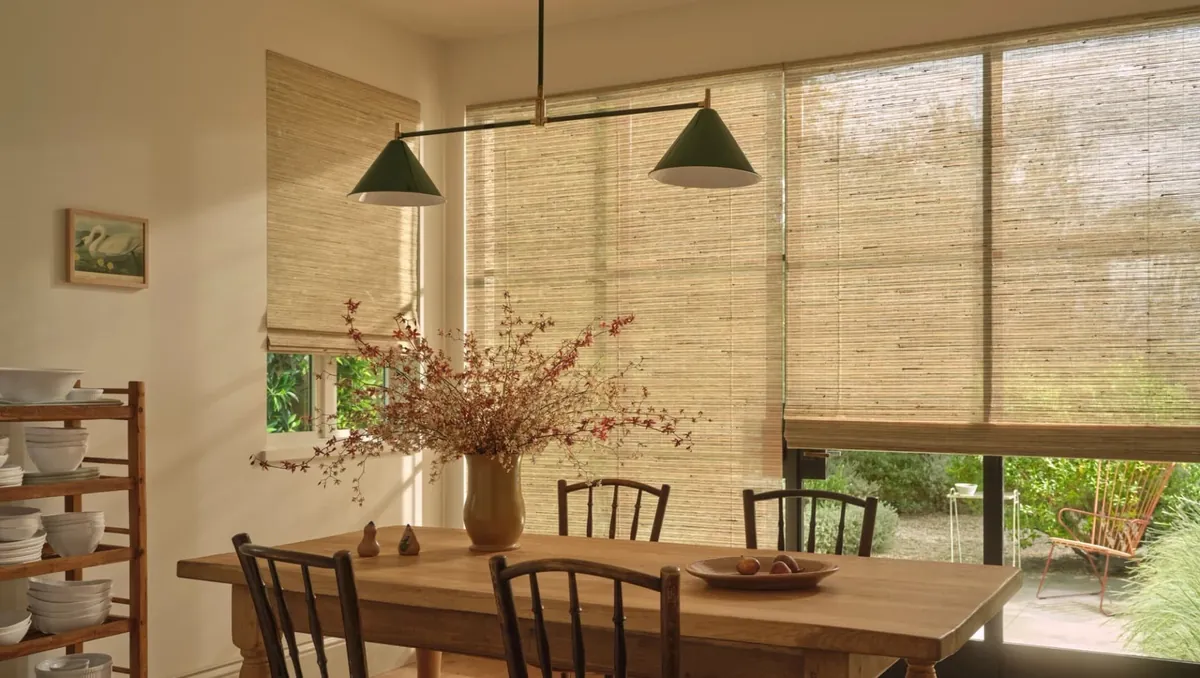
The most reliable place to choose roman shades in Northbridge, MA, is right at the window, sidewalk outside. Because our vans hold the swatches, a consultant brings everything to your door.
- Ask for a date on the Request a Consultation form, or tap the call button.
- Swatches arrive in both roman lines, both styles and a spread of weights.
- You stand on the pavement together for a minute to see what the street can see.
- Back indoors, cloth goes flat to each pane so daylight and cover can be judged honestly.
- Widths, drops and frame depths are taken for every sash, along with any tired hardware.
- You are handed a written estimate at no cost, with all the time you want to think it over.
Color advice across a room can be built into the same call as an interior design consultation. The appointment is described further on what happens at an in-home consultation.

Taking the measure of original sash
Many coats of paint and seasons of swelling have shifted the old company-house frames. On a tall, slender sash, a lean that is tiny at the head grows by the sill. Our consultant reads the width at three heights and the drop at three points, then checks depth where a rail would be screwed in. When a frame has strayed too far for an inside fit, a casing mount is proposed, and you see exactly where it would sit.
Hunter Douglas certified installers do the hanging, levelling every rail and running each shade full travel before showing you how it works. The day is outlined on what happens on installation day.
Franklin, our nearest showroom
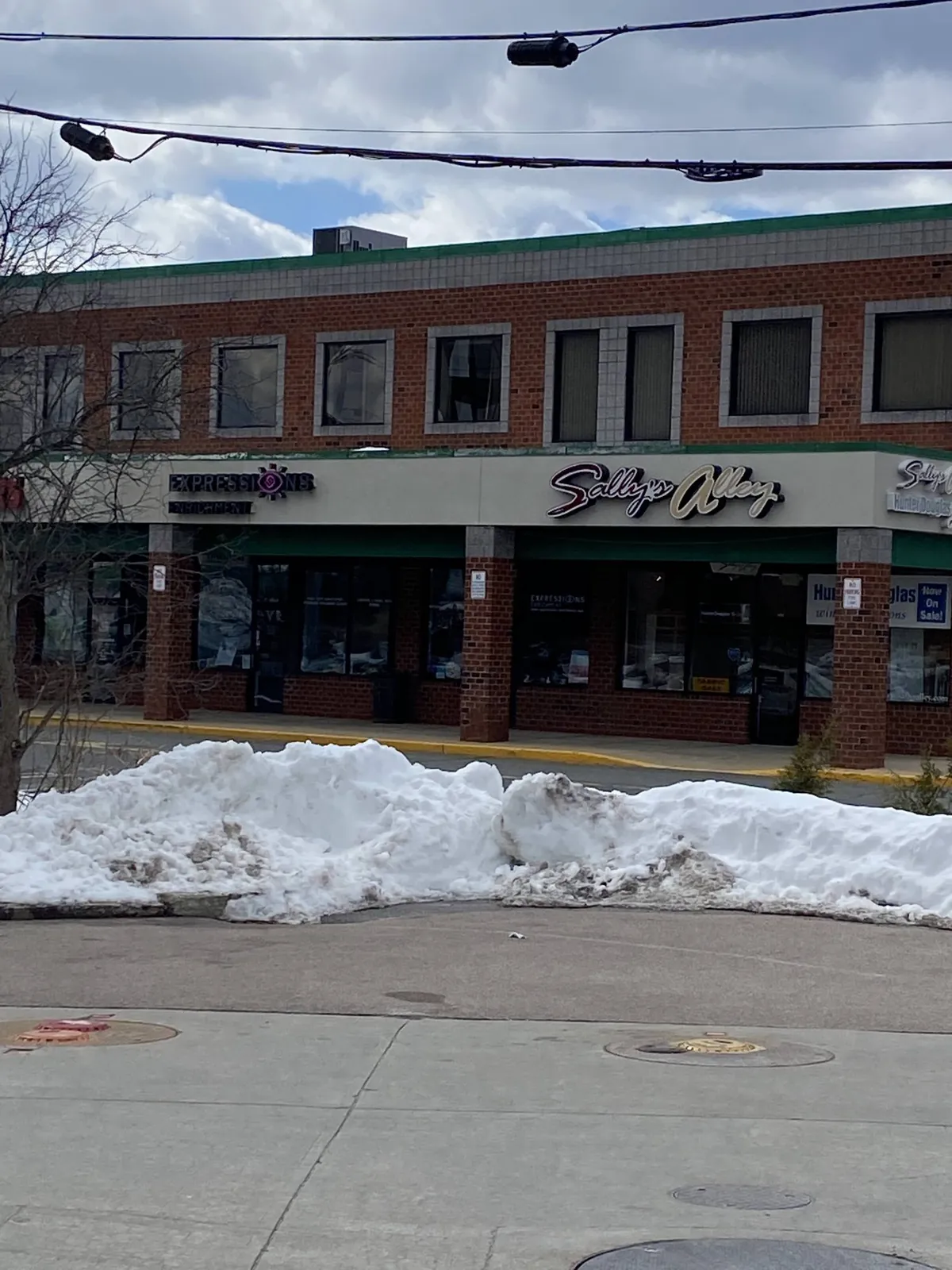
Franklin is the closest of our showrooms to Northbridge, and you are welcome to call in while it is open.
For a village house by the sidewalk, though, clarity comes from standing at the glass. A home appointment lets you hold each cloth up against the street you actually live on.
The Gallery dealer difference
Blinds & Designs carries Hunter Douglas Gallery dealer status. Certification from Hunter Douglas covers our installers too. So a Northbridge household gets every Vignette and Carole Fabrics option through one firm that measures, orders and fits.
The rest of the Hunter Douglas family, honeycomb shades, blinds and shutters, is on hand if a room suits one of those better. Broken blinds or shades you already own can come to us for repair. Every service in town is gathered on the Northbridge page, and the whole roman shades range is a click away.
Street-side shades on a timer
On a village street, the front sash are the first to want closing as dusk falls. A PowerView schedule drops them each evening and lifts them each morning, home or away, and a remote or the app overrides it any time.
Group every front shade so they travel together, or in a colonial set groups by room or by which side faces the sun. Powering each motor is planned window by window at the appointment.
Questions from Northbridge
Our front windows are right by the sidewalk. What gives the best privacy?
Dense cloth, above all in rooms used after dark. It hides the room once the lamps are on, which a light cloth cannot.
Can we keep daylight and still block the view from the street?
Yes. Stop the shade just above the sidewalk sightline: the lower glass is covered and the top of a tall sash stays open to the sky.
Will a roman shade suit our tall, narrow windows?
Very well. Each is cut to its sash width, so it follows the slim shape. A rail fixed above the frame lifts the fold clear of the glass.
Should our front windows all match?
It helps. One outward tone and one stopping line on the street side make the frontage look orderly, while side and back rooms are free.
Do we pay for the estimate?
No. Measuring and the written estimate cost nothing.
Book a home visit
Settling a shade for a sash beside the sidewalk is easiest with the cloth in your hand and the street in view. Use Request a Consultation, and a consultant will bring both roman lines, measure every window and leave a free estimate. Prefer a word first? Tap the call button, or drop into our Franklin showroom.